
World News
Italian Crew Stopped Saudi Ship Carrying Arms to Israel


Paris (Imran Y. CHOUDHRY) :- Former Press Secretary to the President, Former Press Minister to the Embassy of Pakistan to France, Former MD, SRBC Mr. Qamar Bashir analysis : It was the kind of news I wanted desperately to dismiss as a fabrication — a malicious AI-generated smear designed to inflame anger against a Muslim nation. The claim seemed too outrageous to be true: an Italian dockworkers’ union had stopped a Saudi-owned ship carrying weapons to Israel, even as Gaza’s people were being starved, bombed, and hunted like wild animals by one of the most advanced militaries on Earth. As a trained analyst, my first instinct was to reject it outright. Surely, I thought, no Muslim country — least of all the custodian of the Two Holy Mosques — would supply arms to those slaughtering Palestinians, many of them children.
But deeper investigation left no room for doubt. On August 7, 2025, at the Port of Genoa, a Saudi-flagged vessel — the Bahri Yanbu — was stopped by some 40 dockworkers after they discovered its cargo: weapons, ammunition, explosives, armored vehicles, and at least one Italian-made Oto Melara naval cannon. According to port sources and union officials, the shipment was bound for Israel, even as it intensified its siege of Gaza.
This was no minor cargo ship. The Bahri Yanbu is owned by Bahri, the Saudi state shipping company, with a long record of transporting military cargo globally. The ship had sailed from Baltimore, USA, and was scheduled to collect more military equipment before heading toward Israel. The dockworkers — organized under the Unione Sindacale di Base (USB) and the Collettivo Autonomo Lavoratori Portuali (CALP) — refused to touch the cargo, declaring, “We do not work for war.” Their action was grounded in both Italian law (Law 185/90 prohibits arms exports to conflict zones) and in moral conviction.
In response, the Genoa port authority pledged to create a “permanent observatory on arms trafficking,” with formal discussions scheduled for September. This was not the first confrontation: in 2019, dockworkers in Genoa blocked the same Bahri Yanbu from loading arms bound for the war in Yemen. History, it seems, was repeating itself — only this time, the weapons were meant for Israel’s campaign in Gaza.
That the workers who took this stand were not Muslim but overwhelmingly Christian deepens the sting. For the love of humanity, they risked livelihoods, defied a powerful foreign state, and upheld the principle that complicity in war crimes is itself a crime. They acted while too many Muslim governments stood paralyzed, issuing hollow statements that echo like empty promises across a devastated Gaza.
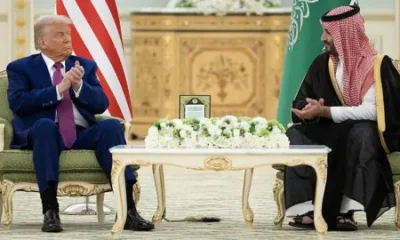
The humiliation is bitter. This is the same Saudi Arabia that Donald Trump visited twice — once during his first term in 2017 and again in his second term — extracting trillions of dollars in investments, arms purchases, and trade deals for the United States. It is the same kingdom that spares no expense in projecting an image of power, prosperity, and religious leadership before the Muslim world. Yet, when the moment came to stand unequivocally with the Palestinians — not in words, but in decisive action — it was dockworkers in Italy who bore the moral burden.
This is not a new shame. In 1990, during another Middle Eastern crisis, reports emerged of Muslim-owned vessels transferring arms later used against other Muslims. The bitter lesson then, as now, was that political expediency, alliances with Western powers, and economic self-interest can override the Qur’anic injunction that Muslims are one body: “If one part suffers, the whole body feels the pain.”
Islamic history offers many examples of rulers who came to the aid of the oppressed without hesitation, regardless of religion. The standard was never sect or ethnicity, but justice. If a Christian community under Muslim protection was attacked, Muslim armies would defend them. Yet today, Gaza’s children — many too young to comprehend the politics dictating their fates — are being buried under rubble, not by weapons smuggled by criminal gangs, but by munitions carried aboard a vessel owned by the Muslim world’s wealthiest state.
Meanwhile, ordinary Americans are showing unexpected moral clarity. Across social media, independent outlets, and even segments of mainstream media, Israel’s siege is being condemned as genocide and ethnic cleansing. Prime Minister Netanyahu is increasingly depicted as a butcher and war criminal. The anger is fueled by the understanding that silence is complicity — an understanding apparently clearer to Christian dockworkers in Genoa than to many leaders in the Muslim world.
Saudi Arabia now faces a stark choice — one that will define its reputation and its claim to lead the Muslim ummah. If the government authorized this shipment, it must answer to the Muslim world. If it claims the transfer was conducted by a private contractor, then that party must be punished so severely that no one dares to repeat the offense. This is not mere public relations; it is about moral survival.
It is also a wake-up call for all Muslim nations. The defense of Palestinians cannot be left solely to Iran, which, despite crippling sanctions and isolation, has resisted U.S. and Israeli pressure and materially supported Palestinian armed resistance. The Qur’an and the Prophet’s example leave no room for inaction when oppression is visible. Even if every worldly power aligns against them, Muslims are commanded to stand for justice.
The events in Genoa strip away all excuses. They show that moral courage is not bound by religion, nationality, or language — it is a choice made regardless of personal or political cost. The dockworkers did not calculate their odds before boarding that ship; they saw a line that could not be crossed and refused to cross it.
Muslim leaders must now ask themselves a painful question: will history remember them as the custodians of holy places who stood idle while Gaza’s people starved and bled, or will they seize this moment to move beyond hollow declarations and take tangible action? The answer will not be written in speeches, but in whether arms shipments like those aboard the Bahri Yanbu are ever allowed to leave port again.
If they act, they may yet restore the unity, dignity, and purpose the ummah once embodied. If they fail, history’s judgment will be harsh — and it will not be written by allies in Washington, London, or Tel Aviv, but by the very people whose cries they ignored. In that record, the names of the Genoa dockworkers will stand as men and women of conscience, while those who turned away will find their titles and riches no shield from infamy.
The moral of this moment is unavoidable: justice does not wait for convenience, and righteousness does not bow to fear. If Christian dockworkers in Italy can risk everything to stop a Muslim nation’s complicity in genocide, then Muslim leaders have no excuse left. Either they act now for Palestine, or they forfeit forever the moral authority to speak in its name.







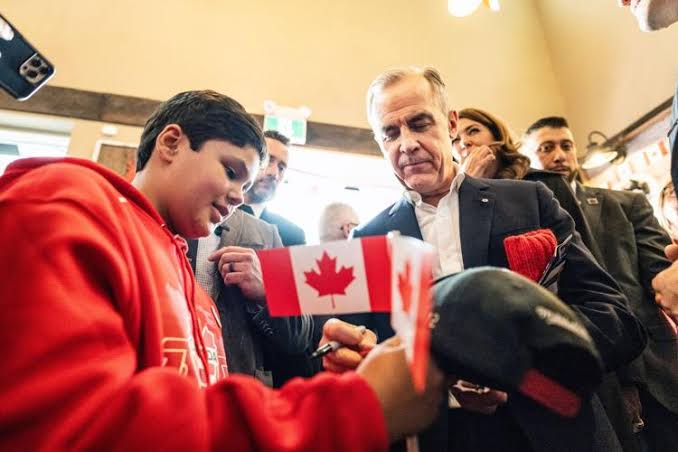
Prime Minister Mark Carney says an overwhelming vote by people in Alberta to remain part of Canada is a “great result” for the country.
Speaking to reporters as he walked into a cabinet meeting on Tuesday, Carney said he was “thrilled that Albertans have chosen unity” by rejecting a proposal to pursue separation through a binding referendum.
Preliminary results indicate more than two-thirds chose Canada over a push for independence for the province, according to Elections Alberta.
Monday’s referendum was the result of a months-long campaign by separatists in the western Canadian province to get a public vote on the issue.
Provincial leader Danielle Smith welcomed the initial results, commenting: “Albertans have voted for a stronger Alberta in a united Canada.”
Premier Smith herself opposed the separatist push but said the public will for a vote was undeniable, and many supporters of her own political party – United Conservative Party – were in the separatist camp.
Smith said she would address Albertans later on Tuesday on the path forward for the province.
In making the case for independence from Canada, many of the separatists said the oil-rich province’s economic growth had been stifled by the environmental policies of Canada’s central government in Ottawa.
But those who opposed a breakup – including Carney – called for Canada to present a united front in the face of external pressures, including an ongoing trade war with the United States.
“They’ve chosen to build together,” Carney said. “They’ve chosen to continue to take care of each other, to move forward, to move forward together, with purpose, high ambition.”
Carney added that he had spoken to Smith that morning and discussed “moving forward in the spirit of cooperative federalism, including on issues of immigration, other common priorities”.
Over the past year, the prime minister has worked with Smith on a number of shared goals, including pushing for an oil pipeline to the Pacific coast.
At a pro-separatist watch party in Edmonton, the hum of upbeat chatter quickly quieted as those presentsaw the projected results.
After overnight vote projections were published by Canadian broadcaster CBC and others, the mood soured. The watch party attended by the BBC packed up quickly, and people went home.
One of the separatist leaders, Jeffrey Rath, struck a defiant tone, however, vowing that “our movement isn’t stopping and we’re continuing to move forward”.
Speaking to the BBC World Service’s Newsday programme, Rath, a lawyer based in Calgary, said he saw Monday’s vote as a “first step” which had taught the movement some “valuable lessons”.
Asked whether his movement would push to keep holding votes on independence until it got the result it wanted, he responded “why not?”, and insisted that “the math and the economics” all added up on his side of the argument.

Premier Scott Moe, from the province of Saskatchewan, said he was glad Albertans chose unity, but added that “there is still work to be done on improving how Western Canada is treated by Ottawa”.
Pierre Poilievre, the leader of Canada’s Conservative party and a member of parliament from Alberta, said on social media that “the promise of Canada is worth fighting for”.
“Now our focus must be on results in people’s lives: affordable food and homes, safe streets, strong borders, and less immigration,” he said.
Smith called the vote after a grassroots group gathered about 300,000 signatures on a petition seeking a binding referendum on separation.
The petition was blocked by a judge, saying it failed to consult indigenous First Nations people – however, Smith opted to go ahead with the ballot.
Another group collected signatures for its own petition that opposed separation, which was signed by more than 400,000 people.
The key question on Monday’s voting paper asked: “Should Alberta remain a province of Canada or should the Government of Alberta commence the legal process required under the Canadian Constitution to hold a binding provincial referendum on whether or not Alberta should separate from Canada?”
It’s the first time a Canadian province has weighed the issue of separation since Quebec’s two referendums, in 1980 in 1995.
Both of those were unsuccessful, but Alberta separatists believe Quebec used the threat of independence to gain significant political leverage over Canada’s central government.
Smith said before the vote that if Albertans chose the remain option, a binding referendum on separation would not be held – at least, not while she was in power.

Despite the projected results, the conversation around Albertan sovereignty is not over.
Separatists leaders have indicated that they plan to try and push Smith out of power within her United Conservative Party, in the hope of installing a leader who is more sympathetic to their cause.
Another separatist leader, Mitch Sylvestre, told the BBC on polling day that “a lot of work will have to be done” to curb the appetite for independence if his side did lose.
Although responses to the referendum question were tallied first, there were nine other non-binding questions on Monday’s ballot paper.
Five of these dealt with immigration, while the other four focused on the Canadian constitution.
Early results suggest that most will pass, including proposals for the province to take increased control over immigration levels.

Capitalist Greed and Fossil Fuels Threaten Human Civilization
Columnist: Zeeshan Khan
We are distressed by the deaths and devastation caused by floods, and we are being told that in the solar universe revolving around the sun, the only cradle of human life, our Earth, is under the threat of coal, oil and gas bombs which have the capacity to cause destruction far greater than the combined power of atom, hydrogen and cobalt bombs, and it is rapidly rushing towards doomsday.
Those who are telling and warning us are 160 intellectuals belonging to 46 countries of the world, who have received world-level awards and prizes for their outstanding services and performance on the subject of environmental pollution. They have published a joint appeal in a full-page advertisement in the New York Times and all other prominent newspapers of the world, in which it is said that thought should be given to foiling the last attempts to destroy human life and civilization, otherwise the world of colour and fragrance, sound and melody, beauty and love will end, will be extinguished, and everything will end with it.
It has been told that the profit-seeking of the capitalist system, which has touched new extremes of greed for wealth, has also crossed the extremes of interfering with natural seasons due to the enormous use of coal, oil and gas, because of which global warming can increase by six degrees, which can completely change the climatic conditions of the world. The earth can refuse to grow grain, water to quench thirst can become extinct, the world can enter its last war for life, the garment of human civilization can be torn to pieces. These apprehensions have been expressed for the last century, and for the last quarter century, emphasis has also been laid on efforts to handle and improve this situation, but the countries suffering from greed for wealth of the capitalist system all over the world, including America, are busy in thwarting these efforts and have brought the world along with human life and civilization to the last edge of destruction.
The 160 intellectuals have appealed to all sympathetic institutions, associations and groups of the human world that, in their own interest and in the interest of their future, they should protest against those running the industries engaged in the abundant use of coal, oil and gas, and refrain from actions that further worsen the conditions of “global warming” and turn the whole world into a blazing furnace, and also try to think that if there will be no human population in the world, where will they sell their products and from where will they earn profit? The economy and market shops also need customers. If there are no customers, how will markets run? If in the six degrees of global warming, i.e., unbearable heat, the whole world is made into Hiroshima and Nagasaki, then who will survive? Why does this not enter the minds of the profit-seekers of the capitalist system?
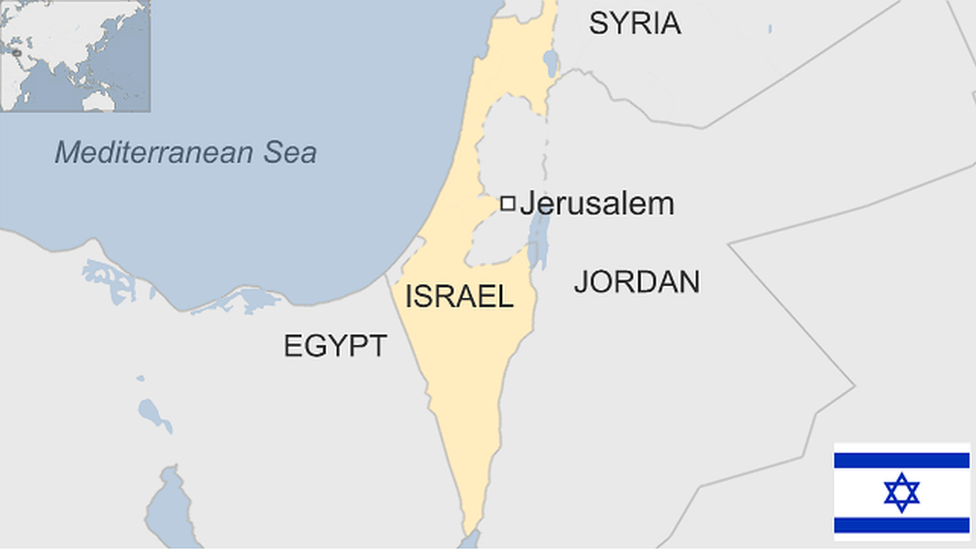
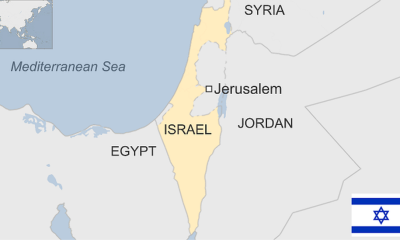
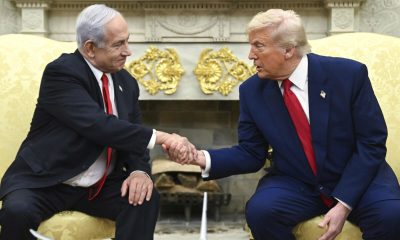
Paris (Imran Y. CHOUDHRY) :- Former Press Secretary to the President, Former Press Minister to the Embassy of Pakistan to France, Former MD, SRBC Mr. Qamar Bashir analysis : Israel’s expanding international reach raises a question that governments can no longer comfortably avoid: when does cooperation become dependence, and when does dependence begin to compromise sovereignty? Weapons, surveillance systems, intelligence partnerships, diplomatic advocacy and investment can establish enduring influence inside another country’s institutions. Examined together, these relationships reveal how a state can acquire leverage far beyond its territory without formally governing the societies affected by its decisions.
The central issue is the conversion of access into power. A weapons contract opens a relationship with a defense ministry. Technical support creates continuing contact with military personnel. Surveillance technology enters intelligence institutions. Political advocacy cultivates sympathetic decision-makers. Commercial partnerships establish constituencies interested in preserving cooperation. These channels can reinforce one another until challenging the relationship carries significant institutional and political costs. Influence becomes most consequential when governments stop asking whether those costs have narrowed their freedom to act.
Ideology matters because it shapes how political leaders justify the exercise of power. Religious nationalism can turn territorial ambitions into sacred obligations and portray compromise as betrayal. Where officials invoke divine entitlement or historical destiny, their language deserves close examination against their policies. The danger is the translation of claims about exceptional entitlement into governmental practice: unequal rights, territorial expansion or the belief that ordinary restraints should yield to a privileged national mission.
Such claims must be attached to identifiable leaders, movements and decisions. Their political force lies in what they authorize. A government that presents its objectives as beyond legitimate challenge creates conditions in which critics become enemies and civilian suffering becomes an acceptable instrument. International partners then face a choice: impose meaningful limits or help normalize exceptional treatment. Strategic friendship becomes dangerous when it functions as permission to evade accountability.
Israel’s international security industry supplies material foundations for its reach. Its defense ministry reported approximately $14.8 billion in new export contracts during 2024. These transactions can establish relationships lasting far beyond delivery. Advanced equipment requires maintenance, training, replacement parts and software. A government purchasing such systems must consider the political implications of relying on an external supplier for essential capabilities. The resulting vulnerability deserves as much attention as the advertised military advantage.
Latin America illustrates several pathways through which these relationships develop. Guatemala’s military governments received Israeli arms and assistance during a period of brutal repression. Colombia’s longstanding reliance on Israeli equipment, including Kfir aircraft and Galil rifles, complicated disengagement when diplomatic relations broke down. Argentina under Javier Milei and Honduras under Juan Orlando Hernández supplied prominent diplomatic backing through commitments concerning Jerusalem. Ecuador under Daniel Noboa pursued cooperation across defense, security, agriculture and water. Together, these cases show military, political and developmental relationships creating multiple points of institutional attachment.
Elsewhere, diplomatic openings and strategic partnerships expand the network. Bolivia restored relations in December 2025. Venezuela’s foreign ministry confirmed continuing technical cooperation following Israeli earthquake assistance in 2026. Recognition of Somaliland introduced Israel into a sensitive sovereignty dispute in the Horn of Africa. India developed extensive defense cooperation, while Austria established a strategic partnership. These relationships differ, but their cumulative significance is international access across security, technology, development and diplomacy. Each deserves examination for the commitments it creates and the interests it advances.
Political lobbying adds another layer. Former Australian foreign minister Bob Carr criticized what he considered excessive pressure from a hardline pro-Israel lobby on government policy. His account raises a fundamental democratic question: can elected officials exercise independent judgment when organized advocacy enjoys privileged access to executive leadership? The answer requires examining meetings, funding, communications and policy changes. Citizens should know whether decisions reflect publicly defensible national interests or pressure operating beyond effective scrutiny.
Surveillance exposes an especially intrusive form of power. Citizen Lab has documented Pegasus attacks involving journalists and human rights defenders. Such capabilities can penetrate the communications through which societies investigate corruption and organize opposition. Responsibility extends through the supply chain, from developers and licensing authorities to purchasing agencies and political leadership. Governments that conceal surveillance abuses cannot credibly claim to protect the freedoms those abuses undermine.
Economic sovereignty requires equally rigorous scrutiny. Banking infrastructure, telecommunications, investment platforms and critical software should be examined for ownership, access rights, contractual dependence and security vulnerabilities.
Claims about foreign control must be established through records and technical evidence. Governments should identify who can access sensitive information, interrupt essential services or influence strategic decisions. Confidential contracts cannot substitute for public accountability where national systems and citizens’ rights are at stake.
The United States provides the principal institutional foundation of Israel’s strategic support. Its longstanding military-assistance framework makes clear that international protection rests on identifiable decisions by legislators and administrations. Those decisions carry responsibility. Officials cannot authorize assistance and then treat its foreseeable consequences as someone else’s concern. An alliance becomes a mechanism of impunity when support continues without meaningful examination of conduct.
Gaza gives this argument its moral urgency. UN satellite analysis based on July 2025 imagery identified damage affecting approximately 78 percent of structures. The scale demands answers from Israeli authorities and the governments sustaining their military and diplomatic position. Palestinian rights cannot remain subordinate to the convenience of strategic partnerships. International standards lose their authority when powerful relationships determine whose suffering produces consequences.
Every government should therefore audit its dependencies, disclose sensitive agreements, investigate unlawful surveillance and scrutinize political influence. Where relationships facilitate abuse or compromise independent decision-making, they should be restricted, renegotiated or ended through lawful processes. Sovereignty requires the capacity to refuse.
Israel’s international influence deserves sustained scrutiny because power exercised through dispersed institutions can escape the accountability attached to visible force. The response must be concrete: expose the mechanisms, identify the beneficiaries and impose enforceable limits. No government should enjoy exceptional permission to override another society’s independence or another people’s rights.


‘Great result for Canada’, says Carney as Alberta votes to reject separatism

Rare Earths: Pakistan’s Economic Part 2
Rare Earths: Pakistan’s Economic Part 1

New Chapter for Dragon Boating in Punjab and Khyber Pakhtunkhwa Provincial associations officially set up with sights locked on national competitions and international representation.

South Korea’s Yoo Useong Steps Onto the Global Strongman Stage as World Strongman Federation Professional Athlete

A Survey of Mata-E-Zeest


-
 Pakistan News2 weeks ago
New Chapter for Dragon Boating in Punjab and Khyber Pakhtunkhwa Provincial associations officially set up with sights locked on national competitions and international representation.
-
 Sports4 months ago
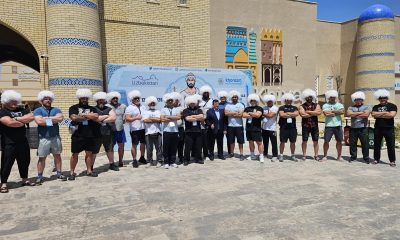
South Korea’s Yoo Useong Steps Onto the Global Strongman Stage as World Strongman Federation Professional Athlete
-
 Art & Culture1 year ago
A Survey of Mata-E-Zeest
-

 Europe News2 years ago
Chaos and unproven theories surround Tates’ release from Romania
-

 American News2 years ago
Trump expands exemptions from Canada and Mexico tariffs
-

 Art & Culture2 years ago
Will Snow White be a ‘victim of its moment’? How the Disney remake became 2025’s most divisive film
-

 American News2 years ago
Trump Expels Zelensky from the White House
-

 Entertainment2 years ago
Champions Trophy: Pakistan aim to defend coveted title as historic tournament kicks off today