
American News
Trump’s Contradictions: Fueling Unrest in America and Abroad

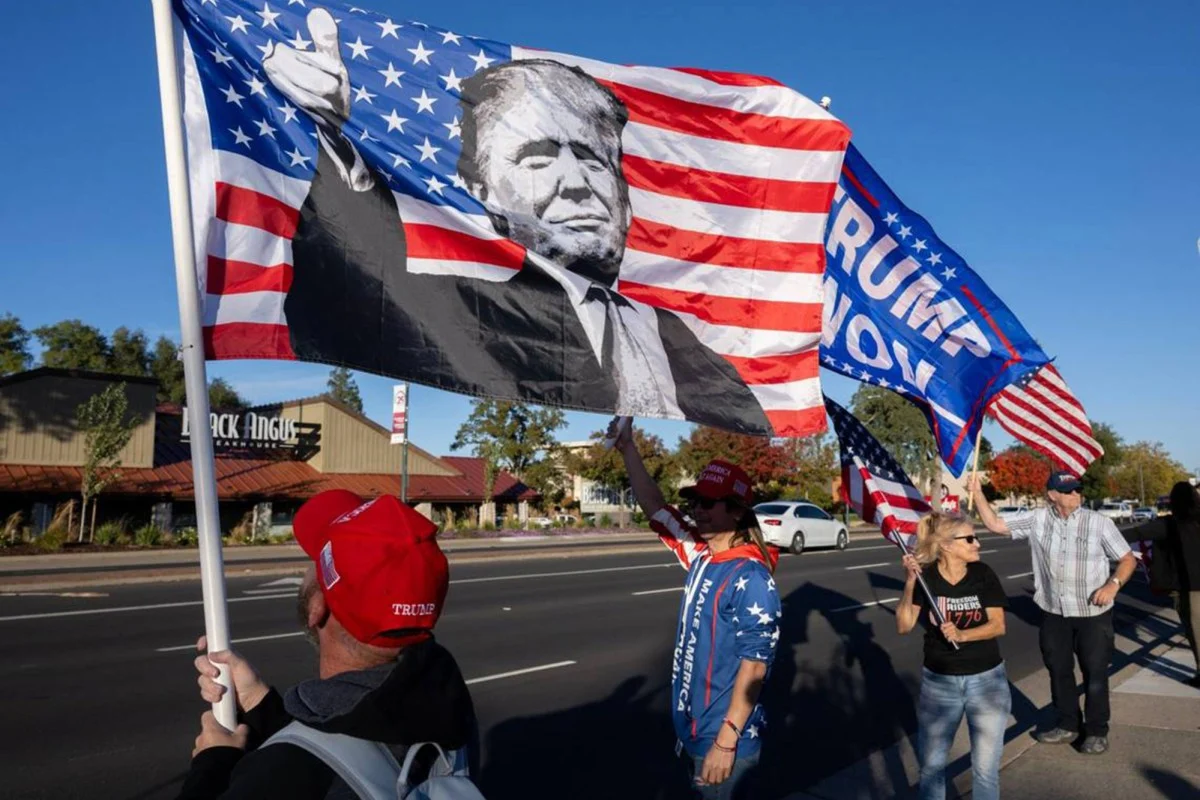
Paris (Imran Y. CHOUDHRY) :- Former Press Secretary to the President, Former Press Minister to the Embassy of Pakistan to France, Former MD, SRBC Mr. Qamar Bashir analysis : Within forty-eight hours, Donald Trump displayed three contradictions defining his presidency. He opened the door to Russian diesel, honoured immigrant innovators while restricting skilled immigration, and presented both decisions as “America First”—even as he moved the country away from its immigrant-built, pluralistic tradition toward narrower nationalism.
The Russian diesel decision is the most immediate reversal. Since Russia invaded Ukraine in 2022, Washington has tried to deny Moscow the energy revenue financing its war. Yet on October 9, Trump announced a deal with Vladimir Putin for an immediate shipment of 300,000 tons of Russian diesel, followed by much larger deliveries. The Treasury Department simultaneously issued a licence authorizing transactions involving the sale, delivery and importation of Russian diesel until April 2027.
Trump defended the deal as relief for farmers, truckers and consumers facing punishing fuel prices. Lowering costs is legitimate. But a president who speaks constantly of strength has chosen dependency on a state sanctioned for aggression. Six senators from both parties called for an immediate reversal, and Republican Senator Thom Tillis questioned its legality. “Peace through strength” becomes difficult to understand when economic discomfort produces retreat from a policy designed to constrain the aggressor.
The second contradiction is even more revealing. On October 8, Trump presented the National Medal of Science and the National Medal of Technology and Innovation to six technology leaders. Five—Elon Musk, Sergey Brin, Jensen Huang, Lisa Su and Satya Nadella—were born outside the United States. Trump praised them as national treasures and celebrated their contributions to American supremacy in space, semiconductors, computing and artificial intelligence.
These honours unintentionally proved what anti-immigration nationalism tries to deny: much of America’s scientific greatness has an immigrant face. Nadella came from India and previously worked in the United States on an H-1B visa. Brin arrived from the Soviet Union. Musk came from South Africa, while Huang and Su were born in Taiwan. America did not lose by admitting them. It multiplied its wealth, knowledge and global power.
Yet hours before the ceremony, Vice President JD Vance accused Microsoft of abusing skilled-worker programmes, and the administration suspended Microsoft from a process used to sponsor foreign employees for permanent residence. Trump has also extended restrictions on certain H-1B entrants. Visa abuse should be investigated, American workers must not be displaced through fraud, and wage suppression should not be tolerated. But reform is different from treating foreign talent first as a threat and later—after producing billions and historic inventions—as a national treasure.
The contradiction could hardly be sharper: award yesterday’s immigrants while closing the door on tomorrow’s innovators. America cannot know in advance which foreign student, engineer, physician or entrepreneur will become the next Nadella, Huang or Brin. A visa system designed only for already famous “geniuses” misunderstands how achievement develops. Talent needs entry, education, opportunity, failure and time. If fear replaces openness, the next generation of innovators will build its companies, laboratories and patents in Canada, Europe, China or the Gulf—not in America.
This brings us to the third and deeper shift: the movement from American pluralism toward exclusionary nationalism. Trump designated English as the country’s official language and speaks of immigration largely through the vocabulary of invasion, crime and cultural loss. A common language can strengthen communication, and secure borders are a legitimate responsibility of the government. But unity is not uniformity. The United States became powerful because it converted different languages, cultures and experiences into a common civic identity.
Nationalism becomes destructive when it demands that newcomers erase themselves before they can belong. It forgets that immigrants harvest American food, staff hospitals, conduct research, found companies, pay taxes and serve in the armed forces. Trump celebrates their achievements only after success makes them impossible to ignore, while policies and rhetoric make the path harder for those still trying to contribute. That is not a coherent national strategy. It is economic self-sabotage dressed as patriotism.
The same contradiction runs through Trump’s conduct abroad. At the United Nations, he presented himself as a peacemaker while asking whether he should “annihilate” the Islamic Republic of Iran and drive it “into hell.” In Oklahoma, he mixed nuclear installations with unsupported claims about Iranian “drug factories.” In Nebraska, he spoke of Iran taking out Los Angeles or San Diego and called the situation a “small price to pay.” The White House later said he meant that war was preventing such destruction. That may explain his intended message, but it cannot delete the words the world heard.
Trump praises law while attacking institutions that might restrain powerful governments. He called the International Criminal Court “evil” and “rogue” and urged member states to abandon it. He defends sovereignty, yet his administration controls Venezuelan oil-related revenue and gold sales while refusing to provide Congress with a complete public accounting. Treasury Secretary Scott Bessent described the arrangement as potentially one of the largest assets ever placed on the United States balance sheet, yet could not clearly say whether funds were flowing to the American government, private companies or other U.S. persons.
At home, Trump celebrates constitutional freedom while retaliating against critical journalism. His administration excluded CNN, MS NOW and Politico from White House access; a federal judge ordered temporary restoration. When major television networks suspended pool coverage in solidarity, the Justice Department opened an antitrust inquiry. A press permitted to praise but punished for criticism is not free. It is merely tolerated until it becomes useful.
Trump also claims unmatched economic credibility while repeatedly inflating announced investment. He has cited more than $20 trillion, whereas the White House’s own published figure is about $11 trillion—and much of that consists of pledges and long-term announcements rather than completed investments. He praises technological leadership while renaming artificial intelligence “superintelligence,” as though branding resolves genuine dangers involving surveillance, employment, autonomous weapons and human control. He mocks climate warnings while withdrawing America from international climate cooperation.
Even his oath to defend the Constitution sits uneasily beside repeated flirtation with a third term. Such ideas are introduced as jokes, repeated as trial balloons and gradually normalized. If his party ever obtained the required congressional supermajorities, Trump would not hesitate to pursue an amendment creating a third-term route. Three-fourths of the states would still have to ratify it, but constitutional limits survive only when citizens refuse to treat attacks upon them as entertainment.
These are not isolated slips. They form a governing pattern: sanction Russia, then buy its diesel; honour immigrants, then obstruct their successors; proclaim peace, then threaten annihilation; invoke sovereignty, then control another nation’s assets; praise freedom, then punish the press; defend the Constitution, then test its limits.
America’s greatness was never created by nationalism alone. It came from constitutional restraint, scientific openness, immigrant energy, credible alliances and the disciplined use of power. Trump’s contradictions weaken each of those foundations. Unless confronted, “America First” may leave America paying Russia, losing innovators, dividing its people and alarming the world.






Paris (Imran Y. CHOUDHRY) :- Former Press Secretary to the President, Former Press Minister to the Embassy of Pakistan to France, Former MD, SRBC Mr. Qamar Bashir analysis : Two elections, separated by one week, could reshape the future of the Middle East. Israel votes on October 27; Americans elect Congress on November 3. Behind both contests stands the same question: has the war against Iran made ordinary people safer, or has it made their lives more expensive and their future more uncertain? For Donald Trump and Benjamin Netanyahu, the battlefield is becoming an electoral liability.
These are different elections with interconnected consequences. Netanyahu is fighting to retain the premiership; Trump is fighting to preserve Republican control of Congress. An Israeli defeat could dislodge one architect of confrontation. An American congressional reversal could constrain the other. Neither outcome guarantees peace, but together they could alter the political machinery sustaining this conflict. Iran, the country Washington and Israel sought to weaken, could consequently become a central factor in weakening their leaders’ domestic authority.
The military buildup makes that possibility urgent. Euronews reported on October 16 that the USS George Washington and USS George H.W. Bush were operating in the Arabian Sea, with the USS Theodore Roosevelt heading toward the region. Approximately 9,000 additional sailors and Marines were being dispatched, potentially bringing regional naval personnel above 20,000. DefenseScoop also reported an autonomous surface vessel deploying with Roosevelt’s strike group. The preparations give Washington the means to turn threats into action.
Trump’s promise of no attack before the midterms offers little reassurance while American strike capacity continues to grow. On October 8, he publicly tied his pledge to November 3. His record of reversals gives reason to question whether this is electoral caution, negotiating pressure or tactical ambiguity intended to keep Iran off guard. Tehran therefore has reason to judge Washington’s military preparations more seriously than its president’s assurances.
CNN subsequently reported contingency plans potentially involving the Massive Ordnance Air Blast bomb. Read alongside the naval deployments, such planning gives Trump’s declaration a disturbing significance: the pause could provide time to position forces while encouraging an adversary to lower its guard. A sudden strike before the election could then be defended as deliberate deception. The political calendar shapes the danger; it does not reliably determine when that danger might materialize.
For Americans, the connection between foreign policy and household hardship is becoming difficult to ignore. Trump campaigned on restoring affordability. The BBC account places his approval near 37 percent and describes gasoline reaching approximately four dollars following disruption to Middle Eastern energy supplies. War reaches voters through fuel pumps, transport charges and household budgets. Presidential declarations of strength offer little comfort when families experience that strength as another expense they cannot avoid.
Republican vulnerability is acute in the House of Representatives. All 435 seats face election, and the governing majority is narrow. The Senate presents Democrats with a harder challenge: Republicans hold 53 seats, against 47 Democrats and aligned independents. Democrats therefore need a net gain of four for an outright majority. A national mood hostile to Trump creates opportunities, but individual candidates, turnout and state loyalties will decide whether discontent becomes congressional power.
History reinforces Republican vulnerability. The president’s party lost House seats in 20 of the 23 midterms from 1934 through 2022. Trump lost 41 in 2018, although Republicans gained Senate seats. Presidential unpopularity can punish the governing party without producing identical verdicts in both chambers.
Why would a Democratic victory matter to Iran? Congress controls appropriations and can attach restrictions to funding, investigate military decisions and challenge the legal basis for hostilities. A hostile House could make financing an extended campaign considerably more difficult. Democratic control of both chambers would strengthen that pressure. The essential question would become whether legislators actually use these powers, rather than merely expressing dissatisfaction while approving the resources that keep military operations moving.
Yet an electoral defeat would not immediately immobilize Trump. The new Congress takes office on January 3, 2027, leaving an interval after November’s vote. Trump could therefore confront a future Democratic majority with military decisions already taken. Congressional checks would remain significant, but their timing matters: an election that promises restraint could be followed by escalation before that restraint becomes effective.
In Israel, Netanyahu confronts a different version of the same reckoning. A leader who has built his authority around security must answer whether successive wars have delivered it. Households also judge the cumulative burden of expensive essentials and prolonged mobilization. These pressures do not require an economy in collapse to become politically powerful. Families can hear reassuring national statistics and still conclude that their own lives have become harder, less predictable and less secure.
The electoral arithmetic offers Netanyahu little comfort, although it leaves room for survival. An October 15 Times of Israel report put Gadi Eisenkot’s Yashar party at 26 seats and Likud at 20. Its poll projected 54 seats for the Jewish opposition bloc and 49 for Netanyahu’s camp, both below the conventional 61-seat majority in the 120-seat Knesset. Other surveys differ. The broad warning is uncertainty: dissatisfaction with Netanyahu has yet to produce an assured alternative government.
That uncertainty is central to his survival. Israel’s Basic Law provides for an outgoing government to continue until a successor is constituted. Netanyahu could therefore fail to secure a fresh majority yet remain prime minister during coalition negotiations or another electoral cycle. Political deadlock can prolong incumbency. An opposition that wins more seats but cannot assemble a government may discover that an adverse verdict against Netanyahu is insufficient to remove him.
His legal exposure adds another dimension. Netanyahu faces domestic corruption proceedings and an International Criminal Court arrest warrant issued in November 2024 concerning alleged war crimes and crimes against humanity. A warrant is not a conviction. Nor does losing office automatically produce arrest. Nevertheless, a weakened Netanyahu could face greater diplomatic isolation. Reduced American protection might make international cooperation with the Court politically easier, although enforcement depends on states, legal obligations and where he travels.
Still, voters have an opportunity to interrupt the assumption that military dominance entitles leaders to unlimited political patience. Americans and Israelis will vote for different institutions, but both can demand an accounting of promises, costs and results. Neither electorate controls the region; both can influence governments whose decisions reach far beyond their borders.
This is the story of two elections whose consequences will travel well beyond two countries. Iran may emerge as the issue that helped weaken the leaders who pursued war against it. The hopeful outcome is restraint, accountability and renewed diplomacy. The darker outcome is escalation pursued before restraints take effect. These ballots could open a door to peace. The world must hope their answer arrives before another devastating round of war.
Paris (Imran Y. CHOUDHRY) :- Former Press Secretary to the President, Former Press Minister to the Embassy of Pakistan to France, Former MD, SRBC Mr. Qamar Bashir analysis : “Produce a drone without China.” With that challenge, Simon Dixon—former investment banker, BnkToTheFuture co-founder, author of Bank to the Future, and host of Simon Dixon Hard Talk—questions the foundations of American power. Dixon, whose biography describes postgraduate economics training, advanced these ideas on Julian Dorey’s podcast. His argument connects military dependence, banking incentives, corporate influence, and digital manipulation. Sovereignty must be measured by who controls the factories, minerals, processing facilities, and components beneath the arsenal. When those foundations lie elsewhere, declarations of supremacy become vulnerable to decisions beyond Washington’s control.
China’s position gives this warning substance. The International Energy Agency reports that China supplied 91 percent of refined magnet rare earths and 94 percent of sintered permanent magnets in 2024. These supply chains support critical civilian and defense technologies. The 2022 interruption of F-35 deliveries over a Chinese-origin alloy illustrated how dependence penetrates subcontracting networks. Rebuilding processing, technical skills, electricity infrastructure, and competitive manufacturing requires years. Financial dominance cannot instantly manufacture industrial independence.
Dixon describes talk of world war as psychological theater concealing these constraints. Existing weapons provide immediate power; replacement capacity determines endurance. A confrontation disrupting critical supplies could impose severe production bottlenecks precisely when demand accelerates. Citizens therefore need an honest accounting of industrial resilience, rather than threats detached from manufacturing capacity. The strategic question is whether America can sustain the conflict its political rhetoric appears prepared to invite.
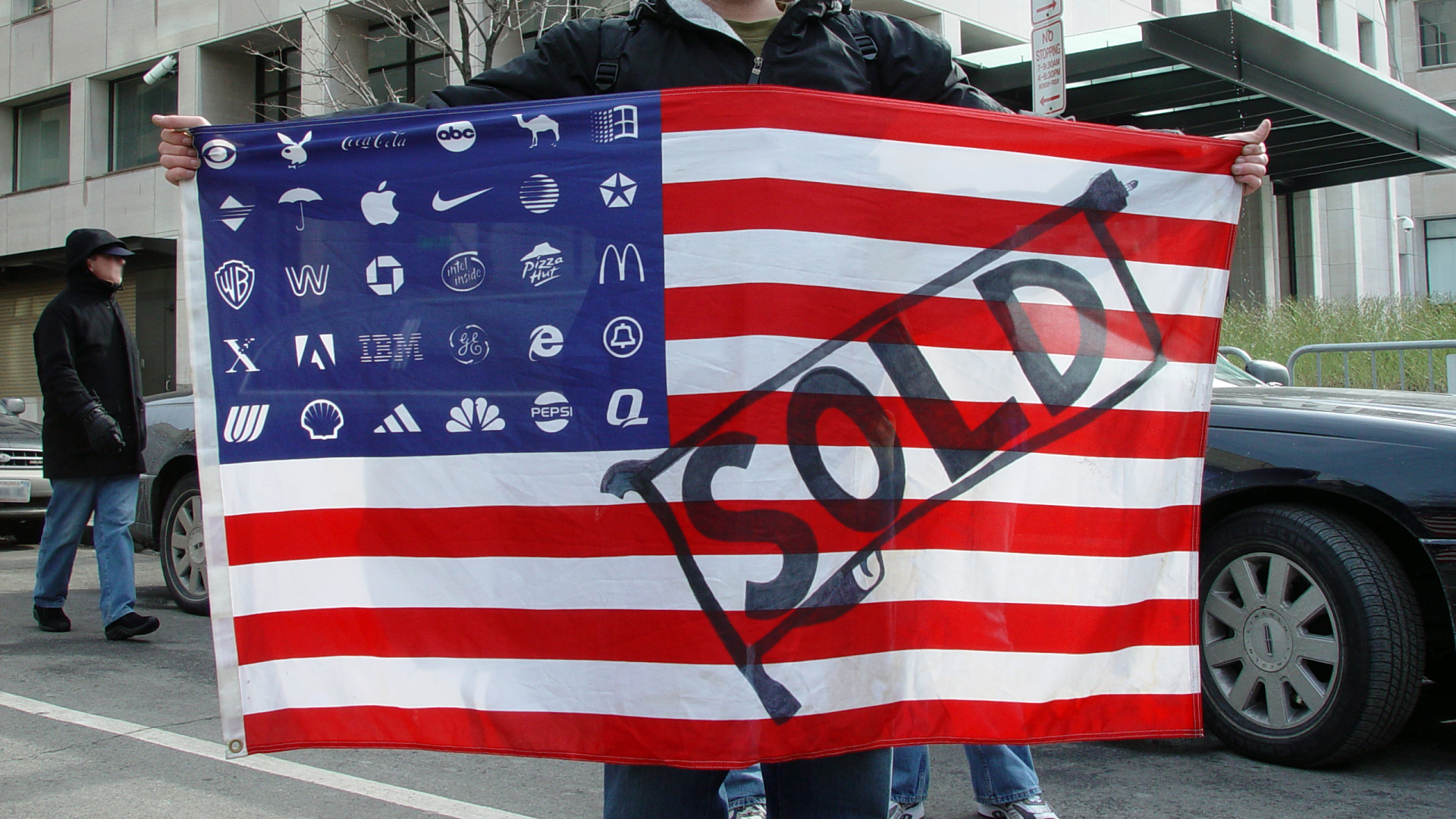
The second concept concerns public borrowing becoming private revenue. Governments finance military commitments, contractors receive payments, and investors anticipate orders. Taxpayers carry obligations that outlast campaigns. Continued conflict can strengthen demand for weapons, logistics, surveillance, maintenance, and reconstruction while weakening the society financing them. What citizens experience as national sacrifice can become recurring business for commercial beneficiaries. The public balance sheet records debt and devastation; suppliers record contracts and opportunities.
Afghanistan gives this divergence devastating clarity. Brown University’s Costs of War project estimated $2.313 trillion for the Afghanistan and Pakistan war in its 2021 accounting, excluding future interest and lifetime veterans’ care. After twenty years, the Taliban returned to power. Dixon interprets this outcome as evidence that expenditure served powerful interests regardless of the mission’s failure. Who prospered while the stated purpose collapsed? A system rewarding continued contracting more reliably than durable peace can sustain its beneficiaries through repeated strategic disasters.
The banking example carries the argument into history. In March 1939, after Germany occupied Prague, Czech gold held through the Bank for International Settlements at the Bank of England was transferred to a Reichsbank account under instructions issued through coercion. The BIS acknowledges that the order should never have been executed and records wartime German payments involving looted gold. While populations suffered invasion and dispossession, financial procedures preserved institutional continuity, converting stolen national wealth into transactions.
The critique of capitalism follows from this separation between responsibility and reward. The East India companies demonstrated how private commercial power could exercise governing functions. The modern charge is that powerful firms demand market freedom during expansion and public protection during collapse. The 2008 banking rescue became a defining symbol: households faced foreclosure while institutions received emergency support. Socialized losses and privately retained gains turn risk-taking into privilege when beneficiaries influence the rules governing their rescue.
Corporate encroachment now reaches beyond lobbying into governing itself. The Pentagon’s September 2026 announcement that Elon Musk, Palmer Luckey, and Newt Gingrich would help lead Project Meridian, studying future warfare, makes this boundary consequential. Musk’s and Luckey’s companies have substantial defense interests. When prospective suppliers help define future military requirements, commercial ambition enters the machinery of public decision-making. Expertise does not remove the need for independent scrutiny and enforceable safeguards.
Donald Trump brings this convergence directly into the presidency. His family’s expanding defense investments place relatives of the commander-in-chief within businesses positioned to benefit from wartime demand. Senators Elizabeth Warren and Richard Blumenthal questioned safeguards surrounding his sons’ investment in drone manufacturer Powerus; Associated Press reporting described its efforts to sell interceptors to Gulf countries facing Iranian attacks. The pattern invites a disturbing conclusion: the presidency shapes the conditions of war while family-linked enterprises pursue the commercial opportunities those conditions create.
The war’s continuation sharpens that conclusion. On April 25, Trump canceled a negotiating trip involving his representatives, citing excessive travel and an inadequate proposed document. Viewed alongside the family’s defense investments, interrupted diplomacy and continued military demand suggest a system in which prolonged insecurity can serve private financial interests. This is an inference from the convergence of decisions, incentives, and beneficiaries. For ordinary Americans, delay means continuing costs; for businesses selling protection, it sustains a market. The power to pursue peace becomes entangled with interests capable of profiting while peace remains elusive.
Jared Kushner embodies the fusion of private finance and public diplomacy. Trump’s son-in-law has participated in sensitive negotiations while his firm, Affinity Partners, manages money from Gulf investors. In April 2026, House Judiciary Committee ranking Democrat Jamie Raskin opened an inquiry into this dual role, citing approximately $6.16 billion in managed assets and overwhelmingly foreign funding. Here, corporate power participates directly in governing: the businessman retains commercial relationships while acting for the state. The resulting inference is that national diplomacy risks being shaped by the same financial networks whose interests the negotiator serves commercially.
Corporate prominence at presidential gatherings reinforces the broader imbalance. Citizens petition from outside; wealthy executives enjoy proximity to decision-makers. Influence operates through familiarity, dependence, and agenda-setting, especially when the same firms control communications, investment, and essential services. Across capitalist economies, the danger is a gradual transfer of practical governing authority to private interests while constitutional offices retain their formal titles. Corporate access becomes most corrosive when it escapes disclosure, competition, and democratic oversight.
Big data carries this influence into everyday judgment. Reactions, searches, purchases, and pauses reveal preferences and vulnerabilities. Dixon’s “boxes” describe audiences classified by belief and supplied material likely to hold attention. PNAS research found political out-group language strongly predicted sharing and angry reactions. Hostility therefore has commercial value. His “social credit” metaphor captures the fear that accumulated behavioral profiles can become instruments of influence. Citizens help feed systems capable of shaping their subsequent choices.
These concepts converge on one imbalance: soldiers seek security, citizens seek prosperity, and elected representatives promise accountability, while powerful intermediaries can benefit from debt, dependence, conflict, and division. Aligned incentives and concentrated ownership can serve a narrow class without one secret command center.
America’s escape requires breaking corporate capture, enforcing conflict rules, restraining monopoly, rebuilding productive capacity, and protecting public deliberation. National strength must be judged by people’s independence and well-being, rather than wealth accumulated through managing their insecurity.
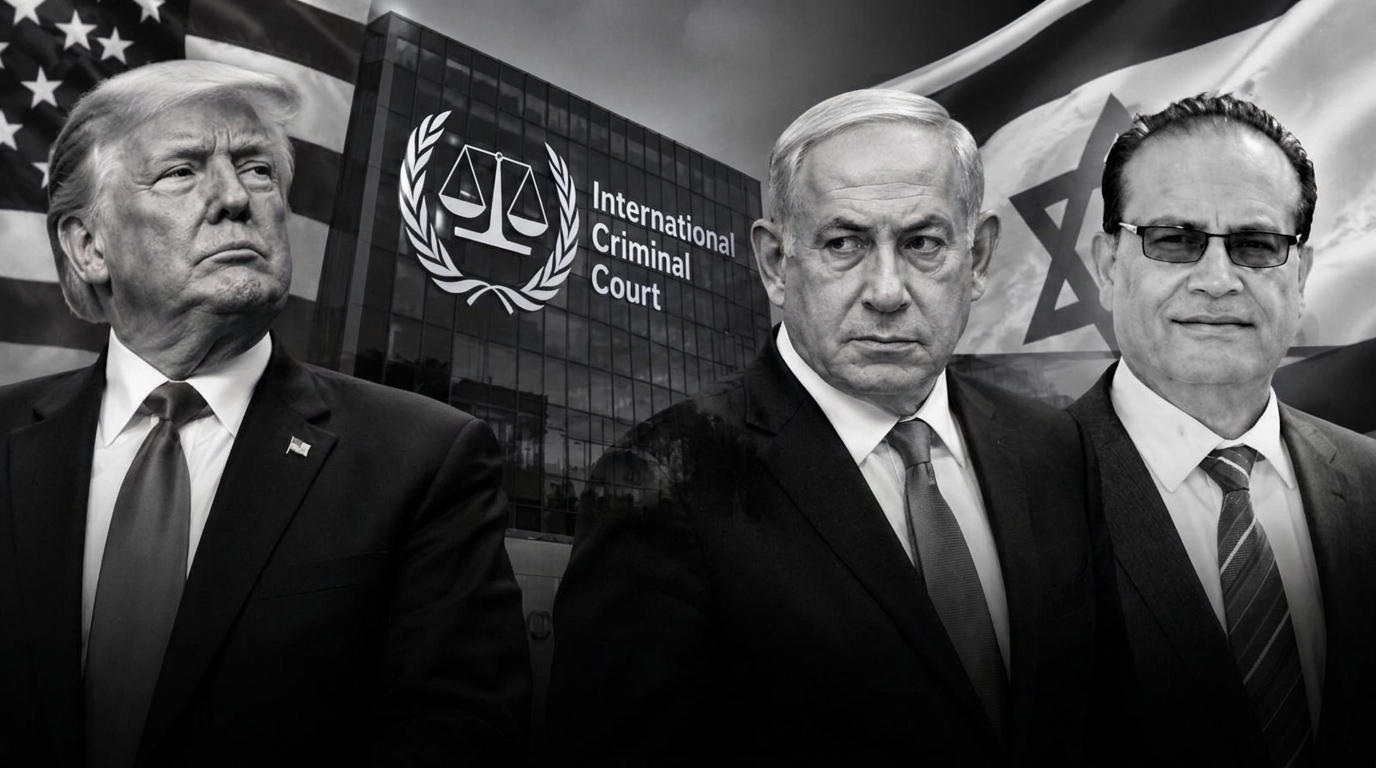
Paris (Imran Y. CHOUDHRY) :- Former Press Secretary to the President, Former Press Minister to the Embassy of Pakistan to France, Former MD, SRBC Mr. Qamar Bashir analysis : On October 9, 2026, two decisions exposed a profound conflict over the future of international justice. The Norwegian Nobel Committee awarded the Peace Prize to Navanethem “Navi” Pillay for promoting peace and international law. Washington imposed sanctions on the International Criminal Court as an institution. While one decision honoured the pursuit of accountability, the other threatened its machinery. At stake is whether powerful governments and their allies must answer to law, or whether political protection can place them beyond scrutiny.
Pillay’s career embodies the principle Washington is undermining. From defending rights under apartheid to serving on the International Criminal Tribunal for Rwanda, the ICC and as UN High Commissioner for Human Rights, she helped strengthen institutions confronting atrocities. She also chaired the UN Independent International Commission of Inquiry on the Occupied Palestinian Territory, including East Jerusalem, and Israel. Her Nobel recognition affirms that peace requires more than diplomatic agreements: it requires justice for people whose suffering powerful states would prefer to disregard.
The commission’s findings deserve a distinct and central place in this debate. In September 2025, it concluded that Israel was responsible for genocide in Gaza. It identified four acts under the Genocide Convention: killing Palestinians, causing serious bodily or mental harm, deliberately imposing conditions calculated to destroy the group, and imposing measures intended to prevent births. Examining official statements alongside patterns of military conduct, it found evidence establishing genocidal intent. These were findings of an independent UN investigative commission, demanding accountability and preventive action.
Israel rejected the commission’s conclusions and condemned Pillay’s Nobel award. Yet denunciation cannot erase evidence or discharge legal obligations. A government accused of grave crimes should answer the findings through credible investigation, cooperation and legal argument. Attacking the investigator’s legitimacy instead shifts attention from the victims to the discomfort of those facing scrutiny. Honouring Pillay does not threaten Israel’s population or legitimate security; it challenges the proposition that security can excuse unlimited violence against another people.
Washington’s sanctions extend that confrontation from rhetoric to institutional coercion. Secretary of State Marco Rubio announced measures against the ICC itself, following earlier sanctions on individual court officials. The court rejected the move as an assault on the rule of law. Financial restrictions can obstruct banking, services and cooperation essential to judicial work. Their impact reaches beyond judges and prosecutors to witnesses, victims and investigations across multiple countries. Weakening the institution threatens justice far beyond the Israeli cases that helped provoke Washington’s hostility.
The court issued arrest warrants on November 21, 2024, for Prime Minister Benjamin Netanyahu and former defence minister Yoav Gallant over alleged war crimes and crimes against humanity. The allegations included starvation as a method of warfare. These warrants were judicial steps toward determining individual criminal responsibility, not convictions. Pillay, a former ICC judge, did not issue them. The distinction between her commission’s genocide findings and the ICC proceedings clarifies how separate institutions have confronted different dimensions of the same catastrophe.
The jurisdictional objection cannot simply be settled by declaring that Israel and the United States are not ICC members. Palestine is a party to the Rome Statute. In 2021, the ICC determined that its territorial jurisdiction in the Palestine situation extended to Gaza and the West Bank, including East Jerusalem. Alleged crimes within that jurisdiction do not automatically escape examination because suspects hold the nationality of a non-member state. Challenges must be addressed through legal procedures, rather than financial pressure against the judges considering them.
The sanctions also reflect Washington’s opposition to investigations involving Americans, including the Afghanistan situation. That wider hostility reinforces the central problem: the administration seeks protection from external accountability for itself and its allies. The Nobel announcement and sanctions arrived on the same day, creating a powerful symbolic contrast. Whatever their scheduling, the political message is unmistakable. International justice is celebrated when distant adversaries face scrutiny, but treated as intolerable when investigations approach politically protected leaders.
Gaza’s devastation makes this double standard impossible to dismiss as an abstract dispute. Civilian deaths, killed children, displaced families, shattered medical services and attacks affecting humanitarian personnel demand investigation. Israel’s obligation to protect civilians survives every invocation of military necessity. Crimes by Hamas likewise require accountability; they cannot cancel Palestinian rights or authorize collective punishment. The test of international law is precisely whether it restrains violence when governments insist that their objectives justify exceptional measures.
American citizens have reasons to question this policy beyond its moral consequences. War with Iran has imposed military costs and additional energy burdens, with Brown University researchers documenting increased gasoline and diesel expenses for American consumers. Overseas deployments consume public resources and expose service members to danger. A government claiming to put America first must explain why shielding an ally from judicial scrutiny deserves diplomatic confrontation while households absorb the costs of regional escalation. Alliance commitments cannot replace independent judgment about the national interest.
Domestic law offers an instructive parallel. In February 2026, the Supreme Court rejected the administration’s asserted authority to impose tariffs under the International Emergency Economic Powers Act. The judgment demonstrated that presidential power remains subject to legal limits. International institutions serve a comparable purpose within their mandates: preventing power from becoming its own justification. Washington damages its credibility when it expects courts to constrain others while attempting to disable institutions whose scrutiny it finds inconvenient.
The response from American allies shows that this concern extends beyond Washington’s usual critics. Canada, Denmark, Germany, France, Italy, Japan, the Netherlands and the United Kingdom jointly opposed the sanctions. UN Secretary-General António Guterres also condemned them. Such disagreement should become practical commitment: sustained funding, protection for lawful cooperation and support for judicial independence. Expressions of concern alone will not keep institutions functioning when financial pressure threatens their everyday operations.
Defending the court is therefore a defence of every society’s protection against atrocity. If sanctions can silence judges today, other governments will learn to intimidate investigators tomorrow. The precedent rewards obstruction, encourages impunity and tells survivors that their access to justice depends on the political influence of their persecutors.
The international community must use the United Nations, the ICC’s Assembly of States Parties and national institutions to defend accountability. Governments should uphold applicable cooperation obligations, support investigations and resist coercion against judicial personnel.
Washington should withdraw the sanctions and pursue objections through established law. The choice is between an international order governed by common standards and one in which power purchases exemption. Protecting Netanyahu at the expense of independent justice sacrifices American credibility and weakens safeguards for everyone. Pillay’s Nobel Prize affirms the principle that must prevail: peace cannot endure when the powerful demand immunity and victims are denied justice.


The Story of Two Elections

Light of Islam Is Warming the American Souls

New Chapter for Dragon Boating in Punjab and Khyber Pakhtunkhwa Provincial associations officially set up with sights locked on national competitions and international representation.
New Chapter for Dragon Boating in Punjab and Khyber Pakhtunkhwa Provincial associations officially set up with sights locked on national competitions and international representation.

South Korea’s Yoo Useong Steps Onto the Global Strongman Stage as World Strongman Federation Professional Athlete

A Survey of Mata-E-Zeest


-
 Pakistan News4 days ago
New Chapter for Dragon Boating in Punjab and Khyber Pakhtunkhwa Provincial associations officially set up with sights locked on national competitions and international representation.
-
 Sports4 months ago
South Korea’s Yoo Useong Steps Onto the Global Strongman Stage as World Strongman Federation Professional Athlete
-
 Art & Culture1 year ago
A Survey of Mata-E-Zeest
-

 Europe News2 years ago
Chaos and unproven theories surround Tates’ release from Romania
-

 American News2 years ago
Trump expands exemptions from Canada and Mexico tariffs
-

 Art & Culture2 years ago
Will Snow White be a ‘victim of its moment’? How the Disney remake became 2025’s most divisive film
-

 American News2 years ago
Trump Expels Zelensky from the White House
-

 Entertainment2 years ago
Champions Trophy: Pakistan aim to defend coveted title as historic tournament kicks off today