
American News
The American Presidency’s Missing Guardrails

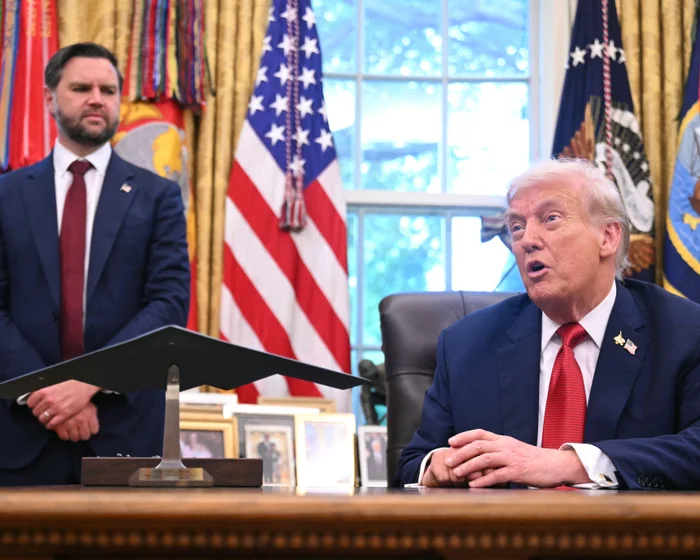
Paris (Imran Y. CHOUDHRY) :- Former Press Secretary to the President, Former Press Minister to the Embassy of Pakistan to France, Former MD, SRBC Mr. Qamar Bashir analysis : The United States is a wonderful country with enduring traditions, powerful institutions and a strong practical constitution. Yet that system contains a dangerous contradiction. It gives one individual command of the world’s most powerful military and sole authority to authorize nuclear force, but demands almost nothing about physical, mental or moral fitness beyond age, citizenship and residency.
The president is the face of the nation and an example whom millions admire, imitate and defend. Conduct affecting only a few people when committed by an ordinary citizen can reshape national standards when excused in the White House. If dishonesty, sexual misconduct or contempt for law is tolerated in the president, followers may conclude that the same behaviour is acceptable.
Bill Clinton’s relationship with White House intern Monica Lewinsky demonstrated this danger. The issue was not confined to whether a relationship between adults was criminal. The president conducted it with a young subordinate inside the institution representing American dignity, then gave false and misleading testimony in the Paula Jones lawsuit.
Clinton was impeached but acquitted and completed his term. He was later held in civil contempt, accepted a five-year suspension of his law licence and paid financial penalties. An ordinary citizen who lied under oath or obstructed justice could face prosecution and imprisonment; presidential power converted Clinton’s misconduct into a partisan argument over removal.
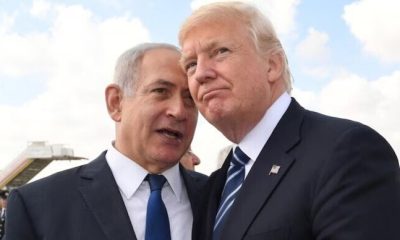
Donald Trump presents a broader test. His social relationship with Jeffrey Epstein is documented through photographs, statements and travel records. A prosecutor’s email released by the Justice Department said Trump flew on Epstein’s aircraft eight times during the 1990s. The releases also contain grave allegations that Trump denies and that remain unproven. Appearance in a file is not proof of crime, but it does not end the constitutional question.
When allegations concern the president, agencies holding the evidence are led by his appointees within an executive branch he controls. Even honest officials operate under an unavoidable conflict of interest, while citizens may fear that evidence can be delayed, discredited or withheld. The answer is neither automatic conviction nor blind acceptance of presidential denials, but investigation structurally independent of the president.
Trump’s adjudicated cases make the problem clearer. A civil jury found him liable for sexually abusing and defaming E. Jean Carroll. A New York jury convicted him on 34 felony counts of falsifying business records, although his appeal continues. He nevertheless returned to the presidency.
Richard Nixon participated in the Watergate cover-up, resigned and received a pardon preventing federal prosecution. Warren Harding’s affairs and hush-money arrangements became public while corruption surrounded his administration. These cases show how party loyalty and executive power separate presidential consequences from those confronting ordinary citizens.
Physical and mental incapacity reveal the same institutional weakness. James Garfield performed almost no official work for 79 days after being shot, while the government operated largely on autopilot.
Grover Cleveland secretly underwent cancer surgery without informing his vice president or most of his Cabinet. Woodrow Wilson remained president after a devastating stroke left him partially paralyzed and isolated, while his wife, physician and secretary controlled access to him. Franklin Roosevelt’s grave cardiovascular condition was concealed while he sought a fourth term.
The Twenty-Fifth Amendment improved the Constitution but did not eliminate the conflict. Its involuntary mechanism depends upon the vice president and Cabinet—political associates and appointees—declaring the president unable to serve.
Section Four has never been invoked. Joe Biden’s visible decline became politically undeniable during the 2024 campaign, yet party pressure, not an independent examination, ended his campaign. Trump’s rambling speeches about Iranian “drug factories” and Iran “taking out” Los Angeles and San Diego similarly demand transparent examination rather than reassurance from his staff.
The impeachment mechanism is equally vulnerable to party loyalty. Removal requires a two-thirds Senate vote. Andrew Johnson escaped conviction by one vote. Clinton was acquitted. Trump was impeached twice and acquitted twice, even when 57 senators supported conviction after January 6. A president protected by a sufficiently loyal party can therefore survive evidence or conduct that would end the career of almost any ordinary public employee.
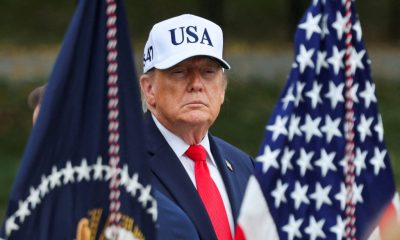
Trump’s references to a third term must be treated seriously. Extraordinary ideas are often introduced as jokes or trial balloons, then repeated until resistance weakens. If Republicans hypothetically secured two-thirds of both houses, Trump would not hesitate to propose an amendment creating a third-term route, perhaps by distinguishing consecutive from nonconsecutive terms. Ratification by three-fourths of the states would remain necessary, but the Twenty-Second Amendment must be actively defended.
America’s system also displays great strength. Local democracy can protect an amplified azan under the same rules governing church bells and other religious announcements. Voters can elect leaders such as New York Mayor Zohran Mamdani and nominate Michigan Senate candidate Abdul El-Sayed despite intense religious and political opposition. Administrations can reverse policies through elections, allowing democratic correction far more quickly than a hereditary monarchy. These achievements demonstrate that reforming presidential accountability would strengthen, not weaken, the constitutional order.
The country needs an independent Presidential Integrity and Capacity Commission established by constitutional amendment. Its existence, authority and independence must derive directly from the Constitution, with protected funding, secure tenure and enforceable investigative powers. Neither the president nor a congressional majority should be able to dissolve it, dismiss its investigators or prevent it from carrying out its constitutional duties.
The commission should include judges, physicians and constitutional experts, selected through a balanced appointment process that prevents domination by any president or political party. Its mandate should cover presidential capacity, serious dishonesty under oath, corruption and abuse of office, and serious criminal misconduct, including sexual abuse and obstruction of justice. It should conduct regular assessments of capacity and investigate credible, evidence-supported allegations within these defined areas. It must not become a morality police empowered to punish unpopular opinions, political disagreements or ordinary human failings.
The commission should preserve evidence, publish substantiated findings with appropriate protections for victims and sensitive information, and submit its evidence to the House of Representatives and the Senate. The House would determine whether to impeach, and the Senate would determine whether to convict and remove. Findings of incapacity should follow a separately defined constitutional procedure, because inability to perform presidential duties is distinct from impeachable misconduct.
Yet independent evidence gathering alone cannot resolve the danger of partisan protection. A congressional majority may refuse to act even when compelling evidence exists. If the proposed reform is intended to prevent that failure from leaving a president beyond effective accountability, the amendment must expressly establish an additional, narrowly defined judicial mechanism.
That mechanism should permit an independent constitutional tribunal to hear qualifying cases and order the remedies—including suspension or removal—specifically authorized by the amendment, under rigorous evidentiary standards and with a right of review. Such authority cannot be assumed merely because the commission operates under judicial oversight.
At the same time, the amendment must prohibit presidential interference with investigators, destruction or suppression of records, and self-pardons for conduct under examination. Presidential power must never become a shield that prevents evidence from being discovered or accountability from taking place.
The presidency magnifies character. A president’s words and conduct influence the ethical atmosphere of the entire country, legitimize behaviour for followers and shape how the world understands America. This higher standard is not an attack on democratic choice; it protects voters from deception and prevents temporary occupants of office from using public power to conceal private wrongdoing or incapacity. The republic therefore cannot demand less integrity from its most powerful citizen than it demands from everyone else. The president must be not only legally qualified to occupy the office, but physically capable, mentally sound and morally worthy of the example the office inevitably creates.






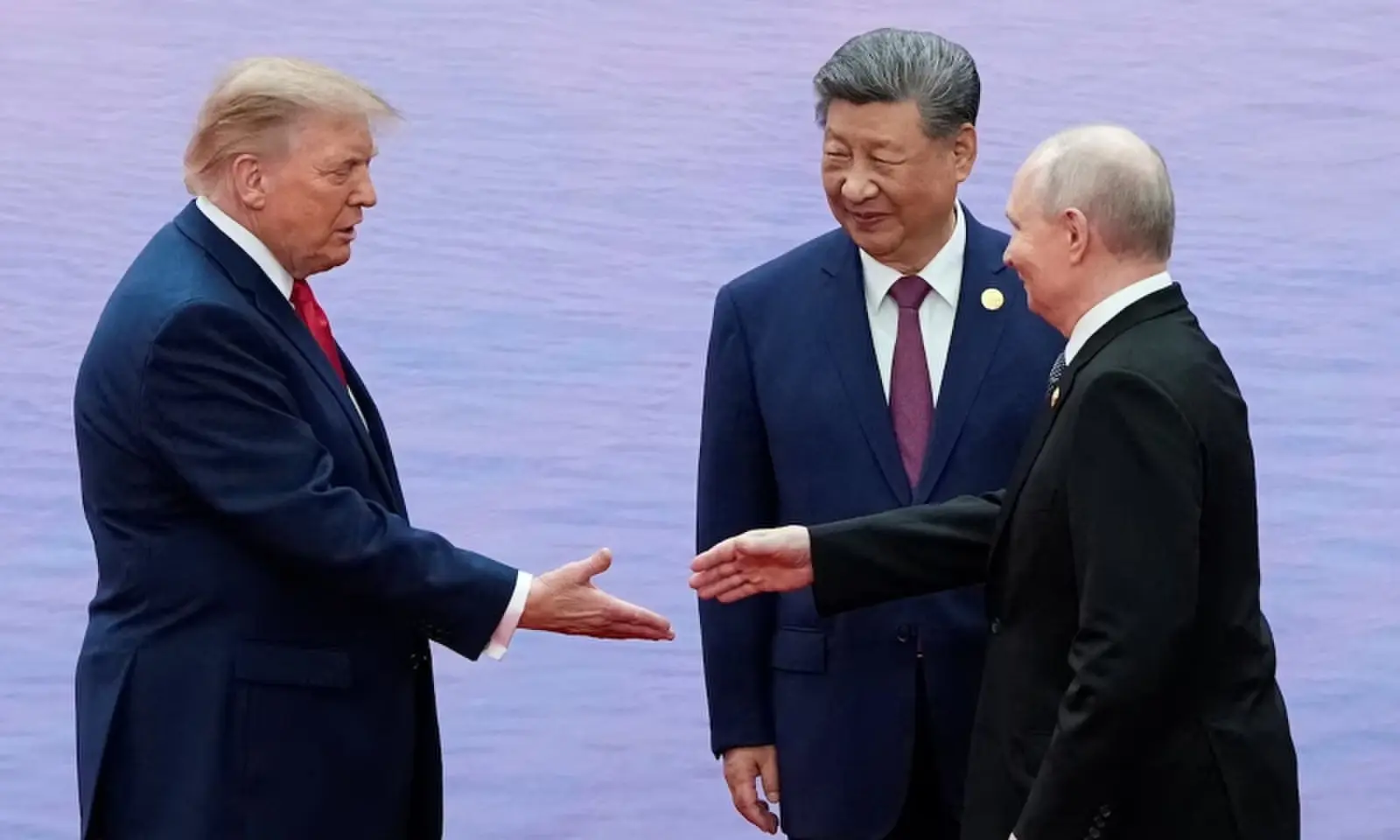
Paris (Imran Y. CHOUDHRY) :- Former Press Secretary to the President, Former Press Minister to the Embassy of Pakistan to France, Former MD, SRBC Mr. Qamar Bashir analysis : The proposed meeting of Presidents Xi Jinping, Vladimir Putin and Donald Trump in China could become a defining moment in shaping the international order for decades. The publicly declared agenda may revolve around global peace, nuclear security, trade, economic cooperation and strategic stability. Beneath these diplomatic priorities, however, lie competing geopolitical ambitions, concealed strategic calculations and opportunities to resolve two devastating wars that have inflicted enormous economic suffering upon the world.
The three leaders approach the negotiating table with vastly different political circumstances. Trump faces the fallout of the midterm elections, the unresolved confrontation with Iran and strained relationships with traditional allies in Europe, Canada and the Middle East. Putin remains deeply embroiled in Ukraine, where prolonged warfare continues to consume Russia’s military, economic and human resources. Xi Jinping, by contrast, faces no comparable military entanglement and commands an expanding network of international economic partnerships.
Each president nevertheless possesses extraordinary geopolitical leverage. The United States remains the world’s largest economy, a dominant consumer market and a formidable military and technological power. Its leadership in artificial intelligence, financial markets and innovation gives Washington enormous international influence. A single presidential statement can shake stock exchanges, influence energy prices and alter diplomatic calculations across continents. American economic sanctions, military capabilities and financial institutions remain powerful instruments of international pressure.
Russia’s strength rests upon its nuclear arsenal, vast territory and immense reserves of oil, natural gas, minerals and other strategic resources. Yet its continuing involvement in Ukraine has restricted its diplomatic flexibility, strained its economy and complicated its relationships with Europe. Ukrainian strikes deep inside Russian territory further demonstrate the mounting costs of prolonged confrontation. Moscow therefore has powerful incentives to seek a settlement that protects its security interests while ending an increasingly expensive conflict.
China possesses a different and potentially more consequential form of leverage. As the manufacturing powerhouse of the world, it commands industrial production, global supply chains, rare-earth processing and permanent magnet manufacturing. Its Belt and Road Initiative connects more than 140 participating countries through infrastructure, trade and investment. Expanding maritime networks, alternative transport corridors, digital connectivity and international financial arrangements further strengthen Beijing’s influence.
China’s growing use of the renminbi in international settlements also represents a long-term challenge to the dollar-dominated financial system. Although the dollar remains the principal global reserve currency, Beijing is steadily developing alternatives that could reduce dependence upon American financial institutions. China’s industrial strength and supply-chain influence provide Xi with considerable negotiating leverage, even without matching America’s worldwide military reach or Russia’s natural-resource abundance.
These contrasting strengths create three distinct negotiating agendas. Trump may seek recognition of American military success against Iran and demand that China and Russia reduce their economic, diplomatic and strategic support for Tehran. Xi may insist that China’s relations with Iran are sovereign bilateral matters beyond Washington’s authority. Putin, meanwhile, may seek American and Chinese recognition of Russia’s security concerns and negotiating position in Ukraine, including concessions that European governments might strongly oppose.
The political atmosphere surrounding such negotiations could also be influenced by intelligence controversies. Allegations involving Nvidia’s Jensen Huang and an alleged Chinese honey-trap operation have generated competing narratives about espionage and political manipulation. The historical use of sexual entrapment and blackmail by intelligence services associated with Britain, the United States, Russia and Israel raises questions about attempts to attribute similar practices to Beijing. If accusations against China are unfounded, their exploitation for diplomatic advantage could backfire against Washington.
Yet beyond these rivalries lies a far greater opportunity. The Ukraine and Iran conflicts have consumed enormous resources, disrupted international trade, threatened energy security and diverted national wealth from development toward destruction. Their consequences reach households, industries and governments far removed from the battlefields. The three presidents possess sufficient collective influence to explore settlements addressing the underlying disputes rather than merely managing their military consequences.
In Ukraine, the central diplomatic bargain could involve denying NATO membership in exchange for Russia’s complete withdrawal from occupied Ukrainian territory. Moscow would receive negotiated security assurances, while Kyiv would recover its internationally recognized borders, independence and territorial integrity. International guarantees, monitoring arrangements and phased sanctions relief could reinforce implementation. Such a settlement would require Ukraine’s agreement and credible protection against renewed aggression.
For Russia, peace would release enormous resources currently consumed by warfare and open possibilities for economic recovery. Ukraine could begin reconstruction, restore productive capacity and facilitate the return of displaced citizens. Europe could reduce the economic burden of confrontation, restore commercial confidence and redirect resources toward industrial development, infrastructure and public welfare. A negotiated security arrangement could replace a destructive military stalemate with a framework for long-term regional stability.
The Middle Eastern conflict demands an equally fundamental political settlement. The unresolved Palestinian question remains a central source of regional hostility. A genuine two-state solution establishing an independent, sovereign and viable Palestine alongside Israel could transform the strategic environment. Palestinian independence, recognized borders and security guarantees for both states could create conditions for reconciliation that decades of military confrontation have failed to achieve.
For Iran, Palestinian liberation has remained a principal declared objective of its regional policy. Establishing a sovereign Palestinian state could satisfy that objective and substantially diminish one of the political foundations of confrontation with Israel and the United States. Washington would then have an opportunity to replace military intervention with diplomacy, while Israel could pursue lasting security through political accommodation rather than recurring warfare.
Ending both conflicts would also serve China’s fundamental economic interests. Secure maritime routes, uninterrupted energy supplies, predictable commodity prices and stable international commerce are indispensable to its manufacturing economy. Reduced threats to the Strait of Hormuz and other strategic waterways could lower shipping risks, stabilize markets and restore confidence throughout global supply chains. Russia and the United States would likewise benefit from reduced military expenditures and expanding economic opportunities.
The decisive question is whether the three leaders will use their immense leverage to extract unilateral concessions or construct mutually acceptable settlements. Washington could encourage Israeli acceptance of Palestinian statehood, Moscow could accept Ukraine’s territorial restoration, and Beijing could facilitate diplomatic guarantees, reconstruction and economic cooperation. Their collective influence could help transform two costly conflicts into opportunities for international reconciliation.
Xi Jinping’s vision that the planet is large enough for all nations to develop and prosper together offers a framework for such cooperation. Rather than pursuing supremacy through military confrontation, economic coercion and strategic rivalry, the three powers could demonstrate that their competing strengths can contribute to collective security and prosperity.
If wisdom prevails, the Xi–Putin–Trump summit could achieve far more than diplomatic declarations. It could initiate two historic settlements, remove major sources of international instability and establish the foundations of an emerging world order in which peace replaces confrontation, cooperation replaces coercion, and shared prosperity triumphs over destructive geopolitical rivalry.
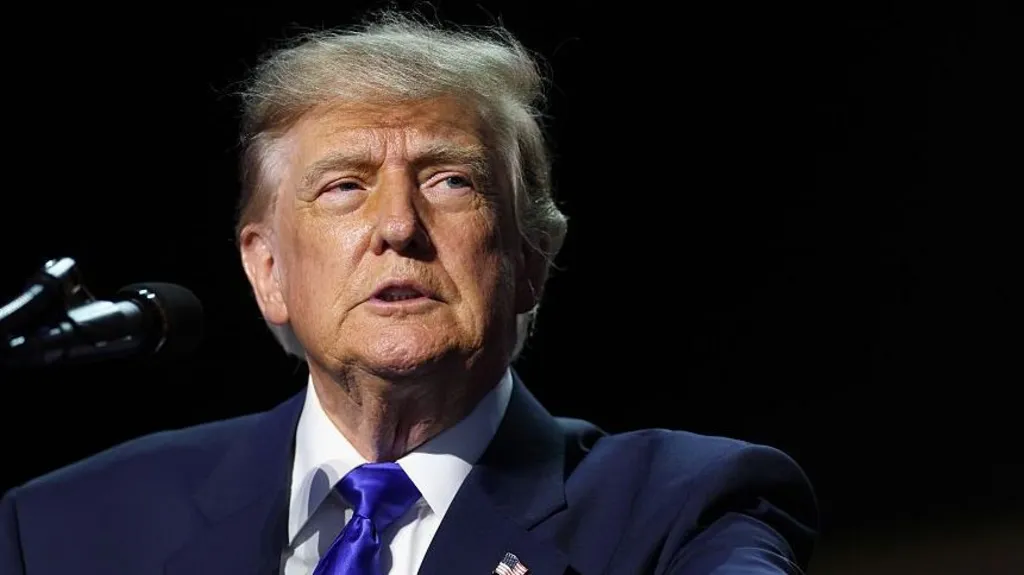
Paris (Imran Y. CHOUDHRY) :- Former Press Secretary to the President, Former Press Minister to the Embassy of Pakistan to France, Former MD, SRBC Mr. Qamar Bashir analysis : President Donald Trump’s war against Iran, launched alongside Israel on February 28, 2026, has become a devastating demonstration of military overreach, economic destruction and political failure. What began with promises of overwhelming American superiority has consumed tens of billions in military expenditure, imposed hundreds of billions in domestic economic losses and potentially inflicted trillions in global damage. The political consequences are equally devastating, threatening leadership in Washington and Tel Aviv while undermining American influence worldwide.
During a congressional hearing, a senator confronted a senior Pentagon official over the naval blockade of Iranian ports. Independent estimates placed its daily cost at $32.5 million, equivalent to $975 million monthly and $11.86 billion annually. The official acknowledged approximately $30 million daily but could not provide comprehensive accounting. An operation intended to economically strangle Iran has instead become a billion-dollar monthly burden on American taxpayers.
Iranian retaliation has compounded the destruction. Strikes against the American naval base in Bahrain, headquarters of the Fifth Fleet, reportedly inflicted at least $400 million in damage. Yet the Pentagon official could not confirm the estimate. The senator cited $47 billion already spent on the conflict, exposing the administration’s inability to explain the mounting costs of military operations, equipment losses and reconstruction.
The opportunity cost is devastating. As the senator argued, $47 billion could eliminate federal student debt for more than two million Americans, finance preschool education for every four-year-old, reduce family health insurance premiums by approximately $200 monthly, or relieve over ten million families of medical debt. Instead, resources essential for education, healthcare, infrastructure and human development have been consumed by destruction. By starving the civilian economy that generates national wealth and sustains military strength, Washington is undermining the foundations of American power.
American households have paid heavily. Estimates cited by the Center for American Progress place the burden at approximately $2,000 per household, representing $260 billion across 130 million households. Broader assessments suggest domestic losses approaching $447 billion through energy inflation, disrupted commerce and declining purchasing power. Gasoline prices exceeding $4.27 per gallon and diesel surpassing $6.31 during peak disruptions intensified pressure on consumers, transportation and manufacturing.
Military replenishment presents another enormous liability. Direct expenditure has been estimated between $37.5 billion and $47.1 billion, while replacing depleted missiles, interceptors, aircraft and drones could require another $29 billion to over $100 billion. Strategic inventories of Tomahawk missiles, Patriot interceptors and precision weapons have been strained. At least 21 American service members have reportedly been killed and 865 wounded, generating additional long-term medical and veterans’ obligations.
Israel has suffered substantial economic and political damage. Military mobilization, missile-defense operations, infrastructure repairs and disrupted commerce have imposed multibillion-dollar burdens. The earlier twelve-day confrontation in 2025 generated combined regional losses estimated at $24 billion to $35 billion. The continuing war has multiplied these liabilities. Netanyahu’s electoral setback and inability to secure a dependable parliamentary majority have exposed the political consequences of his military adventurism.
Iran has endured extensive destruction of military, industrial, energy and civilian infrastructure, with reported fatalities exceeding 6,000. Yet despite enormous human and financial losses, Tehran has sustained resistance and imposed substantial costs upon its adversaries. Washington’s expectation that overwhelming military superiority and economic strangulation would force Iranian submission has failed to deliver its proclaimed objectives.
The wider Middle East has experienced economic and strategic upheaval. More than twenty regional military facilities and infrastructure sites have reportedly suffered damage. Disrupted shipping, higher insurance premiums, damaged energy installations and interrupted investment have generated reconstruction liabilities potentially reaching tens of billions. Gulf governments dependent upon American protection have witnessed the vulnerability of their security arrangements, weakening confidence in Washington’s regional guarantees.
Globally, the economic consequences potentially reach trillions. Brent crude surged more than 54% during acute phases, exceeding $112 per barrel. Disruptions around the Strait of Hormuz increased transportation, manufacturing, fertilizer and food costs across continents. Europe, Asia and developing economies have absorbed inflationary shocks from a confrontation they neither initiated nor controlled. Lost economic output, interrupted investment and disrupted supply chains have multiplied the destruction far beyond the battlefield.
The political costs are equally punishing. Trump’s November midterm setbacks weakened his domestic authority, while Netanyahu’s parliamentary difficulties threatened his political survival. Washington’s diplomatic credibility has deteriorated as governments question whether American military intervention produces security or instability. Iran’s continued resistance has further challenged the assumption that military superiority guarantees political dominance.
America’s domestic infrastructure has simultaneously exposed disturbing vulnerabilities. Disruptions involving Microsoft services, aviation networks, banking operations, communications systems and Apple-related platforms have affected sectors supporting trillions in economic activity. These failures underscore the contradiction of financing military destruction abroad while essential technological and civilian infrastructure at home urgently requires modernization and protection.
Trump’s broader policies reinforce the pattern. Tariff confrontations generated economic uncertainty, immigration restrictions disrupted labor markets, territorial ambitions concerning Greenland and Canada encountered resistance, and intervention in Venezuela raised questions about sovereignty and control over national resources. The Iranian war represents the most expensive manifestation of a foreign policy increasingly dependent upon coercion rather than diplomacy.
Congress now confronts the question of accountability. The hearing exposed the administration’s failure to justify $47 billion in expenditure while Americans struggle with education, healthcare and household expenses. Congressional authority over appropriations provides a powerful mechanism to deny further funding, halt military escalation and redirect national resources toward productive investment and public welfare.
Accountability must extend beyond Washington. Iran, Lebanon and neighboring countries have suffered enormous destruction, displacement and civilian casualties. Reported deaths in Lebanon have exceeded 7,000, while millions across the region have faced disruption. Reconstruction, lost economic output and damaged infrastructure represent substantial financial claims requiring consideration in any eventual settlement.
Trump promised military victory, restored deterrence and strengthened American supremacy. Instead, America confronts $47 billion in cited war expenditure, potentially $100 billion in additional military replenishment, hundreds of billions in domestic losses and worldwide disruption potentially reaching trillions. Israel faces political instability, Gulf governments are reassessing their dependencies, and Iran remains resistant.
The ultimate reckoning will concern more than squandered billions. It will encompass shattered economies, weakened political leadership, diminished American credibility and opportunities stolen from future generations. Trump launched a war to demonstrate American supremacy; instead, he has exposed the economic and political foundations of that supremacy to unprecedented strain. The financial losses are staggering, the political consequences potentially irreversible, and responsibility leads directly to the president who chose the war.

Paris (Imran Y. CHOUDHRY) :- Former Press Secretary to the President, Former Press Minister to the Embassy of Pakistan to France, Former MD, SRBC Mr. Qamar Bashir analysis : America is entering an extraordinary era in which perceived threats, institutional breakdowns and technological vulnerabilities are becoming instruments for transferring enormous public wealth into corporate hands. Every hypothetical catastrophe produces another multibillion-dollar expenditure, while corporations entrusted with preventing these emergencies become richer. The proposed $1.5 trillion defense budget, aviation modernization demands exceeding $30 billion, and hundreds of billions spent annually on financial technology illustrate an economic system increasingly organized around expensive crises rather than public welfare.
The Pentagon’s FORTRESS America initiative provides a revealing example. Military planners envision a catastrophic global war that could destroy electricity networks, interrupt communications and isolate military installations from civilian infrastructure. Consequently, American bases are reportedly being instructed to prepare for 90 days of independent operation. Although the Pentagon has not published an overall cost estimate, outside assessments suggest expenditures ranging from tens of billions to potentially hundreds of billions of dollars. An extraordinary financial commitment is therefore emerging against a hypothetical catastrophe whose occurrence remains uncertain.
The proposed preparations involve portable nuclear reactors, independent electrical microgrids, battery storage, fuel reserves, ammunition stockpiles, communications networks and alternative manufacturing arrangements. Already, the Army has announced nuclear microreactor awards worth up to $2.2 billion for five military installations. Extending comparable resilience arrangements across hundreds of bases could create enormous opportunities for defense contractors, energy corporations and technology suppliers. The enemy remains hypothetical, but the contracts, expenditures and corporate beneficiaries are becoming increasingly tangible.
The broader military budget reveals the magnitude of this transformation. The administration’s proposed $1.5 trillion defense allocation for fiscal year 2027 represents an extraordinary concentration of national resources in military preparedness. Its proposed financing includes approximately $1.15 trillion in base funding and another $350 billion through reconciliation. Simultaneously, the administration has proposed a 10 percent reduction in nondefense discretionary expenditure. America is therefore contemplating unprecedented military spending while demanding sacrifices from institutions responsible for improving ordinary citizens’ lives.
Civil aviation presents another illustration. Following nationwide flight disruptions attributed to technological problems, the Federal Aviation Administration renewed demands for massive modernization expenditure. The proposed Modern Skies Act would provide approximately $30 billion, supplementing $12.5 billion previously approved. Transportation officials have placed the broader modernization requirement near $50 billion. What began as technological failure has consequently become the justification for another enormous public spending program, potentially benefiting aviation contractors, telecommunications suppliers, engineering companies and technology manufacturers.
The proposed aviation allocation includes approximately $10 billion for digital architecture, telecommunications and air traffic management, another $10 billion for airport infrastructure, and $10 billion for major terminal development. These investments may address genuine deficiencies, but the question remains why deterioration was allowed to reach a point where taxpayers must suddenly finance such extraordinary reconstruction. Institutional neglect becomes an emergency, the emergency becomes a financial demand, and the resulting contracts become lucrative corporate opportunities.
American banking demonstrates an equally troubling pattern. Recent disruptions affecting JPMorgan Chase, Bank of America, Wells Fargo and other institutions prevented customers from accessing accounts or completing transactions. Although no coordinated cyberattack was established, the incidents intensified demands for technological resilience. Industry estimates cited for banking technology expenditure approach $495 billion annually across the broader financial sector. This is not a single American modernization bill, but it demonstrates the enormous financial ecosystem surrounding digital banking infrastructure.
The banking sector controls trillions of dollars in assets and earns substantial revenues from lending, payment processing and financial services. Nevertheless, technological modernization expenses can ultimately reach customers through account charges, transaction fees, interest margins and other costs. Visa and Mastercard, whose payment networks generate exceptionally high operating margins, illustrate the profitability of financial intermediation. Consumers pay for accessing their own money, transferring funds and participating in an increasingly cashless economy.
Microsoft’s recent service disruptions have similarly exposed vulnerabilities in digital infrastructure supporting businesses, government departments and communication networks. Companies already spend billions annually on cloud services, cybersecurity, software licensing and subscriptions. Each additional failure strengthens the commercial argument for purchasing more sophisticated protection from the same technological ecosystem. The corporations responsible for providing digital reliability can consequently benefit financially from the anxieties created when reliability collapses.
The combined financial implications are staggering. A $1.5 trillion proposed defense budget, approximately $42.5 billion in approved and proposed aviation modernization funding, potentially hundreds of billions in military-base resilience expenditure, and an estimated $495 billion in annual banking technology spending collectively demonstrate the immense scale of the security and modernization economy. These figures represent different expenditure categories and timeframes, not one consolidated government bill, but they reveal how trillions circulate around threats, vulnerabilities and institutional dependence.
Meanwhile, proposed reductions in domestic expenditure threaten programs directly affecting American households. The administration’s fiscal proposals include approximately $2.3 billion in reductions to education funding, a $5.6 billion reduction for NASA, and substantial cuts affecting scientific research, community development and social assistance. Proposals involving food assistance and energy support further illustrate the competing priorities. Money appears readily available for preparing against hypothetical destruction, while funding essential human development becomes a subject of austerity.
The economic opportunity cost is equally disturbing. Research associated with Brown University’s Costs of War project indicates that $1 million invested in education can generate approximately 13 jobs, compared with nine in healthcare and five in defense. Redirecting merely $100 billion from military expenditure toward education could therefore support substantially more employment. Yet the political establishment continues prioritizing military contracts and corporate procurement over the productive potential of ordinary Americans.
This pattern extends throughout corporate America. Nvidia, Microsoft, Apple, Alphabet, Meta, Tesla, SpaceX, major insurers and mortgage institutions occupy commanding positions in technology, finance and essential services. Their combined valuations run into trillions of dollars, while their executives and shareholders accumulate extraordinary wealth. Meanwhile, ordinary families confront rising insurance premiums, mortgage payments, medical expenses and educational costs. The economic system increasingly concentrates rewards at the top while distributing financial burdens across society.
The political consequences are becoming visible. Figures such as Zohran Mamdani and Abdul El-Sayed represent growing demands for affordable housing, universal access to healthcare, economic fairness and stronger public services. Their political appeal challenges the assumption that corporate profitability automatically translates into public prosperity. Americans increasingly want national wealth directed toward their daily needs rather than consumed by endless military preparations and expensive institutional failures.
China offers a contrasting approach through stronger state direction of infrastructure, industrial development and strategic investment. Its experience raises an important question about whether national resources should principally support private accumulation or coordinated public development. America possesses sufficient wealth and technological capacity to provide exceptional education, healthcare, housing and infrastructure. The obstacle is increasingly one of political priorities and economic distribution.
The writing is on the wall. A system that manufactures anxieties, monetizes institutional failures and repeatedly transfers public resources toward powerful corporations cannot command unquestioning public confidence indefinitely. America’s greatest doomsday may never arrive through Russian missiles, Chinese cyberattacks or Iranian drones. It may emerge from within, when trillions are spent preparing for imaginary catastrophes while the real economic suffering of ordinary Americans remains neglected.
The FORTRESS cost range is an outside estimate, not a Pentagon appropriation; the $30 billion aviation figure is proposed additional funding, and the $495 billion banking figure is a broader industry estimate rather than a verified U.S.-only upgrade requirement. The relevant reporting and the Department of Transportation’s funding breakdown support those distinctions.


Xi–Putin–Trump Summit: A Turning Point in the Global Order

Trump’s Iran War: Trillions Lost and Accountability Looms

America’s Manufactured Doomsdays

New Chapter for Dragon Boating in Punjab and Khyber Pakhtunkhwa Provincial associations officially set up with sights locked on national competitions and international representation.

South Korea’s Yoo Useong Steps Onto the Global Strongman Stage as World Strongman Federation Professional Athlete

A Survey of Mata-E-Zeest


-
 Pakistan News1 month ago
New Chapter for Dragon Boating in Punjab and Khyber Pakhtunkhwa Provincial associations officially set up with sights locked on national competitions and international representation.
-
 Sports5 months ago
South Korea’s Yoo Useong Steps Onto the Global Strongman Stage as World Strongman Federation Professional Athlete
-
 Art & Culture1 year ago
A Survey of Mata-E-Zeest
-

 Europe News2 years ago
Chaos and unproven theories surround Tates’ release from Romania
-

 American News2 years ago
Trump expands exemptions from Canada and Mexico tariffs
-

 Art & Culture2 years ago
Will Snow White be a ‘victim of its moment’? How the Disney remake became 2025’s most divisive film
-

 Pakistan News1 year ago
Comprehensive Analysis Report-The Faranian National Conference on Maritime Affairs-By Kashif Firaz Ahmed
-

 Entertainment2 years ago
Champions Trophy: Pakistan aim to defend coveted title as historic tournament kicks off today