
American News
America’s Campuses and the Betrayal of Student Trust

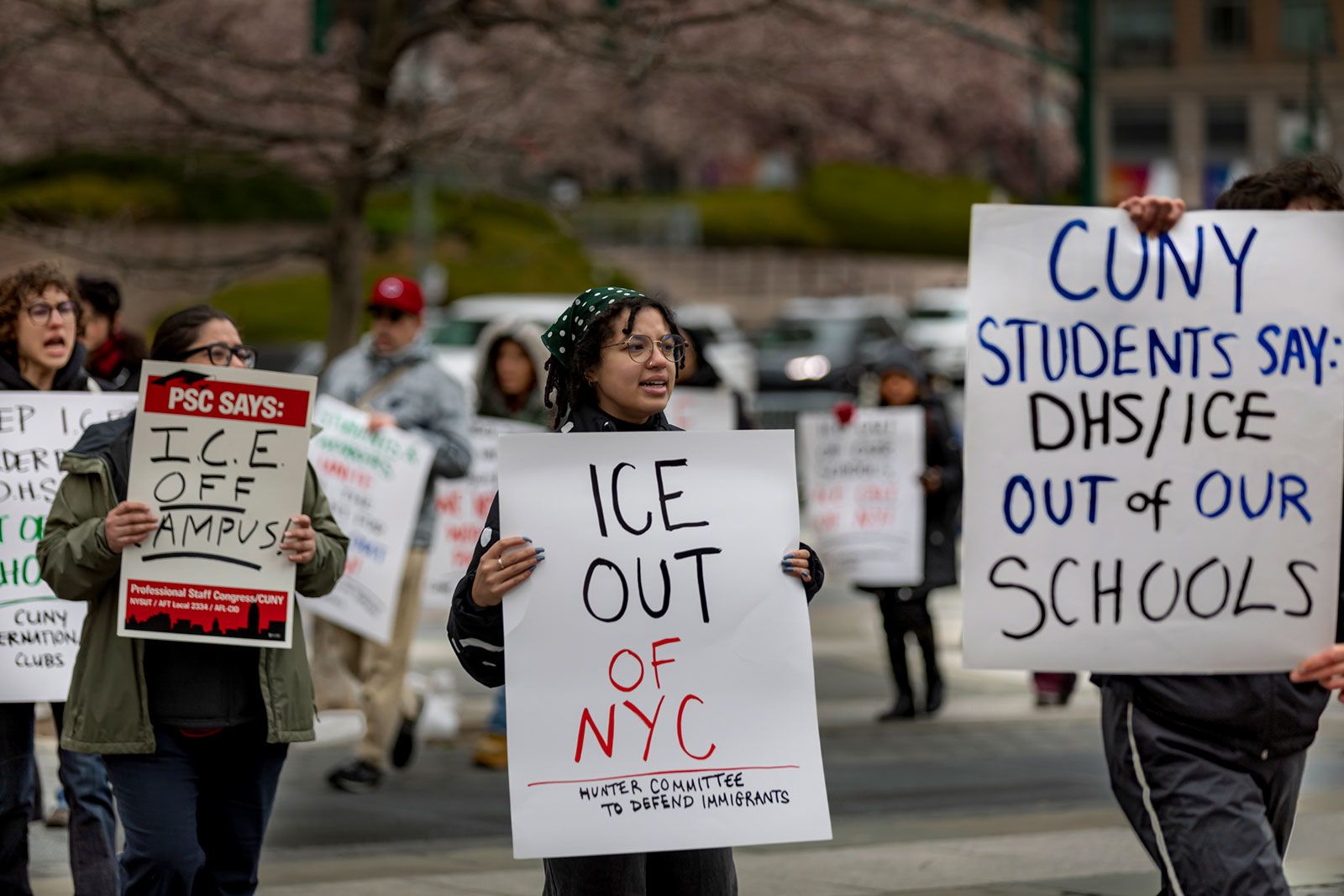
Paris (Imran Y. CHOUDHRY) :- Former Press Secretary to the President, Former Press Minister to the Embassy of Pakistan to France, Former MD, SRBC Mr. Qamar Bashir analysis : At Cornell University of the United States, a former student identified as Jane Doe lodged a complaint that seven fraternity members sexually assaulted her after she was pressured to consume alcohol and drugs at the Chi Phi fraternity house in October 2024. Her September 2026 civil lawsuit brought renewed scrutiny to the university and the authorities who initially declined prosecution. The alleged violence is horrifying. The handling of her complaint demands an equally searching examination.
Reflecting back, when my niece received a scholarship to study in Copenhagen, our family confronted a question familiar to countless Pakistani households: should a young woman travel abroad alone and live independently for three years? I was then serving as Pakistan’s press minister in France. The family consulted me, and I encouraged them to support her. I trusted that the institutions around her would protect her freedom, dignity and safety. She completed her studies and returned to Pakistan with her qualification and happy memories.
Today, my own daughter attends the University of Michigan–Dearborn. Her bus journey takes approximately two hours there and back. That same confidence was shaken when, during her journey home, an adult man approached her, forced his telephone number on her and pressured her to date him. His intimidating behavior turned an ordinary commute into an unsettling experience.
Reading the allegations emerging from Cornell deepened that father’s fear. Families send their children to universities with dreams. Neither the campus nor the journey home should become a place where intimidation restricts their freedom.
She reported the alleged assault to police in November 2024 but the entire system instead of taking the matter seriously and conducting a thorough investigation stood with the system and protected the abhorrent rapists.
However, she gathered the courage once again and nearly two years later, her pursuit of accountability became a national controversy. Every institution involved must answer a question that no carefully drafted statement can erase: what did you do when she first asked for help?.
District Attorney Matthew Van Houten said he received a six-page statement and a Snapchat video and put them under the carpet is now being asked difficult questions. Why did his office not obtain the underlying material before deciding against prosecution? A prosecutor’s responsibility demands active inquiry, particularly when a complaint leaves consequential questions unanswered.
Cornell’s assertion that it shared all investigatory information makes the discrepancy more serious. What records existed? Which were transmitted? Who reviewed them? Who decided that further investigation was unnecessary? These questions require documents, testimony and independent scrutiny. The woman who sought protection should never have been left to expose weaknesses in the machinery responsible for investigating her complaint.
Promises of greater diligence now demand an explanation of why comparable diligence was not exercised earlier. Missing information should provoke further inquiry. It cannot serve as a satisfactory endpoint. The handling of this complaint requires its own reckoning alongside the investigation of the alleged assault.
On October 1, Governor Kathy Hochul appointed the New York attorney general’s office as special prosecutor. This intervention must establish the evidence and examine the decisions surrounding the original investigation. Transferring a case cannot become a substitute for accounting for its history. Every proven instance of obstruction, misconduct or neglect must carry consequences.
Cornell reports that its disciplinary proceedings produced expulsions, suspensions and other sanctions. Those actions do not settle whether the university fulfilled every responsibility to the complainant. It must answer for the treatment she received, the handling of evidence and the adequacy of its response. Institutional accountability cannot end where an institution’s preferred explanation begins.
Cornell’s own survey makes complacency indefensible. Among undergraduate women responding to its 2025 survey, 35 percent reported nonconsensual sexual contact during their time at the university. That finding demands sustained action from its leadership. Students’ experiences of sexual harm cannot be answered indefinitely with expressions of concern, committees and recommendations. Prevention, support and accountability must be measured by what changes in students’ lives.
University culture must change wherever reputation takes precedence over confronting violence. A student who reports an assault deserves compassion, protection and a determined pursuit of truth. Burying complaints, discouraging disclosure or interfering with an investigation compounds the original harm. Wherever such conduct occurs, it is an institutional betrayal.
Universities must stand beside students seeking help and commit their resources to securing justice. Supporting a complainant requires immediate care, protection against retaliation and a thorough, independent investigation capable of producing reliable findings. An institution earns honor by confronting wrongdoing within its walls. Concealment only deepens the eventual disgrace. Transparency and accountability make a university worthy of trust.
The same obligation extends to transport authorities. Students must be able to report threatening behavior without being dismissed or forced to navigate an inaccessible complaints system. Universities should coordinate with transit providers on clear reporting procedures and practical assistance. The daily journey to an education must receive serious attention in any credible commitment to student safety.
Families have responsibilities too. The shame of sexual violence belongs to those who commit it. Reporting an assault does not dishonor a family. Drinking, taking drugs, entering a fraternity house or trusting an acquaintance gives nobody permission to violate another person’s body. A student seeking help should never face an interrogation of her worthiness to receive it.
International students can face additional obstacles: distance from family, unfamiliar procedures, language barriers and uncertainty about whom to trust. Universities that recruit them must provide accessible, independent assistance. The promise of a world-class education carries a duty of care that cannot disappear when a complaint becomes inconvenient.
Reform must examine how campus police, health services, disciplinary offices and prosecutors handle allegations and exchange information. Original accounts and relevant evidence must be preserved. Transfers must be documented. Decisions to discontinue investigations must withstand meaningful review. Where institutional conflicts exist, students need a clear route to independent authorities.
Medical care, appropriate forensic services, confidential advocacy and protection against retaliation must be readily available. No fraternity, athletic program, donor relationship or tradition should be insulated from scrutiny. Policies matter only when they are enforced, and leadership means accepting responsibility when enforcement fails.
The answer cannot be to withdraw daughters from education or confine their lives until fear determines their choices. Students deserve freedom without being left alone to manage the risks. The burden belongs on those who commit violence and the institutions responsible for preventing, investigating and addressing it.
Cornell must become a turning point. Establish the truth. Prosecute where the evidence warrants. Investigate every credible allegation of obstruction or neglect. Publish institutional findings while protecting the complainant’s privacy. A reputation damaged by questions of accountability can be restored only through accountability.
Parents send their children to build a future. They do not surrender them to violence, intimidation or bureaucratic abandonment. No university’s prestige outweighs a student’s dignity. No official’s position excuses a failure of duty. Justice must reach anyone proven responsible for the assault, and accountability must reach every institution proven to have failed the student who sought its help. Anything less would leave the deepest betrayal intact.


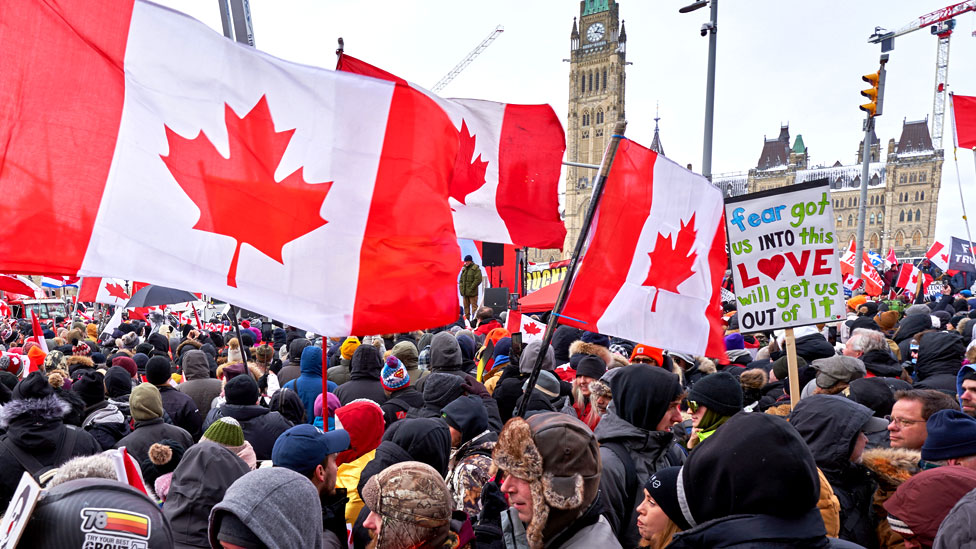
Paris (Imran Y. CHOUDHRY) :- Former Press Secretary to the President, Former Press Minister to the Embassy of Pakistan to France, Former MD, SRBC Mr. Qamar Bashir analysis : It took generations to build one of the world’s most remarkable relationships between two neighboring countries. It took less than two years of Donald Trump’s second presidency to shake its foundations. Canada, which considered the United States its most dependable friend, economic partner and security guarantor, suddenly discovered that its greatest strategic strength—its extraordinary dependence on America—could also become its greatest vulnerability.
On October 29, 2026, Prime Minister Mark Carney unveiled Canada’s first comprehensive national security strategy in more than twenty years, The Plan for a Stronger Canada: National Security for Canadians. This was no routine bureaucratic exercise. It represented a fundamental reassessment of Canada’s sovereignty, economic security, military preparedness and intelligence capabilities in an international environment where even longstanding alliances could no longer be taken for granted.
For generations, Canada and the United States represented an extraordinary model of peaceful coexistence. Their relationship extended beyond geography into culture, language, commerce, industry, energy, technology and collective defense. Their economies became so deeply integrated that automobile components crossed their shared border repeatedly before becoming finished products. Electricity, natural gas, petroleum, steel, aluminum, agricultural commodities and industrial materials flowed through interconnected networks serving both nations.
Canada consequently had powerful reasons to trust its southern neighbor. American military superiority, NATO commitments and the North American Aerospace Defense Command provided a formidable security umbrella. Canada maintained its own armed forces and intelligence institutions, but its defense planning operated within an exceptionally close partnership with Washington. It never seriously contemplated matching American military strength, because cooperation appeared more rational than strategic competition.
Then came Donald Trump’s second presidency, beginning in January 2025. His repeated suggestions that Canada should become America’s fifty-first state, combined with confrontational trade policies and public pressure on Canadian leaders,fundamentally disturbed the assumptions underpinning this relationship. What Washington sometimes presented as political rhetoric was interpreted by many Canadians as an affront to their national dignity, independence and sovereignty.
Tariffs intensified the confrontation. Canadian industries that had built their production systems around predictable access to American markets suddenly faced uncertainty. Steel manufacturers, aluminum producers, automobile companies and agricultural exporters confronted the possibility that economic interdependence could be transformed into political leverage. The relationship that once guaranteed prosperity was increasingly perceived as exposing Canada to decisions made beyond its control.
Canada’s response under Carney has been to pursue greater strategic autonomy. Rather than accept that its economic and diplomatic options must remain confined by Washington’s preferences, Ottawa has emphasized diversifying commercial partnerships with Europe, Asia, the Middle East and other regions. The objective is not necessarily to abandon America,but to ensure that disagreement with America cannot paralyze Canada.
The new security strategy makes this transformation unmistakable. It places economic security at the foundation of national security and identifies eight strategic sectors: emerging technologies, critical minerals, defense, energy, transportation, pharmaceuticals and biotechnology, food security, and financial systems. Canada intends to protect domestic industrial capabilities, strengthen supply chains and reduce vulnerabilities arising from excessive external dependence. Sovereignty, in this framework, is no longer merely a constitutional principle. It is an economic and technological necessity.
The military dimension is equally significant. Canada plans to increase defense expenditure from the NATO benchmark of two percent of GDP in 2025–2026 toward the alliance’s five-percent defense investment commitment by 2035. Its armed forces will prioritize defending Canadian territory, especially the Arctic, while developing capabilities to respond to threats extending from conventional warfare to cyberattacks, space-based operations and hybrid conflict.
Canada also intends to strengthen sovereign intelligence collection, counterintelligence, secure communications and advanced technological infrastructure. Greater investment in artificial intelligence, satellite-related capabilities and cybersecurity will help Ottawa develop independent assessments of international threats. Although Canada remains committed to the Five Eyes intelligence partnership, the emerging philosophy is unmistakable: a nation must possess sufficient intelligence capabilities to make informed decisions without depending entirely upon another government’s interpretation of events.
The transformation becomes even more striking when viewed from South Asia. Pakistan and India share geography,history, languages, cultural traditions, family connections and enormous economic potential. Yet decades of political confrontation have prevented these commonalities from producing durable peace. Their experience demonstrates that geographical proximity and cultural familiarity cannot, by themselves, guarantee harmonious relations.
Canada and America are not Pakistan and India. Their institutions, alliances and economic arrangements remain profoundly different. Nevertheless, the comparison carries a warning: even exceptionally integrated neighbors can experience a rapid deterioration of trust when political confrontation overwhelms established mechanisms of cooperation. Shared history cannot permanently compensate for the disappearance of mutual respect.
The broader lesson extends far beyond North America. Countries dependent upon China, America, Europe or any other powerful economic partner must recognize that external guarantees are only as dependable as the political circumstances sustaining them. Governments change, strategic priorities shift, commercial agreements are renegotiated and yesterday’s indispensable partner can become tomorrow’s source of pressure.
There is something deeply disturbing about this development in an age of unprecedented scientific achievement. Humanity is advancing toward artificial superintelligence, sophisticated robotics, increasingly autonomous machines and technologies capable of transforming human consciousness and interaction. We are exploring distant planets and unlocking the mysteries of the universe, yet international relations can still descend into primitive contests of dominance, intimidation and submission.
Scientific intelligence has advanced astonishingly, but political wisdom has not always kept pace. The capacity to develop extraordinary machines does not automatically produce the moral maturity required to respect sovereignty, honor commitments or resolve disagreements peacefully. A civilization capable of reaching beyond Earth should also possess the wisdom to prevent powerful nations from treating weaker neighbors as subordinate territories.
Canada’s awakening therefore offers a lesson in the distinction between friendship and dependence. Friendship flourishes when both parties retain dignity, independence and freedom of choice. Dependence becomes dangerous when one partner possesses sufficient economic or military leverage to dictate the other’s decisions. Genuine alliances should strengthen sovereignty rather than require its surrender.
Carney’s strategy does not advocate abandoning the United States. It explicitly seeks continued cooperation based upon mutual respect and shared responsibility. That distinction is essential. Strategic autonomy does not require isolation, hostility or military competition with every powerful neighbor. It requires sufficient domestic strength, diversified partnerships and independent institutions to ensure that cooperation remains voluntary rather than compulsory.
The writing on the wall is unmistakable. Nations that neglect their economic resilience, defense preparedness, technological capabilities and diplomatic independence may eventually discover that their most trusted relationships cannot protect them against sudden political upheaval. Canada’s new security strategy is a response to that vulnerability,and its implementation will test whether sovereignty can be strengthened without destroying the benefits of partnership.
The ultimate tragedy would be for humanity to master artificial intelligence while remaining captive to the ancient instinct that might make right. Canada’s experience reminds the world that friendship must rest upon equality, alliances upon trust, and security upon national capability. A nation that cannot stand on its own feet can never be entirely certain that the hand supporting it will not one day become the hand threatening it.

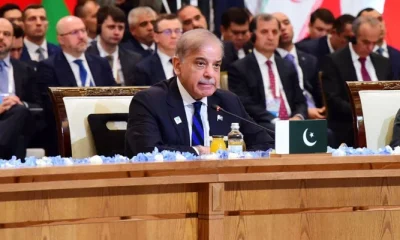
Paris (Imran Y. CHOUDHRY) :- Former Press Secretary to the President, Former Press Minister to the Embassy of Pakistan to France, Former MD, SRBC Mr. Qamar Bashir analysis : Has the United States divorced the world, or has the world finally decided to divorce the United States? This question has acquired extraordinary significance as foreign ministers of the world’s leading economies gather in Atlanta under theAmerican presidency of the G20. A gathering intended to demonstrate international cooperation has instead exposed the growing distance between Washington and the very nations whose confidence, partnership and collective wisdom once sustained American global leadership.
The G20 was established in 1999 following the Asian financial crisis to protect international financial stability, coordinate economic policies and prevent national crises from becoming global catastrophes. Elevated to leaders’ level in 2008, it represented approximately 85 percent of global economic output, three-quarters of international trade and two-thirds of humanity. Its fundamental philosophy is straightforward: no major economy can prosper indefinitely by destabilizing others. Yet the United States, entrusted with hosting this year’s deliberations, increasingly appears to be pursuing policies fundamentally opposed to that philosophy.
At the Atlanta meeting, Secretary of State Marco Rubio warned of interconnected economic and geopolitical crises threatening energy supplies, food security, international trade, supply chains and freedom of navigation. He appealed for collective action, acknowledging that national interests do not always coincide but cooperation remains indispensable. His words were appropriate, even compelling. The contradiction, however, was impossible to ignore: many of the disruptions he identified have been aggravated by the unilateral decisions, economic coercion and military policies of the very administration he represents.
The exclusion of South Africa from American-hosted G20 proceedings illustrates this contradiction. South Africa is not an occasional guest but a founding member, representing a continent whose development challenges deserve international attention. President Donald Trump’s confrontation with Pretoria, fueled by political grievances, disagreements over international alignments and disputes surrounding the previous G20 presidency, has transformed a multilateral institution into an instrument of bilateral punishment. A host may organize a conference, but it should not presume the authority to determine which permanent members deserve participation.
The conflict involving Iran presents an even more consequential contradiction. Washington speaks of protecting freedom of navigation while its military confrontation with Tehran has intensified insecurity around the Strait of Hormuz, through which roughly one-fifth of global petroleum liquids consumption normally passes. Disruption of this strategic waterway threatens energy markets, shipping insurance, industrial production and household budgets across continents. Oil-price surges toward $120 a barrel, against earlier levels around $60, illustrate the potential magnitude of the economic shock.The consequences extend far beyond the countries participating directly in the confrontation.
The American sanctions regime further undermines the economic stability the G20 was created to defend. Primary and secondary sanctions targeting governments, banks, corporations, shipping networks and individuals have increasingly transformed access to the dollar-based financial system into an instrument of geopolitical pressure. Sanctions againstInternational Criminal Court officials have also raised disturbing questions about Washington’s willingness to tolerate international institutions when their decisions challenge American preferences. Whatever their stated justification, such measures can produce uncertainty and collateral economic damage extending well beyond their intended targets.
Trump’s tariff policies have introduced another layer of uncertainty into international commerce. By imposing or threatening sweeping duties against major trading partners, including fellow G20 economies, Washington has weakened confidence in predictable trade rules. The administration argues that tariffs protect American industries, correct unfair practices and restore manufacturing. Nevertheless, when the world’s largest economy employs market access as a bargaining weapon, other nations retaliate, investment decisions become uncertain and the cooperative economic framework begins to fracture.
The pattern extends beyond economics. Trump’s repeated suggestions concerning Greenland, his rhetoric about Canada becoming America’s fifty-first state, pressure on Cuba and confrontation with Venezuela have unsettled perceptions ofAmerican respect for national sovereignty. His administration’s withdrawal from the Paris climate agreement has further weakened international confidence in Washington’s willingness to honor long-term collective commitments. These decisions reinforce the impression that international agreements remain acceptable to Washington only while they accommodate its immediate political preferences.
Perhaps nowhere is the erosion of confidence more visible than in Europe. America’s changing approach toward Russia’s war against Ukraine has unsettled governments that previously regarded Washington as the indispensable guarantor ofEuropean security. European leaders face the uncomfortable prospect of defending Ukraine while simultaneously questioning the reliability of American commitments. NATO remains a powerful military alliance, but its political cohesion cannot remain unaffected when its leading member introduces uncertainty into the strategic calculations of its closest partners.
The cancellation of the traditional G20 family photograph in Atlanta was therefore more than a diplomatic embarrassment. European representatives, joined by objections from Australia and Canada, refused to appear alongside Russian Foreign Minister Sergei Lavrov. The photograph was abandoned, exposing the inability of major powers to demonstrate even symbolic unity. Russia remains uncompromising on Ukraine, while Western governments reject normalization without meaningful progress toward peace. The incident illustrates how profoundly fractured the international diplomatic environment has become.
Japan and other longstanding American partners also face increasingly complicated strategic choices. Questions surrounding military deployments, economic dependence, regional security and relations with China demonstrate that alliance does not automatically mean unquestioning obedience. Across Asia, Europe, Africa and Latin America,governments are becoming more determined to preserve independent decision-making rather than subordinate every national interest to Washington’s geopolitical priorities.
The difficulty in producing a joint communiqué at Atlanta offers another warning. As the October 30–31 meeting continues, diplomats consider a comprehensive consensus statement unlikely. Yet the absence of consensus cannot be attributed exclusively to Washington: Russia’s war against Ukraine, China’s policies and disagreements among other members contribute significantly. Nevertheless, America’s position as host makes its own confrontational policies particularly consequential. The failure of collective diplomacy would symbolize not merely disagreement, but the weakening of the leadership traditionally expected from the United States.
The danger is that the G20 could follow NATO into a prolonged crisis of political confidence, not necessarily disappearing, but becoming progressively less capable of fulfilling its original mission. Countries may increasingly pursue bilateral, regional and alternative multilateral arrangements where decisions can be reached without American pressure.Such developments would not automatically create a fairer international order, but they would diminish Washington’s capacity to shape global outcomes through consensus.
American leadership was never sustained by economic and military power alone. It also depended upon predictability, institutional credibility, diplomatic restraint and the conviction that cooperation with Washington offered mutual benefits.If the United States wishes to restore that leadership, it must reconsider the philosophy that treats allies as dependents,institutions as instruments and economic relationships as opportunities for coercion. It must return to consultation, respect for sovereignty, dependable commitments and rules applicable to powerful and weaker nations alike.
The Atlanta gathering has exposed a defining paradox: America is calling upon the world to repair an international order that its own policies have helped destabilize. The world has not entirely divorced the United States, nor can it realistically afford to do so. But the era when Washington could expect automatic acceptance of its leadership is fading. UnlessAmerica rediscovers the distinction between commanding obedience and earning respect, it may continue hosting international conferences while discovering that the world is increasingly unwilling to follow.
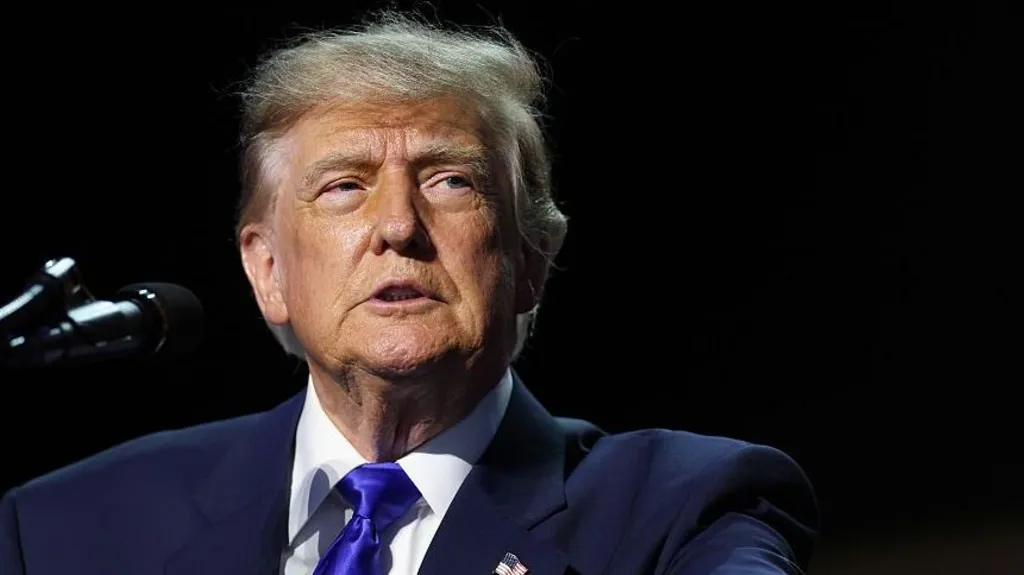
Paris (Imran Y. CHOUDHRY) :- Former Press Secretary to the President, Former Press Minister to the Embassy of Pakistan to France, Former MD, SRBC Mr. Qamar Bashir analysis : Watching television in Michigan, I hear one election advertisement after another describe an opposing candidate as dangerous. The names change, the parties change, but the warning remains. Across the advertisements I encounter, nobody seems to be spared. If these campaigns are to be believed, Americans are preparing to send dangerous people into the House and Senate. What, then, will become of the country and the families whose future these representatives will decide?
Before coming to the United States, I associated such relentless mudslinging largely with developing countries. In Pakistan, I had watched political differences descend into insults, allegations of betrayal and character assassination. I expected greater restraint from an established democracy. Instead, I have encountered a familiar practice supported by an exceptionally powerful advertising industry.
One candidate appears as a threat to public safety, another as a servant of wealthy interests, another as fundamentally dishonest. Then the next commercial reverses the accusation. The person presented as the country’s protector becomes its supposed danger when the opponent’s advertisement begins.
The audience faces an unsettling dilemma. Accept these portrayals and distrust the people seeking office; reject them and question the honesty of those financing the messages. Either response can weaken confidence in politics. A candidate may win an election while helping destroy the credibility needed to govern afterwards.
The attacks extend into debates, rallies and social media. The Hill’s October 25 account of seven particularly bitter campaign moments documents exchanges across states and parties. In Ohio, Vivek Ramaswamy’s campaign featured Amy Acton’s estranged mother calling her daughter a liar. In Texas, attacks on James Talarico targeted his masculinity, former veganism and supposed sexuality. Such personal ridicule tells voters little about governing ability.
In Georgia, Jon Ossoff called Mike Collins a bigot and invoked Nazi imagery over his office’s staffing, amid controversy about antisemitic posts by people connected to Collins. Collins condemned racism and antisemitism. In Maine, Troy Jackson told Susan Collins to “shut up” after she attributed a debate interruption to one of his supporters; Jackson denied knowing the protester.
Michigan provided examples within and between parties. Mike Rogers sought to associate Abdul El-Sayed with the Muslim Brotherhood, which El-Sayed disavowed. During the Democratic primary, Haley Stevens faced online mockery of her appearance and voice. El-Sayed himself disparaged her speaking ability before later urging supporters to stop personal mockery and focus on issues.
In Ohio’s Senate contest, Sherrod Brown and Jon Husted each invoked the other’s donations from people linked, closely or loosely, to Jeffrey Epstein. FactCheck.org identified omissions in both presentations. Financial relationships merit scrutiny, but an insinuation of shared guilt can travel much further than the evidence supporting it.
These incidents are not interchangeable. Criticism of documented misconduct differs from religious insinuation; an insult differs from a criminal accusation. Nevertheless, responsibility for truthful, proportionate campaigning belongs to every party. The standard must follow the conduct, whoever engages in it.
Nor should genuine misconduct disappear behind complaints about mudslinging. The House Ethics Committee found inappropriate conduct by Republican Chuck Edwards towards female staff members and announced a review of allegations involving Republican Max Miller, who denies abuse accusations. Democratic politician Sheila Cherfilus-McCormick has faced charges over the alleged diversion of $5 million in disaster funds, including money allegedly used for campaigning. She has denied wrongdoing.
An ethics finding, an investigation and a criminal charge represent different stages of accountability. None should be misrepresented. Parties must resist both manufactured disgrace and the protection of misconduct. Faster, fairer investigations, safeguards against retaliation and clear public findings would help voters distinguish substantiated concerns from electoral insinuation.
The resources shaping public impressions are enormous. AdImpact data analysed by the Wesleyan Media Project recorded Senate advertising expenditure of $56.95 million in Michigan, $90.21 million in Ohio and $112.58 million in Texas between September 8 and 27. Outside groups supplied approximately 69, 77 and 83 percent respectively. These totals cover all advertising, not exclusively attacks, but demonstrate the scale of the contest for public attention.
Corporate interests, wealthy donors and advocacy organisations all deserve scrutiny. AIPAC and its affiliated United Democracy Project belong within that examination, alongside other influential groups. Voters should know who pays for political messages, what interests sponsors advance and whether candidates’ commitments serve their constituents.
The law must also be described accurately. Foreign governments cannot lawfully finance American election campaigns. Corporations generally cannot contribute treasury funds directly to federal candidates, although eligible corporate funding can support independent spending through super PACs. Foreign-agent registration does not override election-finance restrictions. Enforcing these rules and improving transparency are essential to meaningful public oversight.
My experience in public service suggests a troubling contrast. Military personnel, bureaucrats, lawyers and corporate leaders often protect their professions’ standing despite internal disagreements. Politicians repeatedly damage their collective reputation for individual advantage. Yet professional solidarity must never become a shield against accountability. What deserves protection is the integrity of public service, not immunity for those who abuse it.
Both major parties should adopt a public campaign code with meaningful internal consequences. Serious factual accusations should carry accessible evidence. Religious identity, appearance and family vulnerability should not become substitutes for evaluating public conduct. False claims should receive prominent corrections, and candidates should repudiate misleading outside advertisements supporting them.
Criticism cannot reasonably wait for a criminal conviction. Journalism and public scrutiny often uncover wrongdoing before courts act. The necessary discipline is accuracy: distinguish association from complicity, allegations from findings, and policy disagreement from hostility towards the nation. Congress should strengthen disclosure and enforcement within constitutional protections for political speech.
A vibrant democracy should continually refine its practices. Elections should test whether candidates understand the problems confronting their communities, states and country. Integrity is indispensable, but voters must also assess competence, judgement and the ability to turn promises into results. A clean reputation alone does not establish the capacity to govern.
Candidates should explain what they intend to accomplish, what it will cost, which powers their office actually provides and when citizens can expect progress. Plans for affordable healthcare, reliable infrastructure, safer neighbourhoods and stronger public services should include measurable goals and realistic deadlines. Legislators should specify the laws, funding and oversight they will pursue rather than promise outcomes they cannot deliver alone.
That is the standard a mature democracy should set for itself and offer to the world. Families deserve representatives who make their country stronger, safer and more prosperous, and who can be judged against commitments made before election day.
Calling every opponent dangerous cannot answer those needs. America’s candidates should tell voters how they will solve the country’s problems and accept responsibility for the results. The lasting measure of an election is not how thoroughly its contestants destroy one another, but how well its winners serve the people.


Canada Breaks Free from America’s Security Yoke

G20 in Crisis: Has America Divorced the World?

The Dawn of Physical, Intimacy and Consciousness Intelligence

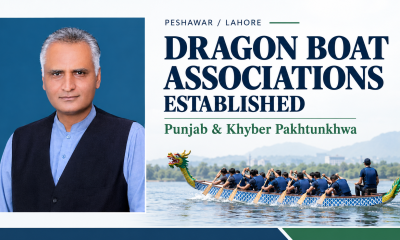
New Chapter for Dragon Boating in Punjab and Khyber Pakhtunkhwa Provincial associations officially set up with sights locked on national competitions and international representation.

South Korea’s Yoo Useong Steps Onto the Global Strongman Stage as World Strongman Federation Professional Athlete

A Survey of Mata-E-Zeest


-
 Pakistan News1 month ago
New Chapter for Dragon Boating in Punjab and Khyber Pakhtunkhwa Provincial associations officially set up with sights locked on national competitions and international representation.
-
 Sports5 months ago
South Korea’s Yoo Useong Steps Onto the Global Strongman Stage as World Strongman Federation Professional Athlete
-
 Art & Culture1 year ago
A Survey of Mata-E-Zeest
-

 Europe News2 years ago
Chaos and unproven theories surround Tates’ release from Romania
-

 American News2 years ago
Trump expands exemptions from Canada and Mexico tariffs
-

 Art & Culture2 years ago
Will Snow White be a ‘victim of its moment’? How the Disney remake became 2025’s most divisive film
-

 Entertainment2 years ago
Champions Trophy: Pakistan aim to defend coveted title as historic tournament kicks off today
-

 Pakistan News1 year ago
Comprehensive Analysis Report-The Faranian National Conference on Maritime Affairs-By Kashif Firaz Ahmed