
World News
Israel’s Global Reach: From Latin America to Africa and Asia

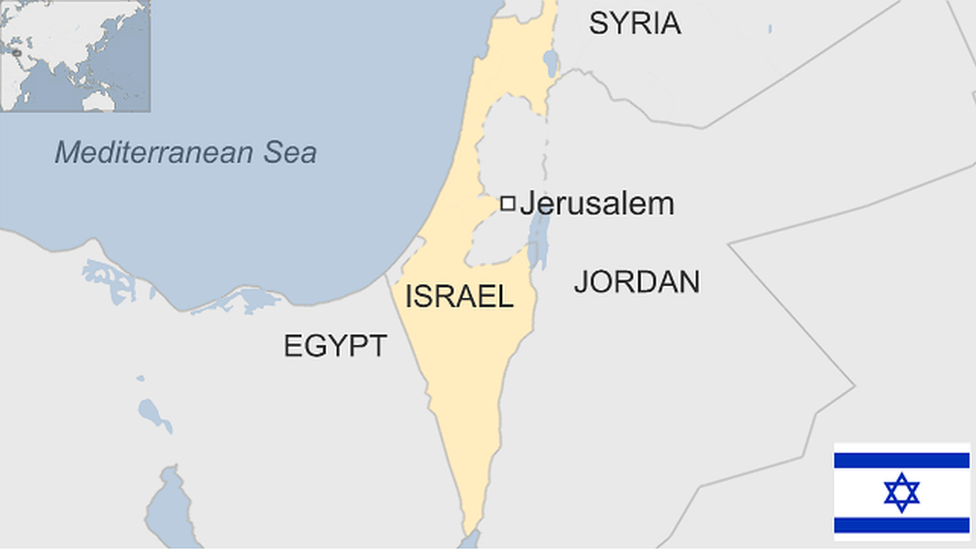
Paris (Imran Y. CHOUDHRY) :- Former Press Secretary to the President, Former Press Minister to the Embassy of Pakistan to France, Former MD, SRBC Mr. Qamar Bashir analysis : Israel’s expanding international reach raises a question that governments can no longer comfortably avoid: when does cooperation become dependence, and when does dependence begin to compromise sovereignty? Weapons, surveillance systems, intelligence partnerships, diplomatic advocacy and investment can establish enduring influence inside another country’s institutions. Examined together, these relationships reveal how a state can acquire leverage far beyond its territory without formally governing the societies affected by its decisions.
The central issue is the conversion of access into power. A weapons contract opens a relationship with a defense ministry. Technical support creates continuing contact with military personnel. Surveillance technology enters intelligence institutions. Political advocacy cultivates sympathetic decision-makers. Commercial partnerships establish constituencies interested in preserving cooperation. These channels can reinforce one another until challenging the relationship carries significant institutional and political costs. Influence becomes most consequential when governments stop asking whether those costs have narrowed their freedom to act.
Ideology matters because it shapes how political leaders justify the exercise of power. Religious nationalism can turn territorial ambitions into sacred obligations and portray compromise as betrayal. Where officials invoke divine entitlement or historical destiny, their language deserves close examination against their policies. The danger is the translation of claims about exceptional entitlement into governmental practice: unequal rights, territorial expansion or the belief that ordinary restraints should yield to a privileged national mission.
Such claims must be attached to identifiable leaders, movements and decisions. Their political force lies in what they authorize. A government that presents its objectives as beyond legitimate challenge creates conditions in which critics become enemies and civilian suffering becomes an acceptable instrument. International partners then face a choice: impose meaningful limits or help normalize exceptional treatment. Strategic friendship becomes dangerous when it functions as permission to evade accountability.
Israel’s international security industry supplies material foundations for its reach. Its defense ministry reported approximately $14.8 billion in new export contracts during 2024. These transactions can establish relationships lasting far beyond delivery. Advanced equipment requires maintenance, training, replacement parts and software. A government purchasing such systems must consider the political implications of relying on an external supplier for essential capabilities. The resulting vulnerability deserves as much attention as the advertised military advantage.
Latin America illustrates several pathways through which these relationships develop. Guatemala’s military governments received Israeli arms and assistance during a period of brutal repression. Colombia’s longstanding reliance on Israeli equipment, including Kfir aircraft and Galil rifles, complicated disengagement when diplomatic relations broke down. Argentina under Javier Milei and Honduras under Juan Orlando Hernández supplied prominent diplomatic backing through commitments concerning Jerusalem. Ecuador under Daniel Noboa pursued cooperation across defense, security, agriculture and water. Together, these cases show military, political and developmental relationships creating multiple points of institutional attachment.
Elsewhere, diplomatic openings and strategic partnerships expand the network. Bolivia restored relations in December 2025. Venezuela’s foreign ministry confirmed continuing technical cooperation following Israeli earthquake assistance in 2026. Recognition of Somaliland introduced Israel into a sensitive sovereignty dispute in the Horn of Africa. India developed extensive defense cooperation, while Austria established a strategic partnership. These relationships differ, but their cumulative significance is international access across security, technology, development and diplomacy. Each deserves examination for the commitments it creates and the interests it advances.
Political lobbying adds another layer. Former Australian foreign minister Bob Carr criticized what he considered excessive pressure from a hardline pro-Israel lobby on government policy. His account raises a fundamental democratic question: can elected officials exercise independent judgment when organized advocacy enjoys privileged access to executive leadership? The answer requires examining meetings, funding, communications and policy changes. Citizens should know whether decisions reflect publicly defensible national interests or pressure operating beyond effective scrutiny.
Surveillance exposes an especially intrusive form of power. Citizen Lab has documented Pegasus attacks involving journalists and human rights defenders. Such capabilities can penetrate the communications through which societies investigate corruption and organize opposition. Responsibility extends through the supply chain, from developers and licensing authorities to purchasing agencies and political leadership. Governments that conceal surveillance abuses cannot credibly claim to protect the freedoms those abuses undermine.
Economic sovereignty requires equally rigorous scrutiny. Banking infrastructure, telecommunications, investment platforms and critical software should be examined for ownership, access rights, contractual dependence and security vulnerabilities.
Claims about foreign control must be established through records and technical evidence. Governments should identify who can access sensitive information, interrupt essential services or influence strategic decisions. Confidential contracts cannot substitute for public accountability where national systems and citizens’ rights are at stake.
The United States provides the principal institutional foundation of Israel’s strategic support. Its longstanding military-assistance framework makes clear that international protection rests on identifiable decisions by legislators and administrations. Those decisions carry responsibility. Officials cannot authorize assistance and then treat its foreseeable consequences as someone else’s concern. An alliance becomes a mechanism of impunity when support continues without meaningful examination of conduct.
Gaza gives this argument its moral urgency. UN satellite analysis based on July 2025 imagery identified damage affecting approximately 78 percent of structures. The scale demands answers from Israeli authorities and the governments sustaining their military and diplomatic position. Palestinian rights cannot remain subordinate to the convenience of strategic partnerships. International standards lose their authority when powerful relationships determine whose suffering produces consequences.
Every government should therefore audit its dependencies, disclose sensitive agreements, investigate unlawful surveillance and scrutinize political influence. Where relationships facilitate abuse or compromise independent decision-making, they should be restricted, renegotiated or ended through lawful processes. Sovereignty requires the capacity to refuse.
Israel’s international influence deserves sustained scrutiny because power exercised through dispersed institutions can escape the accountability attached to visible force. The response must be concrete: expose the mechanisms, identify the beneficiaries and impose enforceable limits. No government should enjoy exceptional permission to override another society’s independence or another people’s rights.

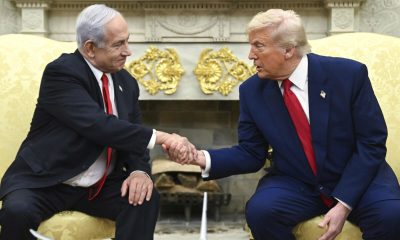

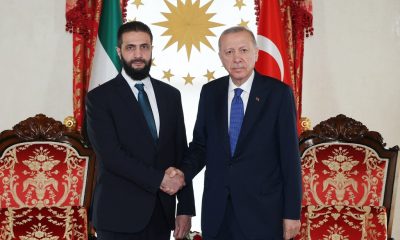

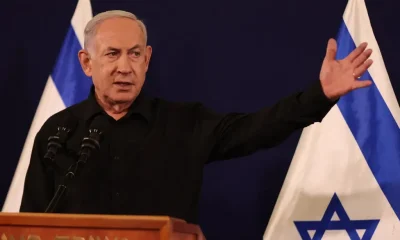






Paris (Imran Y. CHOUDHRY) :- Former Press Secretary to the President, Former Press Minister to the Embassy of Pakistan to France, Former MD, SRBC Mr. Qamar Bashir analysis : When a thief is caught and punished, justice has been done in that case. It does not follow that every theft has been detected or every thief punished. This distinction becomes consequential when powerful states cite a handful of military prosecutions as evidence that their overseas operations function within an effective system of accountability.
The arrest of a U.S. Marine in Okinawa on suspicion of robbery and murder brings that distinction into focus in Oct 2026. The allegation remains unproven, but the public anger surrounding it reflects earlier crimes, including the 1995 assault of a schoolgirl by American servicemen and the 2016 rape and murder committed by a former Marine working as a base contractor.
America presents its military power as a shield for freedom, democracy, and international order. Israeli officials likewise invoke military morality. Such declarations invite examination against conduct. A victim’s family cannot measure ethical standards through speeches, recruiting slogans, or the existence of disciplinary regulations. Its concern is whether the person responsible will answer for what happened.
Prosecutions establish that particular offenders were held accountable. They cannot reveal how many offenses escaped detection, how many complaints were abandoned, or how many victims lacked the means to pursue justice. The unseen total cannot responsibly be invented. Neither can it be assumed away because a government produces several examples of punishment.
Military contracting makes this problem more complicated. Private companies perform legitimate tasks, including transport, maintenance, construction, and protection. But when public operations pass through commercial contracts, responsibility can become dispersed among commanders, officials, corporations, and subcontractors. Victims confront an institutional maze while the government retains the benefit of the services it commissioned.
This concern comes from within the American military scholarship itself. Deborah Kidwell’s 2005 study, Public War, Private Fight?, published by the Army’s Combat Studies Institute, described divided authority over contractors and warned that it could obscure responsibility. The author’s views were not official policy, but the publication demonstrates that these structural weaknesses were recognized decades ago.
Kidwell discussed allegations of sexual slavery and illegal weapons purchases involving contractor employees in Bosnia. She also examined contractor interrogation work at Abu Ghraib and difficulties bringing criminal prosecutions. Her study provides grounds for questioning whether outsourcing can weaken accountability precisely where the exercise of power requires the strongest supervision.
Nisour Square illustrates both the possibility and fragility of justice. Blackwater guards killed 14 unarmed civilians in Baghdad in September 2007, according to American prosecutors. Four guards were convicted; Nicholas Slatten eventually received life imprisonment. President Donald Trump pardoned all four in December 2020. Punishment established through judicial proceedings was subsequently removed through political authority.
Those convictions cannot be treated as proof that other contractor abuses were discovered or punished. Nor can the pardons be separated from their wider message. Iraqi families watched the country financing the security operation forgive men convicted over civilian deaths. Legal accountability had existed, but its consequences proved vulnerable to presidential preference.
The regular forces also supply documented examples. Steven Green received life imprisonment for his role in the rape of an Iraqi girl and the murder of her family. Robert Bales received life without parole after murdering 16 Afghan civilians. Calvin Gibbs was convicted following staged killings of Afghan civilians presented as legitimate combat encounters.
These cases expose grave crimes; they do not measure the full extent of misconduct. Haditha offers a different outcome: 24 Iraqi civilians were killed, while the final defendant pleaded guilty to negligent dereliction of duty and received no imprisonment. The distance between human loss and legal consequence deserves examination beyond simply counting convictions.
Corruption further connects uniformed authority with private enterprise. In Afghanistan, soldiers and a contractor employee used fraudulent transport documents to facilitate fuel theft exceeding a million dollars. Their prosecution established responsibility for that scheme. It supplied no basis for concluding that every comparable scheme had been uncovered or that oversight worked consistently.
Remote warfare introduces another distance between power and consequence. Reported signature strikes targeted suspected militants through behavioral patterns without necessarily identifying them by name. Contractors support drone operations, although involvement does not establish independent authority to order killings. The central concern is the reliability of decisions that turn observed association into grounds for lethal force.
Reporting on leaked records from Operation Haymaker described a five-month period during the 2012–2013 Afghanistan campaign when nearly 90 percent of those killed in airstrikes were not the intended targets. This does not establish that all were civilians. It does expose the inadequacy of treating technological accuracy as a guarantee of narrow human consequences.
The human cost becomes unbearable when children are involved. In March 2026, Reuters reported preliminary investigative findings pointing toward likely American responsibility for the February strike on an Iranian girls’ school. Iranian authorities reported 168 children killed. Attribution required investigation; the suffering demanded answers that could withstand independent scrutiny rather than reassurance from those conducting the war.
Leadership shapes the atmosphere in which restraint operates. On April 7, Trump warned that “a whole civilization will die tonight,” before later agreeing to a ceasefire. His administration portrayed the threat as negotiating pressure. Yet the language placed an entire people within a threat of destruction, treating their collective existence as an instrument of coercion.
Pete Hegseth’s dismissal of “stupid rules of engagement” compounds the concern. Rules governing military force help protect civilians and translate legal obligations into operational decisions. When senior officials disparage restraint, their words risk encouraging subordinates to regard caution as weakness. That risk extends across America’s extensive overseas presence and into the relationships troops maintain with host communities.
Watching the Avatar films, I recognized a disturbing metaphor in the colonel’s treatment of another world’s inhabitants as obstacles to domination. Fiction proves nothing about particular operations. It nevertheless dramatizes the intoxication of power: overwhelming capability becoming, in the aggressor’s imagination, sufficient justification for violence. Military superiority then takes the place of moral reasoning.
The danger also returns home. When leaders teach that strength places a nation above rules, they weaken the principle that authority must justify itself. Citizens may then encounter the same reasoning in domestic policing, political disputes, and public administration. Foreign victims experience the immediate consequences, but Americans inherit the institutional habits formed when their government exercises power without sufficient scrutiny or durable corrective consequences.
A contract cannot erase responsibility for public power. Accountability requires examination of those who commission, supervise, and authorize operations, alongside those who carry them out. Isolated punishments cannot answer complaints that remain uninvestigated. American citizens can demand disclosure, meaningful independent scrutiny, and consequences that survive political convenience. A country’s ethical standing depends on the restraint it practices, not the innocence it proclaims.

Paris (Imran Y. CHOUDHRY) :- Former Press Secretary to the President, Former Press Minister to the Embassy of Pakistan to France, Former MD, SRBC Mr. Qamar Bashir analysis : An aviation emergency should produce an investigation before it produces threats of war. Yet the September 30 incident aboard Flydubai Flight FZ1073 has already entered the machinery of geopolitical accusation. Before investigators have publicly established the alleged attacker’s motive or connections, Iran has been placed under suspicion and threatened with American retaliation. The passengers deserve justice and a complete account. The Middle East deserves protection from another escalation driven by assertions that move faster than evidence.
President Donald Trump threatened to hit Iran “very hard” if investigators established its involvement. Associated Press reporting noted that he suggested a connection without publicly presenting supporting evidence. Such statements carry consequences beyond a press conference. They prepare audiences for retaliation and introduce an unresolved allegation into the political case for military action.
That accusation also raises a question of strategic logic. Iran possesses substantial conventional and asymmetric means of retaliation. Why would it choose an operation against civilian passengers that could bring international condemnation, damage its diplomatic position and provide its adversaries with an additional justification for attack?. These allegations demand a serious answer before speculation becomes accepted truth.
An attack on a civilian aircraft would be an indefensible atrocity, whoever organized it. Washington must establish responsibility through evidence rather than invoke Iran’s name as though suspicion settles the matter.
The danger is that the distinction between “if Iran was involved” and “Iran was involved” will disappear through repetition. A conditional presidential accusation can become a headline, the headline a political assumption, and the assumption an argument for bombardment. Civilian lives must never become ammunition in a campaign to expand a war.
The controversy arrives amid mounting demands for accountability over the warnings preceding October 7, 2023. Haaretz reported that UAE President Mohamed bin Zayed warned Netanyahu approximately ten days before the attack that Hamas was preparing a major operation. Separately, reporting summarized by The Times of Israel alleged that Israeli intelligence officials and Egypt had repeatedly warned him that Qatari funds were strengthening Hamas’s military wing.
Qatar’s prime minister, Sheikh Mohammed bin Abdulrahman Al Thani, challenged attempts to assign responsibility to Doha, maintaining that its $30 million monthly assistance program operated through arrangements coordinated with Israel, the United States and the United Nations, with recipients vetted by Israeli security agencies. He accused Netanyahu of deflecting scrutiny of his government’s conduct while explicitly condemning the October 7 massacre.
These competing accounts demand an independent inquiry with access to intelligence assessments, diplomatic communications and decision-making records. What warnings reached Netanyahu? What action followed? Were the consequences of existing policies knowingly disregarded?.
Against this background, the Flydubai incident has generated competing explanations and widespread distrust. Some commentators question individual details. Others allege staging, intelligence involvement or a manufactured pretext for escalation.
A renowned American podcaster Mike Dean argued that the footage suggested staging. He pointed to dark entertainment screens, the absence of deployed oxygen masks and visible debris, and apparent differences between cabin interiors. He questioned the reported descent, the passengers’ ability to overpower an armed co-pilot, the absence of publicly circulated footage identifying the suspect, and changing descriptions of the weapon. His conclusion was that the public narrative did not adequately explain what happened.
Another, credible postcaster advanced an explicit false-flag theory. He connected Netanyahu’s reported September 27 visit to Abu Dhabi with the aviation incident three days later, suggesting an operation intended to blame Muslims, implicate Iran and justify military escalation. The speaker interpreted differing descriptions of cockpit access and the presence of additional pilots as signs of a constructed account.
A separate geopolitical commentator proposed that the aircraft’s descent and diversion toward Tabuk could have served an intelligence purpose: exposing limitations in Saudi radar coverage and revealing defensive reaction times. The speaker speculated that the information might facilitate a later attack on Saudi infrastructure, potentially using a weapon resembling an Iranian drone to direct blame toward Tehran. Another geopolitical analyst described claims of Israeli and Mossad orchestration intended to manufacture a pretext for war.
The political danger, however, does not depend on proving fabrication. A genuine attack can be exploited to pursue objectives far beyond bringing its perpetrators to justice. Whether anyone organized the incident and how governments subsequently use it are separate questions. Both deserve scrutiny.
The possibility of further escalation is already being discussed openly in American military commentary. According to the Fox News report, additional naval and Marine deployments would bring approximately 10,000 additional personnel to the Middle East, with arrival expected by the end of November.
Retired General Jack Keane described renewed joint American-Israeli combat as an option available to Trump, envisaging a shorter but substantially more destructive campaign capable of placing Iran’s government on a path toward collapse.
Keane also explicitly speculated that the CIA and Mossad were working to weaken the Iranian leadership, encourage internal fractures and assist resistance. Those remarks were not an announcement of an approved operation. They nevertheless reveal the scale of military action and political transformation being advocated in influential American commentary.
My prediction is that the approach of elections will sharpen pressure for a dramatic demonstration of military power. The Flydubai incident could become part of that argument, alongside other security allegations. The pursuit of an alleged attacker could then be absorbed into a much broader campaign against Iran’s leadership, military capabilities and infrastructure.
A weaker and fractured Iran and fractured and downgraded and weakened middle east on several fronts could create opportunities for advocates of Israeli predominance. Netanyahu’s expressed attachment to a “Greater Israel” vision has already drawn condemnation from Arab governments. Those statements justify scrutiny of expansionist ambitions. Military dominance and territorial expansion are distinct objectives, but weakened neighboring states could find themselves less able to resist coercion.
The strategic danger is that American force weakens Iran, Iranian retaliation destabilizes neighboring countries, and the resulting imbalance creates conditions that proponents of Israeli hegemony seek to exploit. This is the regional consequence I fear—not a demonstrated explanation of who organized the Flydubai attack. A catastrophe can serve an expansionist agenda with every event leading to it having been secretly planned.
That distinction strengthens the warning. There is no need to prove an elaborate conspiracy to demand that governments stop turning unfinished investigations into arguments for war. The responsibility lies with those proposing military action to establish the facts, explain their objectives and account for the consequences.
Investigate the attack completely. Identify and prosecute those responsible through lawful processes. Protect the passengers’ right to truth. But refuse the leap from suspicion to collective punishment.
If this emergency becomes a justification for devastating Iran and destabilizing its neighbors, it could bring the ambitions associated with “Greater Israel” closer to realization. The time to challenge that course is before accusation becomes authorization, before retaliation becomes regional destruction, and before another generation is left to live among the ruins.
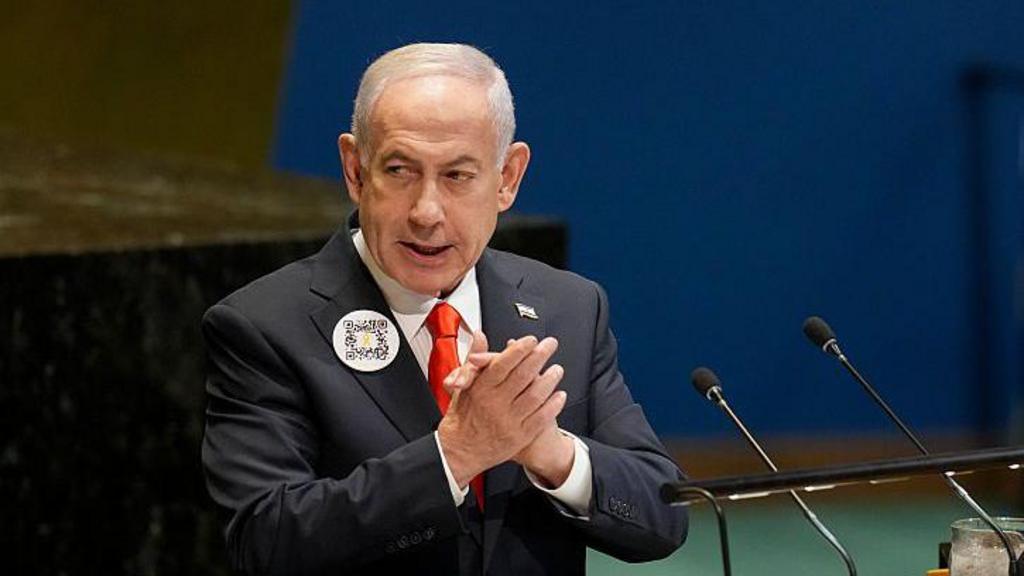
Paris (Imran Y. CHOUDHRY) :- Former Press Secretary to the President, Former Press Minister to the Embassy of Pakistan to France, Former MD, SRBC Mr. Qamar Bashir analysis : The confrontation at the United Nations exposed a widening divide: the United States and Israel’s leadership on one side, and a broad international rejection of their account of the Middle East conflict on the other. Washington and Netanyahu have constructed a narcissistic political worldview in which their fears command universal attention, their violence demands justification, and the suffering of others must remain subordinate.
They expect the world to see Gaza, Iran, and settlement expansion in the West Bank exclusively through their lens. The diplomats walking out as Netanyahu approached the podium delivered a blunt answer: the world cannot be ordered to see what they see, excuse what they excuse, or forget what they wish forgotten. Other nations can examine the destruction, hear the testimony, and reach their own conclusions. Military power cannot compel agreement, and repetition cannot turn a self-serving narrative into truth.
President Trump raised the prospect of annihilating Iran. Netanyahu defended Israel’s military campaigns, insulted departing diplomats, attacked Western governments, and berated the elected mayor of the city hosting him. Outside, protesters demanded an end to American arms supplies sustaining the destruction. Inside, Netanyahu demanded recognition of Israel’s right to defend itself while dismissing the objections raised against its conduct. The contradiction could hardly have been more glaring.
Iran is a nation, not a target awaiting destruction. Its children, workers, teachers, and elderly people are not interchangeable with its government or military command. Threatening annihilation from a podium established to prevent catastrophic warfare mocks the institution’s purpose. What meaning does international security retain when the powerful threaten entire countries and then demand that everyone else demonstrate restraint?
Iranian President Masoud Pezeshkian answered with photographs of the dead: the assassinated Ali Khamenei and children killed at the Minab school. Washington accused Iran of terrorism; Iran’s president presented the victims of violence inflicted upon his country. Whatever judgement one makes about Tehran’s leadership, its children cannot inherit a death sentence because of their government. Their humanity requires neither American approval nor Israeli recognition.
Then came Netanyahu and his denunciation of the diplomats walking out as “moral cowards.” What courage, precisely, was he claiming? The courage to dismiss international condemnation? To ridicule those refusing to applaud? The empty seats did not represent every nation, but they exposed the distance between his government’s self-justification and the judgement of many countries assembled before him. Insulting the audience could not answer the indictment.
Netanyahu’s international isolation is becoming a devastating indictment of his leadership. The International Criminal Court arrest warrant restricts his ability to travel to many countries, once-steadfast allies Britain, France, and Canada have imposed sanctions targeting Israeli settlements, and dozens of diplomats abandoned the chamber as he began speaking.
His government could purchase 500 billboards across Manhattan, but it could not purchase international legitimacy. Outside, protesters demanded an end to the weapons supplies sustaining Israel’s campaigns; inside, empty seats exposed the limits of his defiance. This is the humiliation of a leader who mistakes the capacity to inflict destruction for the authority to command respect. Calling his critics cowards cannot conceal the reality: he is leading Israel deeper into diplomatic estrangement while demanding that the world applaud the policies driving it there.
His attack on New York Mayor Zohran Mamdani made that arrogance unmistakable. Netanyahu accused him of supporting Hamas, which Mamdani denied. A visiting prime minister has no mandate to supervise American democracy or dictate whom New Yorkers should elect. He may answer criticism, but his office grants him no authority over the city’s mayor. Americans owe a foreign leader neither political obedience nor silence. Friendship between countries cannot mean that American politicians become acceptable only when they satisfy the government of Israel.
Outside the United Nations, that criticism had a distinctly American voice. Protesters demanded an end to the arming of Israel and called for Palestinians and Iranians to be allowed to live. Police detained demonstrators, including actors Susan Sarandon and Hannah Einbinder, congressional candidate Darializa Avila Chevalier, and city council member Chi Ossé. These were people exercising their right to challenge policies supported by their own government.
Their presence shattered any convenient equation between Washington’s policy and unanimous American consent. Netanyahu could praise Trump inside the chamber; he could not make the dissent outside disappear. Americans are entitled to question where their weapons go, what their taxes sustain, and whether their country’s alliances advance peace or perpetuate destruction. No visiting leader can legitimately demand exemption from those questions.
His assault on Western governments followed the same pattern. Britain, France, and Canada had announced sanctions targeting Israeli settlements. Netanyahu accused their leaders of surrendering to antisemitic mobs. Measures directed at settlements became, in his telling, evidence of moral collapse. But opposition to settlement expansion does not constitute hatred of Jews. Antisemitism must be confronted; it cannot become a shield against scrutiny of state policy.
Other responses were equally pointed. Qatar said Netanyahu’s attacks diverted attention from responsibility for policies on the ground. Turkey’s presidential communications director, Burhanettin Duran, said his accusations could not obscure Gaza’s humanitarian catastrophe or international legal proceedings. The answer to criticism was accountability, not an expanding catalogue of enemies.
His treatment of settler killings illustrated the problem. The BBC reported his suggestion that perhaps two or three people were killed annually, then cited UN figures recording hundreds of Palestinians killed in the context of settler attacks since the beginning of 2023. These are human beings, not inconvenient arithmetic. Minimising their deaths diminishes the violence confronting entire communities.
The pager display carried a menace beyond its reference to the operation against Hezbollah. Before an institution dedicated to peace, Netanyahu brandished a reminder that communications devices could become instruments of assassination. The gesture could be read as a warning to governments walking out or imposing sanctions: defy Israel and consider how far its reach might extend. Operations in Iran, Lebanon, and Syria gave that implied warning its chilling force. This was intimidation dressed as triumph—an exhibition of lethal capability that invited critics to contemplate consequences beyond the diplomatic chamber.
October 7 cannot provide permanent immunity from judgement. The murder of Israeli civilians and hostage-taking were atrocities. Their victims deserve justice. Palestinian children did not consequently lose their rights. No atrocity authorises unlimited destruction, and no ancient religious promise can serve as a modern eviction order. Any vision of Greater Israel built upon Palestinian dispossession deserves rejection. That judgement concerns political domination, not Jewish identity.
Iran’s nuclear programme also requires answers beyond slogans. Pezeshkian says Tehran was prepared to dilute highly enriched uranium and accept international verification. Those insisting upon war must explain why negotiated restraints cannot achieve their stated objective.
Americans deserve that explanation before more soldiers and resources are committed. Their country is not an inexhaustible military account for another government’s ambitions. Every dollar consumed by destruction is unavailable for another public need.
The governments that walked out must likewise move beyond symbolism. Empty seats cannot feed children or protect families. Protest must produce action.
Washington and Netanyahu may insist upon their own account of this conflict. They cannot demand ownership of everyone else’s judgement. The dead, the displaced, and the bereaved remain visible beyond their carefully constructed lens. The walkout exposed the failure of their demand for unquestioning acceptance. The next test is whether the governments rejecting that demand will act with the courage their convictions require.


The Story of Two Elections

Light of Islam Is Warming the American Souls

New Chapter for Dragon Boating in Punjab and Khyber Pakhtunkhwa Provincial associations officially set up with sights locked on national competitions and international representation.
New Chapter for Dragon Boating in Punjab and Khyber Pakhtunkhwa Provincial associations officially set up with sights locked on national competitions and international representation.

South Korea’s Yoo Useong Steps Onto the Global Strongman Stage as World Strongman Federation Professional Athlete

A Survey of Mata-E-Zeest


-
 Pakistan News4 days ago
New Chapter for Dragon Boating in Punjab and Khyber Pakhtunkhwa Provincial associations officially set up with sights locked on national competitions and international representation.
-
 Sports4 months ago
South Korea’s Yoo Useong Steps Onto the Global Strongman Stage as World Strongman Federation Professional Athlete
-
 Art & Culture1 year ago
A Survey of Mata-E-Zeest
-

 Europe News2 years ago
Chaos and unproven theories surround Tates’ release from Romania
-

 American News2 years ago
Trump expands exemptions from Canada and Mexico tariffs
-

 American News2 years ago
Trump Expels Zelensky from the White House
-

 Art & Culture2 years ago
Will Snow White be a ‘victim of its moment’? How the Disney remake became 2025’s most divisive film
-

 Entertainment2 years ago
Champions Trophy: Pakistan aim to defend coveted title as historic tournament kicks off today