
Politics
Questions of Trust and Transparency: The Growing Controversy Around Serikzhan Bilash


By Greg Brummel
A widening rift among Kazakh activists has done more than expose internal disagreements – it has raised a far more uncomfortable question: whether Serikzhan Bilash is not merely a controversial figure, but one whose actions may, in effect, have served the very system he claims to oppose.
Origins, Ideology, and Early Opportunism
Bilash’s biography is marked by contradictions that challenge his carefully cultivated image as a principled dissident. A descendant of relatively affluent Kazakhs who left their homeland in the 20th century, he did not simply integrate into Chinese society – he appears to have absorbed elements of its political logic. Raised in an environment shaped by Maoist doctrine, his early trajectory suggests pragmatism often outweighed ideology.
In the 1990s, he became involved in so-called “shuttle trade,” facilitating commerce between China and newly independent Kazakhstan. Critics argue that these networks frequently revolved around exporting valuable Kazakh raw materials to China at minimal prices. For some observers, this period established a pattern of opportunism and moral flexibility that would later re-emerge in his activism.
Atajurt and the Politics of Visibility
When Bilash founded the Atajurt movement (“Fatherland”) in 2017, it quickly gained international recognition by documenting testimonies from families of ethnic Kazakhs detained in Xinjiang. These accounts helped bring global attention to an issue that had previously received limited coverage.
Yet from the outset, critics contend there was a second layer to the project: a model built not only on advocacy, but also on visibility, provocation, and potential monetization. His 2019 prosecution for inciting ethnic discord – following his use of the phrase “information jihad” – was seen by supporters as political repression. Others, however, interpreted it as a calculated escalation designed to provoke confrontation and elevate his personal profile.
More pointed criticism emerged in January 2026, when former associate Yerlan Bekmyrza spoke in a widely circulated YouTube podcast. Bekmyrza alleged that Bilash systematically exploited human suffering, claiming that actions such as the burning of the Chinese flag were not spontaneous protests but carefully staged performances designed “for the picture” – to provoke backlash, reinforce a narrative of persecution, and attract foreign funding.
Prominent cultural figures, including Mukhtar Shakhanov, have also condemned Bilash’s approach, arguing that repatriates were being used as “cannon fodder” in a broader political strategy.
Money, Control, and Escalation
Financial opacity lies at the center of the controversy. Bekmyrza and other former associates allege that Atajurt relied heavily on small donations from ordinary people – often families in distress seeking help for detained relatives. Despite this, no transparent public accounting has been provided.
At the same time, Bilash is accused of maintaining control over monetized YouTube channels and directing revenue to personal accounts. Critics point to a stark contrast between the sacrifices of donors and Bilash’s life in the United States.
The most serious allegations concern strategy. Bilash has repeatedly called for protests and public actions while remaining outside the jurisdictions where such risks are most acute. Those who respond to these calls often face arrests and legal consequences, fueling criticism that supporters are bearing the cost of his rhetoric.
There are also claims that he actively undermined diplomatic efforts. According to some accounts, when Kazakh officials made progress through quiet negotiations to secure releases from Xinjiang, Bilash published provocative material that risked hardening Beijing’s position. This “scorched earth” approach, critics argue, maintained a constant state of crisis – useful for sustaining attention and funding, but potentially damaging for detainees and their families.
Following his relocation to the United States in 2021, Bilash’s messaging increasingly expanded beyond Xinjiang, including a growing focus on Ukraine. While this can be framed as part of a broader anti-authoritarian stance, critics view it as a pragmatic pivot aligned with shifting global attention – one that helped preserve visibility, influence, and funding streams.
Radicalism, Speculation, and a Fractured Movement
Despite his image as a vocal critic of China, Bilash remains the subject of persistent and controversial speculation. Among some analysts and within segments of Kazakh society, a hypothesis continues to circulate: that his confrontational rhetoric may, in practice, benefit Beijing by discrediting the broader human rights movement and making it easier to portray criticism as extremist or politically motivated.
In the Kazakh segment of social media, discussions about Bilash’s alleged ties to Chinese intelligence services are widespread. For many observers, this is no longer a fringe claim. Bekmyrza himself appeared to allude to this possibility during his podcast interview, further amplifying the controversy.
Whether such claims are substantiated or not, the broader effect is difficult to ignore. Bilash remains a deeply polarizing figure. He undeniably played a role in bringing international attention to the plight of ethnic Kazakhs in Xinjiang. Yet that achievement is increasingly overshadowed by allegations of financial opacity, manipulation of supporters, deliberate provocation, and strategic opportunism.
The internal split among activists has weakened an already fragile movement. Trust has eroded, and credibility has been damaged.
Amid competing claims and counterclaims, one conclusion is becoming harder to dismiss: the methods that elevated Bilash may also have complicated – and potentially undermined – the very cause he set out to champion, leaving it more vulnerable to external exploitation, including by the actors it opposes.

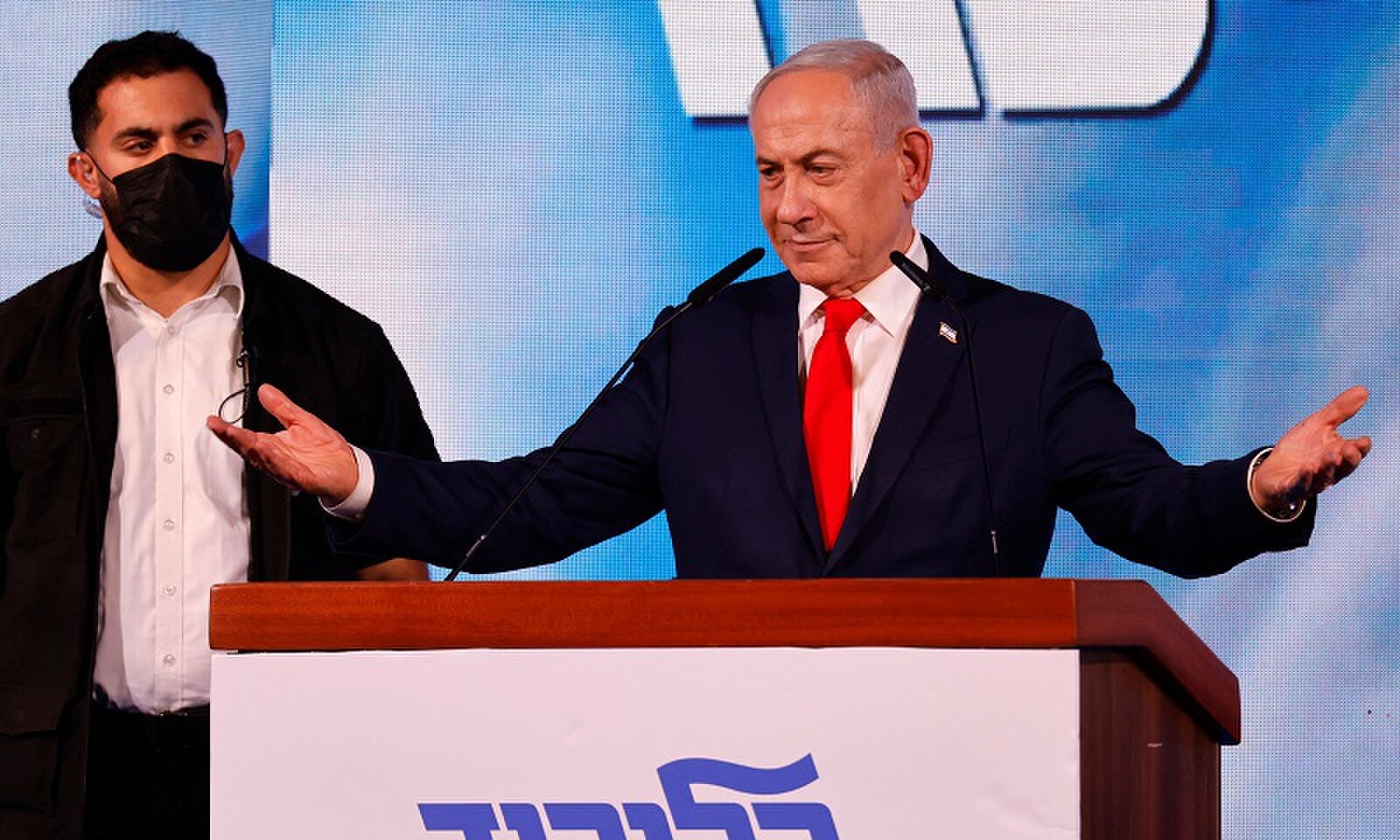
Paris (Imran Y. CHOUDHRY) :- Former Press Secretary to the President, Former Press Minister to the Embassy of Pakistan to France, Former MD, SRBC Mr. Qamar Bashir analysis : Israel’s October 27 general election has delivered a significant political setback to Prime Minister Benjamin Netanyahu,whose campaign emphasized military strength, national security and confrontation with Iran. Yet the voters have not handed his principal opponent, former military chief Gadi Eisenkot, an unambiguous mandate either. Instead, Israel faces a fragmented parliament, difficult coalition negotiations and potentially prolonged political uncertainty, with consequences extending far beyond its borders.
The initial exit polls projected approximately 50 seats for Netanyahu’s bloc, 52–53 for Eisenkot’s opposition alliance and17–18 for Arab-led parties. Updated projections narrowed the contest further, placing the two principal blocs at approximately 51 seats each. Neither approaches the 61 seats required for a majority in the 120-member Knesset. These remain provisional projections, not final election results.
The election represents more than a contest between two political personalities. It is a referendum on Netanyahu’s wartime leadership, Israel’s democratic institutions, the October 7 intelligence failures, military conscription, relations with Palestinians and the future direction of Israeli foreign policy. High voter participation, particularly among Arab citizens, suggests that substantial sections of Israeli society want their voices heard in determining that direction.
Netanyahu’s political predicament is particularly complicated because his traditional allies include ultranationalist and religious parties whose positions on Palestinian territory, settlement expansion and military operations are frequently more uncompromising than those of the broader Israeli electorate. Parties associated with Itamar Ben-Gvir and Bezalel Smotrich have advocated extensive Israeli control over Palestinian territories, while ultra-Orthodox parties prioritize religious institutions, public funding and military-service exemptions.
These factions should not be treated as ideologically identical. Nevertheless, another Netanyahu-led government dependent on their parliamentary support could face intensified demands for settlement expansion, restrictions onPalestinian sovereignty and continued military pressure across the region. Coalition negotiations might therefore reinforce rather than moderate some of the policies that have generated international criticism.
The consequences would extend to Gaza, where Israel’s military campaign has caused enormous civilian suffering, destruction and displacement. International institutions and human-rights organizations have raised grave allegations concerning violations of international humanitarian law. Netanyahu rejects accusations of criminal wrongdoing and maintains that Israel’s operations are necessary for national security and the defeat of Hamas.
In the occupied West Bank, continued settlement expansion and settler violence have undermined prospects forPalestinian self-determination. In southern Lebanon, Israeli security operations and demands for buffer arrangements have raised serious questions about Lebanese sovereignty. The occupied Syrian Golan Heights remains another longstanding territorial dispute, notwithstanding Israel’s annexation claim and American recognition of Israeli sovereignty there.
Iran represents perhaps the most dangerous dimension of Netanyahu’s regional strategy. His political message has consistently presented Tehran as an existential security threat, requiring military preparedness and, when deemed necessary, offensive action. His critics contend that an escalating confrontation risks drawing the United States into an increasingly costly regional conflict while destabilizing neighboring countries and threatening international energy supplies.
An Eisenkot-led administration could alter the methods through which Israel pursues its security objectives, although it would not necessarily abandon those objectives. Eisenkot, himself a former military chief, also considers Iran a major strategic threat and supports strong Israeli military capabilities. His distinction from Netanyahu lies more in his emphasis on institutional accountability, national cohesion, coordinated security policy and rebuilding international partnerships than in any categorical rejection of military force.
His proposed independent state commission of inquiry into the October 7, 2023, attacks could become particularly consequential. Such an investigation would examine the intelligence, military and political failures that allowed Hamas militants to breach Israel’s defenses, kill civilians and security personnel, and take hostages.
Serious questions have been raised about whether Israeli authorities adequately assessed warnings preceding the attack,why border defenses proved insufficient and how political and military decision-making contributed to the catastrophe.There have also been investigations and disputes concerning Israeli fire during the fighting. These questions deserve independent examination, with responsibility established through evidence rather than political accusation.
However, allegations that Netanyahu deliberately facilitated the Hamas attack to justify territorial expansion, or thatIsraeli forces caused most of the deaths, have not been established by credible evidence. An independent inquiry would be important precisely because it could distinguish documented institutional failures from speculation, determine individual accountability and restore public confidence in the findings.
For Palestinians, an Eisenkot government might offer greater scope for negotiations over Gaza’s reconstruction, civilian administration and the prevention of further displacement. Proposals involving Palestinian technocrats and international participation could provide alternatives to indefinite Israeli military administration. Yet Eisenkot’s security-centered outlook does not automatically translate into support for full Palestinian sovereignty or immediate Israeli withdrawal from occupied territories.
A settlement freeze, stronger action against extremist settler violence and renewed diplomatic engagement would constitute meaningful changes if implemented. But a durable settlement would still require confronting the fundamental questions of occupation, borders, Palestinian political rights, security guarantees and internationally recognized self-determination.
The Arab-led parties may therefore become the election’s most consequential parliamentary actors. Ra’am, led byMansour Abbas, has previously demonstrated willingness to participate in coalition arrangements, while other Arab political factions have generally maintained stronger opposition to Israeli policies toward Palestinians. Their combined representation could be indispensable to preventing Netanyahu’s return or sustaining an alternative administration.
Yet Eisenkot’s prospective coalition contains secular right-wing politicians who oppose governing alongside Arab parties.This creates a fundamental contradiction: the opposition may possess sufficient combined parliamentary strength to replace Netanyahu, but not the political agreement necessary to exercise that strength. Outside parliamentary support, a minority administration or carefully negotiated confidence arrangements could become possible solutions.
Even a successfully constituted government would confront an uphill struggle. A narrow parliamentary base could allow relatively small factions to threaten legislation, budgets and coalition survival. Disagreements over military conscription,religious privileges, judicial independence and Palestinian policy could destabilize the administration before its regional diplomatic initiatives acquire momentum.
Should neither political camp assemble a workable governing arrangement, Israel could enter another prolonged cycle of negotiations, failed mandates and potentially fresh elections. Under Israel’s parliamentary system and Basic Laws, the outgoing government generally continues in a caretaker capacity until a replacement takes office. Netanyahu could therefore remain prime minister despite losing his existing parliamentary majority.
Such uncertainty would have consequences for Washington, European capitals, Tehran, Beirut, Damascus and thePalestinian territories. Governments would struggle to determine whether Israeli military commitments, diplomatic assurances and regional policies represented temporary political calculations or the enduring direction of the state.
Ultimately, the election has exposed the limitations of relying exclusively on military power to address deeply rooted political disputes. Israel’s security concerns are real, as are Palestinian demands for freedom, dignity and statehood and neighboring countries’ rights to sovereignty and territorial integrity. None can be permanently resolved through force alone.
The central question is therefore not simply whether Netanyahu survives or Eisenkot replaces him. It is whether Israel’s next government, whatever its composition, can reconcile security with international law, accountability with democratic governance, and national interests with regional coexistence.
Israel’s electoral verdict remains incomplete, but its message is unmistakably complex: political power is fragmented, public confidence is contested, and the choice between continued confrontation and meaningful diplomacy remains unresolved. The Middle East now awaits not merely the formation of another Israeli government, but an indication of whether that government can open a credible path toward peace.
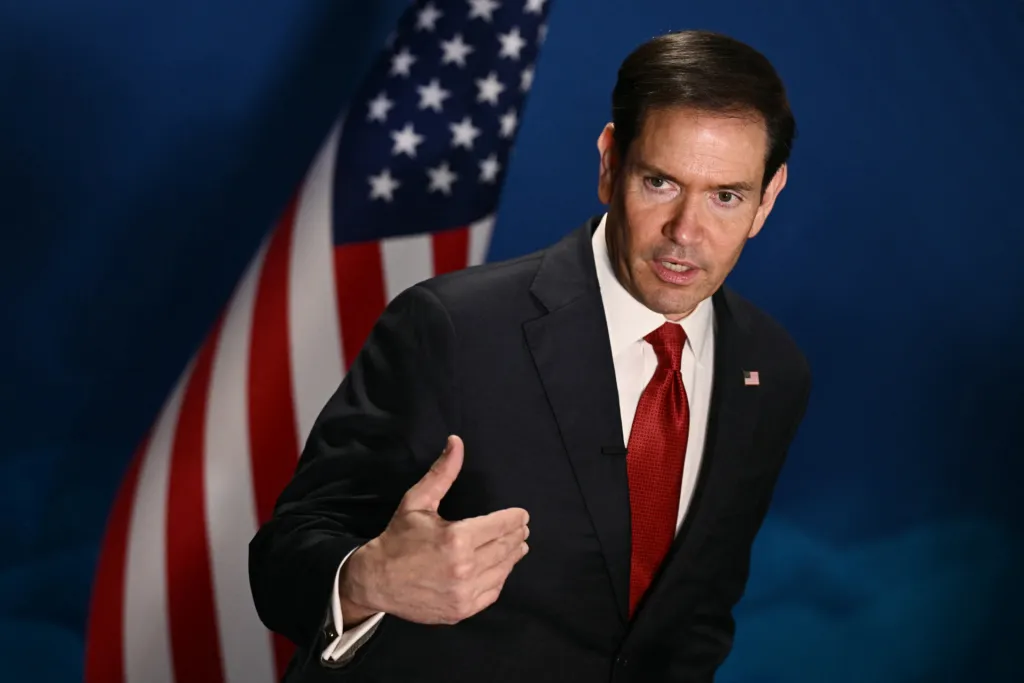
Paris (Imran Y. CHOUDHRY) :- Former Press Secretary to the President, Former Press Minister to the Embassy of Pakistan to France, Former MD, SRBC Mr. Qamar Bashir analysis : Across the United States and Europe, political rhetoric has turned “Sharia” into a weapon of suspicion, transforming a Muslim neighbor’s faith into an imagined threat to national institutions. Prayer, charity, dietary observance, and personal ethics disappear behind warnings of an approaching theocracy.
This confusion encourages fear and has made exclusion appear defensive while deliberately ignoring that voluntary religious observance does not itself override courts, displace legislatures, direct public administration, or replace constitutional government.
Bringing back religion into politics is contrary to the long and arduous efforts of both American and European societies to finally culminate in developing protections against religious coercion and for individual conscience.
The law and constitution of the USA and Europe protects religious liberties and provides freedom to believe, worship, change faith, or have no faith. However, by weaponizing Sharia to cast collective suspicion on Muslims undermines these protections by turning religious identity into a test of belonging.
That contradiction gives Jessica McDonald’s inquiry its significance. McDonald, a Christian a renowned and accomplished lawyer in her social media broadcasts, countered these alarming claims she had heard about Islam.
Rather than accepting inherited assumptions, she opened the Quran and examined its language and context. Her account offers a response to political fear: understand a religious tradition before treating its followers as dangerous. She asks Christians to extend to Muslim scripture the interpretive care they expect for the Bible.
The politicians are weaponizing Sharia not due to fear of Sharia itself but to stop and put an end to economic prosperity and social recognition achieved by the Muslim community in all aspects of national life. Their visibility has unsettled those who regard professional opportunity or national belonging as the preserve of a white majority.
McDonald explains that Sharia encompasses far more than criminal punishment. Associated with a path or way, it refers broadly to divine guidance for Muslim life: prayer, fasting, charity, family duties, honesty, and ethical commerce. It also encompasses legal subjects. Fiqh is the human work of interpreting and applying that guidance. Different scholarly traditions can produce different conclusions. Her essential point is that no single universally accepted rulebook explains everything every Muslim means by following Sharia.
McDonald specifically emphasizes that Quranic teachings teaches Muslims living in non-Muslim countries to obey the laws of the country where they have chosen to live and not impose their religion on others. In her explanation, following Sharia through worship, charity, and ethical conduct does not mean seeking to replace the American or European government.
She places this alongside the Quran’s rejection of forced conversion as a starting point for discussion. Her argument challenges the conflation of personal Muslim observance with a campaign to take control of society.
Her account helps distinguish five overlapping subjects: worship, personal and family ethics, scholarly interpretation, voluntary religious dispute resolution, and state enforcement. These distinctions expose the weakness of sweeping accusations.
A Muslim refusing pork, seeking marriage advice, or donating to the poor is not thereby demanding governmental power. A government enforcing religious criminal penalties raises different questions. Serious debate must identify the practice, whose interpretation governs it, whether participation is voluntary, and whether anyone’s rights are infringed.
For Christian audiences, McDonald makes the comparison familiar. Biblical faith also addresses marriage, money, sexuality, generosity, and duties toward neighbors. Christians disagree over interpretation while recognizing their scriptures as sacred. Most do not understand every ancient Israelite punishment or ritual requirement as binding today.
Christianity and Islam differ, but the comparison exposes an inconsistent standard: expecting distinctions within one’s own tradition while accepting the harshest representation of another. Fairness requires comparable care.
Her reading of Quran 2:190–194 applies that principle to warfare. McDonald recalls hearing “kill them wherever you find them” presented as an instruction to attack Christians. She asks who “them” refers to and what the surrounding verses say. She emphasizes that the passage begins with fighting those who fight you and prohibits transgression. It discusses expulsion, restricts fighting at the sacred mosque unless attacked there, includes cessation clauses, and limits retaliation. Removing those features creates the impression of an unrestricted command.
These conditions matter. In McDonald’s reading, persecution and expulsion do not authorize unlimited revenge. Permission to fight carries boundaries; retaliation must remain proportionate, and the text repeatedly addresses cessation. Its appeal to taqwa, or consciousness of God, places moral accountability inside warfare itself. Even when people have suffered injustice, she stresses, they remain responsible for their response. Her explanation therefore challenges the portrayal of Muslim scripture as offering indiscriminate permission for violence against people of other religions.
McDonald does not pretend that every difficult question has disappeared. She acknowledges uncertainty surrounding fitnah and explicitly declines to conclude that every Quranic warfare passage is defensive.
Other passages, she says, deserve their own examination. This restraint strengthens her argument. Her apology to Muslim neighbors concerns accepting frightening quotations without checking their context. She also turns toward difficult biblical warfare passages, asking whether familiarity has spared her own tradition the scrutiny she applies to Islam.
That same discipline should shape public debate. Allegations of coercion, discrimination, or unlawful religious authority deserve examination through evidence and legal process. They do not justify suspicion of every Muslim household, mosque, or professional. Defending peaceful religious observance does not require endorsing every interpretation or excusing abuse.
It requires distinguishing individual conduct from collective identity and applying the same standards across faiths. Political leaders should identify specific wrongdoing rather than allow an unfamiliar religious term to stand in for proof.
McDonald’s inquiry ultimately asks whether citizens will examine inherited fears before allowing them to shape their treatment of neighbors. Her findings challenge the assumption that Muslim devotion means political disloyalty. In her account, prayer, charity, ethical responsibility, and respect for the country’s laws can belong to the same religious life. That understanding creates room for honest criticism without collective hostility. Americans and Europeans should demand evidence from those who invoke Sharia as a threat, protect equal citizenship, and refuse to let religious difference become a pretext for exclusion.
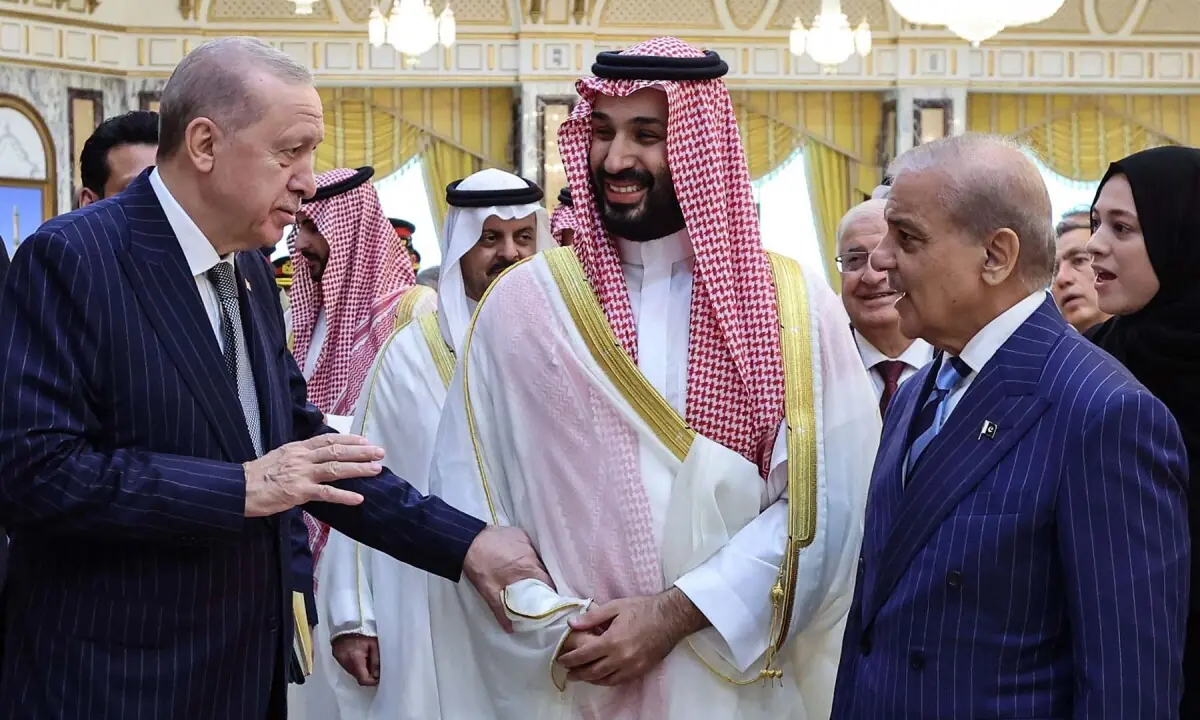
Paris (Imran Y. CHOUDHRY) :- Former Press Secretary to the President, Former Press Minister to the Embassy of Pakistan to France, Former MD, SRBC Mr. Qamar Bashir analysis : One of the most consequential outcomes of the Iran war has been the emergence of new security arrangements across the Middle East and its surrounding regions. Among them, the Makkah Joint Defence Agreement between Saudi Arabia, Pakistan and Türkiye deserves particular attention. Yet describing this arrangement as an “Islamic NATO” is misleading, unnecessarily provocative and potentially dangerous. It converts a developing defensive arrangement among three sovereign states into an ideological and religious bloc that its signatories themselves have not formally created.
The agreement signed in Makkah on August 7 is certainly significant. Saudi Arabia, Pakistan and Türkiye have committed themselves to collective deterrence, including the important principle that an armed attack against one will be regarded as an attack against all three. Their official statement speaks of historical ties, Islamic solidarity, shared strategic interests and defence cooperation. But its declared objectives are collective security, deterrence, peace and regional stability. It is formally called the Makkah Joint Defence Agreement—not Islamic NATO.
That distinction matters. Calling it an Islamic NATO immediately injects religion into what should primarily be understood as a strategic security arrangement. If this alliance must be called “Islamic NATO” because its three members are Muslim-majority countries, should NATO itself be described as “Christian NATO” because most of its members historically have Christian-majority populations? Clearly not. Modern alliances are normally defined by strategic interests, geography and shared security concerns rather than the religions practiced by their populations.
The Makkah agreement should therefore be viewed in the extraordinary geopolitical environment from which it emerged. The Iran war has profoundly disturbed assumptions about security across the Middle East. Countries that once believed distant great powers could guarantee their security have been forced to reconsider how much strategic autonomy they require. Old relationships have been tested, new partnerships accelerated and previously improbable security arrangements have become conceivable.
The transformation is especially visible in Syria. Türkiye’s growing influence there has increasingly intersected with Israel’s security calculations. Israeli strikes, Turkish objections and disputes over possible Turkish military activity have created an entirely new potential flashpoint. An Israeli strike on Syria’s Abu al-Duhur airbase this month produced sharp exchanges between Ankara and Israel, while Washington has been attempting to establish mechanisms preventing their competition inside Syria from escalating into direct confrontation.
Only days later, Syria and Israel were again engaged in American-mediated talks intended to reduce tensions, including the danger that Israeli-Turkish rivalry could spill further into Syrian territory. This illustrates just how dramatically the regional chessboard has changed: Syria is no longer merely an arena of the old Iran-Israel confrontation but increasingly a junction where Turkish, Israeli, Syrian, Arab and American security interests overlap.
The war has simultaneously returned the Palestinian question to the centre of regional diplomacy and exposed tensions within relationships previously regarded as almost immune from strategic disagreement. It has forced governments from the Gulf to South Asia to reconsider whether traditional bilateral security relationships remain sufficient in an era of missiles, drones, cyberwarfare, disrupted shipping and rapidly shifting alliances.
The consequences extend far beyond military affairs. The Strait of Hormuz has demonstrated once again how vulnerable the global economy remains to Middle Eastern conflict. At the other end of the Arabian Peninsula, insecurity around the Red Sea and Bab el-Mandeb has reinforced the same lesson. Energy security can no longer be separated from military security. Importing nations consequently have powerful incentives to diversify suppliers, shipping routes, strategic reserves and transportation infrastructure.
Meanwhile, the United States itself is confronting growing fiscal pressure. Federal debt crossed $40 trillion in August, according to Treasury data. Long-term borrowing costs have also risen sharply The 10-year Treasury yield recently stood around 4.7%, while the 30-year moved above 5%. The average American 30-year fixed mortgage is approximately 6.7%. These are nevertheless painful levels for households purchasing homes and for businesses financing investment.
War expenditure, energy prices, inflation expectations, fiscal deficits and debt-servicing costs can therefore reinforce one another. The geopolitical struggle is not taking place separately from economics; economics increasingly constitutes another battlefield.
The international financial system is undergoing change as well. BRICS members and other countries have increasingly explored settlements using national currencies and alternative payment mechanisms. This greater diversification could gradually reduce Washington’s extraordinary ability to translate control over financial networks into geopolitical leverage.
This wider transformation helps explain why the Makkah agreement has attracted so much attention. Pakistan contributes nuclear deterrence, a large professional military and substantial operational experience. Türkiye possesses NATO’s second-largest military and a rapidly expanding indigenous defence industry. Saudi Arabia contributes immense financial capacity, strategic geography and political weight in both the Arab and Islamic worlds. Together they represent a potentially formidable combination.
But potential should not be confused with maturity. NATO has existed for more than seven decades. It possesses integrated military planning, command structures, interoperability standards, intelligence-sharing mechanisms, permanent institutions and decades of combined exercises. The Makkah arrangement is at the beginning of its institutional development. Treating the two as equivalent therefore exaggerates the capabilities of the new agreement while simultaneously misrepresenting its purpose.
Indeed, serious strategic analysis has described the agreement as evidence of a broader regional realignment while also emphasizing unresolved questions about how its collective-defence commitment would operate in practice.
Its members should now remove those ambiguities. Saudi Arabia, Pakistan and Türkiye should publicly define the agreement’s defensive character, institutional mechanisms and geographical scope. They should make clear that it is directed neither against Iran nor Israel, neither against the United States nor Europe, and certainly not against Christianity, Judaism or any other religion. Where their strategic interests permit, cooperation with additional states should be based on common security requirements rather than religious identity.
If Muslim states someday wish to construct an explicitly religion-based collective security architecture, the logical political forum for debating such an undertaking would be the Organization of Islamic Cooperation. The Makkah agreement is something different: a strategic defence arrangement among three sovereign countries responding to an increasingly unstable security environment.
That distinction must be protected. The Iran war has accelerated changes already developing throughout the international system: greater strategic autonomy, new regional partnerships, competition over energy corridors, pressure on American fiscal power, experimentation with alternative financial arrangements, new tensions surrounding Syria and reassessment of traditional security guarantees. The Saudi-Pakistan-Türkiye agreement belongs within this much larger geopolitical transformation.
Branding it an “Islamic NATO” reduces that complicated strategic evolution to religion. Worse, it risks manufacturing the very confrontation the agreement should help prevent—an imaginary world of Muslim alliances confronting Christian or Jewish alliances.
The international media should exercise the same responsibility. The Makkah Joint Defence Agreement deserves scrutiny, debate and even criticism. But it should be judged by its provisions, capabilities and conduct—not assigned a religious identity that its official name does not carry.
The world already has enough geopolitical fault lines. It does not need another one manufactured between religions.


The Dawn of Physical, Intimacy and Consciousness Intelligence

Tehran’s Diplomatic Bombshell

Netanyahu’s Electoral Setback: Will Israel Choose War or Diplomacy?

New Chapter for Dragon Boating in Punjab and Khyber Pakhtunkhwa Provincial associations officially set up with sights locked on national competitions and international representation.

South Korea’s Yoo Useong Steps Onto the Global Strongman Stage as World Strongman Federation Professional Athlete

A Survey of Mata-E-Zeest


-
 Pakistan News3 weeks ago
New Chapter for Dragon Boating in Punjab and Khyber Pakhtunkhwa Provincial associations officially set up with sights locked on national competitions and international representation.
-
 Sports5 months ago
South Korea’s Yoo Useong Steps Onto the Global Strongman Stage as World Strongman Federation Professional Athlete
-
 Art & Culture1 year ago
A Survey of Mata-E-Zeest
-

 Europe News2 years ago
Chaos and unproven theories surround Tates’ release from Romania
-

 American News2 years ago
Trump expands exemptions from Canada and Mexico tariffs
-

 Art & Culture2 years ago
Will Snow White be a ‘victim of its moment’? How the Disney remake became 2025’s most divisive film
-

 American News2 years ago
Trump Expels Zelensky from the White House
-

 Entertainment2 years ago
Champions Trophy: Pakistan aim to defend coveted title as historic tournament kicks off today