
Pakistan News
PTI’s protest postponement to double security cost in Islamabad

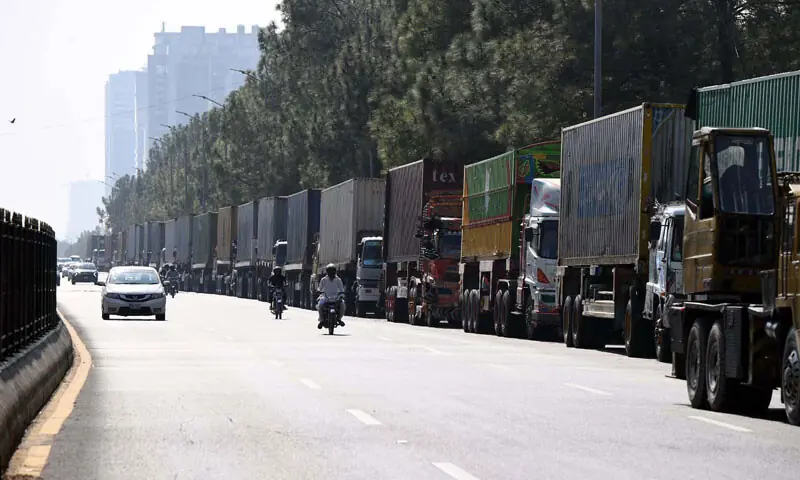
ISLAMABAD: The government will pay Rs46.5 million per day to the owners of 1,550 containers arranged to counter the Pakistan Tehreek-i-Insaf (PTI) protest in the capital.
Sources in the police said the amount requested by the capital police for security arrangements to counter the PTI’s protest would effectively double and was likely to cost the exchequer more than Rs1 billion as the political party has postponed the protest rally for about a week.
Earlier, PTI had announced a countrywide protest starting on September 27.
Following the announcement, the capital police, like their counterparts in Punjab, began preparations and requested Rs820 million to cover the rent of containers, accommodation and meals for the police personnel arriving from Punjab and Sindh.
Police yet to decide whether to release containers or retain them in their custody, says All Pakistan Goods Alliance chairman
The amount was intended to cover one week, as the police expected the protest and long march, scheduled to begin on September 27, to disperse by October 4.
However, with the protest and long march postponed for a week, the expenses are also expected to increase.
All Pakistan Goods Alliance Chairman Nisar Hussain Jaffri said the alliance had initially demanded a daily rent of Rs40,000 and Rs20,000 for 40-foot and 20-foot containers, respectively. Later, he said, the demand was revised to Rs30,000 per container for both sizes.
After PTI postponed the long march, the police were asked about the containers, he said, adding that the authorities had so far not decided whether to release or retain them in their custody.
The sources said that according to the demand the daily rent for 1,550 containers comes to Rs46.5 million, while the rent for one week is Rs325.5 million and for two weeks Rs651 million.
The sources said the police had also requested a contingent of 16,000 personnel from the Punjab Police and 2,000 from the Sindh Police. So far, the Sindh Police contingent has reached the capital and is staying at marquees at the Police Lines Headquarters, Faisal Mosque and Community Centre G-13.
Three meals a day are being provided to the visiting personnel. The cost of three meals per person is Rs600, meaning Rs1.2 million is being spent each day to feed the 2,000 Sindh Police personnel. The cost of meals for one week is Rs8.4 million and for two weeks Rs16.8 million.
Surprisingly, the requested Punjab Police contingent is yet to reach Islamabad. The sources said the 16,000-member contingent was scheduled to reach the capital by the evening of September 25, as the deployment plan was to take effect from the evening of September 26. However, no Punjab Police official had arrived in Islamabad by Friday evening, they added.
About 70 coasters, 30 double-cabin vehicles and buses were also arranged to transport the police force between their places of accommodation and designated duty points. The daily rent of a coaster is Rs15,000, bringing the daily cost of 70 coasters to Rs1.05 million. The daily rent of a double-cabin vehicle is Rs10,000, while the 30 vehicles cost Rs300,000 per day.
The police also booked 175 rooms in 13 hotels in different sectors for 246 inspectors, 58 deputy and assistant superintendents of police, superintendents of police, 10 senior superintendents of police and eight deputy inspectors general of police.
Although the Punjab Police contingent has yet to arrive in the capital, its three-meal daily food bill is estimated at Rs9.6 million. The cost would rise to Rs67.2 million for one week.
The rent of the buses arranged to transport the police force, as well as the rent of 18 rooms at two hotels booked for DIGs and SSPs, was not known.
Meanwhile, All Pakistan Goods Alliance Chairman Nisar Hussain said the police in Islamabad and Punjab had taken into custody at least 2,700 vehicles along with their three-member crews.
Of the total, about 400 vehicles and their crews were still missing, while the crews of the remaining vehicles were being kept at police stations. He clarified that the police had not formally arrested the drivers and other crew members but had stopped them from leaving the police stations except for meals. The police had also confiscated their mobile phones, vehicle documents and keys.
The sources said the crews would remain at the police stations until a decision was made on releasing the containers. They were being kept there to drive and move the vehicles, as special skills were required to operate the large container trucks.
The containers and vehicles were seized and their crew members detained in Islamabad, Rawalpindi, Lahore, Jhang, Hasanabdal, Attock, Kamoke, Taxila, Jhelum, Mianwali, Chakwal, Faisalabad and Gujrat. Of the 2,700 vehicles, 450 were carrying goods, including medicines, food items and chemicals.
Published in Dawn, September 26th, 2026






Pakistan News
New Chapter for Dragon Boating in Punjab and Khyber Pakhtunkhwa Provincial associations officially set up with sights locked on national competitions and international representation.
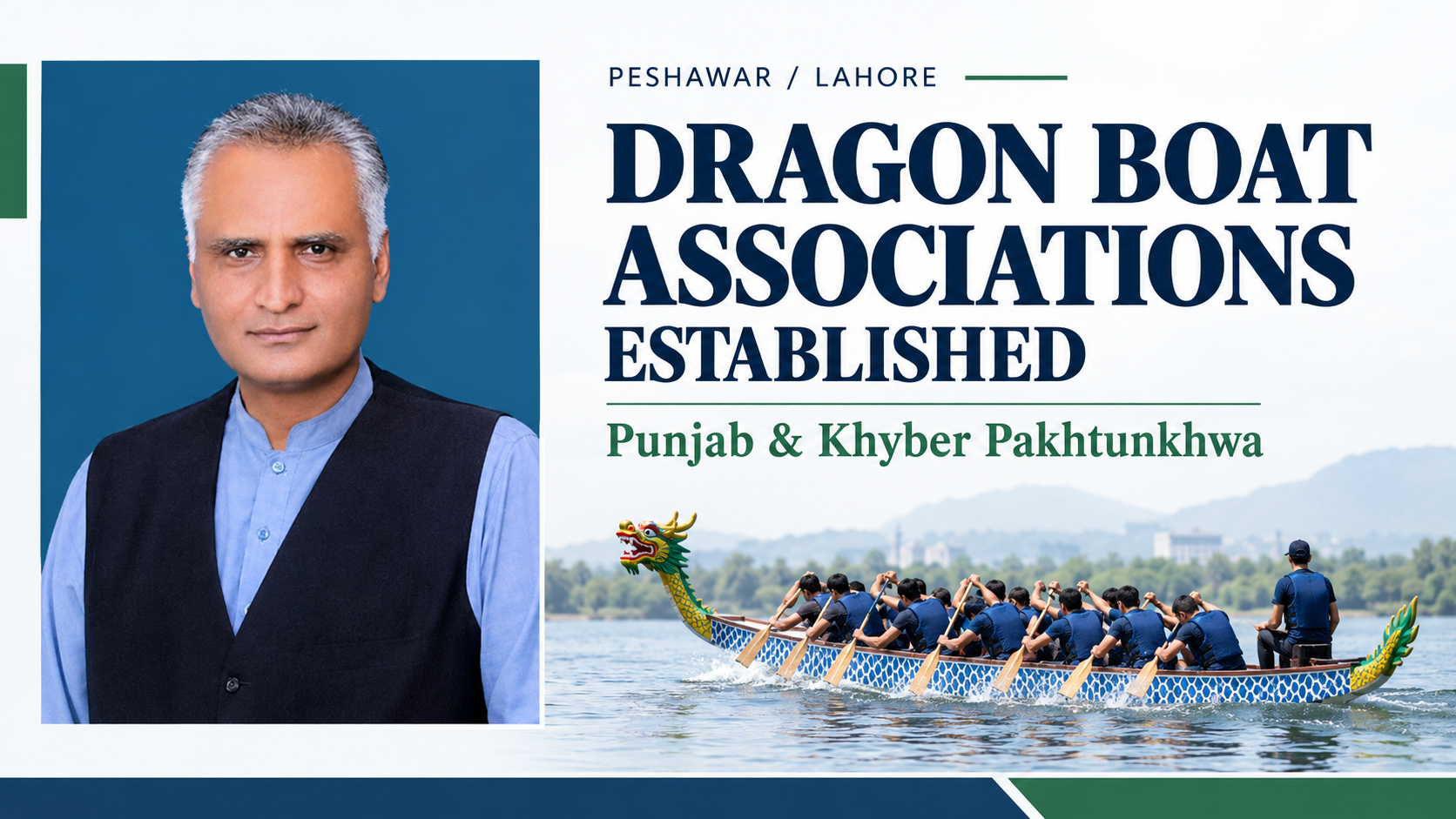
Dragon Boat Associations Established in Punjab and Khyber Pakhtunkhwa
PSHAWAR/LAHORE: Dragon boat associations have been established in Punjab and Khyber Pakhtunkhwa, marking a step towards organising and promoting the sport across Pakistan.
Prominent political and social figure Ameer Bahadur Khan Hoti will serve as president of the Punjab Dragon Boat Association (PDBA), while a notification has been issued confirming the election of former bureaucrat Javed Marwat as president of the Khyber Pakhtunkhwa Dragon Boat Association (KPDBA). At a meeting in Lahore, prominent sports journalist Muhammad Yousuf was elected secretary general of the Punjab association. Uzma Zaidi will serve as senior vice president and Naveed Akhtar Malik as treasurer.
At a separate meeting in Peshawar, Javed Marwat, who previously held several senior administrative positions in the province, was unanimously elected president of the Khyber Pakhtunkhwa association, while renowned sports organiser Naeem Gul was elected secretary general. Shamim Akhtar Jadoon will serve as senior vice president, Junaid Khan vice president and Bilal Aslam as treasurer. Newly elected Punjab association president Ameer Bahadur Khan Hoti said Pakistan’s first dragon boat festival and competitions on the Kabul River had opened new avenues for the sport’s development. He said the enthusiasm shown by participants and the sport’s promising prospects had highlighted the need to establish a Pakistan Dragon Boat Federation to coordinate training, organise competitions and support athletes. Dragon boat associations would be established in all four provinces and the federal capital, Islamabad, before the formal announcement of the national federation, he added.
Newly elected Khyber Pakhtunkhwa association president Javed Marwat said efforts would focus on introducing the sport at the provincial level and providing athletes with opportunities to compete nationally and demonstrate their abilities. Teams would also be sent to represent Pakistan in international competitions. He said the sport would help strengthen people-to-people exchanges and further promote Pakistan-China friendship. Marwat expressed confidence that dragon boat racing would soon gain popularity throughout Pakistan.
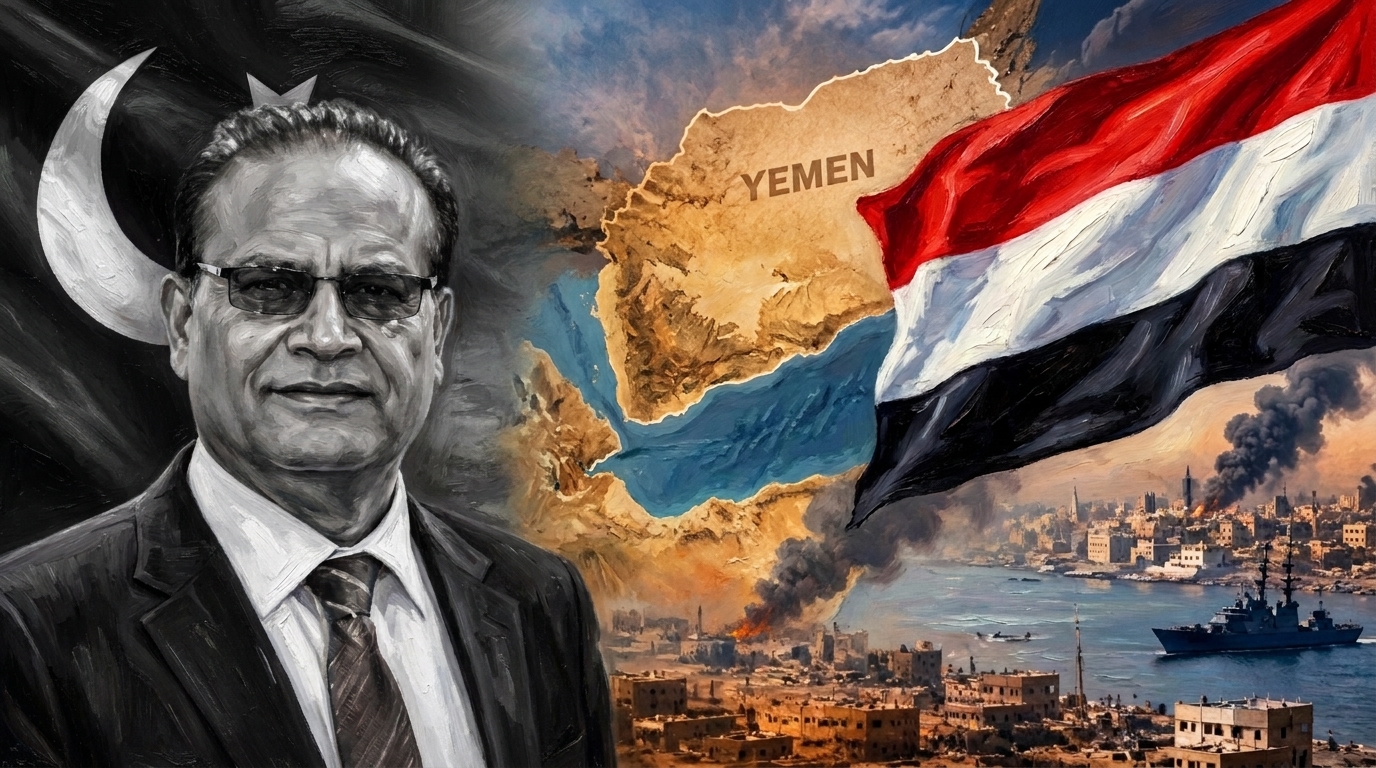
Paris (Imran Y. CHOUDHRY) :- Former Press Secretary to the President, Former Press Minister to the Embassy of Pakistan to France, Former MD, SRBC Mr. Qamar Bashir analysis : Pakistan’s military commitment to Saudi Arabia raises a question that cannot be answered simply by identifying where its soldiers are stationed. Modern warfare allows forces to attack through aircraft, missiles, drones and targeting support without sending infantry across a border. The decisive issue is whether Pakistani personnel and capabilities will participate in hostilities against Yemen’s Houthis—and what consequences could follow.
Scott Ritter, renowned American podcaster, military and geopolitical analyst captures the central danger: Saudi Arabia could obtain through collective defence the Pakistani involvement in Yemen that Islamabad previously resisted. An initially limited commitment could expand through casualties, retaliation and demands for reinforcement, leaving Pakistan responsible for a war whose objectives it does not control.
CNN reported on October 7 that Pakistani troops were already stationed in Saudi Arabia. In the interview, Lieutenant General Ahmed Sharif Chaudhry, director general of Inter-Services Public Relations, declined to disclose their numbers or capabilities. Asked about operations across the Yemeni border, he invoked military confidentiality, explaining that participating countries do not publicly disclose how and where they will employ their forces. His response offered no categorical exclusion of ground operations or offensive action inside Yemen, even as he described Pakistani involvement as defensive.
That distinction matters. Operational secrecy may protect military personnel, but it also leaves the public without clear answers about the mission’s boundaries. The description “defensive” cannot establish those boundaries by itself. Governments routinely invoke defence to justify attacks beyond their territory; the relevant questions concern what forces actually do, whom they target and under whose authority.
Pakistani forces operating from Saudi territory could potentially support or conduct attacks inside Yemen without deploying infantry there. Air operations and targeting assistance could carry substantial consequences. If Pakistani personnel participate in attacks against Houthi positions, Ansarullah could regard Pakistan as belligerent. Tehran could interpret the same activity as participation in a campaign against Iranian regional interests.
The Makkah Joint Defence Agreement, signed by Saudi Arabia, Pakistan and Türkiye on August 7, 2026, reportedly treats an attack against one member as an attack against all three. Its deterrent promise is substantial, but so is the danger of importing one member’s confrontation into the security calculations of the others.
An October 5 statement published by Türkiye’s Foreign Ministry committed the partners to implement collective defence arrangements and rapidly deploy agreed military forces and capabilities to Saudi Arabia, subject to national legislation. Türkiye therefore shares the deployment commitment. However, the evidence reviewed does not establish a Turkish ground combat commitment against the Houthis or an equal distribution of operational risks.
For Islamabad, the unanswered questions are fundamental. Who authorizes Pakistani involvement in cross-border attacks? Can Pakistan refuse a particular operation? Who finances a prolonged deployment, and what conditions permit withdrawal? Confidential operational details need not be published to explain the political mandate governing the use of force.
Pakistan brings potential strengths to the alliance: experienced personnel, established military institutions and longstanding cooperation with Riyadh. Saudi infrastructure and financing could support a substantial deployment. Islamabad’s relationships with both Riyadh and Tehran might also create diplomatic opportunities, provided military involvement does not undermine its credibility as an intermediary.
Yet those strengths do not resolve the weaknesses of an extended campaign. Destroying particular weapons or positions is different from ending an adversary’s ability and determination to fight. Dispersed forces, local networks and adaptation can frustrate superior firepower. Tactical gains could therefore coexist with an expanding mission and an elusive political settlement.
Ritter’s warning is strongest when understood in these terms. Predicting inevitable Pakistani defeat is less useful than asking what victory would require. Protecting defined facilities offers measurable objectives. Permanently eliminating the Houthi threat could entail commitments far beyond what Pakistan initially intended—and costs that additional military capability cannot necessarily overcome.
Saudi financial assistance complicates Islamabad’s freedom of choice. The State Bank of Pakistan confirmed that a $3 billion Saudi deposit maturing in December 2025 was extended for another year. Such support gives Pakistan a substantial interest in maintaining Saudi confidence.
Saudi’s financial influence does not require an explicit threat. A government facing external financing pressures may find it difficult to reject security requests from an important creditor. The danger is that short-term economic reassurance encourages military obligations carrying much greater long-term costs.
Iran introduces a further risk. Pakistani attacks against an Iranian-supported movement could damage relations with a neighbouring country and generate security pressures closer to home. The Houthis also possess their own Yemeni objectives, and attacking them is not automatically equivalent to attacking Iran. Political escalation, however, can advance through perceptions and retaliation before governments agree on legal distinctions.
International law offers no reliable assurance that this confrontation would remain contained. Legal obligations persist, but their enforcement is uneven, and states may invoke self-defence while pursuing military objectives beyond their borders. Pakistan therefore cannot assume that legal distinctions between defending Saudi territory and attacking Houthi positions would restrain retaliation. If Tehran perceives Pakistani operations as threatening its interests, the danger would turn on strategic calculations, perceived threats and the risk of escalation—not simply on competing interpretations of the UN Charter. Shared religion and geographical proximity would offer no dependable protection against that outcome.
Pakistan’s domestic divisions make a widening conflict especially consequential. The supporters of imprisoned former prime minister Imran Khan began marching from Khyber Pakhtunkhwa toward Islamabad on October 4, demanding his release, hospital treatment and family access. An overseas campaign would impose additional demands on resources and political legitimacy amid an already polarized environment.
Parliament’s April 2015 resolution remains relevant. It supported neutrality in Yemen alongside solidarity against threats to Saudi territorial integrity and the holy sites, while urging diplomacy through the United Nations and Organisation of Islamic Cooperation. That distinction deserves renewed parliamentary examination before military commitments overtake political debate.
Pakistan, Saudi Arabia and Türkiye should pursue an emergency OIC initiative linked to UN diplomacy, involving Iran and meaningful Yemeni participation. Reciprocal de-escalation, civilian protection and humanitarian access should take priority. Their collective influence should also sustain action for Palestinian rights rather than dissipate through another prolonged regional confrontation.
The Makkah Pact’s credibility will depend on whether it improves security. Secrecy about military methods cannot replace clarity about political objectives. Before Pakistan’s commitment deepens, its leaders must explain what they are defending, how far that obligation extends and how they intend to prevent it from becoming an open-ended war.
Pakistan News
Pakistan Reaffirms Commitment to Multilateralism, Peace and International Cooperation at the Executive Board of UNESCO
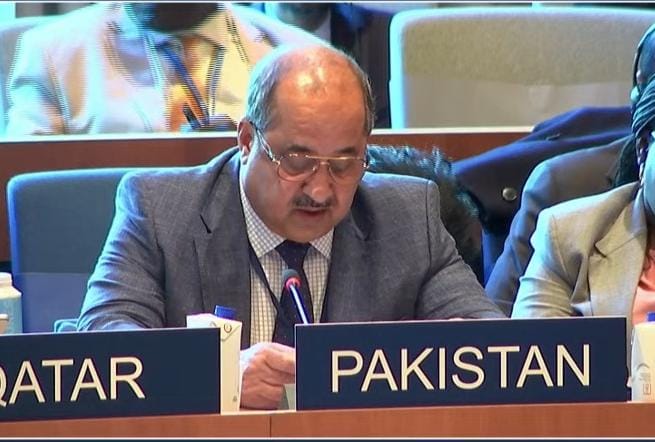
Paris ( Imran Y. CHOUDHRY):- Advisor to the Prime Minister of Pakistan and Representative of Pakistan to UNESCO, Syed Tauqeer Hussain Shah, delivered Pakistan’s national statement at the 225th Session of the UNESCO Executive Board in Paris, France, reaffirming its steadfast commitment to multilateralism, international cooperation and the promotion of peace through dialogue and mutual understanding.
In his statement,
- Underscored Pakistan’s firm support for multilateral institutions, South-South cooperation and collaborative efforts to address global challenges, particularly those confronting developing countries;
- Highlighted the urgent need to protect human life, educational institutions and cultural heritage amid conflicts and crisis, especially in Gaza;
-Called for an international action plan to confront the challenge of out-of-school children;
- Stressed the importance of equitable access to scientific knowledge, international scientific collaboration and reducing technological inequalities;
-Underlined the need to combat racism, misogyny, Islamophobia, disinformation and hate speech, while encouraging responsible and ethical governance of artificial intelligence and emerging technologies; and
- Expressed support for institutional reform of UNESCO to enhance its effectiveness and impact worldwide.


New Chapter for Dragon Boating in Punjab and Khyber Pakhtunkhwa Provincial associations officially set up with sights locked on national competitions and international representation.

Pakistan’s Yemen Dilemma

U.S. Sanctions the International Criminal Court to Shield Netanyahu

South Korea’s Yoo Useong Steps Onto the Global Strongman Stage as World Strongman Federation Professional Athlete
New Chapter for Dragon Boating in Punjab and Khyber Pakhtunkhwa Provincial associations officially set up with sights locked on national competitions and international representation.

A Survey of Mata-E-Zeest


-
 Sports4 months ago
South Korea’s Yoo Useong Steps Onto the Global Strongman Stage as World Strongman Federation Professional Athlete
-
 Pakistan News2 days ago
New Chapter for Dragon Boating in Punjab and Khyber Pakhtunkhwa Provincial associations officially set up with sights locked on national competitions and international representation.
-
 Art & Culture1 year ago
A Survey of Mata-E-Zeest
-

 Europe News2 years ago
Chaos and unproven theories surround Tates’ release from Romania
-

 American News2 years ago
Trump expands exemptions from Canada and Mexico tariffs
-

 American News2 years ago
Trump Expels Zelensky from the White House
-

 Art & Culture2 years ago
Will Snow White be a ‘victim of its moment’? How the Disney remake became 2025’s most divisive film
-

 Entertainment2 years ago
Champions Trophy: Pakistan aim to defend coveted title as historic tournament kicks off today