
war
The Nuclear Factor


IT was April 1994. Pakistan’s army chief Gen Waheed Kakar was on an official visit to Washington. Pakistan was under military and economic sanctions imposed by the US on the nuclear issue in 1990. As a result, a wide range of military equipment including 28 F16s that Pakistan had paid for was embargoed.
Against this backdrop, the nuclear issue dominated most of Gen Kakar’s meetings. In one meeting with top US military and State Department officials, which I also attended as Pakistan’s ambassador to Washington, our American interlocuters offered to release all our equipment including the planes if Pakistan agreed to freeze its nuclear programme and allow a one-time inspection to verify a cap on enrichment. Gen Kakar listened patiently and then politely told his hosts: “Gentlemen, I come in friendship but we in the East do not measure our relationship in planes and tanks. You can keep our F16s and our money. Our national security is non-negotiable.”
I recall this meeting as one example of how resolutely and uncompromisingly Pakistan maintained its position on an issue vital to its security. Had it not done so and caved into international pressure it would not have acquired the nuclear capability which is and has been the guarantor of the country’s security. There has been no all-out war between Pakistan and India since both neighbours became nuclear powers, despite regular crises, skirmishes and military confrontations.
The latest crisis has again thrown this into sharp relief. True, India has acted on its doctrine of limited war under the nuclear threshold, to try to push the boundaries and enlarge space for this in every successive crisis. It has also become the first nuclear power to attack another nuclear state by missiles and air strikes. It has sought to create a ‘new normal’ by launching kinetic actions in mainland Pakistan whenever there is a terror attack in occupied Kashmir, for which it holds Pakistan responsible without evidence.
Pakistan’s strategic capability remains the guarantor of its security against a full-scale war.
In the latest crisis, India used all the instruments of modern, hybrid warfare — ballistic missile strikes, drones, disinformation, psy-ops and weaponising water to undermine deterrence. But Pakistan’s conventional capabilities deterred India from provoking an even larger conflict. Pakistan’s counteractions (initially downing Indian fighter aircraft) imposed heavy costs on India for its aggression. Retaliating to the second round of unprovoked Indian attacks, including on its air bases, Pakistan launched a military operation involving air strikes, missiles and armed drones against Indian military bases and infrastructure in and much beyond Kashmir. A ceasefire followed soon after brokered by Washington and announced by President Donald Trump.
Pakistan’s military response was designed to re-establish deterrence while blunting the aims of limited war and thwarting India’s effort to seek space for conventional war under the nuclear overhang. India’s reckless actions escalated the crisis to a dangerous level and drove it into uncharted territory — almost to the edge of all-out war. But its military brinkmanship had to stop well short of Pakistan’s known nuclear red lines. Thus, were it not for the nuclear factor, a full-scale war could have broken out.
https://www.dawn.com/news/card/1909301
The story of Pakistan’s pursuit of a nuclear capability is worth recalling to remind ourselves of the formidable challenges that were faced — and overcome — to acquire it. Confronted with an implacable adversary Pakistan initially pursued a strategy of external balancing by forging military alliances with the West to counter India and its hegemonic ambitions.
But the lesson of the country’s defeat and dismemberment in 1971 was that it could only depend on itself for its security. India’s nuclear explosion in 1974 was a turning point. It convinced Pakistan of the imperative to acquire nuclear weapons. Western countries, however, sought to punish Pakistan for India’s explosion by adopting discriminatory policies and denying it technology.
Pakistan faced innumerable obstacles in its nuclear journey. It braved Western embargoes, sanctions and censure, US opposition and unrelenting international pressure to stay the course. It took the country 25 years of arduous effort to build a strategic capability and even longer to transform that into an operational deterrent with an effective delivery system. That objective could not have been achieved if successive civilian and military governments had not all pursued this regardless of costs but confident that a firm national consensus backed the effort.
The book Eating Grass by Feroz Khan, published some years ago, describes the fascinating interplay between geostrategic shifts, key political and scientific figures and evolution of strategic beliefs, which shaped Pakistan’s nuclear decisions. It is a riveting insider account of the country’s quest for a nuclear capability and the challenges it encountered. Its title is inspired by Zulfiqar Ali Bhutto’s much-cited remark that if India built the bomb, “we will eat grass, even go hungry, but we will get one of our own”.
https://www.dawn.com/news/card/1756369
Khan explains how Pakistan mastered the nuclear fuel cycle despite heavy odds. He credits this not to a few individuals but to the collective determination of hundreds of people in the civil-military establishment. However, what ultimately determined nuclear success was the cadre of scientists and engineers whose talent was tapped in the country’s early years and who were motivated by the resolve not to let India’s strategic advances go unanswered.
A book that focuses on a different aspect of Pakistan’s nuclear journey is The Security Imperative: Pakistan’s Nuclear Deterrence and Diplomacy by Zamir Akram, an outstanding diplomat. Nuclear diplomacy played a critical role in the country’s efforts to develop a strategic capability which Akram chronicles with illuminating insights. A key theme of his book is how Pakistan’s diplomacy navigated through the discriminatory landscape erected by the West, while advancing its nuclear and missile programmes.
As a diplomat I witnessed first-hand the international pressure mounted on the country. Pakistan was asked to unilaterally sign the Comprehensive Test Ban Treaty, agree to inspection of its nuclear facilities, sign up to negotiations for a Fissile Material Cut Off Treaty in the UN’s Conference on Disarmament and curb its missile development. Pakistan said no to all of the above to protect its security interests.
Because of such decisions and the exceptional efforts of those who built Pakistan’s strategic capability its security is assured against a full-fledged war by India. Similar commitment is needed to deal with internal challenges, especially to build a strong, self-reliant economy so that the country is not vulnerable to external pressure.
The writer is a former ambassador to the US, UK and UN.
Published in Dawn, May 12th, 2025

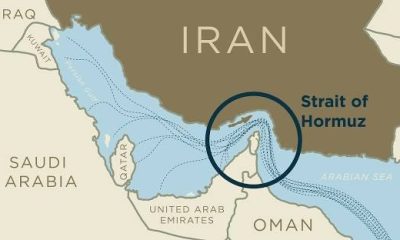







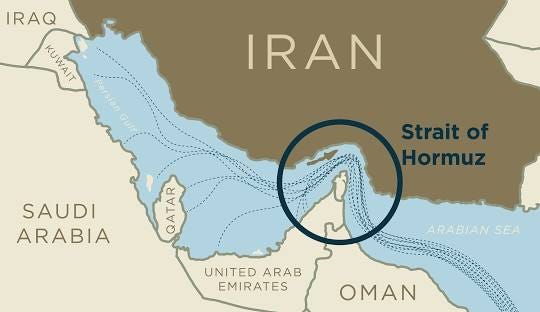
Paris (Imran Y. CHOUDHRY) :- Former Press Secretary to the President, Former Press Minister to the Embassy of Pakistan to France, Former MD, SRBC Mr. Qamar Bashir analysis : The Strait of Hormuz presents a puzzle that cannot be resolved through official statements alone. Iran claims that no vessel can use the waterway without its authorization. The United States simultaneously says that its naval “wall of steel” is preventing ships from entering or leaving Iranian ports.
If both claims were completely accurate, the consequences should have become catastrophic. Iranian oil would be trapped by the United States, while petroleum belonging to Washington’s Gulf allies would be blocked by Iran. The resulting pincer movement should have removed an enormous volume of oil and gas from international markets.
After almost six months of war, however, the anticipated worldwide collapse has not occurred. Brent crude remains around $87 rather than $150 or $200. Transportation and insurance costs have increased, but most countries have not declared that their fuel reserves are exhausted. There are no universal gasoline lines, comprehensive rationing programs or widespread refinery closures.
The contradiction demands an explanation.Iran has demonstrated that its restrictions are not merely rhetorical. The United Arab Emirates says at least 15 vessels connected with ADNOC have been attacked since the war began. Several attacks occurred during August alone, producing deaths, injuries and operational disruption.
Saudi Arabia faces pressure at both ends of its export system. Iranian power threatens shipping through Hormuz, while the Houthis have declared a maritime embargo against Saudi-linked vessels around the Red Sea. Qatari LNG operations and tankers have also suffered disruption.
The United States, meanwhile, is preventing ships from entering and leaving Iranian ports. CENTCOM has intercepted or redirected Iran-linked vessels and says the blockade can be maintained indefinitely.
The EIA estimates that petroleum flows declined from approximately 21.6 million barrels per day before the conflict to 4.9 million during the second quarter of 2026. Recent private estimates range between 1.74 million and 6.98 million barrels daily. The reduction is therefore real and historically significant.
That produces another puzzle. If a Chinese tanker receives Iranian permission to transport Saudi or Emirati oil, the Gulf producer still exports its petroleum and receives revenue. The cargo also remains available to the world market. Iran would be controlling the destination—not blockading the oil itself.
Strategic and commercial stocks provide part of the answer. The International Energy Agency reports that observed worldwide oil inventories have declined by approximately 410 million barrels since the war began—an average depletion of 2.7 million barrels per day.
The global numbers are revealing. Supply has fallen by about 4.3 million barrels per day, while high prices and economic weakness have reduced demand by approximately 1.6 million. The remaining deficit is around 2.7 million barrels daily—almost exactly the reported rate at which inventories are declining.
This explains why the shortage has not yet produced universal rationing. But inventories cannot explain the whole system. Stored petroleum cannot indefinitely replace the enormous quantity historically transported through Hormuz.
Attention must therefore shift outside the Persian Gulf. The IEA estimates that production from the Americas has increased by approximately 1.4 million barrels per day during 2026. The United States is producing around 13.8 million barrels daily, while Canada, Brazil, Guyana and Argentina are expanding output.
Brazil, Guyana and Venezuela have collectively delivered the largest increase in petroleum exports from any producing region during 2026. Venezuela exported approximately 1.16 million barrels daily in July, including about 786,000 barrels per day to the United States—the highest American-bound volume since early 2019.
Russia remains another important supplier. Despite attacks on its refineries, it continues sending crude to China and India. Damage to Russian refining capacity can paradoxically increase crude exports because oil that cannot be processed domestically becomes available for foreign shipment.
Nigeria and Angola are supplying additional African crude. Nigeria’s Dangote refinery has increased gasoline and fertilizer exports to African countries deprived of traditional Middle Eastern supplies.
India has become an essential refining bridge. It buys Russian, Brazilian, Venezuelan, Nigerian and Angolan crude, processes it domestically, and exports diesel, gasoline and aviation fuel to Asia and Europe.
Qatari LNG losses are being replaced partly by the United States, Australia, Nigeria, Angola and Oman. Saudi Arabia moves crude through its East-West pipeline to Yanbu, while the UAE exports through Fujairah and uses shuttle tankers and ship-to-ship transfers outside Hormuz.
The functioning market is therefore not evidence that nothing has changed. It is evidence that the international energy system is being reconstructed while the war continues.
Every month of disruption strengthens alternative suppliers. Importers that once depended on the Persian Gulf are signing contracts elsewhere. Refineries are learning to process different crude grades, while investors are financing pipelines, terminals and offshore production beyond Hormuz.
These emergency arrangements may become permanent. Once countries spend billions adapting their infrastructure, they have little reason to restore their previous dependence completely.
Iran may therefore be damaging not only American allies but its own strategic position. Saudi Arabia, the UAE, Qatar and Kuwait risk losing customers and their reputation for reliable delivery. However, the USA and American and Western Hemisphere producers are gaining customers and influence.
This market transformation raises a question more consequential than the original shipping puzzle: was the redistribution of energy power merely an unintended consequence?
In 2025, China demonstrated that control of strategic resources could become a geopolitical weapon. Beijing tightened restrictions on rare-earth elements, processing technology and permanent magnets essential to American automobiles, aircraft, missiles, radar systems, semiconductors, robotics and industrial machinery.
The United States could identify new mineral deposits, but it could not quickly reproduce China’s refining and magnet-manufacturing ecosystem. Beijing had acquired leverage capable of interrupting American factories and defence production without military action.
Washington needed comparable bargaining power. China imports approximately 70 percent of the petroleum it consumes, much of it through vulnerable maritime routes. Oil and its transportation system offered a possible counterweight.
Before the Iran war, Trump demanded “total access” to Venezuelan oil. Venezuela possesses the world’s largest reported proven petroleum reserves. Iran possesses enormous oil and gas deposits while occupying the northern coastline of the waterway carrying approximately one-fifth of global petroleum consumption.
Senator Lindsey Graham later connected the two countries explicitly: “Venezuela and Iran have 31 percent of the world’s oil reserves… This is China’s nightmare. This is a good investment.”
Graham described American control of Hormuz as “checkmate.” Trump subsequently declared that the United States could open the waterway, “take the oil” and “make a fortune.”
These statements reveal a strategic philosophy. China possessed leverage over the minerals and magnets required by the United States. Washington could answer by acquiring influence over the petroleum and shipping routes required by China.
The official military objectives—supporting Israel, destroying missiles, preventing nuclear proliferation and weakening Iranian regional influence—remain part of the explanation. But they do not necessarily constitute the entire explanation.
The inquiry began with two allegedly airtight blockades and a strangely resilient oil market. It then uncovered inventory depletion, alternative suppliers, new trade routes and a historic transfer of energy influence away from the Persian Gulf.
At the end of that trail stands a larger possibility: the Iran war may be one battlefield in an American attempt to create energy leverage against China’s mineral power.
What appeared to be a war centred upon Iran and Israel may ultimately be part of a much greater contest over who controls the indispensable resources—and therefore the geopolitical bargaining power—of the twenty-first century.

Paris (Imran Y. CHOUDHRY) :- Former Press Secretary to the President, Former Press Minister to the Embassy of Pakistan to France, Former MD, SRBC Mr. Qamar Bashir analysis : Nearly six months later, President Donald Trump is no longer speaking confidently about unconditional victory. He is talking about negotiations and the danger of an “economic catastrophe” for the USA and its people if the conflict continues.
This is more than a change in language. It is a strategic admission that the economic pressure intended to break Iran has recoiled upon the United States and the wider world. The war has damaged Iran enormously, but it has also depleted American munitions, disrupted energy supplies, raised fuel and consumer prices, unsettled financial markets and exposed the limits of Washington’s military power.
Trump acknowledged this danger while defending his diplomatic approach. He linked expectations of peace with gains in the stock market and warned that continuing the conflict could produce a severe economic downturn. Trump said he “didn’t want to see economic catastrophe” and suggested that prolonged warfare could have created something resembling an international depression.
That statement represents a remarkable reversal. At the beginning, the administration projected the war as a demonstration of irresistible American power. Iran would supposedly lose its leadership, missile forces, nuclear infrastructure, economy and ability to influence the region. Now Washington is seeking an exit partly because the economic consequences have become intolerable for Americans themselves.
The Strait of Hormuz has transformed the entire strategic equation. Before the war, ships passed through the waterway without paying Iran for access. Today, Tehran’s ability to disrupt or regulate traffic has turned the strait into its greatest bargaining instrument. Every interruption raises oil prices, transportation costs and inflationary pressure throughout the world. Iran can therefore impose economic costs far beyond the damage inflicted on its own territory.
Trump says the United States is “semi-negotiating,” apparently relying upon economic pressure to force Tehran into an agreement. Iranian officials deny conducting direct negotiations and say messages are being exchanged through intermediaries, particularly Oman. Tehran is demanding an end to the American naval blockade, sanctions relief, access to frozen assets and compensation for wartime destruction. Whether all these demands survive negotiations is uncertain, but Iran is negotiating from a position few anticipated when the war began.
Some American lawmakers have suggested that even a bad agreement is now preferable to continuing a disastrous war. That assessment reflects the uncomfortable reality confronting Washington: the price of reopening the Strait of Hormuz increases with every passing day. The longer Iran demonstrates that it can endure military pressure while disrupting the global economy, the stronger its negotiating position becomes.
Trump has responded to Iran’s demand for war reparations by insisting that Tehran compensate Americans for alleged damage caused over several decades. The demand may have domestic political appeal, but it does little to resolve the immediate crisis. If both countries begin calculating every death, intervention, sanction, covert operation and destroyed asset over the past half-century, the resulting claims would be immeasurable. Such historical accounting would produce endless confrontation rather than peace.
The more serious obstacle may be the growing divergence between Trump and Israeli Prime Minister Benjamin Netanyahu. The United States increasingly needs de-escalation to protect its economy, military readiness and political stability. Netanyahu, however, continues taking steps that risk expanding regional conflict. Israel’s latest attack on Hezbollah targets in Beirut, which killed and wounded several people, complicated negotiations and reportedly angered Trump at a particularly sensitive moment.
Netanyahu has also publicly rejected Trump’s 15-point Gaza peace framework. The proposal envisages Hamas’s disarmament, a phased Israeli withdrawal, an international stabilization force and a Palestinian administrative structure. Netanyahu insists that Hamas must disarm completely before Israel withdraws and has declared that no Palestinian state will emerge in Gaza or the West Bank while he remains prime minister.
This is a revealing fracture. As long as Washington financed, armed and diplomatically protected Israel while confronting Israel’s regional enemies, the alliance appeared harmonious. But now that American economic and strategic interests require restraint, Netanyahu is demonstrating that Israeli priorities do not necessarily coincide with American ones.
Trump built his political identity around “America First,” yet his Middle East policy has repeatedly appeared to place Israel’s objectives above America’s long-term interests. Even while seeking an escape from a war that has burdened American families, depleted military inventories and weakened global readiness, he continues attacking domestic political figures on the basis of their criticism of Israel.
His reaction to the political rise of Michigan Democrat Abdul El-Sayed is illustrative. Instead of concentrating on why voters may be turning toward candidates who oppose foreign wars and challenge established power, Trump has portrayed criticism of Israel as hostility toward America. That framing ignores a fundamental distinction: Americans are entitled to question whether unconditional support for another government serves their own national interest.
The Iran war has made that question unavoidable. The United States has used enormous quantities of advanced missiles and defensive interceptors that cannot be replaced quickly. Its Strategic Petroleum Reserve has fallen to historically low levels. Energy shocks have affected household budgets, agricultural costs and business confidence. Financial markets now rise on expectations of peace and fall when diplomacy appears to collapse. Few American allies have shown enthusiasm for joining another open-ended Middle Eastern war.
Netanyahu’s defiance should therefore compel Washington to reconsider the structure of the relationship. An alliance cannot mean that one party initiates or expands conflicts while the other supplies weapons, money, diplomatic protection and soldiers—and then absorbs the economic and political consequences. Friendship between states must remain subordinate to national interest, law and democratic accountability.
It would be premature to claim that Iran has achieved a complete military victory. Iran has suffered extensive destruction, casualties and economic hardship. But strategic victory is not determined solely by the number of targets bombed. It is measured by whether the initiating powers achieve their political objectives at an acceptable cost. Iran remains intact, its leadership has been reorganized, its missile and drone capabilities have not disappeared, and it possesses decisive leverage over the Strait of Hormuz.
Trump’s shift toward negotiations is therefore not simply tactical flexibility. It is an acknowledgment that military escalation has reached its economic and strategic limits. Calling the approach “low-key” cannot conceal the fact that Washington now needs an agreement it once believed Iran would be forced to accept unconditionally.
Sanity requires restoring conditions as close as possible to those existing before the war: reopening the strait, ending the blockade, establishing verifiable security arrangements, preventing nuclear proliferation and addressing reparations through negotiations rather than retaliatory arithmetic. Congress, the media and financial institutions must also evaluate Middle East policy through the interests of the American people—not through fear of challenging Israel.
The war intended to demonstrate American dominance has instead exposed American vulnerability. Trump may call it negotiation, de-escalation or strategic patience. In reality, his warning of economic catastrophe amounts to an honest admission: continuing Israel’s war at America’s expense is no longer sustainable.
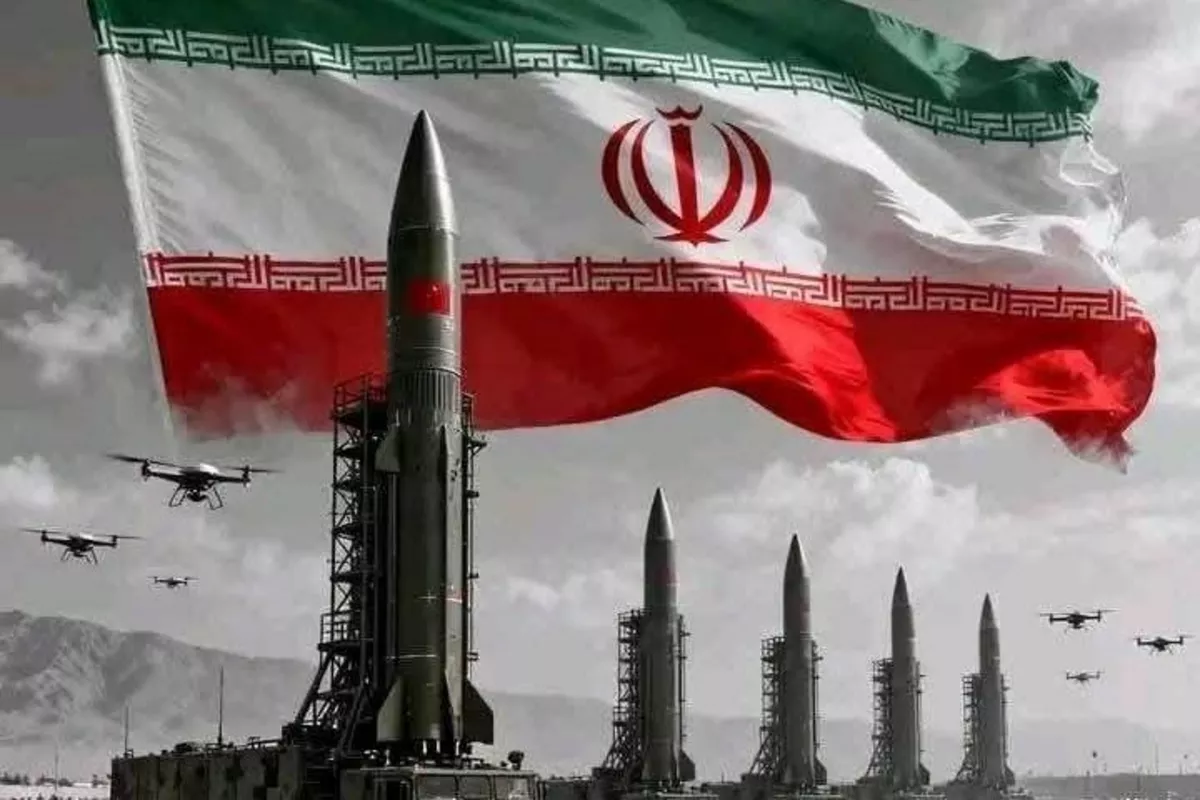
Paris (Imran Y. CHOUDHRY) :- Former Press Secretary to the President, Former Press Minister to the Embassy of Pakistan to France, Former MD, SRBC Mr. Qamar Bashir analysis : The Iran war began with the expectation that overwhelming American and Israeli firepower would bring Tehran to its knees within days. Instead, the conflict has entered its sixth month. While the United States and Israel continue to claim tactical victories, Iran appears to be winning strategically.
Political scientist Professor Robert Pape draws a clear distinction between tactical destruction and strategic success. He argues that Iran is winning because it retains decisive leverage over the Strait of Hormuz and has demonstrated its ability to threaten and disable American military installations throughout the region.
Pape’s most provocative assessment is that the war is transforming Iran into a potential “fourth center of global power,” alongside the United States, China and Russia. His argument rests not on the number of aircraft, ships or military bases Iran possesses, but on Tehran’s demonstrated ability to absorb massive attacks, preserve its political system, continue retaliating and deny a superpower the achievement of its declared objectives.
The underlying lesson is difficult to dismiss: a middle power has absorbed immense punishment while preventing the world’s most powerful military alliance from forcing it into submission. If Iran can withstand such pressure, the consequences for the credibility of American power become even more profound when one imagines a future confrontation with China, or with China and Russia acting together.
Ironically, as happened during an earlier phase when the United States reportedly faced shortages of critical weapons and ammunition, Washington has once again paused its attacks. Critics and analysts believe that this pause may not represent a genuine change of policy, but an attempt to gain time, replenish depleted stocks, complete military preparations and prepare for another escalation.
Iran, meanwhile, has made the United States largely irrelevant to the discussions currently taking place between Tehran and Muscat. Iran has characterized these negotiations as bilateral talks with Oman concerning a mechanism for managing maritime passage through the Strait of Hormuz. This places Tehran at the center of any workable arrangement, with Oman as its negotiating partner, while Washington remains outside the formal discussions and dependent upon regional mediators.
The Gulf governments have also discovered the limitations of relying upon American military bases for their security. Those bases were established to deter aggression, project American power and reassure their host governments. Instead, they became magnets for Iranian missiles and drones. After witnessing their vulnerability, the Gulf states are now asking a disturbing question: if these American bases cannot defend themselves, how can they be expected to defend their host countries?
This vulnerability helps explain why Gulf leaders reportedly pressed President Donald Trump to postpone further attacks on Iran. They understood that American strikes against Iranian power grids, desalination plants, oil installations and civilian infrastructure could invite retaliation against comparable facilities throughout the Arabian Peninsula.
Nevertheless, concerns remain about President Trump’s intentions. Russian security officials have warned that Washington and Israel may be contemplating a ground operation under the cover of ceasefire diplomacy. According to this assessment, negotiations could be used to keep Iran and the wider region relatively calm while the Pentagon completes its military buildup.
Widely circulated reports claim that more than 50,000 American troops, including approximately 2,500 Marines, over 1,200 personnel from the 82nd Airborne Division and specialized forces, have been positioned in the region. The same reports cite hundreds of military aircraft and more than 20 naval vessels deployed near Iran. These figures have been presented by the analysts and outlets reporting the alleged preparations for a possible ground campaign.
Pape describes the resulting American dilemma as an “escalation trap.” If Washington continues fighting, it risks further casualties, regional retaliation, economic disruption and horizontal expansion of the conflict. If it withdraws without achieving its declared objectives, it must acknowledge that overwhelming military force failed to produce political submission. Pressure for a ground intervention may therefore increase precisely because the air campaign has not delivered a decisive strategic outcome.
The war has also reached American homes through economic disruption and, potentially, cyberspace. Federal investigators have examined cyberattacks against water systems in seven American states, with Iran reportedly among the suspected perpetrators.
Representative Seth Moulton, a retired Marine and member of the House Armed Services Committee, described such an attack—if Iranian responsibility is established—as “an escalation of war.” He argued that Iran’s cyber capabilities were predictable and that Washington should have protected critical American infrastructure before entering a war against a state capable of retaliating through unconventional means.
The verified domestic economic damage is already serious. A Reuters/Ipsos survey placed Trump’s approval rating at 35 percent, near the lowest point of his presidency. American gasoline prices have risen by more than 25 percent since the war began, while Democrats have moved narrowly ahead of Republicans on the question of economic management.
The World Bank has reduced its projected global growth rate for 2026 from 2.9 percent to 2.5 percent, citing the Middle East conflict, rising energy prices, inflation and higher borrowing costs. The European Central Bank has similarly reported that the war has depressed household confidence and consumption across the eurozone. Thus, countries that neither initiated nor participated in the conflict are nevertheless being forced to pay its economic price.
Washington must therefore confront the question it has repeatedly avoided: whose strategic objectives is America now serving?
Benjamin Netanyahu spent decades warning against Iran and pressing successive American administrations to dismantle its nuclear, missile and regional capabilities. Israel initiated the confrontation that Washington subsequently embraced, yet the United States now carries much of its military, economic, diplomatic and political burden.
Meanwhile, Netanyahu’s government continues its operations in Gaza, entrenches Israeli control in the West Bank and pursues its objectives in southern Lebanon. As the United States remains consumed by the Iran war and the Strait of Hormuz crisis, Israel continues advancing the territorial and ideological objectives associated by its critics with the project of a “Greater Israel.”
The International Criminal Court has issued arrest warrants alleging that Netanyahu and former Israeli defence minister Yoav Gallant bear criminal responsibility for war crimes and crimes against humanity. The warrants have intensified demands that Netanyahu be held legally accountable for Israel’s conduct in Gaza.
New York Mayor Zohran Mamdani has acknowledged that his city lacks the independent legal authority to execute the ICC warrant. He has therefore called upon the federal government to arrest Netanyahu if the Israeli prime minister enters the United States.
Tucker Carlson has amplified Mamdani’s broader argument, declaring that Netanyahu has become a liability to both Israel and the United States and that Washington’s “blank cheque” policy must end. Carlson has urged other American politicians to show similar courage and reconsider a relationship in which American taxpayers finance Israeli policies while the United States bears the military, diplomatic and economic consequences.
Mamdani’s intervention expresses a widening demand for accountability: an alliance must not mean immunity, and friendship must not require one country to inherit another government’s wars. In this interpretation, Netanyahu’s removal or prosecution would not by itself resolve every regional dispute, but it could remove a major driver of continuing escalation.
America’s choice is no longer between victory and negotiation. It is between negotiated de-escalation and an expanding war in which every participant loses—even if Israel, at least for the moment, loses the least.


Media As A Bridge between Civilizations

China’s Fusion Breakthrough: Death Knell for the Oil Age

A Nation’s Real Strength Rests in Spirituality, Not Military Might


-

 Sports2 months ago
South Korea’s Yoo Useong Steps Onto the Global Strongman Stage as World Strongman Federation Professional Athlete
-

 Art & Culture1 year ago
A Survey of Mata-E-Zeest
-

 Europe News1 year ago
Chaos and unproven theories surround Tates’ release from Romania
-

 American News1 year ago
Trump expands exemptions from Canada and Mexico tariffs
-

 American News1 year ago
Trump Expels Zelensky from the White House
-

 Art & Culture1 year ago
Will Snow White be a ‘victim of its moment’? How the Disney remake became 2025’s most divisive film
-

 Pakistan News1 year ago
Comprehensive Analysis Report-The Faranian National Conference on Maritime Affairs-By Kashif Firaz Ahmed
-

 Entertainment2 years ago
Champions Trophy: Pakistan aim to defend coveted title as historic tournament kicks off today