
Politics
US cuts send South Africa’s HIV treatment ‘off a cliff’
Nulla pariatur. Excepteur sint occaecat cupidatat non proident, sunt in culpa qui officia deserunt mollit anim id est laborum.


The US government’s sudden decision to axe funding for HIV programmes is a “wake-up call” for South Africa, the country’s health minister has told the BBC.
Dr Aaron Motsoaledi, responding to US termination notices issued late on Wednesday, said the cuts could lead to deaths, but he had instructed state-funded clinics to ensure no patient went without life-saving drugs.
There is chaos as many affected organisations scramble to find alternative help for some 900,000 HIV patients by the end of the day.
“Instead of a careful handover, we’re being pushed off a cliff,” said Kate Rees from the Anova Health Institute, one of the biggest recipients of special US funding to counter the spread of HIV.
These cuts to the US’s HIV programme, known as the US President’s Emergency Plan for Aids Relief (Pepfar), are part of wider cost-cutting drive to reduce American government spending.
Pepfar was launched in 2003 by then US President George W Bush and its funding is distributed via the US government’s main overseas aid agency USAID.
It has been regarded as a ground-breaking scheme that has enabled some of the world’s poorest people to access anti-retroviral drugs (ARVs) and has saved more than 25 million lives worldwide.
A 90-day freeze on US foreign aid payments instituted by President Donald Trump on his first day in office last month has already upended the global aid system.
In reaction to the raft of cuts, the head of the Africa Centres for Disease Control and Prevention (Africa CDC) issued a stark warning on Friday.
“I have to say that the world is playing with fire,” Dr Jean Kaseya told the BBC.
“I want to send a clear message to our partners from the US, the UK and all other Western countries that please don’t come to blame Africa when there will be a pandemic coming from Africa because you decided to stop funding critical programme.”
- What’s really driving Trump’s fury with South Africa?
- What is USAID and why is Trump poised to ‘close it down’?
South Africa is one of the biggest beneficiaries of Pepfar, which contributes about 17% to its HIV/Aids programme, in which about 5.5 million people out of eight million people living with HIV receive ARVs.
Like all such US-funded organisations in South Africa, the Anova Health Institute was notified overnight on Wednesday about the decision by US President Donald Trump’s administration to terminate tens of billions of dollars of aid contracts.
Dr Rees described the announcement as one of the “worst days” of her career, especially as there had been plans afoot to reduce the dependency of HIV programmes on donor aid.
This was to take place over the next five years, making it easier for the country’s health department to take over, she said.
Health experts say Pepfar funding was also helping with research for a cure for HIV, and that the cuts would set that work back years.
The Desmond Tutu Health Foundation projects the US’s move could result in as many as half a million deaths.
Getty Images
When people offer your money, you couldn’t reject it. But I believe it was something that we should not have allowed to flourish”Dr Aaron Motsoaledi
South Africa’s health minister
South Africa’s leading Aids lobby group, the Treatment Action Campaign (TAC), warned the country could see a return to when HIV patients struggled to access necessary services for their treatment.
“We can’t afford to die, we can’t afford to go back to those years where we were suffering with access to services, especially for people living with HIV treatment,” said TAC chair Sibongile Tshabalala.
She was speaking during a digital news conference on Thursday, in which representatives from organisations that work with HIV patients described the chaos and despair caused by the termination of the funding.
Ms Tshabalala, who has HIV, became emotional as she questioned how she and others like her would survive in the wake of the funding cuts.
Dr Motsoaledi said he did not want South Africa, which has the largest ARV programme in the world, to be dependent on aid.
“It’s only that you remember the era when Pepfar started, when people offer your money, you couldn’t reject it. But I believe it was something that we should not have allowed to flourish,” the health minister told the BBC.

Services affected by the US cuts include community testing and tracing, as well as specialist clinics that help pregnant mothers from passing the virus to their unborn children.
Ms Tshabalala told the BBC the TAC had received a “chunk” of their funding from Pepfar and a smaller grant from the US CDC and the South African National Aids Council (Sanac).
While the CDC funding was due to end at the end of March, giving the TAC some breathing room, Pepfar’s abrupt termination had immediately resulted in the loss of 101 jobs from a total of 189 staff members, she said.
“We have people living and affected by HIV who are hired to go do monitoring services at the clinic level.”
HIV became prevalent in South Africa by the late 1990s, but it was only in 2004 that the government, dragged to court over its “Aids denialism”, began providing ARVs.
Ms Tshabalala, who tested positive in 2000, said she had gone “through a lot [in] those first six years after being diagnosed with HIV”.
The latest development reminded her of that time of struggle, she said.
“Not because there is nothing that can be done but because somebody, somewhere decided that you are not human enough to receive treatment.”
Taken From BBC News









Paris (Imran Y. CHOUDHRY) :- Former Press Secretary to the President, Former Press Minister to the Embassy of Pakistan to France, Former MD, SRBC Mr. Qamar Bashir analysis : Across the United States and Europe, political rhetoric has turned “Sharia” into a weapon of suspicion, transforming a Muslim neighbor’s faith into an imagined threat to national institutions. Prayer, charity, dietary observance, and personal ethics disappear behind warnings of an approaching theocracy.
This confusion encourages fear and has made exclusion appear defensive while deliberately ignoring that voluntary religious observance does not itself override courts, displace legislatures, direct public administration, or replace constitutional government.
Bringing back religion into politics is contrary to the long and arduous efforts of both American and European societies to finally culminate in developing protections against religious coercion and for individual conscience.
The law and constitution of the USA and Europe protects religious liberties and provides freedom to believe, worship, change faith, or have no faith. However, by weaponizing Sharia to cast collective suspicion on Muslims undermines these protections by turning religious identity into a test of belonging.
That contradiction gives Jessica McDonald’s inquiry its significance. McDonald, a Christian a renowned and accomplished lawyer in her social media broadcasts, countered these alarming claims she had heard about Islam.
Rather than accepting inherited assumptions, she opened the Quran and examined its language and context. Her account offers a response to political fear: understand a religious tradition before treating its followers as dangerous. She asks Christians to extend to Muslim scripture the interpretive care they expect for the Bible.
The politicians are weaponizing Sharia not due to fear of Sharia itself but to stop and put an end to economic prosperity and social recognition achieved by the Muslim community in all aspects of national life. Their visibility has unsettled those who regard professional opportunity or national belonging as the preserve of a white majority.
McDonald explains that Sharia encompasses far more than criminal punishment. Associated with a path or way, it refers broadly to divine guidance for Muslim life: prayer, fasting, charity, family duties, honesty, and ethical commerce. It also encompasses legal subjects. Fiqh is the human work of interpreting and applying that guidance. Different scholarly traditions can produce different conclusions. Her essential point is that no single universally accepted rulebook explains everything every Muslim means by following Sharia.
McDonald specifically emphasizes that Quranic teachings teaches Muslims living in non-Muslim countries to obey the laws of the country where they have chosen to live and not impose their religion on others. In her explanation, following Sharia through worship, charity, and ethical conduct does not mean seeking to replace the American or European government.
She places this alongside the Quran’s rejection of forced conversion as a starting point for discussion. Her argument challenges the conflation of personal Muslim observance with a campaign to take control of society.
Her account helps distinguish five overlapping subjects: worship, personal and family ethics, scholarly interpretation, voluntary religious dispute resolution, and state enforcement. These distinctions expose the weakness of sweeping accusations.
A Muslim refusing pork, seeking marriage advice, or donating to the poor is not thereby demanding governmental power. A government enforcing religious criminal penalties raises different questions. Serious debate must identify the practice, whose interpretation governs it, whether participation is voluntary, and whether anyone’s rights are infringed.
For Christian audiences, McDonald makes the comparison familiar. Biblical faith also addresses marriage, money, sexuality, generosity, and duties toward neighbors. Christians disagree over interpretation while recognizing their scriptures as sacred. Most do not understand every ancient Israelite punishment or ritual requirement as binding today.
Christianity and Islam differ, but the comparison exposes an inconsistent standard: expecting distinctions within one’s own tradition while accepting the harshest representation of another. Fairness requires comparable care.
Her reading of Quran 2:190–194 applies that principle to warfare. McDonald recalls hearing “kill them wherever you find them” presented as an instruction to attack Christians. She asks who “them” refers to and what the surrounding verses say. She emphasizes that the passage begins with fighting those who fight you and prohibits transgression. It discusses expulsion, restricts fighting at the sacred mosque unless attacked there, includes cessation clauses, and limits retaliation. Removing those features creates the impression of an unrestricted command.
These conditions matter. In McDonald’s reading, persecution and expulsion do not authorize unlimited revenge. Permission to fight carries boundaries; retaliation must remain proportionate, and the text repeatedly addresses cessation. Its appeal to taqwa, or consciousness of God, places moral accountability inside warfare itself. Even when people have suffered injustice, she stresses, they remain responsible for their response. Her explanation therefore challenges the portrayal of Muslim scripture as offering indiscriminate permission for violence against people of other religions.
McDonald does not pretend that every difficult question has disappeared. She acknowledges uncertainty surrounding fitnah and explicitly declines to conclude that every Quranic warfare passage is defensive.
Other passages, she says, deserve their own examination. This restraint strengthens her argument. Her apology to Muslim neighbors concerns accepting frightening quotations without checking their context. She also turns toward difficult biblical warfare passages, asking whether familiarity has spared her own tradition the scrutiny she applies to Islam.
That same discipline should shape public debate. Allegations of coercion, discrimination, or unlawful religious authority deserve examination through evidence and legal process. They do not justify suspicion of every Muslim household, mosque, or professional. Defending peaceful religious observance does not require endorsing every interpretation or excusing abuse.
It requires distinguishing individual conduct from collective identity and applying the same standards across faiths. Political leaders should identify specific wrongdoing rather than allow an unfamiliar religious term to stand in for proof.
McDonald’s inquiry ultimately asks whether citizens will examine inherited fears before allowing them to shape their treatment of neighbors. Her findings challenge the assumption that Muslim devotion means political disloyalty. In her account, prayer, charity, ethical responsibility, and respect for the country’s laws can belong to the same religious life. That understanding creates room for honest criticism without collective hostility. Americans and Europeans should demand evidence from those who invoke Sharia as a threat, protect equal citizenship, and refuse to let religious difference become a pretext for exclusion.
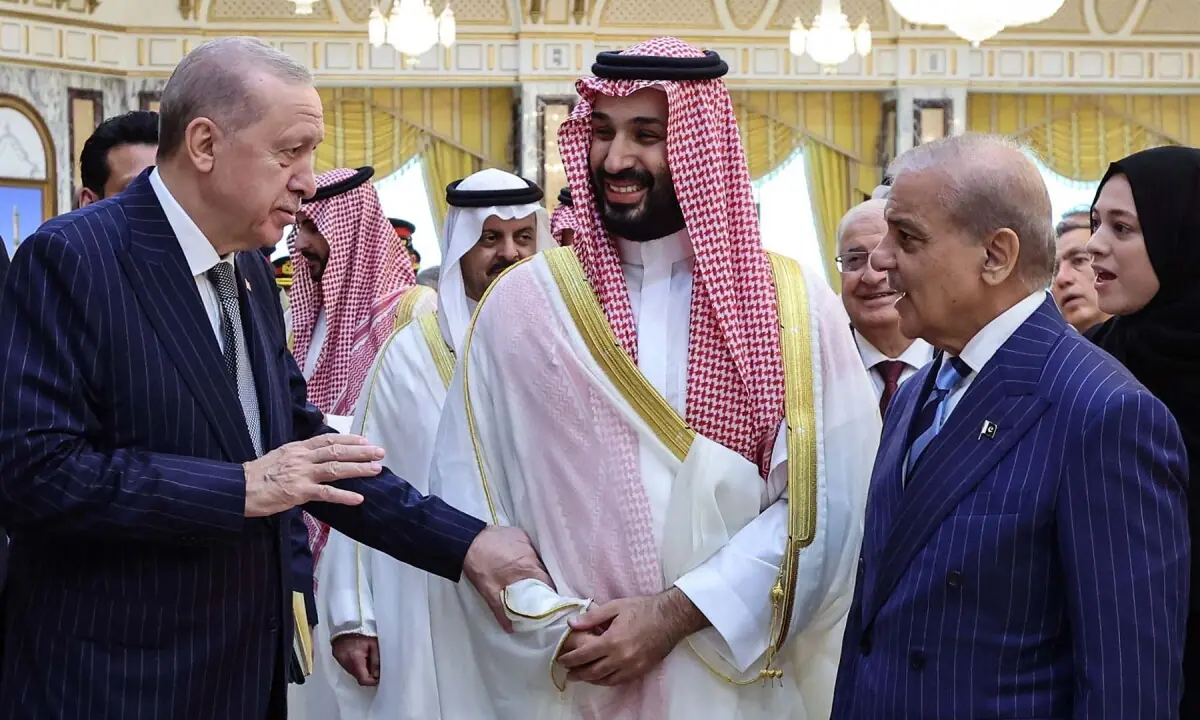
Paris (Imran Y. CHOUDHRY) :- Former Press Secretary to the President, Former Press Minister to the Embassy of Pakistan to France, Former MD, SRBC Mr. Qamar Bashir analysis : One of the most consequential outcomes of the Iran war has been the emergence of new security arrangements across the Middle East and its surrounding regions. Among them, the Makkah Joint Defence Agreement between Saudi Arabia, Pakistan and Türkiye deserves particular attention. Yet describing this arrangement as an “Islamic NATO” is misleading, unnecessarily provocative and potentially dangerous. It converts a developing defensive arrangement among three sovereign states into an ideological and religious bloc that its signatories themselves have not formally created.
The agreement signed in Makkah on August 7 is certainly significant. Saudi Arabia, Pakistan and Türkiye have committed themselves to collective deterrence, including the important principle that an armed attack against one will be regarded as an attack against all three. Their official statement speaks of historical ties, Islamic solidarity, shared strategic interests and defence cooperation. But its declared objectives are collective security, deterrence, peace and regional stability. It is formally called the Makkah Joint Defence Agreement—not Islamic NATO.
That distinction matters. Calling it an Islamic NATO immediately injects religion into what should primarily be understood as a strategic security arrangement. If this alliance must be called “Islamic NATO” because its three members are Muslim-majority countries, should NATO itself be described as “Christian NATO” because most of its members historically have Christian-majority populations? Clearly not. Modern alliances are normally defined by strategic interests, geography and shared security concerns rather than the religions practiced by their populations.
The Makkah agreement should therefore be viewed in the extraordinary geopolitical environment from which it emerged. The Iran war has profoundly disturbed assumptions about security across the Middle East. Countries that once believed distant great powers could guarantee their security have been forced to reconsider how much strategic autonomy they require. Old relationships have been tested, new partnerships accelerated and previously improbable security arrangements have become conceivable.
The transformation is especially visible in Syria. Türkiye’s growing influence there has increasingly intersected with Israel’s security calculations. Israeli strikes, Turkish objections and disputes over possible Turkish military activity have created an entirely new potential flashpoint. An Israeli strike on Syria’s Abu al-Duhur airbase this month produced sharp exchanges between Ankara and Israel, while Washington has been attempting to establish mechanisms preventing their competition inside Syria from escalating into direct confrontation.
Only days later, Syria and Israel were again engaged in American-mediated talks intended to reduce tensions, including the danger that Israeli-Turkish rivalry could spill further into Syrian territory. This illustrates just how dramatically the regional chessboard has changed: Syria is no longer merely an arena of the old Iran-Israel confrontation but increasingly a junction where Turkish, Israeli, Syrian, Arab and American security interests overlap.
The war has simultaneously returned the Palestinian question to the centre of regional diplomacy and exposed tensions within relationships previously regarded as almost immune from strategic disagreement. It has forced governments from the Gulf to South Asia to reconsider whether traditional bilateral security relationships remain sufficient in an era of missiles, drones, cyberwarfare, disrupted shipping and rapidly shifting alliances.
The consequences extend far beyond military affairs. The Strait of Hormuz has demonstrated once again how vulnerable the global economy remains to Middle Eastern conflict. At the other end of the Arabian Peninsula, insecurity around the Red Sea and Bab el-Mandeb has reinforced the same lesson. Energy security can no longer be separated from military security. Importing nations consequently have powerful incentives to diversify suppliers, shipping routes, strategic reserves and transportation infrastructure.
Meanwhile, the United States itself is confronting growing fiscal pressure. Federal debt crossed $40 trillion in August, according to Treasury data. Long-term borrowing costs have also risen sharply The 10-year Treasury yield recently stood around 4.7%, while the 30-year moved above 5%. The average American 30-year fixed mortgage is approximately 6.7%. These are nevertheless painful levels for households purchasing homes and for businesses financing investment.
War expenditure, energy prices, inflation expectations, fiscal deficits and debt-servicing costs can therefore reinforce one another. The geopolitical struggle is not taking place separately from economics; economics increasingly constitutes another battlefield.
The international financial system is undergoing change as well. BRICS members and other countries have increasingly explored settlements using national currencies and alternative payment mechanisms. This greater diversification could gradually reduce Washington’s extraordinary ability to translate control over financial networks into geopolitical leverage.
This wider transformation helps explain why the Makkah agreement has attracted so much attention. Pakistan contributes nuclear deterrence, a large professional military and substantial operational experience. Türkiye possesses NATO’s second-largest military and a rapidly expanding indigenous defence industry. Saudi Arabia contributes immense financial capacity, strategic geography and political weight in both the Arab and Islamic worlds. Together they represent a potentially formidable combination.
But potential should not be confused with maturity. NATO has existed for more than seven decades. It possesses integrated military planning, command structures, interoperability standards, intelligence-sharing mechanisms, permanent institutions and decades of combined exercises. The Makkah arrangement is at the beginning of its institutional development. Treating the two as equivalent therefore exaggerates the capabilities of the new agreement while simultaneously misrepresenting its purpose.
Indeed, serious strategic analysis has described the agreement as evidence of a broader regional realignment while also emphasizing unresolved questions about how its collective-defence commitment would operate in practice.
Its members should now remove those ambiguities. Saudi Arabia, Pakistan and Türkiye should publicly define the agreement’s defensive character, institutional mechanisms and geographical scope. They should make clear that it is directed neither against Iran nor Israel, neither against the United States nor Europe, and certainly not against Christianity, Judaism or any other religion. Where their strategic interests permit, cooperation with additional states should be based on common security requirements rather than religious identity.
If Muslim states someday wish to construct an explicitly religion-based collective security architecture, the logical political forum for debating such an undertaking would be the Organization of Islamic Cooperation. The Makkah agreement is something different: a strategic defence arrangement among three sovereign countries responding to an increasingly unstable security environment.
That distinction must be protected. The Iran war has accelerated changes already developing throughout the international system: greater strategic autonomy, new regional partnerships, competition over energy corridors, pressure on American fiscal power, experimentation with alternative financial arrangements, new tensions surrounding Syria and reassessment of traditional security guarantees. The Saudi-Pakistan-Türkiye agreement belongs within this much larger geopolitical transformation.
Branding it an “Islamic NATO” reduces that complicated strategic evolution to religion. Worse, it risks manufacturing the very confrontation the agreement should help prevent—an imaginary world of Muslim alliances confronting Christian or Jewish alliances.
The international media should exercise the same responsibility. The Makkah Joint Defence Agreement deserves scrutiny, debate and even criticism. But it should be judged by its provisions, capabilities and conduct—not assigned a religious identity that its official name does not carry.
The world already has enough geopolitical fault lines. It does not need another one manufactured between religions.
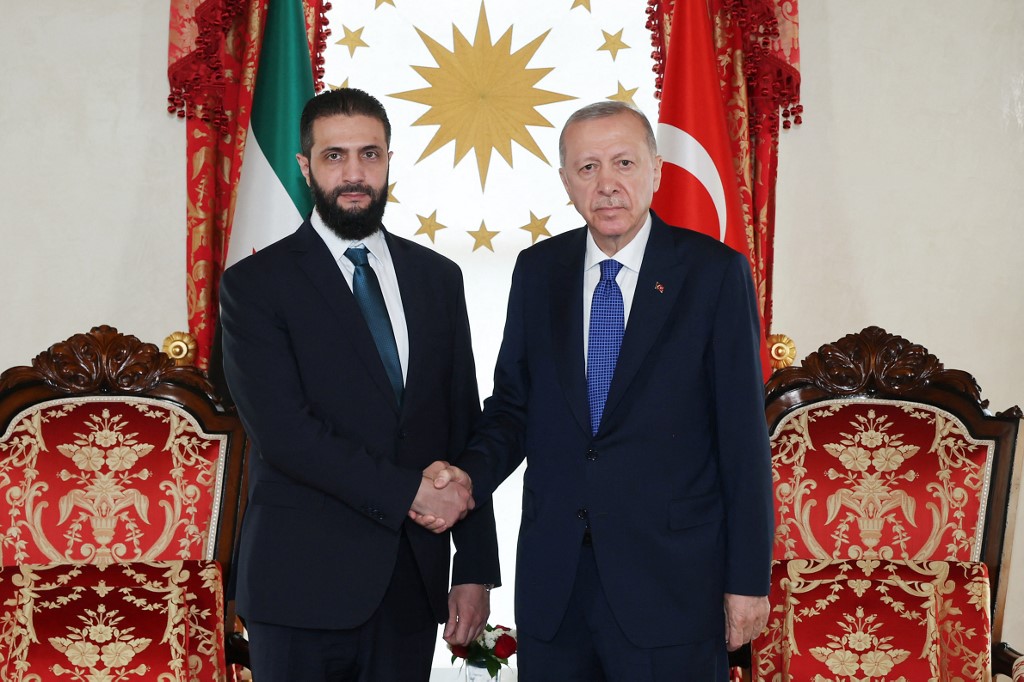
Paris (Imran Y. CHOUDHRY) :- Former Press Secretary to the President, Former Press Minister to the Embassy of Pakistan to France, Former MD, SRBC Mr. Qamar Bashir analysis : Israel’s latest airstrikes on Syria’s Abu al-Duhur airbase have opened a much larger question than the fate of one military facility. They raise a fundamental issue about sovereignty in the emerging Middle East: can Israel legitimately determine which countries Syria may cooperate with militarily, and how far can the doctrine of preventive security be stretched before it becomes an assertion of regional veto power?
On August 18, Israeli aircraft struck Abu al-Duhur airbase in Idlib, damaging its runway without reported casualties. Israel said Syria was about to violate what it described as a security “status quo” by permitting Turkish troops to deploy there. Yet Syria subsequently denied that a Turkish base or permanent deployment was planned. Foreign Minister Asaad al-Shaibani said Turkish officers had visited the facility as part of military cooperation and training, while the largely empty airfield was being rehabilitated for the Syrian Air Force.
This distinction is crucial. There is a considerable difference between Syria rebuilding its own armed forces with Turkish assistance and Turkey establishing an offensive military platform directed against Israel.
That makes Israel’s decision particularly consequential. Every sovereign state possesses the right, within international law and its treaty obligations, to develop diplomatic, economic and security relationships with other states.
Syria therefore has legitimate grounds to seek foreign assistance in rebuilding institutions devastated by years of conflict. Turkey is an obvious potential partner because of geography, its substantial military capabilities, its existing influence in northern Syria and its relationship with the post-Assad government.
Syria has suffered enormously through more than a decade of war. A country once known for its historic cities, cultural richness, educated population and considerable human potential was devastated, its infrastructure shattered and millions of its citizens displaced internally or driven abroad.
The new Syrian government consequently faces the enormous task of rebuilding not only roads, airports and public institutions but also its army, air force, border security and national security structures.
For such an undertaking, cooperation with established regional militaries is natural. Egypt, Turkey, Pakistan and other friendly states could potentially contribute expertise, but geography and Turkey’s longstanding involvement in Syria make Ankara an especially practical partner.
Israel sees the situation differently. Its government argues that October 7 fundamentally changed its security calculations and that it can no longer tolerate potentially hostile military capabilities developing near its borders.
There is an additional contradiction. Israel continues to control the Golan Heights, territory captured from Syria in 1967 and annexed by Israel in 1981—a move not recognized by most of the international community. Against this background, Israel’s attempt to dictate what Syria may do elsewhere within Syrian territory inevitably raises serious questions about sovereignty and consistency.
Washington’s reaction makes the latest episode even more significant. U.S. Ambassador to Turkey and special envoy to Syria Tom Barrack publicly characterized the Israeli strikes as an “unnecessary escalation that does not advance regional stability.” Barrack subsequently explained that American and Syrian officials believed dialogue over the facility was continuing and that available information did not indicate aggressive intent by Syria or Turkey.
That criticism matters precisely because Washington remains Israel’s most important strategic partner. It suggests that even within the American-Israeli relationship there are limits to agreement over how far preventive military action should extend. More importantly, it demonstrates the danger of substituting bombing for diplomacy when communication channels already exist.
None of this means Israeli security concerns should be dismissed. Israel has legitimate security interests, just as Syria, Turkey, Lebanon, Iran, Saudi Arabia, Egypt and every other country does. But legitimate concern and unlimited military discretion are fundamentally different concepts. Security cannot become a doctrine under which one country acquires the right to supervise the sovereign relationships of an entire region.
More dangerous still would be allowing the Israeli-Turkish confrontation to become military. Turkey is not a non-state armed organization or a militarily shattered neighboring country. It is a major regional power and NATO member possessing one of the alliance’s largest armed forces, an expanding domestic defense industry, sophisticated drones, missiles and a capable air force.
A direct confrontation between Turkey and Israel would therefore represent an entirely different strategic equation. It could draw NATO, the United States and other regional actors into an extraordinarily complicated crisis. Neither Israel nor Turkey would benefit from transforming Syria into the battlefield on which their competing strategic visions are settled.
The nuclear question therefore cannot be diluted into a vague appeal for worldwide disarmament while ignoring the immediate strategic imbalance inside the Middle East. Israel is widely believed to be the region’s only nuclear-armed state, while the surrounding Arab states do not possess nuclear weapons and Iran has faced extraordinary military, economic and diplomatic pressure even though it has not publicly crossed the threshold into an acknowledged nuclear-weapons capability.
If uranium enrichment, latent capability or even the possibility of future weaponization is considered sufficient justification for sanctions, coercion or preventive military action against Iran, then a far stricter standard should logically apply to an existing undeclared nuclear arsenal.
The principle must be consistent: one regional state cannot be permitted to demand that all others remain permanently non-nuclear while retaining its own nuclear deterrent beyond meaningful international scrutiny.
This imbalance becomes even more dangerous when the state possessing that capability repeatedly uses military force beyond its borders and increasingly invokes preventive security doctrines against neighboring countries.
Israel’s nuclear arsenal should therefore no longer be treated as an exceptional or untouchable issue. It should become a central subject of international non-proliferation diplomacy, inspection, verification and eventual disarmament.
The broader principle should of course ultimately apply to every nuclear-armed power—including the United States, Russia, China and others—because nuclear weapons are inherently capable of mutual catastrophe. But in the present Middle Eastern context, consistency demands that the rules applied so aggressively to Iran cannot stop at Israel’s borders.
This issue becomes particularly important because nuclear capability can provide a state with an extraordinary sense of strategic protection. Israel’s conventional military strength is formidable, but its presumed nuclear deterrent represents an ultimate security guarantee. That makes international responsibility even greater. Nuclear weapons must never become an implicit shield behind which increasingly expansive doctrines of preventive military intervention can develop.
The world should therefore resist both nuclear proliferation and nuclear exceptionalism. A sustainable Middle Eastern security architecture cannot be based upon one state possessing an undeclared nuclear deterrent while potential nuclear development elsewhere becomes grounds for sanctions, threats or military attacks. Rules acquire legitimacy only when they are applied consistently.
At the same time, the fundamental political disputes producing insecurity cannot be bombed away. The unresolved Palestinian question, Gaza, the West Bank, Syria’s territorial integrity and the wider competition among regional powers will continue generating instability unless addressed politically.
Israel therefore faces an important strategic choice. It can continue attempting to expand its security perimeter through military superiority and preventive strikes, or it can help construct a regional order in which its security is protected through reciprocal recognition of sovereignty and negotiated arrangements.
Bombing an airfield can destroy a runway. It cannot eliminate Turkey’s geographical importance, Syria’s need for reconstruction, Palestinian grievances or the strategic interests of neighboring states. Nor can military power indefinitely substitute for political accommodation.
Real security cannot be built by deciding whom Syria may befriend. It can only emerge when Israel, Syria, Turkey and the wider region accept the same fundamental principle: every state deserves security, every sovereign country deserves independence in its foreign relations, and no nation—however militarily powerful—should possess an exceptional right to impose its security doctrine upon all others.


Pakistan’s Yemen Dilemma

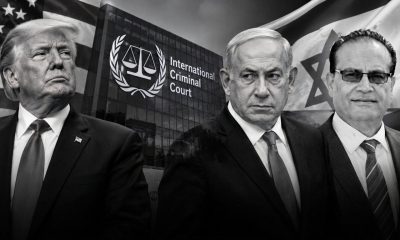
U.S. Sanctions the International Criminal Court to Shield Netanyahu

Pakistan Reaffirms Commitment to Multilateralism, Peace and International Cooperation at the Executive Board of UNESCO


-

 Sports4 months ago
South Korea’s Yoo Useong Steps Onto the Global Strongman Stage as World Strongman Federation Professional Athlete
-

 Art & Culture1 year ago
A Survey of Mata-E-Zeest
-

 Europe News2 years ago
Chaos and unproven theories surround Tates’ release from Romania
-

 American News2 years ago
Trump expands exemptions from Canada and Mexico tariffs
-

 American News2 years ago
Trump Expels Zelensky from the White House
-

 Art & Culture2 years ago
Will Snow White be a ‘victim of its moment’? How the Disney remake became 2025’s most divisive film
-

 Entertainment2 years ago
Champions Trophy: Pakistan aim to defend coveted title as historic tournament kicks off today
-

 Pakistan News1 year ago
Comprehensive Analysis Report-The Faranian National Conference on Maritime Affairs-By Kashif Firaz Ahmed