
Pakistan News
The Tale of Two Deserts


Paris (Imran Y. CHOUDHRY) :- Former Press Secretary to the President, Former Press Minister to the Embassy of Pakistan to France, Former MD, SRBC Mr. Qamar Bashir analysis : As a television news producer (1986-1991), I’ve covered my share of human tragedy, bureaucratic inertia, and moments of quiet hope. But few stories have stayed with me as powerfully as a journey through the deserts of Balochistan—where a tragic accident illuminated not just systemic neglect, but also the remarkable contrast between two deserts: one forsaken and fossilized in time, and the other transformed into a symbol of possibility through vision, science, and human resolve.
Our assignment began with a grim dispatch: a head-on collision between two passenger buses near Dalbandin, a remote town in southwestern Pakistan, roughly 400 kilometers from Quetta. Departing from the provincial capital at dusk, we drove through fading light and battered roads, arriving in Naushkey by midnight. At dawn, we resumed our journey. But as the sun rose, the road disappeared altogether—claimed by the vast, unmarked expanse of the Dasht-e-Margo, literally the “Desert of Death.” There was no map to follow, only hardened mud plains, windswept dunes, and the intuition of our local cameraman, who led us like a nomadic guide across the skeletal terrain.
By midday, we reached Dalbandin, where we were received in a modest roadside rest house by the local Assistant Commissioner. What awaited us was chilling. The two buses, barreling at speeds exceeding 100 kilometers per hour along an unmarked track, had collided head-on and burst into flames. There were no survivors—just twisted steel, scorched earth, and the acrid scent of human tragedy. It was a disaster shaped not only by fate but by decades of neglect. In a desert of over 347,000 square kilometers—larger than Germany—there were no roads, no signs, no protections. Just emptiness and vulnerability.
The Dasht-e-Margo is a desert etched into history. In 325 BCE, Alexander the Great lost thousands of his soldiers to thirst and exhaustion while attempting to cross this merciless landscape. More than two millennia later, its terrain remains untouched, unreclaimed, and largely uninhabited—where nomadic tribes still live as they did centuries ago, and modern development has yet to arrive. It is a land suspended between ancient endurance and modern abandonment.
Yet, halfway across Asia, I had once witnessed a desert of similar character—unforgiving and untamed—undergo a profound transformation. The Taklamakan Desert in China’s Xinjiang region, slightly smaller in size at 337,000 square kilometers, was once considered one of the most dangerous deserts in the world. Its very name means, “Go in, and you won’t come out.” Silk Road traders feared its shifting sands and sudden storms. For centuries, it remained a death zone for caravans and a barrier to settlement.
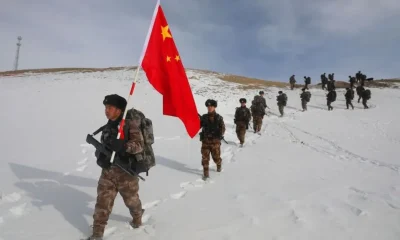
But in the past few decades, the Taklamakan has defied its ancient reputation. Since the 1980s, the Chinese government has undertaken one of the most ambitious ecological projects in human history: the creation of a “Green Wall” to contain the desert’s expansion and regenerate its periphery. Over 100 million drought-resistant trees—poplars, tamarisks, and desert willows—have been planted, stretching over 3,000 kilometers around the desert’s edge. Drip irrigation systems, soil stabilization techniques, and satellite-guided planting have reclaimed thousands of hectares of land. What satellite images once showed as a yellow void now reveals a ring of green steadily encroaching on the sands.
And beyond the ecological triumph lies a deeply human story: that of how Xinjiang’s local populations—Uyghurs, Kazakhs, and others—were turned from desert survivors into stakeholders of transformation. Former herders and subsistence farmers were trained as tree planters, irrigation workers, and forest guardians. More than 300,000 jobs have been created in Xinjiang’s forestry and agricultural sectors since 2010. Eco-compensation programs paid villagers to plant trees instead of overgrazing livestock, and fruit orchards—producing pomegranates, walnuts, and dates—have flourished where once there was only dust. This economic revitalization has drastically improved livelihoods and reduced the appeal of insurgent ideologies, replacing alienation with agency.
It is no coincidence that the Taklamakan’s transformation coincided with broader development in Xinjiang. Once plagued by separatist unrest and violence, Xinjiang has seen its GDP per capita rise from $3,000 in 2010 to over $8,000 in 2023. Poverty rates have fallen from over 30 percent to near zero. High-speed rail now links its cities to the rest of China. New industries—textiles, solar energy, food processing—have taken root, and tourism has emerged around the newly greened belts of desert. Terrorist incidents have dropped by over 90 percent in the last decade, not solely due to security measures, but because people were offered a stake in stability.
A key to this success lies in water. Like Balochistan, Xinjiang is bone-dry and vulnerable to drought. But China’s investment in water management has been transformative: the construction of reservoirs and canals, the deployment of solar-powered pumps, and the implementation of efficient drip irrigation. These systems were built not only by state planners but by local laborers, whose participation ensured sustainability. Ownership of forest zones was assigned to communities, linking environmental restoration with livelihood security.
The comparison between these two deserts—Balochistan’s Dasht-e-Margo and China’s Taklamakan—reveals the stark divergence between potential and action. It is not geography but governance that determines whether a desert remains a death zone or becomes a cradle of renewal. In Balochistan, where underground aquifers are vanishing and over 62 percent of the land is water-stressed, similar rehabilitation could be attempted. The ancient karez system, once used to irrigate Baloch settlements, could be revived and augmented with solar desalination technologies. And afforestation programs, modeled after Pakistan’s successful Billion Tree Tsunami in Khyber Pakhtunkhwa, could stabilize soil and restore ecological balance.
What the Taklamakan has shown is that with vision, investment, and inclusion, even the harshest terrain can bloom. What is needed in Balochistan is not merely funding, but a shift in philosophy: from command to collaboration, from marginalization to empowerment.
The story of these two deserts is not just about climate or culture. It is a story about choices. One desert was seen as doomed, but was transformed by patience, science, and people. The other, still majestic and mysterious, waits under the sun for a similar awakening. Pakistan has the land, the talent, and the tools. What it needs is the will—the kind that sees deserts not as dead zones, but as frontiers of possibility.
If the sands of Taklamakan can host orchards, if once-forgotten plains can hum with new life, then surely the Dasht-e-Margo too can echo with the sounds of roads being paved, trees being planted, water flowing once more. The desert will always whisper to us. The question is—will we finally listen?







Pakistan News
New Chapter for Dragon Boating in Punjab and Khyber Pakhtunkhwa Provincial associations officially set up with sights locked on national competitions and international representation.
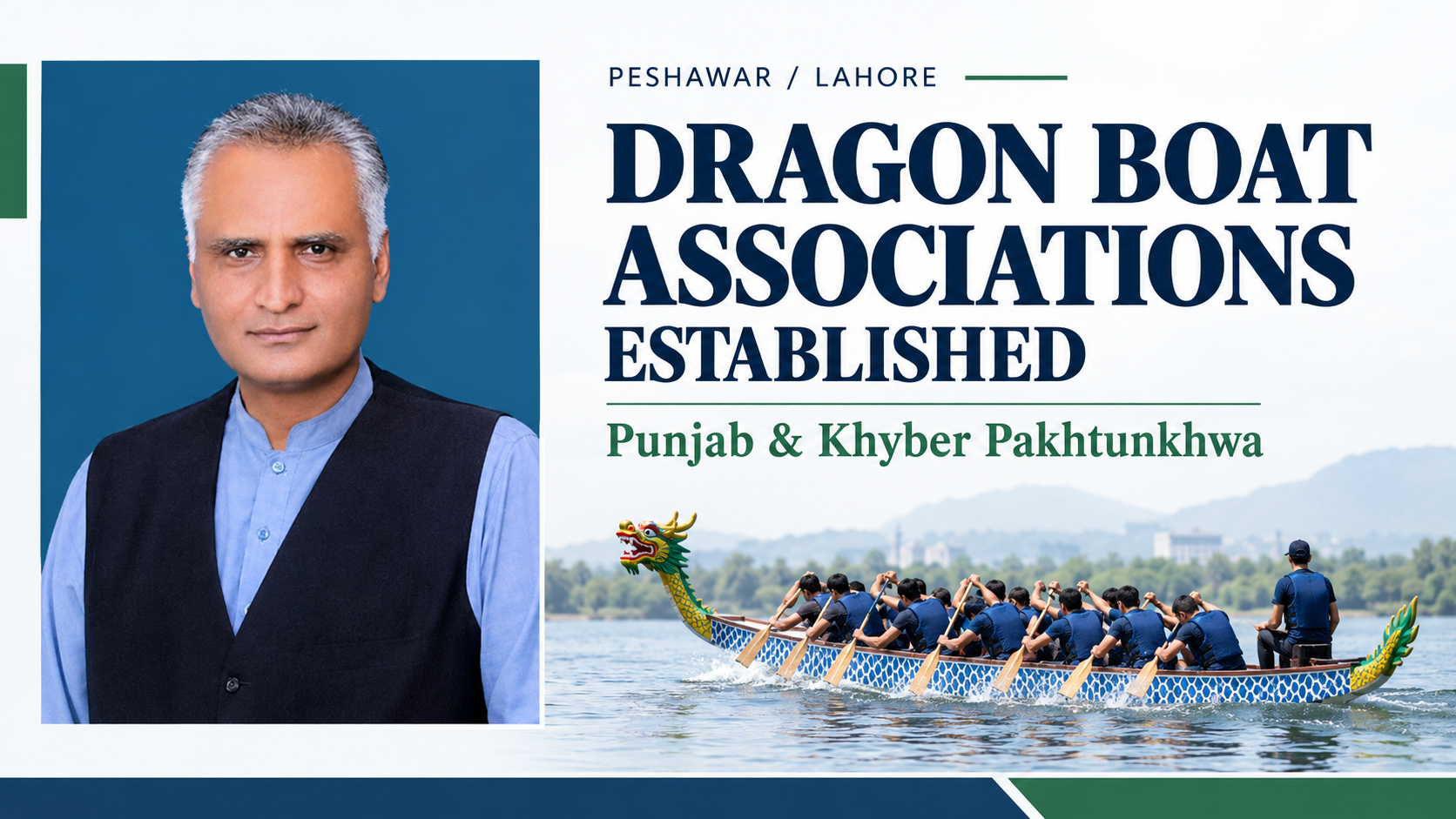
Dragon Boat Associations Established in Punjab and Khyber Pakhtunkhwa
PSHAWAR/LAHORE: Dragon boat associations have been established in Punjab and Khyber Pakhtunkhwa, marking a step towards organising and promoting the sport across Pakistan.
Prominent political and social figure Ameer Bahadur Khan Hoti will serve as president of the Punjab Dragon Boat Association (PDBA), while a notification has been issued confirming the election of former bureaucrat Javed Marwat as president of the Khyber Pakhtunkhwa Dragon Boat Association (KPDBA). At a meeting in Lahore, prominent sports journalist Muhammad Yousuf was elected secretary general of the Punjab association. Uzma Zaidi will serve as senior vice president and Naveed Akhtar Malik as treasurer.
At a separate meeting in Peshawar, Javed Marwat, who previously held several senior administrative positions in the province, was unanimously elected president of the Khyber Pakhtunkhwa association, while renowned sports organiser Naeem Gul was elected secretary general. Shamim Akhtar Jadoon will serve as senior vice president, Junaid Khan vice president and Bilal Aslam as treasurer. Newly elected Punjab association president Ameer Bahadur Khan Hoti said Pakistan’s first dragon boat festival and competitions on the Kabul River had opened new avenues for the sport’s development. He said the enthusiasm shown by participants and the sport’s promising prospects had highlighted the need to establish a Pakistan Dragon Boat Federation to coordinate training, organise competitions and support athletes. Dragon boat associations would be established in all four provinces and the federal capital, Islamabad, before the formal announcement of the national federation, he added.
Newly elected Khyber Pakhtunkhwa association president Javed Marwat said efforts would focus on introducing the sport at the provincial level and providing athletes with opportunities to compete nationally and demonstrate their abilities. Teams would also be sent to represent Pakistan in international competitions. He said the sport would help strengthen people-to-people exchanges and further promote Pakistan-China friendship. Marwat expressed confidence that dragon boat racing would soon gain popularity throughout Pakistan.
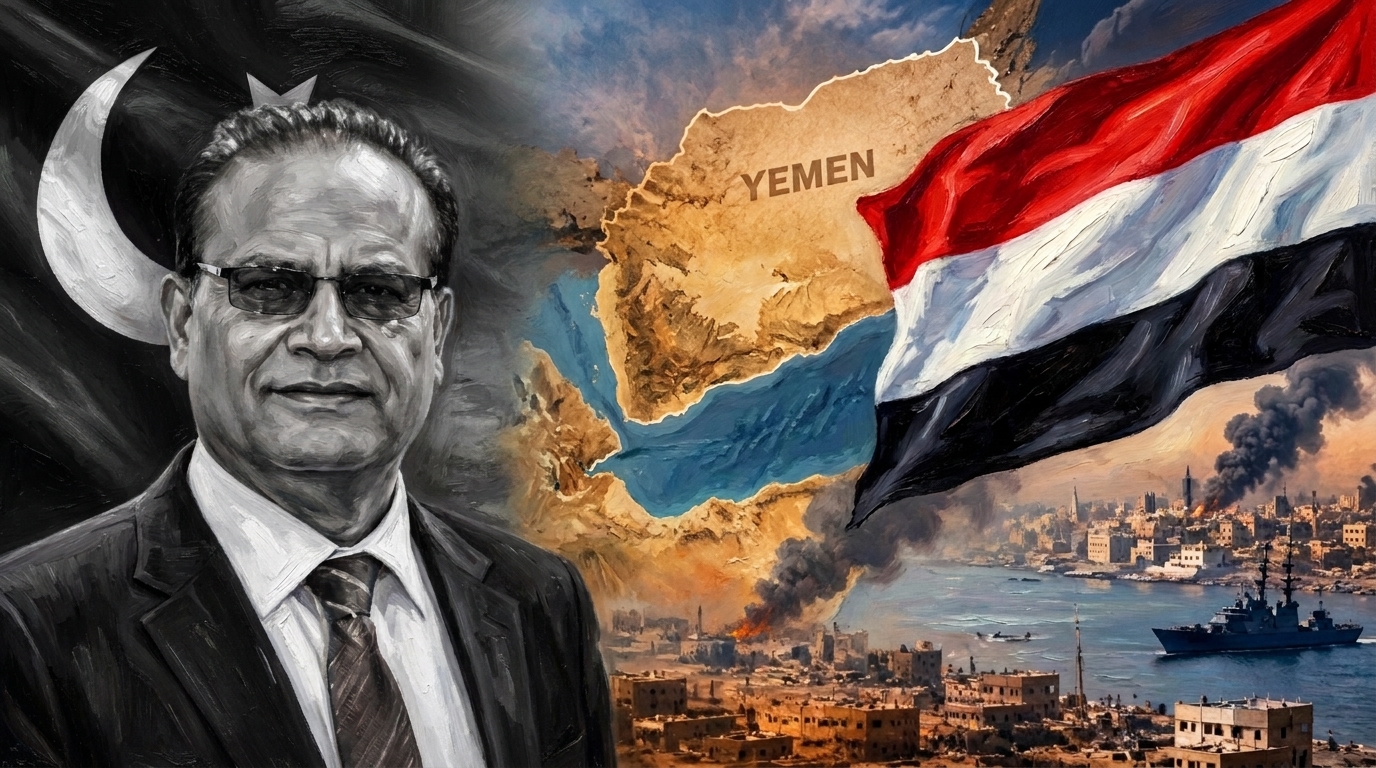
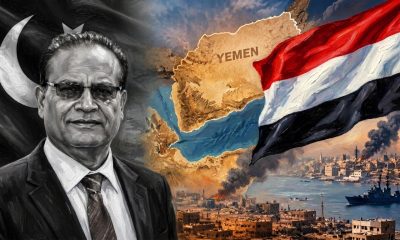
Paris (Imran Y. CHOUDHRY) :- Former Press Secretary to the President, Former Press Minister to the Embassy of Pakistan to France, Former MD, SRBC Mr. Qamar Bashir analysis : Pakistan’s military commitment to Saudi Arabia raises a question that cannot be answered simply by identifying where its soldiers are stationed. Modern warfare allows forces to attack through aircraft, missiles, drones and targeting support without sending infantry across a border. The decisive issue is whether Pakistani personnel and capabilities will participate in hostilities against Yemen’s Houthis—and what consequences could follow.
Scott Ritter, renowned American podcaster, military and geopolitical analyst captures the central danger: Saudi Arabia could obtain through collective defence the Pakistani involvement in Yemen that Islamabad previously resisted. An initially limited commitment could expand through casualties, retaliation and demands for reinforcement, leaving Pakistan responsible for a war whose objectives it does not control.
CNN reported on October 7 that Pakistani troops were already stationed in Saudi Arabia. In the interview, Lieutenant General Ahmed Sharif Chaudhry, director general of Inter-Services Public Relations, declined to disclose their numbers or capabilities. Asked about operations across the Yemeni border, he invoked military confidentiality, explaining that participating countries do not publicly disclose how and where they will employ their forces. His response offered no categorical exclusion of ground operations or offensive action inside Yemen, even as he described Pakistani involvement as defensive.
That distinction matters. Operational secrecy may protect military personnel, but it also leaves the public without clear answers about the mission’s boundaries. The description “defensive” cannot establish those boundaries by itself. Governments routinely invoke defence to justify attacks beyond their territory; the relevant questions concern what forces actually do, whom they target and under whose authority.
Pakistani forces operating from Saudi territory could potentially support or conduct attacks inside Yemen without deploying infantry there. Air operations and targeting assistance could carry substantial consequences. If Pakistani personnel participate in attacks against Houthi positions, Ansarullah could regard Pakistan as belligerent. Tehran could interpret the same activity as participation in a campaign against Iranian regional interests.
The Makkah Joint Defence Agreement, signed by Saudi Arabia, Pakistan and Türkiye on August 7, 2026, reportedly treats an attack against one member as an attack against all three. Its deterrent promise is substantial, but so is the danger of importing one member’s confrontation into the security calculations of the others.
An October 5 statement published by Türkiye’s Foreign Ministry committed the partners to implement collective defence arrangements and rapidly deploy agreed military forces and capabilities to Saudi Arabia, subject to national legislation. Türkiye therefore shares the deployment commitment. However, the evidence reviewed does not establish a Turkish ground combat commitment against the Houthis or an equal distribution of operational risks.
For Islamabad, the unanswered questions are fundamental. Who authorizes Pakistani involvement in cross-border attacks? Can Pakistan refuse a particular operation? Who finances a prolonged deployment, and what conditions permit withdrawal? Confidential operational details need not be published to explain the political mandate governing the use of force.
Pakistan brings potential strengths to the alliance: experienced personnel, established military institutions and longstanding cooperation with Riyadh. Saudi infrastructure and financing could support a substantial deployment. Islamabad’s relationships with both Riyadh and Tehran might also create diplomatic opportunities, provided military involvement does not undermine its credibility as an intermediary.
Yet those strengths do not resolve the weaknesses of an extended campaign. Destroying particular weapons or positions is different from ending an adversary’s ability and determination to fight. Dispersed forces, local networks and adaptation can frustrate superior firepower. Tactical gains could therefore coexist with an expanding mission and an elusive political settlement.
Ritter’s warning is strongest when understood in these terms. Predicting inevitable Pakistani defeat is less useful than asking what victory would require. Protecting defined facilities offers measurable objectives. Permanently eliminating the Houthi threat could entail commitments far beyond what Pakistan initially intended—and costs that additional military capability cannot necessarily overcome.
Saudi financial assistance complicates Islamabad’s freedom of choice. The State Bank of Pakistan confirmed that a $3 billion Saudi deposit maturing in December 2025 was extended for another year. Such support gives Pakistan a substantial interest in maintaining Saudi confidence.
Saudi’s financial influence does not require an explicit threat. A government facing external financing pressures may find it difficult to reject security requests from an important creditor. The danger is that short-term economic reassurance encourages military obligations carrying much greater long-term costs.
Iran introduces a further risk. Pakistani attacks against an Iranian-supported movement could damage relations with a neighbouring country and generate security pressures closer to home. The Houthis also possess their own Yemeni objectives, and attacking them is not automatically equivalent to attacking Iran. Political escalation, however, can advance through perceptions and retaliation before governments agree on legal distinctions.
International law offers no reliable assurance that this confrontation would remain contained. Legal obligations persist, but their enforcement is uneven, and states may invoke self-defence while pursuing military objectives beyond their borders. Pakistan therefore cannot assume that legal distinctions between defending Saudi territory and attacking Houthi positions would restrain retaliation. If Tehran perceives Pakistani operations as threatening its interests, the danger would turn on strategic calculations, perceived threats and the risk of escalation—not simply on competing interpretations of the UN Charter. Shared religion and geographical proximity would offer no dependable protection against that outcome.
Pakistan’s domestic divisions make a widening conflict especially consequential. The supporters of imprisoned former prime minister Imran Khan began marching from Khyber Pakhtunkhwa toward Islamabad on October 4, demanding his release, hospital treatment and family access. An overseas campaign would impose additional demands on resources and political legitimacy amid an already polarized environment.
Parliament’s April 2015 resolution remains relevant. It supported neutrality in Yemen alongside solidarity against threats to Saudi territorial integrity and the holy sites, while urging diplomacy through the United Nations and Organisation of Islamic Cooperation. That distinction deserves renewed parliamentary examination before military commitments overtake political debate.
Pakistan, Saudi Arabia and Türkiye should pursue an emergency OIC initiative linked to UN diplomacy, involving Iran and meaningful Yemeni participation. Reciprocal de-escalation, civilian protection and humanitarian access should take priority. Their collective influence should also sustain action for Palestinian rights rather than dissipate through another prolonged regional confrontation.
The Makkah Pact’s credibility will depend on whether it improves security. Secrecy about military methods cannot replace clarity about political objectives. Before Pakistan’s commitment deepens, its leaders must explain what they are defending, how far that obligation extends and how they intend to prevent it from becoming an open-ended war.
Pakistan News
Pakistan Reaffirms Commitment to Multilateralism, Peace and International Cooperation at the Executive Board of UNESCO
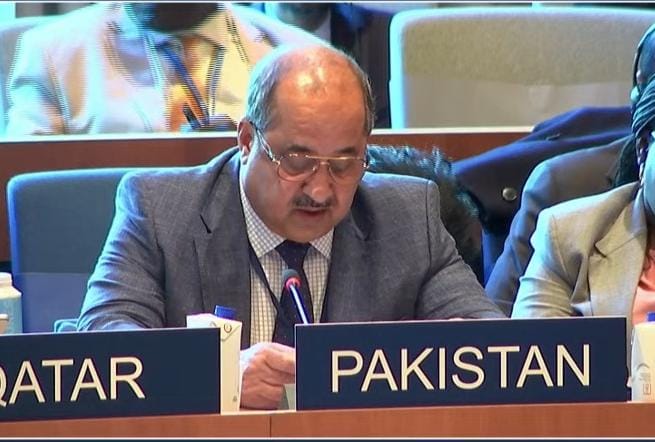
Paris ( Imran Y. CHOUDHRY):- Advisor to the Prime Minister of Pakistan and Representative of Pakistan to UNESCO, Syed Tauqeer Hussain Shah, delivered Pakistan’s national statement at the 225th Session of the UNESCO Executive Board in Paris, France, reaffirming its steadfast commitment to multilateralism, international cooperation and the promotion of peace through dialogue and mutual understanding.
In his statement,
- Underscored Pakistan’s firm support for multilateral institutions, South-South cooperation and collaborative efforts to address global challenges, particularly those confronting developing countries;
- Highlighted the urgent need to protect human life, educational institutions and cultural heritage amid conflicts and crisis, especially in Gaza;
-Called for an international action plan to confront the challenge of out-of-school children;
- Stressed the importance of equitable access to scientific knowledge, international scientific collaboration and reducing technological inequalities;
-Underlined the need to combat racism, misogyny, Islamophobia, disinformation and hate speech, while encouraging responsible and ethical governance of artificial intelligence and emerging technologies; and
- Expressed support for institutional reform of UNESCO to enhance its effectiveness and impact worldwide.


New Chapter for Dragon Boating in Punjab and Khyber Pakhtunkhwa Provincial associations officially set up with sights locked on national competitions and international representation.

Pakistan’s Yemen Dilemma

U.S. Sanctions the International Criminal Court to Shield Netanyahu


-

 Sports4 months ago
South Korea’s Yoo Useong Steps Onto the Global Strongman Stage as World Strongman Federation Professional Athlete
-

 Art & Culture1 year ago
A Survey of Mata-E-Zeest
-

 Europe News2 years ago
Chaos and unproven theories surround Tates’ release from Romania
-

 American News2 years ago
Trump expands exemptions from Canada and Mexico tariffs
-

 American News2 years ago
Trump Expels Zelensky from the White House
-

 Art & Culture2 years ago
Will Snow White be a ‘victim of its moment’? How the Disney remake became 2025’s most divisive film
-

 Entertainment2 years ago
Champions Trophy: Pakistan aim to defend coveted title as historic tournament kicks off today
-

 Pakistan News1 year ago
Comprehensive Analysis Report-The Faranian National Conference on Maritime Affairs-By Kashif Firaz Ahmed