
Art & Culture
The Death of Marat: Unlocking the complex clues hidden inside art history’s 1793 true crime masterpiece

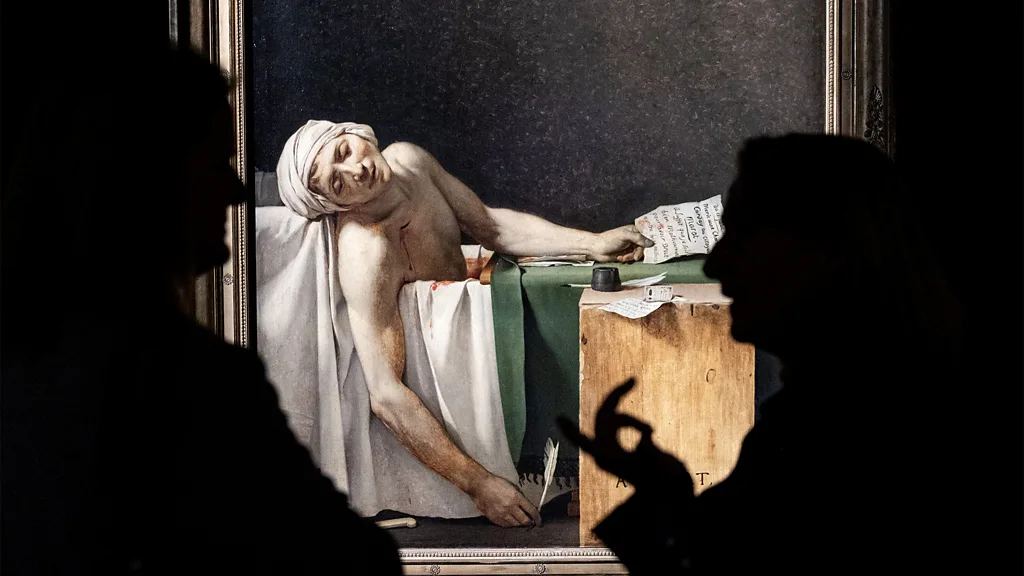
Jacques-Louis David’s The Death of Marat is a deceptively simple image of a real-life murder. But a closer look at David’s iconic painting reveals the political messages contained within.
Great art makes us do a double take. It makes us look, then look again. Take The Death of Marat, 1793, perhaps the most famous crime scene depiction of the past 250 years. At first glance, the portrayal of the murdered body of the French revolutionary Jean-Paul Marat, stabbed to death in his bath on 13 July 1793, could hardly be simpler. The slain journalist, who had agitated for the execution of King Louis XVI, slumps towards us – his body framed by the vast flickering emptiness that stretches above him.
Warning: This article contains descriptions and images of violence that some readers may find upsetting
Lean in closer, however, and Jacques-Louis David’s iconic painting begins to break down into a complex puzzle of double details that unsettle the bottom half of the canvas – two quills, two dates, two letters, two absent women, two boxes, two signatures, two dead bodies. The cacophony of contrary clues draws us in, transforming us from passive observers of a straightforward snapshot of history to forensic detectives actively engaged in solving a deeper mystery, one in which the artist himself is suspected of having tampered with the evidence.
David’s portrait exalts Marat, transfiguring him from a sickly real-life person into a sacrificed secular Messiah
Everywhere you look in The Death of Marat, one of the masterpieces featured in a major exhibition of David’s work at the Louvre in Paris, there is proof of the artist’s dual determination to create both an intimate personal elegy for a murdered friend, whose radical politics the artist shared, as well as a piece of potent public propaganda. In David’s hands, Marat is much more than simply a Jacobin journalist into whose chest a French woman, Charlotte Corday, plunged a kitchen knife, believing he was poisoning public discourse. Marat is glorified: a second Christ.
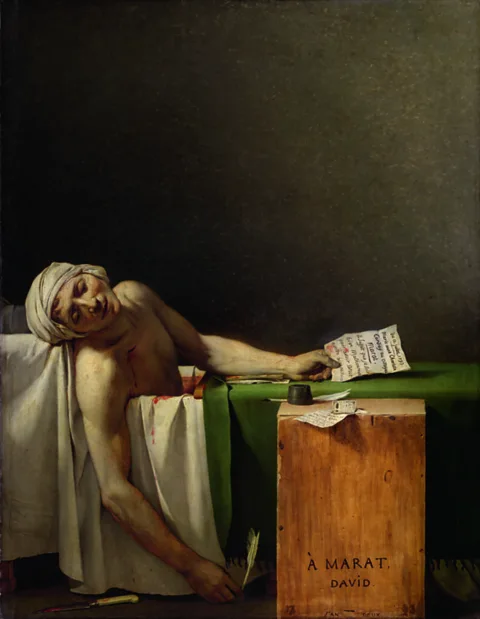
David’s portrait exalts Marat, transfiguring him from a sickly real-life person, who required lengthy medicinal baths to soothe a chronic skin disease, into a sacrificed secular Messiah. To amplify that elevation from infirmed mortal to mystical martyr, David laces his painting with decodable ciphers and echoes of art history that keep our eyes firmly fixed on the myth he is weaving before them. So implicated is the artist in the choreography of the scene, it is easy to see how Sébastien Allard, curator of the Louvre exhibition, could reach the conclusion in his essay for the catalogue that “the monument David erects to Marat is also a monument that he builds for himself… Marat acts with his pen, the painter with his brushes”.
The two hands
Our gaze is torn in two directions as it tries to trace the curiously contrary activities of the dead man’s moribund hands. In Marat’s right hand we find the quill with which he was writing when stabbed with the pearl-handled knife that lies only inches away. Knuckles to the floor, that hand dangles lifelessly downward in a manner that recalls Christ’s drooping arms in both Michelangelo’s monumental marble sculpture, Pietà, and in Caravaggio’s affecting painting The Entombment of Christ, 1603-4. Meanwhile, Marat’s left hand, rigid with rigor mortis, steadies a blood-smudged letter from the assassin, suggesting an entirely different focus of his attention. One hand clings to life, the other succumbs to death. Between these two diverging gestures, the painting’s spirit swivels, flexing forever between the world of the living and the world of the dead – this one and the next.
The two quills
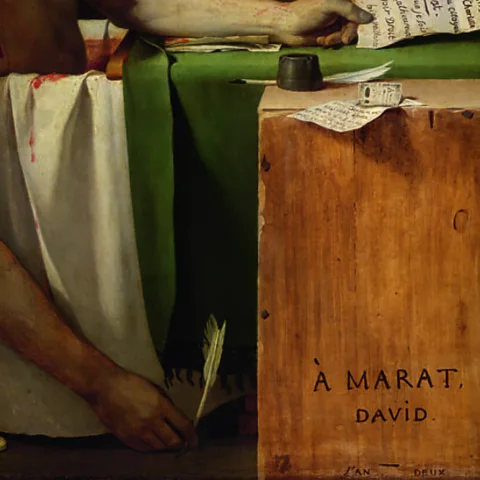
Compounding that friction between the restless flux and sombre stillness of Marat’s discrepant hands is David’s seemingly redundant decision to insert into the stripped-down scene not one ink-dipped quill, but two. Between the lifeless fingers of his right hand, Marat pinches a writing feather, still wet with ink. Follow its shaft upwards from the floor, past the white plume, to the upturned crate that Marat was using as a desk, and we discover a second quill lying beside the crouching inkpot. This quill’s dark nib points menacingly in the direction of the fatal stab wound, and poses a pointed question: was it a knife that killed Marat or words? In times of heated politics, it is never clear which is mightier, the pen or the sword. As we’ll see, in David’s painting the quill and blade are themselves doppelgängers. They sharpen each other.
The two letters
Once detected, the doubling of evidence in the painting suddenly multiplies. Side-by-side at the centre of the canvas we find not one letter but two, each composed by a different hand. Between the lines of these two documents, the entire plot of the painting is written. The note that Marat clutches in his left hand is positioned by the artist in such a way that we can easily read how Corday, unknown to Marat, baited him into inviting her in, and took advantage of his benevolent nature: “It is enough that I am very unhappy”, Corday disingenuously pleads in her letter, “to have a right to your kindness.” The message is clear: it is Marat’s kindness that killed him.
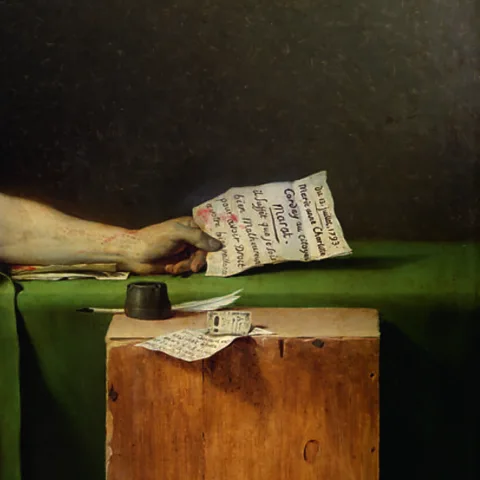
Just below Corday’s letter, teetering on the edge of the box, is another missive composed by Marat himself – the document he was apparently writing when she struck. This note is held down by an assignat (or revolutionary money), thought by scholars to be the first-ever depiction of paper currency in Western art. In his letter, Marat selflessly pledges five livres to a suffering friend of the Revolution: “that mother of five children whose husband died in defence of the fatherland”. Even in death, we’re told, Marat bleeds generosity.
The two women
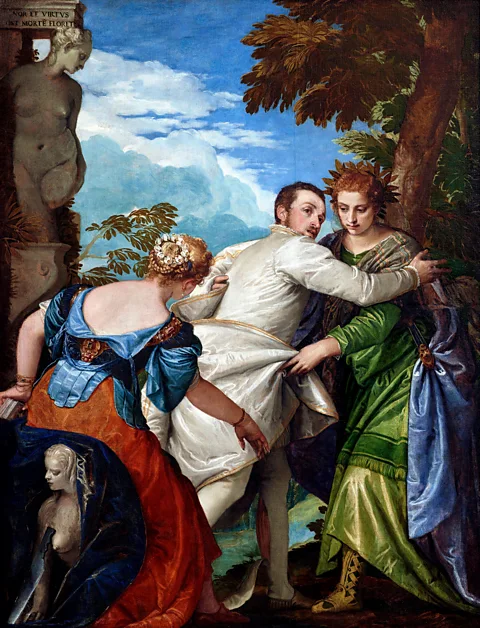
The two letters do more than draw the axes of luring and lying, kindness and redemption, against which the painting’s story twists. The two letters conjure ghosts – two of them. First is Corday’s, the conniving assassin who slipped into Marat’s home with a long knife beneath her shawl. The second, also unseen, is that of the suffering widow whom Marat was intent on helping, whose husband died fighting for the Republic. The face-off between female forces, one personifying good and the other evil, has a long tradition in art history. For centuries artists have staged the struggle between saintliness and sinfulness as a bitter contest between strong women. Renaissance artist Paolo Veronese’s famous Allegory of Virtue and Vice, c 1565, portrays one woman beckoning Hercules towards honour while another, a long knife hidden behind her back, tempts him towards pleasure. David updates the allegory for the era of Revolution. In The Death of Marat, it is the soul of a nation that is at stake.
The two signatures
Every painting ends with a signature – that final flourish with which the artist gives consent to the story that he or she has told. The Death of Marat has two, ensuring the work is never complete, but a confounding cold case that our eyes will forever crack open. One, scrawled askance at the centre of the canvas, belongs to Corday and is forged by David in the recreation of the letter she wrote to Marat. Elsewhere, near the bottom of the painting and seemingly chiselled into the wooden box as if it had been carved in stone, is the signature of the artist himself, formally dedicating the work to his assassinated friend, whose name he magnifies beyond the scale of his own: “To Marat, David”.
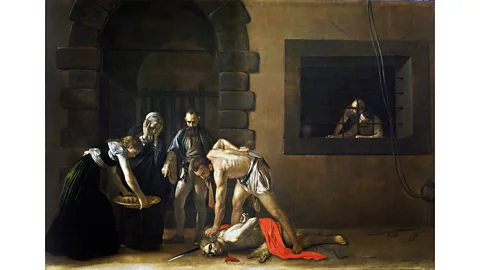
By carving his name into the very furniture of the work, David inserts himself into the scene of the crime. Once again he’s echoing art history. In the only painting Caravaggio ever signed, he did the same. At the bottom of his colossal canvas, The Beheading of St John the Baptist, Caravaggio assembles the syllables of his first name “f. Michelang.o” from a pool of blood that spills from the severed neck of the priest. It’s a grisly gesture that seems to assume some responsibility for the murder. By recalling Caravaggio’s self-incriminating signature, David isn’t confessing to Marat’s assassination but declaring allegiance to his political agenda. He’s asserting “we’re all Marat now”.
The two dates
Look closely below David’s signature and you will see a silent struggle not just between two different dates but between two contrary conceptions of time. Under his own name, David has chiselled “L’an deux”, denoting the second year of the Revolutionary Calendar which began in 1792, when the Republic was founded. That crisp and legible date sits between the prised apart and partially erased digits of the Christian calendar’s calibration for the year of the work’s creation: “1793”. In the bottom two corners of the box, David has inserted and scrubbed away “17” and “93”, indicating an utter abolition of Christian time in favour of revolutionary measurements.
Yet again, Marat may be making a rich allusion in his curious conflation of competing systems of time. Like Caravaggio, Botticelli too only signed one painting: his Mystic Nativity, into which he embeds a riddling inscription that brings into close adjacency the Christian calendar and an apocalyptic one that is synchronised to the Book of Revelations: “This picture, at the end of the year 1500, in the troubles of Italy, I, Alessandro, painted in the half-time after the time, according to the eleventh chapter of Saint John in the second woe of the Apocalypse…” In David’s Death of Marat, Botticelli is summoned and superseded as the priorities of revelation are usurped by those of revolution.
What, ultimately, does all this doubling add up to in David’s famous painting, a work that, by fusing passion with principle, would redefine the texture and intensity of history painting, and influence everything from Delacroix’s Raft of the Medusa to Picasso’s Guernica? By relentlessly refracting the evidence left at the scene of Marat’s murder through the dense prism of his imagination, David projects a double portrait. Before our eyes the artist transforms murder into myth as the physical body of the slain polemicist is alchemised into a mystical second figure we more feel than see. Marat the Messiah’s haunting presence disturbed the imagination of the French poet Baudelaire, who famously observed of the painting “in the cold air of this room, on these cold walls, around this cold and mournful bathtub, a soul hovers”.
Jacques-Louis David is at The Louvre in Paris until 26 Jan 2026
—
If you liked this story, sign up for The Essential List newsletter – a handpicked selection of features, videos and can’t-miss news, delivered to your inbox twice a week.
For more Culture stories from the BBC, follow us on Facebook and Instagram.







Art & Culture
Deputy High Commissioner Haseeb Bin Aziz Inaugurates “Masters of Canvas” Art Exhibition at Pakistan High Commission London
PRESS RELEASE
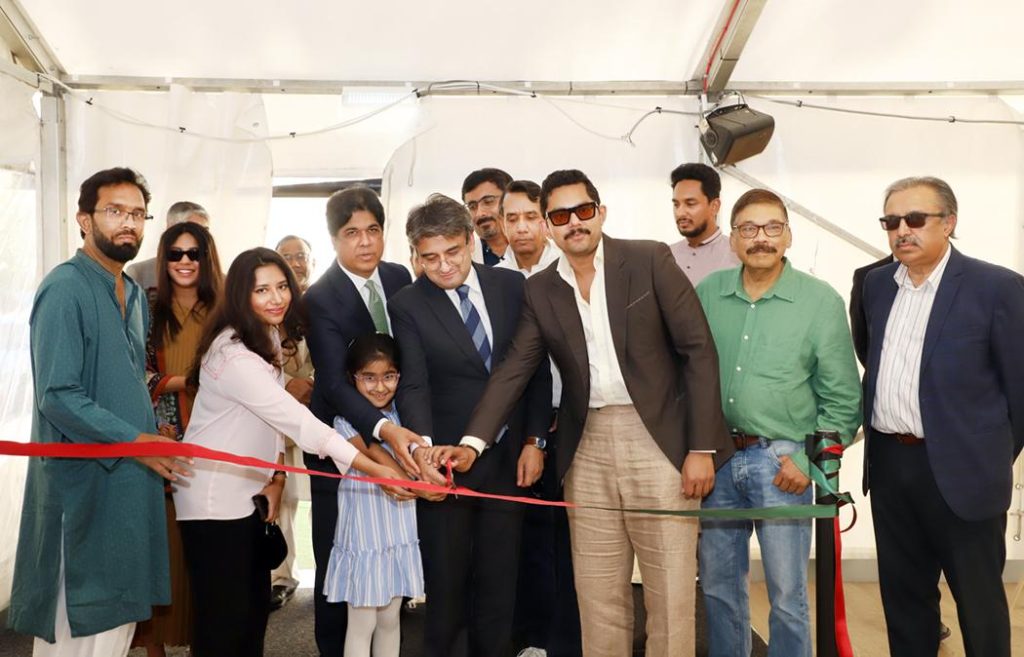
London, UK — Deputy High Commissioner of Pakistan, Mr. Haseeb Bin Aziz, inaugurated the prestigious art exhibition “Masters of Canvas” at the Pakistan High Commission in London, celebrating the exceptional talent, diversity and enduring legacy of Pakistan’s distinguished artists.
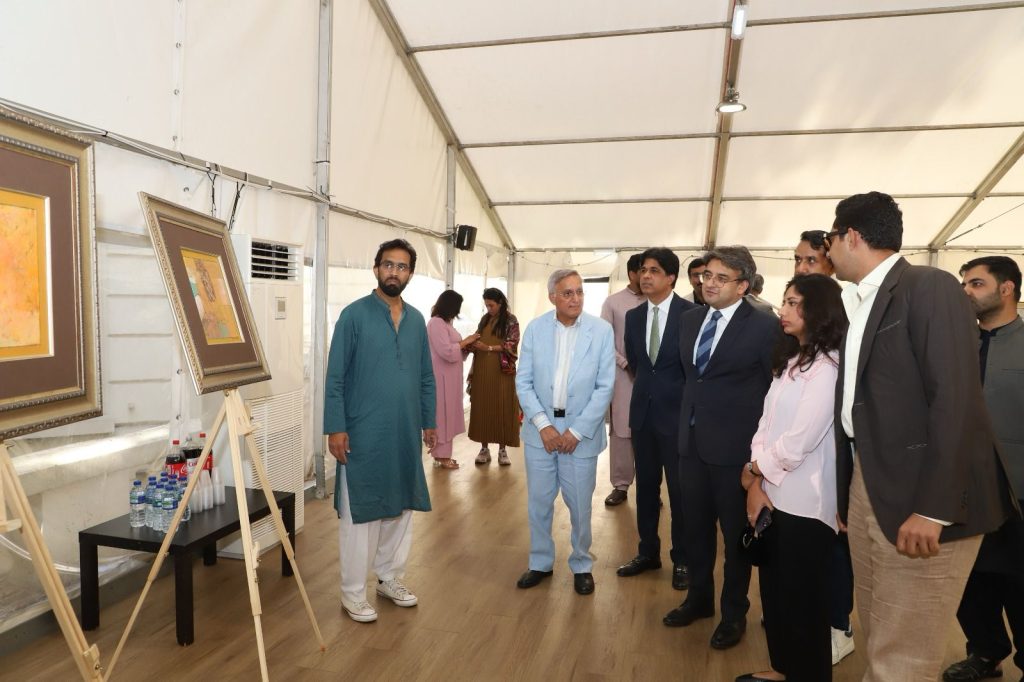
The exhibition brings together the works of renowned senior Pakistani artists and calligraphers Late Ahmed Khan, Late Mashkoor Raza, M.A. Bukhari, Chitra Pritam and Qamar Siddiqui, offering audiences in the United Kingdom a rare opportunity to experience original works of Pakistani art.
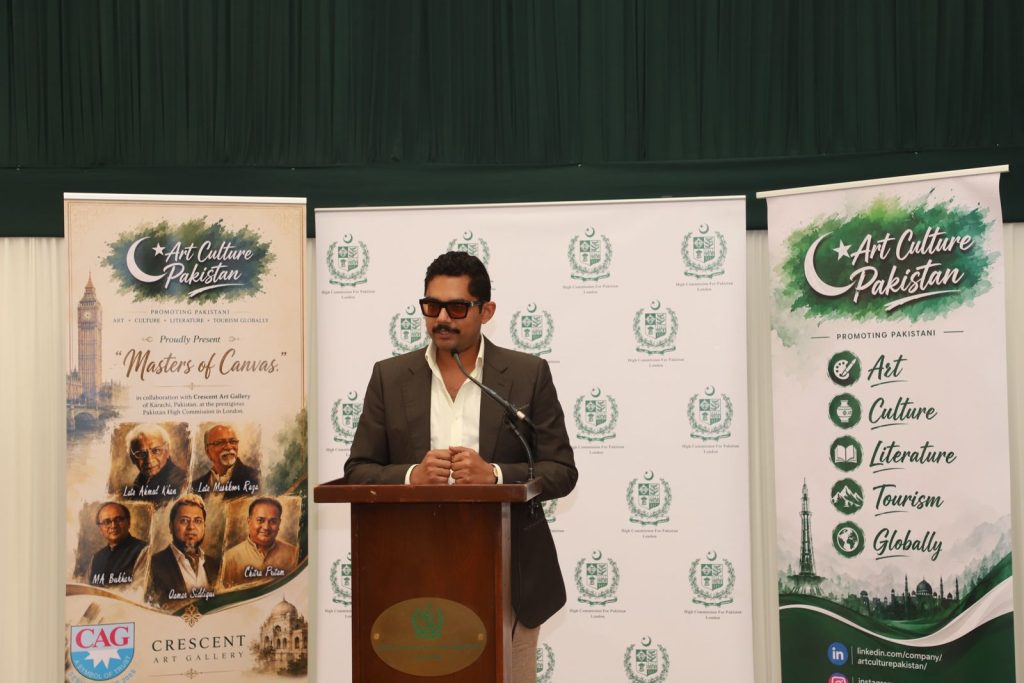
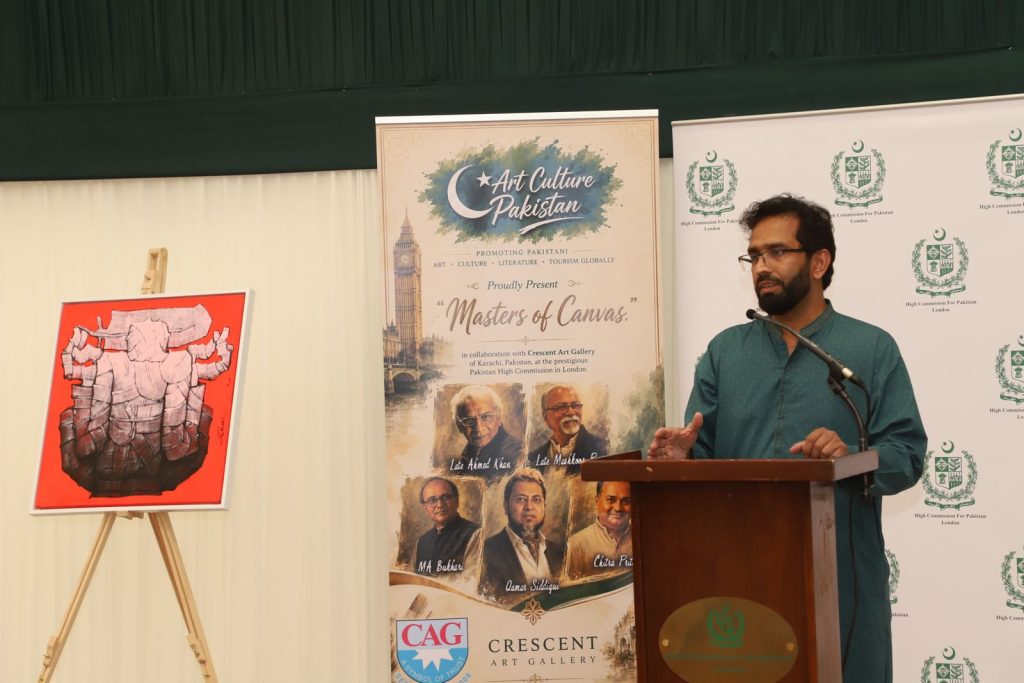
Speaking at the inauguration, Deputy High Commissioner Haseeb Bin Aziz paid tribute to the distinguished artists, appreciating their remarkable contributions to Pakistan’s artistic and cultural heritage. He also commended the efforts of Art Culture Pakistan and Crescent Art Gallery, Karachi, for bringing the work of these celebrated artists to the United Kingdom and providing an important platform for Pakistani art and culture to reach international audiences.
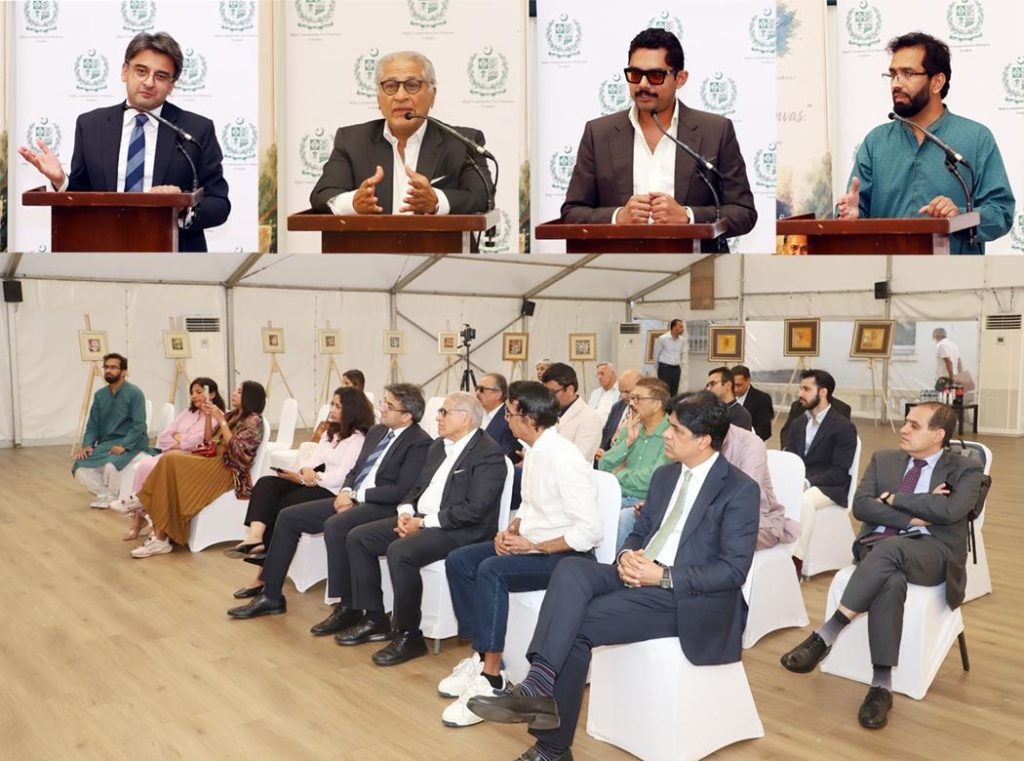
The exhibition is proudly presented by Art Culture Pakistan, an initiative founded by Mr. Akber Mehmood, in collaboration with Crescent Art Gallery, Karachi, founded by Mr. Nasir Javed, together with Mr. Sameer Nasir and curator Ms. Sidra Nasir. Through their continued commitment to the promotion of Pakistani art and culture, the organisations have worked to introduce outstanding Pakistani artists to audiences across Pakistan and internationally.
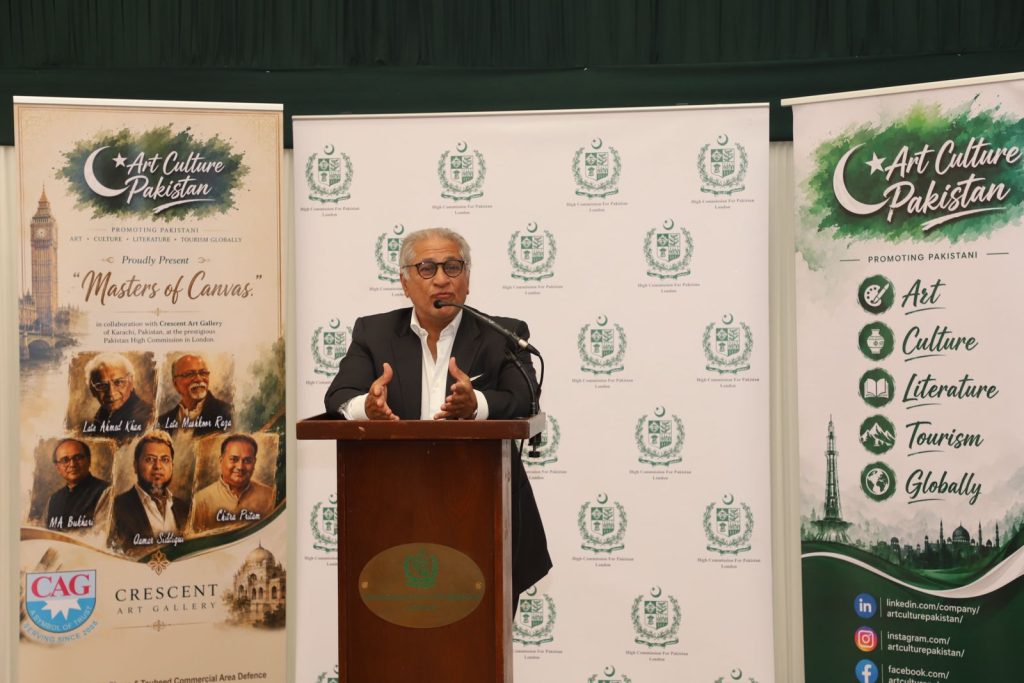
Addressing the gathering, Mr. Sameer Nasir of Crescent Art Gallery encouraged members of the audience to actively participate in and support cultural events of this nature. He emphasised that growing public interest in Pakistani art and culture can help create greater opportunities for cultural exchange and contribute to strengthening Pakistan’s soft image in the United Kingdom and beyond.
Mr. Asif Rangoonwala of the British Pakistan Foundation also congratulated the organisers for bringing such a prestigious selection of Pakistani artists to London. He described the exhibition as a rare cultural occasion, highlighting the significance of presenting original artworks from Pakistan to London audiences after a considerable period. He encouraged attendees to value and support such unique opportunities to engage directly with Pakistan’s rich artistic heritage.
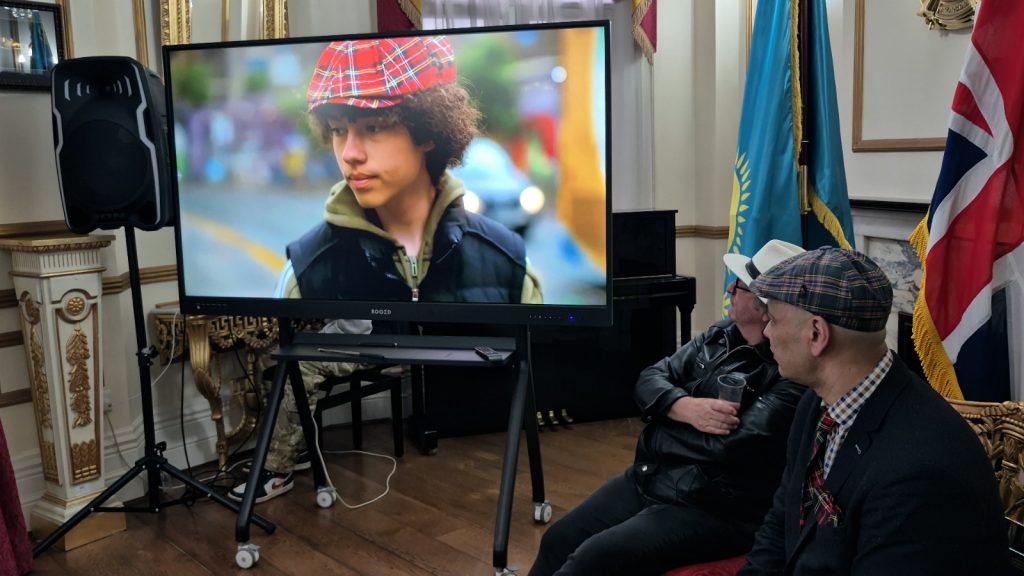
The event also featured a special video presentation titled “Masters of Canvas,” presented by Mr. Akber Mehmood of Art Culture Pakistan. The presentation introduced the featured artists, showcasing their artworks and highlighting the distinctive genres and artistic approaches that have shaped their careers.
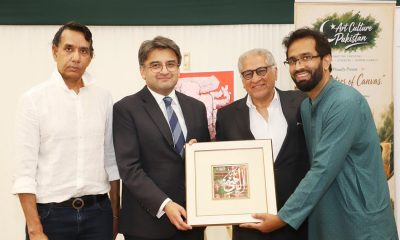
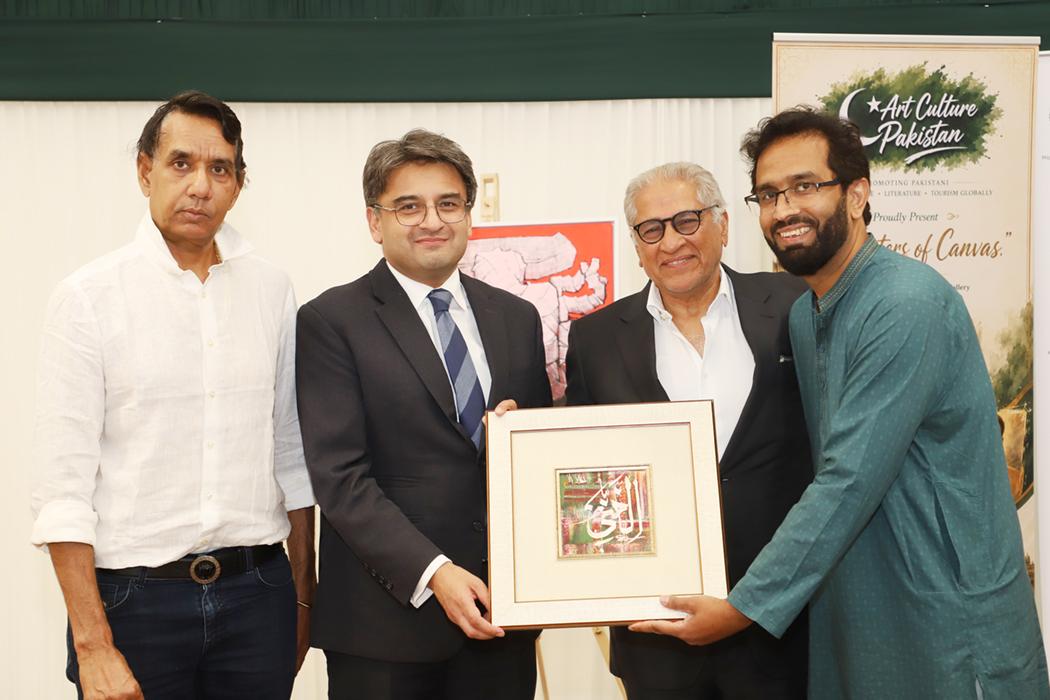
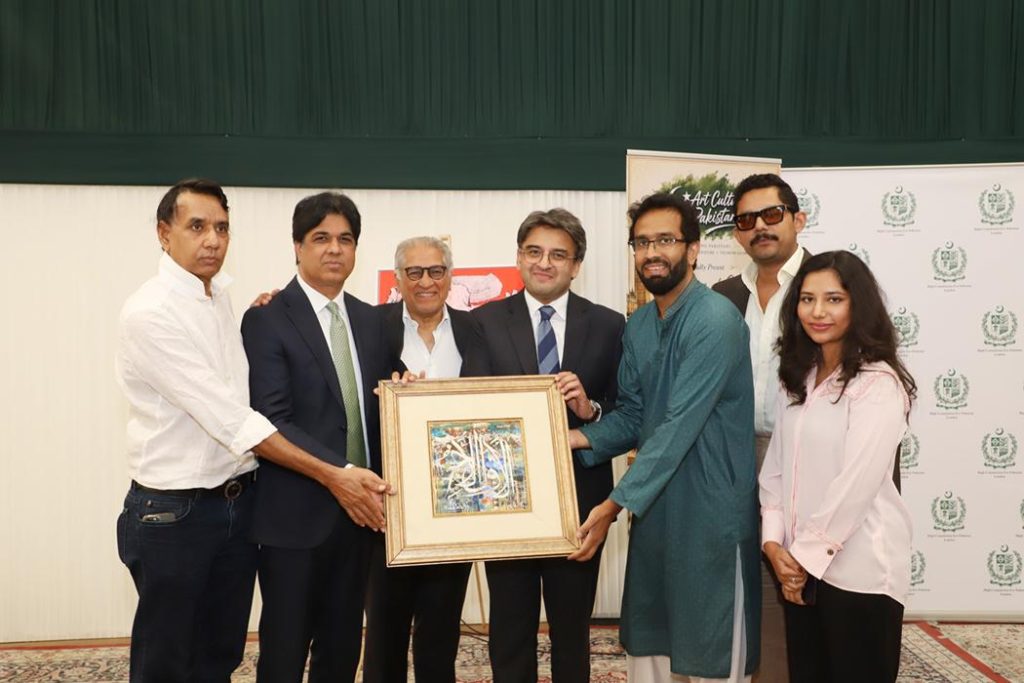
“To conclude the event, exquisite calligraphic masterpieces by the venerable maestro M.A. Bukhari were presented on behalf of Art Culture Pakistan to Deputy High Commissioner Haseeb bin Aziz, British Pakistani Foundation CEO Asif Rangoonwala, and Press Attaché Mr Ali Nawaz Malik.”
By Dilyara Lindsay
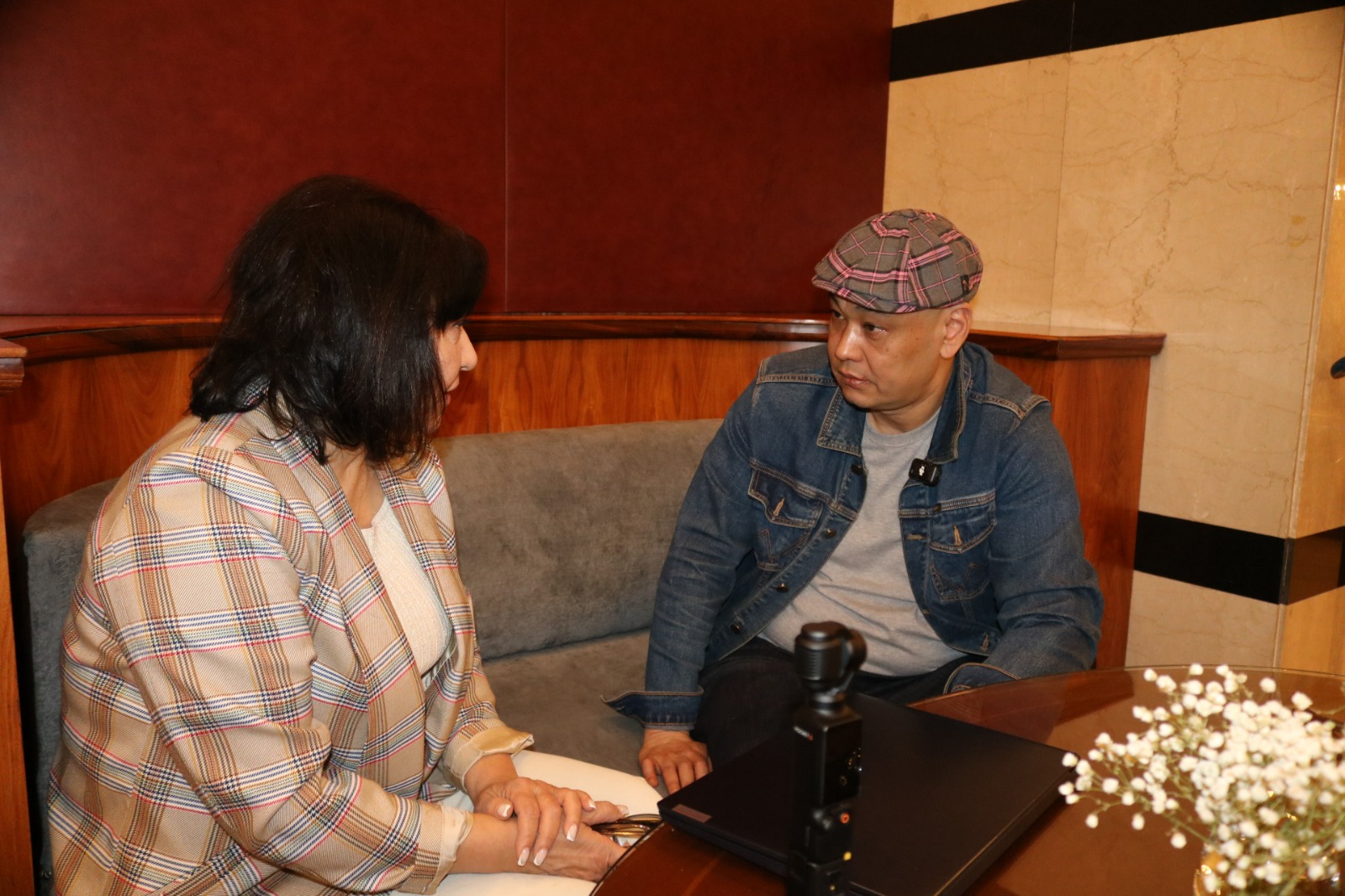
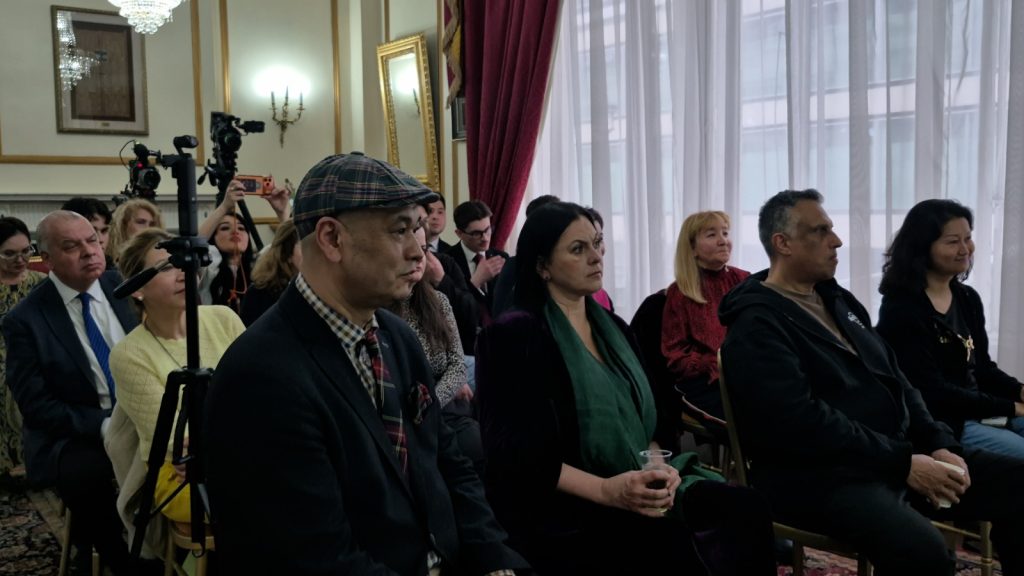
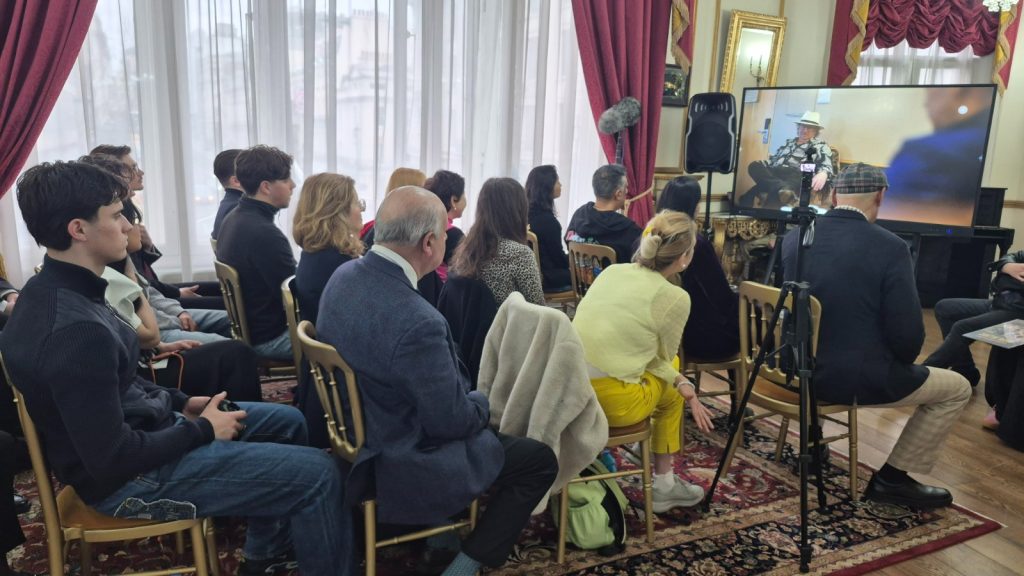
In a remarkable story of transformation from diplomacy to artistic expression, renowned Kazakh musician and songwriter Jantik – whose full name is Zhantemir Baimukhamedov – has opened up about his journey from the corridors of foreign affairs to the international music stage. In an exclusive interview with our Cultural Desk, the former diplomat turned performer discussed his childhood influences, his decision to leave public service for music, and his dream of recording at Abbey Road Studios.
Q: Mr. Baimukhamedov, thank you for speaking with us. Let’s start at the beginning. How did music first enter your life?
A: Music has been part of me since childhood. I was born into a family where music was deeply cherished. My father was a guitarist – he was considered the first Elvis of Almaty and Kazakhstan back in the 1960s. He started in Moscow, living in a dormitory for foreign students, and that’s how he got hold of rare tapes of Western music. Through him, I discovered Elvis Presley, The Beatles, and the sound that shaped my imagination.
Q: You trained formally in music as a child. What did that involve?
A: I attended music school and sang in a choir. But I also pursued academic studies – history with a specialization in English. So music and education went side by side.
Q: Then your path took an unexpected turn toward diplomacy. How did that happen?
A: After the collapse of the Soviet Union in 1992, the Ministry of Foreign Affairs was searching for officers. I was selected for advanced diplomatic studies and was sent to the London Diplomatic Academy in 1993. After completing my studies, I joined Kazakhstan’s Ministry of Foreign Affairs, serving as an interpreter under the attaché. I also worked as an assistant to the Ambassador of Malaysia to Kazakhstan.
Q: Yet the call of music proved stronger. What made you leave diplomacy?
A: Yes, in 1996 I made the bold decision to leave diplomacy and devote myself entirely to the arts. That choice defined the next chapter of my life. Music was not just a hobby – it was my true calling.
Q: What was your professional breakthrough?
A: That same year, I joined the newly opened national television channel Khabar, where I produced a youth entertainment programme called High-Five Front. It was often described as Kazakhstan’s answer to MTV. Since then, I have performed in more than 3,500 live events as both a singer and master of ceremonies. I established my own band, and we have been performing regularly.
Q: You recently achieved a long-held dream: recording at Abbey Road Studios. Tell us about that.
A: Yes, this year we released a 14-track vinyl album recorded at the iconic Abbey Road Studios in London with acclaimed producer Stuart Epps. Recording at Abbey Road was a dream I had carried since my teenage years. To see it become reality is one of the proudest moments of my life.
Q: Your music bears a deep imprint of British musical heritage. Which artists have influenced you most?
A: From The Beatles and The Rolling Stones to Led Zeppelin, Oasis, and Stone Roses – I credit several generations of British artists for shaping my creative language. As a teenager, my friends and I would copy the Beatles, the Animals, The Who, then later Supergrass and Oasis. There were three British invasions: the 60s, the 70s, and the 90s. All of them influenced me. You can hear those sounds in my album.
Q: You’ve described your mission as giving Kazakhstan a place in the global musical conversation. Can you elaborate?
A: Absolutely. While my work draws strongly from British influences, I see my artistic mission as something larger. Using a metaphor: The Beatles planted a great musical tree. Many branches have grown from it. I hope to add a Kazakh branch that will continue to grow and prosper. I am not incorporating traditional folk elements – I am directly engaging with British music culture while bringing my Kazakh voice into that tradition.
Q: Beyond your own career, you are also committed to nurturing young talent. Tell us about your music school.
A: I established a music school for emerging musicians. Talented young people deserve a stage. If I can help create that path for them – including my own daughter, who I believe is very talented – then I feel I am doing something meaningful. I provide practical stage experience. This business is hard. You have to be number one. It took me 30 years. You have to be a maniac towards your target.
Q: How have diplomatic institutions supported your artistic journey?
A: I am very grateful to the Kazakh Embassy in London. They helped me greatly and put serious effort into organizing a successful press conference. Diplomats attended, as well as representatives of the Eurasian Creative Guild, where I serve as an ambassador. Special thanks to Marat Akhmedjanov and all the guild members in the UK. They gave me encouragement and power to continue my work.
Q: What are your future ambitions?
A: I want to bring my band to the United Kingdom and fulfill another long-held ambition: performing at the Glastonbury Festival. That has been my dream for more than two decades. Of course, everything depends on funding. I spent a lot on this project – more than a beautiful car. If sponsors exist, I would love to apply to them. If not, I will work hard to make it happen.
Q: Finally, what would you say is your ultimate goal as an artist?
A: My intention is to put Kazakhstan on the world music map. That is what I am doing. For an artist who has already crossed the boundaries between diplomacy and music, the journey appears far from over. And I am just getting started.
ZhantemirBaimukhamedov’s latest vinyl album, recorded at Abbey Road Studios with producer Stuart Epps, is now available. He continues to perform and mentor young musicians through his school in Almaty.
Art & Culture
Part 2-Muslim-Sikh Harmony in Punjab: Akhtar Hussain Sandhu with Arshdeep Kaur Battu in a TV Interview on Sanjha TV (Canada)

Dr. Akhtar Hussain Sandhu, expert on Sikh/Punjab Studies, historian, scholar and columnist from Pakistan, currently living in USA was interviewed by famous anchor Arshdeep Kaur Battu for Sanjha TV, Surrey (Canada). The Light Newspaper is publishing first part of this interview and the rest of parts will be published in the forthcoming Sundays.
Translated by:
Farooq Muhammad Wyne
Lecturer in English
Government Islamia College Civil Lines, Lahore
Part 2
Earlier, you mentioned “Wand” (Division); division didn’t only occur in 1947. Way before that, Delhi was part of Punjab, and then it was separated by the British, and no one spoke out against this territorial loss of Punjab. NWFP and other regions extending up to Kabul during the reign of Maharaja Ranjit Singh were part of Punjab, and even Kashmir was under Punjab; later, Kashmir separated, but no Punjabi leader cried or protested. Moving on, Haryana got separated, Himachal Pradesh, Chandigarh gained the status of union territory, who spoke against that?
The leadership crisis in Punjab has always existed. The major issue in Punjab is the crisis of leadership, even today. We (the Punjabis) neither have unity nor capable leadership. A leader is someone who thinks about people. There is a word called “Ishq.” It is something that cannot be associated with a man or a woman; it would be an insult to the word “Ishq” if it is used in this context. “Ishq” means losing your comfort, wealth, and everything you have for the sake of a ‘cause’ or mission. The cause of ultimate societal betterment. “Ishq” entails selflessness and self-negation in pursuit of higher objectives. Spirituality, which entails selflessness and self-negation, is the prime quality of a capable leader, but it is rarely seen today. If someone doesn’t rise above his materialistic gains and vested interests, he cannot benefit people and hence cannot become a leader. Such a person will deliver speeches for the public good but will have his own motives. So, the leadership of Punjab is now suffering from materialism. They (the politicians) need money, ministries, and status. In conclusion, Punjabis lack unity and leadership.
Host: We often remember Bhagat Singh, especially in September when his holiday is celebrated. Bhagat Singh would have never imagined that his Punjab would be divided into two parts, and elderly Punjabis would lament the division of the land. His only dream was that Punjabis should remain united, undivided, and in harmony. I often think his soul must be writhing to see the current state of Punjabis.
Guest: Regarding Bhagat Singh, there are many elements to discuss. Sadly, some members of the Sikh community have ostracized him from the Sikh community. My question is, if someone calls himself a Gursikh (a devoted follower of Sikh Gurus), will the Guru cast him away? If a Sikh goes to the Guru and calls himself his follower, will the Guru say to him, “No, since you do this and that, you go away”? No, the Guru will not say such a thing. When the Guru himself does not reject him, who are we to reject him (Bhagat Singh)? Whoever goes to the holy door of the Gurus is accepted wholeheartedly and embraced. The purity of their (Holy men’s) souls and intellects is very clear; they accept any kind of man, be it good or otherwise. But now, this phenomenon of excommunicating people is prevalent, where individuals are labeled as believers or disbelievers, Sikhs or non-Sikhs. When such states of affairs are prevalent in Punjab, what kind of leadership can we expect?
At least Bhagat Singh was fighting for independence, for Punjab, and for India’s freedom against the colonizers. Just look at these aspects; aren’t they enough? Why do people delve into deeper issues? He was a writer, and if someone is a writer, his task is to write. If someone is a reformer, his task is to reform. If someone is a poet, his task is to write poetry. If someone is a lyricist, he will be remembered for his art. That’s how people should be remembered (for their works), and we don’t need to invade their personal lives to find faults and defects.
Host: But such things are pervading.
Guest: Personal affairs of revered personalities should be left to themselves. Just look at their work. If I am a Professor or researcher on Punjab, that’s enough. No one needs to
look at my religion or personal inclinations or affiliations; this isn’t necessary. Today, you invited me on your television show, for which I am very grateful, but that is because I am a researcher on Punjab. If you invite a political leader, then you would look at him from a political perspective, not a religious one. Likewise, if someone is a reformer, he will be viewed from another context. Whoever contributes to his field gets recognized; hence, we don’t need to delve into his personal or family affairs. This is a drawback in Punjabi culture; they observe minutiae, irrelevant and inconsequential details, and then politicize the whole thing. This is one of the most problematic issues in Punjab.
Host: We often highlight that education is important. We also say that if youth are equipped with education, it will change the course of the country. The youth of any country holds utmost importance. Previously, we were discussing women’s education, how much education and awareness are being provided to (Punjabi) women, and how many of them are being encouraged to join schools and universities and then join the profession they love and aspire to. But whenever we talk about Sikhya (Education), the element of religion cannot be excluded. It is often said (regarding Punjab of Pakistan) that Muslims are given educational opportunities while Non-Muslims are not. Are these things real? Are they happening in Pakistan?
Guest: My father Ch. Khadim Hussain used to say that in childhood, a man’s energy is in his hands and legs; he tries to run, play, and jump. Gradually, the energy moves towards his chest and heart, and he wants to change the world; he wants to become an activist. When he crosses his forties, he becomes mature and a thinker; he starts thinking. This is the age of his wisdom. When he becomes too old, his energies start to fade away, and he only speaks and starts babbling like a child. This is the cycle of life. Our scholars (Vidwan) think, use wisdom, and show the path, values, and wisdom. It is the task of the youth to implement those values and wisdom. Youth is the backbone of any society, and they are the ones who change society. The experience they gather when they reach the age of wisdom is then used to lead people forward from that perspective. Youth is very important. Hence, if the youth is kept away from education, there will be a lapse of awareness among them. This is why the youth, especially those in education, shall realize that their primary objective is learning, not money. The first textbook a child reads is his mother; she inculcates religious and moral values into him. The second textbook of a child is his society and surroundings; he learns from his society, as it is the second institution of learning. The third textbook of a child is his primary educational institution. But when he goes to university, the door becomes open for him; he is already socially constructed by his religion, society, and school. This is the time when he decides in which direction he wants to move, let’s say engineering, medical, religion, or IT. At that moment, he has to strike a balance between the training and learning he received earlier and the direction he now wants to move in. If he fails to do that, it will create an identity crisis in him. This is why he should not cut himself off from the learning he takes from his mother tongue and culture. The important thing is that whichever field he chooses, he has to carry his culture along with him.
If the student forgets his culture, he will face a severe identity crisis; he won’t be able to distinguish between his roots, i.e., whether he is Punjabi or belongs to the West. In Punjab, the English language is taken as a measure of intelligence and education; if someone speaks English in Punjab, he is often considered a scholar. But even in an English society, let’s say an insane or psychologically ill person also speaks English; does it denote wisdom? Of course not. English should not be given preference over Punjabi in Punjab. English is just a language, a mode of communication, and wisdom is
something else. Education doesn’t teach you wisdom; rather, it hones your skills and capabilities. It tells you how to behave. If there is a saint or an engineer inside you, getting an education will bring it out. Likewise, if there is a poet, writer, or historian in you, education will bring it out. The teacher is also an educationist and a facilitator. Our (Punjabi) students are away from books, and even before that, they are away from their Punjabi language and culture. They can speak one or two sentences in Punjabi but aren’t able to carry out a substantial conversation. I remember I was training some officers in Lahore. I asked them, “Do you know Punjabi language? As you’re all Punjabis,” they replied in assent, saying if they can’t speak Punjabi, then who would? So, I read out the lyrics of a famous Punjabi song:
Pichhe pichhe aunda meri chaal vehnda aen, Chirey valia vekhda aen ve, mera lawng gawacha
(translated as, following me, keep a watch on the route I walked; O turbaned boy, keep watching while my nose ornament is lost).
Then I asked what “Chiray wala” means in Punjabi, and they replied, “Those who have a straight line or distinct mark in their hairstyle (cheer).” I tried to suppress my laughter and said a “turban” (safaa) is called Cheera in Punjabi. The officers were shocked. Likewise, I was once posted in Murree as a Lecturer. While traveling in public transport in Punjab, you know in our society these days, the FM Radios have changed their styles. The Radio Jockeys speak while music plays in the background. So, neither can you enjoy her talk nor the music. The song being played was “Mahi merya rond na marin, me da laaya jind jan da” (My beloved, do not betray me as I have put my life at stake for you), probably sung by Noor Jahan. The Radio jockey said while lowering the volume, “I consulted a Punjabi scholar about the meaning of ‘rond marna,’ and he told me it means to shoot someone.” This shows the youth’s nonseriousness of Punjabis towards their language and culture.
Host: I think parents play an important role in the upbringing of children because whatever language the parents speak, the child will try to repeat it, as is the case in Observational Learning of a Child.
Guest: In our Punjab (both Eastern and Western), it is often said that if you don’t speak Hindi or English on the Indian side of Punjab, you probably won’t be able to compete in Indian civil services and other competitive exams. On our (Pakistani) side of Punjab, it is widely regarded that if you don’t know Urdu and English, you might not ace the civil services examinations. This is why they are encouraged to learn such languages, the language of capital (market language), which isn’t bad, but the problem arises when you discourage Punjabis from speaking Punjabi. The second thing is that when our children get this “heen bhavna” or inferiority complex, perhaps the Punjabi language is not a good language. But I think Punjabi youth can still struggle to regain the lost glory of their language. You see, in our home, it was said that if you don’t learn English and Urdu, you won’t succeed. Gradually, I started studying my culture; I read the poetry of Waris Shah, Bulleh Shah, Mian Muhammad Bakhsh, and Sultan Bahu, the famous Punjabi poets. Each verse of such gems contains pearls of wisdom. If our youth is getting away from Punjabi culture, they would lose gems of
wisdom. For example, our proverbial wisdom such as “Dhyian sab dian sanjhiyan hundian ne” (Daughters are cherished and valued by the entire community) or “Wadyan da ehtram karna chai da ay” (the elderly shall be respected), such ethics and values cannot come from the West. If we defy our (Punjabi) culture, we will not only be cut off from our language and heritage, but we will also lose the gems of wisdom that they carry. Especially poets like Mian Muhammad Bakhsh; his poetry is full of wisdom and appeals to the intellect.


Media As A Bridge between Civilizations

China’s Fusion Breakthrough: Death Knell for the Oil Age

A Nation’s Real Strength Rests in Spirituality, Not Military Might


-
 Sports2 months ago
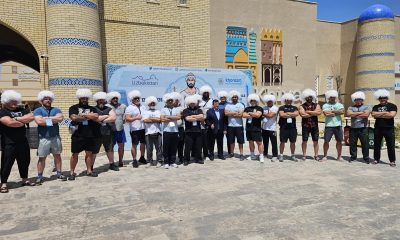
South Korea’s Yoo Useong Steps Onto the Global Strongman Stage as World Strongman Federation Professional Athlete
-

 Art & Culture1 year ago
A Survey of Mata-E-Zeest
-

 Europe News1 year ago
Chaos and unproven theories surround Tates’ release from Romania
-

 American News1 year ago
Trump expands exemptions from Canada and Mexico tariffs
-

 American News1 year ago
Trump Expels Zelensky from the White House
-

 Art & Culture1 year ago
Will Snow White be a ‘victim of its moment’? How the Disney remake became 2025’s most divisive film
-

 Pakistan News1 year ago
Comprehensive Analysis Report-The Faranian National Conference on Maritime Affairs-By Kashif Firaz Ahmed
-

 Entertainment2 years ago
Champions Trophy: Pakistan aim to defend coveted title as historic tournament kicks off today