
American News
America’s Immigration Dilemma: Law, Accountability, and the Crisis Within


Paris (Imran Y. CHOUDHRY) :- Former Press Secretary to the President, Former Press Minister to the Embassy of Pakistan to France, Former MD, SRBC Mr. Qamar Bashir analysis : For decades, America has prided itself as a land of opportunity—a magnet for dreamers, workers, and refugees. But today, under the aggressive implementation of ICE-led deportations, spearheaded by President Donald Trump’s renewed enforcement drive, the country finds itself fractured. The issue is no longer just about legality—it has become a battleground of narratives, identity, and accountability.
President Trump insists that “millions and millions” of illegal immigrants—whom he categorizes as violent criminals, traffickers, sex offenders, and pedophiles—have “invaded” the U.S. According to him, his administration’s duty is to remove these threats through mass deportations, often carried out with military-style precision. ICE raids in cities like Los Angeles, where five individuals with criminal pasts were arrested on June 7, are presented as success stories. But a deeper question lurks behind these headlines: if such individuals are indeed dangerous and illegal, how did they get into the country in the first place?
As a legal immigrant myself, my family and I embarked on a long and arduous journey. We applied in 2007 for family-sponsored immigration and were not approved until 2024. Seventeen years of background checks, verification of employment, travel history, character assessment, and criminal records—all under the scrutiny of U.S. immigration services. It is a stringent, sometimes grueling, system that leaves little room for error. If followed diligently, it is almost impossible for someone with a dubious past to pass through.
This raises troubling questions. How do individuals with criminal records—those labeled as drug dealers, violent offenders, or sex criminals—make it into the U.S. undocumented? What loopholes exist? And more importantly, who allowed it?
Beyond bureaucratic lapse, another profound and often overlooked truth must be acknowledged: every wave of immigration has often been triggered by destruction caused by the United States and its allies. The Syrian crisis, spurred by U.S.-led regime change attempts, created millions of refugees—many welcomed into the United States. The U.S. invasion of Iraq unleashed chaos, civil war, and displacement, compelling thousands of Iraqis to seek shelter abroad. Libya, after being bombed into anarchy, witnessed similar refugee outflows. Palestinians displaced by decades of unending Israeli occupation, often with U.S. political and military backing, have also found refuge in America. The collapse of Afghanistan after two decades of NATO occupation led to a mass exodus—especially of Afghans who worked with Western forces. Most arrived with no paperwork or formal identity verification, given the country’s primitive recordkeeping systems. Yet, many were fast-tracked into the U.S., bypassing the very scrutiny imposed on legal immigrants from stable nations.
This uncomfortable truth demands moral clarity: if undocumented immigrants are subject to the full weight of the law, then those policymakers and officials who created the conditions for their displacement, or allowed their entry without due diligence, must also be held accountable. It is a shared responsibility—one that begins not at the border, but in the war rooms and foreign policy chambers where these crises were ignited.
There appears to be no structured inquiry or investigation into the root causes. No commissions, no accountability frameworks to identify the officials, agencies, or politicians who enabled mass illegal entry. Immigration enforcement in the U.S. has historically vacillated depending on who is in power. One administration turns a blind eye, quietly encouraging mass entry. The next tries to reverse it through high-profile crackdowns. But in the absence of institutional accountability, this cyclical dysfunction persists—feeding public anger and polarizing communities.
ICE is now being weaponized not just to remove the undocumented, but to reassert political dominance. The use of unmarked vehicles, masked officers, and sudden, forceful detentions—often in front of children and elders—conveys a message of fear. It is not surprising that over 10,000 protesters recently marched through downtown Los Angeles against these raids. Many carried Mexican flags—none carried the American flag. This wasn’t just a protest; it was a symptom of deeper social unrest.
Critics argue that these ICE actions, while legal under the Supreme Court’s allowance of 24-hour deportation notice, are being carried out in a manner that undermines constitutional due process. Rights of asylum seekers, refugees, and even undocumented residents with long-standing ties to communities are brushed aside in the name of executive orders. A nation built by immigrants is now turning its state machinery against them.
Supporters of Trump’s policy, on the other hand, insist that deporting illegals—especially criminals—is not just constitutional, but necessary. They point to the Clinton-era deportations of over 12 million people, Obama’s deportation of 5 million, and Bush’s expedited removal protocols. “This is not new,” they argue. “It’s enforcement overdue.”
But many dissenters challenge this logic. They argue that Trump is not fixing immigration—he’s weaponizing it. He’s framing all undocumented migrants as threats, fueling fear for political gain. His critics claim that this dehumanization is less about justice and more about re-election. Trump’s rhetoric plays to a base who feel left behind—using immigrants as scapegoats for economic and social frustrations.
This divide is not only ideological—it’s generational, racial, and geographic. Many immigrants, including legal ones like myself, find ourselves in a complicated space. On one hand, we support the rule of law. On the other, we reject the vilification of all migrants and the blanket criminalization of entire communities.
Let us remember: America is a nation of immigrants. Even Donald Trump is the grandson of Friedrich Trump, a German immigrant who arrived in the U.S. in 1885. The German Chancellor once presented Trump with his grandfather’s immigration file during a White House visit—a reminder that no one, not even the president, is far removed from the immigrant experience.
The real issue is not race, religion, or ethnicity. The only legitimate distinction should be between legal and illegal entry. But even that must be addressed humanely, within the framework of rights and due process. It cannot become a pretext for racial profiling, family separation, or fear campaigns.
The lack of systemic accountability is the root of this chaos. Who failed to enforce border laws? Who allowed the lapse? Was it intentional? Was there bribery? Was it negligence or political strategy? These are the questions no one in Washington wants to answer.
The consequences of this negligence go beyond borders. As seen in the Los Angeles protest, foreign governments—like Mexico—may begin to leverage their diaspora as political tools. If unchecked, this tactic could be replicated by other countries, introducing a dangerous element of foreign interference in domestic American affairs.
In my observation of reactions on X (formerly Twitter), two dominant narratives have emerged: one, defending ICE’s actions and Trump’s policies as lawful and overdue; the other, denouncing the excessive force and racial undertones as unconstitutional and inhumane. Some comments suggest this is less about criminals and more about silencing immigrants—legal and illegal alike—through fear and exclusion.
What, then, is the way forward?
First, No society or country elsewhere in the world may be destroyed, and no country, especially one as powerful as the United States, should ever tolerate illegal immigration. The law must be upheld. But enforcement must be precise, proportional, and humane.
Second, there must be rigorous accountability. Politicians, departments, and border enforcement agencies that failed in their duty must face consequences. Only then can the system regain public trust.
Third, investment must be made into technology, manpower, and processes that make it virtually impossible for undocumented migrants—especially those with criminal records—to enter undetected. The U.S. has done this before during the post-9/11 anti-terrorism era. It can do it again.
This is not just about protecting borders. It’s about preserving the spirit of America—a land where laws are enforced, but justice is never blind to humanity. If illegal immigration is the dragon, it must be slain at its roots. Not with brutality, but with policy, accountability, and moral clarity.
Let us hope that sanity prevails. Let us hope that the United States rises above political theatrics and embraces a model of immigration that is lawful, just, and worthy of the ideals it claims to defend.






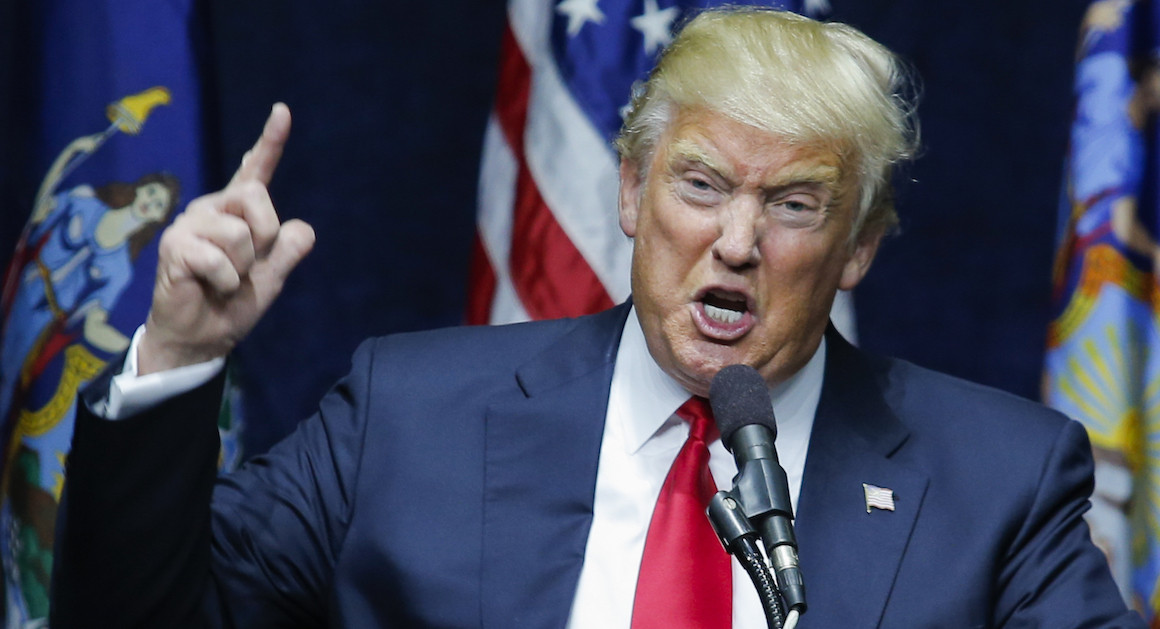
Paris (Imran Y. CHOUDHRY) :- Former Press Secretary to the President, Former Press Minister to the Embassy of Pakistan to France, Former MD, SRBC Mr. Qamar Bashir analysis : Trump was elected legitimately, and his supporters deserve representation. But every president governs a country larger than his constituency. Congress, courts, journalists and universities have responsibilities independent of presidential approval. Treating their independence as an obstacle to overcome carries authoritarian implications.
Retired federal judge Mark Wolf’s resignation provides a powerful framework for understanding these concerns. A Reagan appointee with four decades on the bench and approximately fifty years in public service, Wolf relinquished his lifetime appointment in November 2025 has spoken now.
He believed the administration’s assaults on equal justice had made silence intolerable. He accused Trump of directing the Justice Department to pursue perceived political enemies while failing to investigate possible corruption involving presidential allies and people enriching the president and his family.
Wolf also condemned Trump’s practice of calling judges corrupt and demanding their impeachment after unfavorable rulings, warning that such attacks undermine confidence in judicial independence.
He said the president’s inflammatory comments had coincided with death threats against judges and growing anxiety for their families. Citing reports that court orders were not always being properly obeyed, Wolf warned that judicial decisions lose their protective force when the executive can disregard them.
At Brandeis, he emphasized collective civic action and the ability of young people to hold their elders to higher standards. His warning places a fundamental question: can the institutions entrusted with enforcing the law still hold the president and those closest to him accountable?
The Iran war exposes the consequences of concentrated executive power. In his May 1, 2026 letter to Congress, Trump declared that the hostilities beginning on February 28 “have terminated,” citing the April 7 ceasefire. The administration relied on that position to argue that the War Powers Resolution’s 60-day deadline no longer required congressional authorization. Yet military action continued into September without specific congressional authorization.
Trump’s treatment of foreign governments reveals a troubling preference for coercion over consent, extending from adversaries to longstanding allies. American forces seized Venezuela’s Nicolás Maduro in January 2026 and transported him to New York to face criminal charges, which he denied; the operation prompted the United Nations secretary-general to question its conformity with international law.
Trump subsequently threatened a takeover of Cuba. He also vowed to use economic pressure to make Canada America’s 51st state, pursued control of Greenland, and threatened additional tariffs on eight European countries over their opposition to that ambition.
Separately, his 2025 trade agreement imposed a 15 percent tariff on most European Union goods. Relations deteriorated further when he called NATO allies “cowards” for withholding support for the Iran war, while European governments questioned involvement in a conflict they had not chosen.
Trump banned CNN, MS NOW and Politico from White House grounds after denouncing their coverage as “fake news,” subsequently arguing that their reporting threatened national security. The administration cited stories concerning White House security infrastructure and an alleged leak investigation; the outlets argued that they were being punished for their editorial content. This illustrates the danger of making journalistic access dependent on presidential approval. Journalists serve the public by asking uncomfortable questions, and penalizing unfavorable coverage undermines citizens’ ability to scrutinize their government.
Trump’s crackdown on immigrants brought an expanded federal enforcement presence into communities and military support onto American streets. In Los Angeles, Trump deployed National Guard troops and Marines over state and local objections. Immigration raids and the deployments fueled demonstrations that spread to other major cities, intensifying confrontation between Washington, local authorities and residents. The human consequences extended beyond those targeted for deportation. Federal immigration officers fatally shot American citizens Renee Good and Alex Pretti in Minneapolis, provoking investigations and nationwide outrage. Separately, the death of Cuban immigrant Geraldo Lunas Campos in immigration detention was classified as a homicide by the medical examiner.
Trump’s stock market manipulation extended to amass a lot of wealth for his closet family members, close associates and Trump linked companies. In August, Senator Elizabeth Warren and Representative Robert Garcia cited more than 17,000 stock trades worth up to $1.56 billion across the periods examined, questioning transactions overlapping with government decisions.
Family ventures broaden these concerns. A Senate resolution introduced in February challenged approval of advanced artificial-intelligence chip exports to the United Arab Emirates following a reported $500 million UAE-linked investment in World Liberty Financial. The sequence does not prove an exchange of money for favors, but demands examination of whether commercial interests influenced national-security decisions.
Congressional investigators also questioned federal support for Vulcan Elements, a company backed by Donald Trump Jr.’s investment firm, alleging White House intervention. Separately, PBS reported that Jared Kushner’s Affinity Partners disclosed more than $6.1 billion in assets while he had resumed diplomatic work. Those assets are not his personal fortune. The concern is whether financial relationships influence public decisions or diplomatic access attracts private business.
The accumulation of wealth around Trump’s presidency spans both administrations and raises serious questions about the separation of public power from private interests. During his first term, Jared Kushner and Ivanka Trump reported between $172 million and $640 million in outside income across disclosure periods that also included some earnings before their appointments. By September 2025, Forbes estimated the family’s combined wealth at approximately $10 billion—nearly double its value at the preceding election—including $7.3 billion for Donald Trump, $750 million for Eric, $500 million for Donald Jr., $150 million for Barron, $1 billion for Kushner and $100 million for Ivanka. Trump himself disclosed more than $1.4 billion in cryptocurrency income for 2025.
Kushner’s Affinity Partners reported more than $6.1 billion in managed assets, while a congressional inquiry cited growth at Donald Jr.’s 1789 Capital from approximately $150 million to over $3 billion. That inquiry highlighted portfolio company Vulcan Elements, whose valuation reportedly rose from approximately $200 million to $2 billion after receiving a $620 million federal loan and a $50 million grant.
The administration’s approach to universities carries longer-term consequences. In September 2025, a federal judge ruled that approximately $2.2 billion in Harvard research grants had been unlawfully terminated. The administration cited antisemitism; the court found unlawful retaliation and procedural failures. Universities must confront discrimination, but scientific funding should never become an instrument of political conformity. Interrupting research risks discoveries whose value emerges over decades.
The dismantling of USAID by Trump weakened an institution that combined humanitarian assistance with American diplomatic influence. Before Trump’s second term, the agency employed more than 10,000 people, maintained over 60 country and regional missions, and provided assistance to approximately 130 countries with budget allocation of over $40 billion. On July 1, 2025, the agency ceased implementing foreign assistance sacrificing accumulated expertise, dependable partnerships and goodwill built over decades.
These actions and behaviors by Trump are less democratic in character and closer to dictatorial conduct. This disposition is particularly troubling because the American constitutional system is founded on a commitment to democracy and resistance to unchecked power.
In November’s midterm elections, the people of the United States will once again deliver their verdict. Support for Trump’s political allies would strengthen his claim to public endorsement; their rejection would signal a demand for democratic accountability and resistance to dictatorial behavior, even though he is not a dictator in the fullest sense.
Americans are outspoken and capable of distinguishing right from wrong. History shows that, although their tolerance is considerable, they can act decisively when they conclude that change is necessary to restore constitutional balance. Let us hope that sound judgment prevails and that the Trump administration changes course, returning to the democratic values on which the United States was founded.
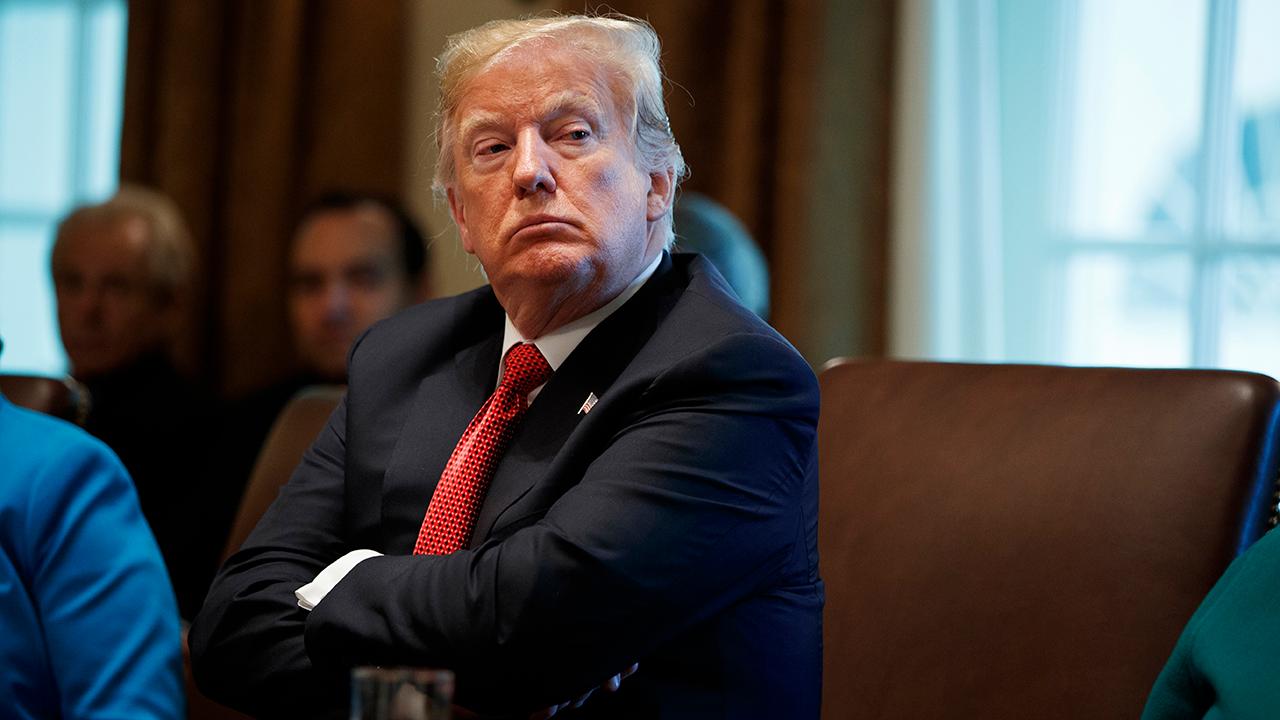
Paris (Imran Y. CHOUDHRY) :- Former Press Secretary to the President, Former Press Minister to the Embassy of Pakistan to France, Former MD, SRBC Mr. Qamar Bashir analysis : On September 17, Mayor Zohran Mamdani marked the repair of New York city’s 200,000th pothole this year. That work represents essential public service, but its scale also reveals the maintenance burden. In Michigan, the 2025 roads and bridges report recorded 67 local agency bridges closed because of poor or severe conditions. Deterioration carries costs in disrupted journeys, damaged vehicles and lost time.
Nationally, the engineering assessment is sobering. America’s infrastructure received a C in the 2025 report card, with roads graded D+. Bringing infrastructure into good repair would require an estimated $9.1 trillion over 2024–2033, against projected investment of $5.4 trillion if recent funding levels continue. The resulting $3.7 trillion gap measures the distance between acknowledged needs and resources expected to address them.
These are conditions Americans have often associated with the developing world: neglected infrastructure, persistent poverty, concentrated wealth and public institutions struggling to deliver essentials. “Third World” is an imperfect description, but the warning signs deserve attention. Their appearance within a wealthy superpower makes the question of priorities more urgent. Recognizing them is an expression of concern for America’s future.
Those priorities become clearer when domestic needs are placed beside overseas commitments. The established American military assistance framework for Israel provides $3.8 billion annually. A June estimate put Iran war costs between $34 billion and $42 billion, including deployments, munitions, equipment losses and base damage. By September 25, senators demanding fuller accounts cited Pentagon spending of $42 billion. The ultimate bill remains unsettled.
These commitments must also be understood within the wider budget. In fiscal year 2025, international-affairs spending amounted to $61 billion out of $1.9 trillion in discretionary spending—approximately 3 percent, and about 1 percent of total federal expenditure. This category supports diplomacy, development, humanitarian programmes and international security assistance; it is distinct from the Pentagon’s military budget. Over the past 50 years, international-affairs appropriations have ranged between 3.1 and 5.2 percent of discretionary spending. Spending rose by 20 percent in fiscal year 2022 and another 18 percent in 2023, primarily to support Ukraine following Russia’s invasion. These figures show that foreign assistance alone cannot explain America’s domestic investment shortfall.
Military expenditure does not explain every unrepaired street; responsibility for infrastructure crosses federal, state and local government. Nevertheless, the contrast in urgency is unmistakable. Prolonged deployments, replenished arsenals and damaged installations require resources and political attention. Every new commitment abroad entails choices about resources that could strengthen the productive foundations of American communities. National security also depends on what remains functional at home, while effective diplomacy and development assistance can help prevent more expensive crises.
Poverty exposes another fracture. An official poverty rate of 10.2 percent in 2025 remains alarming for one of the world’s strongest military and economic powers. Its decline does not erase the hardship of approximately one person in ten. The broader supplemental measure stood at 13.1 percent, showing no statistically significant improvement over 2024. Prosperity measured at the national level still leaves substantial deprivation underneath.
The fundamental challenge is whether people can earn a secure living. Assistance remains essential for those unable to work and can help others enter employment. But lasting poverty reduction requires skills, productive jobs, viable enterprises and earnings that meet ordinary expenses. Transfers alone cannot create the factories, services and capabilities on which shared prosperity depends. Economic policy must expand people’s capacity to generate wealth.
The objective should be measurable: more households supported by adequate earnings, more workers advancing through useful training, and more communities attracting durable investment. Success would mean fewer families needing emergency assistance because their own economic position has improved, while protection remains available when illness or disability intervenes.
China’s experience demonstrates the scale that sustained development can achieve. Nearly 800 million people escaped extreme poverty over four decades, according to the World Bank. Different poverty thresholds prevent a direct comparison with America, but the central lesson remains relevant: structural transformation can change living conditions on an enormous scale. America possesses the resources to pursue equally determined improvements within its own circumstances.
Household fragility makes the need tangible. The Federal Reserve found that 63 percent of adults would cover a hypothetical $400 emergency entirely through cash or its equivalent. The remaining 37 percent would use other means or could not pay. A tire, medical bill or urgent repair can therefore disrupt an already constrained budget. Vast private fortunes coexist with insecurity over rent, groceries, insurance and utilities.
Fuel prices deepen that pressure. Late September national averages were approximately $4.48 per gallon for regular gasoline and $6.45 for diesel, compared with roughly $3.13 and $3.69 a year earlier. Diesel transmits costs through farming, trucking and distribution. Large domestic oil production does not protect American consumers from internationally traded prices, disrupted shipping and constraints on refining.
These pressures could reshape the midterms. Disruption around Hormuz and threats to Red Sea shipping give regional actors influence over the economic circumstances confronting American voters. That influence is not control over election results, but prolonged energy inflation presents Republicans with serious political exposure. A changed Congress could strengthen oversight and restrict war funding, although ending hostilities would still require political decisions.
Diplomatic credibility faces pressures of its own. The American military removal of Venezuela’s president, subsequent oil arrangements and mounting pressure on Cuba raise questions about sovereignty and coercion. Governments may yield under pressure while becoming less willing to trust Washington. Transactional diplomacy can secure immediate concessions at the expense of relationships that sustain influence over decades.
Political money adds another concern. AIPAC’s affiliated super PAC, United Democracy Project, spent $61.4 million in the 2024 cycle. Such spending does not itself establish bribery, but it illustrates the resources organized interests can bring to electoral competition. Presidential conflicts of interest also demand scrutiny; allegations of personal enrichment require evidence. Public confidence depends on officials demonstrably serving the country.
America’s capacity for renewal remains immense. Manufacturing still employs roughly 12.6 million people, alongside substantial strengths in research, technology and enterprise. Expanding that base requires technical education, apprenticeships, dependable energy, modern transport and investment in competitive production. Infrastructure repair and industrial renewal reinforce each other: better systems help businesses operate, while productive employment broadens the revenues available to maintain those systems.
With national debt around $40 trillion, priorities require discipline. Yet reducing international-affairs spending, at about 1 percent of the federal budget, cannot resolve the fiscal imbalance. Its deeper causes include rising healthcare costs, an aging population, growing interest payments and revenues insufficient to meet existing commitments. Rebuilding America therefore requires sustained investment alongside credible decisions about spending and taxation.
The dollar rests on productive capacity, financial depth and institutional trust. Its international position cannot substitute indefinitely for strengthening those foundations. America must also distinguish its interests from Benjamin Netanyahu’s ambitions and pursue an end to a war whose costs reach into American households. Strategic independence includes the ability to refuse an ally’s destructive course.
A pothole is a small opening into a larger national question: how effectively does American power serve American life? The answer can change. This country retains energetic workers, inventive businesses and extraordinary resources. Directing those strengths toward productive livelihoods, sound infrastructure and responsible diplomacy would turn today’s warning signs into the starting point of renewal. America’s future strength can be built from within.
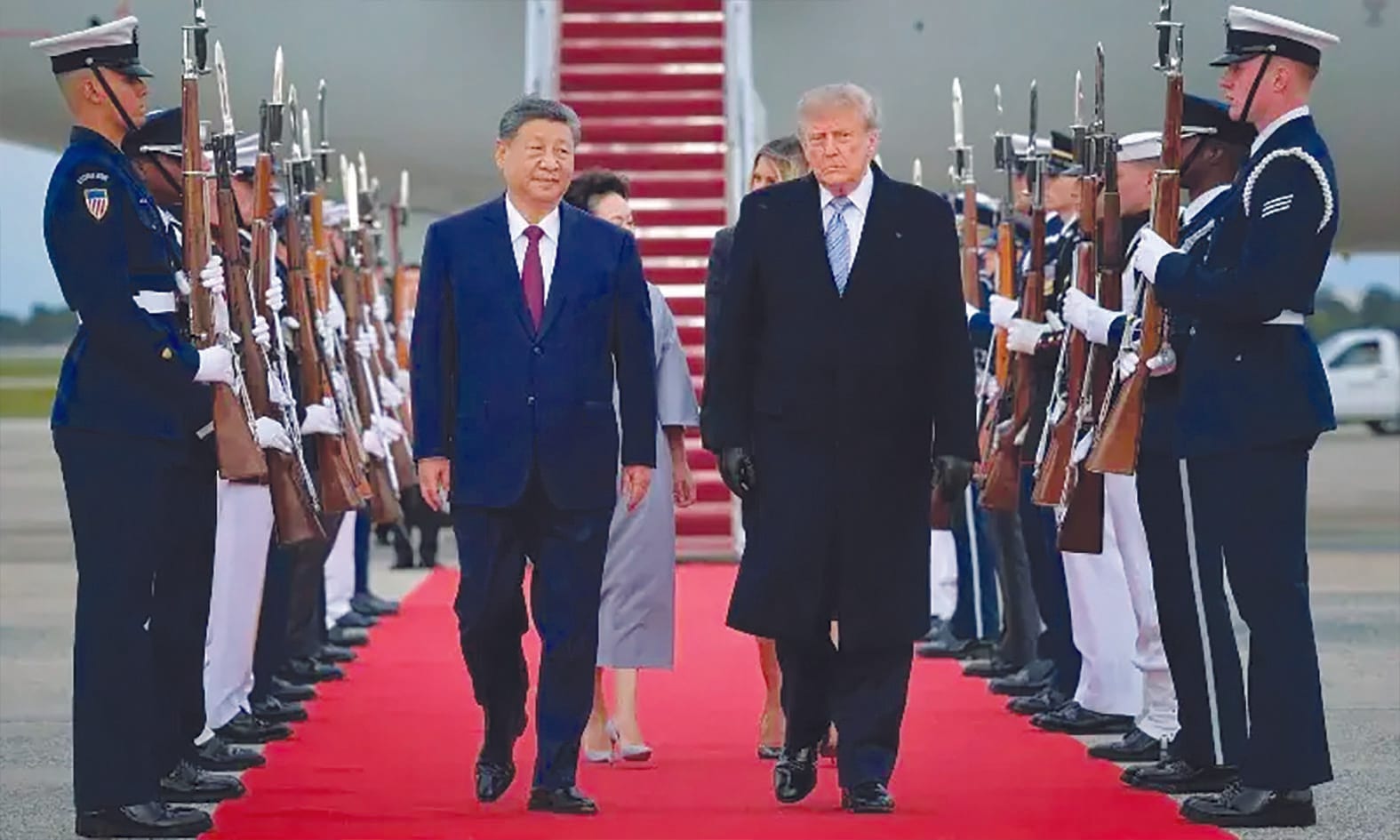
Paris (Imran Y. CHOUDHRY) :- Former Press Secretary to the President, Former Press Minister to the Embassy of Pakistan to France, Former MD, SRBC Mr. Qamar Bashir analysis : The red carpet has been rolled away, the state dinner has ended, and President Xi Jinping has left Washington. The three-day visit was presented as a landmark in relations between the world’s two largest economies. Its clearest practical result was a two-month extension of their trade truce. Trump and Xi gained time to talk again. The rest of the world gained no comparable assurance about the wars, supply chains and technologies on which its future depends.
China’s account says the two leaders exchanged views on the Middle East and Ukraine. That brief diplomatic phrase should not be mistaken for a substantive negotiation on either war. Their positions on who bears responsibility, whose security counts and what an acceptable settlement would require begin so far apart that the published outcome contains no common proposal. They addressed trade, artificial intelligence and Taiwan too. On the questions where agreement would matter most, ceremony filled the space that policy might have occupied.
The Iran war explains why even a declared understanding on the Middle East proved elusive. Washington defends the military campaign it launched with Israel; Beijing condemns the strikes on Iran’s sovereignty and favors diplomacy. While the summit was ongoing, Iranian President Masoud Pezeshkian in a separate interview, recalled an Oman-mediated Geneva proposal to dilute Iran’s 60 percent uranium and accept verification. Oman’s mediator had described a deal as within reach before the strikes began. Pezeshkian’s interview underscored the path abandoned when Washington chose force. Trump and Xi approached the war from opposite premises and announced no common course.
China also buys most of Iran’s exported oil and depends on Gulf shipping. Washington wants Beijing to pressure Tehran, while Beijing sees American military pressure as a cause of regional instability. The two leaders could exchange views on the conflict, but neither offered a joint plan for ending it or protecting the trade routes on which many countries depend.
Ukraine exposed a comparable clash of explanations. Beijing gives weight to Moscow’s account that Western involvement in Ukrainian politics and NATO’s expansion threatened Russian security. Washington and its European partners see Russia’s invasion as an attack on Ukraine’s sovereignty and arm Kyiv to resist it. China cooperates closely with Russia; the United States supports Ukraine. These positions define different starting points for a peace discussion. Beijing cannot easily endorse a principle that outside powers may determine another country’s political future while insisting that foreign powers must stay out of what it considers the Taiwan question. Yet Ukraine’s people also have a sovereign voice that no bargain between great powers can erase. The leaders exchanged views, but there is no published evidence that they negotiated a common peace formula.
Taiwan makes these disagreements even more combustible. Beijing insists on its claim to the island and objects to American arms sales. Washington maintains its own commitments and security ties, while Taiwan’s people govern themselves and face the consequences of any bargain made over their heads. The Chinese readout emphasized Xi’s warning on Taiwan but announced no new understanding. For a summit devoted to strategic stability, the absence of a visible mechanism to prevent a military incident matters more than the warmth of the photographs.
Trade produced the one measurable reprieve. The truce that faced a November deadline has reportedly been extended until January. That postpones a return to the tariff and export-control escalation that shook industries on both sides. It also moves the next decision beyond the American midterm elections. Buying time has value when two economies are tightly connected. Yet the extension leaves the basic contest untouched: Washington restricts advanced chips and presses China over purchases and market access, while Beijing controls vital stages of the rare-earth magnet supply chain.
Those magnets are essential to vehicles, industrial motors, electronics and defense equipment. China refines about 91 percent of the world’s magnet rare earths and makes about 94 percent of finished magnets. An American tariff threat cannot instantly create the processing capacity that took China decades to build. Equally, Chinese export controls can injure its customers without settling its complaints about U.S. technology restrictions. The truce suspends the next collision; it does not remove the weapons each side has placed on the negotiating table.
Artificial intelligence revealed a similar gap between aspiration and agreement. Xi has urged that AI serve the public and remain under human control. In July he offered developing countries 5,000 AI training and seminar opportunities over five years, along with cooperation centers and wider access to applications. Chinese developers have also released influential open models. That is a serious bid to shape who benefits from AI, although China’s companies and government have commercial and strategic interests of their own.
American companies, meanwhile, have poured capital into chips, data centers and models, seeking both technological leadership and enormous returns. Some American developers also publish open models and research. The real divide is therefore more complicated than a generous China facing an exclusively profit-seeking America. It lies in who controls the computing power, sets the rules, bears the risks and receives the gains. A state dinner attended by technology executives offered a stage for that question, but the summit produced no public agreement on testing frontier systems, reporting dangerous incidents or restraining autonomous military uses.
Space presents the same danger on a larger canvas. China has publicly opposed turning orbit into a battlefield, while the United States has acknowledged deploying space-control weapons. Both powers depend on satellites for navigation, communications and security. China, too, has strategic capabilities and interests in space; declarations of peaceful intent deserve scrutiny from every side. Yet there was no announced summit understanding on protecting civilian satellites or preventing debris and attacks from spreading a terrestrial conflict into shared orbits.
Xi and Trump may meet again at the APEC and G20 gatherings later this year. More meetings can prevent miscalculation, and the tariff extension keeps negotiations alive. But the measure of a summit is what it changes. Iran remains at war, Ukraine remains at war, Taiwan remains exposed to confrontation, critical minerals remain an instrument of pressure, and AI and space remain arenas of accelerating rivalry. Washington gave the visit every symbol of respect. The harder act of respect would have been to acknowledge that neither nation can secure its own future by treating the world’s common interests as bargaining chips.


Quetta’s Daughter, Pakistan’s Pride

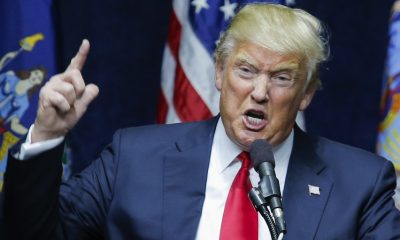
Why is Trump a Dictator?

America Must Rebuild Within


-

 Sports4 months ago
South Korea’s Yoo Useong Steps Onto the Global Strongman Stage as World Strongman Federation Professional Athlete
-

 Art & Culture1 year ago
A Survey of Mata-E-Zeest
-

 Europe News2 years ago
Chaos and unproven theories surround Tates’ release from Romania
-

 American News2 years ago
Trump expands exemptions from Canada and Mexico tariffs
-

 American News2 years ago
Trump Expels Zelensky from the White House
-

 Art & Culture2 years ago
Will Snow White be a ‘victim of its moment’? How the Disney remake became 2025’s most divisive film
-

 Entertainment2 years ago
Champions Trophy: Pakistan aim to defend coveted title as historic tournament kicks off today
-

 Pakistan News1 year ago
Comprehensive Analysis Report-The Faranian National Conference on Maritime Affairs-By Kashif Firaz Ahmed