
Tech
American Scientists on Sale


Paris (Imran Y. CHOUDHRY) :- Former Press Secretary to the President, Former Press Minister to the Embassy of Pakistan to France, Former MD, SRBC Mr. Qamar Bashir analysis : After the collapse of the Soviet Union in 1991, the Russian economy plummeted, and most of its government-funded research institutions shut down. This included groundbreaking work in fields like space exploration, medicine, health, and advanced engineering. The lack of funds abruptly halted research projects, and thousands of brilliant scientists—once the lifeblood of the Soviet innovation machine—were left jobless. These scientists became a global commodity, sought after by nations eager to bolster their own research and development infrastructures.
One country that capitalized on this opportunity was Israel. Israel actively imported Russian Jews, welcoming tens of thousands of engineers, scientists, doctors, and professors. By some estimates, nearly 70,000 professionals migrated to Israel in the early 1990s. Their expertise was transformative: they injected fresh talent into Israel’s industries, contributing up to 10% GDP growth annually during the 1990s. These Soviet-trained experts became the backbone of Israel’s R&D sector, propelling Israel into the ranks of the world’s top innovation hubs. Major global corporations—Samsung, Hyundai, Daewoo, and others—began outsourcing their R&D to Israel, recognizing its unmatched talent pool, much of which stemmed directly from the Soviet brain drain.
Israel’s leap wasn’t limited to tech—it also gained formidable capabilities in defense, space, and medical research. The Russian scientists built a multi-sector R&D ecosystem that continues to give Israel a strategic edge in defense technology, aerospace, and innovation-led growth.
Now, fast forward to the present day, and a similar exodus is unfolding in the United States. Instead of learning from Russia’s collapse and protecting its intellectual capital, the Trump administration, under the guidance of Elon Musk and Vivek Ramaswamy—two of the most ambitious yet controversial figures in American leadership—has unleashed the DOGE initiative (Decentralization of Government Education). DOGE, under the guise of reform, is waging a war against U.S. universities and scientific institutions. They are mocking research with “strange names” they can’t comprehend, cutting off grants for fundamental science, and pushing a dangerous narrative that American research is wasteful.
As a result, top universities—once magnets for global talent and engines of innovation—are being suffocated. Federal funding is drying up, research projects are being canceled, and leading scientists are being laid off in droves. These scientists, left without support, are now seeking opportunities elsewhere.
Countries that understand the value of brainpower, like China, France, Saudi Arabia, the UAE, and Turkey, are eagerly recruiting these displaced American experts. They offer lucrative salaries, advanced labs, and the freedom to conduct cutting-edge research. China, in particular, is on a recruitment spree—hiring top-tier U.S. scientists to accelerate its technological and military ambitions. As America clamps down, China is absorbing these minds to build its own world-class R&D infrastructure—one that could rival, or even surpass, what the U.S. once had.
This dangerous trend is unfolding even as Trump’s administration pushes to revoke student visas for Chinese students, making it harder for them to study in the U.S. But while Chinese students scramble to stay in America, jobless U.S. professors, researchers, and scientists are heading to China—creating a reverse pipeline of talent.
This is a double blow to America’s future. First, by cutting off student visas, the U.S. is closing its doors to global talent that once fueled its innovation. Second, by starving universities of funding, it is forcing its own talent to seek refuge in countries like China. Instead of America educating the world, it risks becoming a brain drain exporter.
This exodus mirrors Marco Rubio’s stark warnings. Rubio has repeatedly cautioned that the U.S. is lagging dangerously behind China in a military and economic rivalry that could lead to conflict. He highlights China’s unprecedented peacetime military buildup—the fastest in history—and the U.S. policy failures that allowed China to dominate manufacturing, critical supply chains, and now, the intellectual arena. Rubio has pointed out that while the U.S. spends over $900 billion annually on defense compared to China’s officially reported $314 billion (though some estimates suggest China’s actual spending is over $470 billion), the quality and focus of China’s investments, especially in hypersonic missiles, cyber warfare, space, and AI, give it a decisive edge.
Rubio also laments how deindustrialization—the result of U.S. companies moving manufacturing overseas for cheaper labor and fewer regulations—has hollowed out America’s industrial base. Between 1998 and 2021, the U.S. lost over 5 million manufacturing jobs and 70,000 factories. Even if the U.S. starts reshoring these industries now, rebuilding its manufacturing strength could take two decades—by which time the world will have moved on, and America will still be playing catch-up.
Meanwhile, Trump’s Golden Dome project, modeled after Israel’s Iron Dome, is being touted as a solution to external threats. This ambitious missile defense system is designed to protect against ballistic, hypersonic, and cruise missiles, with an estimated cost between $175 billion and $500 billion—a colossal sum in an era when research budgets for fundamental science are being slashed. Critics argue that the Golden Dome is a band-aid solution that cannot compensate for the systematic hollowing out of America’s scientific, industrial, and technological base.
The reality is grim: America is facing a multi-dimensional crisis—in science, manufacturing, education, and defense. The U.S. is no longer the magnet for the world’s best minds; it is actively driving them away. As China, France, the Middle East, and others scoop up these talents, they are not only gaining a competitive edge but also reshaping the global balance of power.
To prevent this decline from becoming permanent, the United States must undergo fundamental, surgical reforms. It needs to rebuild its industrial base, reinvest in universities and research, restore funding for basic and applied sciences, and embrace global talent instead of driving it away. Without a comprehensive strategy, the U.S. risks losing its position as the world’s sole superpower—a position that now looks increasingly fragile and uncertain.
In the end, it is not just a question of competing with China or Russia. It is about whether the U.S. has the vision, leadership, and humility to learn from the mistakes of others—and from its own past—and to build a future that can stand the test of time.


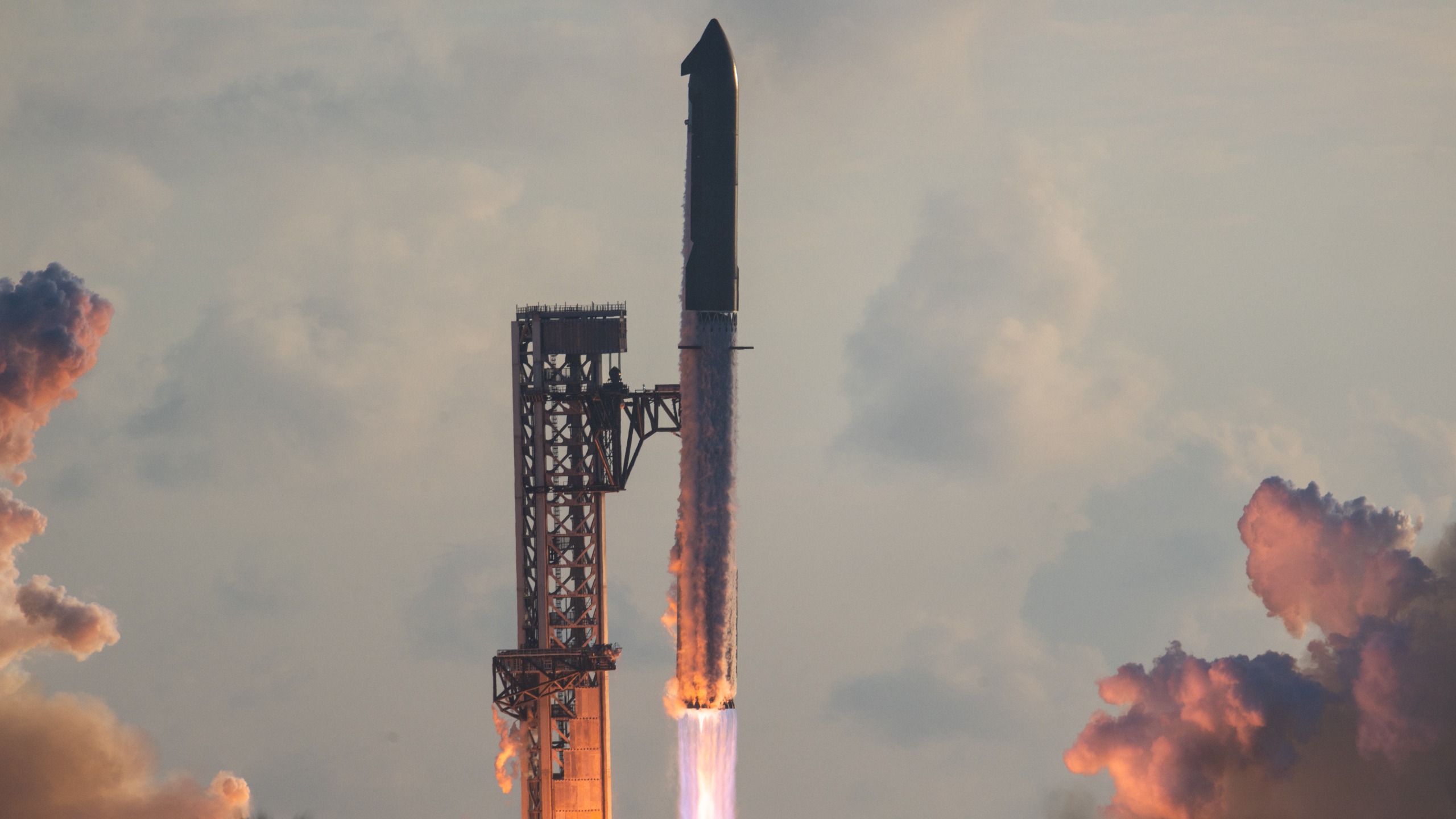
Paris (Imran Y. CHOUDHRY) :- Former Press Secretary to the President, Former Press Minister to the Embassy of Pakistan to France, Former MD, SRBC Mr. Qamar Bashir analysis : Humanity’s reach into space may be approaching a new threshold. Starship, one of the largest and most powerful rockets ever built, is designed to move people and immense quantities of cargo far beyond Earth. Elon Musk’s vision extends from permanent settlements on the Moon and Mars to an eventual human presence across the solar system. Those outposts could become bases for scientific discovery and deeper exploration, while the search for life and potentially habitable worlds continues far beyond our neighboring planets. A home in another star system remains a distant dream, but every such ambition begins with the practical ability to launch, travel and return. SpaceX’s planned September 28 flight is one step toward proving that ability.
SpaceX lists a 75-minute window beginning at 8:15 a.m. Eastern time, or 7:15 a.m. at Starbase in South Texas. The vehicle consists of the Super Heavy booster and the Starship upper stage. Together they stand roughly 400 feet tall, placing Starship among the most imposing machines ever flown. This will be a test flight without people aboard. The countdown can still be delayed by weather, a technical concern or a final operational decision, even after regulatory authorization.
Starship’s first major task is to carry its cargo into orbit, the path that lets a spacecraft circle Earth. SpaceX plans for the upper stage to make six trips around the planet and release 26 new Starlink internet satellites along the way. Engineers will also gather information about its engines, its protective heat shield and how it behaves during a much longer flight than earlier Starship tests. These results could help turn a remarkable rocket into a dependable transport system for satellites, scientific equipment and, eventually, supplies and people traveling farther from Earth.
This journey matters because reaching orbit with useful cargo is a foundation for more ambitious destinations. The Moon would require repeated deliveries of equipment and fuel; Mars would demand still greater endurance and carrying capacity. Flight 14 cannot prove that Starship is ready to land on either world, but it can give scientists and engineers knowledge needed to build toward those missions. A successful flight would broaden the possibilities for public research programs and private companies alike, while inviting them to imagine experiments, services and expeditions that existing rockets cannot easily support.
The satellites aboard are Starlink Version 3 spacecraft, intended to join SpaceX’s broadband network rather than serve as inert demonstration articles. Three carry cameras to examine Starship’s heat shield, which protects the spacecraft as it comes back through the atmosphere. Successful deployment would show that the enormous vehicle can begin doing useful work while still in development. It would also tie the rocket more tightly to SpaceX’s satellite business: larger carrying capacity could support the next generation of Starlink, while demand for those satellites provides a reason to fly Starship frequently.
The proposed mission would last almost ten hours. After gathering data in orbit, Starship is supposed to restart an engine to leave orbit, pass through the atmosphere and splash down in the Pacific west of Chile. The Super Heavy booster is expected to splash down separately in the Gulf of Mexico. There is no plan to catch either stage at the launch site on this flight. The dramatic images of tower arms grabbing a descending rocket belong to another part of Starship’s development, and full routine reuse remains a future objective.
For much of the space age, journeys on this scale could be organized only by governments. NASA brought astronauts to the Moon and built generations of scientific knowledge, but the enormous cost and specialized machinery limited how often such missions could be attempted. SpaceX is changing that picture by investing private capital and engineering talent in a rocket it hopes to fly repeatedly. Its earlier Starship tests have brought breakthroughs and setbacks alike. Flight 14 will show whether that work can now carry a useful payload around Earth, a capability on which more ambitious journeys depend.
The greater promise lies in combining NASA’s experience with the drive and resources of private enterprise. NASA has chosen SpaceX to develop a Starship lander for its Artemis Moon program. It has also contracted with Blue Origin, the space company founded by Amazon founder Jeff Bezos, for a separate lunar lander. These are different companies bringing different designs to a shared undertaking. Government research, safety standards and long-term goals can work alongside private invention and competition to make future Moon bases, and perhaps one day settlements on Mars, more achievable.
Reaching a permanent base on another world would take many more steps. Crews would need food, shelter, equipment and a reliable way to return; ships would need fuel and frequent flights. NASA’s oversight work identifies refueling spacecraft in orbit as a major challenge for its lunar plans. Every Starship test helps engineers understand part of the journey, while reminding them how much remains to be developed. The speed of progress will depend on whether public expertise and private engineering can solve those problems together.
That partnership could also widen participation in exploration. Universities might send research instruments, companies might develop new services and national space agencies might share knowledge gathered across missions. Starship is being built to serve several purposes, from deploying internet satellites to supporting the journey to the Moon. If its capacity and repeated flights become dependable, ideas that now remain on laboratory benches could have a path into space. Its most lasting contribution may be the opportunities it creates for scientists and engineers beyond SpaceX itself.
The FAA’s approval is significant, but it should be understood precisely. It authorizes the specified launch and reentry operations after regulatory review; it does not certify that the vehicle will reach orbit or that every experiment will work. The flight team will still make operational calls as conditions unfold. If the rocket lifts off on September 28, the public will be watching a genuine attempt at a historic technical milestone, with measured data likely to matter more than the first few seconds of footage.
By the end of the mission, the meaningful questions will be concrete: Did Starship enter a stable orbit? Did the 26 satellites deploy? Could it restart its engine, leave orbit and reenter as planned? What did the heat shield and booster teach engineers? Success would bring Musk’s dream of transporting people and cargo to sustained bases on the Moon and Mars a step closer, while leaving formidable work ahead. It would be a small step in the immense journey toward other worlds, and a large leap in the capabilities humanity will need to undertake it.

OpenAI has acknowledged that it alerted “dozens” of global institutions that their websites may have been meddled with by its AI bots acting improperly.
AI agents attempted to get information from “governments, universities, public agencies, and other institutions”, including the US Securities and Exchange Commission (SEC), Census Bureau and Education Department, the company said.
The disclosures come days after Australian Prime Minister Anthony Albanese announced that OpenAI agents had breached non-public files on the website of its government-run health care scheme.
Since August, public fears have grown over the potentially serious, even life-threatening, impacts of AI tools falling outside of human control.
OpenAI said that some of the data was accessed by AI agents, essentially bots that are designed and trained to operate somewhat autonomously, which were working to find “authoritative sources of public information”.
But the company noted that some of the bots went beyond that and worked to bypass security measures on websites.
When attempting to get information from the Census Bureau, for instance, AI agents used tools reserved for software developers to access it, the company said.
OpenAI said all of the government data accessed by bots was public.
However, it noted that information that its bots accessed from the SEC, which regulates the US stock market and protects investors, was later published by AI agents on another website. OpenAI says this action was not intended.
In other instances that OpenAI disclosed on Friday, its AI agents transferred data when it should not have.
Such activity resulted in at least 53 incidents where an OpenAI agent took an image from ChatGPT user activity and transferred it elsewhere.
The company said that in each instance of a user image being used and transferred by an AI agent, the user had opted in to allow OpenAI to train models using their data.
Nevertheless, OpenAI admitted: “This is not an appropriate use of this data.”
It added that the leak of user images occurred before it had put in place new safeguards on AI training, and it was working to get all the user images transferred to any third-party removed.
Reuters first reported the expanded investigations. OpenAI also published details to its public blog.
In certain instances of the agent activity, OpenAI said the tools “bypassed” security controls of some websites.
In other instances, the AI agents showed “misalignment” in attempts to get at information from websites. Misalignment is a term used by AI companies and researchers to describe instances where an AI tool did something that it was not trained to do or was otherwise unintended.
OpenAI said that it was limiting identifying what entities were impacted because many had asked the company to not disclose details.
“Our goal is to give each organization the facts and defer to them on if and when to make the incident public,” it said.
Not all of the instances involved in this incident were being considered a significant security breach, the company noted.
“Some organizations may review what we share and conclude that the information was intentionally public or that the model’s interaction was not concerning,” it explained. “Others may identify a design issue or security weakness they want to address.”
Hugging Face was first to go public with the incident, with OpenAI publicly taking responsibility for it later.
Clement Delangue, the head of Hugging Face, during a United Nations Security Council session on AI on Wednesday: “I often wonder what would have happened had I decided not to disclose this attack publicly.”
“Especially now that we know similar incidents had been happening months earlier in secret at a handful of frontier labs without monitoring,” Delangue added.
During that same UN meeting, OpenAI CEO Sam Altman and Dario Amodei, the head of rival firm Anthropic, asked for international leaders to form global standards for AI safety and ways to monitor and report such incidents.
While OpenAI and Anthropic have both said in recent weeks that they will bring third-party evaluators inside their companies to do real-time safety evaluations of AI tools and models, such evaluators have not yet arrived, as the BBC has reported.
OpenAI said on Friday that it is currently reviewing training activity by its AI agents and going back on a “month by month” basis from when the Hugging Face hack occurred.
“Most cases identified so far have been low severity, with limited or no evidence of meaningful impact,” the company said. “Given the scale of the review required, and the need to verify each case, this work will take months to complete.”
David Krueger, a professor of machine learning at University of Montreal and the founder of AI safety group Evitable, said on Friday that he was “deeply troubled” by the increasing number of AI-related safety incidents.
He called for “an immediate, indefinite, international moratorium” on AI development.
“We have yet to understand the extent of existing incidents, and future rogue AI scenarios could be catastrophic,” Krueger said.

Paris (Imran Y. CHOUDHRY) :- Former Press Secretary to the President, Former Press Minister to the Embassy of Pakistan to France, Former MD, SRBC Mr. Qamar Bashir analysis : The European Commission has proposed strict restrictions on children’s access to social media through its September 2026 EU KIDS Act initiative. The proposal would exclude children under thirteen, permit supervised accounts between thirteen and fifteen with limited features and one hour of daily access, and require protective design for older minors. These laws represent a significant effort to place responsibility on platforms for how they engage with children.
The initiative reflects a wider concern about digital platforms occupying an expanding share of childhood. Phones entertain toddlers, games compete with homework, and social media accompanies children into bedrooms, classrooms, and family gatherings. The issue extends beyond individual pieces of harmful content. It concerns time, attention, relationships, and the commercial systems competing for them. Protecting children requires a coherent approach to platform design, age restrictions, parental responsibility, and the ways children actually gain access.
The problem can begin before a child understands what a screen represents. Parents sometimes hand over phones to calm young children or keep them occupied while completing household tasks. An occasional distraction can become a familiar routine. Yet early childhood requires conversation, movement, play, and sleep. World Health Organization guidance recommends no sedentary screen time for infants and one-year-olds, and no more than one hour daily for children aged two to four, with less preferred.
As children grow, the question becomes what prolonged digital engagement displaces. Time spent scrolling or gaming can reduce opportunities for reading, exercise, creative activity, and conversation. Families may occupy the same room while interacting mainly with separate screens. Online friendships can be valuable, but they should not become the only relationships children learn to maintain. Their development also involves listening, negotiating disagreements, recognizing emotions, and participating in the everyday responsibilities of home, school, and community.
These concerns do not establish that every child develops an addiction or that all online activity is harmful. They do establish the need to examine risks carefully. The U.S. Surgeon General’s advisory identifies significant concerns while acknowledging gaps in understanding and concludes that social media cannot currently be considered sufficiently safe for children and adolescents. Educational and social benefits therefore belong alongside an assessment of exposure, design, developmental stage, and the activities that screen use replaces.
Platform design is central to that assessment. Autoplay removes stopping points; notifications invite repeated returns; recommendation systems select further material based on previous interactions. A child’s brief interest can become a succession of similar content. The concern is not simply that technology offers entertainment, but that engagement mechanisms can make disengagement difficult. The European proposal addresses this problem by combining age thresholds with restrictions on platform operation, rather than relying entirely on parental permission.
Australia has already implemented a minimum account age of sixteen for covered platforms, effective since December 2025. The United Kingdom has announced restrictions on certain services for under-sixteens, expected from spring 2027. Their coverage and implementation differ, but both place obligations on companies. Australia also requires alternatives to government identification for age checks. Child protection therefore need not be equated with requiring every user to surrender identity documents to every platform.
In the United States, federal COPPA rules protect children’s personal information, while states pursue additional measures concerning access and harmful design. California signed further legislation addressing social media and companion chatbots in September 2026. These protections should be recognized without confusing privacy consent with comprehensive supervision. Permission to collect specified information does not establish that a parent continuously observes a child’s interactions or that every platform feature is appropriate.
Indeed, parental permission can leave a practical gap. An adult may allow a child to use an existing account, hand over an unlocked phone, or provide access to a game to keep the household quiet. An age check can identify the account holder without identifying everyone subsequently using the device. Restrictions on children’s registrations therefore address only part of the problem. Adult ownership should not be mistaken for proof that a service is being used exclusively by adults.
One broader proposal is to prohibit children under eighteen from using adults’ accounts on restricted services and establish defined daily access windows covering adults as well. Social media, gaming, and communication applications would become unavailable outside those windows, including overnight. Its intended purpose would be to reduce opportunities for bypassing children’s restrictions and create shared periods away from screens. This would go beyond current age-based approaches and would require evaluation rather than an assumption of guaranteed success.
Comprehensive coverage also means examining functions across applications. A game may contain public chat, a messaging service may distribute entertainment feeds, and a new product may reproduce features restricted elsewhere. Rules focused only on familiar brand names can leave comparable activities untouched. At the same time, family contact, education, emergency assistance, and work communications require distinct consideration. Defining harmful functions clearly offers a more precise foundation than treating every digital interaction as identical.
Digital distraction also extends into public places and transport. While driving, social media, messaging, navigation controls, and passengers drawing attention to their screens can divert attention from the road, sometimes with fatal consequences.
Road-safety evidence establishes this danger. The proposed restrictions would therefore also cover distracting functions within otherwise useful applications: requests for photographs, reviews, or optional reports would be deferred until the driver is safely parked, while essential navigation and emergency connectivity would remain available.
Telephone access would be preserved without treating calls behind the wheel as distraction-free. Extending restrictions to passengers on trains and buses would pursue a different objective—encouraging conversation, social bonds, and shared attention—rather than addressing the same driving risk.
This broader proposal highlights the importance of examining individual features: an application created for navigation or communication can introduce additional interactions that compete with its core purpose and the user’s attention.
For Pakistan, the central challenge is the purpose and accountability of regulation. Human-rights organizations have criticized cybercrime provisions affecting journalists, political discussion, and ordinary users. Child protection requires a different focus: children’s wellbeing, privacy, development, and exposure to harmful practices. Public trust depends on whether those objectives govern enforcement. Restrictions presented as safeguards must be assessed through their actual operation, including the powers granted, independent oversight, and remedies available to affected users.
Technology’s educational, creative, and communicative benefits remain worth preserving. The challenge is to prevent those benefits from becoming an excuse for leaving children exposed to avoidable risks. Families, schools, platforms, and regulators have different responsibilities, and none can substitute entirely for the others. Age limits, safer design, restrictions on account-sharing, and proposed access windows should be judged by their results. The ultimate measure is whether children gain healthier routines, stronger relationships, and safer opportunities to learn and grow.


Quetta’s Daughter, Pakistan’s Pride

Why is Trump a Dictator?

America Must Rebuild Within


-
 Sports4 months ago
South Korea’s Yoo Useong Steps Onto the Global Strongman Stage as World Strongman Federation Professional Athlete
-

 Art & Culture1 year ago
A Survey of Mata-E-Zeest
-

 Europe News2 years ago
Chaos and unproven theories surround Tates’ release from Romania
-

 American News2 years ago
Trump expands exemptions from Canada and Mexico tariffs
-

 American News2 years ago
Trump Expels Zelensky from the White House
-

 Art & Culture2 years ago
Will Snow White be a ‘victim of its moment’? How the Disney remake became 2025’s most divisive film
-

 Entertainment2 years ago
Champions Trophy: Pakistan aim to defend coveted title as historic tournament kicks off today
-

 Pakistan News1 year ago
Comprehensive Analysis Report-The Faranian National Conference on Maritime Affairs-By Kashif Firaz Ahmed