
Pakistan News
May 16: A Day of Victory, Unity, and Gratitude


Paris (Imran Y. CHOUDHRY) :- Former Press Secretary to the President, Former Press Minister to the Embassy of Pakistan to France, Former MD, SRBC Mr. Qamar Bashir analysis : The war, triggered by unprovoked Indian aggression on May 7, concluded decisively in Pakistan’s favor by May 10. In just four days, Pakistan—through unmatched unity, strategic brilliance, and unwavering faith—shattered the illusion of regional hegemony and emerged triumphant on military, technological, and moral fronts. Now, on May 16, the entire Pakistani nation—joined in spirit by the global Muslim community and peace-loving nations worldwide—commemorates this triumph with prayers, humility, and a renewed resolve to defend peace, dignity, and sovereignty against all aggression.
This was not merely a military victory—it was a moral, spiritual, and technological triumph. It marked the vindication of decades of resilience, the reward for unshakeable unity, and the blessing of divine support that carried the nation through a storm not of its choosing. It was, we believe, not only the help of Allah Almighty but also the spiritual approval, blessings, and support of our beloved Prophet Muhammad (Peace Be Upon Him) that guided and protected the people of Pakistan.
Pakistan did not seek war. It did not provoke. Yet aggression was imposed by a neighbor long harboring hegemonic ambitions and delusions of grandeur. Armed with a bloated ego and far greater military, economic, and human resources, India assumed it could subjugate a nation it mistakenly deemed weak and divided.
But this time, the script did not follow their expectations.
When war broke out on May 7, 2025, it was Pakistan—the so-called underdog—that stood with clarity and purpose. And when the war ended in humiliation for the aggressor, it was Pakistan that emerged with honor, unity, and humility intact.
As missiles flew and fighter jets roared through the skies, something even more powerful unfolded within Pakistan: a nationwide unification of spirit. All political, religious, ethnic, and regional divides vanished. Pakistan stood as one—unshakable in purpose and united in resolve.
From political leaders across the divide to military commanders in war rooms, from soldiers in trenches to engineers in command centers, from mothers in prayer to diplomats on global media platforms, the nation moved like a single organism. Social media activists, journalists, analysts, veterans, youth, women, and men all became an army of truth-tellers. They countered false narratives with facts, logic, and passion, dismantling the enemy’s propaganda in real time. It wasn’t just a military front—it was a national front.
The war revealed the brilliance of Pakistan’s strategic capabilities. Despite limited resources and less expensive equipment, our armed forces outperformed expectations and embarrassed a technologically superior foe.
The Pakistan Air Force, with fewer and less costly jets but superior skill, executed aerial maneuvers that left international analysts awestruck. Our pilots evaded advanced radar, outmaneuvered India’s much-touted defense systems, and neutralized the highly acclaimed Rafales, Su-30s, MiG-29s, and even the S-400 air defense system.
Meanwhile, Pakistan’s cyber warriors intercepted and disrupted India’s missile control systems. As a result, many Indian missiles self-destructed mid-air, misfired on their own territory, or landed harmlessly in Pakistan’s empty deserts. It wasn’t magic—it was the result of meticulous preparation, relentless training, and indigenous innovation.
Pakistan’s three military branches, missile engineers, cyber analysts, and defense strategists operated in perfect coordination. Their synergy ensured that our missiles hit their targets with devastating precision, while Indian weapons turned into little more than expensive fireworks. This conflict proved that true technological edge lies not in budget, but in professionalism, expertise, training, and mastery of modern warfare.
Yet, every war is fought not only at borders but in the hearts of the people. And in this war, the hearts of the Pakistani people were stronger than steel. I recall asking my sister—whose son, Muhammad Ali, was preparing to join the Air Force as an engineer—if she feared losing him in battle. Her response still echoes in my mind: “Not only him. If I had more sons, I would send each one of them to defend our motherland.”
That sentiment resonated across the nation. Parents wept but did not hesitate. Women contributed through prayers, volunteering, and keeping national morale high. Children displayed fearlessness, and elders raised their hands in fervent supplication. The spirit of sacrifice extended far beyond the battlefield—it permeated every home.
Pakistan did not stand alone. The entire Muslim world extended moral and diplomatic support. Though Pakistan did not request material assistance, the solidarity from brotherly nations became a powerful moral shield. It was a collective declaration: Pakistan is not alone.
When a journalist asked China’s Foreign Ministry spokesperson whether Beijing would support Pakistan, the answer was unequivocal: “We stand by Pakistan like an iron wall. We will take all necessary measures to protect its sovereignty, dignity, and territorial integrity.” This firm affirmation sent a clear message to the world: Pakistan is not isolated. It is respected, and its cause is seen as just.
As Indian planes fell and their missiles misfired, Pakistan’s diplomats took center stage across global media. They calmly dismantled India’s narrative, laid out the facts, and reminded the world that Pakistan was not the aggressor—it was the victim of unprovoked hostility. The moral high ground remained firmly with Pakistan.
International media took notice. Major outlets condemned India’s recklessness. Analysts questioned its motives and highlighted the emptiness of its justifications. The myth of Indian military invincibility crumbled—not merely through brute force, but through a united, truth-speaking nation backed by ethics, professionalism, and courage.
And so, on May 16, 2025, the nation celebrates—not with arrogance, but with humility. We do not rejoice in destruction, but in the defense of our honor. We do not glorify war—we honor the peace that was preserved through sacrifice. We do not boast—we give thanks.
We thank Allah Almighty, whose unseen help turned fear into courage, division into strength, and defense into victory. And we thank our beloved Prophet Muhammad (Peace Be Upon Him), whose eternal guidance, blessings, and spiritual support inspire courage, discipline, and justice in every Muslim heart. We thank our mothers, fathers, and children. We thank our scientists and engineers. We thank our pilots, soldiers, cyber warriors, and strategists. We thank our friends and allies—and above all, we thank the people of Pakistan.
Across the country, prayers will be offered. Seminars will be held. Lessons from this victory will be taught in schools and remembered in homes—not as a tale of conquest, but as a story of resolve, righteousness, and resilience.
We reaffirm that Pakistan is not an aggressor. We have never invaded another nation, nor will we ever provoke war. We believe in peaceful coexistence, regional stability, and mutual respect. But when our sovereignty, dignity, or survival is threatened, the world now knows what we are capable of.
We do not fight for conquest—we fight for our right to exist. And when we fight with unity, faith and discipline, even the mightiest aggressor will stumble.
So today, we stand proud—but humble. Victorious—but peaceful. Thankful—but prepared.
May Allah continue to guide and protect our nation, and may the blessings and example of Prophet Muhammad (Peace Be Upon Him) continue to illuminate our path.






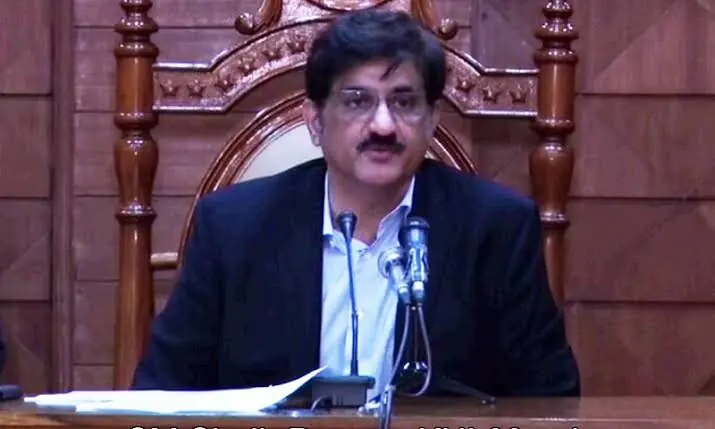
KARACHI: Sindh Chief Minister Syed Murad Ali Shah on Wednesday reviewed the progress against poliovirus, noting that Sindh had reduced its polio burden from 23 cases in 2024 and nine in 2025 to just one case so far in 2026. However, environmental surveillance showed that the virus is still present in a few high-risk areas.
Chairing a meeting of the Provincial Task Force (PTF) on Polio Eradication, the CM reaffirmed the government’s commitment to eliminating the disease and directed authorities to intensify vaccination, surveillance and community engagement efforts ahead of the September 21-27 Sub-National Immunisation Days (SNIDs) campaign.
“The progress achieved by Sindh is encouraging and reflects the hard work of our health workers, district administrations and partner organisations, but our mission will only be completed when every child is protected, and the virus is eliminated from every district,” said Murad Ali Shah.
“No child should remain unvaccinated due to negligence, weak supervision or lack of follow-up.”
Reviews preparations for week-long campaign beginning on 21st
The meeting, held at CM House, was attended by Health Minister Dr Azra Fazal Pechuho, chief secretary Asif Hyder Shah, Mayor of Karachi Murtaza Wahab, IG Police Sindh Javed Alam Odho, commissioner of Karachi Hassan Naqvi, provincial secretaries, provincial coordinator of Emergency Operations Centre (EOC) Shaharyar Gul, Sindh government partners, and deputy commissioners. From other districts, commissioners, DIGs, deputy commissioners and SSPs participated via video link.
Briefing the meeting, Health Minister Dr Azra Fazal Pechuho said Pakistan’s wild poliovirus (WPV1) cases have declined sharply from 74 in 2024 to 31 in 2025 and only three so far in 2026. Sindh has recorded a single case this year, reported from Sujawal on February 10, compared to nine cases last year and 23 in 2024.
In-charge of EOC Shaharyar Gul informed the chief minister that environmental surveillance data shows a significant reduction in virus circulation across the province. The number of positive environmental surveillance sites has fallen from a peak of 29 in March 2025 to only five in August 2026. Outside Karachi, all 14 surveillance sites are currently negative, while six of Karachi’s 15 sites remain positive, indicating that transmission is increasingly confined to limited pockets of the city.
The meeting participants were told that the absence of confirmed polio cases in Karachi during the 2025 high-transmission season, despite some positive environmental samples, reflects stronger population immunity achieved through routine immunisation and repeated vaccination campaigns.
Chief secretary Asif Hyder Shah said that sustained immunisation efforts have helped prevent clinical cases even where environmental surveillance continues to detect virus circulation.
Expressing satisfaction over the declining trend, the chief minister directed all commissioners, deputy commissioners and district health authorities to adopt a zero-tolerance approach towards missed children, refusals and operational gaps.
Reviewing surveillance findings, he ordered intensified vaccination and monitoring efforts in Karachi and other identified high-risk areas, full implementation of the Karachi Action Plan 2.0, stronger coordination among district administrations and health authorities, closer monitoring of migrant and mobile populations and improved routine immunisation coverage in underserved communities.
EOC coordinator Shaharyar Gul reported that nearly three million oral polio vaccine (OPV) doses and 2.89 million booster doses were administered in Karachi, while campaigns in other divisions delivered approximately 2.7 million OPV doses and 2.58 million booster doses. Expanded-age vaccination strategies helped reach older children through schools and community-based interventions.
The chief minister appreciated the efforts of frontline workers, teachers, community mobilisers and health staff working in remote and hard-to-reach areas, describing them as the backbone of the eradication programme.
The task force was informed that after the July 2026 SNIDs campaign, a special 10-day follow-up drive was launched to vaccinate children who had initially been missed. Of 146,149 missed children, more than 23,500 were subsequently vaccinated through targeted efforts focused on refusals and unavailable children.
Mr Shah directed district administrations to further reduce refusal rates through stronger community engagement and public awareness campaigns, emphasising that building trust with parents remains critical to the success of the programme.
The meeting reviewed preparations for the September 21-27 SNIDs campaign, during which nearly 10 million children under five will be vaccinated across Sindh. The campaign will cover 23 full districts and selected union councils in seven partial districts, with more than 80,000 frontline workers participating.
Officials said over 26,000 police personnel have been assigned security duties. The chief minister reiterated the provincial government’s financial support for the campaign and noted that incentives for frontline workers had been increased by 28 per cent.
He directed all districts to complete remaining preparedness measures, including vaccine supply, logistics, workforce deployment and supervision arrangements, before the campaign begins.
The chief minister also reviewed campaign quality indicators and was informed that Sindh has continued to maintain strong performance standards while pursuing key reforms in routine immunisation, surveillance, staffing and community engagement.
Published in Dawn, September 17th, 2026
• Petroleum dealers lament lack of clarity on payment mechanism, timeline
• PM wants facilitation desks to help people trying to buy subsidised fuel
• Ogra attributes hike to elevated crude prices despite decline in int’l rates
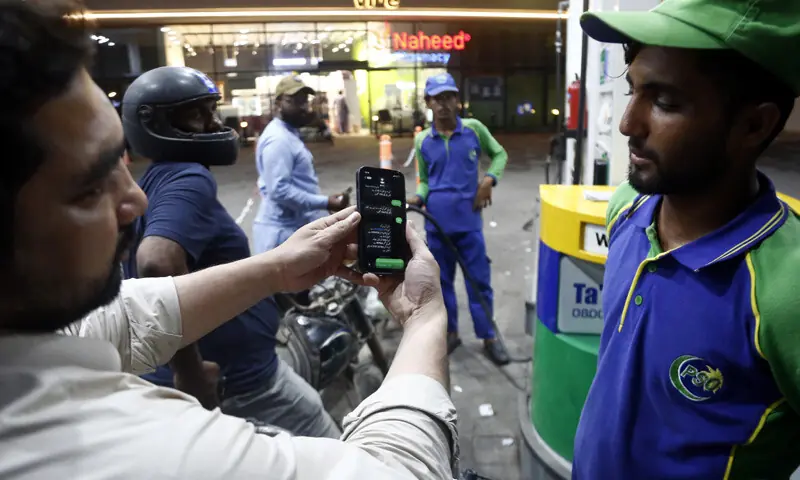
ISLAMABAD: Even as members of the public who have signed up for the PM’s Fuel Relief Scheme queued up at fuel pumps late on Wednesday night, petroleum dealers were still not clear about the mechanism whereby they would be compensated.
The concern was voiced by the Pakistan Petroleum Dealers Association (PPDA) during a presser in Karachi, where its chairman Malik Khuda Bakhsh said that no fuel pump could afford to bear a loss of Rs100 per litre without clarity on how they will be compensated.
He claimed that between the petroleum ministry, Oil and Gas Regulatory Authority (Ogra) and even the finance ministry, no one had been able to answer their questions.
“Officials from Ogra and oil marketing companies say that the petroleum ministry will possibly pay the subsidy amount, whereas ministry officials maintain that payments will be made by the finance ministry, while finance ministry officials assure us that the State Bank will release the funds in a day or two,“ Mr Bakhsh added.
A day earlier, the National Steering Committee on Fuel Subsidy — chaired by Deputy PM Ishaq Dar — had ordered that payments to fuel stations under the PM’s scheme be processed within 24 hours through the State Bank of Pakistan.
However, Mr Bakhsh said the federal government had assured dealers that they would be taken into confidence before the launch of the fuel relief package, but lamented that no such consultation took place.
”The government has to understand that if payments are not reimbursed in time, many dealers will stop participating in [the scheme], as many previous promises were also not fulfilled by the government,” he added.
PPDA Vice Chairman Tariq Hassan said that around 14,000 dealers across the country have been trying desperately to contact the government over the past three days, adding that whenever Islamabad wants to enforce something, it stops communication.
Another vice chairman, Anwar Kamal, said that if the scheme was to be successful, the government must negotiate with dealers, adding that dealers could not afford to have billions tied up for a long period under this scheme.
Mr Bakhsh later told Dawn they had been invited to a virtual meeting with the relevant federal secretary on Thursday morning.
He added that Ogra officials had also reached out to brief him, but he had asked for that information in writing, so he could relay that to the members of his association.
Facilitation desks
Earlier, Prime Minister Shehbaz Sharif ordered authorities to set up facilitation desks comprising administration officials, volunteers and petrol pump staff to assist citizens in easily obtaining fuel subsidy under the special relief scheme, which was rolled out across the country at Wednesday midnight, following the launch of the pilot phase in Islamabad.
Presiding over a meeting to review progress on the scheme, PM Shehbaz directed that personnel deployed at the facilitation desks should guide eligible citizens and provide them with all possible assistance in registration and other necessary procedures.
The prime minister also asked the relevant authorities to remain proactive in creating public awareness about the scheme, which will benefit people from all four provinces, Azad Jammu and Kashmir and Gilgit-Baltistan.
The meeting was informed that the scheme had been designed in a simple and easy-to-understand manner for the public. Only four pieces of information were required for registration: the applicant’s CNIC number, vehicle number plate, province of registration and vehicle registration date.
According to an official, the number of successful registrations was gradually rising, while provincial governments were extending “full cooperation” for nationwide implementation of the scheme.
Oil prices
Meanwhile, notifying fresh POL rates on Wednesday night, Ogra attributed the steep hikes to elevated international crude oil and petroleum product prices.
The price of high-speed diesel was increased by Rs5.62 per litre to Rs421.45, while petrol became costlier by Rs6.88 per litre, taking its new price to Rs391.22 per litre.
Brent crude futures fell $2.92, or 2.7 per cent, to settle at $105.83 a barrel. US West Texas Intermediate futures fell $3.40, or 3.2pc, to close at $102.43, Reuters reported.
Saudi Arabia is offering more loadings of crude oil to Asian refiners via ship-to-ship transfers off Oman’s Sohar port, people familiar with the matter said, blunting some of the hit to global supply from attacks on the country’s East-West pipeline to the Red Sea.
Oil prices had gained more than $3 in the previous session after shipping industry sources said crude loadings at Saudi Arabia’s Red Sea export hub of Yanbu had been suspended and Riyadh had cancelled some cargo deliveries to European customers.
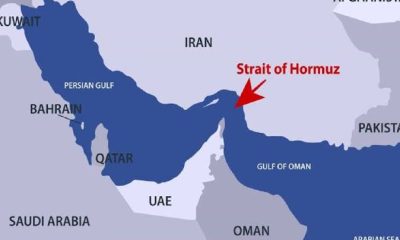
The suspension followed strikes on the East-West pipeline, which feeds the Saudi port of Yanbu. It became the main Saudi outlet for oil exports after Iran began blockading the Strait of Hormuz after US and Israeli attacks on the country.
Published in Dawn, September 17th, 2026
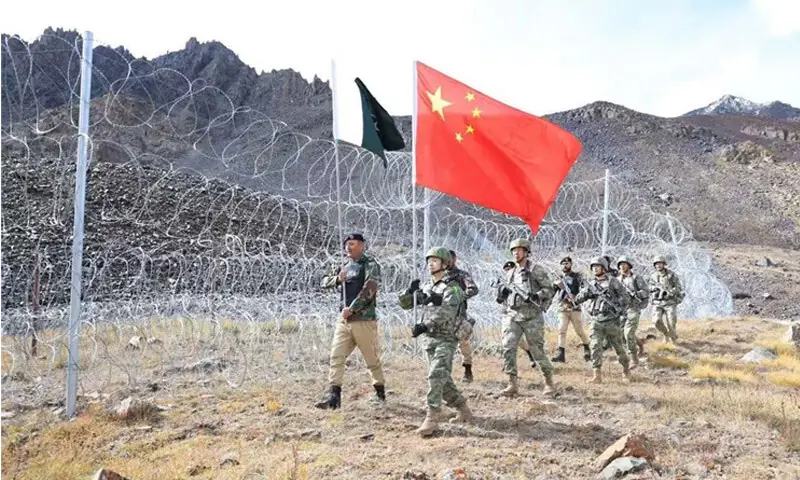
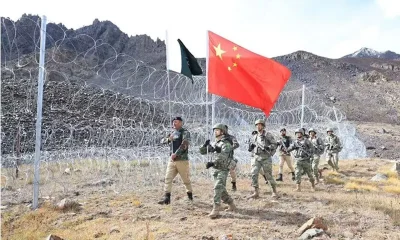
ISLAMABAD: Pakistan and China on Wednesday operationalised a long pending joint mechanism for managing their common border, with Islamabad describing the move as a significant milestone in bilateral relations and a step toward closer coordination on border management, trade and cross-border connectivity.
“The inaugural meeting of the Commission was held at the Ministry of Foreign Affairs in Islamabad,” the Foreign Office said in a statement.
The meeting was co-led by Li Ya, deputy director general of the Department of Boundary and Ocean Affairs at China’s Ministry of Foreign Affairs, and Bilal Mahmood Chaudhary, director general for China at Pakistan’s Foreign Office.
The FO described the operationalisation of the Pakistan-China Boundary Joint Commission as a “significant milestone for Pakistan-China relations”, saying it would set “the stage for enhanced cooperation in border management, joint border surveys, trade flows and people to people connectivity.”
The commission has its origins in the 2013 Agreement on the Boundary Management System signed during the visit of then Chinese Premier Li Keqiang to Islamabad. Article 45 of the agreement provides for establishment of the joint commission to oversee implementation of the border management arrangements.
The mechanism would provide an institutional framework for dealing with practical issues along the border, including maintenance and inspection of the boundary, joint surveys, boundary marker issues, management of cross-border facilities and handling of incidents involving the border.
Its activation also gives the two countries a mechanism for regular coordination on a border that is important for movement between Pakistan and China, including through the Khunjerab crossing, and for trade and connectivity linked to the China-Pakistan Economic Corridor (CPEC).
The new commission is distinct from the Joint Boundary Demarcation Commission that was established under the Sino-Pakistan Boundary Agreement of March 2, 1963. The earlier commission had a specific and essentially one time mandate to conduct surveys, establish boundary markers, prepare detailed maps and set out the alignment of the boundary.
Its work ended after the signing of the protocol and maps completing the demarcation process. The 1963 agreement was signed in Beijing by then-Pakistani foreign minister Zulfikar Ali Bhutto and his Chinese counterpart Chen Yi.
It also provided that, following a settlement of the Kashmir dispute between Pakistan and India, the relevant sovereign authority would reopen negotiations with China on the boundary.
The 2013 agreement, by contrast, established a continuing system for managing the already demarcated boundary, including provisions for dealing with boundary markers and cross-border infrastructure. The agreement says that if a marker cannot be restored at its original location, the joint commission can determine another suitable location, provided the boundary line itself is not altered.
India, which disputes the validity of the 1963 agreement and regards the territory covered by it as part of Occupied Jammu and Kashmir and Ladakh, rejected the new mechanism.
“We have seen reports in this regard. Our position on this matter is clear and consistent. There is no boundary between Pakistan and China. We reject the so-called Joint Commission, which is without any legal basis,” Indian Foreign Ministry spokesman Randhir Jaiswal said.
For Pakistan and China, however, the commission provides a new institutional arrangement for managing their border relationship and dealing with practical issues that have emerged since the 2013 agreement, while leaving the broader territorial positions of the parties unchanged.
Published in Dawn, September 17th, 2026


CM Murad asks authorities to boost polio vaccination across Sindh

Dealers await answers as fuel subsidy rollout begins

Islamabad, Beijing activate joint border commission


-
 Sports3 months ago
South Korea’s Yoo Useong Steps Onto the Global Strongman Stage as World Strongman Federation Professional Athlete
-

 Art & Culture1 year ago
A Survey of Mata-E-Zeest
-

 Europe News2 years ago
Chaos and unproven theories surround Tates’ release from Romania
-

 American News2 years ago
Trump expands exemptions from Canada and Mexico tariffs
-

 American News2 years ago
Trump Expels Zelensky from the White House
-

 Art & Culture2 years ago
Will Snow White be a ‘victim of its moment’? How the Disney remake became 2025’s most divisive film
-

 Entertainment2 years ago
Champions Trophy: Pakistan aim to defend coveted title as historic tournament kicks off today
-

 Pakistan News1 year ago
Comprehensive Analysis Report-The Faranian National Conference on Maritime Affairs-By Kashif Firaz Ahmed