
Pakistan News
Modi Reemerges: Humbled, Hurt, and Unreformed


Paris (Imran Y. CHOUDHRY) :- Former Press Secretary to the President, Former Press Minister to the Embassy of Pakistan to France, Former MD, SRBC Mr. Qamar Bashir analysis : When tragedy struck in Pahalgam on April 22, Prime Minister Narendra Modi seized the moment—not for justice or truth, but for electoral gain. Assuming the roles of victim, judge, and executioner, Modi promptly blamed Pakistan without investigation, forensic inquiry, or evidence. In doing so, he shielded India’s bloated security establishment from scrutiny and used the incident to ignite nationalist passions just ahead of elections.
On May 12, in his first national address since the escalation began, Modi resurfaced to glorify “Operation Sindoor” as a surgical strike on terror. He painted a picture of technological precision, national unity, and decisive leadership. He boasted of eliminating over 100 terrorists and destroying terror camps in Bahawalpur and Muridke, celebrating India’s new doctrine of proactive defense. But the actual events bore little resemblance to this narrative.
Modi claimed that Operation Sindoor had carved a new benchmark in India’s fight against terror, framing it as a new normal. What he didn’t admit was the colossal failure of India’s intelligence and defense apparatus, and the devastating retaliation India faced from a militarily and economically smaller Pakistan. Instead of acknowledging the risks he plunged the region into—and the global threat such recklessness posed—he offered a hollow narrative that concealed more than it revealed.
In reality, India’s multi-pronged strikes by air, land, and sea killed no terrorists. They destroyed civilian homes, mosques, and empty fields. No confirmed terrorist casualties were reported. It was a spectacle designed for optics, not justice.
Then came the shock: on the very first day of hostilities, six Indian fighter jets, including three much-hyped Rafales, were downed by Pakistan’s lean but precise Air Force. A smaller, resource-constrained Pakistan had exposed the hollowness of India’s military bravado. Indian forces launched waves of drone and missile strikes, but Pakistan’s air defenses stood firm. Retaliatory strikes by Pakistan targeted and damaged Indian military infrastructure, shaking the very myth of India’s invincibility.
Between his lines, Modi hinted at the scale of Pakistan’s retaliation. He admitted that Pakistani forces struck military bases, schools, temples, gurdwaras, and other sites—though framed them as attacks on civilians. He emphasized that India’s air defenses shot down Pakistani drones and missiles, but these assertions rang hollow against the verified losses and visible destruction within Indian territory.
What he deliberately omitted was the fact that several Indian missiles misfired and landed within Indian-administered Kashmir and East Punjab, killing and maiming civilians—a damning failure of India’s command and control systems.
Crucially, Modi ignored how India had to turn to Turkey, Iran, Saudi Arabia, and the United States to plead for de-escalation. While portraying Pakistan as the one seeking ceasefire, it was India—bloodied and embarrassed—that sought mediation. Modi attempted to mask this diplomatic retreat by saying it was Pakistan that “contacted our DGMO” and “begged for peace,” but the timeline and international reports suggested otherwise.
From May 5 to May 10, the Prime Minister vanished from public view. In those tense days of peak escalation, Modi chose silence. His disappearance was not tactical restraint but a tacit admission of miscalculation. When he finally returned to deliver his May 12 speech, it was less a declaration of victory and more an exercise in damage control.
His rhetoric turned to nuclear threats and pseudo-moral posturing. He vowed to respond to future attacks on Indian terms, claimed that India would no longer tolerate nuclear blackmail, and blurred the lines between governments and terrorists. He decried Pakistani officers for offering funeral prayers for those killed, presenting it as evidence of state-sponsored terrorism. Yet, the speech revealed more desperation than dominance.
He further championed India’s “Made in India” weapons and New Age Warfare capabilities, asserting that the operation validated indigenous defense manufacturing. However, it was evident to the world that India’s weaponry failed to protect its skies or maintain strategic superiority. Most ironically, some of those weapons malfunctioned and fell on Indian soil—a bitter embarrassment Modi dared not mention.
Perhaps the most overlooked and revolutionary aspect of this confrontation was Pakistan’s demonstration of indigenously developed soft warfare capabilities. Pakistan showcased its ability to launch effective cyberattacks, disrupt unmanned aerial vehicles midair, and induce critical errors in India’s missile command and control systems. Using precision electronic warfare tools, Pakistan successfully diverted, reprogrammed, and redirected multiple Indian missiles midflight, neutralizing their threat without conventional interception. Moreover, it identified and targeted high-value military assets in real time using its sophisticated soft skills architecture.
This capability—honed quietly over years—has now catapulted Pakistan into the ranks of countries mastering the next-generation battlefield. It may well be the first nation to have demonstrated such multi-domain, integrated, soft offensive capabilities in a live conflict. These assets played a decisive role in establishing Pakistan’s air, land, and sea superiority during the conflict, negating India’s numerical and technological advantages.
One particularly dangerous narrative that Modi had often championed before this conflict—the threat to divert rivers flowing from India into Pakistan—has now been permanently shelved. The harsh lesson taught by Pakistan during this war has ensured that weaponizing water will remain a non-option. The idea of choking Pakistan’s lifeline has backfired, permanently.
Despite his thunderous declarations, Modi could not undo the most significant outcome of this conflict: the re-internationalization of the Kashmir issue. For years, India had worked to suppress international discourse on Kashmir. But now, thanks to its own aggression, Pakistan gained sympathy, legitimacy, and diplomatic traction. U.S. President Donald Trump once again offered mediation, forcing India to confront the very topic it sought to bury.
Operation Sindoor, contrary to Modi’s celebratory framing, will be remembered not as a triumph but as a strategic blunder. It exposed the limitations of India’s military, the hollowness of its regional hegemony claims, and the perils of using warfare as an electoral tool.
India’s dream of uncontested regional supremacy has been reduced to rubble. Its myth of military superiority lies shattered. The chest-thumping nationalism that sought to project dominance has instead exposed deep vulnerabilities. From this humiliation, India may take years to recover—if at all. For now, the illusion of the subcontinent’s sole superpower has gone up in smoke, replaced by wreckage, remorse, and rhetorical retreat.







Pakistan News
CELEBRATES PAKISTAN’S 79TH INDEPENDENCE DAY AND 150TH BIRTH ANNIVERSARY OF QUAID-E-AZAM MOHAMMAD ALI JINNAH IN FRANCE
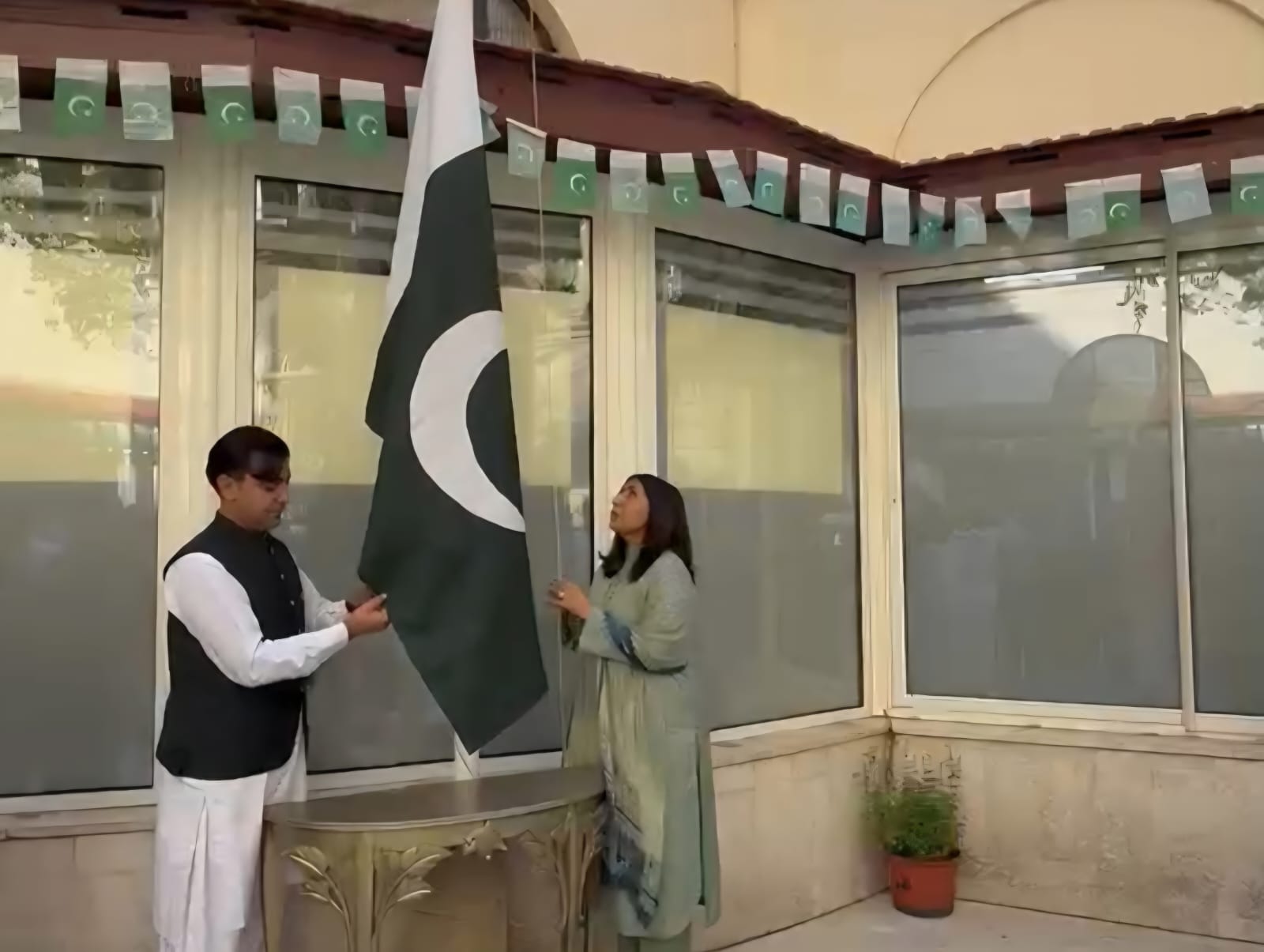
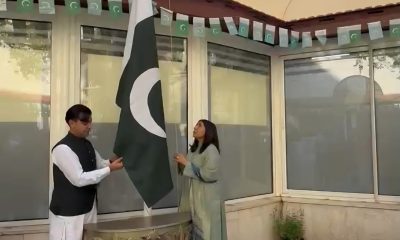
Paris ( Imran Y. CHOUDHRY):- On the occasion of the 79th Independence Day of Pakistan, Ambassador Mumtaz Zahra Baloch hoisted national flag to the tune of the national anthem at the Embassy of Pakistan, Paris and welcomed distinguished members of the Pakistani community including large number of children.
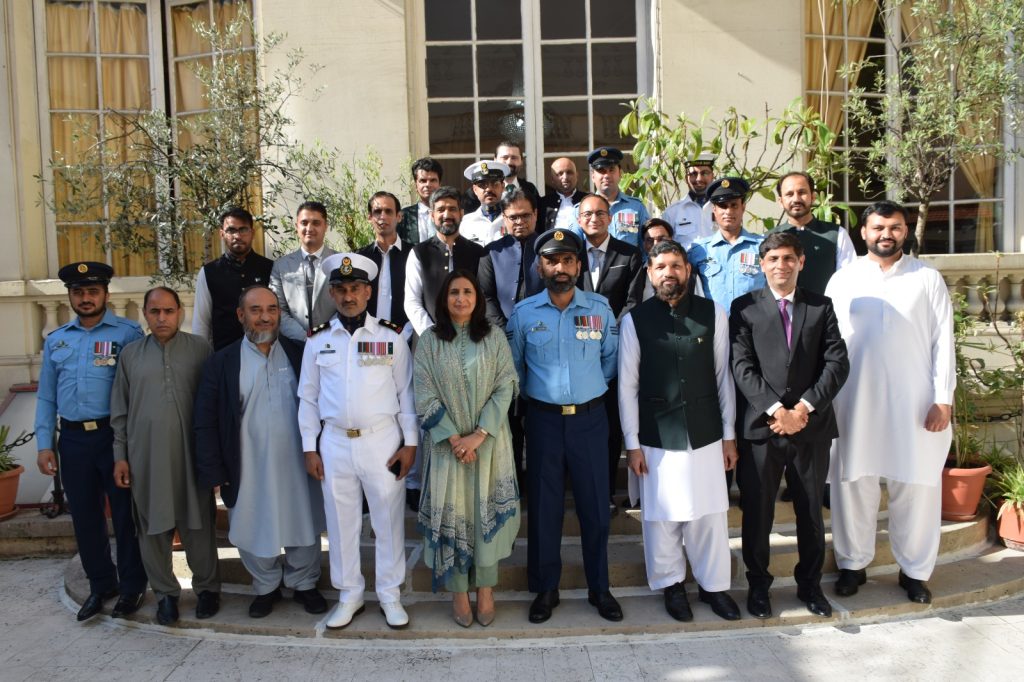
Messages of the President, the Prime Minister and Foreign Minister of Pakistan were read out on the occasion.
Congratulating all on the Independence Day, the Ambassador said that 14th August was truly auspicious as it brought together the entire nation – in celebration, in paying homage to the Quaid-e-Azam and other leaders of the freedom movement, in remembrance of the supreme sacrifices of our forefathers and drawing inspiration from our glorious past and the tremendous achievements over the decades.
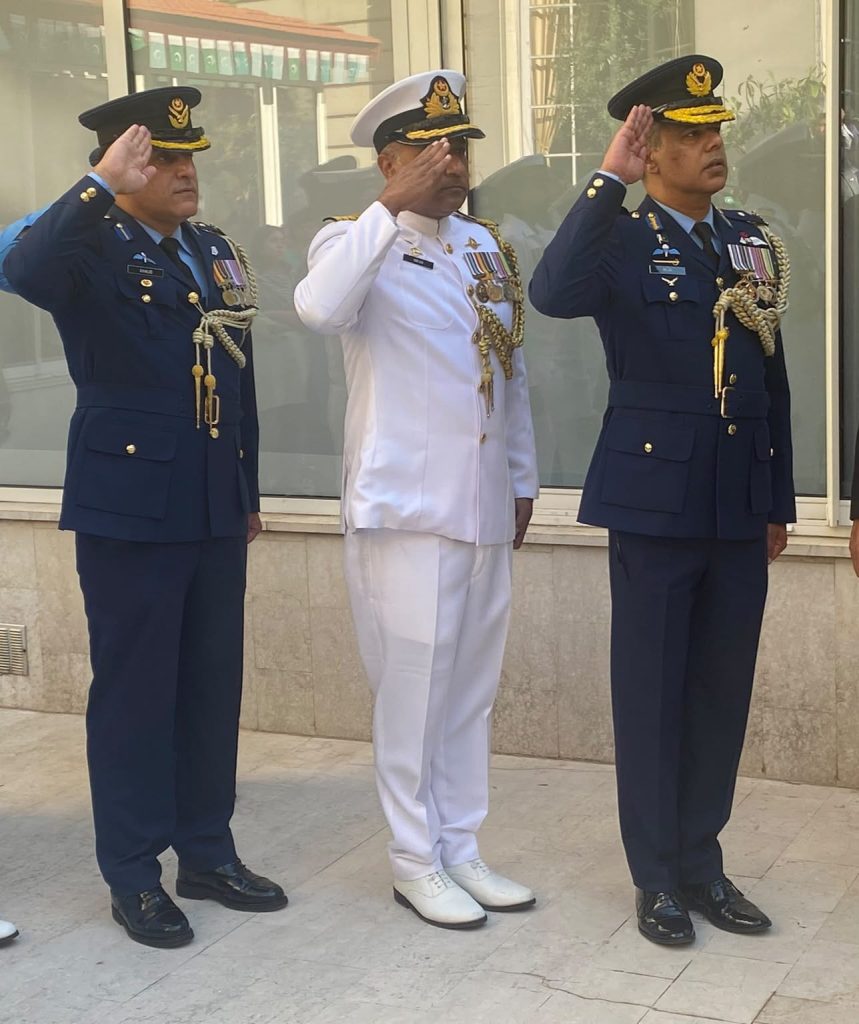
The Government of Pakistan is observing the current year – 2026 – as the “Year of Quaid-e-Azam Muhammad Ali Jinnah” to mark his 150th birth anniversary, she added. The great intellectual vision of Quaid requires the nation to uphold his principles and play its due role in the development and progress of Pakistan. The Ambassador highlighted that Quaid-e-Azam had given the nation three golden principles, faith, unity and discipline and adherence to these principles would lead the nation towards a bright future for the generations to come.
Ambassador Baloch said that as we celebrate our freedom we should remember our Kashmiri and Palestinian brothers and sisters, who have been struggling for over seven decades for their freedom and right to self-determination. She reaffirmed Pakistan’s political and diplomatic support to the people of the Indian Illegally Occupied Jammu and Kashmir (IIOJK) and Palestine for their legitimate rights.
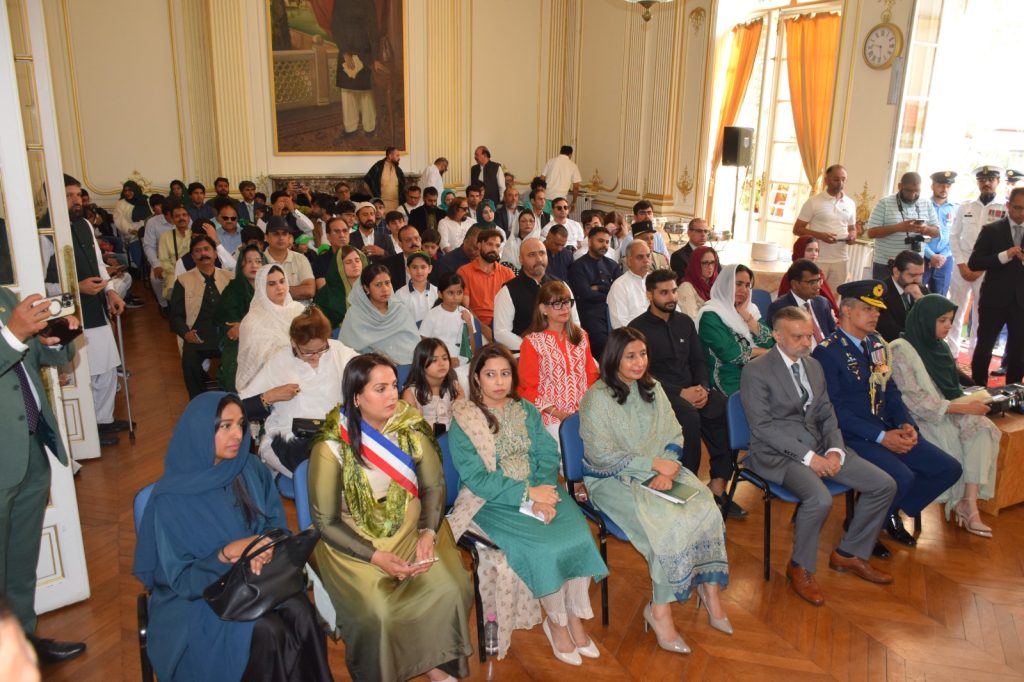
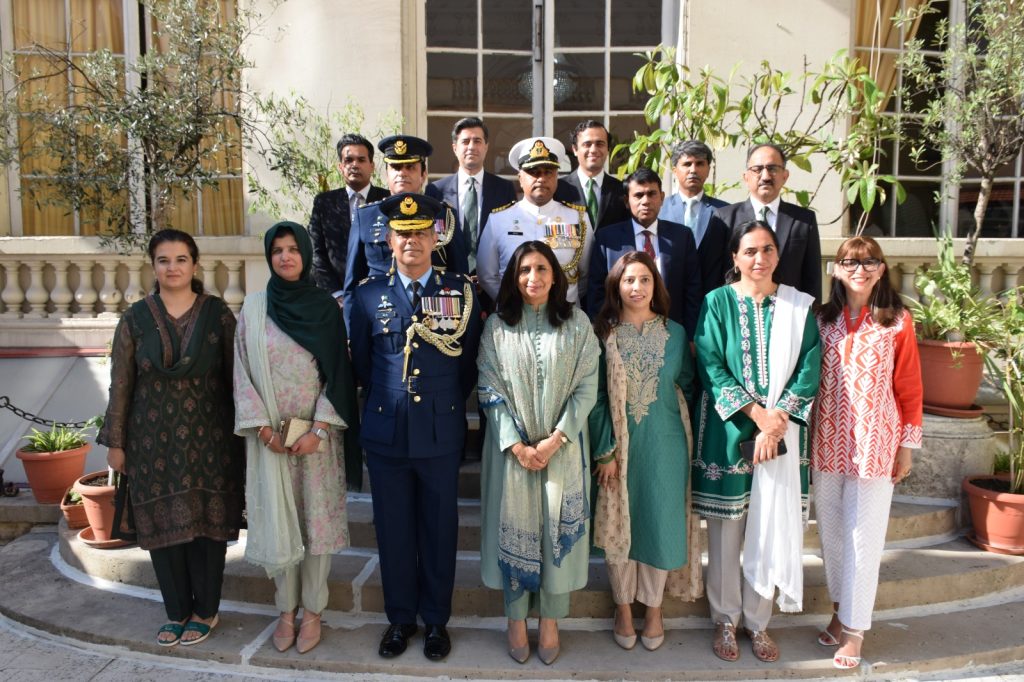
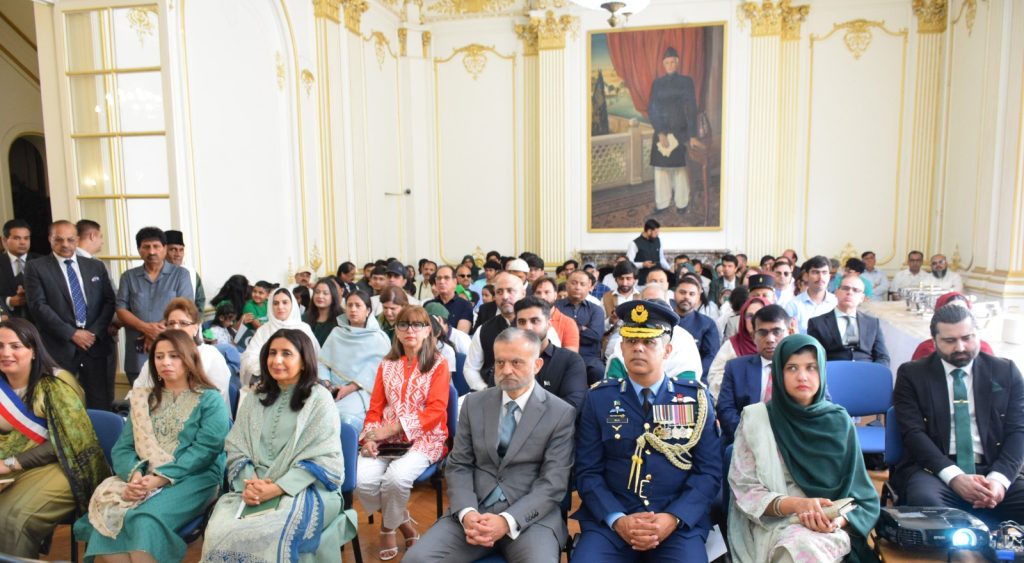
Ambassador also appreciated the contributions of Pakistani diaspora in France in promoting Pakistan-France relations. She reiterated Embassy’s fully commitment to continue to facilitate Pakistanis based in France.
Later, the Ambassador inaugurated the ‘historic photo exhibition’ based on the life and works of Quaid-e-Azam Muhammad Ali Jinnah at the Embassy. The exhibition showcased a remarkable collection of
archival records and photographs chronicling the visionary leadership and enduring
legacy of the founder of Pakistan. The guests especially the children took a keen interest in the exhibition and raised slogans of Pakistan Zindabad.
Pakistan News
Pakistan PUBG MOBILE team ‘4Thrives’ visited the Embassy of Pakistan in Paris, France.
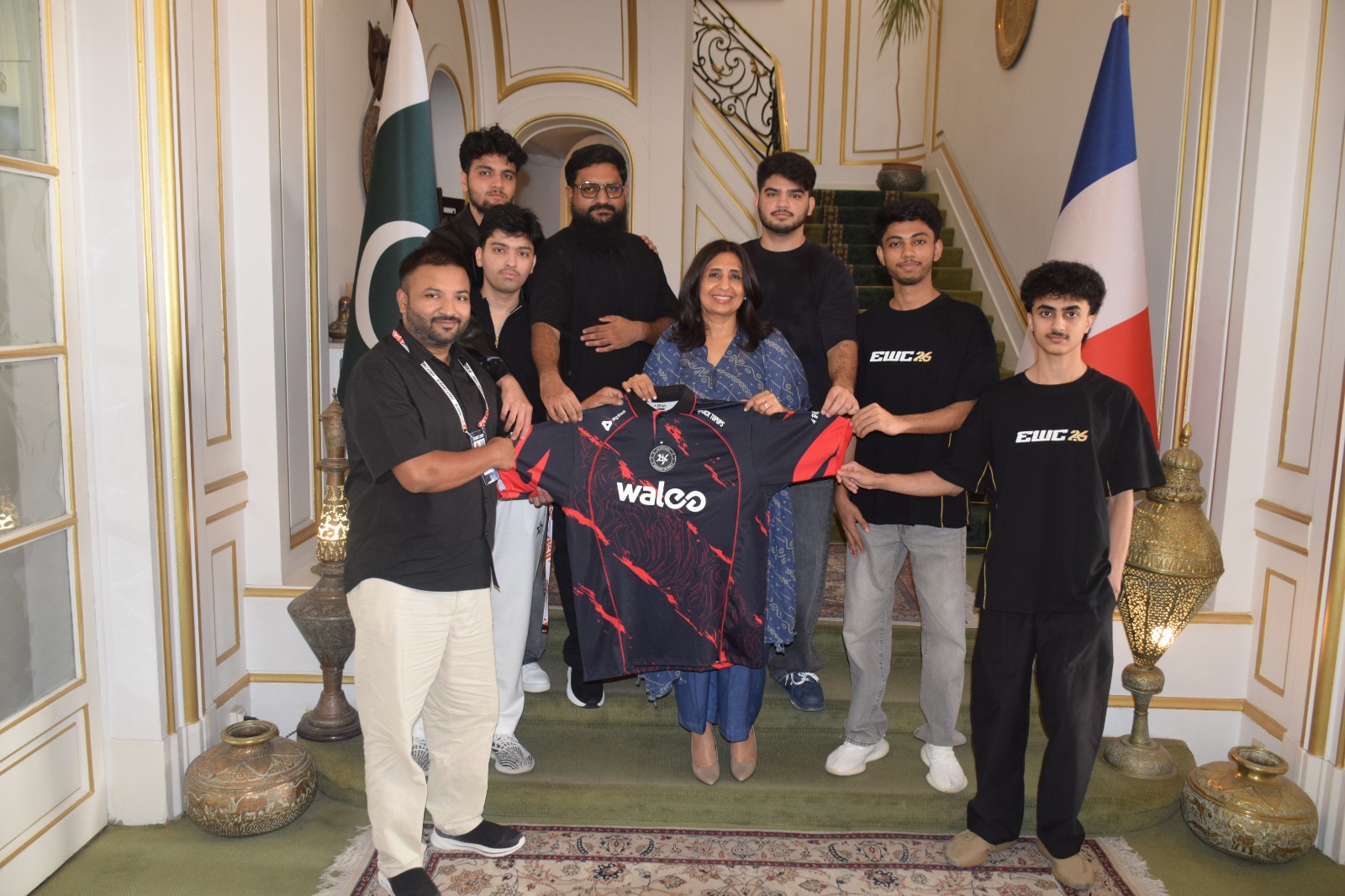
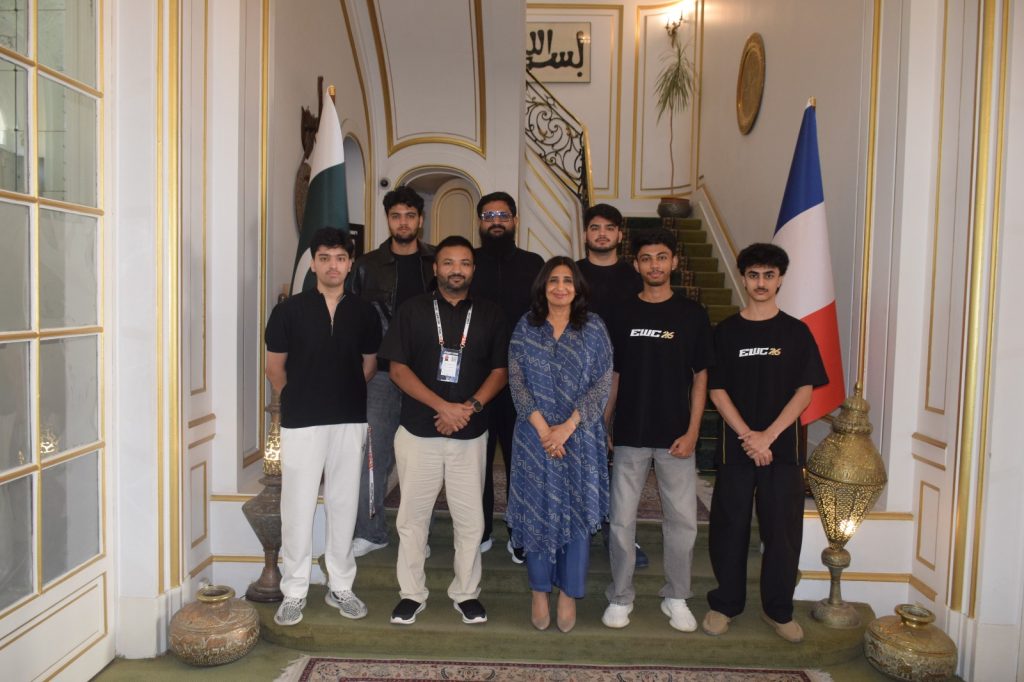
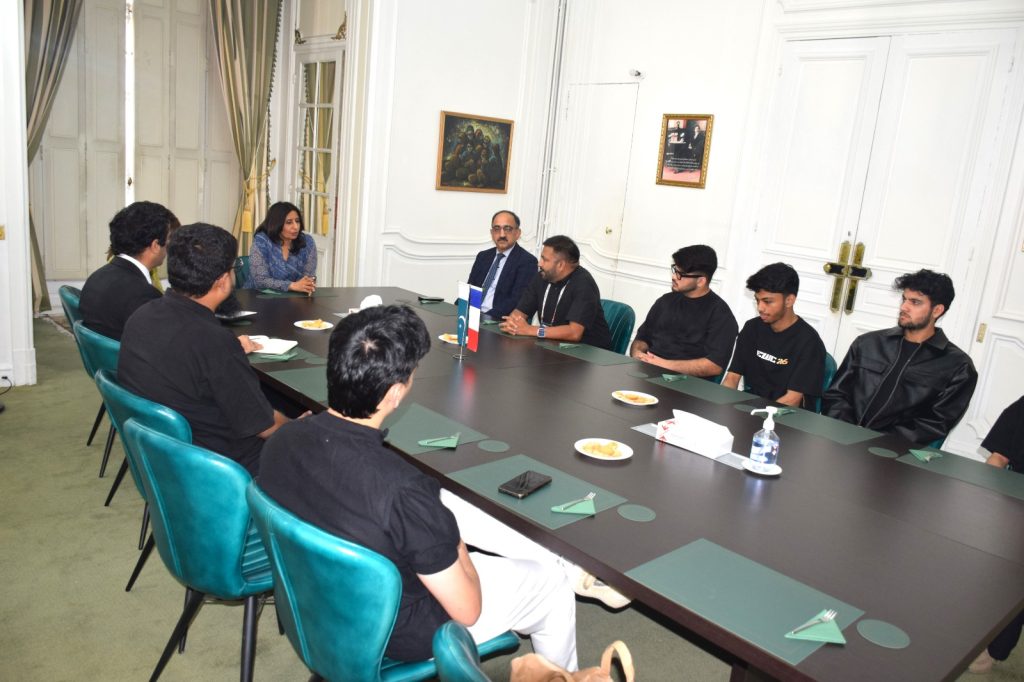
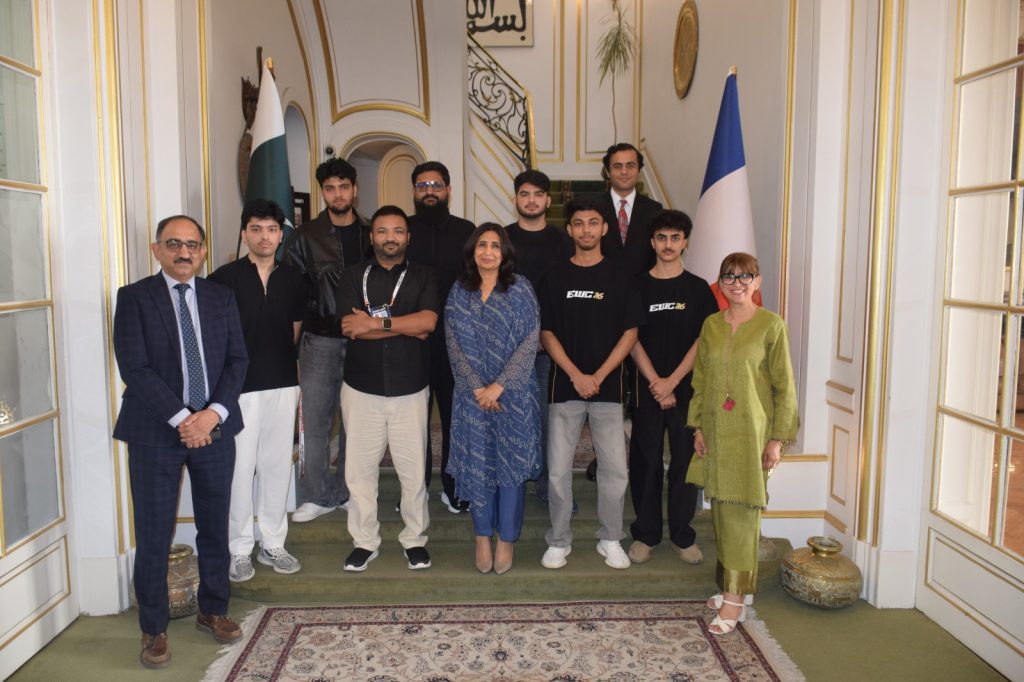
Paris ( Imran Y. CHOUDHRY):- Ambassador Mumtaz Zahra Baloch today received the top professional Pakistan PUBG MOBILE team ‘4Thrives’, which is competing in the high-stakes competition, PUBG MOBILE World Cup 2026 Grand Finals at the Esports World Cup (EWC) being held in Paris.
The team members of ‘4Thrives’ briefed the Ambassador on the game and the hard work they all had put in to finish at the top of the qualifying round and reaching the Grand Finals. They were enthusiastic about their performance which has cemented their position among the world’s best PUBG MOBILE teams.
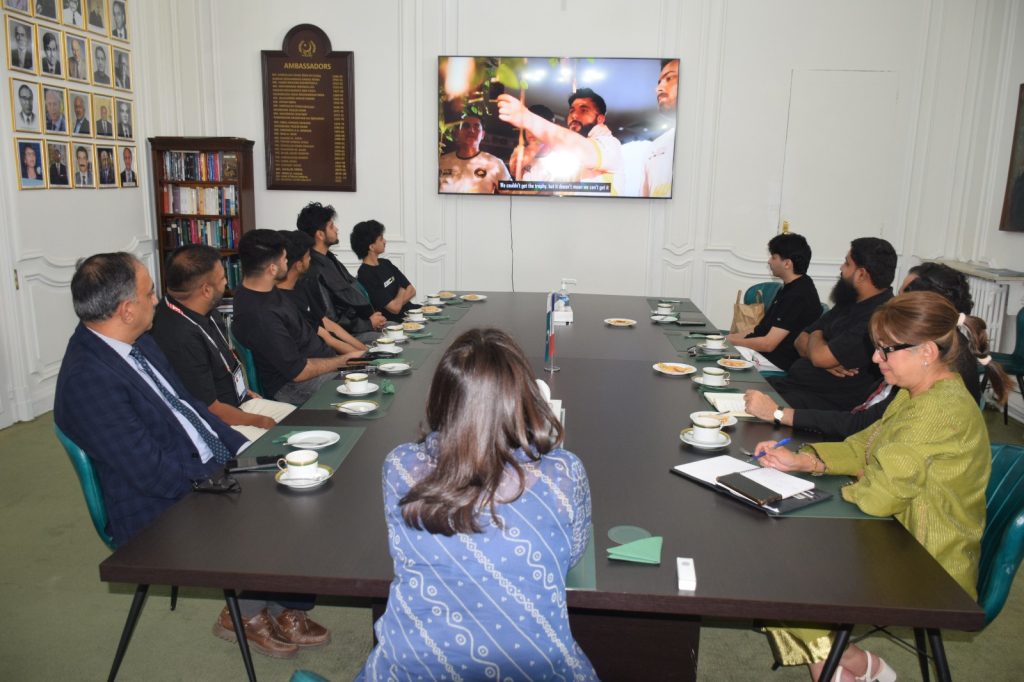
The Ambassador appreciated the team members for their enthusiastic participation and accomplishments and wished them success for the Grand Finals. She said the Pakistani nation has proudly witnessed the recent achievements of the 4Thrives team and expressed confidence that it would win the prestigious trophy in Paris as well.
This is the first time that EWC is being held in Paris – a true global phenomenon represented by more than 2,000 players from 200 clubs and 100 different countries.
Let’s celebrate and cheer Pakistan PUBG MOBILE team ‘4Thrives’ for the Grand Finals this week!

Paris (Imran Y. CHOUDHRY) :- Former Press Secretary to the President, Former Press Minister to the Embassy of Pakistan to France, Former MD, SRBC Mr. Qamar Bashir analysis : The Mecca Joint Defence Agreement signed by Saudi Arabia, Türkiye and Pakistan is being described as a Muslim version of NATO. Turkish Foreign Minister Hakan Fidan himself said its collective-defence clause is technically similar to NATO’s Article 5: an armed attack on one member will be treated as an attack on all. Yet most commentary has concentrated on the pact’s wording, its possible expansion and whether it is aimed at Iran or Israel. The more important question has received less attention: what threat does each signatory actually perceive?
Without answering that question, analysis of the agreement remains incomplete. Alliances do not acquire meaning merely from ceremonial signatures. Their real character is determined by the dangers their members fear, the capabilities they contribute and the circumstances in which they are prepared to act.
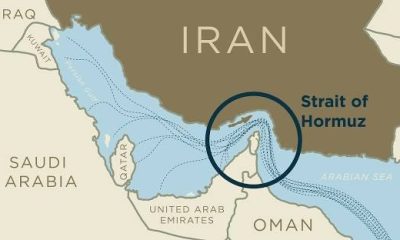
For Saudi Arabia, the immediate security environment is deeply paradoxical. The kingdom has long relied upon the United States, but the presence of American forces and facilities across the Gulf can also attract retaliation whenever Washington uses regional territory or infrastructure in military operations against Iran.
Tehran has repeatedly maintained that its quarrel is not with Gulf societies as such, but with military threats launched from or supported through their territories. Whether one accepts Iran’s justification or not, the underlying dilemma is real: foreign protection can simultaneously become a source of exposure.
This raises a difficult question. If foreign bases had not facilitated attacks against Iran, would Tehran have attacked Gulf countries on the same scale? The answer cannot be proven, but the question exposes Saudi Arabia’s strategic vulnerability. Riyadh wants protection without remaining permanently hostage to decisions made by an external guarantor.
Threats from the Houthis in Yemen and Iran-aligned armed groups in Iraq remain serious, particularly for oil facilities, desalination plants, shipping and civilian infrastructure. Nevertheless, Saudi Arabia has spent heavily on modern aircraft, missiles, surveillance systems and air defence. These dangers alone do not fully explain the need for an Article 5-style pact with Türkiye and nuclear-armed Pakistan.
The wider concern is Israel’s expanding military reach and the fear that no regional state can assume it will remain permanently outside Israeli calculations. The “Greater Israel” project is not merely a slogan invented by Israel’s critics. It is a documented ideological and political current rooted in expansionist interpretations of biblical territory, including the most extreme vision of land stretching from the Nile to the Euphrates, and in revisionist Zionist ideas of sovereignty on both sides of the Jordan River.
Israel’s wars and military operations across Gaza, Lebanon, Syria and elsewhere have intensified regional fears that its use of force and territorial ambitions are becoming geographically unconstrained. Because the most expansive interpretation of Greater Israel encompasses territory belonging to several Arab states, including Saudi Arabia, Riyadh has legitimate reasons to treat this ideology and Israel’s growing regional reach as a long-term strategic threat.
The Mecca agreement therefore creates strategic depth, reduces Saudi Arabia’s exclusive dependence on Washington and strengthens the kingdom’s leadership position in the Muslim world.
Türkiye enters the pact with a different threat map. It possesses NATO’s second-largest army, an increasingly sophisticated defence industry, formidable drone capabilities, warship and helicopter production, and substantial operational experience in Syria, Iraq and the eastern Mediterranean.
Kurdish militancy and instability along Türkiye’s southern borders remain persistent threats, but Ankara is largely capable of managing these challenges without Pakistani or Saudi military intervention.
The more consequential concern is Israel. Turkish and Israeli rhetoric has become increasingly hostile, while their strategic interests collide in Syria, Gaza and the broader eastern Mediterranean. Türkiye’s conventional size gives it considerable strength, but Israel is widely understood to possess nuclear weapons, while Türkiye does not. This creates a dangerous asymmetry at the highest level of escalation.
Pakistan’s participation therefore adds deterrent weight, but it is essential not to overstate what has formally been agreed. The published language does not establish an explicit Pakistani nuclear umbrella over Türkiye or Saudi Arabia. Nor does it automatically commit Islamabad to nuclear retaliation.
Its value at this stage lies in strategic ambiguity. Any adversary contemplating extreme escalation must now consider the possibility of a broader response involving a nuclear-armed partner. That uncertainty itself can reinforce deterrence, provided consultation mechanisms, command arrangements and red lines are eventually clarified.
Pakistan’s principal state-based threat remains India. Its other challenges—including attacks linked to the Pakistani Taliban, militancy operating from Afghan territory and insurgency in Balochistan—are grave but fall mainly within the domain of counterterrorism and internal security.
Islamabad has also alleged external support for certain militant networks, including from India and Israel other hostile actors, therefore the possibility of hybrid warfare designed to weaken Pakistan cannot be ignored.
The real test for the pact would come during a future India-Pakistan war. Saudi Arabia enjoys extensive economic and political relations with India, while Türkiye also has interests that extend beyond its partnership with Islamabad. Would Riyadh provide intelligence, logistics, financing, air defence or diplomatic support? Would it risk its relationship with New Delhi?
The treaty’s collective-defence formula is powerful, but it does not necessarily mean that every member must respond identically or automatically declare war. Even NATO’s Article 5 requires each ally to take such action as it considers necessary. The Mecca pact’s credibility will similarly depend on agreed procedures, operational planning, military integration and, above all, political will.
Nor should the alliance be framed as an anti-Iranian “Sunni bloc.” That description is analytically shallow and politically dangerous. It imports a sectarian narrative into an agreement whose signatories explicitly maintain that it is not directed against Iran or any other particular country.
Western and regional media extensively are using the Sunni label as convenient shorthand, but repeating it can deepen the very divisions that have repeatedly weakened the Muslim world. It risks presenting Sunni and Shia states as natural enemies, even though they share geography, economic interests, religious bonds and responsibility for regional stability.
Iran has demonstrated formidable missile, drone and asymmetric capabilities and has proven ability to impose severe costs on the combined military might of both the United States and Israel and their alliance in the Middle East and elsewhere in the entire world.
A confrontation between Iran and the combined forces of Pakistan, Türkiye and Saudi Arabia would devastate the region, rupture trade and energy routes, inflame sectarian tensions and serve none of the four countries.
The rational objective of the Mecca alliance should therefore be deterrence, collective security and strategic autonomy—not the creation of another front in the Iran war.
The wiser long-term course is to keep the pact open and eventually build a structured security dialogue with Iran. Immediate Iranian membership may be politically unrealistic while war and mistrust persist, but inclusion should remain a strategic objective.
Egypt and other regional countries could also participate in a broader security architecture based on non-aggression, collective consultation, protected shipping lanes, economic connectivity and respect for sovereignty.
The three signatories must also wage an intelligent information campaign. Through official statements, diplomatic outreach, legacy media, social platforms and other forms of communication, they should consistently reject the description of the agreement as a “Sunni NATO.”
They should explain that the pact is intended to protect its members from aggression regardless of the aggressor’s religious, sectarian or national identity. It must not be allowed to become an instrument for turning Muslim countries against one another.
The Mecca agreement will become historic only if it does more than redistribute fear. Properly developed, it can reduce dependence on outside powers, deter Israeli or other aggression, give Pakistan additional diplomatic weight and create the nucleus of an inclusive regional security system.
Mishandled as a sectarian coalition, however, it could produce precisely the confrontation it claims to prevent. Its success will therefore be measured not by how many enemies it names, but by how many wars it prevents.


Media As A Bridge between Civilizations

China’s Fusion Breakthrough: Death Knell for the Oil Age

A Nation’s Real Strength Rests in Spirituality, Not Military Might


-
 Sports2 months ago
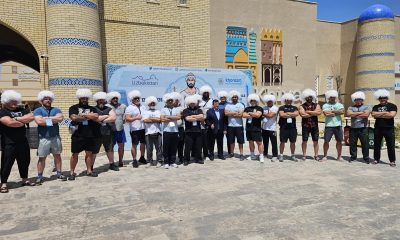
South Korea’s Yoo Useong Steps Onto the Global Strongman Stage as World Strongman Federation Professional Athlete
-

 Art & Culture1 year ago
A Survey of Mata-E-Zeest
-

 Europe News1 year ago
Chaos and unproven theories surround Tates’ release from Romania
-

 American News1 year ago
Trump expands exemptions from Canada and Mexico tariffs
-

 American News1 year ago
Trump Expels Zelensky from the White House
-

 Art & Culture1 year ago
Will Snow White be a ‘victim of its moment’? How the Disney remake became 2025’s most divisive film
-

 Pakistan News1 year ago
Comprehensive Analysis Report-The Faranian National Conference on Maritime Affairs-By Kashif Firaz Ahmed
-

 Entertainment2 years ago
Champions Trophy: Pakistan aim to defend coveted title as historic tournament kicks off today