
Pakistan News
What new changes has the National Assembly made to the 27th Constitutional Amendment bill?


The National Assembly on Wednesday passed the 27th Constitutional Amendment Bill during a ruckus-marred session attended by political heavyweights, including Prime Minister Shehbaz Sharif, PML-N President Nawaz Sharif and PPP Chairman Bilawal Bhutto-Zardari.
The bill was passed by a two-way voting process — voting by division and clause-by-clause voting. Presented in the house for voting by Law Minister Azam Nazeer Tarar, the bill will now be referred back to the Senate for the new amendments to be debated upon again and then will be passed by the upper house.
During the session, Tarar presented a list of amendments to the bill, while also omitting some of the bill’s clauses.
From the law minister’s speech in the National Assembly, the amendments were promulgated mainly to incorporate the newly setup Federal Constitutional Court (FCC) in the scheme of the Constitution and to provide clarity regarding the incumbent and future chief justice of Pakistan (CJP) since the new constitutional court means it will have its own chief justice (CJFCC), along with the chief justice of the Supreme Court (CJSC).
Amendments related to Federal Constitutional Court
Substitution of new Clause 2
The first change pertained to Clause 2 of the 27th Amendment Bill, 2025, which dealt with a change to Article 10(4)(1) of the Constitution (safeguards as to arrest and detention). The relevant section currently says that the CJP will form the review board in a case of someone detained under a federal law.
The amendment sought to insert the words “Supreme Court of” in front of the “chief justice of” to now show that the CJSC would be the one to form the board.
However, the new Clause 2 as per the amendments deals with changes to Article 6’s (high treason) clause 2A, which reads as follows:
An act of high treason mentioned in clause (1) or clause (2) shall not be validated by any court, including the SC and a high court.
In the latest amendment, it was stated that after the word “the”, the words “Federal Constitutional Court” and a comma would be inserted, thus adding the FCC to the list of courts that cannot ratify any act of high treason and placing it before the SC in the listing.
Amendments related to Supreme Court, its chief justice and CJP
Insertion of Clause 2A
Meanwhile, the previous Clause 2 of the bill would now be labelled as Clause 2A.
As explained before, the CJSC will now be the one to form the review board for the case of someone detained under a federal law.
Substitution of Clause 23
Article 176 that deals with the makeup of the SC currently says: “The Supreme Court shall consist of a chief justice to be known as the chief justice of Pakistan and so many other Judges as may be determined by Act of [Majlis-e-Shoora (Parliament)] or, until so determined, as may be fixed by the president.”
The original Clause 23 sought to insert the words “of Supreme Court” after the second mention of “justice”, thus meaning that the apex court would comprise its own chief justice — who would not necessarily be the CJP.
However, the law minister said in his NA speech that confusion had been created about the continuity of the CJP, thus the following new amendment was proposed that includes the original Clause 23 but also adds the following part to the full definition at the end of Article 176:
“For the full stop, at the end, a colon shall be substituted and thereafter the following proviso shall be added, namely: ‘Provided that and notwithstanding anything contained in the Constitution, the incumbent chief justice shall be and continue to be known as the chief justice of Pakistan during his term in office’.”
CJP Yahya Afridi will thus continue to be the country’s chief justice until the end of his term.
Amendment of Clause 56
In the bill, an amendment to Clause 1 of Article 260 (definitions) was proposed, specifically for the definition of the chief justice. The article currently states:
“Chief justice”, in relation to the Supreme Court or a high court, includes the judge for the time being acting as chief justice of the court.
The change (subclause ‘a’ of Clause 56) proposed in the bill sought to add the words “Federal Constitutional Court” to clauses and sub-clauses of Article 260 to incorporate the new court in the framework of the Constitution.
Today’s latest amendment proposed the addition of the following subclause to Clause 56’s subclause ‘a’:
“Chief justice of Pakistan” means the senior amongst the chief justice of the Federal Constitutional Court and the chief justice of Supreme Court.“
Thus, after CJP Afridi’s term comes to an end, the future CJP will be the senior-most judge from the chief justices of the FCC and SC.
Omissions
Omission of Clause 4
Some of the proposed changes in the bill were omitted during the reading, one of which was Clause 4 of the bill.
Clause 4 would amend Article 42 of the Constitution, which reads as follows:
Before entering upon office, the president shall make before the chief justice of Pakistan oath in the form set out in the Third Schedule.
The proposed amendment would have seen the word “Pakistan” replaced with “the Federal Constitutional Court”.
Omission of Clause 19
Clause 19 of the bill proposed an amendment to Article 168 of the Constitution, which mandates that there will be an auditor-general who is appointed by the president. There was meant to be an amendment to Clause 2 of Article 168, which reads as follows:
Before entering upon office, the auditor-general shall make before the chief justice of Pakistan oath in the form set out in the Third Schedule.
The amendment in the bill would insert the words “Supreme Court of” after the words “chief justice of”.
Omission of Clause 51
Clause 51 of the bill proposed an amendment to Article 214 of the Constitution, which states that the chief election commissioner must swear an oath to the chief justice before assuming office, as follows:
Before entering upon office, the commissioner shall make before the chief justice of Pakistan [and a member of the Election Commission shall make before the commissioner] oath in the form set-out in the Third Schedule
The amendment was to replace the word “Pakistan” in the Article with the words “Federal Constitutional Court”.
Omission of Clause 55
Clause 55 of the bill proposed an amendment to Clause 2 of Article 255 (oath of office), which states that if someone cannot take the oath of office before “a specified person”, the chief justice can swear them in, as follows:
Where, under the Constitution, an oath is required to be made before a specified person and, for any reason, it is impracticable for the oath to be made before that person, it may be made before such other person as may be nominated by 3 [the chief justice of a high court, in case of a province and by the chief justice of Pakistan, in all other cases]
The bill proposed an amendment to the second clause of Article 255, substituting the word “Pakistan” with the words “Federal Constitutional Court”.


Paris (Imran Y. CHOUDHRY) :- Former Press Secretary to the President, Former Press Minister to the Embassy of Pakistan to France, Former MD, SRBC Mr. Qamar Bashir analysis : Geopolitics has never been governed by sentiment. Not religion, not shared history, not cultural brotherhood—only interests. The unfolding realignments across South Asia and the Middle East illustrate this truth with striking clarity. Alliances are shifting, rivalries are recalibrating, and Pakistan finds itself increasingly positioned at the intersection of competing strategic designs.
The roots of today’s complexity stretch back to 1979, when the Soviet Union invaded Afghanistan. Pakistan became the frontline state in a U.S.-backed campaign to counter Moscow. Billions of dollars in American and Saudi assistance flowed through intelligence networks to arm and train Afghan fighters. The mobilization of religious ideology was not incidental—it was strategic. Fighters from across the Muslim world converged in Afghanistan. By 1989, the Soviet withdrawal marked a Cold War victory for Washington and its partners.
But militant infrastructures rarely dissolve once their immediate utility ends. The Taliban emerged in the 1990s from the ashes of war, establishing control over Kabul in 1996. Pakistan was among the few nations to recognize their regime. Following the attacks of September 11, 2001, however, the same Taliban became the primary target of American military intervention. The subsequent 20-year war cost over $2 trillion and claimed more than 170,000 lives before the U.S. withdrawal in August 2021.
The Taliban’s return to power reshaped the region yet again. Instead of ushering in stability for Pakistan, however, cross-border militancy intensified. The Tehrik-i-Taliban Pakistan (TTP), operating from Afghan soil, escalated attacks in Khyber Pakhtunkhwa and Balochistan. Islamabad responded with cross-border airstrikes against militant sanctuaries. While tactically decisive, these actions strained relations with Kabul and risked civilian backlash.
Instead, Pakistan with its deep intelligence roots in Afghanistan, had the option to adopt the same tactics which Afghanistan is using by infiltrating Pakistani Taliban in Pakistan and killing innocent people mostly by detonating human bombs in Mosque. This could have been a more discrete way to weed out the menace of TTP. History suggests that purely kinetic responses can produce unintended strategic consequences. Airstrikes may eliminate immediate threats, but they can also deepen mistrust and create diplomatic openings for rival powers.
In geopolitics, tactical victories can sometimes yield strategic setbacks. By intensifying overt military pressure, Islamabad may have inadvertently accelerated Kabul’s search for diversified partnerships.
That diversification is perhaps the most striking development. The Taliban government, ideologically committed to Islamic governance, has increasingly explored diplomatic and economic engagement beyond traditional Islamic partners. India reopened diplomatic channels in Kabul and expanded humanitarian assistance. Israel has pledged billions of dollars of aid to Kabul in alignment with India. This is a profound geopolitical entanglement: an Islamic Emirate seeking expanded engagement with a Hindu-majority India and a Jewish-majority Israel, even as tensions simmer with neighboring Muslim Pakistan.
This underscores a fundamental principle of realpolitik: states pursue survival and leverage, not theological alignment. Religious brotherhood and shared culture matter, but only when they coincide with national interest calculations. Facing economic collapse, frozen reserves, and diplomatic isolation, Kabul seeks diversification. India offers infrastructure and access. Israel offers technological cooperation and strategic outreach. Ideology yields to necessity.
For Pakistan, however, the optics intensify concerns of encirclement. On its eastern border, India remains a strategic competitor, particularly over Kashmir. On its western frontier now stands an Afghanistan willing to engage Islamabad’s rivals. To the southwest lies Iran, itself navigating tense relations with the United States. This evolving geometry fuels perceptions of a tightening strategic ring.
An additional dimension complicates matters further: Bagram Airbase. During the U.S. presence in Afghanistan, Bagram served as the largest American military installation in the country, with dual runways capable of handling heavy aircraft and advanced surveillance platforms. Its geographic location—approximately 500 kilometers from China’s Xinjiang region—made it strategically significant.
U.S. President Donald Trump publicly criticized the abandonment of Bagram in 2021, arguing that retaining the base would have preserved American leverage, particularly in the context of intensifying U.S.-China rivalry. Bagram’s proximity to Central Asia, Iran, and western China positions it as more than a counterterrorism platform—it is a potential springboard in great-power competition.
While direct American military reentry into Afghanistan appears unlikely in the near term, evolving regional alignments could create indirect pathways of influence. The strengthening of India’s presence in Kabul, combined with Israel’s strategic engagement in broader Asian geopolitics, introduces analytical possibilities. Washington maintains deep defense partnerships with both New Delhi and Tel Aviv. If Afghanistan continues diversifying toward these actors, space may gradually reopen for U.S. strategic leverage—without formal troop deployments.
Interestingly, geopolitics often unfolds through indirect channels. For Washington, containing China remains a central strategic priority. For India, Afghanistan offers westward strategic depth. For Israel, expanded regional engagement broadens diplomatic influence. For Kabul, diversified partnerships reduce isolation. For Pakistan, however, these convergences heighten strategic anxiety.
For Israel, extending its engagement with Kabul through India would provide a strategic foothold in South Asia and enhance its capacity to deter Pakistan from aligning with Turkey and Saudi Arabia in any configuration perceived as intimidating to Israel. Such cooperation could be viewed as a counterweight to a potential alignment involving Turkey, Saudi Arabia, and nuclear-armed Pakistan, which some analysts argue might aim to exert strategic pressure or encirclement against Israel.
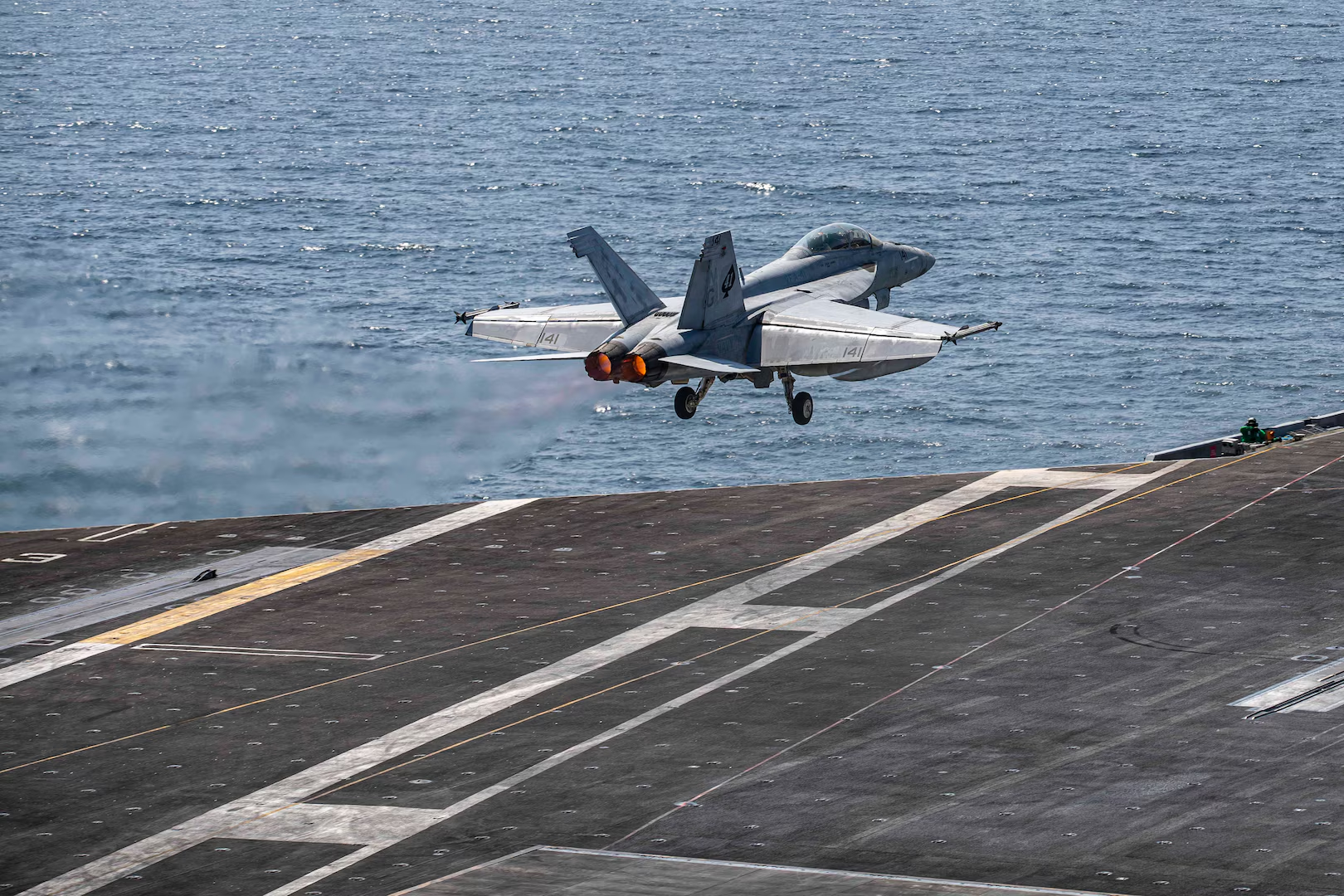
Simultaneously, the Persian Gulf remains heavily militarized. The U.S. Fifth Fleet in Bahrain deploys advanced naval assets, while Iran has invested in ballistic missiles, drones, and anti-ship systems designed to offset conventional asymmetry. China, importing substantial Gulf energy supplies, and Russia, expanding ties with Tehran, both observe carefully.
Any escalation between Washington and Tehran would reverberate in Pakistan. The country already hosts approximately 1.3 million registered Afghan refugees. A major Iran conflict could trigger further displacement, compounding economic strain amid IMF-backed reforms and domestic political polarization.
Internally, Pakistan faces political turbulence, including debates surrounding the incarceration of former Prime Minister Imran Khan and federal-provincial tensions. External pressure combined with internal division magnifies vulnerability.
Yet one broader truth emerges from this complex web: strategic encirclement is not solely a product of adversarial design. It can also arise from miscalculation, overreliance on hard power, and insufficient diplomatic agility. States that rely exclusively on military tools risk narrowing their strategic options.
This is a defining moment. Great-power rivalry, regional insecurity, and ideological contradictions intersect at fragile fault lines. Afghanistan’s outreach beyond traditional religious alignments demonstrates the primacy of interest over identity. Bagram symbolizes the enduring shadow of great-power competition. India and Israel’s evolving engagement in Kabul reflects the fluidity of modern alliances.
But history offers a sobering lesson. From the Soviet-Afghan war to the U.S. intervention, military campaigns have reshaped borders without resolving deeper grievances. Stability requires not merely deterrence but diplomacy.
Encirclement strategies may promise leverage. Hybrid doctrines may promise precision. Yet sustainable security demands cooperation grounded in mutual recognition of vulnerabilities.
Geopolitics may be ruthless in its calculations, but peace remains the only enduring strategic victory.
Pakistan News
Pakistan and Russia deepen media and diplomatic dialogue ahead of PM Sharif’s visit to Moscow
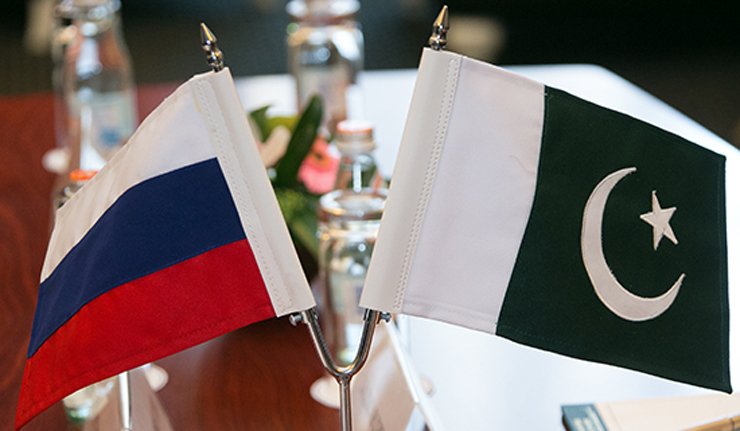
Monitoring Desk: The Moscow–Islamabad Media Forum will be held on February 27, 2026, to coincide with the official visit of the Prime Minister of the Islamic Republic of Pakistan, Muhammad Shehbaz Sharif, to Moscow, scheduled for the first week of March 2026.
The forum will serve as a platform for journalists, political experts, and diplomats from Pakistan and Russia to discuss the current state of bilateral relations, explore future opportunities, and analyze how the Russia–Pakistan partnership impacts global politics, the economy, and the contemporary media landscape.
Cooperation between Russia and Pakistan is of particular importance in the context of the transformation of international relations and the formation of a new system of global interaction. In recent years, contacts between the two countries have intensified at inter-parliamentary, expert, and media levels, while practical cooperation in the humanitarian and socio-political spheres continues to expand.
Within the framework of the forum, Russian and Pakistani journalists, political scientists, and representatives of diplomatic circles will discuss the current state and future prospects of bilateral relations, as well as the role of the Russia–Pakistan partnership in political, economic, and information processes shaping the modern world.
The event is timed to coincide with the official visit of the Prime Minister of the Islamic Republic of Pakistan, Shehbaz Sharif, to Moscow from March 3 to 5, 2026.
Admission for media representatives will be granted only through prior accreditation upon presentation of a passport and a valid editorial certificate confirming the journalist’s affiliation with the accredited media organization.
MSPC “Russia Today” reserves the right to refuse accreditation without providing an explanation.
This News is taken from
https://dnd.com.pk/pakistan-and-russia-deepen-media-and-diplomatic-dialogue-ahead-of-pm-sharifs-visit-to-moscow/328726/
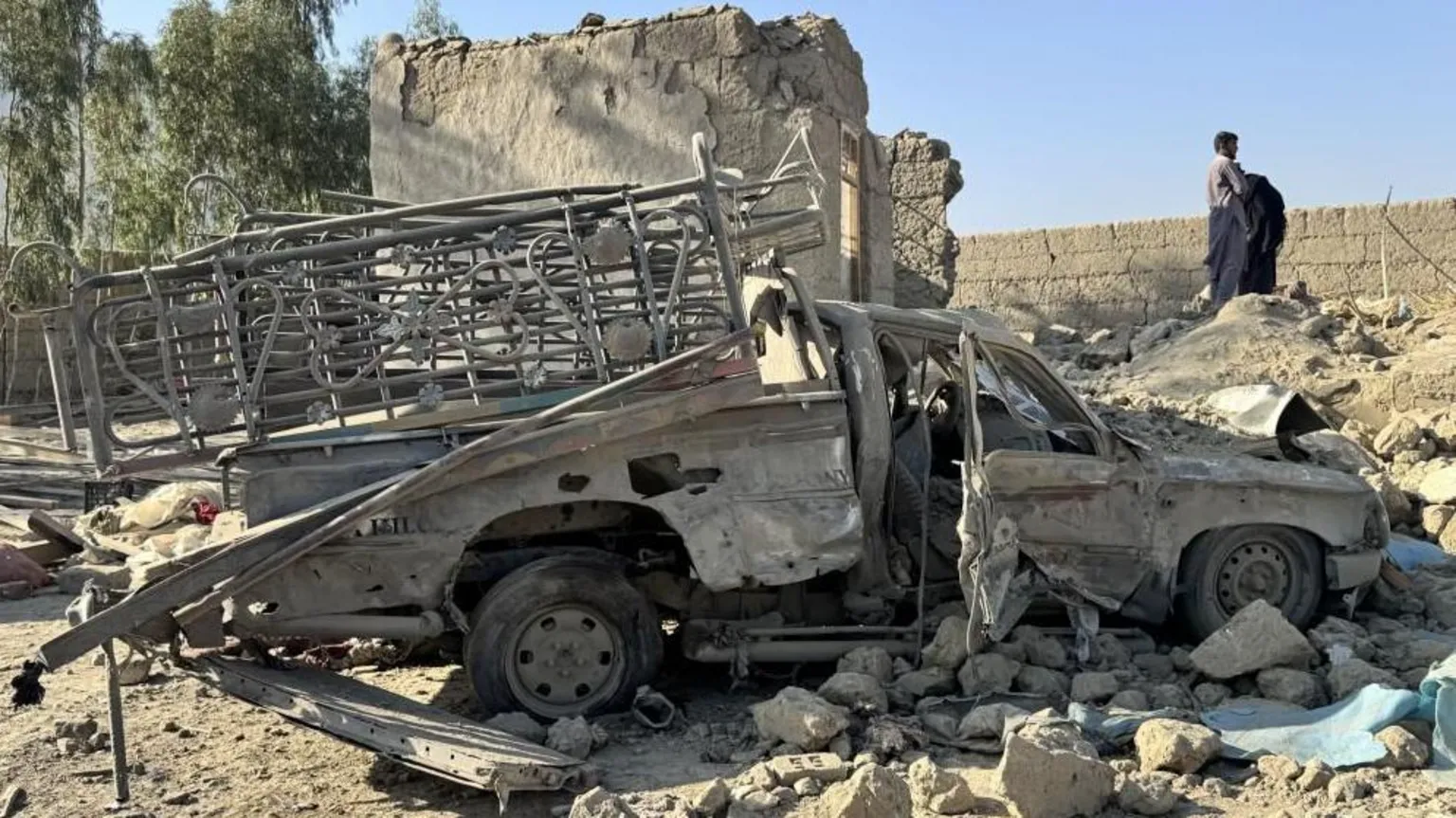
Pakistan has carried out multiple overnight air strikes on Afghanistan, which the Taliban has said killed and wounded dozens of people, including women and children.
Islamabad said the attacks targeted seven alleged militant camps and hideouts near the Pakistan-Afghanistan border and that they had been launched after recent suicide bombings in Pakistan.
Afghanistan condemned the attacks, saying they targeted multiple civilian homes and a religious school.
The fresh strikes come after the two countries agreed to a fragile ceasefire in October following deadly cross-border clashes, though subsequent fighting has taken place.
The Taliban’s defence ministry said the strikes targeted civilian areas of Nangarhar and Paktika provinces.
Officials in Nangarhar told the BBC that the home of a man called Shahabuddin had been hit by one of the strikes, killing about 20 family members, including women and children.
Pakistan’s Ministry of Information and Broadcasting said it had carried out “intelligence based selective targeting of seven terrorist camps and hideouts”.
In a statement on X, it said the targets included members of the banned Tehreek-i-Taliban Pakistan, which the government refers to as “Fitna al Khawarij,” along with their affiliates and the Islamic State-Khorasan Province.
The ministry described the strikes as “a retributive response” to recent suicide bombings in Pakistan by terror groups it said were sheltered by Kabul.
The recent attacks in Pakistan included one on a Shia mosque in the capital Islamabad earlier this month, as well as others that took place since the holy month of Ramadan began this week in the north-western Khyber Pakhtunkhwa province.
Pakistan accused the Afghan Taliban of failing to take action against the militants, adding that it had “conclusive evidence” that the attacks were carried out by militants on the instructions of their leadership in Afghanistan.
The Taliban’s defence ministry later posted on X condemning the attacks as a “blatant violation of Afghanistan’s territorial integrity”, adding that they were a “clear breach of international law”.
It warned that “an appropriate and measured response will be taken at a suitable time”, adding that “attacks on civilian targets and religious institutions indicate the failure of Pakistan’s army in intelligence and security.”
The strikes come days after Saudi Arabia mediated the release of three Pakistani soldiers earlier this week, who were captured in Kabul during border clashes last October.
Those clashes ended with a tentative ceasefire that same month after the worst fighting since the Taliban returned to power in 2021.
Pakistan and Afghanistan share a 1,600-mile (2,574 km) mountainous border.

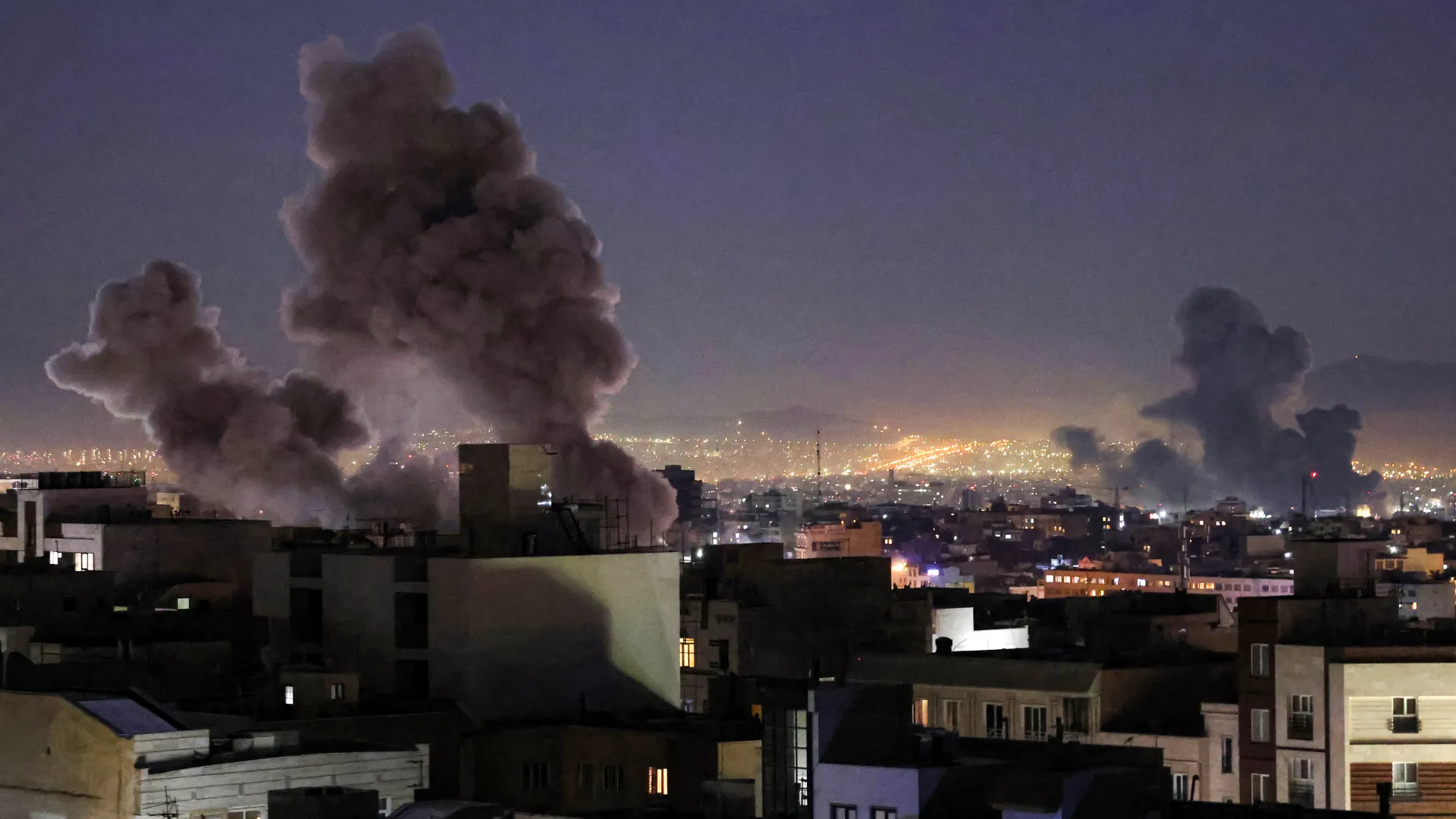
UK and France Join U.S.–Israel War Against Iran
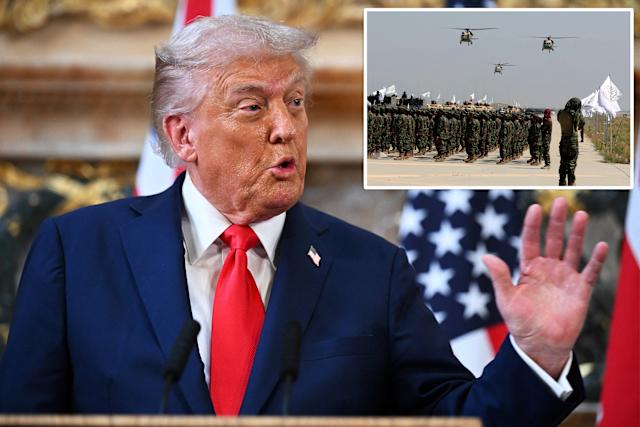
The Iran War That Turned Against Trump
Iran’s Strategy: Stretch the War


-

 Europe News1 year ago
Chaos and unproven theories surround Tates’ release from Romania
-

 American News1 year ago
Trump Expels Zelensky from the White House
-

 American News1 year ago
Trump expands exemptions from Canada and Mexico tariffs
-

 Pakistan News9 months ago
Comprehensive Analysis Report-The Faranian National Conference on Maritime Affairs-By Kashif Firaz Ahmed
-

 American News1 year ago
Zelensky bruised but upbeat after diplomatic whirlwind
-

 Art & Culture1 year ago
The Indian film showing the bride’s ‘humiliation’ in arranged marriage
-

 Art & Culture1 year ago
International Agriculture Exhibition held in Paris
-

 Pakistan News12 months ago
Can Pakistan be a Hard State?