
war
Iran’s Strategy: Stretch the War

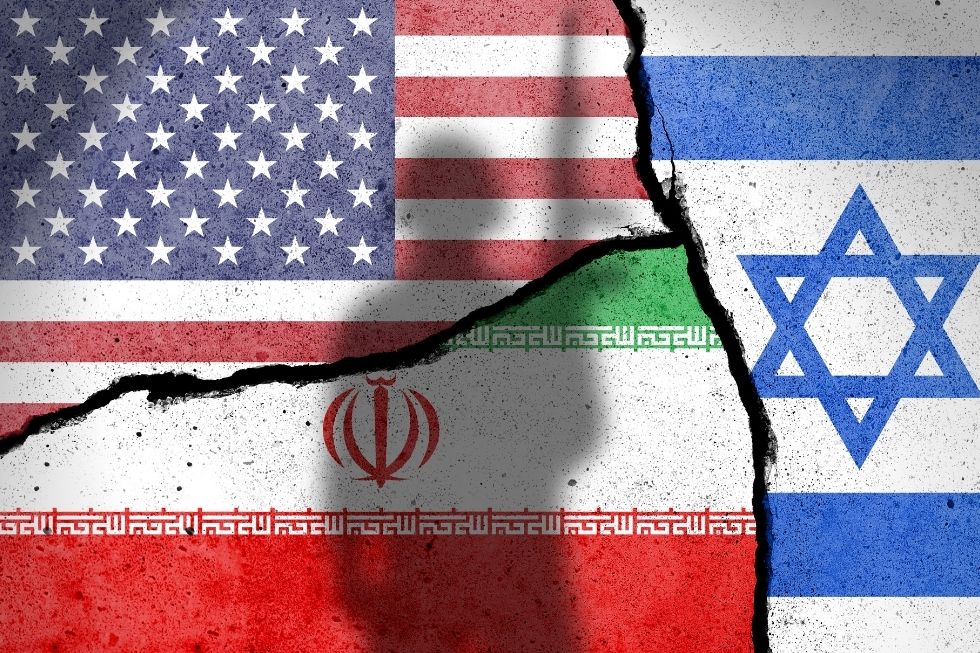
Paris (Imran Y. CHOUDHRY) :- Former Press Secretary to the President, Former Press Minister to the Embassy of Pakistan to France, Former MD, SRBC Mr. Qamar Bashir analysis : When President Donald Trump authorized direct military confrontation with Iran alongside Israel, many strategic planners expected a short and decisive military campaign. Precision strikes, intelligence dominance, and coordinated airpower were believed capable of crippling Iranian command centers and missile infrastructure within days. Yet what was envisioned as a swift operation is increasingly evolving into a prolonged conflict with humanitarian, geopolitical, and economic consequences extending far beyond the Middle East.
For decades, Israeli Prime Minister Benjamin Netanyahu had warned that confrontation with Iran was inevitable. Several U.S. administrations resisted being drawn into a full-scale war, wary of escalation and long-term entanglement in another Middle Eastern conflict. President Trump himself had previously pledged that his presidency would avoid new wars and focus on ending the long cycle of military interventions. However, the launch of coordinated strikes against Iran marked a historic shift, transforming strategic rivalry into direct confrontation.
The early assumption that Iran would collapse under aerial bombardment has not materialized. Instead, Tehran has adopted a measured and calculated strategy. Rather than unleashing its entire missile arsenal in dramatic retaliation, it has responded gradually, sustaining pressure while preserving strategic capabilities. Instead of triggering regime instability, the conflict appears to have consolidated national sentiment—particularly after the reported killing of Iran’s 86-year-old Supreme Leader during the opening phase of the war.
Within Iran, the death of a religious authority of such stature was expected by some analysts to create political fragmentation. Instead, it triggered widespread mobilization. In Shiite tradition, martyrdom carries profound historical and spiritual significance rooted in the memory of Karbala and the sacrifice of Imam Hussain. Mass mourning ceremonies, public processions, and national demonstrations reflected a collective resolve rather than internal collapse.
That emotional surge intensified dramatically after a tragedy that has come to symbolize the human cost of the conflict. In the southern Iranian city of Minab, a girls’ school was struck during the early days of the Israel-USA air campaign, killing more than 150 students and staff. The incident was independently confirmed by International media including Al-Jazeera and BBC. This deplorable and cruel act of Israel and the USA immediately became a powerful political and humanitarian symbol.
Images broadcast by Iranian media and reported by Al Jazeera showed thousands of mourners gathering in Minab’s central square for a mass funeral ceremony. Families held photographs of young victims while crowds chanted slogans condemning the United States and Israel.
The reaction from international institutions was swift. The United Nations human rights office called for a prompt and impartial investigation into the incident. Officials emphasized that schools, hospitals, and humanitarian facilities are protected under international humanitarian law and must not be targeted during armed conflict.
The Minab tragedy quickly resonated across the international media landscape. Major European outlets such as The Guardian, Le Monde, and Der Spiegel published editorials raising concerns about the humanitarian consequences of the escalating war. Commentaries in several European newspapers questioned whether the air campaign risked repeating the mistakes of previous conflicts in which civilian casualties undermined strategic objectives.
Public reaction extended beyond the media. Demonstrations erupted in several regions of the world. In cities across the United States—Washington D.C., New York, Chicago, and Los Angeles—anti-war protesters gathered to demand congressional oversight and an immediate halt to escalation.
Across parts of the Global South, governments including China, South Africa, Brazil, Turkey, Malaysia, and Pakistan voiced concern about the expanding conflict. In Pakistan and Iraq, protests outside U.S. diplomatic missions turned tense as demonstrators condemned the bombing campaign and expressed solidarity with Iranian civilians.
Meanwhile, Iran’s military strategy appears rooted in endurance rather than rapid escalation. Decades of sanctions and conflict have forced the country to develop hardened infrastructure, dispersed missile systems, and underground facilities designed to survive sustained bombardment. Iranian officials and analysts sympathetic to Tehran argue that the missiles and drones seen in the early days of the war represent largely older or less sophisticated systems deliberately used in the opening phase. According to this narrative, Iran is pacing the conflict by gradually introducing more advanced and destructive missile capabilities only if the war escalates further. Such a strategy would allow Tehran to sustain pressure over time while reserving its most capable weapons for later stages, potentially targeting U.S. bases across the Middle East, Israeli infrastructure, and naval forces operating in the Persian Gulf and nearby waters.
The vulnerability of American bases across the Middle East has become increasingly evident as the war expands. Countries hosting these bases now face complex political pressures, as retaliatory attacks threaten nearby infrastructure and civilian populations.
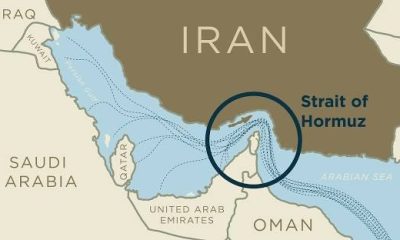
Economically, the war carries enormous global implications. The Strait of Hormuz remains one of the world’s most critical maritime chokepoints for oil transportation. Even limited disruptions in this narrow corridor can trigger spikes in global energy prices and destabilize international markets.
Yet perhaps the most consequential development emerging from Washington is the possibility that the war could escalate beyond aerial bombing. In recent remarks, President Trump did not rule out deploying American troops on Iranian soil if military objectives cannot be achieved through air power alone. U.S. defense officials have similarly acknowledged that ground forces remain an option should the conflict expand or if key strategic targets require physical control.
The implications of such a decision would be profound. Iran is a vast country of nearly ninety million people with rugged terrain, dense urban centers, and deeply entrenched military structures. Any attempt to place foreign troops on Iranian soil would almost certainly transform the current air campaign into a full-scale regional war.
Strategic history offers sobering lessons. In Afghanistan, overwhelming aerial superiority failed to produce durable political outcomes. Military dominance on the battlefield did not translate into long-term stability, and ultimately the conflict ended with a negotiated withdrawal after two decades.
A ground war in Iran could prove even more complex. Iran possesses a much larger population, stronger state institutions, and extensive missile capabilities capable of striking across the Middle East. Military analysts warn that any foreign troop deployment could trigger prolonged insurgency, regional retaliation, and widespread disruption of global energy markets.
Iran appears to be pursuing a strategy of strategic patience. By absorbing attacks while maintaining steady retaliation, it places increasing economic and political pressure on its adversaries. Time, rather than immediate battlefield victories, becomes the decisive factor.
The tragedy in Minab illustrates how quickly humanitarian events can reshape global perceptions of a war. Images of mourning families and schoolchildren’s funerals resonate far beyond military calculations. They influence public opinion, diplomatic relationships, and the political legitimacy of those conducting the war.
What was initially framed as a short military operation has increasingly taken the shape of a war of endurance. Iran appears prepared for a prolonged confrontation built on resilience, geography, and ideological mobilization. The United States and Israel still maintain overwhelming technological and military superiority, yet superiority alone does not guarantee swift submission.
Wars that begin with expectations of rapid victory often conclude in negotiations after extended human suffering. Whether this conflict ultimately follows that path will depend not only on military strength but on political wisdom. If diplomacy re-enters the equation, escalation may still be contained. If not, the region—and perhaps the wider international system—may face months of instability with consequences reaching far beyond the battlefield.










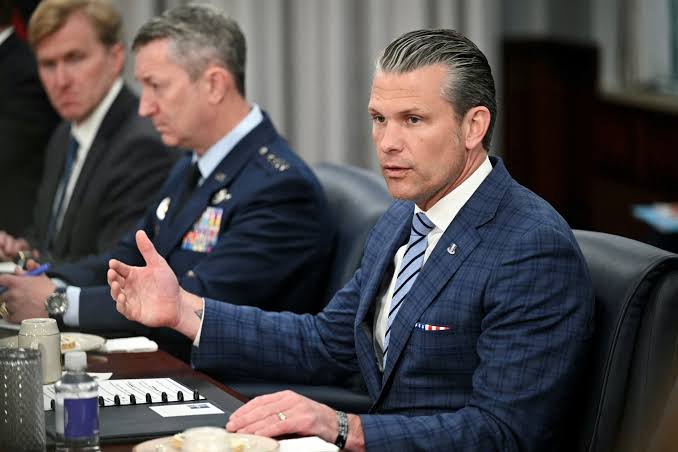
Paris (Imran Y. CHOUDHRY) :- Former Press Secretary to the President, Former Press Minister to the Embassy of Pakistan to France, Former MD, SRBC Mr. Qamar Bashir analysis : The effort to impeach Secretary of Defense Peter Brian Hegseth places a fundamental question before the United States Congress: will constitutional limits govern the executive’s use of military force, or will presidential command become its own justification for war? Whether this effort succeeds or fails, its significance extends beyond one official’s future. It demands accountability for initiating and continuing hostilities against Iran and challenges the displacement of congressional authority by executive decisions carrying profound human, military, and economic consequences.
Representative Thomas Massie’s September 15 impeachment initiative presents a specific charge against Hegseth: that he knowingly implemented unlawful orders to wage war. The accusation concerns both the decision to introduce American forces into hostilities on February 28, 2026, and their continued employment afterward. Its central contention is that the administration acted without congressional authorization or an independent constitutional basis for immediate defensive action. This is the foundation of the impeachment effort, and it deserves to be stated fully and directly.
The resolution identifies three circumstances that were absent when Hegseth directed American forces into hostilities against Iran: Congress had not declared war against the Islamic Republic of Iran, congress had not enacted any specific statutory authorization for introducing United States armed forces into hostilities against Iran and no national emergency had been created by an Iranian attack upon the United States, its territories or possessions, or its armed forces.
These points form the factual basis of the allegation that the operation did not satisfy the circumstances identified in Section 2(c) of the War Powers Resolution. The charge goes further. It states that no imminent attack upon the United States, its territories, possessions, or armed forces existed.
In support, it invokes the March 17 resignation letter of Joe Kent, then director of the National Counterterrorism Center: “I cannot in good conscience support the ongoing war in Iran. Iran posed no imminent threat to our nation.” Massie’s case therefore challenges both the absence of congressional authorization and the claim that immediate defensive necessity supplied an alternative basis for commencing hostilities.
From those premises, the resolution draws an unequivocal legal conclusion: the introduction of American forces was unlawful from its inception, and subsequent military actions continued that unlawful undertaking.
It alleges that Hegseth nevertheless knowingly employed the powers, personnel, weapons, and resources of the Department of Defense to execute the order. The accusation is therefore one of personal responsibility in implementing allegedly unlawful military action. It does not treat his subordinate position within the administration as sufficient to discharge his obligations.
Two forms of alleged abuse follow. First, Hegseth executed an unlawful order to commence hostilities despite the absence of the specified authorization or emergency. Second, he continued employing departmental personnel and resources after that initiation, without any subsequent declaration of war or specific statutory authorization.
The resolution characterizes this conduct as substituting unlawful executive action for Congress’s constitutional and statutory judgment. It seeks impeachment, Senate trial, removal, and disqualification from federal office on the grounds that his conduct was incompatible with his duties and the rule of law.
The charges against Hegseth are clear and understandable. The absence of an existential threat to the United States from Iran has been discussed repeatedly in my own articles and by journalists, analysts, Democrats, and other public representatives. Iran’s strategic calculations did not suggest a willingness to invite overwhelming destruction by launching an attack on American soil. The justification for initiating this war therefore demands the closest scrutiny.
The narrative recalls the manufactured justifications advanced for earlier interventions in Iraq, Libya, Syria, and Afghanistan. In Iran’s case, the grounds offered for war appear especially flimsy. Repetition does not make an allegation convincing, and the assertion of danger cannot substitute for a credible explanation of why war was necessary.
Hegseth is not the final decision-making authority. He acts under the direction and command of President Trump, the commander in chief. The accusations against the secretary therefore also raise questions about the president who authorized the policy. This effort may be a preview of a larger confrontation. If it succeeds, the president’s own vulnerability will become more apparent.
The war has also been brutal in its language. Hegseth’s derogatory remarks about Iran and its leadership fall below the dignity expected of his office. Similar language from the president compounds that failure. The United States has long associated its standing with human rights, civility, and respect for human dignity and honor. Those ideals are undermined when its leaders speak contemptuously of another country and its people.
Iran has now become central to the impeachment effort against Hegseth. Whether he survives politically or is removed, the charges threaten his standing. An official subjected to such scrutiny can suffer lasting damage among the public, international counterparts, colleagues, subordinates, and supporters. The same exposure may ultimately confront the president.
Here lies an essential strength of the American constitutional system: the executive can be called to account when it exceeds its lawful authority. Congress’s role in decisions concerning war cannot be displaced simply because the president commands the armed forces. Constitutional responsibility must remain meaningful when its exercise becomes politically difficult.
The administration’s declaration that the war had ended makes its subsequent conduct particularly troubling. The president and Hegseth communicated that position to Congress, yet military operations continued. Their own description of the situation did not bring the fighting to an end. More lives were lost, while expensive ammunition, missiles, and military systems continued to be consumed or destroyed without delivering the promised objectives.
The impeachment effort therefore comes at an important moment. It may provide the jolt necessary to confront the administration with the consequences of its decisions. Leaders who have become absorbed in their own assertions of power must recognize the reality on the ground. Iran cannot simply be defeated according to Washington’s preferred timetable or compelled to accept whatever outcome the administration demands.
The responsible course is to return to the pre-war position and address the destruction caused by the United States and Israel, including compensation for Iran. Continuing a destructive policy to avoid acknowledging failure only deepens the damage.
Such a change would not diminish the United States or erase its standing as a superpower. It would reaffirm the capacity to recognize mistakes, correct policy, and restore constitutional discipline. National strength includes the ability to reconsider a course that has failed and to measure conduct against principles more enduring than any administration.
Whether the impeachment effort succeeds or fails, its central challenge remains: American power must answer to the Constitution. The country’s credibility ultimately depends on its willingness to correct its course and uphold the cherished values of human dignity, human honor, and civility.
Any honest assessment must also preserve historical sequence and equal standards. Retaliation cannot be understood fully when the preceding action is omitted. American and Israeli operations require scrutiny alongside Iranian responses, including their purposes, scale, and consequences.
Proportionality demands attention to specific conduct and civilian harm. Iranian lives possess the same human worth as American lives. Military superiority cannot confer an unrestricted entitlement to inflict destruction, and national allegiance should not determine whose suffering deserves recognition or whose actions require justification.
Human dignity, human honor, and civility belong within this debate. Officials can oppose a government without humiliating its population or speaking casually about suffering. The credibility of the United States depends partly on whether its leaders uphold the values they invoke.
Whether Hegseth’s impeachment effort succeeds or fails, it presses an essential demand upon the American government—that executive power answer to law, military decisions withstand scrutiny, and leadership remain grounded in the cherished values of human dignity, human honor, and civility.
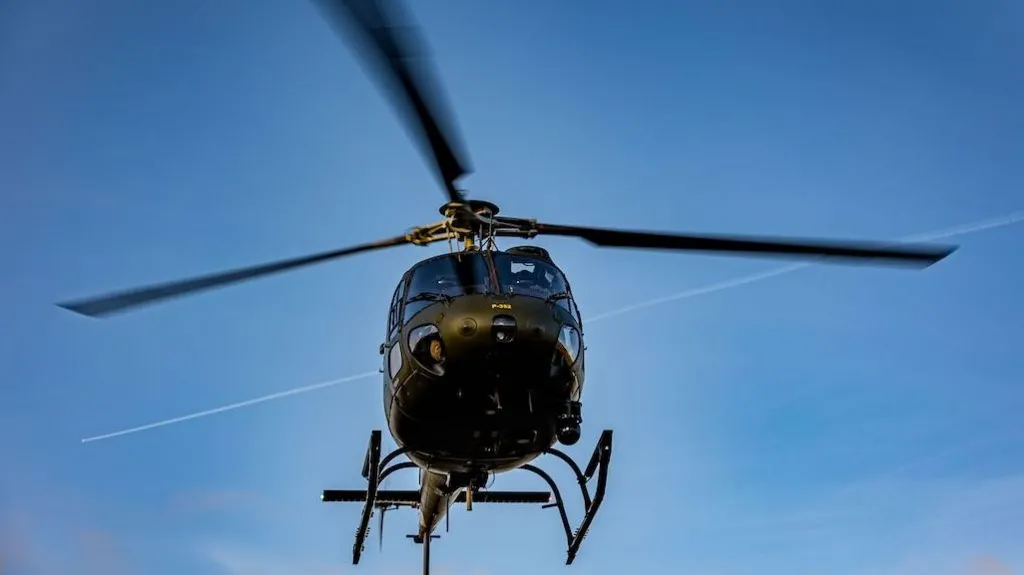
Denmark has accused a Russian warship of firing two emergency flares at one of its helicopters while it was tracking the vessel in the Baltic Sea.
The Danish government has summoned the Russian ambassador over the incident, which it said happened during a “routine” monitoring operation on Monday.
Prime Minister Mette Frederiksen branded the Russian action “reckless” and said it was designed to “intimidate and divide”.
Russia said it would “thoroughly investigate” the incident but accused Danish helicopters of making “dangerous manoeuvres” near Russian warships.
It came on the same day that Nato forces shot down a drone over Lithuania in the latest security scare on the alliance’s eastern flank, where tensions remain high amid Russia’s full-scale invasion of Ukraine.
In a statement detailing the incident in the Baltic Sea, the Danish armed forces said: “One of the air force’s Fennec helicopters was today fired at with flares during a routine photographic operation of a Russian frigate, which was located in international waters off Gedser.”
Of the two flares fired at the helicopter, one passed close to it, the statement added.
The Danish foreign ministry described the incident as “completely unacceptable”.
Danish Foreign Minister Lars Lokke Rasmussen accused Russia of “gradually shifting the boundary for what they consider acceptable behaviour”, adding: “That is something we cannot accept.”
In a statement, Russian ambassador Vladimir Barbin said Moscow would “thoroughly investigate all the circumstances of the incident” but accused the Danish helicopter of carrying out “provocative actions”.
Barbin said this was “not the first time that Danish Air Force helicopters have carried out dangerous manoeuvres near Russian warships”.
He said he had complained about a similar incident last year, adding that the latest event showed that “communication problems lie not with the Russian Navy’s vessels, but with the Danish side”.
Russia’s behaviour was “reckless and dangerous,” the President of the European Commission Ursula von der Leyen said in a post on social media.
This incident – together with the drone over Lithuania – was “part of a broader pattern of Russian aggression and provocation against Europe”, she added.
Danish Defence Minister Jeppe Bruus told Reuters no attempt to make contact with helicopters had been made by the frigate’s crew.

Overnight, Nato fighter pilots shot down a drone that entered Lithuania’s airspace.
Authorities said the drone likely entered southern Lithuania, near the second-largest city of Kaunas, from neighbouring Belarus shortly after midnight on Tuesday.
The origins of the drone have yet to be determined, the Lithuanian national crisis management centre said, but the country’s president pointed to increased Russian aggression in recent months.
President Gitanas Nausėda wrote on X: “With Russia intensifying its aggression against Ukraine, such readiness is vital for our region. Together with our Nato Allies, Lithuania will defend its airspace.”
Lithuania shares a large part of its southern and eastern border with Belarus, a key Russian ally.
Poland also announced there had been “aviation operations” in its airspace on Monday night “due to the activity of Russian Federation’s jet-powered unmanned aerial vehicles conducting strikes on Ukrainian territory”.
It said the overnight operations were of a “preventive nature” and aimed at “securing airspace and its protection, especially in areas adjacent to threatened regions”.
Nato jets have been scrambled several times to shoot down stray Ukrainian drones that have crossed into Baltic countries Estonia and Latvia this year.
Taken From BBC News
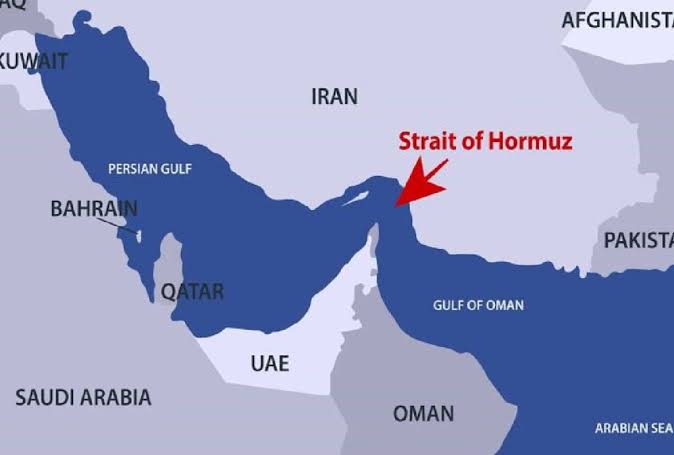
Paris (Imran Y. CHOUDHRY) :- Former Press Secretary to the President, Former Press Minister to the Embassy of Pakistan to France, Former MD, SRBC Mr. Qamar Bashir analysis : The war with Iran is no longer merely a contest of missiles, aircraft and naval power. It has become a struggle over the arteries through which the world’s energy flows. For months, the United States, Israel and regional producers have searched for ways to reduce dependence on the Strait of Hormuz. Israel has proposed pipelines carrying Gulf energy westward to its Mediterranean ports, while other projects envisage moving Iraqi and regional oil toward the Mediterranean. But events of recent days demonstrate a fundamental weakness in this strategy: bypassing one vulnerable chokepoint does not abolish geography. It merely transfers the vulnerability somewhere else.
Israeli Prime Minister Benjamin Netanyahu made his vision explicit in March. He proposed oil and gas pipelines running westward across the Arabian Peninsula to Israeli Mediterranean ports, arguing that such infrastructure could eliminate dependence on maritime chokepoints.
The broader search for alternative corridors has also involved proposals linking Iraqi energy resources with Syria’s Mediterranean coast. These projects potentially create enormous commercial opportunities for transit countries, ports, construction companies and international energy corporations. The contest, therefore, is not simply over oil. It is increasingly over who will build, operate and influence the infrastructure carrying that oil.
Saudi Arabia already possessed the most important working example of the bypass strategy. Its 1,200-kilometre East-West Pipeline, or Petroline, carries crude from the kingdom’s eastern producing regions across the Arabian Peninsula to Yanbu on the Red Sea. As Hormuz became increasingly dangerous, this pipeline became enormously important. Roughly four million barrels per day were moving through the system, allowing Saudi Arabia to export without sending those barrels through Hormuz.
Then came the drones. Saudi authorities say several drones launched from Iraqi territory attacked the East-West Pipeline system in the Riyadh and Madinah regions. The attacks caused injuries and damage and forced authorities to shut the pipeline as a precaution while technical teams assessed its safety. The entire 1,200-kilometre pipeline did not need to be physically destroyed. A sophisticated energy artery depends upon pumping stations, controls and associated infrastructure. Damage at strategically important points can interrupt the entire flow.
The economic consequences could be enormous. Saudi Arabia reportedly has enough exportable crude stored at Yanbu to maintain current flows for only about five to seven days if Petroline remains closed. After that, as much as four percent of global oil supply could be jeopardised.
Repair estimates remain uncertain, ranging from days to weeks. The important strategic lesson is therefore not whether Petroline can eventually be repaired. Of course it can. The lesson is that the principal functioning escape route from Hormuz has itself demonstrated its vulnerability.
This is where Iran’s strategic depth becomes important. Tehran does not require conventional naval supremacy over every kilometre of Hormuz to exercise extraordinary leverage there. Commercial shipping operates according to risk. One successful missile or drone attack can force shipowners, insurers and cargo operators to reconsider whether a voyage remains commercially acceptable.
The same logic increasingly applies at the other end of the Arabian Peninsula. Yemen’s Iran-aligned Houthis have advanced along the Red Sea coast and reached Perim Island, situated inside Bab el-Mandeb—the narrow gateway connecting the Red Sea with the Gulf of Aden. Saudi Arabia’s Petroline may bypass Hormuz by terminating at Yanbu, but tankers sailing from the Red Sea toward Asian markets still confront the geography surrounding Bab el-Mandeb. The alternative route therefore possesses a chokepoint of its own.
This is what I describe as Iran’s strategic checkmate of the Hormuz-bypass concept. I do not use “checkmate” to mean that Iran possesses uncontested sovereignty over two international waterways or has defeated American military power. My argument is economic and strategic. Iran and forces aligned with it possess sufficient capabilities across different theatres to make alternative energy routes vulnerable. In commercial transportation, the ability credibly to threaten passage can sometimes be almost as consequential as physically occupying it.
The deeper story concerns money and power. Every new pipeline creates winners. Construction companies receive contracts. Energy corporations acquire projects. Transit countries collect revenues. Ports gain business. Investors obtain returns. Countries hosting terminals acquire additional strategic importance. Israel’s proposed Mediterranean corridor could enhance its position as an energy bridge. American companies participating in Middle Eastern energy and infrastructure projects can obtain major commercial opportunities. Regional governments, meanwhile, seek diversified routes that reduce their dependence on waterways vulnerable to war.
Yet the cruel paradox is that Middle Eastern oil-producing countries risk carrying a disproportionate share of the immediate damage. Their pipelines become targets. Their export terminals require protection. Their production revenues become vulnerable to interruption. Their cities face missile and drone threats, while insurance and transportation costs rise. Saudi Arabia’s present predicament illustrates the danger: an infrastructure system designed to provide strategic security from Hormuz has itself become exposed to the expanding battlefield.
The widening conflict around Bab el-Mandeb demonstrates another limitation of purely military calculations. A superpower can deploy aircraft carriers, destroyers, missile defences and tens of thousands of personnel, yet commercial shipping requires something more difficult to guarantee: confidence. A shipping company contemplating a billion-dollar vessel and valuable cargo does not ask merely which navy is stronger. It asks whether the ship can complete its voyage safely, whether insurance remains available and whether the potential profit justifies the possibility of catastrophic loss.
That is why geography continues to defeat attempts to declare Hormuz irrelevant. A pipeline across Saudi Arabia substitutes pumping stations and hundreds of kilometres of exposed infrastructure for the strait. A Syrian corridor would traverse another politically sensitive landscape. An Israeli Mediterranean corridor would require enormous investment, security and regional cooperation. And Red Sea exports must still confront the security environment surrounding Bab el-Mandeb. There is no magic line on a map capable of removing geopolitical risk.
The Iran war has consequently evolved into something much larger than the conflict with which it began. It is simultaneously a military confrontation, an energy war and a contest over the future architecture of global petroleum transportation. The question is no longer simply who produces Middle Eastern oil. Increasingly, it is who builds the pipelines, controls the ports, protects the waterways and possesses leverage between the wellhead and the consumer.
The architects of alternative corridors hoped to diminish Iran’s greatest geographical advantage by diminishing Hormuz itself. Instead, the expanding conflict is demonstrating that energy routes cannot simply escape geography. Close one chokepoint and another becomes indispensable. Build a pipeline and the pumping stations become strategic assets. Shift exports toward the Red Sea and Bab el-Mandeb assumes greater importance.
That is the strategic irony of this war. The attempt to make Hormuz irrelevant may instead have demonstrated just how difficult it is to make Iran’s geography irrelevant. The map of the Middle East has not changed. What has changed is the number of places on that map where the world’s energy lifelines can now be threatened.


Why a new Pakistan-China border pact has irked India

How Trump Ditched Saudi Arabia?

EU Enacts Strict Laws on Social Media Use by Minors


-

 Sports3 months ago
South Korea’s Yoo Useong Steps Onto the Global Strongman Stage as World Strongman Federation Professional Athlete
-

 Art & Culture1 year ago
A Survey of Mata-E-Zeest
-

 Europe News2 years ago
Chaos and unproven theories surround Tates’ release from Romania
-

 American News2 years ago
Trump expands exemptions from Canada and Mexico tariffs
-

 American News2 years ago
Trump Expels Zelensky from the White House
-

 Art & Culture2 years ago
Will Snow White be a ‘victim of its moment’? How the Disney remake became 2025’s most divisive film
-

 Entertainment2 years ago
Champions Trophy: Pakistan aim to defend coveted title as historic tournament kicks off today
-

 Pakistan News1 year ago
Comprehensive Analysis Report-The Faranian National Conference on Maritime Affairs-By Kashif Firaz Ahmed