
World News
The Yemenite Children Abduction: A Stain on Humanity’s Conscience

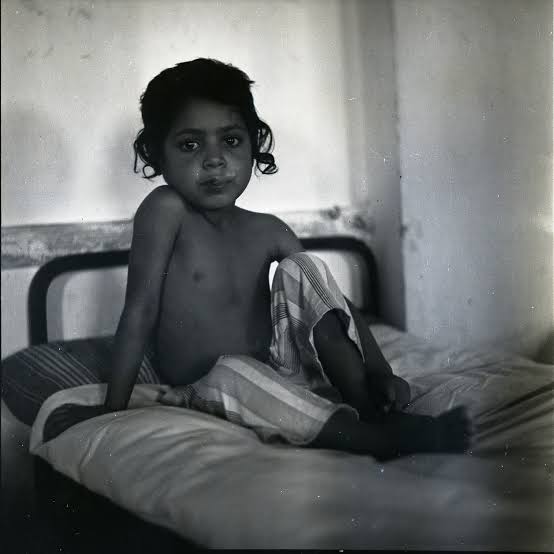
Paris (Imran Y. CHOUDHRY) :- Former Press Secretary to the President, Former Press Minister to the Embassy of Pakistan to France, Former MD, SRBC Mr. Qamar Bashir analysis : For decades, a dark cloud has hung over the founding of the State of Israel—one that involves the systematic disappearance of thousands of children from immigrant families, primarily of Yemenite descent. This is the Yemenite Children Affair, a chapter of history so painful that its official records were sealed for seventy years, until 2071. The wound has been reopened by recent remarks attributed to Israeli National Security Minister Itamar Ben-Gvir, who has reportedly admitted that these children were abducted and sold to the United States for medical experimentation. His heartless statement has once again forced the world to revisit a humanitarian tragedy that has haunted thousands of families for more than seven decades.
This renewed attention comes at a time when Israeli National Security Minister Itamar Ben-Gvir has repeatedly drawn worldwide criticism for inflammatory public rhetoric. His verified statements calling for “all of Lebanon to burn,” declaring that “for every teardrop of an Israeli mother, a thousand Lebanese mothers need to cry,” and advocating overwhelming military force against Israel’s enemies have been condemned by governments, international organizations, and even political figures within Israel.
Reuters, The Times of Israel, the BBC, CNN, and other international media have extensively reported these remarks. Critics argue that such rhetoric reflects a broader political mindset that has increasingly alarmed much of the international community. Whether one agrees with that assessment or not, the renewed debate surrounding the Yemenite Children Affair has inevitably become part of that larger discussion.
The Yemenite Children Affair is not merely an Israeli controversy. It is a humanitarian tragedy whose consequences continue to devastate families to this day. Between 1948 and 1954, shortly after the establishment of the State of Israel, tens of thousands of Jewish immigrants from Yemen, along with immigrants from Iraq, Morocco, Libya, Tunisia and other Middle Eastern and North African countries, arrived in the new state under extremely difficult conditions. During those years, hundreds—and according to many families and researchers, possibly more than a thousand—babies and toddlers disappeared after being admitted to hospitals or immigration camps.
Parents consistently recounted strikingly similar experiences. They were told that their child had suddenly died, often without ever seeing the body. Many said they received no death certificate, no burial location, and no convincing explanation. Instead of closure, they were left with uncertainty that lasted not months or years, but generations.
Israeli governments established three major commissions of inquiry to investigate the affair. Those commissions generally concluded that the majority of the missing children had died from disease during the difficult conditions prevailing in the early years of the state. They also acknowledged that some cases could not be conclusively resolved because records were incomplete or missing. Many families, however, rejected those conclusions, arguing that the investigations failed to answer fundamental questions and left significant contradictions unresolved.
One of the most controversial aspects of the affair was the decision by the 2001 Kedmi Commission to seal large portions of its evidence until 2071. That extraordinary decision itself became a source of public suspicion. Many asked a simple question: if there was nothing to hide, why should crucial evidence remain inaccessible for seventy years?
Growing public pressure eventually led the Israeli government to reconsider. In 2016, the Knesset Constitution, Law and Justice Committee unanimously approved the release of hundreds of thousands of classified documents relating to the affair. Minister Tzachi Hanegbi, appointed by Prime Minister Benjamin Netanyahu to examine whether the archives should be opened, concluded that the authorities’ handling of the affair “did not reflect the values of the Jewish state.” He also acknowledged that he found it difficult to accept the bureaucratic explanations that had long been offered for many of the disappearances.
The release of documents represented an important step toward transparency, but it did not end the controversy. Instead, it reinforced the determination of many families to continue searching for answers.
In 2021, the Israeli government approved approximately NIS 162 million in compensation for eligible families affected by the affair. Prime Minister Benjamin Netanyahu acknowledged the suffering endured by the families and expressed hope that the compensation would provide at least some measure of recognition. Yet many recipients responded that they had never sought money. What they wanted was truth.
Some family representatives described the compensation as an attempt to close the chapter without fully addressing it. They insisted that financial payments could never replace knowledge of what happened to their children. They demanded access to every remaining document, every available DNA record, every adoption file permitted by law, and every piece of evidence capable of revealing the fate of their loved ones.
That demand is neither political nor ideological. It is profoundly human. Every parent possesses an inalienable right to know what happened to a missing child. If a child died, where is the grave? If a child was adopted, who authorized it? If records exist, why were they hidden? If mistakes were made, why were they never fully acknowledged? These questions transcend nationality, religion and politics.
The recent circulation of the video has once again intensified public debate. Supporters of the video’s interpretation argue that it confirms long-standing allegations surrounding the affair. The renewed attention demonstrates that the issue remains unresolved in the minds of countless families and observers around the world.
Meanwhile, Ben-Gvir’s own recent conduct has further fueled international concern. His call for Lebanon to “burn,” his celebration of controversial legislation introducing the death penalty for certain terrorism offenses tried in military courts—a law widely criticized by opponents as discriminatory because of its practical application—and his repeated inflammatory language toward Palestinians have generated condemnation from governments, human rights organizations and international media. His rhetoric has become, for many critics, symbolic of a political climate that warrants closer scrutiny of unresolved historical controversies.
History teaches an important lesson: societies become stronger, not weaker, when they confront difficult truths honestly. The Yemenite Children Affair deserves precisely such an approach. No democratic society should fear opening archives, encouraging independent historical research, facilitating DNA identification, or allowing families to learn the fate of their loved ones. Transparency strengthens public confidence; secrecy erodes it.
For this reason, the time has come for the international community to assist—not to prejudge, but to establish the fullest possible historical record. An independent commission under United Nations auspices, composed of internationally respected historians, forensic specialists, archivists, legal experts, and human rights professionals, should be invited to examine all available evidence, including previously classified records, adoption files where legally accessible, DNA evidence, and testimony from surviving families and witnesses. Its mandate should not be political. Its mandate should be truth.
If that independent inquiry establishes that individuals or institutions unlawfully removed children from their families or committed other crimes, those findings should also be made public, and accountability should follow in accordance with applicable law. Justice cannot be selective. It must be guided by evidence rather than ideology.
The greatest injustice is not merely that children disappeared. The greatest injustice is that so many parents died never knowing whether their sons or daughters lived or died. Some spent their entire lives waiting for a knock at the door that never came. Others carried photographs of missing children to their graves. Their suffering cannot be measured in financial compensation.
This is why the Yemenite Children Affair remains a burden on the conscience of humanity. Regardless of nationality, religion or political belief, every civilized society should stand with families seeking truth about missing children. That principle is universal.
The search for truth is not an act of hostility toward Israel or toward any nation. It is an act of respect for human dignity. History ultimately belongs not to governments but to the victims, the witnesses, and future generations who deserve an honest account of the past.
Only when every available archive has been opened, every credible lead investigated, every possible DNA match pursued, and every family given the fullest answers that history can provide, will this painful chapter begin to close. Until then, the Yemenite Children Affair will remain not merely a historical controversy, but an unfinished moral obligation owed to every parent who never stopped asking one simple question: What happened to my child?



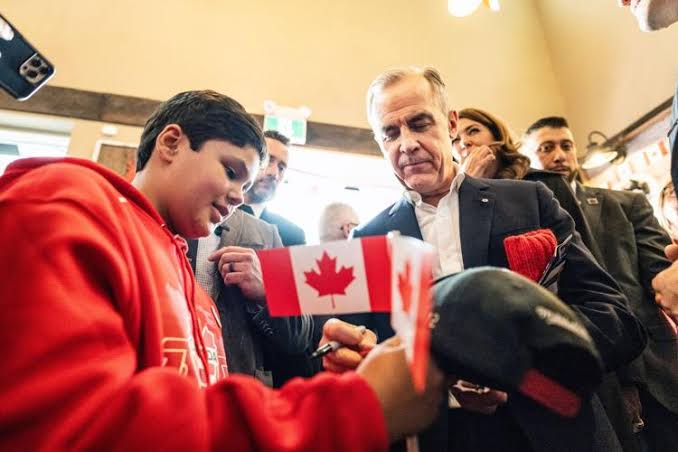
Prime Minister Mark Carney says an overwhelming vote by people in Alberta to remain part of Canada is a “great result” for the country.
Speaking to reporters as he walked into a cabinet meeting on Tuesday, Carney said he was “thrilled that Albertans have chosen unity” by rejecting a proposal to pursue separation through a binding referendum.
Preliminary results indicate more than two-thirds chose Canada over a push for independence for the province, according to Elections Alberta.
Monday’s referendum was the result of a months-long campaign by separatists in the western Canadian province to get a public vote on the issue.
Provincial leader Danielle Smith welcomed the initial results, commenting: “Albertans have voted for a stronger Alberta in a united Canada.”
Premier Smith herself opposed the separatist push but said the public will for a vote was undeniable, and many supporters of her own political party – United Conservative Party – were in the separatist camp.
Smith said she would address Albertans later on Tuesday on the path forward for the province.
In making the case for independence from Canada, many of the separatists said the oil-rich province’s economic growth had been stifled by the environmental policies of Canada’s central government in Ottawa.
But those who opposed a breakup – including Carney – called for Canada to present a united front in the face of external pressures, including an ongoing trade war with the United States.
“They’ve chosen to build together,” Carney said. “They’ve chosen to continue to take care of each other, to move forward, to move forward together, with purpose, high ambition.”
Carney added that he had spoken to Smith that morning and discussed “moving forward in the spirit of cooperative federalism, including on issues of immigration, other common priorities”.
Over the past year, the prime minister has worked with Smith on a number of shared goals, including pushing for an oil pipeline to the Pacific coast.
At a pro-separatist watch party in Edmonton, the hum of upbeat chatter quickly quieted as those presentsaw the projected results.
After overnight vote projections were published by Canadian broadcaster CBC and others, the mood soured. The watch party attended by the BBC packed up quickly, and people went home.
One of the separatist leaders, Jeffrey Rath, struck a defiant tone, however, vowing that “our movement isn’t stopping and we’re continuing to move forward”.
Speaking to the BBC World Service’s Newsday programme, Rath, a lawyer based in Calgary, said he saw Monday’s vote as a “first step” which had taught the movement some “valuable lessons”.
Asked whether his movement would push to keep holding votes on independence until it got the result it wanted, he responded “why not?”, and insisted that “the math and the economics” all added up on his side of the argument.

Premier Scott Moe, from the province of Saskatchewan, said he was glad Albertans chose unity, but added that “there is still work to be done on improving how Western Canada is treated by Ottawa”.
Pierre Poilievre, the leader of Canada’s Conservative party and a member of parliament from Alberta, said on social media that “the promise of Canada is worth fighting for”.
“Now our focus must be on results in people’s lives: affordable food and homes, safe streets, strong borders, and less immigration,” he said.
Smith called the vote after a grassroots group gathered about 300,000 signatures on a petition seeking a binding referendum on separation.
The petition was blocked by a judge, saying it failed to consult indigenous First Nations people – however, Smith opted to go ahead with the ballot.
Another group collected signatures for its own petition that opposed separation, which was signed by more than 400,000 people.
The key question on Monday’s voting paper asked: “Should Alberta remain a province of Canada or should the Government of Alberta commence the legal process required under the Canadian Constitution to hold a binding provincial referendum on whether or not Alberta should separate from Canada?”
It’s the first time a Canadian province has weighed the issue of separation since Quebec’s two referendums, in 1980 in 1995.
Both of those were unsuccessful, but Alberta separatists believe Quebec used the threat of independence to gain significant political leverage over Canada’s central government.
Smith said before the vote that if Albertans chose the remain option, a binding referendum on separation would not be held – at least, not while she was in power.

Despite the projected results, the conversation around Albertan sovereignty is not over.
Separatists leaders have indicated that they plan to try and push Smith out of power within her United Conservative Party, in the hope of installing a leader who is more sympathetic to their cause.
Another separatist leader, Mitch Sylvestre, told the BBC on polling day that “a lot of work will have to be done” to curb the appetite for independence if his side did lose.
Although responses to the referendum question were tallied first, there were nine other non-binding questions on Monday’s ballot paper.
Five of these dealt with immigration, while the other four focused on the Canadian constitution.
Early results suggest that most will pass, including proposals for the province to take increased control over immigration levels.

Capitalist Greed and Fossil Fuels Threaten Human Civilization
Columnist: Zeeshan Khan
We are distressed by the deaths and devastation caused by floods, and we are being told that in the solar universe revolving around the sun, the only cradle of human life, our Earth, is under the threat of coal, oil and gas bombs which have the capacity to cause destruction far greater than the combined power of atom, hydrogen and cobalt bombs, and it is rapidly rushing towards doomsday.
Those who are telling and warning us are 160 intellectuals belonging to 46 countries of the world, who have received world-level awards and prizes for their outstanding services and performance on the subject of environmental pollution. They have published a joint appeal in a full-page advertisement in the New York Times and all other prominent newspapers of the world, in which it is said that thought should be given to foiling the last attempts to destroy human life and civilization, otherwise the world of colour and fragrance, sound and melody, beauty and love will end, will be extinguished, and everything will end with it.
It has been told that the profit-seeking of the capitalist system, which has touched new extremes of greed for wealth, has also crossed the extremes of interfering with natural seasons due to the enormous use of coal, oil and gas, because of which global warming can increase by six degrees, which can completely change the climatic conditions of the world. The earth can refuse to grow grain, water to quench thirst can become extinct, the world can enter its last war for life, the garment of human civilization can be torn to pieces. These apprehensions have been expressed for the last century, and for the last quarter century, emphasis has also been laid on efforts to handle and improve this situation, but the countries suffering from greed for wealth of the capitalist system all over the world, including America, are busy in thwarting these efforts and have brought the world along with human life and civilization to the last edge of destruction.
The 160 intellectuals have appealed to all sympathetic institutions, associations and groups of the human world that, in their own interest and in the interest of their future, they should protest against those running the industries engaged in the abundant use of coal, oil and gas, and refrain from actions that further worsen the conditions of “global warming” and turn the whole world into a blazing furnace, and also try to think that if there will be no human population in the world, where will they sell their products and from where will they earn profit? The economy and market shops also need customers. If there are no customers, how will markets run? If in the six degrees of global warming, i.e., unbearable heat, the whole world is made into Hiroshima and Nagasaki, then who will survive? Why does this not enter the minds of the profit-seekers of the capitalist system?
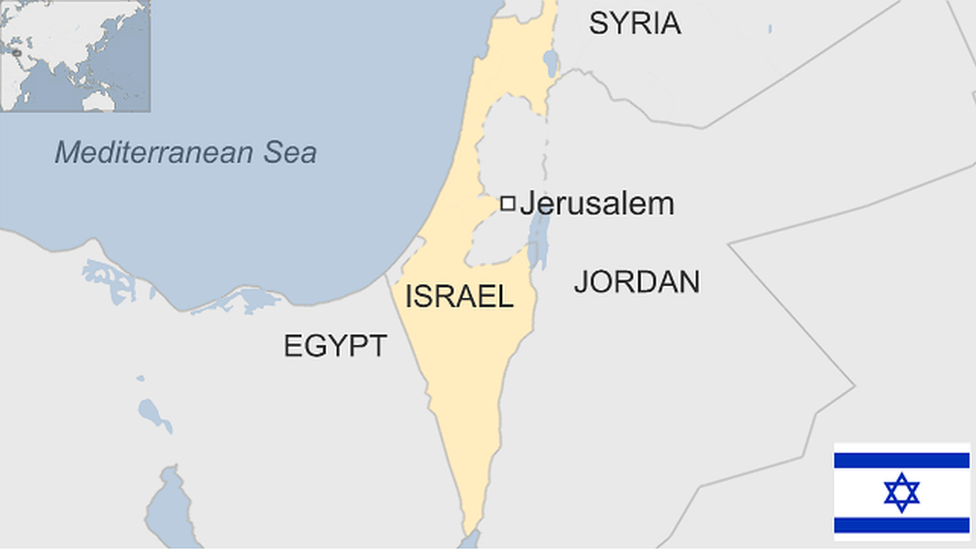
Paris (Imran Y. CHOUDHRY) :- Former Press Secretary to the President, Former Press Minister to the Embassy of Pakistan to France, Former MD, SRBC Mr. Qamar Bashir analysis : Israel’s expanding international reach raises a question that governments can no longer comfortably avoid: when does cooperation become dependence, and when does dependence begin to compromise sovereignty? Weapons, surveillance systems, intelligence partnerships, diplomatic advocacy and investment can establish enduring influence inside another country’s institutions. Examined together, these relationships reveal how a state can acquire leverage far beyond its territory without formally governing the societies affected by its decisions.
The central issue is the conversion of access into power. A weapons contract opens a relationship with a defense ministry. Technical support creates continuing contact with military personnel. Surveillance technology enters intelligence institutions. Political advocacy cultivates sympathetic decision-makers. Commercial partnerships establish constituencies interested in preserving cooperation. These channels can reinforce one another until challenging the relationship carries significant institutional and political costs. Influence becomes most consequential when governments stop asking whether those costs have narrowed their freedom to act.
Ideology matters because it shapes how political leaders justify the exercise of power. Religious nationalism can turn territorial ambitions into sacred obligations and portray compromise as betrayal. Where officials invoke divine entitlement or historical destiny, their language deserves close examination against their policies. The danger is the translation of claims about exceptional entitlement into governmental practice: unequal rights, territorial expansion or the belief that ordinary restraints should yield to a privileged national mission.
Such claims must be attached to identifiable leaders, movements and decisions. Their political force lies in what they authorize. A government that presents its objectives as beyond legitimate challenge creates conditions in which critics become enemies and civilian suffering becomes an acceptable instrument. International partners then face a choice: impose meaningful limits or help normalize exceptional treatment. Strategic friendship becomes dangerous when it functions as permission to evade accountability.
Israel’s international security industry supplies material foundations for its reach. Its defense ministry reported approximately $14.8 billion in new export contracts during 2024. These transactions can establish relationships lasting far beyond delivery. Advanced equipment requires maintenance, training, replacement parts and software. A government purchasing such systems must consider the political implications of relying on an external supplier for essential capabilities. The resulting vulnerability deserves as much attention as the advertised military advantage.
Latin America illustrates several pathways through which these relationships develop. Guatemala’s military governments received Israeli arms and assistance during a period of brutal repression. Colombia’s longstanding reliance on Israeli equipment, including Kfir aircraft and Galil rifles, complicated disengagement when diplomatic relations broke down. Argentina under Javier Milei and Honduras under Juan Orlando Hernández supplied prominent diplomatic backing through commitments concerning Jerusalem. Ecuador under Daniel Noboa pursued cooperation across defense, security, agriculture and water. Together, these cases show military, political and developmental relationships creating multiple points of institutional attachment.
Elsewhere, diplomatic openings and strategic partnerships expand the network. Bolivia restored relations in December 2025. Venezuela’s foreign ministry confirmed continuing technical cooperation following Israeli earthquake assistance in 2026. Recognition of Somaliland introduced Israel into a sensitive sovereignty dispute in the Horn of Africa. India developed extensive defense cooperation, while Austria established a strategic partnership. These relationships differ, but their cumulative significance is international access across security, technology, development and diplomacy. Each deserves examination for the commitments it creates and the interests it advances.
Political lobbying adds another layer. Former Australian foreign minister Bob Carr criticized what he considered excessive pressure from a hardline pro-Israel lobby on government policy. His account raises a fundamental democratic question: can elected officials exercise independent judgment when organized advocacy enjoys privileged access to executive leadership? The answer requires examining meetings, funding, communications and policy changes. Citizens should know whether decisions reflect publicly defensible national interests or pressure operating beyond effective scrutiny.
Surveillance exposes an especially intrusive form of power. Citizen Lab has documented Pegasus attacks involving journalists and human rights defenders. Such capabilities can penetrate the communications through which societies investigate corruption and organize opposition. Responsibility extends through the supply chain, from developers and licensing authorities to purchasing agencies and political leadership. Governments that conceal surveillance abuses cannot credibly claim to protect the freedoms those abuses undermine.
Economic sovereignty requires equally rigorous scrutiny. Banking infrastructure, telecommunications, investment platforms and critical software should be examined for ownership, access rights, contractual dependence and security vulnerabilities.
Claims about foreign control must be established through records and technical evidence. Governments should identify who can access sensitive information, interrupt essential services or influence strategic decisions. Confidential contracts cannot substitute for public accountability where national systems and citizens’ rights are at stake.
The United States provides the principal institutional foundation of Israel’s strategic support. Its longstanding military-assistance framework makes clear that international protection rests on identifiable decisions by legislators and administrations. Those decisions carry responsibility. Officials cannot authorize assistance and then treat its foreseeable consequences as someone else’s concern. An alliance becomes a mechanism of impunity when support continues without meaningful examination of conduct.
Gaza gives this argument its moral urgency. UN satellite analysis based on July 2025 imagery identified damage affecting approximately 78 percent of structures. The scale demands answers from Israeli authorities and the governments sustaining their military and diplomatic position. Palestinian rights cannot remain subordinate to the convenience of strategic partnerships. International standards lose their authority when powerful relationships determine whose suffering produces consequences.
Every government should therefore audit its dependencies, disclose sensitive agreements, investigate unlawful surveillance and scrutinize political influence. Where relationships facilitate abuse or compromise independent decision-making, they should be restricted, renegotiated or ended through lawful processes. Sovereignty requires the capacity to refuse.
Israel’s international influence deserves sustained scrutiny because power exercised through dispersed institutions can escape the accountability attached to visible force. The response must be concrete: expose the mechanisms, identify the beneficiaries and impose enforceable limits. No government should enjoy exceptional permission to override another society’s independence or another people’s rights.


‘Great result for Canada’, says Carney as Alberta votes to reject separatism

Rare Earths: Pakistan’s Economic Part 2
Rare Earths: Pakistan’s Economic Part 1

New Chapter for Dragon Boating in Punjab and Khyber Pakhtunkhwa Provincial associations officially set up with sights locked on national competitions and international representation.

South Korea’s Yoo Useong Steps Onto the Global Strongman Stage as World Strongman Federation Professional Athlete

A Survey of Mata-E-Zeest


-
 Pakistan News1 week ago
New Chapter for Dragon Boating in Punjab and Khyber Pakhtunkhwa Provincial associations officially set up with sights locked on national competitions and international representation.
-
 Sports4 months ago
South Korea’s Yoo Useong Steps Onto the Global Strongman Stage as World Strongman Federation Professional Athlete
-
 Art & Culture1 year ago
A Survey of Mata-E-Zeest
-

 Europe News2 years ago
Chaos and unproven theories surround Tates’ release from Romania
-

 American News2 years ago
Trump expands exemptions from Canada and Mexico tariffs
-

 Art & Culture2 years ago
Will Snow White be a ‘victim of its moment’? How the Disney remake became 2025’s most divisive film
-

 American News2 years ago
Trump Expels Zelensky from the White House
-

 Entertainment2 years ago
Champions Trophy: Pakistan aim to defend coveted title as historic tournament kicks off today