
Paris (Imran Y. CHOUDHRY) :- Former Press Secretary to the President, Former Press Minister to the Embassy of Pakistan to France, Former MD, SRBC Mr. Qamar Bashir analysis : For decades, a dark cloud has hung over the founding of the State of Israel—one that involves the systematic disappearance of thousands of children from immigrant families, primarily of Yemenite descent. This is the Yemenite Children Affair, a chapter of history so painful that its official records were sealed for seventy years, until 2071. The wound has been reopened by recent remarks attributed to Israeli National Security Minister Itamar Ben-Gvir, who has reportedly admitted that these children were abducted and sold to the United States for medical experimentation. His heartless statement has once again forced the world to revisit a humanitarian tragedy that has haunted thousands of families for more than seven decades.
This renewed attention comes at a time when Israeli National Security Minister Itamar Ben-Gvir has repeatedly drawn worldwide criticism for inflammatory public rhetoric. His verified statements calling for “all of Lebanon to burn,” declaring that “for every teardrop of an Israeli mother, a thousand Lebanese mothers need to cry,” and advocating overwhelming military force against Israel’s enemies have been condemned by governments, international organizations, and even political figures within Israel.
Reuters, The Times of Israel, the BBC, CNN, and other international media have extensively reported these remarks. Critics argue that such rhetoric reflects a broader political mindset that has increasingly alarmed much of the international community. Whether one agrees with that assessment or not, the renewed debate surrounding the Yemenite Children Affair has inevitably become part of that larger discussion.
The Yemenite Children Affair is not merely an Israeli controversy. It is a humanitarian tragedy whose consequences continue to devastate families to this day. Between 1948 and 1954, shortly after the establishment of the State of Israel, tens of thousands of Jewish immigrants from Yemen, along with immigrants from Iraq, Morocco, Libya, Tunisia and other Middle Eastern and North African countries, arrived in the new state under extremely difficult conditions. During those years, hundreds—and according to many families and researchers, possibly more than a thousand—babies and toddlers disappeared after being admitted to hospitals or immigration camps.
Parents consistently recounted strikingly similar experiences. They were told that their child had suddenly died, often without ever seeing the body. Many said they received no death certificate, no burial location, and no convincing explanation. Instead of closure, they were left with uncertainty that lasted not months or years, but generations.
Israeli governments established three major commissions of inquiry to investigate the affair. Those commissions generally concluded that the majority of the missing children had died from disease during the difficult conditions prevailing in the early years of the state. They also acknowledged that some cases could not be conclusively resolved because records were incomplete or missing. Many families, however, rejected those conclusions, arguing that the investigations failed to answer fundamental questions and left significant contradictions unresolved.
One of the most controversial aspects of the affair was the decision by the 2001 Kedmi Commission to seal large portions of its evidence until 2071. That extraordinary decision itself became a source of public suspicion. Many asked a simple question: if there was nothing to hide, why should crucial evidence remain inaccessible for seventy years?
Growing public pressure eventually led the Israeli government to reconsider. In 2016, the Knesset Constitution, Law and Justice Committee unanimously approved the release of hundreds of thousands of classified documents relating to the affair. Minister Tzachi Hanegbi, appointed by Prime Minister Benjamin Netanyahu to examine whether the archives should be opened, concluded that the authorities’ handling of the affair “did not reflect the values of the Jewish state.” He also acknowledged that he found it difficult to accept the bureaucratic explanations that had long been offered for many of the disappearances.
The release of documents represented an important step toward transparency, but it did not end the controversy. Instead, it reinforced the determination of many families to continue searching for answers.
In 2021, the Israeli government approved approximately NIS 162 million in compensation for eligible families affected by the affair. Prime Minister Benjamin Netanyahu acknowledged the suffering endured by the families and expressed hope that the compensation would provide at least some measure of recognition. Yet many recipients responded that they had never sought money. What they wanted was truth.
Some family representatives described the compensation as an attempt to close the chapter without fully addressing it. They insisted that financial payments could never replace knowledge of what happened to their children. They demanded access to every remaining document, every available DNA record, every adoption file permitted by law, and every piece of evidence capable of revealing the fate of their loved ones.
That demand is neither political nor ideological. It is profoundly human. Every parent possesses an inalienable right to know what happened to a missing child. If a child died, where is the grave? If a child was adopted, who authorized it? If records exist, why were they hidden? If mistakes were made, why were they never fully acknowledged? These questions transcend nationality, religion and politics.
The recent circulation of the video has once again intensified public debate. Supporters of the video’s interpretation argue that it confirms long-standing allegations surrounding the affair. The renewed attention demonstrates that the issue remains unresolved in the minds of countless families and observers around the world.
Meanwhile, Ben-Gvir’s own recent conduct has further fueled international concern. His call for Lebanon to “burn,” his celebration of controversial legislation introducing the death penalty for certain terrorism offenses tried in military courts—a law widely criticized by opponents as discriminatory because of its practical application—and his repeated inflammatory language toward Palestinians have generated condemnation from governments, human rights organizations and international media. His rhetoric has become, for many critics, symbolic of a political climate that warrants closer scrutiny of unresolved historical controversies.
History teaches an important lesson: societies become stronger, not weaker, when they confront difficult truths honestly. The Yemenite Children Affair deserves precisely such an approach. No democratic society should fear opening archives, encouraging independent historical research, facilitating DNA identification, or allowing families to learn the fate of their loved ones. Transparency strengthens public confidence; secrecy erodes it.
For this reason, the time has come for the international community to assist—not to prejudge, but to establish the fullest possible historical record. An independent commission under United Nations auspices, composed of internationally respected historians, forensic specialists, archivists, legal experts, and human rights professionals, should be invited to examine all available evidence, including previously classified records, adoption files where legally accessible, DNA evidence, and testimony from surviving families and witnesses. Its mandate should not be political. Its mandate should be truth.
If that independent inquiry establishes that individuals or institutions unlawfully removed children from their families or committed other crimes, those findings should also be made public, and accountability should follow in accordance with applicable law. Justice cannot be selective. It must be guided by evidence rather than ideology.
The greatest injustice is not merely that children disappeared. The greatest injustice is that so many parents died never knowing whether their sons or daughters lived or died. Some spent their entire lives waiting for a knock at the door that never came. Others carried photographs of missing children to their graves. Their suffering cannot be measured in financial compensation.
This is why the Yemenite Children Affair remains a burden on the conscience of humanity. Regardless of nationality, religion or political belief, every civilized society should stand with families seeking truth about missing children. That principle is universal.
The search for truth is not an act of hostility toward Israel or toward any nation. It is an act of respect for human dignity. History ultimately belongs not to governments but to the victims, the witnesses, and future generations who deserve an honest account of the past.
Only when every available archive has been opened, every credible lead investigated, every possible DNA match pursued, and every family given the fullest answers that history can provide, will this painful chapter begin to close. Until then, the Yemenite Children Affair will remain not merely a historical controversy, but an unfinished moral obligation owed to every parent who never stopped asking one simple question: What happened to my child?
The Yemenite Children Abduction: A Stain on Humanity’s Conscience
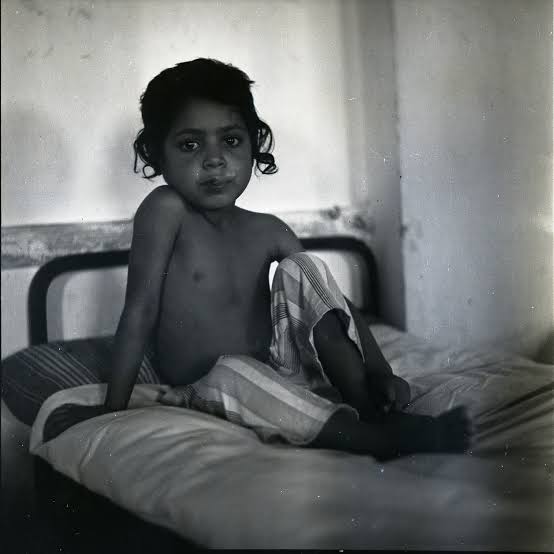
The Yemenite Children Abduction: A Stain on Humanity’s Conscience