
Pakistan News
The Tale of Two Deserts


Paris (Imran Y. CHOUDHRY) :- Former Press Secretary to the President, Former Press Minister to the Embassy of Pakistan to France, Former MD, SRBC Mr. Qamar Bashir analysis : As a television news producer (1986-1991), I’ve covered my share of human tragedy, bureaucratic inertia, and moments of quiet hope. But few stories have stayed with me as powerfully as a journey through the deserts of Balochistan—where a tragic accident illuminated not just systemic neglect, but also the remarkable contrast between two deserts: one forsaken and fossilized in time, and the other transformed into a symbol of possibility through vision, science, and human resolve.
Our assignment began with a grim dispatch: a head-on collision between two passenger buses near Dalbandin, a remote town in southwestern Pakistan, roughly 400 kilometers from Quetta. Departing from the provincial capital at dusk, we drove through fading light and battered roads, arriving in Naushkey by midnight. At dawn, we resumed our journey. But as the sun rose, the road disappeared altogether—claimed by the vast, unmarked expanse of the Dasht-e-Margo, literally the “Desert of Death.” There was no map to follow, only hardened mud plains, windswept dunes, and the intuition of our local cameraman, who led us like a nomadic guide across the skeletal terrain.
By midday, we reached Dalbandin, where we were received in a modest roadside rest house by the local Assistant Commissioner. What awaited us was chilling. The two buses, barreling at speeds exceeding 100 kilometers per hour along an unmarked track, had collided head-on and burst into flames. There were no survivors—just twisted steel, scorched earth, and the acrid scent of human tragedy. It was a disaster shaped not only by fate but by decades of neglect. In a desert of over 347,000 square kilometers—larger than Germany—there were no roads, no signs, no protections. Just emptiness and vulnerability.
The Dasht-e-Margo is a desert etched into history. In 325 BCE, Alexander the Great lost thousands of his soldiers to thirst and exhaustion while attempting to cross this merciless landscape. More than two millennia later, its terrain remains untouched, unreclaimed, and largely uninhabited—where nomadic tribes still live as they did centuries ago, and modern development has yet to arrive. It is a land suspended between ancient endurance and modern abandonment.
Yet, halfway across Asia, I had once witnessed a desert of similar character—unforgiving and untamed—undergo a profound transformation. The Taklamakan Desert in China’s Xinjiang region, slightly smaller in size at 337,000 square kilometers, was once considered one of the most dangerous deserts in the world. Its very name means, “Go in, and you won’t come out.” Silk Road traders feared its shifting sands and sudden storms. For centuries, it remained a death zone for caravans and a barrier to settlement.
But in the past few decades, the Taklamakan has defied its ancient reputation. Since the 1980s, the Chinese government has undertaken one of the most ambitious ecological projects in human history: the creation of a “Green Wall” to contain the desert’s expansion and regenerate its periphery. Over 100 million drought-resistant trees—poplars, tamarisks, and desert willows—have been planted, stretching over 3,000 kilometers around the desert’s edge. Drip irrigation systems, soil stabilization techniques, and satellite-guided planting have reclaimed thousands of hectares of land. What satellite images once showed as a yellow void now reveals a ring of green steadily encroaching on the sands.
And beyond the ecological triumph lies a deeply human story: that of how Xinjiang’s local populations—Uyghurs, Kazakhs, and others—were turned from desert survivors into stakeholders of transformation. Former herders and subsistence farmers were trained as tree planters, irrigation workers, and forest guardians. More than 300,000 jobs have been created in Xinjiang’s forestry and agricultural sectors since 2010. Eco-compensation programs paid villagers to plant trees instead of overgrazing livestock, and fruit orchards—producing pomegranates, walnuts, and dates—have flourished where once there was only dust. This economic revitalization has drastically improved livelihoods and reduced the appeal of insurgent ideologies, replacing alienation with agency.
It is no coincidence that the Taklamakan’s transformation coincided with broader development in Xinjiang. Once plagued by separatist unrest and violence, Xinjiang has seen its GDP per capita rise from $3,000 in 2010 to over $8,000 in 2023. Poverty rates have fallen from over 30 percent to near zero. High-speed rail now links its cities to the rest of China. New industries—textiles, solar energy, food processing—have taken root, and tourism has emerged around the newly greened belts of desert. Terrorist incidents have dropped by over 90 percent in the last decade, not solely due to security measures, but because people were offered a stake in stability.
A key to this success lies in water. Like Balochistan, Xinjiang is bone-dry and vulnerable to drought. But China’s investment in water management has been transformative: the construction of reservoirs and canals, the deployment of solar-powered pumps, and the implementation of efficient drip irrigation. These systems were built not only by state planners but by local laborers, whose participation ensured sustainability. Ownership of forest zones was assigned to communities, linking environmental restoration with livelihood security.
The comparison between these two deserts—Balochistan’s Dasht-e-Margo and China’s Taklamakan—reveals the stark divergence between potential and action. It is not geography but governance that determines whether a desert remains a death zone or becomes a cradle of renewal. In Balochistan, where underground aquifers are vanishing and over 62 percent of the land is water-stressed, similar rehabilitation could be attempted. The ancient karez system, once used to irrigate Baloch settlements, could be revived and augmented with solar desalination technologies. And afforestation programs, modeled after Pakistan’s successful Billion Tree Tsunami in Khyber Pakhtunkhwa, could stabilize soil and restore ecological balance.
What the Taklamakan has shown is that with vision, investment, and inclusion, even the harshest terrain can bloom. What is needed in Balochistan is not merely funding, but a shift in philosophy: from command to collaboration, from marginalization to empowerment.
The story of these two deserts is not just about climate or culture. It is a story about choices. One desert was seen as doomed, but was transformed by patience, science, and people. The other, still majestic and mysterious, waits under the sun for a similar awakening. Pakistan has the land, the talent, and the tools. What it needs is the will—the kind that sees deserts not as dead zones, but as frontiers of possibility.
If the sands of Taklamakan can host orchards, if once-forgotten plains can hum with new life, then surely the Dasht-e-Margo too can echo with the sounds of roads being paved, trees being planted, water flowing once more. The desert will always whisper to us. The question is—will we finally listen?




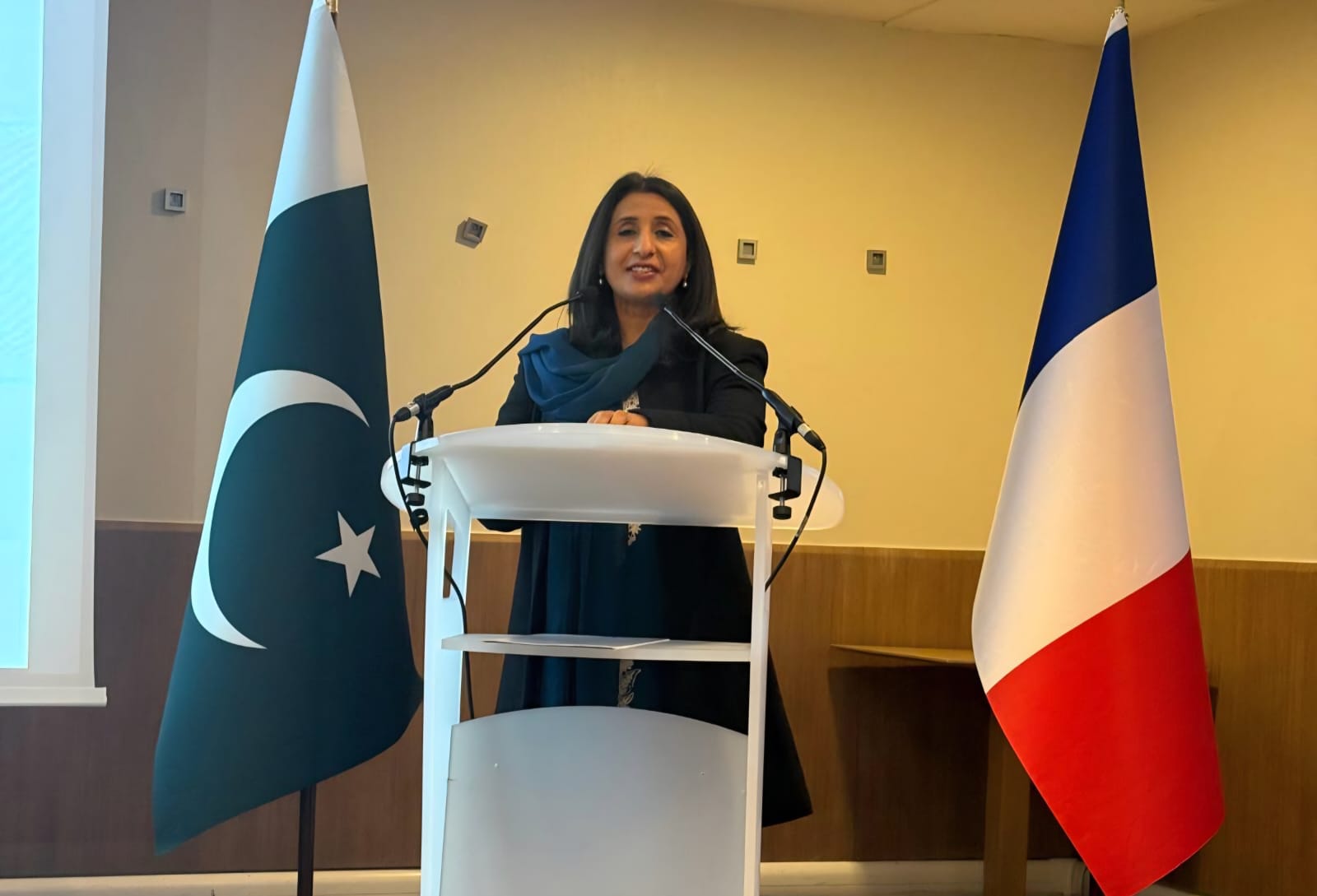
Paris ( Imran Y. CHOUDHRY):- A ‘Pakistan-France Trade and Investment Forum’ was held in Paris today, bringing together government officials, business leaders, industry experts and representatives of trade bodies of both countries.
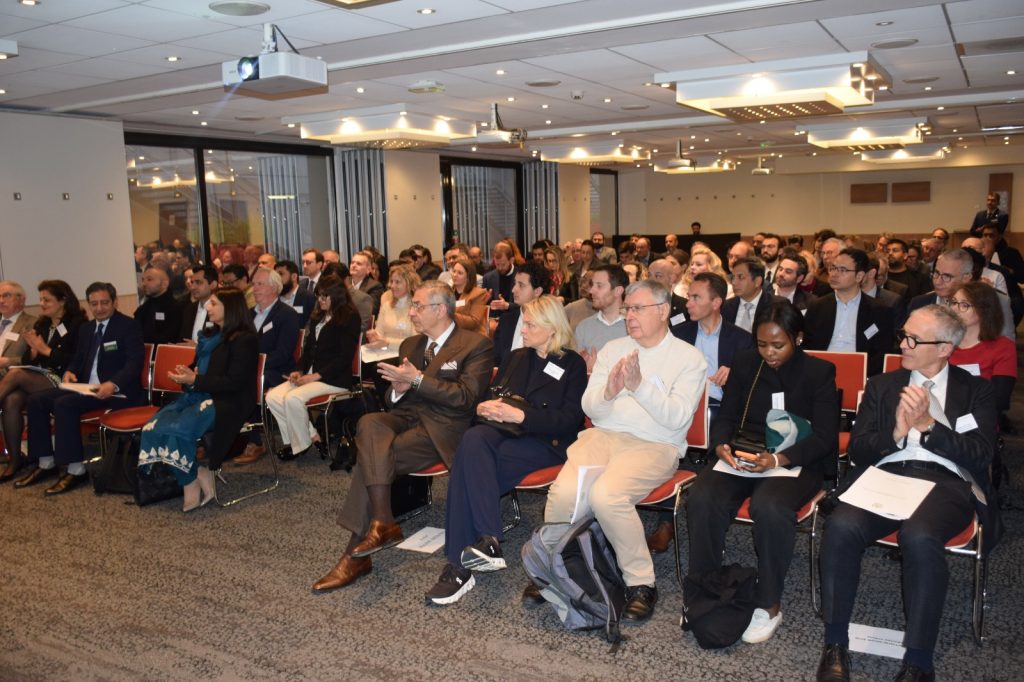
The Forum was held in implementation of an understanding reached between President Emmanuel Macron and Prime Minister Shehbaz Sharif in 2024, to build strong economic partnership between Pakistan and France. The objective of the Forum was to connect businesses, exchange ideas, explore new avenues of bilateral cooperation and showcase Pakistan’s trade and investment potential. It witnessed participation of over seventy French and Pakistani companies from diverse sectors including agriculture, information technology, textiles, energy and tourism.
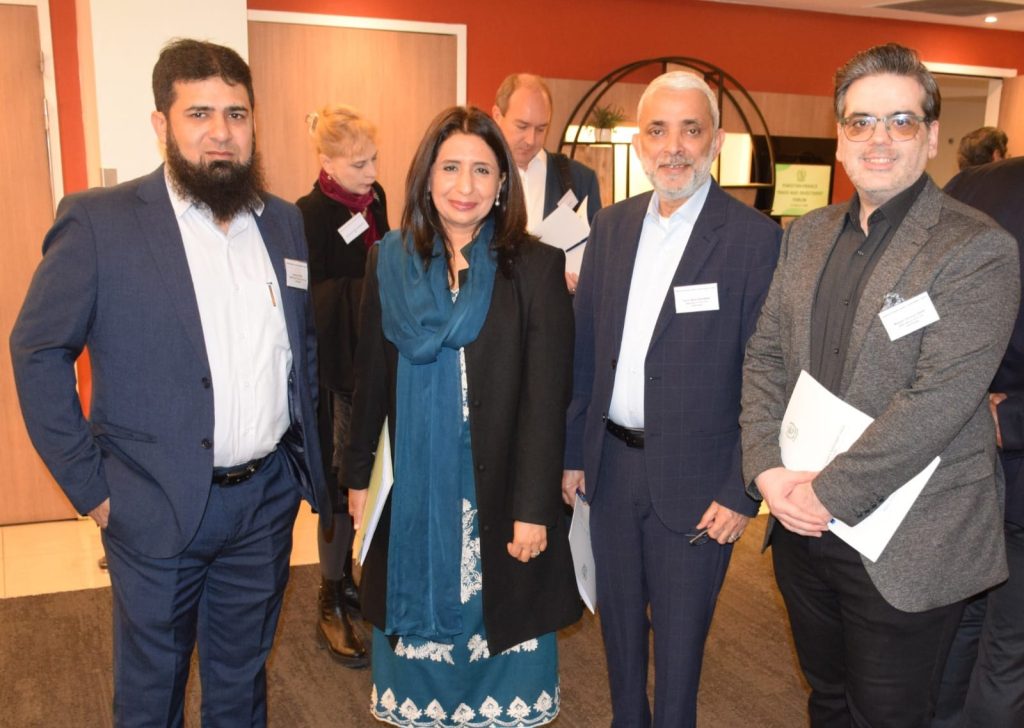
Ambassador Mumtaz Zahra Baloch opened the Business Forum and highlighted Pakistan’s economic growth and potential as an attractive trade partner for France. She outlined investor-focused initiatives and institutional facilitation mechanisms in Pakistan to promote trade and investment. She encouraged Pakistani and French businesses to explore collaborative opportunities, and develop joint ventures and win-win partnerships.

Speakers from the French side included Thierry Pflimlin, Chairman of the France-Pakistan Business Council at MEDEF International, Patricia Glasel, Vice President of the Conseillers du Commerce Extérieur de la France (CCEF) and Ardavan Amir-Aslani. They highlighted the growing momentum in France-Pakistan economic relations; identified the opportunities for trade and investment with Pakistan; and underscored the importance of strengthening private sector linkages to further facilitate bilateral trade and investment.
The plenary session was followed by ‘Breakout and Business-to-Business (B2B)’ sessions to discuss and identify tangible avenues for collaboration in textiles, agriculture and dairy, and Information Technology.
Pakistan News
Dr. Mohammad Faisal Joins Distinguished Quetta Association Event in London Gathering Reinforces Shared Military Heritage of Pakistan and Britain
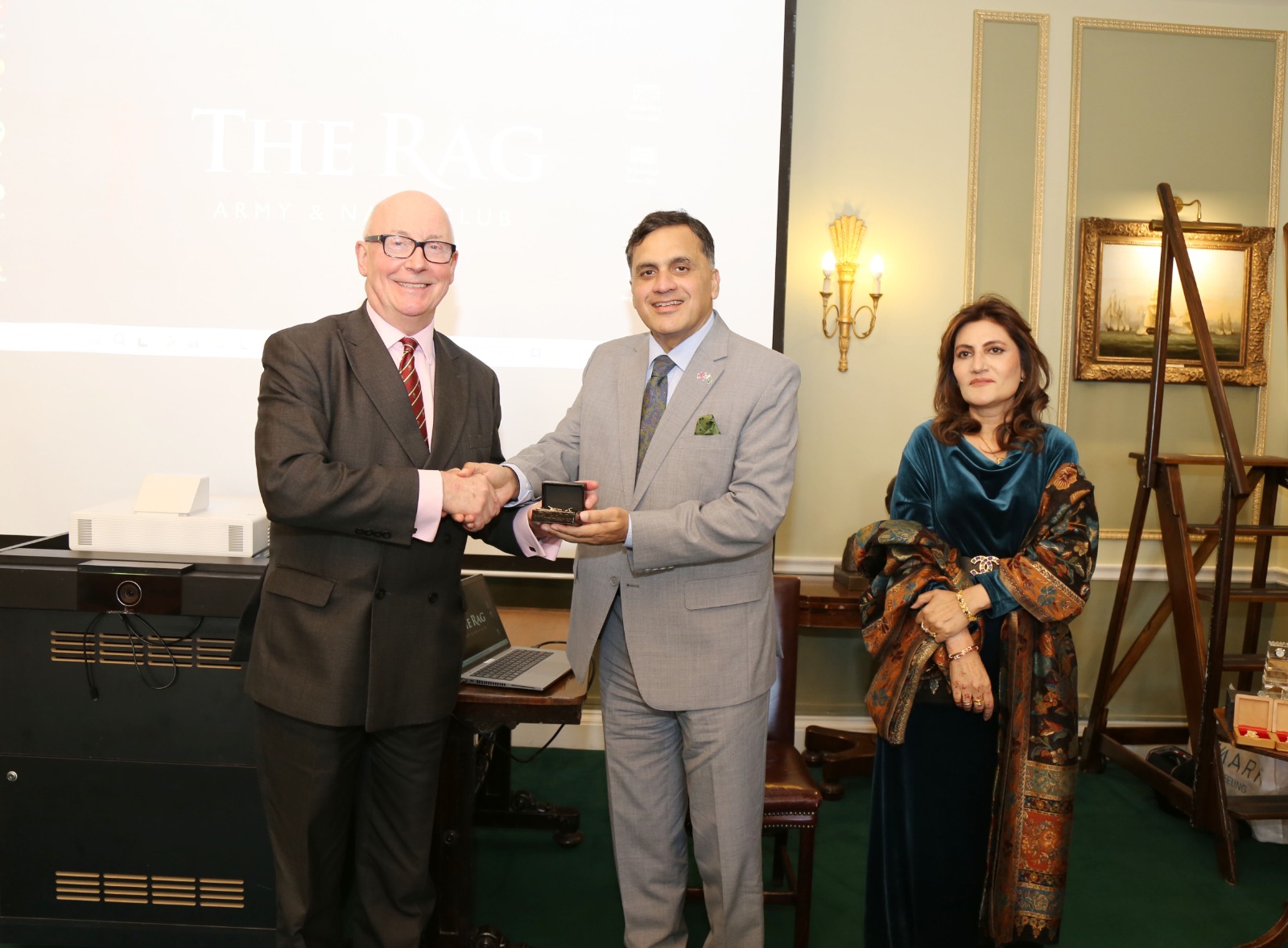
High Commissioner @DrMFaisal and his spouse @drsarahnaeem2 attended, as guests of honor, a distinguished gathering of the Quetta Association at the Army & Navy Club, London.
Military Officers from the Defence Wing of Pakistan High Commission, London, with their families also attended.
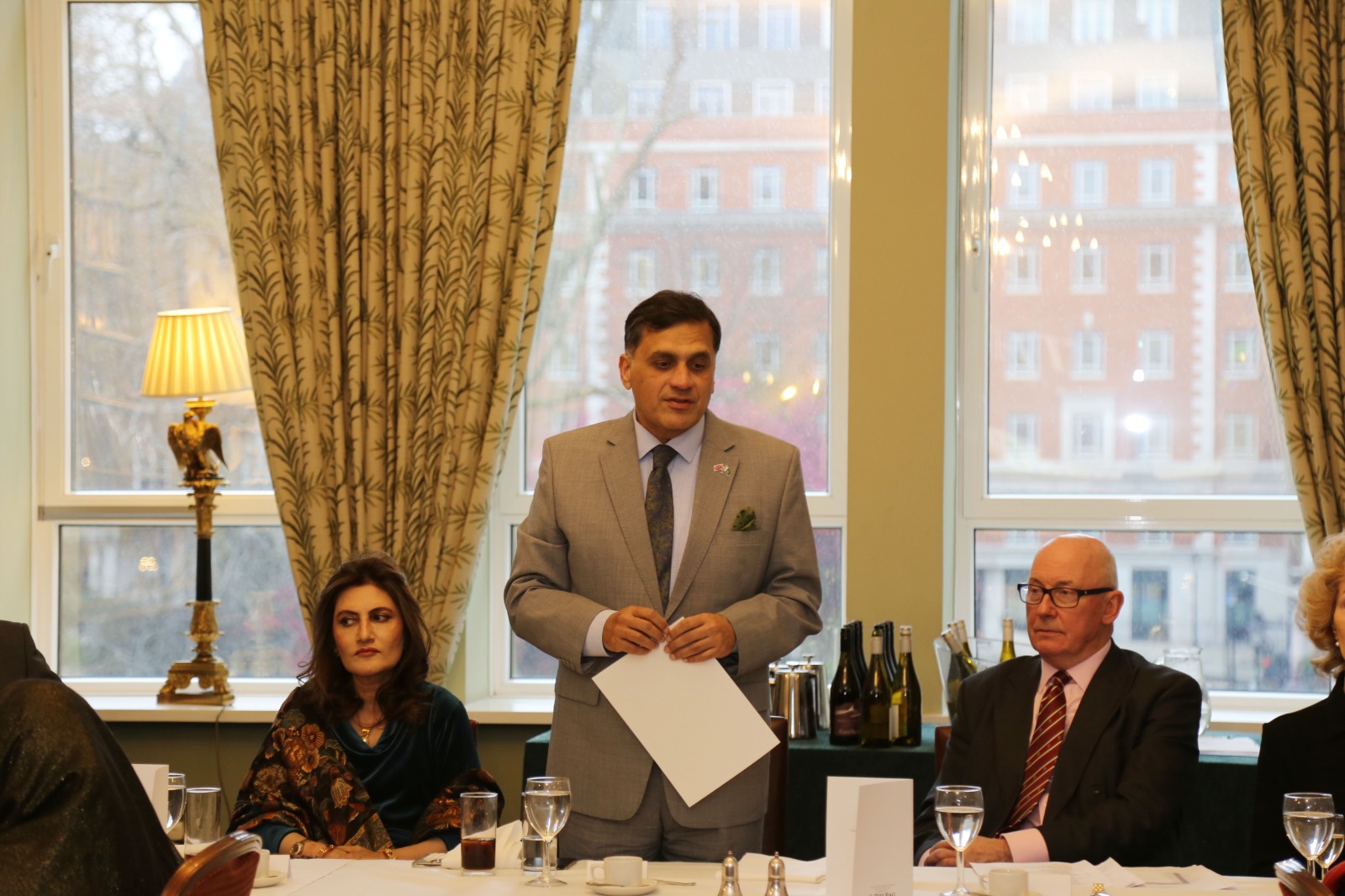
Quetta Association brings together British officers who graduated from the prestigious Command & Staff College, Quetta, Pakistan. The institution has produced outstanding military leaders, including British Field Marshals Sir Claude Auchinleck and Sir William Slim, whose leadership during the Second World War remains widely respected. Field Marshal Syed Asim Munir is also graduate of this prestigious institution.
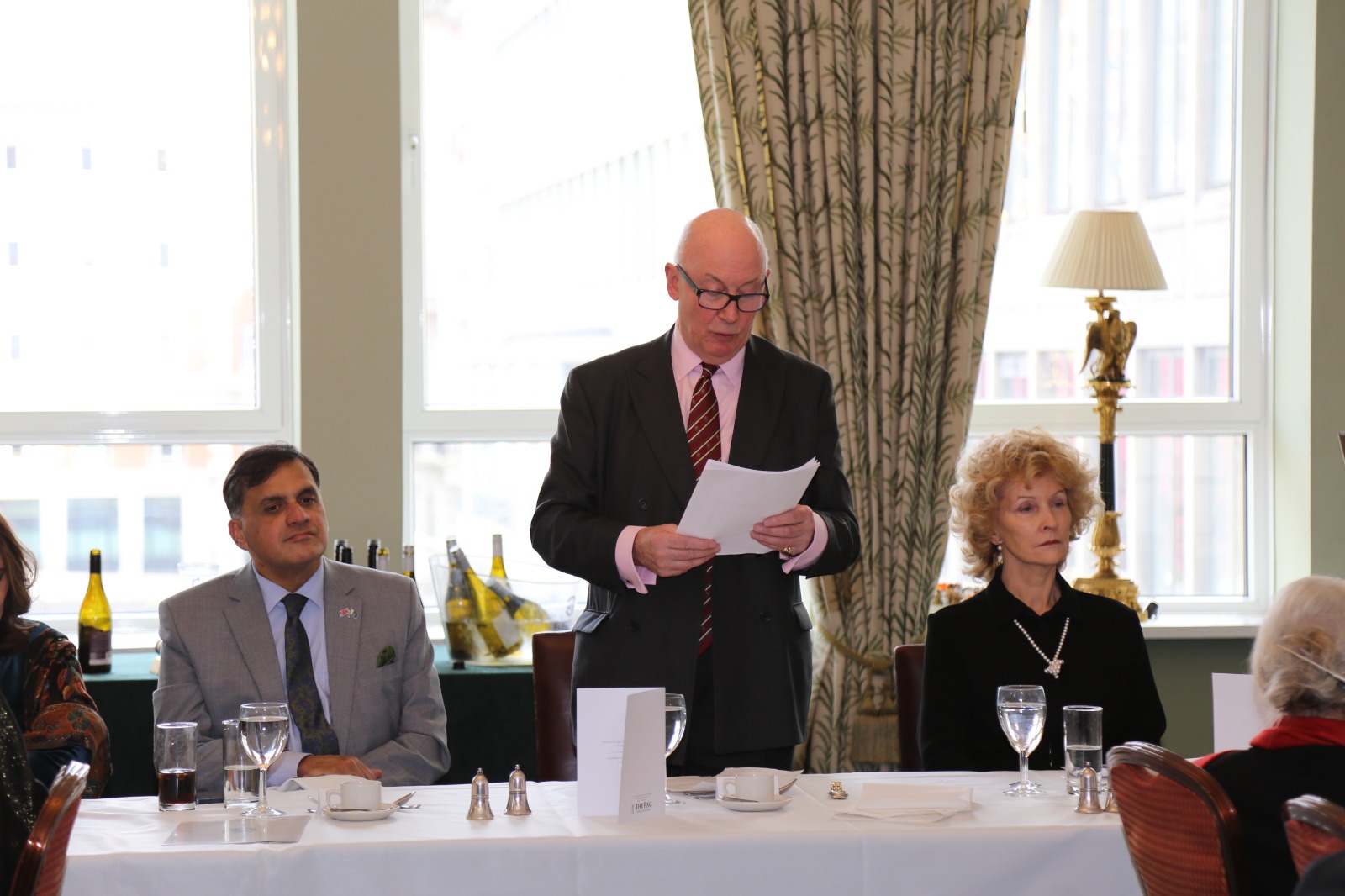
The High Commissioner appreciated the annual gathering that underscored the Association’s enduring role as a vital bridge linking the British Army and Pakistan Army through shared professional heritage and camaraderie.
Decorated British military officers and their families paid glowing tributes while referring to the hospitality accorded by Pakistan during their stay in Quetta.
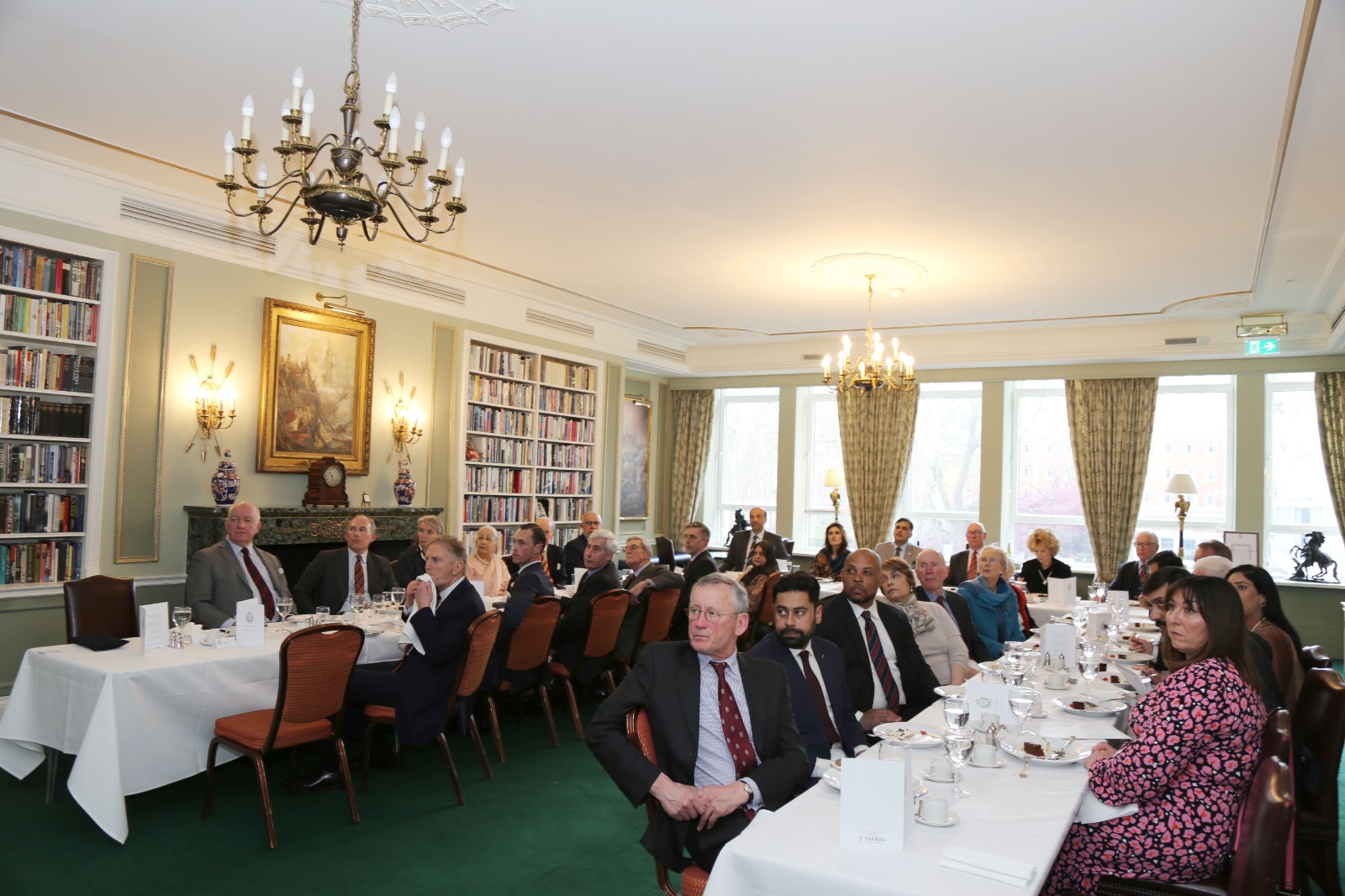
Graduate senior British Officers present at the gathering included Lt. Gen. Sir Alistair Irwin KCB CBE (1980) and Maj. Gen. Seumus Kerr CBE (1985).
Mementos were exchanged between the British officers and officers of @PakistaninUK.
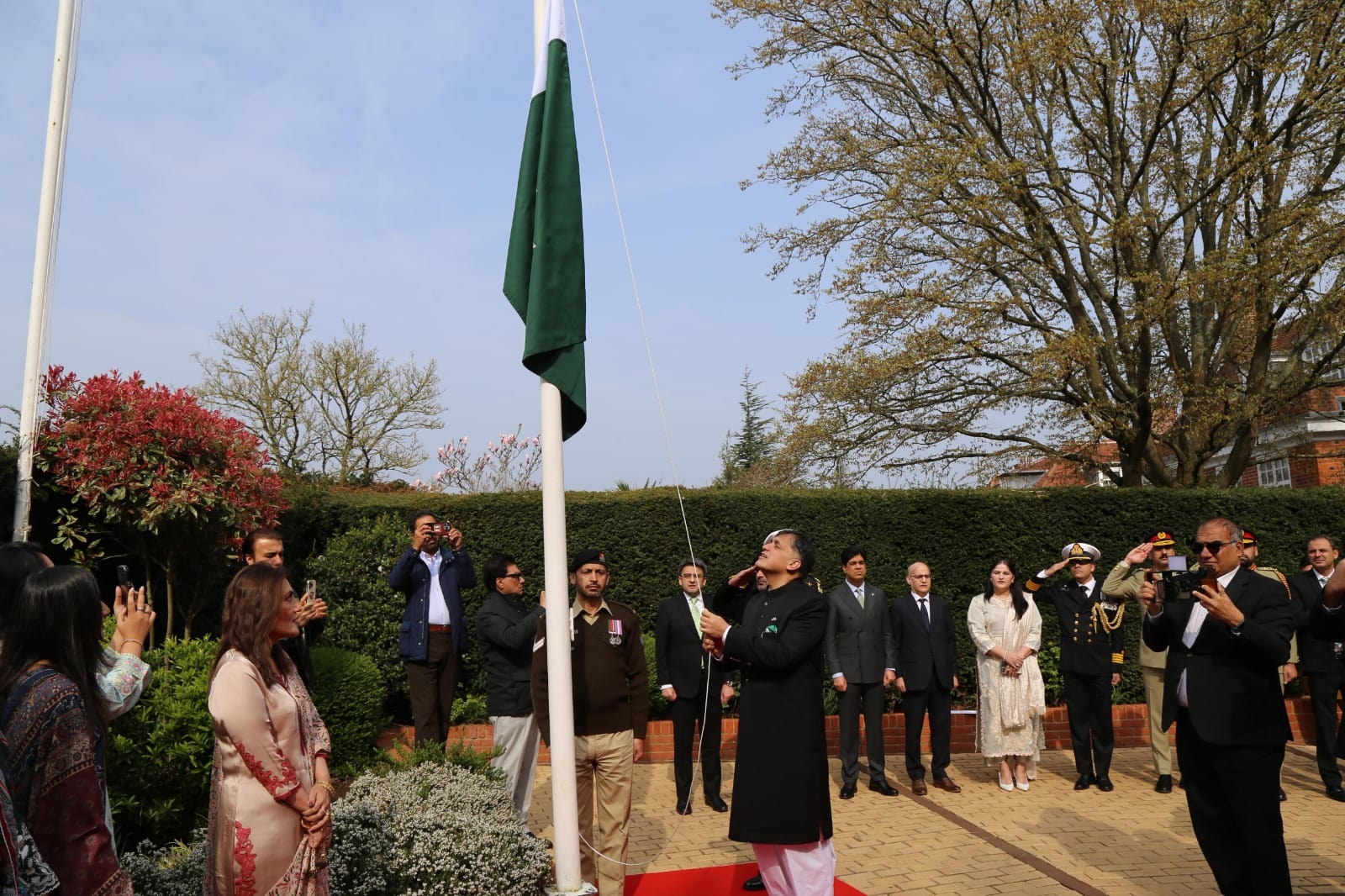
In a simple and dignified ceremony held at Pakistan House, London, the High Commissioner of Pakistan to UK Dr. Mohammad Faisal raised the Pakistan Flag on the occasion of Pakistan Day.
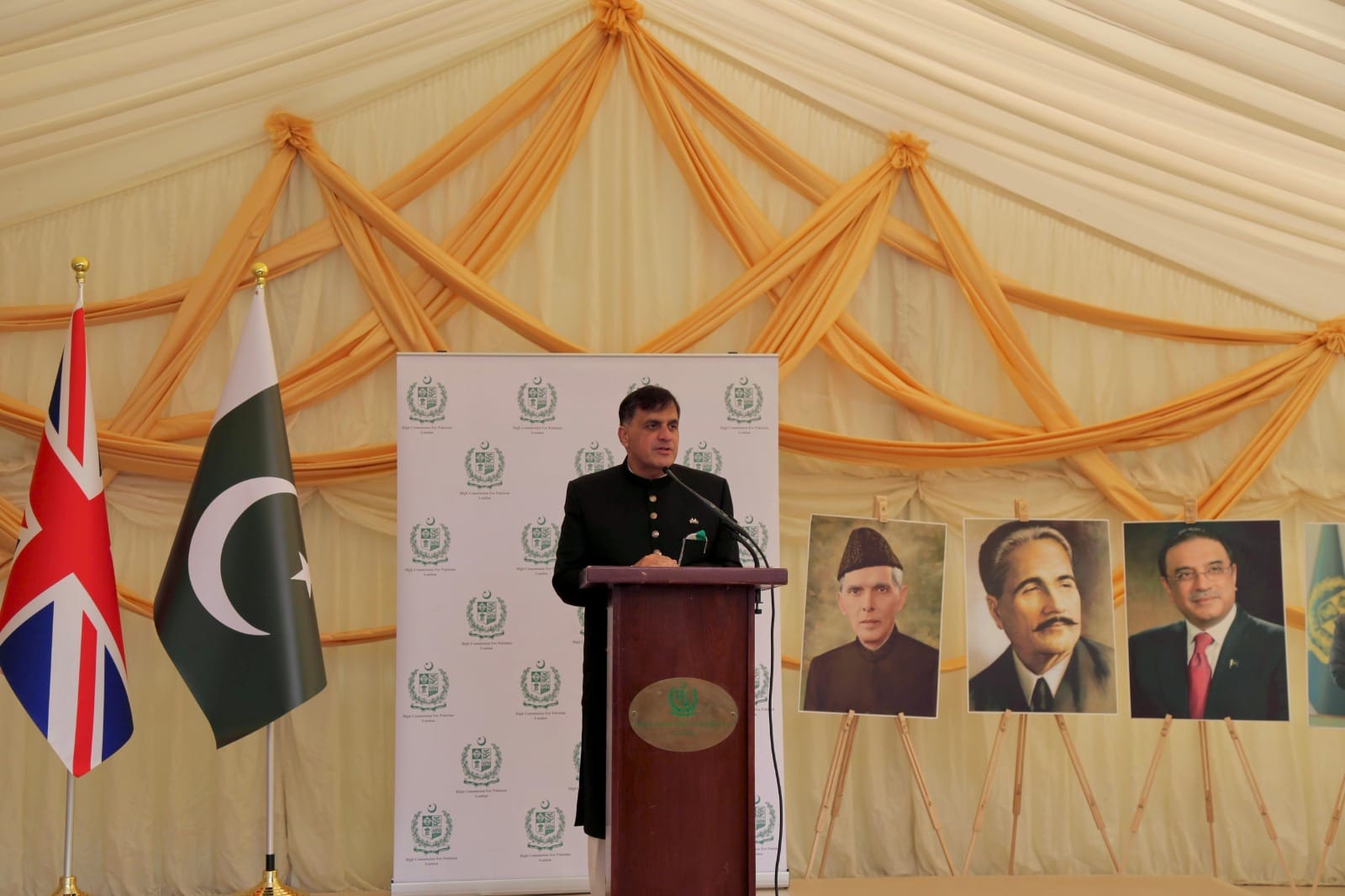
The ceremony was attended by Officials of the High Commission, British – Pakistanis and Media representatives.
Messages of the President, the Prime Minister and Deputy Prime Minister / Foreign Minister were read out.
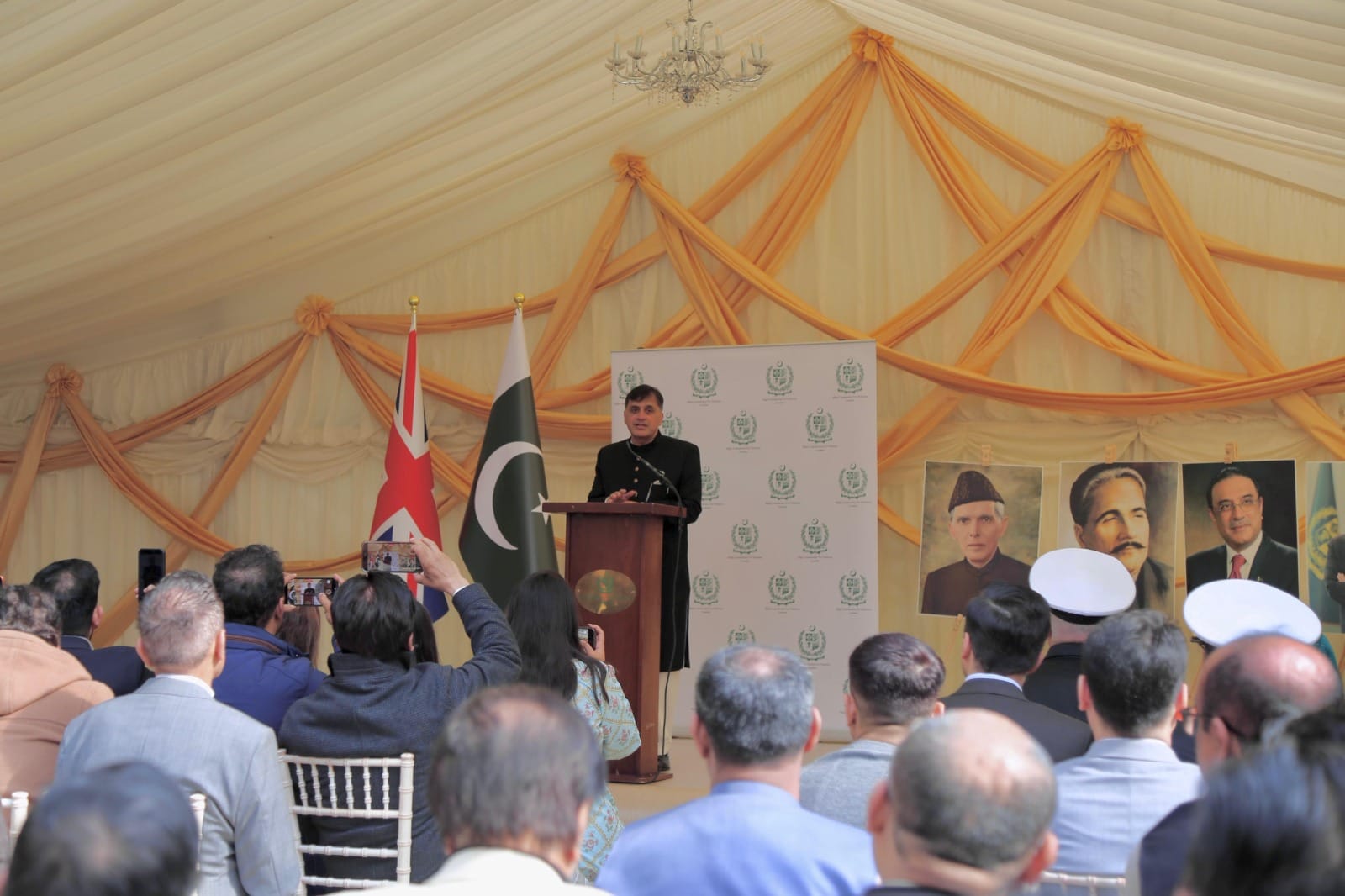
In his keynote address, the High Commissioner said that Pakistan Day was a tribute to our founding fathers who united the Muslims of Indian sub-continent where they could live independently as a Nation and live according to their customs & traditions.
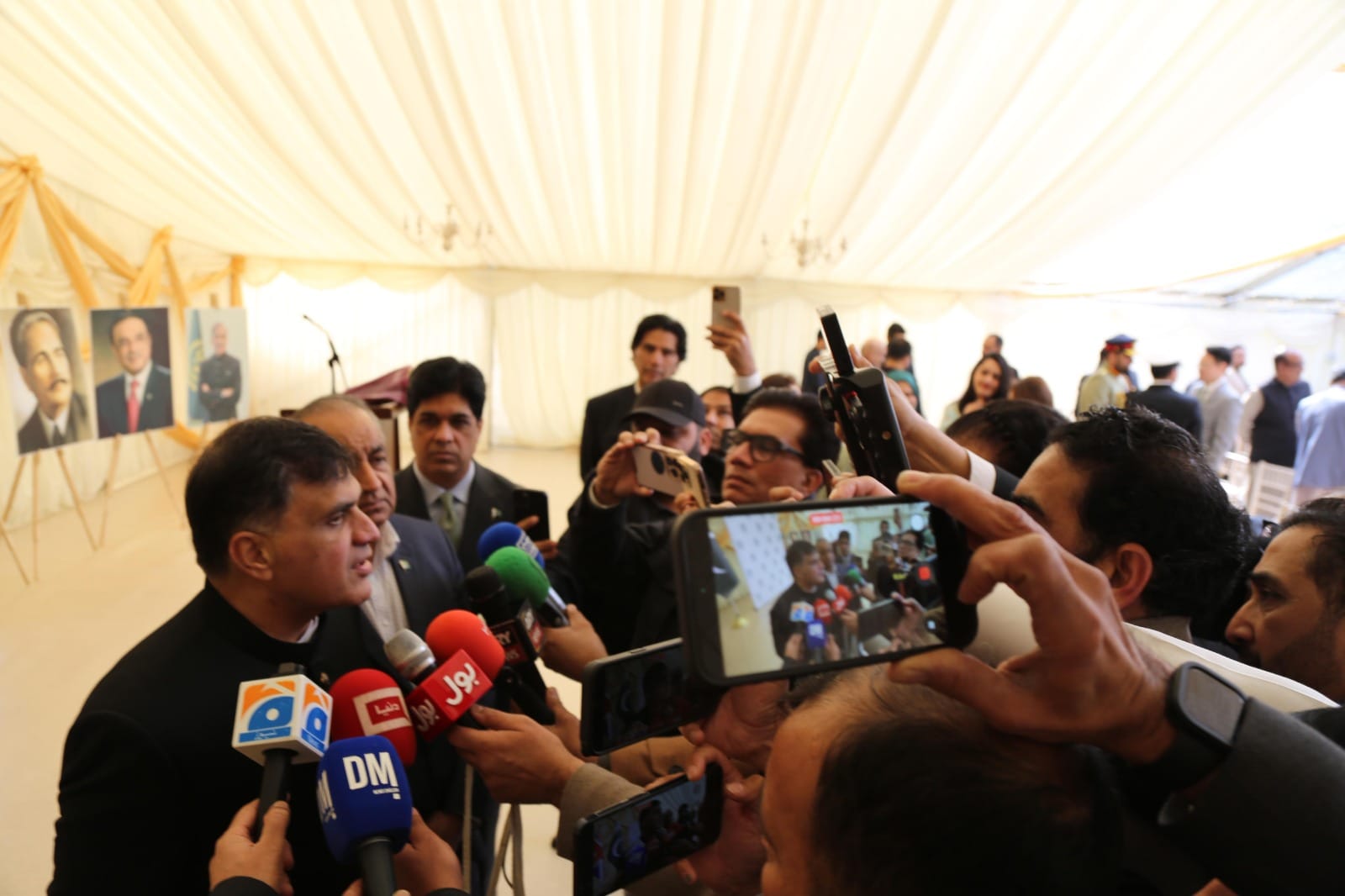
Dr. Faisal stated that Pakistan had always professed peace and stability in the region. However, Pakistan will not tolerate any aggression from neighbouring countries.
The High Commissioner said that Pakistani nation, despite the difficulties, remains resilient and demonstrates courage & perseverance.
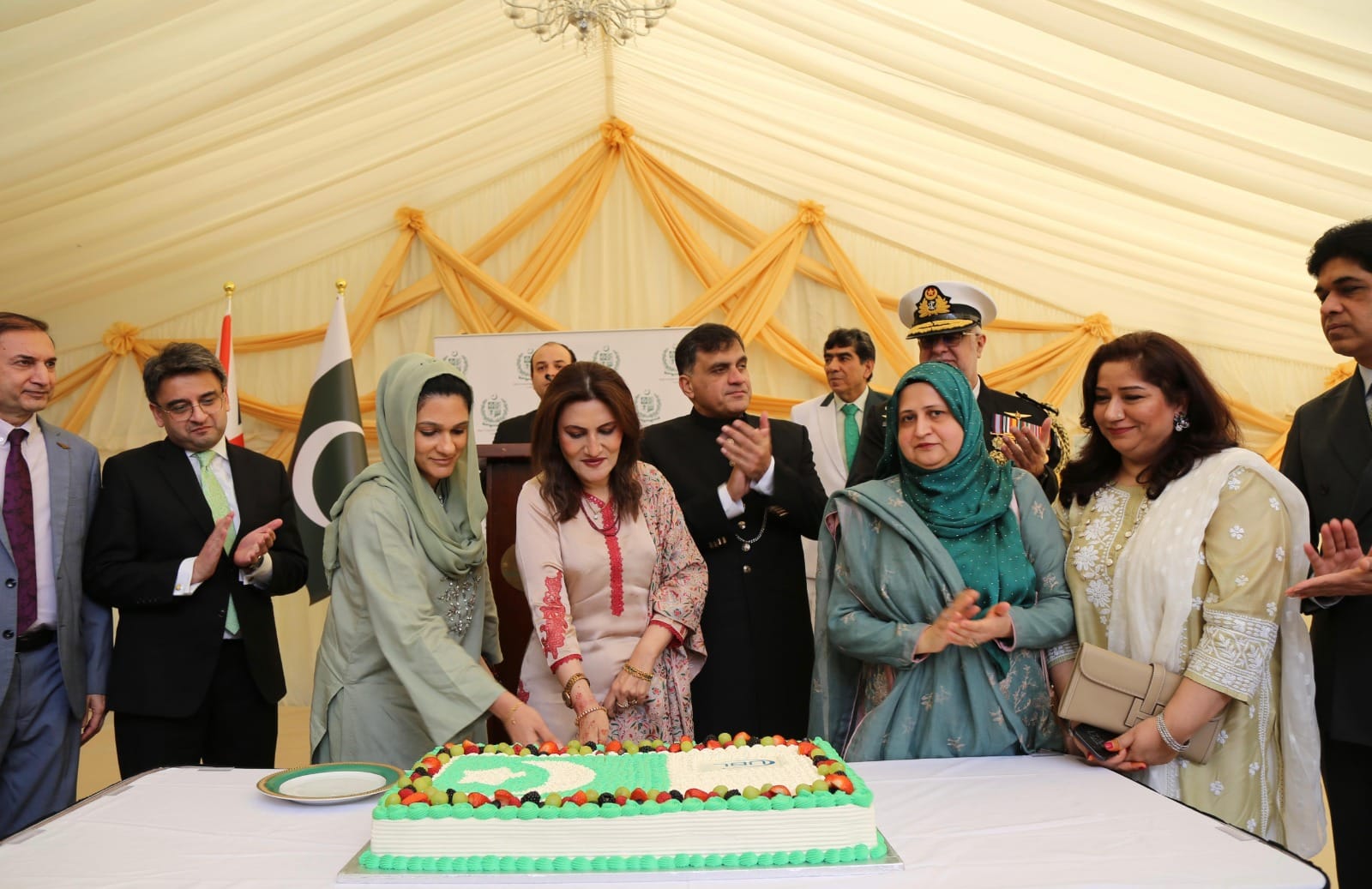
Dr. Mohammad Faisal stated that, in line with the instructions of the Prime Minister, the Deputy Prime Minister / Foreign Minister and the Federal Cabinet, Pakistan High Commission London is implementing strict austerity measures. However, these measures will not affect the performance & working of the High Commission.
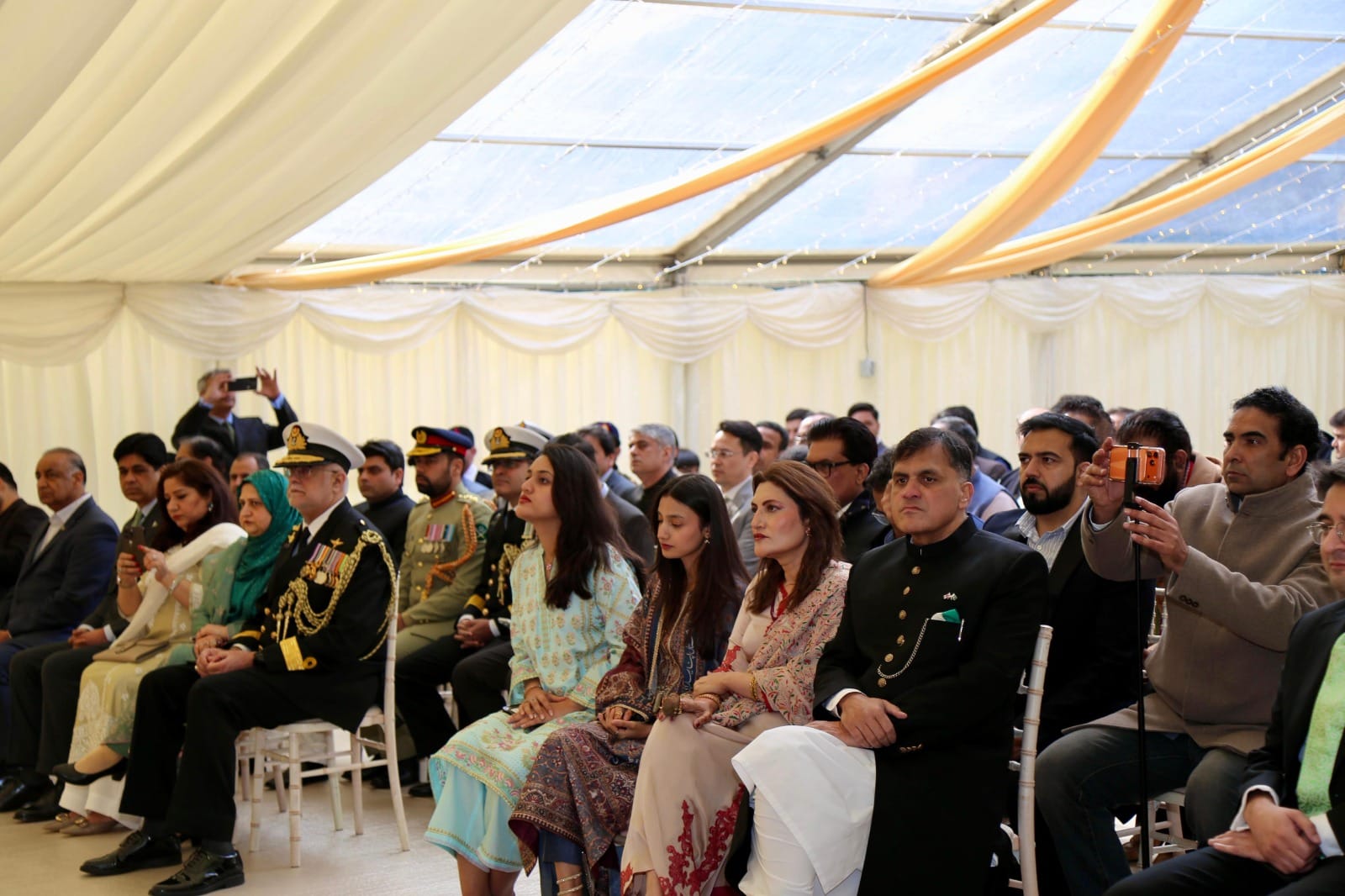
He acknowledged the remarkable contributions of Pakistani diaspora in UK and their extraordinary performance in various fields. He said that their achievements are a source of immense pride for Pakistan.
The High Commissioner expressed solidarity with the people of Indian Illegally Occupied Jammu and Kashmir and committed to continue diplomatic, moral and political support for their right to self determination under UN Resolutions.
London
23rd March, 2026


How the World Is Forced to Fund the Iran War

Scholars Urge UN to Protect Iran’s Scientific Sites Amid Airstrikes Global Academics Warn Attacks Threaten Research, Health, and Civilian Safety

How Iran Humiliated U.S. and Israeli Power


-

 Europe News1 year ago
Chaos and unproven theories surround Tates’ release from Romania
-

 American News1 year ago
Trump expands exemptions from Canada and Mexico tariffs
-

 American News1 year ago
Trump Expels Zelensky from the White House
-

 Pakistan News9 months ago
Comprehensive Analysis Report-The Faranian National Conference on Maritime Affairs-By Kashif Firaz Ahmed
-

 American News1 year ago
Zelensky bruised but upbeat after diplomatic whirlwind
-

 Art & Culture1 year ago
The Indian film showing the bride’s ‘humiliation’ in arranged marriage
-

 Pakistan News1 year ago
Can Pakistan be a Hard State?
-

 Art & Culture1 year ago
International Agriculture Exhibition held in Paris