
Pakistan News
One chief to rule all military services

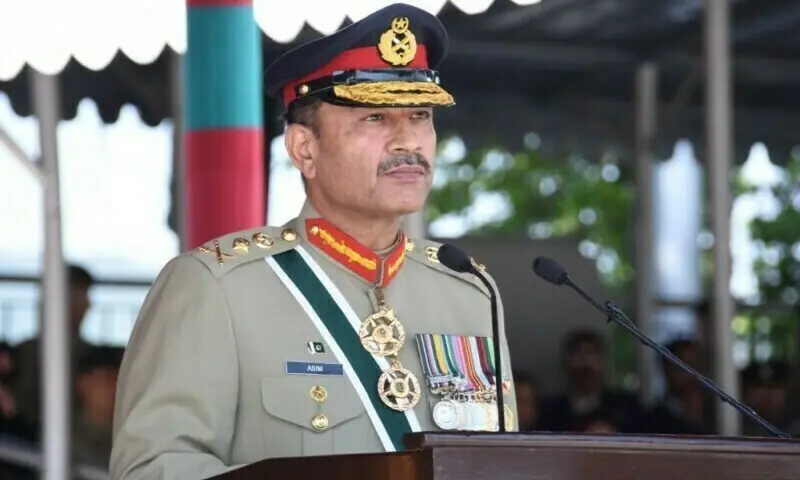
The proposed 27th Constitutional Amendment, which would overhaul Article 243 and recast Pakistan’s military command hierarchy, is the most ambitious restructuring effort in decades and perhaps the most contentious as it collides with entrenched institutional cultures and the fragile equilibrium between civilian and military power.
Its implementation may prove far more difficult than its drafters imagine. The plan collides with entrenched institutional cultures, long-standing inter-service rivalries, and the delicate balance between civilian oversight and military autonomy that has, at least in theory, defined Pakistan’s power structure since 1973.
At the heart of the bill lies the deceptively simple premise of modernising defence coordination by creating a Chief of Defence Forces (CDF) and abolishing the office of the Chairman Joint Chiefs of Staff Committee (CJCSC).
But in practice, the reform would elevate the army chief to a constitutionally enshrined position of supremacy — combining operational command with overarching control of all services.
Article 243 overhaul marks a leap towards military centralisation and consolidation of uniformed supremacy
For over four decades, the CJCSC has served as the symbolic head of the armed services, designed to ensure coordination among the Army, Navy, and Air Force.
In practice, the role remained largely ceremonial, with the army — for over two and a half decades — reluctant to rotate it to other branches.
The proposed amendment would dissolve the post entirely on Nov 27, 2025, coinciding with the retirement of the current CJCSC, Gen Sahir Shamshad Mirza, and make the chief of army staff concurrently the Chief of Defence Forces — placing all three services under his authority.
Former human rights minister and defence academic Dr Shireen Mazari highlights an ambiguity left unaddressed in the bill.
“With the end of the CJCSC position, would the joint chiefs of staff committee also be dissolved?” she asks.
If so, which forum would replace it for coordination among the three services though the CJCSC’s ineffectiveness is well known.
The supporters of the legislation argue that the change will streamline decision-making and enhance unified command.
However, critics see it as institutional capture. “By placing an army officer as the Chief of Defence Forces with authority over the Air Force and Navy, the proposed system invites institutional imbalance and potential disaster,” warns retired Lt Gen Asif Yasin Malik, a former defence secretary.
“This amendment appears tailored to benefit a specific individual rather than to strengthen the defence structure,” he adds.
The criticism cuts to the core of the country’s military culture — the deep-seated rivalries among the Army, Air Force, and Navy, each guarding its operational turf and doctrine.
The Air Force and Navy have long resisted attempts to subordinate their autonomy under land-centric command.
Harmonising these distinct traditions — air power’s rapid, decentralised decision cycles versus the army’s hierarchical chain of command — has historically been the Achilles’ heel of every “joint” reform effort.
A critical question under the new system is who would control transfers, postings, and promotions in the Air Force and Navy.
Would the two service chiefs readily cede that authority? Dr Mazari cautions that if promotions in the Air Force and Navy were to be decided by an army-origin CDF, it “could lead to festering resentments and affect morale in the long run”.
She raises another hypothetical scenario: “What if there is a Marshal of the Air Force or Admiral of the Fleet while the COAS is a four-star general — will they then be under a four-star army officer if the latter is the CDF?” she asks. “Too much has been left to ad hoc and arbitrary decisions.”
Equally consequential is the proposal to create a Commander of the National Strategic Command, a position overseeing the country’s nuclear forces.
Under the amendment, the commander would be appointed by the prime minister on the army chief’s recommendation and must be chosen from within the army.
That subtle shift moves control of the country’s most sensitive assets away from the collegial National Command Authority (NCA), designed to ensure civilian oversight and inter-service balance, toward a single service.
Dr Mazari warns the change could have grave operational implications.
“Effectively, all nuclear weapons and delivery systems will be under the army’s control, including second-strike missiles which normally fall under naval command,” she says.
“This could lead to command-and-control problems and time delays, especially in a war-like situation.”
Her concerns recall a rare moment of institutional dissent — the 2019 National Security Committee meeting after the Balakot strikes — when, according to retired Lt Gen Malik, the then-army chief Gen Qamar Bajwa advised restraint but was reportedly overruled by the air chief and the CJCSC.
“Under the proposed arrangement, would such dissent, and the powerful response it ensured, even be possible?” he asks pointedly.
Perhaps the most controversial innovation lies in the clauses granting life-long constitutional protection to officers elevated to five-star ranks — field marshal, marshal of the air force, or admiral of the fleet.
These officers would “retain rank, privileges and remain in uniform for life”, removable only through impeachment under Article 47 and protected by immunities “similar to those enjoyed by the president” under Article 248, applied mutatis mutandis.
The language is designed to legalise the extraordinary promotion of Gen Asim Munir to field marshal following the India-Pakistan confrontation in May this year.
What looks ceremonial on paper, however, amounts to a permanent legal armour around an unelected officeholder — “a parallel authority insulated from the very rule of law it is sworn to defend”, as one constitutional lawyer puts it, asking not to be named.
Such provisions blur the line between honour and power.
“Even in the United States, the chairman of the joint chiefs does not wield absolute powers,” notes Lt Gen Malik.
“Creating lifetime immunities for military officers upends the very idea of civilian supremacy”. The supporters of the amendment, including government ministers, argue the changes merely formalise existing practices.
Yet the bill remains ambiguous about the tenure of the service chiefs.
Minister of State for Law and Justice Barrister Aqeel Malik told reporters that there was “no need for a fresh notification” on the army chief’s tenure, since existing legal provisions already establish a five-year term under the Army Act as amended by the 26th Constitutional Amendment.
But such reassurances overlook a deeper concern, which is that the proposed amendment will move the defence management from statute to constitutional entrenchment, making future civilian corrections exponentially harder.
Military affairs expert Muhammad Faisal, a doctoral researcher in Sydney, sees the bill as “the first phase” of a broader restructuring.
“There could be more updates coming with changes in the Army Act and NCA Acts to reflect new proposals,” he says.
“This could also lead to the restructuring of strategic forces, currently administered by three services separately, into a unified single command.”
That trajectory — toward centralisation rather than coordination — captures the tension at the heart of Pakistan’s military politics. Every attempt at “jointness” risks hardening into hierarchy because institutional habits and prestige are resistant to reform.
The stakes are profound. The country’s Constitution has endured repeated experiments in balancing military power and civilian authority.
A Chief of Defence Forces position can be created, as many democracies have done, through statutory reform subject to parliamentary review.
But embedding such a role in the Constitution transforms it from an administrative necessity into a permanent political reality, one that cannot easily be undone.
Ultimately, the question is not whether Pakistan needs a modernised defence structure. However, it definitely needs to be updated.
The question is whether modernisation must come at the cost of institutional equilibrium. History offers a cautionary note that once military power is constitutionalised, it rarely yields ground voluntarily.
Article 243 was meant to preserve civilian command over the armed forces. The 27th Amendment risks rewriting it into a charter of military supremacy.
Published in Dawn, November 9th, 2025
Header image: Chief of Army Staff Field Marshal General Asim Munir addressing the passing out parade of the Pakistan Military Academy in Khyber Pakhtunkhwa’s Kakul on April 29. — ISPR










Pakistan News
CELEBRATES PAKISTAN’S 79TH INDEPENDENCE DAY AND 150TH BIRTH ANNIVERSARY OF QUAID-E-AZAM MOHAMMAD ALI JINNAH IN FRANCE

Paris ( Imran Y. CHOUDHRY):- On the occasion of the 79th Independence Day of Pakistan, Ambassador Mumtaz Zahra Baloch hoisted national flag to the tune of the national anthem at the Embassy of Pakistan, Paris and welcomed distinguished members of the Pakistani community including large number of children.
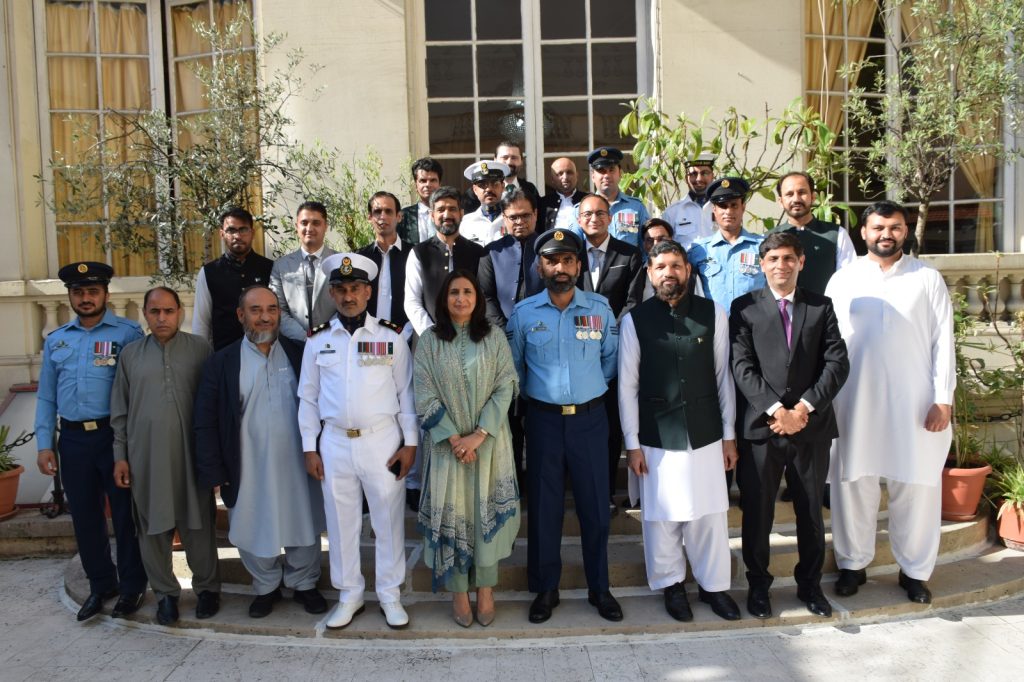
Messages of the President, the Prime Minister and Foreign Minister of Pakistan were read out on the occasion.
Congratulating all on the Independence Day, the Ambassador said that 14th August was truly auspicious as it brought together the entire nation – in celebration, in paying homage to the Quaid-e-Azam and other leaders of the freedom movement, in remembrance of the supreme sacrifices of our forefathers and drawing inspiration from our glorious past and the tremendous achievements over the decades.
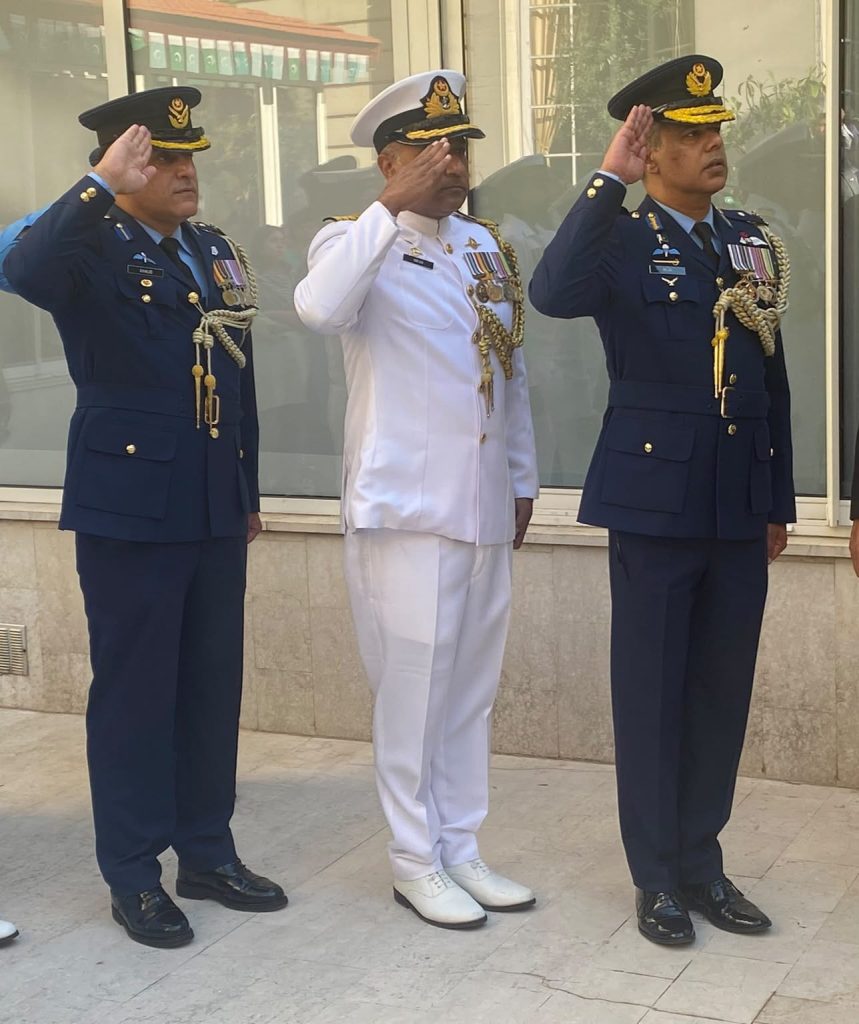
The Government of Pakistan is observing the current year – 2026 – as the “Year of Quaid-e-Azam Muhammad Ali Jinnah” to mark his 150th birth anniversary, she added. The great intellectual vision of Quaid requires the nation to uphold his principles and play its due role in the development and progress of Pakistan. The Ambassador highlighted that Quaid-e-Azam had given the nation three golden principles, faith, unity and discipline and adherence to these principles would lead the nation towards a bright future for the generations to come.
Ambassador Baloch said that as we celebrate our freedom we should remember our Kashmiri and Palestinian brothers and sisters, who have been struggling for over seven decades for their freedom and right to self-determination. She reaffirmed Pakistan’s political and diplomatic support to the people of the Indian Illegally Occupied Jammu and Kashmir (IIOJK) and Palestine for their legitimate rights.
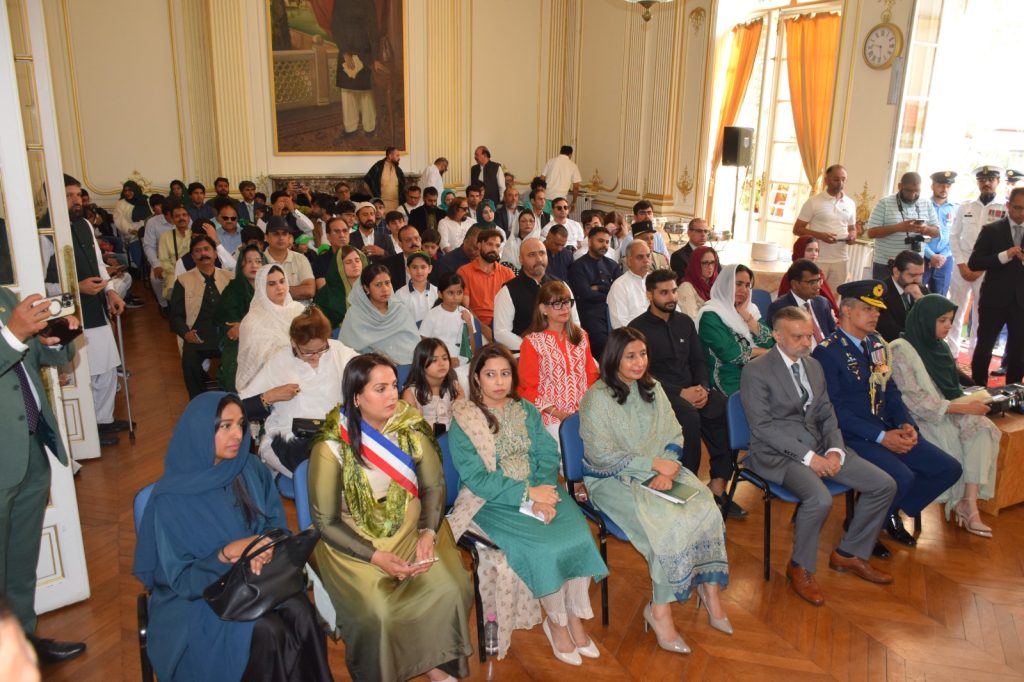
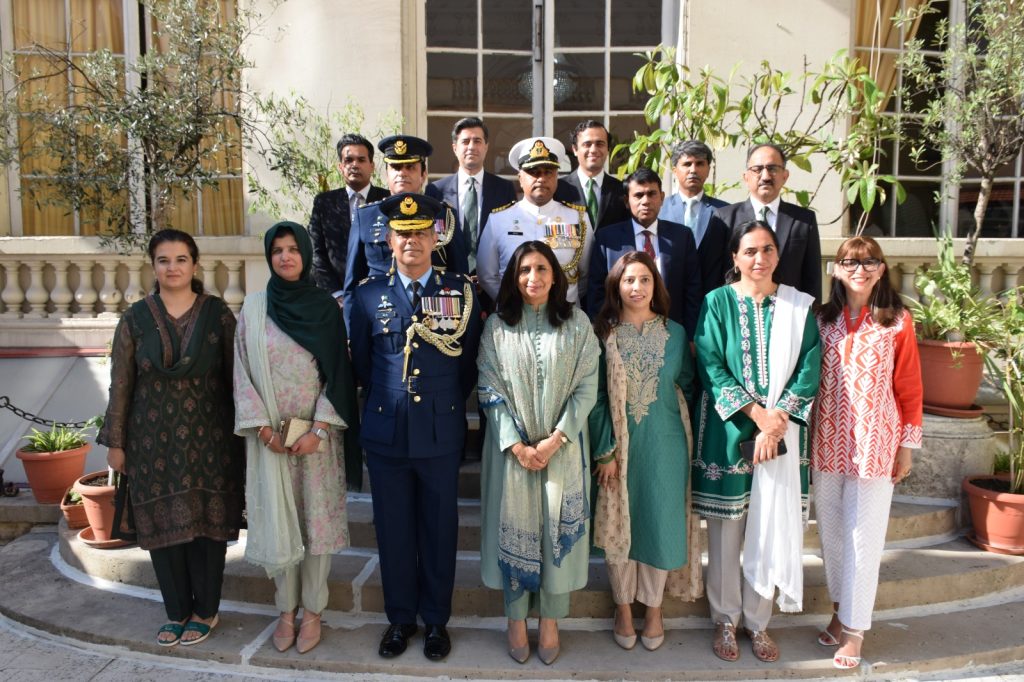
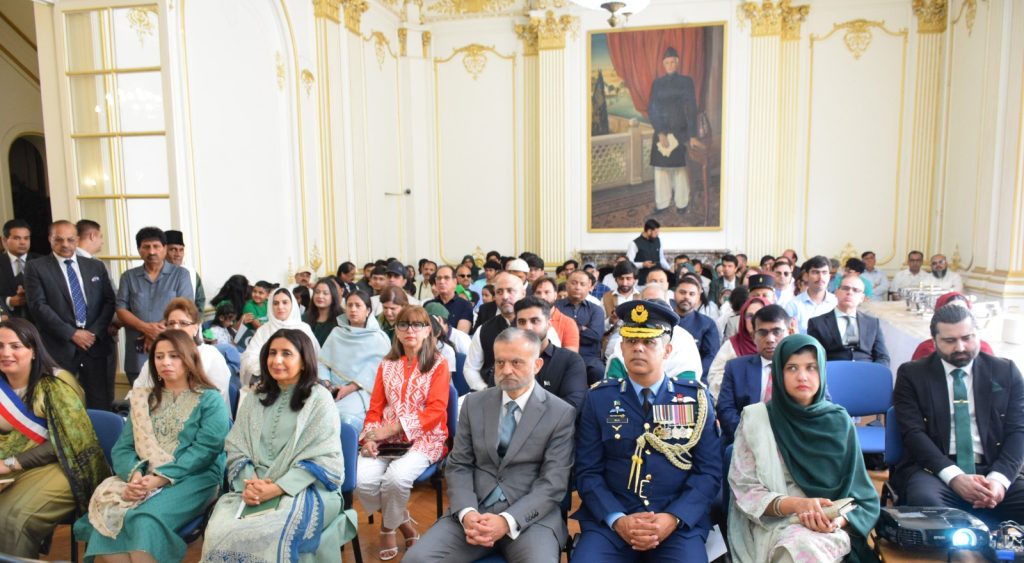
Ambassador also appreciated the contributions of Pakistani diaspora in France in promoting Pakistan-France relations. She reiterated Embassy’s fully commitment to continue to facilitate Pakistanis based in France.
Later, the Ambassador inaugurated the ‘historic photo exhibition’ based on the life and works of Quaid-e-Azam Muhammad Ali Jinnah at the Embassy. The exhibition showcased a remarkable collection of
archival records and photographs chronicling the visionary leadership and enduring
legacy of the founder of Pakistan. The guests especially the children took a keen interest in the exhibition and raised slogans of Pakistan Zindabad.
Pakistan News
Pakistan PUBG MOBILE team ‘4Thrives’ visited the Embassy of Pakistan in Paris, France.

Paris ( Imran Y. CHOUDHRY):- Ambassador Mumtaz Zahra Baloch today received the top professional Pakistan PUBG MOBILE team ‘4Thrives’, which is competing in the high-stakes competition, PUBG MOBILE World Cup 2026 Grand Finals at the Esports World Cup (EWC) being held in Paris.
The team members of ‘4Thrives’ briefed the Ambassador on the game and the hard work they all had put in to finish at the top of the qualifying round and reaching the Grand Finals. They were enthusiastic about their performance which has cemented their position among the world’s best PUBG MOBILE teams.
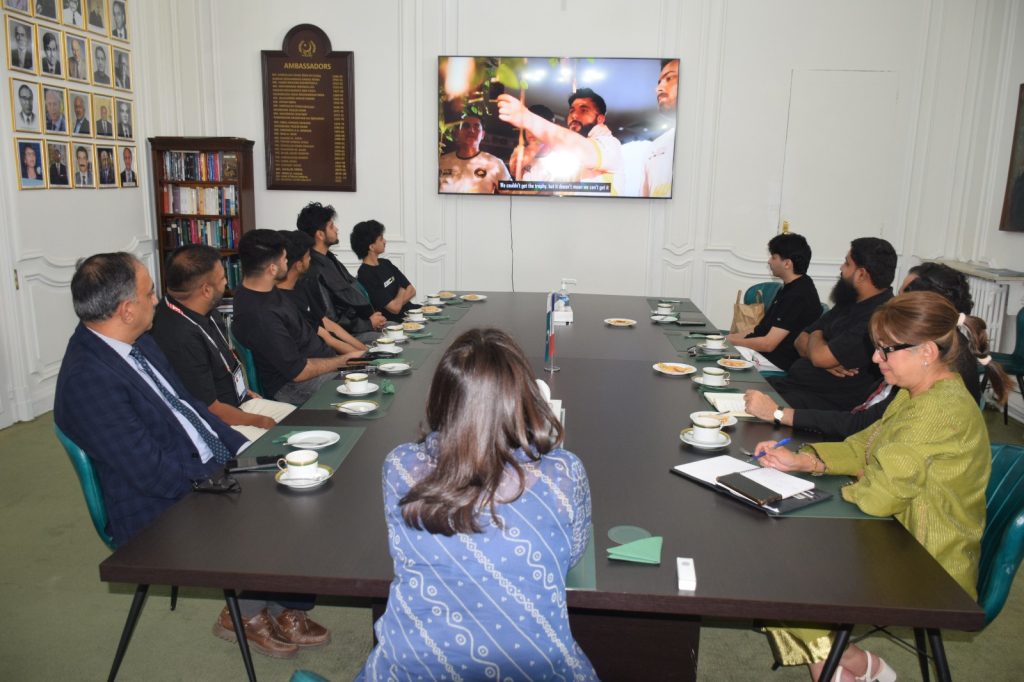
The Ambassador appreciated the team members for their enthusiastic participation and accomplishments and wished them success for the Grand Finals. She said the Pakistani nation has proudly witnessed the recent achievements of the 4Thrives team and expressed confidence that it would win the prestigious trophy in Paris as well.
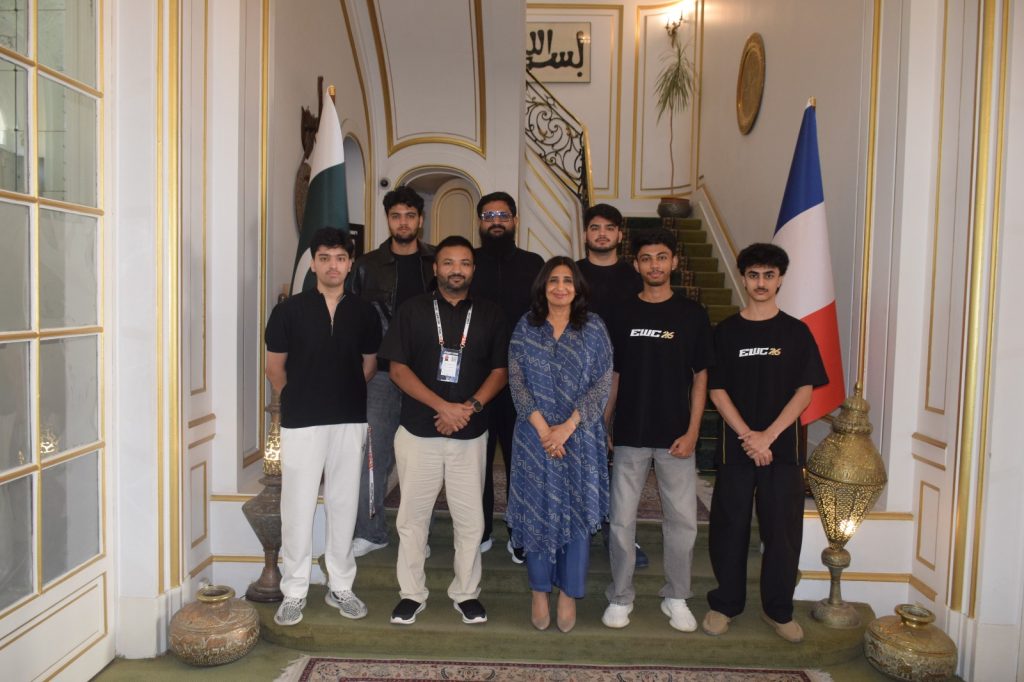
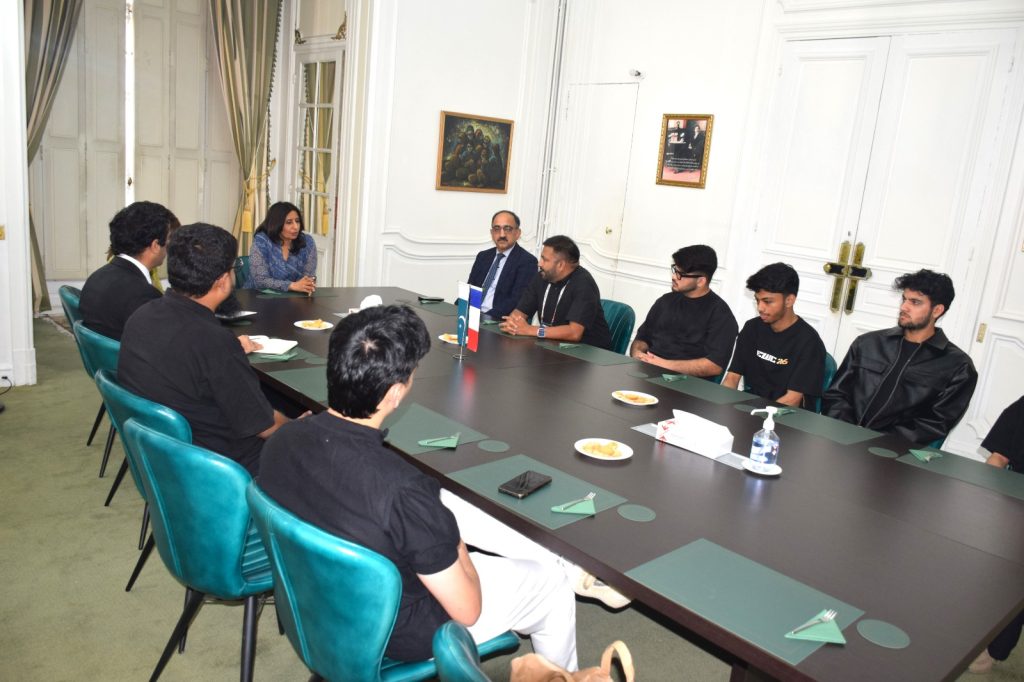
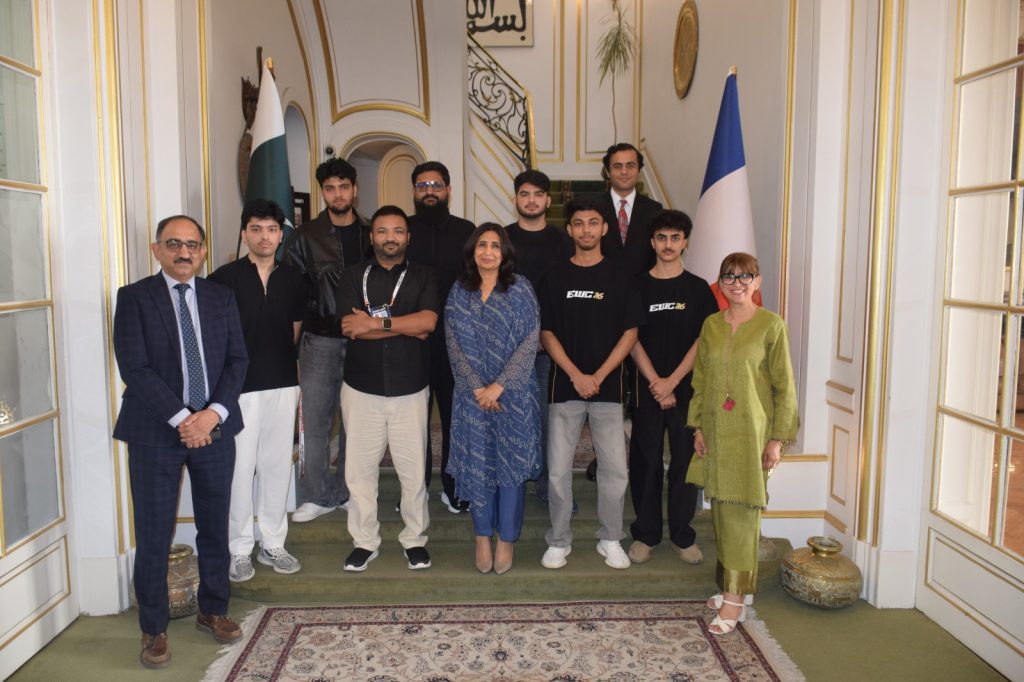
This is the first time that EWC is being held in Paris – a true global phenomenon represented by more than 2,000 players from 200 clubs and 100 different countries.
Let’s celebrate and cheer Pakistan PUBG MOBILE team ‘4Thrives’ for the Grand Finals this week!

Paris (Imran Y. CHOUDHRY) :- Former Press Secretary to the President, Former Press Minister to the Embassy of Pakistan to France, Former MD, SRBC Mr. Qamar Bashir analysis : The Mecca Joint Defence Agreement signed by Saudi Arabia, Türkiye and Pakistan is being described as a Muslim version of NATO. Turkish Foreign Minister Hakan Fidan himself said its collective-defence clause is technically similar to NATO’s Article 5: an armed attack on one member will be treated as an attack on all. Yet most commentary has concentrated on the pact’s wording, its possible expansion and whether it is aimed at Iran or Israel. The more important question has received less attention: what threat does each signatory actually perceive?
Without answering that question, analysis of the agreement remains incomplete. Alliances do not acquire meaning merely from ceremonial signatures. Their real character is determined by the dangers their members fear, the capabilities they contribute and the circumstances in which they are prepared to act.
For Saudi Arabia, the immediate security environment is deeply paradoxical. The kingdom has long relied upon the United States, but the presence of American forces and facilities across the Gulf can also attract retaliation whenever Washington uses regional territory or infrastructure in military operations against Iran.
Tehran has repeatedly maintained that its quarrel is not with Gulf societies as such, but with military threats launched from or supported through their territories. Whether one accepts Iran’s justification or not, the underlying dilemma is real: foreign protection can simultaneously become a source of exposure.
This raises a difficult question. If foreign bases had not facilitated attacks against Iran, would Tehran have attacked Gulf countries on the same scale? The answer cannot be proven, but the question exposes Saudi Arabia’s strategic vulnerability. Riyadh wants protection without remaining permanently hostage to decisions made by an external guarantor.
Threats from the Houthis in Yemen and Iran-aligned armed groups in Iraq remain serious, particularly for oil facilities, desalination plants, shipping and civilian infrastructure. Nevertheless, Saudi Arabia has spent heavily on modern aircraft, missiles, surveillance systems and air defence. These dangers alone do not fully explain the need for an Article 5-style pact with Türkiye and nuclear-armed Pakistan.
The wider concern is Israel’s expanding military reach and the fear that no regional state can assume it will remain permanently outside Israeli calculations. The “Greater Israel” project is not merely a slogan invented by Israel’s critics. It is a documented ideological and political current rooted in expansionist interpretations of biblical territory, including the most extreme vision of land stretching from the Nile to the Euphrates, and in revisionist Zionist ideas of sovereignty on both sides of the Jordan River.
Israel’s wars and military operations across Gaza, Lebanon, Syria and elsewhere have intensified regional fears that its use of force and territorial ambitions are becoming geographically unconstrained. Because the most expansive interpretation of Greater Israel encompasses territory belonging to several Arab states, including Saudi Arabia, Riyadh has legitimate reasons to treat this ideology and Israel’s growing regional reach as a long-term strategic threat.
The Mecca agreement therefore creates strategic depth, reduces Saudi Arabia’s exclusive dependence on Washington and strengthens the kingdom’s leadership position in the Muslim world.
Türkiye enters the pact with a different threat map. It possesses NATO’s second-largest army, an increasingly sophisticated defence industry, formidable drone capabilities, warship and helicopter production, and substantial operational experience in Syria, Iraq and the eastern Mediterranean.
Kurdish militancy and instability along Türkiye’s southern borders remain persistent threats, but Ankara is largely capable of managing these challenges without Pakistani or Saudi military intervention.
The more consequential concern is Israel. Turkish and Israeli rhetoric has become increasingly hostile, while their strategic interests collide in Syria, Gaza and the broader eastern Mediterranean. Türkiye’s conventional size gives it considerable strength, but Israel is widely understood to possess nuclear weapons, while Türkiye does not. This creates a dangerous asymmetry at the highest level of escalation.
Pakistan’s participation therefore adds deterrent weight, but it is essential not to overstate what has formally been agreed. The published language does not establish an explicit Pakistani nuclear umbrella over Türkiye or Saudi Arabia. Nor does it automatically commit Islamabad to nuclear retaliation.
Its value at this stage lies in strategic ambiguity. Any adversary contemplating extreme escalation must now consider the possibility of a broader response involving a nuclear-armed partner. That uncertainty itself can reinforce deterrence, provided consultation mechanisms, command arrangements and red lines are eventually clarified.
Pakistan’s principal state-based threat remains India. Its other challenges—including attacks linked to the Pakistani Taliban, militancy operating from Afghan territory and insurgency in Balochistan—are grave but fall mainly within the domain of counterterrorism and internal security.
Islamabad has also alleged external support for certain militant networks, including from India and Israel other hostile actors, therefore the possibility of hybrid warfare designed to weaken Pakistan cannot be ignored.
The real test for the pact would come during a future India-Pakistan war. Saudi Arabia enjoys extensive economic and political relations with India, while Türkiye also has interests that extend beyond its partnership with Islamabad. Would Riyadh provide intelligence, logistics, financing, air defence or diplomatic support? Would it risk its relationship with New Delhi?
The treaty’s collective-defence formula is powerful, but it does not necessarily mean that every member must respond identically or automatically declare war. Even NATO’s Article 5 requires each ally to take such action as it considers necessary. The Mecca pact’s credibility will similarly depend on agreed procedures, operational planning, military integration and, above all, political will.
Nor should the alliance be framed as an anti-Iranian “Sunni bloc.” That description is analytically shallow and politically dangerous. It imports a sectarian narrative into an agreement whose signatories explicitly maintain that it is not directed against Iran or any other particular country.
Western and regional media extensively are using the Sunni label as convenient shorthand, but repeating it can deepen the very divisions that have repeatedly weakened the Muslim world. It risks presenting Sunni and Shia states as natural enemies, even though they share geography, economic interests, religious bonds and responsibility for regional stability.
Iran has demonstrated formidable missile, drone and asymmetric capabilities and has proven ability to impose severe costs on the combined military might of both the United States and Israel and their alliance in the Middle East and elsewhere in the entire world.
A confrontation between Iran and the combined forces of Pakistan, Türkiye and Saudi Arabia would devastate the region, rupture trade and energy routes, inflame sectarian tensions and serve none of the four countries.
The rational objective of the Mecca alliance should therefore be deterrence, collective security and strategic autonomy—not the creation of another front in the Iran war.
The wiser long-term course is to keep the pact open and eventually build a structured security dialogue with Iran. Immediate Iranian membership may be politically unrealistic while war and mistrust persist, but inclusion should remain a strategic objective.
Egypt and other regional countries could also participate in a broader security architecture based on non-aggression, collective consultation, protected shipping lanes, economic connectivity and respect for sovereignty.
The three signatories must also wage an intelligent information campaign. Through official statements, diplomatic outreach, legacy media, social platforms and other forms of communication, they should consistently reject the description of the agreement as a “Sunni NATO.”
They should explain that the pact is intended to protect its members from aggression regardless of the aggressor’s religious, sectarian or national identity. It must not be allowed to become an instrument for turning Muslim countries against one another.
The Mecca agreement will become historic only if it does more than redistribute fear. Properly developed, it can reduce dependence on outside powers, deter Israeli or other aggression, give Pakistan additional diplomatic weight and create the nucleus of an inclusive regional security system.
Mishandled as a sectarian coalition, however, it could produce precisely the confrontation it claims to prevent. Its success will therefore be measured not by how many enemies it names, but by how many wars it prevents.


Media As A Bridge between Civilizations

China’s Fusion Breakthrough: Death Knell for the Oil Age

A Nation’s Real Strength Rests in Spirituality, Not Military Might


-
 Sports2 months ago
South Korea’s Yoo Useong Steps Onto the Global Strongman Stage as World Strongman Federation Professional Athlete
-

 Art & Culture1 year ago
A Survey of Mata-E-Zeest
-

 Europe News1 year ago
Chaos and unproven theories surround Tates’ release from Romania
-

 American News1 year ago
Trump expands exemptions from Canada and Mexico tariffs
-

 American News1 year ago
Trump Expels Zelensky from the White House
-

 Art & Culture1 year ago
Will Snow White be a ‘victim of its moment’? How the Disney remake became 2025’s most divisive film
-

 Pakistan News1 year ago
Comprehensive Analysis Report-The Faranian National Conference on Maritime Affairs-By Kashif Firaz Ahmed
-

 Entertainment2 years ago
Champions Trophy: Pakistan aim to defend coveted title as historic tournament kicks off today