
war
Iran’s Strategy: Stretch the War

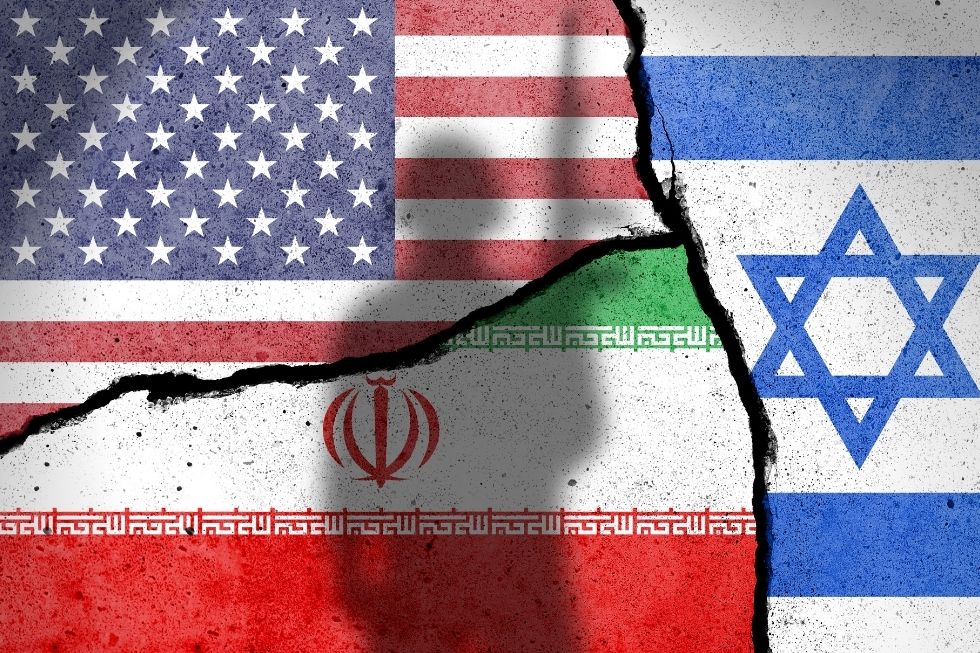
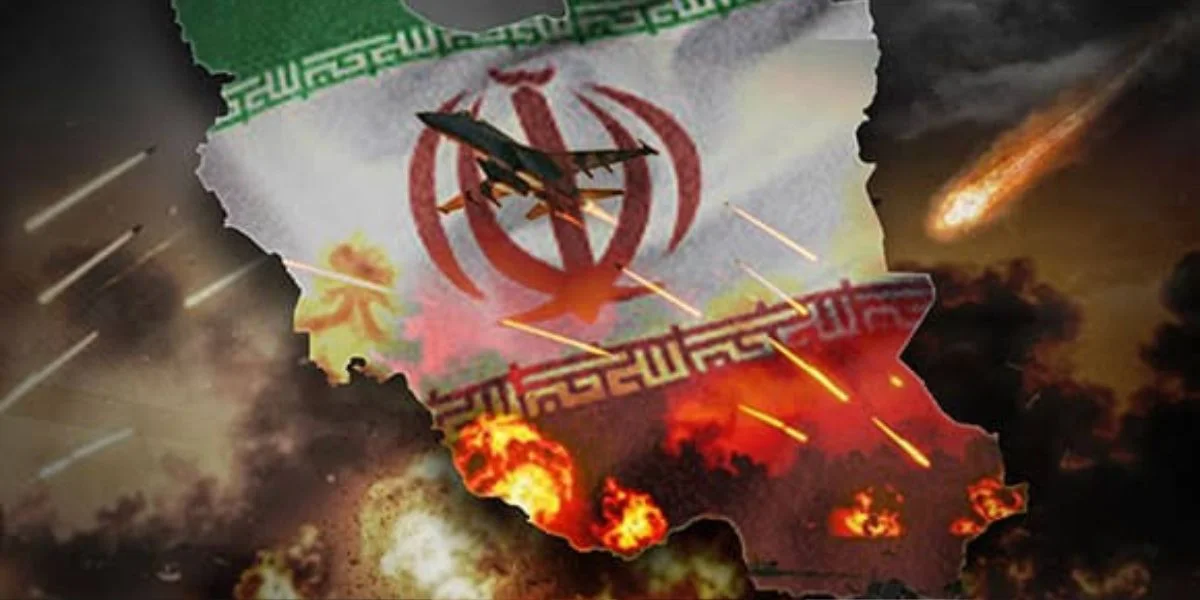
Paris (Imran Y. CHOUDHRY) :- Former Press Secretary to the President, Former Press Minister to the Embassy of Pakistan to France, Former MD, SRBC Mr. Qamar Bashir analysis : When President Donald Trump authorized direct military confrontation with Iran alongside Israel, many strategic planners expected a short and decisive military campaign. Precision strikes, intelligence dominance, and coordinated airpower were believed capable of crippling Iranian command centers and missile infrastructure within days. Yet what was envisioned as a swift operation is increasingly evolving into a prolonged conflict with humanitarian, geopolitical, and economic consequences extending far beyond the Middle East.
For decades, Israeli Prime Minister Benjamin Netanyahu had warned that confrontation with Iran was inevitable. Several U.S. administrations resisted being drawn into a full-scale war, wary of escalation and long-term entanglement in another Middle Eastern conflict. President Trump himself had previously pledged that his presidency would avoid new wars and focus on ending the long cycle of military interventions. However, the launch of coordinated strikes against Iran marked a historic shift, transforming strategic rivalry into direct confrontation.
The early assumption that Iran would collapse under aerial bombardment has not materialized. Instead, Tehran has adopted a measured and calculated strategy. Rather than unleashing its entire missile arsenal in dramatic retaliation, it has responded gradually, sustaining pressure while preserving strategic capabilities. Instead of triggering regime instability, the conflict appears to have consolidated national sentiment—particularly after the reported killing of Iran’s 86-year-old Supreme Leader during the opening phase of the war.
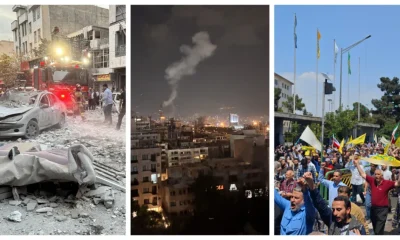
Within Iran, the death of a religious authority of such stature was expected by some analysts to create political fragmentation. Instead, it triggered widespread mobilization. In Shiite tradition, martyrdom carries profound historical and spiritual significance rooted in the memory of Karbala and the sacrifice of Imam Hussain. Mass mourning ceremonies, public processions, and national demonstrations reflected a collective resolve rather than internal collapse.
That emotional surge intensified dramatically after a tragedy that has come to symbolize the human cost of the conflict. In the southern Iranian city of Minab, a girls’ school was struck during the early days of the Israel-USA air campaign, killing more than 150 students and staff. The incident was independently confirmed by International media including Al-Jazeera and BBC. This deplorable and cruel act of Israel and the USA immediately became a powerful political and humanitarian symbol.
Images broadcast by Iranian media and reported by Al Jazeera showed thousands of mourners gathering in Minab’s central square for a mass funeral ceremony. Families held photographs of young victims while crowds chanted slogans condemning the United States and Israel.
The reaction from international institutions was swift. The United Nations human rights office called for a prompt and impartial investigation into the incident. Officials emphasized that schools, hospitals, and humanitarian facilities are protected under international humanitarian law and must not be targeted during armed conflict.
The Minab tragedy quickly resonated across the international media landscape. Major European outlets such as The Guardian, Le Monde, and Der Spiegel published editorials raising concerns about the humanitarian consequences of the escalating war. Commentaries in several European newspapers questioned whether the air campaign risked repeating the mistakes of previous conflicts in which civilian casualties undermined strategic objectives.
Public reaction extended beyond the media. Demonstrations erupted in several regions of the world. In cities across the United States—Washington D.C., New York, Chicago, and Los Angeles—anti-war protesters gathered to demand congressional oversight and an immediate halt to escalation.
Across parts of the Global South, governments including China, South Africa, Brazil, Turkey, Malaysia, and Pakistan voiced concern about the expanding conflict. In Pakistan and Iraq, protests outside U.S. diplomatic missions turned tense as demonstrators condemned the bombing campaign and expressed solidarity with Iranian civilians.
Meanwhile, Iran’s military strategy appears rooted in endurance rather than rapid escalation. Decades of sanctions and conflict have forced the country to develop hardened infrastructure, dispersed missile systems, and underground facilities designed to survive sustained bombardment. Iranian officials and analysts sympathetic to Tehran argue that the missiles and drones seen in the early days of the war represent largely older or less sophisticated systems deliberately used in the opening phase. According to this narrative, Iran is pacing the conflict by gradually introducing more advanced and destructive missile capabilities only if the war escalates further. Such a strategy would allow Tehran to sustain pressure over time while reserving its most capable weapons for later stages, potentially targeting U.S. bases across the Middle East, Israeli infrastructure, and naval forces operating in the Persian Gulf and nearby waters.
The vulnerability of American bases across the Middle East has become increasingly evident as the war expands. Countries hosting these bases now face complex political pressures, as retaliatory attacks threaten nearby infrastructure and civilian populations.
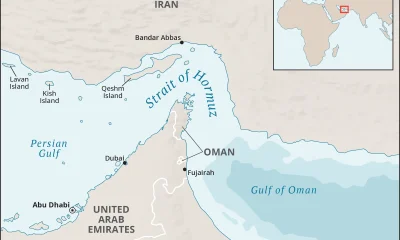
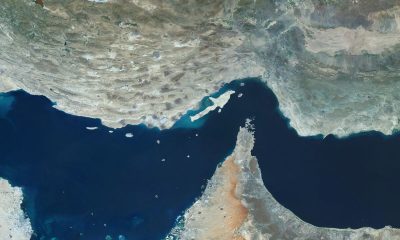
Economically, the war carries enormous global implications. The Strait of Hormuz remains one of the world’s most critical maritime chokepoints for oil transportation. Even limited disruptions in this narrow corridor can trigger spikes in global energy prices and destabilize international markets.
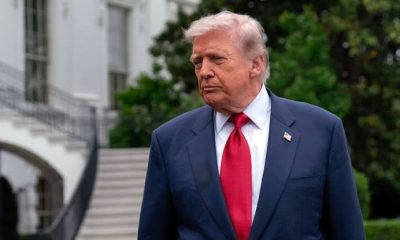
Yet perhaps the most consequential development emerging from Washington is the possibility that the war could escalate beyond aerial bombing. In recent remarks, President Trump did not rule out deploying American troops on Iranian soil if military objectives cannot be achieved through air power alone. U.S. defense officials have similarly acknowledged that ground forces remain an option should the conflict expand or if key strategic targets require physical control.
The implications of such a decision would be profound. Iran is a vast country of nearly ninety million people with rugged terrain, dense urban centers, and deeply entrenched military structures. Any attempt to place foreign troops on Iranian soil would almost certainly transform the current air campaign into a full-scale regional war.
Strategic history offers sobering lessons. In Afghanistan, overwhelming aerial superiority failed to produce durable political outcomes. Military dominance on the battlefield did not translate into long-term stability, and ultimately the conflict ended with a negotiated withdrawal after two decades.
A ground war in Iran could prove even more complex. Iran possesses a much larger population, stronger state institutions, and extensive missile capabilities capable of striking across the Middle East. Military analysts warn that any foreign troop deployment could trigger prolonged insurgency, regional retaliation, and widespread disruption of global energy markets.
Iran appears to be pursuing a strategy of strategic patience. By absorbing attacks while maintaining steady retaliation, it places increasing economic and political pressure on its adversaries. Time, rather than immediate battlefield victories, becomes the decisive factor.
The tragedy in Minab illustrates how quickly humanitarian events can reshape global perceptions of a war. Images of mourning families and schoolchildren’s funerals resonate far beyond military calculations. They influence public opinion, diplomatic relationships, and the political legitimacy of those conducting the war.
What was initially framed as a short military operation has increasingly taken the shape of a war of endurance. Iran appears prepared for a prolonged confrontation built on resilience, geography, and ideological mobilization. The United States and Israel still maintain overwhelming technological and military superiority, yet superiority alone does not guarantee swift submission.
Wars that begin with expectations of rapid victory often conclude in negotiations after extended human suffering. Whether this conflict ultimately follows that path will depend not only on military strength but on political wisdom. If diplomacy re-enters the equation, escalation may still be contained. If not, the region—and perhaps the wider international system—may face months of instability with consequences reaching far beyond the battlefield.






Paris (Imran Y. CHOUDHRY) :- Former Press Secretary to the President, Former Press Minister to the Embassy of Pakistan to France, Former MD, SRBC Mr. Qamar Bashir analysis : Five months into the United States-Iran war, the central question is no longer who possesses greater military power. That answer has never been in doubt. The real question is what each side has actually achieved—and whether battlefield dominance has translated into strategic success.
The United States and Israel with its allies in the Middle East and around the world entered the conflict with overwhelming military superiority. Since the war began, the United States and Israel have relentlessly targeted Iran’s conventional military assets expecting that sustained destruction would erode Tehran’s capacity and compel a political retreat.
Although Iran has largely stood alone against the combined military weight of the United States, Israel and their regional partners, it has shown little evidence of strategic paralysis or political capitulation.
On the contrary, it has continued to retaliate, absorb punishment and impose costs on its adversaries. The destruction of military targets inside Iran has therefore weakened its conventional capabilities but has not compelled Tehran to abandon its core policies, strategic objectives or determination to continue the conflict on terms that exploit its asymmetric strengths.
The absence of a clearly defined American end state has become increasingly apparent. Throughout the conflict, Washington’s objectives appeared to evolve—from preventing nuclear weaponization to degrading Iran’s missile capability, protecting Israel, securing the Strait of Hormuz, weakening Iran’s regional influence and, at times, implying regime change. Each objective demanded a different strategy, yet they often merged into a single military campaign without a clearly articulated political destination.
That uncertainty became evident during Defense Secretary Pete Hegseth’s appearance before the Senate while defending the Trump administration’s emergency supplemental request of $87.6 billion, including $67 billion for Pentagon operations related to Iran. Hegseth acknowledged that the war had already cost approximately $37.5 billion, prompting unusually sharp bipartisan scrutiny.
Sen. Patty Murray questioned why the administration continued relying on presidential Article II authority instead of seeking explicit congressional authorization for an expanding conflict. Sen. Kirsten Gillibrand highlighted a glaring contradiction: if Iran’s military capabilities had been “obliterated,” why was the administration requesting tens of billions more to continue fighting them? Republican Sen. John Kennedy repeatedly demanded “straight talk,” pressing Hegseth to explain what victory actually looked like, what justified continued escalation, and what the strategic consequences would be of either withdrawing or remaining indefinitely.
Other lawmakers criticized the Pentagon for withholding comprehensive casualty information while requesting unprecedented emergency funding. Collectively, the hearing reflected a growing bipartisan concern that overwhelming military superiority had yet to be matched by strategic clarity.
Iran, by contrast, pursued narrower and more consistent objectives: preserve the state, maintain deterrence, retain influence over regional affairs and ensure that any military escalation imposed significant political and economic costs on its adversaries. Iran never needed to defeat the United States militarily. It merely needed to survive, retaliate and prevent Washington from imposing its political will.
The strategic equation shifted sharply when President Trump threatened to destroy an Iranian bridge or power plant for every attack on shipping in the Strait of Hormuz. Tehran refused to be intimidated and responded with a doctrine of reciprocal vulnerability: if Iran’s bridges, electricity networks or desalination facilities were struck, comparable infrastructure in the Gulf states enabling U.S. and Israeli military operations could also become exposed.
This was more than retaliatory rhetoric; it transferred the prospective cost of attacking Iran’s civilian lifelines to Washington’s regional hosts, whose power grids, water supplies, ports and energy installations are highly concentrated and difficult to defend comprehensively.
These governments, already bearing economic and security consequences from a war they neither initiated nor controlled, were suddenly confronted with an intolerable choice: pressure Washington to restrain attacks on Iranian civilian infrastructure, or reconsider the presence and operational use of U.S. bases that could turn their territories into retaliatory battlefields.
By converting American regional access from a strategic asset into a potential liability, Iran appears to have imposed a powerful deterrent against the threatened infrastructure campaign—demonstrating once again how asymmetric warfare can frustrate superior firepower without matching it weapon for weapon.
This asymmetric strategy fundamentally altered the character of the war. While the United States dominated the skies, Iran maintained the ability to strike American bases, Israeli territory and regional energy infrastructure with missiles and drones. Every escalation carried consequences extending well beyond the battlefield, affecting oil markets, shipping routes, insurance costs and regional stability. Military inferiority did not translate into strategic irrelevance.
The evolution of the conflict also raises an important strategic question. Had the dispute remained focused exclusively on nuclear weaponization, diplomatic mechanisms could have addressed inspections, enrichment limits and verification. Instead, the Strait of Hormuz increasingly became the defining strategic issue, suggesting that maritime control, regional influence and global energy security had become as significant as the nuclear question itself.
The conflict offers sobering lessons for all parties. For the United States, overwhelming military superiority cannot substitute for clearly defined political objectives. Destroying military assets does not necessarily change state behavior, and prolonged military campaigns become increasingly difficult to justify without a credible political end state.
Iran has also learned costly lessons. Its conventional military infrastructure proved vulnerable to sustained precision strikes, reinforcing the importance of dispersed capabilities, mobility and asymmetric deterrence. Yet survival should not be mistaken for success. The war has imposed enormous economic, military and human costs that will burden Iran for years.
Israel demonstrated remarkable intelligence penetration and operational reach, significantly weakening Iran’s military infrastructure. Nevertheless, it did not eliminate Iran’s capacity to retaliate, dismantle its strategic doctrine or fundamentally alter the regional balance of power.
Five months into the conflict, the verdict is nuanced. The United States and Israel won the contest of conventional firepower. Iran won the contest of political survival. Washington demonstrated unmatched military capability but has yet to achieve all of its evolving political objectives. Tehran suffered severe military damage but preserved the essential pillars of its national strategy.
The war therefore has no absolute victor. It has produced different forms of success and different forms of failure for each side. Military power has shaped the battlefield, but it has not settled the political dispute. Lasting stability will ultimately depend not on another round of airstrikes or missile exchanges, but on a negotiated framework addressing nuclear safeguards, regional security, missile restraint and the future governance of the Strait of Hormuz.
The enduring lesson is simple: wars may be won militarily, but peace is secured politically. The side that best aligns military power with achievable political objectives ultimately defines success.
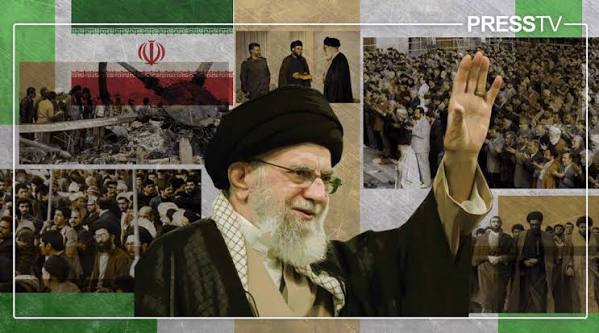
Paris (Imran Y. CHOUDHRY) :- Former Press Secretary to the President, Former Press Minister to the Embassy of Pakistan to France, Former MD, SRBC Mr. Qamar Bashir analysis : The third dimension of Khamenei’s death lies in Karbala. In Shia Islam, the sacrifice of Imam Hussain, grandson of Prophet Muhammad, is not merely a seventh-century tragedy remembered through annual rituals. Karbala represents a permanent moral command: stand against tyranny, refuse submission to oppression and remain beside the victim even when resistance carries an unbearable personal cost.
The symbolism is now visible throughout Khamenei’s funeral ceremonies. His coffin is to travel through Qom, Najaf and Karbala before his burial in Mashhad. Black mourning flags recalling the martyrdom of Imam Hussain hang over Iranian streets. The journey itself connects Khamenei’s death with the religious geography and historical memory that have shaped Shia political consciousness for centuries.
Iran has consistently interpreted Palestine through this ideological prism. Palestinians have endured displacement, occupation, bombardment, hunger and repeated military devastation. Gaza has been reduced to rubble on a catastrophic scale, families have disappeared beneath destroyed buildings and civilian suffering has horrified much of the world. The confrontation has repeatedly expanded into Lebanon, spreading destruction across a region already exhausted by decades of conflict.
One may condemn particular tactics used by Hamas, Hezbollah or other armed organisations and still ask why these groups continue to exist and retain support. Their political justification is deeply connected to the unresolved Palestinian question. Resolve that conflict justly and the strategic architecture of armed resistance begins to lose its rationale. Without the wound, organisations created around resisting that wound face an inevitable crisis of purpose.
A credible two-state settlement could fundamentally transform the Middle East. Give Palestinians the right to choose their government, protect their social and religious traditions, preserve their language and maintain a recognised connection with their land. Once Palestinians possess dignity, political agency and a viable national future, the justification for maintaining a permanent kinetic posture against Israel will inevitably weaken.
Iran could have chosen silence. It could have followed the cautious path adopted by much of the Muslim world. Türkiye, Pakistan, Saudi Arabia and numerous Muslim states have spoken for Palestine diplomatically, but none willingly absorbed the scale of military, economic and strategic consequences Tehran accepted by directly challenging the Israeli-American strategic order. Iran understood the price of its policy and still refused to retreat.
Had Tehran treated Palestinian suffering as somebody else’s problem, it might have secured economic comfort, sanctions relief and international accommodation. Yet a state that invokes Karbala cannot easily preach the sacrifice of Imam Hussain at home while remaining permanently silent when it believes another people are subjected to occupation, collective punishment and overwhelming military force abroad.
This explains why Khamenei’s martyrdom may prove strategically more powerful than his political life. His killing did not eliminate the philosophy of resistance associated with his leadership. It liberated that philosophy from the limitations of an individual ruler and embedded it more deeply in Iran’s national consciousness. His coffin, moving towards Qom, Najaf, Karbala and ultimately Mashhad, has itself become a travelling symbol of that narrative.
Iran’s military response subsequently demonstrated the logic of asymmetric warfare. Tehran did not need to match the United States aircraft for aircraft, carrier for carrier or dollar for dollar. It expanded the battlefield horizontally, imposed costs on military infrastructure supporting attacks against Iran and threatened strategic arteries upon which global economies depend. Conventional military superiority was confronted by calculated strategic disruption.
Iran’s calculation was brutally simple. It did not have to defeat the United States in a traditional battlefield contest; it only had to make continuation of the war economically, politically and strategically unbearable. By stretching the theatre of confrontation and exploiting regional dependencies, a militarily weaker state demonstrated how disproportionate costs could be imposed upon adversaries possessing vastly superior weapons and resources.
The war intended to fracture Iran instead strengthened its cohesion. The campaign justified by fear of an Iranian atomic bomb killed the religious leader whose fatwa had restrained nuclear weaponisation. The attempt to destroy a philosophy of resistance provided that philosophy with its most powerful martyr. These contradictions now hover over every funeral procession moving through Iran and Iraq.
The presence in Tehran of senior representatives from Russia, China, Pakistan, Iraq and other states adds another dimension to the moment. Iran was supposed to emerge isolated, humiliated and broken. Instead, as Khamenei lies in state, representatives of major powers and regional governments are standing before his coffin, while the funeral journey prepares to cross national borders and the great centres of Shia faith.
As Khamenei is carried towards his final resting place in Mashhad, the ultimate irony is difficult to escape. His enemies possessed superior aircraft, larger arsenals, advanced intelligence systems and enormous financial resources. Yet his death gave Iran something military technology could neither manufacture nor easily destroy: a renewed story of sacrifice, dignity and collective resistance.
The superpower possessed the larger arsenal, but the martyr left behind the stronger story. History repeatedly demonstrates that military power can destroy buildings, eliminate leaders and devastate economies, but it cannot always determine which narrative survives a war. In Khamenei’s case, the attempt to kill a leader may instead have immortalised his cause and strengthened the nation his death was intended to break.
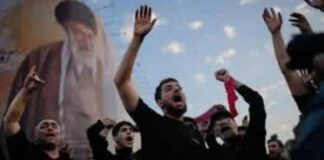
Paris (Imran Y. CHOUDHRY) :- Former Press Secretary to the President, Former Press Minister to the Embassy of Pakistan to France, Former MD, SRBC Mr. Qamar Bashir analysis : Ayatollah Ali Khamenei lies in state in Tehran, his coffin surrounded by black mourning flags as Iran begins a week of funeral ceremonies before his burial in Mashhad. Former Russian President Dmitry Medvedev, senior Chinese lawmaker He Wei, Pakistan’s Prime Minister Shehbaz Sharif and Iraqi President Nizar Amedi were among the foreign leaders and officials joining Iranian clerics, generals and mourners to pay their respects. Their presence gave the ceremony a significance extending far beyond Iran’s borders.
The gathering of such senior dignitaries from major powers and important regional states offered a striking answer to those who expected Iran to emerge from the war diplomatically isolated and internally broken. Khamenei, killed with members of his family in the opening US-Israeli airstrike on February 28, was being mourned not merely as Iran’s Supreme Leader but honoured by representatives of countries commanding enormous geopolitical weight.
Equally important was the attendance of Gulf delegations, including Saudi Arabia, Qatar and Oman, at a moment when Israel and the United States had expected Arab and GCC states to stand firmly against Iran. The reported presence of Saudi Deputy Foreign Minister Waleed Al-Khuraiji and other Gulf representatives sent a chilling diplomatic message: the war had not ruptured Iran’s relationship with its neighbourhood. Despite deep differences, geography, religion, neighbourly necessity and regional fraternity had again pulled Iran and the Gulf states towards one another, showing that their ties could not be broken simply by the strategic wishes of Israel and the United States.
The funeral, therefore, is more than the burial of a leader who ruled Iran for 37 years. It is a moment to measure the consequences of the decision to kill him. The United States and Israel apparently expected that removing Iran’s most powerful religious figurehead would deepen despair, fracture an already pressured society and accelerate conditions for regime change. Four months later, the question is unavoidable: did his killing weaken Iran, or did his martyrdom strengthen its national cohesion?
The assumption behind leadership decapitation appeared straightforward. Iran had endured years of sanctions, economic hardship and recurring internal unrest. Remove the man at the centre of its religious and political structure, deepen the psychological shock by killing members of his close family and the state might collapse under its own contradictions. Without Khamenei, Washington and Tel Aviv seemingly calculated, Iran would lose its ideological anchor at the moment of maximum military pressure.
The calculation proved disastrously wrong. Khamenei’s killing, together with his daughter, son-in-law, baby granddaughter and another close family member, did not tear Iran apart. It transformed a political and military crisis into what millions of Iranians perceived as an existential national struggle. Domestic disagreements suddenly competed with the image of foreign powers killing the country’s supreme religious leader and members of his family in the opening strike of a war.
Martyrdom achieved what decades of speeches, military parades and revolutionary slogans could never have accomplished with comparable force. It brought large sections of Iranian society closer to their armed forces and transformed Khamenei from a controversial political ruler into a symbol of resistance. Even Iranians dissatisfied with their government were confronted with a distinction between opposing domestic policies and allowing foreign powers to determine Iran’s political future through bombs.
Instead of creating a leadership vacuum, the strike created a martyr. Instead of producing national despair, it generated anger, defiance and an instinct for survival. The attempt to weaken Iran by eliminating its most recognisable figurehead elevated Khamenei beyond the limitations of a living political leader. The black flags hanging across Iranian cities demonstrate how rapidly political death can acquire religious permanence in a society deeply shaped by sacrifice.
The second contradiction of the war is even more consequential. The United States and Israel justified their attack by claiming Iran was racing towards nuclear weapons. An extraordinary atmosphere of urgency was created, as though Tehran were only days or weeks away from converting fissile material into atomic bombs and preparing to use them against Israel. Yet the man killed in the opening strike was arguably Iran’s strongest institutional barrier against nuclear weaponisation.
For years, Khamenei maintained a religious prohibition against the production and use of nuclear weapons. His fatwa rested on the argument that atomic weapons are inherently indiscriminate. They cannot distinguish between soldiers and children, aggressors and innocent civilians. Their destructive effects extend beyond battlefields and generations and were therefore, in his religious reasoning, incompatible with Islamic morality and the fundamental principles of humanity.
This decree cannot simply be dismissed as ceremonial theology. Iran’s armed forces operate within a system in which the supreme leader exercises ultimate command authority. When that authority explicitly prohibits nuclear weapons on religious grounds, converting enriched material into an atomic arsenal becomes more than a scientific or military decision. It directly challenges the religious and command structure under which Iran’s military and nuclear institutions operate.
The uncomfortable question must therefore be asked: who actually prevented Iran from developing an atomic bomb? Was it Israel’s threats and airstrikes? Was it American sanctions and military pressure? Or was it Khamenei’s fatwa? My conclusion is that the principal internal restraint was neither Washington nor Tel Aviv but the religious prohibition imposed by the very man their bombs killed.
This is why the narrative of an immediate nuclear emergency deserves rigorous scrutiny. Israeli explanations have repeatedly blurred the critical distinction between possessing an operational atomic weapon and travelling along a technological path that might eventually provide the capability to manufacture one. A country may possess scientists, enrichment facilities, technical knowledge and fissile material without assembling a bomb or taking the political decision to use it.
If Iran was on a path that might have enabled it to produce a weapon years later, that was undoubtedly a serious proliferation concern. It was, however, fundamentally different from being days away from launching a nuclear attack. The image of an imminent Iranian bomb created the urgency necessary to justify war, but urgency cannot substitute for verifiable evidence and technological capability cannot automatically be treated as proof of immediate nuclear aggression.
There is another historical irony. Iran, whatever criticism may legitimately be directed towards its regional policies, has not built its modern national history around repeatedly invading neighbouring countries. Israel, by contrast, has remained in almost continuous military confrontation across its neighbourhood. Yet Iran was presented as the uniquely imminent aggressor whose possible future intentions justified a preventive war before the alleged weapon even existed.


Deputy High Commissioner Haseeb Bin Aziz Inaugurates “Masters of Canvas” Art Exhibition at Pakistan High Commission London

Why Is China Emerging As A Superpower? Part-I

Iran War at Five Months: Who Won What?


-
 Sports2 months ago
South Korea’s Yoo Useong Steps Onto the Global Strongman Stage as World Strongman Federation Professional Athlete
-

 Europe News1 year ago
Chaos and unproven theories surround Tates’ release from Romania
-

 Art & Culture1 year ago
A Survey of Mata-E-Zeest
-

 American News1 year ago
Trump expands exemptions from Canada and Mexico tariffs
-

 American News1 year ago
Trump Expels Zelensky from the White House
-

 Art & Culture1 year ago
Will Snow White be a ‘victim of its moment’? How the Disney remake became 2025’s most divisive film
-

 Pakistan News1 year ago
Comprehensive Analysis Report-The Faranian National Conference on Maritime Affairs-By Kashif Firaz Ahmed
-

 Entertainment1 year ago
Champions Trophy: Pakistan aim to defend coveted title as historic tournament kicks off today