
Pakistan News
Field Marshal’s Strategic Offer to the Muslim World

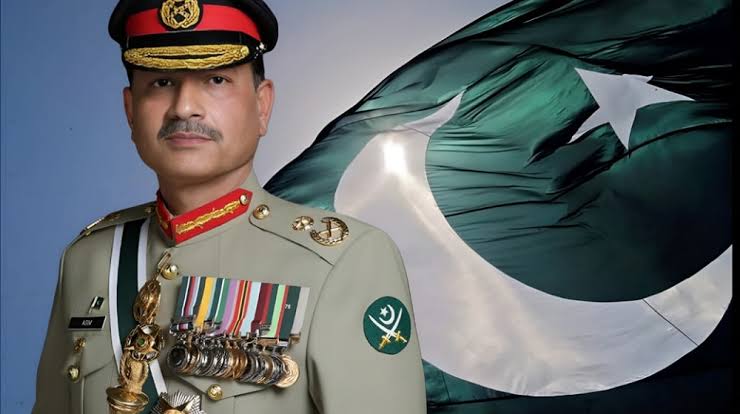
Paris (Imran Y. CHOUDHRY) :- Former Press Secretary to the President, Former Press Minister to the Embassy of Pakistan to France, Former MD, SRBC Mr. Qamar Bashir analysis : During his recent visit to Libya, Pakistan’s Field Marshal addressed a high-level gathering that included senior Libyan leaders and top military officials. What he presented was not a routine diplomatic message but a strategic doctrine shaped by Pakistan’s own experience of war, sanctions, and pressure. He reminded the audience that Pakistan learned long ago that depending on foreign military technology becomes dangerous when the nation faces existential threat. In moments of conflict, supplier nations often convert technology into leverage—delaying or freezing spare parts, blocking software updates, halting ammunition supply, or suspending technical support. When the survival of the nation hangs in the balance, such dependency can turn fatal. That is why Pakistan deliberately chose to minimize reliance on imported technology and began developing its own air defence systems, land warfare platforms, naval capabilities, cyber and electronic warfare tools, and—above all—independent and secure communication systems. This was a long and difficult journey, born not of luxury but of necessity.
The Field Marshal explained that this strategy was tested decisively during the twelve-day confrontation with India, when Pakistan’s integrated cyber, communications, missile defence and air combat systems were exposed to real battlefield stress. According to him, Pakistan did not lose a single aircraft, while neutralizing India’s most advanced platforms including Rafale, MiG-29 and Tejas fighters. Indian command-and-control networks were disrupted by cyber operations. Even India’s S-400 missile defence system failed to deliver the deterrence New Delhi expected. These developments, he said, proved that Pakistan had achieved technological parity—and even superiority in certain domains—despite facing a much larger and wealthier adversary.
But what turned his address into a historic moment was not the recounting of Pakistan’s battlefield resilience; it was the offer that followed. The Field Marshal declared that Pakistan is now ready to share its indigenous defence technologies with Muslim countries who seek strategic autonomy, self-respect, and credible deterrence. These technologies, already tested in war, will not be used as political leverage but as a means to strengthen the collective defence of the Muslim world. In his most emphatic words, he advised Muslim leaders: “Ensure your armed forces are strong enough to protect your sovereignty, your dignity, and your independence. Without that strength, no country can ever truly claim to be independent.”
This message reverberates far beyond South Asia. In the Middle East, nearly every state hosts U.S. military bases, finances their operations, and relies heavily on Western defence umbrellas. Yet recent conflicts—such as the Israel-Hamas war and the Israel-Iran escalation—revealed an uncomfortable truth. These military installations, systems and manpower were not mobilized to defend the host nations. Instead, they were activated primarily to shield Israel. The wealthy Gulf states therefore face a paradox: they pay for foreign troops on their soil, yet remain strategically exposed when their national interests diverge from those of Washington.
In this context, Pakistan’s offer becomes transformative. Saudi Arabia’s expanding defence partnership with Pakistan reflects a strategic awakening. A combination of Pakistani technology, combat experience, and human capital—supported by Middle Eastern financial strength—could reshape the regional security order. If replicated across other Muslim states, this framework could eliminate the perceived need to host foreign military bases as guardians of sovereignty. Equally important, jointly-developed or indigenous systems would remove the external leverage that often appears during crises: no blocked spare parts, no sudden software restrictions, no political strings attached at the moment of war.
It is inevitable that such a shift would alarm existing power centres. Israel would see any dilution of its technological edge as a direct challenge. The United States, Israel’s principal guarantor, would likely apply diplomatic and economic pressure to prevent Muslim states from seeking autonomous defence solutions. There will be narratives claiming Pakistan’s capabilities are exaggerated, or dismissing its industrial scale as inferior. Yet, as the Field Marshal implied, credibility is measured on the battlefield—not in marketing brochures. Pakistan’s systems have already faced real-world combat and performed under fire.
The argument also rests on a deeper reality: technology evolves fastest where capital and experience converge. With Gulf investment, Pakistan’s defence industries can rapidly innovate, expand and customize systems suited to regional threat environments. For Pakistan itself, the benefits would be equally meaningful. Defence exports would generate much-needed foreign exchange, strengthen geopolitical influence, and position Pakistan as a provider—not merely a consumer—of security within the Muslim world.
Still, the Field Marshal acknowledged that breaking existing dependencies will not be easy. Many Muslim states are deeply embedded in Western defence ecosystems, bound by treaties, procurement pipelines and political expectations. Escaping that orbit will take courage, foresight and coordination. But strategic independence begins with the first decisive step. Pakistan’s offer represents that moment.
From a broader perspective, this proposal could finally allow Muslim nations to stand on their own feet in matters of defence. It could create an ecosystem where capability replaces dependency, dignity replaces insecurity, and sovereignty becomes more than a symbolic word. Pakistan is not promising miracles. Rather, it is offering tested technology, operational knowledge, and a philosophy of self-reliance, backed by the lived experience of facing a larger, wealthier and well-equipped adversary—and surviving without external rescue.
Of course, powerful forces will resist this change. Israel and its allies will exert pressure. Some Muslim leaders will hesitate. There may be attempts at sabotage and diplomatic intimidation. But the Field Marshal’s words cut through the doubt: true independence is impossible without strong, sovereign, and self-reliant armed forces.
Pakistan’s outreach is therefore more than a defence export initiative. It is a strategic doctrine—one that seeks to align technology, sovereignty, and dignity across the Muslim world. If embraced, it could mark the beginning of a new era in which Muslim nations no longer rely on others to guarantee their security, nor fear political manipulation at the moment of crisis. The path ahead is difficult, but history has always favored nations that choose self-reliance over dependency, courage over caution, and dignity over fear. For the Muslim world, this may be the first genuine opportunity in generations to defend itself on its own terms—and to respond to aggression with confidence and capability rather than hesitation and dependence.

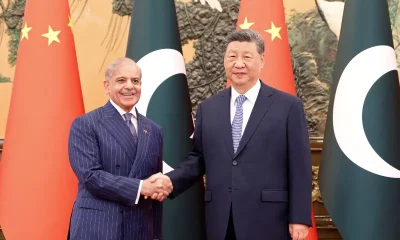






Paris (Imran Y. CHOUDHRY) :- Former Press Secretary to the President, Former Press Minister to the Embassy of Pakistan to France, Former MD, SRBC Mr. Qamar Bashir analysis : One defining feature of President Xi Jinping’s leadership has been his emphasis on discipline, merit and accountability. Soon after taking office in 2012, he launched an anti-corruption campaign targeting both senior “tigers” and junior “flies.” Millions of officials have since been investigated or disciplined, reinforcing the principle that public office is a public trust. This resolve reflects a central warning in Xi Jinping: The Governance of China: “We must uphold the principle that all are equal before discipline, that there are no privileges in observing discipline, and that no one is immune from its enforcement.”
For Xi, effective governance must ultimately improve people’s lives. Development is therefore measured not only by economic growth but also by better public services, education, healthcare, environmental protection and social stability. China’s ability to pursue these goals over decades reflects the policy continuity described throughout The Governance of China. As Xi declared on assuming the country’s leadership, “The people’s wish for a happy life is our mission.”
China’s infrastructure revolution demonstrates this long-term approach. By the end of 2024, its railway system extended 162,000 kilometres, including 48,000 kilometres of high-speed rail—the world’s largest network. China also had 5.49 million kilometres of roads, including 190,000 kilometres of expressways; 263 transport airports; 129,000 kilometres of navigable waterways; and 22,219 productive port berths. These networks have reduced travel times, lowered logistics costs, integrated inland and coastal markets and supported national modernization. They embody Xi’s instruction in The Governance of China to “promote coordinated development and foster synergy,” turning connectivity into shared economic opportunity.
My visit to Fujian Province in 2012 offered an early glimpse of this transformation. Roads linked industrial parks with ports, universities worked with research centres, and efficient public services coexisted with clean, carefully planned cities. What impressed me most was not any single project, but the integration of transport, industry, education, technology and the environment within a strategy measured in decades. It reflected Xi’s insistence that “strategic issues are fundamental to the success of a political party and a country,” and that long-term goals must be pursued with consistency.
China’s manufacturing sector has similarly advanced from low-cost assembly to sophisticated industrial production. By 2025, manufacturing generated about US$4.82 trillion in value added—roughly one-quarter of national GDP—while China produced nearly one-third of global manufacturing output. Its factories now make electric vehicles, batteries, solar panels, high-speed trains, telecommunications equipment, robots, medical devices and aerospace components. In 2026, high-technology manufacturing was growing by more than 13 percent and equipment manufacturing by about 8.7 percent. This ascent up the value chain reflects Xi’s conviction in The Governance of China that “innovation is the primary driving force for development.”
Scientific research supplies the foundation for this industrial upgrading. By 2026, China’s R&D spending had reached about 2.8 percent of GDP and, when adjusted for purchasing power, was estimated at more than US$1.1 trillion. China led the Nature Index in high-quality research output, while the Chinese Academy of Sciences ranked among the world’s foremost research institutions. Facilities such as the FAST radio telescope, EAST fusion reactor and advanced quantum laboratories illustrate the scale of investment. As Xi states, “Science and technology are our primary productive force, talent is our primary resource, and innovation is our primary driver of growth.”
China’s digital economy makes this transformation visible in everyday life. Mobile payments allow vendors and rural businesses to participate in modern commerce, while e-commerce, cloud computing, artificial intelligence and automated logistics connect producers with consumers nationwide. In 2026, integrated-circuit production reportedly approached 280 billion units in the first half of the year, while Chinese companies competed in generative AI, robotics, autonomous mobility and smart manufacturing. During my 2024 visit, I saw digital technology woven seamlessly into transport, banking, retail, tourism and public services. This is the practical expression of Xi’s call to “accelerate the building of a digital economy, a digital society and a digital government.”
Environmental protection has become another pillar of China’s development strategy. After decades of industrialization caused serious pollution, ecological conservation moved to the centre of national policy. The Ecological and Environmental Code, adopted in March 2026, consolidated rules on pollution, biodiversity, conservation and climate action. The 15th Five-Year Plan targets a 17 percent reduction in carbon intensity by 2030, alongside continued progress toward peaking emissions before 2030 and achieving carbon neutrality before 2060. This policy is rooted in Xi’s best-known ecological principle in The Governance of China: “Lucid waters and lush mountains are invaluable assets.”
China is now the world’s largest renewable-energy investor and leading manufacturer of solar panels, wind turbines, electric vehicles and batteries. By May 2026, its installed generating capacity had reached 4.01 terawatts, with renewables accounting for about 61 percent. Solar capacity exceeded 1,240 gigawatts and wind approached 660 gigawatts, supported by ultra-high-voltage transmission, smart grids and expanding battery storage. Electric buses, metro networks and new-energy vehicles have also transformed urban transport. During my 2024 visit, I was impressed by the cleaner air, widespread electric vehicles and integration of green spaces into cities. These achievements answer Xi’s call to “accelerate the formation of green development models and green ways of life.”
China’s ecological commitment extends beyond energy. Afforestation, desertification control, river and wetland restoration, water conservation, soil rehabilitation and industrial pollution control have become integral to modernization. China nevertheless remains the world’s largest carbon emitter and still depends heavily on coal, making the transition incomplete. Yet its scale of renewable deployment and ecological restoration shows how planning, investment and technology can reconcile growth with sustainability. In Xi’s words, “Protecting the environment is protecting productivity, and improving the environment is boosting productivity.”
China’s experience also demonstrates the strategic value of investing in people. By 2026, it operated the world’s largest education system, with about 470,000 institutions, 286 million students and 18.7 million full-time teachers. More than 48.5 million students attended over 3,160 higher-education institutions, while vocational colleges supplied much of the skilled workforce required by industry. Universities have increasingly introduced programmes in AI, robotics, intelligent manufacturing and advanced materials. This emphasis follows Xi’s directive: “We must give high priority to the development of education, build China’s self-reliance and strength in science and technology, and rely on talent to pioneer and propel development.”
For developing countries—especially Pakistan—China offers practical lessons. Sustainable progress requires more than money or isolated projects: it demands visionary leadership, institutional continuity, quality education, vocational skills, technological innovation and disciplined execution. Pakistan’s youthful population can become an economic asset only if equipped with relevant skills and opportunities, while national priorities must survive changes of government and be judged by measurable outcomes. This is the essence of the people-centred modernization presented in The Governance of China: “Development is for the people, by the people, and its fruits are shared by the people.” China’s experience shows that when leadership, institutions and human capability move toward a common national purpose, transformation on an extraordinary scale becomes possible.
(To be continued in Part III: The Belt and Road Initiative, CPEC, China’s Global Vision, and the Future of the China–Pakistan Partnership.)
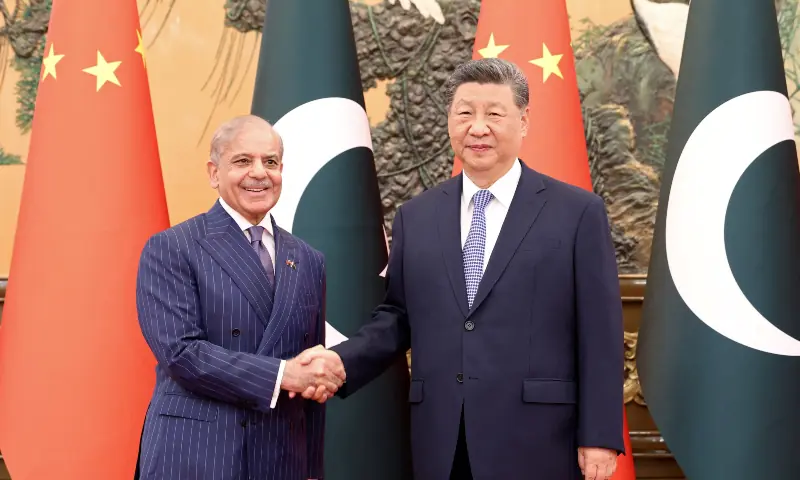
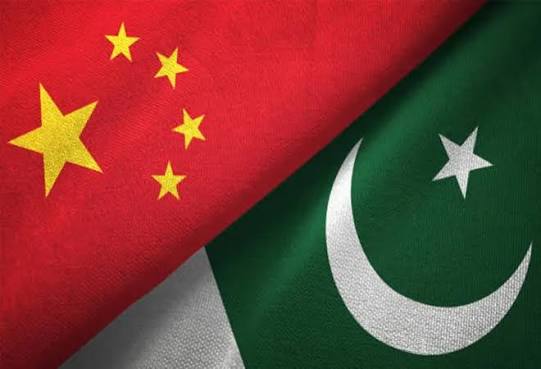
Paris (Imran Y. CHOUDHRY) :- Former Press Secretary to the President, Former Press Minister to the Embassy of Pakistan to France, Former MD, SRBC Mr. Qamar Bashir analysis : Seventy-five years ago, on May 21, 1951, Pakistan became one of the earliest countries to establish diplomatic relations with the People’s Republic of China. Few could have imagined then that this bilateral relationship would evolve into one of the world’s most enduring strategic partnerships—surviving changing geopolitical landscapes, economic transformations, regional conflicts, and shifting global alliances.
Today, as both nations celebrate the 75th anniversary of diplomatic relations, the friendship stands not merely as a testament to diplomatic continuity but as a remarkable example of mutual trust, shared respect, unwavering support, and common aspirations for peace and development.
Yet, the celebration of this milestone coincides with another extraordinary story—the unprecedented rise of modern China. Within the span of a few decades, China has transformed itself from one of the world’s poorest nations into the second-largest economy, the world’s largest manufacturing nation, the world’s largest trading country in goods, the global leader in high-speed rail, renewable energy, electric vehicles, digital commerce, and advanced infrastructure.
According to the World Bank, China has averaged annual economic growth of around 9 percent for more than four decades and lifted nearly 800 million people out of extreme poverty, accounting for more than three-quarters of global poverty reduction during that period. Few achievements in modern economic history rival this transformation.
As someone who has spent decades serving Pakistan in public communication, diplomacy, and strategic affairs—including as Press Secretary to the President of Pakistan and Press Minister at Pakistan’s Embassy in France—I have had the privilege of witnessing many societies at different stages of development. During my diplomatic assignment in Malaysia, I observed firsthand how visionary leadership transformed that country into one of Southeast Asia’s fastest-growing economies. Later, while serving in Europe, I travelled extensively across France and many other European nations and also visited Canada and the United States. Each represented different models of prosperity, governance, and technological advancement.
Here’s a stronger and more historically connected version of the paragraph. It naturally links your personal observation to Xi Jinping’s leadership in Fujian and sets up the rest of the article. (One factual refinement: Xi Jinping served in Fujian from 1985 to 2002, including as Governor of Fujian Province (1999–2002), before becoming Party Secretary of Zhejiang and later China’s top leader.)
However, my visits to China left an altogether different impression. In 2012, I was part of an official delegation that visited Fujian Province. China was already advancing rapidly, yet Fujian stood out even among China’s most dynamic provinces. We witnessed world-class highways, meticulously planned cities, modern ports, thriving industrial parks, advanced research institutions, efficient governance, and an impressive level of economic vitality. What struck me even more was the discipline of the people, the cleanliness of public spaces, and the remarkable harmony between rapid urbanization and environmental stewardship. Having just completed four years in Malaysia, itself regarded as a development success story, I found Fujian’s pace and scale of transformation truly exceptional.
Only later did I fully appreciate that much of what I had witnessed bore the imprint of Xi Jinping’s leadership. President Xi spent nearly eighteen formative years in Fujian, serving in a succession of senior leadership positions before becoming Governor of Fujian Province from 1999 to 2002.
During this period, he championed export-oriented growth, modernization of ports, improvement of transport infrastructure, ecological conservation, private-sector development, administrative efficiency, and greater openness to international investment.
Equally important, he emphasized balanced development, insisting that economic progress should advance alongside environmental protection and improvements in people’s quality of life. Many of the policies, governance practices, and development concepts he pioneered in Fujian would later reappear on the national stage after he assumed China’s highest leadership.
Looking back, my visit to Fujian was more than an opportunity to observe one of China’s most prosperous provinces; it was, in many respects, an early glimpse of the governing philosophy that President Xi would subsequently apply across the country.
The disciplined administration, integrated infrastructure, technological advancement, environmental consciousness, and people-centred development model that I observed in Fujian later became defining features of China’s broader modernization under his leadership. Understanding Fujian, therefore, provides an important window into understanding Xi Jinping’s vision for China’s national rejuvenation.
When I returned to China in 2024, the transformation was even more striking. The China I encountered was more technologically sophisticated, more environmentally conscious, and more confident than before. High-speed rail seamlessly connected distant cities. Electric buses and new-energy vehicles had become commonplace. Mobile payments had virtually replaced cash. Artificial intelligence, robotics, and digital technologies were integrated into daily life. Modern airports, innovation parks, smart manufacturing zones, and clean urban landscapes reflected not only economic prosperity but also a society embracing the future with confidence.
Such a transformation did not occur by chance. It was the outcome of long-term strategic planning, institutional continuity, disciplined governance, sustained investment in human capital, technological innovation, and above all, visionary leadership.
Under General Secretary Xi Jinping, China’s modernization entered a new phase—one focused not simply on rapid growth but on high-quality development, technological self-reliance, ecological sustainability, common prosperity, disciplined governance, and a more active role in global affairs.
To understand this transformation, one must read President Xi’s remarkable works—Xi Jinping: The Governance of China, Up and Out of Poverty, and Xi Jinping on the Belt and Road Initiative. Together, these books explain not merely policies but a comprehensive philosophy of governance.
In Xi Jinping: The Governance of China, President Xi repeatedly emphasizes that “the people are at the center” of national development. Economic growth is meaningful only when it improves people’s lives, strengthens social harmony, protects the environment, advances innovation, and ensures that prosperity is broadly shared.
The volumes discuss governance reform, Party discipline, ecological civilization, modernization, technological innovation, national rejuvenation, and China’s vision for international cooperation. Rather than presenting abstract theories, the books demonstrate how long-term planning, institutional discipline, and implementation can translate policy into measurable national progress.
The roots of this philosophy are deeply personal. Xi Jinping was born in Beijing on June 15, 1953. His father, Xi Zhongxun, was a respected revolutionary leader who later fell victim to political persecution during the Cultural Revolution. As a teenager, Xi Jinping experienced the hardship of political upheaval. At the age of fifteen, he was sent to Liangjiahe Village in Shaanxi Province, where he lived for seven years in a cave dwelling, performing manual agricultural labor alongside ordinary villagers.
Those years profoundly shaped his worldview. Rather than distancing him from the Chinese people, they immersed him in the realities of rural poverty. He experienced first-hand the absence of modern infrastructure, the difficulties of agricultural life, and the aspirations of ordinary citizens. These experiences, as reflected in his writings and speeches, convinced him that genuine governance must begin with understanding people’s everyday lives.
This philosophy is perhaps best illustrated in Up and Out of Poverty, a collection of Xi Jinping’s reflections during his leadership in Fujian Province. The book rejects the notion that poverty can be eliminated through temporary relief alone. Instead, it argues that sustainable development requires empowering people through education, infrastructure, healthcare, employment, industrial development, and local initiative. In essence, it advocates teaching people how to create lasting prosperity rather than simply providing short-term assistance.
China’s implementation of this philosophy has few historical parallels. Between 2012 and 2020, China completed what the United Nations described as the eradication of extreme rural poverty under its national standard. Nearly 100 million rural residents were lifted above that threshold through targeted poverty alleviation programs.
Millions of officials were deployed to villages to identify the precise causes of poverty for individual households. Assistance was tailored through vocational training, industrial development, relocation from inhospitable regions, improved education, healthcare, housing, and modern infrastructure. According to the World Bank, China’s broader poverty reduction since reform and opening-up remains the single largest contribution to global poverty reduction in recorded history.
This achievement illustrates one of the central themes running throughout The Governance of China: development succeeds when governments invest not merely in projects, but in people.
(To be continued in Part II.)
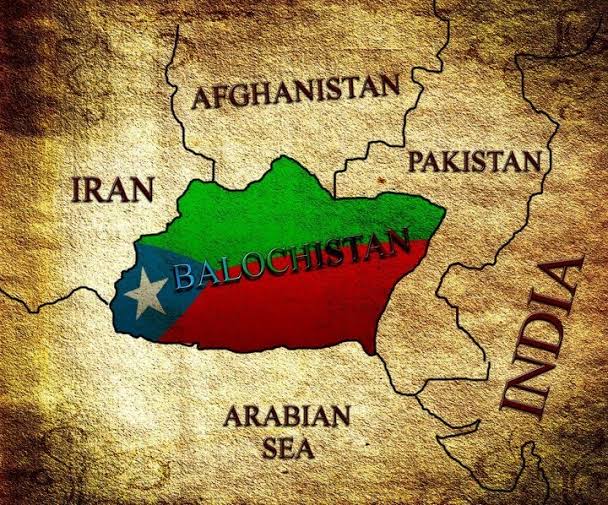
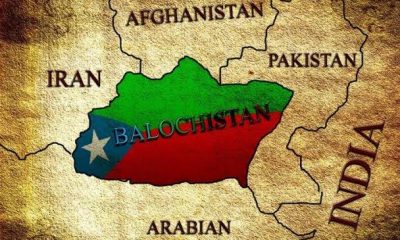
Paris (Imran Y. CHOUDHRY) :- Former Press Secretary to the President, Former Press Minister to the Embassy of Pakistan to France, Former MD, SRBC Mr. Qamar Bashir analysis : Former CIA analyst Larry Johnson recently argued that Israel’s intelligence agency, Mossad, has maintained a longstanding covert relationship with certain Baloch militant elements operating along the Pakistan-Iran border.
Referring to allegations that have previously appeared in Western media, Johnson stated that Israeli operatives had allegedly recruited Baloch militants while posing as American intelligence officers to conduct operations inside Iran.
Building upon that historical episode, he further argued that the recent surge in militant attacks in Pakistan’s Balochistan province should not be viewed as isolated acts of violence but as part of a broader geopolitical strategy designed to generate instability simultaneously in Pakistan and Iran.
Johnson’s remarks have reopened an important debate regarding the wider geopolitical dimensions of the Baloch conflict.
Having spent more than six decades living in Balochistan, I find Johnson’s assessment worthy of thoughtful consideration— because it raises questions that deserve careful examination.
I was born in Quetta and have witnessed every major phase of the province’s insurgency. Governments have changed, military operations have come and gone, peace agreements have been negotiated and abandoned, but the insurgency that exists today is fundamentally different from those witnessed in previous decades.
It is more sophisticated, more disciplined, more lethal, and considerably more capable of executing coordinated attacks across vast distances. Militants today employ sophisticated communications, modern weapons, intelligence gathering, coordinated logistics, and operational planning that naturally raise questions regarding the origin of such capabilities, and inevitably encourages analysts to examine not only domestic grievances but also wider geopolitical influences.
For anyone who has lived in Balochistan, recurring insurgency is neither surprising nor new. However, I believe the present insurgency cannot be understood solely through the prism of local grievances.
It increasingly appears connected to broader strategic and ideological competitions unfolding across South Asia and the Middle East. Regional conflicts seldom remain purely local; they often become the meeting point where domestic vulnerabilities intersect with external geopolitical interests.
One analytical framework begins with the concept of Akhand Bharat, an ideological current associated with Hindu nationalist thought that envisions the reunification of territories that historically formed part of undivided India.
This construct has influenced elements of India’s long-term strategic outlook. Within that framework, Pakistan represents the principal geopolitical obstacle to India’s emergence as the dominant power of the subcontinent. Consequently, a politically fragmented or internally weakened Pakistan would naturally be viewed as strategically advantageous.
Another analytical framework is the concept of Israel’s long-term strategic thinking of greater Israel that has consistently emphasized preventing the emergence of regional powers capable of challenging its military superiority or strategic freedom of action.
Viewed through that analytical lens, Pakistan occupies a unique position as the only Muslim-majority nuclear-armed state possessing substantial military capabilities and expanding defense cooperation with several Muslim countries. According to this interpretation, Pakistan inevitably figures within broader regional strategic calculations.
The motivations of Israel and India may or may not be entirely independent of one another. Yet history demonstrates that different states pursuing separate interests can nevertheless generate outcomes that reinforce one another without operating through a common plan.
India may pursue policies that serve what it considers its own regional interests, while Israel may independently pursue policies consistent with its own security doctrine.
If both sets of policies contribute, intentionally or otherwise, to increasing pressure on Pakistan’s internal cohesion, the cumulative effect may appear complementary despite the absence of direct coordination.
Viewed from this perspective, Pakistan’s internal fault lines become strategically significant. The former Federally Administered Tribal Areas, because of their frontier with Afghanistan and decades of militant activity, remain vulnerable to external influence.
Balochistan presents an equally attractive arena because of its immense geography, sparse population, strategic coastline, Gwadar Port, abundant mineral resources, and borders with both Iran and Afghanistan. Any instability in these regions inevitably carries consequences extending far beyond provincial politics.
Pakistan’s armed forces possess decades of experience in counterinsurgency and asymmetric warfare. From the Soviet-Afghan conflict through successive campaigns against militant organizations, Pakistan has accumulated considerable institutional expertise. Yet despite these capabilities, the Baloch insurgency has endured.
That reality demonstrates a lesson repeatedly confirmed by history: insurgencies are rarely defeated through military force alone. Tactical victories may suppress violence temporarily, but unless political grievances are addressed, conflict often regenerates.
Pakistan has recently demonstrated significant military capability in confronting external security challenges and conducting operations against militant networks along its western frontier. The determination shown by its security institutions reflects the seriousness of the evolving threat. Nevertheless, military success should become the foundation for political reconciliation rather than a substitute for it.
The responsibility for initiating lasting peace rests primarily with the state because governments possess constitutional legitimacy, institutional authority, and the capacity to implement reforms that insurgent organizations cannot.
This observation does not excuse attacks upon civilians or security personnel. Rather, it recognizes that durable peace emerges when effective security is accompanied by statesmanship, political inclusion, and justice.
A sustainable settlement for Balochistan should therefore combine firm security with meaningful dialogue, accelerated economic development, improved education and healthcare, transparent governance, equitable sharing of natural-resource revenues, greater provincial participation in national decision-making, and constitutional guarantees that strengthen public confidence in the federation.
History repeatedly demonstrates that governments and insurgencies eventually return to negotiations after years of costly confrontation. The tragedy is not that negotiations occur, but that they often begin only after immense human suffering and economic destruction. Every bombing deepens mistrust. Every military operation creates new wounds. Every family that loses a loved one carries scars that persist long after the fighting ends.
After observing Balochistan’s turbulent journey for more than six decades, I remain convinced that neither perpetual confrontation nor military victory alone can secure the province’s future. If external actors are indeed seeking to exploit Pakistan’s vulnerabilities, Pakistan’s strongest response lies not only in military preparedness but in building a politically cohesive, economically prosperous, constitutionally inclusive, and socially united nation.
Ultimately, this is the lesson for both the Pakistani state and the insurgents. Violence, regardless of who employs it, cannot build a stable society. Governments possess greater responsibility because they possess greater authority.
They must lead the path toward reconciliation, address legitimate grievances through constitutional means, and isolate only those committed to terrorism. Those who have taken up arms must likewise recognize that no enduring political objective can be achieved through bloodshed.
Balochistan has buried enough sons, sacrificed enough generations, and endured enough cycles of violence. The insurgency has inflicted immense suffering on the province itself. Baloch militant groups have killed numerous security personnel, targeted innocent civilians, brutally murdered workers and travelers from other provinces, and destroyed roads, railways, communication networks, and other public infrastructure essential for the province’s development and the well-being of its people.
The state, too, has paid a heavy price in lives, resources, and public trust while striving to restore order. Continued violence—whether committed by insurgents or in the course of armed confrontation—has only deepened wounds, delayed development, and prolonged the suffering of ordinary Baloch citizens.
The future of Balochistan should not be determined by bullets, by mutual mistrust, or by the strategic ambitions of outside powers. It must instead be built upon dialogue, justice, constitutional inclusion, economic opportunity, and national unity. History repeatedly teaches that even the longest and bloodiest conflicts ultimately end at the negotiating table. Wisdom lies in reaching that table before another generation is consumed by war.


Deputy High Commissioner Haseeb Bin Aziz Inaugurates “Masters of Canvas” Art Exhibition at Pakistan High Commission London

Why Is China Emerging As A Superpower? Part-I

Iran War at Five Months: Who Won What?


-
 Sports2 months ago
South Korea’s Yoo Useong Steps Onto the Global Strongman Stage as World Strongman Federation Professional Athlete
-

 Europe News1 year ago
Chaos and unproven theories surround Tates’ release from Romania
-

 Art & Culture1 year ago
A Survey of Mata-E-Zeest
-

 American News1 year ago
Trump expands exemptions from Canada and Mexico tariffs
-

 American News1 year ago
Trump Expels Zelensky from the White House
-

 Art & Culture1 year ago
Will Snow White be a ‘victim of its moment’? How the Disney remake became 2025’s most divisive film
-

 Pakistan News1 year ago
Comprehensive Analysis Report-The Faranian National Conference on Maritime Affairs-By Kashif Firaz Ahmed
-

 Entertainment1 year ago
Champions Trophy: Pakistan aim to defend coveted title as historic tournament kicks off today