
Art & Culture
The Indian film showing the bride’s ‘humiliation’ in arranged marriage


It is often said that marriages are made in heaven.
But in India, where a majority of marriages are arranged, the process of match-making can feel like a passage through hell for a woman and her family.
That’s the premise of Sthal: A Match, the 2023 gritty Marathi-language film that has won several prestigious awards at festivals in India and abroad. It is releasing for the first time in theatres in India on Friday.
Set in rural Maharashtra state, the film centres around Savita, a young woman striving for an education and a career in a patriarchal society, and the attempts by her father Daulatrao Wandhare – a poor cotton farmer – to find a good husband for his daughter.
“He wants a good price for his crop and a good match for his daughter,” says director Jayant Digambar Somalkar.
The film is notable for the unflinching way it portrays what its lead actress calls the “very humiliating” experience of many young women, unlike other Indian movies about arranged marriage.
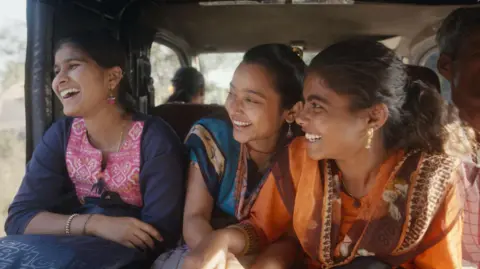
Sthal has also grabbed attention as its entire cast is made up of first-time actors chosen from the village where it is shot. Nandini Chikte, who plays Savita, has already won two awards for her brilliant performance.
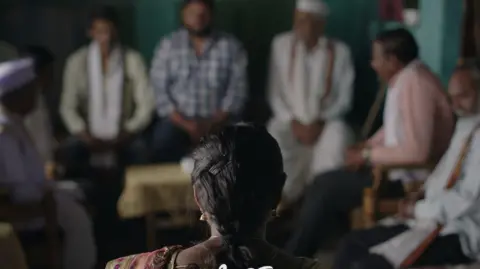
The film opens with a sequence where Savita is interviewing a prospective groom.
Along with her female relatives and friends, she watches as the young man serves them drinks from a tray. They laugh when he, visibly nervous, fumbles during questioning.
Rudely awakened from what turned out to be a dream, Savita is told to get ready as a group of men are coming to see her.
In reality, the gender roles are completely reversed, and in a scene that’s replayed several times in the nearly two-hour film, Savita’s humiliation comes into sharp focus.
The prospective groom and other men from his family are welcomed by Savita’s father and male relatives. Guests are fed tea and snacks and once the introductions are done, Savita is called in.
Dressed in a sari, with eyes downcast, she sits down on a wooden stool facing her interrogators.
Questions come, thick and fast. What’s your name? Full name? Mother’s clan? Date of birth? Height? Education? Subject? Hobbies? Are you willing to work on the farm?
The men step out, to hold a discussion. “She’s a bit dark. She had makeup on her face, but did you not see her elbow? That is her real colour,” says one. “She’s also short,” he goes on to add. Others nod in agreement.
They leave, telling Daulatrao that they will respond in a few days to let him know their decision.
According to her parents, “this is the fourth or fifth time someone has come to see Savita” – all the earlier meetings have ended in rejection, leading to heartbreak and despair.
The scene rings true. In India, men often have a laundry list of attributes they want in their brides – a glance at the matrimonial columns in newspapers and match-making websites shows everyone wants tall, fair, beautiful brides.
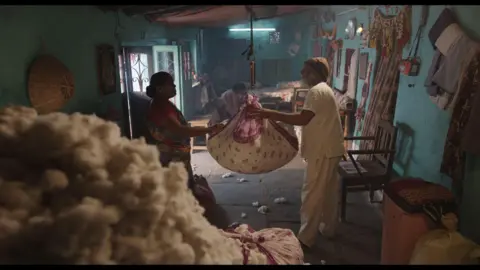
Savita’s protestations – “I don’t want to get married, I first want to finish college and then take civil services exams and build a career” – carry no weight in her rural community, where marriage is presented as the only goal worth having for a young woman.
“Marriage is given far too much importance in our society,” Chikte told the BBC. “Parents believe that once the daughter is married, they will become free of their responsibility. It’s time to change that narrative.”
- ‘I have been rejected by dozens of men over dowry’
- India viral wedding ad: The feminist looking for no-farting, no-burping man
She says she found it “very humiliating” that Savita was made to sit on a stool to be judged by all those men who discussed her skin colour, while there was no discussion about the prospective groom.
“I was only acting, but as the film progressed, I lived Savita’s journey and I felt angry on her behalf. I felt insulted and disrespected.”
The film also tackles the social evil that is dowry – the practice of the bride’s family gifting cash, clothes and jewellery to the groom’s family.
Though it has been illegal for more than 60 years, dowries are still omnipresent in Indian weddings.
Parents of girls are known to take out huge loans or even sell their land and house to meet dowry demands. Even that doesn’t necessarily ensure a happy life for a bride as tens of thousands are killed every year by the groom or his family for bringing in insufficient dowries.
In the film too, Daulatrao puts up a “for sale” sign on his land, even though farming is his only source of livelihood.
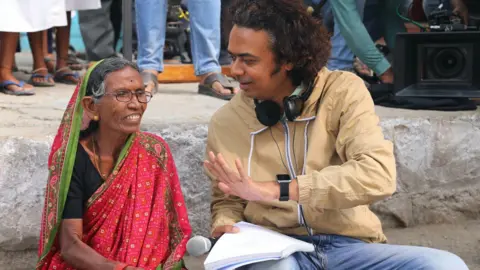
Director Somalkar says the idea for his debut feature film is rooted in his own experience.
Growing up with two sisters and five female cousins, he had witnessed the ritual far too many times when prospective grooms visited his home.
“As a child you don’t question tradition,” he says, adding that the turning point came in 2016 when he accompanied a male cousin to see a prospective bride.
“This was the first time I was on the other side. I felt a bit uncomfortable when the woman came out and sat on a stool and was asked questions. When we stepped out for a discussion, I felt the conversation about her height and skin colour was objectifying her.”
When he discussed the issue with his fiancée at the time – who is now his wife – she encouraged him to explore it in his work.
In a country where 90% of all marriages are still arranged by families, Sthal is not the first to tackle the subject on screen. IMDB has a list of nearly 30 films about arranged marriage made by Bollywood and regional film industries just in the past two decades.
More recently, the wildly popular Netflix show Indian Matchmaking focused entirely on the process of finding the perfect partner.
But, as Somalkar points out, “weddings are hugely glamourised” on screen.
“When we think of weddings in India, we think of the big fat wedding full of fun and glamour. We think of Hum Aapke Hain Koun,” he says, referring to the 1990s Bollywood blockbuster that celebrates Indian wedding traditions.
- The ‘cringeworthy’ Netflix show that is a huge hit
- Indian Matchmaking on Netflix: ‘Sima aunty’ raises eyebrows – again
“And the Netflix show only dealt with a certain class of people, the ones who are wealthy and educated and the women are able to exercise their choice.
“But the reality for a majority of Indians is very different and parents often have to go through hell to get their daughters married,” he adds.
His reason for making Sthal, he says, is to “jolt society and audiences out of complacency.
“I want to start a debate and encourage people to think about a process that objectifies women who have very little freedom to choose between marriage and career,” he says.
“I know one book or one film doesn’t change society overnight, but it can be a start.”
Follow BBC News India on Instagram, YouTube,X and Facebook.
Taken From BBC News

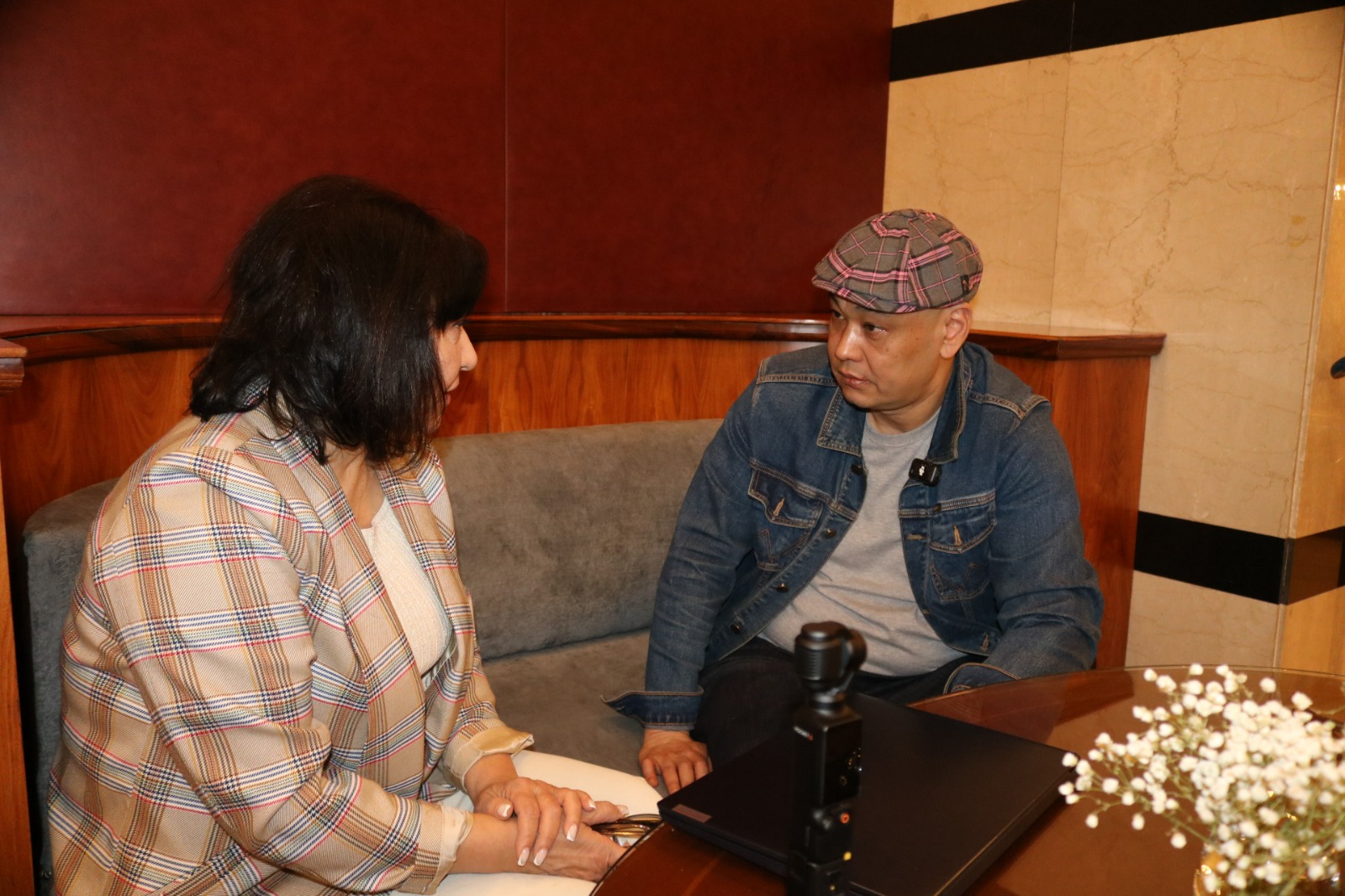
By Dilyara Lindsay
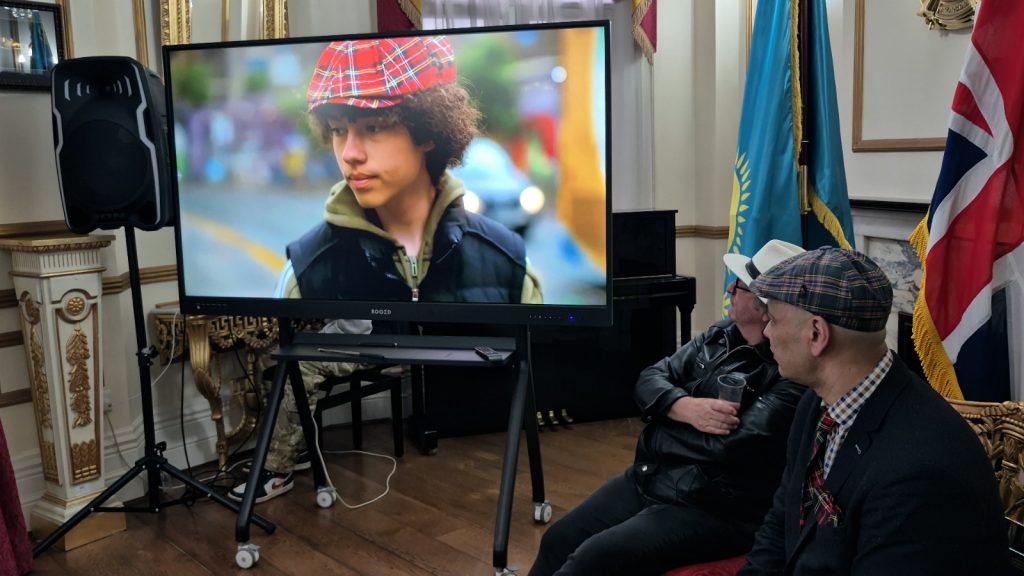
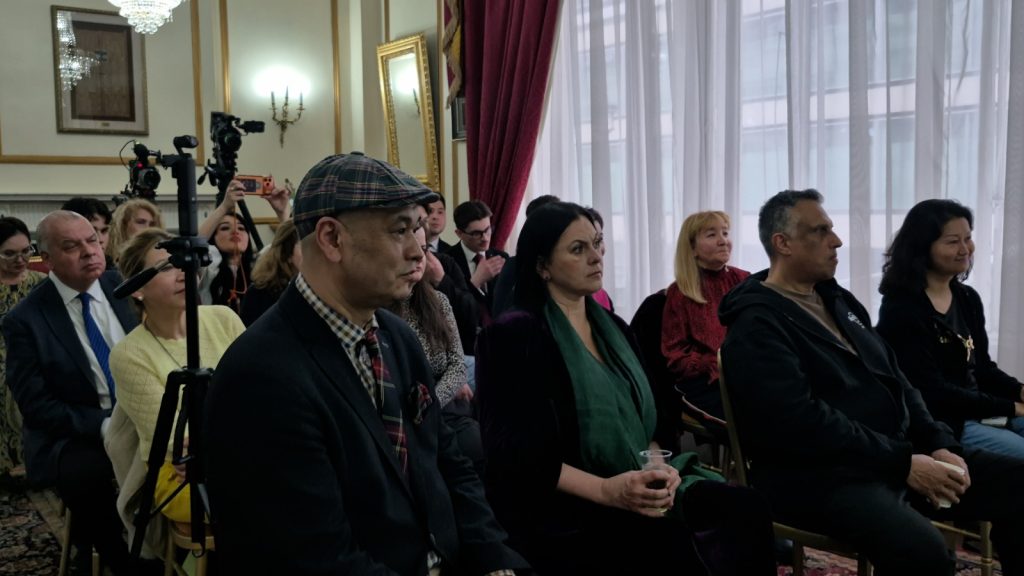
In a remarkable story of transformation from diplomacy to artistic expression, renowned Kazakh musician and songwriter Jantik – whose full name is Zhantemir Baimukhamedov – has opened up about his journey from the corridors of foreign affairs to the international music stage. In an exclusive interview with our Cultural Desk, the former diplomat turned performer discussed his childhood influences, his decision to leave public service for music, and his dream of recording at Abbey Road Studios.
Q: Mr. Baimukhamedov, thank you for speaking with us. Let’s start at the beginning. How did music first enter your life?
A: Music has been part of me since childhood. I was born into a family where music was deeply cherished. My father was a guitarist – he was considered the first Elvis of Almaty and Kazakhstan back in the 1960s. He started in Moscow, living in a dormitory for foreign students, and that’s how he got hold of rare tapes of Western music. Through him, I discovered Elvis Presley, The Beatles, and the sound that shaped my imagination.
Q: You trained formally in music as a child. What did that involve?
A: I attended music school and sang in a choir. But I also pursued academic studies – history with a specialization in English. So music and education went side by side.
Q: Then your path took an unexpected turn toward diplomacy. How did that happen?
A: After the collapse of the Soviet Union in 1992, the Ministry of Foreign Affairs was searching for officers. I was selected for advanced diplomatic studies and was sent to the London Diplomatic Academy in 1993. After completing my studies, I joined Kazakhstan’s Ministry of Foreign Affairs, serving as an interpreter under the attaché. I also worked as an assistant to the Ambassador of Malaysia to Kazakhstan.
Q: Yet the call of music proved stronger. What made you leave diplomacy?
A: Yes, in 1996 I made the bold decision to leave diplomacy and devote myself entirely to the arts. That choice defined the next chapter of my life. Music was not just a hobby – it was my true calling.
Q: What was your professional breakthrough?
A: That same year, I joined the newly opened national television channel Khabar, where I produced a youth entertainment programme called High-Five Front. It was often described as Kazakhstan’s answer to MTV. Since then, I have performed in more than 3,500 live events as both a singer and master of ceremonies. I established my own band, and we have been performing regularly.
Q: You recently achieved a long-held dream: recording at Abbey Road Studios. Tell us about that.
A: Yes, this year we released a 14-track vinyl album recorded at the iconic Abbey Road Studios in London with acclaimed producer Stuart Epps. Recording at Abbey Road was a dream I had carried since my teenage years. To see it become reality is one of the proudest moments of my life.
Q: Your music bears a deep imprint of British musical heritage. Which artists have influenced you most?
A: From The Beatles and The Rolling Stones to Led Zeppelin, Oasis, and Stone Roses – I credit several generations of British artists for shaping my creative language. As a teenager, my friends and I would copy the Beatles, the Animals, The Who, then later Supergrass and Oasis. There were three British invasions: the 60s, the 70s, and the 90s. All of them influenced me. You can hear those sounds in my album.
Q: You’ve described your mission as giving Kazakhstan a place in the global musical conversation. Can you elaborate?
A: Absolutely. While my work draws strongly from British influences, I see my artistic mission as something larger. Using a metaphor: The Beatles planted a great musical tree. Many branches have grown from it. I hope to add a Kazakh branch that will continue to grow and prosper. I am not incorporating traditional folk elements – I am directly engaging with British music culture while bringing my Kazakh voice into that tradition.
Q: Beyond your own career, you are also committed to nurturing young talent. Tell us about your music school.
A: I established a music school for emerging musicians. Talented young people deserve a stage. If I can help create that path for them – including my own daughter, who I believe is very talented – then I feel I am doing something meaningful. I provide practical stage experience. This business is hard. You have to be number one. It took me 30 years. You have to be a maniac towards your target.
Q: How have diplomatic institutions supported your artistic journey?
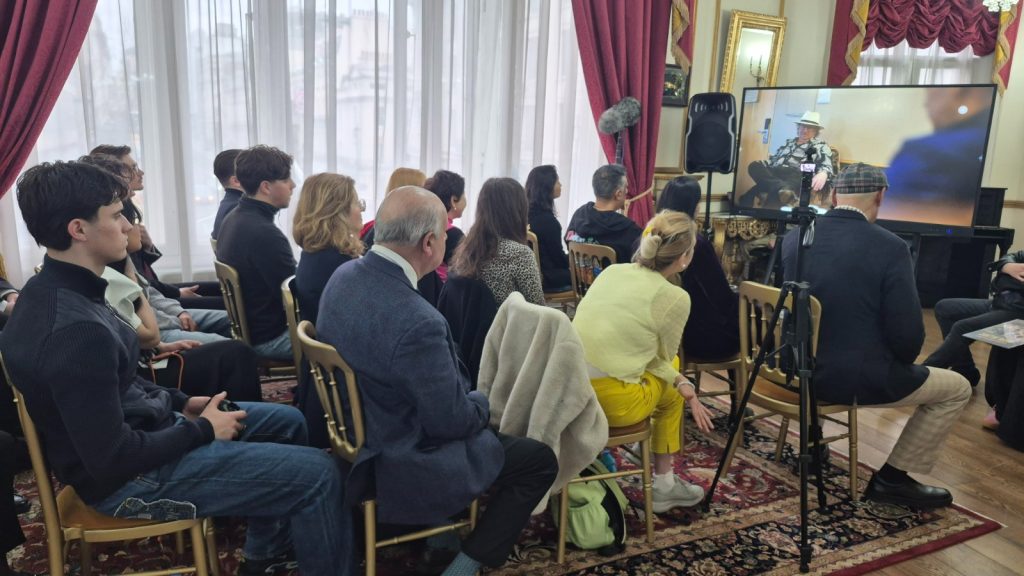
A: I am very grateful to the Kazakh Embassy in London. They helped me greatly and put serious effort into organizing a successful press conference. Diplomats attended, as well as representatives of the Eurasian Creative Guild, where I serve as an ambassador. Special thanks to Marat Akhmedjanov and all the guild members in the UK. They gave me encouragement and power to continue my work.
Q: What are your future ambitions?
A: I want to bring my band to the United Kingdom and fulfill another long-held ambition: performing at the Glastonbury Festival. That has been my dream for more than two decades. Of course, everything depends on funding. I spent a lot on this project – more than a beautiful car. If sponsors exist, I would love to apply to them. If not, I will work hard to make it happen.
Q: Finally, what would you say is your ultimate goal as an artist?
A: My intention is to put Kazakhstan on the world music map. That is what I am doing. For an artist who has already crossed the boundaries between diplomacy and music, the journey appears far from over. And I am just getting started.
ZhantemirBaimukhamedov’s latest vinyl album, recorded at Abbey Road Studios with producer Stuart Epps, is now available. He continues to perform and mentor young musicians through his school in Almaty.
Art & Culture
Part 2-Muslim-Sikh Harmony in Punjab: Akhtar Hussain Sandhu with Arshdeep Kaur Battu in a TV Interview on Sanjha TV (Canada)

Dr. Akhtar Hussain Sandhu, expert on Sikh/Punjab Studies, historian, scholar and columnist from Pakistan, currently living in USA was interviewed by famous anchor Arshdeep Kaur Battu for Sanjha TV, Surrey (Canada). The Light Newspaper is publishing first part of this interview and the rest of parts will be published in the forthcoming Sundays.
Translated by:
Farooq Muhammad Wyne
Lecturer in English
Government Islamia College Civil Lines, Lahore
Part 2
Earlier, you mentioned “Wand” (Division); division didn’t only occur in 1947. Way before that, Delhi was part of Punjab, and then it was separated by the British, and no one spoke out against this territorial loss of Punjab. NWFP and other regions extending up to Kabul during the reign of Maharaja Ranjit Singh were part of Punjab, and even Kashmir was under Punjab; later, Kashmir separated, but no Punjabi leader cried or protested. Moving on, Haryana got separated, Himachal Pradesh, Chandigarh gained the status of union territory, who spoke against that?
The leadership crisis in Punjab has always existed. The major issue in Punjab is the crisis of leadership, even today. We (the Punjabis) neither have unity nor capable leadership. A leader is someone who thinks about people. There is a word called “Ishq.” It is something that cannot be associated with a man or a woman; it would be an insult to the word “Ishq” if it is used in this context. “Ishq” means losing your comfort, wealth, and everything you have for the sake of a ‘cause’ or mission. The cause of ultimate societal betterment. “Ishq” entails selflessness and self-negation in pursuit of higher objectives. Spirituality, which entails selflessness and self-negation, is the prime quality of a capable leader, but it is rarely seen today. If someone doesn’t rise above his materialistic gains and vested interests, he cannot benefit people and hence cannot become a leader. Such a person will deliver speeches for the public good but will have his own motives. So, the leadership of Punjab is now suffering from materialism. They (the politicians) need money, ministries, and status. In conclusion, Punjabis lack unity and leadership.
Host: We often remember Bhagat Singh, especially in September when his holiday is celebrated. Bhagat Singh would have never imagined that his Punjab would be divided into two parts, and elderly Punjabis would lament the division of the land. His only dream was that Punjabis should remain united, undivided, and in harmony. I often think his soul must be writhing to see the current state of Punjabis.
Guest: Regarding Bhagat Singh, there are many elements to discuss. Sadly, some members of the Sikh community have ostracized him from the Sikh community. My question is, if someone calls himself a Gursikh (a devoted follower of Sikh Gurus), will the Guru cast him away? If a Sikh goes to the Guru and calls himself his follower, will the Guru say to him, “No, since you do this and that, you go away”? No, the Guru will not say such a thing. When the Guru himself does not reject him, who are we to reject him (Bhagat Singh)? Whoever goes to the holy door of the Gurus is accepted wholeheartedly and embraced. The purity of their (Holy men’s) souls and intellects is very clear; they accept any kind of man, be it good or otherwise. But now, this phenomenon of excommunicating people is prevalent, where individuals are labeled as believers or disbelievers, Sikhs or non-Sikhs. When such states of affairs are prevalent in Punjab, what kind of leadership can we expect?
At least Bhagat Singh was fighting for independence, for Punjab, and for India’s freedom against the colonizers. Just look at these aspects; aren’t they enough? Why do people delve into deeper issues? He was a writer, and if someone is a writer, his task is to write. If someone is a reformer, his task is to reform. If someone is a poet, his task is to write poetry. If someone is a lyricist, he will be remembered for his art. That’s how people should be remembered (for their works), and we don’t need to invade their personal lives to find faults and defects.
Host: But such things are pervading.
Guest: Personal affairs of revered personalities should be left to themselves. Just look at their work. If I am a Professor or researcher on Punjab, that’s enough. No one needs to
look at my religion or personal inclinations or affiliations; this isn’t necessary. Today, you invited me on your television show, for which I am very grateful, but that is because I am a researcher on Punjab. If you invite a political leader, then you would look at him from a political perspective, not a religious one. Likewise, if someone is a reformer, he will be viewed from another context. Whoever contributes to his field gets recognized; hence, we don’t need to delve into his personal or family affairs. This is a drawback in Punjabi culture; they observe minutiae, irrelevant and inconsequential details, and then politicize the whole thing. This is one of the most problematic issues in Punjab.
Host: We often highlight that education is important. We also say that if youth are equipped with education, it will change the course of the country. The youth of any country holds utmost importance. Previously, we were discussing women’s education, how much education and awareness are being provided to (Punjabi) women, and how many of them are being encouraged to join schools and universities and then join the profession they love and aspire to. But whenever we talk about Sikhya (Education), the element of religion cannot be excluded. It is often said (regarding Punjab of Pakistan) that Muslims are given educational opportunities while Non-Muslims are not. Are these things real? Are they happening in Pakistan?
Guest: My father Ch. Khadim Hussain used to say that in childhood, a man’s energy is in his hands and legs; he tries to run, play, and jump. Gradually, the energy moves towards his chest and heart, and he wants to change the world; he wants to become an activist. When he crosses his forties, he becomes mature and a thinker; he starts thinking. This is the age of his wisdom. When he becomes too old, his energies start to fade away, and he only speaks and starts babbling like a child. This is the cycle of life. Our scholars (Vidwan) think, use wisdom, and show the path, values, and wisdom. It is the task of the youth to implement those values and wisdom. Youth is the backbone of any society, and they are the ones who change society. The experience they gather when they reach the age of wisdom is then used to lead people forward from that perspective. Youth is very important. Hence, if the youth is kept away from education, there will be a lapse of awareness among them. This is why the youth, especially those in education, shall realize that their primary objective is learning, not money. The first textbook a child reads is his mother; she inculcates religious and moral values into him. The second textbook of a child is his society and surroundings; he learns from his society, as it is the second institution of learning. The third textbook of a child is his primary educational institution. But when he goes to university, the door becomes open for him; he is already socially constructed by his religion, society, and school. This is the time when he decides in which direction he wants to move, let’s say engineering, medical, religion, or IT. At that moment, he has to strike a balance between the training and learning he received earlier and the direction he now wants to move in. If he fails to do that, it will create an identity crisis in him. This is why he should not cut himself off from the learning he takes from his mother tongue and culture. The important thing is that whichever field he chooses, he has to carry his culture along with him.
If the student forgets his culture, he will face a severe identity crisis; he won’t be able to distinguish between his roots, i.e., whether he is Punjabi or belongs to the West. In Punjab, the English language is taken as a measure of intelligence and education; if someone speaks English in Punjab, he is often considered a scholar. But even in an English society, let’s say an insane or psychologically ill person also speaks English; does it denote wisdom? Of course not. English should not be given preference over Punjabi in Punjab. English is just a language, a mode of communication, and wisdom is
something else. Education doesn’t teach you wisdom; rather, it hones your skills and capabilities. It tells you how to behave. If there is a saint or an engineer inside you, getting an education will bring it out. Likewise, if there is a poet, writer, or historian in you, education will bring it out. The teacher is also an educationist and a facilitator. Our (Punjabi) students are away from books, and even before that, they are away from their Punjabi language and culture. They can speak one or two sentences in Punjabi but aren’t able to carry out a substantial conversation. I remember I was training some officers in Lahore. I asked them, “Do you know Punjabi language? As you’re all Punjabis,” they replied in assent, saying if they can’t speak Punjabi, then who would? So, I read out the lyrics of a famous Punjabi song:
Pichhe pichhe aunda meri chaal vehnda aen, Chirey valia vekhda aen ve, mera lawng gawacha
(translated as, following me, keep a watch on the route I walked; O turbaned boy, keep watching while my nose ornament is lost).
Then I asked what “Chiray wala” means in Punjabi, and they replied, “Those who have a straight line or distinct mark in their hairstyle (cheer).” I tried to suppress my laughter and said a “turban” (safaa) is called Cheera in Punjabi. The officers were shocked. Likewise, I was once posted in Murree as a Lecturer. While traveling in public transport in Punjab, you know in our society these days, the FM Radios have changed their styles. The Radio Jockeys speak while music plays in the background. So, neither can you enjoy her talk nor the music. The song being played was “Mahi merya rond na marin, me da laaya jind jan da” (My beloved, do not betray me as I have put my life at stake for you), probably sung by Noor Jahan. The Radio jockey said while lowering the volume, “I consulted a Punjabi scholar about the meaning of ‘rond marna,’ and he told me it means to shoot someone.” This shows the youth’s nonseriousness of Punjabis towards their language and culture.
Host: I think parents play an important role in the upbringing of children because whatever language the parents speak, the child will try to repeat it, as is the case in Observational Learning of a Child.
Guest: In our Punjab (both Eastern and Western), it is often said that if you don’t speak Hindi or English on the Indian side of Punjab, you probably won’t be able to compete in Indian civil services and other competitive exams. On our (Pakistani) side of Punjab, it is widely regarded that if you don’t know Urdu and English, you might not ace the civil services examinations. This is why they are encouraged to learn such languages, the language of capital (market language), which isn’t bad, but the problem arises when you discourage Punjabis from speaking Punjabi. The second thing is that when our children get this “heen bhavna” or inferiority complex, perhaps the Punjabi language is not a good language. But I think Punjabi youth can still struggle to regain the lost glory of their language. You see, in our home, it was said that if you don’t learn English and Urdu, you won’t succeed. Gradually, I started studying my culture; I read the poetry of Waris Shah, Bulleh Shah, Mian Muhammad Bakhsh, and Sultan Bahu, the famous Punjabi poets. Each verse of such gems contains pearls of wisdom. If our youth is getting away from Punjabi culture, they would lose gems of
wisdom. For example, our proverbial wisdom such as “Dhyian sab dian sanjhiyan hundian ne” (Daughters are cherished and valued by the entire community) or “Wadyan da ehtram karna chai da ay” (the elderly shall be respected), such ethics and values cannot come from the West. If we defy our (Punjabi) culture, we will not only be cut off from our language and heritage, but we will also lose the gems of wisdom that they carry. Especially poets like Mian Muhammad Bakhsh; his poetry is full of wisdom and appeals to the intellect.
Art & Culture
Navruz & Timur’s Empire: A Kaleidoscope of Cultures Blooms at Uzbekistan’s University of Journalism
By Prof. Gulmira Shukurova
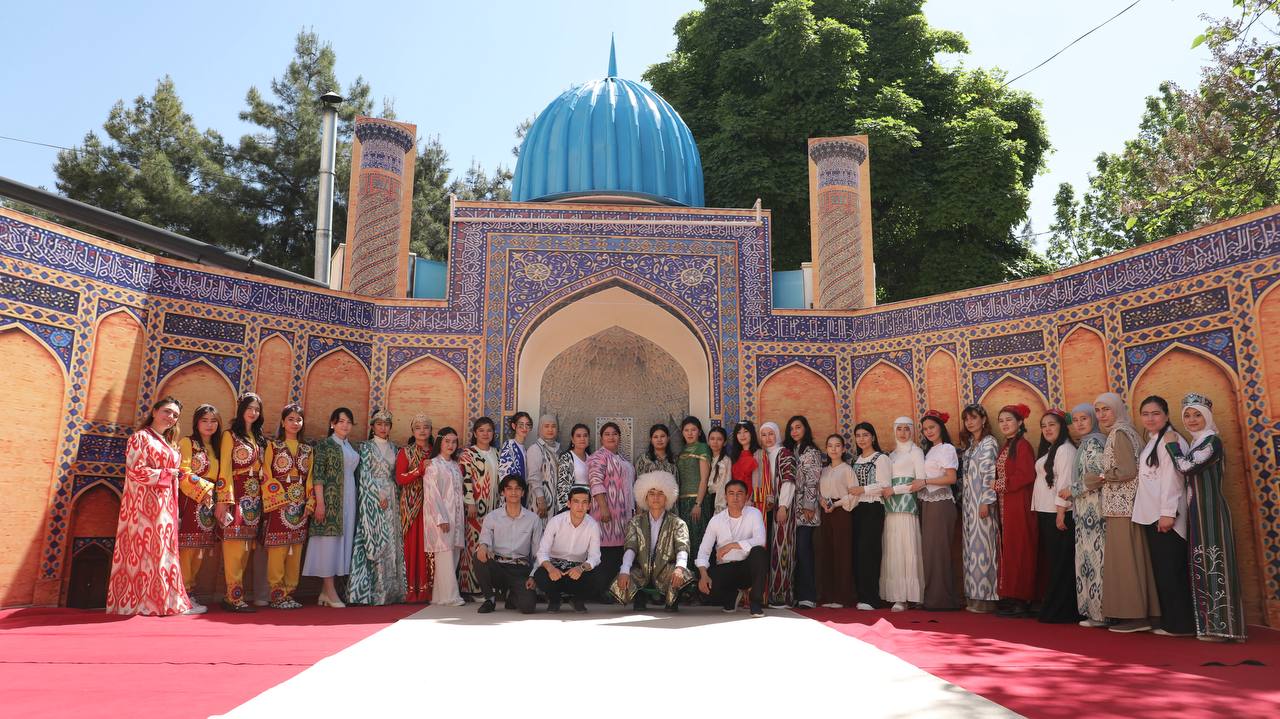
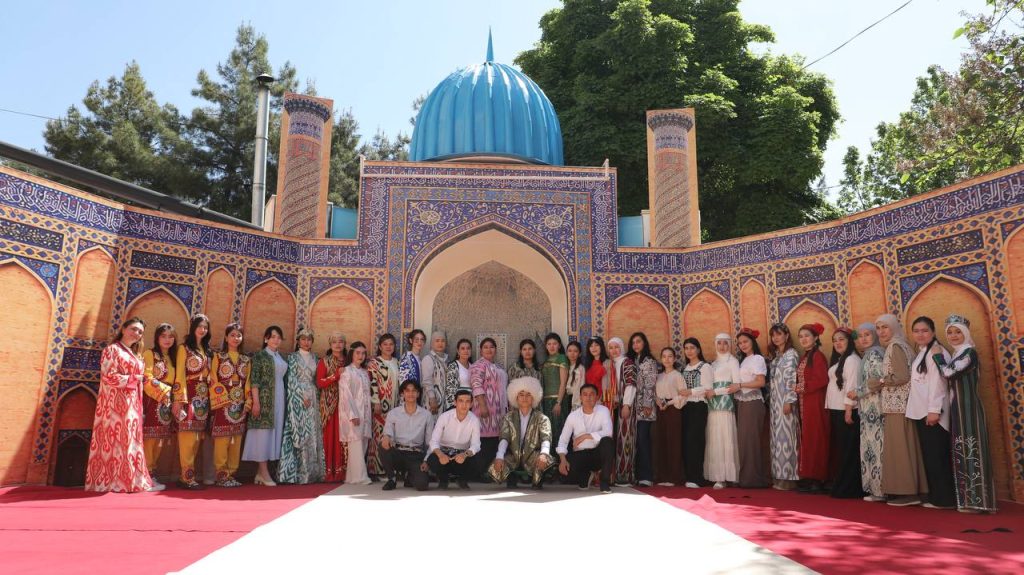
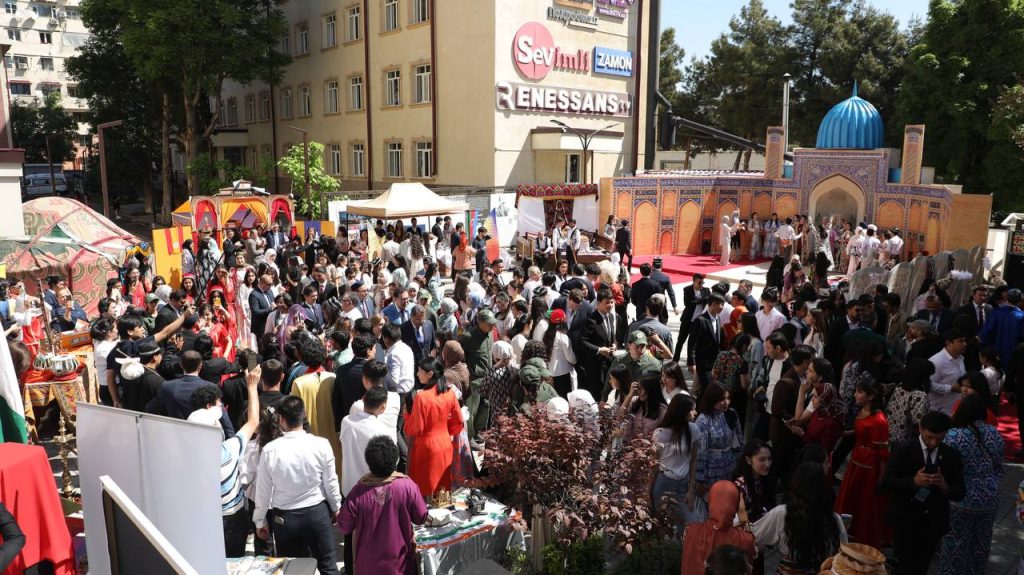
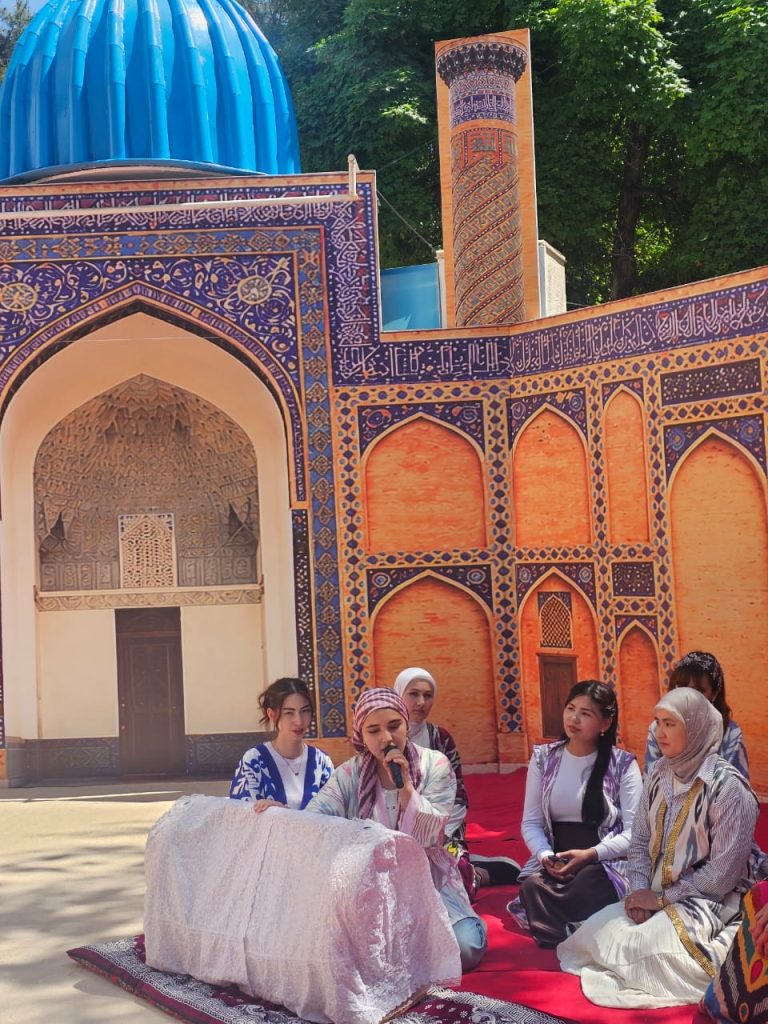
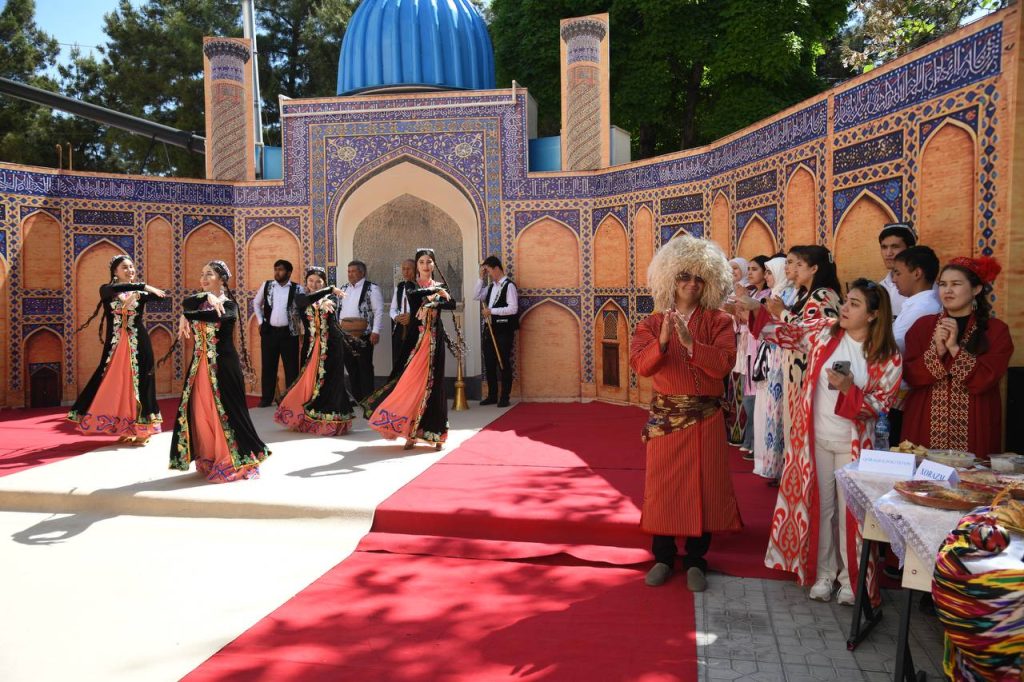
The University of Journalism and Mass Communications of Uzbekistan was not merely a campus today. It was a canvas — a living, breathing tapestry of silk, spice, melody, and memory. Under the resonant banner “The Spirit of Navruz and the Cultures of Amir Temur’s Empire,” the university exploded into a grand cultural festival that turned spring into a story and every visitor into a character within it.
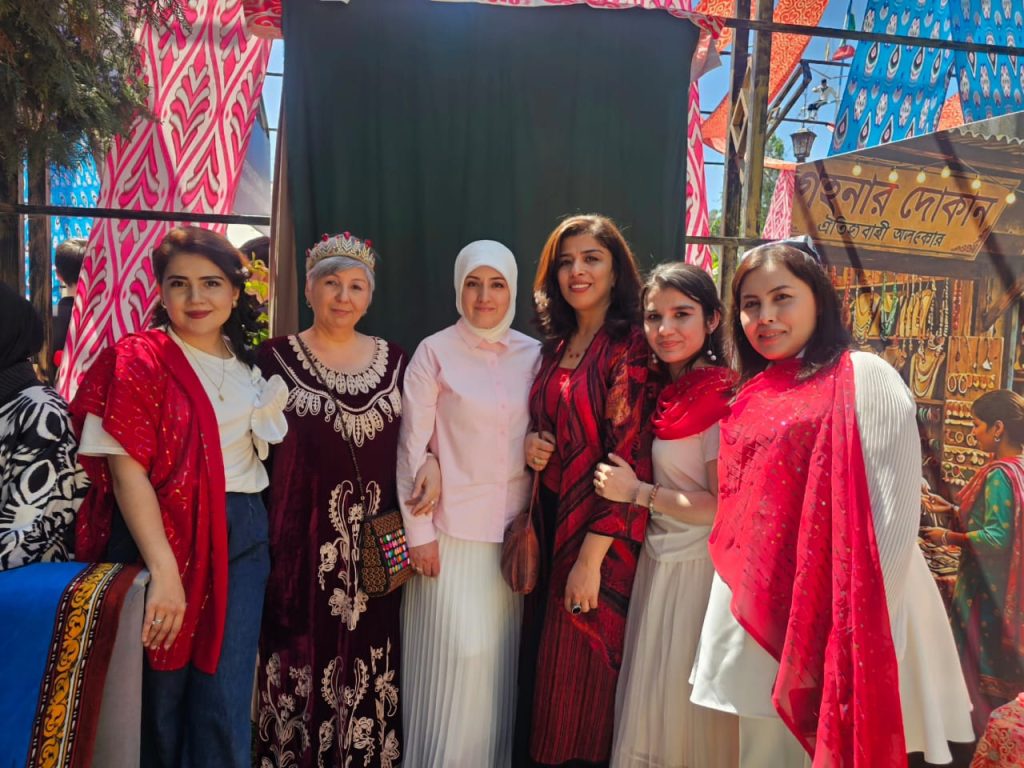
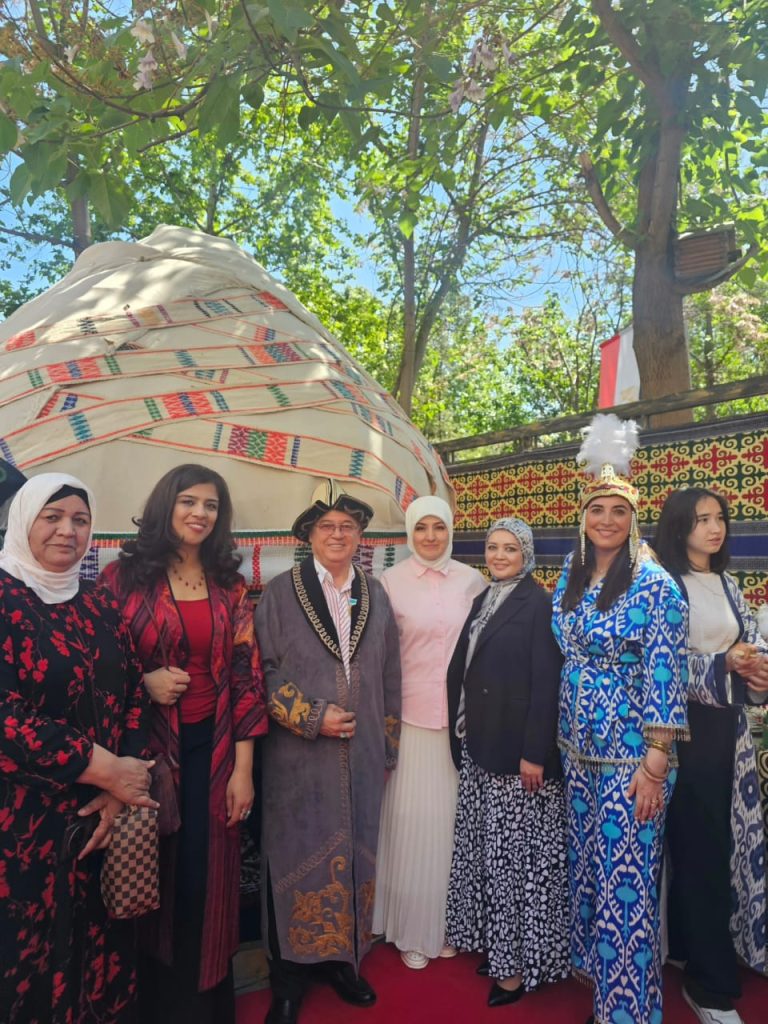
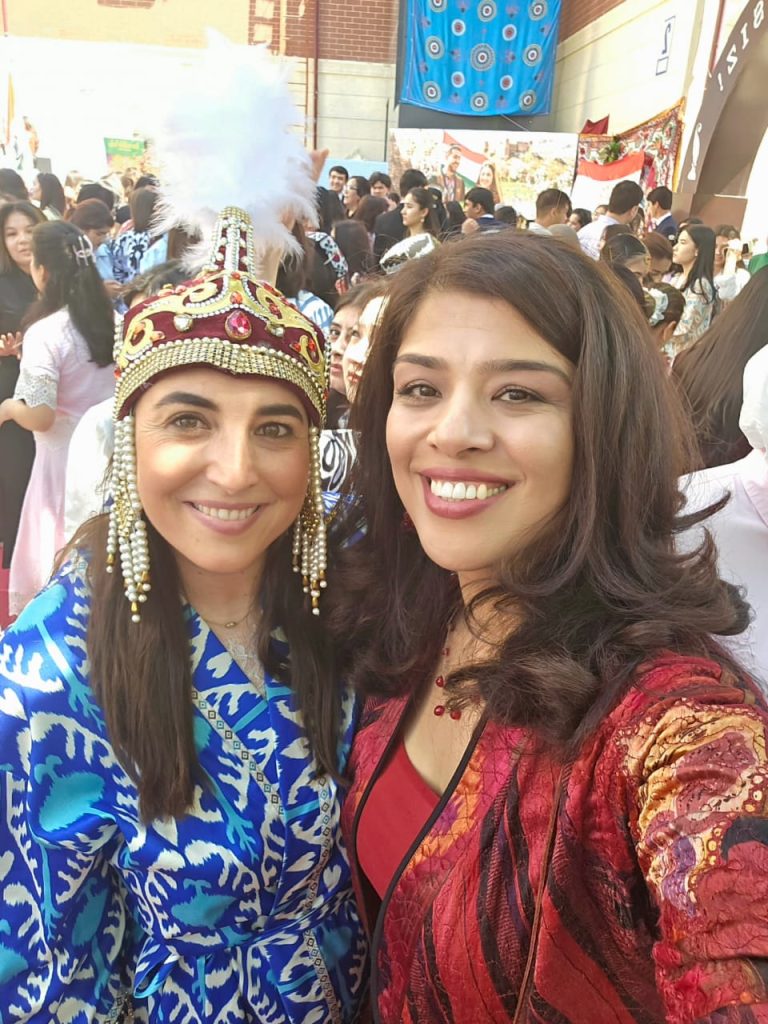
The air thickened from the first light of morning with the fragrance of freshly baked samsa, saffron rice, and the smoky sweetness of tandoori bread. Students in embroidered chapan robes and shimmering kelin dresses moved like living paintings between pavilions. Professors set aside their lecture notes to become curators of heritage. And over it all, the gentle Navruz sun — ancient and forgiving — showered the grounds in gold.
Twenty Nations, One Heartbeat
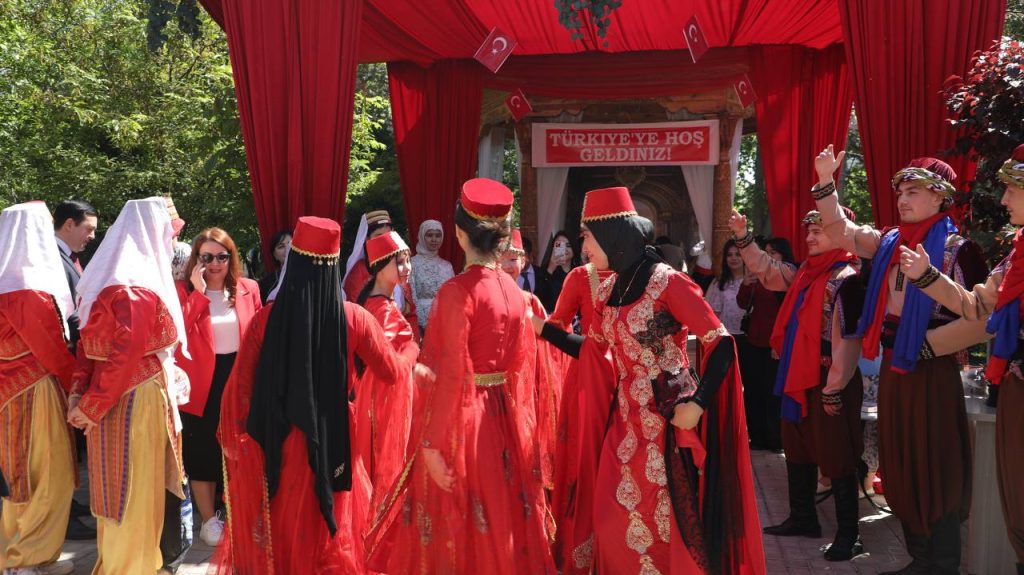
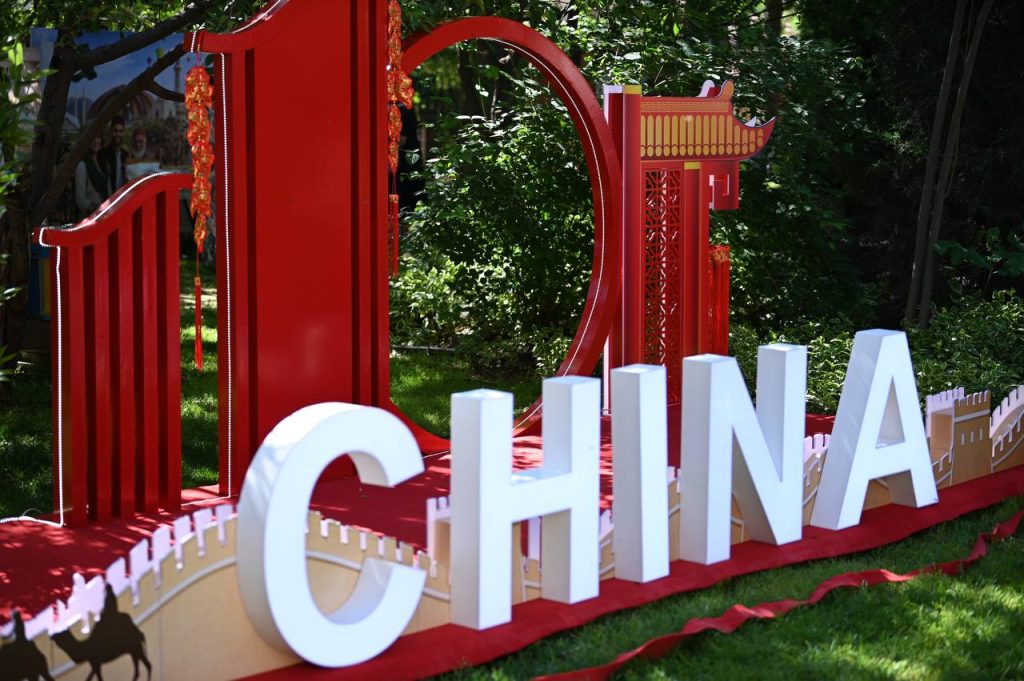
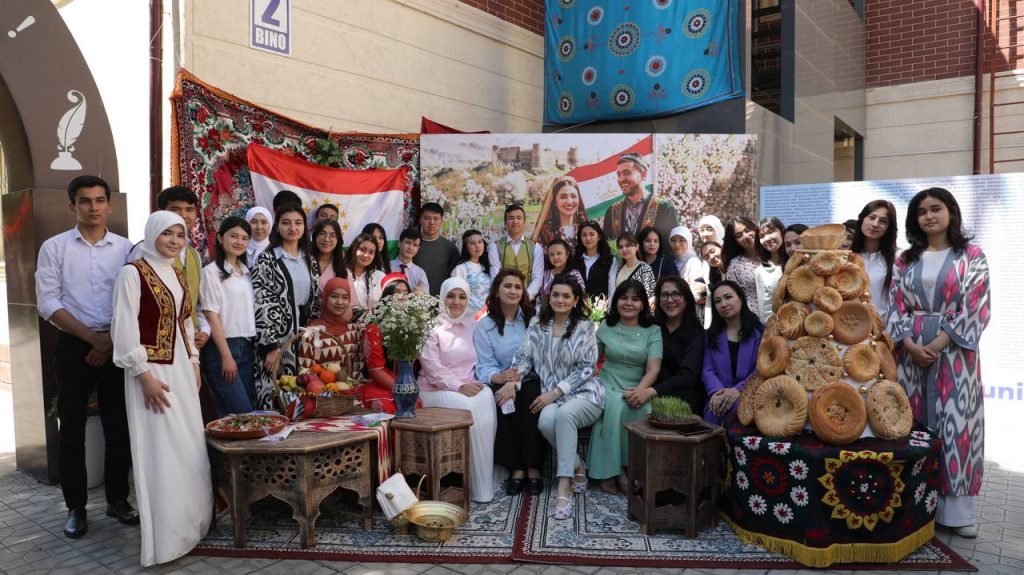
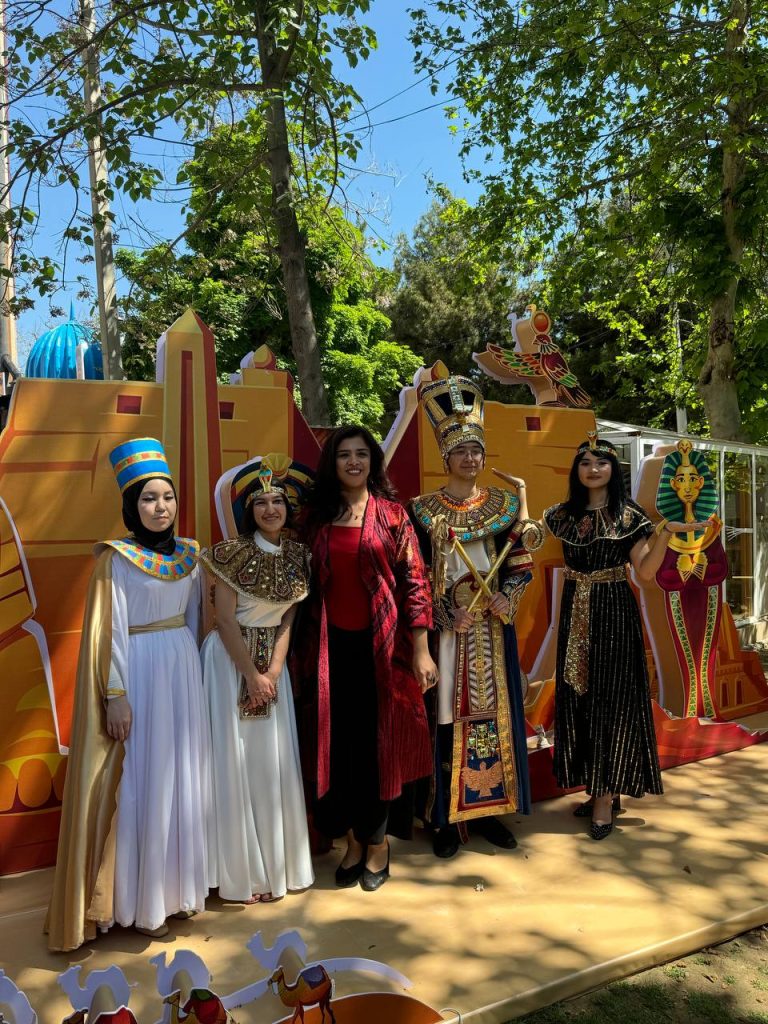
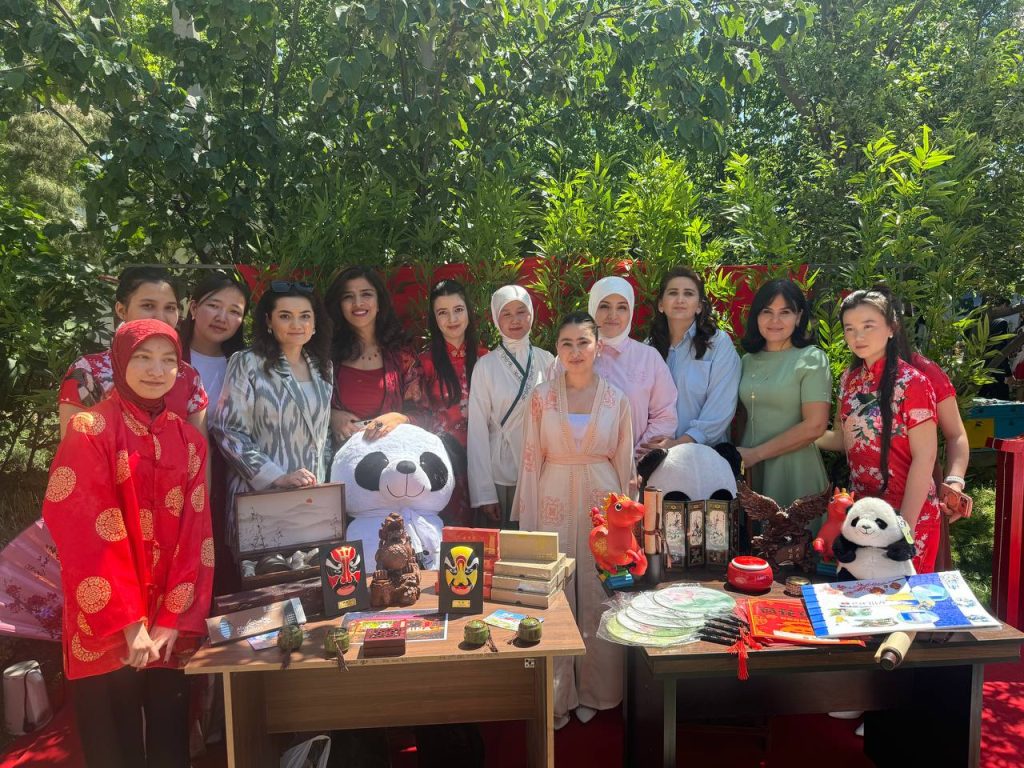
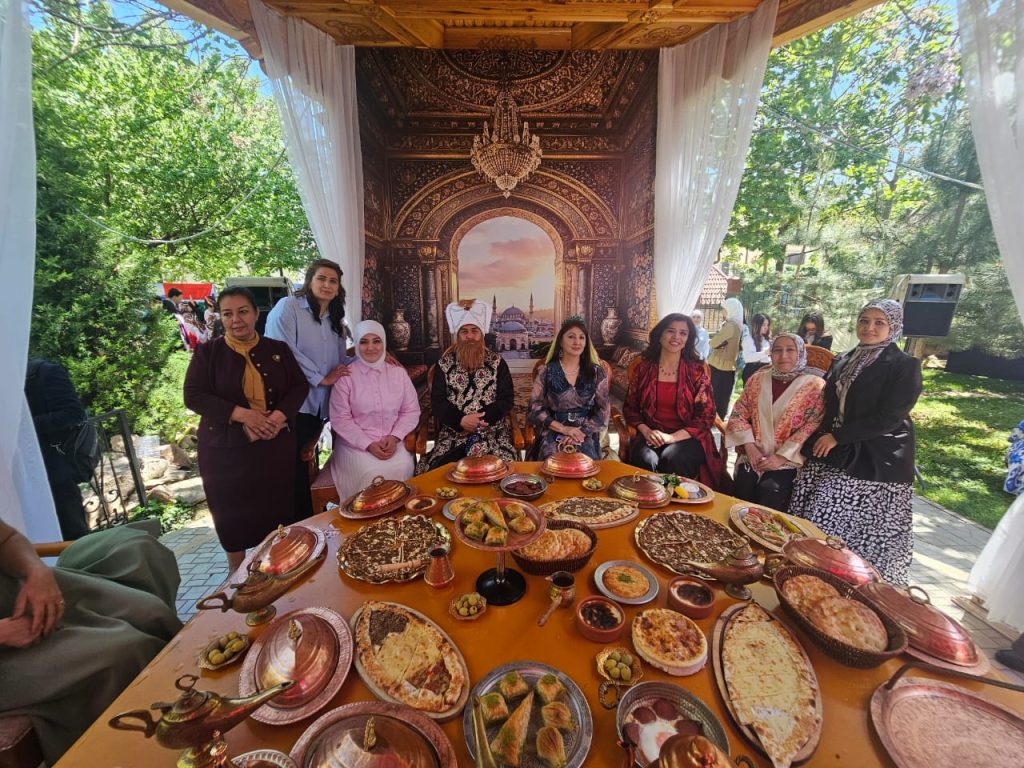
More than twenty nationalities were represented in a sprawling open-air exhibition that turned the university courtyard into a radiant kaleidoscope. Each pavilion was a small universe: hand-carved wooden cradles from one culture, silver jewelry that jingled like forgotten poetry from another, and ceramic plates painted with symbols older than memory.
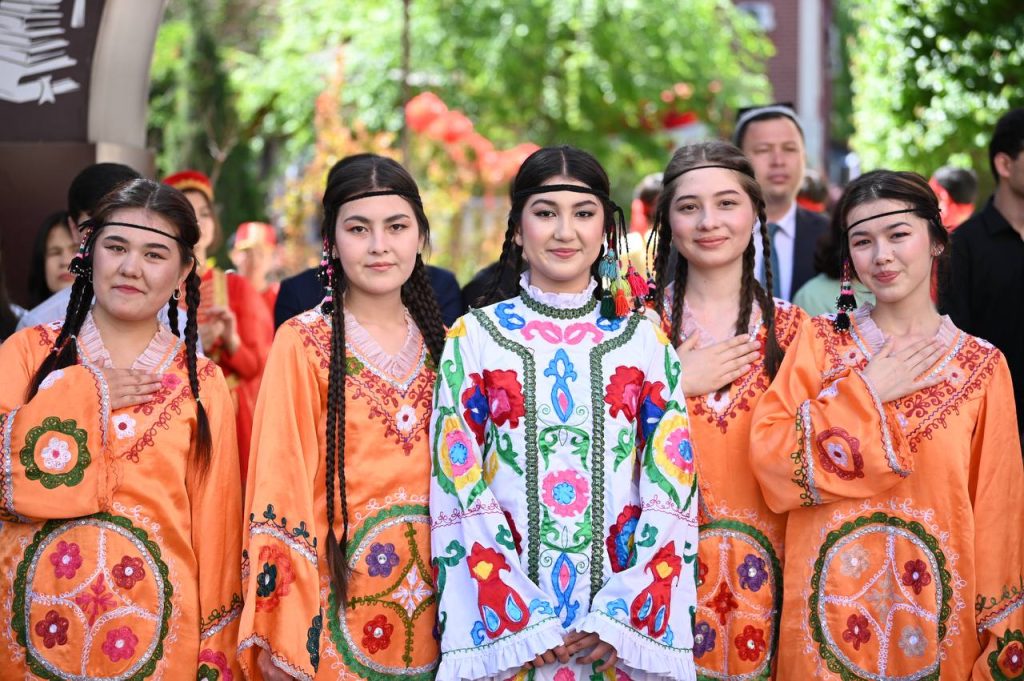
Students, dressed in authentic national costumes, did not simply explain their heritage — they lived it. A girl from the Karakalpak pavilion demonstrated a cradle-lullaby ritual while her partner played a dutar. A young man at the Uzbek stall brewed green tea in a ceramic teapot and recited a Navruz blessing. At the Tajik corner, an elder student handed out sumalak — the sweet wheat pudding of spring — while chanting a folk rhyme about renewal.
Every pavilion competed in charm. There were theatrical skits retelling the legends of Timur’s court, mock weddings showcasing bridal traditions, and even a miniature bazaar where visitors could haggle for handmade scarves and wooden spoons — all in good humor, all in the spirit of bakhshish (generosity). Students, as passionate cultural ambassadors, wove narratives through folk performances, theatrical enactments, and heartfelt conversations that connected visitors to the deep, rich history of their cultures.
A Gathering of Dignitaries and Dreamers
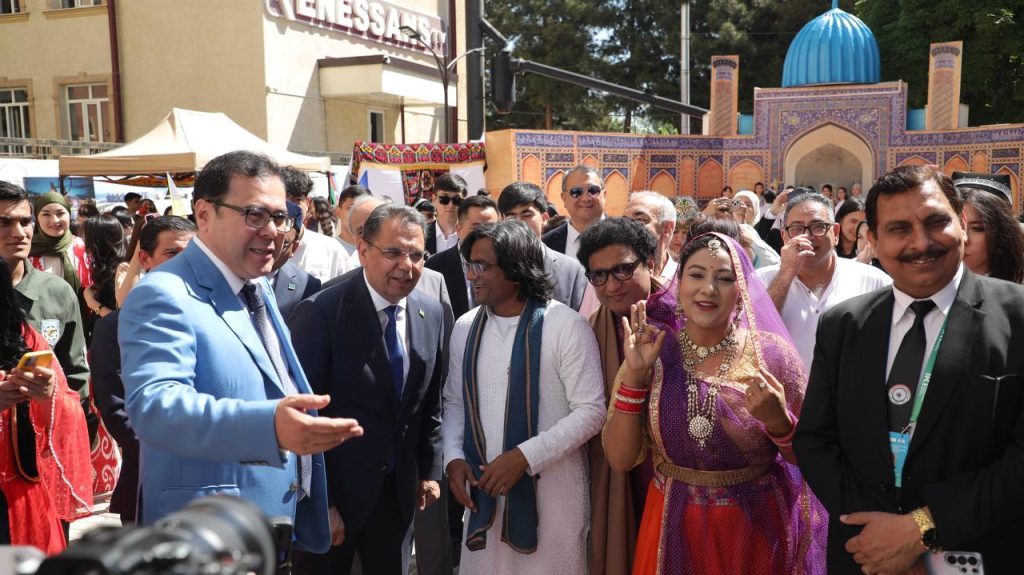
The festival drew a distinguished cross-section of the nation — and the world. Foreign ambassadors in formal suits walked side by side with students in embroidered skullcaps. International guests were seen laughing over plates of plov while Uzbekistan’s Minister of Higher Education, Science and Innovation paused to watch a theatrical performance of a Navruz legend.
State organization representatives, media professionals, and a sea of enthusiastic students filled the walkways. Cameras clicked. Voices hummed. At one point, a group of young journalists from the host university began recording short video interviews — capturing, for posterity, the authentic voice of Central Asian pluralism.
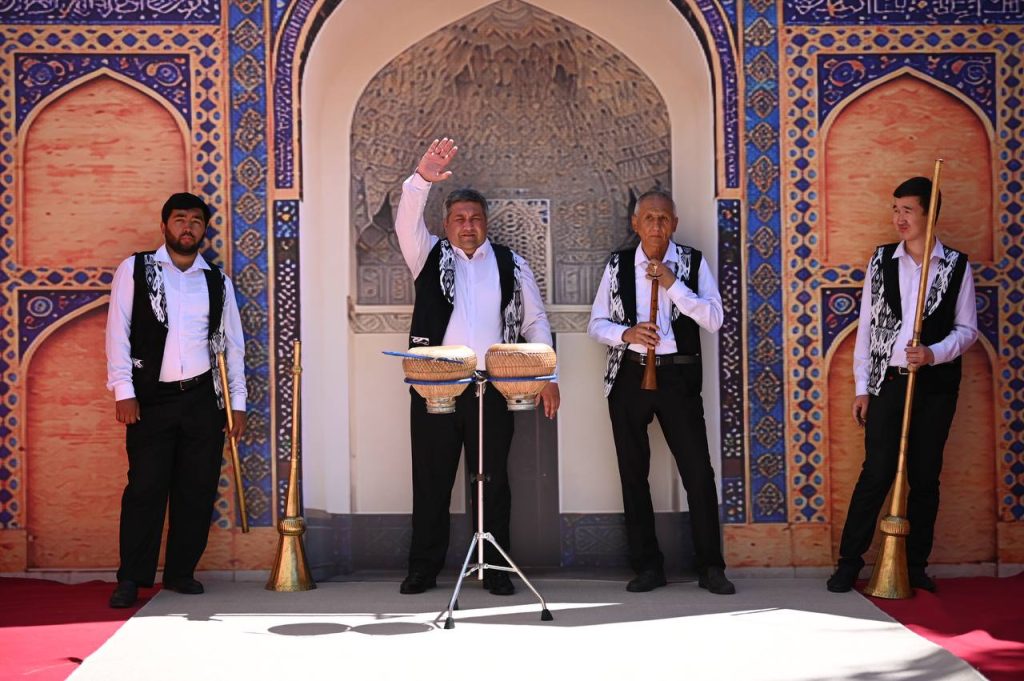
The ambassador of a European nation was overheard saying: “I have attended many cultural days. But this — this feels less like diplomacy and more like family.”
The True Essence of Spring
What made the day unforgettable was not just the spectacle, but the spirit. The university became a poem to spring — a celebration not merely of diversity, but of harmony. Under the open sky, interethnic unity and tolerance were not abstract ideals. They were visible in a Korean-Uzbek student teaching a Russian guest how to fold mandu, and in a Turkmen girl sharing dried apricots with a Kyrgyz journalist.
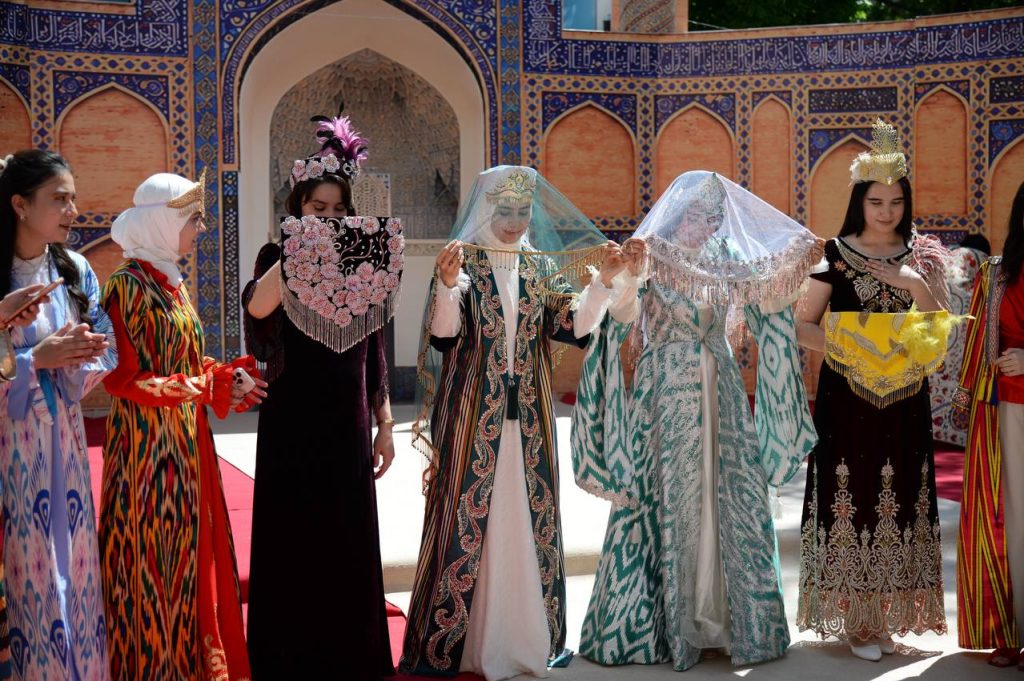
The event also carried a deeper, historical resonance. The reference to Amir Temur’s Empire was not decorative — it was a reminder that centuries ago, Samarkand was a crossroads of civilizations. Today, that crossroads lives again in every shared smile, every exchanged recipe, every spontaneous dance circle that erupted on the grass. The echoes of his empire — rich in art, culture, and conquest — were present in the performances, the artifacts, and the stories that unfolded before every attendee.
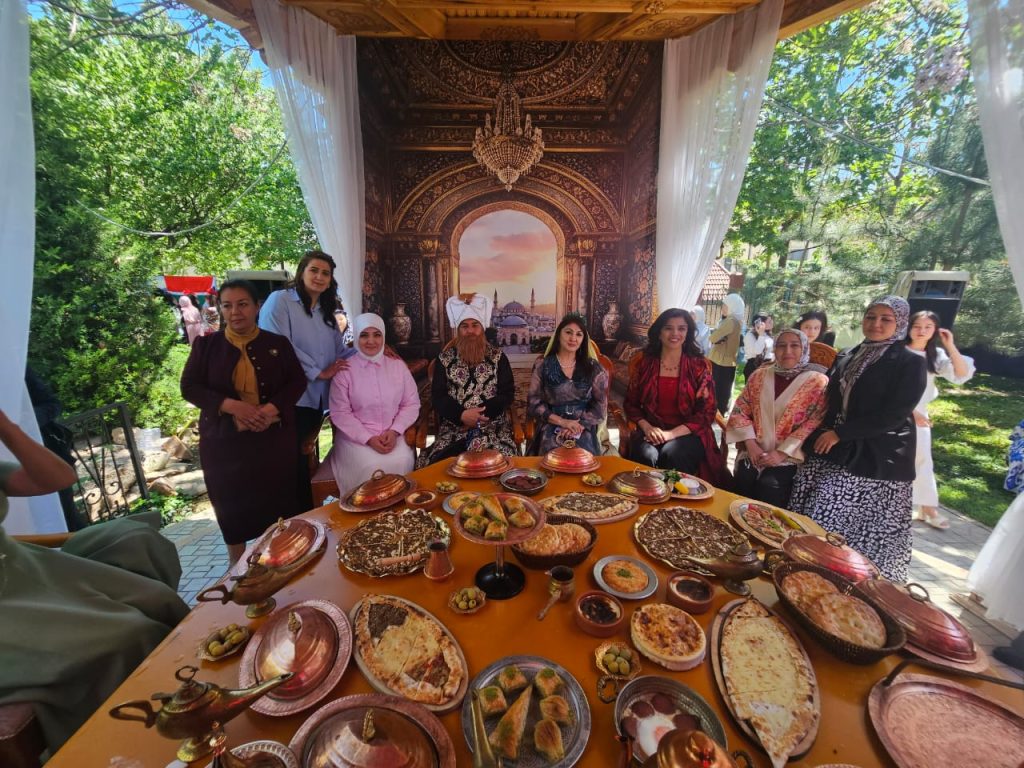
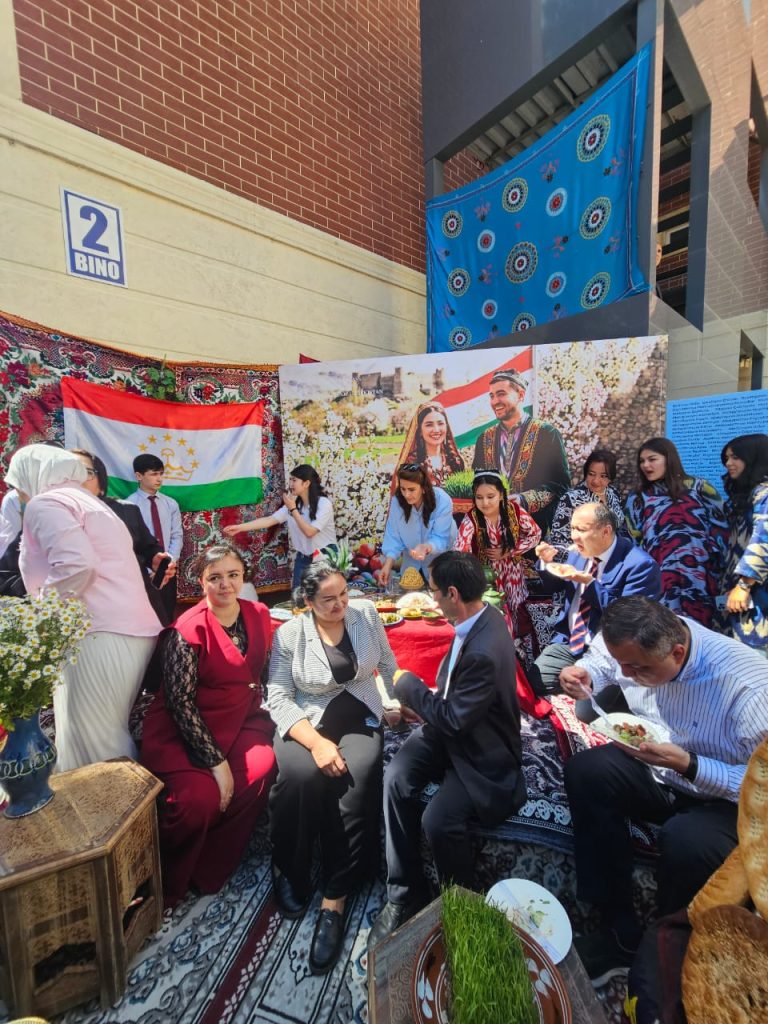

A Bridge Between Eras
As the afternoon sun softened into a honeyed glow, the festival reached its emotional peak. A choir of students sang a Navruz melody in five different languages — Uzbek, Tajik, Karakalpak, Russian, and English. Behind them, a troupe of young actors performed a shadow-play reenacting Temur’s famous decree of religious and cultural tolerance.
For a moment, past and present melted into one. The scent of qaynatma soup mingled with the sound of a child’s laughter. An elderly professor wiped a tear as a student placed a traditional cap on his head. And somewhere, a doira drum kept beating — steady, joyful, and deeply human. National melodies mingled with the laughter of friends, and ancient customs were revived with fresh enthusiasm, creating a vibrant tapestry that was as much about yesterday as it was about tomorrow.
More Than a Festival – A Tradition of Unity
In the end, this gathering was not a one-day celebration. It has become a beloved annual tradition at the University of Journalism — one that strengthens community bonds, nurtures shared values, and reminds everyone that spring’s true magic lies not in the flowers, but in the act of blooming together. The event was a testament to the university’s commitment to fostering tolerance and cultural exchange, where unity was not just an ideal, but a palpable experience.
As the last pavilion folded its carpets and the sun dipped behind the rooftops, guests left with full stomachs, lighter hearts, and the quiet understanding that culture, when celebrated with genuine joy, becomes the truest language of peace.
And that, perhaps, is the most powerful story of all.


How Pakistan Became Israel’s Primary Target (PART-I)

How Pakistan Became Israel’s Primary Target (PART-II)

The Real Reason Trump Crumbled Against Iran


-

 Europe News1 year ago
Chaos and unproven theories surround Tates’ release from Romania
-

 American News1 year ago
Trump expands exemptions from Canada and Mexico tariffs
-
 Sports1 month ago
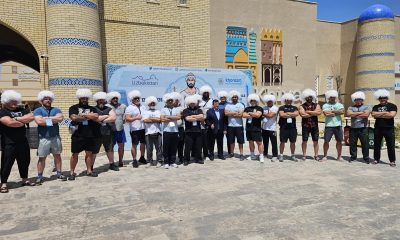
South Korea’s Yoo Useong Steps Onto the Global Strongman Stage as World Strongman Federation Professional Athlete
-

 American News1 year ago
Trump Expels Zelensky from the White House
-

 Pakistan News1 year ago
Comprehensive Analysis Report-The Faranian National Conference on Maritime Affairs-By Kashif Firaz Ahmed
-

 Art & Culture1 year ago
Will Snow White be a ‘victim of its moment’? How the Disney remake became 2025’s most divisive film
-

 Entertainment1 year ago
Champions Trophy: Pakistan aim to defend coveted title as historic tournament kicks off today
-

 American News1 year ago
Zelensky bruised but upbeat after diplomatic whirlwind