
American News
U.S.–Canada Relations Collapsed into a Full-Blown Trade War

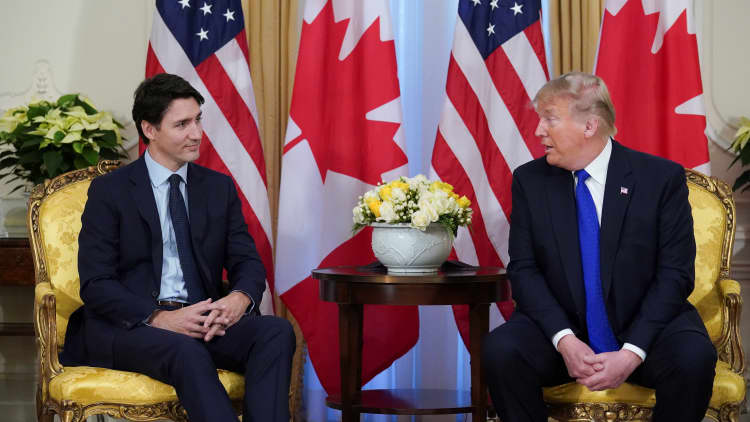
Paris (Imran Y. CHOUDHRY) :- Former Press Secretary to the President, Former Press Minister to the Embassy of Pakistan to France, Former MD, SRBC Mr. Qamar Bashir analysis : There was a time when the United States and Canada were so deeply intertwined that it was almost impossible to tell them apart. The world’s longest undefended border felt like an open gate between two homes. In 2018, during a visit from France to Canada, I stayed with my sister and later traveled with my family to Niagara Falls to see my brother-in-law in Michigan. At the border, our documents were checked briefly, but my brother-in-law’s American ID allowed him to pass without delay. It was a small yet telling example of the mutual trust and convenience that marked the relationship between the two neighbors. Canada’s warm hospitality toward U.S. visitors and the respect they received mirrored the dignity the United States offered to Canadian travelers. It reminded me of another crossing, years earlier, from Pakistan to China, where there was only one polite official on the Pakistani side helping tourists navigate the journey to one of the highest plateaus in the world. Sadly, the current U.S.–Canada border atmosphere now more closely resembles the tense and suspicious crossings between Pakistan and India, where travelers are stripped of ease and privacy, and once inside the country are shadowed by security services. This shift from warmth to wariness is both shocking and deeply regrettable.
Until recently, the two countries were bound by one of the strongest economic partnerships in the world. In 2024, total goods trade between them reached $761.8 billion, with U.S. exports to Canada worth $349.9 billion and imports from Canada at $411.9 billion. Agriculture alone accounted for $28.4 billion in U.S. exports, including nearly $800 million in dairy. Canada sent $124 billion worth of energy, machinery, and vehicles to the United States, while the USMCA trade agreement favored U.S. dairy producers by granting 3.6% tariff-free access to Canada’s $15 billion dairy market and removing restrictions that had long frustrated American farmers. This trade was not just numbers—it represented communities, livelihoods, and a shared prosperity that outsiders often described as two halves of one whole.
That reality began to unravel early in President Trump’s second term when he abruptly imposed tariffs on Canadian goods, starting at 10% and then climbing to 35%, with threats of even higher duties on dairy. In public speeches, he floated the idea of Canada becoming the “cherished 51st State” of the United States. The comments were not taken lightly in Ottawa. Prime Minister Mark Carney declared that “Canada is not for sale and will never be the 51st state.” Former Prime Minister Justin Trudeau described the remarks as humiliating, while Deputy Prime Minister Chrystia Freeland called the U.S. actions “economic warfare.” Words quickly turned into confrontation, and soon a trade war was underway.
The most visible flashpoint came at the border when fully loaded trucks carrying U.S. dairy products—milk, cheese, butter, cream—began being turned back without explanation. Reports suggest that around 200 trailers were refused entry each day. Each truck carried goods worth tens of thousands of dollars, and with this volume, the losses to farmers, transporters, insurers, and distributors could easily reach tens of millions daily. Industry analysts estimate that U.S. dairy producers could lose up to $6 billion over the next four years as a result of tariffs, spoiled inventory, and the collapse of cross-border demand. Processing plants face shutdowns, insurers are exposed to claims on perishable goods, and the carefully balanced supply chain that once linked the two nations is now badly frayed.
The damage is not one-sided. Canada’s machinery, agricultural, and energy exports are also facing retaliatory barriers. Small towns and rural regions whose economies depend entirely on cross-border trade now face an uncertain future. In some places, the change feels less like a trade dispute and more like the hostility of neighbors locked in a feud, akin to the dynamic between India and Pakistan—where shared history and culture give way to mutual suspicion. Public sentiment has shifted sharply; Canadian road trips to the United States have dropped by nearly 37%, air travel by 26%, and the once-friendly banter between citizens on social media is now tinged with resentment and hostility.
What makes this all the more disturbing is the absence of reason or necessity for such a rupture. The U.S. agriculture sector, particularly dairy, is labor-intensive, export-dependent, and deeply rooted in the stability of Canadian demand. Without it, thousands of farmers face financial ruin, along with the transporters, warehouse operators, and retailers tied to their output. The Canadian side is suffering too, as businesses tied to U.S. customers lose access to their largest market. Millions of ordinary people in both countries are paying the price for a policy shift driven more by ego and rhetoric than by economic logic.
Sooner or later, the political consequences will be felt. As American farmers, truckers, and factory workers count their losses and measure the impact on their communities, the patience that some have shown for aggressive trade policies will erode. Once public opinion turns against a leader who is perceived to have harmed his own citizens, there is no political fight left to win. In all prudence, and without the need to massage egos, this policy should be reversed before the damage becomes irreversible. The relationship between the United States and Canada was never just an economic arrangement—it was a model of cooperation, trust, and mutual respect, admired worldwide. It is both tragic and pathetic to see it reduced to this level of hostility.
The path back is still possible, but it requires decisive steps now. Tariffs must be rolled back, inflammatory rhetoric abandoned, and cooperation under the USMCA framework restored. Both nations stand to gain far more from renewing their friendship than from prolonging this feud. By acting swiftly, they can repair the economic damage, restore public trust, and return to the days when crossing the border was a gesture of friendship rather than a symbol of division.
May wisdom muffle the clamor of pride, and may prudence guide the decisions that affect millions. May the leaders of the United States and Canada remember the years when they stood as the closest of allies and set an example for the world. Let this be the moment when two natural friends, turned by folly into unnatural foes, find their way back to partnership so that future generations inherit cooperation, not rivalry, and a shared prosperity that benefits all. Amen.







Paris (Imran Y. CHOUDHRY) :- Former Press Secretary to the President, Former Press Minister to the Embassy of Pakistan to France, Former MD, SRBC Mr. Qamar Bashir analysis : The United States’ confrontation with Iran has entered a dangerous and increasingly incoherent phase as after months of military action, diplomacy, renewed bombing and contradictory declarations from Washington, the central question remains unanswered: What, precisely, does the United States seek to achieve?
President Donald Trump had already warned that Iran would be hit hard. Yet, almost in the same breath, he indicated that he did not expect the wider war to restart, that any further action would end quickly and that negotiations involving Steve Witkoff and Jared Kushner could continue.
These are not merely variations in tone. They represent fundamentally different strategic paths: renewed diplomacy, limited punitive strikes, prolonged coercion, comprehensive military defeat or regime change.
A great power can keep its adversary guessing as a deliberate tactic. But unpredictability becomes dangerous when allies, markets, military commanders, diplomats and citizens cannot determine whether the ambiguity is calculated or whether policy itself is being improvised from one crisis to the next.
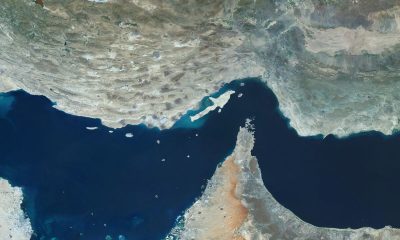
The original justification for military action centered on the assertion that Iran was approaching nuclear weapons capability and posed an urgent threat to Israel and the United States. However, Vice President J.D. Vance later suggested that Iran remained far from developing an immediate nuclear threat. Such a statement inevitably weakens the urgency that was invoked to justify the war. If the threat was not imminent, why was a large-scale attack necessary? If it was imminent, why has the conflict now narrowed primarily to tankers, tolls and freedom of navigation in the Strait of Hormuz?
The war’s declared goals have repeatedly shifted. Preventing nuclear weaponization was followed by demands to destroy missile and drone infrastructure. The contradiction became especially visible in Washington’s position on transit charges. Secretary of State Marco Rubio stated unequivocally that no country may impose tolls or fees on an international waterway.
President Trump later announced that the United States, acting as the “Guardian of the Hormuz Strait,” would charge a fee equal to 20 percent of the value of cargo moving through the waterway as compensation for American protection. He subsequently reversed that proposal and said Gulf states would instead provide trade and investment commitments to the United States.
The Memorandum of Understanding was supposed to create a pathway back from war. Iran claimed that Washington had breached the agreement through renewed sanctions, attacks in southern Iran and continued support for Israeli military action.
American officials accused Tehran of attacking commercial shipping and violating the spirit of the ceasefire. Rather than serving as a bridge toward a comprehensive settlement, the MOU became another contested document interpreted differently by each side.
The crisis also exposed major differences between Washington and Israel. Vice President Vance accused elements within the Israeli government of attempting to manipulate American public opinion and derail U.S.-Iran diplomacy. He argued that a well-funded influence campaign was designed to keep the war going and shift U.S. policy away from negotiation.
His remarks were extraordinary. Disagreements between American and Israeli governments are not unprecedented, but a sitting vice president publicly alleging that figures within an allied government were attempting to manipulate U.S. political judgment marked a profound rupture. Vance went even further by suggesting that, without Israeli influence, the United States might not have entered the conflict in the same manner.
This raises a question that can no longer be avoided: Is American policy toward Iran being determined primarily by the independent national interests of the United States, or is it being shaped by Israel’s separate strategic objective of permanently weakening Iran?
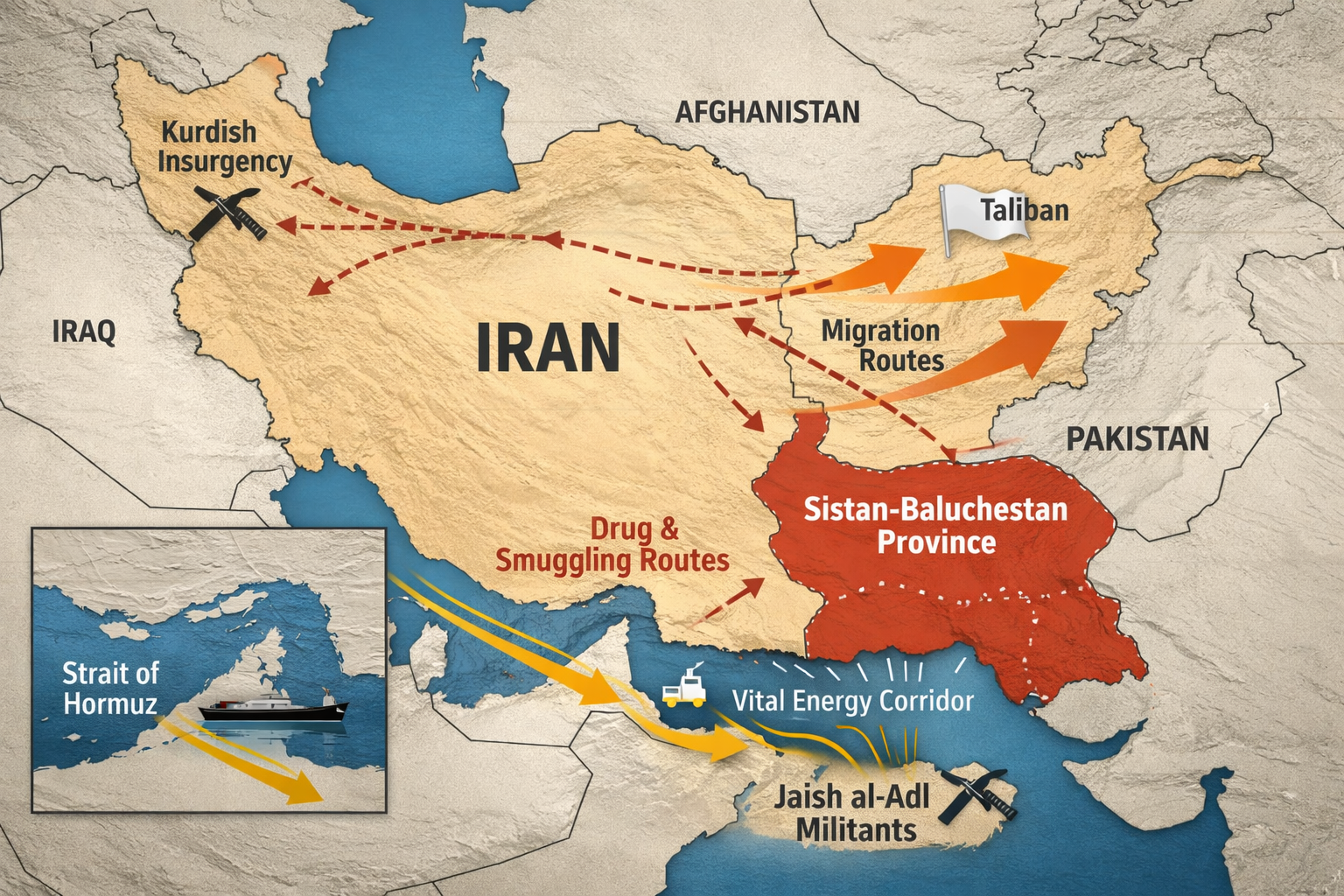
Israel may consider a fragmented, militarily devastated and politically unstable Iran advantageous because it would remove its strongest regional rival. But such an outcome would impose enormous costs on the United States, Europe and the wider Middle East. Iran is not a small or institutionally hollow state. It has nearly 95 million people, a substantial industrial base, deep historical institutions, strategic geography and a complex society.
Destroying Iran without a credible plan for what follows could produce state fragmentation, insurgency, terrorism, economic collapse, refugee flows and prolonged regional warfare. The consequences would not remain confined to Israel’s immediate security environment. They would affect global energy supplies, European migration, shipping insurance, American military deployments and international markets.
Trump himself now appears trapped between escalation and restraint. Weeks of American and Israeli attacks failed to force Iran into unconditional surrender. The economic reality limits Washington’s freedom of action. A prolonged conflict in the Strait of Hormuz could raise fuel, transportation, manufacturing and food costs across the United States. Trump must therefore reconcile his promise to demonstrate military strength with his domestic political need to avoid another inflationary shock before congressional elections.
The war has never commanded overwhelming public support. Influential conservative voices, including Tucker Carlson and Megyn Kelly, have argued that Trump was manipulated into pursuing Israel’s war. Meanwhile, hawkish conservatives attacked the MOU for conceding too much to Iran and questioned why the conflict had been fought if Washington was ultimately prepared to compromise.
Trump is thus pressured from both directions. Restraint invites criticism from hawks who demand Iran’s defeat. Escalation risks alienating anti-war elements of his political base, increasing oil prices and dragging the country into another open-ended Middle Eastern conflict.
Congress is reflecting this transformation. In July 2026, 103 House Democrats voted to remove approximately $3.3 billion in military assistance to Israel from a spending measure. The amendment failed because almost every Republican and a substantial number of Democrats voted to retain the aid. Nevertheless, it was the first time in modern memory that a majority of House Democrats voting on such an amendment supported eliminating Israel’s military funding.
At the same time, Section 219 of the National Defense Authorization Act, which seeks deeper U.S.-Israel integration in artificial intelligence, quantum technologies, biotechnology, data fusion and defense networks, has generated concerns that Israel could gain excessive access to sensitive American technology and greater influence over U.S. defense policy.
The absence of coherence is now evident across the American leadership. Trump alternates between threats, negotiations, economic demands and talk of decisive victory. Rubio invokes international law against Iranian tolls while serving an administration that briefly proposed its own 20 percent maritime charge. Vance supports diplomacy and publicly accuses Israeli figures of undermining American policy. Congress is divided over aid, technology sharing and the legality of military action.
These are not minor messaging differences. They suggest that competing power centers are pursuing different diagnoses of the conflict, different priorities and different endgames.
The latest reported pause in attacks, following diplomatic intervention involving Pakistan and Field Marshal Asim Munir, may offer another opportunity to return to negotiations. But another temporary pause will not be enough. The United States needs a comprehensive strategy with clearly stated objectives, enforceable obligations, a realistic exit mechanism and a distinction between American and Israeli national interests.
The writing is now on the wall. American society is increasingly skeptical of wars without clear objectives, aid without accountability and alliances that appear to constrain independent policy. Unless Washington restores coherence, the Iran conflict will deepen public distrust, unsettle markets, weaken diplomatic credibility and create lasting psychological and economic costs at home.
Paris (Imran Y. CHOUDHRY) :- Former Press Secretary to the President, Former Press Minister to the Embassy of Pakistan to France, Former MD, SRBC Mr. Qamar Bashir analysis : For decades, the United States has viewed Israel as its most trusted ally in the Middle East—a beacon of democracy, a strategic bulwark, and a partner in shared values. Yet a growing body of evidence suggests this relationship has evolved into something far more complicated, raising an uncomfortable question: could Israel actually be the biggest threat to American security and sovereignty?
When we examine cyber capabilities, espionage activities, influence operations, and legislative maneuvers, Israel emerges as a uniquely dangerous actor—one whose authorized access to American systems makes it more capable of doing harm than any traditional adversary.
Israel’s cyber warfare capabilities are widely considered among the most sophisticated in the world, with the Pentagon’s Defense Intelligence Agency rating its espionage threat against the US as “critical”—the highest designation available.
The country has demonstrated this prowess through operations like the mass pager explosions in Lebanon and the Stuxnet virus, but what makes Israel uniquely threatening is that these capabilities were largely built with American assistance, meaning they understand US systems from the inside out.
This insider knowledge, combined with their own innovations, arguably gives them an asymmetric advantage over other adversaries like China or Russia, who lack the same level of authorized access to American military and intelligence infrastructure.
The espionage is not hypothetical—Israel has been caught numerous times planting spyware on the phones of American Iran negotiators, attempting to place listening devices inside US Secret Service vehicles, and running the infamous Jonathan Pollard spy ring.
These incidents represent a pattern of behavior inconsistent with an ally relationship and more characteristic of an adversarial power operating against American interests. While China and Russia certainly conduct espionage against the US, neither has the same level of institutionalized access to American systems, making Israel’s intelligence-gathering capabilities uniquely dangerous and harder to detect.
Perhaps the most alarming development is the revelation that the Israeli government engaged Brad Parscale, Donald Trump’s former campaign manager, to run a multimillion-dollar digital influence campaign targeting American conservatives to prevent them from turning against Israel.
The operation escalated to the point where Vice President JD Vance publicly accused elements within the Israeli government of funding a campaign “to try to derail the negotiation” of a US-Iran deal and attacking him personally to shift American foreign policy in Israel’s favor.
When a sitting US Vice President must publicly call out a foreign government for attempting to undermine American foreign policy, the relationship has moved beyond normal ally dynamics into dangerous territory.
The legislative threat is even more concrete—Section 219 of the NDAA would have effectively merged the US and Israeli military industrial bases, allowing joint weapons development and granting Israel co-ownership of American weapons systems.
While the Senate blocked this proposal by a narrow 50-46 vote, the fact that nearly half of US senators supported such an unprecedented surrender of sovereignty demonstrates the depth of Israeli influence within the American legislative branch.
Prime Minister Netanyahu framed this as moving “from aid to partnership,” but critics like Representative Thomas Massie called it an “unprecedented escalation of foreign involvement” that amounts to “fully capitulating our nation’s autonomy to foreign influence.”
The American Israel Public Affairs Committee functions as a powerful lobbying force that has effectively shaped US foreign policy to serve Israeli interests, sometimes against American interests, with documented “revolving-door” relationships between AIPAC, the US government, and the Israeli government.
Unlike other countries seeking to influence US policy, Israel has legal and institutionalized access through these organizations, giving it a level of domestic influence that no other foreign power can match. This access extends beyond lobbying to actual legislative drafting, with critics charging that Netanyahu runs Congress through the legislation he writes and sends to American lawmakers.
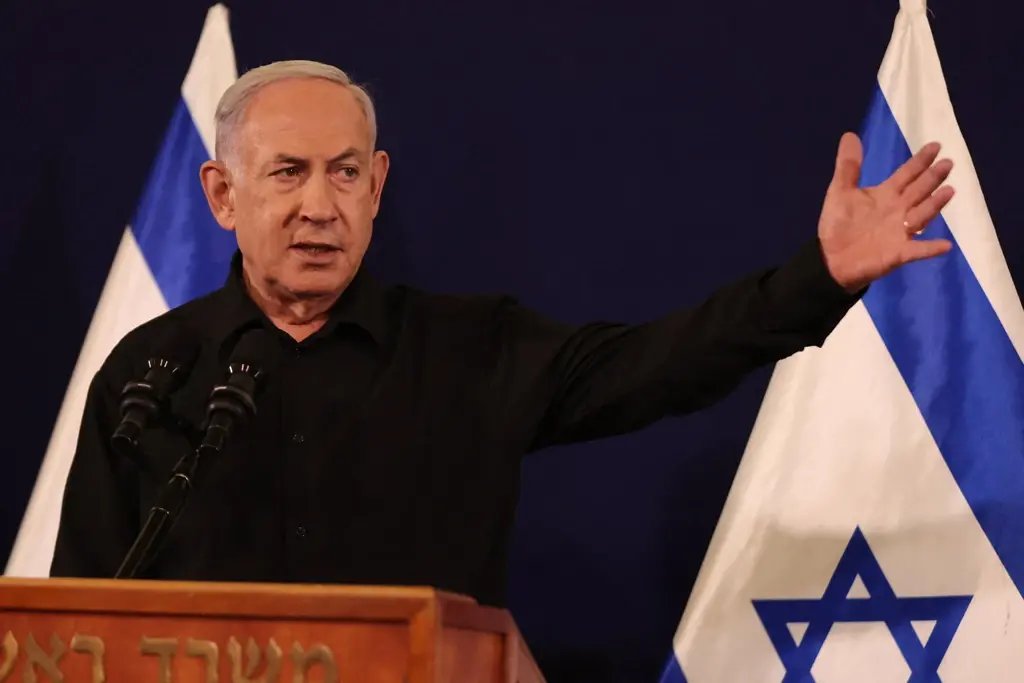
The current crisis is exacerbated by Prime Minister Benjamin Netanyahu’s personal legal troubles—facing corruption charges that would likely end his political career, he has been described as taking aggressive actions to secure Israel’s position while simultaneously fighting for his political survival.
This introduces an unstable element into US-Israel relations: a foreign leader willing to manipulate American politics and policy to serve his personal legal and political interests, with critics arguing his aggressive policies are driven more by self-preservation than Israeli national security. The combination of capability, access, influence, and personal motivation makes Israel a uniquely dangerous actor in the American political landscape.
To determine if Israel is truly the biggest threat, we must compare it to other adversaries—China remains America’s primary strategic competitor with global ambitions to displace US dominance, while Russia poses an immediate military threat through its war in Ukraine and proven willingness to interfere in American elections.
However, neither China nor Russia has the same level of authorized access to US military technology, intelligence systems, and governmental processes that Israel enjoys, nor do they have domestic lobbying networks as powerful as AIPAC operating on their behalf. The old adage “trust, but verify” does not apply when you have literally integrated your defense systems with a foreign power.
If “biggest threat” means greatest military potential or most expansive geopolitical ambitions, China retains that title, but if “biggest threat” means greatest capability to harm the United States from within through espionage, influence operations, and legislative capture, then Israel is at minimum among the top tier and arguably the most dangerous.
The distinction between “biggest” and “most unique” is crucial—Israel presents a threat unlike any other because it comes from an “ally” where the US has let its guard down, making it more capable of doing damage than any traditional adversary precisely because of the trust extended to it.
The Defense Department’s own intelligence assessments placing Israel’s espionage threat above even China and Russia confirm that this is not mere conspiracy theory but a genuine intelligence concern. If we compare any other country with influence in the United States, no nation can be more dangerous than Israel itself should the relationship turn adversarial.
This is not to say that Israel is currently an enemy or that the alliance should be abandoned, but rather that the current trajectory of ever-deepening integration without appropriate safeguards is dangerously naive and threatens American sovereignty in unprecedented ways.
The central question for US policymakers is whether the current path of military integration, intelligence sharing, and legislative deference serves the American people or a foreign power with its own distinct interests.
When a foreign government can fund social media campaigns to shape American public opinion, draft legislation for US lawmakers, and threaten to derail American foreign policy when it doesn’t align with its interests, the alliance has fundamentally shifted from partnership to something resembling dependency. America’s founders warned against entangling alliances that could compromise sovereignty—their wisdom deserves renewed attention in this context.
Ultimately, whether Israel is the “biggest” threat depends on whether we define threat as “potential for conflict” or “capacity for harm from within.” In the latter category, Israel may well be the single greatest danger to American sovereignty and security—hidden in plain sight, protected by the very alliance that makes it so dangerous, and operating with capabilities that no other nation can match.
The time for honest conversation about this relationship is now, before the integration becomes so complete that disentanglement becomes impossible.
Paris (Imran Y. CHOUDHRY) :- Former Press Secretary to the President, Former Press Minister to the Embassy of Pakistan to France, Former MD, SRBC Mr. Qamar Bashir analysis : President Donald Trump has consistently portrayed himself as a man of faith who draws guidance from Christian values and surrounds himself with pastors, priests, and religious leaders. Christianity teaches honesty, compassion, humility, forgiveness, keeping one’s promises, protecting the innocent, respecting one’s neighbors, and seeking peace before conflict. These ideals also reflect many of the civic virtues that Americans deeply value—integrity, fairness, accountability, respect for the law, and honoring one’s commitments.
America’s global influence has never rested solely on its unmatched military or economic power. Equally important has been its reputation that its word carries weight. Allies have cooperated with Washington because they generally believed that American commitments would endure beyond immediate political circumstances. That credibility has often proven more valuable than military strength itself.
It is against this backdrop that President Trump’s foreign policy approach since returning to office in January 2025. His strategic unpredictability is designed to maximize leverage. His frequent policy reversals, shifting deadlines, changing public positions, and abrupt diplomatic turns have created uncertainty among allies, mediators, financial markets, and adversaries alike.
The recent diplomatic efforts involving the United States and Iran illustrate this concern. Multiple rounds of diplomacy took place over many months with the assistance of regional mediators. Discussions began in Egypt, later continued through negotiations in Pakistan and Geneva, and culminated in a Memorandum of Understanding brokered with the assistance of countries including Pakistan, Qatar, Oman, Egypt, and Türkiye.
There is a recurring pattern. Negotiations would begin with optimism. Temporary understandings would be announced. Deadlines would be established. New demands, military developments, sanctions, or conflicting public statements would follow. Each cycle reduced confidence that diplomatic commitments would survive until implementation. The perception itself matters enormously in diplomacy. Once confidence is weakened, every subsequent negotiation becomes significantly more difficult.
This raises a deeper structural weakness in modern international mediation. Mediation succeeds only when agreements can realistically be implemented and monitored. Yet many of today’s mediators possess diplomatic goodwill but very limited leverage over the parties they seek to reconcile.
Pakistan, Qatar, Oman, Egypt, and Türkiye have each invested considerable diplomatic capital in attempting to reduce tensions and facilitate dialogue. Their role deserves recognition. However, none possesses sufficient political, economic, or military leverage to compel either Washington or Tehran to comply with an agreement if either side ultimately decides otherwise. Their influence depends almost entirely upon persuasion and goodwill rather than enforceable authority.
This reveals perhaps the greatest weakness of such agreements. When the guarantors are less powerful than the parties themselves, enforcement becomes largely voluntary. If one party concludes that strategic circumstances have changed, there is often no effective international mechanism capable of ensuring compliance or imposing meaningful consequences.
The imbalance becomes even more pronounced when one party is the world’s most powerful nation. The United States possesses unmatched economic influence, military capability, financial reach, and diplomatic weight. No mediator can realistically compel Washington to implement an agreement against its own policy choices. Likewise, Iran cannot be expected to rely solely on assurances if it believes commitments may change unexpectedly.
Consequently, the durability of any agreement depends less upon external enforcement than upon the willingness of the parties—especially the more powerful one—to demonstrate consistency, restraint, and respect for the commitments they voluntarily undertake.
History offers many examples in which successive U.S. administrations have withdrawn from, revised, or renegotiated international agreements negotiated by previous administrations. These frequent reversals have weakened confidence among allies and negotiating partners, who may begin questioning whether any agreement will remain durable beyond the next political transition. This is not merely a legal issue. It is fundamentally a question of credibility.
Markets understand this reality immediately. Every presidential statement concerning sanctions, military deployments, shipping routes, tariffs, or energy policy affects oil prices, insurance costs, shipping rates, exchange markets, and stock exchanges worldwide. Investors dislike uncertainty more than almost anything else. When official messaging changes frequently, volatility naturally increases.
The Strait of Hormuz demonstrates this dynamic vividly. Even conflicting public statements regarding freedom of navigation, proposed shipping arrangements, economic measures, or maritime security can produce significant movements in global energy markets within hours. In today’s interconnected economy, presidential rhetoric alone can affect the daily lives of billions of people through higher transportation costs, inflation, and energy prices.
This tactical uncertainty may produce short-term bargaining advantages while gradually eroding the strategic trust that underpins alliances, diplomacy, and long-term American leadership. If partners become uncertain whether today’s commitments will remain valid tomorrow, they may increasingly seek alternative security arrangements or reduce their reliance on Washington.
For a superpower, leadership requires more than overwhelming strength. It also requires steadiness. The strongest nation should ideally demonstrate confidence rather than impulsiveness, consistency rather than contradiction, and principled leadership rather than purely transactional calculations.
The United States remains uniquely positioned to shape the international order. That position carries extraordinary responsibility. Because American decisions influence virtually every region of the world, they inevitably affect not only governments but also ordinary families whose livelihoods depend upon stable energy markets, predictable trade, secure shipping, and peaceful diplomacy.
Ultimately, America’s greatest asset is neither its aircraft carriers nor its financial markets. It is the confidence others place in its word. Military power can compel compliance. Economic power can impose costs. But only credibility inspires lasting partnerships and voluntary cooperation.
If the United States consistently demonstrates that it honors its commitments, respects international law, protects humanitarian principles, and approaches diplomacy with patience and predictability, its leadership will continue to command respect across the globe. If, however, unpredictability becomes its defining characteristic, countries may continue to cooperate out of necessity while gradually losing confidence in American leadership.
History suggests that fear can produce obedience, but only trust produces enduring influence. For a nation that has long presented itself as the leader of the free world, preserving that trust may prove to be its greatest strategic challenge in the years ahead.


Iran War at Five Months: Who Won What?

Xi’s BRI, CPEC and the Enduring Pakistan–China Bond

Xi Jinping’s Vision and the China–Pakistan Journey of 75 Years—Part II


-

 Sports2 months ago
South Korea’s Yoo Useong Steps Onto the Global Strongman Stage as World Strongman Federation Professional Athlete
-

 Europe News1 year ago
Chaos and unproven theories surround Tates’ release from Romania
-

 American News1 year ago
Trump expands exemptions from Canada and Mexico tariffs
-

 Art & Culture1 year ago
A Survey of Mata-E-Zeest
-

 American News1 year ago
Trump Expels Zelensky from the White House
-

 Pakistan News1 year ago
Comprehensive Analysis Report-The Faranian National Conference on Maritime Affairs-By Kashif Firaz Ahmed
-

 Art & Culture1 year ago
Will Snow White be a ‘victim of its moment’? How the Disney remake became 2025’s most divisive film
-

 Entertainment1 year ago
Champions Trophy: Pakistan aim to defend coveted title as historic tournament kicks off today