
war
The Last Stand: Iran Humiliates Israel and Revives the Dignity of the Ummah


Paris (Imran Y. CHOUDHRY) :- Former Press Secretary to the President, Former Press Minister to the Embassy of Pakistan to France, Former MD, SRBC Mr. Qamar Bashir analysis : In a shocking revelation that sent ripples across global diplomatic circles, U.S. President Donald Trump recently vetoed a covert Israeli proposal to assassinate Iran’s Supreme Leader Ayatollah Ali Khamenei. The plan, reportedly hatched by Israeli intelligence and pushed forward by Prime Minister Netanyahu, was seen by many as a desperate move to provoke a full-scale regional war under the pretext of nuclear containment—a narrative Israel has been nurturing for over thirty years. Iran, notably, does not possess nuclear weapons, a fact verified time and again by international watchdogs.
Israel’s obsession with Iran has little to do with nuclear fears and more to do with Tehran’s refusal to bow to Israeli supremacy. Since its inception, Israel has either dismantled or neutralized regimes that dared challenge its military and political dominance. Iran remains the last ideological adversary. Netanyahu’s dream of bringing down the Iranian regime was merely an extension of this hegemonic vision. The “nuclear threat” was a convenient excuse—much like the WMD hoax used to obliterate Iraq.
As a Muslim bearing the wounds of a broken Ummah, one cannot help but feel a deep, bitter sense of despair, humiliation, and abandonment. Wherever Muslims have been oppressed—be it Kashmir, Burma, Bosnia, Palestine, or Sub-Saharan Africa—they have been silenced, murdered, and exiled with brutal impunity. And tragically, no Muslim nation has risen to their aid—not militarily, not diplomatically, and not morally.
Kashmir remains under siege by India’s military. The region is a shadow of its former self, where people are deprived of political rights, economic liberty, and even the basic right to movement or speech. India has converted it into a prison, and the world, especially the Muslim world, has turned a blind eye.
The same holds true for the Rohingya Muslims in Burma, driven from their homes, raped, and murdered in droves. Stateless and impoverished, they continue to suffer in camps. In Bosnia, the genocide carried out by Serbians left millions of Muslims dead or displaced. Gaza has become a permanent warzone where generations have grown up knowing only fear, hunger, and death. The death toll in Gaza alone has surpassed 75,000 civilians, yet the Muslim world’s silence is deafening.
Meanwhile, Israel flourishes with impunity. Encircled by silent Arab nations rich in oil and influence, it bombs Gaza, Syria, and Lebanon without pause or consequence. The October 7 attack by Hamas, widely condemned, was immediately used as a moral blank check by Israel to raze entire neighborhoods, hospitals, schools, and refugee camps. Its justification? That Hamas hides among civilians. But no civilized legal or moral system would condone the mass killing of civilians as retribution.
Israel brands itself as the “most moral army in the world,” a claim that collapses under the weight of its actions. When it bombed civilian targets in Gaza, it declared them legitimate; now, when Iranian missiles strike military targets in Israel, it cries foul. The hypocrisy is stunning.
But for the first time, that myth of Israeli invincibility has been shattered. Despite being crippled by over three decades of Western sanctions, Iran mustered the will, technological capability, and national unity to retaliate forcefully. Its missiles evaded Israel’s prized defense systems—Iron Dome, David’s Sling, and Patriot batteries—hitting strategic sites and exposing the hollowness of Israeli arrogance. Iran’s defiance was not just military; it was moral and symbolic.
What startled observers was the response—or lack thereof—from the international community. When Israel called for help, no nation rushed to its side. Even President Trump held back, declaring that America would not intervene unless U.S. interests were directly threatened. This marks a tectonic shift in America’s blind allegiance to Israel.
And now, Trump’s strategy is becoming clear.
In hindsight, Trump’s game was brilliantly Machiavellian. First, he encouraged both Israel and Iran to pursue nuclear negotiations. When Israel sabotaged that process with its reckless airstrikes, Trump remained publicly aloof. He let Israel bear the brunt of Iranian retaliation while quietly calculating the diplomatic fallout. Israel, intoxicated by power and assured of international backing, assumed Iran would not respond. But it did—and with deadly precision.
The result? Israel is isolated. Its defense narrative is crumbling. Its allies are retreating. And now, with its arrogance bruised and its invincibility myth destroyed, Israel is finally talking about returning to negotiations. Trump is again hinting that a diplomatic resolution is not only possible but likely. And this time, it might work.
Why? Because Iran never left the negotiation table. It was Israel that walked away and triggered the escalation. Iran, despite the provocations, held its ground diplomatically while defending itself militarily. Now, with leverage restored and deterrence firmly established, Iran is negotiating from a position of strength. This shift could offer the most fertile ground for a lasting resolution in years.
However, settling the issue won’t be easy. The U.S. and Israel’s demands extend far beyond nuclear non-proliferation. They want Iran to cut ties with Hezbollah, the Houthis, the Syrian regime, and most importantly, Hamas. These demands are aimed at dismantling Iran’s ideological and strategic support for resistance groups that defend oppressed Muslim populations. But Iran is the only Muslim country that refuses to yield. It supports the oppressed not just rhetorically, but financially, diplomatically, and militarily.
This is Iran’s real “crime” in the eyes of the West—not its nuclear ambitions, but its unwavering support for Palestine and other subjugated Muslim communities. That is the red line for Israel and the U.S., and it is why they have waged an endless campaign to contain or destroy Iran.
Iran’s resilience should now serve as a beacon for the Muslim world. For decades, Muslims have watched their brethren suffer while their governments remained spineless. Iran, despite its economic isolation, stood firm. It not only survived but demonstrated that it could hurt those who believed themselves untouchable.
What terrifies Israel now is not Iran’s missiles—it is Iran’s example. If one sanctioned, isolated, Muslim-majority country can rise and challenge the status quo, what happens if others follow? What if other Muslim nations find the courage to defy oppression and injustice with action rather than silence?
This fear is precisely why Israel is ramping up its propaganda campaign, trying to portray Iran as the global threat. But the narrative is failing. Even former allies are growing wary of Israel’s endless wars. The old equation—Israel attacks, the world supports—no longer holds.
Let this moment be remembered not just as a military confrontation, but as a moral awakening. Iran has reminded the world that the oppressed are not voiceless. That dignity, when paired with courage, can upend even the strongest empires. The centers of power are shifting—China is rising, Europe is reasserting its independence, Russia remains potent, and now, Iran has emerged as a formidable power of resistance.
Let this also be a lesson to Muslims everywhere: silence is complicity. Action is the only antidote to oppression. The world may not hand over justice—but it respects those who demand it. And for once, a nation did. Iran did.





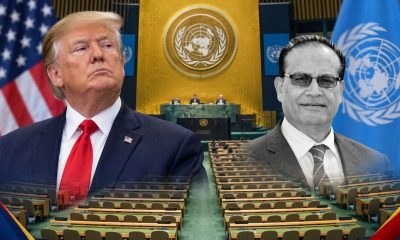


Paris (Imran Y. CHOUDHRY) :- Former Press Secretary to the President, Former Press Minister to the Embassy of Pakistan to France, Former MD, SRBC Mr. Qamar Bashir analysis : We are squeezing the Iranians like they have never seen,” United States Treasury Secretary Scott Bessent declared while the 81st session of the United Nations General Assembly was under way in New York. Claiming that 80 to 90 percent of Iran’s external flights had been shut down, he said he was unsure how the Iranian representatives attending the United Nations would get home.
His remarks came one day after President Donald Trump used the General Assembly podium to threaten that he could “annihilate the Islamic Republic” if no agreement were reached, while calling upon other nations to join the United States in economically isolating Iran.
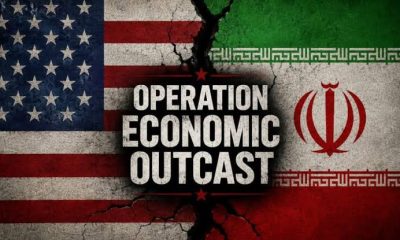
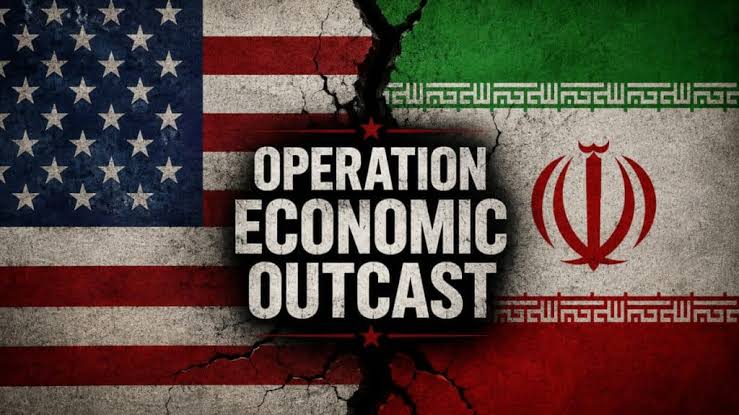
while calling upon other nations to join the United States in economically isolating Iran. Placed alongside Operation Economic Outcast—the whole-of-government campaign announced by the Treasury Department on August 24, 2026—these declarations reveal the intended scale of the pressure: not merely sanctions against selected officials, but the economic, financial and physical isolation of a country whose ordinary people will inevitably bear the consequences.
These measures raise an unavoidable question: can an economy be isolated so extensively without placing the principal burden upon people who do not control the government, the IRGC or military decisions?
An economy cannot be neatly divided between a government and its population. When oil revenue contracts, currency depreciates and banks lose access to international settlement, the effects travel through wages, savings, pensions, prices and employment.
Restrictions on shipping and aviation affect commercial supply chains as well as government movement. Even when food and medicine are formally exempt, banks, insurers and transport companies may avoid lawful transactions because they fear penalties. The United Nations human-rights system has examined the resulting effects on access to medicines and the right to health in Iran.
Behind every economic indicator is a household. Iran has roughly ninety million inhabitants: children requiring milk and medicine, patients dependent on imported treatments, workers needing functioning businesses, and parents responsible for food, rent and education. They do not decide upon missile launches, direct military operations or determine which regional organization receives Iranian assistance. They cannot morally be treated as responsible merely because they live under a government accused of objectionable conduct.
This distinction is central to the principle against collective punishment. Article 33 of the Fourth Geneva Convention prohibits collective penalties against protected civilians for acts they did not personally commit. Its underlying principle—individual responsibility rather than punishment by identity—illuminates the humanitarian problem created when economic pain is deliberately spread across an entire society.
International humanitarian law also prohibits using starvation of civilians as a method of warfare. The legal threshold is not established merely because sanctions produce hardship; the conflict context, conduct and intent must be proved.
But the rule makes one point unmistakable: food, water, medicine and objects indispensable to civilian survival cannot legitimately become weapons against a population. Where sanctions, blockades or financial restrictions obstruct those essentials, humanitarian exemptions must work in practice, not merely appear in official documents.
The contradiction becomes sharper because American officials have repeatedly distinguished the Iranian people from their government and portrayed U.S. policy as supporting their freedom. Yet a policy intended to produce a subsistence economy inevitably reaches far beyond officials and commanders. Powerful institutions possess privileged access to hard currency, protected supply networks and state resources. Low-income families, small businesses, pensioners and patients have no comparable protection.
For ordinary Iranians, Washington’s declaration that their country must become an “economic outcast” is not an abstract foreign-policy slogan—it is a sentence imposed upon everyday life. Economic warfare, sanctions and the naval blockade are crushing the value of wages and savings, driving inflation above 80 percent, producing shortages of gasoline and electricity, and pushing the rial to historic depths.
Families are abandoning meat and fruit, watching the price of traditional bread multiply, selling possessions to meet household expenses and giving up the ability to plan even the most modest future.
The cruel reality is that an economic campaign publicly presented as pressure upon Tehran’s leadership is reaching most deeply into the kitchens, medicine cabinets and empty pockets of people who neither formulate state policy nor command its military forces.
Declaring Iran an economic outcast therefore means casting millions of innocent human beings outside the protections of normal economic life—depriving parents of security, children of nutrition, patients of treatment and an entire generation of hope—in order to extract political concessions from a government far better equipped than its population to survive the punishment.
The United Nations General Assembly is presently giving deserved attention to civilian suffering in Gaza and to developments in the occupied West Bank. The same universal principles require close examination of harm to Iranian civilians. Human rights cannot depend upon the nationality of the victim or the geopolitical alignment of the government under which that person lives. Concern for a hungry child in Gaza is not diminished by concern for a child in Iran whose family cannot obtain food or medicine. Consistency strengthens humanitarian law; selective concern weakens it.
International organizations should document prices, nutrition, medicine availability, household income and access to transport. Such safeguards would not settle the political disputes, but they could prevent civilians from becoming instruments through which pressure is applied to their government.
The Iranian people have no control over the confrontation between Washington and Tehran. They did not decide to impose sanctions, launch military operations or close the avenues of diplomacy.
Yet they are the people most exposed to collapsing purchasing power, unemployment, shortages of medicine, restricted travel and the daily struggle to place food on the table. They deserve the same concern extended to every population subjected to oppression, collective hardship or economic strangulation. Human dignity cannot be protected selectively, according to nationality, political convenience or strategic alliance.
The suffering of Iranian civilians must therefore become a sustained subject of discussion within the United Nations, international humanitarian organizations, human-rights institutions, academic forums, civil-society platforms and the global media.
Their hardship must be documented, debated and placed before the conscience of the world. International institutions should develop practical measures to protect access to food, medicine, remittances, transportation and other necessities of life, while pressing for diplomacy capable of ending the confrontation. Silence would leave millions of innocent people trapped between a powerful external campaign and a government whose decisions they do not control.
The international community has a legal, humanitarian and moral obligation to speak for them, to examine the consequences of the measures being imposed and to seek remedies that mitigate their suffering.
Iranian civilians are not instruments of war, bargaining chips or economic leverage. They are human beings, and their pain deserves the same recognition, urgency and protection demanded for suffering populations everywhere.
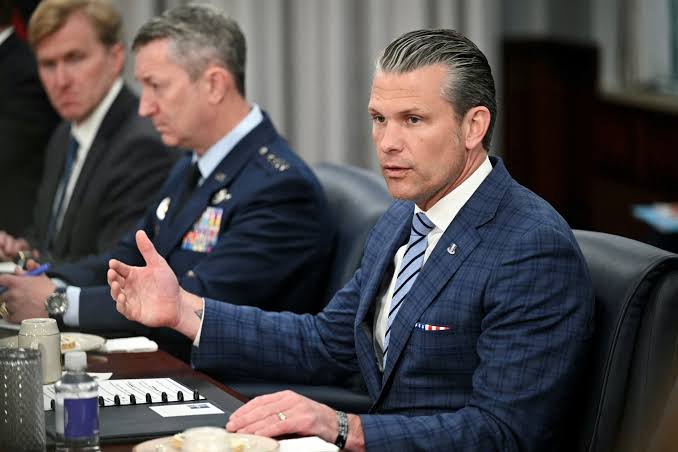
Paris (Imran Y. CHOUDHRY) :- Former Press Secretary to the President, Former Press Minister to the Embassy of Pakistan to France, Former MD, SRBC Mr. Qamar Bashir analysis : The effort to impeach Secretary of Defense Peter Brian Hegseth places a fundamental question before the United States Congress: will constitutional limits govern the executive’s use of military force, or will presidential command become its own justification for war? Whether this effort succeeds or fails, its significance extends beyond one official’s future. It demands accountability for initiating and continuing hostilities against Iran and challenges the displacement of congressional authority by executive decisions carrying profound human, military, and economic consequences.
Representative Thomas Massie’s September 15 impeachment initiative presents a specific charge against Hegseth: that he knowingly implemented unlawful orders to wage war. The accusation concerns both the decision to introduce American forces into hostilities on February 28, 2026, and their continued employment afterward. Its central contention is that the administration acted without congressional authorization or an independent constitutional basis for immediate defensive action. This is the foundation of the impeachment effort, and it deserves to be stated fully and directly.
The resolution identifies three circumstances that were absent when Hegseth directed American forces into hostilities against Iran: Congress had not declared war against the Islamic Republic of Iran, congress had not enacted any specific statutory authorization for introducing United States armed forces into hostilities against Iran and no national emergency had been created by an Iranian attack upon the United States, its territories or possessions, or its armed forces.
These points form the factual basis of the allegation that the operation did not satisfy the circumstances identified in Section 2(c) of the War Powers Resolution. The charge goes further. It states that no imminent attack upon the United States, its territories, possessions, or armed forces existed.
In support, it invokes the March 17 resignation letter of Joe Kent, then director of the National Counterterrorism Center: “I cannot in good conscience support the ongoing war in Iran. Iran posed no imminent threat to our nation.” Massie’s case therefore challenges both the absence of congressional authorization and the claim that immediate defensive necessity supplied an alternative basis for commencing hostilities.
From those premises, the resolution draws an unequivocal legal conclusion: the introduction of American forces was unlawful from its inception, and subsequent military actions continued that unlawful undertaking.
It alleges that Hegseth nevertheless knowingly employed the powers, personnel, weapons, and resources of the Department of Defense to execute the order. The accusation is therefore one of personal responsibility in implementing allegedly unlawful military action. It does not treat his subordinate position within the administration as sufficient to discharge his obligations.
Two forms of alleged abuse follow. First, Hegseth executed an unlawful order to commence hostilities despite the absence of the specified authorization or emergency. Second, he continued employing departmental personnel and resources after that initiation, without any subsequent declaration of war or specific statutory authorization.
The resolution characterizes this conduct as substituting unlawful executive action for Congress’s constitutional and statutory judgment. It seeks impeachment, Senate trial, removal, and disqualification from federal office on the grounds that his conduct was incompatible with his duties and the rule of law.
The charges against Hegseth are clear and understandable. The absence of an existential threat to the United States from Iran has been discussed repeatedly in my own articles and by journalists, analysts, Democrats, and other public representatives. Iran’s strategic calculations did not suggest a willingness to invite overwhelming destruction by launching an attack on American soil. The justification for initiating this war therefore demands the closest scrutiny.
The narrative recalls the manufactured justifications advanced for earlier interventions in Iraq, Libya, Syria, and Afghanistan. In Iran’s case, the grounds offered for war appear especially flimsy. Repetition does not make an allegation convincing, and the assertion of danger cannot substitute for a credible explanation of why war was necessary.
Hegseth is not the final decision-making authority. He acts under the direction and command of President Trump, the commander in chief. The accusations against the secretary therefore also raise questions about the president who authorized the policy. This effort may be a preview of a larger confrontation. If it succeeds, the president’s own vulnerability will become more apparent.
The war has also been brutal in its language. Hegseth’s derogatory remarks about Iran and its leadership fall below the dignity expected of his office. Similar language from the president compounds that failure. The United States has long associated its standing with human rights, civility, and respect for human dignity and honor. Those ideals are undermined when its leaders speak contemptuously of another country and its people.
Iran has now become central to the impeachment effort against Hegseth. Whether he survives politically or is removed, the charges threaten his standing. An official subjected to such scrutiny can suffer lasting damage among the public, international counterparts, colleagues, subordinates, and supporters. The same exposure may ultimately confront the president.
Here lies an essential strength of the American constitutional system: the executive can be called to account when it exceeds its lawful authority. Congress’s role in decisions concerning war cannot be displaced simply because the president commands the armed forces. Constitutional responsibility must remain meaningful when its exercise becomes politically difficult.
The administration’s declaration that the war had ended makes its subsequent conduct particularly troubling. The president and Hegseth communicated that position to Congress, yet military operations continued. Their own description of the situation did not bring the fighting to an end. More lives were lost, while expensive ammunition, missiles, and military systems continued to be consumed or destroyed without delivering the promised objectives.
The impeachment effort therefore comes at an important moment. It may provide the jolt necessary to confront the administration with the consequences of its decisions. Leaders who have become absorbed in their own assertions of power must recognize the reality on the ground. Iran cannot simply be defeated according to Washington’s preferred timetable or compelled to accept whatever outcome the administration demands.
The responsible course is to return to the pre-war position and address the destruction caused by the United States and Israel, including compensation for Iran. Continuing a destructive policy to avoid acknowledging failure only deepens the damage.
Such a change would not diminish the United States or erase its standing as a superpower. It would reaffirm the capacity to recognize mistakes, correct policy, and restore constitutional discipline. National strength includes the ability to reconsider a course that has failed and to measure conduct against principles more enduring than any administration.
Whether the impeachment effort succeeds or fails, its central challenge remains: American power must answer to the Constitution. The country’s credibility ultimately depends on its willingness to correct its course and uphold the cherished values of human dignity, human honor, and civility.
Any honest assessment must also preserve historical sequence and equal standards. Retaliation cannot be understood fully when the preceding action is omitted. American and Israeli operations require scrutiny alongside Iranian responses, including their purposes, scale, and consequences.
Proportionality demands attention to specific conduct and civilian harm. Iranian lives possess the same human worth as American lives. Military superiority cannot confer an unrestricted entitlement to inflict destruction, and national allegiance should not determine whose suffering deserves recognition or whose actions require justification.
Human dignity, human honor, and civility belong within this debate. Officials can oppose a government without humiliating its population or speaking casually about suffering. The credibility of the United States depends partly on whether its leaders uphold the values they invoke.
Whether Hegseth’s impeachment effort succeeds or fails, it presses an essential demand upon the American government—that executive power answer to law, military decisions withstand scrutiny, and leadership remain grounded in the cherished values of human dignity, human honor, and civility.
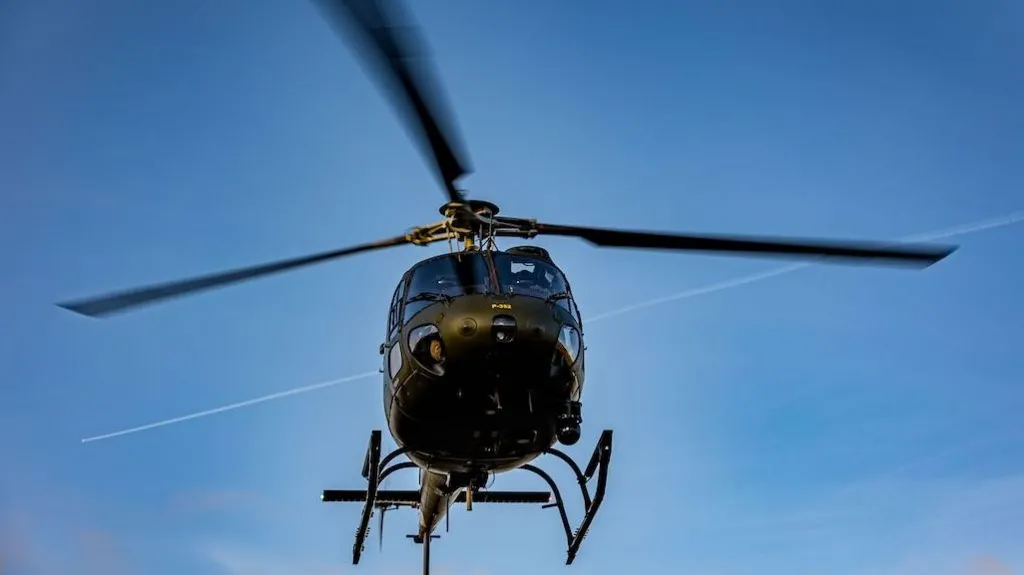
Denmark has accused a Russian warship of firing two emergency flares at one of its helicopters while it was tracking the vessel in the Baltic Sea.
The Danish government has summoned the Russian ambassador over the incident, which it said happened during a “routine” monitoring operation on Monday.
Prime Minister Mette Frederiksen branded the Russian action “reckless” and said it was designed to “intimidate and divide”.
Russia said it would “thoroughly investigate” the incident but accused Danish helicopters of making “dangerous manoeuvres” near Russian warships.
It came on the same day that Nato forces shot down a drone over Lithuania in the latest security scare on the alliance’s eastern flank, where tensions remain high amid Russia’s full-scale invasion of Ukraine.
In a statement detailing the incident in the Baltic Sea, the Danish armed forces said: “One of the air force’s Fennec helicopters was today fired at with flares during a routine photographic operation of a Russian frigate, which was located in international waters off Gedser.”
Of the two flares fired at the helicopter, one passed close to it, the statement added.
The Danish foreign ministry described the incident as “completely unacceptable”.
Danish Foreign Minister Lars Lokke Rasmussen accused Russia of “gradually shifting the boundary for what they consider acceptable behaviour”, adding: “That is something we cannot accept.”
In a statement, Russian ambassador Vladimir Barbin said Moscow would “thoroughly investigate all the circumstances of the incident” but accused the Danish helicopter of carrying out “provocative actions”.
Barbin said this was “not the first time that Danish Air Force helicopters have carried out dangerous manoeuvres near Russian warships”.
He said he had complained about a similar incident last year, adding that the latest event showed that “communication problems lie not with the Russian Navy’s vessels, but with the Danish side”.
Russia’s behaviour was “reckless and dangerous,” the President of the European Commission Ursula von der Leyen said in a post on social media.
This incident – together with the drone over Lithuania – was “part of a broader pattern of Russian aggression and provocation against Europe”, she added.
Danish Defence Minister Jeppe Bruus told Reuters no attempt to make contact with helicopters had been made by the frigate’s crew.

Overnight, Nato fighter pilots shot down a drone that entered Lithuania’s airspace.
Authorities said the drone likely entered southern Lithuania, near the second-largest city of Kaunas, from neighbouring Belarus shortly after midnight on Tuesday.
The origins of the drone have yet to be determined, the Lithuanian national crisis management centre said, but the country’s president pointed to increased Russian aggression in recent months.
President Gitanas Nausėda wrote on X: “With Russia intensifying its aggression against Ukraine, such readiness is vital for our region. Together with our Nato Allies, Lithuania will defend its airspace.”
Lithuania shares a large part of its southern and eastern border with Belarus, a key Russian ally.
Poland also announced there had been “aviation operations” in its airspace on Monday night “due to the activity of Russian Federation’s jet-powered unmanned aerial vehicles conducting strikes on Ukrainian territory”.
It said the overnight operations were of a “preventive nature” and aimed at “securing airspace and its protection, especially in areas adjacent to threatened regions”.
Nato jets have been scrambled several times to shoot down stray Ukrainian drones that have crossed into Baltic countries Estonia and Latvia this year.
Taken From BBC News


Quetta’s Daughter, Pakistan’s Pride

Why is Trump a Dictator?

America Must Rebuild Within


-

 Sports4 months ago
South Korea’s Yoo Useong Steps Onto the Global Strongman Stage as World Strongman Federation Professional Athlete
-

 Art & Culture1 year ago
A Survey of Mata-E-Zeest
-

 Europe News2 years ago
Chaos and unproven theories surround Tates’ release from Romania
-

 American News2 years ago
Trump expands exemptions from Canada and Mexico tariffs
-

 American News2 years ago
Trump Expels Zelensky from the White House
-

 Art & Culture2 years ago
Will Snow White be a ‘victim of its moment’? How the Disney remake became 2025’s most divisive film
-

 Entertainment2 years ago
Champions Trophy: Pakistan aim to defend coveted title as historic tournament kicks off today
-

 Pakistan News1 year ago
Comprehensive Analysis Report-The Faranian National Conference on Maritime Affairs-By Kashif Firaz Ahmed