
World News
Saudi Arabia: A World Power in the Making (Part-1)


Paris (Imran Y. CHOUDHRY) :- Former Press Secretary to the President, Former Press Minister to the Embassy of Pakistan to France, Former MD, SRBC Mr. Qamar Bashir analysis : Saudi Arabia, long recognized as the world’s largest exporter of oil, is now dramatically transforming itself into a multifaceted global power. Driven by ambitious leadership, vast economic resources, and visionary strategic projects, the kingdom is poised to reshape not just its own future but also impact the international community significantly. Central to this transformation is Crown Prince Mohammed bin Salman (MBS), who represents a new era of modernity, economic diversification, and cultural openness.
The modern story of Saudi Arabia began in earnest in the 18th century, with the alliance between Muhammad bin Saud and the religious scholar Muhammad ibn Abd al-Wahhab. This partnership unified tribes across the Arabian Peninsula, forming the basis of the contemporary Saudi state. Fast forward to the early 20th century, the discovery of massive oil reserves catapulted the kingdom from a modest regional entity into an economic powerhouse.
The House of Saud, now consisting of more than 25,000 members, is the world’s wealthiest royal family, amassing an estimated fortune exceeding $1.4 trillion. Their wealth far surpasses that of other global powerhouses, including tech giants like Elon Musk and Jeff Bezos combined. This immense wealth largely stems from Saudi Aramco, the state-owned oil company that, in 2019, had a capitalization of over $1 trillion, surpassing even major American corporations.
King Salman, who ascended to the throne in 2015, quickly made bold moves to expand Saudi Arabia’s economic presence globally. Two years into his reign, he established the Al Saud Company, a strategic investment entity designed to make multi-billion-dollar acquisitions internationally. Yet the most critical move of his reign was appointing his son, Mohammed bin Salman, as Crown Prince in 2017. At just 39 years old, MBS had a revolutionary vision not merely to manage the kingdom but to fundamentally transform its societal and economic landscape.
MBS introduced Vision 2030, an ambitious national development plan to diversify Saudi Arabia’s economy, reducing its reliance on oil and emphasizing technology, tourism, entertainment, and renewable energy. His reforms have significantly reshaped Saudi Arabia’s societal norms, opening avenues previously unimaginable in the deeply conservative kingdom. Allowing women to drive, reopening cinemas, and permitting concerts and cultural events were groundbreaking changes that attracted international attention and energized younger Saudis.
While his modernization drive has been transformative, MBS’s reign has not been without controversy. His rigorous anti-corruption campaign, aimed at recapturing over $100 billion for the state, has faced scrutiny and criticism domestically and internationally. Yet, despite criticisms, MBS’s approach demonstrates a decisive push towards transparency and economic efficiency.
Saudi Arabia’s economic diversification strategy centers around the Public Investment Fund (PIF), which manages a staggering $500 billion in assets. The fund has facilitated significant global acquisitions, including Newcastle United Football Club and stakes in major corporations like Uber, Microsoft, and Lucid Motors. These strategic investments underline Saudi Arabia’s ambition to become a leading global financial and technological hub.
The centerpiece of Saudi Arabia’s ambition is undoubtedly NEOM, a futuristic megacity project valued at $500 billion. NEOM aims to house nine million people across a car-free environment facilitated by innovative transport solutions like high-speed rail and flying taxis. It represents Saudi Arabia’s commitment to sustainability, featuring the world’s largest floating industrial complex, a year-round ski resort, and wellness-focused mountain destinations. This ambitious urban development initiative positions Saudi Arabia at the forefront of global innovation and sustainable living.
The immense wealth of the Saudi royal family manifests in their luxurious lifestyles, showcasing the scale of their global influence. Their residences, such as the iconic Murabba Palace built in the 1930s, have evolved into opulent estates like the Al-Yamama Palace in Riyadh, which boasts hundreds of rooms, marble floors, and gold-plated interiors. Internationally, their property acquisitions, such as the Chateau Louis XIV near Paris, purchased by MBS for $300 million, underscore the magnitude of their luxury spending.
The Saudi royals’ luxurious lifestyle extends far beyond palaces and properties. Their unparalleled collection of luxury vehicles, including MBS’s Pagani Zonda Riviera, valued at $5.5 million, and other supercars like Bugatti and Ferrari, demonstrate an unmatched taste for opulence. Their wealth also translates into extravagant private yachts, most notably MBS’s Serene, a $500 million vessel featuring Leonardo da Vinci’s Salvator Mundi painting, valued at $450 million.
Despite their lavish spending, the royal family is also deeply involved in philanthropy. Prince Alwaleed bin Talal, one of the family’s most prominent members, pledged his entire $16 billion fortune to charitable causes, highlighting a commitment to social impact and humanitarian work. Their philanthropic efforts extend globally, often intersecting with strategic international diplomacy.
Saudi Arabia’s growing influence on global sports, culture, and entertainment further solidifies its emerging status as a world power. Their creation of LIV Golf, funded by the PIF, aims to challenge established tournaments like the PGA Tour, signifying Saudi ambitions beyond economic influence.
Moreover, Saudi Arabia is actively leading regional megaprojects aimed at redefining urban living and sustainability. Projects such as the floating “Vertical City Dubai,” the “Al Mahara Floating Theater,” and the eco-friendly Jubail Island in Abu Dhabi are designed to showcase the Kingdom’s vision for innovation, luxury, and environmental consciousness. These groundbreaking initiatives demonstrate Saudi Arabia’s aspiration to set new global standards for future cities.
Saudi Arabia’s increasing global investments extend into the realm of artificial intelligence, with a $100 billion initiative designed to position the Kingdom as a leading AI nation by 2030. Through strategic partnerships with global tech leaders and investments in AI research and development, Saudi Arabia is set to become a critical player in the future of global technology, further cementing its role as a multifaceted global power.
As Saudi Arabia continues its rapid transformation under MBS’s leadership, the kingdom stands poised as a multifaceted global power, impacting everything from global finance and technology to culture and international relations. Its blend of strategic economic planning, ambitious infrastructure projects, and bold societal reforms underscore Saudi Arabia’s potential to redefine global geopolitics profoundly. The House of Saud’s evolving legacy demonstrates a remarkable shift from oil-dependent prosperity to becoming a dynamic and influential world power.


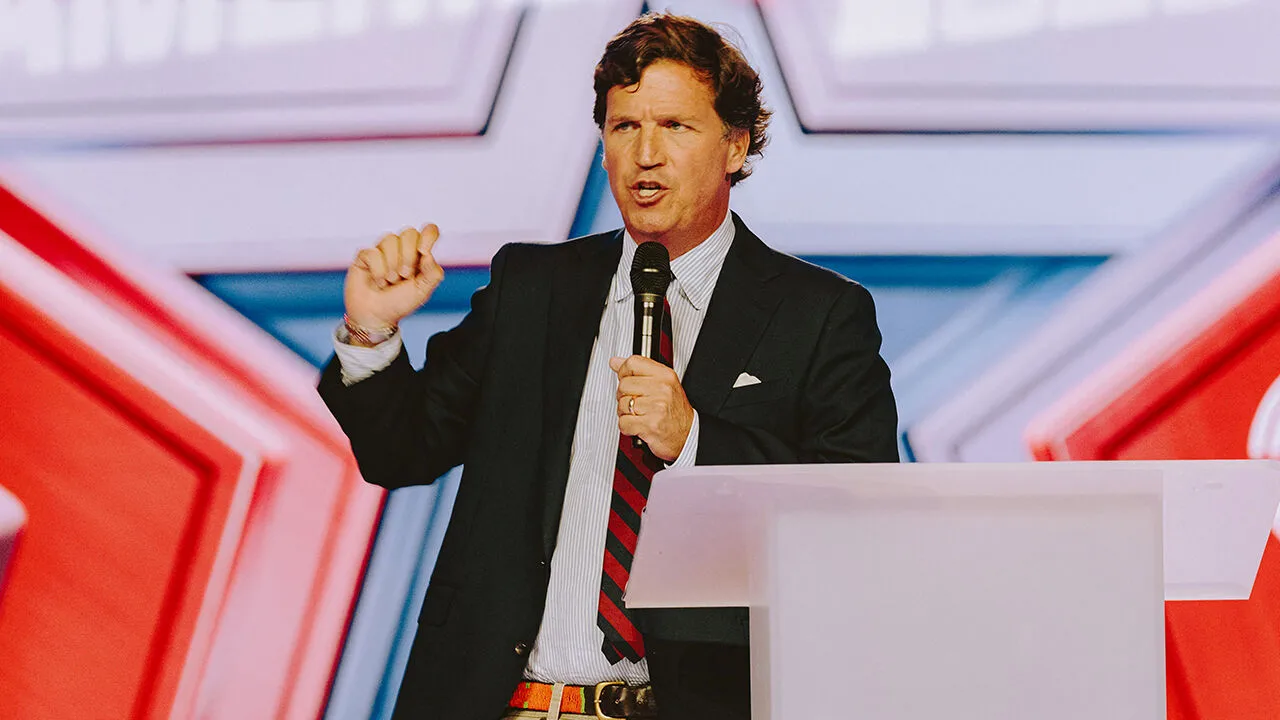
Paris (Imran Y. CHOUDHRY) :- Former Press Secretary to the President, Former Press Minister to the Embassy of Pakistan to France, Former MD, SRBC Mr. Qamar Bashir analysis : If there is one American media figure who has done more than any other to rupture the long-standing conservative consensus on Israel, it is Tucker Carlson. A son of a diplomat and a deeply patriotic American, Carlson has positioned himself as the most relentless critic of Israel’s outsized influence over U.S. foreign policy, congressional decision-making, business networks and geopolitical strategy. In his telling, Washington’s reflexive alignment with Israel has drawn the United States into wars, drained its treasury and compromised its sovereignty.
That argument was on full display in February 2026 at Ben-Gurion Airport, where Carlson conducted a combative, two-and-a-half-hour interview with U.S. Ambassador to Israel Mike Huckabee. Carlson accused American officials of “prioritizing Israel” over their own country, pressing Huckabee over civilian casualties in Gaza, biblical rhetoric invoked by Israeli leaders, extradition disputes and the scale of U.S. military aid.
Carlson’s contention was blunt: if American taxpayers provide billions in assistance — at least $16.3 billion in direct military aid since October 2023, with broader estimates exceeding $21 billion — then American officials have a duty to ask hard questions. He framed the issue as a defense of U.S. sovereignty. Why, he asked, should a prosperous, technologically advanced nation with a strong per-capita income require continuous American subsidy?
During the interview, Carlson raised the issue of Christian casualties in Gaza and the West Bank, as well as the destruction of churches, hospitals, and schools operated by Christian communities. He questioned the ambassador about reports that Christian civilians had been killed and Christian institutions damaged during military operations. The ambassador acknowledged that such incidents had occurred, describing them as unintended consequences of war and stating that Israel had expressed regret over those events.
The debate intensified when the ambassador argued that Christians enjoy greater protection in Israel than in many Muslim-majority countries. Carlson challenged that assertion, claiming that there are more Christians in Qatar alone than in Israel. He further argued that Qatar has provided land for churches, schools, and hospitals and that Christians there live openly and peacefully. In contrast, Carlson alleged that Christians in Israel face intimidation and harassment and that their numbers have declined in recent years due to emigration.
While referring to the Epstein files that have been made public in the United States, Carlson raised the issue of connections between Jeffrey Epstein, the established paedophile and blackmailer and Israeli intelligence agency Mossad, and the present President and former prime ministers of Israel. He said that Israel used Epstein’s facility to compromise influential political figures, royalty, senators, and members of Congress through illicit activities involving minors and used their engagement as a blackmailing tool to garner support for Israel in the important decision making in Washington and other influential political capitals. He confronted the Ambassador to hold the Israelis accomplices of Epstein accountable. The Ambassador admitted the connection between Epstein and Mossad but evaded the question by stating the responsibility for prosecuting crimes committed on U.S. soil lies with American authorities, since Epstein operated primarily within the United States.
During the interview, Carlson directly confronted a theological claim of Israel for the land promised to them by God “from the Nile to the Euphrates.” He pointed out that, if interpreted literally in contemporary geopolitical terms, such a claim would encompass parts of present-day Jordan, Syria, Iraq, Saudi Arabia, and beyond.
Carlson pressed the ambassador on whether this scriptural narrative could justify territorial expansion under the banner of a so-called “Greater Israel.” In response, the ambassador said that if Israel conquered those territories then why not. The tone and tenor of the Ambassador clearly suggested that he was aligned with the Israel dream of greater Israel and was playing his part to pursue the elusive Israeli dream.
During the exchange, Carlson raised the issue of civilian casualties, specifically asking about how thousands of children had been killed during Israeli military operations. The ambassador acknowledged that large numbers of civilians, including thousands of children, have died in the conflict, but maintained that the Israel Defense Forces (IDF) attempt to minimize civilian harm even much better than the US army does.
Carlson then pressed further, asking whether the ambassador was implying that the U.S. military operates with lower moral standards than the IDF. In response, the ambassador cited historical examples of American warfare, including the atomic bombings of Hiroshima and Nagasaki and the flattening of the entire Germany during World War-IIduring and civilian casualties in Iraq, Libya and Afghanistan. The Ambassador seemed so bought up by Israel that in defence of the IDF that he blamed the US army as worse than the IDF, clearly reflecting where his loyalties are and how, instead of defending the interests of the US in Israel, he was defending Israel which was against the term of employment of an Ambassador.
Under the Vienna Convention an ambassador’s foremost duty is to represent and protect the interests of the sending state—not to advocate for the host country. In a high-profile interview, the ideal ambassadorial posture would have re-centered the discussion on U.S. interests rather than theological or expansionist narratives.
Now the question has been raised as to why Israel has strengthened its regional deterrence capabilities while the United States has borne significant costs—deploying troops, maintaining military bases across the region, committing naval assets to protect sea lanes and allied interests, and providing substantial financial and military assistance. They argue that this burden has placed American personnel and infrastructure at heightened risk while increasing fiscal and geopolitical strain.
As a result of Carlson’s crusade against Israel’s tyranny in Gaza, West Bank, Lebanon, Syria, Qatar and Iran and its support based in Congress, Senate and White House, according to Pew Research Center, the public’s views of Israel have turned more negative over the past three years. More than half of U.S. adults (53%) now express an unfavorable opinion of Israel, up from 42% in March 2022 – before the Hamas attack of Oct. 7, 2023, and the ensuing Israeli invasion of the Gaza Strip.
What began as a series of interviews has now evolved into a defining ideological confrontation within American conservatism. Carlson is not merely questioning battlefield tactics or diplomatic language; he is challenging the moral, financial, and strategic foundations of America’s unconditional alignment with Israel. By forcing senators and ambassadors to defend casualty figures, regime-change rhetoric, and billions in aid, he has exposed a widening rift between interventionist orthodoxy and nationalist restraint. Whether one views his campaign as courageous accountability or destabilizing provocation, it has undeniably shattered the illusion of consensus. The Republican Party may still stand institutionally with Israel, but the grassroots conversation has changed — and once a foreign policy doctrine is dragged into open public trial, it rarely returns to unquestioned authority.
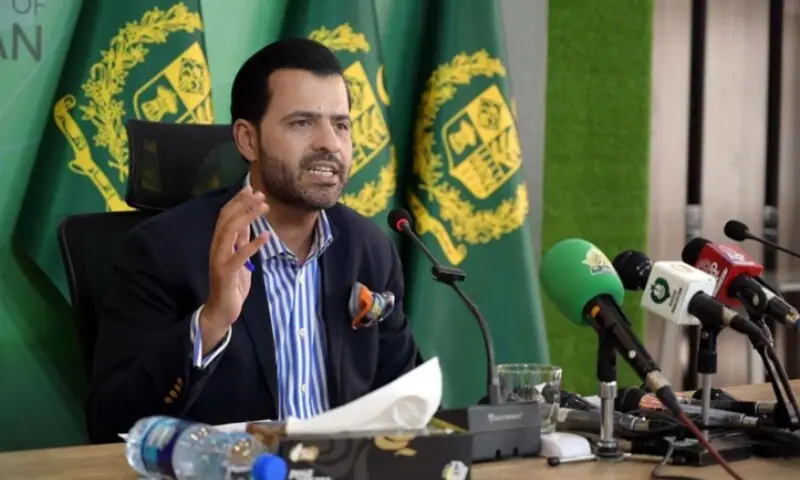
ISLAMABAD: Parliamentary Secretary for Information and Broadcasting Barrister Danyal Chaudhry on Monday stressed that national security was “non-negotiable” after Pakistan carried out strikes on terrorist targets in Afghanistan, killing over 80 terrorists.
“Pakistan has always chosen the path of dialogue and peaceful coexistence. But when Afghan soil continues to be used for proxy attacks, we have no choice but to defend our homeland. National security is non-negotiable,” Chaudhry said in a statement.
The PML-N MNA affirmed that the people of Pakistan “stand firmly” with their armed forces in the fight against terrorism.
He urged the Afghan government to take “decisive action to prevent its land from being used for cross-border militancy”, warning that lasting peace in the region depended on the “complete dismantling of terrorist sanctuaries”.
Noting that the recent operation “successfully neutralised militants involved in attacks on Pakistani soil”, Chaudhry stressed: “This action was aimed solely at those responsible for violent attacks inside Pakistan. Every precaution was taken to protect innocent lives.”
He also pointed to Afghanistan’s emergence as a “sanctuary for multiple terrorist groups”. Referring to a United Nations report, he noted that militants from 21 terror outfits were operating from Afghan territory, posing a serious threat to regional stability.
He specifically called out India’s “continued support for terrorist networks”.
“India is actively funding and training these groups, equipping them to carry out cross-border attacks against Pakistan. Such elements deserve no concessions,” the parliamentary secretary asserted.
His remarks came after Pakistan carried out airstrikes on Afghanistan in a retaliatory operation targeting groups responsible for recent suicide bombings in Pakistan.
The strikes killed “more than 80 terrorists”, according to security sources.
The strikes were conducted in retaliation for a series of suicide attacks in Islamabad, Bajaur, and Bannu that had claimed the lives of Pakistani security personnel and civilians. Authorities described the operation as intelligence-based and proportionate, aimed solely at those responsible for the attacks.
‘Decisive struggle against terrorism’
Separately, Khyber Pakhtunkhwa Governor Faisal Karim Kundi asserted that the country will “not allow our soil to be destabilised by forces operating from across the border in Afghanistan”.
In a post on X, he said: “The citizens of Pakistan, especially the resilient people of Khyber Pakhtunkhwa, stand firmly with our armed forces and security institutions in the defense of our homeland.”
He further said: “The sacrifices of our martyrs bind us together as one nation. In this decisive struggle against terrorism, Pakistan stands united, resolute, and unwavering.
“Our sovereignty is non-negotiable, and the people of this country stand shoulder to shoulder with the state to protect it at all costs.”
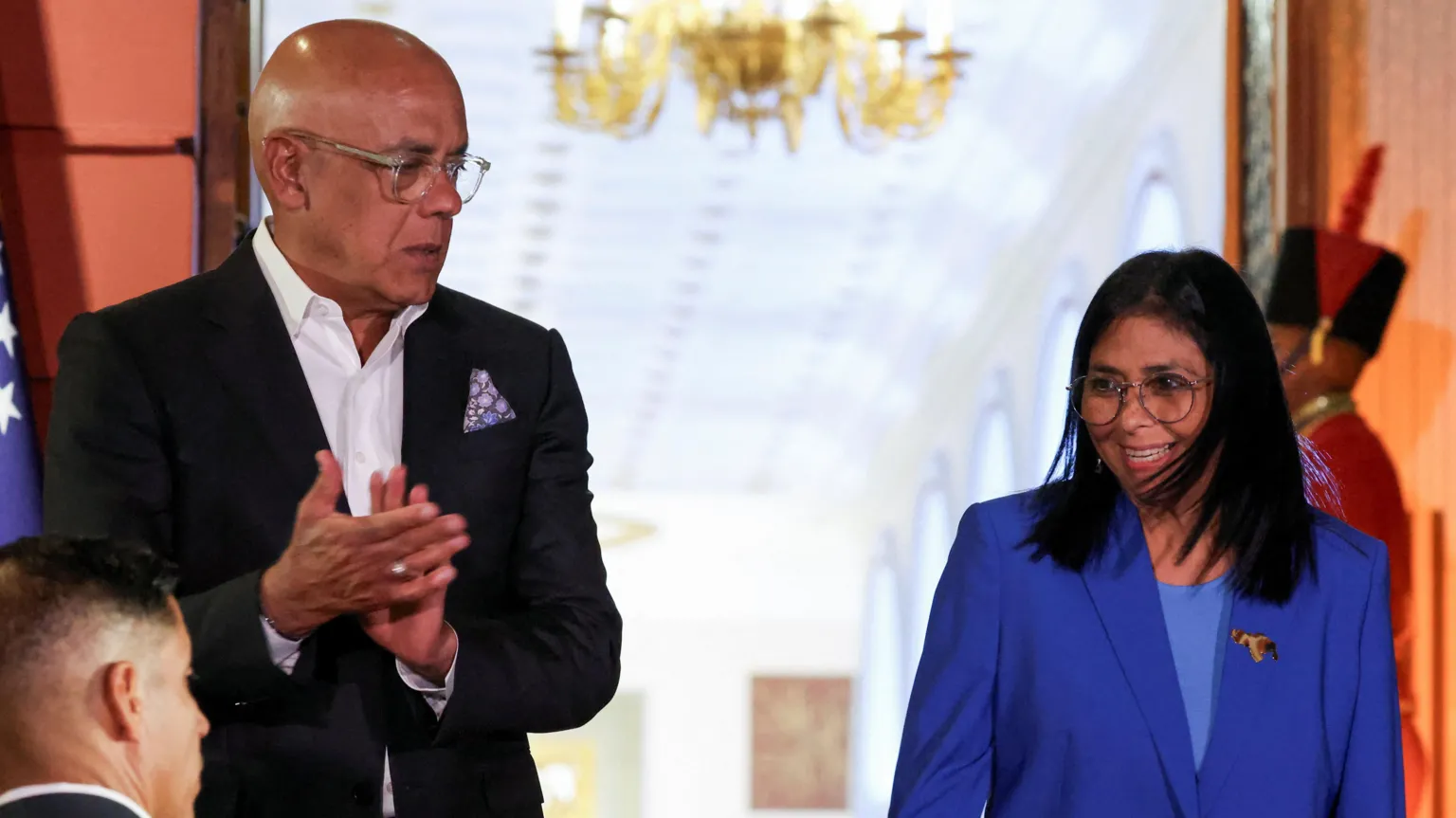
A total of 1,557 Venezuelan political prisoners have applied for amnesty under a new law introduced on Thursday, the country’s National Assembly President has said.
Jorge Rodríguez, brother of Venezuelan interim President Delcy Rodríguez and an ally of former President Nicolás Maduro, also said “hundreds” of prisoners had already been released.
Among them is politician Juan Pablo Guanipa, one of several opposition voices to have criticised the law for excluding certain prisoners.
The US has urged Venezuela to speed up its release of political prisoners since US forces seized Maduro in a raid on 3 January. Venezuela’s socialist government has always denied holding political prisoners.
At a news conference on Saturday Jorge Rodríguez said 1,557 release requests were being addressed “immediately” and ultimately the legislation would extend to 11,000 prisoners.
The government first announced days after Maduro’s capture, on 8 January, that “a significant number” of prisoners would be freed as a goodwill gesture.
Opposition and human rights groups have said the government under Maduro used detentions of political prisoners to stamp out dissent and silence critics for years.
These groups have also criticised the new law. One frequently cited criticism is that it would not extend amnesty to those who called for foreign armed intervention in Venezuela, BBC Latin America specialist Luis Fajardo says.
He noted that law professor Juan Carlos Apitz, of the Central University of Venezuela, told CNN Español that that part of the amnesty law “has a name and surname”. “That paragraph is the Maria Corina Machado paragraph.”
It is not clear if the amnesty would actually cover Machado, who won last year’s Nobel Peace Prize, Fajardo said.
He added that other controversial aspects of the law include the apparent exclusion from amnesty benefits of dozens of military officers involved in rebellions against the Maduro administration over the years.
On Saturday, Rodríguez said it is “releases from Zona Seven of El Helicoide that they’re handling first”.
Those jailed at the infamous prison in Caracas would be released “over the next few hours”, he added.
Activists say some family members of those imprisoned in the facility have gone on hunger strike to demand the release of their relatives.
US President Donald Trump said that El Helicoide would be closed after Maduro’s capture.
Maduro is awaiting trial in custody in the US alongside his wife Cilia Flores and has pleaded not guilty to drugs and weapons charges, saying that he is a “prisoner of war”.


How the World Is Forced to Fund the Iran War

Scholars Urge UN to Protect Iran’s Scientific Sites Amid Airstrikes Global Academics Warn Attacks Threaten Research, Health, and Civilian Safety

How Iran Humiliated U.S. and Israeli Power


-

 Europe News1 year ago
Chaos and unproven theories surround Tates’ release from Romania
-

 American News1 year ago
Trump expands exemptions from Canada and Mexico tariffs
-

 American News1 year ago
Trump Expels Zelensky from the White House
-

 Pakistan News9 months ago
Comprehensive Analysis Report-The Faranian National Conference on Maritime Affairs-By Kashif Firaz Ahmed
-

 American News1 year ago
Zelensky bruised but upbeat after diplomatic whirlwind
-

 Art & Culture1 year ago
The Indian film showing the bride’s ‘humiliation’ in arranged marriage
-

 Art & Culture1 year ago
International Agriculture Exhibition held in Paris
-

 Pakistan News1 year ago
Can Pakistan be a Hard State?