
Pakistan News
Pakistan’s Voice of Conscience at the United Nations


Paris (Imran Y. CHOUDHRY) :- Former Press Secretary to the President, Former Press Minister to the Embassy of Pakistan to France, Former MD, SRBC Mr. Qamar Bashir analysis : In the crowded halls of diplomacy, where words often drown in endless speeches, moments arise that define not only the speaker but the nation behind him. Such a moment recently came when Pakistan’s Permanent Representative to the United Nations, Ambassador Asim Iftikhar, stood before the world and dismantled Israel’s attempt to misuse Pakistan’s sacrifices in the fight against terrorism to justify its indiscriminate assault on Gaza. His intervention not only forced an unprecedented apology from Israel’s ambassador, Danny Danon, but also reaffirmed Pakistan’s moral authority as the voice of conscience for the Muslim world and for oppressed people everywhere.
For me, this triumph was not just a matter of national pride but also personal reflection. Two years ago, while waiting for an audience with President Arif Alvi in Islamabad, I met Ambassador Asim Iftikhar as he prepared to assume his responsibilities as Pakistan’s envoy to France. In those quiet minutes, I found him to be articulate, deeply thoughtful, and radiating professionalism. There was in his demeanor a rare blend of intellectual precision and quiet confidence, qualities that I felt would take him far in representing Pakistan. That impression, formed in the corridors of the presidency, has since been vindicated in the most remarkable way, culminating in his recent performance at the United Nations where he shone not only as Pakistan’s voice but as the spokesperson of the Muslim world.
The confrontation that revealed his strength of character unfolded when the Israeli ambassador attempted to draw an analogy between Israel’s bombardment of Gaza and the U.S. operation in Abbottabad, Pakistan, which killed Osama bin Laden. It was a deliberate distortion, intended to cloak genocide in the language of counterterrorism, and it invoked Pakistan’s history in a way that was both misleading and offensive. Ambassador Iftikhar rose with words that pierced the façade. He reminded the world that Pakistan had been a frontline state in the global fight against terrorism, losing more than seventy thousand men, women, and children, dismantling terror networks, and rendering sacrifices unmatched by any other nation. “Pakistan’s record,” he declared, “is bright, recognized worldwide, and written in the blood of its martyrs.” He then turned the analogy on its head, pointing out with clarity that invoking Pakistan’s sacrifices to justify the mass killing of innocents in Gaza was “outrageous, incoherent, and morally indefensible,” for what Israel was doing was not counterterrorism but genocide, ethnic cleansing, and the conversion of Gaza into a slaughterhouse.
The chamber fell silent. Rarely does rhetoric give way to truth so powerfully, and rarely is propaganda so effectively exposed. The weight of his words left Israel’s representative cornered, and in a rare act of contrition, Danny Danon publicly apologized to Pakistan, admitting that invoking its name had been inappropriate. It was more than a diplomatic win; it was a narrative triumph, a moment where Pakistan’s honor was defended, its sacrifices acknowledged, and Israel’s distortion dismantled. For Pakistan, it was a reminder of the power of words when spoken with conviction, and for the Muslim world, it was proof that a principled voice could still rise above the noise of power politics.
This intervention was not an isolated act but part of a larger continuum of Ambassador Iftikhar’s work. Again and again at the United Nations, he has projected the suffering of Gaza and the West Bank with unflinching clarity. In June this year, he declared before the General Assembly that “the situation in Gaza is a stain on our collective conscience. Over fifty-five thousand lives have been lost, including eighteen thousand children and twenty-eight thousand women. Infrastructure has been razed—homes, hospitals, schools, cultural heritage, places of worship. Famine looms. Humanitarian workers and UN personnel are being attacked with impunity. This is not just a humanitarian catastrophe; it is a collapse of humanity.” These were not the words of a man speaking only for Pakistan. They were the words of a diplomat mobilizing the conscience of the world, urging not only the Muslim community but all of civilization to act, to recognize that without justice there can be no peace. He has repeatedly called for the only viable solution: the realization of a two-state solution on pre-1967 borders, with Al-Quds Al-Sharif as the capital of a sovereign, independent, and contiguous State of Palestine.
By vividly describing demolished schools, destroyed hospitals, displaced families, starving children, and the blockade of humanitarian aid, he has carried the Palestinian tragedy from the rubble of Gaza to the chambers of the United Nations, where it cannot be ignored. He has mobilized not just the Muslim world but also neutral states, civil society, and even hesitant Western capitals to rethink their silence. His interventions have contributed to the momentum behind resolutions in the General Assembly, including Pakistan’s pivotal role in the historic vote affirming the two-state solution, a success story of multilateral diplomacy where Pakistan once again played a leading role.
His diplomacy is marked by dignity. In confronting Israel, he did not descend into anger or hyperbole. Instead, he marshaled facts, invoked moral clarity, and exposed propaganda with surgical precision. He reminded the world that the fight against terrorism cannot be equated with the slaughter of innocent civilians, and in doing so, he not only defended Pakistan’s honor but also gave voice to the millions of Palestinians trapped under bombardment and occupation. His words carried the weight of truth, and truth compelled even Israel, often shielded by its allies, to apologize.
This was Pakistan at its finest—firm, dignified, principled. It was not just defending its own history but championing the cause of justice for Palestine, exposing tyranny, and mobilizing the conscience of the world. For me, watching this unfold brought back that first impression I had of him in Islamabad, a man destined to leave his mark. He has not only fulfilled that promise but exceeded it, standing tall as a diplomat whose words moved nations and whose voice gave hope to the oppressed.
The United Nations may often be a theater of speeches with little consequence, but sometimes, words alter the moral landscape. Through Ambassador Asim Iftikhar, Pakistan has shown that truth, when spoken with conviction, can silence distortion, compel apologies, and remind the world that dignity and justice still matter. In that chamber, Pakistan’s voice was heard and respected. It was the voice of a nation that has suffered and sacrificed, yet continues to stand for justice—not only for itself but for all oppressed peoples. And in that moment, Pakistan reminded the world that diplomacy, at its best, is not about power but about conscience, and that conscience, when articulated with courage, can still shake the foundations of injustice.







Pakistan News
CELEBRATES PAKISTAN’S 79TH INDEPENDENCE DAY AND 150TH BIRTH ANNIVERSARY OF QUAID-E-AZAM MOHAMMAD ALI JINNAH IN FRANCE
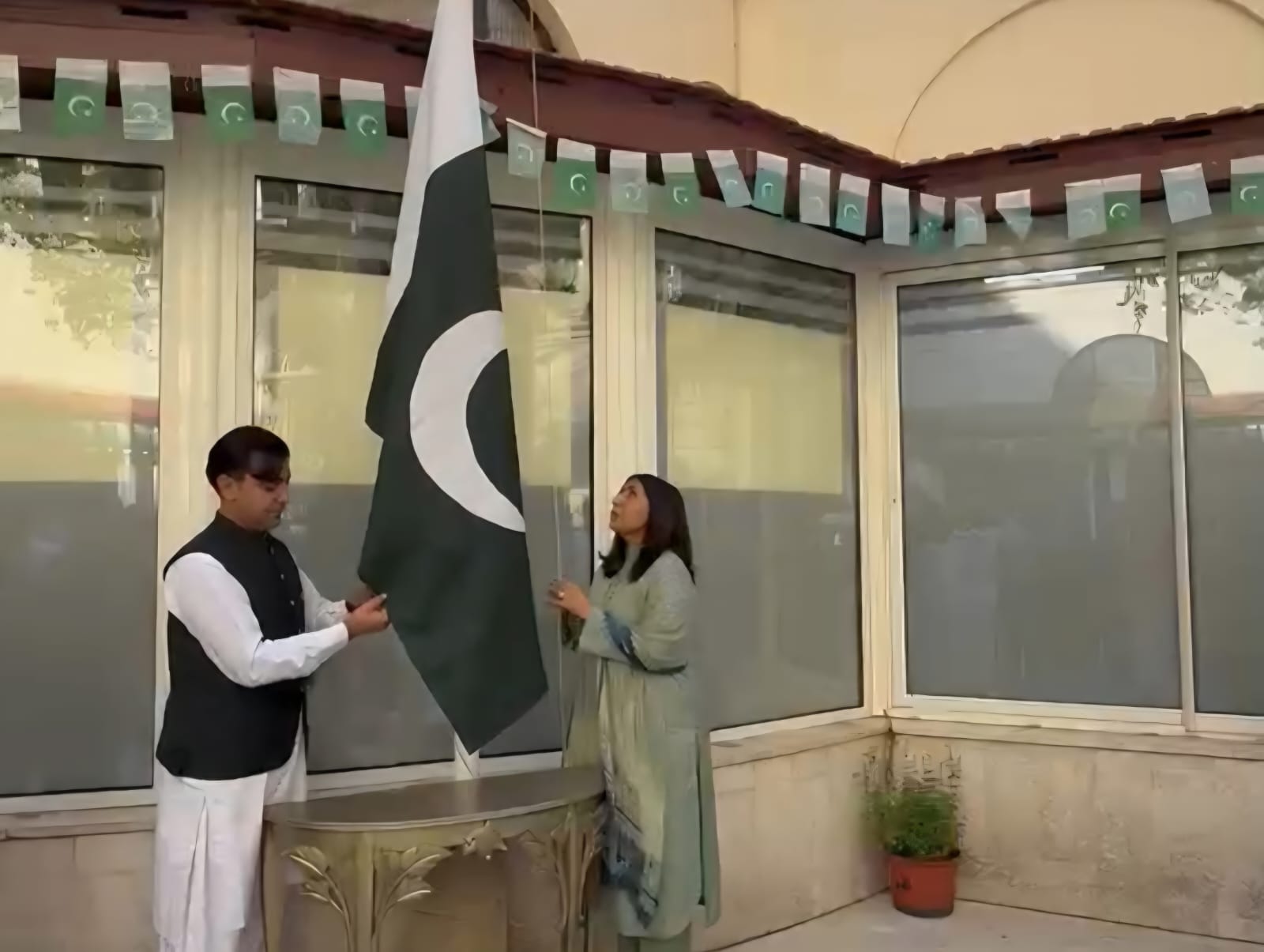
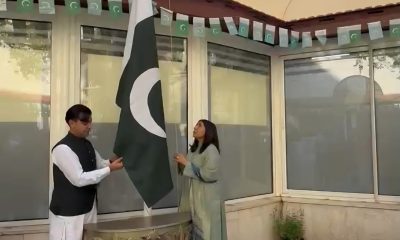
Paris ( Imran Y. CHOUDHRY):- On the occasion of the 79th Independence Day of Pakistan, Ambassador Mumtaz Zahra Baloch hoisted national flag to the tune of the national anthem at the Embassy of Pakistan, Paris and welcomed distinguished members of the Pakistani community including large number of children.
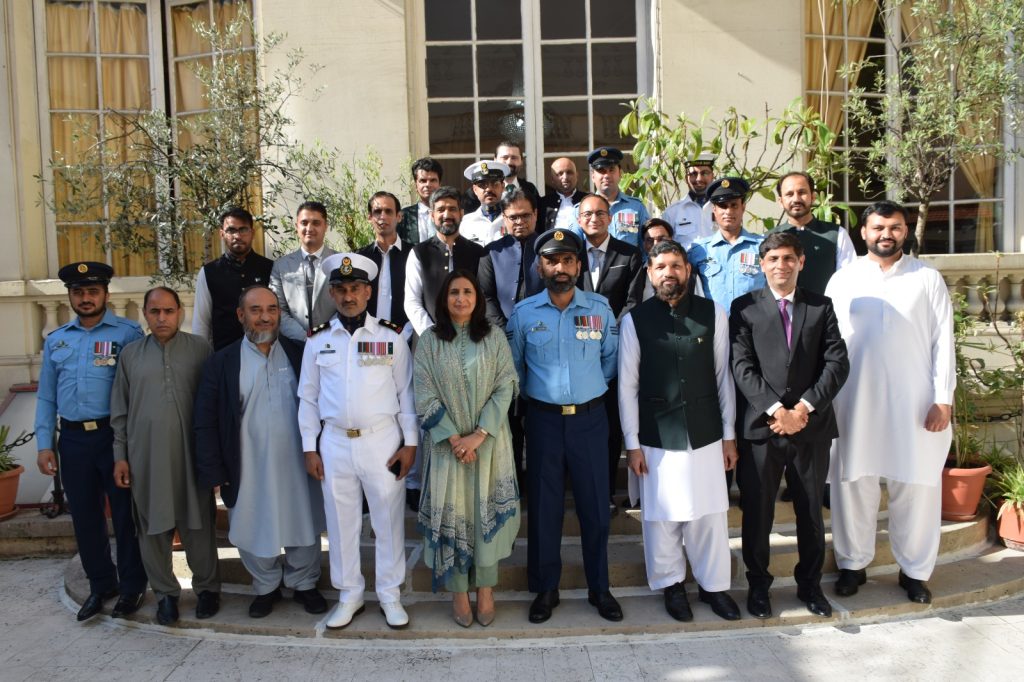
Messages of the President, the Prime Minister and Foreign Minister of Pakistan were read out on the occasion.
Congratulating all on the Independence Day, the Ambassador said that 14th August was truly auspicious as it brought together the entire nation – in celebration, in paying homage to the Quaid-e-Azam and other leaders of the freedom movement, in remembrance of the supreme sacrifices of our forefathers and drawing inspiration from our glorious past and the tremendous achievements over the decades.
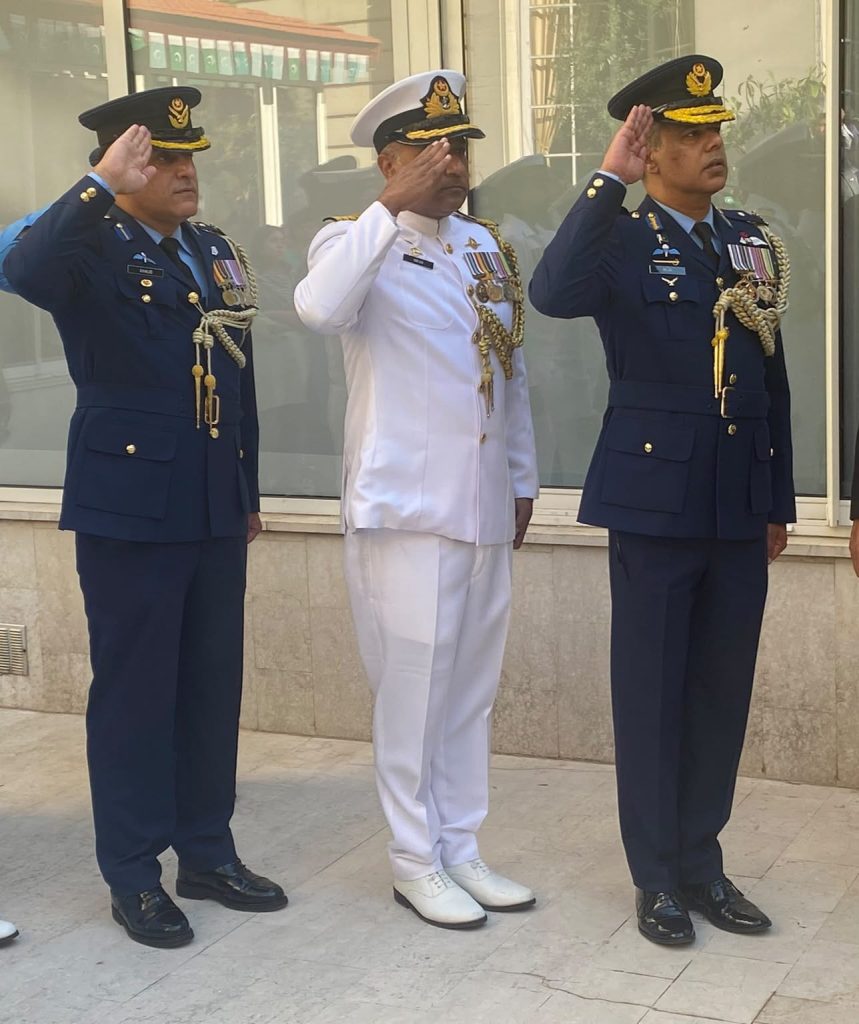
The Government of Pakistan is observing the current year – 2026 – as the “Year of Quaid-e-Azam Muhammad Ali Jinnah” to mark his 150th birth anniversary, she added. The great intellectual vision of Quaid requires the nation to uphold his principles and play its due role in the development and progress of Pakistan. The Ambassador highlighted that Quaid-e-Azam had given the nation three golden principles, faith, unity and discipline and adherence to these principles would lead the nation towards a bright future for the generations to come.
Ambassador Baloch said that as we celebrate our freedom we should remember our Kashmiri and Palestinian brothers and sisters, who have been struggling for over seven decades for their freedom and right to self-determination. She reaffirmed Pakistan’s political and diplomatic support to the people of the Indian Illegally Occupied Jammu and Kashmir (IIOJK) and Palestine for their legitimate rights.
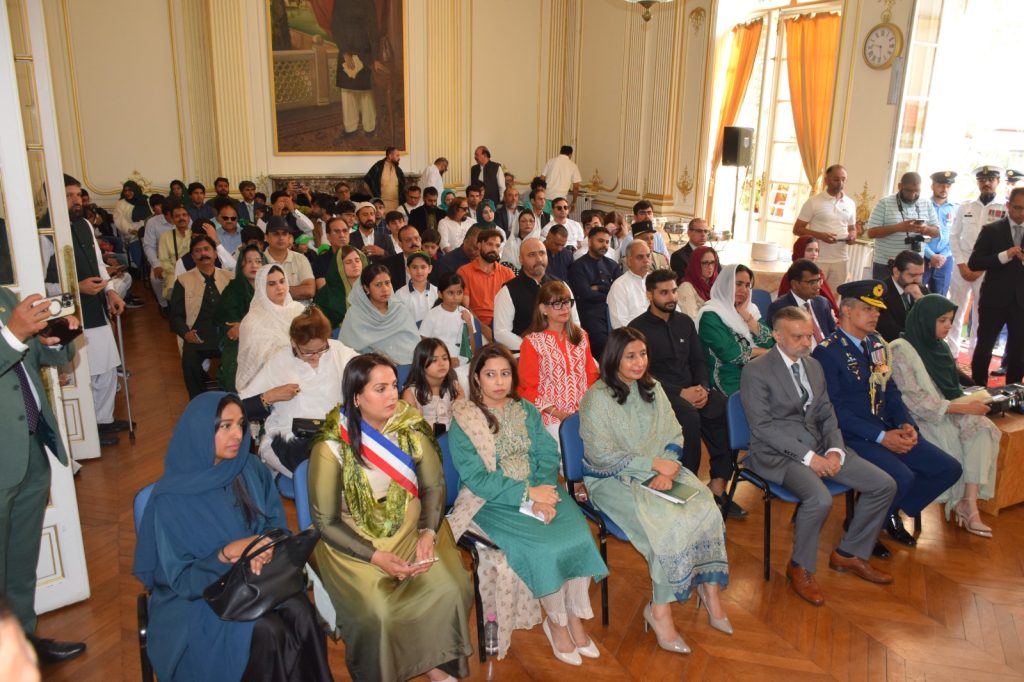
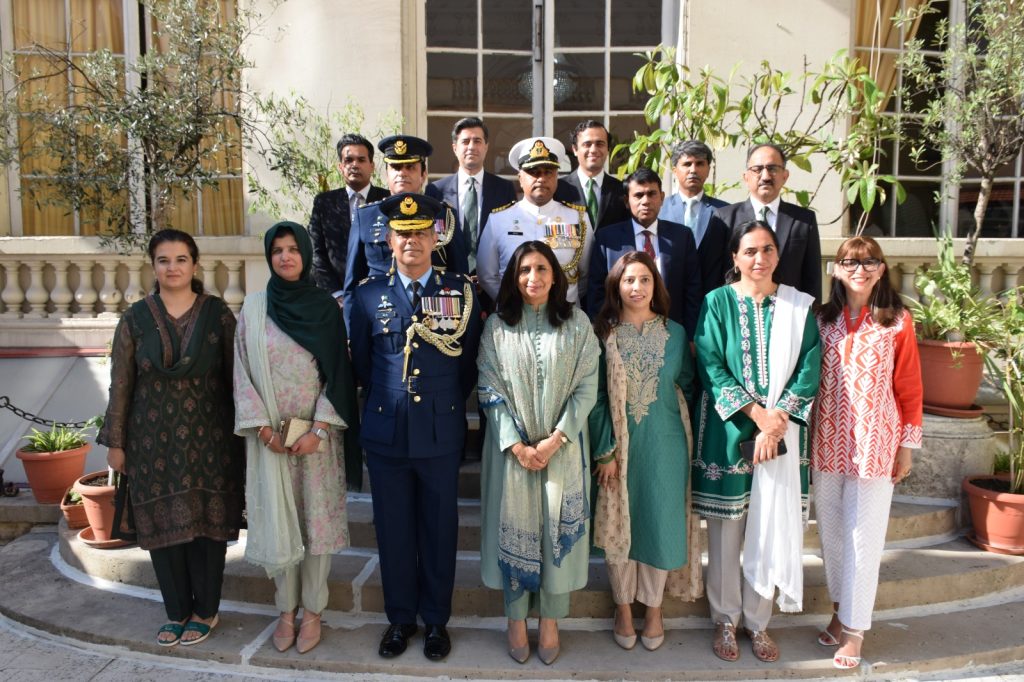
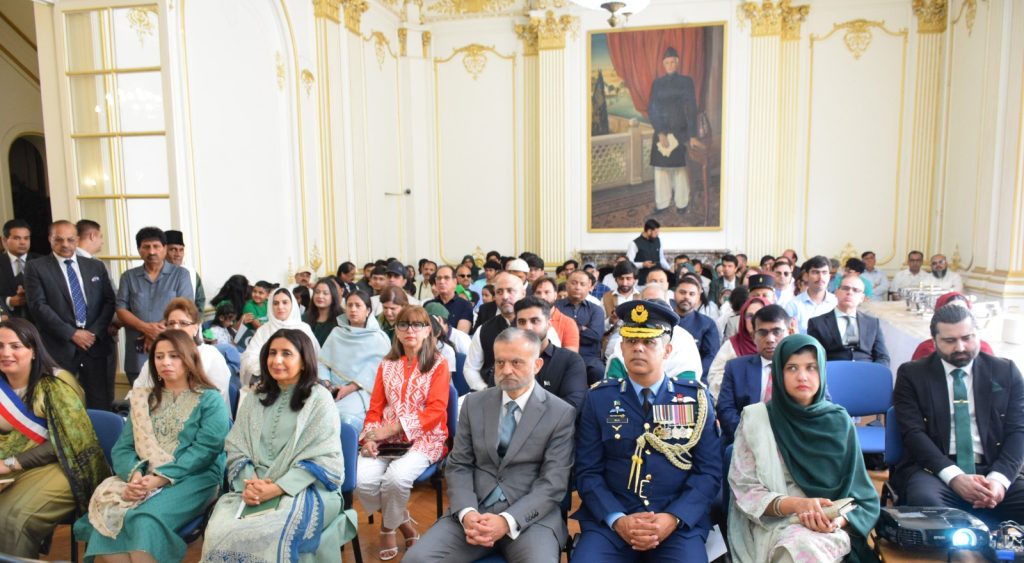
Ambassador also appreciated the contributions of Pakistani diaspora in France in promoting Pakistan-France relations. She reiterated Embassy’s fully commitment to continue to facilitate Pakistanis based in France.
Later, the Ambassador inaugurated the ‘historic photo exhibition’ based on the life and works of Quaid-e-Azam Muhammad Ali Jinnah at the Embassy. The exhibition showcased a remarkable collection of
archival records and photographs chronicling the visionary leadership and enduring
legacy of the founder of Pakistan. The guests especially the children took a keen interest in the exhibition and raised slogans of Pakistan Zindabad.
Pakistan News
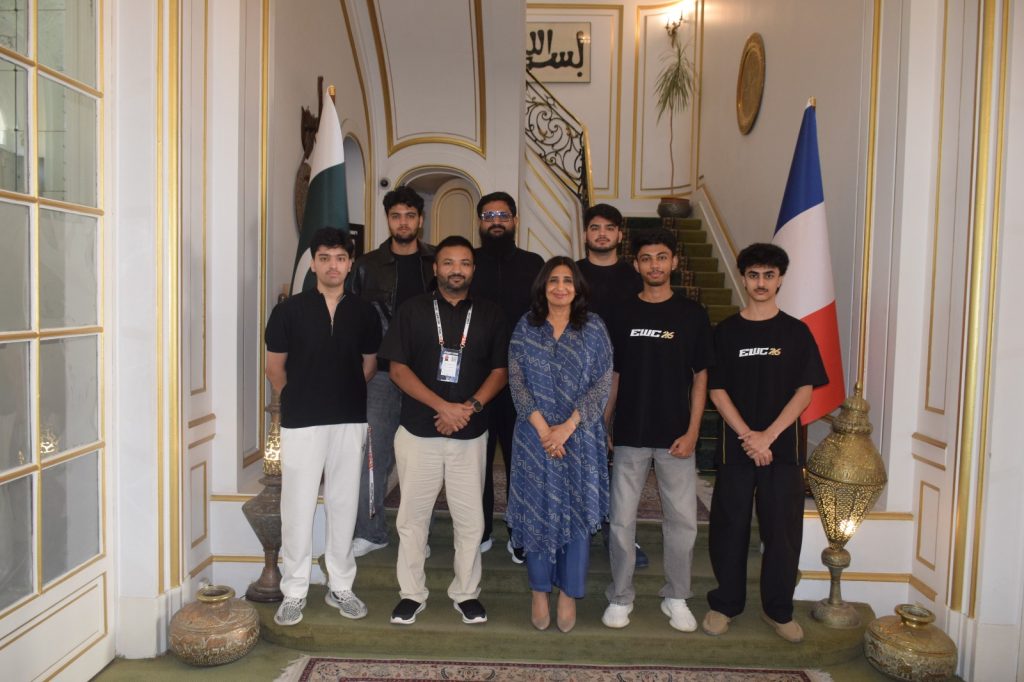
Pakistan PUBG MOBILE team ‘4Thrives’ visited the Embassy of Pakistan in Paris, France.
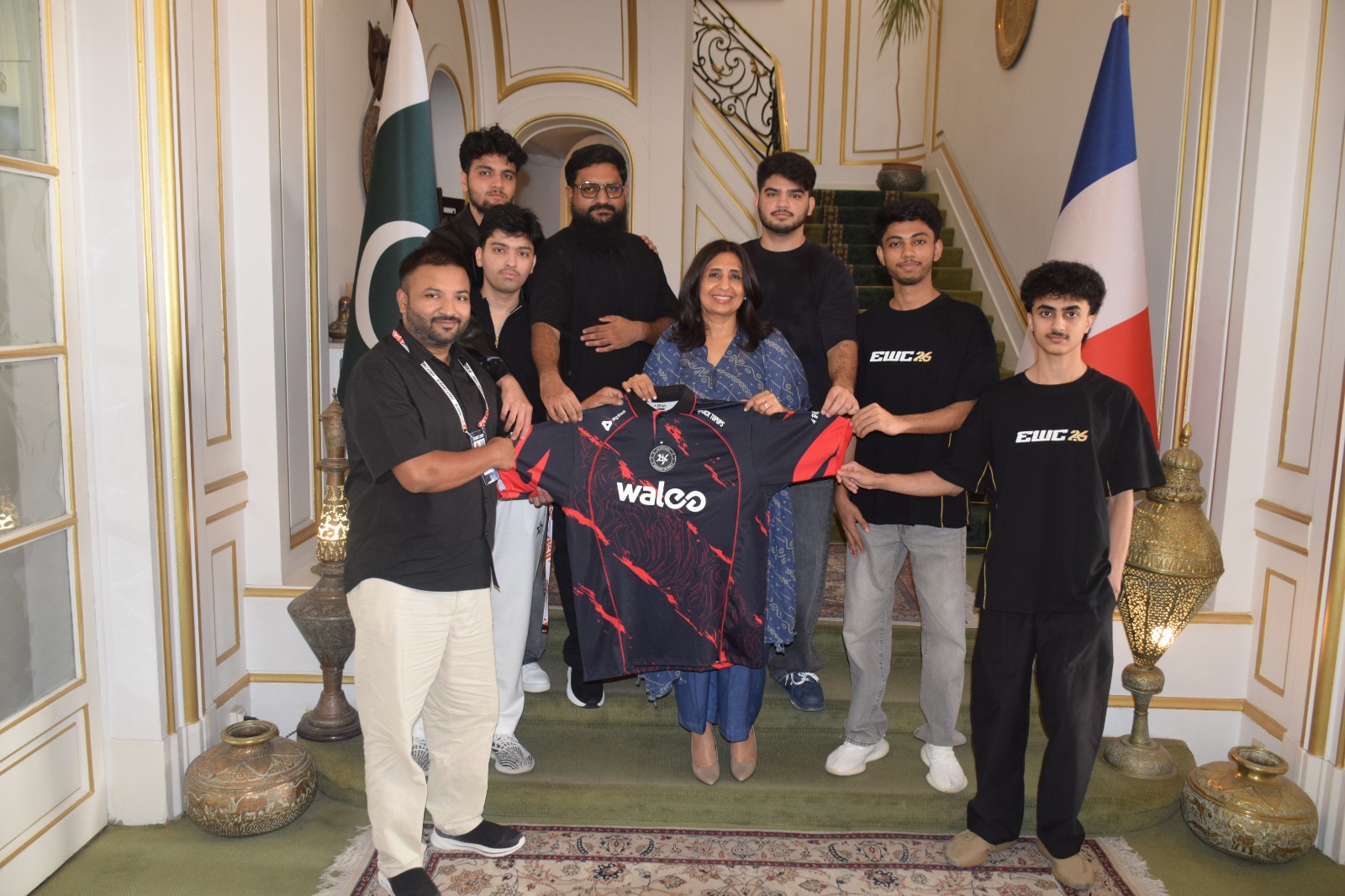
Paris ( Imran Y. CHOUDHRY):- Ambassador Mumtaz Zahra Baloch today received the top professional Pakistan PUBG MOBILE team ‘4Thrives’, which is competing in the high-stakes competition, PUBG MOBILE World Cup 2026 Grand Finals at the Esports World Cup (EWC) being held in Paris.
The team members of ‘4Thrives’ briefed the Ambassador on the game and the hard work they all had put in to finish at the top of the qualifying round and reaching the Grand Finals. They were enthusiastic about their performance which has cemented their position among the world’s best PUBG MOBILE teams.
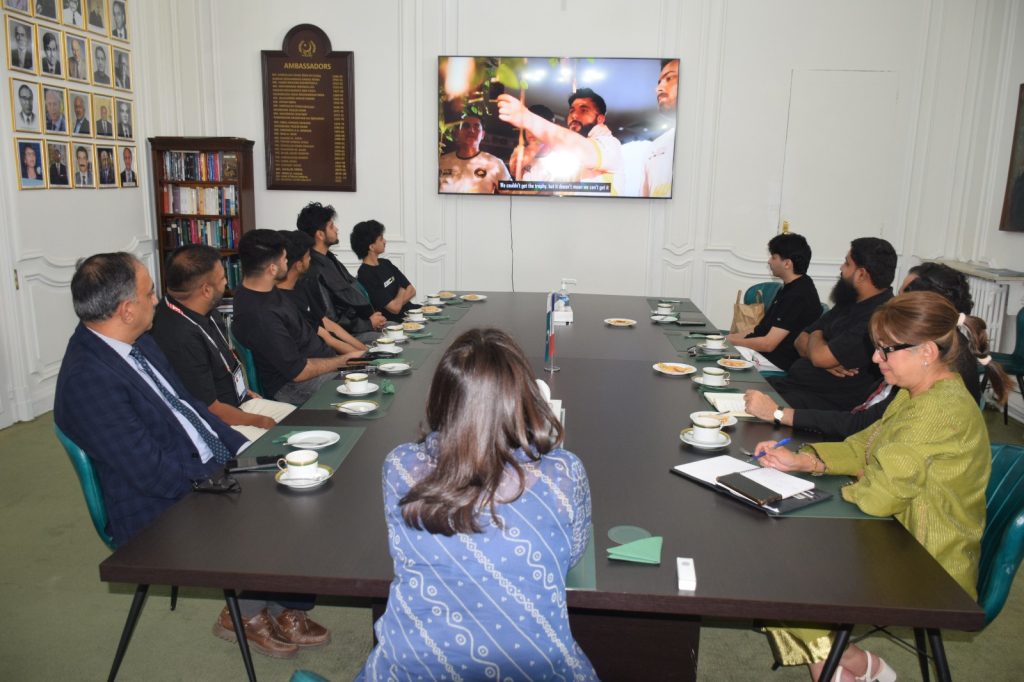
The Ambassador appreciated the team members for their enthusiastic participation and accomplishments and wished them success for the Grand Finals. She said the Pakistani nation has proudly witnessed the recent achievements of the 4Thrives team and expressed confidence that it would win the prestigious trophy in Paris as well.
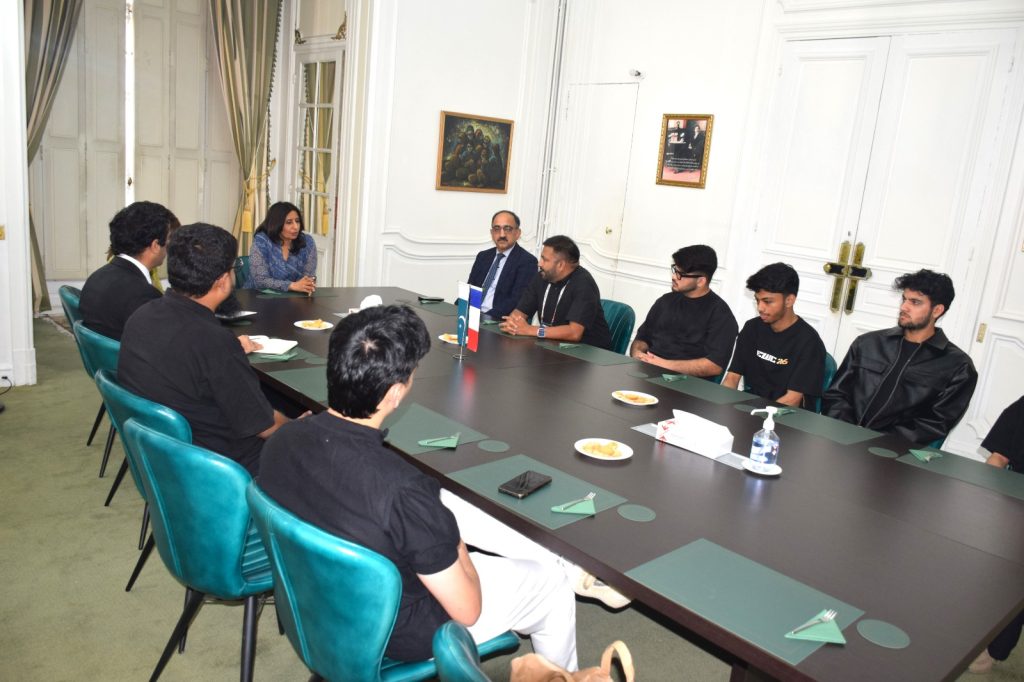
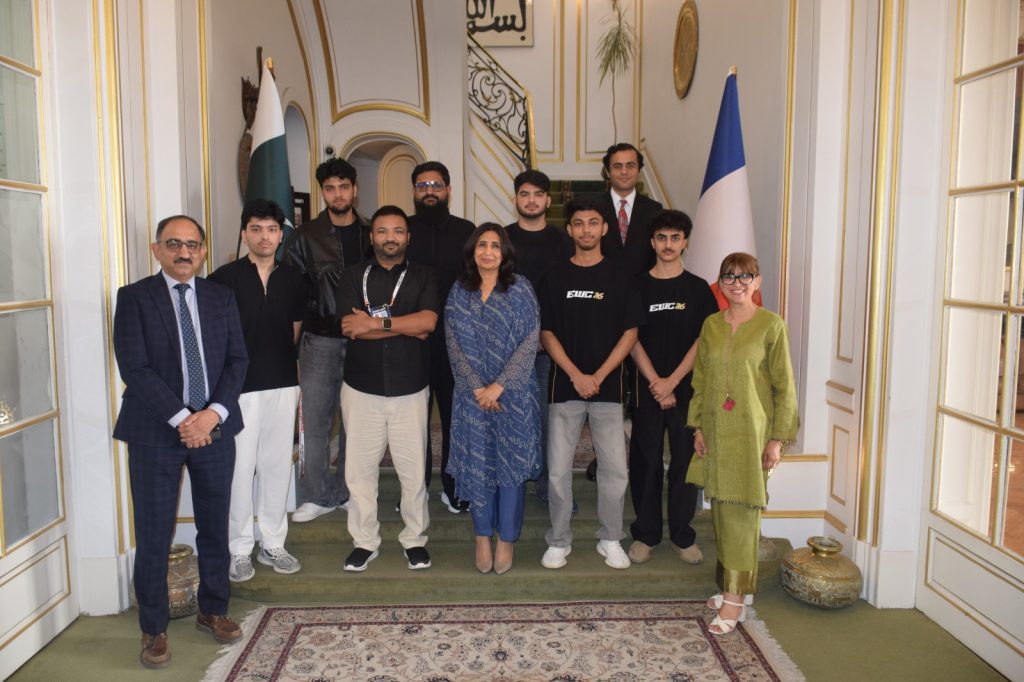
This is the first time that EWC is being held in Paris – a true global phenomenon represented by more than 2,000 players from 200 clubs and 100 different countries.
Let’s celebrate and cheer Pakistan PUBG MOBILE team ‘4Thrives’ for the Grand Finals this week!

Paris (Imran Y. CHOUDHRY) :- Former Press Secretary to the President, Former Press Minister to the Embassy of Pakistan to France, Former MD, SRBC Mr. Qamar Bashir analysis : The Mecca Joint Defence Agreement signed by Saudi Arabia, Türkiye and Pakistan is being described as a Muslim version of NATO. Turkish Foreign Minister Hakan Fidan himself said its collective-defence clause is technically similar to NATO’s Article 5: an armed attack on one member will be treated as an attack on all. Yet most commentary has concentrated on the pact’s wording, its possible expansion and whether it is aimed at Iran or Israel. The more important question has received less attention: what threat does each signatory actually perceive?
Without answering that question, analysis of the agreement remains incomplete. Alliances do not acquire meaning merely from ceremonial signatures. Their real character is determined by the dangers their members fear, the capabilities they contribute and the circumstances in which they are prepared to act.
For Saudi Arabia, the immediate security environment is deeply paradoxical. The kingdom has long relied upon the United States, but the presence of American forces and facilities across the Gulf can also attract retaliation whenever Washington uses regional territory or infrastructure in military operations against Iran.
Tehran has repeatedly maintained that its quarrel is not with Gulf societies as such, but with military threats launched from or supported through their territories. Whether one accepts Iran’s justification or not, the underlying dilemma is real: foreign protection can simultaneously become a source of exposure.
This raises a difficult question. If foreign bases had not facilitated attacks against Iran, would Tehran have attacked Gulf countries on the same scale? The answer cannot be proven, but the question exposes Saudi Arabia’s strategic vulnerability. Riyadh wants protection without remaining permanently hostage to decisions made by an external guarantor.
Threats from the Houthis in Yemen and Iran-aligned armed groups in Iraq remain serious, particularly for oil facilities, desalination plants, shipping and civilian infrastructure. Nevertheless, Saudi Arabia has spent heavily on modern aircraft, missiles, surveillance systems and air defence. These dangers alone do not fully explain the need for an Article 5-style pact with Türkiye and nuclear-armed Pakistan.
The wider concern is Israel’s expanding military reach and the fear that no regional state can assume it will remain permanently outside Israeli calculations. The “Greater Israel” project is not merely a slogan invented by Israel’s critics. It is a documented ideological and political current rooted in expansionist interpretations of biblical territory, including the most extreme vision of land stretching from the Nile to the Euphrates, and in revisionist Zionist ideas of sovereignty on both sides of the Jordan River.
Israel’s wars and military operations across Gaza, Lebanon, Syria and elsewhere have intensified regional fears that its use of force and territorial ambitions are becoming geographically unconstrained. Because the most expansive interpretation of Greater Israel encompasses territory belonging to several Arab states, including Saudi Arabia, Riyadh has legitimate reasons to treat this ideology and Israel’s growing regional reach as a long-term strategic threat.
The Mecca agreement therefore creates strategic depth, reduces Saudi Arabia’s exclusive dependence on Washington and strengthens the kingdom’s leadership position in the Muslim world.
Türkiye enters the pact with a different threat map. It possesses NATO’s second-largest army, an increasingly sophisticated defence industry, formidable drone capabilities, warship and helicopter production, and substantial operational experience in Syria, Iraq and the eastern Mediterranean.
Kurdish militancy and instability along Türkiye’s southern borders remain persistent threats, but Ankara is largely capable of managing these challenges without Pakistani or Saudi military intervention.
The more consequential concern is Israel. Turkish and Israeli rhetoric has become increasingly hostile, while their strategic interests collide in Syria, Gaza and the broader eastern Mediterranean. Türkiye’s conventional size gives it considerable strength, but Israel is widely understood to possess nuclear weapons, while Türkiye does not. This creates a dangerous asymmetry at the highest level of escalation.
Pakistan’s participation therefore adds deterrent weight, but it is essential not to overstate what has formally been agreed. The published language does not establish an explicit Pakistani nuclear umbrella over Türkiye or Saudi Arabia. Nor does it automatically commit Islamabad to nuclear retaliation.
Its value at this stage lies in strategic ambiguity. Any adversary contemplating extreme escalation must now consider the possibility of a broader response involving a nuclear-armed partner. That uncertainty itself can reinforce deterrence, provided consultation mechanisms, command arrangements and red lines are eventually clarified.
Pakistan’s principal state-based threat remains India. Its other challenges—including attacks linked to the Pakistani Taliban, militancy operating from Afghan territory and insurgency in Balochistan—are grave but fall mainly within the domain of counterterrorism and internal security.
Islamabad has also alleged external support for certain militant networks, including from India and Israel other hostile actors, therefore the possibility of hybrid warfare designed to weaken Pakistan cannot be ignored.
The real test for the pact would come during a future India-Pakistan war. Saudi Arabia enjoys extensive economic and political relations with India, while Türkiye also has interests that extend beyond its partnership with Islamabad. Would Riyadh provide intelligence, logistics, financing, air defence or diplomatic support? Would it risk its relationship with New Delhi?
The treaty’s collective-defence formula is powerful, but it does not necessarily mean that every member must respond identically or automatically declare war. Even NATO’s Article 5 requires each ally to take such action as it considers necessary. The Mecca pact’s credibility will similarly depend on agreed procedures, operational planning, military integration and, above all, political will.
Nor should the alliance be framed as an anti-Iranian “Sunni bloc.” That description is analytically shallow and politically dangerous. It imports a sectarian narrative into an agreement whose signatories explicitly maintain that it is not directed against Iran or any other particular country.
Western and regional media extensively are using the Sunni label as convenient shorthand, but repeating it can deepen the very divisions that have repeatedly weakened the Muslim world. It risks presenting Sunni and Shia states as natural enemies, even though they share geography, economic interests, religious bonds and responsibility for regional stability.
Iran has demonstrated formidable missile, drone and asymmetric capabilities and has proven ability to impose severe costs on the combined military might of both the United States and Israel and their alliance in the Middle East and elsewhere in the entire world.
A confrontation between Iran and the combined forces of Pakistan, Türkiye and Saudi Arabia would devastate the region, rupture trade and energy routes, inflame sectarian tensions and serve none of the four countries.
The rational objective of the Mecca alliance should therefore be deterrence, collective security and strategic autonomy—not the creation of another front in the Iran war.
The wiser long-term course is to keep the pact open and eventually build a structured security dialogue with Iran. Immediate Iranian membership may be politically unrealistic while war and mistrust persist, but inclusion should remain a strategic objective.
Egypt and other regional countries could also participate in a broader security architecture based on non-aggression, collective consultation, protected shipping lanes, economic connectivity and respect for sovereignty.
The three signatories must also wage an intelligent information campaign. Through official statements, diplomatic outreach, legacy media, social platforms and other forms of communication, they should consistently reject the description of the agreement as a “Sunni NATO.”
They should explain that the pact is intended to protect its members from aggression regardless of the aggressor’s religious, sectarian or national identity. It must not be allowed to become an instrument for turning Muslim countries against one another.
The Mecca agreement will become historic only if it does more than redistribute fear. Properly developed, it can reduce dependence on outside powers, deter Israeli or other aggression, give Pakistan additional diplomatic weight and create the nucleus of an inclusive regional security system.
Mishandled as a sectarian coalition, however, it could produce precisely the confrontation it claims to prevent. Its success will therefore be measured not by how many enemies it names, but by how many wars it prevents.


Media As A Bridge between Civilizations

China’s Fusion Breakthrough: Death Knell for the Oil Age

A Nation’s Real Strength Rests in Spirituality, Not Military Might


-
 Sports2 months ago
South Korea’s Yoo Useong Steps Onto the Global Strongman Stage as World Strongman Federation Professional Athlete
-

 Art & Culture1 year ago
A Survey of Mata-E-Zeest
-

 Europe News1 year ago
Chaos and unproven theories surround Tates’ release from Romania
-

 American News1 year ago
Trump expands exemptions from Canada and Mexico tariffs
-

 American News1 year ago
Trump Expels Zelensky from the White House
-

 Art & Culture1 year ago
Will Snow White be a ‘victim of its moment’? How the Disney remake became 2025’s most divisive film
-

 Pakistan News1 year ago
Comprehensive Analysis Report-The Faranian National Conference on Maritime Affairs-By Kashif Firaz Ahmed
-

 Entertainment2 years ago
Champions Trophy: Pakistan aim to defend coveted title as historic tournament kicks off today