
Pakistan News
Pakistan’s Moment in Washington


Paris (Imran Y. CHOUDHRY) :- Former Press Secretary to the President, Former Press Minister to the Embassy of Pakistan to France, Former MD, SRBC Mr. Qamar Bashir analysis : In a rare shift of focus from its usual marginal position in American discourse, Pakistan has recently found itself in the headlines in the United States for all the right reasons. Normally overshadowed by stories of political chaos, power tussles, and institutional heavy-handedness against dissent, the narrative has now turned toward Islamabad’s surprising diplomatic maneuvering and its growing importance in Washington’s strategic calculations. While Pakistan’s domestic politics remain fraught—with Imran Khan and his party under relentless state pressure and critics of the “deep state” still facing crackdowns—the country has suddenly carved out space on the global stage. This pivot began in earnest just before the United States carried out precision strikes on Iran’s Fordow and other nuclear sites.
The catalyst was an unprecedented meeting: on June 18, 2025, President Donald Trump hosted Pakistan’s Army Chief, Field Marshal Asim Munir, for a private lunch at the White House, an event widely covered by international media. It was one of the most significant diplomatic engagements of Trump’s second term and the first time a U.S. president hosted Pakistan’s military chief without civilian leadership present. At the press briefing following the meeting, Trump openly acknowledged Munir’s role in averting disaster during the recent five-day India-Pakistan conflict, saying:
“The reason I had him here… I wanted to thank him for not going into the war… ending it. Two very smart people decided not to keep going with that war; that could have been a nuclear war.” (NDTV, June 2025)
This meeting reverberated across South Asia, creating political tremors in India. Rahul Gandhi, leader of the opposition Congress Party, seized the moment in a fiery parliamentary speech, lambasting Prime Minister Modi’s government for failing to secure equivalent U.S. attention. In India’s parliament, even some pro-government lawmakers admitted that New Delhi had been outmaneuvered diplomatically, losing ground to Islamabad in Washington’s halls of power.
The reasons for this shift are not hard to discern. While India has long been touted as America’s counterweight to China, its policy choices have frustrated Washington. New Delhi’s unrelenting purchase of Russian oil—now exceeding 1.5 million barrels a day—and acquisition of Russian arms has provided Moscow with critical liquidity to sustain its war effort against Ukraine. Arms deals alone totaled over $5 billion in 2024, undermining Western sanctions. Trump and senior Republicans like Marco Rubio publicly criticized this stance, framing it as opportunism detrimental to U.S. and NATO interests. In this context, Pakistan’s alignment with U.S. priorities, however cautious, has not gone unnoticed.
On Palestine, Pakistan has walked a fine line. Publicly and diplomatically, Islamabad has been vociferous in condemning Israeli atrocities in Gaza and the West Bank, echoing global outrage at what many now call a “slaughterhouse.” Yet, unlike Iran or other Muslim-majority states, Pakistan has avoided providing material or military support to Palestinian resistance factions, preventing open friction with Washington or Tel Aviv. This careful positioning has kept Pakistan in the good books of the U.S. administration while still satisfying domestic demands for moral solidarity with Palestine.
Another critical factor shaping this newfound goodwill is Pakistan’s willingness to open its mineral-rich landscape to U.S. investment. During his Washington visit, Munir reportedly offered exclusive access to U.S. companies for mining ventures in Balochistan, an area rich in copper, lithium, and rare earth elements vital for high-tech industries, semiconductors, and space exploration. Reuters reported on May 23, 2025, that Pakistan’s Commerce Minister promised concessions for U.S. firms to secure multi-billion-dollar investments and attract alternative financing away from China’s $60 billion CPEC monopoly. The Reko Diq copper-gold project, already partly backed by U.S. funding, could become one of the largest globally, producing up to 800,000 tons of copper and 250,000 ounces of gold annually by 2028.
This economic cooperation moved further ahead on July 30, 2025, when Trump announced via Truth Social:
“We have just concluded a Deal with the Country of Pakistan, whereby Pakistan and the United States will work together on developing their massive Oil Reserves.”
Pakistan’s finance ministry called it a “new era of economic collaboration,” spanning energy, mining, IT, cryptocurrency, and other sectors. Talks included tariff suspensions on Pakistani textile exports to the U.S., which were worth over $3 billion in 2024, protecting a crucial lifeline for Pakistan’s struggling economy. Additionally, Pakistan is set to receive its first shipment of U.S. crude oil in October 2025, marking a strategic shift away from its historic reliance on Gulf and Russian supplies.
Security cooperation has also played a pivotal role. Pakistan’s recent handover of ISIS operatives to U.S. authorities was widely praised in Washington’s counterterrorism circles, reinforcing Pakistan’s image as a partner rather than a spoiler in global security efforts. These moves have coincided with IMF aid being disbursed to Islamabad without the usual political roadblocks, suggesting a Washington-brokered softening of lender attitudes.
Above all, President Trump has been unusually vocal in his praise for Pakistan’s military prowess. Reflecting on the May conflict, he lauded Islamabad’s restraint and ingenuity, noting that Pakistan’s missiles “hit only military targets” and publicly confirming reports that five Indian fighter jets, including three Rafales, were downed during the skirmish. Trump contrasted this with his frustration over India’s tariffs on U.S. goods and its continued Russian entanglements, signaling a sharp departure from Biden-era policies that sought to elevate India as a counterweight to China.
Trump’s Washington now appears willing to reward Pakistan for supporting U.S. strategic interests. Islamabad has also revived its traditional role as a mediator between Washington and Beijing, with Trump himself noting that Pakistan “knows Iran very well, better than most,” using its intelligence networks to help avert broader conflict. Analysts view this as Pakistan stepping back into its Cold War-era niche of a trusted go-between in great power diplomacy.
For the first time in decades, the stars seem aligned for Pakistan in Washington. Favorable optics and warm words must now be translated into tangible benefits: expanded trade, accelerated military modernization, strategic technology transfers, and above all, economic revitalization that lifts millions of Pakistanis out of poverty. Diplomatic goodwill is fleeting, and Pakistan’s history is littered with missed chances and squandered advantages.
This moment is different not because Washington has suddenly discovered new love for Pakistan, but because India has stumbled and Pakistan has—by design or by luck—stepped into the breach. Unless Pakistan’s leadership develops a coherent strategy to lock in this goodwill, institutionalize its gains, and align its domestic governance with global expectations, the window will close as quickly as it opened. Trump’s administration has offered Islamabad a seat at the table; it is now up to Pakistan’s policymakers to decide whether they will merely savor the invitation or use it to shape a future where Pakistan’s role in global affairs is secure, respected, and beneficial to its people.





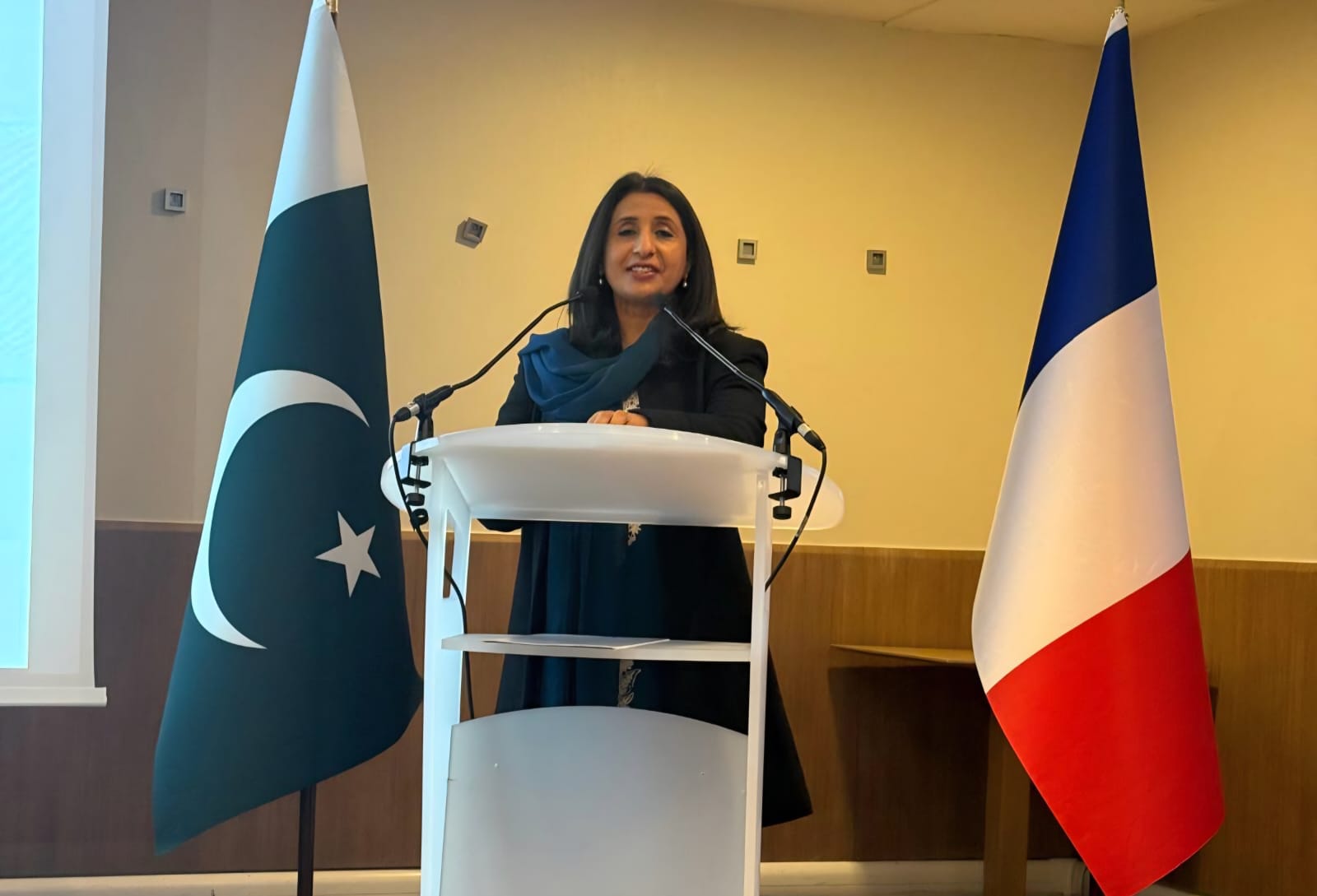
Paris ( Imran Y. CHOUDHRY):- A ‘Pakistan-France Trade and Investment Forum’ was held in Paris today, bringing together government officials, business leaders, industry experts and representatives of trade bodies of both countries.
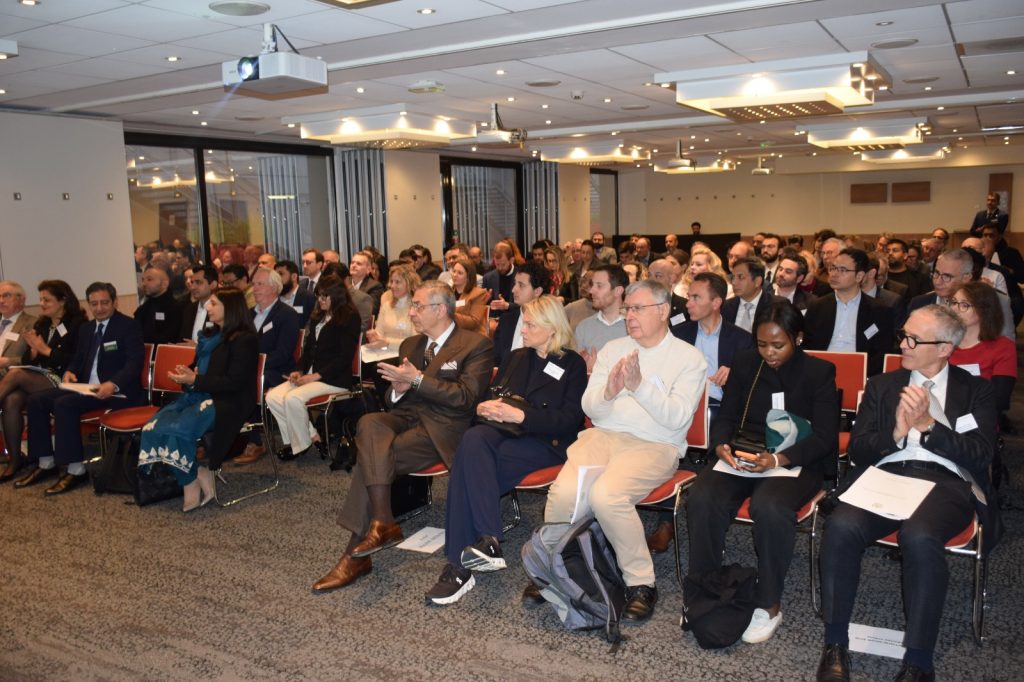
The Forum was held in implementation of an understanding reached between President Emmanuel Macron and Prime Minister Shehbaz Sharif in 2024, to build strong economic partnership between Pakistan and France. The objective of the Forum was to connect businesses, exchange ideas, explore new avenues of bilateral cooperation and showcase Pakistan’s trade and investment potential. It witnessed participation of over seventy French and Pakistani companies from diverse sectors including agriculture, information technology, textiles, energy and tourism.
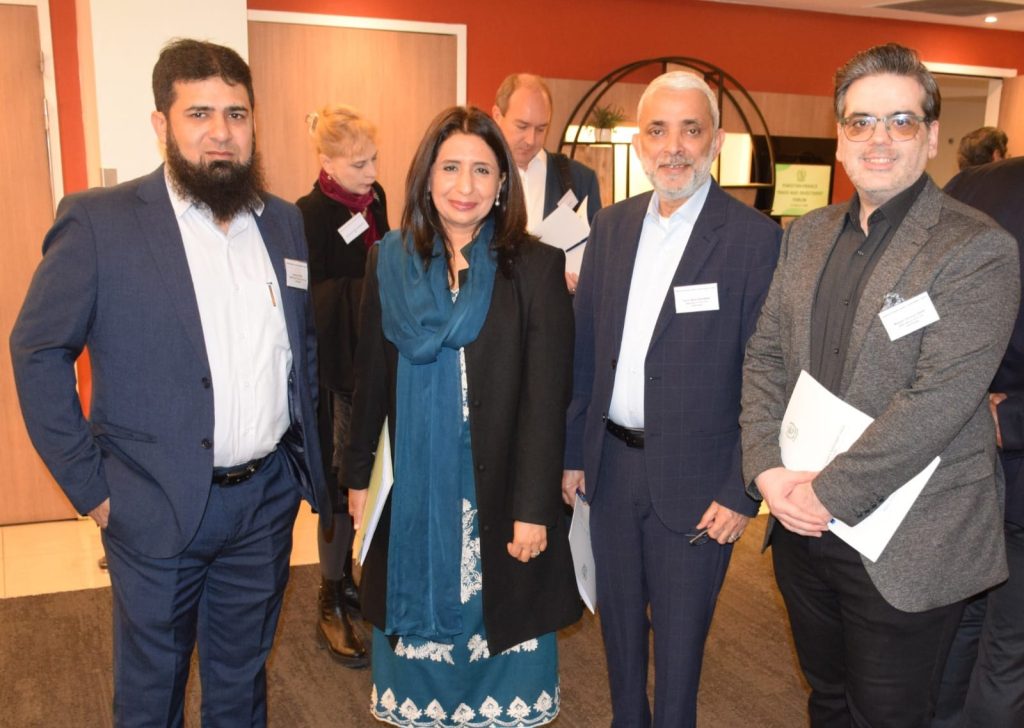
Ambassador Mumtaz Zahra Baloch opened the Business Forum and highlighted Pakistan’s economic growth and potential as an attractive trade partner for France. She outlined investor-focused initiatives and institutional facilitation mechanisms in Pakistan to promote trade and investment. She encouraged Pakistani and French businesses to explore collaborative opportunities, and develop joint ventures and win-win partnerships.
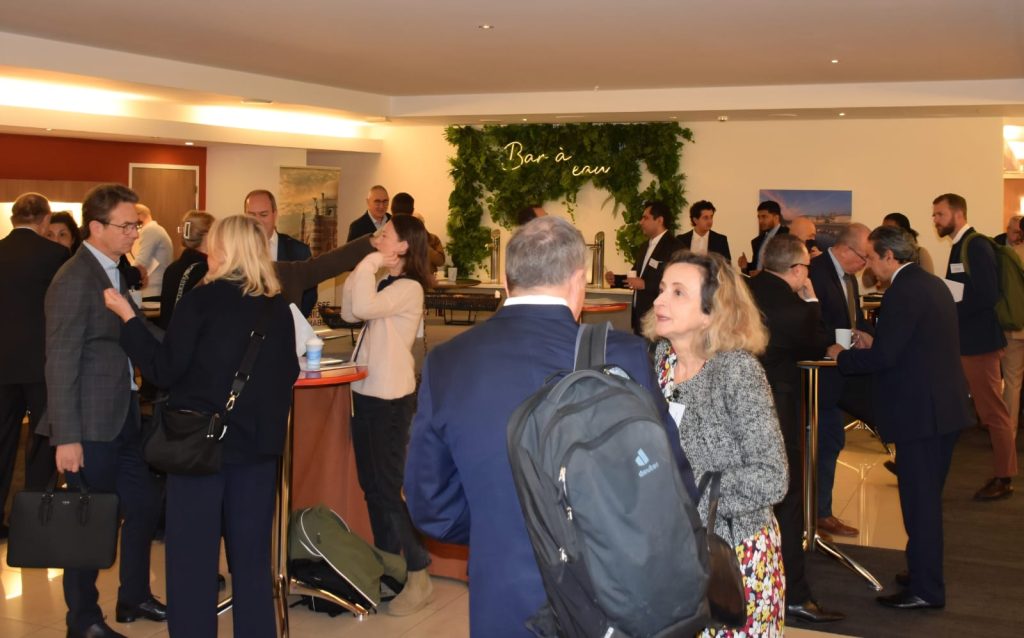
Speakers from the French side included Thierry Pflimlin, Chairman of the France-Pakistan Business Council at MEDEF International, Patricia Glasel, Vice President of the Conseillers du Commerce Extérieur de la France (CCEF) and Ardavan Amir-Aslani. They highlighted the growing momentum in France-Pakistan economic relations; identified the opportunities for trade and investment with Pakistan; and underscored the importance of strengthening private sector linkages to further facilitate bilateral trade and investment.
The plenary session was followed by ‘Breakout and Business-to-Business (B2B)’ sessions to discuss and identify tangible avenues for collaboration in textiles, agriculture and dairy, and Information Technology.
Pakistan News
Dr. Mohammad Faisal Joins Distinguished Quetta Association Event in London Gathering Reinforces Shared Military Heritage of Pakistan and Britain
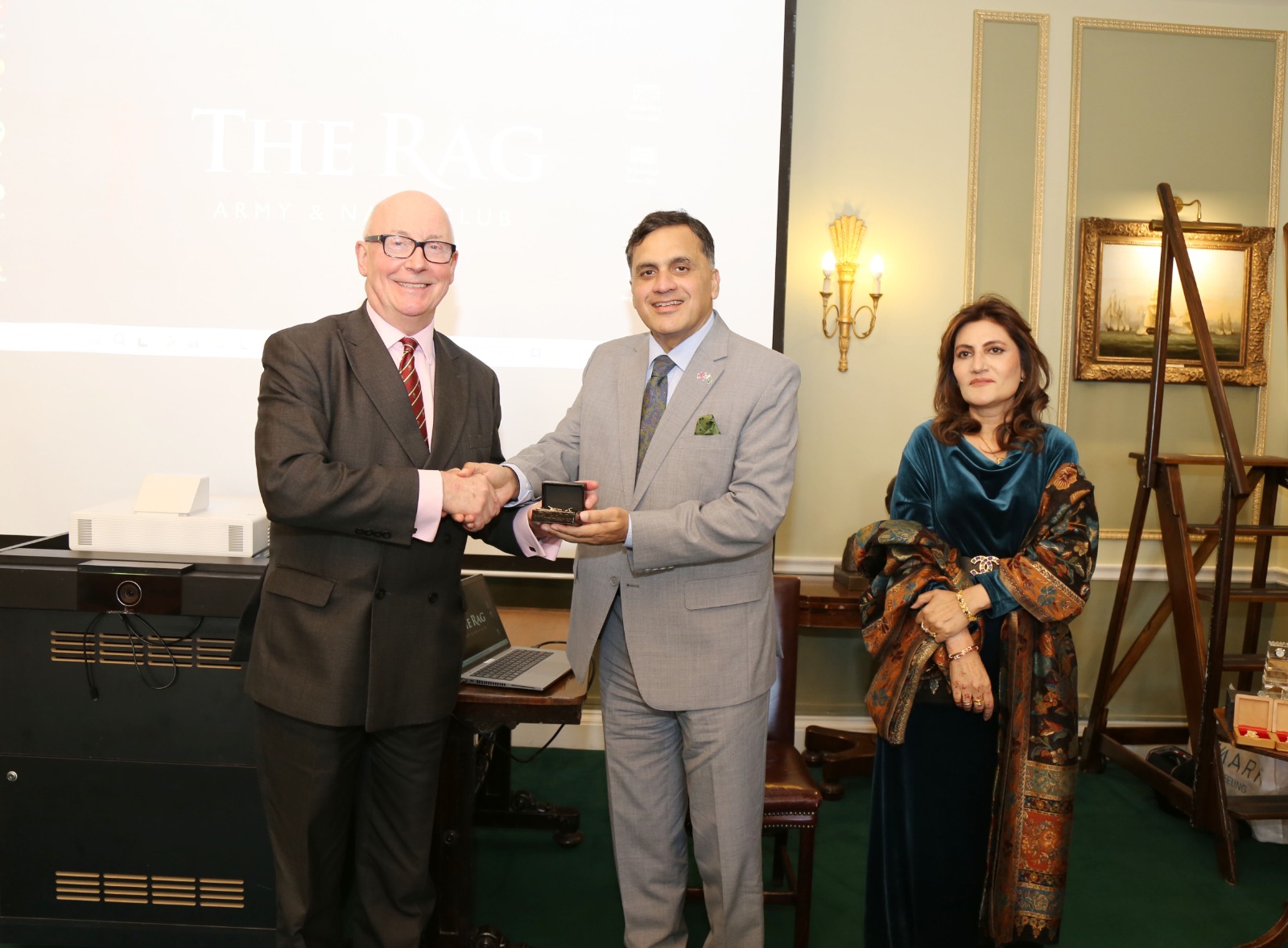
High Commissioner @DrMFaisal and his spouse @drsarahnaeem2 attended, as guests of honor, a distinguished gathering of the Quetta Association at the Army & Navy Club, London.
Military Officers from the Defence Wing of Pakistan High Commission, London, with their families also attended.
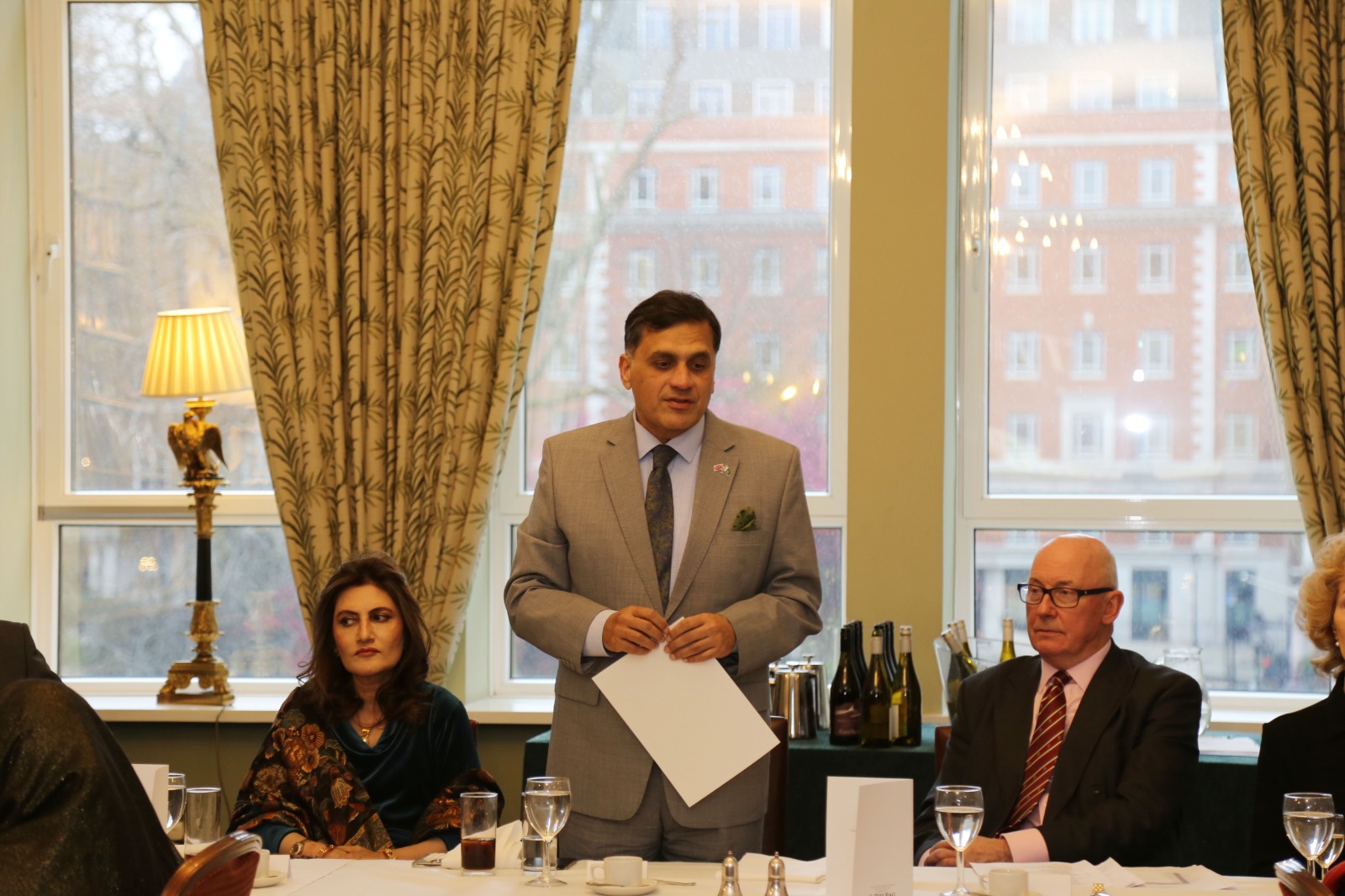
Quetta Association brings together British officers who graduated from the prestigious Command & Staff College, Quetta, Pakistan. The institution has produced outstanding military leaders, including British Field Marshals Sir Claude Auchinleck and Sir William Slim, whose leadership during the Second World War remains widely respected. Field Marshal Syed Asim Munir is also graduate of this prestigious institution.
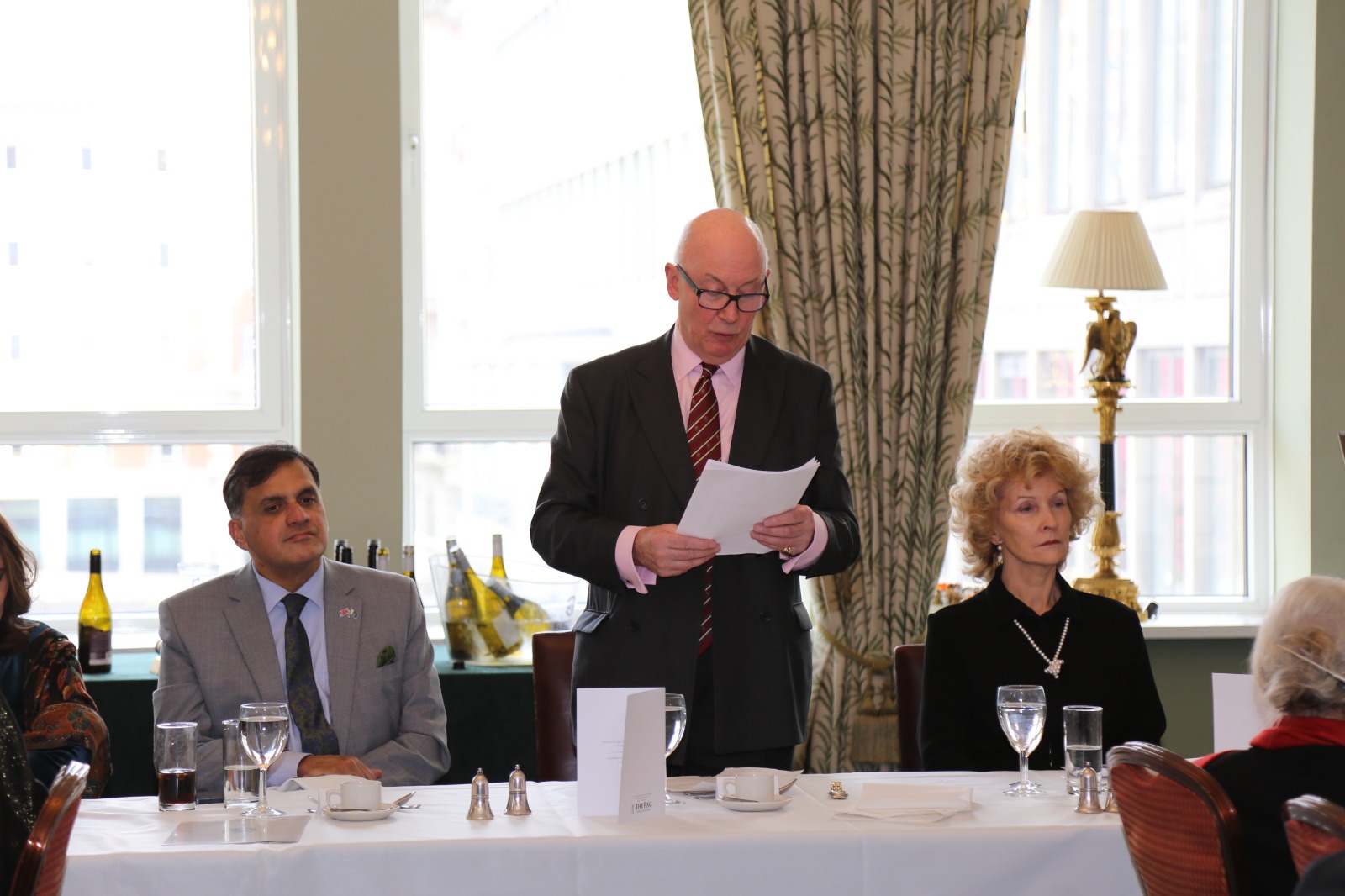
The High Commissioner appreciated the annual gathering that underscored the Association’s enduring role as a vital bridge linking the British Army and Pakistan Army through shared professional heritage and camaraderie.
Decorated British military officers and their families paid glowing tributes while referring to the hospitality accorded by Pakistan during their stay in Quetta.
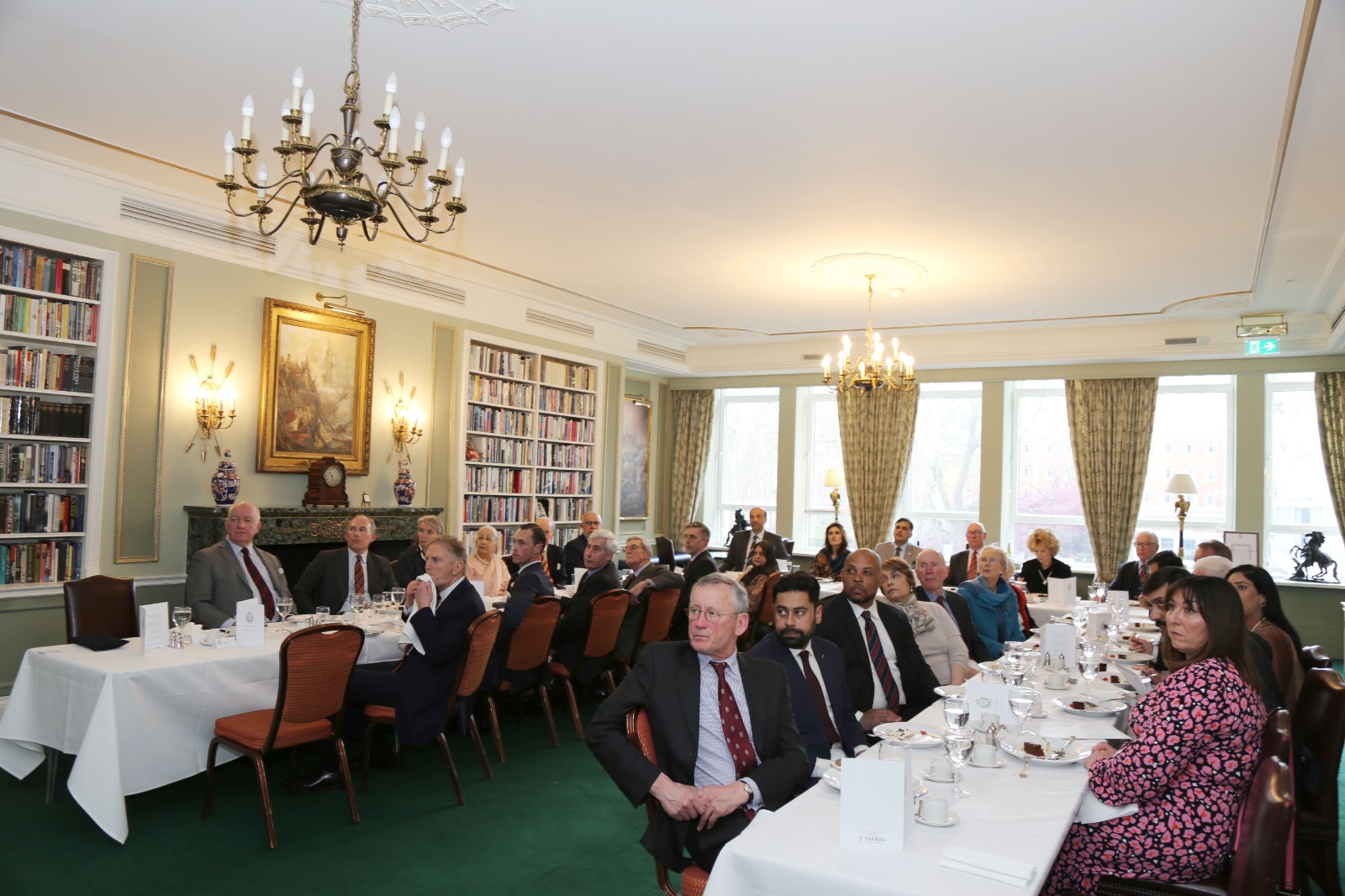
Graduate senior British Officers present at the gathering included Lt. Gen. Sir Alistair Irwin KCB CBE (1980) and Maj. Gen. Seumus Kerr CBE (1985).
Mementos were exchanged between the British officers and officers of @PakistaninUK.
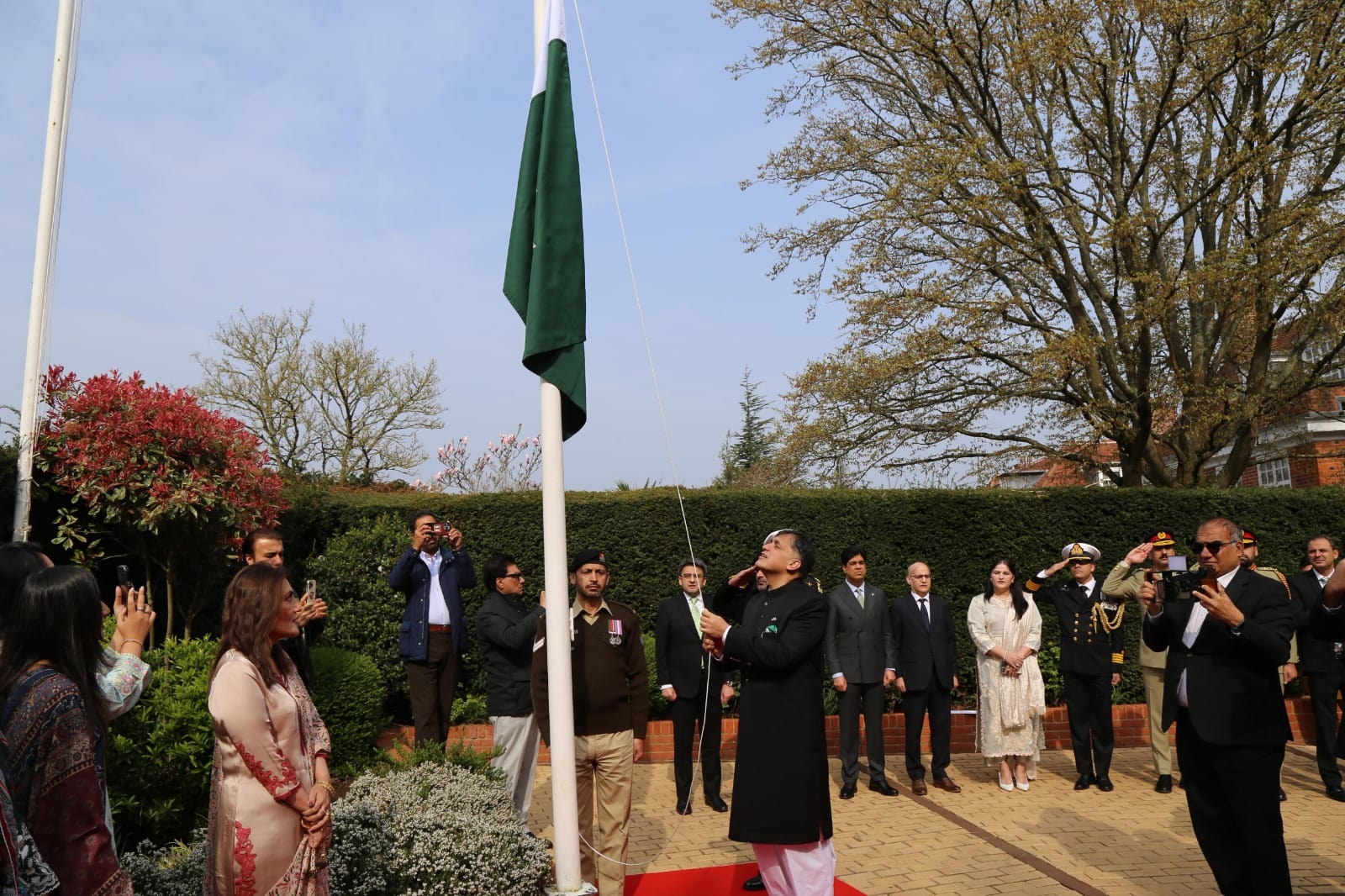
In a simple and dignified ceremony held at Pakistan House, London, the High Commissioner of Pakistan to UK Dr. Mohammad Faisal raised the Pakistan Flag on the occasion of Pakistan Day.
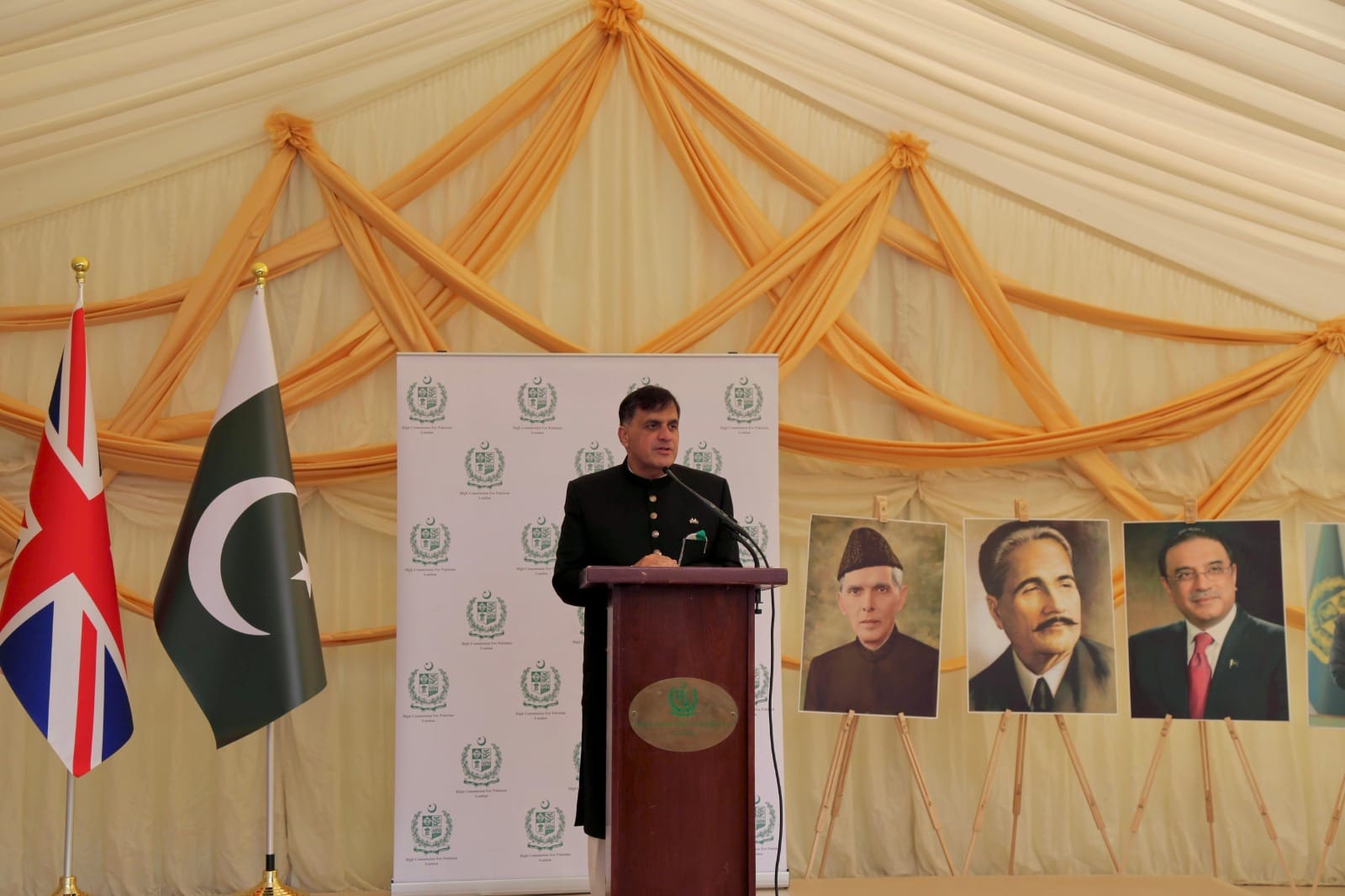
The ceremony was attended by Officials of the High Commission, British – Pakistanis and Media representatives.
Messages of the President, the Prime Minister and Deputy Prime Minister / Foreign Minister were read out.
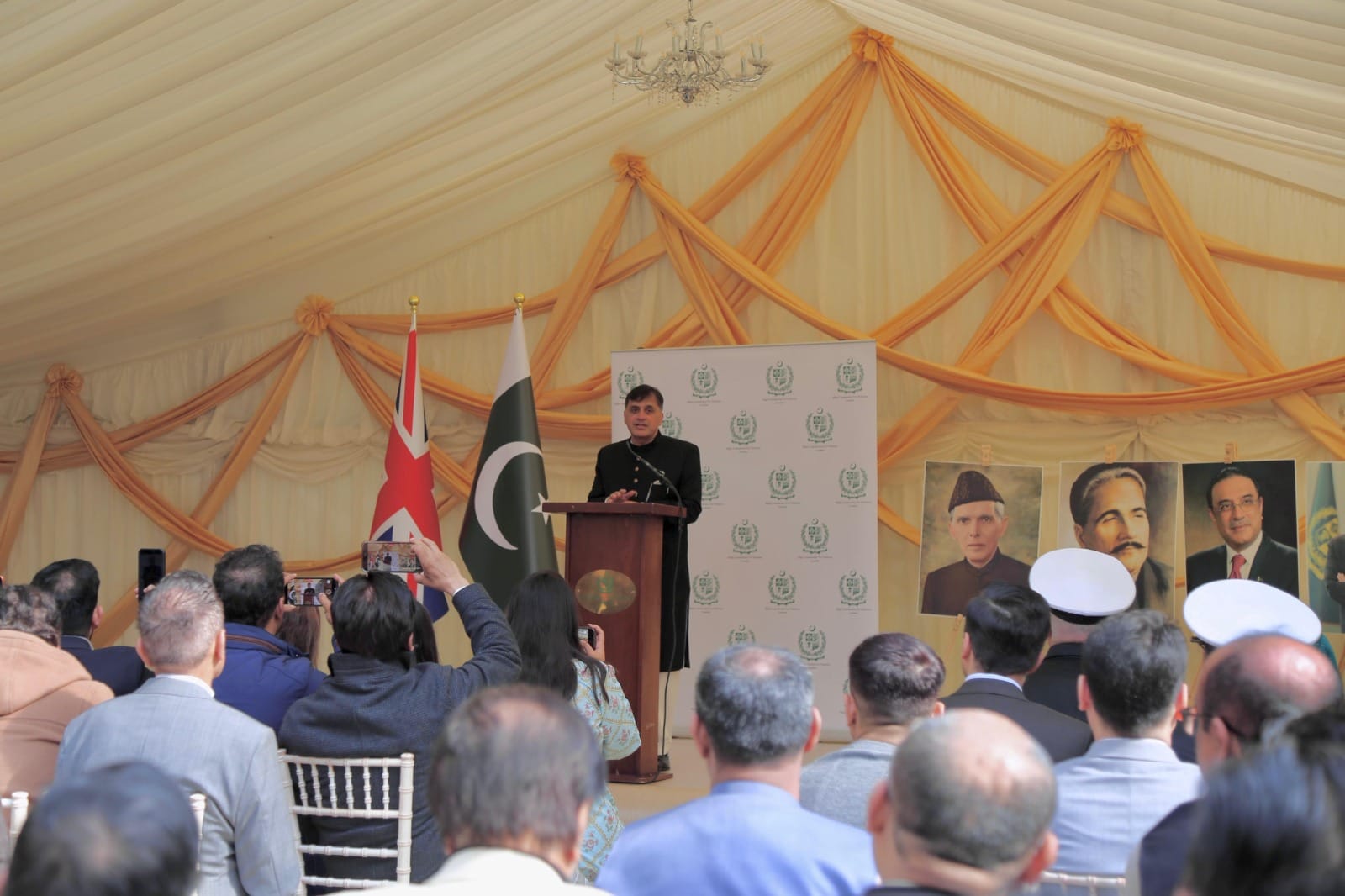
In his keynote address, the High Commissioner said that Pakistan Day was a tribute to our founding fathers who united the Muslims of Indian sub-continent where they could live independently as a Nation and live according to their customs & traditions.
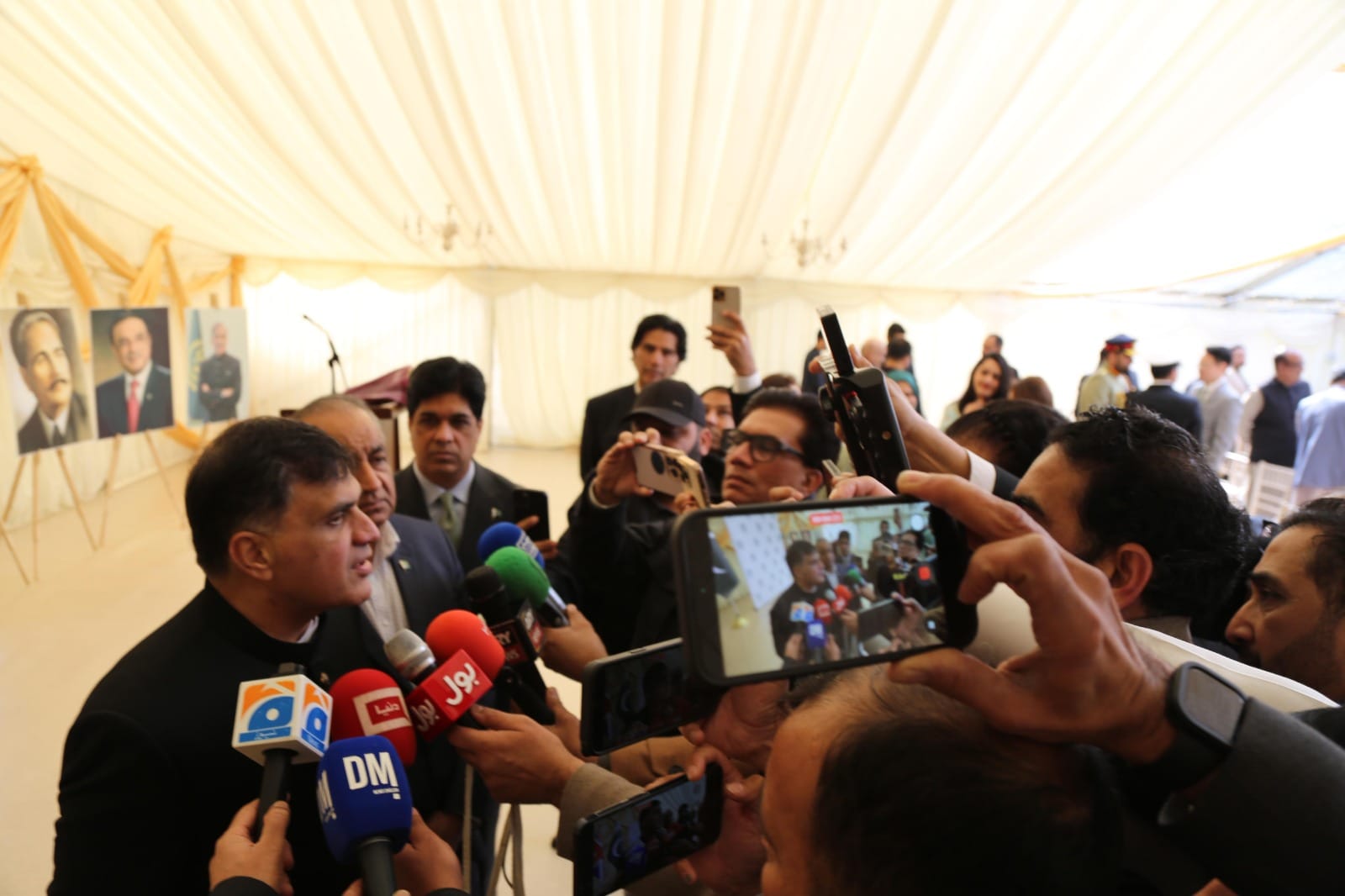
Dr. Faisal stated that Pakistan had always professed peace and stability in the region. However, Pakistan will not tolerate any aggression from neighbouring countries.
The High Commissioner said that Pakistani nation, despite the difficulties, remains resilient and demonstrates courage & perseverance.
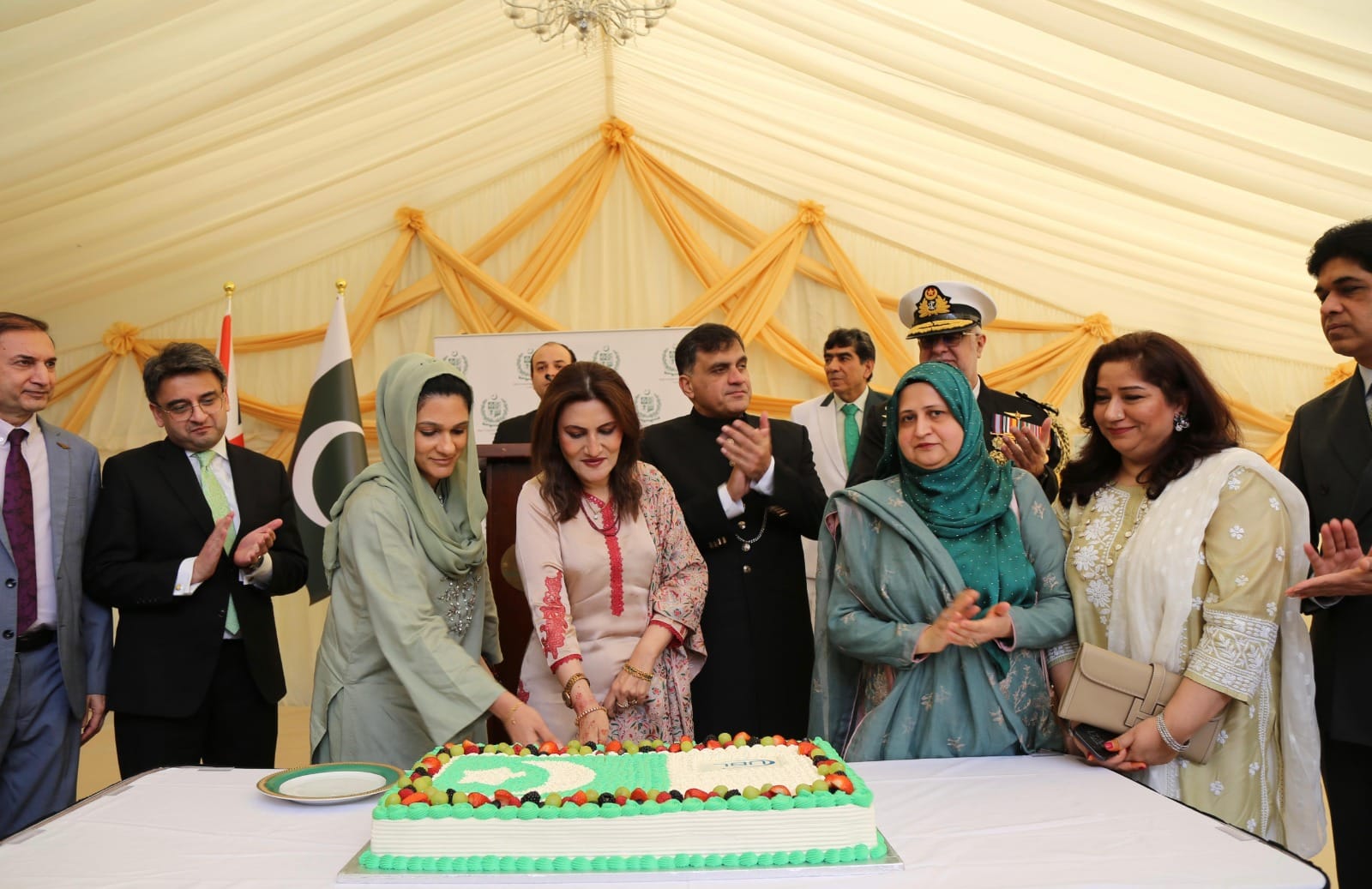
Dr. Mohammad Faisal stated that, in line with the instructions of the Prime Minister, the Deputy Prime Minister / Foreign Minister and the Federal Cabinet, Pakistan High Commission London is implementing strict austerity measures. However, these measures will not affect the performance & working of the High Commission.
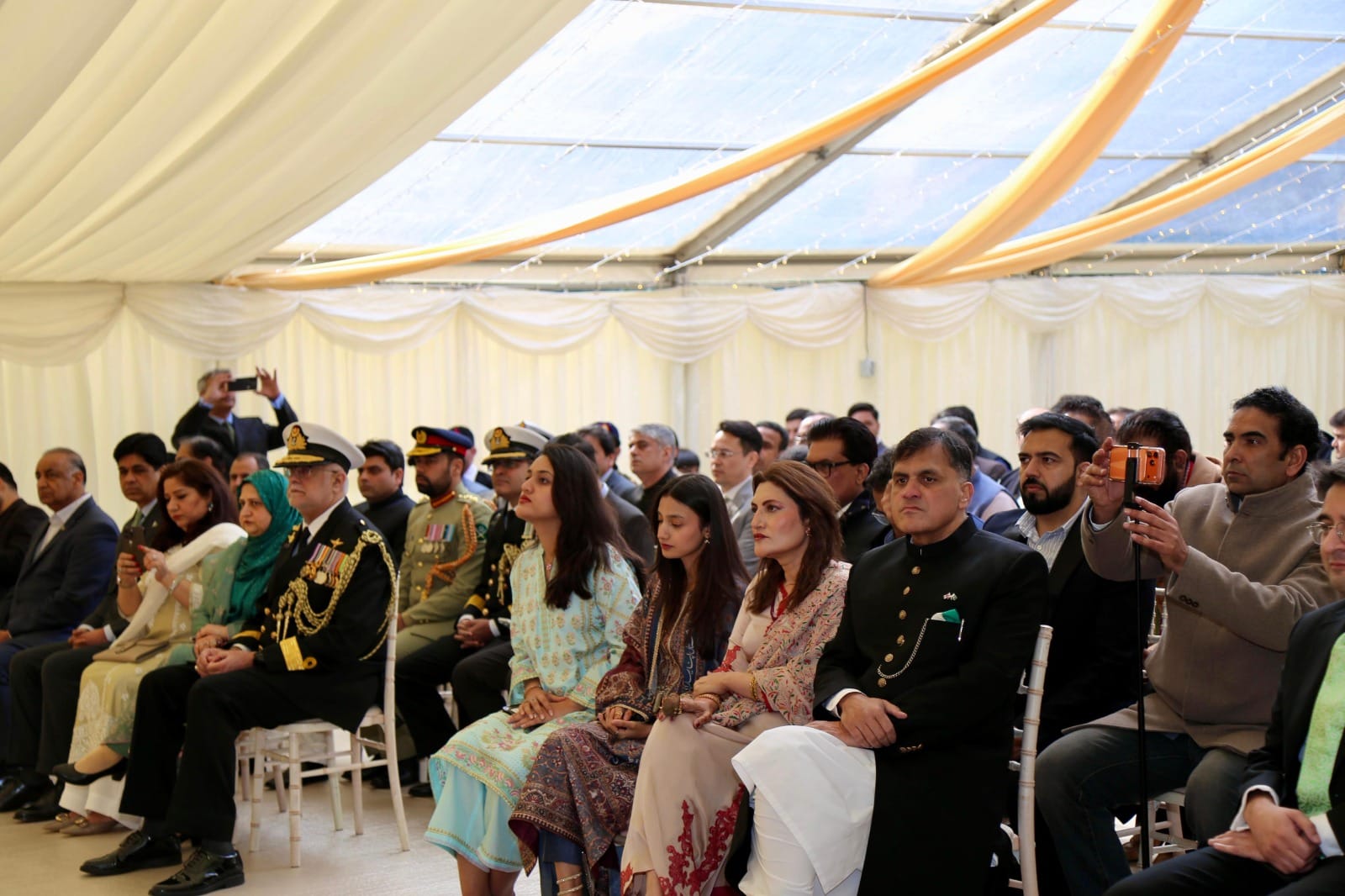
He acknowledged the remarkable contributions of Pakistani diaspora in UK and their extraordinary performance in various fields. He said that their achievements are a source of immense pride for Pakistan.
The High Commissioner expressed solidarity with the people of Indian Illegally Occupied Jammu and Kashmir and committed to continue diplomatic, moral and political support for their right to self determination under UN Resolutions.
London
23rd March, 2026


How the World Is Forced to Fund the Iran War

Scholars Urge UN to Protect Iran’s Scientific Sites Amid Airstrikes Global Academics Warn Attacks Threaten Research, Health, and Civilian Safety

How Iran Humiliated U.S. and Israeli Power


-

 Europe News1 year ago
Chaos and unproven theories surround Tates’ release from Romania
-

 American News1 year ago
Trump expands exemptions from Canada and Mexico tariffs
-

 American News1 year ago
Trump Expels Zelensky from the White House
-

 Pakistan News9 months ago
Comprehensive Analysis Report-The Faranian National Conference on Maritime Affairs-By Kashif Firaz Ahmed
-

 American News1 year ago
Zelensky bruised but upbeat after diplomatic whirlwind
-

 Art & Culture1 year ago
The Indian film showing the bride’s ‘humiliation’ in arranged marriage
-

 Art & Culture1 year ago
International Agriculture Exhibition held in Paris
-

 Pakistan News1 year ago
Can Pakistan be a Hard State?