Connect with us

Pakistan News

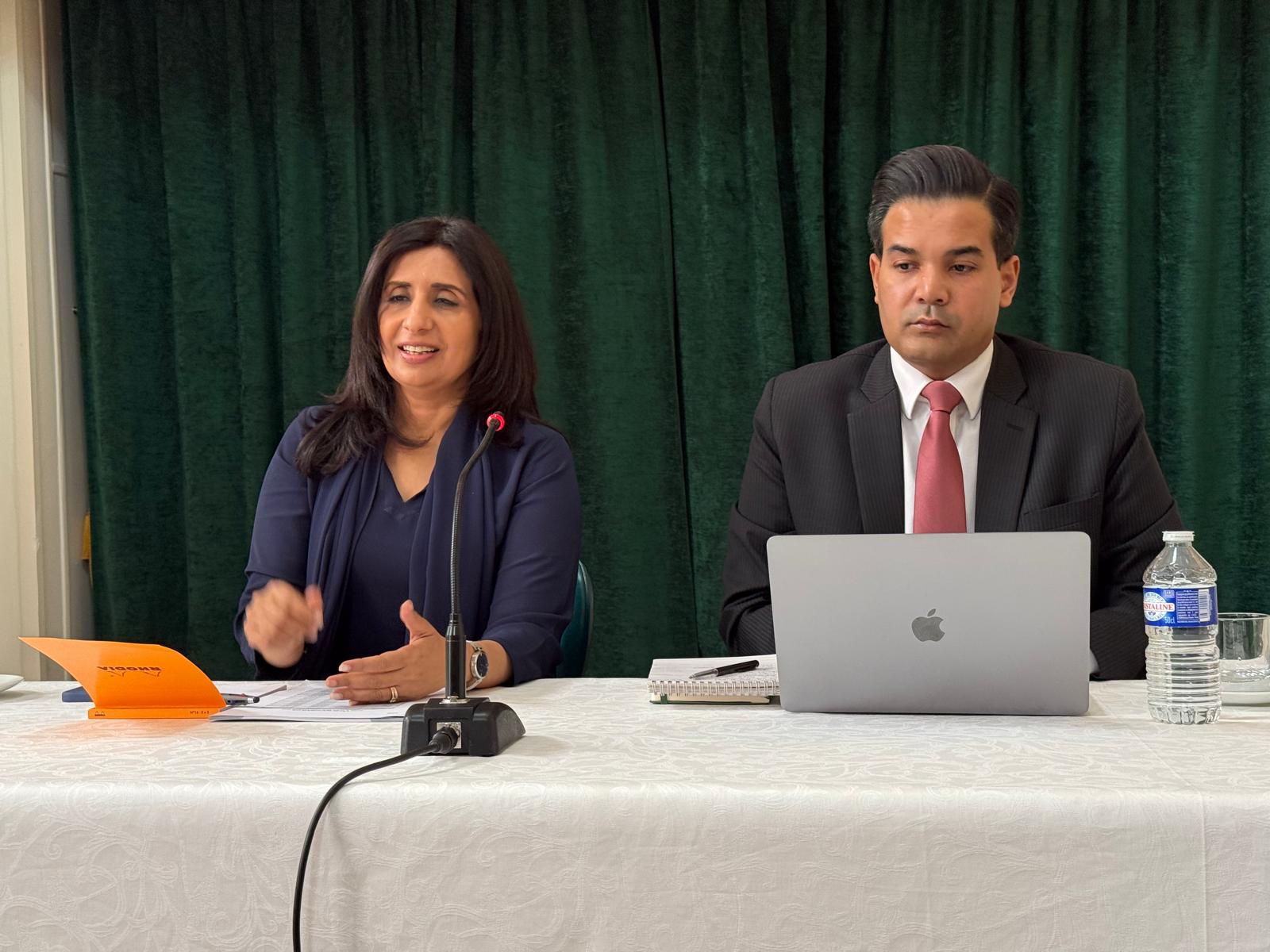
Pakistani Delegates of the Model United Nations International Visited the Embassy

Published

on

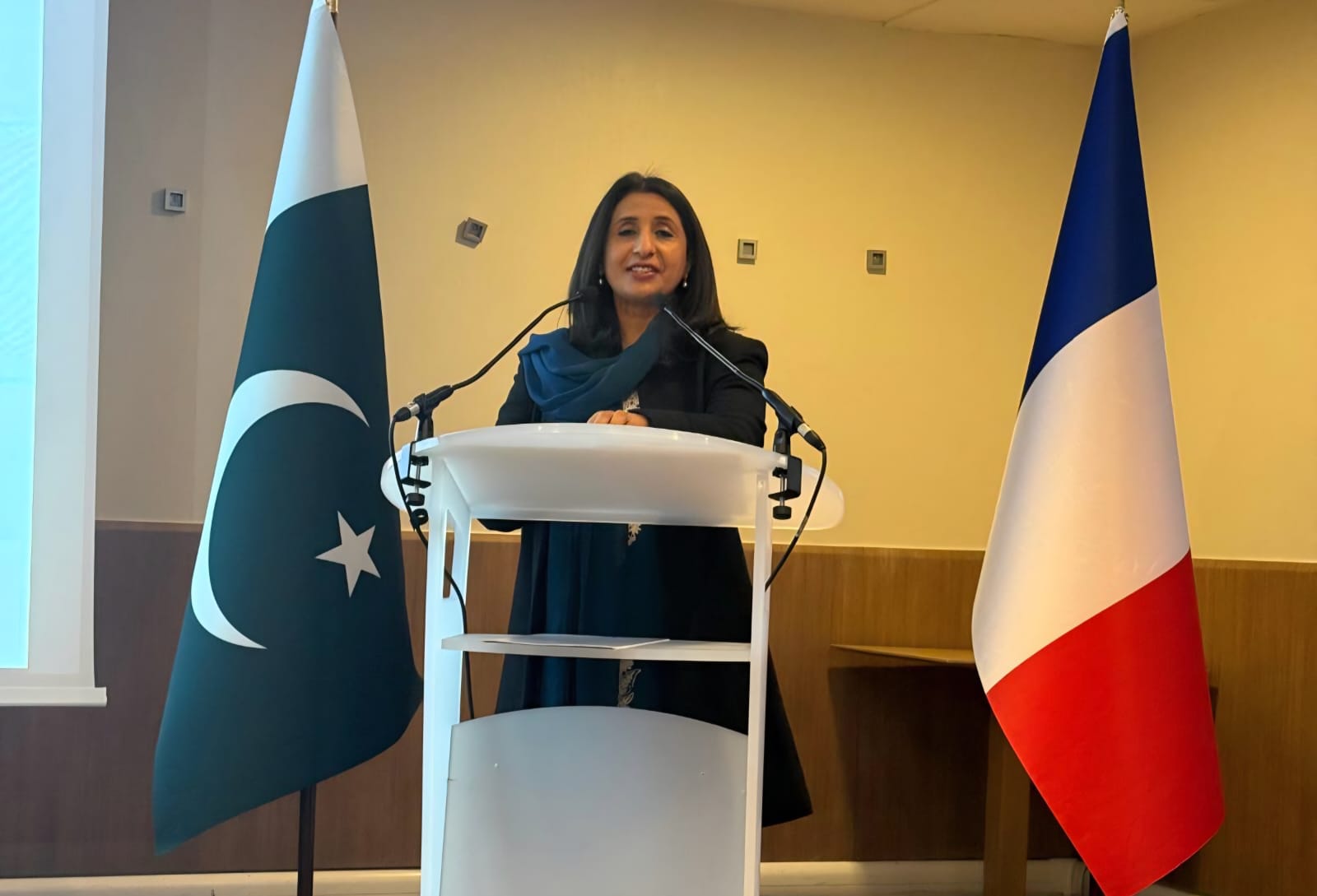
Paris (Imran Y. CHOUDHRY):- A group of Pakistani delegates of the Model United Nations (MUN) International being held in Paris visited the Embassy today for an interactive briefing session. They were briefed on Pakistan’s priorities in international organizations especially those based in Paris.
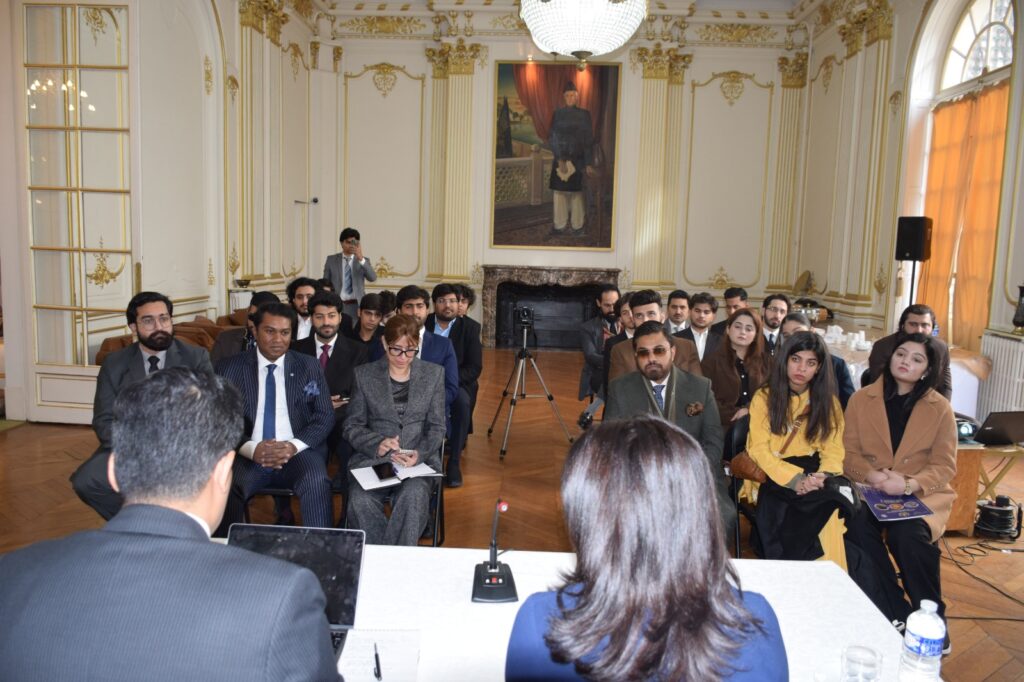
Addressing the participants, Ambassador Madam Mumtaz Zahra Baloch underscored Pakistan’s commitment to multilateralism, international law, and peaceful settlement of disputes.
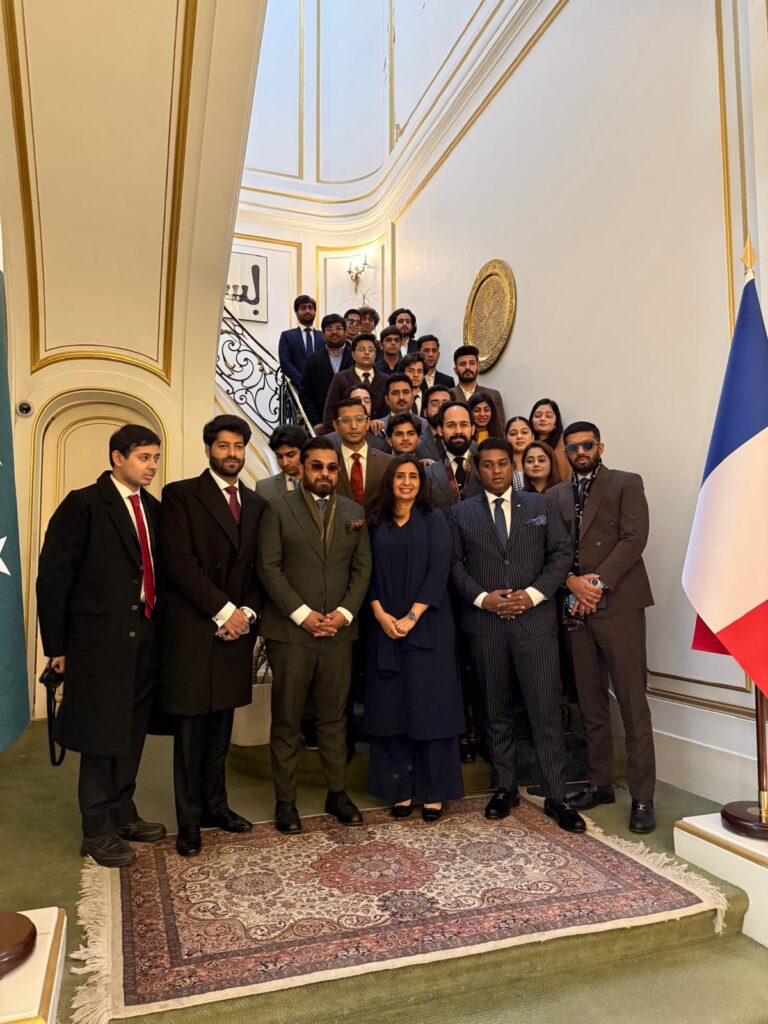
She also briefed them on the constructive role played by Pakistan in advancing the mandate of UNESCO during its tenure as a Vice-Chair of the Executive Board (2023–2025) and championing the priorities of developing countries.

Pakistan News

FIA’s arbitrariness led to many people, including the son of the press attaché of the French Embassy in Islamabad, being offloaded.

Published

on

By

Paris (Imran Y. CHOUDHRY );- Is there a law of the jungle in Pakistan? Is there no guardian for the people? Have FIA officials become uniformed goons? These are the questions that the people are asking.

FIA’s alleged arbitrariness at Islamabad Airport,
Many people including the French national son of the press attaché of the French Embassy in Islamabad were offloaded,

According to the details, FIA officials removed Muhammad Asghar Syed, a young man with dual citizenship (Pakistani and French), who is 28 years old, from the flight without any legal justification. His only “fault” was his “questionable age”, according to the officials, although all his travel and legal documents were complete and correct. The father of the young man who was offloaded is a press attaché at the French Embassy in Islamabad. The affected family says that the FIA officials at Pakistani airports are playing with the future of the youth by considering themselves above all laws.

In addition, on December 25, 2025, the FIA officials illegally offloaded Umrah pilgrims traveling from Islamabad to Dammam (Saudi Arabia) via an Air Sial flight. According to the affected people, two other Umrah pilgrims from the same group were also offloaded using the excuse of being underage, due to which their tickets were lost and they were deprived of the pilgrimage to Medina and Mecca. The family says that this move is not only a violation of religious freedom but also a question mark on the fundamental rights of citizens.

The affected families said that due to this irresponsible behavior, they had to face severe mental anguish while also suffering huge financial losses.

Many people have been offloaded before on various pretexts, many of whom were going for jobs or studies or for the tourism.

The head of a one family protested in strong words and said, “There is no guardian in this country, the law of the jungle is in force, no one is asking questions. FIA officials have obstructed our religious duty without authority and without law. And they let those who bribe them go.

The affected families have demanded that these incidents be investigated transparently, that the strictest action be taken against the responsible officials and that the financial and mental losses caused to the victims be compensated.

Continue Reading

Pakistan News

Field Marshal’s Strategic Offer to the Muslim World

Published

on

By

Paris (Imran Y. CHOUDHRY) :- Former Press Secretary to the President, Former Press Minister to the Embassy of Pakistan to France, Former MD, SRBC Mr. Qamar Bashir analysis : During his recent visit to Libya, Pakistan’s Field Marshal addressed a high-level gathering that included senior Libyan leaders and top military officials. What he presented was not a routine diplomatic message but a strategic doctrine shaped by Pakistan’s own experience of war, sanctions, and pressure. He reminded the audience that Pakistan learned long ago that depending on foreign military technology becomes dangerous when the nation faces existential threat. In moments of conflict, supplier nations often convert technology into leverage—delaying or freezing spare parts, blocking software updates, halting ammunition supply, or suspending technical support. When the survival of the nation hangs in the balance, such dependency can turn fatal. That is why Pakistan deliberately chose to minimize reliance on imported technology and began developing its own air defence systems, land warfare platforms, naval capabilities, cyber and electronic warfare tools, and—above all—independent and secure communication systems. This was a long and difficult journey, born not of luxury but of necessity.
The Field Marshal explained that this strategy was tested decisively during the twelve-day confrontation with India, when Pakistan’s integrated cyber, communications, missile defence and air combat systems were exposed to real battlefield stress. According to him, Pakistan did not lose a single aircraft, while neutralizing India’s most advanced platforms including Rafale, MiG-29 and Tejas fighters. Indian command-and-control networks were disrupted by cyber operations. Even India’s S-400 missile defence system failed to deliver the deterrence New Delhi expected. These developments, he said, proved that Pakistan had achieved technological parity—and even superiority in certain domains—despite facing a much larger and wealthier adversary.
But what turned his address into a historic moment was not the recounting of Pakistan’s battlefield resilience; it was the offer that followed. The Field Marshal declared that Pakistan is now ready to share its indigenous defence technologies with Muslim countries who seek strategic autonomy, self-respect, and credible deterrence. These technologies, already tested in war, will not be used as political leverage but as a means to strengthen the collective defence of the Muslim world. In his most emphatic words, he advised Muslim leaders: “Ensure your armed forces are strong enough to protect your sovereignty, your dignity, and your independence. Without that strength, no country can ever truly claim to be independent.”
This message reverberates far beyond South Asia. In the Middle East, nearly every state hosts U.S. military bases, finances their operations, and relies heavily on Western defence umbrellas. Yet recent conflicts—such as the Israel-Hamas war and the Israel-Iran escalation—revealed an uncomfortable truth. These military installations, systems and manpower were not mobilized to defend the host nations. Instead, they were activated primarily to shield Israel. The wealthy Gulf states therefore face a paradox: they pay for foreign troops on their soil, yet remain strategically exposed when their national interests diverge from those of Washington.
In this context, Pakistan’s offer becomes transformative. Saudi Arabia’s expanding defence partnership with Pakistan reflects a strategic awakening. A combination of Pakistani technology, combat experience, and human capital—supported by Middle Eastern financial strength—could reshape the regional security order. If replicated across other Muslim states, this framework could eliminate the perceived need to host foreign military bases as guardians of sovereignty. Equally important, jointly-developed or indigenous systems would remove the external leverage that often appears during crises: no blocked spare parts, no sudden software restrictions, no political strings attached at the moment of war.
It is inevitable that such a shift would alarm existing power centres. Israel would see any dilution of its technological edge as a direct challenge. The United States, Israel’s principal guarantor, would likely apply diplomatic and economic pressure to prevent Muslim states from seeking autonomous defence solutions. There will be narratives claiming Pakistan’s capabilities are exaggerated, or dismissing its industrial scale as inferior. Yet, as the Field Marshal implied, credibility is measured on the battlefield—not in marketing brochures. Pakistan’s systems have already faced real-world combat and performed under fire.
The argument also rests on a deeper reality: technology evolves fastest where capital and experience converge. With Gulf investment, Pakistan’s defence industries can rapidly innovate, expand and customize systems suited to regional threat environments. For Pakistan itself, the benefits would be equally meaningful. Defence exports would generate much-needed foreign exchange, strengthen geopolitical influence, and position Pakistan as a provider—not merely a consumer—of security within the Muslim world.
Still, the Field Marshal acknowledged that breaking existing dependencies will not be easy. Many Muslim states are deeply embedded in Western defence ecosystems, bound by treaties, procurement pipelines and political expectations. Escaping that orbit will take courage, foresight and coordination. But strategic independence begins with the first decisive step. Pakistan’s offer represents that moment.
From a broader perspective, this proposal could finally allow Muslim nations to stand on their own feet in matters of defence. It could create an ecosystem where capability replaces dependency, dignity replaces insecurity, and sovereignty becomes more than a symbolic word. Pakistan is not promising miracles. Rather, it is offering tested technology, operational knowledge, and a philosophy of self-reliance, backed by the lived experience of facing a larger, wealthier and well-equipped adversary—and surviving without external rescue.
Of course, powerful forces will resist this change. Israel and its allies will exert pressure. Some Muslim leaders will hesitate. There may be attempts at sabotage and diplomatic intimidation. But the Field Marshal’s words cut through the doubt: true independence is impossible without strong, sovereign, and self-reliant armed forces.
Pakistan’s outreach is therefore more than a defence export initiative. It is a strategic doctrine—one that seeks to align technology, sovereignty, and dignity across the Muslim world. If embraced, it could mark the beginning of a new era in which Muslim nations no longer rely on others to guarantee their security, nor fear political manipulation at the moment of crisis. The path ahead is difficult, but history has always favored nations that choose self-reliance over dependency, courage over caution, and dignity over fear. For the Muslim world, this may be the first genuine opportunity in generations to defend itself on its own terms—and to respond to aggression with confidence and capability rather than hesitation and dependence.

Continue Reading

Pakistan News

Rubio’s Gaza Signal and Pakistan’s Strategic Crossroads

Published

on

By

Paris (Imran Y. CHOUDHRY) :- Former Press Secretary to the President, Former Press Minister to the Embassy of Pakistan to France, Former MD, SRBC Mr. Qamar Bashir analysis : When US Secretary of State Marco Rubio publicly acknowledged Pakistan’s willingness to “consider being part” of the proposed International Stabilisation Force (ISF) for Gaza, he did more than offer diplomatic gratitude. He placed Pakistan—quietly but unmistakably—at the center of the most sensitive post-war experiment in the Middle East. Rubio’s words, carefully hedged yet pointed, signaled that Washington sees Pakistan not as a peripheral participant, but as a key pillar of a force designed to oversee Gaza’s transition from devastation to an uncertain peace.
For Islamabad, this moment marks a profound strategic crossroads. Participation in the ISF may promise international relevance, economic relief, and renewed favor in Washington. Yet it also carries the risk of deep domestic backlash, ideological rupture, and entanglement in a conflict where the lines between peacekeeping and coercion are dangerously blurred.
At the heart of the issue lies the mandate itself. President Donald Trump’s 20-point Gaza peace plan—endorsed by the UN Security Council—envisions an international force, composed largely of troops from Muslim-majority countries, stepping in after Israel’s withdrawal to oversee stabilisation, reconstruction, and security. Officially, the ISF is framed as a neutral mechanism to prevent chaos and facilitate recovery. In practice, however, its most controversial task is implicit: the disarmament of Hamas and other Palestinian resistance groups.
This is where Pakistan’s dilemma begins. Unlike Israel, which under the plan is required to vacate Gaza, or Western powers reluctant to deploy ground troops, Pakistan would enter Gaza with boots on the ground and credibility among Muslim populations. That very credibility is what makes Islamabad attractive to Washington—and simultaneously vulnerable at home. A Pakistani soldier confronting a Palestinian fighter will not be seen as a neutral peacekeeper by Pakistani public opinion; he will be seen, fairly or not, as enforcing a US-backed order against fellow Muslims.
Field Marshal Asim Munir, now the most powerful military figure Pakistan has seen in decades, stands at the center of this storm. Recently elevated to oversee all three armed services, granted an extension until 2030, and shielded by constitutional immunity, Munir possesses unparalleled authority to take strategic risks. His close personal rapport with President Trump—symbolized by an unprecedented White House lunch without civilian officials—has restored trust between Washington and Rawalpindi after years of strain.
But power does not eliminate consequences. It merely concentrates responsibility. Supporters of participation argue that Pakistan’s military is uniquely qualified for the mission. It is battle-hardened, experienced in counterinsurgency, and among the world’s largest contributors to UN peacekeeping operations. Financially, such missions bring dollar-denominated compensation, easing pressure on a struggling economy and reinforcing an institutional model the Pakistani military knows well. Diplomatically, participation could elevate Pakistan as a responsible global actor and secure US investment and security cooperation at a critical time.
Yet these gains are contingent—and fragile. The most glaring weakness in the ISF proposal is mandate ambiguity. Peacekeeping traditionally rests on consent, neutrality, and limited use of force. Disarmament does not. If Hamas and other resistance factions refuse to surrender weapons voluntarily—as they have already signaled—then enforcement becomes unavoidable. In such a scenario, Pakistani troops would not merely stand between factions; they would become a party to coercion.
Compounding this is the absence of reciprocal enforcement mechanisms. The peace plan offers no clarity on what happens if Israel fails to fully withdraw from designated areas or violates post-withdrawal commitments. There is no indication that the ISF would be empowered to confront Israeli forces. The result is a one-sided enforcement architecture: Palestinian groups disarmed under international supervision, while Israel operates beyond the ISF’s reach. For Pakistan, this asymmetry is politically toxic.
At home, the risks multiply. Pakistan’s Islamist parties—particularly groups with strong street power such as JUI factions and Jamaat-e-Islami—are deeply opposed to US and Israeli policies in Palestine. Even with bans, arrests, and crackdowns, their ideological reach remains intact. Any perception that Pakistani soldiers are killing or detaining Palestinians—even in Gaza, even under UN authorization—could ignite nationwide protests, destabilizing cities and overwhelming civil order.
The backlash would not be confined to religious parties. Large segments of the public, already alienated by domestic political engineering and military dominance, would frame ISF participation as another example of Pakistan’s security establishment acting without popular consent. The absence of parliamentary debate or a national consensus would magnify this perception. In a country where legitimacy increasingly comes from the street rather than the chamber, this is a perilous omission.
There is also a quieter but no less serious concern: morale within the ranks. Pakistani soldiers are drawn from a society that overwhelmingly sympathizes with the Palestinian cause. Asking them to enforce disarmament against Palestinian fighters—while Israeli forces face no comparable restraint—could strain discipline and cohesion. Militaries can obey orders, but they are not immune to moral dissonance.
Internationally, Pakistan faces the risk of strategic isolation if the mission falters. Gaza remains volatile, traumatized, and heavily armed. If the ISF encounters resistance, sustains casualties, or becomes mired in urban conflict, global enthusiasm may fade. Major powers can distance themselves; troops on the ground cannot. Pakistan could find itself trapped in an open-ended deployment with no clear exit strategy, absorbing blame while others retreat to diplomatic safety.
Yet opportunities do exist—if handled with exceptional care. Pakistan could leverage its importance to insist on strict limitations: a mandate centered on civilian protection, humanitarian access, and policing ceasefire lines, explicitly excluding forced disarmament. It could demand written guarantees on rules of engagement, funding, timelines, and collective Muslim participation to avoid unilateral exposure. Properly negotiated, participation could position Pakistan as a mediator rather than an enforcer.
But such outcomes require transparency, parliamentary involvement, and a willingness to say no if red lines are crossed. The fundamental question is not whether Pakistan can participate in the Gaza stabilisation force. It is whether it can afford to do so on the terms currently envisioned.
Without clarity, consensus, and balance, ISF participation risks becoming a strategic trap: modest diplomatic gains purchased at the cost of domestic instability, moral authority, and long-term security. Field Marshal Munir’s unprecedented power may allow him to make the decision—but it will not shield Pakistan from its consequences.
History offers a cautionary lesson. Nations that enter foreign conflicts under vague mandates often discover too late that stabilisation is easier to promise than to deliver. For Pakistan, Gaza is not merely a distant theater. It is a mirror reflecting the tension between power and legitimacy, ambition and restraint. How Islamabad responds will shape not only its role in the Middle East, but the fragile equilibrium at home.
In this moment, strategic prudence—not proximity to power—may prove the ultimate test of leadership.

Continue Reading

Trending