
Pakistan News
Jaffar Express departs for Peshawar after 14 days suspension


After a 14-day suspension, the Jaffar Express has resumed operations, departing from Quetta for Peshawar under heightened security measures.
According to reports, the train—previously targeted in a terrorist attack—carried 430 passengers as it set off on its journey. Member of the National Assembly (MNA) Jamal Shah Kakar, affiliated with the Pakistan Muslim League-Nawaz (PML-N), officially dispatched the train.
Strict security arrangements were in place at Quetta Railway Station during the departure, with authorities reinforcing safety measures along the railway track. Speaking to the media, MNA Kakar assured that the federal government remains committed to improving security and has already restored the Bolan Mail as a daily service.
He expressed optimism about the security situation in Quetta and across Balochistan, stating that normalcy would soon be restored.
Taken From Daily Pakistan






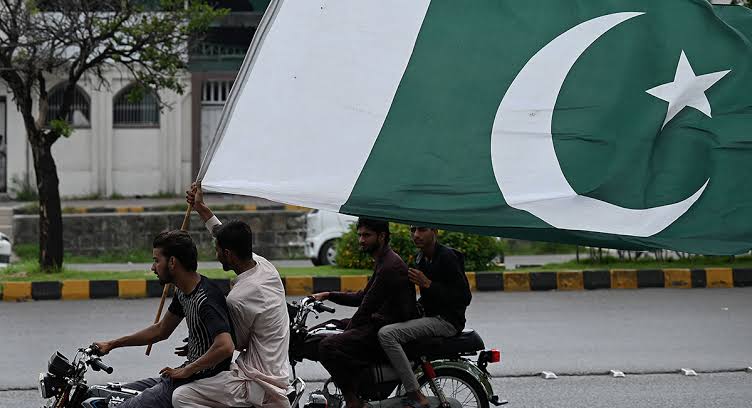
Paris (Imran Y. CHOUDHRY) :- Former Press Secretary to the President, Former Press Minister to the Embassy of Pakistan to France, Former MD, SRBC Mr. Qamar Bashir analysis : While Pakistan wrestles with political confrontation at home, its diplomacy is opening doors abroad. From the Badr memorandum signed in Doha to the earlier Mecca defence agreement, and from Riyadh’s security consultations to mediation with Tehran and Washington, Pakistan is acquiring a place at tables where regional security is being negotiated. The opportunity is considerable. The challenge is to turn international recognition into domestic stability, industrial strength and prosperity.
The Badr Memorandum of Understanding, signed on October 21 by Qatar, Türkiye, Pakistan and Indonesia, marks the latest advance. Its central purpose is defence industrial cooperation: joint production, technical training, research, development and stronger manufacturing capabilities. It offers a means of building the technological and industrial capacity that makes security sustainable.
Its promise lies in combining complementary strengths. Türkiye brings an expanding defence industry and experience in developing and integrating complex systems. Pakistan contributes military experience, technical manpower and established production facilities. Indonesia offers manufacturing capacity, a substantial domestic market and an important Southeast Asian base. Qatar brings investment potential and demand. Together, these assets could support projects beyond the reach of countries working separately.
The resulting opportunity extends beyond buying and selling weapons. Shared design, component manufacturing, software development, testing, maintenance and training could create enduring industrial relationships. A country that helps manufacture a system develops skills and supplier networks that an ordinary purchase may never deliver. The real prize is the ability to understand, sustain and improve equipment throughout its working life.
But signatures cannot run factories. Badr needs an efficient institution to translate ambition into projects, with agreed financing, clear responsibilities and deadlines. Partners must settle technology access, intellectual property, export permissions and the division of production before these become disputes. Each project should have accountable leadership and measurable milestones. Good faith must be matched by management capable of delivering on time.
For Pakistan, Türkiye is a particularly valuable partner. Their existing naval cooperation demonstrates how procurement can support domestic construction and technical learning. Turkish progress in drones, electronics, armoured platforms and naval systems offers further possibilities. Pakistan should seek arrangements that allow its engineers and manufacturers to become development partners, accumulating knowledge with every successive project.
This industrial initiative follows the Mecca Joint Defence Agreement, signed by Saudi Arabia, Türkiye and Pakistan in August, which established a powerful principle: an armed attack against one would be regarded as an attack against all. Its resemblance to NATO’s collective defence commitment explains the attraction of calling it a “mini-NATO”. For Pakistan, it represents recognition that its military capacity and strategic position have value well beyond South Asia.
Yet solidarity becomes complicated when it must move from declarations to decisions. These countries share Islamic bonds, but their relationships, interests and vulnerabilities differ. A confrontation involving Saudi Arabia and Iran, or attacks from Yemen, would confront Pakistan with difficult choices. Religious, social and historical connections cross the very boundaries that security arrangements seek to defend. An effective pact must therefore combine credible deterrence with political judgment and clearly understood responsibilities.
Nor does Mecca constitute a comprehensive Muslim alliance addressing every shared concern. The Palestinian question and Israel’s military actions remain central to public sentiment across the Muslim world, while the agreement’s immediate operation is shaped by its members’ security needs. Its worth will depend on whether it protects its participants while helping contain regional conflict. Pakistan’s strongest contribution would be to make collective security reinforce reconciliation rather than deepen divisions.
Pakistan also brings a distinction no other Muslim country possesses: nuclear weapons capability. Alongside this stands an experienced army, a capable air force and a smaller navy responsible for demanding maritime duties. The May 2025 confrontation with India, which Pakistan regards as a major defensive success, reinforced the importance of readiness and technological competence. India’s acknowledgment of initial aircraft losses underlined the seriousness of that contest.
Military standing, however, achieves its greatest value when it supports diplomacy. Field Marshal Asim Munir’s October 20 visit to Tehran formed part of Pakistan’s continuing effort to help bring the United States and Iran towards an accommodation. Such engagement requires persistence because the parties approach negotiations through deep distrust, competing security demands and domestic political pressures.
Pakistan is attempting a difficult balancing act: sustaining communication with Washington and President Donald Trump, preserving access to Iran’s leadership, and maintaining Saudi confidence. Its usefulness rests on remaining a credible channel across these relationships. Every conversation that clarifies intentions, reduces miscalculation or identifies a possible compromise adds value, even when a final settlement remains elusive.
This is where Pakistan’s defence partnerships and diplomatic role must reinforce each other. Friendship with Saudi Arabia should strengthen its ability to explain Saudi concerns to Tehran. Relations with Iran should help it communicate Iranian concerns elsewhere. Close ties with Türkiye and Qatar add further channels. Pakistan can gain lasting influence by helping countries find an exit from confrontation that preserves security and dignity.
That achievement would be more persuasive if accompanied by reconciliation at home. Continuing confrontation around Pakistan Tehreek-e-Insaf and the imprisonment of former prime minister Imran Khan consumes political energy the country urgently needs for reconstruction. Pakistan should ensure fair and transparent judicial proceedings, end politically motivated restrictions and pursue his release through lawful means. He should have the opportunity to participate in normal democratic politics.
The way forward also requires free, fair and impartial elections, credible institutions and acceptance that political opponents belong within the constitutional system. Protest must remain peaceful, and the state must protect lawful political participation. A country seeking to mediate between bitter international adversaries should apply the same patience and confidence to resolving its own political disputes.
Peace along Pakistan’s borders is equally necessary. Terrorism must be confronted firmly, but lasting security also requires sustained diplomacy with Afghanistan. Islamabad and Kabul need practical arrangements to prevent armed groups from exploiting territory, manage border disputes and preserve legitimate trade. With Iran, cooperation should protect a peaceful frontier. With India, Pakistan should continue seeking dialogue and measures that reduce the risk of another military escalation.
Economic recovery must give these efforts a material foundation. Pakistan’s mineral resources can contribute far more if extraction is connected to processing and domestic manufacturing. Copper, gold and other commercially viable deposits should support infrastructure, technical education and industries that add value at home. Mineral wealth becomes national wealth when it creates productive skills, competitive businesses and lasting employment.
Badr could help cultivate some of the engineering, electronics and materials expertise relevant to that broader transformation. Pakistan should connect its diplomatic partnerships with universities, industrial estates, reliable energy and local suppliers. Exporting raw materials alone would leave much of the value elsewhere; building industries around them would allow Pakistanis to retain a larger share.
Pakistan has earned an opening. Its task now is to make external confidence durable through internal consent, peaceful borders and productive industry. The country’s finest strategic achievement would be a Pakistan whose citizens experience the gains its diplomats announce: greater security, meaningful work and a future worth investing in.
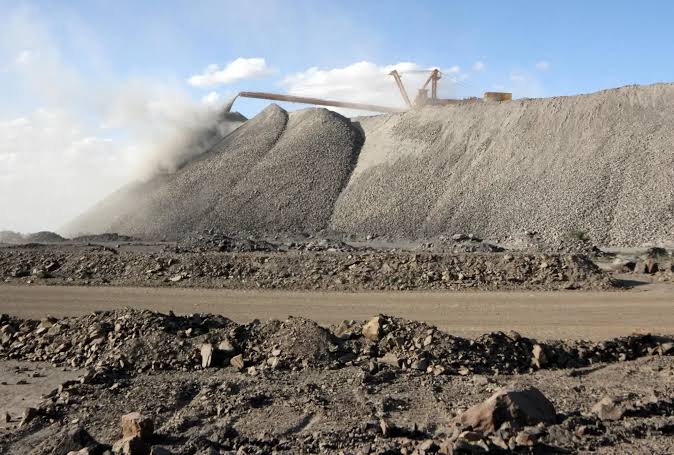
Paris (Imran Y. CHOUDHRY) :- Former Press Secretary to the President, Former Press Minister to the Embassy of Pakistan to France, Former MD, SRBC Mr. Qamar Bashir analysis : A mine has a finite life; the capabilities built around it can serve generations. Part One examined Pakistan’s mineral opportunity and the international partnerships that could help develop it. The next task is to connect extraction with a national industrial programme: Pakistani engineers operating sophisticated facilities, Pakistani enterprises supplying them, and Pakistani factories exporting increasingly valuable components and finished products.
This connection should become a central condition of mineral cooperation with China, Canada, the United States, Australia, European countries or any international consortium. Each major agreement should contribute to an industrial development plan, with responsibilities assigned to mining companies, manufacturers, infrastructure providers and public institutions. Measurable commitments can align commercial returns with Pakistan’s ambition to build a diversified economy.
The programme begins with infrastructure. Mines and processing plants require dependable electricity, water management, roads, rail connections and efficient ports. Industrial development also needs broadband, laboratories, workshops, warehouses and customs facilities. Planning these investments together would allow surrounding communities and businesses to share the benefits. A railway should connect productive regions; a power network should support factories and homes alongside mineral operations.
Industrial zones linked to mineral corridors could bring processors, component manufacturers and service businesses into connected locations. Their success would depend on reliable utilities, clear land rights, predictable regulation and access to customers. Common testing facilities, wastewater treatment and logistics services could reduce costs for smaller enterprises. Development should be measured through operating businesses, exports and employment.
Processing provides the first industrial bridge. Copper can support conductors, cables, transformers and electrical equipment. Suitable rare-earth feedstock can support separation, purified oxides, metals, alloys and magnet production. Commercial studies should identify which stages Pakistan can establish competitively and what partners, technology and scale they require. Investment agreements can then specify facilities, commissioning milestones and Pakistani participation.
Magnet manufacturing can connect these activities with motors, pumps, industrial automation, wind-energy equipment and automobile components. Engineering capability in these fields can gradually support more advanced production. Firms supplying one component reliably can qualify for larger contracts and more demanding markets. This progression gives mineral development a route into manufacturing through products that businesses can sell.
The wider ambition should include laptops, smartwatches, smartphones and other electronic devices. Partnerships with established manufacturers could develop components, precision parts, assembly and product testing, progressing toward design and engineering. Production for international brands, including devices such as iPhones, would require authorised commercial arrangements and qualification within their supply networks. Pakistan should negotiate pathways through which firms and workers can meet those standards.
Minerals supply one part of these products. Competitive electronics production also requires semiconductors, batteries, displays, software, precision equipment and dependable suppliers. Pakistan’s industrial programme should connect these requirements through joint ventures, licensing and research partnerships. A strategy would identify selected products, secure customers and build the complementary capabilities needed to manufacture them.
Automobiles offer another route through motors, wiring, sensors, power electronics and specialised components. Shipbuilding and frigate programmes could draw upon stronger capabilities in electrical systems, propulsion components and precision fabrication. Aerospace, satellite and space-launch ambitions would benefit from advances in materials, electronics, control systems and engineering. Participation should progress through civilian and other permitted partnerships, with the necessary certifications and technology approvals.
Pakistani people must occupy the centre of this transformation. Universities should expand relevant programmes in geology, mining, metallurgy, chemical engineering, materials science, electronics and industrial automation. Colleges and vocational institutions should prepare electricians, mechanics, welders, machinists and laboratory technicians. New institutions should be established where regional demand requires them, while existing institutions receive equipment, qualified teachers and industry partnerships.
Scholarships should give students from producing districts a direct route into these professions. Paid apprenticeships and supervised practical training should connect education with employment. Joint ventures should establish time-bound plans for Pakistani engineers and managers to assume greater operational responsibility. Success would be demonstrated by competence in running, maintaining, troubleshooting and improving complex facilities.
Research partnerships should leave permanent capacity within Pakistan. Shared laboratories, pilot plants, geological databases and negotiated access to technical knowledge can help institutions solve industrial problems. Agreements should define intellectual-property rights, licensing and opportunities for Pakistani innovation. Research funding should support processing efficiency, recycling, water conservation and new materials, allowing knowledge generated by collaboration to create further enterprises.
Business and financial infrastructure must develop alongside technical capacity. Local suppliers need working capital, equipment finance, insurance and timely payment. Exporters need trade finance, certification and efficient customs. Transparent procurement can help Pakistani companies enter supply networks, while long-term customer agreements improve investment confidence. Public financial support should carry clear limits, disclosed obligations and performance conditions.
Mineral revenues can finance this wider productive base. A transparent framework should provide predictable allocations for producing communities, investment in education and infrastructure, and savings against commodity downturns. Expenditure should follow verified receipts and public audits. Supporting manufacturing and local enterprise would broaden the sources of income available when particular mines approach the end of their lives.
Environmental management protects that future. Water use, tailings, emissions and eventual rehabilitation need funded obligations and independent monitoring. Communities should participate in decisions affecting their land and livelihoods, with lawful compensation and accessible remedies. Recycling metals and magnets can create additional businesses while retaining valuable material within the economy.
The foundation is accountable government. Credible elections, independent courts, empowered provinces and effective local authorities can give citizens a voice in the use of their wealth. Parliament should scrutinise major agreements, while independent regulators oversee environmental and commercial obligations. The armed forces should fulfil their constitutional security responsibilities, with economic policy directed by elected civilian institutions.
Pakistan’s economic promise will be fulfilled through the factories, skills, research and enterprises its mineral partnerships help create. Negotiating this connection is a national responsibility. With capable governance and sustained cooperation, Pakistan can export finished products, develop its own technology and build prosperity that outlives the deposits from which the transformation began.
Paris (Imran Y. CHOUDHRY) :- Former Press Secretary to the President, Former Press Minister to the Embassy of Pakistan to France, Former MD, SRBC Mr. Qamar Bashir analysis : Rare earths offer Pakistan an opportunity to change its economic destiny. Their greatest promise lies in connecting the country’s geological wealth with the industries shaping modern life: electric vehicles, electronics, clean energy, advanced machinery and aerospace. Growing international interest can bring the capital, technology and markets needed for this transformation. Pakistan’s task is to build partnerships that turn mineral deposits into lasting productive capacity, skilled employment and public prosperity.
America’s chargé d’affaires in Pakistan, Natalie A. Baker, has described cooperation extending from geological assessment and extraction to workforce training, schools and transport infrastructure. Her reference to mineral potential reaching seven trillion dollars sits within published estimates of $6 trillion to $8 trillion. The opportunity she outlined provides a basis for agreements that connect mining investment with local development and a wider industrial economy.
Energy Update, citing the Institute of Cost and Management Accountants of Pakistan, reports mineral-bearing areas extending across approximately 600,000 square kilometres, with 92 known minerals, including 52 commercially exploited. SFA (Oxford) estimates recoverable rare-earth oxide potential at 100,000 to 500,000 tonnes. These estimates offer a starting point for systematic exploration, deposit assessment and investment planning.
My own association with this opportunity reaches back four decades. In 1986, while working as a news producer, I accompanied a visiting Chinese state minister during a tour connected with mineral deposits in Balochistan. The delegation’s interest reflected an early appreciation of the region’s potential. Subsequent Chinese involvement at Saindak established an important chapter in Pakistan’s mineral development, providing experience upon which broader partnerships can build.
Reko Diq demonstrates the scale of Pakistan’s documented copper-gold opportunity. Barrick’s year-end 2025 disclosures identify 7.3 million tonnes of contained copper and 13 million ounces of gold attributable to its 50 percent interest. Project-wide quantities implied by these rounded figures are approximately 14.6 million tonnes of copper and 26 million ounces of gold. Federal Pakistani enterprises and Balochistan each hold 25 percent of the venture.
Using illustrative prices of $10,000 per tonne of copper and $3,000 per ounce of gold, those quantities represent approximately $224 billion in gross contained-metal value. Commercial returns will emerge over decades through production, sales and expenditure. Pakistan’s benefits will include agreed royalties, taxes, dividends, employment and domestic procurement. The volume of activity retained within the country will determine how widely these benefits spread.
Rare earths create a related avenue for industrial development. Geological research identifies promising formations at Sillai Patti, Koga, Loe Shilman, Warsak and Jambil in Khyber Pakhtunkhwa. Studies document light rare-earth enrichment involving cerium, lanthanum, neodymium, praseodymium and samarium. SFA also identifies prospects around Skardu and Chilas, Chagai and the Makran coast, together with potential secondary recovery from Thar coal fly ash.
Research on Sillai Patti cites earlier sampled-material averages of approximately 314 parts per million of neodymium, 915 of cerium and 519 of lanthanum. A hyperspectral investigation identified portions of samples reaching approximately 1,000 parts per million of neodymium. Representative drilling, mineralogical analysis and processing trials can translate this scientific knowledge into project-specific quantities, recovery rates and commercial values.
Neodymium and praseodymium are important inputs for powerful neodymium-iron-boron magnets. Samarium supports samarium-cobalt magnets used where temperature stability matters. Certain high-performance magnets also incorporate dysprosium or terbium. Developing these products involves concentration, separation, purification, metal production, alloying and precision manufacturing. Each stage offers a possible link between Pakistan’s resource base and a more technically capable economy.
American engagement already has a practical foundation. In September 2025, Pakistan announced a US Strategic Metals partnership with the Frontier Works Organization, envisaging approximately $500 million in initial investment and eventual development of a polymetallic refinery. USSM subsequently reported receiving antimony, copper concentrate and rare-earth material containing neodymium and praseodymium. The U.S. Export-Import Bank also lists $1.25 billion in authorised financing for Reko Diq.
Potential technical partners extend across the industrial chain. MP Materials operates in rare-earth processing and magnet manufacturing, Energy Fuels has demonstrated separated neodymium-praseodymium oxide production, and Arnold Magnetic Technologies manufactures advanced magnets. Their capabilities suggest possible commercial matches as Pakistani projects become investment-ready. Chinese, Canadian, Australian and European expertise can likewise contribute through competitive, transparent arrangements.
The economic scale is substantial. Barrick’s 2025 feasibility plan envisaged Phase 1 ramping up to 240,000 tonnes of copper and 297,000 ounces of gold annually. At the illustrative prices above, this represents about $3.29 billion in annual gross metal value. Its planned expanded operation’s specified ten-year average would represent approximately $6.16 billion annually on the same basis. Net national gains will depend on costs, financing and domestic value addition.
Barrick’s April 2026 update provided for slower development and a review through mid-2027. This makes phased planning valuable: exploration, infrastructure, skills and industrial investment should advance through clearly financed stages. SFA’s proposed rare-earth roadmap similarly progresses from initial exports toward processing and larger-scale mining. Timelines should guide coordination, with implementation measured through completed facilities and commercially qualified output.
Pakistan’s strengths are its mineral base and growing international attention. Its development needs include geological data, processing capacity, dependable utilities and specialised skills. Opportunities encompass exports, technology transfer and manufacturing; threats include security disruption, price fluctuations and environmental pressures. This SWOT assessment points toward coordinated investment, strong institutions and community participation.
The next step is to place industrial development at the centre of mineral policy. Agreements should connect extraction with infrastructure, Pakistani expertise and downstream production. That is the bridge from geological promise to economic transformation—and the question taken forward in Part Two: how Pakistan can use today’s mineral opportunity to build industries that continue creating wealth long after individual deposits are exhausted.


America’s Midterms: Every Candidate “Dangerous”

Experts Urge Early Screening to Prevent Heart Disease and Dyslipidemia in Pakistan

KASHMIR BLACK DAY OBSERVED IN FRANCE

New Chapter for Dragon Boating in Punjab and Khyber Pakhtunkhwa Provincial associations officially set up with sights locked on national competitions and international representation.

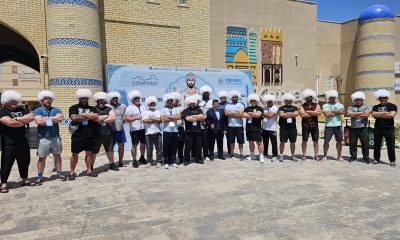
South Korea’s Yoo Useong Steps Onto the Global Strongman Stage as World Strongman Federation Professional Athlete

A Survey of Mata-E-Zeest


-
 Pakistan News2 weeks ago
New Chapter for Dragon Boating in Punjab and Khyber Pakhtunkhwa Provincial associations officially set up with sights locked on national competitions and international representation.
-
 Sports4 months ago
South Korea’s Yoo Useong Steps Onto the Global Strongman Stage as World Strongman Federation Professional Athlete
-
 Art & Culture1 year ago
A Survey of Mata-E-Zeest
-

 Europe News2 years ago
Chaos and unproven theories surround Tates’ release from Romania
-

 American News2 years ago
Trump expands exemptions from Canada and Mexico tariffs
-

 Art & Culture2 years ago
Will Snow White be a ‘victim of its moment’? How the Disney remake became 2025’s most divisive film
-

 American News2 years ago
Trump Expels Zelensky from the White House
-

 Entertainment2 years ago
Champions Trophy: Pakistan aim to defend coveted title as historic tournament kicks off today