
war
Israel Strikes at the Heart of Iran’s Nuclear Ambition


Paris (Imran Y. CHOUDHRY) :- Former Press Secretary to the President, Former Press Minister to the Embassy of Pakistan to France, Former MD, SRBC Mr. Qamar Bashir analysis : The long-brewing confrontation between Israel and Iran has finally erupted into direct confrontation. After months of devastation in Gaza and precision assassinations in Lebanon and Syria, Israel has now escalated the battlefield to Tehran itself. In a daring and coordinated offensive, Israel launched air and missile strikes deep inside Iranian territory, reportedly targeting nuclear research facilities, air defense systems, ballistic missile stockpiles, and military command centers. According to Israeli claims, several senior military leaders and scientists were killed, and substantial damage was inflicted on key installations.
This attack, although sudden in execution, was far from unexpected. I had earlier written—and consistently emphasized—that the real Israeli objective was never just Hamas or Hezbollah. Those were merely stepping stones in a broader strategy aimed squarely at Iran, whom Israel sees as the ideological, financial, and logistical nucleus of anti-Israel militant activity in the region. The elimination of Hamas’s leadership, including Ismail Haniyeh, and the successive neutralization of Hezbollah’s command under Hassan Nasrallah, were deliberate moves to clear the path for a direct strike on Iran. As I noted then in an article titled: “It is not Hamas that is the ultimate target, but Iran—and sooner or later, Israel will strike.”
Despite a barrage of Iranian drone and missile retaliation following Israel’s operations in Gaza and Lebanon, Israel did not immediately retaliate against Iran’s homeland. This delay perplexed many observers. But strategically, it made perfect sense. Israel’s first objective was to degrade Iran’s outer defense perimeter—its proxies: Hamas in Gaza, Hezbollah in Lebanon, and the Houthis in Yemen. Israel methodically eliminated the top command of Hamas and continued high-profile strikes on Hezbollah, including those that killed Fuad Shukr, Taleb Abdallah, and other senior operatives.
This proxy war phase was a calculated move to weaken Iran’s retaliatory arms. Once the regional tentacles were sufficiently blunted, Israel turned its attention to the source: Tehran.
The precision with which this attack was executed mirrors earlier Israeli operations, such as the assassinations of Quds Force commanders in Damascus and the stealth killing of Ismail Haniyeh while under IRGC protection in Iran. Reports suggest that Israel deployed a combination of long-range missiles, advanced drones, and possibly cyber warfare tools to disable Iranian radar systems ahead of the attack.
Among the targets reportedly hit were Iran’s Natanz and Fordow nuclear enrichment facilities, multiple ballistic missile depots near Isfahan, and key command bunkers in Tehran. Israel also claims to have eliminated a number of senior IRGC commanders and nuclear scientists critical to Iran’s uranium enrichment and missile development programs. Although Iran has yet to officially confirm the scope of damage, the silence from Tehran suggests a period of shock and damage assessment before retaliation.
For over three decades, Iran has operated under crushing Western sanctions. Despite limited access to advanced military hardware, Iran has managed to develop indigenous ballistic missile and drone capabilities. However, the recent Israeli strike has called into question the true effectiveness of Iran’s deterrent power.
Iran’s April retaliatory strike on Israel using drones and missiles exposed vulnerabilities. Most of its projectiles were intercepted mid-air by Israel’s layered air defense systems—Iron Dome, David’s Sling, and Arrow. The strike caused minimal damage and maximum embarrassment. The same pattern repeated itself in this latest exchange, suggesting that Iran’s offensive capabilities may be more symbolic than strategic.
President Donald Trump, in his second term, had openly discouraged Israeli strikes while actively pursuing nuclear negotiations with Iran. His envoy was scheduled to meet Iranian Foreign Minister Abbas Araghchi in Oman when the strikes occurred. Trump warned that the operation could derail delicate diplomacy, stating, “I don’t want them going in because, I mean, that would blow it.”
But Iran is unlikely to remain passive. The regime’s credibility—both domestically and regionally—is at stake. It may activate what remains of Hezbollah, mobilize pro-Iran militias in Iraq and Syria, and possibly target American military bases in the Gulf. However, such actions risk triggering a wider conflict that Iran may not be prepared to sustain—militarily, diplomatically, or economically.
This war, unlike previous confrontations, is not confined to a single geographic theater. It is already spilling over diplomatically, economically, and ideologically. The Strait of Hormuz, which sees nearly 20% of the world’s oil shipments, is now at the center of global concern. Any Iranian attempt to disrupt this chokepoint will send global oil prices skyrocketing, potentially triggering inflation, economic slowdowns, and supply chain disruptions—particularly in vulnerable economies like Pakistan, Afghanistan, and parts of Africa.
Regionally, Pakistan must brace for the potential fallout. A full-scale Iran-Israel war could create a new refugee crisis, possibly pushing Shia communities toward Pakistan’s borders, further straining its fragile economic and social fabric. Ethnic and sectarian spillovers could ignite unrest in sensitive areas already on edge due to internal instability.
On a global scale, Iranian diasporas may stage protests, cyber attacks, or other non-kinetic responses. Human rights organizations and anti-war movements are also expected to rally against Israel’s aggression, just as they have against its actions in Gaza. The United Nations will soon become another front, with Iran pushing for international sanctions on Israel and the latter leveraging its alliances to block such moves.
Israel’s response to the October 7 Hamas attack, which killed 1,200 Israelis, has already resulted in the deaths of over 70,000 Palestinians, according to credible international estimates. This level of retribution has drawn severe criticism and raises critical questions about the doctrine of proportionality. Now, with direct military strikes on Iran, the scale of escalation suggests that Israel is prepared to operate outside established norms of proportional response, prioritizing complete neutralization over measured deterrence.
If the goal is to prevent a future nuclear-armed Iran, the stakes are existential. Public intelligence assessments suggest that Iran has not yet achieved weapons-grade enrichment, though it is believed to be close. If Iran already has bomb-grade material and a delivery system, Israel’s gamble could backfire catastrophically. A single nuclear strike on Israeli territory—small as the country is—could be existential.
But this scenario rests on assumptions that are, so far, unverified. If Iran does not yet possess nuclear capability, the conflict may remain conventional. In this case, Israel’s superior airpower, advanced missile defense systems, and deep intelligence capabilities give it a significant edge.
Israel has stated this is not a one-off attack but the beginning of a prolonged campaign. The declared objectives include complete dismantling of Iran’s nuclear capability, ballistic missile infrastructure, air defense systems, and command structure. If successful, this campaign could redraw the strategic map of the Middle East.
The strike has also laid bare the powerlessness of international institutions. The UN, the International Court of Justice, and the global civil society have issued statements—but Israel acted undeterred. Even the International Atomic Energy Agency’s resolution condemning Iran has failed to create any viable deterrence.
Meanwhile, Muslim nations, despite their collective population and wealth, remain spectators. No unified diplomatic or kinetic response has emerged. This exposes not just a military imbalance, but a broader geopolitical humiliation of the Muslim world.
Former Israeli Prime Minister Naftali Bennett justified the strikes by warning that failure to stop Iran could unleash a nuclear arms race across the Middle East—with Turkey, Egypt, and Saudi Arabia all seeking nuclear capabilities. “It’s time to hit the head of the octopus,” he said, calling Iran the epicenter of terror.
Netanyahu echoed this in his national address: “We struck at the head of Iran’s nuclear weaponization program… This is not a one-day attack. It will continue until the threat is removed.”
Israel’s ability to act unilaterally, even against U.S. advice, and without fear of diplomatic fallout, raises profound questions about the current global order. Israel, a tiny nation geographically, now flexes geopolitical muscle equal to—or beyond—that of traditional superpowers.
The events unfolding are more than military maneuvers—they mark the beginning of a new geopolitical epoch. With China, Russia, and the EU largely silent or paralyzed, the illusion of a balanced multipolar world is crumbling. Israel’s actions suggest that global influence is no longer a function of size, economy, or alliances—but of audacity, conviction, and superior military capability.
The strategic, moral, and institutional implications are enormous. Will the world allow the Middle East to descend into nuclear chaos? Will diplomacy resurface, or will military unilateralism become the new norm? And perhaps most importantly, will the Muslim world continue to watch in stunned silence, or will it finally forge a unified response to prevent the annihilation of its own geopolitical dignity?
History is no longer being shaped behind closed doors. It is being rewritten in missile smoke over Tehran. And the world is watching—some in horror, some in awe, and most in helplessness.

Paris (Imran Y. CHOUDHRY) :- Former Press Secretary to the President, Former Press Minister to the Embassy of Pakistan to France, Former MD, SRBC Mr. Qamar Bashir analysis : The decision to plunge the United States into a direct confrontation with Iran—taken at the urging and strategic direction of Israel—has triggered a chain of events that few in Washington appear to have fully anticipated. What was originally conceived as a swift military operation designed to cripple Iran’s capabilities and compel regime change has instead evolved into a widening regional conflict whose consequences are now rippling through military, political, and economic systems across the globe. Inside the United States, the mood has shifted from early confidence to growing anxiety as policymakers, military planners, and the public begin to reckon with the scale of the unfolding crisis.
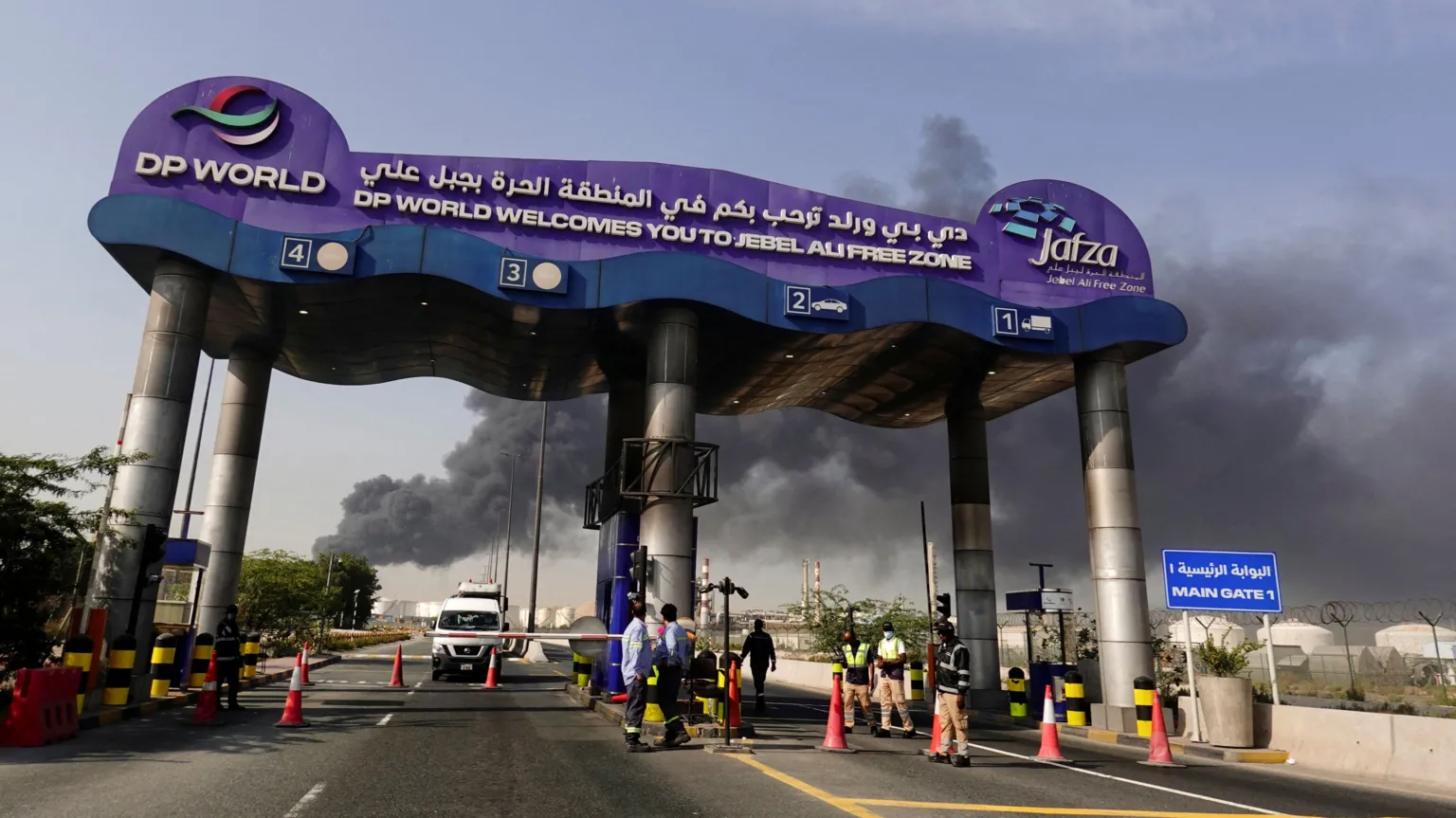
From the earliest hours of the conflict, Iran responded with an intensity that surprised even seasoned defense analysts. Waves of drones and missiles targeted American and allied installations throughout the Middle East. Several facilities used by U.S. forces experienced direct hits or operational disruption, forcing commanders to reassess their logistics and operational posture across the region. While Washington maintains that the majority of its capabilities remain intact, the attacks have nevertheless exposed the vulnerability of a military architecture heavily dependent on forward bases and allied infrastructure.
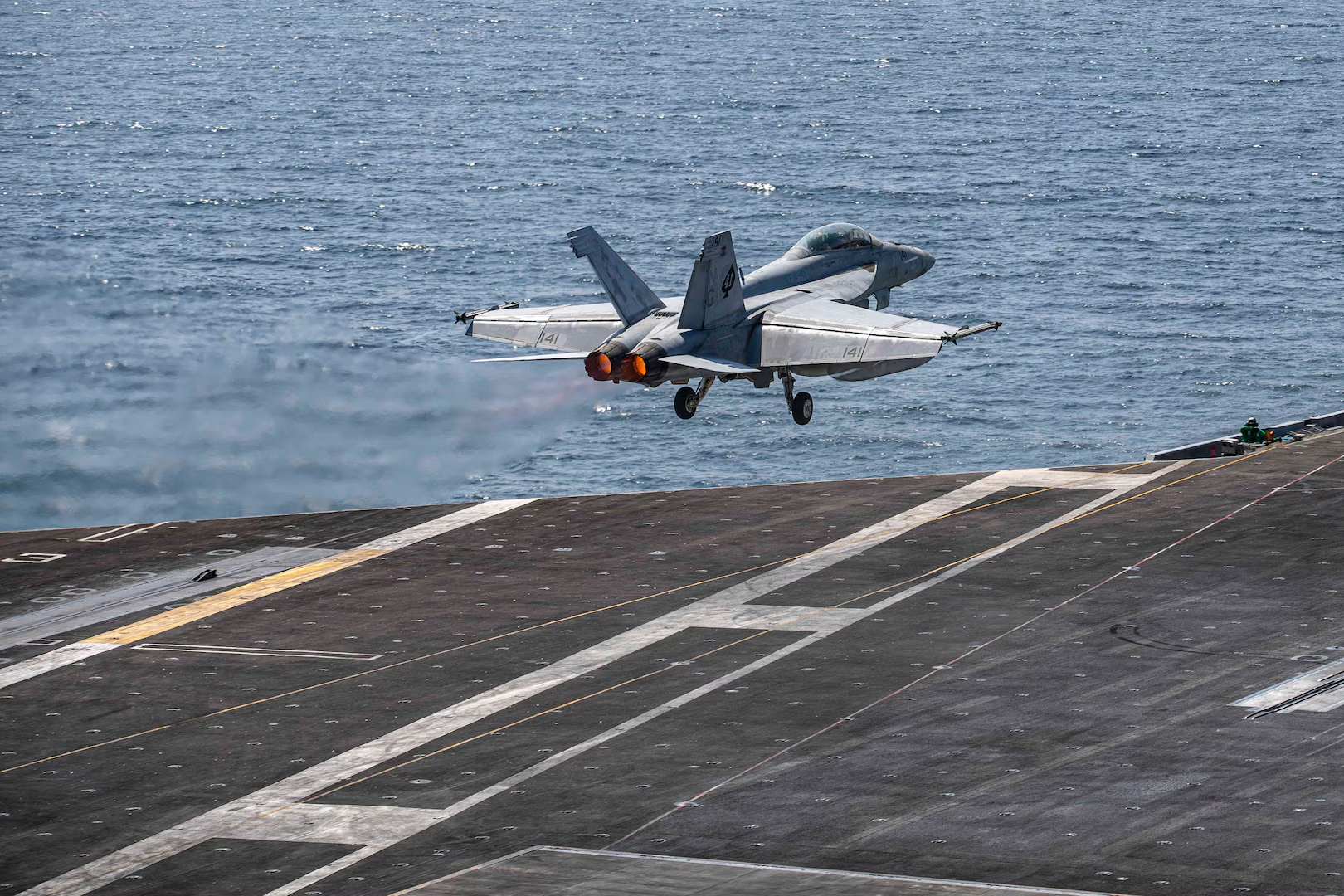
These bases—spread across the Gulf and the broader Middle East—serve as the backbone of American air and naval power projection. They are critical for refueling aircraft, replenishing munitions, and maintaining sustained combat operations. Once they became targets, the operational calculus changed dramatically. Aircraft carriers, naval task groups, and combat aircraft that had been positioned for sustained operations suddenly faced logistical strain. War planners who assumed a short campaign now confront the reality of an adversary capable of prolonged resistance.
Compounding the strategic difficulty has been the hesitation of several allied countries to allow their territory or bases to be used as launch platforms for the campaign. Spain publicly declined to allow its bases to be used for offensive operations against Iran, while Britain clarified that it would not join offensive strikes and imposed restrictions on the use of its installations. Several Gulf states adopted a posture of neutrality, unwilling to risk retaliation by becoming direct participants in the conflict. Even allies who expressed rhetorical support have quietly avoided deeper involvement, reflecting their fear that the war could spread across the region.
This reluctance among partners has further constrained Washington’s options. Modern warfare, especially for expeditionary forces like those of the United States, depends not only on military power but also on the political willingness of allies to provide territory, logistics, and legitimacy. When that support becomes uncertain, the operational environment becomes far more complex.
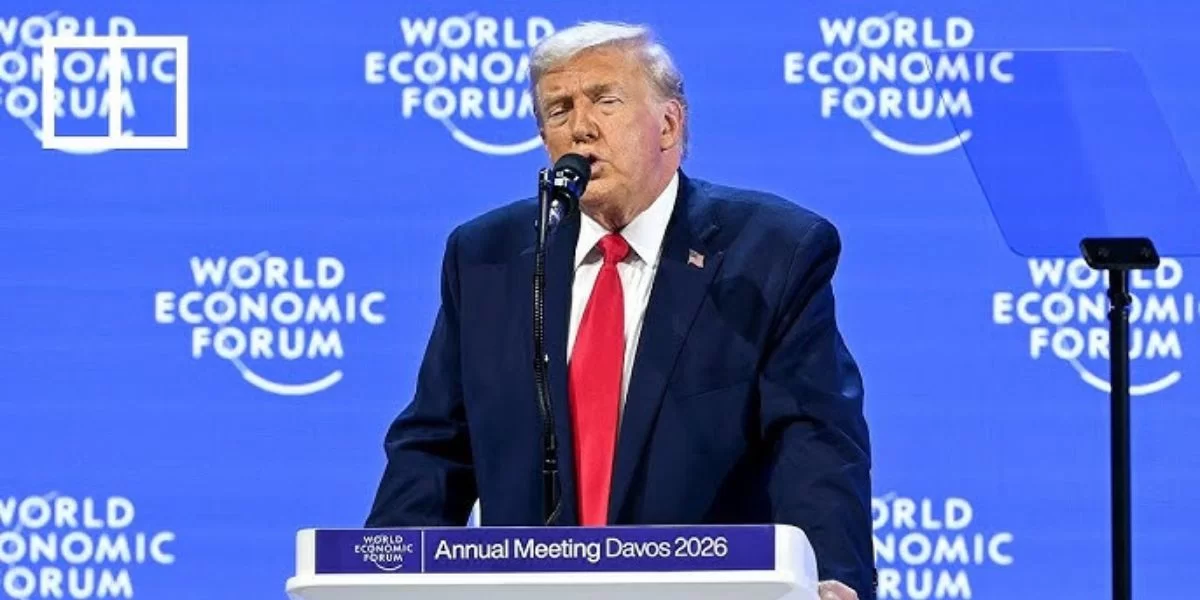
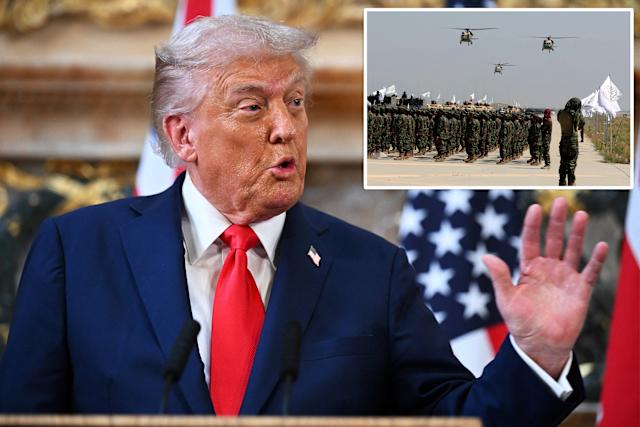
Inside the United States itself, the political atmosphere is rapidly evolving. Members of Congress from both parties have begun questioning the strategic purpose of the war. Media commentators and policy analysts are asking what the ultimate objective is—whether it is regime change, deterrence, or simply punishment. Even the president’s own public statements have hinted at a reassessment. After initially projecting confidence in the military campaign, Donald Trump acknowledged in later remarks that Iran had signaled a willingness to talk and that diplomatic channels could be reopened.
This shift reflects a growing realization that the conflict may not be as controllable as originally assumed. Iran’s strategy appears to rely not on conventional military parity but on asymmetric endurance. Years of sanctions forced Tehran to accept that it could not compete with the United States in traditional air and naval warfare. Instead, it invested heavily in missile technology, drones, underground facilities, and decentralized command structures. Many of its most important missile centers are buried deep beneath mountains or fortified bunkers, rendering them extremely difficult to destroy even with advanced bunker-busting munitions.
As the war drags on, the economic consequences are beginning to reverberate far beyond the battlefield. One of the most dramatic developments has been Iran’s declaration that the Strait of Hormuz—the narrow maritime corridor through which a significant portion of the world’s oil supply passes—will be closed to commercial shipping except vessels carrying Chinese flags. Whether fully enforceable or not, the announcement alone has sent shockwaves through global energy markets.
Oil prices surged almost immediately. Markets reacted with alarm to the prospect that even partial disruption of shipping through Hormuz could remove millions of barrels of oil per day from global supply chains. The result has been a rapid rise in crude prices, which is already being felt at gasoline stations across the United States and Europe. Higher oil prices inevitably translate into higher transportation costs, and those costs cascade through the entire economy.
The economic logic is straightforward but devastating. When fuel becomes more expensive, the cost of transporting goods—from food to consumer products—increases. Airlines raise ticket prices, trucking companies pass on their fuel surcharges, and shipping costs climb. These increases ripple outward, affecting nearly every product and service used by ordinary citizens. Inflationary pressures intensify, eroding household purchasing power and deepening public frustration.
For political leaders, the consequences are immediate. Rising gasoline prices have historically been among the most sensitive indicators of public discontent in the United States. When voters see the cost of filling their cars jump dramatically, the issue quickly becomes political. Analysts already warn that if the conflict continues to disrupt oil markets, the economic backlash could undermine the administration’s domestic support and influence the outcome of upcoming midterm elections.
Beyond the economic sphere lies an even deeper concern: the potential for the conflict to ignite wider instability. Israel has already expanded its operations into neighboring theaters such as Lebanon, attempting to suppress rocket attacks from Hezbollah. Meanwhile, reports indicate that Kurdish opposition groups are being encouraged to challenge the Iranian government, raising the possibility of internal unrest inside Iran itself. Such strategies carry enormous risk. History has repeatedly shown that arming or empowering insurgent groups can produce unintended consequences, sometimes turning yesterday’s proxy into tomorrow’s adversary.
In the streets of American cities and towns, ordinary citizens are grappling with a mixture of fear and uncertainty. Many worry that a prolonged war could provoke retaliatory actions or terrorist incidents far from the Middle Eastern battlefield. Others question whether the United States had sufficient justification to launch the attack at a moment when diplomatic negotiations—mediated by Oman—were reportedly making progress toward a nuclear agreement.
According to diplomatic sources involved in those talks, Iran had indicated a willingness to dilute highly enriched uranium by mixing it with lower-grade material, effectively reducing its weapons potential while allowing continued civilian nuclear activity. Negotiators believed a framework agreement was within reach. If true, the abrupt shift from diplomacy to war has left many observers wondering whether a peaceful solution was abandoned prematurely.
The result is a conflict that now appears increasingly difficult to control. What began as a calculated show of force has become a contest of endurance between a global superpower and a regional state determined to resist. The United States still possesses overwhelming military superiority, yet military power alone cannot easily resolve the complex political and economic dynamics now unfolding.
For that reason, voices calling for diplomacy are growing louder. Even those who supported the initial strikes increasingly acknowledge that negotiations may be the only realistic path toward de-escalation. Wars often begin with confidence and resolve, but they end through dialogue and compromise.
At this critical juncture, the choice facing Washington is stark. Continuing down the path of escalation risks widening the conflict, destabilizing global markets, and entrenching hostility across the region. Reopening diplomatic channels, by contrast, offers at least the possibility of limiting the damage and preventing the war from spiraling into a broader catastrophe.
History may ultimately judge this moment not by the missiles fired or the targets destroyed, but by whether leaders possessed the wisdom to step back from the brink and rediscover the power of diplomacy before the costs became irreversible.
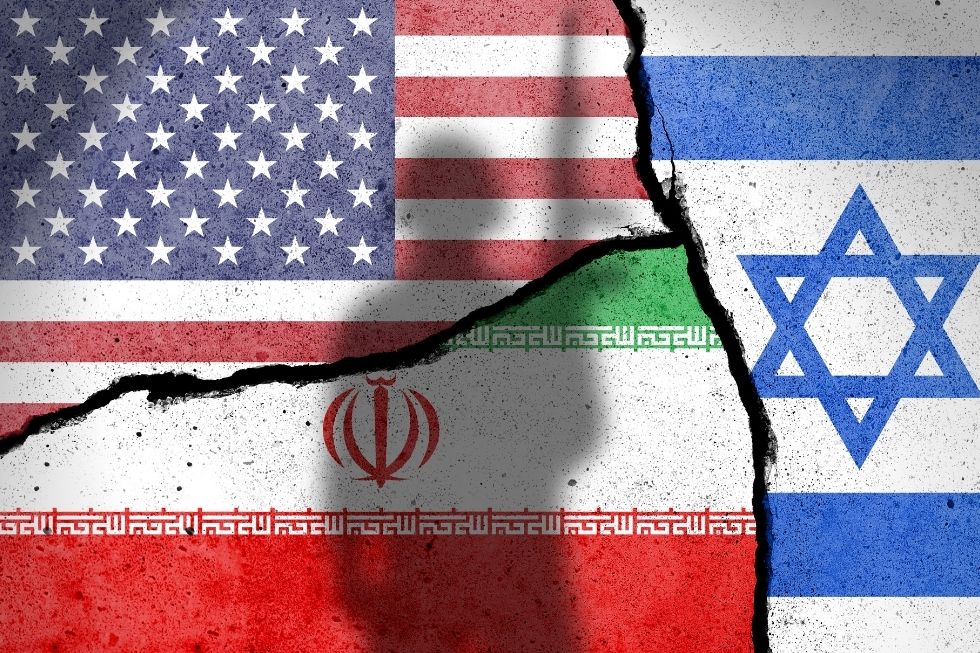
Paris (Imran Y. CHOUDHRY) :- Former Press Secretary to the President, Former Press Minister to the Embassy of Pakistan to France, Former MD, SRBC Mr. Qamar Bashir analysis : When President Donald Trump authorized direct military confrontation with Iran alongside Israel, many strategic planners expected a short and decisive military campaign. Precision strikes, intelligence dominance, and coordinated airpower were believed capable of crippling Iranian command centers and missile infrastructure within days. Yet what was envisioned as a swift operation is increasingly evolving into a prolonged conflict with humanitarian, geopolitical, and economic consequences extending far beyond the Middle East.
For decades, Israeli Prime Minister Benjamin Netanyahu had warned that confrontation with Iran was inevitable. Several U.S. administrations resisted being drawn into a full-scale war, wary of escalation and long-term entanglement in another Middle Eastern conflict. President Trump himself had previously pledged that his presidency would avoid new wars and focus on ending the long cycle of military interventions. However, the launch of coordinated strikes against Iran marked a historic shift, transforming strategic rivalry into direct confrontation.
The early assumption that Iran would collapse under aerial bombardment has not materialized. Instead, Tehran has adopted a measured and calculated strategy. Rather than unleashing its entire missile arsenal in dramatic retaliation, it has responded gradually, sustaining pressure while preserving strategic capabilities. Instead of triggering regime instability, the conflict appears to have consolidated national sentiment—particularly after the reported killing of Iran’s 86-year-old Supreme Leader during the opening phase of the war.
Within Iran, the death of a religious authority of such stature was expected by some analysts to create political fragmentation. Instead, it triggered widespread mobilization. In Shiite tradition, martyrdom carries profound historical and spiritual significance rooted in the memory of Karbala and the sacrifice of Imam Hussain. Mass mourning ceremonies, public processions, and national demonstrations reflected a collective resolve rather than internal collapse.
That emotional surge intensified dramatically after a tragedy that has come to symbolize the human cost of the conflict. In the southern Iranian city of Minab, a girls’ school was struck during the early days of the Israel-USA air campaign, killing more than 150 students and staff. The incident was independently confirmed by International media including Al-Jazeera and BBC. This deplorable and cruel act of Israel and the USA immediately became a powerful political and humanitarian symbol.
Images broadcast by Iranian media and reported by Al Jazeera showed thousands of mourners gathering in Minab’s central square for a mass funeral ceremony. Families held photographs of young victims while crowds chanted slogans condemning the United States and Israel.
The reaction from international institutions was swift. The United Nations human rights office called for a prompt and impartial investigation into the incident. Officials emphasized that schools, hospitals, and humanitarian facilities are protected under international humanitarian law and must not be targeted during armed conflict.
The Minab tragedy quickly resonated across the international media landscape. Major European outlets such as The Guardian, Le Monde, and Der Spiegel published editorials raising concerns about the humanitarian consequences of the escalating war. Commentaries in several European newspapers questioned whether the air campaign risked repeating the mistakes of previous conflicts in which civilian casualties undermined strategic objectives.
Public reaction extended beyond the media. Demonstrations erupted in several regions of the world. In cities across the United States—Washington D.C., New York, Chicago, and Los Angeles—anti-war protesters gathered to demand congressional oversight and an immediate halt to escalation.
Across parts of the Global South, governments including China, South Africa, Brazil, Turkey, Malaysia, and Pakistan voiced concern about the expanding conflict. In Pakistan and Iraq, protests outside U.S. diplomatic missions turned tense as demonstrators condemned the bombing campaign and expressed solidarity with Iranian civilians.
Meanwhile, Iran’s military strategy appears rooted in endurance rather than rapid escalation. Decades of sanctions and conflict have forced the country to develop hardened infrastructure, dispersed missile systems, and underground facilities designed to survive sustained bombardment. Iranian officials and analysts sympathetic to Tehran argue that the missiles and drones seen in the early days of the war represent largely older or less sophisticated systems deliberately used in the opening phase. According to this narrative, Iran is pacing the conflict by gradually introducing more advanced and destructive missile capabilities only if the war escalates further. Such a strategy would allow Tehran to sustain pressure over time while reserving its most capable weapons for later stages, potentially targeting U.S. bases across the Middle East, Israeli infrastructure, and naval forces operating in the Persian Gulf and nearby waters.
The vulnerability of American bases across the Middle East has become increasingly evident as the war expands. Countries hosting these bases now face complex political pressures, as retaliatory attacks threaten nearby infrastructure and civilian populations.
Economically, the war carries enormous global implications. The Strait of Hormuz remains one of the world’s most critical maritime chokepoints for oil transportation. Even limited disruptions in this narrow corridor can trigger spikes in global energy prices and destabilize international markets.
Yet perhaps the most consequential development emerging from Washington is the possibility that the war could escalate beyond aerial bombing. In recent remarks, President Trump did not rule out deploying American troops on Iranian soil if military objectives cannot be achieved through air power alone. U.S. defense officials have similarly acknowledged that ground forces remain an option should the conflict expand or if key strategic targets require physical control.
The implications of such a decision would be profound. Iran is a vast country of nearly ninety million people with rugged terrain, dense urban centers, and deeply entrenched military structures. Any attempt to place foreign troops on Iranian soil would almost certainly transform the current air campaign into a full-scale regional war.
Strategic history offers sobering lessons. In Afghanistan, overwhelming aerial superiority failed to produce durable political outcomes. Military dominance on the battlefield did not translate into long-term stability, and ultimately the conflict ended with a negotiated withdrawal after two decades.
A ground war in Iran could prove even more complex. Iran possesses a much larger population, stronger state institutions, and extensive missile capabilities capable of striking across the Middle East. Military analysts warn that any foreign troop deployment could trigger prolonged insurgency, regional retaliation, and widespread disruption of global energy markets.
Iran appears to be pursuing a strategy of strategic patience. By absorbing attacks while maintaining steady retaliation, it places increasing economic and political pressure on its adversaries. Time, rather than immediate battlefield victories, becomes the decisive factor.
The tragedy in Minab illustrates how quickly humanitarian events can reshape global perceptions of a war. Images of mourning families and schoolchildren’s funerals resonate far beyond military calculations. They influence public opinion, diplomatic relationships, and the political legitimacy of those conducting the war.
What was initially framed as a short military operation has increasingly taken the shape of a war of endurance. Iran appears prepared for a prolonged confrontation built on resilience, geography, and ideological mobilization. The United States and Israel still maintain overwhelming technological and military superiority, yet superiority alone does not guarantee swift submission.
Wars that begin with expectations of rapid victory often conclude in negotiations after extended human suffering. Whether this conflict ultimately follows that path will depend not only on military strength but on political wisdom. If diplomacy re-enters the equation, escalation may still be contained. If not, the region—and perhaps the wider international system—may face months of instability with consequences reaching far beyond the battlefield.
Paris (Imran Y. CHOUDHRY) :- Former Press Secretary to the President, Former Press Minister to the Embassy of Pakistan to France, Former MD, SRBC Mr. Qamar Bashir analysis : As tensions escalate between Iran and the joint forces of the United States and Israel, the most pressing question dominating strategic circles is deceptively simple: Who would win? Yet modern warfare—especially among technologically advanced and regionally entrenched powers—is no longer a matter of tanks crossing borders or flags planted on captured capitals. Victory today is layered, conditional, and defined by political objectives rather than territorial conquest alone. To assess the probability of winning, one must first define what “winning” actually means.
If victory is defined as regime survival and preservation of fighting capability, Iran’s probability of success appears stronger than many assume. Historically, external air campaigns have struggled to topple deeply entrenched governments without significant ground intervention. Iran’s geography alone presents a formidable challenge. Its mountainous terrain, expansive landmass, and dispersed military infrastructure complicate any attempt at rapid decisive victory. Much of its missile arsenal is believed to be stored in underground facilities designed precisely to withstand aerial bombardment. Even sustained precision strikes may degrade capabilities, but eliminating them entirely is another matter.
Moreover, Iran’s doctrine is built around resilience and asymmetric endurance. Rather than matching Western air superiority aircraft for aircraft, Tehran relies on ballistic missiles, drones, cyber operations, and proxy networks across the region. This model does not aim to dominate the skies; it aims to outlast and impose cost. If the objective of Washington and Tel Aviv were to collapse the Iranian state or compel unconditional surrender, the probability of achieving that quickly would remain relatively low without a major ground campaign—an option that carries enormous political and military risk. In that scenario, Iran’s likelihood of “winning” through survival could reasonably be considered moderate to high.
However, if victory is defined differently—say, as the ability to significantly degrade Iran’s military capacity and limit its ability to launch sustained retaliation—the balance shifts. The United States maintains overwhelming air superiority, advanced stealth platforms, satellite surveillance, cyber dominance, and long-range precision strike capabilities. Israel brings decades of experience in targeted operations, missile defense innovation, and real-time battlefield intelligence integration. Together, they possess unmatched technological coordination.
In the early phases of a high-intensity conflict, joint U.S.–Israeli forces would likely dominate the airspace, suppress air defenses, and strike high-value targets including command centers, missile storage sites, naval facilities, and communications infrastructure. Iran’s conventional air force is comparatively limited, and its air defense systems, while upgraded over the years, would struggle against advanced stealth bombers and electronic warfare. Under this definition of victory—crippling Iran’s infrastructure and reducing its capacity for sustained attacks—the coalition’s probability of success would be moderate to high.
Yet degrading capability is not synonymous with eliminating threat. Missile forces are mobile. Drones are inexpensive and produced in significant quantities. Even if command structures suffer damage, decentralized networks can continue operations. Thus, while U.S.–Israel forces could inflict substantial destruction, the probability of completely stopping Iranian retaliation remains uncertain. The difference between “damaging” and “neutralizing” is strategically profound.
Another potential definition of victory is economic and psychological leverage. Iran’s geographic position near the Strait of Hormuz gives it influence over one of the world’s most critical energy corridors. Even partial disruption of maritime traffic would elevate global oil prices, strain supply chains, and create political pressure in energy-importing nations. While Iran itself would suffer economically from prolonged instability, it could still leverage regional disruption as a strategic equalizer. If the objective becomes forcing negotiations by generating economic shock, Iran’s probability of achieving leverage increases.
On the other hand, prolonged conflict risks devastating Iran’s own infrastructure. Energy facilities, ports, and industrial assets could become targets, further weakening its economy. The United States, with a diversified economy and global alliances, is better positioned to absorb long-term financial strain. Israel, though geographically smaller, maintains advanced civil defense systems and missile interception layers that mitigate, though do not eliminate, the impact of incoming threats. Thus, in a war of economic attrition, neither side emerges unscathed, but the coalition likely retains greater structural resilience.
Regime change remains the most ambitious—and least probable—outcome. History offers cautionary examples of external interventions that underestimated the complexity of internal political dynamics. Airpower alone rarely achieves political transformation. Ground occupation in a country the size of Iran would require vast troop deployments and sustained logistical commitment, with unpredictable consequences. Under this scenario, the probability of rapid decisive regime collapse appears low. Iran’s political system, though internally contested, has demonstrated endurance under decades of sanctions and pressure.
Therefore, when evaluating probability, the answer depends on which strategic objective is prioritized. If the goal is to survive and maintain core sovereignty, Iran’s odds are comparatively stronger. If the goal is to inflict extensive military degradation and assert technological superiority, the U.S.–Israel coalition holds the advantage. If the goal is total capitulation or permanent elimination of threat, probabilities on both sides decline sharply, as modern warfare between capable states rarely produces absolute outcomes.
There is also the factor of escalation management. A broader regional spread involving additional actors could alter calculations dramatically. The longer a conflict persists, the more unpredictable it becomes. Domestic political pressures in all three countries would shape decision-making. Public tolerance for casualties, economic hardship, and prolonged instability could either harden resolve or accelerate diplomatic engagement.
Ultimately, the most realistic outcome in such a confrontation may not be traditional victory at all, but a negotiated pause after significant destruction. In modern high-intensity conflicts, wars often end not because one side is annihilated, but because costs outweigh objectives. The probability that both sides declare partial success—while privately recognizing the limits of military solutions—may be higher than outright triumph for either camp.
In strategic terms, Iran is more likely to “win” by surviving, absorbing damage, and continuing to function as a sovereign actor. The United States and Israel are more likely to “win” by demonstrating overwhelming tactical superiority and degrading Iran’s operational capabilities. Neither outcome represents total dominance. Both involve trade-offs.
War among technologically advanced powers with asymmetric tools is less about decisive victory and more about shaping post-conflict narratives. Survival can be framed as victory. Deterrence can be framed as success. Destruction of infrastructure can be presented as strategic achievement. Yet beneath these narratives lies a sobering truth: in such conflicts, the probability of absolute victory for any side remains limited.
The real question, then, may not be who would win—but at what cost, and for how long.

The Iran War That Turned Against Trump
Iran’s Strategy: Stretch the War
Probability of Victory in an Iran–U.S.–Israel War


-

 Europe News1 year ago
Chaos and unproven theories surround Tates’ release from Romania
-

 American News1 year ago
Trump Expels Zelensky from the White House
-

 American News1 year ago
Trump expands exemptions from Canada and Mexico tariffs
-

 Pakistan News9 months ago
Comprehensive Analysis Report-The Faranian National Conference on Maritime Affairs-By Kashif Firaz Ahmed
-

 American News1 year ago
Zelensky bruised but upbeat after diplomatic whirlwind
-

 Art & Culture1 year ago
The Indian film showing the bride’s ‘humiliation’ in arranged marriage
-

 Art & Culture1 year ago
International Agriculture Exhibition held in Paris
-

 Pakistan News12 months ago
Can Pakistan be a Hard State?