
World News
Israel Controls America: Ted Cruz’s Revealing Confession


Paris (Imran Y. CHOUDHRY) :- Former Press Secretary to the President, Former Press Minister to the Embassy of Pakistan to France, Former MD, SRBC Mr. Qamar Bashir analysis : In a political interview that will be studied for years, Senator Ted Cruz—a close confidant of President Donald J. Trump and one of the most prominent Republican voices in Congress—sat down with Tucker Carlson and offered a candid window into the uncomfortable reality of U.S.-Israel relations. His words, wrapped in rationalizations and ideological talking points, confirmed what critics have long warned: the United States is no longer a sovereign actor in the Middle East, but a subordinate executing the will of Israel through lobbying networks like American Israel Pbulic Affair Committee (AIPAC) covert intelligence alignments, and religious manipulation.
Carlson’s questions were pointed. His tone was incredulous. “Do they [Israel] spy domestically in the United States?” he asked. Ted Cruz replied, without hesitation, “Oh, they probably do—and we do as well… Friends and allies spy on each other.” Rather than condemning the breach of national sovereignty, Ted leaned on ideological dogma: “One of the things about being a conservative is you’re not naive… Every one of our friends spies on us.”
But this was no ordinary espionage. Carlson pressed harder: “Including on the President?” Ted did not flinch. “They’re going to anyway,” he said. “I’m not mad at them.” This was not a defense—it was a surrender.
This tacit approval of foreign surveillance on American soil, targeting even the Commander-in-Chief, is a staggering admission. It confirms the deep entrenchment of Mossad within American political and security institutions. From the 1980s Jonathan Pollard case—where a U.S. Navy analyst passed classified secrets to Israel—to the discovery of Israeli surveillance devices near the White House in 2019, the pattern is clear. Israel not only spies on the United States—it does so with impunity, and American lawmakers, far from resisting, justify it.
In Ted’s worldview, this espionage is outweighed by the benefits of the alliance. “It is in America’s interest to be closely allied with Israel,” he claimed, “because we get huge benefits from it.” But that rationale dissolves under scrutiny.
The “benefits” come at a staggering cost. According to the Congressional Research Service, Israel has received more than $150 billion in U.S. aid since its founding, with $3.8 billion annually locked in under a 10-year Memorandum of Understanding signed by the Obama administration. These are taxpayer dollars—used to fund Israeli military expansion, missile defense systems like Iron Dome, and intelligence capabilities that now turn inward on America itself.
The results have been catastrophic. Israel championed the Iraq, Lybia, Syria, Lebanon and Afghanistan Wars. These wars resulted in deaths of over 4,500 American soldiers and over $2 trillion in U.S. spending. Israel paid nothing, sent no troops, and bore no consequences—yet emerged strategically stronger with a fractured Iraq off the map.
This cost does not include billions more in indirect subsidies: loan guarantees, joint weapons research, tax-exempt contributions to Israeli causes, and cooperative agreements that flow predominantly one way. Meanwhile, American citizens shoulder the financial burden of wars launched in Israel’s interest and fought under the American flag.
Ted’s framing of Israel and the United States as having “overlapping interests” reveals a dangerous doctrine: that America’s enemies are whoever Israel designates. Under this logic, countries like Iran, Syria, Lebanon, and even critics within Europe are reflexively treated as adversaries—not based on threat assessments, but on Israeli strategic paranoia.
Carlson laid bare the contradiction: U.S. intelligence says Iran is years away from weaponization, yet the Israeli-driven narrative claims it’s only “days.” When Carlson asked if he would oppose Israeli spying or military manipulation, the senator replied flatly: “They’re going to do it anyway.” It was a stunning concession of powerlessness.
Driving this surrender is AIPAC—the American Israel Public Affairs Committee—a lobbying juggernaut that acts less like an interest group and more like a shadow foreign ministry. Ted admitted that AIPAC “raised a lot of money” for him, though he insisted it came from “individuals” not the organization itself—an evasion that fails to obscure the reality. AIPAC cannot legally donate directly, but its donor network ensures that candidates who tow the Israeli line are richly rewarded by ploying back USA aid, while dissenters are crushed.
In 2022 alone, pro-Israel PACs and donors spent over $100 million in U.S. elections. The result is bipartisan paralysis—where Republicans and Democrats alike refuse to criticize Israel, even as it bombs civilian hospitals, targets nuclear scientists, or spies on the U.S. government.
Layered over this political machinery is a spiritual manipulation that binds millions of American Christians to Israel through theological fantasy. According to this belief—promoted by televangelists, Zionist pastors, and AIPAC-sponsored pilgrimages—supporting Israel is a divine mandate, essential for the return of Christ and personal salvation. Ted embraced this religious overlap as a political asset, noting that American Christians see support for Israel not as a geopolitical choice, but as a spiritual obligation.
Carlson, himself a conservative Christian, rebuked this manipulation. “Is it the job of a U.S. senator to represent the interests of a foreign country?” he asked. The silence in response was louder than any denial.
This alliance is not without consequence. The wars waged at Israel’s behest have produced millions of refugees, destabilized entire regions, and eroded U.S. credibility around the world. From Yemen to Afghanistan, the perception is no longer of America as a peace-broker, but as a military enforcer of Israeli policy.
At the United Nations, the United States routinely vetoes resolutions condemning Israel—even when global consensus is near-unanimous. This has alienated allies in Europe, Africa, and Asia. Meanwhile, countries like China, Russia, Turkey, and Brazil step into the diplomatic vacuum, offering an alternative order free from Israeli hegemony.
The most tragic irony is that the costs—financial, moral, and reputational—are borne by the United States. Israel walks away stronger, more emboldened, and free of accountability. It receives billions in aid, shields itself behind American vetoes, and sends lobbyists to Washington to extract more. Meanwhile, American cities crumble, veterans are left homeless, and the middle class bears the tax burden of imperial overreach.
The Iran conflict marks a tipping point. The world watches as the U.S. prepares to bleed again—militarily, diplomatically, and economically—for a war that serves no American interest. It is not just the Middle East at stake—it is the soul of American democracy.
Senator Ted’s confessions, though cloaked in conservative realism, unmask a deeper betrayal. America is not defending a friend—it is financing its manipulator. It is not acting in its interest—it is acting in fear of political reprisal. It is not leading—it is being led.
If the United States is to reclaim its sovereignty, it must reassert control over its foreign policy, disentangle itself from theological fantasies, and end the unchecked power of foreign lobbies operating on Capitol Hill. This is not antisemitism—it is patriotism. It is the duty of a republic to defend its institutions, its people, and its future from external domination—no matter how sacredly disguised.
The question now is whether America has the courage to reclaim its sovereignty, or whether it will continue to play the role of a global enforcer for a foreign master cloaked in the language of friendship.
The time has come for Americans—Democrats, Republicans, Independents—to question whether the alliance with Israel is indeed serving their interests, or whether it is merely serving the interests of a foreign state cloaked in biblical prophecy, financial influence, and political manipulation.





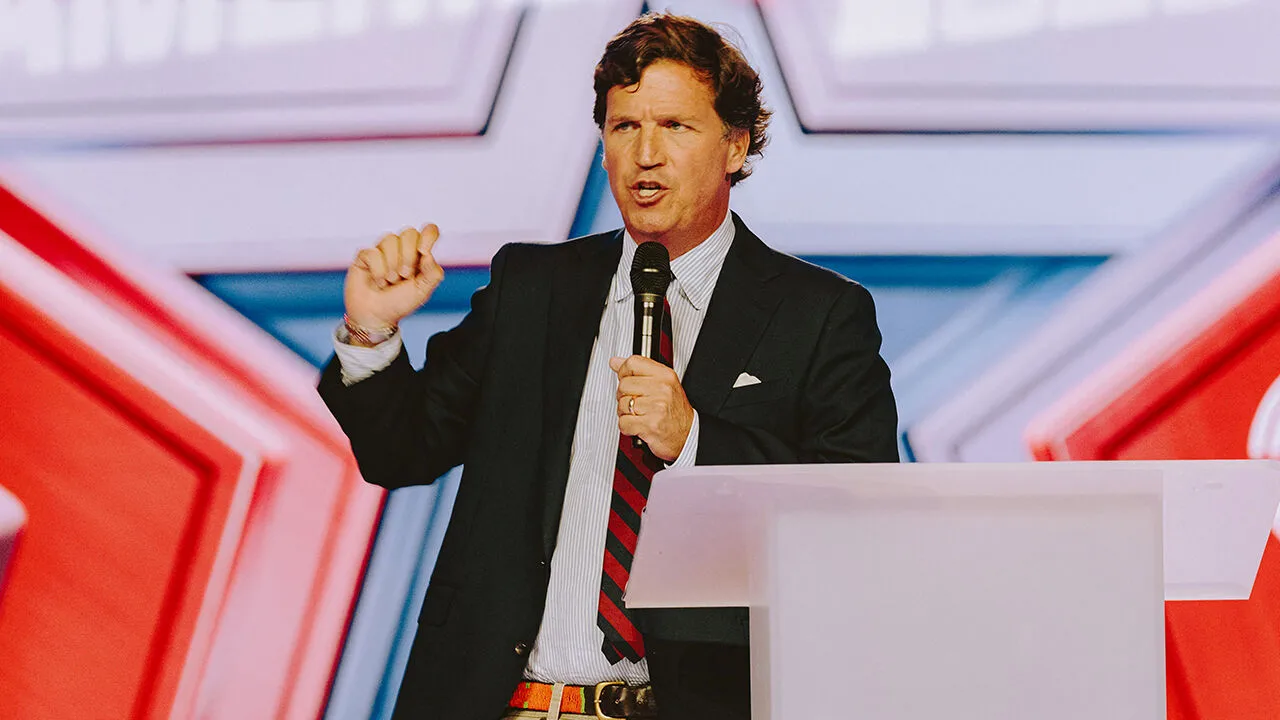
Paris (Imran Y. CHOUDHRY) :- Former Press Secretary to the President, Former Press Minister to the Embassy of Pakistan to France, Former MD, SRBC Mr. Qamar Bashir analysis : If there is one American media figure who has done more than any other to rupture the long-standing conservative consensus on Israel, it is Tucker Carlson. A son of a diplomat and a deeply patriotic American, Carlson has positioned himself as the most relentless critic of Israel’s outsized influence over U.S. foreign policy, congressional decision-making, business networks and geopolitical strategy. In his telling, Washington’s reflexive alignment with Israel has drawn the United States into wars, drained its treasury and compromised its sovereignty.
That argument was on full display in February 2026 at Ben-Gurion Airport, where Carlson conducted a combative, two-and-a-half-hour interview with U.S. Ambassador to Israel Mike Huckabee. Carlson accused American officials of “prioritizing Israel” over their own country, pressing Huckabee over civilian casualties in Gaza, biblical rhetoric invoked by Israeli leaders, extradition disputes and the scale of U.S. military aid.
Carlson’s contention was blunt: if American taxpayers provide billions in assistance — at least $16.3 billion in direct military aid since October 2023, with broader estimates exceeding $21 billion — then American officials have a duty to ask hard questions. He framed the issue as a defense of U.S. sovereignty. Why, he asked, should a prosperous, technologically advanced nation with a strong per-capita income require continuous American subsidy?
During the interview, Carlson raised the issue of Christian casualties in Gaza and the West Bank, as well as the destruction of churches, hospitals, and schools operated by Christian communities. He questioned the ambassador about reports that Christian civilians had been killed and Christian institutions damaged during military operations. The ambassador acknowledged that such incidents had occurred, describing them as unintended consequences of war and stating that Israel had expressed regret over those events.
The debate intensified when the ambassador argued that Christians enjoy greater protection in Israel than in many Muslim-majority countries. Carlson challenged that assertion, claiming that there are more Christians in Qatar alone than in Israel. He further argued that Qatar has provided land for churches, schools, and hospitals and that Christians there live openly and peacefully. In contrast, Carlson alleged that Christians in Israel face intimidation and harassment and that their numbers have declined in recent years due to emigration.
While referring to the Epstein files that have been made public in the United States, Carlson raised the issue of connections between Jeffrey Epstein, the established paedophile and blackmailer and Israeli intelligence agency Mossad, and the present President and former prime ministers of Israel. He said that Israel used Epstein’s facility to compromise influential political figures, royalty, senators, and members of Congress through illicit activities involving minors and used their engagement as a blackmailing tool to garner support for Israel in the important decision making in Washington and other influential political capitals. He confronted the Ambassador to hold the Israelis accomplices of Epstein accountable. The Ambassador admitted the connection between Epstein and Mossad but evaded the question by stating the responsibility for prosecuting crimes committed on U.S. soil lies with American authorities, since Epstein operated primarily within the United States.
During the interview, Carlson directly confronted a theological claim of Israel for the land promised to them by God “from the Nile to the Euphrates.” He pointed out that, if interpreted literally in contemporary geopolitical terms, such a claim would encompass parts of present-day Jordan, Syria, Iraq, Saudi Arabia, and beyond.
Carlson pressed the ambassador on whether this scriptural narrative could justify territorial expansion under the banner of a so-called “Greater Israel.” In response, the ambassador said that if Israel conquered those territories then why not. The tone and tenor of the Ambassador clearly suggested that he was aligned with the Israel dream of greater Israel and was playing his part to pursue the elusive Israeli dream.
During the exchange, Carlson raised the issue of civilian casualties, specifically asking about how thousands of children had been killed during Israeli military operations. The ambassador acknowledged that large numbers of civilians, including thousands of children, have died in the conflict, but maintained that the Israel Defense Forces (IDF) attempt to minimize civilian harm even much better than the US army does.
Carlson then pressed further, asking whether the ambassador was implying that the U.S. military operates with lower moral standards than the IDF. In response, the ambassador cited historical examples of American warfare, including the atomic bombings of Hiroshima and Nagasaki and the flattening of the entire Germany during World War-IIduring and civilian casualties in Iraq, Libya and Afghanistan. The Ambassador seemed so bought up by Israel that in defence of the IDF that he blamed the US army as worse than the IDF, clearly reflecting where his loyalties are and how, instead of defending the interests of the US in Israel, he was defending Israel which was against the term of employment of an Ambassador.
Under the Vienna Convention an ambassador’s foremost duty is to represent and protect the interests of the sending state—not to advocate for the host country. In a high-profile interview, the ideal ambassadorial posture would have re-centered the discussion on U.S. interests rather than theological or expansionist narratives.
Now the question has been raised as to why Israel has strengthened its regional deterrence capabilities while the United States has borne significant costs—deploying troops, maintaining military bases across the region, committing naval assets to protect sea lanes and allied interests, and providing substantial financial and military assistance. They argue that this burden has placed American personnel and infrastructure at heightened risk while increasing fiscal and geopolitical strain.
As a result of Carlson’s crusade against Israel’s tyranny in Gaza, West Bank, Lebanon, Syria, Qatar and Iran and its support based in Congress, Senate and White House, according to Pew Research Center, the public’s views of Israel have turned more negative over the past three years. More than half of U.S. adults (53%) now express an unfavorable opinion of Israel, up from 42% in March 2022 – before the Hamas attack of Oct. 7, 2023, and the ensuing Israeli invasion of the Gaza Strip.
What began as a series of interviews has now evolved into a defining ideological confrontation within American conservatism. Carlson is not merely questioning battlefield tactics or diplomatic language; he is challenging the moral, financial, and strategic foundations of America’s unconditional alignment with Israel. By forcing senators and ambassadors to defend casualty figures, regime-change rhetoric, and billions in aid, he has exposed a widening rift between interventionist orthodoxy and nationalist restraint. Whether one views his campaign as courageous accountability or destabilizing provocation, it has undeniably shattered the illusion of consensus. The Republican Party may still stand institutionally with Israel, but the grassroots conversation has changed — and once a foreign policy doctrine is dragged into open public trial, it rarely returns to unquestioned authority.
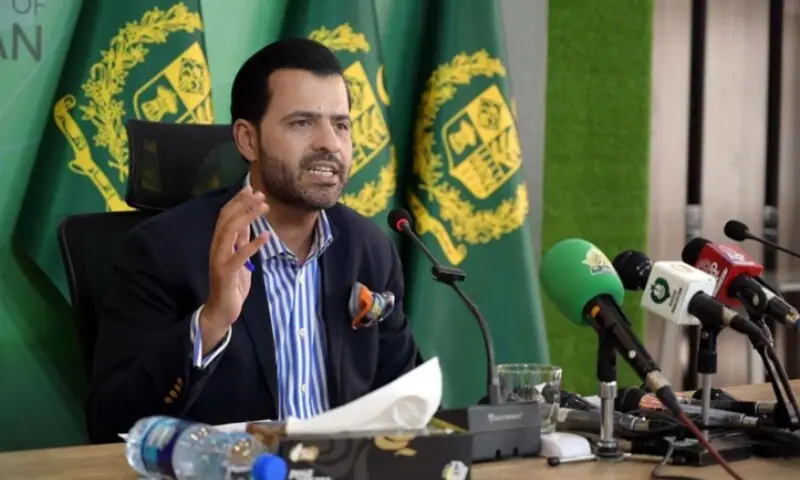
ISLAMABAD: Parliamentary Secretary for Information and Broadcasting Barrister Danyal Chaudhry on Monday stressed that national security was “non-negotiable” after Pakistan carried out strikes on terrorist targets in Afghanistan, killing over 80 terrorists.
“Pakistan has always chosen the path of dialogue and peaceful coexistence. But when Afghan soil continues to be used for proxy attacks, we have no choice but to defend our homeland. National security is non-negotiable,” Chaudhry said in a statement.
The PML-N MNA affirmed that the people of Pakistan “stand firmly” with their armed forces in the fight against terrorism.
He urged the Afghan government to take “decisive action to prevent its land from being used for cross-border militancy”, warning that lasting peace in the region depended on the “complete dismantling of terrorist sanctuaries”.
Noting that the recent operation “successfully neutralised militants involved in attacks on Pakistani soil”, Chaudhry stressed: “This action was aimed solely at those responsible for violent attacks inside Pakistan. Every precaution was taken to protect innocent lives.”
He also pointed to Afghanistan’s emergence as a “sanctuary for multiple terrorist groups”. Referring to a United Nations report, he noted that militants from 21 terror outfits were operating from Afghan territory, posing a serious threat to regional stability.
He specifically called out India’s “continued support for terrorist networks”.
“India is actively funding and training these groups, equipping them to carry out cross-border attacks against Pakistan. Such elements deserve no concessions,” the parliamentary secretary asserted.
His remarks came after Pakistan carried out airstrikes on Afghanistan in a retaliatory operation targeting groups responsible for recent suicide bombings in Pakistan.
The strikes killed “more than 80 terrorists”, according to security sources.
The strikes were conducted in retaliation for a series of suicide attacks in Islamabad, Bajaur, and Bannu that had claimed the lives of Pakistani security personnel and civilians. Authorities described the operation as intelligence-based and proportionate, aimed solely at those responsible for the attacks.
‘Decisive struggle against terrorism’
Separately, Khyber Pakhtunkhwa Governor Faisal Karim Kundi asserted that the country will “not allow our soil to be destabilised by forces operating from across the border in Afghanistan”.
In a post on X, he said: “The citizens of Pakistan, especially the resilient people of Khyber Pakhtunkhwa, stand firmly with our armed forces and security institutions in the defense of our homeland.”
He further said: “The sacrifices of our martyrs bind us together as one nation. In this decisive struggle against terrorism, Pakistan stands united, resolute, and unwavering.
“Our sovereignty is non-negotiable, and the people of this country stand shoulder to shoulder with the state to protect it at all costs.”
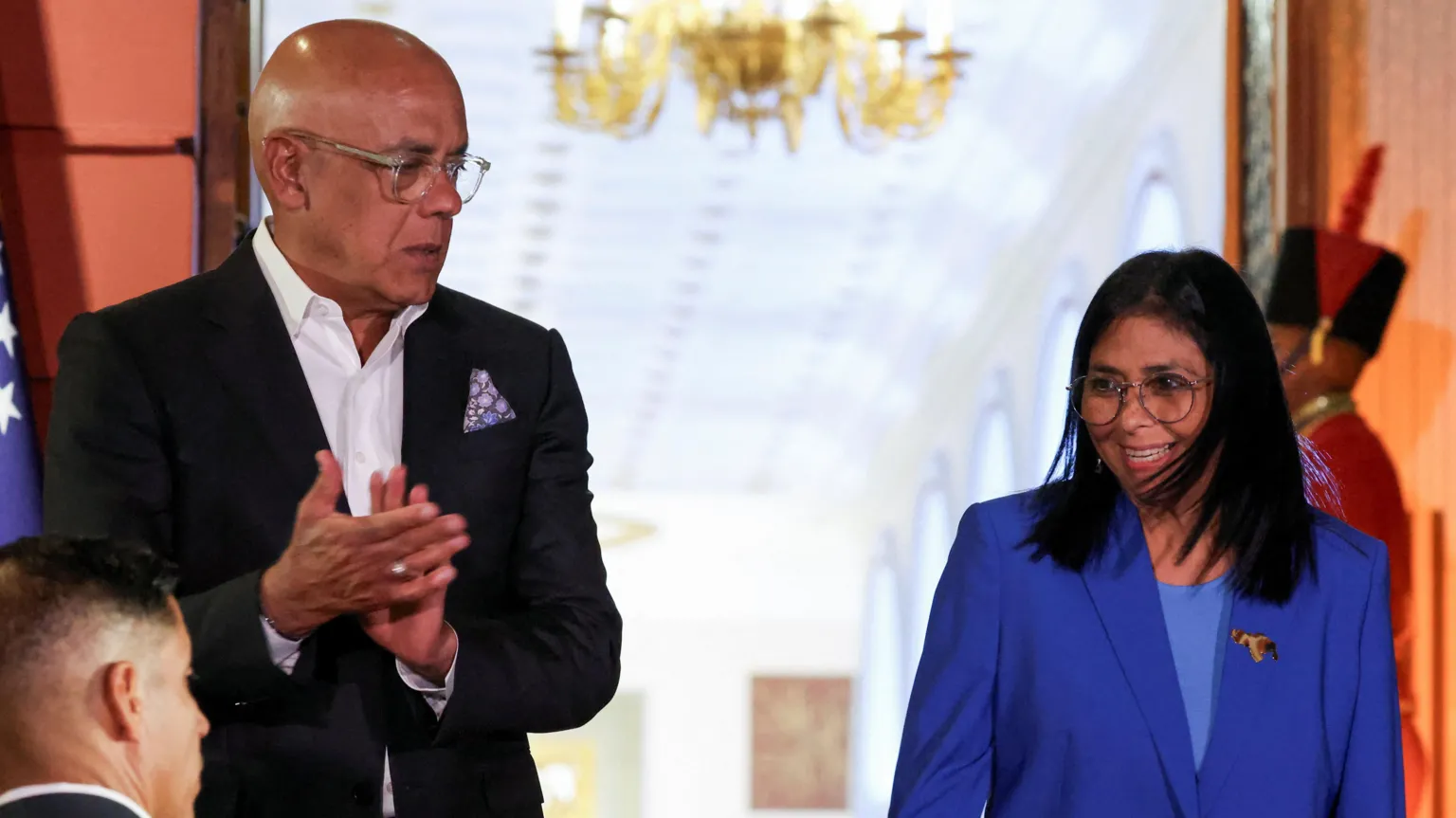
A total of 1,557 Venezuelan political prisoners have applied for amnesty under a new law introduced on Thursday, the country’s National Assembly President has said.
Jorge Rodríguez, brother of Venezuelan interim President Delcy Rodríguez and an ally of former President Nicolás Maduro, also said “hundreds” of prisoners had already been released.
Among them is politician Juan Pablo Guanipa, one of several opposition voices to have criticised the law for excluding certain prisoners.
The US has urged Venezuela to speed up its release of political prisoners since US forces seized Maduro in a raid on 3 January. Venezuela’s socialist government has always denied holding political prisoners.
At a news conference on Saturday Jorge Rodríguez said 1,557 release requests were being addressed “immediately” and ultimately the legislation would extend to 11,000 prisoners.
The government first announced days after Maduro’s capture, on 8 January, that “a significant number” of prisoners would be freed as a goodwill gesture.
Opposition and human rights groups have said the government under Maduro used detentions of political prisoners to stamp out dissent and silence critics for years.
These groups have also criticised the new law. One frequently cited criticism is that it would not extend amnesty to those who called for foreign armed intervention in Venezuela, BBC Latin America specialist Luis Fajardo says.
He noted that law professor Juan Carlos Apitz, of the Central University of Venezuela, told CNN Español that that part of the amnesty law “has a name and surname”. “That paragraph is the Maria Corina Machado paragraph.”
It is not clear if the amnesty would actually cover Machado, who won last year’s Nobel Peace Prize, Fajardo said.
He added that other controversial aspects of the law include the apparent exclusion from amnesty benefits of dozens of military officers involved in rebellions against the Maduro administration over the years.
On Saturday, Rodríguez said it is “releases from Zona Seven of El Helicoide that they’re handling first”.
Those jailed at the infamous prison in Caracas would be released “over the next few hours”, he added.
Activists say some family members of those imprisoned in the facility have gone on hunger strike to demand the release of their relatives.
US President Donald Trump said that El Helicoide would be closed after Maduro’s capture.
Maduro is awaiting trial in custody in the US alongside his wife Cilia Flores and has pleaded not guilty to drugs and weapons charges, saying that he is a “prisoner of war”.


How the World Is Forced to Fund the Iran War

Scholars Urge UN to Protect Iran’s Scientific Sites Amid Airstrikes Global Academics Warn Attacks Threaten Research, Health, and Civilian Safety

How Iran Humiliated U.S. and Israeli Power


-

 Europe News1 year ago
Chaos and unproven theories surround Tates’ release from Romania
-

 American News1 year ago
Trump expands exemptions from Canada and Mexico tariffs
-

 American News1 year ago
Trump Expels Zelensky from the White House
-

 Pakistan News9 months ago
Comprehensive Analysis Report-The Faranian National Conference on Maritime Affairs-By Kashif Firaz Ahmed
-

 American News1 year ago
Zelensky bruised but upbeat after diplomatic whirlwind
-

 Art & Culture1 year ago
The Indian film showing the bride’s ‘humiliation’ in arranged marriage
-

 Art & Culture1 year ago
International Agriculture Exhibition held in Paris
-

 Pakistan News1 year ago
Can Pakistan be a Hard State?