
war
Iran’s Strategic Victory Without a Battlefield


Paris (Imran Y. CHOUDHRY) :- Former Press Secretary to the President, Former Press Minister to the Embassy of Pakistan to France, Former MD, SRBC Mr. Qamar Bashir analysis : War is not always decided by the side that fires the first missile. Sometimes it is decided by the side that convinces its adversary that pulling the trigger would cost more than standing down. In the current standoff between the United States and Iran, this quieter form of victory is precisely what Tehran has achieved. Despite overwhelming American military superiority, despite aircraft carriers moving into the Arabian Sea, the Persian Gulf, and the Indian Ocean, and despite the familiar language of deterrence and coercion, Iran has so far prevented a direct U.S. attack. This outcome is not accidental, nor is it a product of fear or retreat on Iran’s part. It is the result of a calculated, multidimensional strategy that exploits global fatigue with war, fractures within Western alliances, domestic pressures inside the United States, and the irreversible shift toward a multipolar world.
If one were sitting in the Oval Office today, faced with the question of whether to strike Iran or step back, the decision would be far more complex than the raw military balance suggests. Iran is not Iraq in 2003, nor Libya in 2011. It is a large, populous, geographically fortified state with deep historical memory, layered alliances, and a proven capacity to absorb pressure while slowly turning it back on its adversaries.
From a purely military perspective, the United States could inflict serious damage on Iranian infrastructure. But timing matters. Any attack launched in the midst of an ongoing Gaza war would instantly fuse multiple theaters into a single regional confrontation. Hezbollah’s posture in Lebanon, Hamas’s survival despite months of bombardment, and the latent activation potential of Iraqi, Syrian, and Yemeni fronts mean escalation would not remain contained. A strike on Iran would not be a discrete operation; it would be a spark in a room filled with gas.
Target selection presents an even deeper dilemma. Hitting nuclear facilities risks regional environmental catastrophe and global economic shock. Targeting leadership would validate Iran’s long-standing narrative of external regime-change attempts and almost certainly unify the population rather than fracture it. Striking conventional military assets might satisfy tactical logic but would fail strategically, as Iran’s doctrine relies on dispersion, redundancy, and asymmetry rather than centralized command structures. In every scenario, the United States would be initiating a conflict whose second and third-order consequences are unknowable, but whose costs are guaranteed.
Economically, the calculus is equally unforgiving. Iran’s strength lies not in its economy but in its ability to disrupt the global economy. The Strait of Hormuz remains the world’s most sensitive energy chokepoint, and even limited instability there would send oil prices soaring. At a moment when global supply chains are already strained and inflation remains politically toxic in Western democracies, voluntarily triggering an energy shock would be an act of strategic self-harm. Europe, already grappling with immigration pressures, industrial decline, and political fragmentation, has made it clear it will not sign up for another Middle Eastern war that destabilizes markets and fuels domestic unrest. NATO’s reluctance is not ideological; it is existential.
The geopolitical environment further constrains Washington. China views Iran not as a client, but as a critical node in its energy security and Belt-and-Road connectivity. Russia, locked in its own confrontation with the West, has every incentive to see American attention and resources diverted. Neither power needs to intervene militarily to shape outcomes; their diplomatic backing and economic engagement alone raise the cost of American escalation. The Islamic world, meanwhile, is no longer passive. Iran’s framing of resistance, sovereignty, and selective engagement resonates across Muslim societies that see double standards in how nuclear weapons, occupation, and self-defense are judged.
Perhaps most underestimated is Iran’s mastery of narrative warfare. While Washington mobilizes fleets, Tehran mobilizes legitimacy. Iran’s leadership has projected calm, consistency, and defiance without theatrical bravado. There have been no panic signals, no evacuations, no visible fear. This composure matters. It signals confidence not only to allies but to adversaries, suggesting that Iran has already priced in escalation and prepared accordingly.
In contrast, the United States has struggled to manage its own information environment. The most sustained criticism of a potential war with Iran has not come from foreign governments but from within American society itself. Journalists, academics, activists, and digital influencers have shaped a narrative that questions priorities, hypocrisy, and moral credibility. Protests in cities like Minneapolis are not isolated events; they are symptoms of a deeper crisis of legitimacy. When citizens see naval armadas deployed abroad while domestic grievances remain unresolved, the contrast becomes politically explosive.
This internal pressure fundamentally alters presidential decision-making. Any move toward war would have to be justified not only to Congress and allies but to a skeptical public that remembers Iraq, Afghanistan, and Libya all too well. The optics of defending foreign demonstrators or foreign governments while struggling to reconcile divisions at home weaken the moral authority required for sustained military action.
Recent American actions elsewhere have only amplified this skepticism. Aggressive posturing toward Venezuela, including overt regime-change rhetoric and economic coercion, has drawn condemnation both internationally and domestically. Instead of reinforcing U.S. leadership, these actions have reinforced perceptions of overreach and selective application of international norms. Each such episode chips away at the credibility needed to rally support for another confrontation.
Against this backdrop, Iran’s refusal to accept externally imposed limits on its missile range or to hand over uranium stockpiles is not mere obstinacy; it is a defense of sovereign equality. The contrast with Israel, which possesses an undeclared nuclear arsenal outside international inspection regimes, is not lost on global audiences. The inconsistency in demands underscores Iran’s argument that the issue is not nonproliferation, but power hierarchy.
Iran’s internal resilience also matters. The Iranian political system was born from mass mobilization, not foreign installation. This history shapes both governance and resistance. The leadership understands that legitimacy flows inward, not outward. That same awareness explains why Iran has focused on endurance rather than provocation, on patience rather than panic.
If one were advising a U.S. president today, the pressures would converge toward restraint. Escalation risks regional war, economic shock, alliance fracture, and domestic backlash. De-escalation risks a perceived loss of face, but that loss is temporary and largely symbolic. War, by contrast, would be irreversible.
This is where Iran’s success becomes evident. By refusing to be baited, by maintaining strategic calm, by aligning itself with broader global trends toward multipolarity, and by allowing the contradictions of American power to surface on their own, Iran has so far won without firing a shot. The fleets can linger, statements can harden, but as long as the trigger is not pulled, the outcome speaks for itself.
In the end, power is not only the ability to destroy, but the ability to compel restraint in an adversary who possesses far greater destructive capacity. By that measure, Iran’s achievement is significant. It has transformed imminence into hesitation, pressure into paralysis, and threat into debate. For a superpower accustomed to dictating terms, hesitation itself becomes the story. And for a regional power long assumed to be on the defensive, survival without submission becomes a form of victory.
The greatest irony is that Iran’s success exposes a deeper truth about the current world order: brute force no longer guarantees compliance, and credibility cannot be enforced by aircraft carriers alone. In a world shaped by narrative, networks, and multipolar constraints, restraint can be the most powerful weapon of all.



war
Scholars Urge UN to Protect Iran’s Scientific Sites Amid Airstrikes Global Academics Warn Attacks Threaten Research, Health, and Civilian Safety
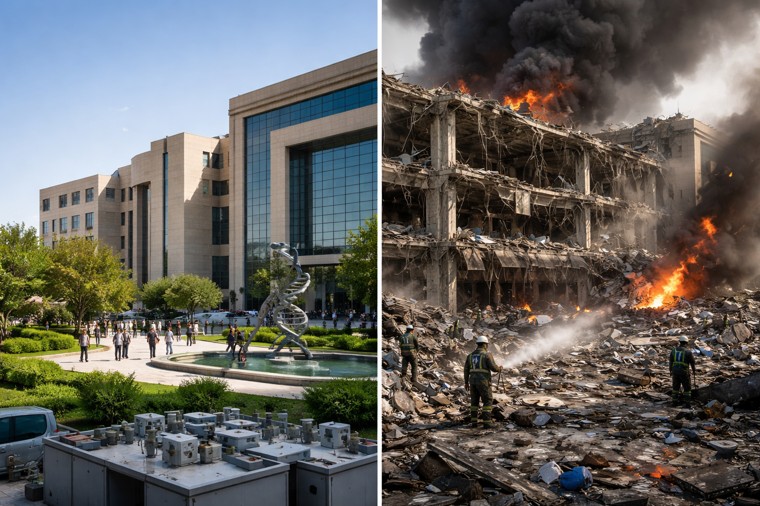
LONDON / GENEVA / PARIS / NEW YORK (Shabnam Delfani) — A broad coalition of academics, researchers, students, and members of the international scholarly community has issued a strongly worded open letter condemning a series of strikes on universities, laboratories, hospitals, and research facilities in Iran, urging immediate international action to safeguard civilian scientific infrastructure amid the ongoing U.S.-Israeli military operations against the country.
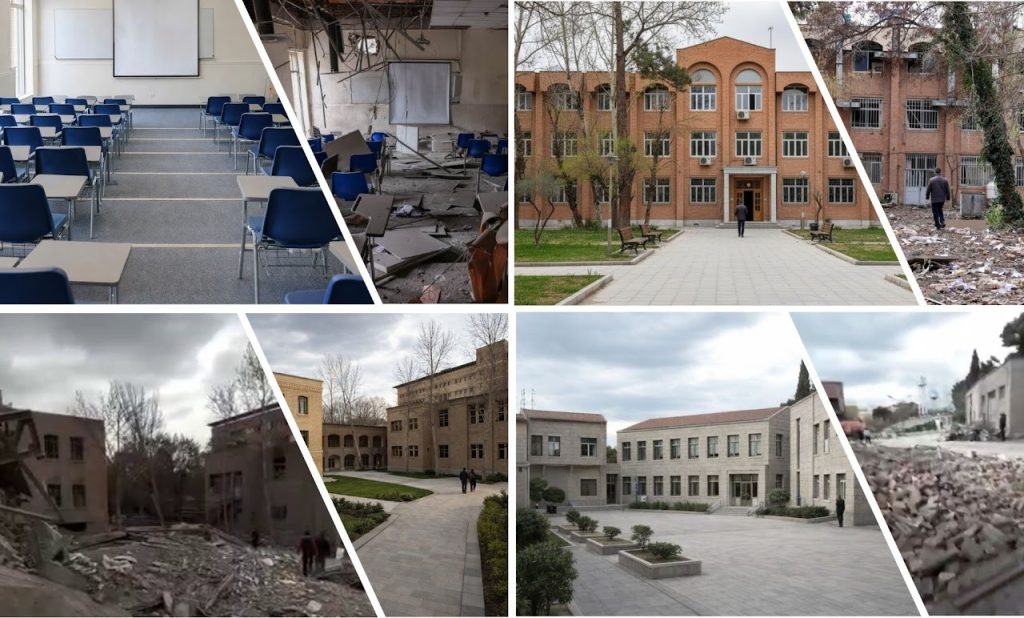
The letter, addressed to United Nations Secretary-General António Guterres, UNESCO Director-General Audrey Azoulay, UN High Commissioner for Human Rights Volker Türk, and the governments of all parties involved, highlights at least 21 reported attacks on scientific and educational institutions. It warns that such assaults endanger researchers, students, medical personnel, and the broader public while inflicting irreversible damage on scientific progress and societal well-being.
Recent strikes between March 28 and 31, 2026, have drawn particular alarm. Attacks targeted Isfahan University of Technology in Isfahan, as well as Iran University of Science and Technology and Amirkabir University of Technology in Tehran. On March 31, one of Iran’s largest pharmaceutical research and development centers, Tofigh Daru (also known as Tofiq Daru), was severely damaged. The facility is a major producer of anesthetics and critical treatments for multiple sclerosis and cancer.
“Scientific and educational institutions are civilian spaces essential to public health, knowledge, and human survival,” the open letter declares. “Their destruction endangers researchers, students, medical personnel, and the broader public, while causing lasting harm to science and society.”
The signatories issue a forceful call for all parties to the conflict to immediately cease attacks on civilian scientific and educational sites, including laboratories, universities, hospitals, research centers, libraries, and archives. They further demand that the United Nations, UNESCO, and other relevant international bodies take concrete steps: thoroughly document the damage inflicted on these institutions, provide protection and support to affected scholars and students, launch independent investigations into potential violations of international humanitarian law, and ensure that those responsible for unlawful strikes on protected civilian infrastructure are identified and held accountable through impartial legal mechanisms.
“Science is not a military target. Universities and laboratories must not become battlefields,” the letter asserts. It concludes with an urgent appeal to the international community to act decisively to protect scientific infrastructure, defend academic life, and uphold the fundamental principle that institutions dedicated to the advancement of knowledge must never be treated as expendable in times of war.
In response to the escalating strikes, Iranian officials have warned of possible retaliation against American and Israeli-linked academic campuses in the region, raising fears of a dangerous widening of the conflict into educational spheres.
The open letter, signed collectively by “academics, researchers, students, and members of the global scholarly community,” underscores the long-standing international consensus on preserving the sanctity of scientific and educational institutions even amid geopolitical tensions and armed conflict. It stresses that safeguarding academic freedom and scientific capacity serves the collective well-being of humanity and must be defended against future assaults.
This appeal comes as reports continue to emerge of significant material damage to Iranian academic and medical research facilities, with some accounts noting injuries among university staff. The global scholarly community’s unified stance reflects growing concern that the targeting of Iranian Scientists and knowledge-producing institutions threatens not only Iran but the broader fabric of international scientific cooperation.
Please Sign: https://docs.google.com/forms/d/e/1FAIpQLSd9yA3741PhNbeae-pWxiNU-buR5PJTgi5lYHXmvB11ZoMybA/viewform
Paris (Imran Y. CHOUDHRY) :- Former Press Secretary to the President, Former Press Minister to the Embassy of Pakistan to France, Former MD, SRBC Mr. Qamar Bashir analysis : The war that has engulfed the Middle East over the past several weeks is no longer merely a confrontation of missiles, drones, and military doctrines. It is rapidly revealing itself as a deeper contest over geography, energy, and long-term global control. Beneath the smoke of bombed installations and the rhetoric of national security lies a far more consequential objective: the redrawing of the world’s most critical energy routes. What began as a campaign justified on the basis of an “imminent threat” from Iran is now unfolding into a strategic effort that could permanently alter how oil flows from the Gulf to the rest of the world.
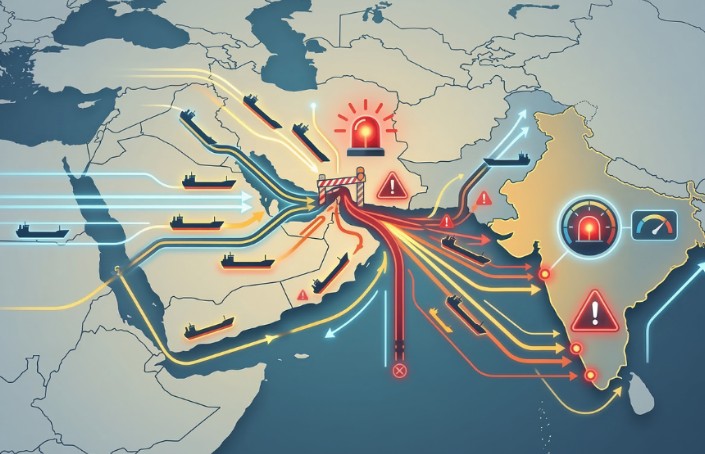
At the heart of this transformation lies the Strait of Hormuz, the narrow maritime corridor through which nearly one-fifth of the world’s oil supply passes every day. For decades, this chokepoint has served as both a lifeline and a vulnerability for global energy markets. Any disruption here—whether through war, sanctions, or sabotage—immediately reverberates across continents, sending oil prices soaring and economies into instability. The current conflict has demonstrated just how fragile this artery truly is. Tanker attacks, rising insurance premiums, and rerouted shipping lanes have exposed the risks of relying on a single, narrow passage for such a massive share of global oil.
It is within this context that a striking and controversial vision has emerged. Israeli leadership, through a series of statements and strategic hints, has pointed toward the possibility of bypassing the Strait of Hormuz altogether. The idea is deceptively simple yet geopolitically profound: construct a pipeline that would transport oil from Gulf producers across the Arabian Peninsula and into Israel, where it could then be shipped via Mediterranean ports to Europe and beyond. Such a route would eliminate dependence on Hormuz, neutralize Iran’s ability to disrupt global energy flows, and reposition Israel as a central hub in the international oil trade.
While versions of this idea have existed in policy circles for years—most notably through discussions around the Eilat-Ashkelon pipeline—the present war appears to have injected new urgency into its consideration. What was once a theoretical infrastructure project is now being framed as a strategic necessity. The logic is clear: if Hormuz can be disrupted, then it must be bypassed. And if it is bypassed through Israeli territory, then Israel gains unprecedented leverage over the energy lifelines of both Europe and parts of Asia.
This raises a deeply uncomfortable question: was the war itself, at least in part, shaped by this long-term vision? The official justification centered on the notion of an imminent Iranian threat—particularly the fear that Iran might soon develop nuclear weapons and long-range missile capabilities capable of striking Europe or even the United States. Yet, as the conflict has progressed, cracks have begun to appear in this narrative. Statements from U.S. intelligence officials in congressional hearings have indicated that Iran neither possessed the immediate capability to strike the United States nor demonstrated an intent to do so in the near term.
Instead, the threat appears to have been framed in hypothetical terms—what Iran could become, rather than what it currently is. The argument shifted from “imminent danger” to “imagined future risk.” This distinction is not merely semantic; it raises serious questions about the legitimacy of the war itself. If the threat was not immediate, then the rationale for initiating such a large-scale conflict becomes far more questionable.
Against this backdrop, recent military actions take on a different meaning. Strikes on Iranian energy infrastructure, including major gas fields and oil facilities, appear less like isolated tactical operations and more like components of a broader strategic script. By provoking Iranian retaliation—particularly against regional oil installations and shipping routes—the conflict has effectively demonstrated the vulnerability of the Strait of Hormuz. In doing so, it has strengthened the case for alternative routes, including the proposed pipeline through Israel.
Iran, for its part, has responded in a manner that underscores its own strategic leverage. By targeting shipping lanes and signaling its ability to disrupt Hormuz, Tehran has shown that it can impose a global cost for any sustained aggression against it. The result is a paradox: every escalation that threatens global oil supply simultaneously reinforces the argument for bypassing the very chokepoint Iran influences.
Yet the conflict is not confined to economic and strategic calculations alone. It carries within it the risk of a far more dangerous escalation—one rooted in religion and symbolism. Reports of missile debris landing dangerously close to Jerusalem’s most sacred sites, including the Western Wall and the Dome of the Rock, serve as a stark reminder of how quickly this war could transcend geopolitics and ignite a broader global crisis. Had these sites been directly struck, the consequences would have been catastrophic, drawing in millions of believers and transforming a regional war into a wider religious confrontation.
Meanwhile, a subtle but significant divergence appears to be emerging between the United States and Israel. Washington has signaled, through public statements, that it believes major military objectives have already been achieved. Claims that Iran’s military capabilities have been severely degraded suggest a desire to declare victory and potentially de-escalate. Israel, however, has articulated a far more open-ended vision of the conflict. Its leadership continues to emphasize that multiple objectives remain unfulfilled, and that the endgame is still distant.
This divergence is critical. While the United States bears the overwhelming financial and reputational burden of the war—spending billions of dollars, straining alliances, and facing global criticism—Israel stands to gain the most if its long-term strategic goals are realized. The transformation of Israel into a central energy transit hub would not only enhance its economic position but also grant it leverage over countries dependent on Middle Eastern oil.
For the United States, the costs are mounting. Beyond the direct military expenditures, estimated at nearly a billion dollars per day, there is the erosion of credibility. Allies question Washington’s consistency, adversaries exploit its vulnerabilities, and neutral states grow increasingly wary of its intentions. The perception of having entered a war based on speculative threats rather than concrete evidence further undermines its standing.
In contrast, Israel’s potential gains are structural and enduring. Control over a major alternative energy corridor would place it at the center of global oil logistics, allowing it to influence supply, pricing, and strategic alignment. Such a shift would echo historical precedents, where control over key transit routes—whether the Suez Canal or the Strait of Malacca—translated into geopolitical dominance.
As the war continues, the world stands at a crossroads. If the Strait of Hormuz remains unstable and the pipeline vision gains momentum, we may be witnessing the beginning of a new global energy order. One in which traditional chokepoints are bypassed, new corridors are established, and power is redistributed accordingly.
The question is no longer who is winning on the battlefield. It is who will control the pathways through which the world’s lifeblood—its energy—flows. In that contest, the most decisive victories may not be measured in territory captured or enemies defeated, but in pipelines laid and routes redefined.
Paris (Imran Y. CHOUDHRY) :- Former Press Secretary to the President, Former Press Minister to the Embassy of Pakistan to France, Former MD, SRBC Mr. Qamar Bashir analysis : As the conflict enters its third week—approaching the twentieth day—an urgent and uncomfortable question is beginning to surface across policy circles, media debates, and public discourse: Who is the real beneficiary of this war? Beyond the fog of propaganda, beyond the daily casualty figures and battlefield claims, a clearer geopolitical picture is emerging—one that challenges conventional narratives and exposes a deeply asymmetric outcome.
At first glance, the war appears to be a brutal contest between the United States and Iran, with Israel positioned as a frontline ally. Yet, when the layers are peeled back, a different reality unfolds. Israel, despite limited direct losses, appears to be achieving long-standing strategic objectives. The United States, on the other hand, is bearing the overwhelming burden—militarily, economically, and diplomatically—while Iran, though heavily damaged, occupies a complex middle ground as both victim and resilient actor.
Iran has undoubtedly suffered immense losses. Its military infrastructure has been degraded, key leadership figures targeted, and economic systems disrupted. Strategic assets—ranging from oil facilities to logistical networks—have been hit repeatedly. Civilian hardship is mounting, and the country’s economic backbone is under unprecedented strain. In terms of physical destruction, human casualties, and systemic disruption, Iran stands as one of the primary victims of the conflict.
Yet, paradoxically, Iran has also demonstrated a degree of endurance that complicates the narrative of defeat. Its ability to disrupt shipping lanes, influence regional proxies, and impose costs on its adversaries has elevated its image as a power capable of asymmetric resistance. While materially weakened, Iran has not collapsed—nor has it surrendered strategic leverage.
In contrast, the United States finds itself in an increasingly precarious position. The financial cost alone is staggering, with estimates suggesting expenditures approaching $1 billion per day when accounting for military deployments, logistics, and operational support. Thousands of American personnel have been deployed across vast distances, stretching supply lines and complicating sustainment efforts. Casualties—both fatalities and injuries—are mounting, further intensifying domestic scrutiny.
More critically, the United States is experiencing a profound erosion of its global image. Long regarded as a stabilizing force and architect of a rules-based international order, Washington now faces accusations of unilateralism and overreach. The perception that it is enforcing its will through military dominance rather than diplomacy is damaging its credibility, particularly among allies and neutral states.
This reputational decline is most visible in the Middle East itself. U.S. bases across the region have come under sustained pressure, with several reportedly damaged or rendered less operational. Gulf states—once reliable partners—are increasingly questioning the value of hosting American military infrastructure. Rather than ensuring security, these bases have become potential targets, exposing host nations to heightened risks.
The economic repercussions are equally severe. The disruption of the Strait of Hormuz—through which approximately 20% of global oil supply flows—has triggered a sharp spike in energy prices, with increases of up to 40% in some markets. Oil prices exceeding $100 per barrel have strained global economies, particularly those heavily dependent on imports. Supply chains have been disrupted, inflationary pressures intensified, and growth trajectories derailed.
For many countries, the consequences are existential. Energy shortages are forcing governments to ration fuel, shut down industries, and curtail public services. Universities are closing, businesses are scaling back operations, and entire sectors are slowing to a crawl. The global economy—already fragile—is now facing a contraction driven by the very lifeblood of modern industry: energy.
The Gulf states themselves are among the hardest hit. Nations such as Saudi Arabia, the United Arab Emirates, Qatar, Kuwait, and Bahrain are grappling with a multifaceted crisis. Oil production facilities and refineries have been damaged or shut down. Airports and critical infrastructure have come under attack. Expatriate populations—the backbone of their economies—are fleeing in large numbers, creating labor shortages and economic instability.
Air traffic, once heavily routed through hubs like Dubai and Doha, is being diverted elsewhere, further eroding revenue streams. Tourism has collapsed, trade has slowed, and investor confidence has weakened. These economies, built on connectivity and stability, are now facing unprecedented disruption.
And yet, amid this widespread devastation, Israel appears remarkably insulated. Its casualty figures remain comparatively low, and its infrastructure has sustained minimal damage relative to the scale of destruction elsewhere. More importantly, Israel is advancing its strategic objectives with striking effectiveness.
For years, Israel has sought to weaken regional adversaries, particularly Iran and its network of allies. This conflict has provided the conditions to do precisely that. Iranian capabilities are being systematically degraded. Regional actors are destabilized. The geopolitical focus has shifted away from Israel’s own actions, allowing it greater operational freedom.
In Gaza, military operations continue with reduced international scrutiny. In the West Bank, territorial encroachments are accelerating. In southern Lebanon, intensified strikes are being justified under the pretext of countering militant threats. With global attention diverted to the broader war, Israel is pursuing multiple objectives simultaneously—military, territorial, and political.
Perhaps most significantly, Israel has succeeded in shifting the burden of the conflict onto the United States. Washington is now the face of the war, absorbing the financial costs, diplomatic backlash, and strategic risks. Israel, while deeply involved, operates with a degree of insulation that allows it to reap benefits without bearing proportional costs.
When the hierarchy of impact is assessed, a stark picture emerges. Iran, in terms of physical destruction and economic damage, ranks among the most affected. The United States follows closely, bearing immense financial costs and suffering a decline in global standing. The Gulf states, once pillars of regional stability, are experiencing severe economic and security disruptions. The broader international community is grappling with energy shortages and economic contraction.
At the very bottom of this hierarchy—least affected, yet most strategically advantaged—stands Israel.
This reality demands a fundamental reassessment of strategy, particularly in Washington. The United States must confront a difficult truth: it is investing enormous resources in a conflict that is yielding limited direct benefits while enabling another actor to achieve its long-term objectives.
History offers sobering lessons. From Vietnam to Iraq to Afghanistan, prolonged engagements driven by strategic overconfidence have resulted in costly outcomes and lasting reputational damage. The current trajectory risks repeating those patterns, with potentially even greater global consequences.
The path forward requires clarity, courage, and a willingness to recalibrate. Continuing down the current course in the name of credibility or face-saving would only deepen the quagmire. Instead, a strategic pivot—grounded in national interest rather than inertia—is essential.
De-escalation, diplomatic engagement, and a redefinition of objectives must replace open-ended military commitment. The United States must ask not only how to win the war, but whether the war, as currently structured, is worth winning at all.
As the twentieth day approaches, the answer to the central question becomes increasingly clear. This is not a balanced conflict with shared gains and losses. It is a war in which one actor is quietly consolidating advantage while others bear the visible costs.
Recognizing that reality is the first step toward changing it.


Scholars Urge UN to Protect Iran’s Scientific Sites Amid Airstrikes Global Academics Warn Attacks Threaten Research, Health, and Civilian Safety

Inheritance of a woman in Islamic law ; From Implications to Challenges! _ By Syeda Fatima Batool

Dr. Mohammad Faisal Joins Distinguished Quetta Association Event in London Gathering Reinforces Shared Military Heritage of Pakistan and Britain


-

 Europe News1 year ago
Chaos and unproven theories surround Tates’ release from Romania
-

 American News1 year ago
Trump expands exemptions from Canada and Mexico tariffs
-

 American News1 year ago
Trump Expels Zelensky from the White House
-

 Pakistan News9 months ago
Comprehensive Analysis Report-The Faranian National Conference on Maritime Affairs-By Kashif Firaz Ahmed
-

 American News1 year ago
Zelensky bruised but upbeat after diplomatic whirlwind
-

 Art & Culture1 year ago
The Indian film showing the bride’s ‘humiliation’ in arranged marriage
-

 Art & Culture1 year ago
International Agriculture Exhibition held in Paris
-

 Pakistan News1 year ago
Can Pakistan be a Hard State?