
war
Flights cancelled and new travel warnings issued after Iran strikes


Airlines are continuing to cancel and divert flights in the Middle East after the US and Israel launched strikes against Iran.
Flights in and out of airports in Tel Aviv, Dubai, Doha and other international hubs in the region have been suspended.
The UK Foreign Office is warning British citizens against all but essential travel to Bahrain, Kuwait, Qatar and the United Arab Emirates (UAE). Those already there have been advised to shelter.
Iran has launched attacks on the Gulf states as part its retaliation to US and Israeli strikes which began early on Saturday. Long-haul travel is being affected more widely, with Heathrow urging travellers to check with their airlines.
British government officials are understood to be formulating plans to potentially evacuate UK nationals from the Middle East.
But the timings of such a move remain unclear, as much of the airspace in the region remains closed.
Emirates has suspended its operations in and out of Dubai until 15:00 local time (13:00 GMT) on Monday due to airspace closures, while Etihad has suspended flights out of Abu Dhabi until 02:00 local time.
One person has been killed and 11 others injured at airports in Dubai and Abu Dhabi since the strikes began. Four of those injuries were among members of staff at Dubai International, the world’s busiest airport by passenger traffic.
British Airways has cancelled services to Tel Aviv and Bahrain until Wednesday.
It said services between Heathrow and Abu Dhabi, Amman, Bahrain, Doha, Dubai or Tel Aviv could be affected for several days.
Richard and Hannah from London had been en route to Oman but are now stuck in Bahrain.
“In the early hours of this morning a drone attacked the airport so we can’t reach Oman this evening as planned,” Hannah said on Sunday, describing an “uneasy 24 hours”.
Given the situation in the region could escalate, they are now looking to return home, Richard said.
Virgin Atlantic suspended services between London and Riyadh and Dubai over the weekend.
It has warned that flights to India, Saudi Arabia and the Maldives may take longer due to them being rerouted around the affected region.
It is among a number of airlines across the world that have had to cancel or reroute flights to avoid the closed or restricted airspace.
Airspace over Iran, Israel, Iraq, Qatar, Bahrain, Kuwait, and Syria remained closed on Sunday, with partial closures in the UAE and Saudi Arabia.
Jordanian and Lebanese airspace remains open but there is limited flight activity.
Tracking shows flights between Europe and Asia travelling via Saudi Arabia or the Caucasus.
Emma Belcher and her husband Vic were on their way back to Heathrow from a holiday in the Maldives via Dubai when their connecting flight was cancelled.
“There is absolutely no information about when they might open airspace so we don’t know how long we’ll be here,” she said.
“We were really looking forward to getting home to see the children as we haven’t been away without them before.”
Steve Rudderham and his wife had been on their way to the Maldives to celebrate their wedding anniversary but were stuck in Doha where they had been due to have a stopover.
“As the days go on and the vacation is eroded, we’re looking at plans to just to get back home,” he said.
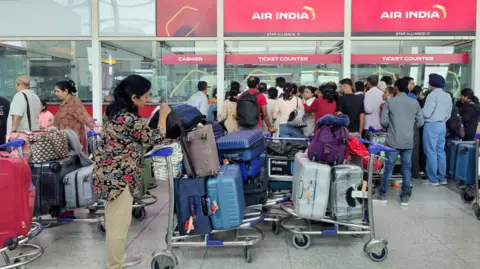
Qatar Airways said its operations remained temporarily suspended due to the closure of Qatari airspace, with a further update to be provided at 09:00 local time on Monday (06:00 GMT).
Qatar’s defence ministry said it had intercepted Iranian missiles after explosions were heard in Doha.
The UAE also said it had intercepted Iranian missiles and drones, while footage appears to show the moment a US facility in Bahrain was hit.
Kuwait said it had been targeted by Iranian missiles and drones. Explosions were heard at Erbil airport in Iraq early on Sunday morning.
The UK Foreign Office is warning “against all travel to Israel and Palestine”, and against all but essential travel to Bahrain, Qatar, Kuwait and the UAE.
British people in those areas have been urged to register their presence with the Foreign Office, with more than 76,000 people having already done so, mostly in the UAE.
For British nationals in Oman, the Foreign Office advises those in Duqm to shelter in place, and those in Salalah to leave as soon as possible if commercial means allow and follow advice from local authorities.
UK nationals in Saudi Arabia have been told to “remain indoors in a secure location”, while those in Jordan, Syria, Lebanon, Iraq, Yemen, and Turkey have been instructed to “remain vigilant” and take shelter if advised to do so.
The Foreign Office has urged people in Pakistan to be careful around protests, demonstrations, rallies and religious gatherings, after deadly pro-Iran protests broke out in several cities. It also instructed staff in the country to restrict their movements.
US President Donald Trump cited a failure to reach an agreement to limit Iran’s nuclear programme and regime change as among the reasons for launching the attack.
Prime Minister Sir Keir Starmer spoke to Trump on Saturday, having earlier said that British planes were “in the sky” over the Middle East as part of a defensive operation “to protect our people, our interests and our allies”.
Along with the leaders of France and Germany, he urged Iran to refrain from “indiscriminate” strikes.
Additional reporting by Mary Litchfield

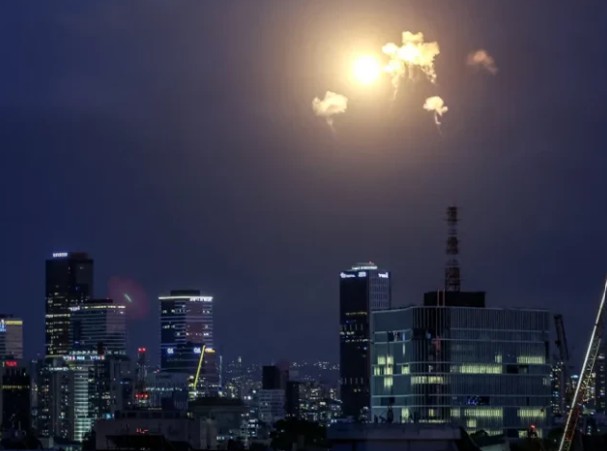
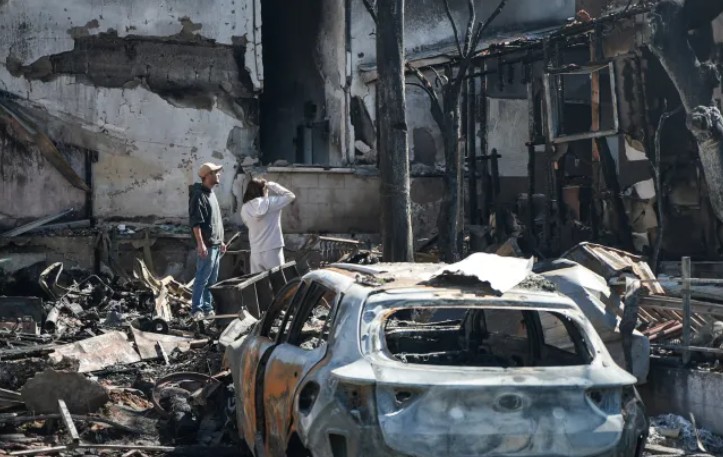
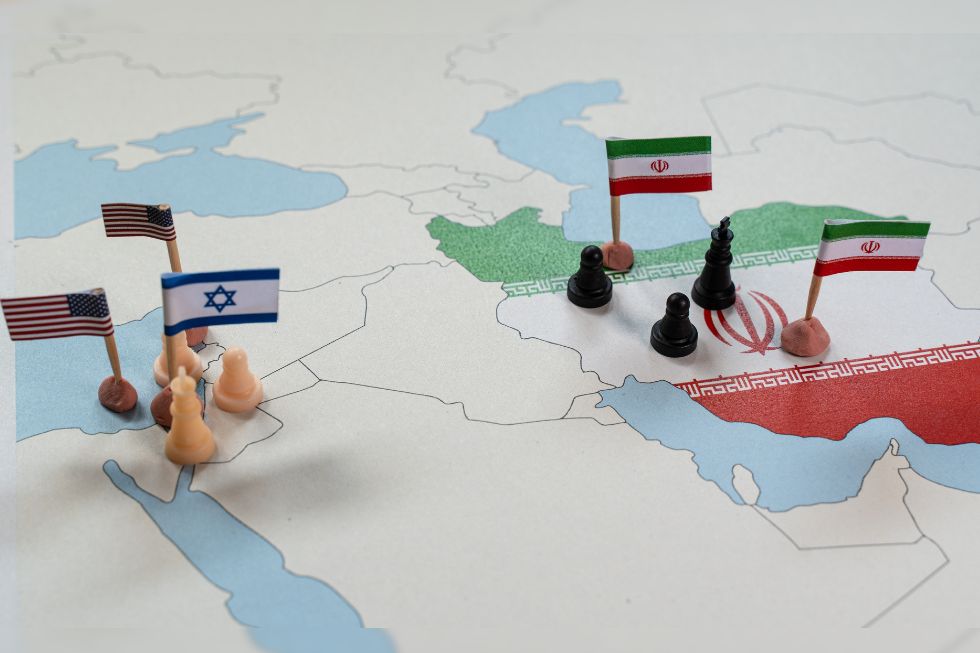
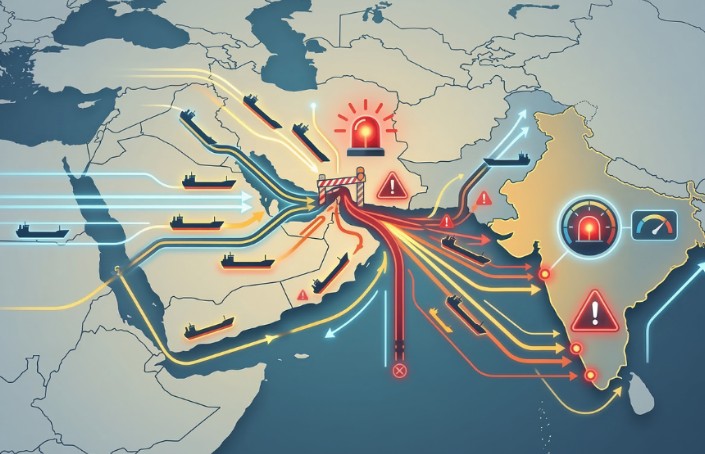
Paris (Imran Y. CHOUDHRY) :- Former Press Secretary to the President, Former Press Minister to the Embassy of Pakistan to France, Former MD, SRBC Mr. Qamar Bashir analysis : The war that has engulfed the Middle East over the past several weeks is no longer merely a confrontation of missiles, drones, and military doctrines. It is rapidly revealing itself as a deeper contest over geography, energy, and long-term global control. Beneath the smoke of bombed installations and the rhetoric of national security lies a far more consequential objective: the redrawing of the world’s most critical energy routes. What began as a campaign justified on the basis of an “imminent threat” from Iran is now unfolding into a strategic effort that could permanently alter how oil flows from the Gulf to the rest of the world.
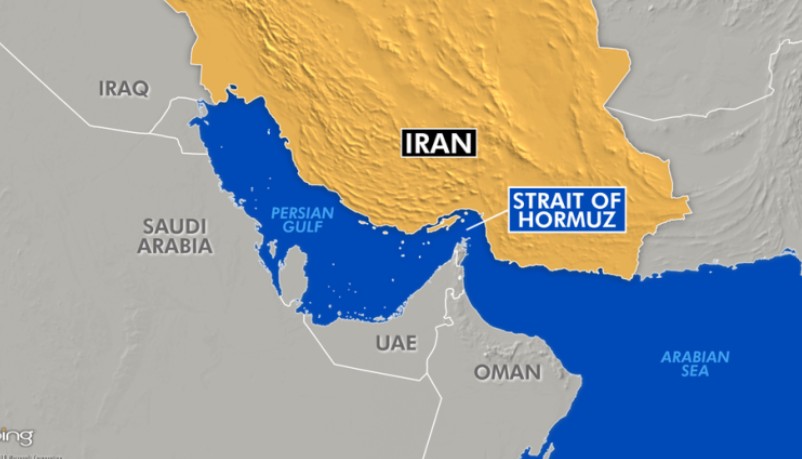
At the heart of this transformation lies the Strait of Hormuz, the narrow maritime corridor through which nearly one-fifth of the world’s oil supply passes every day. For decades, this chokepoint has served as both a lifeline and a vulnerability for global energy markets. Any disruption here—whether through war, sanctions, or sabotage—immediately reverberates across continents, sending oil prices soaring and economies into instability. The current conflict has demonstrated just how fragile this artery truly is. Tanker attacks, rising insurance premiums, and rerouted shipping lanes have exposed the risks of relying on a single, narrow passage for such a massive share of global oil.
It is within this context that a striking and controversial vision has emerged. Israeli leadership, through a series of statements and strategic hints, has pointed toward the possibility of bypassing the Strait of Hormuz altogether. The idea is deceptively simple yet geopolitically profound: construct a pipeline that would transport oil from Gulf producers across the Arabian Peninsula and into Israel, where it could then be shipped via Mediterranean ports to Europe and beyond. Such a route would eliminate dependence on Hormuz, neutralize Iran’s ability to disrupt global energy flows, and reposition Israel as a central hub in the international oil trade.
While versions of this idea have existed in policy circles for years—most notably through discussions around the Eilat-Ashkelon pipeline—the present war appears to have injected new urgency into its consideration. What was once a theoretical infrastructure project is now being framed as a strategic necessity. The logic is clear: if Hormuz can be disrupted, then it must be bypassed. And if it is bypassed through Israeli territory, then Israel gains unprecedented leverage over the energy lifelines of both Europe and parts of Asia.
This raises a deeply uncomfortable question: was the war itself, at least in part, shaped by this long-term vision? The official justification centered on the notion of an imminent Iranian threat—particularly the fear that Iran might soon develop nuclear weapons and long-range missile capabilities capable of striking Europe or even the United States. Yet, as the conflict has progressed, cracks have begun to appear in this narrative. Statements from U.S. intelligence officials in congressional hearings have indicated that Iran neither possessed the immediate capability to strike the United States nor demonstrated an intent to do so in the near term.
Instead, the threat appears to have been framed in hypothetical terms—what Iran could become, rather than what it currently is. The argument shifted from “imminent danger” to “imagined future risk.” This distinction is not merely semantic; it raises serious questions about the legitimacy of the war itself. If the threat was not immediate, then the rationale for initiating such a large-scale conflict becomes far more questionable.
Against this backdrop, recent military actions take on a different meaning. Strikes on Iranian energy infrastructure, including major gas fields and oil facilities, appear less like isolated tactical operations and more like components of a broader strategic script. By provoking Iranian retaliation—particularly against regional oil installations and shipping routes—the conflict has effectively demonstrated the vulnerability of the Strait of Hormuz. In doing so, it has strengthened the case for alternative routes, including the proposed pipeline through Israel.
Iran, for its part, has responded in a manner that underscores its own strategic leverage. By targeting shipping lanes and signaling its ability to disrupt Hormuz, Tehran has shown that it can impose a global cost for any sustained aggression against it. The result is a paradox: every escalation that threatens global oil supply simultaneously reinforces the argument for bypassing the very chokepoint Iran influences.
Yet the conflict is not confined to economic and strategic calculations alone. It carries within it the risk of a far more dangerous escalation—one rooted in religion and symbolism. Reports of missile debris landing dangerously close to Jerusalem’s most sacred sites, including the Western Wall and the Dome of the Rock, serve as a stark reminder of how quickly this war could transcend geopolitics and ignite a broader global crisis. Had these sites been directly struck, the consequences would have been catastrophic, drawing in millions of believers and transforming a regional war into a wider religious confrontation.
Meanwhile, a subtle but significant divergence appears to be emerging between the United States and Israel. Washington has signaled, through public statements, that it believes major military objectives have already been achieved. Claims that Iran’s military capabilities have been severely degraded suggest a desire to declare victory and potentially de-escalate. Israel, however, has articulated a far more open-ended vision of the conflict. Its leadership continues to emphasize that multiple objectives remain unfulfilled, and that the endgame is still distant.
This divergence is critical. While the United States bears the overwhelming financial and reputational burden of the war—spending billions of dollars, straining alliances, and facing global criticism—Israel stands to gain the most if its long-term strategic goals are realized. The transformation of Israel into a central energy transit hub would not only enhance its economic position but also grant it leverage over countries dependent on Middle Eastern oil.
For the United States, the costs are mounting. Beyond the direct military expenditures, estimated at nearly a billion dollars per day, there is the erosion of credibility. Allies question Washington’s consistency, adversaries exploit its vulnerabilities, and neutral states grow increasingly wary of its intentions. The perception of having entered a war based on speculative threats rather than concrete evidence further undermines its standing.
In contrast, Israel’s potential gains are structural and enduring. Control over a major alternative energy corridor would place it at the center of global oil logistics, allowing it to influence supply, pricing, and strategic alignment. Such a shift would echo historical precedents, where control over key transit routes—whether the Suez Canal or the Strait of Malacca—translated into geopolitical dominance.
As the war continues, the world stands at a crossroads. If the Strait of Hormuz remains unstable and the pipeline vision gains momentum, we may be witnessing the beginning of a new global energy order. One in which traditional chokepoints are bypassed, new corridors are established, and power is redistributed accordingly.
The question is no longer who is winning on the battlefield. It is who will control the pathways through which the world’s lifeblood—its energy—flows. In that contest, the most decisive victories may not be measured in territory captured or enemies defeated, but in pipelines laid and routes redefined.
Paris (Imran Y. CHOUDHRY) :- Former Press Secretary to the President, Former Press Minister to the Embassy of Pakistan to France, Former MD, SRBC Mr. Qamar Bashir analysis : As the conflict enters its third week—approaching the twentieth day—an urgent and uncomfortable question is beginning to surface across policy circles, media debates, and public discourse: Who is the real beneficiary of this war? Beyond the fog of propaganda, beyond the daily casualty figures and battlefield claims, a clearer geopolitical picture is emerging—one that challenges conventional narratives and exposes a deeply asymmetric outcome.
At first glance, the war appears to be a brutal contest between the United States and Iran, with Israel positioned as a frontline ally. Yet, when the layers are peeled back, a different reality unfolds. Israel, despite limited direct losses, appears to be achieving long-standing strategic objectives. The United States, on the other hand, is bearing the overwhelming burden—militarily, economically, and diplomatically—while Iran, though heavily damaged, occupies a complex middle ground as both victim and resilient actor.
Iran has undoubtedly suffered immense losses. Its military infrastructure has been degraded, key leadership figures targeted, and economic systems disrupted. Strategic assets—ranging from oil facilities to logistical networks—have been hit repeatedly. Civilian hardship is mounting, and the country’s economic backbone is under unprecedented strain. In terms of physical destruction, human casualties, and systemic disruption, Iran stands as one of the primary victims of the conflict.
Yet, paradoxically, Iran has also demonstrated a degree of endurance that complicates the narrative of defeat. Its ability to disrupt shipping lanes, influence regional proxies, and impose costs on its adversaries has elevated its image as a power capable of asymmetric resistance. While materially weakened, Iran has not collapsed—nor has it surrendered strategic leverage.
In contrast, the United States finds itself in an increasingly precarious position. The financial cost alone is staggering, with estimates suggesting expenditures approaching $1 billion per day when accounting for military deployments, logistics, and operational support. Thousands of American personnel have been deployed across vast distances, stretching supply lines and complicating sustainment efforts. Casualties—both fatalities and injuries—are mounting, further intensifying domestic scrutiny.
More critically, the United States is experiencing a profound erosion of its global image. Long regarded as a stabilizing force and architect of a rules-based international order, Washington now faces accusations of unilateralism and overreach. The perception that it is enforcing its will through military dominance rather than diplomacy is damaging its credibility, particularly among allies and neutral states.
This reputational decline is most visible in the Middle East itself. U.S. bases across the region have come under sustained pressure, with several reportedly damaged or rendered less operational. Gulf states—once reliable partners—are increasingly questioning the value of hosting American military infrastructure. Rather than ensuring security, these bases have become potential targets, exposing host nations to heightened risks.
The economic repercussions are equally severe. The disruption of the Strait of Hormuz—through which approximately 20% of global oil supply flows—has triggered a sharp spike in energy prices, with increases of up to 40% in some markets. Oil prices exceeding $100 per barrel have strained global economies, particularly those heavily dependent on imports. Supply chains have been disrupted, inflationary pressures intensified, and growth trajectories derailed.
For many countries, the consequences are existential. Energy shortages are forcing governments to ration fuel, shut down industries, and curtail public services. Universities are closing, businesses are scaling back operations, and entire sectors are slowing to a crawl. The global economy—already fragile—is now facing a contraction driven by the very lifeblood of modern industry: energy.
The Gulf states themselves are among the hardest hit. Nations such as Saudi Arabia, the United Arab Emirates, Qatar, Kuwait, and Bahrain are grappling with a multifaceted crisis. Oil production facilities and refineries have been damaged or shut down. Airports and critical infrastructure have come under attack. Expatriate populations—the backbone of their economies—are fleeing in large numbers, creating labor shortages and economic instability.
Air traffic, once heavily routed through hubs like Dubai and Doha, is being diverted elsewhere, further eroding revenue streams. Tourism has collapsed, trade has slowed, and investor confidence has weakened. These economies, built on connectivity and stability, are now facing unprecedented disruption.
And yet, amid this widespread devastation, Israel appears remarkably insulated. Its casualty figures remain comparatively low, and its infrastructure has sustained minimal damage relative to the scale of destruction elsewhere. More importantly, Israel is advancing its strategic objectives with striking effectiveness.
For years, Israel has sought to weaken regional adversaries, particularly Iran and its network of allies. This conflict has provided the conditions to do precisely that. Iranian capabilities are being systematically degraded. Regional actors are destabilized. The geopolitical focus has shifted away from Israel’s own actions, allowing it greater operational freedom.
In Gaza, military operations continue with reduced international scrutiny. In the West Bank, territorial encroachments are accelerating. In southern Lebanon, intensified strikes are being justified under the pretext of countering militant threats. With global attention diverted to the broader war, Israel is pursuing multiple objectives simultaneously—military, territorial, and political.
Perhaps most significantly, Israel has succeeded in shifting the burden of the conflict onto the United States. Washington is now the face of the war, absorbing the financial costs, diplomatic backlash, and strategic risks. Israel, while deeply involved, operates with a degree of insulation that allows it to reap benefits without bearing proportional costs.
When the hierarchy of impact is assessed, a stark picture emerges. Iran, in terms of physical destruction and economic damage, ranks among the most affected. The United States follows closely, bearing immense financial costs and suffering a decline in global standing. The Gulf states, once pillars of regional stability, are experiencing severe economic and security disruptions. The broader international community is grappling with energy shortages and economic contraction.
At the very bottom of this hierarchy—least affected, yet most strategically advantaged—stands Israel.
This reality demands a fundamental reassessment of strategy, particularly in Washington. The United States must confront a difficult truth: it is investing enormous resources in a conflict that is yielding limited direct benefits while enabling another actor to achieve its long-term objectives.
History offers sobering lessons. From Vietnam to Iraq to Afghanistan, prolonged engagements driven by strategic overconfidence have resulted in costly outcomes and lasting reputational damage. The current trajectory risks repeating those patterns, with potentially even greater global consequences.
The path forward requires clarity, courage, and a willingness to recalibrate. Continuing down the current course in the name of credibility or face-saving would only deepen the quagmire. Instead, a strategic pivot—grounded in national interest rather than inertia—is essential.
De-escalation, diplomatic engagement, and a redefinition of objectives must replace open-ended military commitment. The United States must ask not only how to win the war, but whether the war, as currently structured, is worth winning at all.
As the twentieth day approaches, the answer to the central question becomes increasingly clear. This is not a balanced conflict with shared gains and losses. It is a war in which one actor is quietly consolidating advantage while others bear the visible costs.
Recognizing that reality is the first step toward changing it.
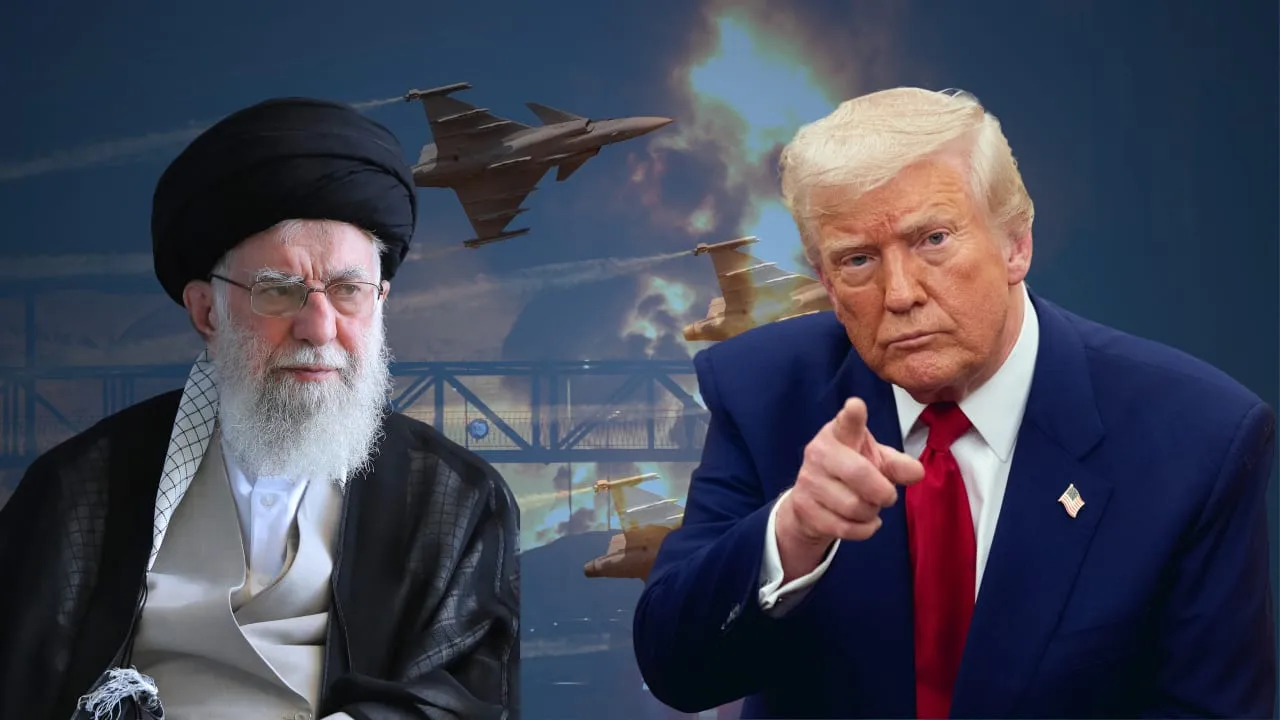
Paris (Imran Y. CHOUDHRY) :- Former Press Secretary to the President, Former Press Minister to the Embassy of Pakistan to France, Former MD, SRBC Mr. Qamar Bashir analysis : What began as a bold show of military strength is rapidly turning into a complex geopolitical crisis marked by miscalculation, diplomatic isolation, and growing internal dissent within the United States itself. The unfolding war against Iran, launched with expectations of swift dominance, is now exposing deep cracks in strategy, alliance management, and intelligence assessment—leaving Washington increasingly isolated in a conflict it assumed others would help carry.
The latest turning point came when President Donald J. Trump openly expressed frustration after failing to persuade European allies to join a U.S.-led naval coalition to secure the Strait of Hormuz. In a striking shift in tone, Trump—who had spent days urging NATO members to send warships—dismissed their refusal with visible irritation, stating, “We don’t need any help actually.” Yet his remarks revealed more than confidence; they exposed disappointment at what he described as NATO’s “very foolish mistake” in refusing to support a war many European leaders insist they did not start.
This rejection has profound implications. The Strait of Hormuz carries nearly 20% of the world’s oil supply, and its disruption has already sent shockwaves through global markets. While the United States framed its request as a shared responsibility for global energy security, European leaders saw it differently. British Prime Minister Keir Starmer and Germany’s Defense Minister Boris Pistorius made it clear: this was not a NATO mission, nor a war they were willing to join. Their refusal reflects a broader shift—one in which even long-standing allies are no longer willing to automatically align with U.S. military initiatives lacking international consensus.
As external support weakens, internal dissent within the U.S. national security apparatus is beginning to surface. The resignation of Joe Kent, Director of the National Counterterrorism Center, has added a dramatic new dimension to the crisis. In a blunt and unprecedented statement, Kent declared that the war was initiated under pressure from Israel and that Iran posed “no imminent threat” to the United States. His resignation is not merely a personnel change; it signals a fracture within the very institutions responsible for shaping and executing U.S. security policy.
At the same time, developments on the battlefield are intensifying the stakes. The killing of Ali Larijani in an Israeli airstrike near Tehran represents one of the most significant escalations in the conflict. Iranian authorities confirmed that Larijani—along with his son, aides, and bodyguards—was killed in what Israel described as a “precise strike.” Larijani had emerged as a central figure in Iran’s wartime leadership, particularly after the earlier reported killing of Ali Khamenei at the start of the campaign.
The same wave of strikes also reportedly eliminated Gholamreza Soleimani, the head of Iran’s powerful Basij militia. These targeted killings reflect a strategy aimed at decapitating Iran’s leadership structure. However, unlike past conflicts in Iraq or Libya, Iran’s political system is built with layers of succession. Leadership losses, while symbolically significant, have not resulted in systemic collapse. Instead, they appear to be producing a new generation of leadership—more aggressive, more reactive, and less constrained by the caution that often accompanies experience.
This unintended consequence may prove to be one of the most critical strategic miscalculations of the war. By removing seasoned figures capable of measured responses, the conflict risks escalating under leaders driven by urgency, anger, and a desire for retaliation. What was once a controlled confrontation is increasingly becoming volatile and unpredictable.
Meanwhile, the human and economic costs continue to mount. According to Iranian government figures, more than 1,300 people have been killed in U.S. and Israeli strikes, including hundreds of women and children. In Israel, at least 12 people have been killed in Iranian missile attacks. Beyond these numbers lies a broader humanitarian crisis: civilians in multiple countries are bearing the consequences of a conflict they neither initiated nor control.
Economically, the impact is being felt worldwide. Oil prices have surged due to disruptions in Gulf production and shipping routes. Insurance costs for tankers have spiked, and global supply chains are under strain. Even in the United States—despite its status as a major energy producer—fuel prices have risen, placing additional pressure on consumers and businesses. Diesel prices, in particular, are affecting transportation costs, which ripple through the entire economy.
One of the most striking elements of this conflict is the growing perception that the United States entered the war without fully anticipating its broader consequences. President Trump’s own remarks—expressing frustration, surprise at allies’ refusal, and shifting rhetoric—suggest a gap between initial expectations and unfolding reality. The assumption that allies would automatically align, that Iran’s response would be limited, and that control over strategic waterways could be quickly secured has not held true.
Instead, Iran has demonstrated a capacity for asymmetric warfare, leveraging geography, regional influence, and strategic chokepoints to offset conventional military disadvantages. While the United States and Israel dominate in airpower and precision strikes, Iran appears to be shaping the broader trajectory of the conflict—imposing economic costs, influencing global perceptions, and forcing adversaries into a prolonged engagement.
This evolving dynamic has also triggered a shift in global alignment. Countries that once followed Washington’s lead are now acting independently, prioritizing their own economic stability and political calculations. Some are engaging diplomatically with multiple sides, while others are simply stepping back, unwilling to be drawn into an escalating conflict.
For the United States, the implications are significant. A war that lacks broad international support, faces internal dissent, and imposes rising economic costs presents both strategic and political challenges—particularly in a domestic environment where public opinion can shift rapidly.
Ultimately, this conflict is no longer just a military campaign; it is a test of strategic judgment, alliance management, and political resilience. It raises fundamental questions about how wars are initiated, how intelligence is interpreted, and how decisions are made under pressure.
The lesson emerging is stark: military power alone cannot guarantee success when the underlying strategy fails to account for complexity, resistance, and unintended consequences. In this war, the battlefield extends far beyond Iran—it reaches into global markets, international alliances, and the internal cohesion of the United States itself.
And as the conflict continues, one reality is becoming increasingly clear: what was meant to be a demonstration of strength is now evolving into a test of endurance—one whose outcome remains uncertain, but whose costs are already undeniable.

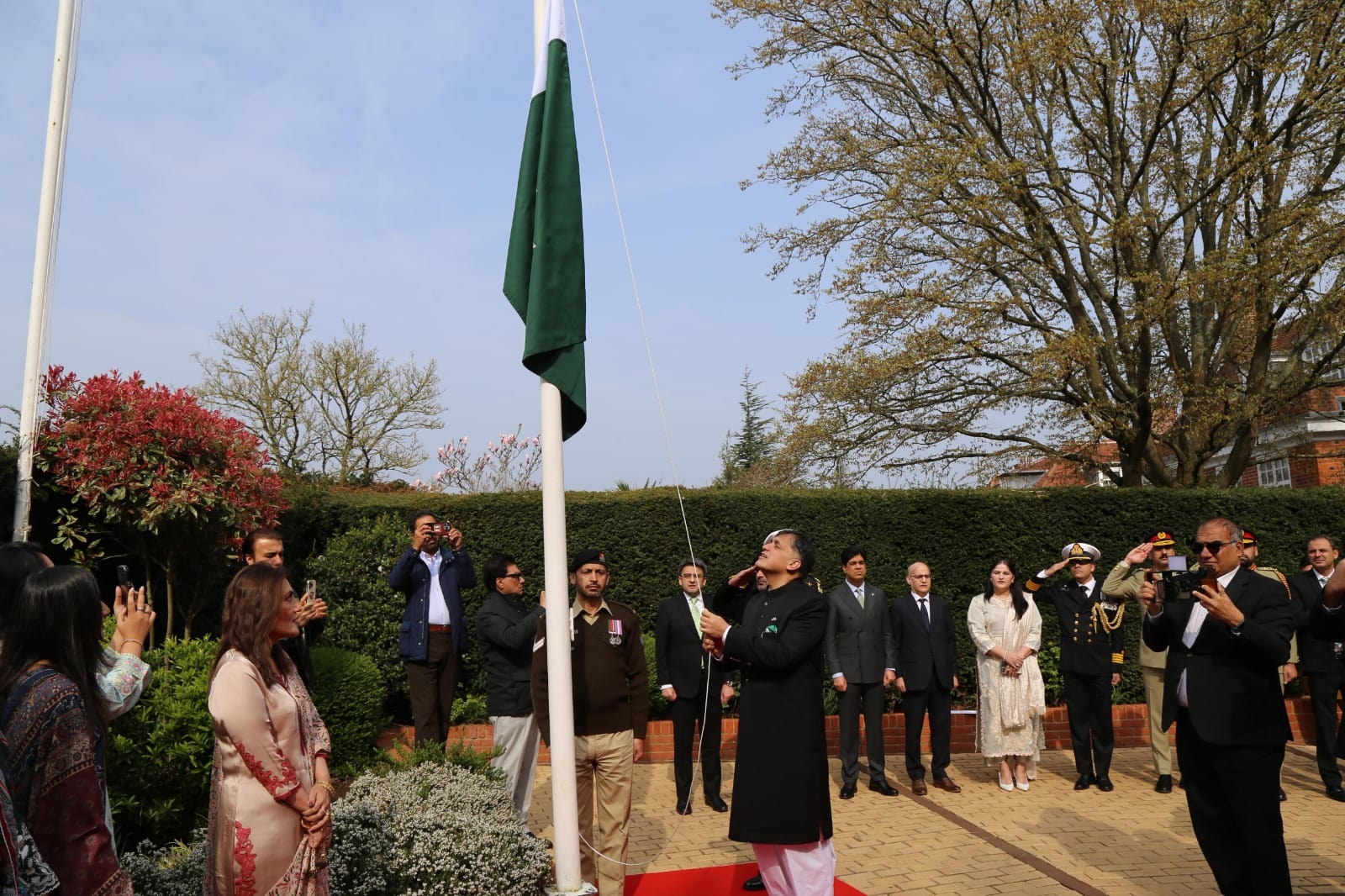
Flag hoisting ceremony on Pakistan Day at Pakistan House, London

Where the Soul Finds Stillness — A Gentle Surrender to Nature’s Quiet Embrace and Timeless Serenity

The Quiet Weight of Goodbye — When Parting Leaves Behind Echoes of Love, Loss, and Lingering Silence


-

 Europe News1 year ago
Chaos and unproven theories surround Tates’ release from Romania
-

 American News1 year ago
Trump Expels Zelensky from the White House
-

 American News1 year ago
Trump expands exemptions from Canada and Mexico tariffs
-

 Pakistan News9 months ago
Comprehensive Analysis Report-The Faranian National Conference on Maritime Affairs-By Kashif Firaz Ahmed
-

 American News1 year ago
Zelensky bruised but upbeat after diplomatic whirlwind
-

 Art & Culture1 year ago
The Indian film showing the bride’s ‘humiliation’ in arranged marriage
-

 Art & Culture1 year ago
International Agriculture Exhibition held in Paris
-

 Pakistan News1 year ago
Can Pakistan be a Hard State?