
Art & Culture
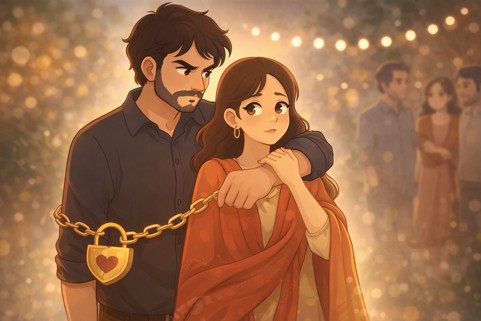
Five Rupees and a Storm Within — A Reflection on How Small Moments Unleash Our Deepest Inner Turmoil

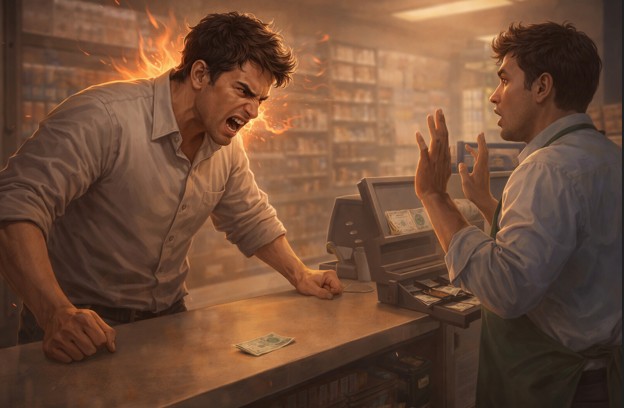
WHEATHER GENUINE CAUSE OF ANGER?
Enraged I stroll towards
The counter,
To involve myself in
A brutal encounter;
The salesman gave me rupees
Five less,
A gruesome mistake that
He should confess,
Was the well aware
Of it,
Or did the mistakingly
Di it,
Remains to be seen
Or is it
My frustration built in.






Art & Culture
‘Chest-thumping machismo’: The Bayeux Tapestry reveals the bloody, bawdy truth about the Middle Ages
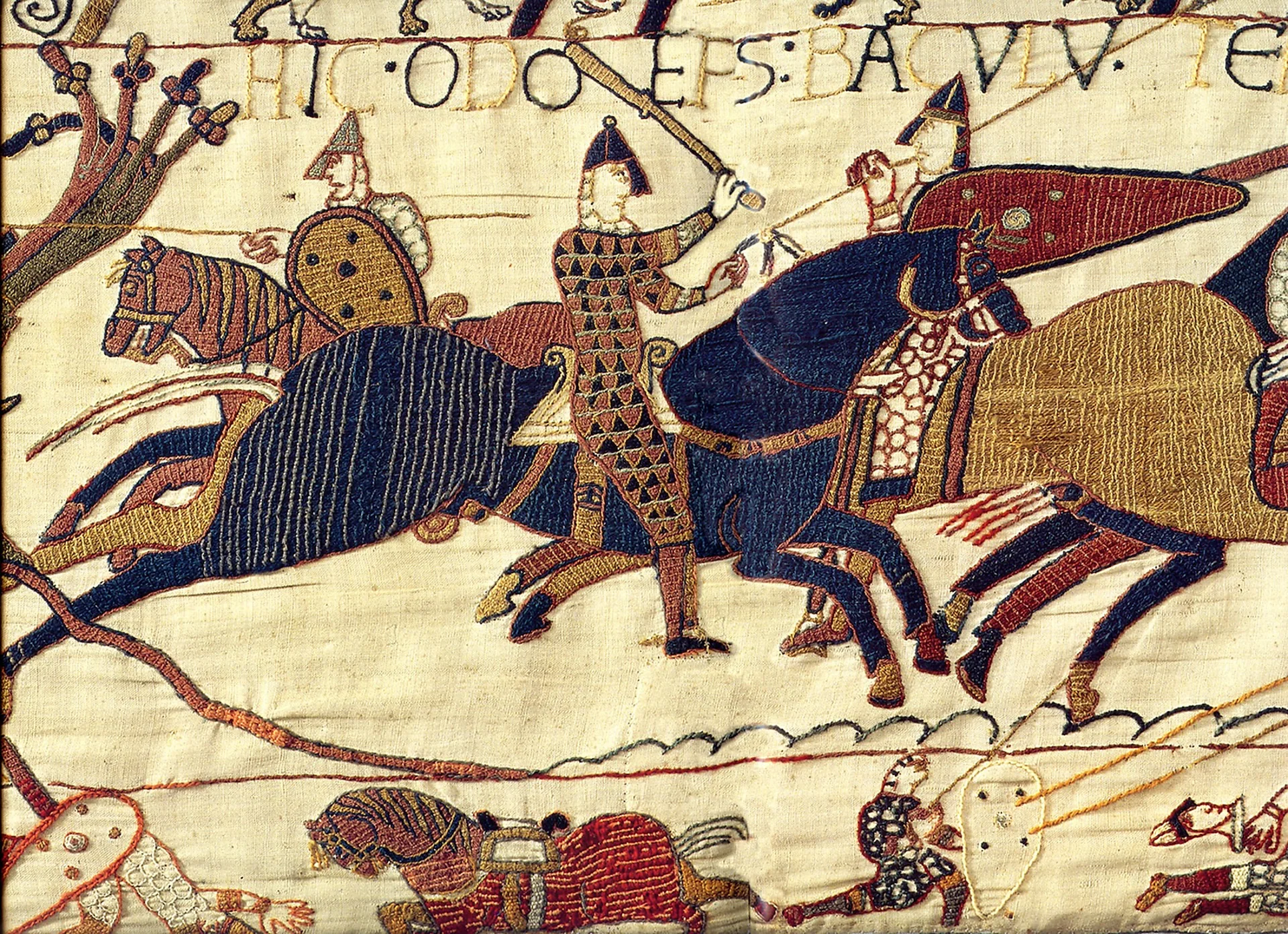
In the 11th-Century masterpiece’s tale of a contested throne, about to be exhibited in the UK, virility is equated to power – and the largest and proudest appendage. It tells a story that feels familiar today.
The Bayeux Tapestry tells a bloody − and occasionally bawdy − story of the Norman conquest of England. The intricate masterpiece is embroidered on to 70 metres (77 yards) of flax linen, and weaves a tale of broken promises, greed and aggression that culminates in the death of King Harold II at the Battle of Hastings.
After almost 1,000 years, the iconic artwork is returning from Normandy, France to England, where it was skilfully stitched in the 1070s, and from this September is to be exhibited at the British Museum.
It’s an artwork depicting a medieval version of today’s digital manosphere: an ideology and world centred on hypermasculinity and men’s experiences. And a world where size matters.
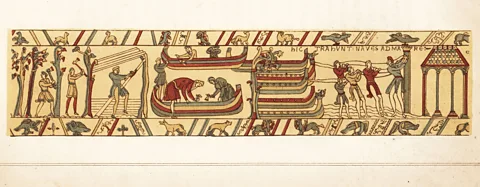
It is men’s contributions that form the focus of the 11th-Century society the tapestry portrays. A third of its men are armed, while others are vigorously engaged in tree-felling, boatbuilding and construction. A woodcutter straddling a length of timber readies his axe, while hunters wave large clubs about their heads as they pursue their quarry. All of this helps communicate the heightened atmosphere of an impending confrontation between two alpha males: William, Duke of Normandy and Harold Godwinson. “A more testosterone-soaked scene is hard to find,” Dr Christopher Monk, a cultural historian of medieval England, comments.
This suggestive display of chest-thumping machismo reveals a medieval society made for and by men, where violence settles disputes and laddish humour scores political points. Armed pillagers rampage through Hastings, and fallen soldiers in the lower margin are stripped nude for their armour, just as Harold, slain above them, is denuded of his royal claim.
The recurring penis
If there’s a recurrent motif in the iconic artwork, it’s the penis. In 2018, George Garnett, professor of medieval history at Oxford University in the UK, counted 93 – mostly tumescent – specimens in the embroidery. Eighty-eight belonged to horses, and another five to men, with a pendulous scabbard (which he rules out) causing considerable debate in academic circles.
The use of male genitalia, be it human or equine, is shorthand for political machismo – Dr Christopher Monk
“Size matters on the Bayeux Tapestry,” observes Janina Ramirez in Femina: A New History of the Middle Ages, Through the Women Written Out of It (2022). In the tapestry’s tale of a contested throne, virility is equated to power and the largest and proudest appendage, she notes, “belongs to the fine stallion William is presented with on the eve of the battle”. Second place goes to King Harold’s mount, “the implication being that he is a worthy opponent”.
Within the traditions of 11th-Century art, graphic nudity was commonplace, and it’s quite possible that these penises were stitched by nuns. “They reflect what was so evident more broadly in elite medieval society – by and large, men were the primary drivers of political sovereignty,” Monk tells the BBC. “The use of male genitalia, be it human or equine,” he says, is “shorthand for the political machismo within the context of the transition to the new Anglo-Norman world in medieval England.”
If women play a minor role in the tapestry, it’s primarily because “the narrative revolves around male action”, Dr Emily Joan Ward, a lecturer in medieval history at Edinburgh University in the UK, tells the BBC. “It’s largely depictions of militarily active men, and in those battle scenes we wouldn’t expect women.”
If a ratio of one to 100 still seems unbalanced, there may be a clue in who the artwork was intended for. Historians believe the tapestry’s likely patron is William’s half-brother, the Bishop Odo of Bayeux, who features prominently in it and may have used the tapestry to emphasise his important role in the campaign for William’s rightful rule.
“The content is probably to resonate with him and his immediate social circle, which will largely be a homosocial circle of men,” says Ward. With a Norman sponsor, the messaging needed to be on brand. “Introducing too many women into the story is actually a bit risky,” she adds. “William’s attempts to stress his legitimacy to the throne through the female line may have made the designer or patron wary of drawing attention to this tenuous claim.”
The six women in the tapestry
The women in the central story mostly serve as what Monk calls “emotional punctuation”. Queen Edith, a highly influential figure in court politics, mops her tears with her scarf as her husband, Edward the Confessor, takes his final breaths; and a woman and her child flee as gigantic Norman soldiers casually torch their home. Bizarre expressions and proportions aside, it’s a scene that reminds us, says Ward, “that warfare is not just a male-dominated event, not just what’s happening on the battlefield.”
She references the historian Catherine Karkov, who observes that the women in the main register appear at moments of shifting power relations. “If we interpret it that way,” Ward remarks, “it gives them quite a powerful role in the tapestry.”
Others have been more dismissive. As one 20th-Century historian commented: “since it contributes nothing to the story, except a moment of confusion, we have felt justified in leaving it out”.
[The embroiderers] were no doubt working to a design but that does not mean that they were merely executors of another’s will – Dr Chirstopher Monk
Just as monks inserted illustrations in the margins of manuscripts, it’s possible that female embroiderers were permitted a little creative liberty with these cryptic comments on the central story. “They were no doubt working to a design,” Monk tells the BBC. “But that does not have to mean that they were merely executors of another’s will, or indeed that every detail was dictated.”
Perhaps in the border, the invisible women behind the artwork had the last laugh. “Was it a way of expressing despair at bellicose men, or at their own plight as subjugated English women? Is there any sense of mockery, particularly of William? Or were they indulging in playful, earthy humour to pass the time?” Monk asks.
“It’s impossible, perhaps, to answer these questions, but it should at the very least make us reflect on the fact that the Bayeux Tapestry only exists because of the skilled and intelligent labour of women.”
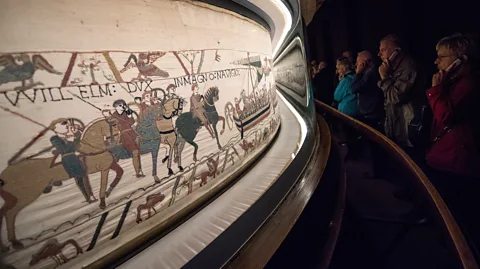
It was Victorian sensibilities that would eventually subdue some of the original tapestry’s machismo. In a faithful replica, created in 1885 by a group of 35 women belonging to the Leek Embroidery Society (currently on display at Reading Museum), the advancing armies are still full of men, but the horses’ oversized members have retreated. Unsurprisingly, the naked man with the outsized genitals who was mimicking the priest in the border is shown in the new version wearing shorts.
By Raza Syed
Diplomats, parliamentarians and cultural figures gathered in London as Tajikistan showcased its political progress, artistic heritage and deepening international partnerships
LONDON — The Embassy of the Republic of Tajikistan in United Kingdom hosted a solemn reception in London on September 4 to mark the 35th anniversary of Tajikistan’s State Independence, bringing together senior officials, diplomats, parliamentarians, and representatives of British political, business, academic, cultural, and media communities.
The event provided an opportunity to reflect on Tajikistan’s three and a half decades of independence, its political and socio-economic development, and the strengthening of its international partnerships.
Among the distinguished guests were representatives of British state institutions, heads of diplomatic missions accredited to the country, members of parliament, and prominent figures from the political, business, scientific, and cultural sectors, alongside representatives of the media.
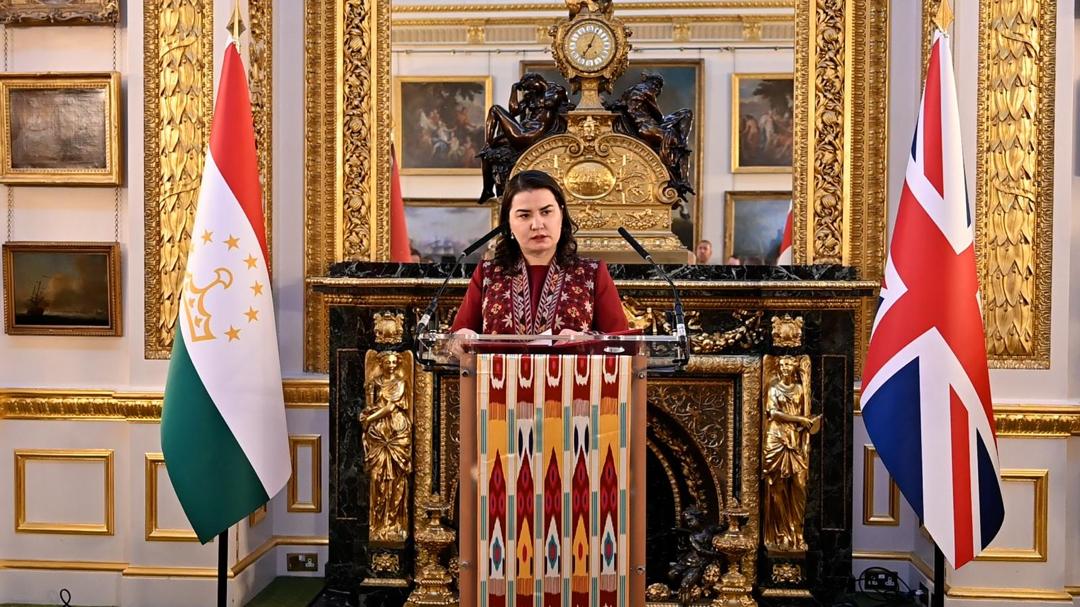
Welcoming the guests, Ambassador of Tajikistan to United Kingdom, H.E. Mrs Rukhshona Emomali, highlighted the country’s achievements since independence, particularly in the political, socio-economic, and cultural spheres.
In her remarks, the ambassador also underscored what she described as the pivotal role of Emomali Rahmon, President of Tajikistan and Leader of the Nation, in the consolidation of modern Tajik statehood, the establishment of peace and national unity, and the country’s continued development.
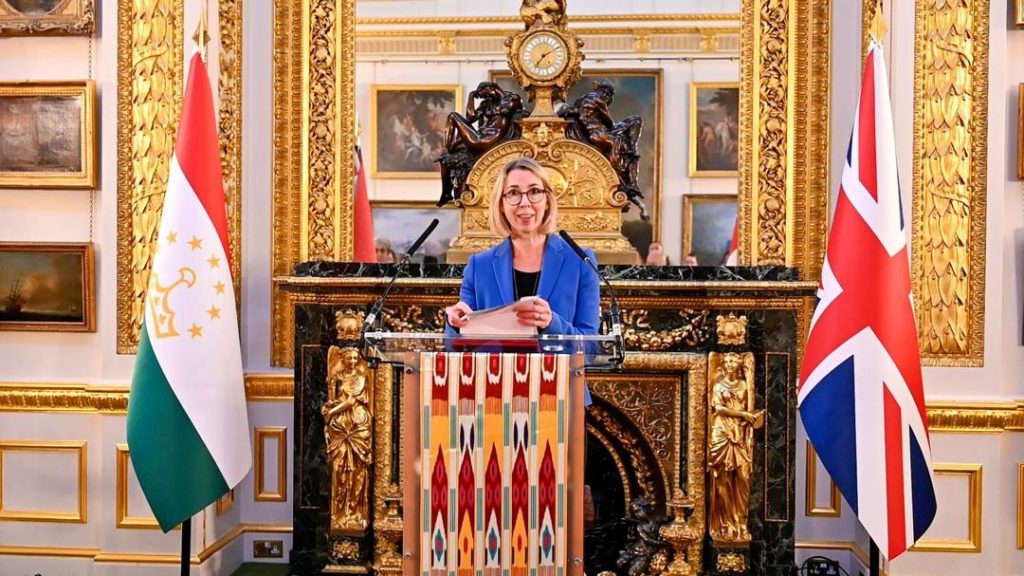
The guest of honour, Melinda Bohannon, Director General for Global Issues in FCDO, of United Kingdom, conveyed warm congratulations to the people and government of Tajikistan on the 35th anniversary of independence.
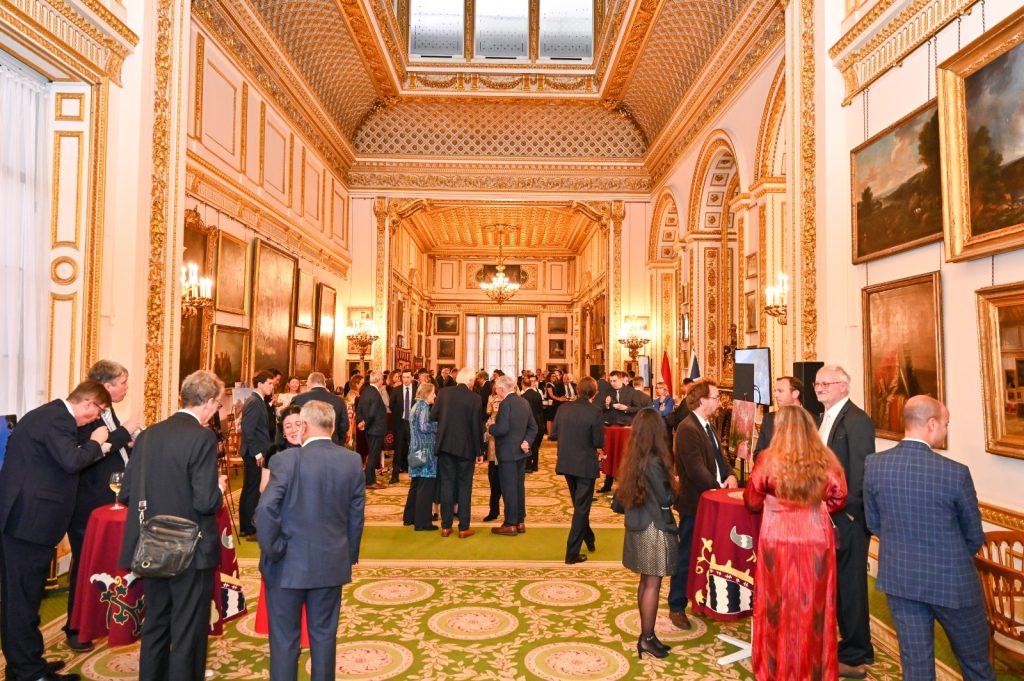
She also highlighted the positive trajectory of relations between London and Dushanbe, expressing confidence that the two countries would continue to deepen their friendly ties and strategic partnership across a range of areas.
The reception also offered guests an insight into Tajikistan’s rich cultural heritage. A concert programme featuring traditional Tajik songs and dances formed a central part of the celebrations, showcasing the country’s distinctive artistic traditions.
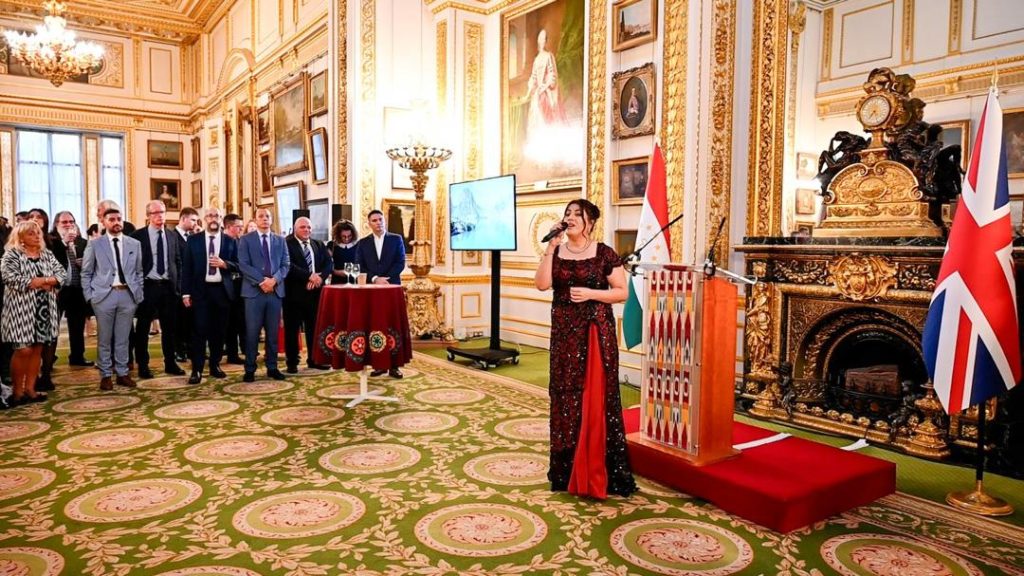
Tajikistan’s renowned vocalist Khujasta Mirzovali, who travelled to London specifically for the National Day celebrations, captivated the audience with her performance of traditional Tajik songs. Her melodious delivery earned a warm and sustained standing ovation from attendees.
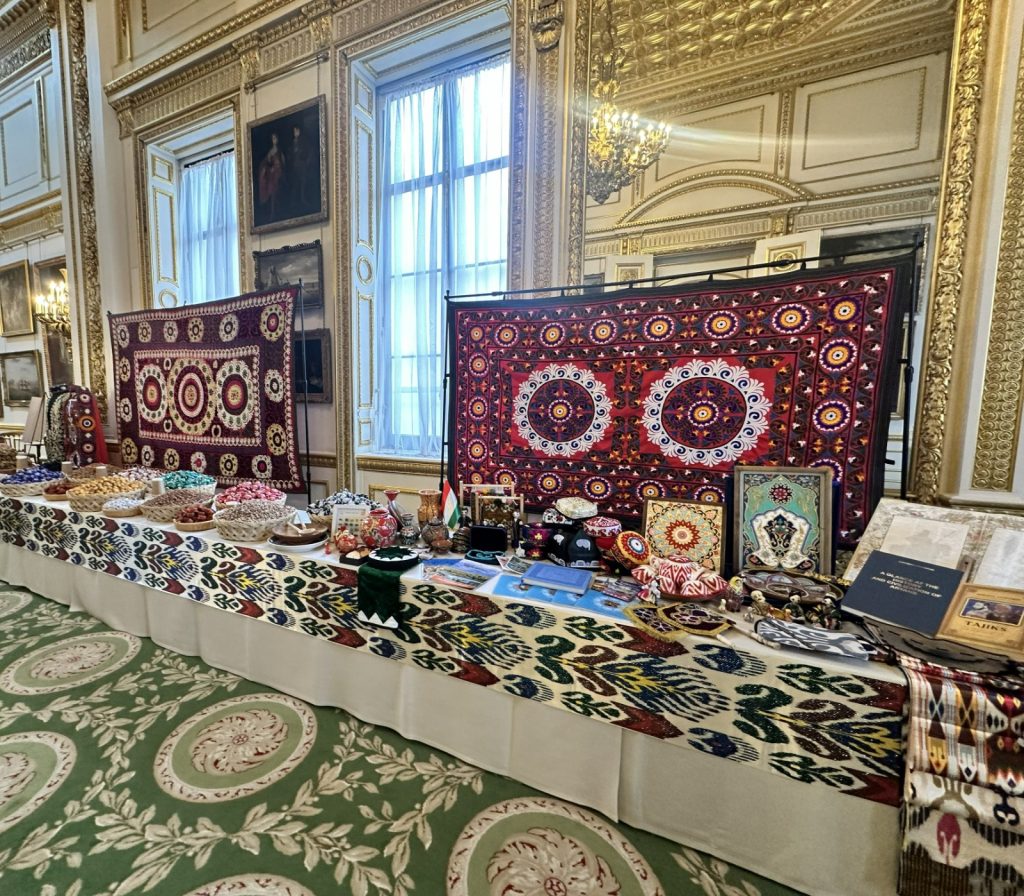
A national handicrafts and painting exhibition further enriched the event, presenting examples of Tajik folk art and craftsmanship. Visitors were able to view traditional national costumes and intricate examples of chakan, suzani, and popuri embroidery, alongside works created by Tajik artisans.
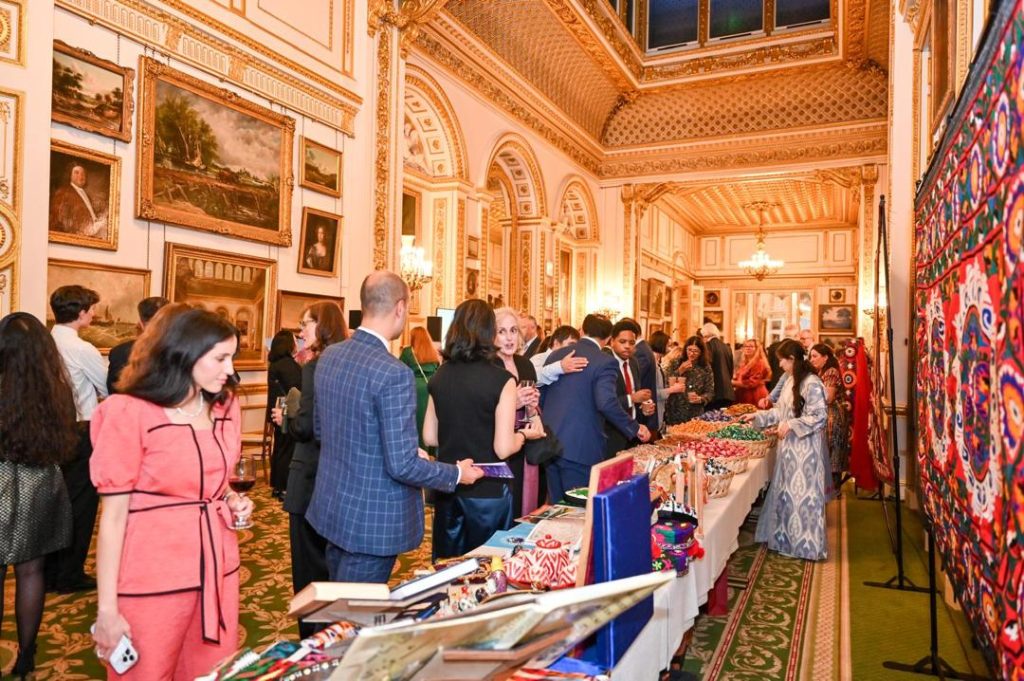
The cultural presentation extended to the traditional Tajik table, where guests were offered an assortment of fresh, locally grown fruit and nuts.
The event offered a rich cultural programme, including documentary screenings, traditional music, and performances that showcased the country’s heritage with remarkable depth and artistry.
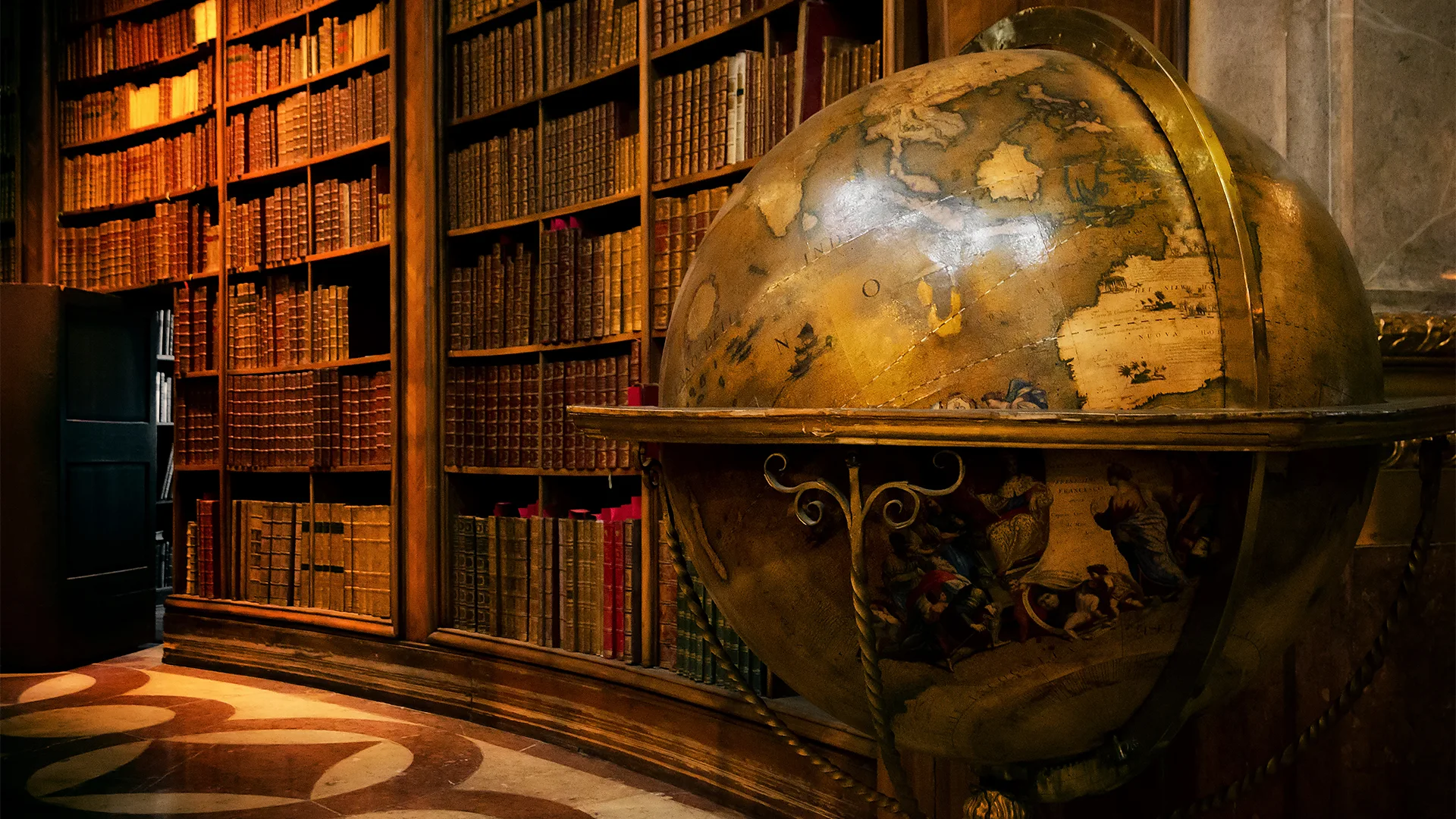
Beautiful, surreal and eerily empty, Vienna’s Globe Museum the only public museum on Earth dedicated to globes, and it – quite literally – tells the story of our world.
It’s a chilly afternoon in Vienna, and the line for the Austrian National Library has already spilled out the door, curling like a ribbon around the grand Josefsplatz square. I’m not in the mood to wait – I’ve already struck out at several crowded nearby attractions where timed-entry tickets were sold out.
Rather than join the queue, I walk down the street and stumble onto a smaller, somewhat hidden site: The Globe Museum. Tucked inside Vienna’s 17th-Century Palais Mollard, it’s the only public museum on Earth dedicated entirely to globes, and one of Vienna’s greatest surprises.
Different worlds
I soon realise that I’ve wandered into another world – or more accurately, many of them.
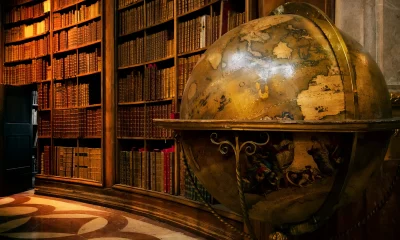
Just steps from some of the city’s most celebrated, crowded attractions, Vienna’s Globe Museum displays more than 220 rare and antique spheres, most created before 1850, ranging from towering Coronelli globes to tiny, foldable pocket orbs.
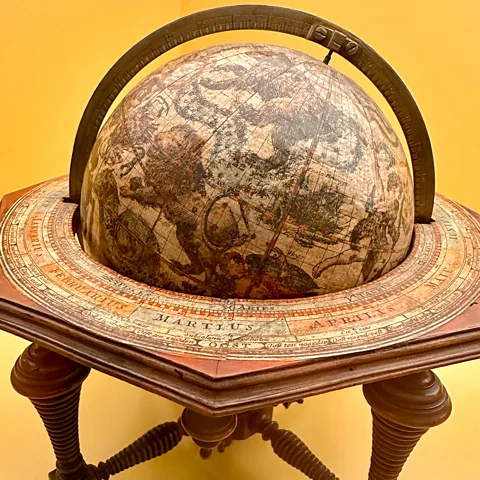
Beautiful and surreal, the museum’s extensive collection goes beyond geography to reveal how humanity has mapped and imagined the Earth and heavens above. It’s a chronicle of human curiosity, and – quite literally – the story of our world.
“Globes show the change in our imagination of our planet,” says Nikolaus Schobesberger, the director of museum. “And this is the only place in the world where you can see so many of them at the same time.”
Visitors start by travelling through the Golden Cabinet, a lavish room with centuries-old frescoes depicting scenes from Greek mythology. It’s the backdrop for a stunning array of globe-related instruments, like telluriums, which illustrate the Earth’s orbit around the Sun, and armillary spheres, which use a framework of rings to visualise the movements of celestial bodies.
As I reach the museum’s four main galleries, I realise the whole place is pin-drop quiet. I shuffle slowly from one glass case to another, holding my breath to not disturb the stillness, even though I’m alone with centuries-old objects.
I find myself marvelling at two spherical worlds suspended in time. One is terrestrial, with oceans awash in vivid blues and squiggly brown coastlines. The other is celestial, where mythological creatures and constellations spill across a tea stain-coloured backdrop. Barely bigger than beach balls, these two time capsules were made by the same craftsman 10 years apart in the mid-1500s and preserve a world as it was still coming into focus.
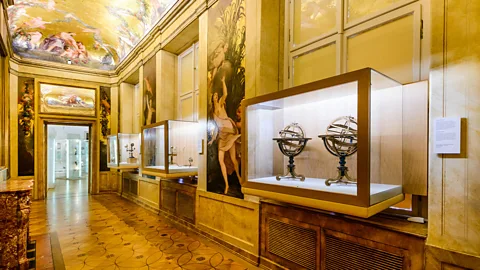
In one, Europe, the Mediterranean and Africa’s coasts are filled with place names, while North America fades into the uncharted Arctic. Asia is distorted, a hypothetical southern continent stands in for Australia and Antarctica and the Pacific is populated by sea monsters instead of islands. In the other, Renaissance astrological observations exist alongside Pegasus taking flight and Perseus brandishing Medusa’s severed head.
“They’re some of the oldest globes we have in our collection,” says Schobesberger.
Moving from one globe to the next, I notice how these relics extend beyond geography and depict what people once believed. Many fill the space of unexplored oceans with dragons, while some confidently depict my home state of California as an island. Some pieces also preserve colonial-era prejudices with elaborately painted scenes depicting Indigenous people as cannibals. On one, African coastlines are dotted with Spanish and Portuguese flags, showing “ownership”.
“They’re a part of this colonial thinking. And so, they’re beautiful art, but you also have to think about the time they were created,” Schobesberger says, explaining that every globe is as much a record of what people knew as what they didn’t. That’s why he believes the museum resonates with all types of people, not just historians or cartography enthusiasts.
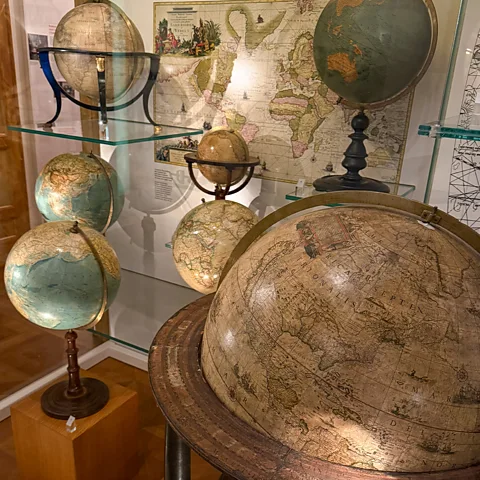
One of Schobesberger’s favourite objects is a lunar globe from 1961. The front portion of the Moon is meticulously mapped. The back, however, is a stark white strip, intentionally left blank because the far side of the Moon had not yet been seen. An updated lunar globe made two years later, also on display, contains the missing portion.
I can’t help but circle back to a showstopper in the front hall, a replica of the Behaim Globe – completed by Martin Behaim in 1492, the year Christopher Columbus sailed west – which shows a world without the Americas. There’s simply an expanse of ocean between Europe and Asia.
“A globe is such a great thing because it’s a small-scale model of our planet, so you can tell stories about the world on it,” he says. “Climate, geology, topography, trade routes, everything.”
From curios to cultural cornerstones
Walking through the museum, visitors can see the globe’s own journey unfold. The earliest examples were luxury objects reserved for aristocrats and wealthy merchants. Over time, globes lost their exclusivity, shrunk in size and became more affordable and popular. They entered schools, appeared in living rooms and even became playthings for children. Today, they are so commonplace that my son even won his desktop globe in a classroom raffle.
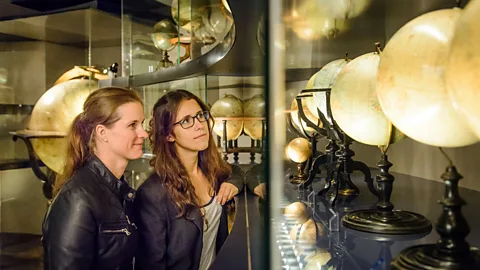
I entered the museum expecting to view globes as historic artefacts, but I’m surprised by how alive they still feel. Even with Google Earth at my fingertips, these tactile objects invite curiosity and imagination in a way that a screen doesn’t.
“It’s not just that the globe is a scientific instrument. It’s also an object which lets you dream of foreign countries,” says Schobesberger.
Globes in pop culture
Beginning 24 September 2026, the museum’s newest exhibition, Globes in Everyday Life, Art and Culture, will explore how globes evolved from a status symbol to a familiar fixture. It also showcases the globe’s enduring place in pop culture, from architecture to art and film, like Charlie Chaplin’s famous dance with an inflatable globe in The Great Dictator. “The main idea was to show that globes are almost everywhere as a part of everyday life,” Schobesberger says.
Schobesberger’s own fascination began as a young child, when he became captivated by the ships, sea monsters and mythical creatures that filled the blank spaces of historical maps and globes. He began to draw his own world maps when he was just six years old.
“You can think about what’s possible on the other side of the world, even when you’re sitting here in Europe,” he says. “Nothing else can capture the imagination quite like it.”
That sentiment resonates with author JF Penn, who stumbled onto the Globe Museum while researching her novel Spear of Destiny, based on a relic housed in Vienna’s Imperial Treasury. Like me, she ended up lingering far longer than planned.
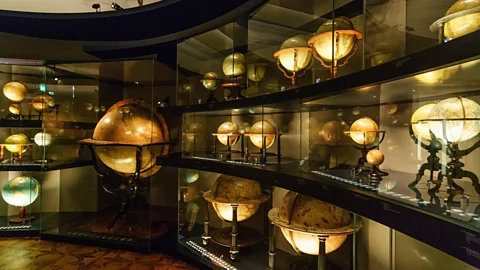
“I particularly loved the oversized antique globes with the patina of age and use,” she says. “I considered how many fingertips have turned them over generations and wondered if they thought of travelling to these far-off places that I do.”
Even after visitors leave Palais Mollard, the search continues. Across Vienna, some 50 globes are perched on rooftops and facades, hidden in plain sight. The museum even charts them on a virtual map in its new exhibit, encouraging people to look upward as they wander the city.
When I finally step back outside, the sky is dark and the streets are even more crowded. Earlier in the day, I had been seeking a quieter corner of Vienna. Instead, I was given a whole new way of seeing the world – a place that’s constantly being redrawn and reimagined.
—
If you liked this story, sign up for The Essential List newsletter – a handpicked selection of features, videos and can’t-miss news, delivered to your inbox twice a week.
This news is taken from BBC News


‘Chest-thumping machismo’: The Bayeux Tapestry reveals the bloody, bawdy truth about the Middle Ages

Dramatic insider warnings over AI fall flat with some in Silicon Valley

25 Years After 9/11: Remembrance Must Strengthen the Pursuit of Peace


-

 Sports3 months ago
South Korea’s Yoo Useong Steps Onto the Global Strongman Stage as World Strongman Federation Professional Athlete
-

 Art & Culture1 year ago
A Survey of Mata-E-Zeest
-

 Europe News2 years ago
Chaos and unproven theories surround Tates’ release from Romania
-

 American News2 years ago
Trump expands exemptions from Canada and Mexico tariffs
-

 American News2 years ago
Trump Expels Zelensky from the White House
-

 Art & Culture1 year ago
Will Snow White be a ‘victim of its moment’? How the Disney remake became 2025’s most divisive film
-

 Pakistan News1 year ago
Comprehensive Analysis Report-The Faranian National Conference on Maritime Affairs-By Kashif Firaz Ahmed
-

 Entertainment2 years ago
Champions Trophy: Pakistan aim to defend coveted title as historic tournament kicks off today