
World News
BRICS Unites as the West Fragments


Paris (Imran Y. CHOUDHRY) :- Former Press Secretary to the President, Former Press Minister to the Embassy of Pakistan to France, Former MD, SRBC Mr. Qamar Bashir analysis : The BRICS 2025 Summit in Rio de Janeiro was far more than a diplomatic gathering—it was a geopolitical turning point, a moment of collective reckoning for the Global South, and a direct response to America’s unilateralism, Israel’s unchecked militarism, and the unraveling of the Western world order. Timed strategically after Israel’s devastating strikes on Iran and Gaza—and following Trump’s belligerent declaration of a 10% tariff on all nations defying U.S. trade terms—the summit sent a unified message: the world is moving on.
At the heart of this message was the BRICS Declaration, a bold articulation of resistance against militarized foreign policy, economic coercion, and the abuse of reserve currency power. What made this summit unprecedented was not only the clarity with which BRICS condemned the U.S.-Israel axis for its blatant violation of international law, but the practical measures agreed upon to structurally decouple from American economic domination.
The centerpiece of this structural shift was the long-anticipated move to establish a common BRICS trading currency. For the first time, member countries agreed to denominate a growing share of their trade and investment flows in a non-dollar-based, BRICS-aligned digital settlement system. This decision was not symbolic. It came in the wake of China offloading over $100 billion in U.S. Treasury securities over the past five years, and redirecting its reserves into strategic real assets—gold, rare earth minerals, agricultural land, and energy infrastructure across Asia, Africa, and Latin America.
The message is clear: the dollar is no longer sacred.
As BRICS economies deepen their interdependence—through trade agreements, digital fiber-optic corridors, satellite connectivity, and synchronized financial systems—they are preparing for a post-dollar world.
This isn’t simply de-dollarization; it’s sovereign emancipation. When you control the currency, you control the terms of global commerce. The United States used this leverage for decades. Now BRICS is building an alternative.
This redirection is also political. The United States and Israel’s unprovoked bombing of Iran on June 13—which killed 935 Iranians, including key military and scientific leaders—and the follow-up U.S. strikes on June 21 using bunker-buster bombs on Iranian nuclear facilities, were condemned as “a blatant breach of international law” by the BRICS bloc. Iran’s response—precision missile and drone retaliation—was followed by a U.S.-brokered ceasefire. But the BRICS statement didn’t forget. It squarely placed moral and legal blame where it belonged: on Washington and Tel Aviv.
The silence of international institutions was deafening. The United Nations failed to respond decisively. Western media framed the strikes as “pre-emptive” rather than illegal. In contrast, BRICS voiced its unequivocal support for Iranian sovereignty, for Syria’s territorial integrity, and for the universal application of international law.
But nowhere was the moral clarity sharper than in BRICS’ position on Gaza. The 21-month Israeli assault on the enclave—killing over 57,000 Palestinians, 70% of them women and children, and turning Gaza into what human rights experts describe as a “concentration camp”—was denounced in the strongest terms. The BRICS Declaration rejected the weaponization of starvation, the politicization of aid, and the targeting of civilians at food distribution points. It called for full recognition of Palestinian statehood, with East Jerusalem as its capital, and endorsed the work of UNRWA, which has been banned by Israel.
Meanwhile, Trump’s tariff regime continues to destabilize the global economy. Under the guise of “America First,” the U.S. administration has weaponized trade to punish dissent. The new 10% blanket tariff on BRICS-aligned nations—threatened on Trump’s Truth Social account—was met with a chilling counter-move: BRICS pledged to increase internal trade, insulate their economies from the dollar, and systematically bypass the SWIFT system.
This isn’t theory. It’s happening.
Already, BRICS accounts for over 36% of global GDP (PPP-adjusted) and 47% of the world’s population. With the addition of new members like Iran, Indonesia, Egypt, and the UAE, the bloc has transformed into a dynamic political-economic alliance representing the true Global Majority. While G7 economies grow at an average of 1.6%, BRICS is projected to grow at 3.4% in 2025, according to the IMF.
China, India, and Brazil are already among the world’s top 10 largest economies. Collectively, BRICS holds more foreign reserves than the G7, and controls over 60% of critical minerals essential for green technologies. This isn’t a coalition that can be isolated. It’s a rising pole.
What’s even more striking is the shift in reconstruction politics. Traditionally, the U.S. model was destruction followed by controlled reconstruction—destroy Iraq, then rebuild it with Halliburton; bomb Libya, then claim oil concessions. That era is waning. Today, countries like Saudi Arabia are investing in Syria not to exploit, but to stabilize. BRICS nations are financing development without political strings. They are demonstrating that you can rebuild without colonizing.
The declaration also emphasized connectivity—fiber optic corridors, digital bridges, and space-linked infrastructure. This is the technological backbone of BRICS integration. By reducing dependency on U.S.-controlled systems—satellites, networks, and payment rails—BRICS is building a self-sufficient parallel world order.
Yet amid all this, Washington remains curiously sluggish. The American political elite appears insulated, unaware of the tectonic shifts underway. The majority of U.S. foreign-held debt is owned by BRICS countries and their allies. Should they convert their dollar reserves into real assets or non-dollar trade systems, the American financial system—based on printing and demand—will face a reckoning.
Let us be clear: no one wants America to fall. The United States is a land of unmatched creativity, innovation, and potential. Its people deserve prosperity and peace. But if it continues to rely on coercion instead of cooperation, on threats instead of treaties, and on tariffs instead of trust—it will lose not just influence, but respect.
It is still within America’s power to pivot. To abandon the zero-sum mindset. To embrace multilateralism, dignity, and mutual prosperity. But the clock is ticking.
In the current geopolitical realignment, BRICS is now the most populous, the most resource-rich, and arguably the most forward-thinking bloc on Earth. It cannot be sidelined. It must be engaged—seriously, and respectfully.
Trump’s trade war is not just economically reckless—it is strategically self-defeating. By attempting to isolate BRICS, he may be accelerating its consolidation into the very superpower bloc he fears.
The 2025 BRICS Summit was not just another declaration. It was a declaration of independence from the unipolar world. A call for a new equilibrium based on equality, sovereignty, and shared humanity.
The question is: will Washington listen, or will history leave it behind?


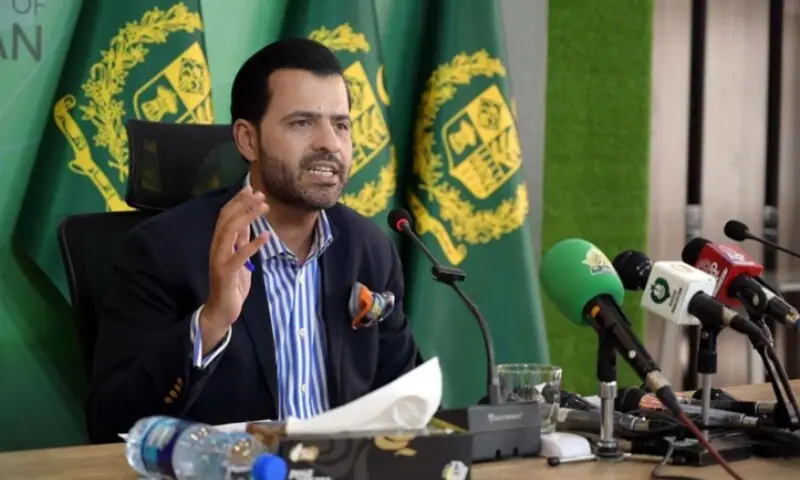
ISLAMABAD: Parliamentary Secretary for Information and Broadcasting Barrister Danyal Chaudhry on Monday stressed that national security was “non-negotiable” after Pakistan carried out strikes on terrorist targets in Afghanistan, killing over 80 terrorists.
“Pakistan has always chosen the path of dialogue and peaceful coexistence. But when Afghan soil continues to be used for proxy attacks, we have no choice but to defend our homeland. National security is non-negotiable,” Chaudhry said in a statement.
The PML-N MNA affirmed that the people of Pakistan “stand firmly” with their armed forces in the fight against terrorism.
He urged the Afghan government to take “decisive action to prevent its land from being used for cross-border militancy”, warning that lasting peace in the region depended on the “complete dismantling of terrorist sanctuaries”.
Noting that the recent operation “successfully neutralised militants involved in attacks on Pakistani soil”, Chaudhry stressed: “This action was aimed solely at those responsible for violent attacks inside Pakistan. Every precaution was taken to protect innocent lives.”
He also pointed to Afghanistan’s emergence as a “sanctuary for multiple terrorist groups”. Referring to a United Nations report, he noted that militants from 21 terror outfits were operating from Afghan territory, posing a serious threat to regional stability.
He specifically called out India’s “continued support for terrorist networks”.
“India is actively funding and training these groups, equipping them to carry out cross-border attacks against Pakistan. Such elements deserve no concessions,” the parliamentary secretary asserted.
His remarks came after Pakistan carried out airstrikes on Afghanistan in a retaliatory operation targeting groups responsible for recent suicide bombings in Pakistan.
The strikes killed “more than 80 terrorists”, according to security sources.
The strikes were conducted in retaliation for a series of suicide attacks in Islamabad, Bajaur, and Bannu that had claimed the lives of Pakistani security personnel and civilians. Authorities described the operation as intelligence-based and proportionate, aimed solely at those responsible for the attacks.
‘Decisive struggle against terrorism’
Separately, Khyber Pakhtunkhwa Governor Faisal Karim Kundi asserted that the country will “not allow our soil to be destabilised by forces operating from across the border in Afghanistan”.
In a post on X, he said: “The citizens of Pakistan, especially the resilient people of Khyber Pakhtunkhwa, stand firmly with our armed forces and security institutions in the defense of our homeland.”
He further said: “The sacrifices of our martyrs bind us together as one nation. In this decisive struggle against terrorism, Pakistan stands united, resolute, and unwavering.
“Our sovereignty is non-negotiable, and the people of this country stand shoulder to shoulder with the state to protect it at all costs.”
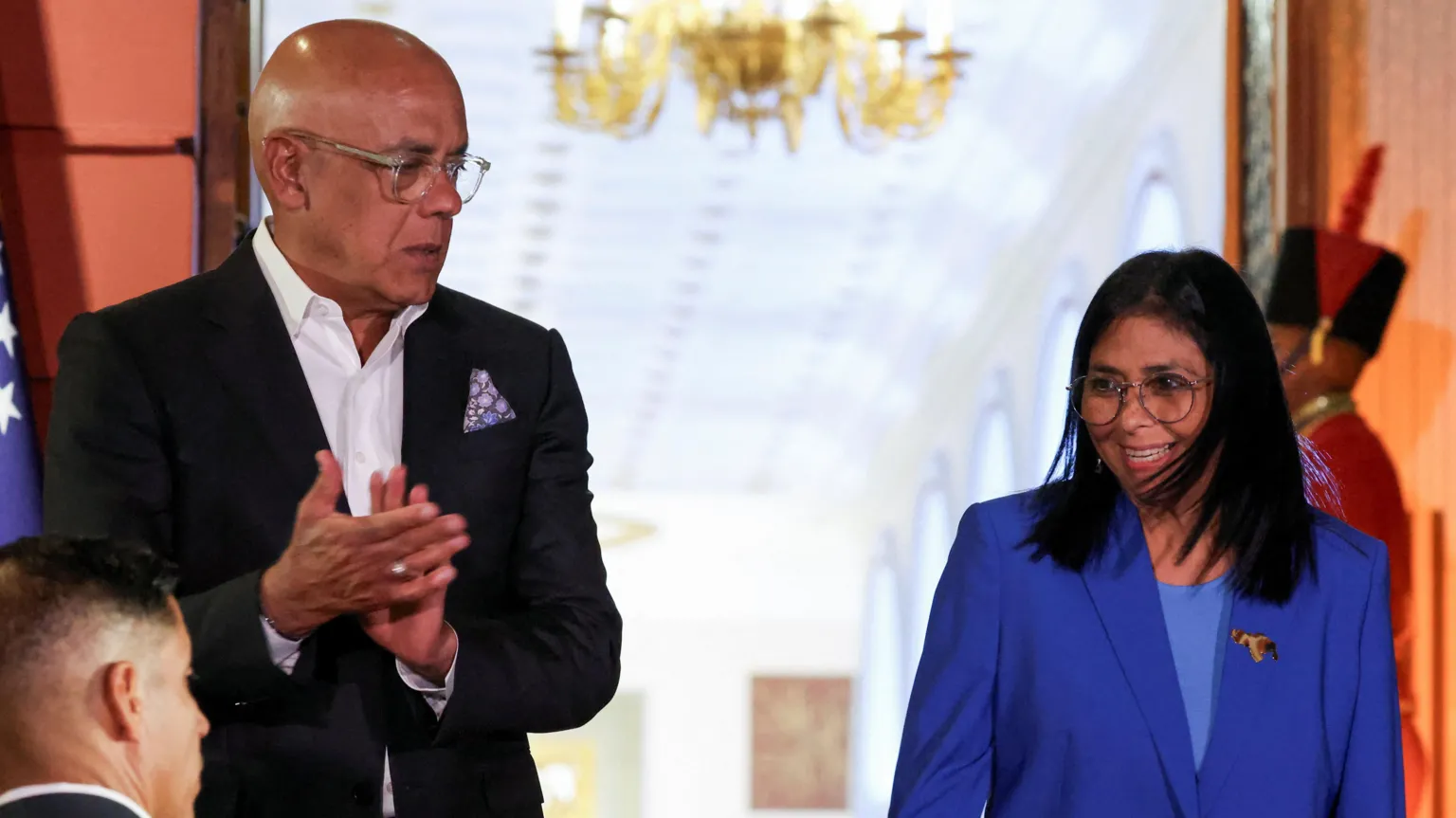
A total of 1,557 Venezuelan political prisoners have applied for amnesty under a new law introduced on Thursday, the country’s National Assembly President has said.
Jorge Rodríguez, brother of Venezuelan interim President Delcy Rodríguez and an ally of former President Nicolás Maduro, also said “hundreds” of prisoners had already been released.
Among them is politician Juan Pablo Guanipa, one of several opposition voices to have criticised the law for excluding certain prisoners.
The US has urged Venezuela to speed up its release of political prisoners since US forces seized Maduro in a raid on 3 January. Venezuela’s socialist government has always denied holding political prisoners.
At a news conference on Saturday Jorge Rodríguez said 1,557 release requests were being addressed “immediately” and ultimately the legislation would extend to 11,000 prisoners.
The government first announced days after Maduro’s capture, on 8 January, that “a significant number” of prisoners would be freed as a goodwill gesture.
Opposition and human rights groups have said the government under Maduro used detentions of political prisoners to stamp out dissent and silence critics for years.
These groups have also criticised the new law. One frequently cited criticism is that it would not extend amnesty to those who called for foreign armed intervention in Venezuela, BBC Latin America specialist Luis Fajardo says.
He noted that law professor Juan Carlos Apitz, of the Central University of Venezuela, told CNN Español that that part of the amnesty law “has a name and surname”. “That paragraph is the Maria Corina Machado paragraph.”
It is not clear if the amnesty would actually cover Machado, who won last year’s Nobel Peace Prize, Fajardo said.
He added that other controversial aspects of the law include the apparent exclusion from amnesty benefits of dozens of military officers involved in rebellions against the Maduro administration over the years.
On Saturday, Rodríguez said it is “releases from Zona Seven of El Helicoide that they’re handling first”.
Those jailed at the infamous prison in Caracas would be released “over the next few hours”, he added.
Activists say some family members of those imprisoned in the facility have gone on hunger strike to demand the release of their relatives.
US President Donald Trump said that El Helicoide would be closed after Maduro’s capture.
Maduro is awaiting trial in custody in the US alongside his wife Cilia Flores and has pleaded not guilty to drugs and weapons charges, saying that he is a “prisoner of war”.
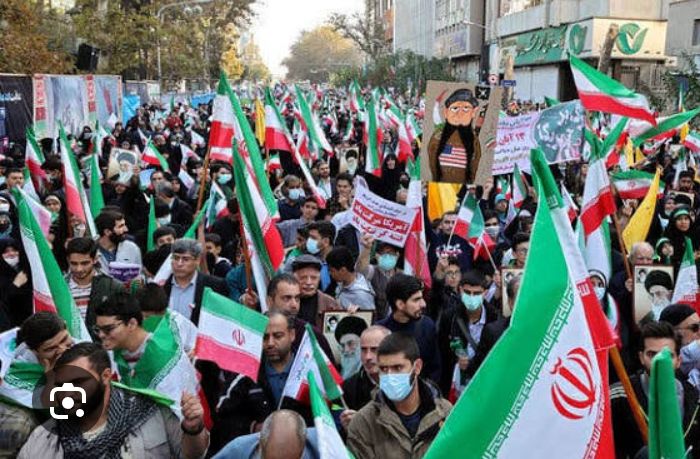
Students at several universities in Iran have staged anti-government protests – the first such rallies on this scale since last month’s deadly crackdown by the authorities.
The BBC has verified footage of demonstrators marching on the campus of the Sharif University of Technology in the capital Tehran on Saturday. Scuffles were later seen breaking out between them and government supporters.
A sit-in was held at another Tehran university, and a rally reported in the north-east. Students were honouring thousands of those killed in mass protests in January.
The US has been building up its military presence near Iran, and President Donald Trump has said he is considering a limited military strike.
The US and its European allies suspect that Iran is moving towards the development of a nuclear weapon, something Iran has always denied.
US and Iranian officials met in Switzerland on Tuesday and said progress had been made in talks aimed at curbing Iran’s nuclear programme.
But despite the reported progress, Trump said afterwards that the world would find out “over the next, probably, 10 days” whether a deal would be reached with Iran or the US would take military action.
The US leader has supported protesters in the past – at one stage appearing to encourage them with a promise that “help is on its way”.
Footage verified by the BBC shows hundreds of protesters – many with national Iranian flags – peacefully marching on the campus of the Sharif University of Technology at the start of a new semester on Saturday.
The crowds chanted “death to the dictator” – a reference to Supreme Leader Ayatollah Ali Khamenei – and other anti-government slogans.
Supporters of a rival pro-government rally are seen nearby in the video. Scuffles are later seen breaking out between the two camps.
Verified photos have also emerged showing a peaceful sit-in protest at the capital’s Shahid Beheshti University.
The BBC have also verified footage from another Tehran university, Amir Kabir University of Technology, showing chanting against the government.
In Mashhad, Iran’s second-largest city in the north-east, local students reportedly chanted: “Freedom, freedom” and “Students, shout, shout for your rights”.
Sizeable demonstrations in other locations were also reported later in the day, with calls for further rallies on Sunday.
It is not immediately clear whether any demonstrators have been arrested.
Last month’s protests began over economic grievances and soon spread to become the largest since the 1979 Islamic Revolution.
The US-based Human Rights Activists News Agency (Hrana) said it had confirmed the killing of at least 6,159 people during that wave, including 5,804 protesters, 92 children and 214 people affiliated with the government.
Hrana also said it was investigating 17,000 more reported deaths.
Iranian authorities said late last month that more than 3,100 people had been killed – but that the majority were security personnel or bystanders attacked by “rioters”.
Saturday’s protests come as the Iranian authorities are preparing for a possible war with the US.
The exiled opposition is adamantly calling on President Trump to make good on his threats and strike, hoping for a quick downfall of the current hardline government.
But other opposition groups are opposed to outside intervention.
The opposing sides have been involved in disinformation campaigns of social media, trying to maximise their conflicting narratives of what Iranian people want.
Additional reporting by BBC Persian’s Ghoncheh Habibiazad, and BBC Verify’s Richard Irvine-Brown and Shayan Sardarizadeh.

‘National security is non-negotiable’: Parliamentary secretary on Afghanistan strikes
What’s the best way to learn a new language?
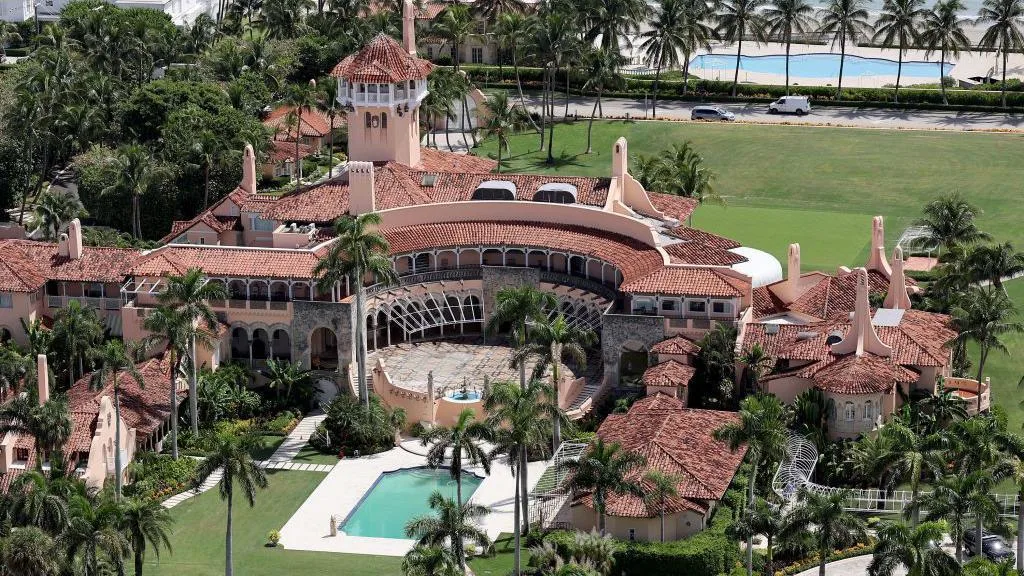
Armed man killed after entering secure perimeter of Trump’s residence, Secret Service says


-

 Europe News12 months ago
Chaos and unproven theories surround Tates’ release from Romania
-

 American News12 months ago
Trump Expels Zelensky from the White House
-

 American News12 months ago
Trump expands exemptions from Canada and Mexico tariffs
-

 American News12 months ago
Zelensky bruised but upbeat after diplomatic whirlwind
-

 Art & Culture12 months ago
The Indian film showing the bride’s ‘humiliation’ in arranged marriage
-

 Pakistan News8 months ago
Comprehensive Analysis Report-The Faranian National Conference on Maritime Affairs-By Kashif Firaz Ahmed
-

 Art & Culture12 months ago
International Agriculture Exhibition held in Paris
-

 Politics12 months ago
US cuts send South Africa’s HIV treatment ‘off a cliff’