
Art & Culture
An Italian cultural ambassador’s guide to Rome


Alberto Angela has made a career out of exploring his hometown. Here are his favourite spots to unearth Rome’s millennia of secrets, from the Vatican Museums to Ostia Antica.
From the 1st-Century BCE ruins of the Imperial Forum to the Trevi Fountain’s Baroque splendour, Rome packs such an overwhelming myriad of postcard-worthy landmarks that digging through its historical layers can make any visitor feel like they’ve turned into an archaeologist.
Alberto Angela, a TV presenter, global ambassador for Italian heritage, art, history and culture, and a familiar face in Italian living rooms for nearly four decades knows a thing or two about his hometown’s 2,000 years of history – and he’s ready to help visitors discover it, especially as this year’s Jubilee newly puts it into the limelight.
“Rome has two faces,” says Angela. “The Papal – that of the rich – and its working-class soul, the one that is closest to us… the most interesting,” he says.
In a city where grand basilicas lie next to shady alleyways, Angela recommends exploring without cramming in too many sights – so that one can “immerse oneself in the world of the ancients”.
Having followed in the footsteps of his famous father, Piero Angela – Italy’s most well-known documentarist often called a “national treasure” – the younger Angela attributes his career and love of history to growing up in the Italian capital.
“You breathe history here,” he says. “Anyone who comes to Rome can see the same afterglow Caesar would have seen. You aren’t in a place that doesn’t exist anymore. Rome was rebuilt on top of its ancient structures.”
For Angela, this is what makes Rome so unique. “The city did not cancel its history, unlike many others,” he says. “Living here, you understand the ancients.”
Emerging from a small market settlement on the Tiber, the city of Rome was at an intersection between the Mediterranean and mainland Europe, making it a crossroads that swelled into the world’s first true metropolis. Angela believes that the city’s immense global-reaching political and symbolic impact throughout history means everyone has a “piece” of Rome inside them – which is why it can have such a profound impact on those who visit it.
Here are Angela’s favourite ways to experience ancient history in modern Rome.

1. Best place to experience ancient Rome: The Palatine Hill
Much of central Rome’s labyrinthine urban grid is a direct heir of the former imperial capital, with public spaces like the Baroque Piazza Navona or Campo de’ Fiori piazza taking their shape from a bygone stadium and theatre, respectively.
Tip:
Trying to cram in all of Rome’s main landmarks in a few days is an Olympian feat, so Angela recommends first-time visitors follow a three-day rule.
“See the major sights on the first and second days – Saint Peter’s, the Pantheon, the Colosseum,” he says. “And then on the third day, choose yourself, to see something cool [off the beaten path]. When you get home, you’ll feel you’ll have seen the things everyone talks about, but you’ll also have seen something you yourself like.”
But on the Palatine Hill, the mythical birthplace of Rome, you can actually walk on the same stones where emperors Augustus and Nero once dwelled.
“It’s the place where the Caesars lived and died,” Angela says.
As the legend goes, twin brothers Romulus and Remus received an omen from the gods and decided to lay the foundations of a new city on the Palatine Hill in 753 BCE. In the subsequent centuries, the Palatine developed into an exclusive neighbourhood of patrician villas and Imperial palaces – indeed, it’s where the word “palace” takes its root.
One of the legendary seven hills of the ancient city, offering an incomparable vantage point with a 360 panorama, Palatine Hill offers what Angela describes as “a beautiful walk”, with arguably the best views of the Colosseum – the unmistakable “star of ancient Rome”.
Visiting the Palatine is a full immersion into the life of the Roman empire, with a plethora of impressive ruins, including the mosaic floors of Augustus’s palace, Domitian’s hippodrome and the balcony overlooking the Circus Maximus racecourse.

2. The Vatican’s best-kept secret: The Necropolis
As the centre of Catholicism and one of the most important sites in Christendom, the Unesco-listed Vatican is firmly entrenched among Rome’s unmissable sights. In honour of the 2025 Jubilee, tourists and pilgrims alike are flocking to Saint Peter’s Basilica to walk through its Holy Door, opened for the occasion every quarter of a century.
But while much of the Holy See’s architectural majesty is immediately apparent – from the Michelangelo- and Giacomo della Porta-designed designed dome of Saint Peter’s all the way to the Sistine Chapel and Vatican Museums – some of its greatest treasures are hidden underground.
“Once in Saint Peter’s, you walk on beautiful marble floorings, you look up to the Baldachin,” says Angela, renowned for his 2015 TV miniseries Alla Scoperta dei Musei Vaticani (Discovering the Vatican Museums). “But you can go underground. The Popes’ tombs can be found underneath, but under those is the ancient Roman graveyard where Peter the Apostle himself was buried. The foundations of [the Basilica] are a graveyard.”
The Vatican Necropolis, excavated only in the 1940s, features mausoleums belonging to citizens of many faiths, as well as a cluster of tombs called “Field P”, suspected by some scholars to hold the burial chamber of the Church founder himself.
“It’s a trip into ancient Rome that you wouldn’t expect to find [there]”, Angela says. “It makes you understand how Rome really is.”
Visitors must book visits to the Necropolis on the official website of Saint Peter’s Basilica. The dress code mandates covered shoulders and below-the-knee clothing.

3. Best church for experiencing all of Rome’s historical eras in one fell swoop: The Basilica of San Clemente al Laterano
Rome has more than 900 Catholic sites of worship built over the course of the centuries. Now and then, there’s one that best encapsulates the city’s multi-millennial history, like Angela’s pick, the Basilica of San Clemente.
“This Basilica conceals the three souls of Rome – Baroque, medieval and ancient,” Angela says. “Anyone who comes across it is enchanted.”
Tucked behind the Colosseum and a composite of two different churches, San Clemente – dedicated to the third pope of the same name – has been a site of worship since ancient Roman times, when it served as a temple for the Zoroastrian cult of Mithras.
The temple eventually swelled into its grand current form, featuring an intricate overlay of architectural styles – from its Renaissance courtyard and the Mannerist facade of the main Basilica, all the way to its underground, early medieval second structure, which hides ancient Roman remnants.
“The exterior is beautiful and well-maintained, from the 16th Century, with a Cosmatesque [geometric] marble flooring, and then you take the stairs and arrive at the medieval Basilica,” says Angela. “And you find yourself right in ancient Rome, in a Roman temple.”

4. Best off-the-beaten-path museum: The Museo della Comunicazione Scritta dei Romani
From 17th-Century Villa Borghese to the Capitoline, the city’s oldest art gallery, Rome has no shortage of museums displaying a vast array of artefacts – matched by equally colossal crowds of spectators.
While Angela certainly recommends visitors enjoy the time-worn classics, he also suggests a quieter, quirkier alternative: the Museo della Comunicazione Scritta dei Romani.
Conveniently located a mere five-minute walk from the Termini train station, the museum is found inside the Baths of Diocletian, where the majestic 4th-Century Imperial termae have survived in remarkable condition. It is also home to a curious collection of esoteric Roman artefacts, showing how the ancients dabbled in the occult.
“It’s a museum dedicated to how Romans expressed themselves,” Angela says. “But there’s a part dedicated to magic, voodoo of sorts.”
Superstition was the unspoken crux of ancient Roman life, but one that we often overlook. “It’s a world that often gets left behind, that of spiritual beliefs,” he adds. “They found the objects in a parking lot.”
Among the objects on display is a large copper cauldron, curse tablets (defixiones), ritual tools and even Christian spells.
“For someone coming from the station, especially if it rains, it’s quite an intriguing thing to visit,” says Angela.

5. Best for exploring Baroque Rome: Palazzo Doria Pamphilj
The 16th to 18th Centuries were a crucial time for Rome’s urban development, as the city’s aristocratic families – including the Farnese, Borghese, Doria and Pamphilj – vied for social dominance through commissioning lavish building projects, all designed in the Baroque style favoured by the Papal Counter-Reformation.
“I’d advise anyone coming to visit Rome to see the palaces of the powerful Roman families,” says Angela.
While listing a few examples – Palazzo Colonna and Palazzo Farnese among them – few rival the opulence of the Palazzo Doria Pamphilj, Rome’s very own “Versailles”, in Angela’s words.
The product of an alliance of noble families, what resulted was a Baroque fantasy come to life and an impressive art collection featuring the works of many of Italy’s greats, from Titian to Raphael.
Its crown jewel is its Hall of Mirrors, commissioned by Gabriele Valvassori in the 1730s and featuring whimsical frescos, gilded Venetian frescos and ornate gold-plated furniture.
“I had never been prior to shooting [a TV special] and it’s truly spectacular,” he says. “It truly surpasses anything else.”

6. Best historic landmark outside of the centre: Ostia Antica
Many visitors coming to Rome don’t know that the city has what Angela considers its very own “Pompeii” around 32km from the city centre: Ostia Antica.
Once Rome’s sea port, potentially from as early as the 7th Century BCE, Ostia Antica developed into a bustling seaside suburb, reaching a peak of 75,000 inhabitants in the late Imperial age. While the city declined after the empire’s fall, and the coastline ended up advancing by 3.2km, much of the ancient town that once stood there has been preserved.
“You lose yourself there, you can see everything,” Angela says. “Bakeries, public bathrooms (latrines), homes, apartment blocks… street businesses, not too dissimilar to those of today.”
A tour of Ostia Antica can show you much of the amenities and features of ancient Roman life – from its 1st-Century BCE theatre, to its forum, public baths and necropolis.
For Angela, Ostia Antica best preserves the “popolare” (working-class) soul of ancient Rome – one which its newer counterpart, the beach suburb Lido di Ostia, has carried on in modern form.
Ostia Antica is a roughly 30-minute drive from central Rome, and can be reached in around the same time by taking the Metromare commuter rail from the Porta S Paolo station.
Taken From BBC News




Art & Culture
Deputy High Commissioner Haseeb Bin Aziz Inaugurates “Masters of Canvas” Art Exhibition at Pakistan High Commission London
PRESS RELEASE
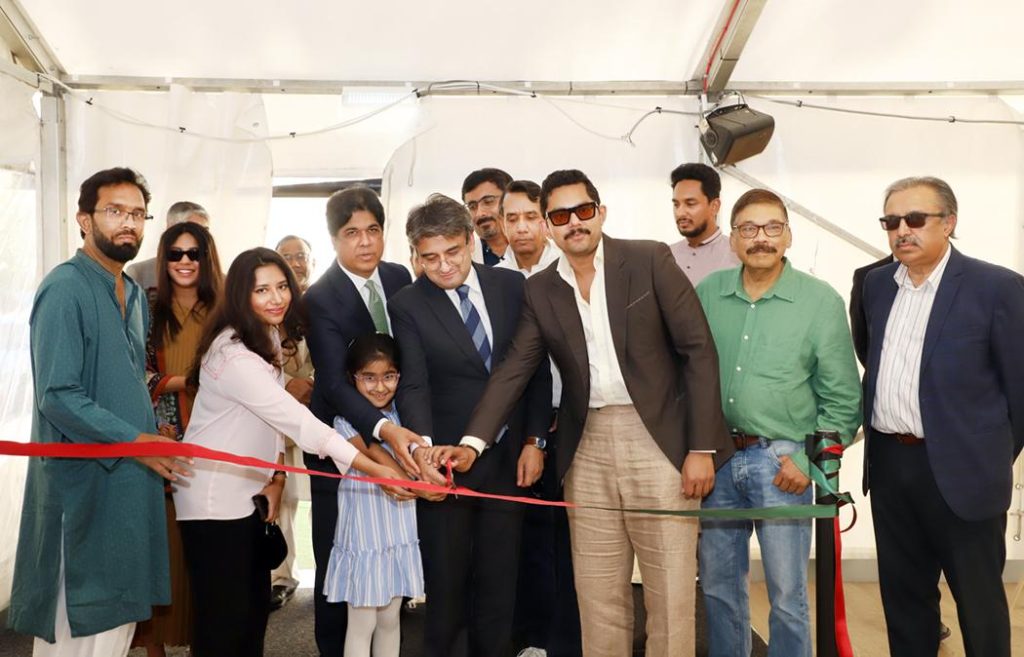
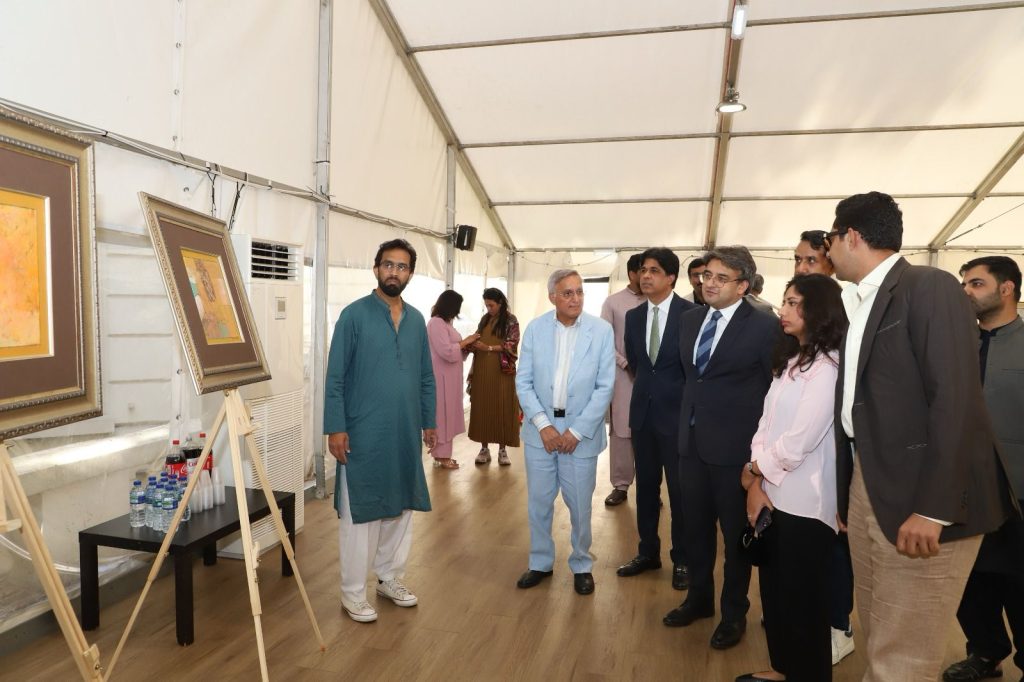
London, UK — Deputy High Commissioner of Pakistan, Mr. Haseeb Bin Aziz, inaugurated the prestigious art exhibition “Masters of Canvas” at the Pakistan High Commission in London, celebrating the exceptional talent, diversity and enduring legacy of Pakistan’s distinguished artists.
The exhibition brings together the works of renowned senior Pakistani artists and calligraphers Late Ahmed Khan, Late Mashkoor Raza, M.A. Bukhari, Chitra Pritam and Qamar Siddiqui, offering audiences in the United Kingdom a rare opportunity to experience original works of Pakistani art.
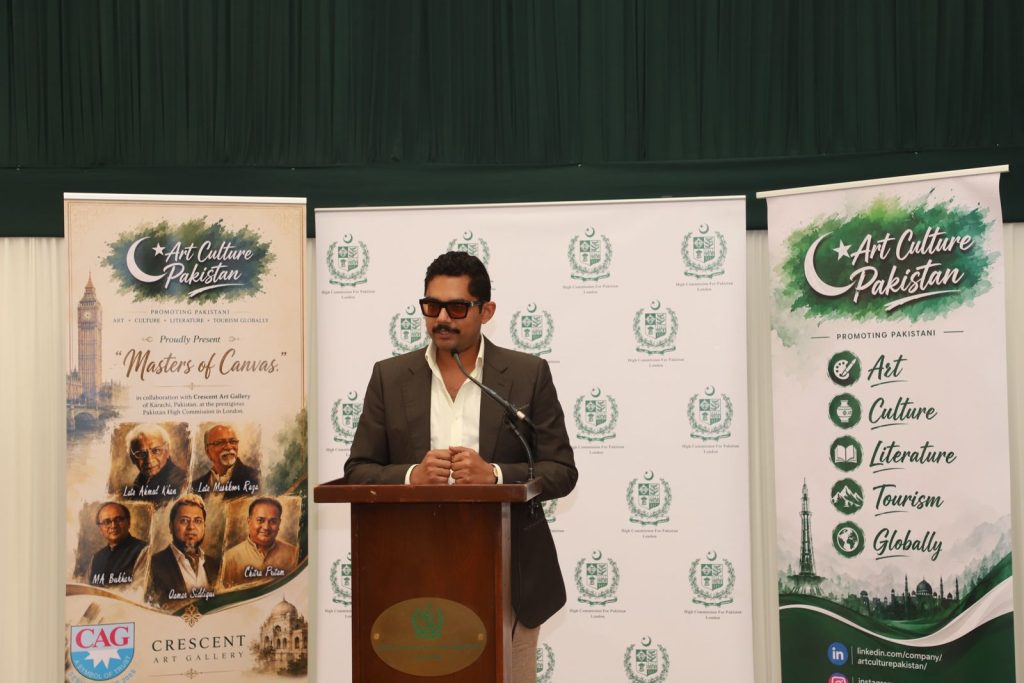
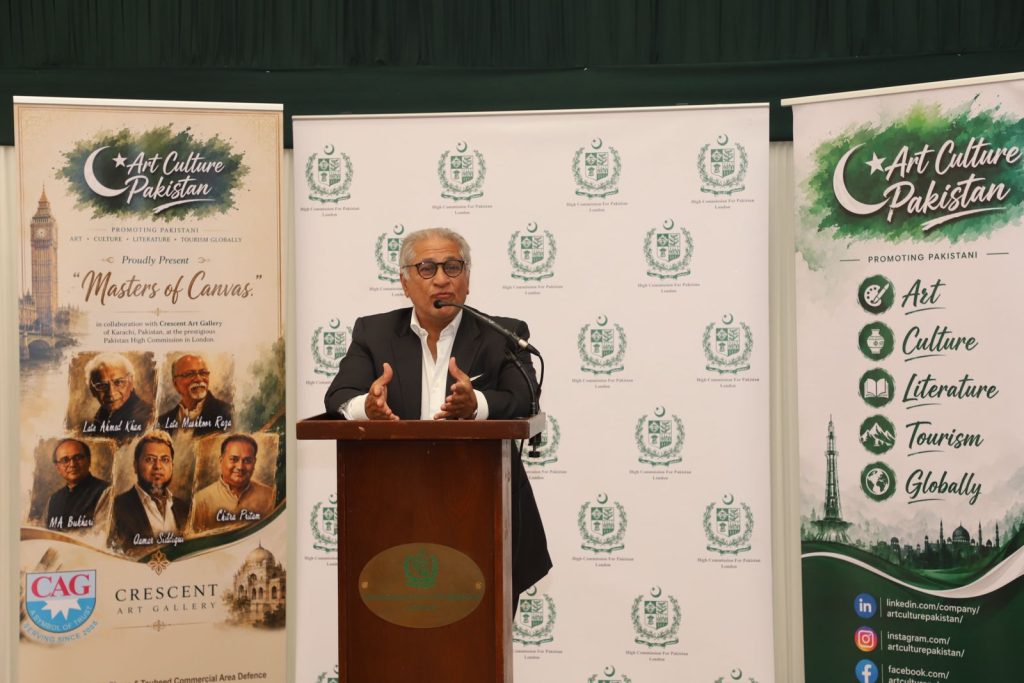
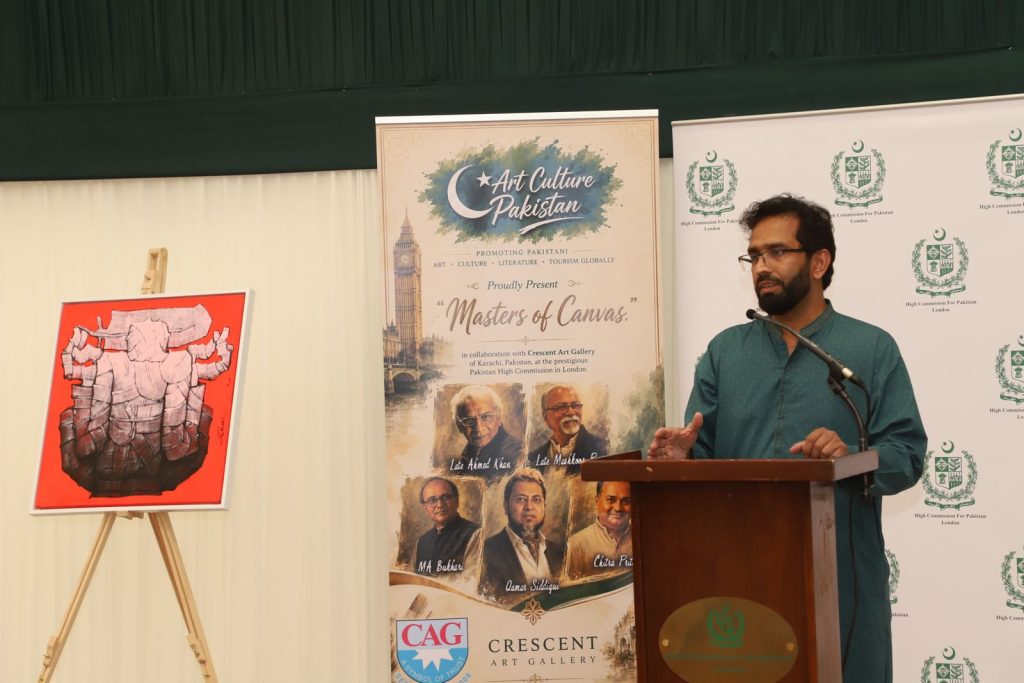
Speaking at the inauguration, Deputy High Commissioner Haseeb Bin Aziz paid tribute to the distinguished artists, appreciating their remarkable contributions to Pakistan’s artistic and cultural heritage. He also commended the efforts of Art Culture Pakistan and Crescent Art Gallery, Karachi, for bringing the work of these celebrated artists to the United Kingdom and providing an important platform for Pakistani art and culture to reach international audiences.
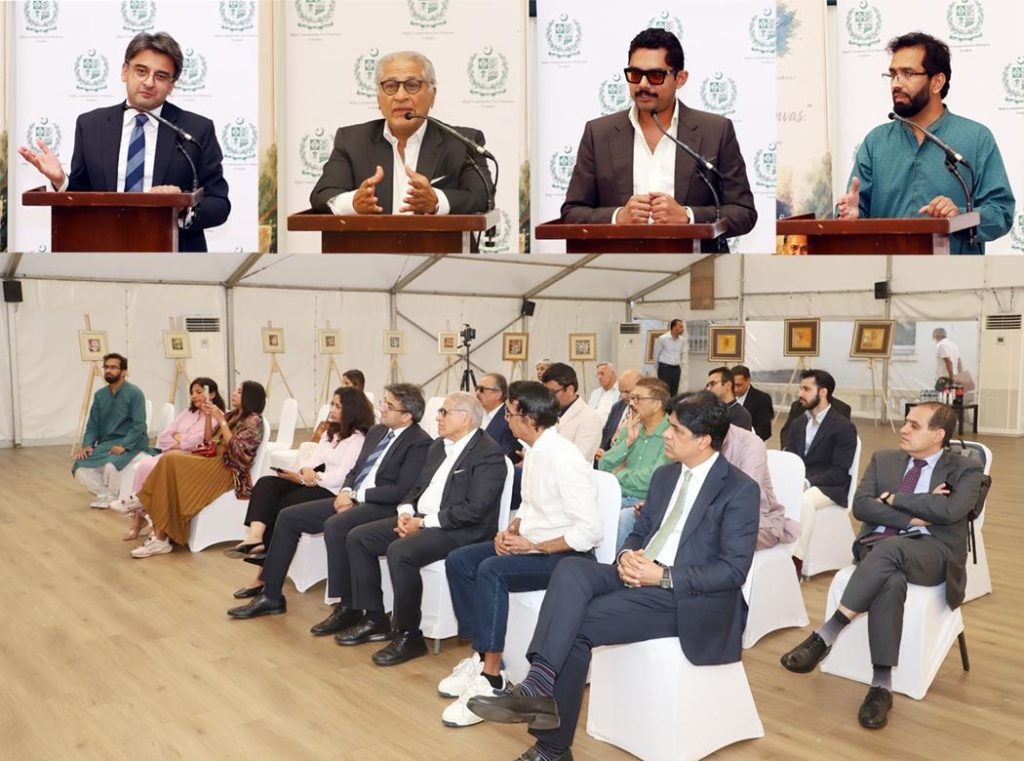
The exhibition is proudly presented by Art Culture Pakistan, an initiative founded by Mr. Akber Mehmood, in collaboration with Crescent Art Gallery, Karachi, founded by Mr. Nasir Javed, together with Mr. Sameer Nasir and curator Ms. Sidra Nasir. Through their continued commitment to the promotion of Pakistani art and culture, the organisations have worked to introduce outstanding Pakistani artists to audiences across Pakistan and internationally.
Addressing the gathering, Mr. Sameer Nasir of Crescent Art Gallery encouraged members of the audience to actively participate in and support cultural events of this nature. He emphasised that growing public interest in Pakistani art and culture can help create greater opportunities for cultural exchange and contribute to strengthening Pakistan’s soft image in the United Kingdom and beyond.
Mr. Asif Rangoonwala of the British Pakistan Foundation also congratulated the organisers for bringing such a prestigious selection of Pakistani artists to London. He described the exhibition as a rare cultural occasion, highlighting the significance of presenting original artworks from Pakistan to London audiences after a considerable period. He encouraged attendees to value and support such unique opportunities to engage directly with Pakistan’s rich artistic heritage.
The event also featured a special video presentation titled “Masters of Canvas,” presented by Mr. Akber Mehmood of Art Culture Pakistan. The presentation introduced the featured artists, showcasing their artworks and highlighting the distinctive genres and artistic approaches that have shaped their careers.
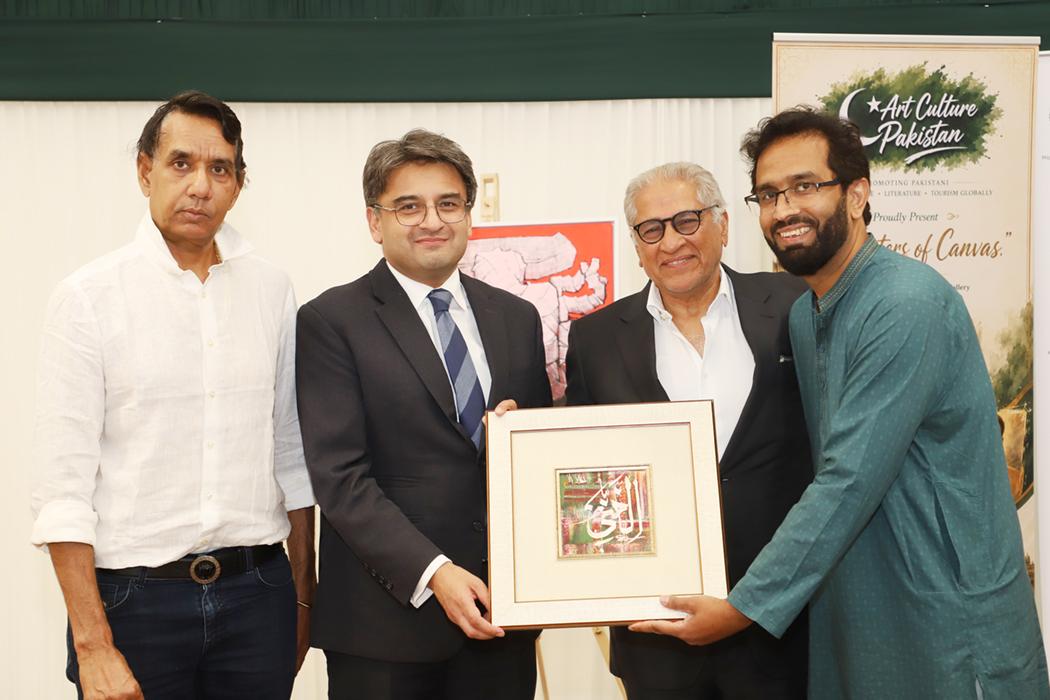
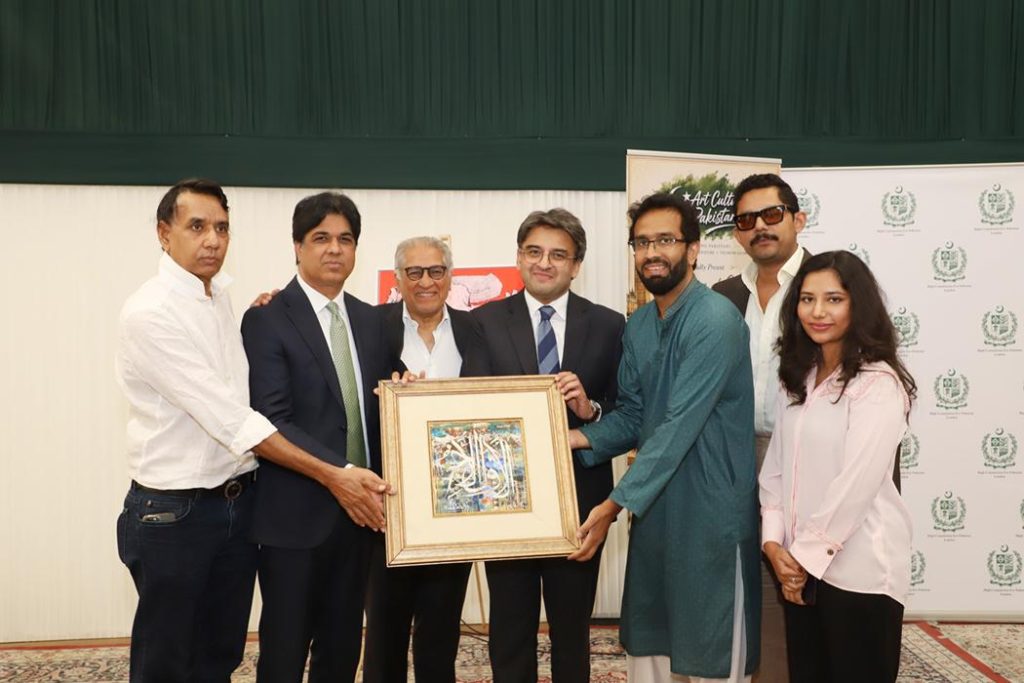
“To conclude the event, exquisite calligraphic masterpieces by the venerable maestro M.A. Bukhari were presented on behalf of Art Culture Pakistan to Deputy High Commissioner Haseeb bin Aziz, British Pakistani Foundation CEO Asif Rangoonwala, and Press Attaché Mr Ali Nawaz Malik.”
By Dilyara Lindsay
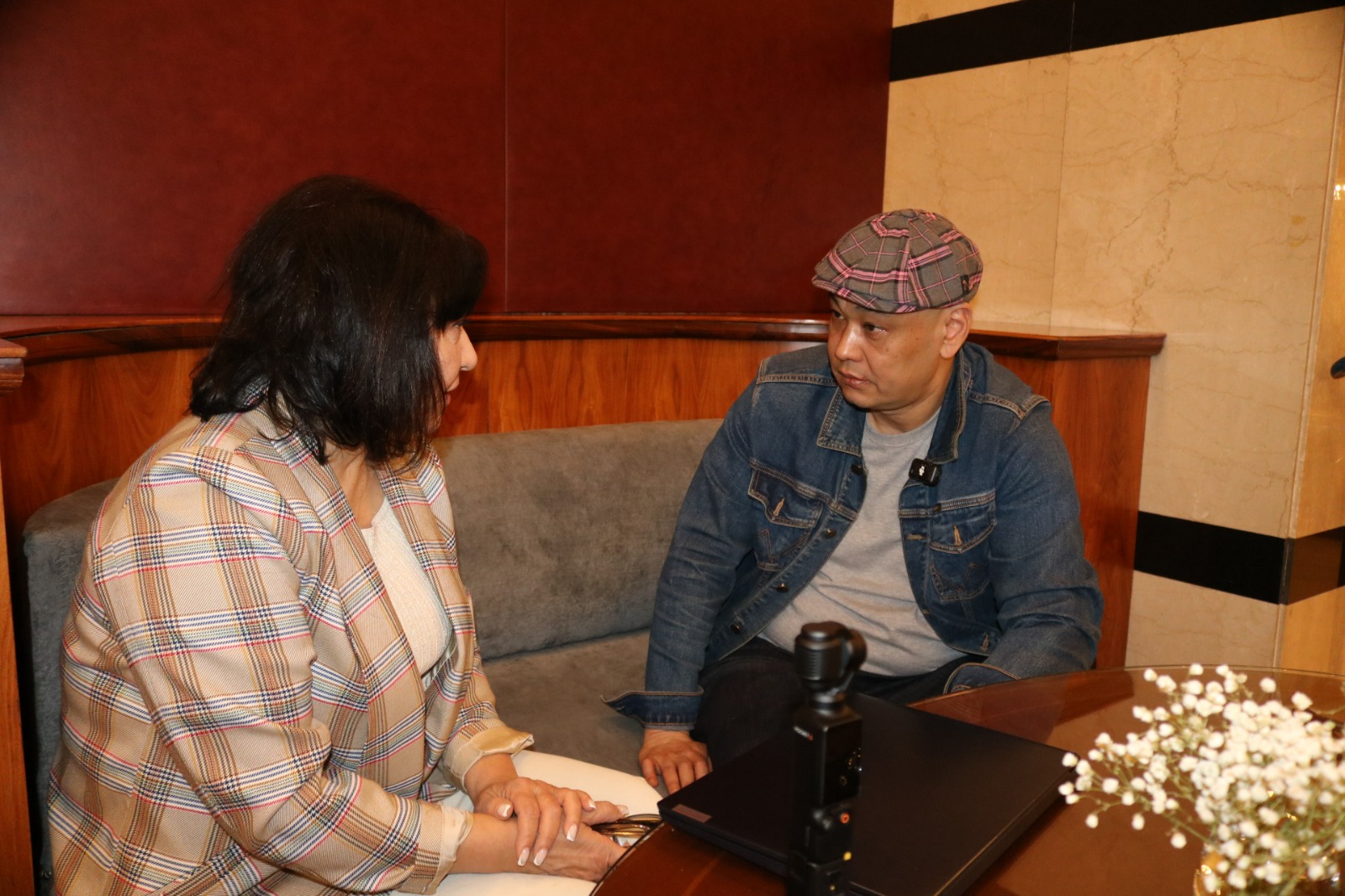
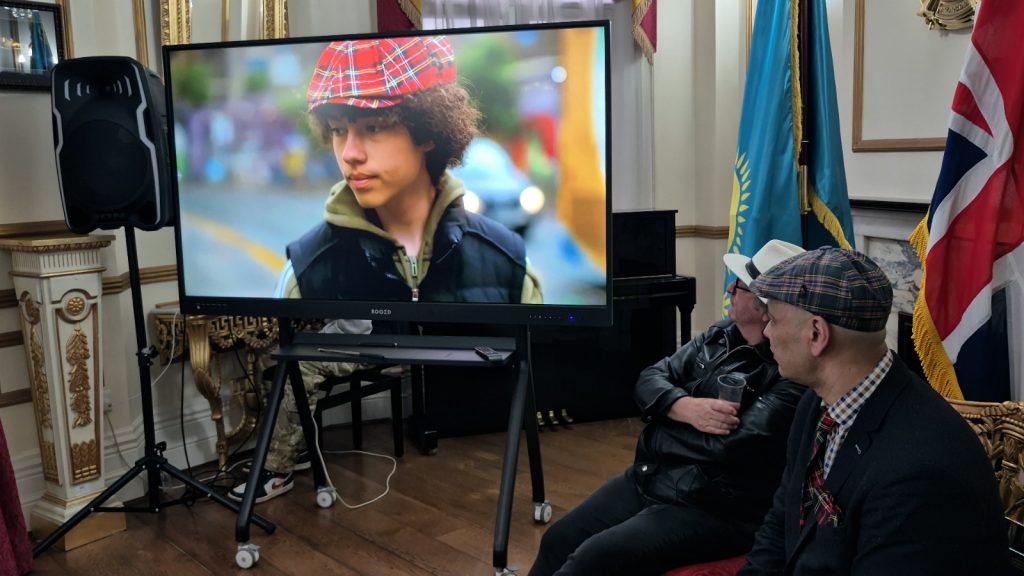
In a remarkable story of transformation from diplomacy to artistic expression, renowned Kazakh musician and songwriter Jantik – whose full name is Zhantemir Baimukhamedov – has opened up about his journey from the corridors of foreign affairs to the international music stage. In an exclusive interview with our Cultural Desk, the former diplomat turned performer discussed his childhood influences, his decision to leave public service for music, and his dream of recording at Abbey Road Studios.
Q: Mr. Baimukhamedov, thank you for speaking with us. Let’s start at the beginning. How did music first enter your life?
A: Music has been part of me since childhood. I was born into a family where music was deeply cherished. My father was a guitarist – he was considered the first Elvis of Almaty and Kazakhstan back in the 1960s. He started in Moscow, living in a dormitory for foreign students, and that’s how he got hold of rare tapes of Western music. Through him, I discovered Elvis Presley, The Beatles, and the sound that shaped my imagination.
Q: You trained formally in music as a child. What did that involve?
A: I attended music school and sang in a choir. But I also pursued academic studies – history with a specialization in English. So music and education went side by side.
Q: Then your path took an unexpected turn toward diplomacy. How did that happen?
A: After the collapse of the Soviet Union in 1992, the Ministry of Foreign Affairs was searching for officers. I was selected for advanced diplomatic studies and was sent to the London Diplomatic Academy in 1993. After completing my studies, I joined Kazakhstan’s Ministry of Foreign Affairs, serving as an interpreter under the attaché. I also worked as an assistant to the Ambassador of Malaysia to Kazakhstan.
Q: Yet the call of music proved stronger. What made you leave diplomacy?
A: Yes, in 1996 I made the bold decision to leave diplomacy and devote myself entirely to the arts. That choice defined the next chapter of my life. Music was not just a hobby – it was my true calling.
Q: What was your professional breakthrough?
A: That same year, I joined the newly opened national television channel Khabar, where I produced a youth entertainment programme called High-Five Front. It was often described as Kazakhstan’s answer to MTV. Since then, I have performed in more than 3,500 live events as both a singer and master of ceremonies. I established my own band, and we have been performing regularly.
Q: You recently achieved a long-held dream: recording at Abbey Road Studios. Tell us about that.
A: Yes, this year we released a 14-track vinyl album recorded at the iconic Abbey Road Studios in London with acclaimed producer Stuart Epps. Recording at Abbey Road was a dream I had carried since my teenage years. To see it become reality is one of the proudest moments of my life.
Q: Your music bears a deep imprint of British musical heritage. Which artists have influenced you most?
A: From The Beatles and The Rolling Stones to Led Zeppelin, Oasis, and Stone Roses – I credit several generations of British artists for shaping my creative language. As a teenager, my friends and I would copy the Beatles, the Animals, The Who, then later Supergrass and Oasis. There were three British invasions: the 60s, the 70s, and the 90s. All of them influenced me. You can hear those sounds in my album.
Q: You’ve described your mission as giving Kazakhstan a place in the global musical conversation. Can you elaborate?
A: Absolutely. While my work draws strongly from British influences, I see my artistic mission as something larger. Using a metaphor: The Beatles planted a great musical tree. Many branches have grown from it. I hope to add a Kazakh branch that will continue to grow and prosper. I am not incorporating traditional folk elements – I am directly engaging with British music culture while bringing my Kazakh voice into that tradition.
Q: Beyond your own career, you are also committed to nurturing young talent. Tell us about your music school.
A: I established a music school for emerging musicians. Talented young people deserve a stage. If I can help create that path for them – including my own daughter, who I believe is very talented – then I feel I am doing something meaningful. I provide practical stage experience. This business is hard. You have to be number one. It took me 30 years. You have to be a maniac towards your target.
Q: How have diplomatic institutions supported your artistic journey?
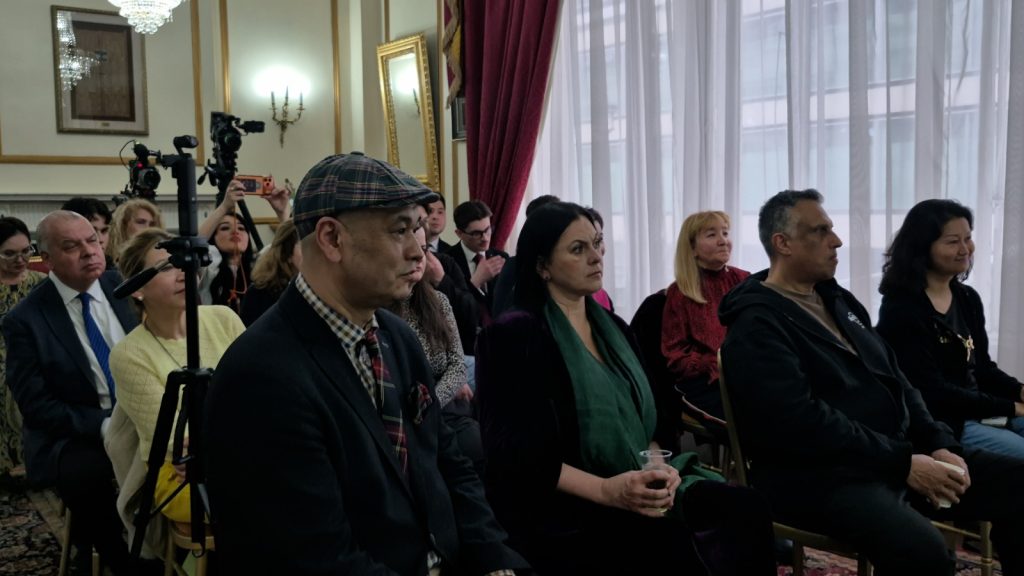
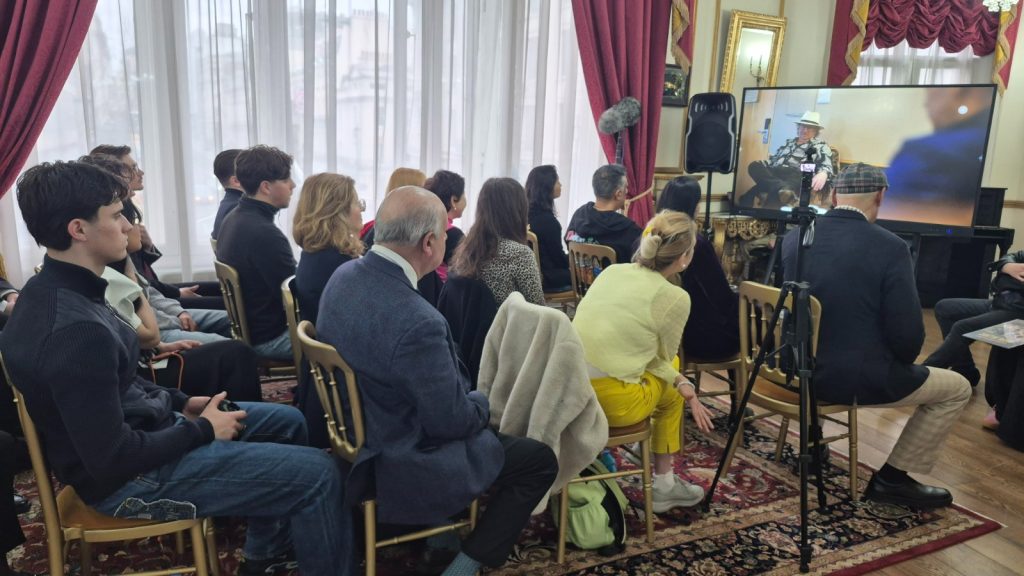
A: I am very grateful to the Kazakh Embassy in London. They helped me greatly and put serious effort into organizing a successful press conference. Diplomats attended, as well as representatives of the Eurasian Creative Guild, where I serve as an ambassador. Special thanks to Marat Akhmedjanov and all the guild members in the UK. They gave me encouragement and power to continue my work.
Q: What are your future ambitions?
A: I want to bring my band to the United Kingdom and fulfill another long-held ambition: performing at the Glastonbury Festival. That has been my dream for more than two decades. Of course, everything depends on funding. I spent a lot on this project – more than a beautiful car. If sponsors exist, I would love to apply to them. If not, I will work hard to make it happen.
Q: Finally, what would you say is your ultimate goal as an artist?
A: My intention is to put Kazakhstan on the world music map. That is what I am doing. For an artist who has already crossed the boundaries between diplomacy and music, the journey appears far from over. And I am just getting started.
ZhantemirBaimukhamedov’s latest vinyl album, recorded at Abbey Road Studios with producer Stuart Epps, is now available. He continues to perform and mentor young musicians through his school in Almaty.
Art & Culture
Part 2-Muslim-Sikh Harmony in Punjab: Akhtar Hussain Sandhu with Arshdeep Kaur Battu in a TV Interview on Sanjha TV (Canada)

Dr. Akhtar Hussain Sandhu, expert on Sikh/Punjab Studies, historian, scholar and columnist from Pakistan, currently living in USA was interviewed by famous anchor Arshdeep Kaur Battu for Sanjha TV, Surrey (Canada). The Light Newspaper is publishing first part of this interview and the rest of parts will be published in the forthcoming Sundays.
Translated by:
Farooq Muhammad Wyne
Lecturer in English
Government Islamia College Civil Lines, Lahore
Part 2
Earlier, you mentioned “Wand” (Division); division didn’t only occur in 1947. Way before that, Delhi was part of Punjab, and then it was separated by the British, and no one spoke out against this territorial loss of Punjab. NWFP and other regions extending up to Kabul during the reign of Maharaja Ranjit Singh were part of Punjab, and even Kashmir was under Punjab; later, Kashmir separated, but no Punjabi leader cried or protested. Moving on, Haryana got separated, Himachal Pradesh, Chandigarh gained the status of union territory, who spoke against that?
The leadership crisis in Punjab has always existed. The major issue in Punjab is the crisis of leadership, even today. We (the Punjabis) neither have unity nor capable leadership. A leader is someone who thinks about people. There is a word called “Ishq.” It is something that cannot be associated with a man or a woman; it would be an insult to the word “Ishq” if it is used in this context. “Ishq” means losing your comfort, wealth, and everything you have for the sake of a ‘cause’ or mission. The cause of ultimate societal betterment. “Ishq” entails selflessness and self-negation in pursuit of higher objectives. Spirituality, which entails selflessness and self-negation, is the prime quality of a capable leader, but it is rarely seen today. If someone doesn’t rise above his materialistic gains and vested interests, he cannot benefit people and hence cannot become a leader. Such a person will deliver speeches for the public good but will have his own motives. So, the leadership of Punjab is now suffering from materialism. They (the politicians) need money, ministries, and status. In conclusion, Punjabis lack unity and leadership.
Host: We often remember Bhagat Singh, especially in September when his holiday is celebrated. Bhagat Singh would have never imagined that his Punjab would be divided into two parts, and elderly Punjabis would lament the division of the land. His only dream was that Punjabis should remain united, undivided, and in harmony. I often think his soul must be writhing to see the current state of Punjabis.
Guest: Regarding Bhagat Singh, there are many elements to discuss. Sadly, some members of the Sikh community have ostracized him from the Sikh community. My question is, if someone calls himself a Gursikh (a devoted follower of Sikh Gurus), will the Guru cast him away? If a Sikh goes to the Guru and calls himself his follower, will the Guru say to him, “No, since you do this and that, you go away”? No, the Guru will not say such a thing. When the Guru himself does not reject him, who are we to reject him (Bhagat Singh)? Whoever goes to the holy door of the Gurus is accepted wholeheartedly and embraced. The purity of their (Holy men’s) souls and intellects is very clear; they accept any kind of man, be it good or otherwise. But now, this phenomenon of excommunicating people is prevalent, where individuals are labeled as believers or disbelievers, Sikhs or non-Sikhs. When such states of affairs are prevalent in Punjab, what kind of leadership can we expect?
At least Bhagat Singh was fighting for independence, for Punjab, and for India’s freedom against the colonizers. Just look at these aspects; aren’t they enough? Why do people delve into deeper issues? He was a writer, and if someone is a writer, his task is to write. If someone is a reformer, his task is to reform. If someone is a poet, his task is to write poetry. If someone is a lyricist, he will be remembered for his art. That’s how people should be remembered (for their works), and we don’t need to invade their personal lives to find faults and defects.
Host: But such things are pervading.
Guest: Personal affairs of revered personalities should be left to themselves. Just look at their work. If I am a Professor or researcher on Punjab, that’s enough. No one needs to
look at my religion or personal inclinations or affiliations; this isn’t necessary. Today, you invited me on your television show, for which I am very grateful, but that is because I am a researcher on Punjab. If you invite a political leader, then you would look at him from a political perspective, not a religious one. Likewise, if someone is a reformer, he will be viewed from another context. Whoever contributes to his field gets recognized; hence, we don’t need to delve into his personal or family affairs. This is a drawback in Punjabi culture; they observe minutiae, irrelevant and inconsequential details, and then politicize the whole thing. This is one of the most problematic issues in Punjab.
Host: We often highlight that education is important. We also say that if youth are equipped with education, it will change the course of the country. The youth of any country holds utmost importance. Previously, we were discussing women’s education, how much education and awareness are being provided to (Punjabi) women, and how many of them are being encouraged to join schools and universities and then join the profession they love and aspire to. But whenever we talk about Sikhya (Education), the element of religion cannot be excluded. It is often said (regarding Punjab of Pakistan) that Muslims are given educational opportunities while Non-Muslims are not. Are these things real? Are they happening in Pakistan?
Guest: My father Ch. Khadim Hussain used to say that in childhood, a man’s energy is in his hands and legs; he tries to run, play, and jump. Gradually, the energy moves towards his chest and heart, and he wants to change the world; he wants to become an activist. When he crosses his forties, he becomes mature and a thinker; he starts thinking. This is the age of his wisdom. When he becomes too old, his energies start to fade away, and he only speaks and starts babbling like a child. This is the cycle of life. Our scholars (Vidwan) think, use wisdom, and show the path, values, and wisdom. It is the task of the youth to implement those values and wisdom. Youth is the backbone of any society, and they are the ones who change society. The experience they gather when they reach the age of wisdom is then used to lead people forward from that perspective. Youth is very important. Hence, if the youth is kept away from education, there will be a lapse of awareness among them. This is why the youth, especially those in education, shall realize that their primary objective is learning, not money. The first textbook a child reads is his mother; she inculcates religious and moral values into him. The second textbook of a child is his society and surroundings; he learns from his society, as it is the second institution of learning. The third textbook of a child is his primary educational institution. But when he goes to university, the door becomes open for him; he is already socially constructed by his religion, society, and school. This is the time when he decides in which direction he wants to move, let’s say engineering, medical, religion, or IT. At that moment, he has to strike a balance between the training and learning he received earlier and the direction he now wants to move in. If he fails to do that, it will create an identity crisis in him. This is why he should not cut himself off from the learning he takes from his mother tongue and culture. The important thing is that whichever field he chooses, he has to carry his culture along with him.
If the student forgets his culture, he will face a severe identity crisis; he won’t be able to distinguish between his roots, i.e., whether he is Punjabi or belongs to the West. In Punjab, the English language is taken as a measure of intelligence and education; if someone speaks English in Punjab, he is often considered a scholar. But even in an English society, let’s say an insane or psychologically ill person also speaks English; does it denote wisdom? Of course not. English should not be given preference over Punjabi in Punjab. English is just a language, a mode of communication, and wisdom is
something else. Education doesn’t teach you wisdom; rather, it hones your skills and capabilities. It tells you how to behave. If there is a saint or an engineer inside you, getting an education will bring it out. Likewise, if there is a poet, writer, or historian in you, education will bring it out. The teacher is also an educationist and a facilitator. Our (Punjabi) students are away from books, and even before that, they are away from their Punjabi language and culture. They can speak one or two sentences in Punjabi but aren’t able to carry out a substantial conversation. I remember I was training some officers in Lahore. I asked them, “Do you know Punjabi language? As you’re all Punjabis,” they replied in assent, saying if they can’t speak Punjabi, then who would? So, I read out the lyrics of a famous Punjabi song:
Pichhe pichhe aunda meri chaal vehnda aen, Chirey valia vekhda aen ve, mera lawng gawacha
(translated as, following me, keep a watch on the route I walked; O turbaned boy, keep watching while my nose ornament is lost).
Then I asked what “Chiray wala” means in Punjabi, and they replied, “Those who have a straight line or distinct mark in their hairstyle (cheer).” I tried to suppress my laughter and said a “turban” (safaa) is called Cheera in Punjabi. The officers were shocked. Likewise, I was once posted in Murree as a Lecturer. While traveling in public transport in Punjab, you know in our society these days, the FM Radios have changed their styles. The Radio Jockeys speak while music plays in the background. So, neither can you enjoy her talk nor the music. The song being played was “Mahi merya rond na marin, me da laaya jind jan da” (My beloved, do not betray me as I have put my life at stake for you), probably sung by Noor Jahan. The Radio jockey said while lowering the volume, “I consulted a Punjabi scholar about the meaning of ‘rond marna,’ and he told me it means to shoot someone.” This shows the youth’s nonseriousness of Punjabis towards their language and culture.
Host: I think parents play an important role in the upbringing of children because whatever language the parents speak, the child will try to repeat it, as is the case in Observational Learning of a Child.
Guest: In our Punjab (both Eastern and Western), it is often said that if you don’t speak Hindi or English on the Indian side of Punjab, you probably won’t be able to compete in Indian civil services and other competitive exams. On our (Pakistani) side of Punjab, it is widely regarded that if you don’t know Urdu and English, you might not ace the civil services examinations. This is why they are encouraged to learn such languages, the language of capital (market language), which isn’t bad, but the problem arises when you discourage Punjabis from speaking Punjabi. The second thing is that when our children get this “heen bhavna” or inferiority complex, perhaps the Punjabi language is not a good language. But I think Punjabi youth can still struggle to regain the lost glory of their language. You see, in our home, it was said that if you don’t learn English and Urdu, you won’t succeed. Gradually, I started studying my culture; I read the poetry of Waris Shah, Bulleh Shah, Mian Muhammad Bakhsh, and Sultan Bahu, the famous Punjabi poets. Each verse of such gems contains pearls of wisdom. If our youth is getting away from Punjabi culture, they would lose gems of
wisdom. For example, our proverbial wisdom such as “Dhyian sab dian sanjhiyan hundian ne” (Daughters are cherished and valued by the entire community) or “Wadyan da ehtram karna chai da ay” (the elderly shall be respected), such ethics and values cannot come from the West. If we defy our (Punjabi) culture, we will not only be cut off from our language and heritage, but we will also lose the gems of wisdom that they carry. Especially poets like Mian Muhammad Bakhsh; his poetry is full of wisdom and appeals to the intellect.


Media As A Bridge between Civilizations

China’s Fusion Breakthrough: Death Knell for the Oil Age

A Nation’s Real Strength Rests in Spirituality, Not Military Might


-
 Sports2 months ago
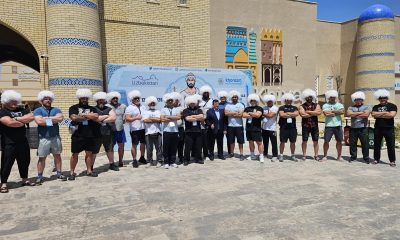
South Korea’s Yoo Useong Steps Onto the Global Strongman Stage as World Strongman Federation Professional Athlete
-

 Art & Culture1 year ago
A Survey of Mata-E-Zeest
-

 Europe News1 year ago
Chaos and unproven theories surround Tates’ release from Romania
-

 American News1 year ago
Trump expands exemptions from Canada and Mexico tariffs
-

 American News1 year ago
Trump Expels Zelensky from the White House
-

 Art & Culture1 year ago
Will Snow White be a ‘victim of its moment’? How the Disney remake became 2025’s most divisive film
-

 Pakistan News1 year ago
Comprehensive Analysis Report-The Faranian National Conference on Maritime Affairs-By Kashif Firaz Ahmed
-

 Entertainment2 years ago
Champions Trophy: Pakistan aim to defend coveted title as historic tournament kicks off today