
Pakistan News
The Forgotten 804

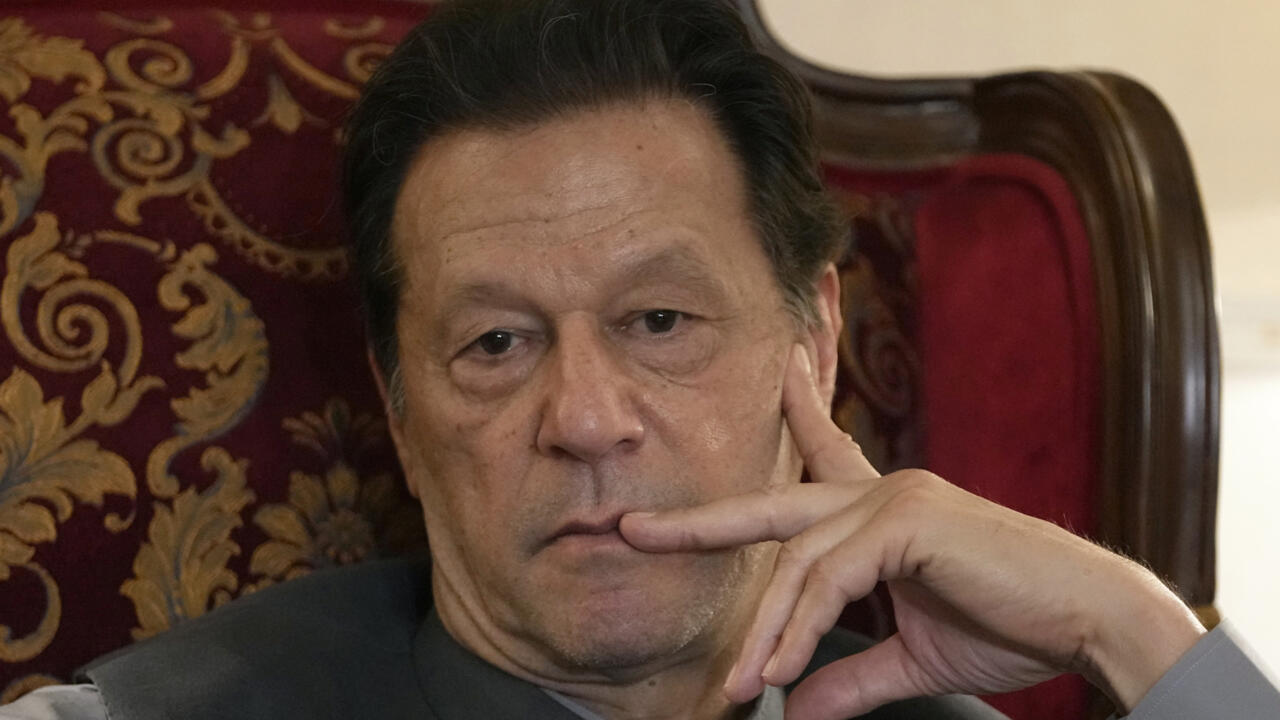
Paris (Imran Y. CHOUDHRY) :- Former Press Secretary to the President, Former Press Minister to the Embassy of Pakistan to France, Former MD, SRBC Mr. Qamar Bashir analysis: In the long arc of global politics, some stories are not merely about one man or one nation, but about the deliberate removal of obstacles that could derail larger designs. The imprisonment of Imran Khan, referred to by many as the forgotten “Prisoner 804,” is not only a chapter in Pakistan’s turbulent democracy but part of a larger geopolitical strategy in which the United States, Israel, and their allies sought to ensure that no disruptive force could interfere with their unfolding project in the Middle East. His incarceration is not just a punishment for defiance at home; it is a calculated silencing of a leader whose stubborn refusal to obey foreign dictates could have unsettled the plan to reshape Palestine, neutralize resistance, and entrench the vision of a greater Israel.
The United States has long been accused of thinking not just about present crises but of planning far ahead, identifying potential threats to its policies and eliminating them before they can materialize. From Latin America in the 20th century to the Middle East after 9/11, the record is replete with instances of intervention, destabilization, and regime change to pave the way for American interests. Pakistan, with its nuclear arsenal and ideological centrality to the Muslim world, has always been watched with particular suspicion whenever a leader emerged who spoke of independence, dignity, or solidarity with oppressed Muslims abroad. Imran Khan, by the time he matured into a national statesman, fit this profile perfectly: a man too self-confident to obey and too popular to be ignored.
It was during one of his interviews that the world caught a glimpse of his defiance. Asked whether Pakistan would allow American bases on its soil, his answer was sharp, unequivocal, and without diplomatic varnish: “Absolutely not.” For Washington, such a response was more than a sound bite. It was a warning that when the time came to launch broader operations in the region, including in Gaza, Khan would be an unpredictable and dangerous obstacle. The United States and Israel were moving towards their long-prepared campaign to dismantle Hamas and, more brutally, to ethnically cleanse Palestinians from Gaza and the West Bank. In that plan, Pakistan mattered. Its nuclear status, its army’s conventional strength, its historic role in the Muslim world, and the ability of its leader to mobilize opinion could all complicate the campaign. And so, before the bombs fell on Gaza, before the massacres of civilians filled the headlines, Pakistan’s loudest and most defiant voice was removed from the stage and locked in prison.
Khan’s removal was achieved through the time-tested formula of intrigue, betrayal, and manipulation. Once firmly established in power, his popularity was not eroded by scandal or economic collapse but by conspiracies spun from within, aided by external encouragement. He was stabbed in the back by allies, deceived by those he trusted, and undermined by the very establishment that should have protected him. His removal through a no-confidence vote in 2022 was presented as constitutional theater, but the timing and the subsequent unfolding of events revealed a deeper orchestration. He was expected, even by detractors, to return to power after elections. Yet the military establishment, in close alignment with U.S. preferences, ensured that even that possibility was closed off. For Washington, it was not enough to remove him once; they had to make sure he could never again return to disrupt the silence that was required when Gaza burned.
What followed was a demonstration of how external powers reward obedience and punish defiance. The civilian government led by Shehbaz Sharif and the military leadership under General Asim Munir quickly aligned themselves with Washington’s designs. Donald Trump himself revealed that both Sharif and Munir had been taken into confidence during the preparations for the U.S. strike on Iran and Israel’s onslaught on Gaza. The symbolism was unmistakable. For the first time in living memory, the president of the United States bypassed Pakistan’s civilian prime minister and held direct consultations with a serving general, elevating a subordinate servant of the state to the rank of geopolitical partner. The bypassing of the civilian chain of command spoke volumes: it was a reminder that power in Pakistan could be stabilized or destabilized at Washington’s will, depending on whether it complied or resisted.
The results were immediate and telling. When Israel unleashed its fury on Gaza and the West Bank, demolishing neighborhoods, bombing hospitals, and slaughtering women, children, and journalists, Pakistan’s response was muted. The country that had historically been among the loudest defenders of the Palestinian cause was suddenly silent. The same Pakistan whose leaders once thundered in international forums against Israeli occupation now mumbled routine statements while ensuring that no real action was taken. The silence was not accidental; it was the price paid for staying in power. Washington, in turn, ensured that Pakistan’s economy did not collapse entirely. IMF loans were eased, debt repayments were tolerated, and inflation was kept under some measure of control. The army and police were allowed to unleash brute force against protesters without fear of sanctions or reprimand. In exchange for obedience, the state was stabilized enough to carry out Washington’s commands.
Meanwhile, Prisoner 804 remained behind bars. Courts disregarded arguments by senior advocates and witnesses, not because the evidence was weak but because justice was never the point. The plan was clear: Imran Khan was to remain imprisoned until the Israeli project in Palestine was complete. His release, whether legally warranted or not, would have risked giving voice to the Muslim world at a moment when silence was most precious to Israel and its backers. His love for Islam, his admiration for the Prophet, his ability to galvanize millions of ordinary Pakistanis, and his influence across the Muslim world posed the very real danger of rallying states to oppose the genocide in Gaza. He could have called for collective action, perhaps even kinetic action, uniting Pakistan with Iran or other Muslim nations to confront Israeli aggression. That risk could not be taken, and so he was kept locked away, forgotten by the courts, ignored by the establishment, and silenced by force.
In this tragic arrangement, Pakistan has been reduced to a pawn. Its elected leadership lacks legitimacy, having been installed “by hook or by crook,” without genuine majority support. Its military leadership has overstayed retirements and rules with impunity, rewarded for obedience and secured by foreign approval. Together, they preside over a silenced population, cowed into submission by fear of the army and police, pacified by small economic concessions, and deprived of the leader who once embodied their aspirations for independence. The entire spectacle demonstrates how Washington’s leverage works: stabilize those who obey, destabilize those who defy.
The case of the forgotten 804, therefore, is not merely about one man’s imprisonment. It is about the systematic silencing of resistance in the Muslim world to clear the path for Israel’s project of ethnic cleansing and annexation. It is about the quiet submission of a nuclear-armed nation to foreign diktats, reduced from potential leader of an Islamic bloc to a bystander while atrocities unfold before the world’s eyes. It is about the reminder that in the theater of geopolitics, legality, democracy, and even human life itself are subordinated to the interests of the powerful.
Yet history has a way of proving that silence never lasts forever. Imran Khan’s imprisonment may achieve its short-term purpose, but the questions it raises will not vanish. How long can Pakistan endure the contradiction between its people’s convictions and its rulers’ obedience? How long can the Muslim world remain fragmented when the suffering of Palestinians continues to demand a collective response? And how long can any leader who bends too easily to foreign will sustain their own legitimacy at home? The forgotten 804 may one day emerge, and if he does, it will not only be as a man but as the embodiment of a suppressed nation’s voice. Until then, his silence echoes in every demolished home in Gaza, every unmarked grave in the West Bank, and every tear of those who still look to Pakistan for leadership and find only compliance.







Pakistan News
CELEBRATES PAKISTAN’S 79TH INDEPENDENCE DAY AND 150TH BIRTH ANNIVERSARY OF QUAID-E-AZAM MOHAMMAD ALI JINNAH IN FRANCE
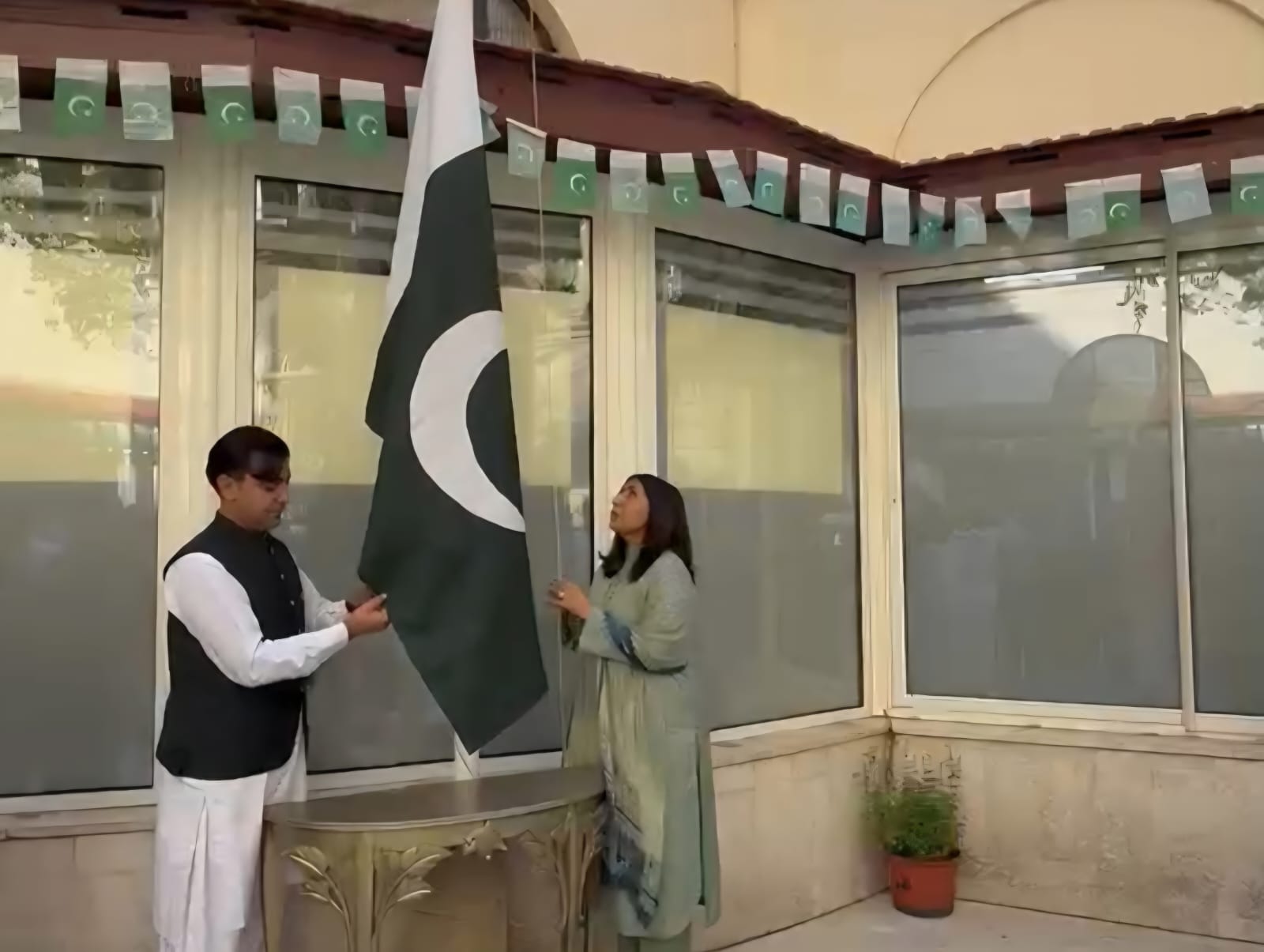
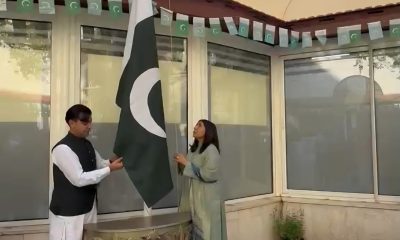
Paris ( Imran Y. CHOUDHRY):- On the occasion of the 79th Independence Day of Pakistan, Ambassador Mumtaz Zahra Baloch hoisted national flag to the tune of the national anthem at the Embassy of Pakistan, Paris and welcomed distinguished members of the Pakistani community including large number of children.
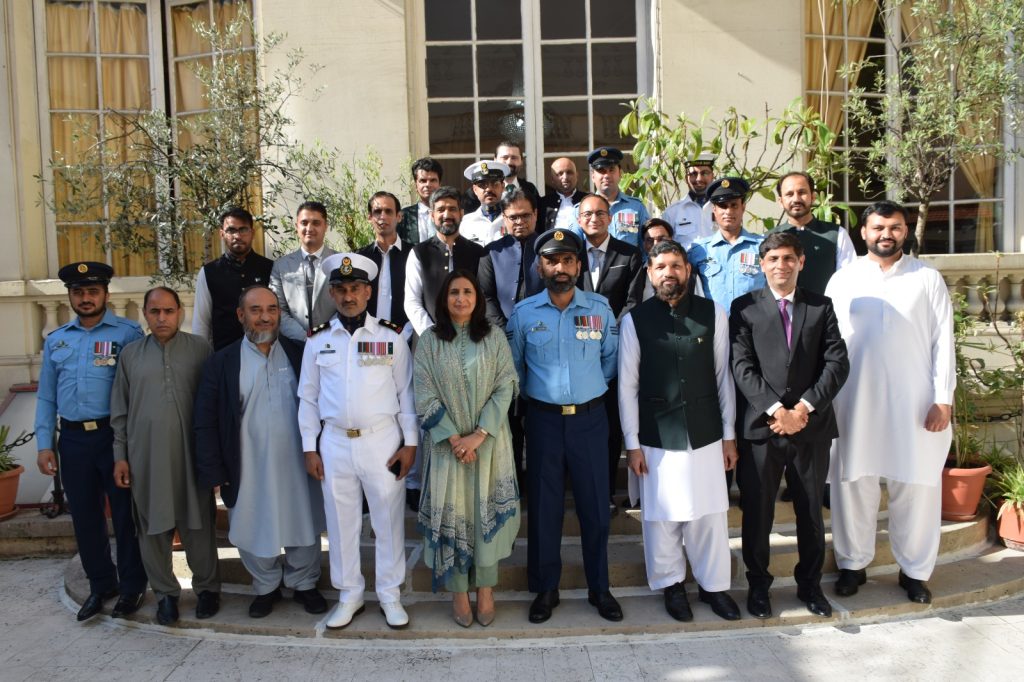
Messages of the President, the Prime Minister and Foreign Minister of Pakistan were read out on the occasion.
Congratulating all on the Independence Day, the Ambassador said that 14th August was truly auspicious as it brought together the entire nation – in celebration, in paying homage to the Quaid-e-Azam and other leaders of the freedom movement, in remembrance of the supreme sacrifices of our forefathers and drawing inspiration from our glorious past and the tremendous achievements over the decades.
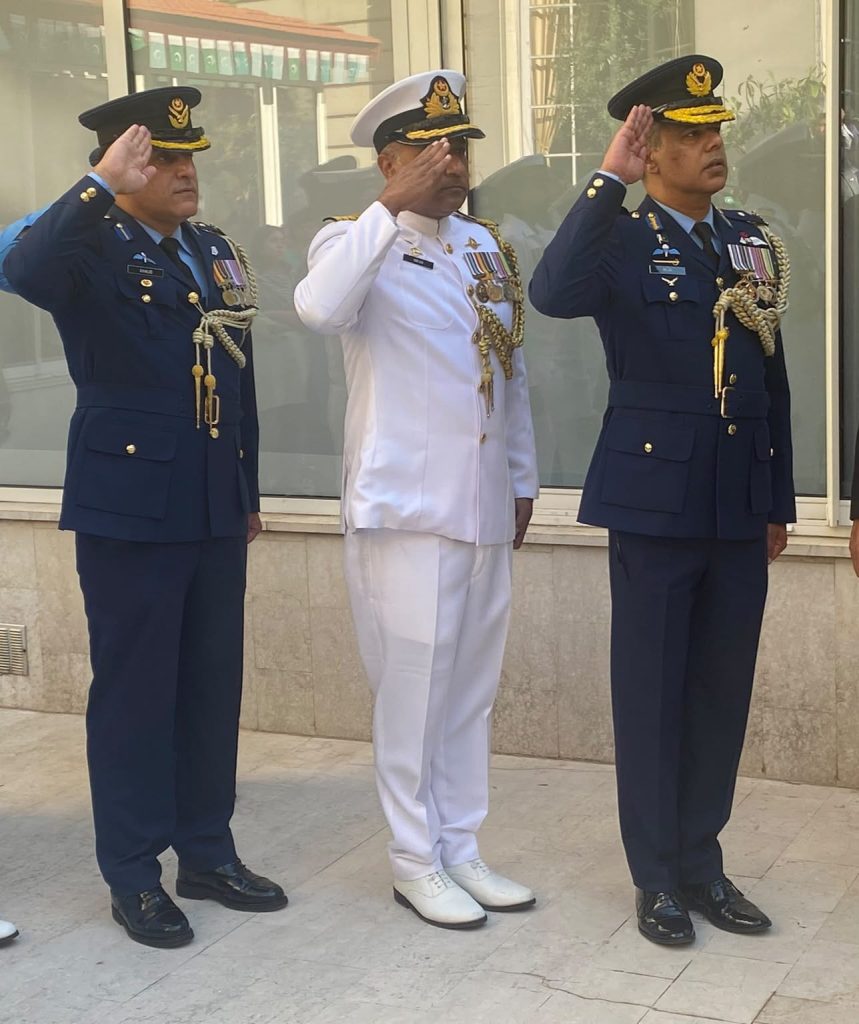
The Government of Pakistan is observing the current year – 2026 – as the “Year of Quaid-e-Azam Muhammad Ali Jinnah” to mark his 150th birth anniversary, she added. The great intellectual vision of Quaid requires the nation to uphold his principles and play its due role in the development and progress of Pakistan. The Ambassador highlighted that Quaid-e-Azam had given the nation three golden principles, faith, unity and discipline and adherence to these principles would lead the nation towards a bright future for the generations to come.
Ambassador Baloch said that as we celebrate our freedom we should remember our Kashmiri and Palestinian brothers and sisters, who have been struggling for over seven decades for their freedom and right to self-determination. She reaffirmed Pakistan’s political and diplomatic support to the people of the Indian Illegally Occupied Jammu and Kashmir (IIOJK) and Palestine for their legitimate rights.
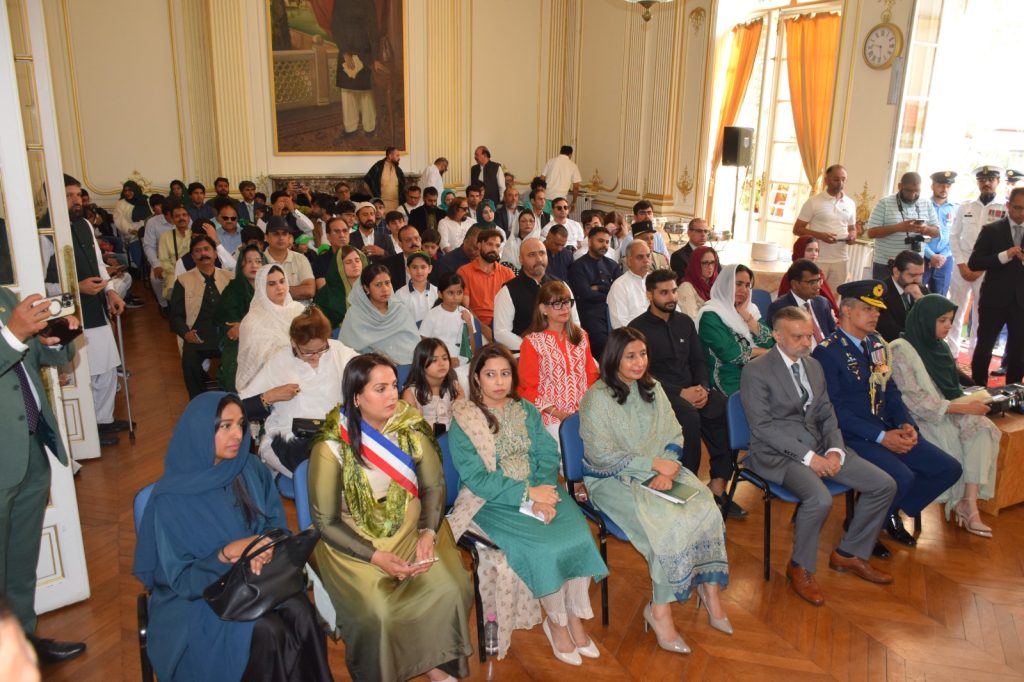
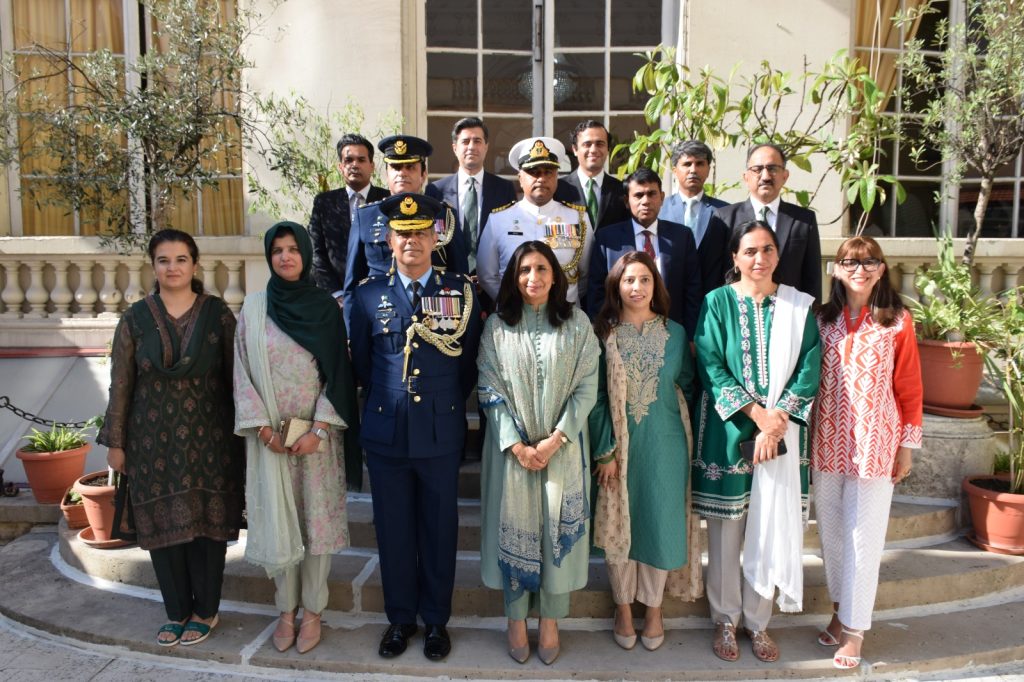
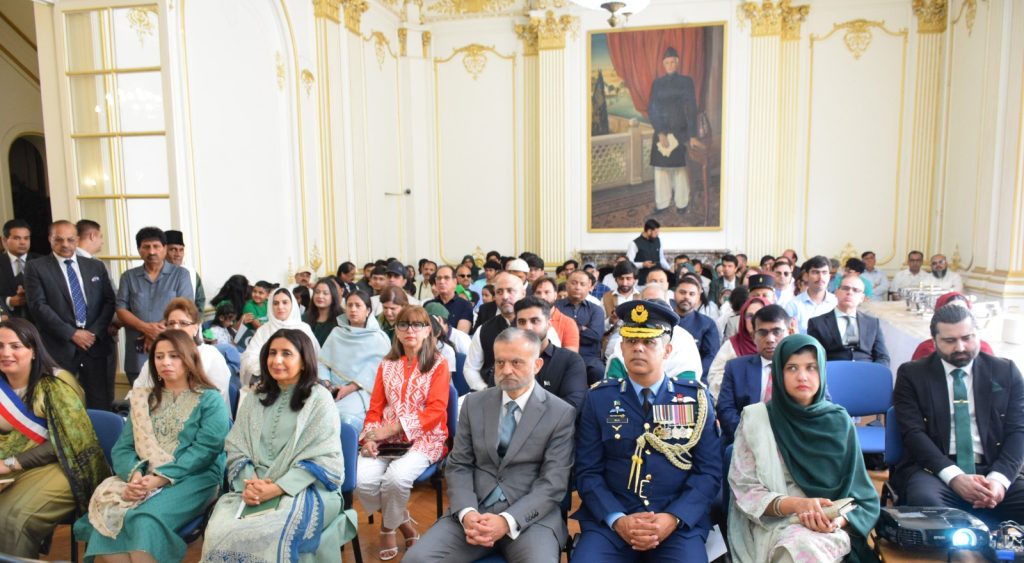
Ambassador also appreciated the contributions of Pakistani diaspora in France in promoting Pakistan-France relations. She reiterated Embassy’s fully commitment to continue to facilitate Pakistanis based in France.
Later, the Ambassador inaugurated the ‘historic photo exhibition’ based on the life and works of Quaid-e-Azam Muhammad Ali Jinnah at the Embassy. The exhibition showcased a remarkable collection of
archival records and photographs chronicling the visionary leadership and enduring
legacy of the founder of Pakistan. The guests especially the children took a keen interest in the exhibition and raised slogans of Pakistan Zindabad.
Pakistan News
Pakistan PUBG MOBILE team ‘4Thrives’ visited the Embassy of Pakistan in Paris, France.
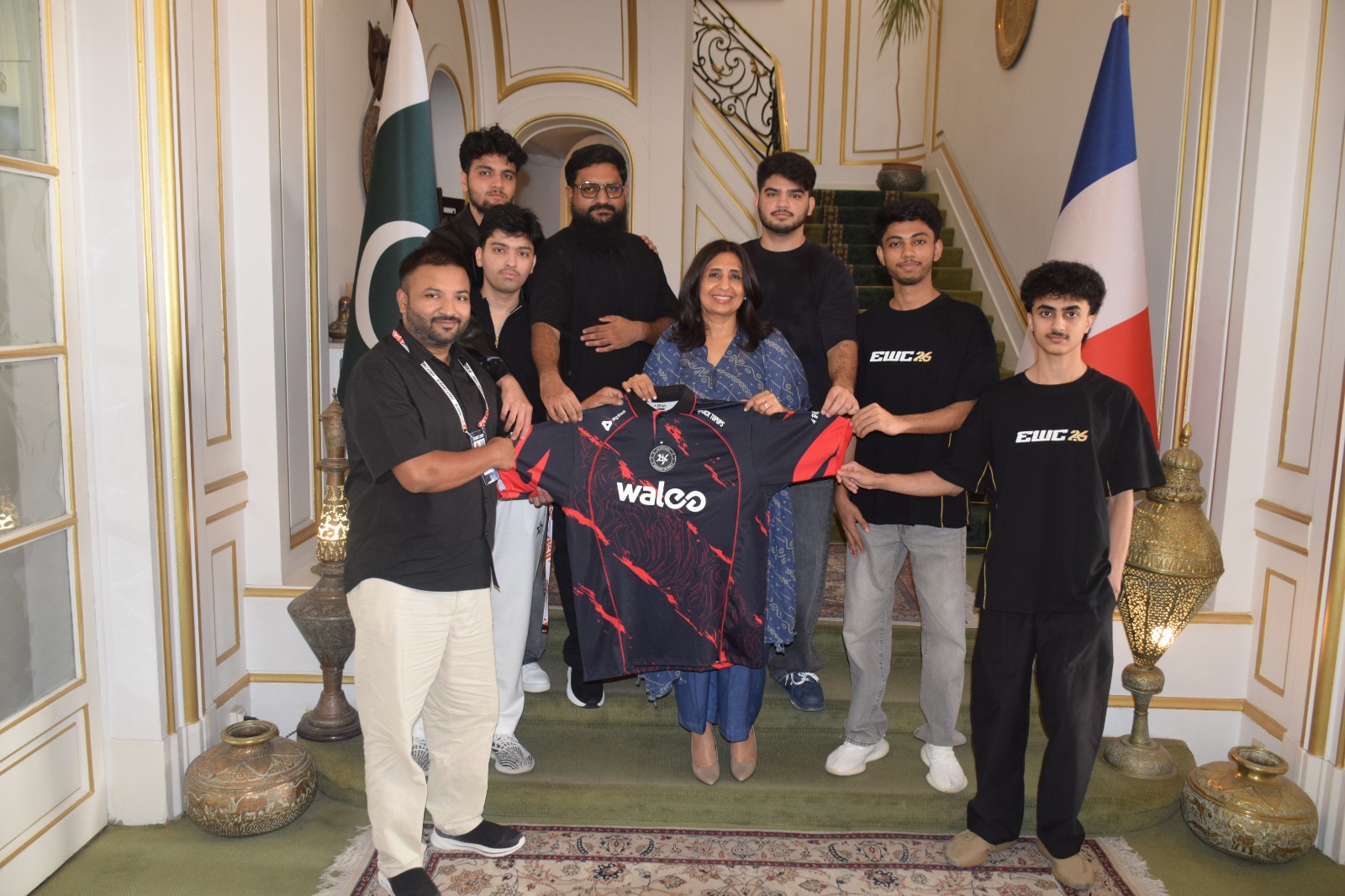
Paris ( Imran Y. CHOUDHRY):- Ambassador Mumtaz Zahra Baloch today received the top professional Pakistan PUBG MOBILE team ‘4Thrives’, which is competing in the high-stakes competition, PUBG MOBILE World Cup 2026 Grand Finals at the Esports World Cup (EWC) being held in Paris.
The team members of ‘4Thrives’ briefed the Ambassador on the game and the hard work they all had put in to finish at the top of the qualifying round and reaching the Grand Finals. They were enthusiastic about their performance which has cemented their position among the world’s best PUBG MOBILE teams.
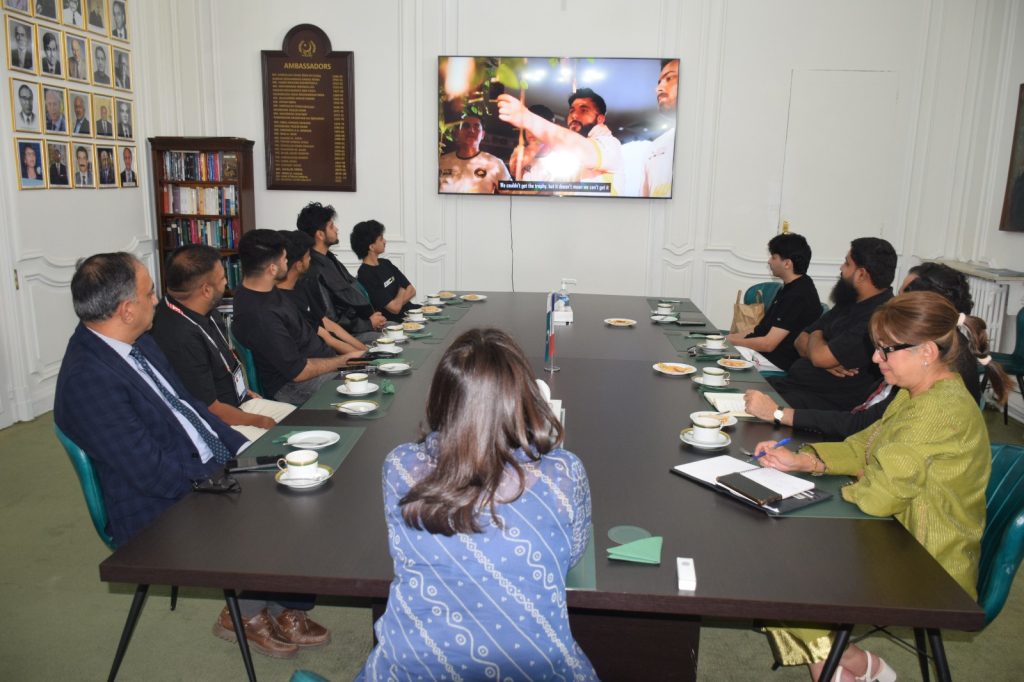
The Ambassador appreciated the team members for their enthusiastic participation and accomplishments and wished them success for the Grand Finals. She said the Pakistani nation has proudly witnessed the recent achievements of the 4Thrives team and expressed confidence that it would win the prestigious trophy in Paris as well.
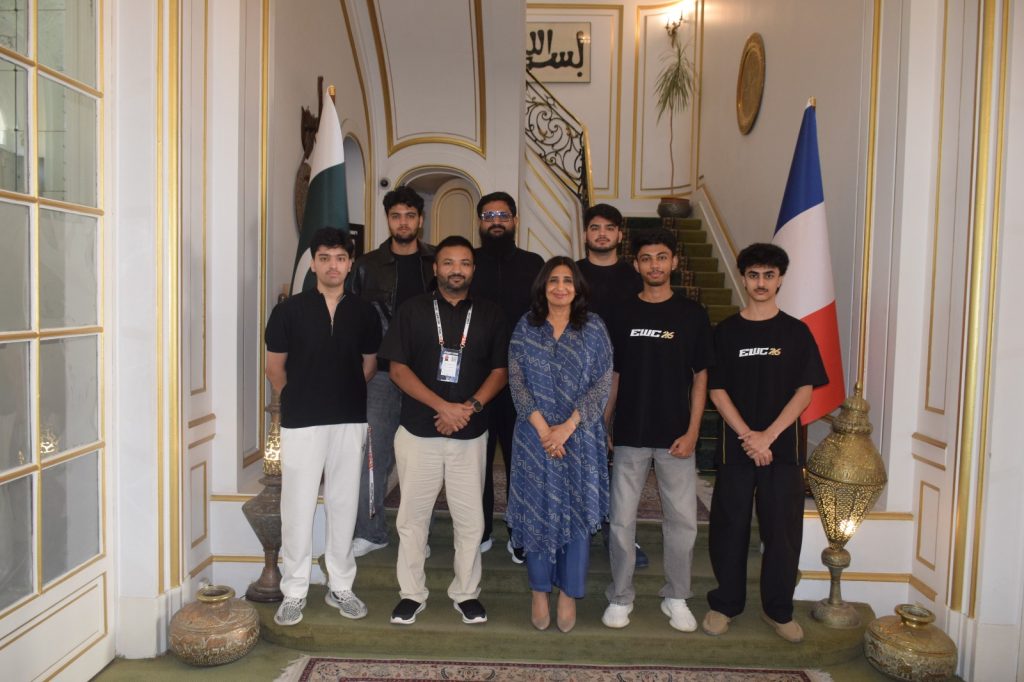
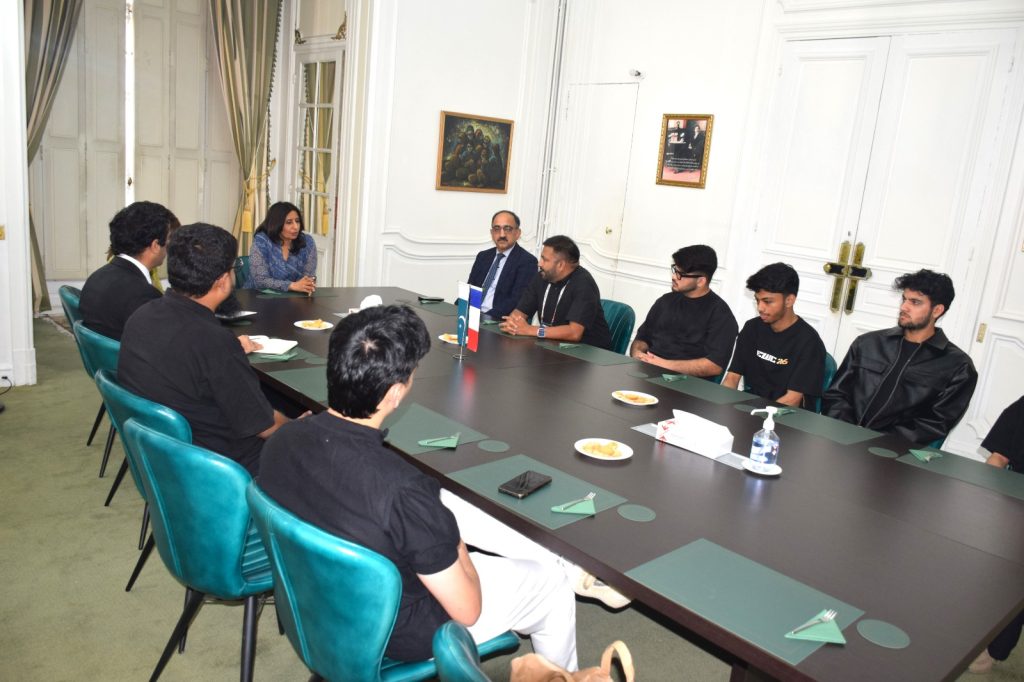
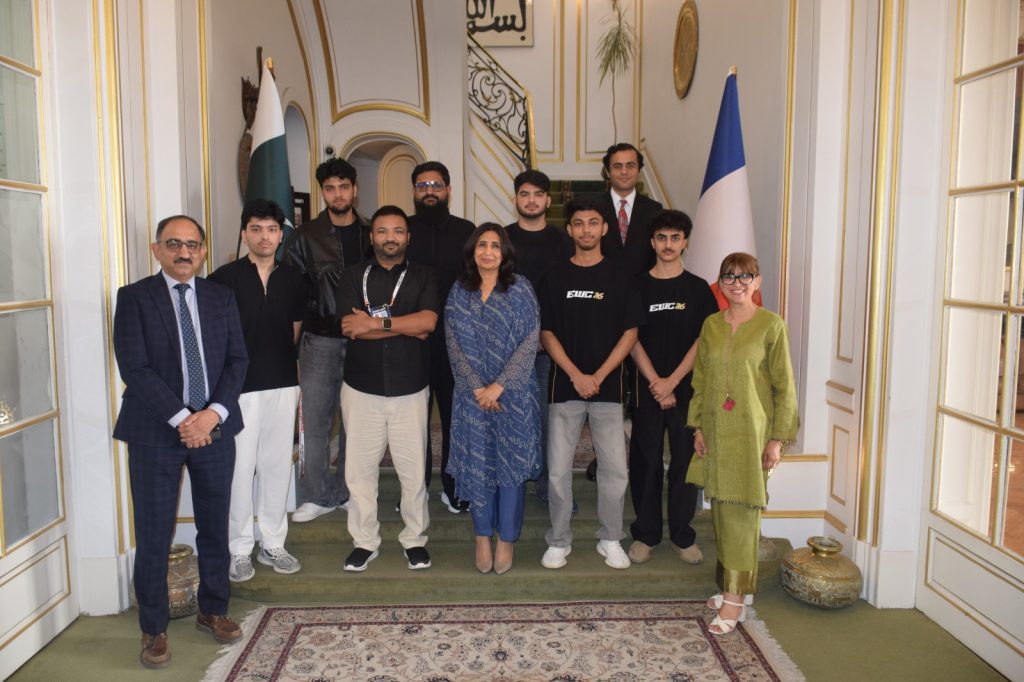
This is the first time that EWC is being held in Paris – a true global phenomenon represented by more than 2,000 players from 200 clubs and 100 different countries.
Let’s celebrate and cheer Pakistan PUBG MOBILE team ‘4Thrives’ for the Grand Finals this week!

Paris (Imran Y. CHOUDHRY) :- Former Press Secretary to the President, Former Press Minister to the Embassy of Pakistan to France, Former MD, SRBC Mr. Qamar Bashir analysis : The Mecca Joint Defence Agreement signed by Saudi Arabia, Türkiye and Pakistan is being described as a Muslim version of NATO. Turkish Foreign Minister Hakan Fidan himself said its collective-defence clause is technically similar to NATO’s Article 5: an armed attack on one member will be treated as an attack on all. Yet most commentary has concentrated on the pact’s wording, its possible expansion and whether it is aimed at Iran or Israel. The more important question has received less attention: what threat does each signatory actually perceive?
Without answering that question, analysis of the agreement remains incomplete. Alliances do not acquire meaning merely from ceremonial signatures. Their real character is determined by the dangers their members fear, the capabilities they contribute and the circumstances in which they are prepared to act.
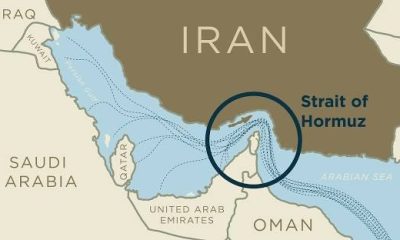
For Saudi Arabia, the immediate security environment is deeply paradoxical. The kingdom has long relied upon the United States, but the presence of American forces and facilities across the Gulf can also attract retaliation whenever Washington uses regional territory or infrastructure in military operations against Iran.
Tehran has repeatedly maintained that its quarrel is not with Gulf societies as such, but with military threats launched from or supported through their territories. Whether one accepts Iran’s justification or not, the underlying dilemma is real: foreign protection can simultaneously become a source of exposure.
This raises a difficult question. If foreign bases had not facilitated attacks against Iran, would Tehran have attacked Gulf countries on the same scale? The answer cannot be proven, but the question exposes Saudi Arabia’s strategic vulnerability. Riyadh wants protection without remaining permanently hostage to decisions made by an external guarantor.
Threats from the Houthis in Yemen and Iran-aligned armed groups in Iraq remain serious, particularly for oil facilities, desalination plants, shipping and civilian infrastructure. Nevertheless, Saudi Arabia has spent heavily on modern aircraft, missiles, surveillance systems and air defence. These dangers alone do not fully explain the need for an Article 5-style pact with Türkiye and nuclear-armed Pakistan.
The wider concern is Israel’s expanding military reach and the fear that no regional state can assume it will remain permanently outside Israeli calculations. The “Greater Israel” project is not merely a slogan invented by Israel’s critics. It is a documented ideological and political current rooted in expansionist interpretations of biblical territory, including the most extreme vision of land stretching from the Nile to the Euphrates, and in revisionist Zionist ideas of sovereignty on both sides of the Jordan River.
Israel’s wars and military operations across Gaza, Lebanon, Syria and elsewhere have intensified regional fears that its use of force and territorial ambitions are becoming geographically unconstrained. Because the most expansive interpretation of Greater Israel encompasses territory belonging to several Arab states, including Saudi Arabia, Riyadh has legitimate reasons to treat this ideology and Israel’s growing regional reach as a long-term strategic threat.
The Mecca agreement therefore creates strategic depth, reduces Saudi Arabia’s exclusive dependence on Washington and strengthens the kingdom’s leadership position in the Muslim world.
Türkiye enters the pact with a different threat map. It possesses NATO’s second-largest army, an increasingly sophisticated defence industry, formidable drone capabilities, warship and helicopter production, and substantial operational experience in Syria, Iraq and the eastern Mediterranean.
Kurdish militancy and instability along Türkiye’s southern borders remain persistent threats, but Ankara is largely capable of managing these challenges without Pakistani or Saudi military intervention.
The more consequential concern is Israel. Turkish and Israeli rhetoric has become increasingly hostile, while their strategic interests collide in Syria, Gaza and the broader eastern Mediterranean. Türkiye’s conventional size gives it considerable strength, but Israel is widely understood to possess nuclear weapons, while Türkiye does not. This creates a dangerous asymmetry at the highest level of escalation.
Pakistan’s participation therefore adds deterrent weight, but it is essential not to overstate what has formally been agreed. The published language does not establish an explicit Pakistani nuclear umbrella over Türkiye or Saudi Arabia. Nor does it automatically commit Islamabad to nuclear retaliation.
Its value at this stage lies in strategic ambiguity. Any adversary contemplating extreme escalation must now consider the possibility of a broader response involving a nuclear-armed partner. That uncertainty itself can reinforce deterrence, provided consultation mechanisms, command arrangements and red lines are eventually clarified.
Pakistan’s principal state-based threat remains India. Its other challenges—including attacks linked to the Pakistani Taliban, militancy operating from Afghan territory and insurgency in Balochistan—are grave but fall mainly within the domain of counterterrorism and internal security.
Islamabad has also alleged external support for certain militant networks, including from India and Israel other hostile actors, therefore the possibility of hybrid warfare designed to weaken Pakistan cannot be ignored.
The real test for the pact would come during a future India-Pakistan war. Saudi Arabia enjoys extensive economic and political relations with India, while Türkiye also has interests that extend beyond its partnership with Islamabad. Would Riyadh provide intelligence, logistics, financing, air defence or diplomatic support? Would it risk its relationship with New Delhi?
The treaty’s collective-defence formula is powerful, but it does not necessarily mean that every member must respond identically or automatically declare war. Even NATO’s Article 5 requires each ally to take such action as it considers necessary. The Mecca pact’s credibility will similarly depend on agreed procedures, operational planning, military integration and, above all, political will.
Nor should the alliance be framed as an anti-Iranian “Sunni bloc.” That description is analytically shallow and politically dangerous. It imports a sectarian narrative into an agreement whose signatories explicitly maintain that it is not directed against Iran or any other particular country.
Western and regional media extensively are using the Sunni label as convenient shorthand, but repeating it can deepen the very divisions that have repeatedly weakened the Muslim world. It risks presenting Sunni and Shia states as natural enemies, even though they share geography, economic interests, religious bonds and responsibility for regional stability.
Iran has demonstrated formidable missile, drone and asymmetric capabilities and has proven ability to impose severe costs on the combined military might of both the United States and Israel and their alliance in the Middle East and elsewhere in the entire world.
A confrontation between Iran and the combined forces of Pakistan, Türkiye and Saudi Arabia would devastate the region, rupture trade and energy routes, inflame sectarian tensions and serve none of the four countries.
The rational objective of the Mecca alliance should therefore be deterrence, collective security and strategic autonomy—not the creation of another front in the Iran war.
The wiser long-term course is to keep the pact open and eventually build a structured security dialogue with Iran. Immediate Iranian membership may be politically unrealistic while war and mistrust persist, but inclusion should remain a strategic objective.
Egypt and other regional countries could also participate in a broader security architecture based on non-aggression, collective consultation, protected shipping lanes, economic connectivity and respect for sovereignty.
The three signatories must also wage an intelligent information campaign. Through official statements, diplomatic outreach, legacy media, social platforms and other forms of communication, they should consistently reject the description of the agreement as a “Sunni NATO.”
They should explain that the pact is intended to protect its members from aggression regardless of the aggressor’s religious, sectarian or national identity. It must not be allowed to become an instrument for turning Muslim countries against one another.
The Mecca agreement will become historic only if it does more than redistribute fear. Properly developed, it can reduce dependence on outside powers, deter Israeli or other aggression, give Pakistan additional diplomatic weight and create the nucleus of an inclusive regional security system.
Mishandled as a sectarian coalition, however, it could produce precisely the confrontation it claims to prevent. Its success will therefore be measured not by how many enemies it names, but by how many wars it prevents.


Media As A Bridge between Civilizations

China’s Fusion Breakthrough: Death Knell for the Oil Age

A Nation’s Real Strength Rests in Spirituality, Not Military Might


-
 Sports2 months ago
South Korea’s Yoo Useong Steps Onto the Global Strongman Stage as World Strongman Federation Professional Athlete
-

 Art & Culture1 year ago
A Survey of Mata-E-Zeest
-

 Europe News1 year ago
Chaos and unproven theories surround Tates’ release from Romania
-

 American News1 year ago
Trump expands exemptions from Canada and Mexico tariffs
-

 American News1 year ago
Trump Expels Zelensky from the White House
-

 Art & Culture1 year ago
Will Snow White be a ‘victim of its moment’? How the Disney remake became 2025’s most divisive film
-

 Pakistan News1 year ago
Comprehensive Analysis Report-The Faranian National Conference on Maritime Affairs-By Kashif Firaz Ahmed
-

 Entertainment2 years ago
Champions Trophy: Pakistan aim to defend coveted title as historic tournament kicks off today