
American News
Trump-Putin Alaska Talks: A Step Toward Peace or a Diplomatic Mirage?

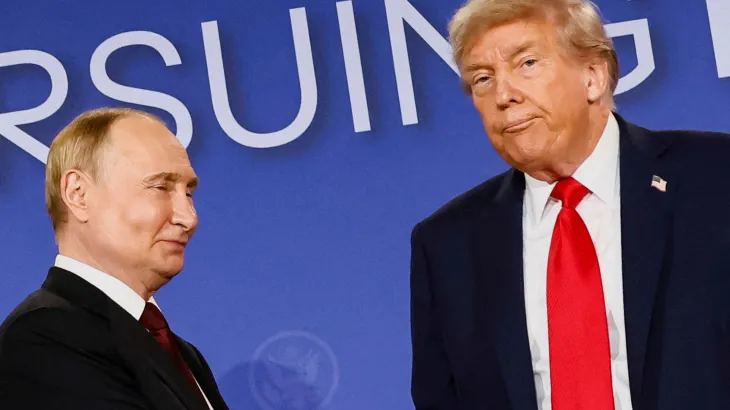
Paris (Imran Y. CHOUDHRY) :- Former Press Secretary to the President, Former Press Minister to the Embassy of Pakistan to France, Former MD, SRBC Mr. Qamar Bashir analysis : The world watched closely as two of the most powerful leaders, U.S. President Donald Trump and Russian President Vladimir Putin, met in Anchorage, Alaska, in a summit that carried the potential to alter the trajectory of one of the deadliest conflicts in Europe since World War II. Flying in from Moscow, Putin was received with a red-carpet welcome at Joint Base Elmendorf-Richardson, where U.S. military aircraft flew overhead in a symbolic display of American strength. The meeting, lasting nearly three hours, was billed by both leaders as “productive,” though the absence of concrete commitments or immediate breakthroughs has left the future of peace in Ukraine uncertain.
From the outset, the talks were historic. Not since Russia’s full-scale invasion of Ukraine in 2022 had a U.S. president sat down face-to-face with Putin. For Trump, the stakes were personal and political. He has repeatedly claimed credit for halting or preventing six major wars during his political career—citing his involvement in easing tensions between India and Pakistan, preventing escalation between Thailand and Cambodia, and defusing what could have been a catastrophic war between Israel and Iran. His record also includes brokering a ceasefire between Armenia and Azerbaijan, which earned him endorsements for the Nobel Peace Prize from leaders in both countries. Trump has made it clear: if he can secure even a significant step toward ending the Russia-Ukraine war, he believes he would be deserving of the Nobel Peace Prize.
Yet, despite the symbolism, the Alaska summit produced no agreement to resolve or pause Moscow’s war in Ukraine. Trump himself admitted, “There’s no deal until there’s a deal,” while adding that “many, many points” had been agreed upon, with “a couple of big ones” still unresolved. The “Pursuing Peace” backdrop behind the two leaders sent an optimistic message, but the details remained elusive. The Ukrainian leadership, notably absent from the meeting, has made it clear they will not concede territory or accept a settlement that legitimizes Russia’s control over nearly a fifth of their land. Ukrainian President Volodymyr Zelenskiy has also called for a U.S.-backed security guarantee, making any unilateral U.S.-Russia arrangement politically unviable without Kyiv’s buy-in.
This is where Trump’s approach diverged sharply from European and Ukrainian expectations. By engaging directly with Putin without the presence or consent of Ukraine or European allies, Trump assumed a mediating role that risked alienating key stakeholders. In his own words, he was “not here to negotiate for Ukraine” but to “get them at a table.” However, replacing one major party in a conflict with an external power—even one as influential as the United States—has rarely produced lasting peace without eventual multilateral engagement.
Putin, for his part, called the meeting a “reference point” for restoring pragmatic U.S.-Russia relations and insisted that the “root causes” of the conflict must be addressed for any long-term settlement. This language, familiar to anyone following the war, underscores Moscow’s unwillingness to agree to a ceasefire without substantial concessions. As the leaders spoke, the war raged on: air raid alerts blared across eastern Ukraine, and Russian governors in Rostov and Bryansk reported Ukrainian drone attacks. The optics of diplomacy were starkly undercut by the reality of ongoing violence.
For Europe, the meeting was an unsettling reminder that its security could be negotiated over without its direct involvement. European leaders, aligned with Zelenskiy in their opposition to any premature freeze of the conflict, were quick to express skepticism. Czech Foreign Minister Jan Lipavsky welcomed Trump’s efforts but doubted Putin’s sincerity, noting that Russian forces had continued attacking Ukraine even as the summit took place. The fear in European capitals is that Trump might seek a “quick fix” deal that sacrifices Ukraine’s territorial integrity for the sake of ending hostilities on paper.
Still, there is a pragmatic argument to be made for not dismissing the Alaska talks outright. If any understanding between Trump and Putin could lead to a verifiable ceasefire, guarantee Ukraine’s security, and offer Europe a stable security framework, it would be worth exploring. This would require Kyiv and European governments to set aside political pride and assess the proposals based on merit rather than the process by which they were reached. Given the deep divisions between Trump and Europe on other issues—including Gaza, where Europe has taken a markedly different stance from Washington—the temptation to reject any Trump-brokered deal is strong. Yet peace, if achievable, should transcend personal and political grievances.
Trump’s diplomatic résumé is as polarizing as it is unusual. While some credit him with preventing conflicts, others argue that his domestic policies—on immigration, healthcare, and U.S.-Canada relations—undermine his credibility as a global peacemaker. His handling of the Gaza conflict, where critics accuse him of enabling Israeli Prime Minister Benjamin Netanyahu’s military campaign, has drawn condemnation from much of the international community. In Gaza, thousands have been killed, with civilians—including children and the elderly—bearing the brunt of the violence. The region has been turned into what many describe as an “open prison” and a “death trap.”
If Trump were to use the same leverage he claims to have over Netanyahu to halt the Gaza war, his Nobel Peace Prize prospects would be significantly enhanced. Without that, his candidacy will remain a point of fierce debate. Nevertheless, the Alaska summit shows that Trump is willing to insert himself into high-stakes global conflicts, even at the risk of bypassing traditional diplomatic channels.
The reality, however, is that the Alaska meeting has so far delivered little tangible progress. No ceasefire, no formal commitments, and no agreed-upon next steps toward a trilateral summit involving Zelenskiy. Ukraine’s opposition figures, such as lawmaker Oleksiy Honcharenko, have already characterized the outcome as a win for Putin, arguing that the talks have simply bought Moscow more time. Without concrete deliverables, the meeting risks being remembered more for its optics than its outcomes.
That said, the possibility remains for Europe and Ukraine to engage later, should any framework emerge from Trump-Putin discussions that could realistically lead to peace. In such a scenario, setting aside ego and geopolitical point-scoring in favor of pragmatic diplomacy could save countless lives. The stakes are monumental—not only for Ukraine and Europe but for the credibility of international conflict resolution in an era when wars seem increasingly resistant to traditional diplomacy.
In the end, the Alaska summit may be less about the immediate cessation of hostilities and more about testing the waters for a new phase in the U.S.-Russia relationship. Whether this phase leads to a genuine peace process or simply becomes another chapter in the long list of failed mediation attempts will depend on whether all relevant parties—Ukraine, Europe, the U.S., and Russia—can find common ground. For now, the war grinds on, and the window for diplomacy remains precariously narrow.







Paris (Imran Y. CHOUDHRY) :- Former Press Secretary to the President, Former Press Minister to the Embassy of Pakistan to France, Former MD, SRBC Mr. Qamar Bashir analysis : The United States and Israel presented the war against Iran as an urgent campaign to prevent nuclear proliferation. Six months later, that justification has collided with an extraordinary move by the Pentagon: American officials are seriously discussing using nuclear weapons against Iranian targets.
Former Representative Marjorie Taylor Greene has claimed that nuclear use was discussed in strategy meetings, while Tucker Carlson, America’s most influential and resourceful journalist and podcaster having millions of followers across the globe has disclosed that nuclear options against Kharg Island and Pickaxe Mountain appeared in Pentagon slide presentations.
The contradiction at the center of the war is difficult to ignore. Washington and Israel argued that Iran could not be trusted with nuclear weapons because their possible use would be intolerable. If the same governments are now contemplating a nuclear attack to force Iran’s submission, they risk destroying the moral and strategic distinction on which their original case for war rested.
The United States and Israel began their campaign against Iran on February 28. Trump initially suggested it would take approximately four or five weeks. By August 28, however, it had reached the six-month mark, with no permanent settlement and no clear definition of victory.
Hostilities connected to Lebanon continued, negotiations stalled and Washington shifted the center of its strategy toward blockades, sanctions and threats against countries doing business with Tehran. Trump, who once forecast a quick conclusion, now says he has no timetable for ending the conflict.
The costs are substantial. The Pentagon has acknowledged more than 750 wounded American service members, while reporting cited by lawmakers puts the number of American deaths at 18. Defense Secretary Pete Hegseth told a Senate hearing that the war had cost approximately $37.5 billion by July, he demanded another 78 Billion as supplementary grant whereas the defence budget has been increased from $ 900 billion in 2025 to $1.5 Trillion in 2026. These figures do not include every indirect economic cost, replenishment expense or loss sustained by regional partners.
Yet the United States and Israel have also failed to achieve any of their declared objectives. Iran’s government remains in power. Tehran has not surrendered, accepted permanent disarmament or abandoned its regional influence. Preventing an opponent from achieving its central objectives can itself constitute strategic success. By that measure, Iran’s survival and continued resistance expose the limits of overwhelming military superiority.
The tactical-nuclear controversy did not arise in a vacuum. The Pentagon has acknowledged that it is reviewing American nuclear strategy and seeking a broader range of options for regional conflicts. Undersecretary of Defense for Policy Elbridge Colby has spoken of providing more credible or “rational” nuclear choices. Admiral Richard Correll, commander of U.S. Strategic Command, has discussed an escalation spectrum that includes the possibility of a limited nuclear exchange.
After conventional military operations failed to compel Tehran’s submission and depleted important American weapons stockpiles, the search for broader nuclear options strongly suggests that Iran is a principal—perhaps the immediate—scenario driving the discussion. The troubling implication is that nuclear weapons are being reconsidered because conventional force failed to accomplish Washington’s objectives.
Pickaxe Mountain must be understood in the context of Iran’s struggle to preserve its military and technological capabilities against vastly more powerful adversaries. The deeply buried complex near Natanz is commonly portrayed as evidence of sinister intentions, though no public evidence proves that Iran has stored a nuclear weapon there—or that it possesses a nuclear weapon at all.
Iran’s decision to place sensitive infrastructure underground is not, by itself, proof of a weapons program. After years of sabotage, assassinations and threatened or actual airstrikes, dispersing and hardening military and nuclear facilities is also an unsurprising survival strategy. Had Iran left every important asset exposed, American and Israeli air power could have destroyed much of its defensive capacity and potentially opened the way to regime change.
This discrepancy strikes at the foundation of the war’s stated rationale. The American intelligence had not established that Tehran possessed a nuclear weapon or had made a final decision to build one. Uranium enrichment, including Iran’s claimed right to peaceful enrichment under the Nuclear Non-Proliferation Treaty, is not identical to manufacturing a bomb.
The danger is that Washington may now be considering nuclear means to accomplish objectives that its conventional campaign failed to achieve. The term “tactical nuclear weapon” should not disguise that reality. “Tactical” describes an intended military role; it does not make the explosion humane, limited or reliably controllable. Such a weapon can still cause mass death, radiation exposure, environmental contamination and escalation beyond the region. Iran’s underground construction would then appear not as proof that war was necessary, but as evidence of why a weaker country believed concealment and hardening were essential to its survival.
The first wartime nuclear detonation since Nagasaki would transform international security. It could erode the already fragile norm against nuclear use and encourage other nuclear-armed states to describe their weapons as practical instruments of conventional warfare.
India and Pakistan have repeatedly confronted one another while possessing nuclear arsenals. North Korea has developed weapons capable of threatening South Korea, Japan and potentially the United States. Russia has issued nuclear threats during its confrontation with Ukraine and NATO. If Washington normalized limited nuclear employment against a nonnuclear adversary, every one of these governments would gain a precedent with which to justify its own conduct.
A nuclear strike might also produce precisely the proliferation pressure the war was supposed to prevent. Governments could conclude that only a deliverable nuclear arsenal protects them from coercion or regime change. The lesson would not be that nuclear weapons are too dangerous to possess; it would be that countries without them remain vulnerable to countries that have them.
Harvard professor Stephen Walt told Carlson that the postwar world could be “substantially more dangerous.” He pointed not only to great-power competition among the United States, China and Russia, but also to the deterioration of restraints governing force, assassination and escalation. Once powerful states treat exceptional measures as ordinary, weaker states inevitably adapt.
Ending the war would require acknowledging that military power cannot guarantee every political objective. That may be uncomfortable for a president whose public identity depends on winning. But accepting an imperfect settlement is less humiliating than turning a strategic disappointment into a nuclear catastrophe.
Regional governments also have agency. States hosting American forces would face retaliation and possible contamination if their territory supported a nuclear attack. They should demand binding assurances that their bases will not be used to initiate nuclear hostilities. Their interests are not identical to those of Israel, Iran or Washington.
The broader international community should insist on renewed negotiations, independent nuclear inspections, protection for civilian infrastructure and compliance with international law by every participant. Diplomatic pressure must apply consistently, whether the alleged violator is Iran, Israel or the United States.
A war launched in the name of preventing nuclear danger must not become the event that makes nuclear warfare normal again.
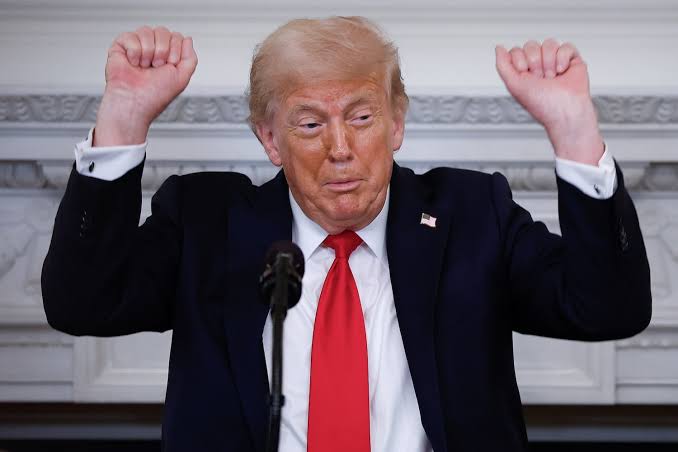
Paris (Imran Y. CHOUDHRY) :- Former Press Secretary to the President, Former Press Minister to the Embassy of Pakistan to France, Former MD, SRBC Mr. Qamar Bashir analysis : Two World Wars and centuries of conflict taught Europe one of history’s bitterest lessons: divided nations repeatedly went to war, while interconnected nations had much more to lose by fighting each other. From the ruins of World War II therefore emerged an extraordinary experiment—not merely to prevent another war through military deterrence, but to make war economically irrational.
France and Germany, once bitter rivals, placed coal and steel—the very industries essential for warfare—within a common institutional framework. Economic cooperation gradually expanded into a common market and ultimately the European Union. Today that Single Market connects about 450 million people and 26 million businesses in an economy worth roughly €18 trillion. The European Commission estimates that the Single Market itself has increased EU GDP by 3–4 percent and created about 3.6 million jobs. citeturn1search0turn1search7
That is the measurable dividend of interdependence. Europe did not eliminate national interests; it created a system in which pursuing those interests through cooperation became more profitable than pursuing them through confrontation. Around 60 percent of EU exports still go to other EU members, demonstrating how deeply these economies have become intertwined. citeturn1search16
North America developed its own version of this philosophy. When NAFTA began in 1994, trade among the United States, Canada and Mexico stood at roughly $300 billion annually. Within less than two decades it had exceeded $1 trillion. Today, under its successor USMCA, U.S. goods and services trade with Canada alone was about $872 billion in 2025, while trade with Mexico approached $964 billion. Together, the North American relationship supports nearly $2 trillion in annual U.S. trade. citeturn1search6turn0search10turn0search12
These are not merely numbers. They represent factories designed around continental supply chains, Canadian energy powering American businesses, Mexican manufacturing feeding American assembly lines, American services flowing north and south, and millions of consumers benefiting from specialization and economies of scale.
Security followed much the same logic.
NATO created collective deterrence through Article 5: an armed attack against one member would be treated as an attack against all. The alliance helped create a security umbrella under which Western Europe could rebuild and prosper. Today European NATO members and Canada alone spend more than $570 billion annually on defense in constant 2021 dollars, demonstrating that NATO has evolved into far more than an American security subsidy. In 2025 alone, their defense expenditure increased by nearly 20 percent in real terms. citeturn0search11
Yet NATO was created for collective defense—not to compel every member to participate automatically whenever another member independently enters a war.
This distinction became critical during America’s confrontation with Iran. President Donald Trump criticized NATO allies for refusing to provide the military assistance Washington expected. He complained that NATO “just wasn’t there” and suggested that if European allies were absent when America needed them, Washington might reconsider being there when they needed America.
That interpretation fundamentally changes NATO’s logic. If American protection becomes conditional upon whether allies participate in unrelated U.S.-initiated wars, collective security becomes transactional security. The immediate casualty is not necessarily NATO’s military capability; it is confidence in the guarantee underpinning that capability.
The same transformation is now occurring economically.
The United States and Canada spent generations constructing one of the deepest economic relationships anywhere in the world. Yet following the collapse of their latest negotiations, Washington has imposed 50 percent tariffs on roughly $20 billion of Canadian goods. Canada has announced retaliatory tariffs, while Prime Minister Mark Carney says Washington’s final demands were economically unacceptable and included restrictions affecting Canada’s freedom to pursue trade agreements elsewhere. citeturn0news46turn0news49
That is where trade policy begins crossing into sovereignty.
America has every right to negotiate aggressively, protect strategic industries and demand reciprocal market access. But attempting to influence whom another sovereign country may trade with transforms economic interdependence from a source of shared prosperity into an instrument of political leverage.
Canada refused, with Carney reducing the disagreement to a memorable conclusion: Washington asked too much and offered too little.
The economic consequences will travel in both directions. The latest tariffs directly cover only around 5 percent of Canadian exports to the United States, so they alone are unlikely to dismantle the continental economy. But their significance lies in the precedent and in their interaction with existing disputes involving steel, aluminum, automobiles and lumber. citeturn0news49
Tariffs are initially paid by importers. Depending upon competition and supply alternatives, some of that burden may be absorbed by businesses and some passed to consumers through higher prices. Canadian exporters meanwhile face reduced competitiveness in their largest market. Retaliatory tariffs then impose similar pressures in the opposite direction.
The greater cost, however, may emerge over years rather than months.
If Canada concludes that dependence upon the American market has become a strategic vulnerability, it will logically accelerate diversification toward Europe, Asia and other markets. Companies will redesign supply chains. Governments will seek alternative suppliers. Investment decisions will increasingly incorporate political risk once largely absent from U.S.-Canada commerce.
Europe faces a similar calculation on security. If American military guarantees appear conditional, European governments have greater reason to develop strategic autonomy. Ironically, NATO allies are already moving dramatically in that direction: European allies and Canada added more than $90 billion in real defense spending in 2025 alone. citeturn0search11
Here lies the paradox of Trump’s strategy.
American power after World War II did not rest solely upon military superiority, nuclear weapons, the dollar or the enormous American market. Its greatest multiplier was an international network of countries that voluntarily tied their prosperity and security to the United States.
Trump increasingly treats those dependencies as bargaining chips: military protection can leverage greater defense commitments; market access can leverage trade concessions; and alliance solidarity can become a test of support for American military campaigns.
There is legitimate logic behind demanding fair burden-sharing. Allies should contribute adequately to their defense, and trade agreements should provide reciprocal benefits. But demanding fairness within an alliance is fundamentally different from weaponizing the alliance itself.
The first can strengthen partnerships. The second teaches partners to reduce their dependence.
That is why the present confrontation extends far beyond tariffs or NATO spending. Europe spent generations discovering that interdependence could transform former enemies into partners. North America spent three decades building production and trade networks worth trillions of dollars. NATO spent nearly eight decades constructing something even harder to quantify: confidence that allies would stand together when genuinely attacked.
These systems took decades to build because trust accumulates slowly.
It can disappear remarkably quickly.
Trump may secure individual concessions by exploiting America’s extraordinary economic and military weight. But if the longer-term result is a Canada searching for alternative markets, a Europe preparing to defend itself without assured American support and allies designing supply chains specifically to reduce exposure to Washington, tactical victories could produce strategic losses.
America helped build the postwar system because its leaders understood that prosperous allies, integrated economies and collective security multiplied American power.
The danger today is that by weaponizing those very interdependencies, Washington may achieve the opposite: turning countries that once considered dependence upon America an advantage into countries determined never again to depend upon it.
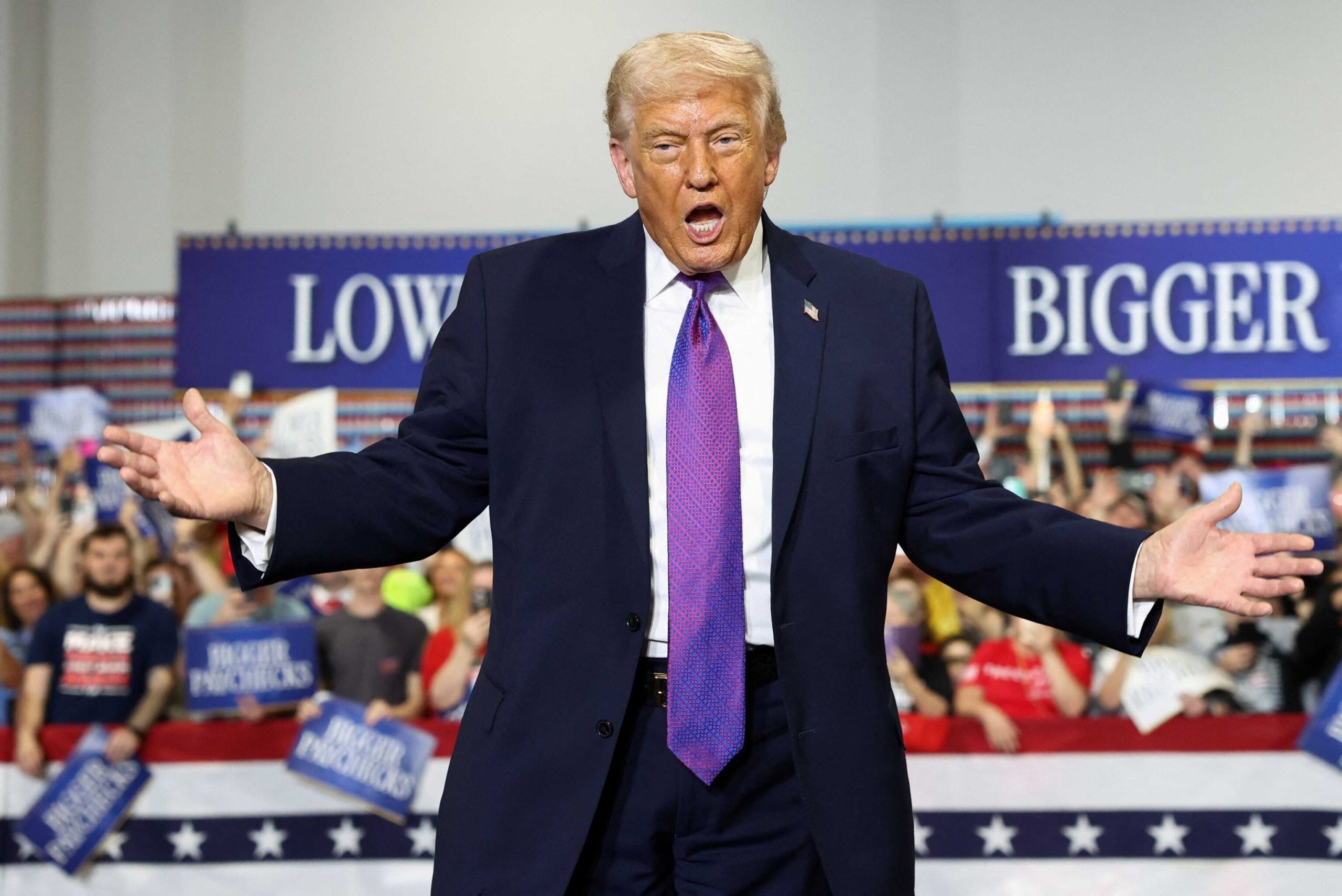
Paris (Imran Y. CHOUDHRY) :- Former Press Secretary to the President, Former Press Minister to the Embassy of Pakistan to France, Former MD, SRBC Mr. Qamar Bashir analysis : President Donald Trump’s declaration that he may soon designate the Strait of Hormuz as territory of the United States is more than another provocative statement. It raises fundamental questions about sovereignty, international law and whether overwhelming military power can transform a globally shared waterway into an American possession.
Speaking in New York on August 14, Trump said that after defeating Iran, he would declare the strait American territory. He argued that the United States already controls passage because its forces decide which ships can move through it. Yet military presence is not sovereignty, enforcing a blockade is not ownership, and the capacity to disrupt navigation does not confer legal title over another country’s territorial waters.
Washington cannot lawfully acquire the strait through a presidential announcement. A legitimate territorial transfer would ordinarily require the consent of the sovereign states concerned, a treaty and constitutional approval within the United States. Neither Iran nor Oman has offered its territory, and no internationally recognized agreement exists.
The more disturbing question, however, is not whether Trump’s declaration is lawful. The real question is who possesses the power to stop him if he attempts to enforce it militarily.
The United Nations General Assembly could condemn the action and mobilize international opposition. But its resolutions would not automatically compel an American withdrawal. Binding action by the Security Council could be blocked by the United States through its veto. International courts depend heavily upon state consent and cooperation, while governments opposing unilateral annexation would hesitate before entering a military confrontation with a nuclear superpower.
The absence of an immediate reaction from world leaders is therefore highly significant. Apart from Iran, no major government or international organization initially issued a clearly attributable response specifically addressing Trump’s territorial declaration. Oman, despite sharing jurisdiction over the waterway, remained publicly silent. So did Saudi Arabia, the United Arab Emirates, Qatar, Pakistan, Türkiye, China, Russia, India, Britain, France, Germany, the European Union, NATO and the United Nations.
In diplomacy, silence can carry considerable meaning. Had Trump’s proposal been considered lawful, achievable or beneficial to the international order, allied leaders would probably have rushed to praise it, hoping to be among the first to demonstrate their support for Washington. Instead, the declaration was met—with the notable exception of Iran—by an extraordinary absence of endorsements.
Silence, however, cannot physically stop annexation. No country appears willing to confront the United States militarily over Hormuz. Russia is occupied with its own strategic struggles, China prefers economic and technological competition to direct warfare, and European governments lack both the military unity and political appetite to challenge Washington in the Persian Gulf. Gulf countries depend heavily on American security structures and cannot afford an open confrontation with the White House.
The controversy surrounding the USS Abraham Lincoln also illustrates the practical limitations of military power. Reports of an exceptionally long deployment, exhaustion and difficult conditions aboard the aircraft carrier have generated questions about the human cost of an open-ended war. Allegations that sailors attempted to go overboard specifically because of psychological distress or intolerable conditions require authoritative verification, but concerns about fatigue, morale, isolation and family separation are legitimate.
The wider military picture further complicates Trump’s proclamation of victory. Modern warfare consumes interceptors, precision weapons and spare parts much faster than peacetime procurement systems can replace them. New factories may expand production, but constructing facilities, training workers, securing supply chains and reaching full output take years.
Trump’s statement therefore carries two possible meanings. The first is that he is serious. In that case, declaring Hormuz American territory would become an imperial undertaking requiring prolonged military enforcement against Iran, diplomatic coercion of Oman and rejection by much of the international community. Washington would have to defend ships, bases and supply lines across a hostile region while absorbing retaliation, economic disruption and growing domestic opposition. Declaring ownership is easy; maintaining it against determined resistance is extraordinarily costly.
Iran is not a powerless target. Its large population, strategic geography, missile and drone capabilities, regional relationships and institutional memory make permanent subjugation improbable. Ancient Persia’s imperial history does not determine modern military outcomes, but Iran possesses a deeply rooted national identity and extensive experience in surviving foreign pressure. Any attempt to seize adjacent waters could strengthen Iranian nationalism rather than compel submission.
The second possibility is that Trump’s declaration is primarily political theatre—a maximalist threat intended to intimidate Iran, energize domestic supporters or strengthen Washington’s negotiating position.
Trump has previously spoken about acquiring Greenland and ending the Russia-Ukraine war almost immediately. Such declarations generate dramatic headlines and establish extreme opening positions, only to recede when their political or strategic costs become apparent.
Hormuz may follow the same pattern. Trump can claim ownership, demand security fees and announce total control, but commercial reality provides a harsher test. If maritime traffic remains disrupted, insurance costs remain elevated and Iran continues influencing which vessels can safely pass, American declarations of ownership will appear increasingly hollow.
As the balance of power stands today, the uncomfortable reality is that no foreign country or international organization possesses both the means and willingness to physically stop the United States if it decides to enforce Trump’s declaration. International law can define the action as unlawful. The United Nations can condemn it. Allies can withhold legitimacy. China can retaliate economically. Iran can resist militarily. But none of these forces can guarantee that Washington will abandon its course.
There remains, however, one force capable of stopping the American president: the American people acting through their constitutional institutions.
If citizens conclude that annexing Hormuz is producing higher gasoline prices, inflation, military casualties, mounting debt and no measurable improvement in national security, public support could collapse. Demonstrations, elections, media scrutiny, resistance from military families and pressure from voters could transform an overseas territorial adventure into an unbearable domestic liability.
Congress and the Senate can refuse additional funding, investigate the conduct and objectives of the war, challenge unauthorized military expansion and demand an accounting of its human and economic costs. Legislators can use appropriations, oversight and war-powers mechanisms to restrain the executive branch. Members of Trump’s own party could also withdraw support if the costs become politically indefensible.
The Strait of Hormuz cannot legally become American territory through rhetoric, blockade or naval deployment. Trump may possess enough power to initiate a dangerous confrontation, but not enough to erase geography, sovereignty and resistance permanently. If his declaration is serious, its costs could exceed every conceivable benefit. If it is a bargaining stunt, it may eventually disappear like the Greenland rhetoric.
The greatest danger lies between these possibilities: political theatre can trigger military actions that acquire an uncontrollable momentum. The international community may remain strategically silent because it fears American retaliation. But the American people, Congress and the Senate do not have the luxury of silence. They represent the final constitutional force capable of preventing presidential bravado from becoming an irreversible imperial adventure.


The museum charting how humans understand the world

Sexual crimes against women, kids: 80pc of offenders are people known to victims, says Punjab IGP

Shanghai Cooperation Organisation names Lahore as its ‘Tourism and Cultural capital’


-

 Sports3 months ago
South Korea’s Yoo Useong Steps Onto the Global Strongman Stage as World Strongman Federation Professional Athlete
-

 Art & Culture1 year ago
A Survey of Mata-E-Zeest
-

 Europe News2 years ago
Chaos and unproven theories surround Tates’ release from Romania
-

 American News1 year ago
Trump expands exemptions from Canada and Mexico tariffs
-

 American News2 years ago
Trump Expels Zelensky from the White House
-

 Art & Culture1 year ago
Will Snow White be a ‘victim of its moment’? How the Disney remake became 2025’s most divisive film
-

 Pakistan News1 year ago
Comprehensive Analysis Report-The Faranian National Conference on Maritime Affairs-By Kashif Firaz Ahmed
-

 Entertainment2 years ago
Champions Trophy: Pakistan aim to defend coveted title as historic tournament kicks off today