
American News
United States Strangles the United Nations


Paris (Imran Y. CHOUDHRY) :- Former Press Secretary to the President, Former Press Minister to the Embassy of Pakistan to France, Former MD, SRBC Mr. Qamar Bashir analysis : The United States was once the proud architect of global multilateralism. In the aftermath of World War II, Washington orchestrated the creation of the United Nations and insisted on its headquarters being located in New York. With its generous financial contributions and diplomatic influence, the U.S. wielded immense leverage—projecting soft power and shaping international norms without firing a single shot. But over time, the very mechanisms it built began to emancipate other nations: the UN’s equal‑vote structure and independent agency frameworks enabled coalitions from the Global South and beyond to advance policies often contrary to U.S. interests.
By 2023, the U.S. remained the UN’s single largest benefactor, contributing approximately $13 billion, equating to over 25% of the total UN membership’s funding. In the UN’s internal budgeting, the U.S. covered 22% of the regular budget (about $820 million of a $3.5 billion total) and 26–27% of peacekeeping costs (~$1.5 billion of $5.9 billion), though a congressional cap limited payments .
But when U.S. influence waned at the UN—particularly in bodies without veto power such as WHO, UNESCO, the World Food Programme, and the International Court of Justice—the U.S. responded not with diplomacy, but retreat. Between 2017 and mid‑2025, American funding was slashed in key areas: $4 billion pledged to the Green Climate Fund was rescinded, its funding to UNAIDS and global health programs through USAID was terminated or dramatically reduced, malaria initiatives saw a 47% decrease, and the Gavi immunization grant of $2.63 billion was cancelled .
The consequences for the UN and global initiatives were immediate. Budget shortfalls threatened operations—from humanitarian relief to refugee assistance—forcing agencies like WHO, UNHCR, and UNAIDS to cut services, suspend projects, and initiate emergency cost-saving responses. Millions of the most vulnerable suffered as health programs, AIDS treatment, and refugee care unraveled across fragile regions .
Meanwhile, UN Secretary-General António Guterres and external analysts warned of institutional trauma: internal memos showed plans for a 20% reduction in Secretariat staff, slicing about $740 million from the UN budget and slashing nearly 7,000 jobs—a move driven by withheld U.S. dues and prolonged arrears that had exceeded $1.5 billion .
What’s unfolding is not mere disengagement; it is a dismantling of the post-war consensus. The unilateral “America First” doctrine has weaponized aid, redefined participation, and normalized punitive economics—whether blaming the UN for “anti-Israel bias” or freezing grants to agencies perceived as insufficiently subservient. U.S. states denying Israeli products risk losing federal disaster relief. UN rapporteurs and ICC judges investigating human rights violations are sanctioned or barred from U.S. soil. The result is bureaucratic sabotage: not just cutting checks, but cutting support for institutional integrity.
Still, the damage is irrevocable. Key UN functions—peacekeeping, health coordination, humanitarian relief—are now subject to fragmentation or politicization. Climate negotiations wobble without U.S. investment. Global norms—on human rights, nuclear non-proliferation, refugee protection—lose enforcement power. In effect, the United Nations, conceived as a shield against global chaos, risks becoming collateral damage of U.S. isolationism.
With 193 member states in the General Assembly, each with one vote, the U.S. often found itself on the losing side of key resolutions, particularly in bodies where no single nation wields a veto—agencies such as the World Health Organization, UNESCO, the World Food Programme, and the International Court of Justice. As emerging powers began to use these forums to challenge American and Israeli policies, Washington’s frustration grew.
When influence through persuasion failed, the United States resorted to withdrawal and defunding. In 2017, it exited UNESCO, citing alleged anti-Israel bias, and pulled its funding—striking a blow to global cultural preservation and educational programs. In 2018, it withdrew from the UN Human Rights Council for the same reason, abandoning its role in shaping human rights discourse. In 2020, at the height of the COVID-19 pandemic, it walked out of the World Health Organization, accusing it of favoring China, leaving a leadership vacuum during the greatest health crisis in a century. It has also sanctioned ICC judges investigating alleged U.S. and Israeli war crimes, an unprecedented attack on international judicial independence.
In March 2024, the United States imposed sanctions on Francesca Albanese, the UN Special Rapporteur on human rights in the occupied Palestinian territories, for her outspoken reports on Israeli actions in Gaza and the West Bank. This targeting of UN officials is emblematic of a broader strategy: punish not just institutions, but individuals who challenge U.S. and Israeli narratives.
Now, under President Donald Trump’s second term, the assault has intensified. His administration has declared that any U.S. state that bans Israeli products, criticizes Israeli policy, or supports boycotts will lose federal disaster relief and other funding. In effect, Washington is applying the same coercive tactics at home that it once used abroad—weaponizing financial power to enforce political loyalty.
The United Nations itself is caught in this storm. Its credibility has been battered by repeated U.S. vetoes blocking resolutions on Gaza, climate change, and refugee resettlement—not because there was no global consensus, but because American protection of Israel took precedence. The result is paralysis on some of the most urgent issues facing humanity.
Yet there is an unexpected twist. As the U.S. retreats, other nations are stepping into the void. Countries in Asia, Africa, and Latin America have increased their contributions to UN agencies, keeping programs alive despite U.S. funding cuts. This growing independence has allowed the General Assembly and other bodies to pass resolutions reflecting a broader global consensus, often in defiance of U.S. and Israeli positions.
Yet amid this American retreat, a countervailing force emerged. Philanthropic actors like Michael Bloomberg stepped in; Bloomberg philanthropy covered U.S.’s UNFCCC dues gap of approximately €7.2 million . Similarly, European nations—including the Netherlands and Belgium—quickly filled the funding vacuums at UNRWA, sustaining Palestinian refugee aid when U.S. funding was abruptly halted . In effect, the U.S. defunding inadvertently catalyzed a diversification of UN support, buttressed by a growing coalition of mid-tier and emerging donors.
Still, Washington’s antagonism poses an existential threat to the UN’s long-term viability. The steady withdrawal of funds, coupled with sanctions on its personnel, undermines its capacity to respond to humanitarian crises, mediate conflicts, and uphold international law. If left unchecked, this campaign could transform the UN from a guardian of global peace into a hollow relic—a powerless bureaucracy unable to stand against tyranny or aggression.
The United States once claimed to be the moral compass of the free world. Today, it risks becoming the wrecking ball that shatters the very framework it built. If Washington truly believes in liberty, justice, and the rule of law, it must stop treating the United Nations as an adversary to be subdued—and start acting like the founding member it once proudly was.
Only by returning to cooperation, fairness, and shared humanity can America reclaim the leadership role that once inspired the world. Anything less will not just diminish the United Nations—it will diminish the United States itself.


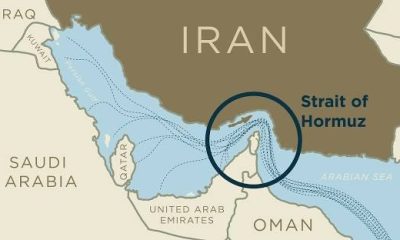




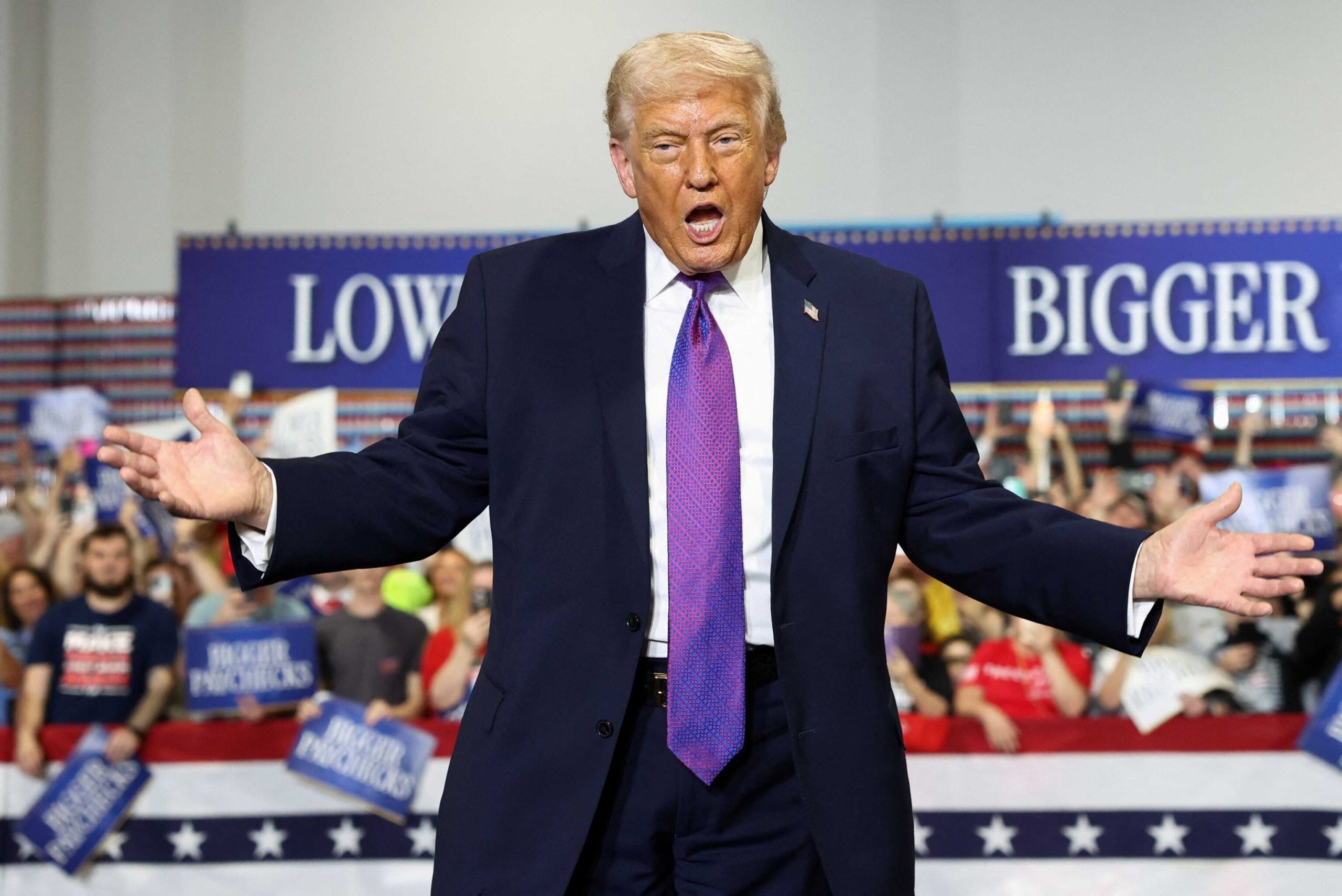
Paris (Imran Y. CHOUDHRY) :- Former Press Secretary to the President, Former Press Minister to the Embassy of Pakistan to France, Former MD, SRBC Mr. Qamar Bashir analysis : President Donald Trump’s declaration that he may soon designate the Strait of Hormuz as territory of the United States is more than another provocative statement. It raises fundamental questions about sovereignty, international law and whether overwhelming military power can transform a globally shared waterway into an American possession.
Speaking in New York on August 14, Trump said that after defeating Iran, he would declare the strait American territory. He argued that the United States already controls passage because its forces decide which ships can move through it. Yet military presence is not sovereignty, enforcing a blockade is not ownership, and the capacity to disrupt navigation does not confer legal title over another country’s territorial waters.
Washington cannot lawfully acquire the strait through a presidential announcement. A legitimate territorial transfer would ordinarily require the consent of the sovereign states concerned, a treaty and constitutional approval within the United States. Neither Iran nor Oman has offered its territory, and no internationally recognized agreement exists.
The more disturbing question, however, is not whether Trump’s declaration is lawful. The real question is who possesses the power to stop him if he attempts to enforce it militarily.
The United Nations General Assembly could condemn the action and mobilize international opposition. But its resolutions would not automatically compel an American withdrawal. Binding action by the Security Council could be blocked by the United States through its veto. International courts depend heavily upon state consent and cooperation, while governments opposing unilateral annexation would hesitate before entering a military confrontation with a nuclear superpower.
The absence of an immediate reaction from world leaders is therefore highly significant. Apart from Iran, no major government or international organization initially issued a clearly attributable response specifically addressing Trump’s territorial declaration. Oman, despite sharing jurisdiction over the waterway, remained publicly silent. So did Saudi Arabia, the United Arab Emirates, Qatar, Pakistan, Türkiye, China, Russia, India, Britain, France, Germany, the European Union, NATO and the United Nations.
In diplomacy, silence can carry considerable meaning. Had Trump’s proposal been considered lawful, achievable or beneficial to the international order, allied leaders would probably have rushed to praise it, hoping to be among the first to demonstrate their support for Washington. Instead, the declaration was met—with the notable exception of Iran—by an extraordinary absence of endorsements.
Silence, however, cannot physically stop annexation. No country appears willing to confront the United States militarily over Hormuz. Russia is occupied with its own strategic struggles, China prefers economic and technological competition to direct warfare, and European governments lack both the military unity and political appetite to challenge Washington in the Persian Gulf. Gulf countries depend heavily on American security structures and cannot afford an open confrontation with the White House.
The controversy surrounding the USS Abraham Lincoln also illustrates the practical limitations of military power. Reports of an exceptionally long deployment, exhaustion and difficult conditions aboard the aircraft carrier have generated questions about the human cost of an open-ended war. Allegations that sailors attempted to go overboard specifically because of psychological distress or intolerable conditions require authoritative verification, but concerns about fatigue, morale, isolation and family separation are legitimate.
The wider military picture further complicates Trump’s proclamation of victory. Modern warfare consumes interceptors, precision weapons and spare parts much faster than peacetime procurement systems can replace them. New factories may expand production, but constructing facilities, training workers, securing supply chains and reaching full output take years.
Trump’s statement therefore carries two possible meanings. The first is that he is serious. In that case, declaring Hormuz American territory would become an imperial undertaking requiring prolonged military enforcement against Iran, diplomatic coercion of Oman and rejection by much of the international community. Washington would have to defend ships, bases and supply lines across a hostile region while absorbing retaliation, economic disruption and growing domestic opposition. Declaring ownership is easy; maintaining it against determined resistance is extraordinarily costly.
Iran is not a powerless target. Its large population, strategic geography, missile and drone capabilities, regional relationships and institutional memory make permanent subjugation improbable. Ancient Persia’s imperial history does not determine modern military outcomes, but Iran possesses a deeply rooted national identity and extensive experience in surviving foreign pressure. Any attempt to seize adjacent waters could strengthen Iranian nationalism rather than compel submission.
The second possibility is that Trump’s declaration is primarily political theatre—a maximalist threat intended to intimidate Iran, energize domestic supporters or strengthen Washington’s negotiating position.
Trump has previously spoken about acquiring Greenland and ending the Russia-Ukraine war almost immediately. Such declarations generate dramatic headlines and establish extreme opening positions, only to recede when their political or strategic costs become apparent.
Hormuz may follow the same pattern. Trump can claim ownership, demand security fees and announce total control, but commercial reality provides a harsher test. If maritime traffic remains disrupted, insurance costs remain elevated and Iran continues influencing which vessels can safely pass, American declarations of ownership will appear increasingly hollow.
As the balance of power stands today, the uncomfortable reality is that no foreign country or international organization possesses both the means and willingness to physically stop the United States if it decides to enforce Trump’s declaration. International law can define the action as unlawful. The United Nations can condemn it. Allies can withhold legitimacy. China can retaliate economically. Iran can resist militarily. But none of these forces can guarantee that Washington will abandon its course.
There remains, however, one force capable of stopping the American president: the American people acting through their constitutional institutions.
If citizens conclude that annexing Hormuz is producing higher gasoline prices, inflation, military casualties, mounting debt and no measurable improvement in national security, public support could collapse. Demonstrations, elections, media scrutiny, resistance from military families and pressure from voters could transform an overseas territorial adventure into an unbearable domestic liability.
Congress and the Senate can refuse additional funding, investigate the conduct and objectives of the war, challenge unauthorized military expansion and demand an accounting of its human and economic costs. Legislators can use appropriations, oversight and war-powers mechanisms to restrain the executive branch. Members of Trump’s own party could also withdraw support if the costs become politically indefensible.
The Strait of Hormuz cannot legally become American territory through rhetoric, blockade or naval deployment. Trump may possess enough power to initiate a dangerous confrontation, but not enough to erase geography, sovereignty and resistance permanently. If his declaration is serious, its costs could exceed every conceivable benefit. If it is a bargaining stunt, it may eventually disappear like the Greenland rhetoric.
The greatest danger lies between these possibilities: political theatre can trigger military actions that acquire an uncontrollable momentum. The international community may remain strategically silent because it fears American retaliation. But the American people, Congress and the Senate do not have the luxury of silence. They represent the final constitutional force capable of preventing presidential bravado from becoming an irreversible imperial adventure.
Paris (Imran Y. CHOUDHRY) :- Former Press Secretary to the President, Former Press Minister to the Embassy of Pakistan to France, Former MD, SRBC Mr. Qamar Bashir analysis : America’s enduring attraction has created both lawful immigration and lucrative criminal markets—but the exposure of an alleged 1,000-marriage network reveals the scale, sophistication and international complications of exploiting the American dream.
The United States remains one of the world’s most desirable destinations. Its economic opportunities, constitutional protections, respected universities and comparatively open society attract people from virtually every region. For those living with poverty, unemployment, political repression or limited educational opportunities, America represents not merely another country but the possibility of rebuilding an entire life.
Most immigrants pursue that aspiration lawfully through employment, family sponsorship, humanitarian protection, investment or diversity programs. Others enter without authorization, overstay visas or manipulate legal channels. Among the most serious abuses is marriage fraud: entering a marriage solely to evade immigration law and secure permanent residence.
The scale of that underground business was exposed on August 12, 2026, when the Justice Department unsealed an indictment in the Southern District of New York charging 11 people with operating what prosecutors called one of the largest marriage-fraud conspiracies in American history.
According to the indictment, the network arranged more than 1,000 sham marriages—primarily between Chinese nationals and U.S. citizens—from at least 2016 through July 2026.
The charges remain allegations, and all defendants are presumed innocent until proven guilty. Nevertheless, the indictment provides an extraordinary picture of how organized immigration fraud can transform marriage—a deeply personal and legally protected institution—into a multimillion-dollar commodity.
According to prosecutors, foreign nationals paid facilitators as much as $100,000 for a marriage and assistance in obtaining lawful permanent residence. Participating Americans allegedly received up to $30,000, usually in installments tied to milestones such as marriage, application submission, immigration interview and green-card approval. Recruiters could earn approximately $5,000 for every U.S. citizen enlisted.
The difference between the customer’s payment and the citizen spouse’s compensation reportedly financed a sophisticated supporting network. Prosecutors say facilitators, recruiters, assistants, marriage officiants, attorneys, tax preparers, insurance providers and other service providers helped manufacture the appearance of genuine married life.
This was allegedly not a casual exchange between two individuals. The network operated across New York, Connecticut, Massachusetts, Pennsylvania, Kentucky, Tennessee, Georgia and Florida—and internationally in China and Vanuatu. Prosecutors believe the enterprise collected tens of millions of dollars over approximately a decade.
Some couples allegedly met for the first time immediately before obtaining their marriage licences. They then participated in staged ceremonies, wore wedding clothes and posed for photographs designed to create a convincing romantic history. Joint bank accounts, utility services, insurance policies and tax returns were reportedly established to manufacture documentary evidence of a shared household.
When USCIS interviews were required, participants were allegedly coached on how to answer questions and conceal the true nature of their relationships. Prenuptial agreements reportedly waived claims involving property, inheritance, child support and other marital rights—allowing participants to remain financially and personally separate while presenting themselves to the government as genuine couples.
Marriage to an American citizen does not automatically guarantee citizenship. The foreign spouse must submit documentation, undergo security checks and establish that the marriage is genuine. If the marriage is less than two years old when residence is approved, the immigrant generally receives conditional permanent residence and must later petition to remove those conditions.
The route is nevertheless attractive because spouses of U.S. citizens are classified as “immediate relatives” and are not restricted by the annual numerical limits governing many other family-preference categories. Criminal organizations consequently see marriage as a valuable immigration channel worth infiltrating.
Marriage fraud can carry up to five years’ imprisonment and a $250,000 fine. The defendants also face a charge of conspiring to encourage unlawful residence, carrying a maximum sentence of 10 years. Fraudulently obtained permanent residence can be revoked, while citizenship secured through concealed fraud may potentially be challenged.
The consequences could extend far beyond the 11 defendants. The Justice Department says at least hundreds of allegedly fraudulent green-card applications were submitted. Investigators must now examine more than 1,000 marriages, including cases involving people who may already possess permanent residence or citizenship.
Enforcement, however, must remain evidence-based. The prosecution of one alleged network must not stigmatize legitimate Chinese immigrants or international couples. Most marriage-based immigration applications are genuine, while Chinese immigrants have contributed substantially to American science, medicine, education, technology and commerce.
The willingness to pay as much as $100,000 demonstrates the continuing financial and psychological power of the American dream. Some customers may draw upon family savings, sell property or accumulate debt because they calculate that lawful employment and long-term residence in the United States will eventually repay their investment.
Other Chinese migrants have taken the dangerous zouxian, or “walking the line,” route through Latin America and the U.S.-Mexico border. More than 37,000 Chinese nationals were encountered at the southwest border in fiscal year 2023—a dramatic rise from earlier years. Social-media instructions, transit countries and smuggling networks helped facilitate the journey.
China officially opposes irregular migration and says it will accept people verified as Chinese nationals. Its practical cooperation, however, has been inconsistent. Beijing accepted five U.S. charter flights carrying hundreds of deportees during 2024 and initially received approximately 3,000 returnees, but its cooperation subsequently slowed.
By May 2026, more than 100,000 Chinese nationals were estimated to be living in the United States without lawful status. More than 30,000 had final removal orders, while approximately 1,500 remained in immigration detention. Washington consequently considered visa restrictions under Section 243(d) of the Immigration and Nationality Act to pressure Beijing into accepting more verified returnees.
Identity verification and missing travel documents may explain some delays. Wider U.S.-China disagreements over tariffs, technology restrictions and Taiwan may also affect cooperation. China has additionally prioritized the return of selected corruption suspects and fugitives through programs such as Operation Fox Hunt while moving more slowly on ordinary immigration cases.
China’s National Immigration Administration declares that illegally crossing borders, organizing unlawful migration and transporting people across national boundaries are criminal offences. Police and immigration agencies have been directed to punish migrants where legally applicable while concentrating on planners, smugglers and criminal organizers.
Beijing has also conducted operations against “snakehead” networks operating along China’s southwestern frontier and in neighbouring countries. Chinese authorities report dismantling groups involved in illegally transporting citizens as well as telecommunications fraud, online gambling, narcotics trafficking and other transnational offences.
China’s strategy is consequently multilayered: criminalize unauthorized crossings, prosecute smugglers, scrutinize suspicious departures, disrupt international transit corridors and selectively accept repatriated citizens. Its effectiveness, however, will remain limited unless Beijing consistently receives verified nationals ordered to leave the United States.
America must simultaneously protect legitimate immigration and genuine international marriages while targeting organizations that commercialize them. The answer is neither collective suspicion of Chinese migrants nor tolerance of organized fraud. Where China is preventing unlawful departures and accepts verified returnees; the United States must dismantle fraudulent networks while preserving due process; and transit countries must close smuggling corridors.
Only coordinated enforcement at the source, along the route and at the destination can prevent the American dream from being sold through a staged wedding for $100,000.
Paris (Imran Y. CHOUDHRY) :- Former Press Secretary to the President, Former Press Minister to the Embassy of Pakistan to France, Former MD, SRBC Mr. Qamar Bashir analysis : The Iran war has transformed two strategic waterways into instruments of economic warfare, threatening energy security, household incomes, global commerce and the existing geopolitical order.
President Donald Trump once characterized the United States’ military involvement in Iran as a “little excursion.” Yet the conflict that began on February 28, 2026, has expanded far beyond the battlefields of Iran, Israel and the Persian Gulf. It now threatens the movement of oil, gas, diesel, fertilizers, food and commercial goods across shipping routes responsible for more than one-quarter of the world’s seaborne oil trade.
The war’s most consequential front may not be on land or in the air. It is developing at sea—particularly around the Strait of Hormuz and Bab el-Mandeb, two waterways linking the Persian Gulf and Red Sea to Asian and European markets.
These waterways are critical arteries of the global economy. Before the war, approximately 21.6 million barrels of petroleum liquids passed through Hormuz daily. That fell to 4.9 million barrels a day during the second quarter of 2026—a decline of 77 percent. Hormuz also normally carries about 20 percent of worldwide LNG trade, including approximately 10 billion cubic feet per day from Qatar and the UAE.
By August 11, daily traffic through Hormuz had reportedly fallen to only six vessels, compared with a prewar norm of approximately 130 to 140. Bab el-Mandeb, connecting the Red Sea with the Gulf of Aden, simultaneously came under pressure from Houthi attacks. In one August incident, a missile strike killed four crew members and two rescuers, demonstrating that the shipping threat was no longer theoretical.
When Hormuz became unsafe, Saudi Arabia redirected crude through its five-million-barrel-per-day East-West pipeline to Yanbu on the Red Sea. The UAE also possesses a 1.8-million-barrel-per-day pipeline to Fujairah. However, the EIA estimates that only about 2.6 million barrels of unused bypass capacity is readily available—barely one-eighth of normal Hormuz traffic.
If Bab el-Mandeb also becomes severely restricted, tankers departing Yanbu for Asia must travel around the Cape of Good Hope. A voyage from Yanbu to Taiwan normally takes approximately 19 days; circumnavigating Africa can add nearly one month and about $2.5 million to a tanker’s operating costs. War-risk insurance premiums around Bab el-Mandeb have previously increased from about 0.07 percent to between 0.5 and 0.7 percent of a vessel’s value.
The Iran war is therefore no longer merely a military confrontation among Iran, the United States and Israel. It has become an international economic crisis. The EIA estimated that regional production shutdowns reached 5.5 million barrels per day in July—more than 5 percent of global consumption—while inventories declined by an average of 4.2 million barrels daily during the second quarter.
A prolonged disruption produces a negative supply shock. Oil is relatively inexpensive to extract in Saudi Arabia: historical median production costs were approximately $5.40 per barrel. But extraction is only one component of the retail price. Refining, transportation, storage, financing, insurance, security and taxation determine what households ultimately pay.
When shipping routes become longer and more dangerous, every stage becomes more expensive. Analysts have estimated that a major Red Sea disruption could push crude above $115–$120 per barrel. Oil then transmits the shock to gasoline, diesel, aviation fuel, electricity and petrochemicals. Agriculture is also exposed because diesel powers machinery and trucks, while natural gas is the principal feedstock for nitrogen fertilizer.
The world contains numerous strategic passages, including the Bosporus, Malacca Strait, Danish Straits, Panama Canal and Suez Canal. Some artificial canals already levy formal fees: Panama Canal transit-slot auctions reportedly reached an average of $1.1 million in August 2026 amid congestion. Natural international straits, however, operate under a different legal framework.
Nevertheless, wars frequently create precedents through power before law. Compulsory escorts, security charges, negotiated passage payments and war-risk premiums could produce much the same economic result as a formal toll. An insurance charge of 0.5 percent on a tanker valued at $100 million alone amounts to $500,000 for a single voyage.
If armed control over international waterways becomes normalized, commerce could shift from protected navigation towards a fragmented system in which regional powers impose political or financial conditions. Since maritime transport carries more than 80 percent of global merchandise trade by volume, even relatively small recurring charges would accumulate across food, energy and manufactured goods.
The danger is compounded by disruption elsewhere. Ukrainian attacks on Russian refineries have threatened another major source of petroleum products, while Russia historically accounted for approximately 11 percent of internationally traded diesel. Houthi activity now threatens the Red Sea as the Iran conflict restricts the Persian Gulf, causing previously separate energy crises to reinforce one another.
Strategic reserves can temporarily soften shortages, but they cannot replace continuous production. The United States consumes approximately 20 million barrels of petroleum daily; consequently, even 300 million barrels in the Strategic Petroleum Reserve would equal only about 15 days of total national consumption, although the reserve is designed to supplement rather than replace commercial supply.
Even after a ceasefire, tanker operators will not instantly return. Insurers will demand evidence of sustained security, while damaged ports, pipelines and refineries may take months or years to repair. The EIA expects around 600,000 barrels per day of regional production to remain offline through 2027, demonstrating how the economic damage can outlast the fighting.
Paradoxically, this crisis could accelerate a positive transformation. Countries dependent on imported oil will increasingly treat that dependence as a national-security vulnerability. Global investment in the electricity sector was already projected at $1.5 trillion in 2025—50 percent more than spending on bringing oil, gas and coal to market.
Governments may intensify investment in solar, wind, hydroelectricity, nuclear power, batteries and public transportation. Solar investment alone reached an estimated $450 billion in 2025, while power-storage spending approached $66 billion. Pakistan’s import of approximately 19 gigawatts of solar panels in 2024 illustrates how quickly energy insecurity can encourage decentralized alternatives.
Electric vehicles could gain momentum for economic as well as environmental reasons. EVs displaced approximately 1.3 million barrels of oil per day in 2024, and the IEA projects displacement exceeding five million barrels daily by 2030. Yet aviation, shipping, heavy trucking and petrochemical production will remain dependent on liquid fuels for years.
Trump’s “little excursion” may therefore have initiated a chain reaction extending beyond its original objectives. Hormuz traffic has already fallen by more than three-quarters, 5.5 million barrels of production were shut in during July, and rerouting can add a month and millions of dollars to individual voyages.
The deepest legacy of the Iran war may not be measured by territory captured or weapons destroyed. It may be measured by a world more suspicious of imported energy, more protective of strategic waterways and more determined to reduce its dependence on oil.
What began as a limited military excursion could ultimately change the world economically, financially, technologically and geopolitically—and its consequences may endure long after the war itself has ended.


Media As A Bridge between Civilizations

China’s Fusion Breakthrough: Death Knell for the Oil Age

A Nation’s Real Strength Rests in Spirituality, Not Military Might


-

 Sports2 months ago
South Korea’s Yoo Useong Steps Onto the Global Strongman Stage as World Strongman Federation Professional Athlete
-

 Art & Culture1 year ago
A Survey of Mata-E-Zeest
-

 Europe News1 year ago
Chaos and unproven theories surround Tates’ release from Romania
-

 American News1 year ago
Trump expands exemptions from Canada and Mexico tariffs
-

 American News1 year ago
Trump Expels Zelensky from the White House
-

 Art & Culture1 year ago
Will Snow White be a ‘victim of its moment’? How the Disney remake became 2025’s most divisive film
-

 Pakistan News1 year ago
Comprehensive Analysis Report-The Faranian National Conference on Maritime Affairs-By Kashif Firaz Ahmed
-

 Entertainment2 years ago
Champions Trophy: Pakistan aim to defend coveted title as historic tournament kicks off today