
World News
‘A home for trees and birds, and also humans’: How high-rise forests can transform city life – and make us happier


It’s been 10 years since the creation of the first vertical forest, Milan’s Bosco Verticale. How has it inspired other buildings – and affected their residents’ happiness and health?
In 2007, Italian architect Stefano Boeri witnessed the frantic construction of a city in the Dubai desert dominated by energy-wasting skyscrapers covered in glass, ceramic and metal. All these materials, he tells the BBC, “reflected sunlight, generating heat in the air and especially on the urban ground, where pedestrians walked”. Three thousand miles away, he had just begun working on his own design for two very tall buildings in a neglected area of northern Milan. “Suddenly, it occurred to me to create two biological towers… covered not with glass, but with leaves,” he says. The design would invite fauna and flora into this industrial wasteland and cool the air inside and out, offering a radical new architectural prototype that, he explains, “integrates living nature as a constitutive part of it”. The startling result was the world’s first “vertical forest”.

The multi-award-winning design is now 10 years old, its plants maintained by “flying gardeners” harnessed to the side of the buildings, and its occupants up to three degrees cooler, as the foliage releases water vapour and filters the sunlight. To mark this anniversary, architectural firm Stefano Boeri Architetti has released a new book, Bosco Verticale: Morphology of a Vertical Forest, featuring essays by leading voices working at the intersection of nature and architecture, alongside images by architectural photographer Iwan Baan. The book traces the evolution of the project and the principles it espouses, and, say the publishers, Rizzoli “celebrates an architectural work that has become the symbol of a renewed collective sensibility toward care for the environment and the plant world”.
Since the completion of Milan’s Vertical Forest, a green wave of plant-rich construction has begun reintroducing nature into our cities
In a reversal of the usual architectural hierarchies, the book describes the vertical forest as “a home for trees and birds, that also houses humans”. It draws on philosophies and texts that have influenced it, such as The Secret Life of Trees (2006) by British biologist Colin Tudge, a work that explains the crucial role trees play in our lives in sequestering carbon, producing glucose and providing shade. It also quotes the British ethologist Dame Jane Goodall. As populations increase, she asserts, “it is desperately important that this growth should be accompanied by new incentives to bring the natural world into existing cities and into the planning of new ones”.

Since the completion of Milan’s Vertical Forest, a green wave of plant-rich construction has begun reintroducing nature into our cities, from Dubai to Denver, Colorado; Antwerp to Arlington, Virginia; with Africa’s first vertical forest scheduled to break ground in Cairo later this year. Answering critics who doubted the concept’s affordability is the Trudo Vertical Forest in Eindhoven, The Netherlands (completed 2021), a social housing project with a rent cap of €600 (£510) per month.
A sense of connection
Over in Montpellier, France, a third of The Secret Gardens − a forested residential development designed by Vincent Callebaut Architectures, Paris, and due for completion later this year − will be reserved for affordable housing. In integrating practices such as rooftop agriculture and water recycling, The Secret Gardens also “addresses the climate crisis by restoring the human-nature connection”, Vincent Callebaut tells the BBC. “By transforming residents into urban gardeners and façades into carbon sinks, this building demonstrates that ecology isn’t a constraint but a lifestyle philosophy,” he says.

The power of these extraordinary structures to alter how people live and feel is central to their design. One of Vincent Callebaut Architectures’ latest designs is The Rainbow Tree (Cebu, Philippines), inspired by the psychedelic colours of the native Rainbow Eucalyptus Tree‘s bark. But the “tree” requires the collaboration of the residents of each of its 300 apartments to maintain its striking flora. This, along with its shared greenhouses and urban beehives, helps “foster social bonds”, says Callebaut, creating a sense of community and connection.
More like this:
• The retro space-age homes that still inspire today
• Why these 1970s cabins are ‘the perfect holiday home’
• The pioneering building that scandalised Paris
This notion that biophilic design (design that draws on humans’ innate connection with nature) can positively affect our wellbeing is supported by recent research. A study undertaken by Wageningen University in the Netherlands reported that the presence of plants in a work environment not only improved the attractiveness of the workspace, but also increased employee satisfaction. Workers also noticed the enhanced air quality and reported fewer health-related complaints.
Nature is not something that exists in an immemorial past – it is and will always be our technological future – Emanual Coccia
In Wales, a 10-year study looking at the presence of anxiety and depression in 2.3 million medical records, found that the greenest home surroundings were associated with 40% less anxiety and depression than those living in the least green areas. People in poorer areas benefitted the most, with access to green spaces and water reducing the risk of anxiety and depression by 10% (6% in wealthier areas).

It is perhaps unsurprising, then, that biophilic concepts are being commissioned for new hospitals. Callebaut’s Hospiwood 21, in La Louvière, Belgium, says the architect, “incorporates therapeutic vertical forests using greenery to reduce patient stress and enhance recovery”, and is furnished with a soothing biophilic interior full of cascading plants. Meanwhile, in Italy, Stefano Boeri’s New Policlinico Hospital Milan will feature a rooftop garden of more than 7,000 square metres. Biophilia is part of a rethinking of care facilities, says Boeri, that “opens up a new perspective on rehabilitation, going beyond the traditional concept of a facility for the mere long-term care of patients and becoming a true space of interaction and wellbeing in close contact with nature”.
In fact, the green tendrils of biophilic design are creeping into a huge range of buildings. Jewel Changi Airport, Singapore’s 10-storey leisure and retail complex, has been open to both air passengers and visitors since 2019, and boasts lush indoor forests comprising 1,400 trees, as well as the world’s tallest indoor waterfall (40m). In Amsterdam, the sustainable bamboo interior of the Hotel Jakarta (founded 2018) features a tropical garden in its central atrium that, quenched by rainwater from the roof, is fast advancing towards its 30-metre high ceiling. An hour away in Rotterdam, a rooftop forest, almost 40m above ground level, crowns The Depot, a publicly accessible storage facility for the vast art collection of the Museum Boijmans van Beuningen, and shaped like a giant mirrored cauldron.
As well as lifting our spirits, high-rise forests can play an important role in tackling climate change. Vincent Callebaut’s Tao Zhu Yin Yuan in Taipei, Taiwan, a 21-floor tower that is shaped like DNA’s double helix, was completed in 2024. Its 23,000 plants absorb an estimated 130 tons of CO2 each year, and their cooling effect on the façade reduces the need for air conditioning by 30%. The building features rotating balconies to maximise sun exposure, while the ventilation chimneys at its core reflects Callebaut’s interest in biomimicry (the emulation of nature’s systems to provide solutions to human problems) and function much like a lung, drawing in air at its base, purifying it, and then expelling it at the top.

Far taller than they are wide, high-rise forests also minimise soil sealing, freeing up land for nature and reducing flood risk. “My projects embody a vision where cities are no longer climate problems but living solutions,” says Callebaut. Far from nature being “an obstacle or ornamental afterthought”, it’s the guiding principle of the design. Buildings now act, he says, as “inhabited trees… that absorb CO2, produce energy, and shelter biodiversity”. Responding to two major contemporary crises, global warming and declining mental health, biophilic buildings are already being envisaged as part of entirely forested cities. In Liuzhou in China’s Guangxi province, one of the world’s worst regions for smog, Stefano Boeri’s futuristic Forest City, housing around 30,000 inhabitants and generating all of its own energy, has been approved and is awaiting construction; while the firm’s Cancun Smart Forest City in Mexico, which plans to prohibit combustion-powered vehicles, is also awaiting starter’s orders.
Back in Milan, the building that began it all, with its rooftop solar panels, is indisputably tree-like, harvesting its energy from the sun and drawing up groundwater. “Nature is not something that exists in an immemorial past,” writes author and philosopher Emanuele Coccia in the book. “It is and will always be our technological future.” As for Boeri, the twin vertical forests he brought to life in Milan are not just buildings, he writes, but “a political manifesto” with “a simple and popular message: living nature has to return to inhabit the spaces conceived for humans. No more, no less”.
Bosco Verticale: Morphology of a Vertical Forest is edited by Stefano Boeri Architetti and published by Rizzoli.
—
If you liked this story, sign up for The Essential List newsletter – a handpicked selection of features, videos and can’t-miss news, delivered to your inbox twice a week.

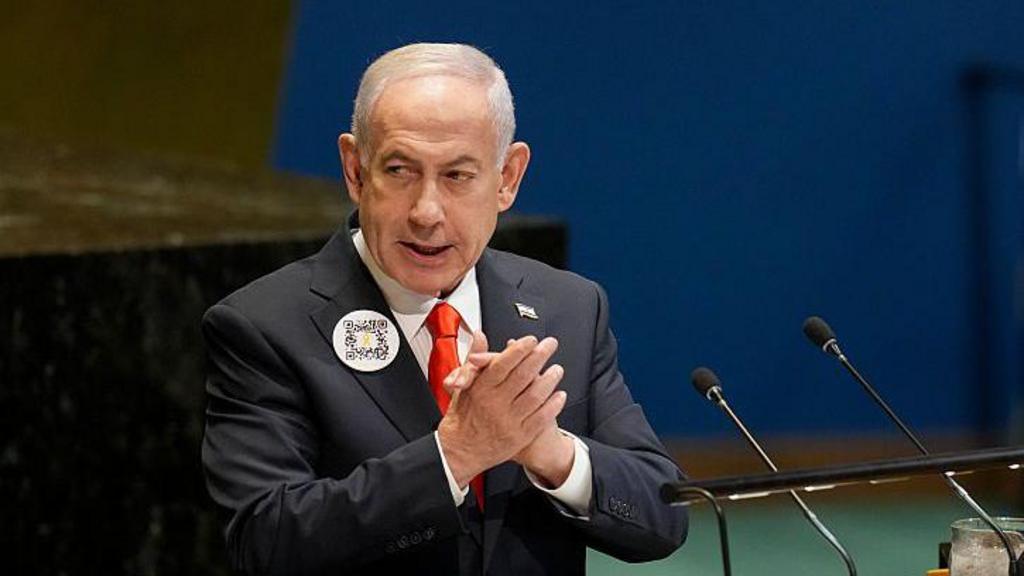
Paris (Imran Y. CHOUDHRY) :- Former Press Secretary to the President, Former Press Minister to the Embassy of Pakistan to France, Former MD, SRBC Mr. Qamar Bashir analysis : The confrontation at the United Nations exposed a widening divide: the United States and Israel’s leadership on one side, and a broad international rejection of their account of the Middle East conflict on the other. Washington and Netanyahu have constructed a narcissistic political worldview in which their fears command universal attention, their violence demands justification, and the suffering of others must remain subordinate.
They expect the world to see Gaza, Iran, and settlement expansion in the West Bank exclusively through their lens. The diplomats walking out as Netanyahu approached the podium delivered a blunt answer: the world cannot be ordered to see what they see, excuse what they excuse, or forget what they wish forgotten. Other nations can examine the destruction, hear the testimony, and reach their own conclusions. Military power cannot compel agreement, and repetition cannot turn a self-serving narrative into truth.
President Trump raised the prospect of annihilating Iran. Netanyahu defended Israel’s military campaigns, insulted departing diplomats, attacked Western governments, and berated the elected mayor of the city hosting him. Outside, protesters demanded an end to American arms supplies sustaining the destruction. Inside, Netanyahu demanded recognition of Israel’s right to defend itself while dismissing the objections raised against its conduct. The contradiction could hardly have been more glaring.
Iran is a nation, not a target awaiting destruction. Its children, workers, teachers, and elderly people are not interchangeable with its government or military command. Threatening annihilation from a podium established to prevent catastrophic warfare mocks the institution’s purpose. What meaning does international security retain when the powerful threaten entire countries and then demand that everyone else demonstrate restraint?
Iranian President Masoud Pezeshkian answered with photographs of the dead: the assassinated Ali Khamenei and children killed at the Minab school. Washington accused Iran of terrorism; Iran’s president presented the victims of violence inflicted upon his country. Whatever judgement one makes about Tehran’s leadership, its children cannot inherit a death sentence because of their government. Their humanity requires neither American approval nor Israeli recognition.
Then came Netanyahu and his denunciation of the diplomats walking out as “moral cowards.” What courage, precisely, was he claiming? The courage to dismiss international condemnation? To ridicule those refusing to applaud? The empty seats did not represent every nation, but they exposed the distance between his government’s self-justification and the judgement of many countries assembled before him. Insulting the audience could not answer the indictment.
Netanyahu’s international isolation is becoming a devastating indictment of his leadership. The International Criminal Court arrest warrant restricts his ability to travel to many countries, once-steadfast allies Britain, France, and Canada have imposed sanctions targeting Israeli settlements, and dozens of diplomats abandoned the chamber as he began speaking.
His government could purchase 500 billboards across Manhattan, but it could not purchase international legitimacy. Outside, protesters demanded an end to the weapons supplies sustaining Israel’s campaigns; inside, empty seats exposed the limits of his defiance. This is the humiliation of a leader who mistakes the capacity to inflict destruction for the authority to command respect. Calling his critics cowards cannot conceal the reality: he is leading Israel deeper into diplomatic estrangement while demanding that the world applaud the policies driving it there.
His attack on New York Mayor Zohran Mamdani made that arrogance unmistakable. Netanyahu accused him of supporting Hamas, which Mamdani denied. A visiting prime minister has no mandate to supervise American democracy or dictate whom New Yorkers should elect. He may answer criticism, but his office grants him no authority over the city’s mayor. Americans owe a foreign leader neither political obedience nor silence. Friendship between countries cannot mean that American politicians become acceptable only when they satisfy the government of Israel.
Outside the United Nations, that criticism had a distinctly American voice. Protesters demanded an end to the arming of Israel and called for Palestinians and Iranians to be allowed to live. Police detained demonstrators, including actors Susan Sarandon and Hannah Einbinder, congressional candidate Darializa Avila Chevalier, and city council member Chi Ossé. These were people exercising their right to challenge policies supported by their own government.
Their presence shattered any convenient equation between Washington’s policy and unanimous American consent. Netanyahu could praise Trump inside the chamber; he could not make the dissent outside disappear. Americans are entitled to question where their weapons go, what their taxes sustain, and whether their country’s alliances advance peace or perpetuate destruction. No visiting leader can legitimately demand exemption from those questions.
His assault on Western governments followed the same pattern. Britain, France, and Canada had announced sanctions targeting Israeli settlements. Netanyahu accused their leaders of surrendering to antisemitic mobs. Measures directed at settlements became, in his telling, evidence of moral collapse. But opposition to settlement expansion does not constitute hatred of Jews. Antisemitism must be confronted; it cannot become a shield against scrutiny of state policy.
Other responses were equally pointed. Qatar said Netanyahu’s attacks diverted attention from responsibility for policies on the ground. Turkey’s presidential communications director, Burhanettin Duran, said his accusations could not obscure Gaza’s humanitarian catastrophe or international legal proceedings. The answer to criticism was accountability, not an expanding catalogue of enemies.
His treatment of settler killings illustrated the problem. The BBC reported his suggestion that perhaps two or three people were killed annually, then cited UN figures recording hundreds of Palestinians killed in the context of settler attacks since the beginning of 2023. These are human beings, not inconvenient arithmetic. Minimising their deaths diminishes the violence confronting entire communities.
The pager display carried a menace beyond its reference to the operation against Hezbollah. Before an institution dedicated to peace, Netanyahu brandished a reminder that communications devices could become instruments of assassination. The gesture could be read as a warning to governments walking out or imposing sanctions: defy Israel and consider how far its reach might extend. Operations in Iran, Lebanon, and Syria gave that implied warning its chilling force. This was intimidation dressed as triumph—an exhibition of lethal capability that invited critics to contemplate consequences beyond the diplomatic chamber.
October 7 cannot provide permanent immunity from judgement. The murder of Israeli civilians and hostage-taking were atrocities. Their victims deserve justice. Palestinian children did not consequently lose their rights. No atrocity authorises unlimited destruction, and no ancient religious promise can serve as a modern eviction order. Any vision of Greater Israel built upon Palestinian dispossession deserves rejection. That judgement concerns political domination, not Jewish identity.
Iran’s nuclear programme also requires answers beyond slogans. Pezeshkian says Tehran was prepared to dilute highly enriched uranium and accept international verification. Those insisting upon war must explain why negotiated restraints cannot achieve their stated objective.
Americans deserve that explanation before more soldiers and resources are committed. Their country is not an inexhaustible military account for another government’s ambitions. Every dollar consumed by destruction is unavailable for another public need.
The governments that walked out must likewise move beyond symbolism. Empty seats cannot feed children or protect families. Protest must produce action.
Washington and Netanyahu may insist upon their own account of this conflict. They cannot demand ownership of everyone else’s judgement. The dead, the displaced, and the bereaved remain visible beyond their carefully constructed lens. The walkout exposed the failure of their demand for unquestioning acceptance. The next test is whether the governments rejecting that demand will act with the courage their convictions require.

Paris (Imran Y. CHOUDHRY) :- Former Press Secretary to the President, Former Press Minister to the Embassy of Pakistan to France, Former MD, SRBC Mr. Qamar Bashir analysis : For countless people living in developing countries, the United States and Europe have represented a dream. This attraction is not based only on wealth, employment or a higher standard of living. More importantly, these societies have been regarded as places where the state does not discriminate among citizens on the basis of religion, color, race or creed. For people persecuted because of their faith, ethnicity, culture or way of life, migration to the West has promised safety from hatred, violence and official discrimination.
The foundation of this dream is secular government. Secularism does not mean hostility to religion or the exclusion of religious people from public life. It means that the state itself does not belong to one religion. A secular government protects Christians, Muslims, Jews, Hindus, Sikhs, atheists and others under the same law. It asks citizens to obey the Constitution, not to adopt the religion or culture of the majority.
Today, however, a contrary narrative is gaining political power. Leaders and movements in the United States increasingly describe America as a Christian nation. President Donald Trump has promised to defend the “Judeo-Christian principles of our founding” and has declared that America is “one nation under God.” In Europe, Hungarian Prime Minister Viktor Orbán has stated even more directly: “Europe is a Christian continent, and this is how we want to keep it.” He has connected the preservation of this identity with opposition to immigration and the fear that Muslims will transform Europe’s ethnic and cultural composition.
Israel, meanwhile, expressly defines itself as a Jewish state. Its 2018 Nation-State Basic Law declares that Israel is “the nation state of the Jewish People” and that national self-determination in the state is “exclusive to the Jewish People.” It also describes Jewish settlement as a national value. The danger lies not in Judaism—or in Christianity or Islam—but in giving one religious or ethno-religious identity a constitutionally superior relationship with the state.
These declarations must be tested against the constitutional principles that made the West attractive. The U.S. Constitution neither establishes Christianity nor grants it privileged status: the First Amendment prohibits laws “respecting an establishment of religion,” while Article VI bars religious tests for public office. Although the Declaration of Independence refers to a Creator, the Constitution is the governing legal document and protects equal citizenship regardless of belief. Yet the tension persists: a 2024 Pew survey found that 13 percent of Americans supported declaring Christianity the official religion, while 44 percent favored promoting Christian values without formal establishment—a distinction that becomes dangerous when moral advocacy turns into state preference and the exclusion of other faiths.
European Convention on Human Rights. Article 9 guarantees everyone “freedom of thought, conscience and religion,” including the freedom to change religion and to manifest belief privately or publicly. The European Court of Human Rights has held that the state must remain a “neutral and impartial” organizer of religious life because pluralism is essential to democracy.
The Magna Carta is often invoked as a symbol of Western liberty and government under law, although it is not a modern constitution or a comprehensive guarantee of religious equality. Its lasting importance is the principle that political authority is subject to law. The modern constitutional descendants of that principle are equal citizenship, due process, religious liberty and protection against arbitrary power. Religious nationalism undermines this inheritance when it divides lawful citizens into authentic members and tolerated outsiders.
The consequences are visible in contemporary politics. During Zohran Mamdani’s campaign for mayor of New York, opponents and online commentators connected his Muslim identity with terrorism, jihad and Sharia. Some called for his denaturalization or deportation, despite the absence of evidence that he intended to impose Islamic law. Mamdani nevertheless won the November 2025 election and became New York City’s first Muslim mayor. His victory affirmed constitutional inclusion, but the reaction exposed how readily a Muslim candidate’s faith could be presented as a security threat.
Michigan politician Abdul El-Sayed has faced similar attempts to associate his Muslim identity with extremism. Dearborn, a city with a large Arab-American and Muslim population, has become a national target for agitators warning about the supposed “Islamification” of America. Yet electing Muslim mayors, council members or police officials is not evidence of religious conquest. It is democracy: citizens exercising the same political rights that the Constitution guarantees to Christians.
Nor is Sharia the governing law of Michigan, New York or any European country. Muslims may voluntarily follow religious principles in their private lives, just as Christians and Jews may consult their own traditions. Civil law nevertheless remains supreme. Raising the specter of Sharia without evidence transforms a religious minority into a permanently suspect population.
The problem is measurable. The U.S. Department of Justice recorded 236 anti-Muslim hate incidents and 156 anti-Sikh incidents in 2023. In the European Union, a survey of almost 10,000 Muslims across 13 countries found that 47 percent had experienced racial discrimination within the preceding five years, particularly in employment and housing.
The same constitutional test must be applied to Israel. Israel emerged from Zionism, British rule in Palestine, European antisemitism culminating in the Holocaust, and the United Nations’ 1947 proposal for separate Arab and Jewish states. It would be historically inaccurate to reduce its creation to a single Western plan for removing Jews from Europe. Nevertheless, defining national self-determination as exclusive to one people raises a profound question about equality for Palestinians and other non-Jewish citizens and residents.
That concern is intensified by occupation and settlement. In a 2024 advisory opinion, the International Court of Justice concluded that Israel’s continued presence in the occupied Palestinian territory is unlawful and that settlement activity must cease. United Nations satellite analysis later estimated that approximately 81 percent of structures in Gaza had been damaged by October 2025.
The conclusion is not that religion must disappear. Religion can inspire compassion, justice and service. The danger begins when it becomes a certificate of citizenship or a weapon for deciding who truly belongs. A Muslim, Jew, Christian, Hindu, Sikh or nonbeliever should not have to become culturally “like” the majority to receive equal protection.
The United States and Europe became dreams because they promised that law would stand above sectarian identity. If their leaders replace that promise with competing religious nationalisms, they will revive the divisions their constitutional systems were designed to restrain. Their future peace and prosperity therefore depend upon returning to the essential principle of secular democracy: the state has no favored faith, and every citizen stands equal before the law.

Paris (Imran Y. CHOUDHRY) :- Former Press Secretary to the President, Former Press Minister to the Embassy of Pakistan to France, Former MD, SRBC Mr. Qamar Bashir analysis : In a stunning reversal that has sent shockwaves through conservative circles, Tucker Carlson—the podcaster who once stood as one of Donald Trump’s most stalwart defenders—has called for the president’s immediate removal from office. But Carlson’s demand is not rooted in the partisan grievances that defined previous impeachment attempts. Rather, it stems from a far more urgent concern: the specter of nuclear war.
“The second any president actively considers the first use of nuclear weapons, that person should be removed from office immediately,” Carlson declared during a conversation with Joe Kent, the former director of the National Counterterrorism Center. “Because that’s got to be the red line—destroying all of humanity with a nuclear strike.”
Carlson, who was “strongly opposed” to the two impeachment attempts against Trump during his first term, has drawn a distinction that transcends political affiliation. What was once absurd to him—removing an elected president from office—has become not just acceptable but imperative. “Anyone who would even tolerate that kind of talk from any of his subordinates or employees is by definition unfit,” Carlson argued. “That’s the total destruction of the world.”
This dramatic shift in position illuminates a terrifying reality: the leaders of the world’s most powerful nations, caught in an escalation ladder of their own making, are steering humanity toward a precipice from which there may be no return.
The world today finds itself trapped in two simultaneous conflicts, each carrying the potential for nuclear conflagration. In Ukraine, Russia’s frustration with a proxy war backed by NATO and the United States has led Moscow to openly reconsider its nuclear doctrine. In the Middle East, the United States and Israel, having failed to subdue Iran through conventional means, are reportedly contemplating nuclear options to bring Tehran to its knees.
The parallels are striking and deeply troubling. In both theaters, conventional military might has proven insufficient to achieve the desired outcomes. And in both cases, the leaders involved—driven by ego, historical grievance, and strategic ambition—appear unwilling to accept anything less than total victory.
Carlson has highlighted the Russian dimension, interviewing Sergey Karaganov, a longtime political advisor to Vladimir Putin, who stated unequivocally that Russia is considering the use of nuclear weapons against the United Kingdom and Germany if the Ukraine war continues at its current tempo. “We will eliminate the UK and Germany with nuclear weapons,” Karaganov declared, a statement that Carlson described as “the biggest story of our lifetimes.”
Yet, Carlson noted with evident frustration, this story has been largely ignored by mainstream media. “Have you read that story?” he asked his audience. “Has anyone mentioned that to you? That the most famous public intellectual in Russia, a close friend of Vladimir Putin’s, is saying in public that Russia plans to use nuclear weapons against Western Europe?”
The fundamental problem, as Carlson’s commentary reveals, is not strategic necessity but the egoism of leaders who have painted themselves into corners from which they cannot retreat without perceived humiliation.
President Trump, who repeatedly promised to keep the United States out of foreign military conflicts, launched a war against Iran on February 28. President Putin, who expected a quick victory in Ukraine, has seen his forces bogged down in a protracted conflict that has depleted Russia’s military and isolated it internationally. President Zelensky, banking on European and American support, has refused to compromise, even as his country is depopulated and devastated.
Carlson himself has been a vocal opponent of the Iran war, and his clashes with Trump in recent months reflect a fundamental disagreement over foreign policy. Trump has lashed out at Carlson on Truth Social, calling him a “loser” for meeting with other Republican figures. But Carlson’s response has been to escalate his criticism, arguing that the president’s ego has blinded him to the catastrophic consequences of his actions. “Any leader of any country who suggests first use of nuclear weapons has forfeited his right to lead,” Carlson said. “He has to be removed immediately. I think that’s just a fair standard.”
The situation facing the world today is what strategists call an “escalation trap.” Each side, fearing that backing down will be perceived as weakness, escalates in the hope of forcing the other to blink first. But in a nuclear context, there is no victory—only varying degrees of annihilation.
This is precisely the dynamic that Carlson has identified. The administration, desperate for a “way out” of the Iran quagmire, has reportedly turned to nuclear planning. Under Secretary of Defense for Policy Elbridge Colby has publicly stated that officials are working to give the president and Defense Secretary Pete Hegseth “credible, rational nuclear options.” The very phrase “rational nuclear options” is an oxymoron that reflects the dangerous thinking that has taken hold in Washington.
Similarly, Russia has publicly rewritten its nuclear strategy to include the use of nuclear weapons against countries acting as proxies for nuclear-armed powers. Under Russian law, this means that Germany—which does not possess nuclear weapons—is now considered a legitimate target. The Russians have sent hypersonic missiles into Kiev not to destroy infrastructure but to send a message: if you push us further, the next missile will carry a nuclear warhead.
Carlson’s commentary has also drawn attention to the uncomfortable reality that Ukraine has been a proxy battleground from the beginning. In a revealing clip from a decade ago, Chrystia Freeland, now an economic adviser to Ukraine’s leadership, is shown acknowledging that everyone in Ukrainian leadership has been touched by George Soros’s Open Society. “Everyone she knows in Ukrainian leadership has taken money from George Soros,” Carlson observed. “Everyone running the country is actually employed by this Hungarian billionaire who’s got nothing to do with the country.”
This revelation, Carlson argues, proves that the war was never about Ukraine’s sovereignty but about using the country as a weapon against Russia. “The purpose of a system is its outcome,” he stated. “The current state of Ukraine was clearly the point all along: destroy the country, depopulate it, change the laws that prevent foreigners from buying its natural resources.”
As leaders on both sides of these conflicts pursue their ego-driven agendas, the people of the world are left to bear the consequences. The people of Ukraine have suffered hundreds of thousands of casualties. The people of Iran face the prospect of nuclear annihilation. And the people of Europe, the United States, and Russia themselves face the possibility of a war that could destroy civilization.
The United Nations, the forum once envisioned as the guardian of global peace, has proven powerless. “Nobody now bothers and nobody cares about the UN resolutions,” Carlson’s commentary has effectively argued through its analysis of the situation. The only force capable of stopping this madness, the argument goes, is the people themselves.
As Tucker Carlson has demonstrated with his dramatic reversal on impeachment, even the most committed partisans can recognize when the stakes transcend politics. The question now is whether the citizens of the warring nations—Americans, Russians, Ukrainians, Iranians, and Europeans—will similarly wake up to the danger and demand that their leaders step back from the brink.
Carlson’s demand that President Trump be removed “immediately” if he is considering nuclear first use is not a partisan attack but a moral imperative. It reflects the recognition that the egoism of leaders, when combined with nuclear weapons, represents an existential threat to humanity.
The escalation ladder that has trapped the United States, Russia, Iran, Ukraine, and Europe is not an inevitable product of geopolitical forces. It is the result of choices made by leaders who have prioritized their own ambitions and perceived interests over the survival of their people and the world.
The question is not whether nuclear weapons will be used but whether we will act in time to prevent it. As Tucker Carlson’s reversal demonstrates, the lines that once seemed unthinkable are now being crossed. The only question that remains is whether the people of the world will cross their own red line and demand that their leaders stop this march toward annihilation before it is too late.


Quetta’s Daughter, Pakistan’s Pride

Why is Trump a Dictator?

America Must Rebuild Within


-

 Sports4 months ago
South Korea’s Yoo Useong Steps Onto the Global Strongman Stage as World Strongman Federation Professional Athlete
-

 Art & Culture1 year ago
A Survey of Mata-E-Zeest
-

 Europe News2 years ago
Chaos and unproven theories surround Tates’ release from Romania
-

 American News2 years ago
Trump expands exemptions from Canada and Mexico tariffs
-

 American News2 years ago
Trump Expels Zelensky from the White House
-

 Art & Culture2 years ago
Will Snow White be a ‘victim of its moment’? How the Disney remake became 2025’s most divisive film
-

 Entertainment2 years ago
Champions Trophy: Pakistan aim to defend coveted title as historic tournament kicks off today
-

 Pakistan News1 year ago
Comprehensive Analysis Report-The Faranian National Conference on Maritime Affairs-By Kashif Firaz Ahmed