
Terrorism
School bus attack caught in tensions between Pakistan and India


“When I heard the attack happened, the ground fell from beneath my feet. All the parents started running towards the bus, no-one could understand what was going on,” Nasir Mehmood, a sergeant in Pakistan’s army tells us.
Nasir and I are in the city of Quetta, sitting in the waiting room of the largest military hospital in the province of Balochistan. His 14-year-old son Mohammad Ahmad told him he was flung across the army school bus in a bombing in Khuzdar, a few hours’ drive away.
The bus was carrying around 40 schoolchildren when it exploded at about 07:40 local time (02:40 GMT) on Wednesday.

“I reached the hospital, and there were screams of children everywhere, it was the only thing you could hear,” Nasir said. “My eyes just kept searching for my son.”
Only the most serious cases were airlifted to the Combined Military Hospital. The military have said the death toll has now risen to eight, with six children killed and dozens injured. No group has admitted carrying out the attack.
It is rare for foreign journalists to be allowed to enter the province, south-west of Pakistan, let alone a hospital on the army’s compound. The military said they wanted international media to witness the impact of the attack themselves.
Pakistan alleges India is linked to the attack, though there is no independent evidence – and it is a claim Delhi firmly denies.
India and Pakistan are in the midst of a fragile ceasefire, after a two-week conflict that was their most significant one in decades. It saw them exchange drone attacks, missiles and artillery fire, and left dozens of casualties.
This attack in Balochistan is now in the middle of the tensions, with news channels broadcasting pictures of the children who were killed, most of them girls between the ages of 12 and 16, alongside accusations of an “Indian terror campaign”. Images of scrapped metal, children’s shoes and abandoned backpacks strewn along the scene highlight the tragedy.

As we walked through the intensive care unit, some children lay unconscious on their beds, others thrashed in pain. One young girl kept calling out for her mother as nurses tried to calm her. Doctors told us several children were in critical condition, having suffered extensive trauma, burns and fractured bones. The night before we arrived, another child had died.
Pakistan’s Minister of Information, Attaullah Tarar, says there is a history of Indian proxies operating in Balochistan. In turn, India says that Pakistan has been harbouring militants who wage attacks on Indian-administered Kashmir for years.
The killing of 26 people in April, most of them tourists in Pahalgam, sparked the most recent conflict. Pakistan has called for an open investigation led by an independent party.
However, Tarar denied that such an investigation was necessary in Balochistan.
“Pahalgam was a one-off incident,” he told us. “We are the victims in this case. We have been suffering. There is a history. We have evidence. So what can I say?”
When we asked him what that evidence was, he once again pointed to claims of a history of attacks. He gave us no other details of India’s alleged involvement in this attack.

A turbulent province
Later, an officer drove us through Quetta’s roads in a bus flanked by soldiers carrying rifles and ammunition hanging from their pockets.
Balochistan has experienced decades of militant attacks linked to a nationalist insurgency. It is home to several groups which accuse the government of exploiting its natural resources.
In March, some 21 people, most of them off-duty security personnel, were killed during a train siege in Balochistan’s remote Sibi district.
That attack was carried out by the Balochistan Liberation Army (BLA).
Pakistan, as well as several Western countries, including the UK and US, have designated the BLA as a terrorist organisation.
As the military responds to the insurgency, activists in Balochistan accuse Pakistan’s security forces of human rights violations. They say thousands of ethnic Baloch people have been disappeared in the last two decades, and are allegedly detained without due legal process.
The minister of information told us the government believed “faceless courts” might be needed in the province, hiding the identities of the judges and prosecutors in terror cases. Tarar said the courts often fail to convict the accused, because of a fear of retribution from militant groups.
In a press conference, the military spokesperson, Lt Gen Chaudhry, said the school bus attack “had nothing to do with the Baloch identity, rather it was just India’s provocation”.
The government says it is raising the issue “across diplomatic channels” around the world.
The impact on the ceasefire and on the prospect of talks between India and Pakistan remains to be seen.
Additional reporting by Malik Mudassir







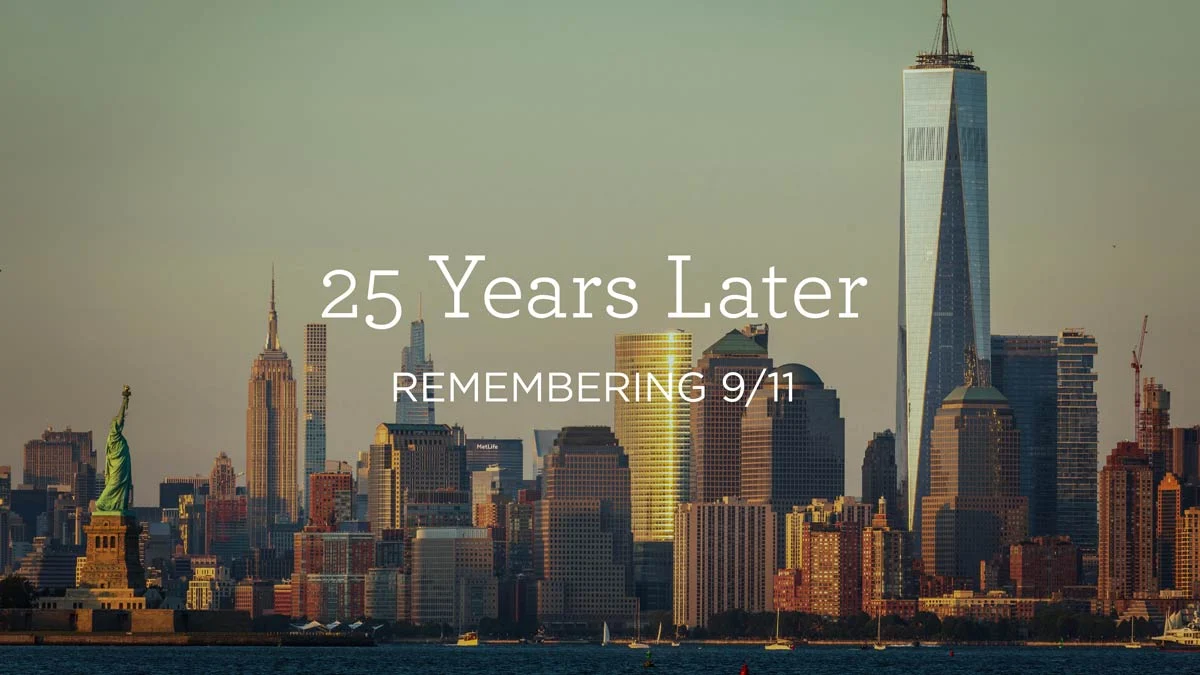
Paris (Imran Y. CHOUDHRY) :- Former Press Secretary to the President, Former Press Minister to the Embassy of Pakistan to France, Former MD, SRBC Mr. Qamar Bashir analysis : Twenty-five years after the attacks of September 11, 2001, the United States and people around the world once again remember a day of extraordinary loss. The anniversary recalls not only the violence inflicted upon innocent people, but also the courage demonstrated by passengers, first responders, service members, public employees and ordinary citizens who moved toward danger to help strangers.
On that morning, 19 members of al-Qaeda hijacked four commercial aircraft. Two were deliberately flown into the World Trade Center towers in New York, and a third struck the Pentagon. Passengers and crew members aboard United Airlines Flight 93 resisted the hijackers before the aircraft crashed near Shanksville, Pennsylvania.
The attacks killed 2,977 people from 90 countries: 2,753 in New York, 184 at the Pentagon and 40 aboard Flight 93. These figures do not include the 19 hijackers. Hundreds of first responders were among the dead, while many other people later developed illnesses connected to toxic exposure at Ground Zero.
The courage displayed amid the catastrophe remains one of its most enduring lessons. Their conduct demonstrated that heroism does not always begin with preparation, authority or recognition. It can arise when ordinary people recognize a responsibility toward others and choose to act. That spirit also appeared in the days following the attacks, when people donated blood, supported bereaved families and volunteered in rescue and recovery efforts.
Newly declassified intelligence materials have continued to illuminate what officials knew about the broader threat from Osama bin Laden and al-Qaeda before the attacks. At the same time, 9/11 has generated numerous competing conspiracy theories. Some allege that elements within the United States government had advanced knowledge and deliberately failed to intervene; others claim that American agencies actively facilitated the plot to justify subsequent wars and expanded state power.
Additional theories attribute foreknowledge or participation to Israel or Mossad, allege assistance from Saudi officials or other foreign actors, question whether controlled demolition caused the collapse of the World Trade Center buildings, dispute the accepted accounts of the Pentagon strike and Flight 93, or suggest that unusual financial transactions revealed advance knowledge.
These claims differ substantially and should not be treated as established facts, but their continuing circulation reflects enduring public suspicion about intelligence failures, possible undisclosed interests, who benefited from the attacks, and whether the complete story has ever been made public. Their existence therefore remains part of the wider historical and political legacy of 9/11, deserving acknowledgment and careful examination without prematurely converting either suspicion or official conclusions into unquestionable truth.
Irrespective of finality of the conclusive findings, the attacks transformed security practices throughout the world. Airports adopted more intrusive screening procedures, intelligence agencies expanded surveillance and information sharing, and governments strengthened systems for tracking terrorism financing. The United States created the Department of Homeland Security, reorganized its intelligence structure and launched what became known as the “war on terror.”
The consequences extended far beyond American borders. Military operations in Afghanistan began in 2001, and the United States invaded Iraq in 2003. Counterterrorism operations subsequently expanded across parts of the Middle East, Africa and South Asia. These wars removed governments, disrupted militant organizations and produced political changes, but they also caused prolonged instability, displacement, economic destruction and enormous loss of life.
Brown University’s Costs of War project estimated that direct violence in the major post-9/11 war zones killed between 897,000 and 929,000 people during the first two decades after the attacks. That total included civilians, members of national militaries, opposition fighters, journalists, humanitarian workers and American and allied service members. The project estimated the financial cost at approximately $8 trillion.
Those figures demonstrate why remembrance cannot be limited to a single country or nationality. The murder of civilians on September 11 was abhorrent. The suffering of civilians in Afghanistan, Iraq, Syria, Yemen, Gaza, the West Bank and other conflict zones is also a profound human tragedy. Historical circumstances, legal responsibility and political causes differ from one conflict to another, but grief does not become less real when it crosses a border.
This principle does not erase the legal distinction between civilians and combatants. International humanitarian law specifically requires parties to armed conflicts to distinguish between them. Civilians may not be deliberately targeted, while all parties must observe the requirements of distinction, proportionality and precaution.
The universal value of human life should nevertheless remain at the center of public policy. A parent grieving in New York experiences the same fundamental human loss as a parent grieving in Baghdad, Kabul, Gaza, Kyiv or any other city affected by violence. Recognizing this shared humanity does not excuse terrorism, remove the right of states to protect their populations or settle disputes over the legality of particular military operations. It establishes a moral starting point: civilian life must not be treated as expendable.
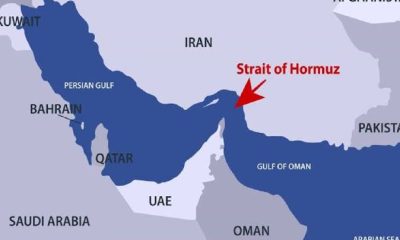
That lesson is especially urgent in 2026. Armed conflicts continue to destabilize several regions, damage essential infrastructure and disrupt international trade. The continuing confrontation involving the United States and Iran has affected energy markets and navigation through the Strait of Hormuz. Brent crude briefly reached approximately $108 per barrel in September before easing, illustrating how rapidly regional warfare can impose costs upon people far from the battlefield.
History repeatedly shows that wars presented as short or decisive can become prolonged. Military planners can calculate targets, weapons and troop numbers, but they cannot reliably control every political, economic and humanitarian consequence. Armed conflict can create new grievances, displace populations, weaken institutions and produce cycles of retaliation that outlast the leaders who initiated it.
The anniversary also asks societies to consider what “never forget” should mean. It must mean preserving the names and stories of those who died. It must mean supporting survivors, first responders and families still living with the physical and emotional consequences of the attacks. It must mean honoring the passengers of Flight 93, whose collective action may have prevented the hijackers from striking another target in Washington.
But remembrance should also influence future decisions. If commemorations praise those who saved human lives while public policy accepts avoidable civilian suffering elsewhere, remembrance becomes incomplete. The courage of 9/11 should inspire vigilance against terrorism, but also restraint, honesty and determination to prevent new generations from experiencing comparable grief.
The lasting tribute to the victims is therefore not an endless expansion of war. It is the patient construction of a world in which fewer families receive news that a loved one has been killed by terrorism, bombardment or military escalation. That requires reliable intelligence, accountable government, protection of civilians, international cooperation and serious investment in diplomacy.
Humanity cannot restore what was taken on September 11, 2001. It can decide what meaning to draw from the loss. Twenty-five years later, the most worthy lesson is that courage should protect life, power should be restrained by law, and remembrance should renew the pursuit of peace. The dead are honored not only when their names are spoken, but when the living work to ensure that the suffering experienced that day is not inflicted upon other innocent people.
Terrorism
Australia was seen as a world leader in gun control – Bondi has exposed a more complicated reality
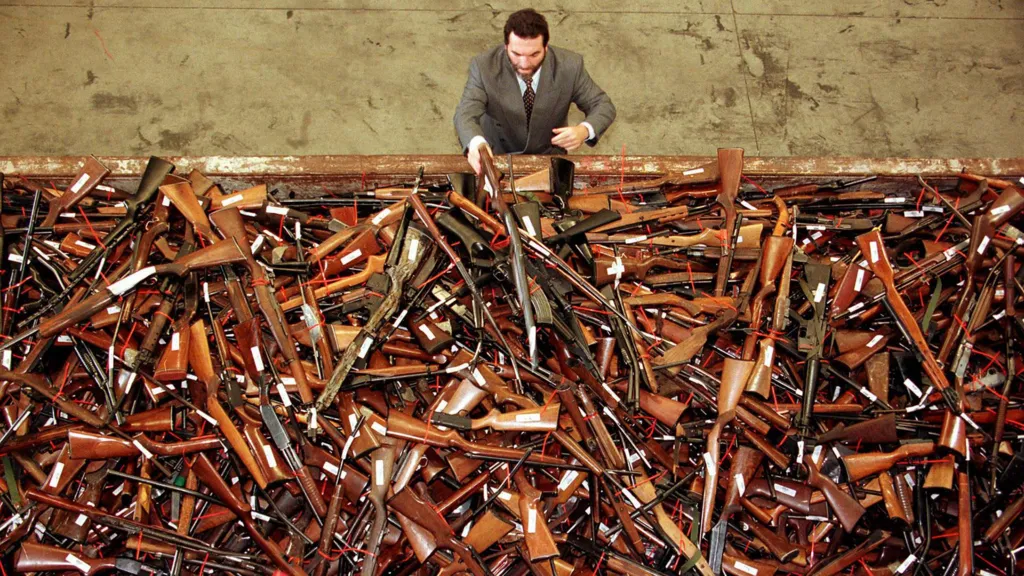
It was a Sunday afternoon in April 1996 when a lone gunman armed with semi-automatic rifles killed 35 people in the Australian tourist town of Port Arthur.
The massacre almost 30 years ago, which ushered in some of the strictest gun laws in the world, feels like a bygone age for many Australians.
But the Bondi Beach attack on Sunday, which left 15 dead, rekindled memories of the Tasmanian tragedy – none more so than for leading gun control advocate Roland Browne.
As the country’s deadliest modern-day mass shooting was unfolding an hour’s drive away, Mr Browne was meeting fellow gun control advocates at his home, ahead of a government meeting, to lobby for a ban on the exact type of firearm the Port Arthur gunman was using.
Mr Browne, 66, was again at home in Hobart on Sunday when he received news of the shooting at Bondi, targeting a Jewish event celebrating the first night of Hanukkah.
“There’s just a lot of similarities,” Mr Browne, who spent childhood summers in Bondi and still has family there, told the BBC.
“They’re both very public places frequented by tourists from around the nation and around the world.”
“It’s sickening and I’m bitterly disappointed in our political system whereby the voices for tighter gun laws and public health aren’t listened to until there’s a major event like this,” he added.
For decades, Australia has stood as a beacon on the world stage for its strict gun laws, he says, taking a similar path to the UK which experienced its own mass shooting in Dunblane, just one month before Port Arthur.
Even now, Mr Browne remains friends with relatives of some of the 17 victims – mostly children aged five and six – killed at a primary school in Scotland.
But despite being praised for its stringent gun laws, the reality in Australia is not clear-cut.
Gun ownership at record high
A report by the Australia Institute earlier this year revealed that there are more than four million privately-owned firearms across the country – almost double the number from about 20 years ago.
That equates to one gun for every seven Australians, the report says.
Queensland has the most registered guns, followed by New South Wales (NSW) and Victoria while Tasmania and the Northern Territory have the most guns per person.
The report also dispels a common view that guns are mainly owned by rural residents.
Guns are widespread in metropolitan and suburban areas, with one in three firearms in NSW located in major cities, the report said.
The total figure has risen at a lower rate than population increases, but there are now more guns in fewer hands, with every licence holder owning an average of more than four firearms.
And that’s one of the key issues that Mr Browne wants the government to address.
Currently, only one jurisdiction – Western Australia – has a cap on the number of legal firearms that a licence holder can have. Under new laws introduced in March this year, gun owners can have between five and ten firearms, depending on the type of licence and model of firearm.
Authorities have confirmed that one of the alleged gunmen, Sajid Akram who was killed at the scene of the Bondi attack, owned six registered guns.
Mr Browne wants a cap of one to three guns, depending on the licence category, to be introduced across Australia.
But Tom Kenyon, chief executive of the Sporting Shooters Association of Australia, argues that a cap would be meaningless.
“Limiting the number of guns wouldn’t have made a difference on Sunday,” he says.
“And it wouldn’t have changed the fact that an attack occurred because those two individuals had been radicalised.”
Mr Kenyon argues that people intent on harm, without access to guns, will use other weapons, referencing the 2016 Bastille Day massacre in the French city of Nice where 86 people were killed after a man drove a truck into crowds during fireworks celebrations. The attack was claimed by Islamic State (IS).
The other alleged Bondi gunman, 24-year-old Naveed Akram, was previously investigated over links to IS, according to comments made by Prime Minister Anthony Albanese.
Mr Kenyon also says that more guns are found in cities because most people in Australia live in metropolitan areas and travel to other areas to hunt.
What are Australia’s current gun laws?
Gun control laws in Australia are not uniform across the country, with inconsistent implementation of the rules across states and territories.
But generally, to apply for a gun licence, you must be over 18, a “fit and proper person”, pass a training and safety course and give a “genuine reason” for having a firearm.
The eight accepted reasons include recreational hunting or pest control, target or sport shooting, for work (such as security guards and prison officers), for use in farming or animal welfare and firearms collectors.
But there are loopholes.
For example, anyone under 18 was meant to be barred from owning a firearm under the 1996 gun control reforms, but minors in various jurisdictions can have access to a firearm while under supervision, ranging from age 10 in the Northern Territory to 12 in other states.
Another situation is where a particular type of gun is banned in one state but legal elsewhere.
In the days after the Port Arthur massacre, then-Australian prime ministerJohn Howard galvanised every state and territory to overhaul the country’s gun laws.
More than 650,000 firearms were voluntarily handed in to authorities and destroyed, as part of a buyback programme. And background checks and a mandatory cooling-off period for gun sales were introduced. Automatic and semi-automatic rifles and shotguns were banned.
Similar gun reforms – a ban on semi-automatic weapons and a buyback scheme – were introduced in New Zealand after a white supremacist killed 51 Muslims at two Christchurch mosques in 2019.
Part of Howard’s reforms included scrapping self-defence as a reason for owning a firearm – a contrast to gun laws in the United States where personal protection is often the main reason for citizens to own guns.
Gun ownership in the US is much higher compared to Australia as is gun violence. The country saw 488 mass shootings – defined as where four or more people are killed or injured – last year.
Recent polling by the Australia Institute showed that seven out of ten Australians think gun laws should make it harder to access a gun and 64% agreed that current gun laws need to be strengthened.
Fresh reform for gun laws
In the hours after the Bondi shooting, the NSW Premier Chris Minns was unequivocal about the need to tighten the state’s gun laws.
“If you’re not a farmer, you’re not involved in agriculture, why do you need these massive weapons?” he asked.
And less than 24 hours after the shooting, Australia’s Prime Minister Anthony Albanese hosted an emergency meeting where leaders from across the country pledged to tighten gun laws. On Friday he announced a national gun buyback scheme “to help get guns off our streets”, the first scheme of its size since 1996.
Other proposals include:
- limiting the number of guns someone can legally own
- limiting “open-ended” licensing
- making Australian citizenship a condition of owning a firearm
- improving intelligence sharing when licence applications are being assessed
Albanese said there should also be regular reviews of licence holders.
“People’s circumstances can change,” he said. “People can be radicalised over a period of time.”
The swift action prompted Howard – the architect of the 1996 gun laws – to weigh in.
While he supported stricter gun laws, Howard said the move was an “attempted diversion” from the real cause of the tragedy, which he said was a rise in antisemitism in recent years.
Mr Kenyon believes the moves to tighten gun laws are a waste of resources.
“All that time and effort and political capital could be spent combating radicalisation of individuals,” he says.
The only thing that might have prevented Sunday’s attack was better intelligence-sharing that would have flagged the gunmen’s links to extremist ideology to the NSW firearms’ registry, he says.
Elsewhere, one of the headline reforms proposed in 1996 – a national firearms register – is yet to be created, with authorities saying the database is “expected to be operational by mid-2028”.
Little had been done to implement the measure until the 2022 fatal shooting of two police officers and a civilian in Wieambilla became a catalyst to speed the process up.
The Bondi shooting has now propelled the government to list the creation of the register as a priority.
Recreational hunting under spotlight
Mr Browne believes the application process for a gun licence is too easy and that licences for recreational hunting should be abolished as its definition is ambiguous.
Sajid Akram owned a recreational hunting licence.
But recreational hunting contributes a “valuable social good” to Australia, argues Mr Kenyon, saying that hunters remove millions of feral animals such as rabbits, foxes and cats.
He was just 10 when he picked up his first gun. Now 53, he goes on regular hunting trips – often shooting deer in Victoria’s high country – and competes in pistol shooting events six times a year.
Hunting isn’t just a pastime for him, it’s about family and community connections. He taught his three children – all adults now – how to shoot when they were teens.
“All my life I’ve had the opportunity to do it and I’ve enjoyed it,” Mr Kenyon, a former Labour politician in South Australia, says, “so I want my kids to have the same opportunity”.

In the wake of the Port Arthur massacre, self-loading firearms were banned, resulting in a drop in gun-related deaths, but the risk to public safety has now shifted to high-powered fast-loading rifles with magazines that can shoot up to five rounds, of the kind believed to have been used by the gunmen.
“If you watch the video, you’ll see him firing rapidly with his rifle,” Mr Browne says, referring to footage of one of the gunmen shooting from a footbridge leading to Bondi Beach.
“If he didn’t have a magazine in that rifle, he would have had to manually reload each time,” which would dramatically reduce – but not eliminate – the threat of a mass shooting.
Mass shootings remain rare in Australia.
In 2018, a Western Australian grandfather killed his wife, his daughter and four grandchildren before turning the gun on himself in what was, at the time, the worst such incident since Port Arthur.
For Mr Browne, Australia is a safe country but incidents involving firearms are not uncommon, ranging from neighbourhood disputes to gang shootings.
“This is a reflection on guns being in the wrong hands, a legacy of poor storage allowing guns to be stolen and sold – and thus move into black markets.”
But the issue of gun control isn’t just about the physical firearm.
“It’s like a plane crash, it’s never just one thing. It’s a culmination of a lot of factors,” he says. Australia needs better assessment of whether a licence holder is a suitable candidate and more stringent rules on the types of guns that can be legally owned, he says.
Tragedy is a wake-up call
In the aftermath of the Port Arthur massacre, Mr Browne met with many of the survivors and families of the victims including Walter Mikac, whose wife Nanette and two young daughters were among the 35 people killed.
Mr Mikac, who founded the Alannah and Madeline Foundation charity to honour his children, said the Bondi shooting was a “horrific reminder” of ensuring Australia’s gun laws protect everyone.
“After Port Arthur, Australia made a collective commitment to put community safety first, and that commitment remains as important today as ever,” he said in a statement.
Mr Browne echoed those sentiments.
Gun laws need to be reformed to “keep up-to-date with changing community attitudes, technological advances and to rectify identified deficiencies,” Mr Browne says.
“It’s sad that it takes such a tragedy to get people to wake up and listen.”
https://www.bbc.com/news/articles/cqxql12317qo
Taken From BBC News
Akhtar Hussain Sandhu
Historian & Columnist
Chicago, USA
An Afghan terrorist, Rahmanullah Lakanwal, targeted two West Virginia National Guard members, named, Sarah Bechstrom and Andrew Wolfe, near the White House on 26 November 2025 in Washington, DC. The suspect has been working as a US official in Afghanistan and came to the USA in 2021. When the Taliban took over Afghanistan after the US left, approximately one hundred thousand Afghan nationals were permitted to enter the US under the Biden administration but he got resident status in 2024. Sarah Bechstrom passed away on 28 November while Andrew Wolfe is being treated in a hospital as he is said to be in a critical condition. The Afghan suspect will face capital punishment or life imprisonment under the US laws. President Donald Trump declared it a terrorist targeted attack and suspended the immigration process of all Afghans and others. An officer clearly announced to proceed keeping involvement of any group or country in this case. Many talking on the drone attack in Tajikistan killing three Chinese and Washington attack and construing an endeavor to capture Bagram Airport but as a matter of fact the killing of a National Guard and terrorist attack near White House can never be overlooked therefore, be seen as an individual sensitivity. Afghanistan has been a locus of evil as it damages humanity, peace, and social order by exporting terrorism and smuggling wherever they settle. This is because of the constant lawlessness in the country, pissed with the tribal system and criminal mindset.
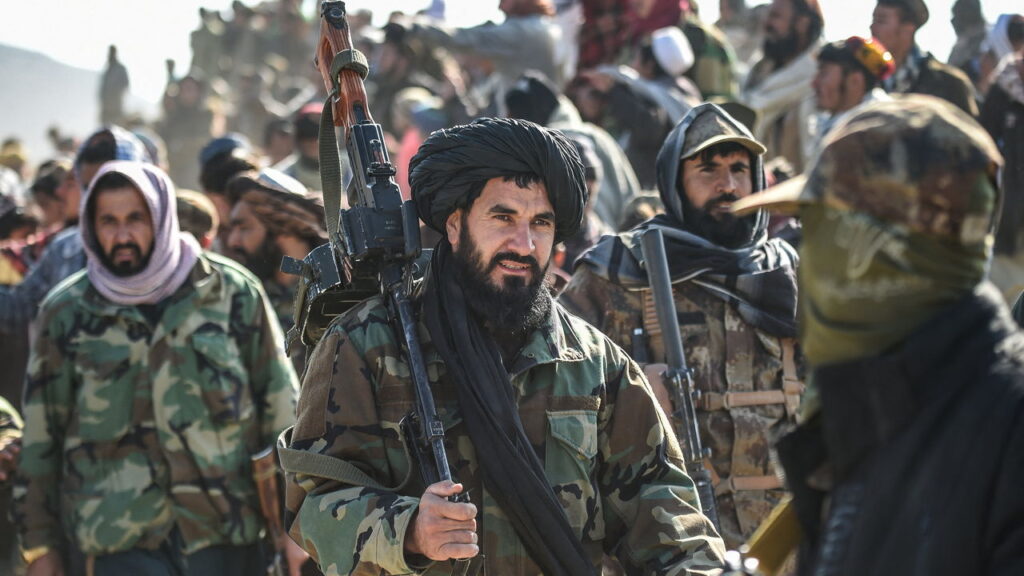
Afghan nationals desire to flee from their country, where they live as either slaves or criminals. The commoners are to obey the tribal heads; therefore, they are used as tools in maintaining their grasp over the economic and human resources. In the past decades, Afghanistan sought every type of support from Pakistan, which the Pakistani establishment overtly or covertly provided and defended Afghanistan at international level. The Western policymakers named it the ‘double-faced policy’ of Pakistan as they posed to be with the NATO forces but in fact supported the Taliban forces. This policy proved dangerous, and Pakistan could not create a soft image in the eyes of the world powers. Resultantly, every terrorist attack, even by any Afghan in any part of the world, was linked to Pakistan. Although Pakistan had been a victim of the terrorist attacks within Pakistan, but even then, Pakistan could not be perceived as a soft state. Pakistan has been a heaven for the Afghans who studied in the Pakistani universities, established huge businesses, got Pakistani National Identity cards and passports, and even continued smuggling of weapons, petroleum, vehicles, spare parts, drugs, etc. They earned huge money from the poppy crops and established their political, social, and economic status within the Pakistani society. The Law Enforcement Agencies supported these Afghan smugglers under the undeclared state policy because many politicians and economic tycoons was a part of this game. After the departure of NATO from Afghanistan, the Taliban regime took over and unexpectedly went against Pakistan. They supported Tehrik Taliban Pakistan (TTP) and its allied groups, Baluchistan Liberation Alliance (BLA), violent elements in Pakistan Tehrik e Insaf (PTI), and other anti-Pakistan groups. Afghans, if cursed by the US, will endeavor to cross the Durand Line because Pakistan has proved heaven for the Afghans; therefore, the Pakistan army and other LEAs must be alert to deal strictly with:
- Afghans crossing the Durand Line illegally;
- Afghan living in Pakistan illegally;
- Pro-Afghan groups within Pakistan/the business groups;
- The terrorist/violent groups (Afghan and Pakistani);
- Pro-Afghan Police, bureaucrats and other officials and Politicians within Pakistan.
The US authorities are empowered and equipped tremendously to cope with the situation and President Donald Trump may suspend the financial support to the Taliban regime Afghanistan if involved in the Washington woeful incident, but Pakistan has to plan to counter mass as well as terrorists’ infiltration into Pakistan. In the past, Pakistan had to face numerous problems even in the implementation of the existing laws against the groups involved in the terrorism. Still, the provinces are unable to implement the National Action Program agreed upon by all the stakeholders. The current international scenario seems profoundly favorable therefore the Pakistani government and establishment have potential importance in the Muslim and western countries. Under the circumstances, this is the right time to take stern action against the terrorists and violent groups in Pakistan. Denmark and other western countries have already requested the US to reverse the immigration or asylum policy of Afghanistan, and now a terrorist attack by an Afghan in Washington DC, will verify the criminal mindset of the Afghan nationals and testify to all the state actions against the Afghans and violent groups disturbing the peace and order of the social fabric of Pakistan.


Quetta’s Daughter, Pakistan’s Pride

Why is Trump a Dictator?

America Must Rebuild Within


-

 Sports4 months ago
South Korea’s Yoo Useong Steps Onto the Global Strongman Stage as World Strongman Federation Professional Athlete
-

 Art & Culture1 year ago
A Survey of Mata-E-Zeest
-

 Europe News2 years ago
Chaos and unproven theories surround Tates’ release from Romania
-

 American News2 years ago
Trump expands exemptions from Canada and Mexico tariffs
-

 American News2 years ago
Trump Expels Zelensky from the White House
-

 Art & Culture2 years ago
Will Snow White be a ‘victim of its moment’? How the Disney remake became 2025’s most divisive film
-

 Entertainment2 years ago
Champions Trophy: Pakistan aim to defend coveted title as historic tournament kicks off today
-

 Pakistan News1 year ago
Comprehensive Analysis Report-The Faranian National Conference on Maritime Affairs-By Kashif Firaz Ahmed