
World News
Zelensky and EU leaders to hold call with Trump ahead of Putin summit


Ukrainian President Volodymyr Zelensky is joining European leaders in talks aimed at increasing pressure on US President Donald Trump to side with Ukraine during Friday’s summit with his Russian counterpart in Alaska.
In an online call with Trump on Wednesday, the leaders are expected to reiterate that no decisions should be taken without Ukraine, including changing its borders by force.
Trump has said any peace deal would involve “some swapping of territories” and it is believed one of Vladimir Putin’s demands is that Kyiv surrenders the parts of the eastern Donbas area it still controls.
On Tuesday, Zelensky said such a concession could be used as a springboard for future attacks by Russia.
Russia launched a full-scale invasion of Ukraine in February 2022.
A Russian summer offensive has been progressing with troops making a sudden thrust near the eastern town of Dobropillia and advancing 10km (six miles) in a short period of time.
While downplaying Russia’s advance, Zelensky said it was “clear to us” that Moscow’s objective was to create a “certain information space” before Putin meets Trump that “Russia is moving forward, advancing, while Ukraine is losing”.
No official details have emerged on what demands Putin could make when he meets Trump in Anchorage on Friday.
However, there has been concern among Ukraine’s European allies about the possibility of Trump agreeing to Putin’s demands.
German Chancellor Friedrich Merz has called Wednesday’s meeting and Zelensky is travelling to Berlin to join him for the video call with other European leaders, including UK Prime Minister Keir Starmer, before the call with Trump.
- Ukraine’s borders must not be changed by force, EU leaders say
- Why Trump and Putin are meeting in Alaska
- Why did Putin’s Russia invade Ukraine?
Zelensky has previously insisted that Ukrainians would not “gift their land to the occupier”, and pointed to the country’s constitution, which requires a referendum before a change in its territory.
Last week, Trump said there would be “some swapping of territories to the betterment of both” Russia and Ukraine – sparking concern in Kyiv and across Europe that Moscow could be allowed to redraw Ukraine’s borders by force.
Russia currently controls just under 20% of Ukrainian territory.
The Donbas – made up of the eastern regions of Luhansk and Donetsk – has been partly occupied by Russia since 2014.
Moscow now holds almost all of Luhansk and about 70% of Donetsk but speaking to reporters on Tuesday, Zelensky reaffirmed that Ukraine would reject any proposal to leave the Donbas.
The White House on Tuesday said the Alaska talks would be a “listening exercise” for Trump and added having him and Putin sit down in the same room would give the US president “the best indication on how to end this war”.
It follows Trump describing the summit as a “feel-out meeting” on Monday, seeming to tone down expectations that Friday’s meeting could bring Ukraine and Russia closer to peace.
When he announced the summit last week, Trump sounded positive that the meeting could result in concrete steps towards peace.
“I think my gut instinct really tells me that we have a shot at it,” he said.
The Ukrainian leader has previously said any agreements without Kyiv’s involvement would amount to “dead decisions”.













Paris (Imran Y. CHOUDHRY) :- Former Press Secretary to the President, Former Press Minister to the Embassy of Pakistan to France, Former MD, SRBC Mr. Qamar Bashir analysis : Human beings have always resisted the idea that aging and death are unavoidable. Civilizations created stories about fountains of youth, elixirs of life, resurrection and immortality. Egyptian pharaohs were mummified and buried with possessions needed for the afterlife, although this reflected religious beliefs about spiritual continuity rather than a scientific plan to regenerate their bodies. Modern science fiction transformed the same ancient longing into suspended animation, imagining astronauts sleeping for centuries before awakening unchanged at distant destinations.
Until recently, however, restoring youth to an old body belonged almost entirely to mythology. Medicine could treat individual diseases, exercise could preserve strength and nutrition could reduce health risks, but nothing could instruct an aged cell to become biologically younger. Research into cellular reprogramming has made that possibility scientifically conceivable—although it remains far from proven in human beings.
The sequencing of the human genome and advances in molecular biology allowed scientists to study how genes behave as organisms grow older. Contrary to some popular explanations, aging is not controlled by one gene containing a predetermined expiration date. DNA itself can accumulate mutations and other damage, while mitochondria malfunction, proteins lose their proper form, stem cells become exhausted and senescent cells accumulate.
Another important process is epigenetic change. Epigenetic markers act like instructions telling cells which genes to activate or silence. The underlying DNA sequence may remain substantially the same, but cells can become less effective at reading and executing their instructions. Patterns of DNA methylation change predictably enough with age that researchers use them to construct “epigenetic clocks.”
Scientists have also observed a remarkable rejuvenation process during reproduction. Although an egg and sperm come from adults, a resulting embryo does not begin life at the biological age of its parents. During early development, many age-associated epigenetic markers are reset. The crucial question is whether part of that resetting process can be activated later in life without erasing a cell’s identity or causing cancer.
In 2006, Shinya Yamanaka discovered that four genes—Oct4, Sox2, Klf4 and c-Myc—could return mature cells to a state resembling embryonic stem cells. These became known as the Yamanaka factors. The discovery earned him the 2012 Nobel Prize, but applying all four factors inside a living organism can be dangerous. Excessive reprogramming may cause cells to lose their identities or form tumors.
Researchers subsequently explored “partial reprogramming”: turning back some biological markers of age while allowing cells to remain, for example, functioning skin, muscle or nerve cells.
In a landmark 2020 Nature study, researchers associated with David Sinclair’s Harvard laboratory used three factors—Oct4, Sox2 and Klf4, collectively called OSK—on retinal ganglion cells in mice. The treatment restored more youthful patterns of gene expression, promoted nerve regeneration and improved vision in aged mice and mouse models of glaucoma. The experiment supported the extraordinary possibility that old mammalian cells retain recoverable information about their younger state.
Other researchers have reported encouraging results involving muscle, skin and organs in animals. Yet rejuvenating cells in a mouse, or even improving a particular tissue in a primate, is not equivalent to reversing the age of an entire human being. Animal findings frequently fail when transferred to people, and the dangers of gene therapy and uncontrolled cell growth remain serious.
The field crossed an important threshold in 2026. The U.S. Food and Drug Administration cleared Life Biosciences to begin a Phase 1 trial of ER-100, an experimental epigenetic-reprogramming therapy for optic neuropathies, including open-angle glaucoma and non-arteritic anterior ischemic optic neuropathy.
This should be described precisely. It is not yet a trial proving that human aging can be reversed, nor is it intended to make participants generally younger. It is an early trial designed primarily to evaluate safety and tolerability in a small number of patients, while also observing whether visual function improves.
The eye is a logical starting point because treatment can be delivered locally and monitored closely. A harmful reaction may be easier to contain than it would be after attempting to reprogram the liver, brain or entire body. Even if the therapy restores some vision, years of larger trials would be needed before scientists could establish its effectiveness and understand its long-term cancer risk.
Still, successful rejuvenation of a human tissue would represent a historic medical advance. It could open a route toward treating diseases once considered irreversible rather than immediately producing ageless human beings.
The economic implications could be immense because aging contributes simultaneously to cancer, cardiovascular disease, dementia, diabetes, frailty and many other conditions. A therapy that delayed several diseases together could generate more value than treating each one separately after it appeared.
A 2021 study co-written by economists Andrew Scott and Martin Ellison and geneticist David Sinclair estimated that slowing aging sufficiently to add one year to American life expectancy would be worth approximately $38 trillion; a 10-year gain was valued at $367 trillion. These figures represent an estimated aggregate social willingness to pay—including the value assigned to healthier and longer lives.
A later international study estimated that a one-year improvement in healthy longevity could produce an annual welfare benefit equivalent to roughly 4 to 5 percent of GDP. The benefit would come through healthier workers, longer productive careers, reduced disability, lower demand for expensive late-life care and the intrinsic value people place on living well for longer.
Pakistan offers a different but equally important case. Its population reached approximately 255 million in 2025, life expectancy was about 68 years and nominal GDP was approximately $407 billion. Only 3.55 percent of the population was 65 or older in the 2023 census, while nearly 56 percent was of working age.
Applying the international estimate mechanically, a one-year improvement in healthy longevity might carry an annual welfare value equivalent to approximately $16 billion to $20 billion—4 to 5 percent of Pakistan’s present GDP.
The potential is enormous for the least developed and developing countries. These countries could retain experienced doctors, teachers, engineers, farmers and entrepreneurs for longer. Families might spend less on chronic illness, while healthier older adults could remain independent instead of requiring full-time care. Reduced disability could also increase household savings and national productivity.
Longer lives would also affect employment, pensions, inheritance, housing and population growth. If retirement ages remained unchanged, the fiscal burden could rise. If careers became longer without creating new jobs, younger workers could face blocked advancement. Women might experience new social pressures concerning fertility and caregiving. Religious scholars, ethicists, physicians and legislators would need to consider whether rejuvenation is simply medical treatment or something requiring a new ethical framework.
However, where developed countries are already in this crucial race, the third world countries and developing countries should not wait for the technology to arrive. It should strengthen biotechnology research, establish gene-therapy regulations, train geneticists and bioethicists, and negotiate policies ensuring that successful treatments are not restricted permanently to the wealthy. Public investment must continue prioritizing vaccines, sanitation, nutrition and primary care even while preparing for advanced medicine.
Humanity is not yet approaching immortality. It may, however, be approaching the ability to repair particular tissues by restoring some of their youthful biological instructions. If that achievement expands safely from eyes to other organs, it could transform medicine and economics. The greatest challenge will not only be making a longer, healthier life possible—but ensuring that its benefits belong to humanity rather than to a privileged minority.
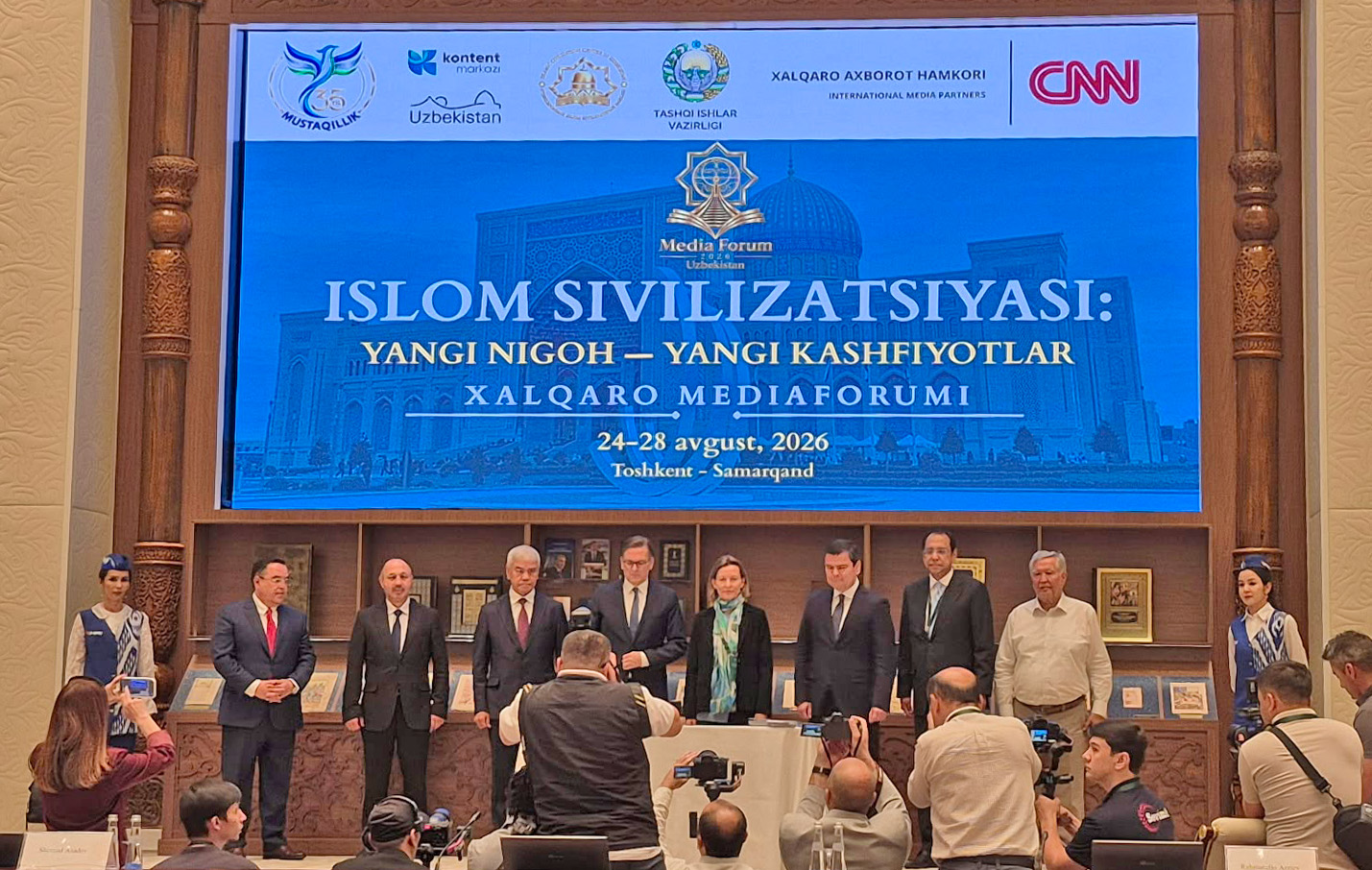
By Raza Syed (Tashkent ,Uzbekistan)
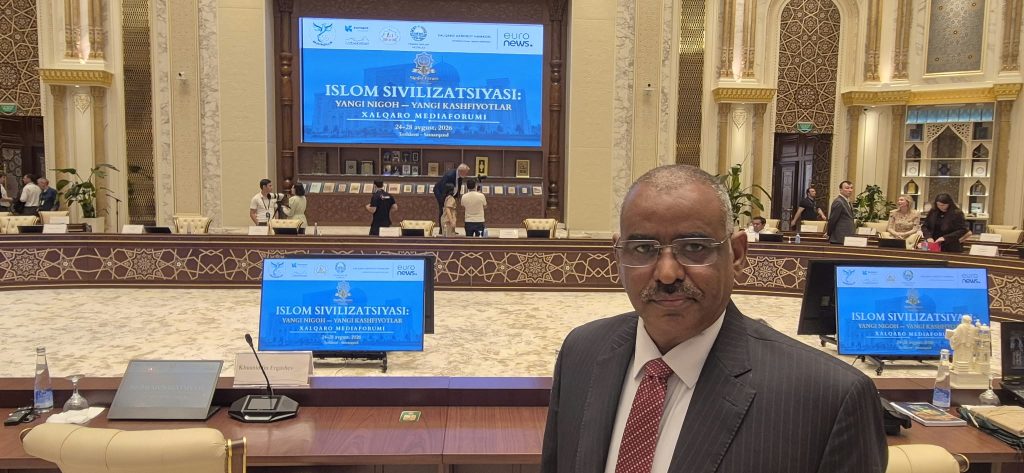
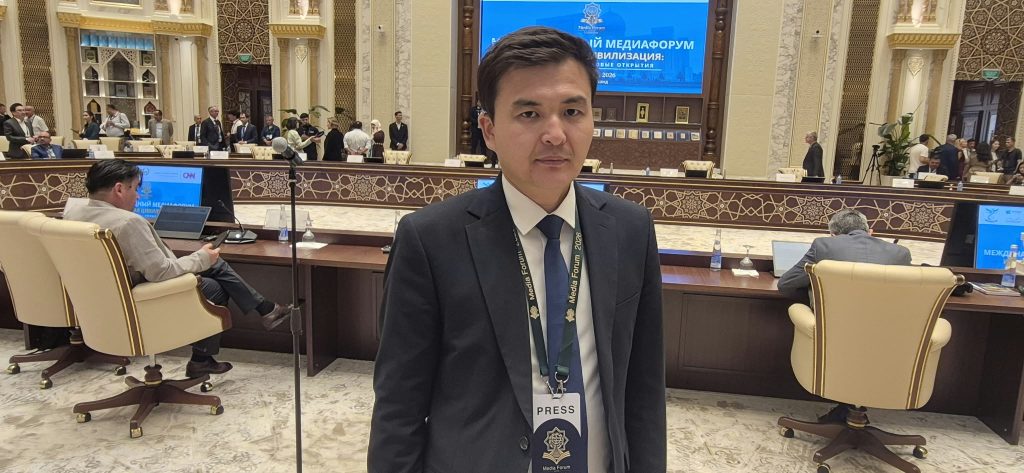
The International Media Forum 2026, organised by the Center for Islamic Civilization in Uzbekistan, comes at a significant moment for international journalism. In a world shaped by instant communication, digital platforms, artificial intelligence and competing narratives, the media has an increasingly important role in determining how countries, cultures and civilisations are understood.
The Tashkent forum brings together journalists, editors, media experts and cultural figures from around the world to explore the relationship between modern media and the rich historical and intellectual heritage of Uzbekistan and Central Asia.
International media is particularly important to this discussion because the achievements of Islamic civilisation belong not to one country or region, but to the shared intellectual heritage of humanity. From medicine and mathematics to astronomy, philosophy and architecture, scholars of the Islamic world made contributions that influenced the development of knowledge across continents. Yet many of these stories remain insufficiently known to international audiences.
The media can help address this gap. Through journalism, documentaries, photography, digital storytelling and new technologies, historical knowledge can reach audiences far beyond museums, libraries and academic institutions. Responsible international journalism can also challenge stereotypes and offer a more balanced understanding of Islamic civilization.
For younger generations, this responsibility is becoming even more important. Their understanding of history is increasingly shaped by social media, video platforms and digital content. The challenge, therefore, is not simply to preserve cultural heritage, but to tell its stories in ways that are credible, engaging and relevant to contemporary audiences.
Uzbekistan provides a particularly appropriate setting for such a discussion. The region has been home to some of the world’s most influential scholars, including Al Khwarizmi, Ibn Sina, Al Biruni, Imam Muhammad al Bukhari, Imam al Tirmidhi and Mirzo Ulugbek. Their intellectual legacy demonstrates the importance of knowledge exchange between cultures and civilisations.
Mohammad Osman, Managing Editor of The Peninsula in Qatar, described the forum as “timely and vital”, particularly given the growing influence of digital and international media in sharing knowledge with global audiences.
Speaking to The London Post, Osman said the forum provides an opportunity to highlight Uzbekistan’s historical heritage and Central Asia’s Islamic legacy while bringing journalists and experts together. He particularly highlighted Imam al Bukhari’s rigorous approach to collecting and authenticating Hadith, describing his methodology as an enduring example of careful research, source verification and intellectual discipline.
Osman said these principles have renewed relevance in the digital age, particularly as journalists confront misinformation and AI generated content. For him, the lesson is clear: accuracy, verification and responsible reporting must remain at the heart of journalism.
Mr Utrik Alimov, Editor of the Uzbekistan National News Agency, also stressed the significance of the gathering, describing it as particularly timely as Uzbekistan approaches the 35th anniversary of its independence.
“With nearly 300 media representatives from 50 countries gathered in Tashkent, this is a powerful statement of our growing role as a crossroads of civilisations,” Aliov told The London Post. He said Uzbekistan’s media environment is changing rapidly, with digital platforms creating new opportunities but also placing greater demands on journalists to maintain professional standards.
Aliov stressed that the forum should go beyond an exchange of information and encourage genuine partnerships capable of building trust between peoples. He also argued that the intellectual heritage of Samarkand and Bukhara should be viewed not simply as history, but as a living resource for contemporary storytellers.
“In this age of instant news, journalism must do more than report. It must preserve and pass on our shared cultural memory,” he said.
This broader purpose gives the Tashkent forum significance beyond its individual sessions. Its success should ultimately be measured by the partnerships, joint media projects, documentaries, professional exchanges and new international narratives that emerge from it.
At a time when misinformation, stereotypes and competing narratives can deepen divisions, international journalism has a choice. It can reinforce misunderstanding or help create greater awareness and dialogue.
The International Media Forum in Tashkent offers an opportunity to choose the latter. By bringing together the credibility of journalism, the depth of historical scholarship and the possibilities offered by modern technology, it can help present Islamic civilisation through a fresh and contemporary lens.
For international journalists attending the forum, the message is simple: come not only to report, but also to discover. Discover the untold stories, explore the intellectual legacy of the region and look beyond familiar narratives.
The real achievement of the forum will be if these stories travel beyond Tashkent and reach audiences around the world, helping a new generation understand that the history of Islamic civilisation is not merely a story of the past, but part of humanity’s continuing conversation about knowledge, culture and shared progress.
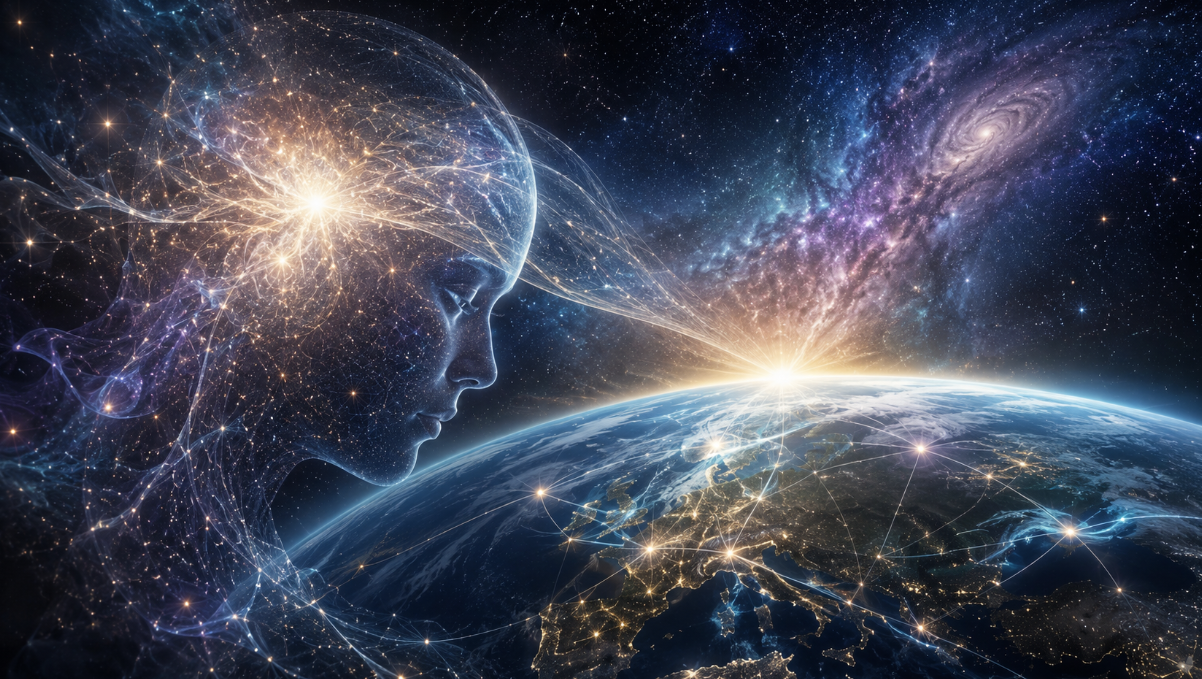
Paris (Imran Y. CHOUDHRY) :- Former Press Secretary to the President, Former Press Minister to the Embassy of Pakistan to France, Former MD, SRBC Mr. Qamar Bashir analysis : For centuries, humanity has treated the visible world as ultimate reality. A table appears solid, the human body seems physical, and mountains, oceans and buildings look independent of whoever observes them. Modern physics, however, has revealed that matter is far more mysterious than ordinary experience suggests. What appears solid consists mostly of space, while its subatomic constituents are described through fields, probabilities and wave-like behaviour.
The quantum physics has decisively challenged the old assumption that reality is simply composed of solid, separate and independently existing objects. It leaves humanity facing profound questions about observation, knowledge and existence.
Max Planck, a founder of quantum theory, reportedly spoke of a conscious and intelligent mind behind the forces sustaining matter. The statement expresses a powerful intuition: the visible universe may not be the whole of reality. What we experience as matter could be the outward manifestation of a deeper order that our senses cannot directly penetrate.
Our beliefs influence what we notice, how we interpret events, how we treat others and which possibilities we pursue. Thoughts can affect stress, behaviour, relationships and health. Change the mind, and one may not instantly change the universe, but one can certainly change one’s participation in it.
The world perceived by a human being is not identical to that perceived by every other creature. A blind person constructs spatial understanding without sight. A bat navigates largely through echolocation. Some animals detect ultraviolet or infrared wavelengths invisible to human eyes. Darkness transforms a familiar landscape, while light restores colours and shapes. The environment remains, yet every organism experiences only the portion its sensory system can receive and its nervous system can interpret.
Our perceived world is therefore a meeting between external reality and internal consciousness. We do not experience existence in its entirety; we experience a biologically filtered and mentally interpreted version of it. This recognition should produce humility. If no individual, culture or species possesses the complete picture, then differences of perception need not automatically become grounds for hatred.
In this context, the seven principles presented in The Kybalion—a modern work published in 1908 and attributed to “Three Initiates”—can be considered philosophical tools such as mentalism, correspondence, vibration, polarity, rhythm, cause and effect, and gender. These principles offer a framework for examining relationships among mind, nature and society. Their relevance lies not in pretending that ancient philosophy and quantum mechanics are identical, but in asking whether these principles can guide humanity toward harmony.
Mentalism reminds us that every human institution begins as an idea. Wars, borders, constitutions, systems of oppression and movements for liberation first take shape in consciousness. Hatred repeatedly cultivated in the mind can become discrimination and violence. Compassion, equally, can become reconciliation, justice and peace. Changing collective consciousness can consequently change political and social structures.
Correspondence—expressed through “as above, so below”—encourages us to see connections between the individual and the larger world. A society cannot expect peace while families are governed by cruelty, institutions by injustice and international relations by humiliation. The values cultivated within people eventually appear in the systems they construct.
Vibration can be interpreted metaphorically as the recognition that nothing remains completely static. Individuals, civilizations and relationships continually change. Despair should therefore never be treated as permanent, nor power as eternal. Humanity can move from hostility toward cooperation when ideas, emotions and institutions are consciously redirected.
Polarity teaches that apparent opposites may belong to a connected spectrum. Heat and cold describe degrees of temperature; light and darkness describe degrees of illumination. Political, religious and cultural conflicts are also frequently intensified by treating differences as absolute divisions. Recognizing gradations does not eliminate moral distinctions, but it creates room for dialogue and transformation.
Rhythm reminds us that life moves through recurring phases—growth and decline, activity and rest, peace and conflict. Understanding cycles helps communities avoid arrogance during prosperity and hopelessness during adversity. Wisdom lies not in denying change but in preparing for it and maintaining balance through it.
Cause and effect restores human responsibility. Thoughts alone do not guarantee outcomes, because circumstances, institutions and other people also exert influence. Yet actions have consequences. Violence generates trauma; injustice produces resentment; generosity builds trust. Harmony cannot be achieved merely through positive thinking. It requires deliberate conduct, fair institutions and accountability.
Gender, in the Hermetic sense, refers to complementary generative principles rather than a rigid scientific division between masculine intellect and feminine emotion. Modern neuroscience does not support reducing the brain’s hemispheres or human abilities to such stereotypes. The valuable lesson is complementarity: reason needs empathy, strength needs care, initiative needs receptivity, and creation requires cooperation.
Human spirituality long predates modern science and many organized religious institutions. Across civilizations, people have prayed, sought forgiveness, honoured the dead and appealed to a power greater than themselves. Different traditions have named and understood that ultimate reality differently, but their persistence reveals humanity’s enduring awareness of mystery, dependence and moral responsibility.
Ancient achievements, including the pyramids, deepen our admiration for earlier civilizations. Their magnificence still teaches an important lesson: technological modernity does not grant us a monopoly over intelligence, wisdom or imagination.
Humanity may never perceive reality exactly as it is in itself. Science continues to investigate the measurable universe, while philosophy and religion address meaning, purpose and moral direction. These paths need not destroy one another. Science can protect spirituality from superstition, and spirituality can remind science that knowledge without compassion may become destructive.
The continuing journey of human learning since The Kybalion was published in 1908 reinforces a timeless truth: harmony depends upon balance. When individuals, families, tribes, societies and nations resist destructive extremes and remain within the boundaries of patience, tolerance, perseverance, justice and compassion, conflict becomes manageable and peaceful coexistence becomes possible.
This middle way does not mean remaining neutral between justice and injustice, tolerating oppression or compromising with cruelty. It means pursuing justice without hatred, exercising power without arrogance, expressing disagreement without dehumanization and defending legitimate interests without destroying innocent human beings, animals or the natural world.
A family can escape the cycle of emotional distress, bitterness and feuds when its members restrain anger, listen to one another and refuse to cross the limits of dignity and mutual respect.
A society can reduce hunger, exclusion and instability when competition is balanced by compassion and individual freedom by collective responsibility.
Nations can avoid wars and atrocities when ambition is restrained by international law, dialogue and recognition of shared humanity.
This principle of balance is also central to religious wisdom. Islam particularly teaches wasatiyyah—the just and balanced path—and describes Muslims as a “middle community.” It discourages excess, commands justice even toward those whom one dislikes, and places mercy, patience and moderation at the centre of human conduct. Similar appeals to balance and compassion appear across the world’s spiritual traditions.
Harmony, therefore, is not passivity, weakness or the absence of disagreement. It is the disciplined ability to keep disagreement from becoming hatred, strength from tyranny, desire from greed and pain from becoming revenge.
If this consciousness is cultivated within individuals and families, it can rise through communities and institutions into national and international life. The world may then witness fewer wars, less hunger, reduced emotional suffering and greater respect for every form of life.
The deepest lesson is not that consciousness magically controls everything, but that consciousness carries immense responsibility. The pictures we hold in our minds influence the world we build together. The ultimate relevance of these principles is therefore practical: by restoring balance within ourselves, we help restore harmony in the world we collectively create.


The museum charting how humans understand the world

Sexual crimes against women, kids: 80pc of offenders are people known to victims, says Punjab IGP

Shanghai Cooperation Organisation names Lahore as its ‘Tourism and Cultural capital’


-

 Sports3 months ago
South Korea’s Yoo Useong Steps Onto the Global Strongman Stage as World Strongman Federation Professional Athlete
-

 Art & Culture1 year ago
A Survey of Mata-E-Zeest
-

 Europe News2 years ago
Chaos and unproven theories surround Tates’ release from Romania
-

 American News1 year ago
Trump expands exemptions from Canada and Mexico tariffs
-

 American News2 years ago
Trump Expels Zelensky from the White House
-

 Art & Culture1 year ago
Will Snow White be a ‘victim of its moment’? How the Disney remake became 2025’s most divisive film
-

 Pakistan News1 year ago
Comprehensive Analysis Report-The Faranian National Conference on Maritime Affairs-By Kashif Firaz Ahmed
-

 Entertainment2 years ago
Champions Trophy: Pakistan aim to defend coveted title as historic tournament kicks off today