Connect with us

Pakistan News

What we know about India’s strike on Pakistan and Pakistan-administered Kashmir

Published

on

Two weeks after a deadly militant attack on tourists in Indian-administered Kashmir, India has launched a series of strikes on sites in Pakistan and Pakistan-administered Kashmir.

The Indian defence ministry said the strikes – named “Operation Sindoor” – were part of a “commitment” to hold those responsible for the 22 April attack which left 25 Indians and one Nepali national dead “accountable”.

But Pakistan, which has denied any involvement in last month’s attack, has described the strikes as “unprovoked”, with Prime Minister Shehbaz Sharif saying the “heinous act of aggression will not go unpunished”.

Pakistan’s military says it has shot down five Indian aircraft and a drone. India has yet to respond to these claims.

Pakistani authorities say the strikes have killed eight civilians so far. India meanwhile says three civilians were killed by Pakistani shelling in Indian-administered Kashmir.

Where did India hit?

Delhi said in the early hours of Wednesday morning that nine different locations had been targeted in both Pakistan-administered Kashmir and Pakistan.

It said these sites were “terrorist infrastructure” – places where attacks were “planned and directed”.

It emphasised that it had not hit any Pakistani military facilities, saying its “actions have been focused, measured and non-escalatory in nature”.

According to Pakistan, three different areas were hit: Muzaffarabad and Kotli in Pakistan-administered Kashmir, and Bahawalpur in the Pakistani province of Punjab.

Pakistan’s Defence Minister Khawaja Asif told GeoTV that the strikes hit civilian areas, adding that India’s claim of “targeting terrorist camps” is false.

Why did India launch the attack?

The strikes come after weeks of rising tension between the nuclear-armed neighbours over the shootings in the picturesque resort town of Pahalgam.

The 22 April attack by a group of militants saw 26 people killed, with survivors saying the militants were singling out Hindu men.

It was the worst attack on civilians in the region in two decades, and sparked widespread anger in India.

Prime Minister Narendra Modi said the country would hunt the suspects “till the ends of the Earth” and that those who planned and carried it out “will be punished beyond their imagination”.

However, India has not named any group it suspects carried out the attack in Pahalgam and it remains unclear who did it.

But Indian police have alleged two of the attackers were Pakistani nationals, with Delhi accusing Pakistan of supporting militants – a charge Islamabad denies. It says it has nothing to do with the 22 April attacks.

In the two weeks since, both sides had taken tit-for-tat measures against each other – including expelling diplomats, suspending visas and closing border crossings.

But many expected it would escalate to some sort of cross-border strike – as seen after the Pulwama attacks which left 40 Indian paramilitary personnel dead in 2019.

Why is Kashmir a flashpoint between India and Pakistan?

Kashmir is claimed in full by India and Pakistan, but administered only in part by each since they were partitioned following independence from Britain in 1947.

The countries have fought two wars over it.

But more recently, it has been attacks by militants which have brought the two countries to the brink. Indian-administered Kashmir has seen an armed insurgency against Indian rule since 1989, with militants targeting security forces and civilians alike.

This was the first major attack on civilians since India revoked Article 370 that gave Kashmir semi-autonomous status in 2019.

Following the decision, the region saw protests but also witnessed militancy wane and a huge increase in the number of tourists visiting the region.

In 2016, after 19 Indian soldiers were killed in Uri, India launched “surgical strikes” across the Line of Control – the de facto border between India and Pakistan – targeting militant bases.

In 2019, the Pulwama bombing, which left 40 Indian paramilitary personnel dead, prompted airstrikes deep into Balakot – the first such action inside Pakistan since 1971 – sparking retaliatory raids and an aerial dogfight.

Neither spiralled, but the wider world remains alert to the danger of what could happen if it did. Attempts have been made by various countries and diplomats around the world to stop the current situation escalating.

Already, UN chief Antonio Guterres has called for “maximum restraint”, while US President Donald Trump said he hoped the fighting “ends very quickly”.

Taken From BBC News

https://www.bbc.com/news/articles/cj6868pdpw4o

Pakistan News

Rubio’s Gaza Signal and Pakistan’s Strategic Crossroads

Published

on

By

Paris (Imran Y. CHOUDHRY) :- Former Press Secretary to the President, Former Press Minister to the Embassy of Pakistan to France, Former MD, SRBC Mr. Qamar Bashir analysis : When US Secretary of State Marco Rubio publicly acknowledged Pakistan’s willingness to “consider being part” of the proposed International Stabilisation Force (ISF) for Gaza, he did more than offer diplomatic gratitude. He placed Pakistan—quietly but unmistakably—at the center of the most sensitive post-war experiment in the Middle East. Rubio’s words, carefully hedged yet pointed, signaled that Washington sees Pakistan not as a peripheral participant, but as a key pillar of a force designed to oversee Gaza’s transition from devastation to an uncertain peace.
For Islamabad, this moment marks a profound strategic crossroads. Participation in the ISF may promise international relevance, economic relief, and renewed favor in Washington. Yet it also carries the risk of deep domestic backlash, ideological rupture, and entanglement in a conflict where the lines between peacekeeping and coercion are dangerously blurred.
At the heart of the issue lies the mandate itself. President Donald Trump’s 20-point Gaza peace plan—endorsed by the UN Security Council—envisions an international force, composed largely of troops from Muslim-majority countries, stepping in after Israel’s withdrawal to oversee stabilisation, reconstruction, and security. Officially, the ISF is framed as a neutral mechanism to prevent chaos and facilitate recovery. In practice, however, its most controversial task is implicit: the disarmament of Hamas and other Palestinian resistance groups.
This is where Pakistan’s dilemma begins. Unlike Israel, which under the plan is required to vacate Gaza, or Western powers reluctant to deploy ground troops, Pakistan would enter Gaza with boots on the ground and credibility among Muslim populations. That very credibility is what makes Islamabad attractive to Washington—and simultaneously vulnerable at home. A Pakistani soldier confronting a Palestinian fighter will not be seen as a neutral peacekeeper by Pakistani public opinion; he will be seen, fairly or not, as enforcing a US-backed order against fellow Muslims.
Field Marshal Asim Munir, now the most powerful military figure Pakistan has seen in decades, stands at the center of this storm. Recently elevated to oversee all three armed services, granted an extension until 2030, and shielded by constitutional immunity, Munir possesses unparalleled authority to take strategic risks. His close personal rapport with President Trump—symbolized by an unprecedented White House lunch without civilian officials—has restored trust between Washington and Rawalpindi after years of strain.
But power does not eliminate consequences. It merely concentrates responsibility. Supporters of participation argue that Pakistan’s military is uniquely qualified for the mission. It is battle-hardened, experienced in counterinsurgency, and among the world’s largest contributors to UN peacekeeping operations. Financially, such missions bring dollar-denominated compensation, easing pressure on a struggling economy and reinforcing an institutional model the Pakistani military knows well. Diplomatically, participation could elevate Pakistan as a responsible global actor and secure US investment and security cooperation at a critical time.
Yet these gains are contingent—and fragile. The most glaring weakness in the ISF proposal is mandate ambiguity. Peacekeeping traditionally rests on consent, neutrality, and limited use of force. Disarmament does not. If Hamas and other resistance factions refuse to surrender weapons voluntarily—as they have already signaled—then enforcement becomes unavoidable. In such a scenario, Pakistani troops would not merely stand between factions; they would become a party to coercion.
Compounding this is the absence of reciprocal enforcement mechanisms. The peace plan offers no clarity on what happens if Israel fails to fully withdraw from designated areas or violates post-withdrawal commitments. There is no indication that the ISF would be empowered to confront Israeli forces. The result is a one-sided enforcement architecture: Palestinian groups disarmed under international supervision, while Israel operates beyond the ISF’s reach. For Pakistan, this asymmetry is politically toxic.
At home, the risks multiply. Pakistan’s Islamist parties—particularly groups with strong street power such as JUI factions and Jamaat-e-Islami—are deeply opposed to US and Israeli policies in Palestine. Even with bans, arrests, and crackdowns, their ideological reach remains intact. Any perception that Pakistani soldiers are killing or detaining Palestinians—even in Gaza, even under UN authorization—could ignite nationwide protests, destabilizing cities and overwhelming civil order.
The backlash would not be confined to religious parties. Large segments of the public, already alienated by domestic political engineering and military dominance, would frame ISF participation as another example of Pakistan’s security establishment acting without popular consent. The absence of parliamentary debate or a national consensus would magnify this perception. In a country where legitimacy increasingly comes from the street rather than the chamber, this is a perilous omission.
There is also a quieter but no less serious concern: morale within the ranks. Pakistani soldiers are drawn from a society that overwhelmingly sympathizes with the Palestinian cause. Asking them to enforce disarmament against Palestinian fighters—while Israeli forces face no comparable restraint—could strain discipline and cohesion. Militaries can obey orders, but they are not immune to moral dissonance.
Internationally, Pakistan faces the risk of strategic isolation if the mission falters. Gaza remains volatile, traumatized, and heavily armed. If the ISF encounters resistance, sustains casualties, or becomes mired in urban conflict, global enthusiasm may fade. Major powers can distance themselves; troops on the ground cannot. Pakistan could find itself trapped in an open-ended deployment with no clear exit strategy, absorbing blame while others retreat to diplomatic safety.
Yet opportunities do exist—if handled with exceptional care. Pakistan could leverage its importance to insist on strict limitations: a mandate centered on civilian protection, humanitarian access, and policing ceasefire lines, explicitly excluding forced disarmament. It could demand written guarantees on rules of engagement, funding, timelines, and collective Muslim participation to avoid unilateral exposure. Properly negotiated, participation could position Pakistan as a mediator rather than an enforcer.
But such outcomes require transparency, parliamentary involvement, and a willingness to say no if red lines are crossed. The fundamental question is not whether Pakistan can participate in the Gaza stabilisation force. It is whether it can afford to do so on the terms currently envisioned.
Without clarity, consensus, and balance, ISF participation risks becoming a strategic trap: modest diplomatic gains purchased at the cost of domestic instability, moral authority, and long-term security. Field Marshal Munir’s unprecedented power may allow him to make the decision—but it will not shield Pakistan from its consequences.
History offers a cautionary lesson. Nations that enter foreign conflicts under vague mandates often discover too late that stabilisation is easier to promise than to deliver. For Pakistan, Gaza is not merely a distant theater. It is a mirror reflecting the tension between power and legitimacy, ambition and restraint. How Islamabad responds will shape not only its role in the Middle East, but the fragile equilibrium at home.
In this moment, strategic prudence—not proximity to power—may prove the ultimate test of leadership.

Continue Reading

Pakistan News

Pakistan, Mauritius Cultural Ties Strengthened Through Dialogue between High Commissioner, Mauritius, and Executive Director Alhamra

Published

on

By

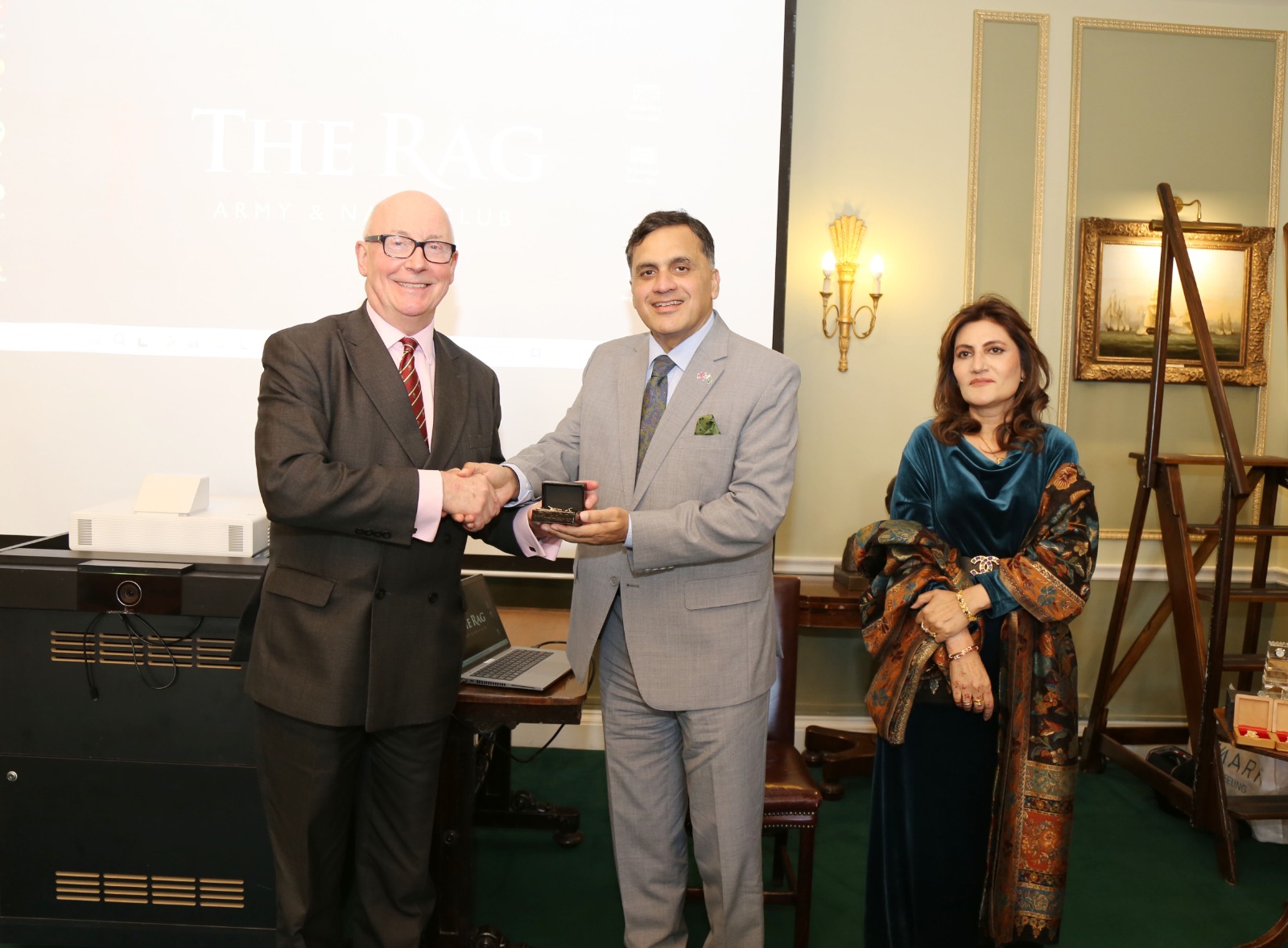
(Bilal Javaid – Bureau Chief) Lahore, December 19: The High Commissioner of the Republic of Mauritius, H.E. Munsoo Kurrimbaccus, visited the Lahore Arts Council Alhamra, Mall Road, Lahore, where he received a warm and dignified welcome. During the visit, the Honourable High Commissioner of Mauritius and Muhammad Nawaz Gondal, Executive Director, Alhamra, engaged in a comprehensive meeting focused on shared historical, cultural, literary, and artistic interests.

The discussion underscored the importance of fostering bilateral cultural relations between Pakistan and Mauritius, with a particular emphasis on collaboration in language, literature, the performing arts, and cultural exchange. Both sides acknowledged culture as a powerful bridge that connects nations beyond geography, fostering people-to-people ties and mutual understanding.

Mr. Munsoo Kurrimbaccus appreciated the richness and depth of Pakistan’s cultural and literary heritage and expressed keen interest in expanding cultural cooperation between the two countries. He praised Alhamra’s role as a leading cultural institution, describing it as an effective platform for promoting artistic dialogue and cultural diplomacy in the region.

Executive Director Alhamra Muhammad Nawaz Gondal emphasized that enhanced cultural and literary collaboration between Pakistan and Mauritius would further strengthen public relations. He reaffirmed Alhamra’s commitment to promoting international cultural engagement and shared artistic values. On the occasion, he presented a commemorative shield to the High Commissioner as a gesture of goodwill and mutual respect and paid tribute to Mauritius’s historical, cultural, and linguistic heritage.

The meeting was deemed highly constructive by both sides, with a consensus reached to explore joint cultural and literary initiatives in the future to deepen bilateral relations and foster cross-cultural appreciation.

Deputy Director Admin Syed Umair Hassan, Deputy Director of Programs Wasim Akram, and other officers were also present during the visit.

Continue Reading

Pakistan News

When Law Wears a Uniform

Published

on

By

Paris (Imran Y. CHOUDHRY) :- Former Press Secretary to the President, Former Press Minister to the Embassy of Pakistan to France, Former MD, SRBC Mr. Qamar Bashir analysis : A state does not collapse the moment tanks roll into the capital or a general announces the suspension of the constitution. History shows that the most enduring and damaging forms of authoritarianism often emerge quietly, through legal amendments, institutional rearrangements, and the gradual subordination of civilian authority to military command. Pakistan today stands at precisely such a juncture. Without a formal declaration of martial law, the country exhibits nearly every substantive characteristic by which political scientists, constitutional scholars, and international legal bodies define military rule. The façade of civilian governance remains, but the substance of power has decisively shifted.
At the heart of this transformation is the structural reconfiguration of the state itself. Across established democracies, civil–military relations rest on a clear and universally accepted principle: the military serves under civilian supremacy, operates within defined constitutional limits, and remains institutionally subordinate to elected authority. Whether in the United States, the United Kingdom, France, or even semi-authoritarian systems, military chiefs hold fixed tenures, retire on schedule, and answer to civilian defense ministers and legislatures. There exists no precedent in functioning constitutional governance for a serving army chief, paid from the civilian treasury, to hold office indefinitely or for life.
Yet Pakistan has moved dangerously close to precisely this anomaly. Through constitutional amendments passed under conditions widely perceived as coercive, the tenure of the army chief has been repeatedly extended, while public discourse has been deliberately conditioned to normalize permanence in a role that, by its nature, must be temporary. When asked about retirement, the response is not institutional humility but visible irritation, coupled with claims of higher national missions that render accountability irrelevant. In comparative constitutional terms, this is not stability; it is personalization of power.
Even more striking is the concentration of military command itself. In established systems, the separation of services—army, navy, and air force—is not a matter of tradition alone, but a safeguard against absolute control. Joint coordination exists, but supremacy does not. No single uniformed officer simultaneously dominates all branches without civilian oversight. Such consolidation is historically associated not with national defense, but with military autocracy. Pakistan’s recent constitutional restructuring, which elevates one office above all armed services, represents not administrative efficiency but a profound distortion of command balance, extending martial dominance even within the military itself.
This internal militarization has been matched by an external economic takeover. Across the world, armed forces may execute infrastructure projects during emergencies or provide logistical support for development, but they do not own, manage, or monopolize the national economy. Pakistan’s experience diverges sharply from this norm. Military-controlled entities now dominate infrastructure development, often without competitive bidding, while strategic sectors such as agriculture, logistics, and industrial development—particularly under the second phase of the China–Pakistan Economic Corridor—have been effectively absorbed into a corporatized military ecosystem.
International development models recognize Special Economic Zones as civilian-led instruments for industrial growth, foreign investment, and employment generation. Their capture by military institutions transforms them from engines of inclusive development into closed systems of rent extraction. This shift does not merely distort markets; it entrenches a new political economy in which economic power reinforces coercive authority, and civilian institutions are hollowed out from within.
Equally consequential is the erosion of judicial independence. A functioning judiciary is not defined by the existence of courts, but by their capacity to restrain power. Where judges operate under intimidation, where constitutional amendments are insulated from challenge, and where prolonged detentions persist without due process, the rule of law becomes performative rather than real. International legal doctrine is unequivocal: when courts can no longer check the executive or the military, constitutional order has collapsed in substance, regardless of its textual survival.
Parliament, too, has been reduced to form. Comparative legislative studies demonstrate that assemblies lose legitimacy when they cease to deliberate freely and instead function as instruments for retroactive legal cover. When amendments are passed not through consensus but under duress, law itself becomes a weapon rather than a restraint. In such conditions, elections do not restore democracy; they merely legitimize its absence.
Control over media completes the architecture of undeclared martial rule. Authoritarian systems rarely silence all voices; instead, they curate narratives, elevate loyal platforms, and delegitimize dissent by branding it treasonous. The role of the military spokesperson in Pakistan has evolved from institutional communication to overt political arbitration, publicly condemning one political force while sanctifying another. This is not information management; it is narrative command.
Taken together, these developments satisfy every internationally recognized criterion of martial law as defined in political theory and comparative governance. Civilian supremacy has been replaced by military dominance. Economic control has shifted from elected institutions to uniformed management. Judicial independence has been neutralized. Parliamentary authority has been subordinated. Media freedom has been constrained. Political opposition has been criminalized. The absence of a formal proclamation does not negate these realities; it merely disguises them.
History offers a sobering warning. States that normalize indefinite military rule do not achieve stability; they accumulate fragility. Institutions decay, merit collapses, economic confidence erodes, and society internalizes fear as a governing principle. Even the armed forces suffer, as blocked promotion pathways and personalized command undermine professionalism and morale. What begins as control ends as corrosion.
Pakistan today stands not at the edge of a constitutional crisis, but deep within one. The question is no longer whether martial law exists, but whether the nation can reclaim civilian sovereignty before irreversible damage is done. Democracies are not destroyed in a single night; they are dismantled piece by piece, until law itself wears a uniform and authority answers to no one.
And history is unambiguous on one final point: no state can endure indefinitely when the gun replaces the constitution as the final arbiter of power.

Continue Reading

Trending