
Pakistan News
The Mecca Defence Pact: The Threats Behind the Alliance


Paris (Imran Y. CHOUDHRY) :- Former Press Secretary to the President, Former Press Minister to the Embassy of Pakistan to France, Former MD, SRBC Mr. Qamar Bashir analysis : The Mecca Joint Defence Agreement signed by Saudi Arabia, Türkiye and Pakistan is being described as a Muslim version of NATO. Turkish Foreign Minister Hakan Fidan himself said its collective-defence clause is technically similar to NATO’s Article 5: an armed attack on one member will be treated as an attack on all. Yet most commentary has concentrated on the pact’s wording, its possible expansion and whether it is aimed at Iran or Israel. The more important question has received less attention: what threat does each signatory actually perceive?
Without answering that question, analysis of the agreement remains incomplete. Alliances do not acquire meaning merely from ceremonial signatures. Their real character is determined by the dangers their members fear, the capabilities they contribute and the circumstances in which they are prepared to act.
For Saudi Arabia, the immediate security environment is deeply paradoxical. The kingdom has long relied upon the United States, but the presence of American forces and facilities across the Gulf can also attract retaliation whenever Washington uses regional territory or infrastructure in military operations against Iran.
Tehran has repeatedly maintained that its quarrel is not with Gulf societies as such, but with military threats launched from or supported through their territories. Whether one accepts Iran’s justification or not, the underlying dilemma is real: foreign protection can simultaneously become a source of exposure.
This raises a difficult question. If foreign bases had not facilitated attacks against Iran, would Tehran have attacked Gulf countries on the same scale? The answer cannot be proven, but the question exposes Saudi Arabia’s strategic vulnerability. Riyadh wants protection without remaining permanently hostage to decisions made by an external guarantor.
Threats from the Houthis in Yemen and Iran-aligned armed groups in Iraq remain serious, particularly for oil facilities, desalination plants, shipping and civilian infrastructure. Nevertheless, Saudi Arabia has spent heavily on modern aircraft, missiles, surveillance systems and air defence. These dangers alone do not fully explain the need for an Article 5-style pact with Türkiye and nuclear-armed Pakistan.
The wider concern is Israel’s expanding military reach and the fear that no regional state can assume it will remain permanently outside Israeli calculations. The “Greater Israel” project is not merely a slogan invented by Israel’s critics. It is a documented ideological and political current rooted in expansionist interpretations of biblical territory, including the most extreme vision of land stretching from the Nile to the Euphrates, and in revisionist Zionist ideas of sovereignty on both sides of the Jordan River.
Israel’s wars and military operations across Gaza, Lebanon, Syria and elsewhere have intensified regional fears that its use of force and territorial ambitions are becoming geographically unconstrained. Because the most expansive interpretation of Greater Israel encompasses territory belonging to several Arab states, including Saudi Arabia, Riyadh has legitimate reasons to treat this ideology and Israel’s growing regional reach as a long-term strategic threat.
The Mecca agreement therefore creates strategic depth, reduces Saudi Arabia’s exclusive dependence on Washington and strengthens the kingdom’s leadership position in the Muslim world.
Türkiye enters the pact with a different threat map. It possesses NATO’s second-largest army, an increasingly sophisticated defence industry, formidable drone capabilities, warship and helicopter production, and substantial operational experience in Syria, Iraq and the eastern Mediterranean.
Kurdish militancy and instability along Türkiye’s southern borders remain persistent threats, but Ankara is largely capable of managing these challenges without Pakistani or Saudi military intervention.
The more consequential concern is Israel. Turkish and Israeli rhetoric has become increasingly hostile, while their strategic interests collide in Syria, Gaza and the broader eastern Mediterranean. Türkiye’s conventional size gives it considerable strength, but Israel is widely understood to possess nuclear weapons, while Türkiye does not. This creates a dangerous asymmetry at the highest level of escalation.
Pakistan’s participation therefore adds deterrent weight, but it is essential not to overstate what has formally been agreed. The published language does not establish an explicit Pakistani nuclear umbrella over Türkiye or Saudi Arabia. Nor does it automatically commit Islamabad to nuclear retaliation.
Its value at this stage lies in strategic ambiguity. Any adversary contemplating extreme escalation must now consider the possibility of a broader response involving a nuclear-armed partner. That uncertainty itself can reinforce deterrence, provided consultation mechanisms, command arrangements and red lines are eventually clarified.
Pakistan’s principal state-based threat remains India. Its other challenges—including attacks linked to the Pakistani Taliban, militancy operating from Afghan territory and insurgency in Balochistan—are grave but fall mainly within the domain of counterterrorism and internal security.
Islamabad has also alleged external support for certain militant networks, including from India and Israel other hostile actors, therefore the possibility of hybrid warfare designed to weaken Pakistan cannot be ignored.
The real test for the pact would come during a future India-Pakistan war. Saudi Arabia enjoys extensive economic and political relations with India, while Türkiye also has interests that extend beyond its partnership with Islamabad. Would Riyadh provide intelligence, logistics, financing, air defence or diplomatic support? Would it risk its relationship with New Delhi?
The treaty’s collective-defence formula is powerful, but it does not necessarily mean that every member must respond identically or automatically declare war. Even NATO’s Article 5 requires each ally to take such action as it considers necessary. The Mecca pact’s credibility will similarly depend on agreed procedures, operational planning, military integration and, above all, political will.
Nor should the alliance be framed as an anti-Iranian “Sunni bloc.” That description is analytically shallow and politically dangerous. It imports a sectarian narrative into an agreement whose signatories explicitly maintain that it is not directed against Iran or any other particular country.
Western and regional media extensively are using the Sunni label as convenient shorthand, but repeating it can deepen the very divisions that have repeatedly weakened the Muslim world. It risks presenting Sunni and Shia states as natural enemies, even though they share geography, economic interests, religious bonds and responsibility for regional stability.
Iran has demonstrated formidable missile, drone and asymmetric capabilities and has proven ability to impose severe costs on the combined military might of both the United States and Israel and their alliance in the Middle East and elsewhere in the entire world.
A confrontation between Iran and the combined forces of Pakistan, Türkiye and Saudi Arabia would devastate the region, rupture trade and energy routes, inflame sectarian tensions and serve none of the four countries.
The rational objective of the Mecca alliance should therefore be deterrence, collective security and strategic autonomy—not the creation of another front in the Iran war.
The wiser long-term course is to keep the pact open and eventually build a structured security dialogue with Iran. Immediate Iranian membership may be politically unrealistic while war and mistrust persist, but inclusion should remain a strategic objective.
Egypt and other regional countries could also participate in a broader security architecture based on non-aggression, collective consultation, protected shipping lanes, economic connectivity and respect for sovereignty.
The three signatories must also wage an intelligent information campaign. Through official statements, diplomatic outreach, legacy media, social platforms and other forms of communication, they should consistently reject the description of the agreement as a “Sunni NATO.”
They should explain that the pact is intended to protect its members from aggression regardless of the aggressor’s religious, sectarian or national identity. It must not be allowed to become an instrument for turning Muslim countries against one another.
The Mecca agreement will become historic only if it does more than redistribute fear. Properly developed, it can reduce dependence on outside powers, deter Israeli or other aggression, give Pakistan additional diplomatic weight and create the nucleus of an inclusive regional security system.
Mishandled as a sectarian coalition, however, it could produce precisely the confrontation it claims to prevent. Its success will therefore be measured not by how many enemies it names, but by how many wars it prevents.

Pakistan News
New Chapter for Dragon Boating in Punjab and Khyber Pakhtunkhwa Provincial associations officially set up with sights locked on national competitions and international representation.
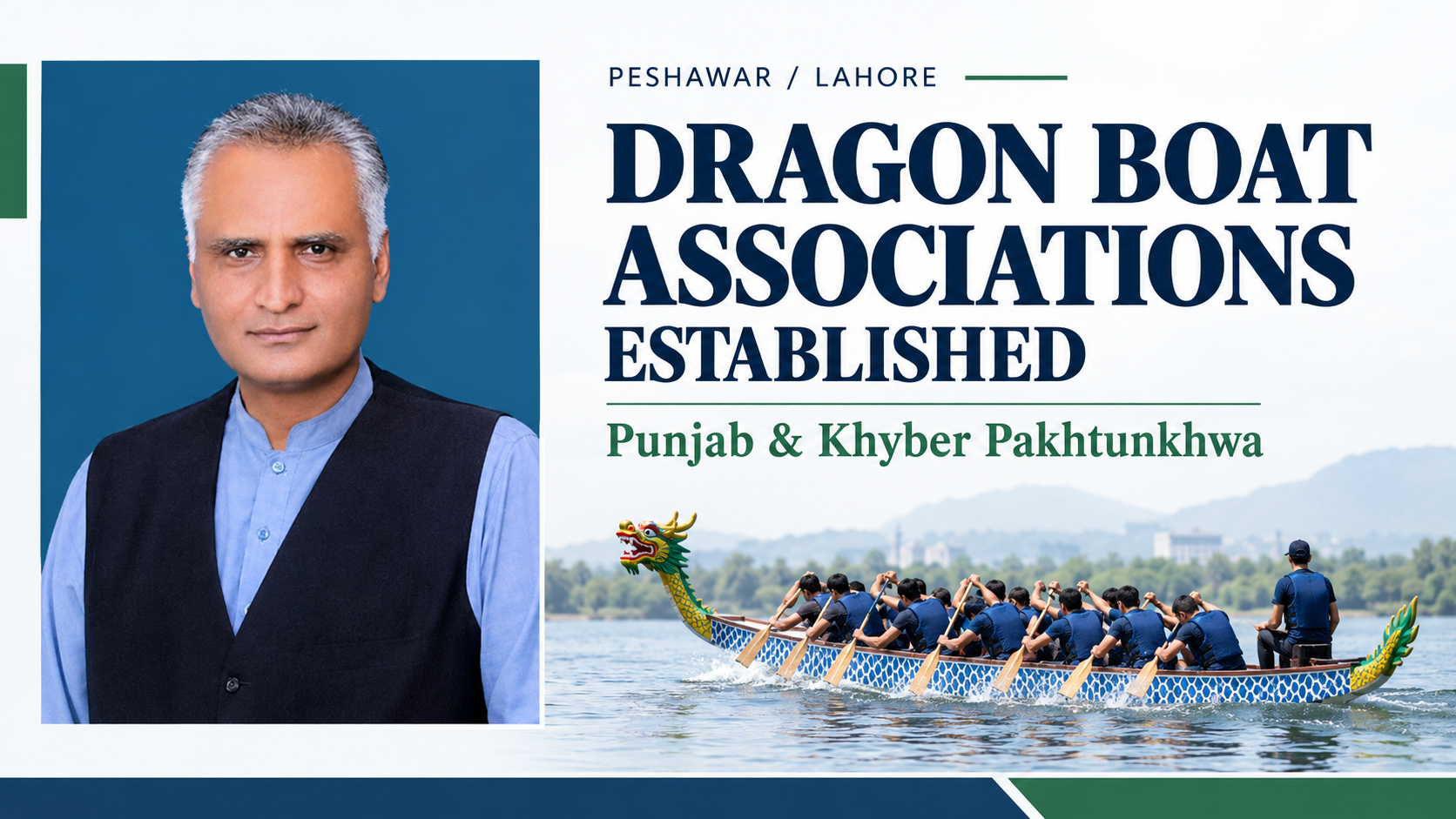
Dragon Boat Associations Established in Punjab and Khyber Pakhtunkhwa
PSHAWAR/LAHORE: Dragon boat associations have been established in Punjab and Khyber Pakhtunkhwa, marking a step towards organising and promoting the sport across Pakistan.
Prominent political and social figure Ameer Bahadur Khan Hoti will serve as president of the Punjab Dragon Boat Association (PDBA), while a notification has been issued confirming the election of former bureaucrat Javed Marwat as president of the Khyber Pakhtunkhwa Dragon Boat Association (KPDBA). At a meeting in Lahore, prominent sports journalist Muhammad Yousuf was elected secretary general of the Punjab association. Uzma Zaidi will serve as senior vice president and Naveed Akhtar Malik as treasurer.
At a separate meeting in Peshawar, Javed Marwat, who previously held several senior administrative positions in the province, was unanimously elected president of the Khyber Pakhtunkhwa association, while renowned sports organiser Naeem Gul was elected secretary general. Shamim Akhtar Jadoon will serve as senior vice president, Junaid Khan vice president and Bilal Aslam as treasurer. Newly elected Punjab association president Ameer Bahadur Khan Hoti said Pakistan’s first dragon boat festival and competitions on the Kabul River had opened new avenues for the sport’s development. He said the enthusiasm shown by participants and the sport’s promising prospects had highlighted the need to establish a Pakistan Dragon Boat Federation to coordinate training, organise competitions and support athletes. Dragon boat associations would be established in all four provinces and the federal capital, Islamabad, before the formal announcement of the national federation, he added.
Newly elected Khyber Pakhtunkhwa association president Javed Marwat said efforts would focus on introducing the sport at the provincial level and providing athletes with opportunities to compete nationally and demonstrate their abilities. Teams would also be sent to represent Pakistan in international competitions. He said the sport would help strengthen people-to-people exchanges and further promote Pakistan-China friendship. Marwat expressed confidence that dragon boat racing would soon gain popularity throughout Pakistan.
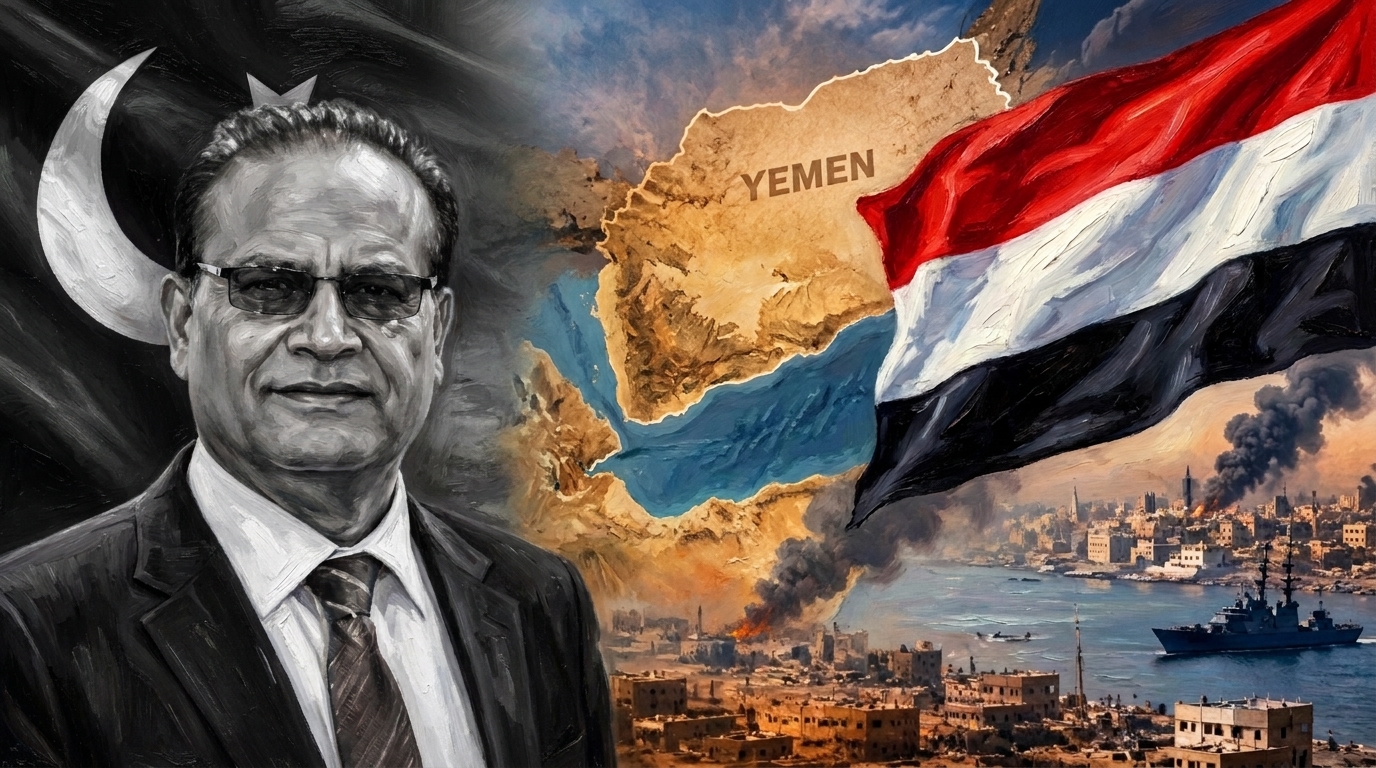
Paris (Imran Y. CHOUDHRY) :- Former Press Secretary to the President, Former Press Minister to the Embassy of Pakistan to France, Former MD, SRBC Mr. Qamar Bashir analysis : Pakistan’s military commitment to Saudi Arabia raises a question that cannot be answered simply by identifying where its soldiers are stationed. Modern warfare allows forces to attack through aircraft, missiles, drones and targeting support without sending infantry across a border. The decisive issue is whether Pakistani personnel and capabilities will participate in hostilities against Yemen’s Houthis—and what consequences could follow.
Scott Ritter, renowned American podcaster, military and geopolitical analyst captures the central danger: Saudi Arabia could obtain through collective defence the Pakistani involvement in Yemen that Islamabad previously resisted. An initially limited commitment could expand through casualties, retaliation and demands for reinforcement, leaving Pakistan responsible for a war whose objectives it does not control.
CNN reported on October 7 that Pakistani troops were already stationed in Saudi Arabia. In the interview, Lieutenant General Ahmed Sharif Chaudhry, director general of Inter-Services Public Relations, declined to disclose their numbers or capabilities. Asked about operations across the Yemeni border, he invoked military confidentiality, explaining that participating countries do not publicly disclose how and where they will employ their forces. His response offered no categorical exclusion of ground operations or offensive action inside Yemen, even as he described Pakistani involvement as defensive.
That distinction matters. Operational secrecy may protect military personnel, but it also leaves the public without clear answers about the mission’s boundaries. The description “defensive” cannot establish those boundaries by itself. Governments routinely invoke defence to justify attacks beyond their territory; the relevant questions concern what forces actually do, whom they target and under whose authority.
Pakistani forces operating from Saudi territory could potentially support or conduct attacks inside Yemen without deploying infantry there. Air operations and targeting assistance could carry substantial consequences. If Pakistani personnel participate in attacks against Houthi positions, Ansarullah could regard Pakistan as belligerent. Tehran could interpret the same activity as participation in a campaign against Iranian regional interests.
The Makkah Joint Defence Agreement, signed by Saudi Arabia, Pakistan and Türkiye on August 7, 2026, reportedly treats an attack against one member as an attack against all three. Its deterrent promise is substantial, but so is the danger of importing one member’s confrontation into the security calculations of the others.
An October 5 statement published by Türkiye’s Foreign Ministry committed the partners to implement collective defence arrangements and rapidly deploy agreed military forces and capabilities to Saudi Arabia, subject to national legislation. Türkiye therefore shares the deployment commitment. However, the evidence reviewed does not establish a Turkish ground combat commitment against the Houthis or an equal distribution of operational risks.
For Islamabad, the unanswered questions are fundamental. Who authorizes Pakistani involvement in cross-border attacks? Can Pakistan refuse a particular operation? Who finances a prolonged deployment, and what conditions permit withdrawal? Confidential operational details need not be published to explain the political mandate governing the use of force.
Pakistan brings potential strengths to the alliance: experienced personnel, established military institutions and longstanding cooperation with Riyadh. Saudi infrastructure and financing could support a substantial deployment. Islamabad’s relationships with both Riyadh and Tehran might also create diplomatic opportunities, provided military involvement does not undermine its credibility as an intermediary.
Yet those strengths do not resolve the weaknesses of an extended campaign. Destroying particular weapons or positions is different from ending an adversary’s ability and determination to fight. Dispersed forces, local networks and adaptation can frustrate superior firepower. Tactical gains could therefore coexist with an expanding mission and an elusive political settlement.
Ritter’s warning is strongest when understood in these terms. Predicting inevitable Pakistani defeat is less useful than asking what victory would require. Protecting defined facilities offers measurable objectives. Permanently eliminating the Houthi threat could entail commitments far beyond what Pakistan initially intended—and costs that additional military capability cannot necessarily overcome.
Saudi financial assistance complicates Islamabad’s freedom of choice. The State Bank of Pakistan confirmed that a $3 billion Saudi deposit maturing in December 2025 was extended for another year. Such support gives Pakistan a substantial interest in maintaining Saudi confidence.
Saudi’s financial influence does not require an explicit threat. A government facing external financing pressures may find it difficult to reject security requests from an important creditor. The danger is that short-term economic reassurance encourages military obligations carrying much greater long-term costs.
Iran introduces a further risk. Pakistani attacks against an Iranian-supported movement could damage relations with a neighbouring country and generate security pressures closer to home. The Houthis also possess their own Yemeni objectives, and attacking them is not automatically equivalent to attacking Iran. Political escalation, however, can advance through perceptions and retaliation before governments agree on legal distinctions.
International law offers no reliable assurance that this confrontation would remain contained. Legal obligations persist, but their enforcement is uneven, and states may invoke self-defence while pursuing military objectives beyond their borders. Pakistan therefore cannot assume that legal distinctions between defending Saudi territory and attacking Houthi positions would restrain retaliation. If Tehran perceives Pakistani operations as threatening its interests, the danger would turn on strategic calculations, perceived threats and the risk of escalation—not simply on competing interpretations of the UN Charter. Shared religion and geographical proximity would offer no dependable protection against that outcome.
Pakistan’s domestic divisions make a widening conflict especially consequential. The supporters of imprisoned former prime minister Imran Khan began marching from Khyber Pakhtunkhwa toward Islamabad on October 4, demanding his release, hospital treatment and family access. An overseas campaign would impose additional demands on resources and political legitimacy amid an already polarized environment.
Parliament’s April 2015 resolution remains relevant. It supported neutrality in Yemen alongside solidarity against threats to Saudi territorial integrity and the holy sites, while urging diplomacy through the United Nations and Organisation of Islamic Cooperation. That distinction deserves renewed parliamentary examination before military commitments overtake political debate.
Pakistan, Saudi Arabia and Türkiye should pursue an emergency OIC initiative linked to UN diplomacy, involving Iran and meaningful Yemeni participation. Reciprocal de-escalation, civilian protection and humanitarian access should take priority. Their collective influence should also sustain action for Palestinian rights rather than dissipate through another prolonged regional confrontation.
The Makkah Pact’s credibility will depend on whether it improves security. Secrecy about military methods cannot replace clarity about political objectives. Before Pakistan’s commitment deepens, its leaders must explain what they are defending, how far that obligation extends and how they intend to prevent it from becoming an open-ended war.
Pakistan News
Pakistan Reaffirms Commitment to Multilateralism, Peace and International Cooperation at the Executive Board of UNESCO
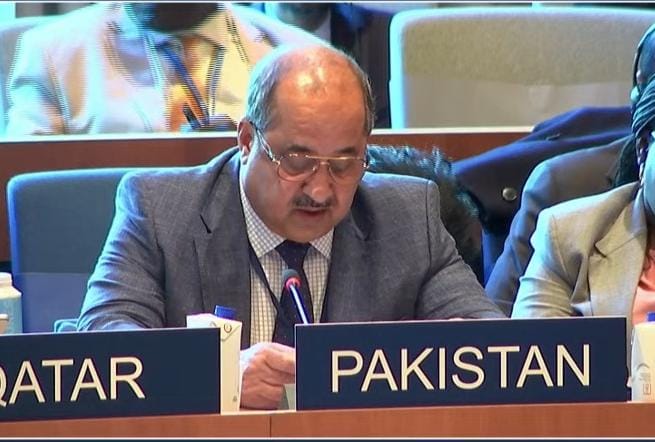
Paris ( Imran Y. CHOUDHRY):- Advisor to the Prime Minister of Pakistan and Representative of Pakistan to UNESCO, Syed Tauqeer Hussain Shah, delivered Pakistan’s national statement at the 225th Session of the UNESCO Executive Board in Paris, France, reaffirming its steadfast commitment to multilateralism, international cooperation and the promotion of peace through dialogue and mutual understanding.
In his statement,
- Underscored Pakistan’s firm support for multilateral institutions, South-South cooperation and collaborative efforts to address global challenges, particularly those confronting developing countries;
- Highlighted the urgent need to protect human life, educational institutions and cultural heritage amid conflicts and crisis, especially in Gaza;
-Called for an international action plan to confront the challenge of out-of-school children;
- Stressed the importance of equitable access to scientific knowledge, international scientific collaboration and reducing technological inequalities;
-Underlined the need to combat racism, misogyny, Islamophobia, disinformation and hate speech, while encouraging responsible and ethical governance of artificial intelligence and emerging technologies; and
- Expressed support for institutional reform of UNESCO to enhance its effectiveness and impact worldwide.


The Story of Two Elections

Light of Islam Is Warming the American Souls

New Chapter for Dragon Boating in Punjab and Khyber Pakhtunkhwa Provincial associations officially set up with sights locked on national competitions and international representation.
New Chapter for Dragon Boating in Punjab and Khyber Pakhtunkhwa Provincial associations officially set up with sights locked on national competitions and international representation.

South Korea’s Yoo Useong Steps Onto the Global Strongman Stage as World Strongman Federation Professional Athlete

A Survey of Mata-E-Zeest


-
 Pakistan News4 days ago
New Chapter for Dragon Boating in Punjab and Khyber Pakhtunkhwa Provincial associations officially set up with sights locked on national competitions and international representation.
-
 Sports4 months ago
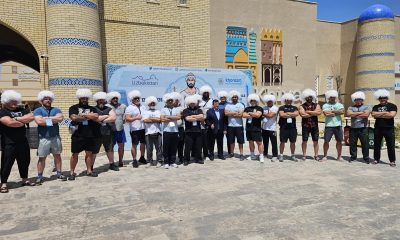
South Korea’s Yoo Useong Steps Onto the Global Strongman Stage as World Strongman Federation Professional Athlete
-
 Art & Culture1 year ago
A Survey of Mata-E-Zeest
-

 Europe News2 years ago
Chaos and unproven theories surround Tates’ release from Romania
-

 American News2 years ago
Trump expands exemptions from Canada and Mexico tariffs
-

 Art & Culture2 years ago
Will Snow White be a ‘victim of its moment’? How the Disney remake became 2025’s most divisive film
-

 American News2 years ago
Trump Expels Zelensky from the White House
-

 Entertainment2 years ago
Champions Trophy: Pakistan aim to defend coveted title as historic tournament kicks off today