
American News
S Korea announces lowering of tariffs as part of new US trade deal


The US and South Korea have reached a broad trade deal, both countries have said following talks between their leaders.
South Korea’s presidential aide, Kim Yong-beom, said the two sides will reduce reciprocal tariffs from 25% to 15%, as was agreed earlier this year.
South Korea will also invest $350bn in the US, including $200bn in cash investment and $150bn in shipbuilding, Kim said.
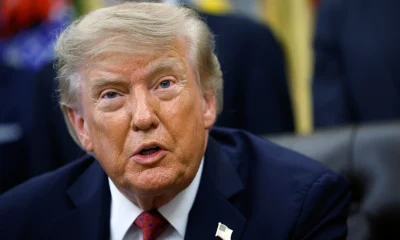
US President Donald Trump, who is currently on a week-long trip in Asia, said the deal was “pretty much finalised” at a dinner following the discussions, which lasted almost two hours. He did not give further details.
“We had a tremendous meeting today with South Korea”, Trump said of his discussions with South Korean President Lee Jae Myung, adding that “a lot was determined”.
“We discussed some other things to do with national security et cetera. And I think we came to a conclusion on a lot of very important items.”
Both sides had played down the prospect of a breakthrough ahead of Wednesday’s talks – disappointing many in South Korea’s electronics, chip and auto industries, which had been hoping for some clarity amidst the tariff chaos.
Trump had slapped a tariff rate on Seoul of 25% earlier this year – which Lee managed to negotiate down to 15%, after Seoul said it would invest $350bn in the US and buy $100bn worth of liquified natural gas.
But the White House later increase its demands as part of the trade talks, with Trump pushing for cash investments in the US.
Both countries have historically been key allies – but tensions spiked after hundreds of South Koreans were detained in an immigration raid in the US last month.
Trump will next meet his Chinese counterpart Xi Jinping in on Thursday on the sidelines of a summit of the Asia-Pacific Economic Cooperation (Apec) which is taking place in Gyeongju.
China’s foreign ministry has confirmed the meeting, which will take place in the city of Busan on Thursday, a short flight away from Gyeongju.
The US president said on Wednesday that he was “looking forward” to the meeting.
“We’ve been talking a lot over the last month and I think we’re going to have something that’s gonna be very, very satisfactory to China and to us.”
This will be the two leaders’ first face to face meeting since Trump assumed office in 2025 and imposed tariffs on every country in the world.
Addressing a group of CEOs in Gyeongju on Wednesday, Trump said that he believes the US is “going to have a deal” with China and it will be “a good deal for both”.
He also praised the Apec countries for making the global trading system, which he said had been “broken” and “in urgent need of reform”, fairer.
“Economic security is national security,” Trump says. “That’s for South Korea, that’s for any country.”
Golden crowns and grand orders
Ahead of Wednesday’s talks with President Lee, Trump had been greeted by an honour guard and gifts that included a golden crown.
“I’d like to wear it right now,” Trump had said of the crown.
He also received the Grand Order of Mugunghwa, South Korea’s highest decoration.
He’s the first US president to receive the award, which was given “in recognition of his contribution to peace on the Korean Peninsula”, the South Korean presidential office said.
Both leaders took part in a working lunch – which was followed by a private meeting in the afternoon.

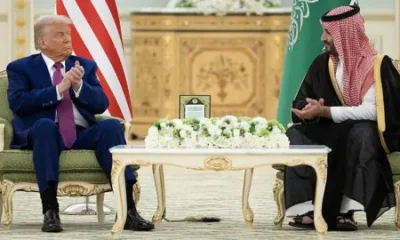





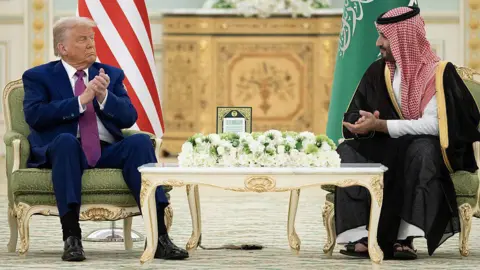
Paris (Imran Y. CHOUDHRY) :- Former Press Secretary to the President, Former Press Minister to the Embassy of Pakistan to France, Former MD, SRBC Mr. Qamar Bashir analysis : Friendship is tested not during ceremonies, state dinners or commercial negotiations, but in moments of danger. When a country faces missiles, drones and attacks on its critical infrastructure, it discovers whether its powerful partner’s security promises carry real weight or are merely diplomatic language.
The contrasting treatment of Israel and Saudi Arabia by the United States has now brought this uncomfortable reality into sharp focus. Washington has repeatedly mobilized its intelligence, naval, air and missile-defence capabilities to protect Israel. Yet when Saudi Arabia requested direct American military assistance against escalating Houthi attacks, President Donald Trump declined to open another front and limited American support largely to intelligence and targeting assistance.
Neither Israel nor Saudi Arabia has a NATO-style mutual-defence treaty with the United States. In practice, however, Israel enjoys something approaching an operational American defence guarantee, while Saudi Arabia remains principally a customer, investor and regional partner whose protection is conditional.
For decades, Israel has received approximately $3.8 billion annually under the ten-year US-Israel security assistance memorandum signed in 2016. That agreement provides $33 billion in Foreign Military Financing and $5 billion for missile defence through fiscal year 2028. After the October 7, 2023, attacks, additional emergency appropriations, weapons transfers and regional US military deployments expanded American support considerably.
This relationship goes far beyond selling weapons. The United States shares high-level intelligence with Israel, replenishes its military stocks, deploys forces to the region and has directly helped intercept missiles and drones aimed at Israeli territory. Regardless of the economic or military cost, Washington has demonstrated that it is prepared to participate actively in Israel’s defence.
Saudi Arabia’s relationship with Washington is fundamentally different. The kingdom receives negligible conventional foreign aid because it is a wealthy country. Instead, it purchases American weapons, finances military cooperation and hosts or supports US strategic infrastructure. Its importance rests on energy, investment, arms contracts, intelligence cooperation and its geographical position—not on an unconditional promise that American forces will defend it.
Saudi Arabia pledged hundreds of billions of dollars in investments, purchases and commercial cooperation with the United States. The White House announced a $600 billion Saudi commitment in May 2025, including a defence-sales framework valued at nearly $142 billion. These headline figures, however, combine investments, procurement plans, memoranda and long-term commercial intentions; they should not all be interpreted as money already transferred into the American economy.
Nevertheless, the scale of Saudi economic engagement is enormous. Riyadh has purchased American aircraft, air-defence systems, missiles, training and technical support while investing in American technology, energy and infrastructure. Yet when the kingdom faced a direct security emergency, commercial importance did not translate into the level of military protection routinely extended to Israel.
The recent Houthi escalation has demonstrated that distinction. Missile and drone attacks have threatened Riyadh, Yanbu and Saudi energy infrastructure. Saudi authorities reported intercepting an attempted ballistic-missile attack on the capital, while the Houthis claimed strikes against several sensitive and petroleum-related targets threatening to Saudi cities and oil-export capacity.
But when Saudi Arabia, which has done much more than Israel has ever done for the USA, sought direct US military action against the Houthis, Trump refused point blank to undertake offensive strikes. President even when attacks unsettled Saudi and other Gulf markets.
Whereas, while defending Israel, Trump is ready to sacrifice its own soldiers and prestige and billions of billions of dollars of expensive military hardware, but when it comes to helping Saudi Arabia against legitimate targets, it started giving lame excuses such as it does not want to become trapped in another prolonged Yemen campaign, risk greater confrontation with Iran or expend scarce interceptors and precision weapons indefinitely. But from Riyadh’s perspective, the refusal exposes the limitations of decades of dependence upon the American security umbrella.
Saudi Arabia is suffering from a war it neither initiated nor initially wanted. Disruption around the Strait of Hormuz threatens its eastern export routes, while Houthi pressure jeopardizes infrastructure and navigation toward the Red Sea. Any sustained interruption of the East-West Pipeline or ports serving those routes would damage Saudi revenue, increase global oil prices and undermine the kingdom’s ambitious development programme.
The kingdom must now ask a difficult question: were American bases and deployments in the Gulf established primarily to protect Gulf states, or to protect wider US interests—including Israel, shipping routes and Washington’s regional military position? The evidence suggests that these facilities do not constitute an automatic guarantee that America will fight whenever a host government comes under attack.
There is an immense possibility that the United States or Israel could have secretly enabled Houthi attacks in order to weaken Saudi Arabia, which is the signature modus of operandi of Israel to fracture and weaken any Muslim country in the middle east which now or in distant future could threaten implementation of Israel’s greater Israel project.
Riyadh must therefore avoid falling into an escalation trap. A widening confrontation with the Houthis would impose greater costs upon Saudi cities, infrastructure and development than upon a movement experienced in surviving air campaigns and operating from difficult terrain. A simultaneous confrontation with Iran would be more dangerous still.
The United States has shown Saudi Arabia the precise limits of their relationship. Washington will sell weapons, provide intelligence and cooperate when American interests coincide with Saudi needs. It may not, however, fight Saudi Arabia’s wars.
That realization should not lead Riyadh toward reckless confrontation. It should lead to strategic independence. If even the world’s greatest military power cannot impose a sustainable solution through force, Saudi Arabia should not sacrifice its economy and national transformation by attempting the same. Its strongest response is to escape the trap, mend regional fences and prevent other powers from deciding when, where and against whom the kingdom must fight.
The most appropriate immediate initiative would be for the Organisation of Islamic Cooperation to convene an emergency summit, bringing together Iran, Saudi Arabia, the GCC states, Yemen’s internationally recognized government, representatives of the Houthis and other influential Muslim countries.
The OIC should provide a neutral platform on which every party can state its security concerns, political objectives and conditions for ending hostilities. Through mediation, compromise and reciprocal concessions, the participants could formulate a practical roadmap for de-escalation.
Whenever two or more Muslim countries fight, the result is not merely an individual national loss but a collective loss for the entire Muslim ummah. Even if one side gains more in a negotiated settlement, its gains remain within the Muslim world; continued warfare, by contrast, destroys Muslim lives, economies and strategic strength for the benefit of outside powers.
The Muslim countries must therefore stop exhausting one another and redirect their combined diplomatic, economic and political influence toward securing justice for the Palestinian people, including a viable two-state solution that enables Palestinians to live in freedom, security and dignity.
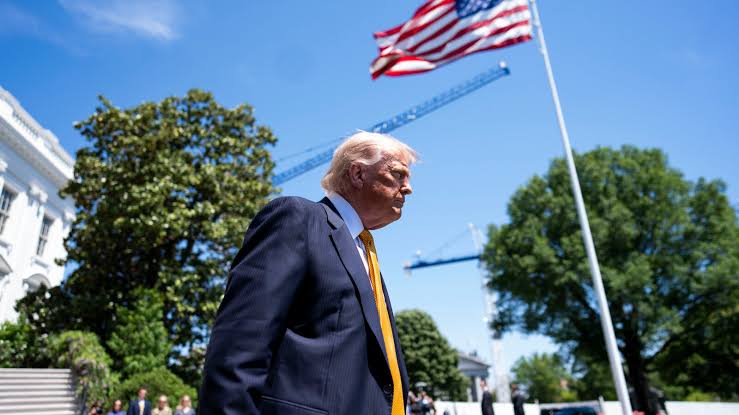
Paris (Imran Y. CHOUDHRY) :- Former Press Secretary to the President, Former Press Minister to the Embassy of Pakistan to France, Former MD, SRBC Mr. Qamar Bashir analysis : The decision to allow Iranian President Masoud Pezeshkian and Foreign Minister Abbas Araghchi to attend the United Nations General Assembly comes at an uncomfortable moment for President Donald Trump. More than 200 days into the war, Iran remains an adversary Washington must confront diplomatically as well as militarily. Meanwhile, Americans face higher fuel prices, mounting military expenditure, and growing doubts about the administration’s strategy. The Iranian delegation’s arrival in New York will place those contradictions on an international stage.
The political contrast is striking. A government subjected to American military pressure will send its president and foreign minister to speak before the world from American soil. Their presence cannot establish surrender by either side, but it challenges any expectation that military force would quickly remove Iran from the diplomatic equation. Tehran remains a participant whose decisions matter to ending the conflict. That reality gives the visit significance beyond the issuing of travel documents.
The decision can therefore be read as preserving room for political engagement while military pressure has failed to produce an enduring settlement. It does, however, leave open a channel at a time when the costs of continuing the war are becoming harder to separate from American domestic life. The question is whether the administration will use that opening to pursue an achievable outcome or continue relying on promises of eventual success.
For American households, the war’s consequences are increasingly tangible. On September 17, the national gasoline average reached $4.44 per gallon, nearly 50 percent above its pre-war level. Diesel reached a record $6.40. These figures translate geopolitical conflict into the price of commuting, delivering goods, operating machinery, and running a business. Families do not need a strategic briefing to understand the difference between an assurance that events are under control and a fuel bill that keeps rising.
Diesel makes the burden especially pervasive. Its cost enters trucking, agriculture, construction, and other activities that sustain everyday commerce. Businesses may absorb part of the increase, but others pass it through to customers. Energy specialists have also warned of higher heating expenses. The pressure intended to influence events overseas consequently reaches American kitchens, workplaces, and household budgets. Other supply disruptions contribute to these prices, but the Iran war is an important part of the economic strain.
That strain provides a direct connection between foreign policy and public frustration. A prolonged war becomes politically harder to sustain when citizens cannot identify either its destination or its benefits. Initial uncertainty can turn into opposition as costs accumulate. The administration must explain why continued sacrifice will produce a better outcome, rather than simply ask the public to wait. Its difficulty is that recent polling records substantial doubt about the existence of a clear strategy.
The September Fox News survey found that 71 percent of registered voters believed the administration lacked a clear plan to end the conflict. That included 43 percent of Republicans and 83 percent of independents. Sixty percent considered the decision to take military action wrong. These results cannot be dismissed as opposition confined to Democrats. They indicate that dissatisfaction reaches voters whose confidence the administration needs, including within its own political coalition.
With the midterms approaching, those doubts carry obvious consequences. Trump’s overall approval stood at 39 percent in the same survey. Electoral outcomes remain uncertain, and national polling cannot determine control of either chamber. Nevertheless, Republicans face the task of defending a government whose handling of the war has attracted broad criticism. Higher living costs make that task more difficult because they bring the consequences of distant decisions into the daily experience of voters.
The military picture adds another layer. Photographs supplied to CBS News by active service members revealed damaged aircraft, buildings, vehicles, and equipment at American positions in Kuwait and Saudi Arabia. They give visible form to losses otherwise expressed through official statements and aggregate figures. Such images raise questions about force protection, preparedness, and the resources required to sustain operations. They also demonstrate that technological superiority has not insulated American assets from serious damage.
The financial accounting reinforces those questions. The Congressional Budget Office estimated that the conflict had cost the Department of Defense approximately $38 billion through August 1. Expenditure on this scale requires an explanation of objectives and results. Americans are entitled to ask what further operations are expected to achieve, how long they will continue, and what alternatives have been examined. Rising expenditure cannot itself become a reason to continue spending in pursuit of an undefined conclusion.
This is the background against which Iran’s leaders will arrive. Their visit gives Washington an opportunity to connect existing intermittent contacts with a concentrated gathering of international officials. Trump’s planned discussions with Gulf leaders add a regional dimension. Those governments have their own interests in reducing attacks and restoring commercial stability. Their presence could help identify terms that address practical concerns, even if the parties remain far apart on larger political questions.
A breakthrough need not begin with a presidential handshake or a comprehensive agreement. It could begin with authorized exchanges through intermediaries, a defined negotiating agenda, or reciprocal measures that reduce immediate risks. What matters is whether communication produces changes in conduct. A visit followed only by competing speeches would leave the central problem intact. A visit that establishes sustained talks could become an important step toward ending a war that continues to impose costs without a settled political outcome.
Washington’s strongest response would be to treat that possibility seriously. Seeking an agreement would not erase American power; it would recognize that military capability and political success are different things. The Iranian delegation’s presence offers no guarantee of peace, but it creates an occasion to test whether diplomacy can achieve what continued confrontation has not. After more than 200 days, the administration owes Americans more than another prediction of success. It owes them a credible course toward ending the war and limiting its further human and economic damage.
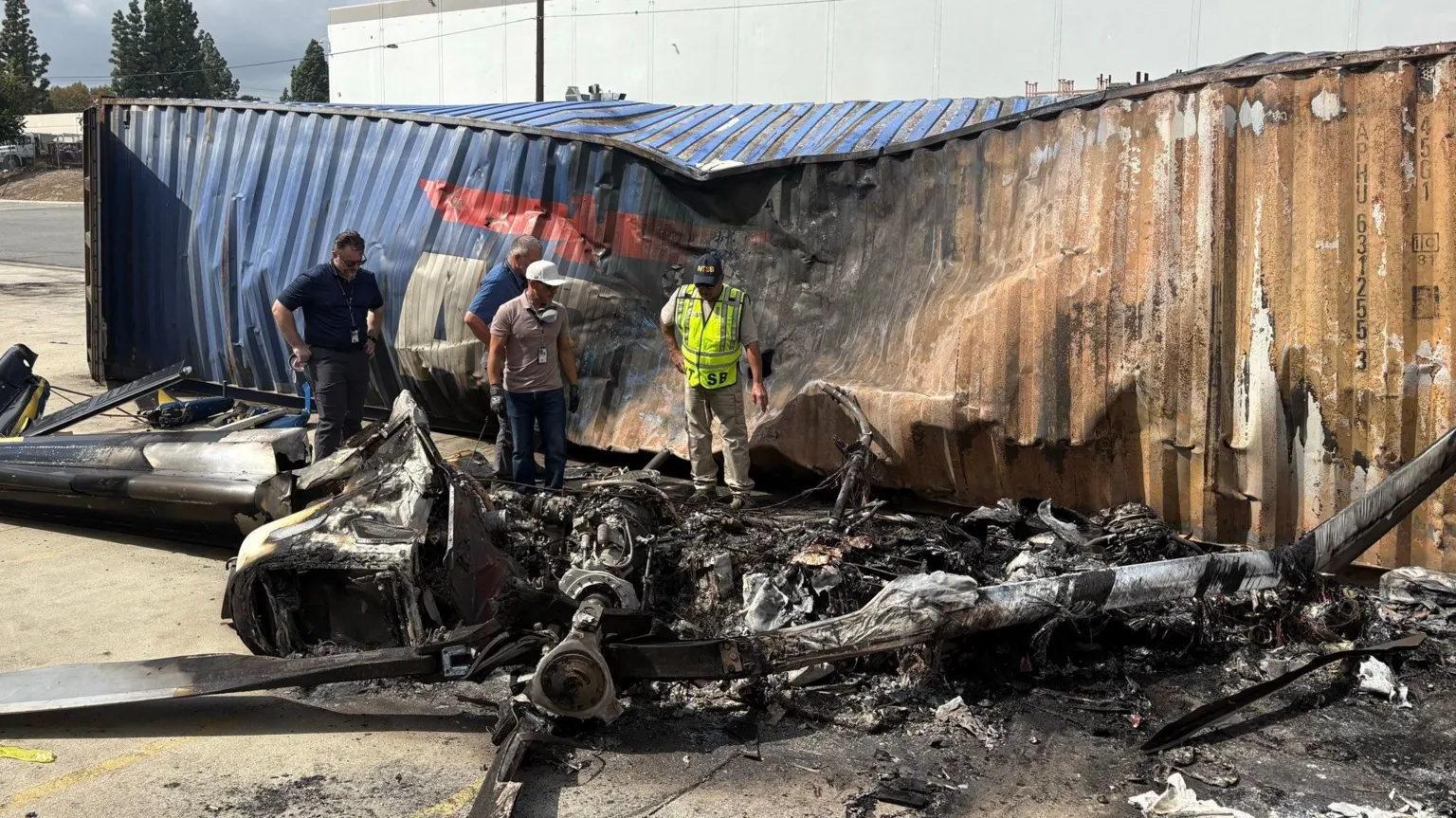
Investigators have released new photos that show the stark aftermath of a news helicopter crash that killed three people in Los Angeles on Tuesday night.
A scorched aircraft and charred storage container were being examined at the scene of the incident on Wednesday. The collision claimed the lives of NBC photojournalist Eliana Moreno and pilot George Marciniw.
The third victim, a pedestrian, was identified as Edy Gutierrez Mejia, 29, by the coroner’s office.
The National Transportation Safety Board (NTSB), which is leading the investigation into the incident, said a report on the cause could take up to 18 months.

NBC Los Angeles said its NewsChopper4, which also operated for the Spanish-language Telemundo 52, was in the city’s suburb on Tuesday night reporting on a deadly bus crash that had killed two people.
Several other news helicopters were also overhead in the area.
The driver in the bus crash has since been arrested on suspicion of murder.
The cause of the aircraft crash has not yet been determined, officials said. Marciniw was reportedly an experienced pilot.
Mejia, the pedestrian killed when the helicopter came down, was a Guatemalan national who had only arrived in Los Angeles this week, according to NBC News.
Investigators were collecting data at the crash site on Wednesday. The helicopter will be moved to a secure facility, where the NTSB will continue to examine the wreckage.
The NTSB is an independent US government agency that investigates civil transportation accidents.
During a news conference on Wednesday, the NTSB’s investigator-in-charge Fabian Salazar said a preliminary report on the incident would be issued within 30 days.
A final report on the cause of the crash could take up to 18 months to be released, he added.
Asked by reporters about video circulating on social media that appears to show the helicopter’s viewpoint in the seconds before the crash, Salazar said it is so far “probably the most important evidence” for investigators.
In addition to the three people killed, two others were taken to the hospital.
During emotional live coverage on NBC4 on Tuesday night, veteran news anchor Colleen Williams confirmed it was the local news station’s helicopter that crashed.
While news coverage via helicopter is not necessarily unique to Los Angeles, it is more prominent compared to other major metropolitan areas.
LA local news stations regularly break into live programming to broadcast high-speed police pursuits from the air, fly over wildfires and show accidents, protests, and holiday traffic jams in often unscripted, real-time aerials.
Taken From BBC News


Why a new Pakistan-China border pact has irked India

How Trump Ditched Saudi Arabia?

EU Enacts Strict Laws on Social Media Use by Minors


-

 Sports3 months ago
South Korea’s Yoo Useong Steps Onto the Global Strongman Stage as World Strongman Federation Professional Athlete
-

 Art & Culture1 year ago
A Survey of Mata-E-Zeest
-

 Europe News2 years ago
Chaos and unproven theories surround Tates’ release from Romania
-

 American News2 years ago
Trump expands exemptions from Canada and Mexico tariffs
-

 American News2 years ago
Trump Expels Zelensky from the White House
-

 Art & Culture2 years ago
Will Snow White be a ‘victim of its moment’? How the Disney remake became 2025’s most divisive film
-

 Entertainment2 years ago
Champions Trophy: Pakistan aim to defend coveted title as historic tournament kicks off today
-

 Pakistan News1 year ago
Comprehensive Analysis Report-The Faranian National Conference on Maritime Affairs-By Kashif Firaz Ahmed