
war
Iran’s Strategy: Stretch the War

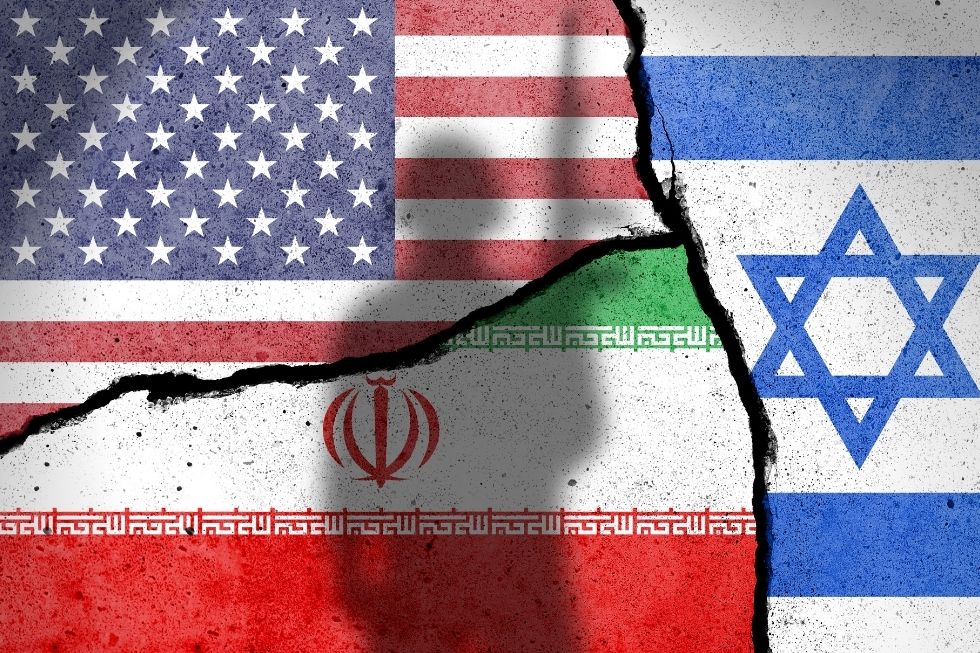
Paris (Imran Y. CHOUDHRY) :- Former Press Secretary to the President, Former Press Minister to the Embassy of Pakistan to France, Former MD, SRBC Mr. Qamar Bashir analysis : When President Donald Trump authorized direct military confrontation with Iran alongside Israel, many strategic planners expected a short and decisive military campaign. Precision strikes, intelligence dominance, and coordinated airpower were believed capable of crippling Iranian command centers and missile infrastructure within days. Yet what was envisioned as a swift operation is increasingly evolving into a prolonged conflict with humanitarian, geopolitical, and economic consequences extending far beyond the Middle East.
For decades, Israeli Prime Minister Benjamin Netanyahu had warned that confrontation with Iran was inevitable. Several U.S. administrations resisted being drawn into a full-scale war, wary of escalation and long-term entanglement in another Middle Eastern conflict. President Trump himself had previously pledged that his presidency would avoid new wars and focus on ending the long cycle of military interventions. However, the launch of coordinated strikes against Iran marked a historic shift, transforming strategic rivalry into direct confrontation.
The early assumption that Iran would collapse under aerial bombardment has not materialized. Instead, Tehran has adopted a measured and calculated strategy. Rather than unleashing its entire missile arsenal in dramatic retaliation, it has responded gradually, sustaining pressure while preserving strategic capabilities. Instead of triggering regime instability, the conflict appears to have consolidated national sentiment—particularly after the reported killing of Iran’s 86-year-old Supreme Leader during the opening phase of the war.
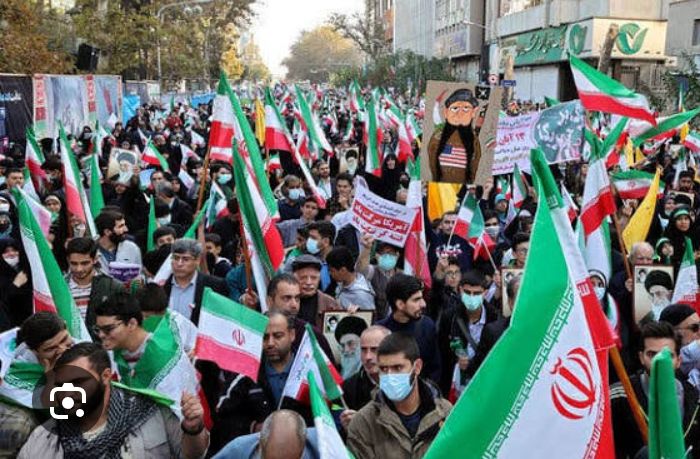
Within Iran, the death of a religious authority of such stature was expected by some analysts to create political fragmentation. Instead, it triggered widespread mobilization. In Shiite tradition, martyrdom carries profound historical and spiritual significance rooted in the memory of Karbala and the sacrifice of Imam Hussain. Mass mourning ceremonies, public processions, and national demonstrations reflected a collective resolve rather than internal collapse.
That emotional surge intensified dramatically after a tragedy that has come to symbolize the human cost of the conflict. In the southern Iranian city of Minab, a girls’ school was struck during the early days of the Israel-USA air campaign, killing more than 150 students and staff. The incident was independently confirmed by International media including Al-Jazeera and BBC. This deplorable and cruel act of Israel and the USA immediately became a powerful political and humanitarian symbol.
Images broadcast by Iranian media and reported by Al Jazeera showed thousands of mourners gathering in Minab’s central square for a mass funeral ceremony. Families held photographs of young victims while crowds chanted slogans condemning the United States and Israel.
The reaction from international institutions was swift. The United Nations human rights office called for a prompt and impartial investigation into the incident. Officials emphasized that schools, hospitals, and humanitarian facilities are protected under international humanitarian law and must not be targeted during armed conflict.
The Minab tragedy quickly resonated across the international media landscape. Major European outlets such as The Guardian, Le Monde, and Der Spiegel published editorials raising concerns about the humanitarian consequences of the escalating war. Commentaries in several European newspapers questioned whether the air campaign risked repeating the mistakes of previous conflicts in which civilian casualties undermined strategic objectives.
Public reaction extended beyond the media. Demonstrations erupted in several regions of the world. In cities across the United States—Washington D.C., New York, Chicago, and Los Angeles—anti-war protesters gathered to demand congressional oversight and an immediate halt to escalation.
Across parts of the Global South, governments including China, South Africa, Brazil, Turkey, Malaysia, and Pakistan voiced concern about the expanding conflict. In Pakistan and Iraq, protests outside U.S. diplomatic missions turned tense as demonstrators condemned the bombing campaign and expressed solidarity with Iranian civilians.
Meanwhile, Iran’s military strategy appears rooted in endurance rather than rapid escalation. Decades of sanctions and conflict have forced the country to develop hardened infrastructure, dispersed missile systems, and underground facilities designed to survive sustained bombardment. Iranian officials and analysts sympathetic to Tehran argue that the missiles and drones seen in the early days of the war represent largely older or less sophisticated systems deliberately used in the opening phase. According to this narrative, Iran is pacing the conflict by gradually introducing more advanced and destructive missile capabilities only if the war escalates further. Such a strategy would allow Tehran to sustain pressure over time while reserving its most capable weapons for later stages, potentially targeting U.S. bases across the Middle East, Israeli infrastructure, and naval forces operating in the Persian Gulf and nearby waters.
The vulnerability of American bases across the Middle East has become increasingly evident as the war expands. Countries hosting these bases now face complex political pressures, as retaliatory attacks threaten nearby infrastructure and civilian populations.
Economically, the war carries enormous global implications. The Strait of Hormuz remains one of the world’s most critical maritime chokepoints for oil transportation. Even limited disruptions in this narrow corridor can trigger spikes in global energy prices and destabilize international markets.
Yet perhaps the most consequential development emerging from Washington is the possibility that the war could escalate beyond aerial bombing. In recent remarks, President Trump did not rule out deploying American troops on Iranian soil if military objectives cannot be achieved through air power alone. U.S. defense officials have similarly acknowledged that ground forces remain an option should the conflict expand or if key strategic targets require physical control.
The implications of such a decision would be profound. Iran is a vast country of nearly ninety million people with rugged terrain, dense urban centers, and deeply entrenched military structures. Any attempt to place foreign troops on Iranian soil would almost certainly transform the current air campaign into a full-scale regional war.
Strategic history offers sobering lessons. In Afghanistan, overwhelming aerial superiority failed to produce durable political outcomes. Military dominance on the battlefield did not translate into long-term stability, and ultimately the conflict ended with a negotiated withdrawal after two decades.
A ground war in Iran could prove even more complex. Iran possesses a much larger population, stronger state institutions, and extensive missile capabilities capable of striking across the Middle East. Military analysts warn that any foreign troop deployment could trigger prolonged insurgency, regional retaliation, and widespread disruption of global energy markets.
Iran appears to be pursuing a strategy of strategic patience. By absorbing attacks while maintaining steady retaliation, it places increasing economic and political pressure on its adversaries. Time, rather than immediate battlefield victories, becomes the decisive factor.
The tragedy in Minab illustrates how quickly humanitarian events can reshape global perceptions of a war. Images of mourning families and schoolchildren’s funerals resonate far beyond military calculations. They influence public opinion, diplomatic relationships, and the political legitimacy of those conducting the war.
What was initially framed as a short military operation has increasingly taken the shape of a war of endurance. Iran appears prepared for a prolonged confrontation built on resilience, geography, and ideological mobilization. The United States and Israel still maintain overwhelming technological and military superiority, yet superiority alone does not guarantee swift submission.
Wars that begin with expectations of rapid victory often conclude in negotiations after extended human suffering. Whether this conflict ultimately follows that path will depend not only on military strength but on political wisdom. If diplomacy re-enters the equation, escalation may still be contained. If not, the region—and perhaps the wider international system—may face months of instability with consequences reaching far beyond the battlefield.



war
Scholars Urge UN to Protect Iran’s Scientific Sites Amid Airstrikes Global Academics Warn Attacks Threaten Research, Health, and Civilian Safety
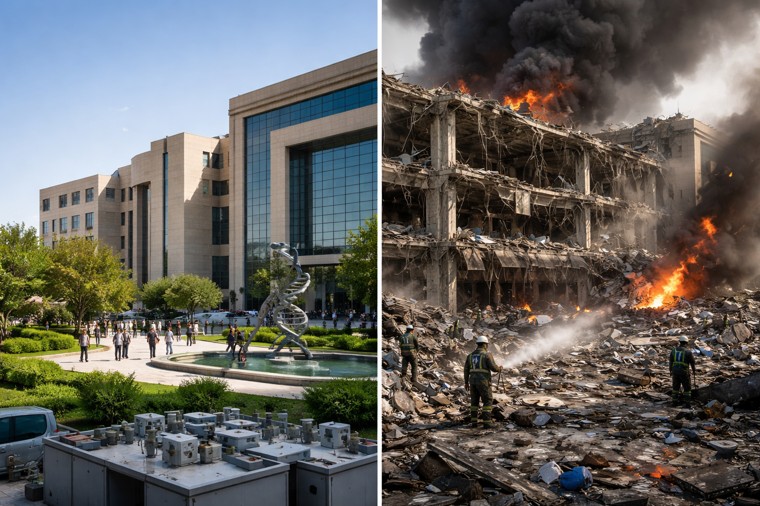
LONDON / GENEVA / PARIS / NEW YORK (Shabnam Delfani) — A broad coalition of academics, researchers, students, and members of the international scholarly community has issued a strongly worded open letter condemning a series of strikes on universities, laboratories, hospitals, and research facilities in Iran, urging immediate international action to safeguard civilian scientific infrastructure amid the ongoing U.S.-Israeli military operations against the country.
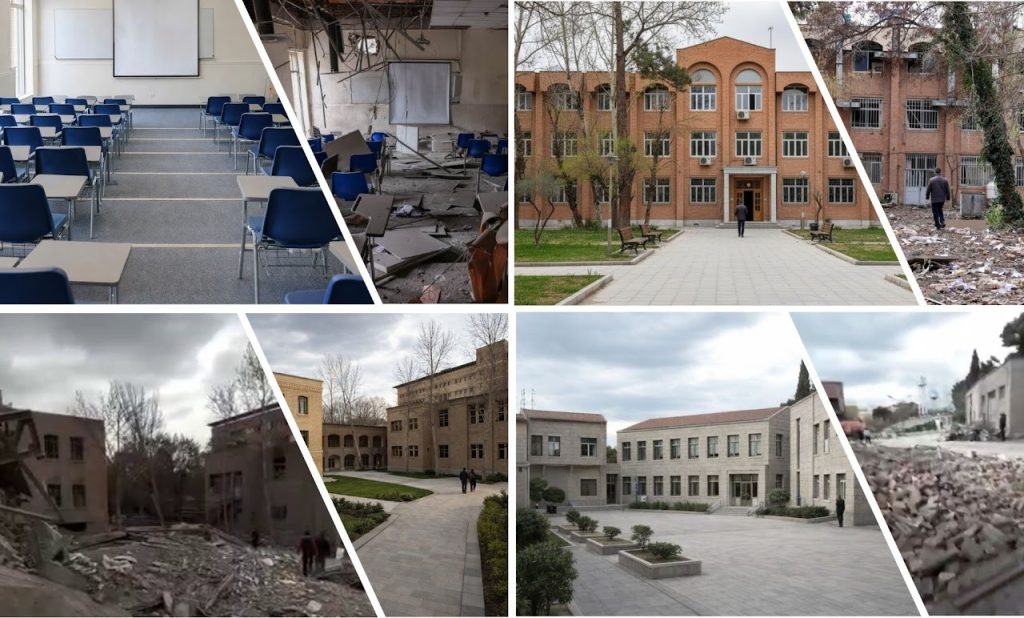
The letter, addressed to United Nations Secretary-General António Guterres, UNESCO Director-General Audrey Azoulay, UN High Commissioner for Human Rights Volker Türk, and the governments of all parties involved, highlights at least 21 reported attacks on scientific and educational institutions. It warns that such assaults endanger researchers, students, medical personnel, and the broader public while inflicting irreversible damage on scientific progress and societal well-being.
Recent strikes between March 28 and 31, 2026, have drawn particular alarm. Attacks targeted Isfahan University of Technology in Isfahan, as well as Iran University of Science and Technology and Amirkabir University of Technology in Tehran. On March 31, one of Iran’s largest pharmaceutical research and development centers, Tofigh Daru (also known as Tofiq Daru), was severely damaged. The facility is a major producer of anesthetics and critical treatments for multiple sclerosis and cancer.
“Scientific and educational institutions are civilian spaces essential to public health, knowledge, and human survival,” the open letter declares. “Their destruction endangers researchers, students, medical personnel, and the broader public, while causing lasting harm to science and society.”
The signatories issue a forceful call for all parties to the conflict to immediately cease attacks on civilian scientific and educational sites, including laboratories, universities, hospitals, research centers, libraries, and archives. They further demand that the United Nations, UNESCO, and other relevant international bodies take concrete steps: thoroughly document the damage inflicted on these institutions, provide protection and support to affected scholars and students, launch independent investigations into potential violations of international humanitarian law, and ensure that those responsible for unlawful strikes on protected civilian infrastructure are identified and held accountable through impartial legal mechanisms.
“Science is not a military target. Universities and laboratories must not become battlefields,” the letter asserts. It concludes with an urgent appeal to the international community to act decisively to protect scientific infrastructure, defend academic life, and uphold the fundamental principle that institutions dedicated to the advancement of knowledge must never be treated as expendable in times of war.
In response to the escalating strikes, Iranian officials have warned of possible retaliation against American and Israeli-linked academic campuses in the region, raising fears of a dangerous widening of the conflict into educational spheres.
The open letter, signed collectively by “academics, researchers, students, and members of the global scholarly community,” underscores the long-standing international consensus on preserving the sanctity of scientific and educational institutions even amid geopolitical tensions and armed conflict. It stresses that safeguarding academic freedom and scientific capacity serves the collective well-being of humanity and must be defended against future assaults.
This appeal comes as reports continue to emerge of significant material damage to Iranian academic and medical research facilities, with some accounts noting injuries among university staff. The global scholarly community’s unified stance reflects growing concern that the targeting of Iranian Scientists and knowledge-producing institutions threatens not only Iran but the broader fabric of international scientific cooperation.
Please Sign: https://docs.google.com/forms/d/e/1FAIpQLSd9yA3741PhNbeae-pWxiNU-buR5PJTgi5lYHXmvB11ZoMybA/viewform
Paris (Imran Y. CHOUDHRY) :- Former Press Secretary to the President, Former Press Minister to the Embassy of Pakistan to France, Former MD, SRBC Mr. Qamar Bashir analysis : The war that has engulfed the Middle East over the past several weeks is no longer merely a confrontation of missiles, drones, and military doctrines. It is rapidly revealing itself as a deeper contest over geography, energy, and long-term global control. Beneath the smoke of bombed installations and the rhetoric of national security lies a far more consequential objective: the redrawing of the world’s most critical energy routes. What began as a campaign justified on the basis of an “imminent threat” from Iran is now unfolding into a strategic effort that could permanently alter how oil flows from the Gulf to the rest of the world.
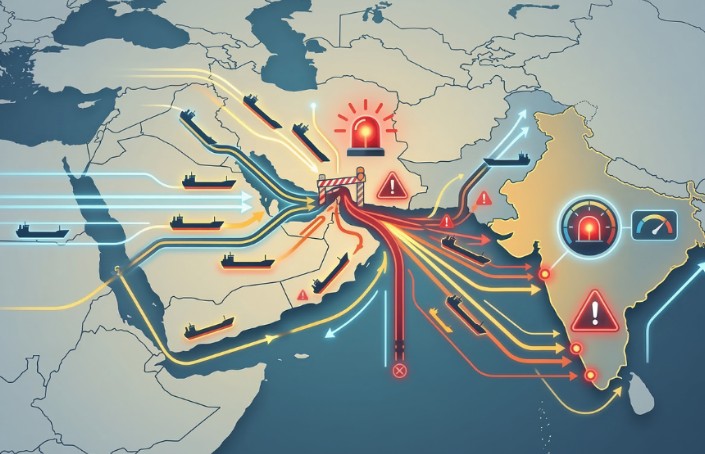
At the heart of this transformation lies the Strait of Hormuz, the narrow maritime corridor through which nearly one-fifth of the world’s oil supply passes every day. For decades, this chokepoint has served as both a lifeline and a vulnerability for global energy markets. Any disruption here—whether through war, sanctions, or sabotage—immediately reverberates across continents, sending oil prices soaring and economies into instability. The current conflict has demonstrated just how fragile this artery truly is. Tanker attacks, rising insurance premiums, and rerouted shipping lanes have exposed the risks of relying on a single, narrow passage for such a massive share of global oil.
It is within this context that a striking and controversial vision has emerged. Israeli leadership, through a series of statements and strategic hints, has pointed toward the possibility of bypassing the Strait of Hormuz altogether. The idea is deceptively simple yet geopolitically profound: construct a pipeline that would transport oil from Gulf producers across the Arabian Peninsula and into Israel, where it could then be shipped via Mediterranean ports to Europe and beyond. Such a route would eliminate dependence on Hormuz, neutralize Iran’s ability to disrupt global energy flows, and reposition Israel as a central hub in the international oil trade.
While versions of this idea have existed in policy circles for years—most notably through discussions around the Eilat-Ashkelon pipeline—the present war appears to have injected new urgency into its consideration. What was once a theoretical infrastructure project is now being framed as a strategic necessity. The logic is clear: if Hormuz can be disrupted, then it must be bypassed. And if it is bypassed through Israeli territory, then Israel gains unprecedented leverage over the energy lifelines of both Europe and parts of Asia.
This raises a deeply uncomfortable question: was the war itself, at least in part, shaped by this long-term vision? The official justification centered on the notion of an imminent Iranian threat—particularly the fear that Iran might soon develop nuclear weapons and long-range missile capabilities capable of striking Europe or even the United States. Yet, as the conflict has progressed, cracks have begun to appear in this narrative. Statements from U.S. intelligence officials in congressional hearings have indicated that Iran neither possessed the immediate capability to strike the United States nor demonstrated an intent to do so in the near term.
Instead, the threat appears to have been framed in hypothetical terms—what Iran could become, rather than what it currently is. The argument shifted from “imminent danger” to “imagined future risk.” This distinction is not merely semantic; it raises serious questions about the legitimacy of the war itself. If the threat was not immediate, then the rationale for initiating such a large-scale conflict becomes far more questionable.
Against this backdrop, recent military actions take on a different meaning. Strikes on Iranian energy infrastructure, including major gas fields and oil facilities, appear less like isolated tactical operations and more like components of a broader strategic script. By provoking Iranian retaliation—particularly against regional oil installations and shipping routes—the conflict has effectively demonstrated the vulnerability of the Strait of Hormuz. In doing so, it has strengthened the case for alternative routes, including the proposed pipeline through Israel.
Iran, for its part, has responded in a manner that underscores its own strategic leverage. By targeting shipping lanes and signaling its ability to disrupt Hormuz, Tehran has shown that it can impose a global cost for any sustained aggression against it. The result is a paradox: every escalation that threatens global oil supply simultaneously reinforces the argument for bypassing the very chokepoint Iran influences.
Yet the conflict is not confined to economic and strategic calculations alone. It carries within it the risk of a far more dangerous escalation—one rooted in religion and symbolism. Reports of missile debris landing dangerously close to Jerusalem’s most sacred sites, including the Western Wall and the Dome of the Rock, serve as a stark reminder of how quickly this war could transcend geopolitics and ignite a broader global crisis. Had these sites been directly struck, the consequences would have been catastrophic, drawing in millions of believers and transforming a regional war into a wider religious confrontation.
Meanwhile, a subtle but significant divergence appears to be emerging between the United States and Israel. Washington has signaled, through public statements, that it believes major military objectives have already been achieved. Claims that Iran’s military capabilities have been severely degraded suggest a desire to declare victory and potentially de-escalate. Israel, however, has articulated a far more open-ended vision of the conflict. Its leadership continues to emphasize that multiple objectives remain unfulfilled, and that the endgame is still distant.
This divergence is critical. While the United States bears the overwhelming financial and reputational burden of the war—spending billions of dollars, straining alliances, and facing global criticism—Israel stands to gain the most if its long-term strategic goals are realized. The transformation of Israel into a central energy transit hub would not only enhance its economic position but also grant it leverage over countries dependent on Middle Eastern oil.
For the United States, the costs are mounting. Beyond the direct military expenditures, estimated at nearly a billion dollars per day, there is the erosion of credibility. Allies question Washington’s consistency, adversaries exploit its vulnerabilities, and neutral states grow increasingly wary of its intentions. The perception of having entered a war based on speculative threats rather than concrete evidence further undermines its standing.
In contrast, Israel’s potential gains are structural and enduring. Control over a major alternative energy corridor would place it at the center of global oil logistics, allowing it to influence supply, pricing, and strategic alignment. Such a shift would echo historical precedents, where control over key transit routes—whether the Suez Canal or the Strait of Malacca—translated into geopolitical dominance.
As the war continues, the world stands at a crossroads. If the Strait of Hormuz remains unstable and the pipeline vision gains momentum, we may be witnessing the beginning of a new global energy order. One in which traditional chokepoints are bypassed, new corridors are established, and power is redistributed accordingly.
The question is no longer who is winning on the battlefield. It is who will control the pathways through which the world’s lifeblood—its energy—flows. In that contest, the most decisive victories may not be measured in territory captured or enemies defeated, but in pipelines laid and routes redefined.
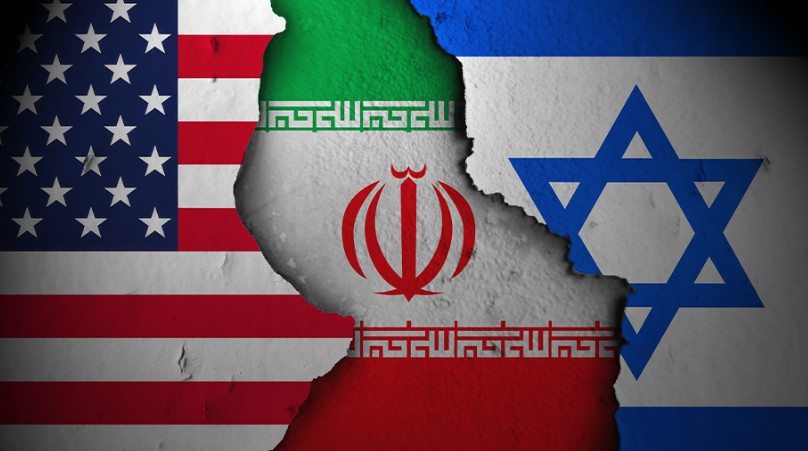
Paris (Imran Y. CHOUDHRY) :- Former Press Secretary to the President, Former Press Minister to the Embassy of Pakistan to France, Former MD, SRBC Mr. Qamar Bashir analysis : As the conflict enters its third week—approaching the twentieth day—an urgent and uncomfortable question is beginning to surface across policy circles, media debates, and public discourse: Who is the real beneficiary of this war? Beyond the fog of propaganda, beyond the daily casualty figures and battlefield claims, a clearer geopolitical picture is emerging—one that challenges conventional narratives and exposes a deeply asymmetric outcome.
At first glance, the war appears to be a brutal contest between the United States and Iran, with Israel positioned as a frontline ally. Yet, when the layers are peeled back, a different reality unfolds. Israel, despite limited direct losses, appears to be achieving long-standing strategic objectives. The United States, on the other hand, is bearing the overwhelming burden—militarily, economically, and diplomatically—while Iran, though heavily damaged, occupies a complex middle ground as both victim and resilient actor.
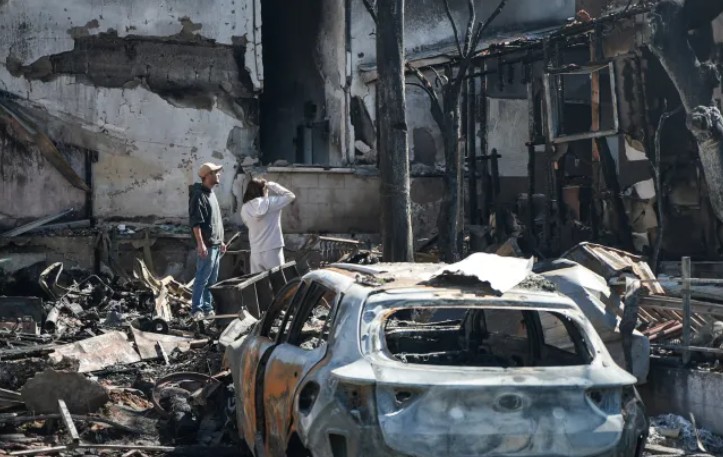
Iran has undoubtedly suffered immense losses. Its military infrastructure has been degraded, key leadership figures targeted, and economic systems disrupted. Strategic assets—ranging from oil facilities to logistical networks—have been hit repeatedly. Civilian hardship is mounting, and the country’s economic backbone is under unprecedented strain. In terms of physical destruction, human casualties, and systemic disruption, Iran stands as one of the primary victims of the conflict.
Yet, paradoxically, Iran has also demonstrated a degree of endurance that complicates the narrative of defeat. Its ability to disrupt shipping lanes, influence regional proxies, and impose costs on its adversaries has elevated its image as a power capable of asymmetric resistance. While materially weakened, Iran has not collapsed—nor has it surrendered strategic leverage.
In contrast, the United States finds itself in an increasingly precarious position. The financial cost alone is staggering, with estimates suggesting expenditures approaching $1 billion per day when accounting for military deployments, logistics, and operational support. Thousands of American personnel have been deployed across vast distances, stretching supply lines and complicating sustainment efforts. Casualties—both fatalities and injuries—are mounting, further intensifying domestic scrutiny.
More critically, the United States is experiencing a profound erosion of its global image. Long regarded as a stabilizing force and architect of a rules-based international order, Washington now faces accusations of unilateralism and overreach. The perception that it is enforcing its will through military dominance rather than diplomacy is damaging its credibility, particularly among allies and neutral states.
This reputational decline is most visible in the Middle East itself. U.S. bases across the region have come under sustained pressure, with several reportedly damaged or rendered less operational. Gulf states—once reliable partners—are increasingly questioning the value of hosting American military infrastructure. Rather than ensuring security, these bases have become potential targets, exposing host nations to heightened risks.
The economic repercussions are equally severe. The disruption of the Strait of Hormuz—through which approximately 20% of global oil supply flows—has triggered a sharp spike in energy prices, with increases of up to 40% in some markets. Oil prices exceeding $100 per barrel have strained global economies, particularly those heavily dependent on imports. Supply chains have been disrupted, inflationary pressures intensified, and growth trajectories derailed.
For many countries, the consequences are existential. Energy shortages are forcing governments to ration fuel, shut down industries, and curtail public services. Universities are closing, businesses are scaling back operations, and entire sectors are slowing to a crawl. The global economy—already fragile—is now facing a contraction driven by the very lifeblood of modern industry: energy.
The Gulf states themselves are among the hardest hit. Nations such as Saudi Arabia, the United Arab Emirates, Qatar, Kuwait, and Bahrain are grappling with a multifaceted crisis. Oil production facilities and refineries have been damaged or shut down. Airports and critical infrastructure have come under attack. Expatriate populations—the backbone of their economies—are fleeing in large numbers, creating labor shortages and economic instability.
Air traffic, once heavily routed through hubs like Dubai and Doha, is being diverted elsewhere, further eroding revenue streams. Tourism has collapsed, trade has slowed, and investor confidence has weakened. These economies, built on connectivity and stability, are now facing unprecedented disruption.
And yet, amid this widespread devastation, Israel appears remarkably insulated. Its casualty figures remain comparatively low, and its infrastructure has sustained minimal damage relative to the scale of destruction elsewhere. More importantly, Israel is advancing its strategic objectives with striking effectiveness.
For years, Israel has sought to weaken regional adversaries, particularly Iran and its network of allies. This conflict has provided the conditions to do precisely that. Iranian capabilities are being systematically degraded. Regional actors are destabilized. The geopolitical focus has shifted away from Israel’s own actions, allowing it greater operational freedom.
In Gaza, military operations continue with reduced international scrutiny. In the West Bank, territorial encroachments are accelerating. In southern Lebanon, intensified strikes are being justified under the pretext of countering militant threats. With global attention diverted to the broader war, Israel is pursuing multiple objectives simultaneously—military, territorial, and political.
Perhaps most significantly, Israel has succeeded in shifting the burden of the conflict onto the United States. Washington is now the face of the war, absorbing the financial costs, diplomatic backlash, and strategic risks. Israel, while deeply involved, operates with a degree of insulation that allows it to reap benefits without bearing proportional costs.
When the hierarchy of impact is assessed, a stark picture emerges. Iran, in terms of physical destruction and economic damage, ranks among the most affected. The United States follows closely, bearing immense financial costs and suffering a decline in global standing. The Gulf states, once pillars of regional stability, are experiencing severe economic and security disruptions. The broader international community is grappling with energy shortages and economic contraction.
At the very bottom of this hierarchy—least affected, yet most strategically advantaged—stands Israel.
This reality demands a fundamental reassessment of strategy, particularly in Washington. The United States must confront a difficult truth: it is investing enormous resources in a conflict that is yielding limited direct benefits while enabling another actor to achieve its long-term objectives.
History offers sobering lessons. From Vietnam to Iraq to Afghanistan, prolonged engagements driven by strategic overconfidence have resulted in costly outcomes and lasting reputational damage. The current trajectory risks repeating those patterns, with potentially even greater global consequences.
The path forward requires clarity, courage, and a willingness to recalibrate. Continuing down the current course in the name of credibility or face-saving would only deepen the quagmire. Instead, a strategic pivot—grounded in national interest rather than inertia—is essential.
De-escalation, diplomatic engagement, and a redefinition of objectives must replace open-ended military commitment. The United States must ask not only how to win the war, but whether the war, as currently structured, is worth winning at all.
As the twentieth day approaches, the answer to the central question becomes increasingly clear. This is not a balanced conflict with shared gains and losses. It is a war in which one actor is quietly consolidating advantage while others bear the visible costs.
Recognizing that reality is the first step toward changing it.


Scholars Urge UN to Protect Iran’s Scientific Sites Amid Airstrikes Global Academics Warn Attacks Threaten Research, Health, and Civilian Safety

Inheritance of a woman in Islamic law ; From Implications to Challenges! _ By Syeda Fatima Batool

Dr. Mohammad Faisal Joins Distinguished Quetta Association Event in London Gathering Reinforces Shared Military Heritage of Pakistan and Britain


-

 Europe News1 year ago
Chaos and unproven theories surround Tates’ release from Romania
-

 American News1 year ago
Trump expands exemptions from Canada and Mexico tariffs
-

 American News1 year ago
Trump Expels Zelensky from the White House
-

 Pakistan News9 months ago
Comprehensive Analysis Report-The Faranian National Conference on Maritime Affairs-By Kashif Firaz Ahmed
-

 American News1 year ago
Zelensky bruised but upbeat after diplomatic whirlwind
-

 Art & Culture1 year ago
The Indian film showing the bride’s ‘humiliation’ in arranged marriage
-

 Art & Culture1 year ago
International Agriculture Exhibition held in Paris
-

 Pakistan News1 year ago
Can Pakistan be a Hard State?