
Pakistan News
Pakistan issues deadline for Afghan refugees after Trump blocks US resettlement pathway
Neque porro quisquam est, qui dolorem ipsum quia dolor sit amet, consectetur, adipisci velit, sed quia non numquam.


Shakoofa Khalili was waiting for her husband to return home with bread from the market when she heard their eight-year-old daughter scream from the balcony.
The girl had seen police approach her father in the street outside their safe house in Pakistan’s capital Islamabad and ran to confront them.
“(She) cried and grabbed the policeman’s hand begging him to let her father go,” Khalili told CNN, as she recounted what she thought was her worst fears coming true.
When Afghanistan fell to the Taliban in 2021, hundreds of thousands of refugees fled across the border to neighboring Pakistan, seeking safety away from the radical Islamist group.
Afghan nationals who had worked with the United States or NATO forces were particularly fearful of reprisals from the Taliban. Promised resettlement in the US, many traveled to Pakistan to await American visas. Khalili and her family were among them.
Now they fear they’ll be deported back to Afghanistan, following US President Donald Trump’s order to suspend the US Refugee Admissions Program (USRAP), effectively locking out refugees worldwide who had been on a pathway to US resettlement.
Soon after the executive order was signed, Pakistan’s Prime Minister’s Office drafted a three-stage repatriation plan for “Afghan nationals bound for 3rd country resettlement.”
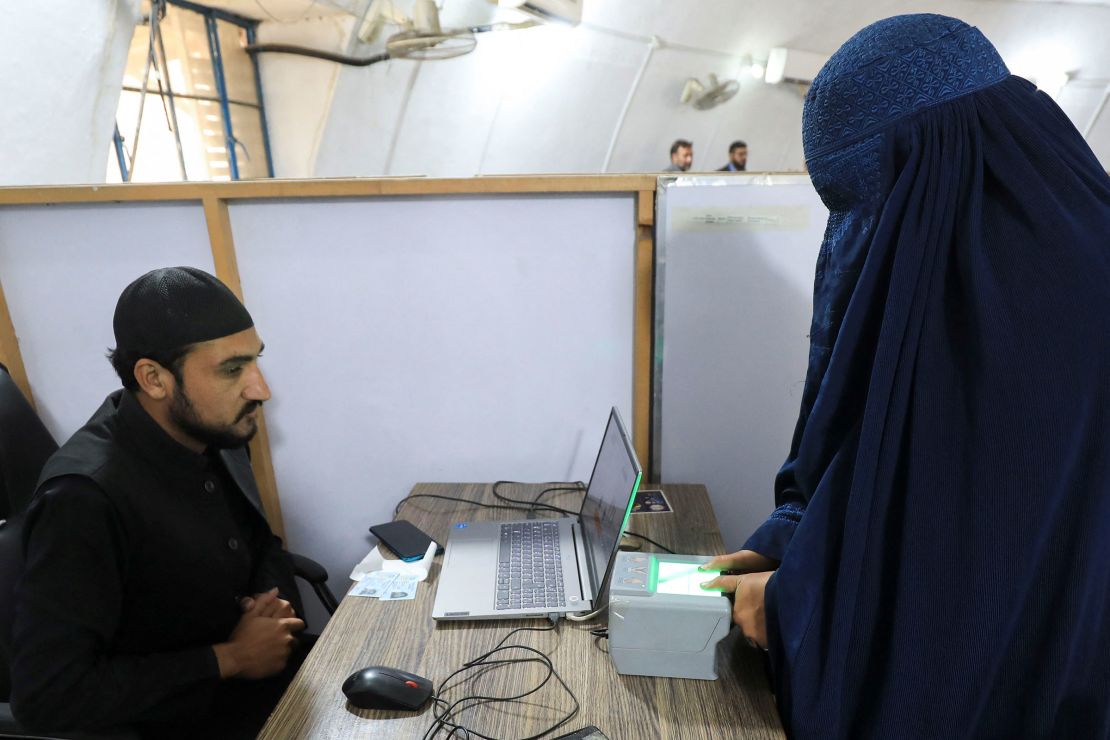
An Afghan refugee woman gives her fingerprints at the United Nations High Commissioner for Refugees repatriation center in Azakhel, Nowshera, Pakistan, on October 30, 2023. Fayaz Aziz/Reuters/File
The document, seen by CNN, calls for foreign missions to coordinate the relocation of Afghan nationals out of the capital Islamabad and its twin garrison city of Rawalpindi by March 31, 2025.
If they’re not removed by that date, they will be “repatriated to Afghanistan.”
For some Afghans, deportation is ‘a death sentence’
While living in Afghanistan, Khalili worked on a child abuse protection program funded by the US Embassy. She hoped to gain a US visa but ended up trapped in Pakistan, with few options to leave.
“For us, who worked alongside the United States, returning to Afghanistan is not just a risk – it is a death sentence,” Khalili told CNN.
This time, her daughter’s pleas to police worked, but although the father and child made it back to the safehouse they call home, Khalili’s daughter was deeply affected by what took place.
“For two days, because of this terrible incident … my daughter fell into a deep silence. She didn’t eat for two days. She talks and screams in her sleep at night,” said Khalili.
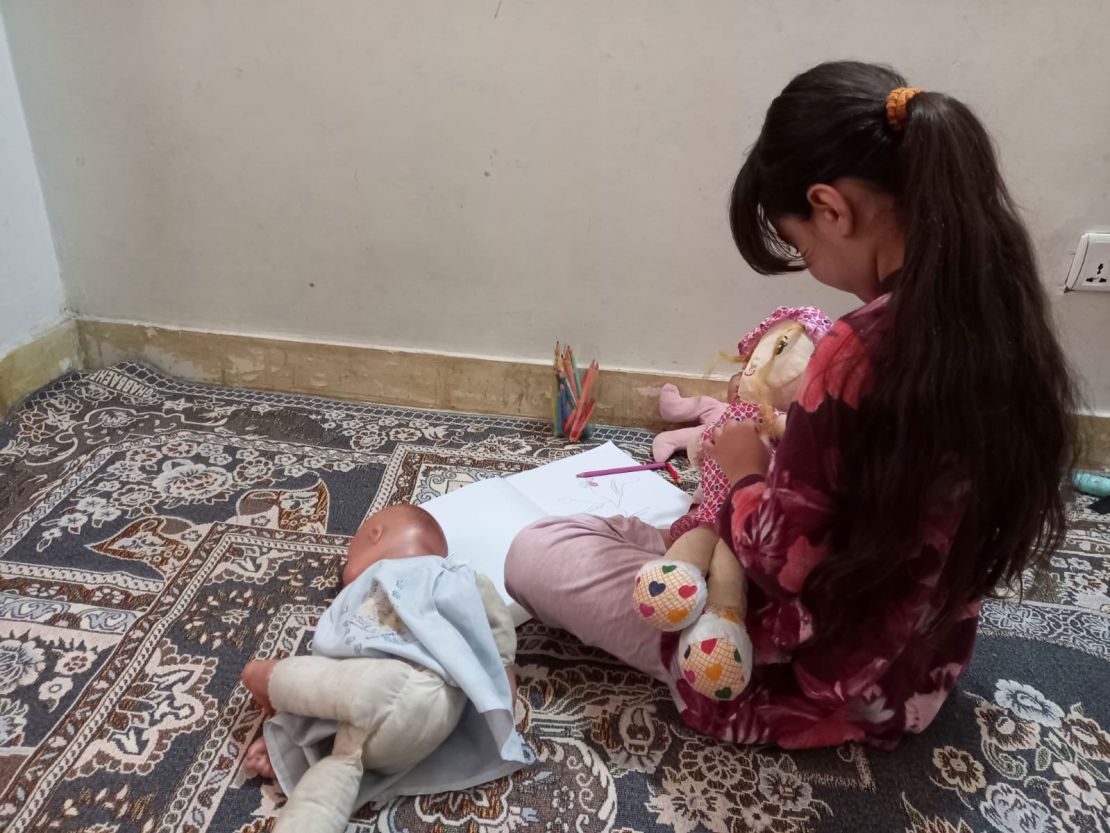
Khalili’s daughter didn’t speak for two days after seeing Pakistan police try to arrest her father. Shakoofa Khalili
Many Afghans who worked for the US but were unable to escape Afghanistan now live in hiding, in fear for their lives. Those in Pakistan are terrified of being killed should they be forced to return.
The UN Refugee Agency (UNHCR) and the International Organization for Migration (IOM) said in a statement Wednesday those forced to return face retribution from the Taliban – especially ethnic and religious minorities, women and girls, journalists, human rights activists, and members of artistic professions.
Shawn VanDiver, the founder of #AfghanEvac, a leading coalition of resettlement and veteran groups, says 10,000 to 15,000 Afghans are in Pakistan waiting for visas or resettlement in the US.
In a post on X, VanDiver said the pause in the USRAP disproportionately affects Afghan women in Pakistan, leaving them without work, without legal protections and without hope.
“Since the fall of Kabul, Afghan women have been systematically erased from public life —banned from education, work, and even basic freedoms. For many, USRAP was the only viable path to safety. With the pause, that door has slammed shut,” he said.
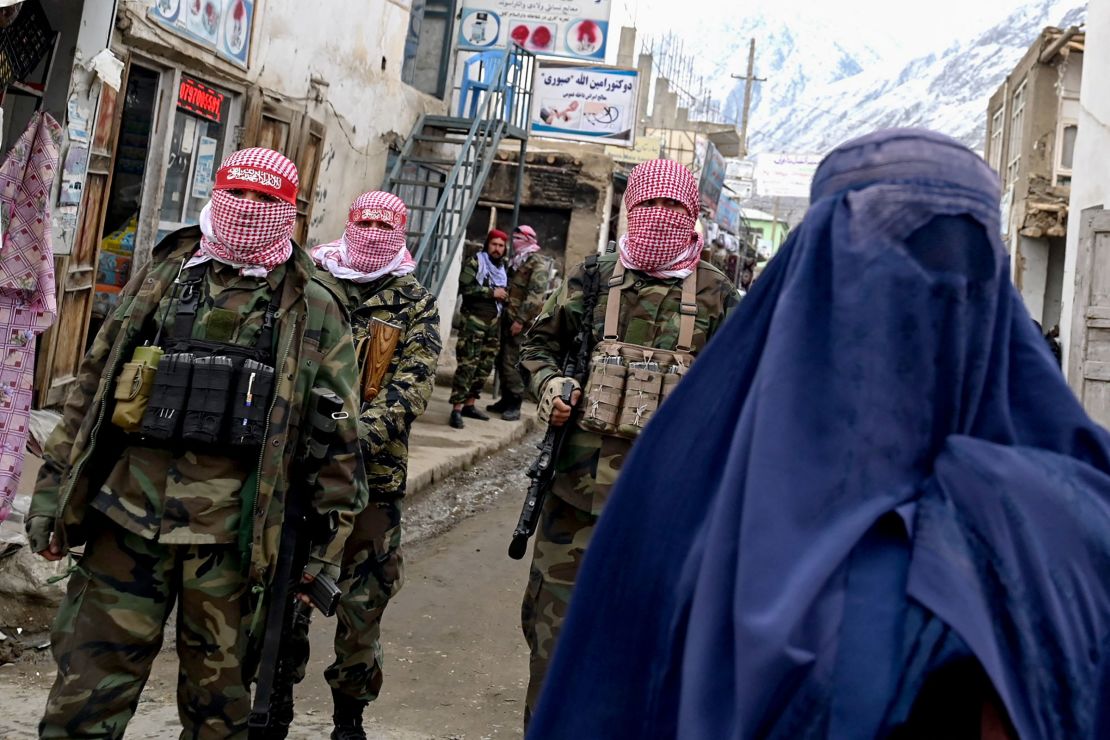
Taliban security personnel stand guard as an Afghan woman walks along a street at a market in the Baharak district of Badakhshan province, Afghanistan, on February 26, 2024. Wakil Kohsar/AFP/Getty Images/File
According to the document seen by CNN, Pakistan’s intelligence agencies are expected to coordinate with the Prime Minister’s Office to monitor and implement the relocation plan.
Pakistan’s Interior Ministry released a statement to CNN confirming that “all illegal foreigners including Afghans are to be deported back to their countries of origin under the Illegal Foreigners Repatriation Plan (IFRP).”
It urged countries sponsoring Afghan nationals for resettlement to complete the process quickly, or “the sponsored Afghans will be deported.”
The document also threatens to deport Afghans holding an Afghan Citizen Card, another form of registration for Afghan refugees in Pakistan issued almost a decade ago.
The US embassy and Pakistan’s Ministry of Foreign Affairs did not immediately respond to CNN’s question about the coordination between authorities to date.
Pakistan wants Afghan refugees to leave
Pakistan is home to one of the world’s largest refugee populations – most of them from Afghanistan. But the country has not always welcomed Afghan refugees, subjecting them to hostile living conditions and threatening deportation over the years.
According to the UNHCR, more than 3 million Afghan refugees, including registered refugees and more than 800,000 undocumented people, are living in Pakistan.
Many fled the Soviet invasion of Afghanistan in the 1980s. A new generation went to Pakistan in the aftermath of September 11 attacks, ebbing and flowing during the near two decades of conflict that followed.
The Taliban’s return to power in 2021 following the United States’ chaotic withdrawal sparked another wave of some 600,000 refugees.
Pakistan began a fresh crackdown on Afghan refugees in 2023 to pressure the Taliban to do more to curb militant attacks launched from Afghanistan.
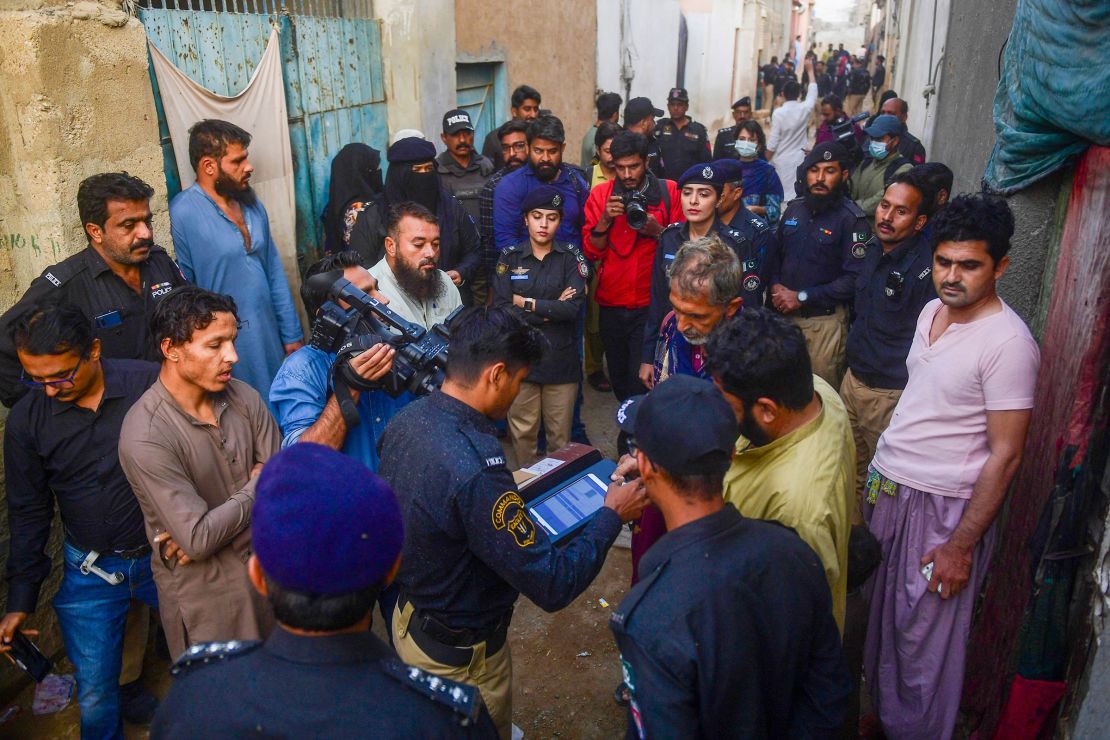
Police test the biometrics of Afghan refugees during a search operation on the outskirts of Karachi, Pakistan, on November 17, 2023. Asif Hassan/AFP/Getty Images/File
According to the UNHCR, 800,000 Afghan nationals have since left Pakistan.
The crackdown on those who are neither registered with the UNHCR nor awaiting resettlement to a third country is continuing in phases, with thousands of Afghans sheltering in safehouses and slums hoping to resist repatriation to their home country.
Khalili continues to hide with her husband and child in Islamabad, and her despair continues to mount. She told CNN of the risks she and others have taken “to support the United States’ mission as interpreters, contractors, human rights defenders and allies.”
According to Khalili, “the Taliban views us as enemies, and we face the grim reality of arrest, torture, or death if we are forced back.”
“This suspension (of the visa program) denies us the shelter and protection we were promised, leaving us vulnerable to unimaginable consequences and at the mercy of the Taliban.”
Taken From CNN
https://edition.cnn.com/2025/02/06/asia/pakistan-trump-afghan-repatriation-intl-hnk/index.html


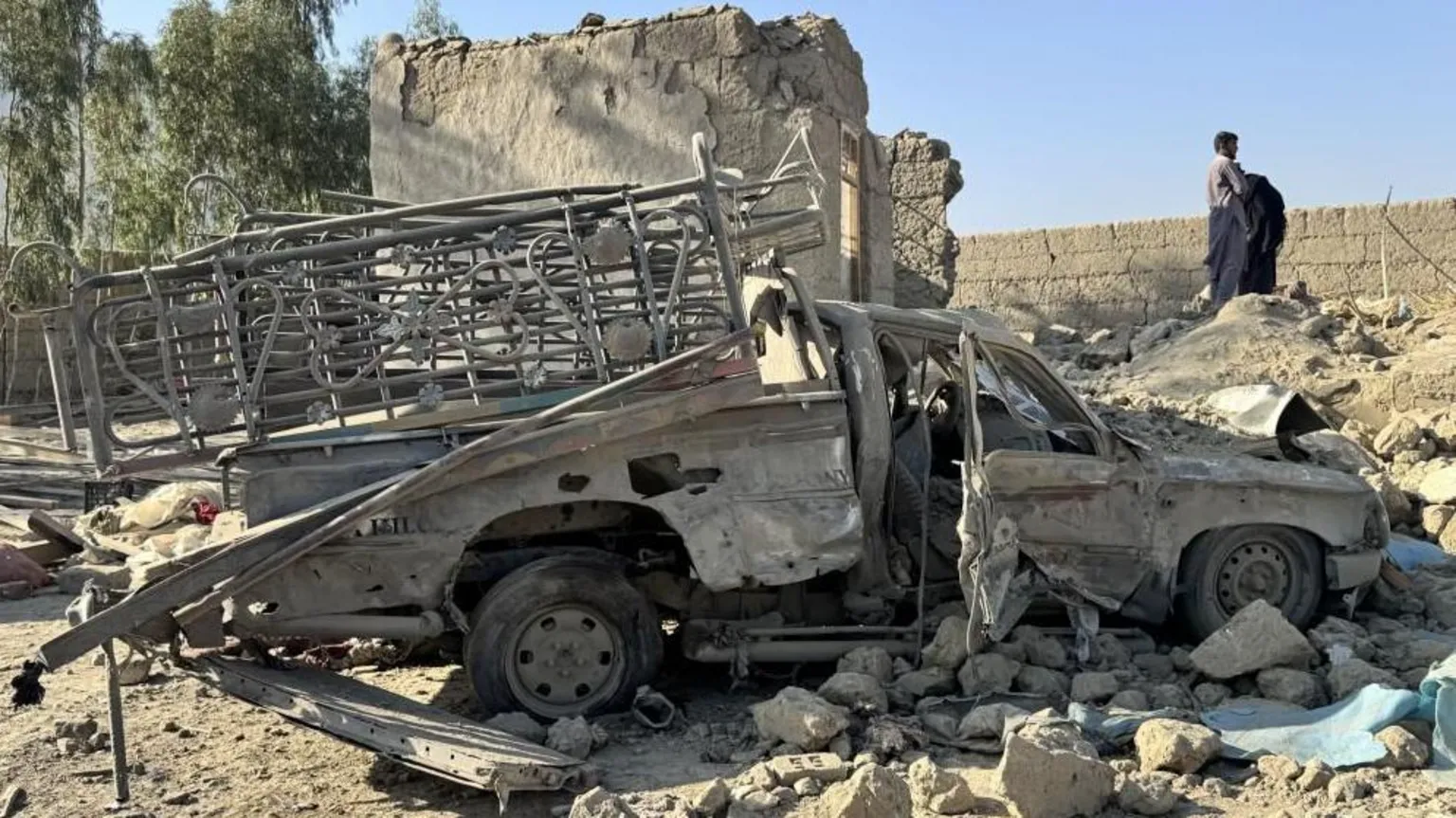
Pakistan has carried out multiple overnight air strikes on Afghanistan, which the Taliban has said killed and wounded dozens of people, including women and children.
Islamabad said the attacks targeted seven alleged militant camps and hideouts near the Pakistan-Afghanistan border and that they had been launched after recent suicide bombings in Pakistan.
Afghanistan condemned the attacks, saying they targeted multiple civilian homes and a religious school.
The fresh strikes come after the two countries agreed to a fragile ceasefire in October following deadly cross-border clashes, though subsequent fighting has taken place.
The Taliban’s defence ministry said the strikes targeted civilian areas of Nangarhar and Paktika provinces.
Officials in Nangarhar told the BBC that the home of a man called Shahabuddin had been hit by one of the strikes, killing about 20 family members, including women and children.
Pakistan’s Ministry of Information and Broadcasting said it had carried out “intelligence based selective targeting of seven terrorist camps and hideouts”.
In a statement on X, it said the targets included members of the banned Tehreek-i-Taliban Pakistan, which the government refers to as “Fitna al Khawarij,” along with their affiliates and the Islamic State-Khorasan Province.
The ministry described the strikes as “a retributive response” to recent suicide bombings in Pakistan by terror groups it said were sheltered by Kabul.
The recent attacks in Pakistan included one on a Shia mosque in the capital Islamabad earlier this month, as well as others that took place since the holy month of Ramadan began this week in the north-western Khyber Pakhtunkhwa province.
Pakistan accused the Afghan Taliban of failing to take action against the militants, adding that it had “conclusive evidence” that the attacks were carried out by militants on the instructions of their leadership in Afghanistan.
The Taliban’s defence ministry later posted on X condemning the attacks as a “blatant violation of Afghanistan’s territorial integrity”, adding that they were a “clear breach of international law”.
It warned that “an appropriate and measured response will be taken at a suitable time”, adding that “attacks on civilian targets and religious institutions indicate the failure of Pakistan’s army in intelligence and security.”
The strikes come days after Saudi Arabia mediated the release of three Pakistani soldiers earlier this week, who were captured in Kabul during border clashes last October.
Those clashes ended with a tentative ceasefire that same month after the worst fighting since the Taliban returned to power in 2021.
Pakistan and Afghanistan share a 1,600-mile (2,574 km) mountainous border.
Consulate General of Pakistan, Los Angeles (USA)
Akhtar Hussain Sandhu
California (USA)
Every year, 5th February is observed as Kashmir Solidarity Day in Pakistan, Kashmir, and in different parts of the world where Pakistanis are residing. The main purpose of observing the day is to honor the freedom struggle of the Kashmiri people against the human rights violations in the Indian-occupied Jammu & Kashmir. It also aims at highlighting the human rights violations by the Indian government and the forces to attract the world community’s attention to the plight of the Muslims. Pakistan supports this struggle for its right to self-determination as enunciated in the United Nations’ charter (Articles 1(2) and 55) and the pledge of a plebiscite in Kashmir made by the Indian government. The Consulate General of Pakistan, Los Angeles (USA), arranged a meeting on 4 February 2026 in which the Muslims and Sikhs participated to express their solidarity with the people of Jammu & Kashmir. Consul General Asim Ai Khan inaugurated the session with the messages of the President, Prime Minister, and Foreign Minister of Pakistan.
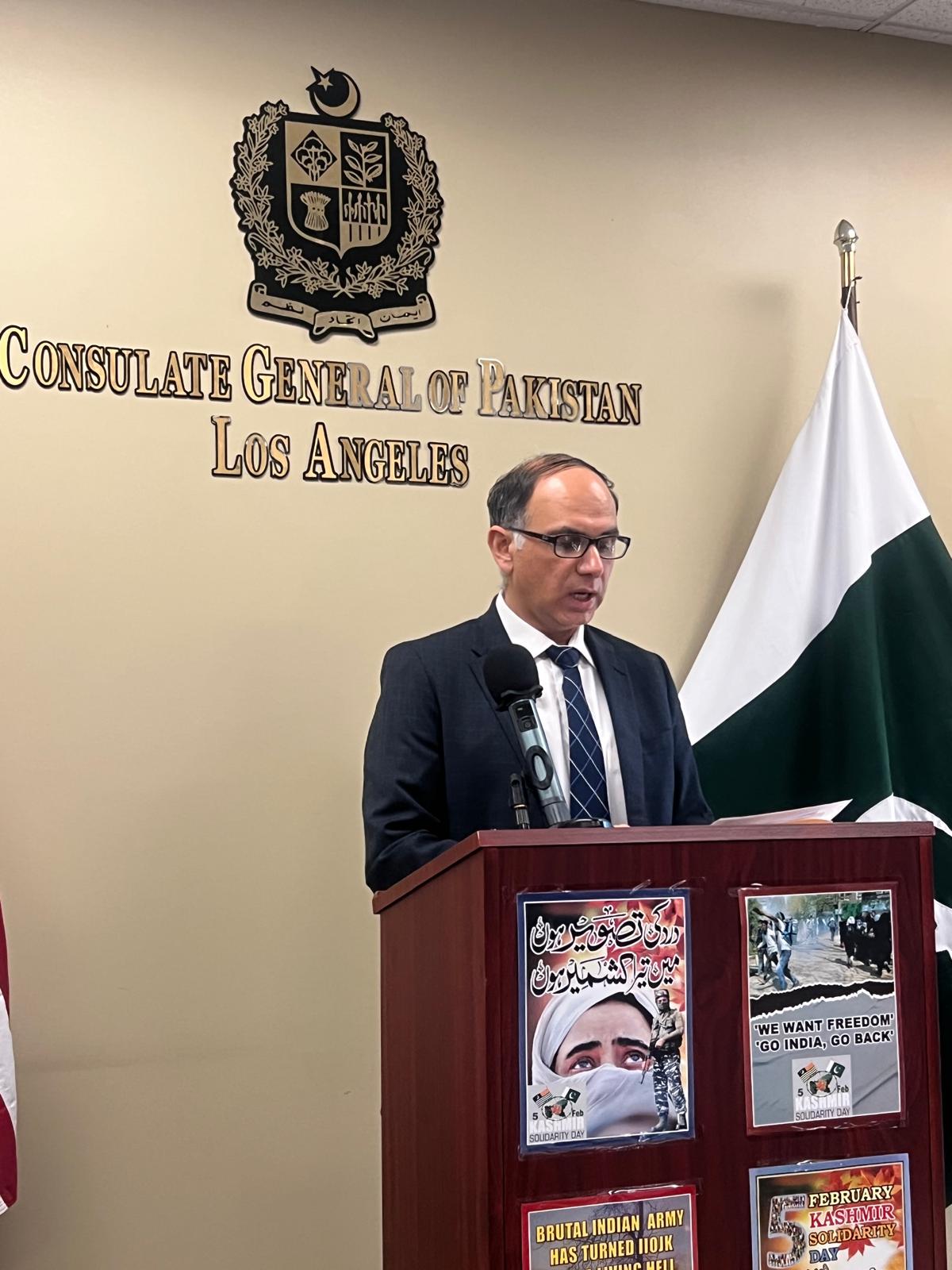
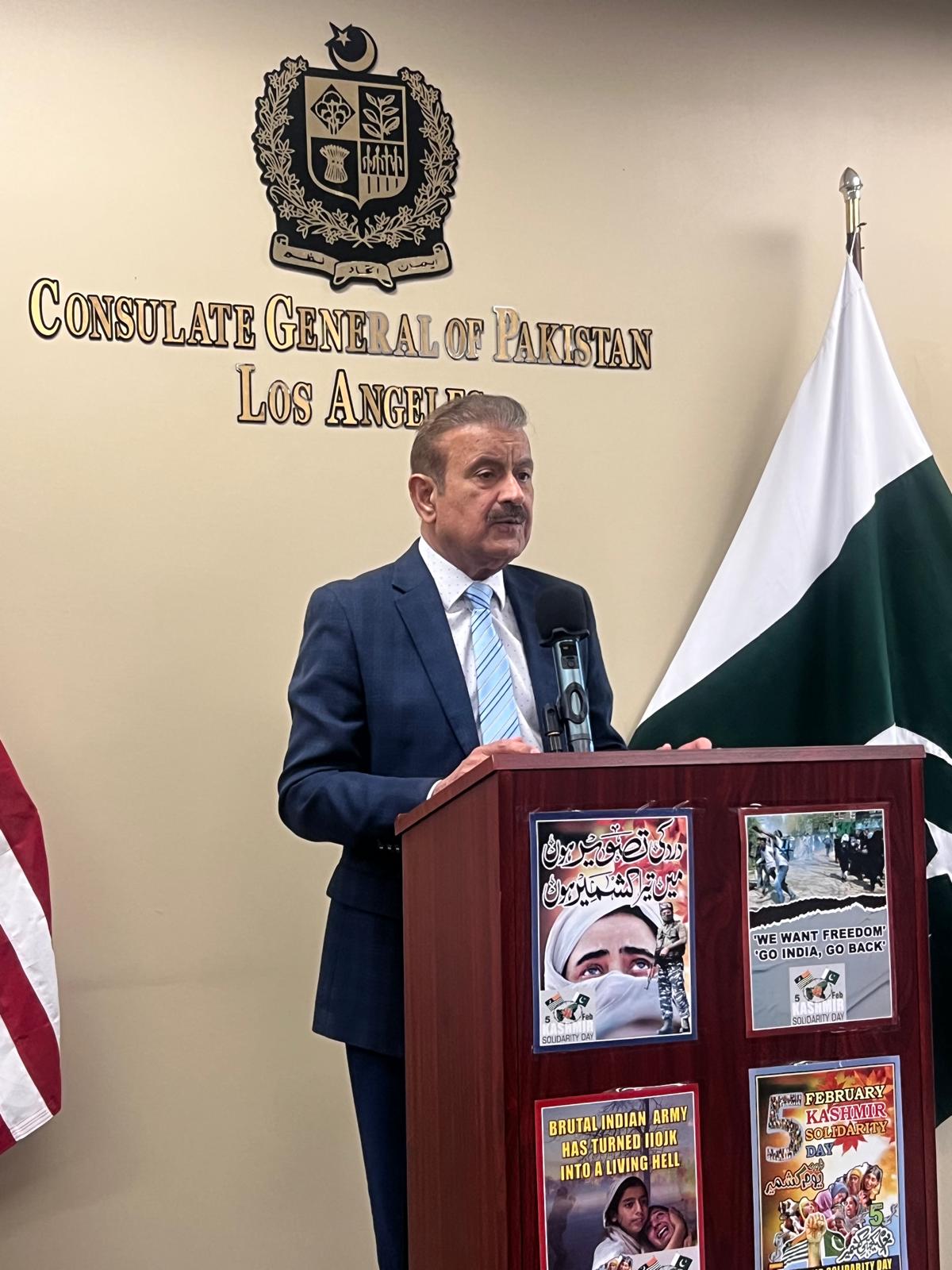
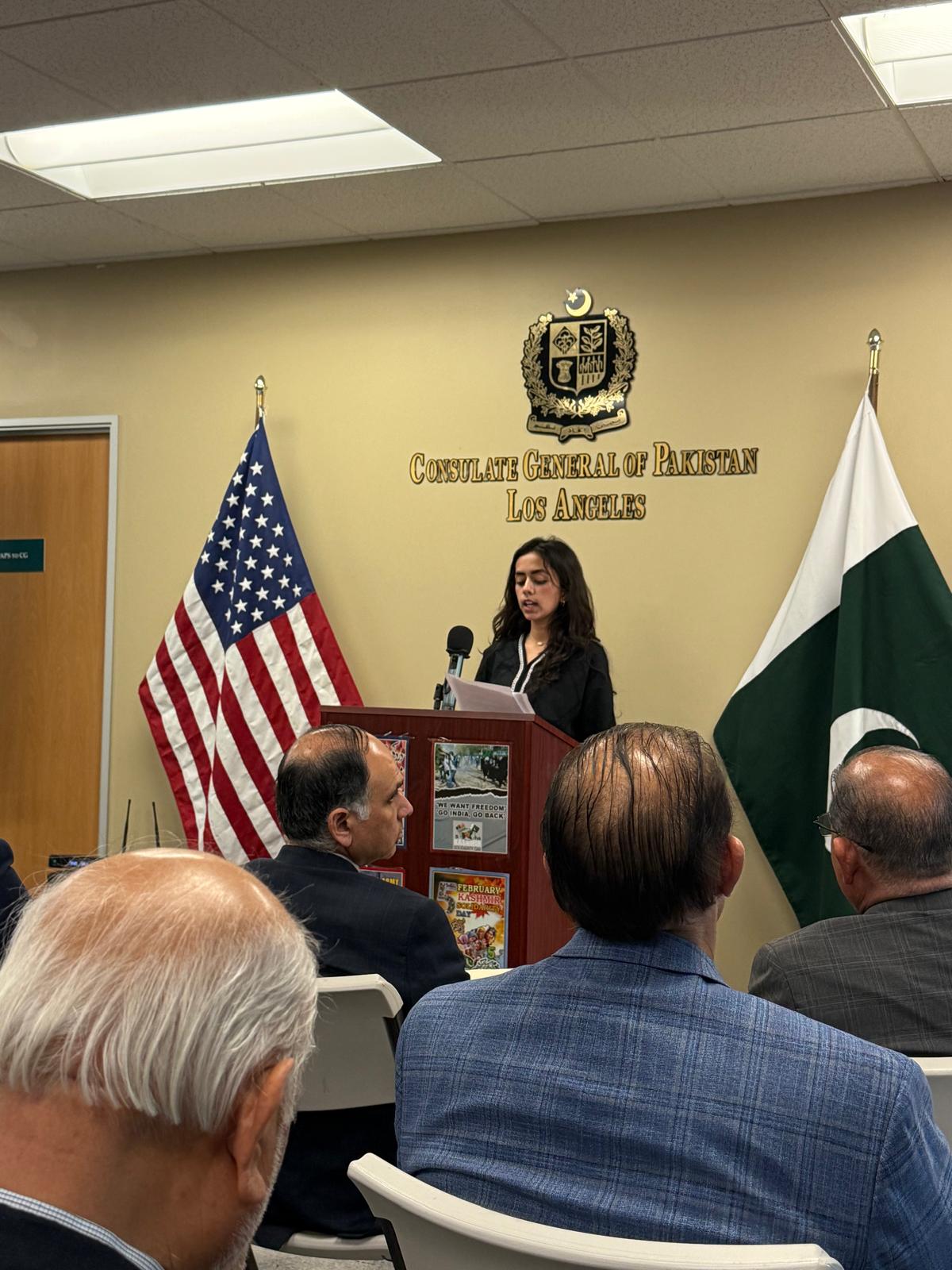
Asim Ali Khan introduced the audience to the background and importance of 5th February. He reiterated the national stance of the Pakistani government that they would always support the Kashmiri freedom struggle and would condemn the brutality of the Indian armed forces in the Indian-occupied Jammu and Kashmir. This was my first appearance as a speaker at an official event, and the arrangements and the audience’s deep interest in Pakistan’s state narrative encouraged me to believe that one day the struggle of the Kashmiri people will bring a shining dawn for posterity. Besides Asim Ali Khan, the host, eminent journalist Arif Zaffar Mansuri, Dr. Akhtar Hussain Sandhu, Sultan Ahmed, and Ismail Keekibhai expressed their concern about the ongoing suffering of the Kashmiri people and pledged full support from the Pakistani government and people. Arif Mansuri said that the international community ought to come forward to rescue the oppressed from the Indian forces and their inhuman treatment of the innocent Muslims of the Indian-occupied J&K.
The program was conducted by a talented young girl, Asma Khan, who beautifully started and ended the seminar. she played a documentary which highlighted beauty of the valley, facts and figures of the martyrs and brutality of the BJP government. Sultan Ahmad, with an impressive administrative and political portfolio in the US, reminded the audience to spread this message at a higher level and that he would be a helping hand in exposing India’s nefarious intentions and human rights violations. I had been invited by Mubashir Khan (Deputy Consul General), but he was in Pakistan, so we could not meet on the occasion. I shared my view that this is a dilemma of human history: humans inflict barbarity upon humans. But the redeeming aspect is that humans endeavor to support the oppressed and condemn the aggressor. Humans ensure and restore peace. It is often perceived that philosophical and technological advanceshaveopened new avenues for conflict resolution and appeasement. Fatality of the wars experienced especially during the 20th century made the world realize to establish a forum of reconciliation, the League of Nations and United Nations, to block the way to future wars and violence settling the dispute through dialogue and negotiations. Civil society organizations, universities, peace-loving projects, published material, and media keep on highlighting the importance of peace, coexistence, interfaith harmony, minority rights, protection of vulnerable social groups, including minority, women, children and the aged, but despite all this exhortation, we see inhuman treatment and brutality in many parts of the world. Look at Jammu & Kashmir administered by India, wherein the innocent Muslims are going through ordeals such as torture, sexual violence, extrajudicial killing, ban of expression, detention, unjustifiable deployment of Indian forces, and psychological hammering. No human ethics and international humanitarian laws allow this maltreatment and repressive measures that the people of Jammu & Kashmir have been experiencing for many decades. The BJP government changed the political and geographical status of Jammu & Kashmir after the revocation of Articles 370 and 35A on 5 August 2019, depriving J&K of its Special Sovereign Status. Although it is never welcomed by the majority of the Kashmiri people but the Indian government did not listen to the people of J&K. Even the Indian Supreme Court on 11 December 2023 upheld the government’s revocation of 370 and 35A and gave observation, JK had no internal sovereignty after its ‘accession’ to India although‘accession’ is a disputed issue and the matter is still pending in the UN. Many dissidents were imprisoned and many have been facing police and court cases. The Indian governments concluded laws, acts such as Public Safety Act and even amendments to justify their repressive and oppressive attitude. Amnesty International expressed concern over the arrests of Muslim and Hindu leaders.
Pakistan is usually blamed by the Indian government for supporting the Kashmiri Muslims, but why were the Hindu leaders arrested by the Indian government? This is to prove that even the Hindus support the Pakistan’s stance on the issue of human rights. The Americans have just celebrated Martin Luther King, Jr.’s day with the message that ‘violence breeds more violence’ and ‘unjust laws are laws at all… and it is a moral duty to defy the unjust laws,’ therefore, the Americans ought to defy unjust laws which are contradictory to human or natural rights.’ Right now, the people of Indian-Occupied Jammu & Kashmir are victims of unjust laws and inhuman treatment by the BJP government. Not only Muslims of the Indian-Occupied J&K, but also the Christians, Achhoot, and Sikhs are also undergoing cruel and ill-treatment. Investigation concludes that the Indian-sponsored killing squad assassinated and targeted the Sikh leaders in England, Canada, Pakistan and the US. It is a moral obligation of the international community to redeem the oppressed people from the tyrannical and dictatorial rule of the Indian government under the Bhartiya Janata Party. Moreover, I do appreciate the international organizations and countries which raise their voice against the violation of human rights in Indian-Occupied J&K as yes, the oppressed Kashmiri people do need the international support in the name of humanity so that the coming generations of the valley can be saved from such a physical torture and mental agony. The world community should become the voice of the voiceless people and ensure the following:
- Withdrawal of the Indian armed forces from the Indian-occupied J&K must be ensured immediately so that the people can live a normal and peaceful life.
- The autonomous status of the Indian-Occupied J&K should be restored to what it was in 2019. Intention to change the demography of the valley must be blocked, and property once owned by the local Kashmiris must be returned to the previous Kashmiri owners.
- A UN resolution to hold a plebiscite in Kashmir is the best way to determine the will of the people.
- An inquiry under the UN umbrella should be conducted to investigate police and court cases against locals in the valley. The findings should be made public so that the world can come to know what brutality has been inflicted upon the innocent people of Indian-occupied J&K.
- The civil society organizations, media people, and UN delegations should be facilitated to visit the region to collect the facts relating to abuse of authority, violence, torture, ban on expression and religious rituals, presence of the Indian army, and police cases against the youth. Fake encounters should also be stopped, and the judicial proceedings should be monitored by the UN emissary.
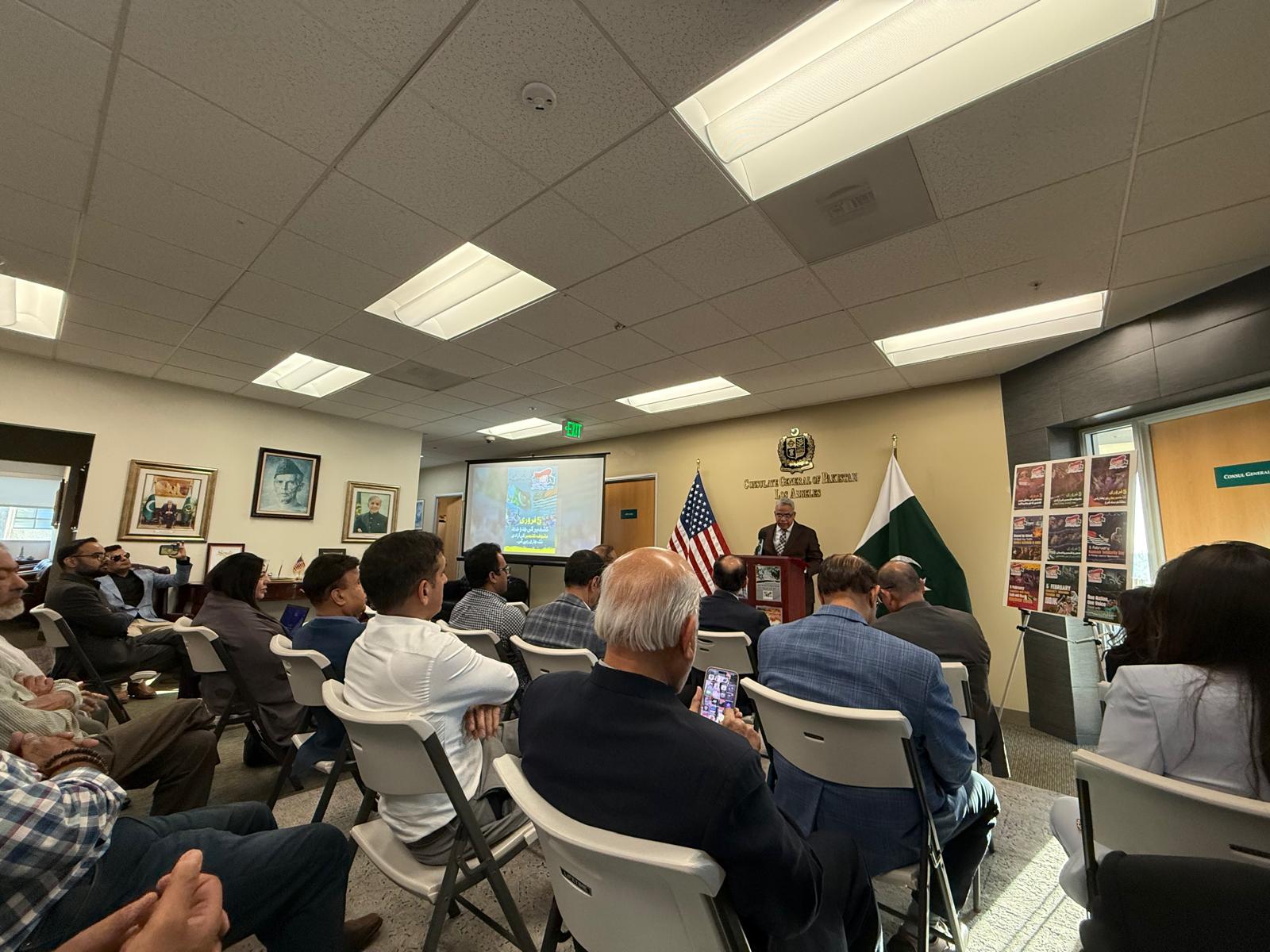
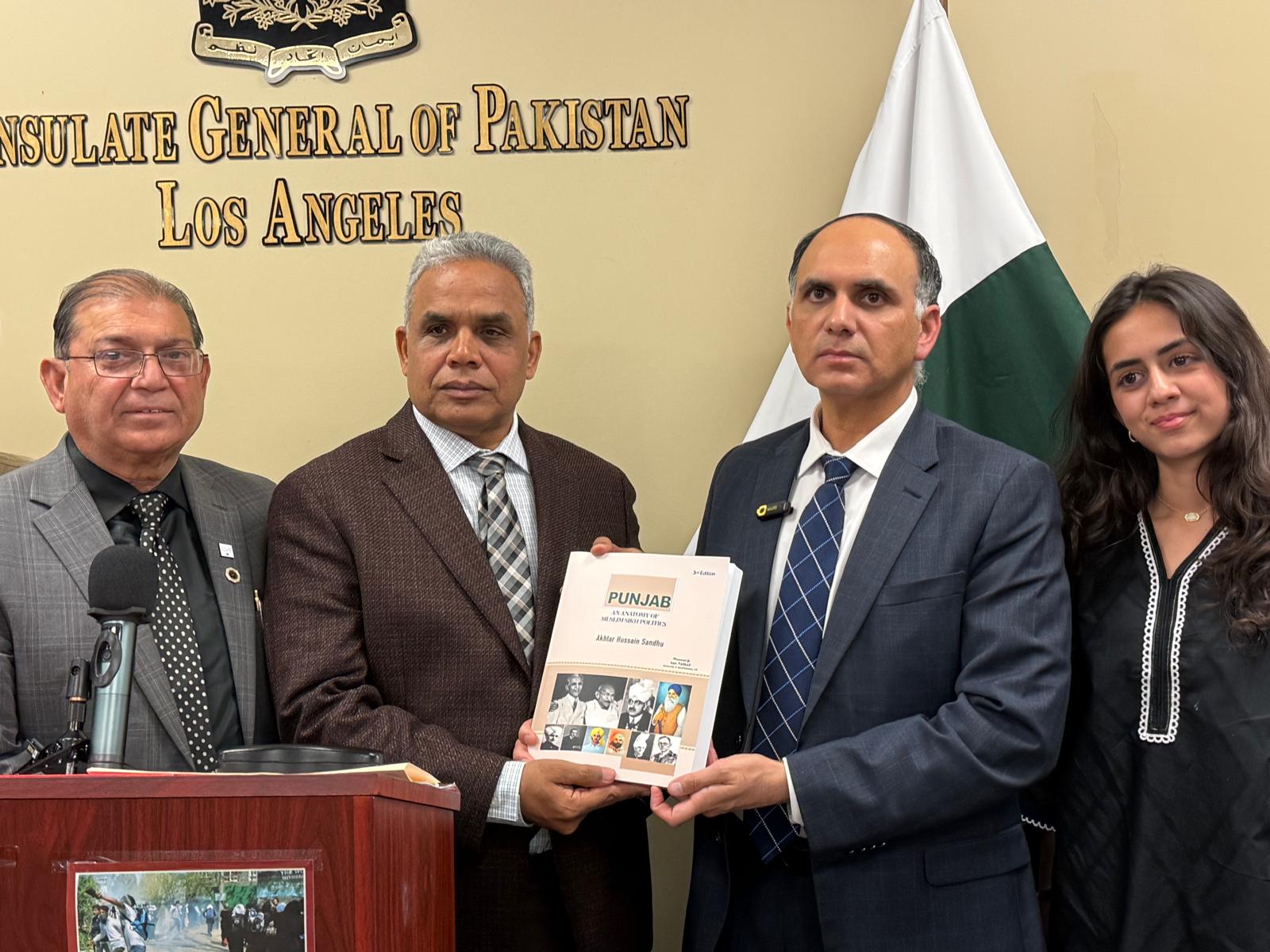
Consul General Asim Ai Khan thanked the scholars and audience. At the end of the program, Navdeep Singh and I presented the 3rd edition of my book, Punjab: An Anatomy of Muslim-Sikh Politics, to Consul General Asim Ai Khan. All the participants gathered in the hall and shared their thought on the subject with each other. This was a great day that sensitized many Muslim and Sikh people about international politics and the violation of human rights in different regions of the world. If this generation plans to convert the world into a peaceful place for posterity, they will have to condemn state violence and extremism existing anywhere in the world.
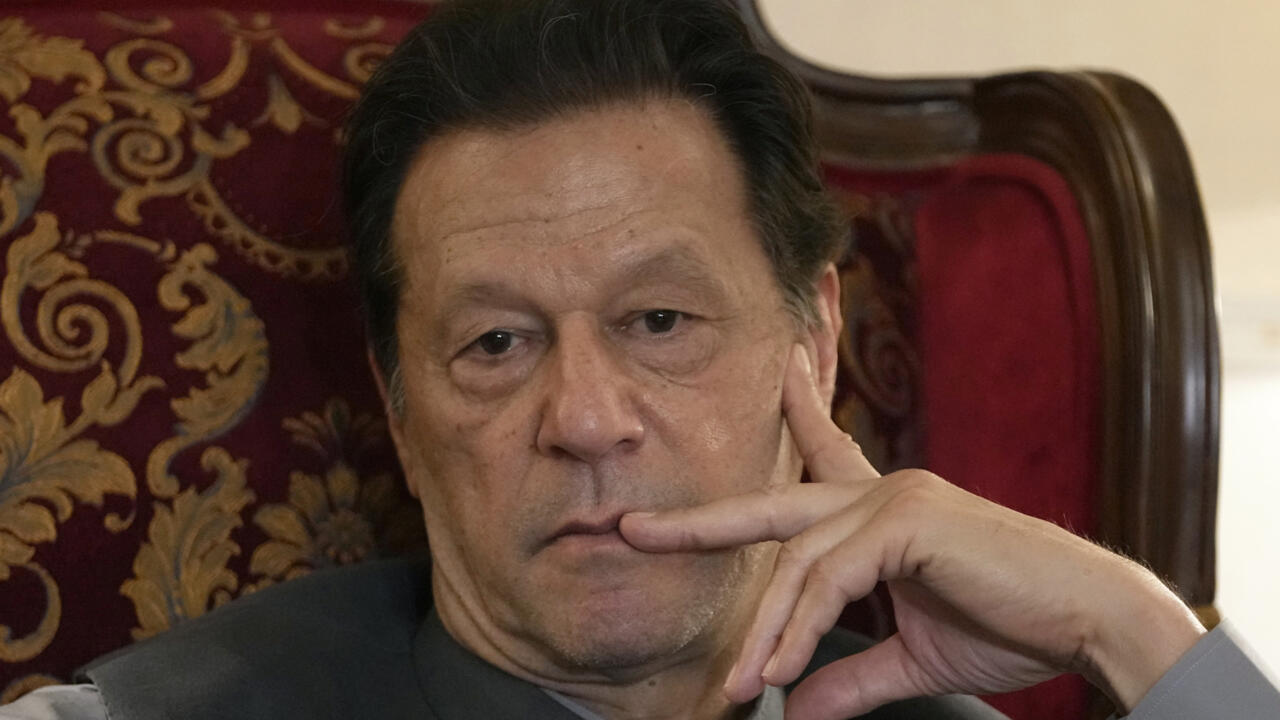
Paris (Imran Y. CHOUDHRY) :- Former Press Secretary to the President, Former Press Minister to the Embassy of Pakistan to France, Former MD, SRBC Mr. Qamar Bashir analysis : When the latest waves of documents connected to the Jeffrey Epstein investigation began surfacing, most of the names that appeared followed a familiar and uncomfortable pattern. The references revolved around social proximity, elite networks, reputational damage, and questions of judgment. Against that backdrop, one name stood apart — not because of scandal, but because of how it was framed.
Imran Khan’s reported mention was different. According to summaries that emerged from the broader document releases, he was not linked to misconduct or impropriety. Instead, he was described in private correspondence as “really bad news” and a “greater threat.” The tone was political rather than personal, strategic rather than social. In a collection of files that cast shadows over many reputations, his distinction appeared to lie in geopolitical discomfort rather than scandal.
That difference matters because it shifts the conversation from morality to strategy. A leader described as a threat is not being accused of vice but of independence. The question then becomes: dangerous to whom, and for what reason? To understand why that framing resonates so strongly in Pakistan, one must revisit a moment that altered the country’s political trajectory. That moment arrived in early March 2022.
On August 9, 2023, The Intercept published a classified Pakistani diplomatic cable documenting a March 7, 2022 meeting between Pakistan’s ambassador to Washington and U.S. Assistant Secretary of State Donald Lu. The document, labeled “Secret,” recorded Washington’s displeasure with Khan’s visit to Moscow on February 24, 2022 — the very day Russia invaded Ukraine. According to the cable, Lu stated that if a no-confidence vote against Prime Minister Khan succeeded, “all will be forgiven in Washington.” Otherwise, he warned, it would be “tough going ahead,” and the prime minister could face “isolation” from Europe and the United States.
The language recorded in the cable is unmistakably conditional, tying bilateral warmth to a specific political outcome. Forgiveness if he is removed; difficulty if he remains.
The sequence that followed intensified scrutiny. The meeting took place on March 7, procedural steps toward a no-confidence vote began on March 8, and by April 10, Khan had been removed from office. Correlation does not prove orchestration, and political transitions are rarely explained by a single document. Nevertheless, the cable demonstrates that diplomatic pressure was applied at a sensitive moment. It also reveals that Washington viewed Khan’s neutrality on Ukraine as a personal policy choice rather than institutional consensus.
Khan’s foreign policy posture had consistently emphasized strategic independence. He refused to grant U.S. military basing rights after America’s withdrawal from Afghanistan, publicly declaring “Absolutely not” when asked about hosting foreign forces. He defended Pakistan’s abstention at the United Nations on Ukraine and rejected public pressure from European diplomats, asking pointedly at a rally whether Pakistan was expected to behave as a subordinate state. He argued that engagement with Russia was necessary to secure affordable energy and food for Pakistan’s struggling population.
Beyond Ukraine, Khan elevated the issue of Islamophobia on the global stage, pressing the United Nations to recognize anti-Muslim discrimination and urging respect for religious dignity. He framed Pakistan as a country that would engage with all powers without entering rigid alliances. Supporters viewed this as sovereignty in action, while critics considered it diplomatic miscalculation. What cannot be denied is that his posture disrupted established expectations about alignment in a polarized global environment.
Following his removal, Pakistan’s external positioning shifted noticeably. Military-to-military engagement with the United States regained momentum, and reports surfaced of Pakistani-manufactured ammunition appearing in Ukraine. Diplomatic warmth between Islamabad and Western capitals returned, and new defense cooperation frameworks were discussed. These developments do not conclusively prove that pressure determined political outcomes, but they align with the cable’s suggestion that a change in leadership would ease tensions and remove the “dent” in relations.
It is within this broader context that the contrast with the Epstein-related references acquires symbolic weight. Many powerful men whose names appeared in those documents faced reputational questions because of association with a disgraced financier. Imran Khan’s distinction, by contrast, was reportedly rooted in strategic apprehension rather than personal scandal. He was not depicted as compromised; he was characterized as disruptive.
The cable published by The Intercept reinforces that interpretation. Its “assessment” section records the Pakistani ambassador’s view that Lu could not have delivered such a strong message without approval from higher authorities. Whether or not that assessment was accurate, it underscores how the exchange was perceived inside Pakistan’s diplomatic apparatus. The document captures a moment when international expectations and domestic politics collided.
Since Khan’s removal, Pakistan has experienced deep polarization, economic strain, and intensified debate over the balance of civilian and military authority. His critics argue that his governance record warranted parliamentary removal and that institutional checks functioned as designed. His supporters argue that his defiance of geopolitical alignment invited external pressure that altered the course of domestic politics. The truth may reside in the interplay of both internal and external forces.
What the documentary record shows is not a signed directive of regime change, but evidence of diplomatic leverage. In international politics, leverage often operates through incentives and signals rather than commands. The phrase “all will be forgiven” is not an order; it is a conditional promise. Such language does not prove conspiracy, but it does demonstrate expectation.
That is why the distinction matters. The Epstein files, as publicly discussed, did not place Imran Khan among scandal-tainted elites. Instead, they appear to reflect concern about his independent trajectory. The March 7 cable then provides context for why that concern may have existed, showing that his policies generated friction at the highest levels of diplomacy. In a world structured around predictable alignments, independence can be unsettling.
Imran Khan’s story, therefore, is not merely about allegations or denial. It is about how sovereignty interacts with global power. He was not framed in those documents as morally compromised; he was framed as politically inconvenient. Whether that inconvenience contributed to his removal remains debated, but the documentary evidence confirms that it was noticed.
In the end, what set him apart was not scandal but stance. In a system accustomed to compliance, saying no can carry consequences. The documents do not resolve the debate over his ouster, but they illuminate the pressures surrounding it. And in doing so, they explain why, among many powerful names, one stood apart.

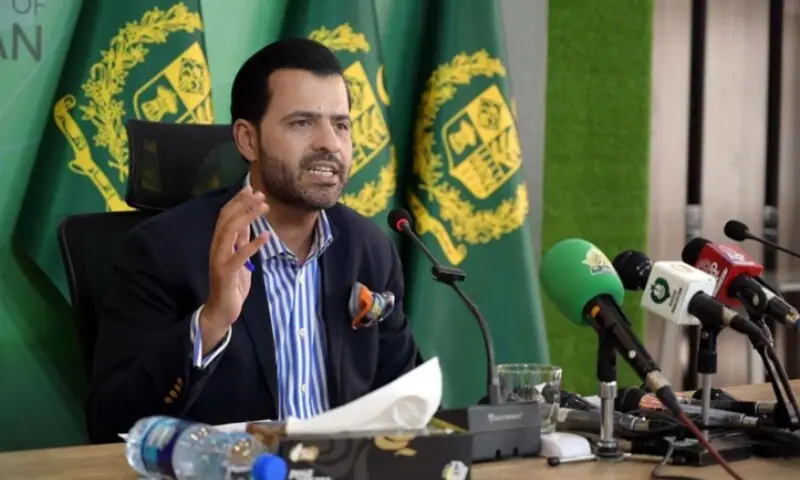
‘National security is non-negotiable’: Parliamentary secretary on Afghanistan strikes
What’s the best way to learn a new language?
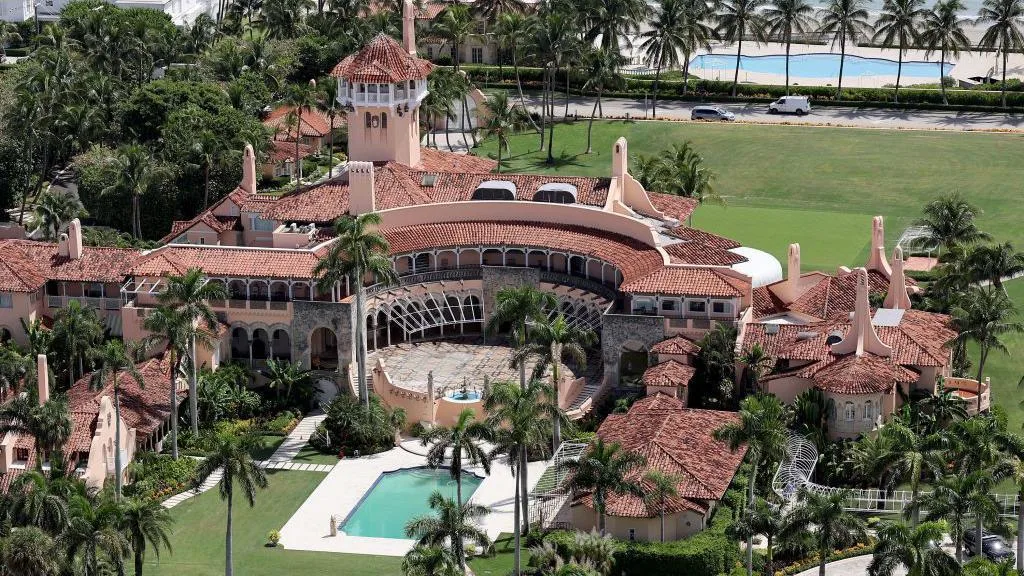
Armed man killed after entering secure perimeter of Trump’s residence, Secret Service says


-

 Europe News12 months ago
Chaos and unproven theories surround Tates’ release from Romania
-

 American News12 months ago
Trump Expels Zelensky from the White House
-

 American News12 months ago
Trump expands exemptions from Canada and Mexico tariffs
-

 American News12 months ago
Zelensky bruised but upbeat after diplomatic whirlwind
-

 Art & Culture12 months ago
The Indian film showing the bride’s ‘humiliation’ in arranged marriage
-

 Pakistan News8 months ago
Comprehensive Analysis Report-The Faranian National Conference on Maritime Affairs-By Kashif Firaz Ahmed
-

 Art & Culture12 months ago
International Agriculture Exhibition held in Paris
-

 Politics12 months ago
US cuts send South Africa’s HIV treatment ‘off a cliff’