
Pakistan News
Do not raise your head


Paris (Imran Y. CHOUDHRY) :- Former Press Secretary to the President, Former Press Minister to the Embassy of Pakistan to France, Former MD, SRBC Mr. Qamar Bashir analysis : This perhaps is the unwritten rule of the Deep State that has held Pakistan in a tight grip since its very inception. This command does not apply only to the political elite but extends to every institution and stakeholder of the state—civilian or military, public or private, individual or collective. It ensures that all organs of the state—judiciary, bureaucracy, legislature, media, and the business community—remain subservient to its control. Dignity and independence are liabilities; unquestioning obedience is the only accepted virtue.
Having served closely in both media and civil service, and having traveled and worked with Presidents, Prime Ministers, Governors, and Chief Ministers—especially in Balochistan—I have witnessed firsthand that no government, no leader, and no public figure survives politically unless they surrender completely to the dictates of the Deep State. Those who dare to raise their heads or express a vision independent of establishment control are swiftly removed, disgraced, or eliminated. Political transitions, cabinet reshuffles, judicial rulings, and even corporate growth trajectories are carefully managed by forces outside the constitutional framework.
In Balochistan, this power dynamic is especially severe. Leaders such as Sardar Akhtar Mengal and Nawab Akbar Bugti, who tried to govern their province on their own terms, were either ousted, assassinated, or politically isolated. Successive provincial governments have rarely completed their terms. They were either pressured to resign or removed by engineering political turmoil under establishment oversight. This trend clearly reflects that governance in Balochistan has less to do with performance and more to do with submission to invisible commands.
The Deep State’s reach extends well beyond politics and into the heart of Pakistan’s economy. No industrialist, real estate developer, banker, manufacturer, or transporter can operate independently if their business model threatens or competes with the economic interests of the establishment. The military’s corporate empire—estimated to be worth over $40 billion—controls banks, insurance firms, cement and cereal plants, schools, agricultural estates, and retail chains. Businesses that pose a threat or refuse to align with these interests are often brought to heel through financial strangulation, legal troubles, or forced compliance. This coercion stifles competition, innovation, and fair enterprise. Economic policy is crafted not with national development in mind but to favor the monopolistic hold of military-run conglomerates.
Pakistan’s political history reinforces this power structure. The military has ruled directly for nearly half of the country’s existence—Ayub Khan (1958–69), Yahya Khan (1969–71), Zia-ul-Haq (1977–88), and Pervez Musharraf (1999–2008)—and indirectly during most of the remaining years through engineered coalitions and installed puppets. Civilian leaders such as Zulfikar Ali Bhutto, Benazir Bhutto, Nawaz Sharif, and Imran Khan were removed, not for incompetence or corruption, but for crossing the invisible red lines laid down by the establishment.
Bhutto was hanged after a farcical trial. Benazir was dismissed twice and later assassinated under mysterious circumstances. Nawaz Sharif was disqualified thrice; despite popular support, he never completed a term. And Imran Khan, brought into power in 2018 by the military itself, was discarded when he sought to assert independence in foreign and domestic policy.
In the 2024 general elections, despite being widely believed to hold majority public support, his mandate was brazenly stolen using a combination of judicial verdicts, election commission maneuvering, and administrative suppression. He remains incarcerated, while political stooges have been conveniently installed to rubber-stamp decisions made elsewhere.
The consequences of this unchecked power are now evident across every sector of national life. Pakistan has alienated all of its neighbors—India, Afghanistan, and Iran—due to erratic policies and border management failures. The major global powers are wary of investing or engaging with Pakistan, citing political instability and military overreach. Foreign direct investment has dried up. The entire country is in the grip of resurgent terrorism. Extremist violence, once restricted to tribal areas, has now spread to major cities, disrupting daily life and national morale.
Unlike the past, when certain provinces viewed the military favorably, today the people across Pakistan—Punjab, Sindh, KP, and Balochistan—are increasingly opposed to military dominance and are openly challenging the high-handedness of the establishment. This nationwide disenchantment is unprecedented.
Meanwhile, Pakistan’s borders are insecure and porous. There is rampant cross-border infiltration of terrorists, and smuggling of arms, drugs, money, and fuel has become routine. Billions of dollars spent on building barbed-wire fencing have failed to prevent these illegal flows. The state has lost control over many stretches of the frontier. Law enforcement is either compromised or powerless in the face of this organized criminal enterprise, which often flourishes under patronage.
The country’s prisons are filled with political opponents and dissenters. Those who align themselves with the Deep State are released, rewarded, or protected, while others are brutally persecuted. Due process has collapsed. Journalists, students, politicians, and activists languish in jails without trial. The judiciary, historically a collaborator in legitimizing military coups under the so-called doctrine of necessity, has now become another instrument of suppression, rubber-stamping decisions of convenience.
Pakistan’s economy is in crisis. Inflation is crushing the middle and lower classes. The currency has lost value. The youth are disillusioned, with record levels of emigration by those who see no future in their homeland. The GDP per capita continues to decline. Public services are broken. Institutions are hollowed out.
This is the price of prolonged subjugation to an unelected force. The military, which is supposed to be a branch of the state, has acted as if it is the tree itself. But a branch cannot remain standing if the trunk falls. Unfortunately, this truth has remained unacknowledged since 1947. The Deep State has become an entity that thrives on control and intimidation. Its political engineering, economic monopolies, and suppression of dissent have ensured that Pakistan remains isolated, unstable, and impoverished.
Unless this cycle is broken—either by a people’s revolution or reform from within the ranks of the military itself—the nation will continue to drift toward deeper chaos. There seems little hope from within the existing structure. The choice now lies with those who wield power in the shadows. If they continue to act as the masters of this nation rather than its servants, Pakistan will continue to lose its standing in the community of nations, and its people will remain trapped in despair.
The time for introspection is now. Let wisdom prevail before it is too late. Peace be upon you all.

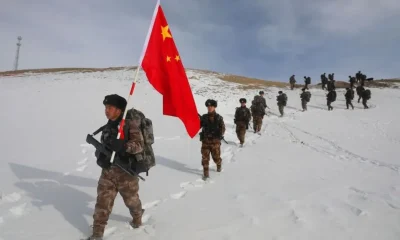
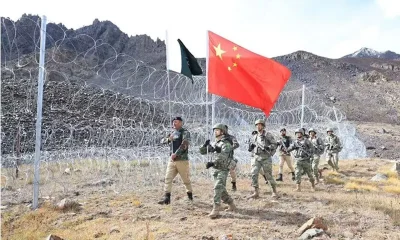


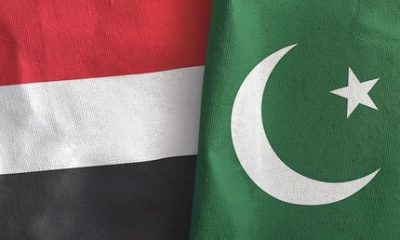


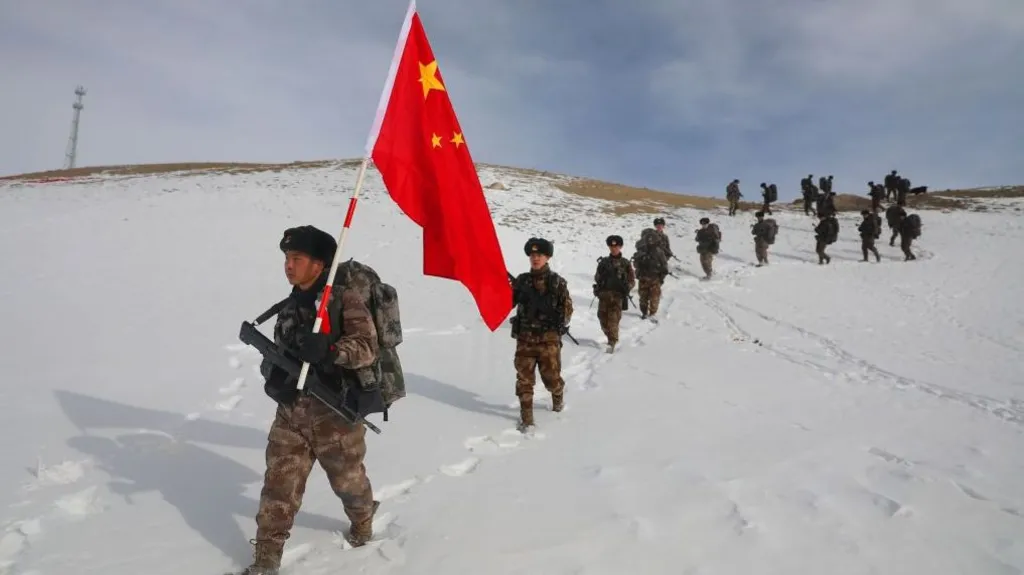
For decades, India has refused to recognise a Pakistan-China boundary in a disputed part of the Himalayas that Delhi claims as its own.
But last week, Pakistan and China formalised a boundary in a remote part of the mountainous region, drawing a sharp response from Delhi.
The two countries signed the Pakistan-China Boundary Joint Commission, an agreement which Pakistan described as a “significant milestone” that would deepen cooperation on border management, trade and connectivity between India’s regional rivals.
Delhi rejected the move as having no legal basis, saying it did not recognise any Pakistan-China boundary located in territory it claims as Indian.
The announcement comes at a particularly sensitive moment.
India and China are seeking to stabilise their relationship after years of military tensions along the Line of Actual Control (LAC), the disputed line separating their forces along much of their Himalayan frontier. At the same time, Beijing and Islamabad are deepening cooperation along a neighbouring stretch of the frontier that India also claims.
“There is no boundary between Pakistan and China. We reject the so-called Joint Commission, which is without any legal basis,” Indian foreign ministry spokesman Randhir Jaiswal said.

The commission concerns the Pakistan-China frontier, including the Shaksgam Valley, a roughly 5,180 sq km tract that Pakistan ceded to China in 1963 but which India claims as part of its territory in Ladakh.
India says the territory was part of the former princely state of Jammu and Kashmir and was illegally occupied by Pakistan before being ceded to China. The Indian government has never recognised the agreement and considers it illegal and invalid.
This history explains the particular sensitivity of Wednesday’s announcement.
“Pakistan has no locus standi to enter into arrangements concerning Indian territory under its illegal and forcible occupation,” the Indian foreign ministry said.
Pakistan says Jammu and Kashmir remains a disputed territory, and argues that India therefore has no standing to challenge its 1963 boundary agreement with China. It regards the agreement as valid.
Jabin T Jacob, professor at the Department of International Relations and Governance Studies at Delhi’s Shiv Nadar University, said the new development represented the revival of an old mechanism rather than an entirely new arrangement.
“A joint boundary commission is provided for in the 1963 Sino-Pak Agreement, the only issue at hand is the timing of its operationalisation,” he told the BBC.
He said there could be several reasons for the timing, including China’s broader effort to demarcate its boundaries and a desire to institutionalise exchanges and movement along a frontier at a time when Pakistan’s other borders have experienced conflict and instability.

Jacob said India should be “worried” by the development. More importantly, he said, the move appeared to disregard a provision in the 1963 treaty itself.
Article 6 of the agreement provided for its renegotiation once the Kashmir dispute was settled with whichever country ultimately controlled the territory, Jacob said.
For India, Jacob said, the problem is compounded by the international information environment.
“China’s relative dominance of the international media and information landscape – [with] CGTN, CRI, presence on social media – relative to India allows it to put forward its narrative and maps globally while India is limited to fulminations that other world capitals are likely to ignore,” he said.

That concern is distinct from the practical management of the frontier itself. Pakistan and China already have extensive infrastructure and connectivity links across the region, including the China-Pakistan Economic Corridor (CPEC) and the Karakoram Highway.
Husain Haqqani, former Pakistani ambassador to the US and now a senior fellow at Anwar Gargash Diplomatic Academy and Hudson Institute, said the new commission was both practical and political.
“It is a combination of both,” Haqqani told the BBC. “It is a mechanism to enhance border and boundary cooperation, prevent illegal crossings and protect the strategic infrastructure tied to CPEC.”
He said it also served as a signal to India that Beijing continued to view Kashmir through the Pakistani prism.
“China has never accepted India’s position on Kashmir and China views Gilgit-Baltistan from the Pakistani, not Indian prism,” Haqqani said, referring to the region in Pakistan-administered Kashmir that borders China and which India claims as part of its territory.
Haqqani said Islamabad’s position had evolved in response to developments in Indian-administered Kashmir.
“Pakistan still maintains that the final status of Jammu and Kashmir is yet to be decided,” he said. “But since India has made internal changes – for example, the abrogation of Article 370 – in its part of Kashmir, Pakistan sees no issue with simply institutionalising what has been de facto with China since 1963.”

For Beijing, the arrangement also fits into a broader pattern of using its relationships with neighbouring states to manage and signal its position towards India.
Haqqani said reassurance to Pakistan on Kashmir was of both strategic and geopolitical value to Beijing.
“On the strategic front it further deepens ties with Pakistan and on the geo-strategic front it reinforces for India its fear of a two-front threat from China and Pakistan, which pleases Pakistan and benefits China.”
The timing of the statement, say experts, is also significant.
“China always plans its decisions months, if not years, in advance so the decision to operationalise a joint boundary commission must have been made some time back,” says Haqqani.
“The release of this information was timed for after President Xi Jinping’s recent Brics summit trip to send Pakistan a message of reassurance in the strategic partnership, and India a reminder that multilateral engagement does not translate into any change in China’s vision for South Asia.”
But Jacob cautioned against interpreting every aspect of the development as a direct military move against India.
“There aren’t any immediate or apparent implications for the LAC as of now,” he said.
That suggests that the significance of last week’s announcement may lie less in an immediate change to the disputed Himalayan frontier than in the gradual institutionalisation of arrangements that India has consistently rejected.
India’s position, Jaiswal said, remained “clear and consistent”: any attempt to legitimise what Delhi considers Pakistan’s illegal occupation of Indian territory is unacceptable and has no bearing on India’s sovereignty.
But Haqqani believes the dispute goes beyond the legalities of borders.
“The key disagreement between India and China about the border and boundary is geo-strategic, not cartographic,” he said. “So there is a limit to what border negotiations and border management mechanisms can achieve.”
Pakistan, he added, remained “China’s secondary deterrent against India” – and Beijing’s engagement with Islamabad would continue to send that message to Delhi.
Taken From BBC News
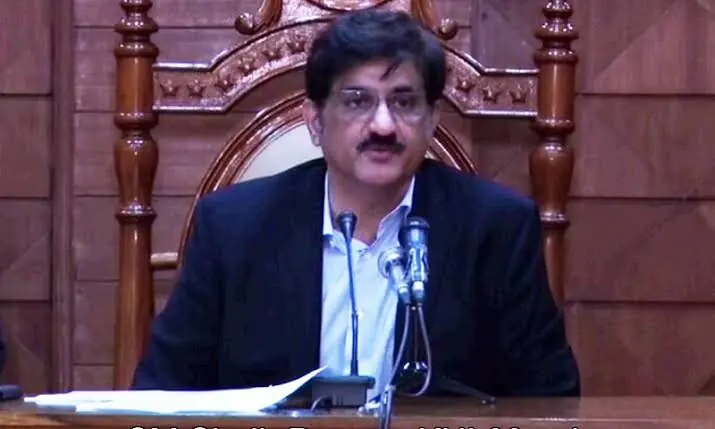
KARACHI: Sindh Chief Minister Syed Murad Ali Shah on Wednesday reviewed the progress against poliovirus, noting that Sindh had reduced its polio burden from 23 cases in 2024 and nine in 2025 to just one case so far in 2026. However, environmental surveillance showed that the virus is still present in a few high-risk areas.
Chairing a meeting of the Provincial Task Force (PTF) on Polio Eradication, the CM reaffirmed the government’s commitment to eliminating the disease and directed authorities to intensify vaccination, surveillance and community engagement efforts ahead of the September 21-27 Sub-National Immunisation Days (SNIDs) campaign.
“The progress achieved by Sindh is encouraging and reflects the hard work of our health workers, district administrations and partner organisations, but our mission will only be completed when every child is protected, and the virus is eliminated from every district,” said Murad Ali Shah.
“No child should remain unvaccinated due to negligence, weak supervision or lack of follow-up.”
Reviews preparations for week-long campaign beginning on 21st
The meeting, held at CM House, was attended by Health Minister Dr Azra Fazal Pechuho, chief secretary Asif Hyder Shah, Mayor of Karachi Murtaza Wahab, IG Police Sindh Javed Alam Odho, commissioner of Karachi Hassan Naqvi, provincial secretaries, provincial coordinator of Emergency Operations Centre (EOC) Shaharyar Gul, Sindh government partners, and deputy commissioners. From other districts, commissioners, DIGs, deputy commissioners and SSPs participated via video link.
Briefing the meeting, Health Minister Dr Azra Fazal Pechuho said Pakistan’s wild poliovirus (WPV1) cases have declined sharply from 74 in 2024 to 31 in 2025 and only three so far in 2026. Sindh has recorded a single case this year, reported from Sujawal on February 10, compared to nine cases last year and 23 in 2024.
In-charge of EOC Shaharyar Gul informed the chief minister that environmental surveillance data shows a significant reduction in virus circulation across the province. The number of positive environmental surveillance sites has fallen from a peak of 29 in March 2025 to only five in August 2026. Outside Karachi, all 14 surveillance sites are currently negative, while six of Karachi’s 15 sites remain positive, indicating that transmission is increasingly confined to limited pockets of the city.
The meeting participants were told that the absence of confirmed polio cases in Karachi during the 2025 high-transmission season, despite some positive environmental samples, reflects stronger population immunity achieved through routine immunisation and repeated vaccination campaigns.
Chief secretary Asif Hyder Shah said that sustained immunisation efforts have helped prevent clinical cases even where environmental surveillance continues to detect virus circulation.
Expressing satisfaction over the declining trend, the chief minister directed all commissioners, deputy commissioners and district health authorities to adopt a zero-tolerance approach towards missed children, refusals and operational gaps.
Reviewing surveillance findings, he ordered intensified vaccination and monitoring efforts in Karachi and other identified high-risk areas, full implementation of the Karachi Action Plan 2.0, stronger coordination among district administrations and health authorities, closer monitoring of migrant and mobile populations and improved routine immunisation coverage in underserved communities.
EOC coordinator Shaharyar Gul reported that nearly three million oral polio vaccine (OPV) doses and 2.89 million booster doses were administered in Karachi, while campaigns in other divisions delivered approximately 2.7 million OPV doses and 2.58 million booster doses. Expanded-age vaccination strategies helped reach older children through schools and community-based interventions.
The chief minister appreciated the efforts of frontline workers, teachers, community mobilisers and health staff working in remote and hard-to-reach areas, describing them as the backbone of the eradication programme.
The task force was informed that after the July 2026 SNIDs campaign, a special 10-day follow-up drive was launched to vaccinate children who had initially been missed. Of 146,149 missed children, more than 23,500 were subsequently vaccinated through targeted efforts focused on refusals and unavailable children.
Mr Shah directed district administrations to further reduce refusal rates through stronger community engagement and public awareness campaigns, emphasising that building trust with parents remains critical to the success of the programme.
The meeting reviewed preparations for the September 21-27 SNIDs campaign, during which nearly 10 million children under five will be vaccinated across Sindh. The campaign will cover 23 full districts and selected union councils in seven partial districts, with more than 80,000 frontline workers participating.
Officials said over 26,000 police personnel have been assigned security duties. The chief minister reiterated the provincial government’s financial support for the campaign and noted that incentives for frontline workers had been increased by 28 per cent.
He directed all districts to complete remaining preparedness measures, including vaccine supply, logistics, workforce deployment and supervision arrangements, before the campaign begins.
The chief minister also reviewed campaign quality indicators and was informed that Sindh has continued to maintain strong performance standards while pursuing key reforms in routine immunisation, surveillance, staffing and community engagement.
Published in Dawn, September 17th, 2026
• Petroleum dealers lament lack of clarity on payment mechanism, timeline
• PM wants facilitation desks to help people trying to buy subsidised fuel
• Ogra attributes hike to elevated crude prices despite decline in int’l rates
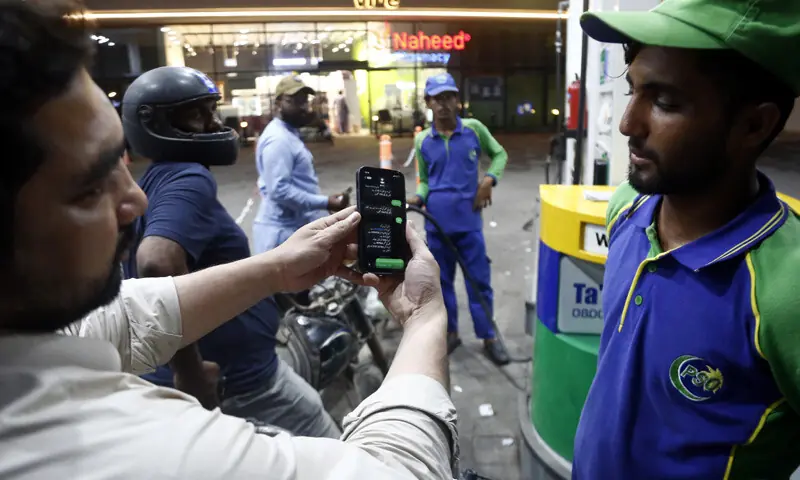
ISLAMABAD: Even as members of the public who have signed up for the PM’s Fuel Relief Scheme queued up at fuel pumps late on Wednesday night, petroleum dealers were still not clear about the mechanism whereby they would be compensated.
The concern was voiced by the Pakistan Petroleum Dealers Association (PPDA) during a presser in Karachi, where its chairman Malik Khuda Bakhsh said that no fuel pump could afford to bear a loss of Rs100 per litre without clarity on how they will be compensated.
He claimed that between the petroleum ministry, Oil and Gas Regulatory Authority (Ogra) and even the finance ministry, no one had been able to answer their questions.
“Officials from Ogra and oil marketing companies say that the petroleum ministry will possibly pay the subsidy amount, whereas ministry officials maintain that payments will be made by the finance ministry, while finance ministry officials assure us that the State Bank will release the funds in a day or two,“ Mr Bakhsh added.
A day earlier, the National Steering Committee on Fuel Subsidy — chaired by Deputy PM Ishaq Dar — had ordered that payments to fuel stations under the PM’s scheme be processed within 24 hours through the State Bank of Pakistan.
However, Mr Bakhsh said the federal government had assured dealers that they would be taken into confidence before the launch of the fuel relief package, but lamented that no such consultation took place.
”The government has to understand that if payments are not reimbursed in time, many dealers will stop participating in [the scheme], as many previous promises were also not fulfilled by the government,” he added.
PPDA Vice Chairman Tariq Hassan said that around 14,000 dealers across the country have been trying desperately to contact the government over the past three days, adding that whenever Islamabad wants to enforce something, it stops communication.
Another vice chairman, Anwar Kamal, said that if the scheme was to be successful, the government must negotiate with dealers, adding that dealers could not afford to have billions tied up for a long period under this scheme.
Mr Bakhsh later told Dawn they had been invited to a virtual meeting with the relevant federal secretary on Thursday morning.
He added that Ogra officials had also reached out to brief him, but he had asked for that information in writing, so he could relay that to the members of his association.
Facilitation desks
Earlier, Prime Minister Shehbaz Sharif ordered authorities to set up facilitation desks comprising administration officials, volunteers and petrol pump staff to assist citizens in easily obtaining fuel subsidy under the special relief scheme, which was rolled out across the country at Wednesday midnight, following the launch of the pilot phase in Islamabad.
Presiding over a meeting to review progress on the scheme, PM Shehbaz directed that personnel deployed at the facilitation desks should guide eligible citizens and provide them with all possible assistance in registration and other necessary procedures.
The prime minister also asked the relevant authorities to remain proactive in creating public awareness about the scheme, which will benefit people from all four provinces, Azad Jammu and Kashmir and Gilgit-Baltistan.
The meeting was informed that the scheme had been designed in a simple and easy-to-understand manner for the public. Only four pieces of information were required for registration: the applicant’s CNIC number, vehicle number plate, province of registration and vehicle registration date.
According to an official, the number of successful registrations was gradually rising, while provincial governments were extending “full cooperation” for nationwide implementation of the scheme.
Oil prices
Meanwhile, notifying fresh POL rates on Wednesday night, Ogra attributed the steep hikes to elevated international crude oil and petroleum product prices.
The price of high-speed diesel was increased by Rs5.62 per litre to Rs421.45, while petrol became costlier by Rs6.88 per litre, taking its new price to Rs391.22 per litre.
Brent crude futures fell $2.92, or 2.7 per cent, to settle at $105.83 a barrel. US West Texas Intermediate futures fell $3.40, or 3.2pc, to close at $102.43, Reuters reported.
Saudi Arabia is offering more loadings of crude oil to Asian refiners via ship-to-ship transfers off Oman’s Sohar port, people familiar with the matter said, blunting some of the hit to global supply from attacks on the country’s East-West pipeline to the Red Sea.
Oil prices had gained more than $3 in the previous session after shipping industry sources said crude loadings at Saudi Arabia’s Red Sea export hub of Yanbu had been suspended and Riyadh had cancelled some cargo deliveries to European customers.
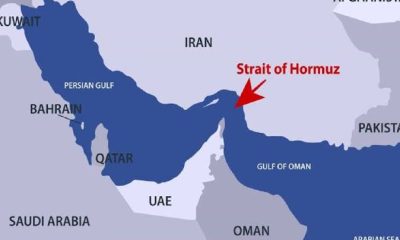
The suspension followed strikes on the East-West pipeline, which feeds the Saudi port of Yanbu. It became the main Saudi outlet for oil exports after Iran began blockading the Strait of Hormuz after US and Israeli attacks on the country.
Published in Dawn, September 17th, 2026


Why a new Pakistan-China border pact has irked India

How Trump Ditched Saudi Arabia?

EU Enacts Strict Laws on Social Media Use by Minors


-

 Sports3 months ago
South Korea’s Yoo Useong Steps Onto the Global Strongman Stage as World Strongman Federation Professional Athlete
-

 Art & Culture1 year ago
A Survey of Mata-E-Zeest
-

 Europe News2 years ago
Chaos and unproven theories surround Tates’ release from Romania
-

 American News2 years ago
Trump expands exemptions from Canada and Mexico tariffs
-

 American News2 years ago
Trump Expels Zelensky from the White House
-

 Art & Culture2 years ago
Will Snow White be a ‘victim of its moment’? How the Disney remake became 2025’s most divisive film
-

 Entertainment2 years ago
Champions Trophy: Pakistan aim to defend coveted title as historic tournament kicks off today
-

 Pakistan News1 year ago
Comprehensive Analysis Report-The Faranian National Conference on Maritime Affairs-By Kashif Firaz Ahmed